The Scientific Revolution of 2025
Groundbreaking discoveries changing our world
Introduction: A Year of Scientific Transformation
Imagine a world where genetic diseases are curable, batteries charge in minutes and never catch fire, and computers solve problems in seconds that would take conventional machines billions of years. This isn't science fiction—it's the emerging reality of 2025, a landmark year in scientific history. Across global laboratories and research institutions, multiple fields of science are advancing simultaneously at an unprecedented pace, creating what experts call a "convergence revolution" where progress in one field accelerates discoveries in others 1 .
Genetic Revolution
CRISPR technologies are moving from theoretical possibilities to clinical realities, offering potential cures for hundreds of genetic conditions.
Quantum Leap
Quantum computers are transitioning from experimental prototypes to specialized problem-solvers with practical applications.
From the intricate molecular machinery of our cells to the vast expanse of space, scientists are pushing boundaries that were once immovable. The United Nations has officially proclaimed 2025 the International Year of Quantum Science and Technology, highlighting the global significance of this scientific moment 1 . What makes this era particularly extraordinary is how interconnected these advancements are—AI is accelerating drug discovery, quantum computing is revolutionizing materials science, and gene editing is tackling previously untreatable conditions 6 . In this article, we'll explore these groundbreaking developments, examine a key experiment that demonstrates their real-world impact, and introduce the essential tools enabling these discoveries that are reshaping our world.
The Leading Edge: Key Scientific Fields Making Waves in 2025
The approval of the first CRISPR-based therapy, Casgevy, by the U.S. FDA marked a turning point in medical history 1 . Unlike traditional medications that manage symptoms, CRISPR technologies offer potentially curative treatments for genetic disorders by directly correcting mutations at their source 1 .
The transition to renewable energy depends heavily on advances in storage technology, and solid-state batteries represent a monumental leap forward 1 . These batteries address critical limitations of current lithium-ion technology.
| Research Area | Key Developments | Potential Impact |
|---|---|---|
| Gene Editing | CRISPR therapies, base editing, prime editing | Cures for genetic diseases, enhanced cancer treatments |
| Quantum Computing | Error correction, specialized healthcare applications | Accelerated drug discovery, optimized fertilizer formulas |
| Sustainable Energy | Solid-state batteries, Metal-Organic Frameworks | Safer EVs, carbon capture, reduced energy consumption |
| Artificial Intelligence | Improved data quality, specialized datasets | Enhanced scientific discovery, reduced AI "hallucinations" |
| Materials Science | Self-healing materials, nanotechnology | Improved medical devices, more efficient electronics |
CRISPR and Genetic Medicine: The Dawn of Precision Therapies
The approval of the first CRISPR-based therapy, Casgevy, by the U.S. FDA marked a turning point in medical history 1 . Unlike traditional medications that manage symptoms, CRISPR technologies offer potentially curative treatments for genetic disorders by directly correcting mutations at their source 1 . The technology has evolved beyond simple gene editing to include more precise approaches like base editing and prime editing, allowing scientists to make single-letter changes in the genetic code with remarkable accuracy 1 .
The applications are expanding beyond rare genetic conditions into broader therapeutic areas:
- Oncology: CRISPR is engineering more potent CAR-T cells that can better target cancer cells while incorporating "safety switches" to control their activity 1 .
- Infectious Diseases: Approaches that target viral DNA embedded in human cells offer potential strategies against persistent viral infections 1 .
- Autoimmune Conditions: Researchers are exploring ways to modulate immune responses at the genetic level 1 .

CRISPR Applications
Inside the Lab: A CRISPR Experiment Demystified
The Promise and Precision of Gene Editing
To understand how scientific breakthroughs transition from concept to reality, let's examine a representative CRISPR experiment that might be conducted in a 2025 research laboratory. This experiment aims to correct a genetic mutation associated with sickle cell anemia in hematopoietic (blood-forming) stem cells, demonstrating both the potential and the meticulous process behind gene therapies currently in development 1 .
Experimental Methodology: A Step-by-Step Journey
The process begins with the careful design of molecular tools and proceeds through increasingly complex biological systems:
Guide RNA Design and Complex Formation
Researchers design a guide RNA (gRNA) sequence that complements the target DNA region around the mutation. This gRNA is combined with the Cas9 protein to form a ribonucleoprotein (RNP) complex 1 . This RNP approach increases precision and reduces off-target effects.
Stem Cell Collection and Preparation
Blood-forming stem cells are collected from a donor. These precious cells are maintained in specialized culture media containing growth factors that preserve their stem cell properties throughout the editing process .
Electroporation Delivery
The RNP complexes are introduced into the stem cells using electroporation, a technique that applies controlled electrical pulses to create temporary openings in cell membranes 1 . This method allows the CRISPR components to enter the cells efficiently while maintaining high cell viability.
Edited Cell Expansion
Successfully edited cells are encouraged to multiply in optimized culture conditions that include specific nutrients, cytokines, and signaling molecules . The quality of these research-grade reagents is crucial for maintaining cell health and ensuring accurate experimental results.
Analysis and Validation
Multiple validation methods are employed to confirm the success and precision of the gene editing process.
| Experimental Stage | Primary Action | Quality Control Measures |
|---|---|---|
| Molecular Preparation | Design and assemble gRNA/Cas9 complexes | Validate targeting specificity with computational tools |
| Cell Collection | Extract hematopoietic stem cells | Test viability and purity through flow cytometry |
| Gene Editing Delivery | Introduce RNP complexes via electroporation | Optimize electrical parameters for efficiency |
| Cell Expansion | Culture edited cells in specialized media | Monitor growth rates and stem cell marker expression |
| Validation | Sequence DNA and analyze proteins | Check for on-target efficiency and off-target effects |
| Analysis Type | Successful Outcome | Measurement Technique |
|---|---|---|
| On-Target Editing | 60-80% correction rate | DNA Sequencing |
| Off-Target Editing | <0.1% at predicted sites | TTE7 Endonuclease Assay |
| Functional Correction | Normal hemoglobin production | HPLC Analysis |
| Stem Cell Preservation | Maintained CD34+/CD38- profile | Flow Cytometry |
| Cell Viability | >70% post-editing survival | Microscopy and Cell Counting |
Results and Analysis: Interpreting the Outcomes
In a successful experiment, researchers would observe both molecular and functional corrections:
Genetic Correction Efficiency
Off-Target Editing Analysis
Cell Viability Post-Editing
The scientific importance of these results extends far beyond this specific experiment. Each successful validation of precision gene editing brings us closer to curative approaches for hundreds of genetic conditions 1 . Furthermore, the knowledge gained from such experiments informs the development of next-generation editing technologies like base editing and prime editing that offer even greater precision and safety profiles 1 .
The Scientist's Toolkit: Essential Research Reagent Solutions
Behind every groundbreaking experiment is an array of specialized research reagents that make precision science possible. These are not ordinary chemicals; they are highly validated, research-grade materials engineered for reliability and consistency . The quality of these reagents can determine the success or failure of sensitive experiments, especially in fields like gene editing where minor impurities can significantly impact outcomes 2 .
| Reagent Category | Specific Examples | Research Function |
|---|---|---|
| Gene Editing Tools | CRISPR Cas9 proteins, guide RNAs | Target and modify specific DNA sequences |
| Cell Culture Media | Stem cell growth media, cytokines | Support cell survival and growth during editing |
| Detection Reagents | Antibodies, fluorescent dyes | Visualize and select successfully edited cells |
| Analytical Tools | PCR kits, sequencing reagents | Verify genetic modifications and purity |
| Delivery Vehicles | Electroporation reagents, lipids | Introduce editing components into cells |
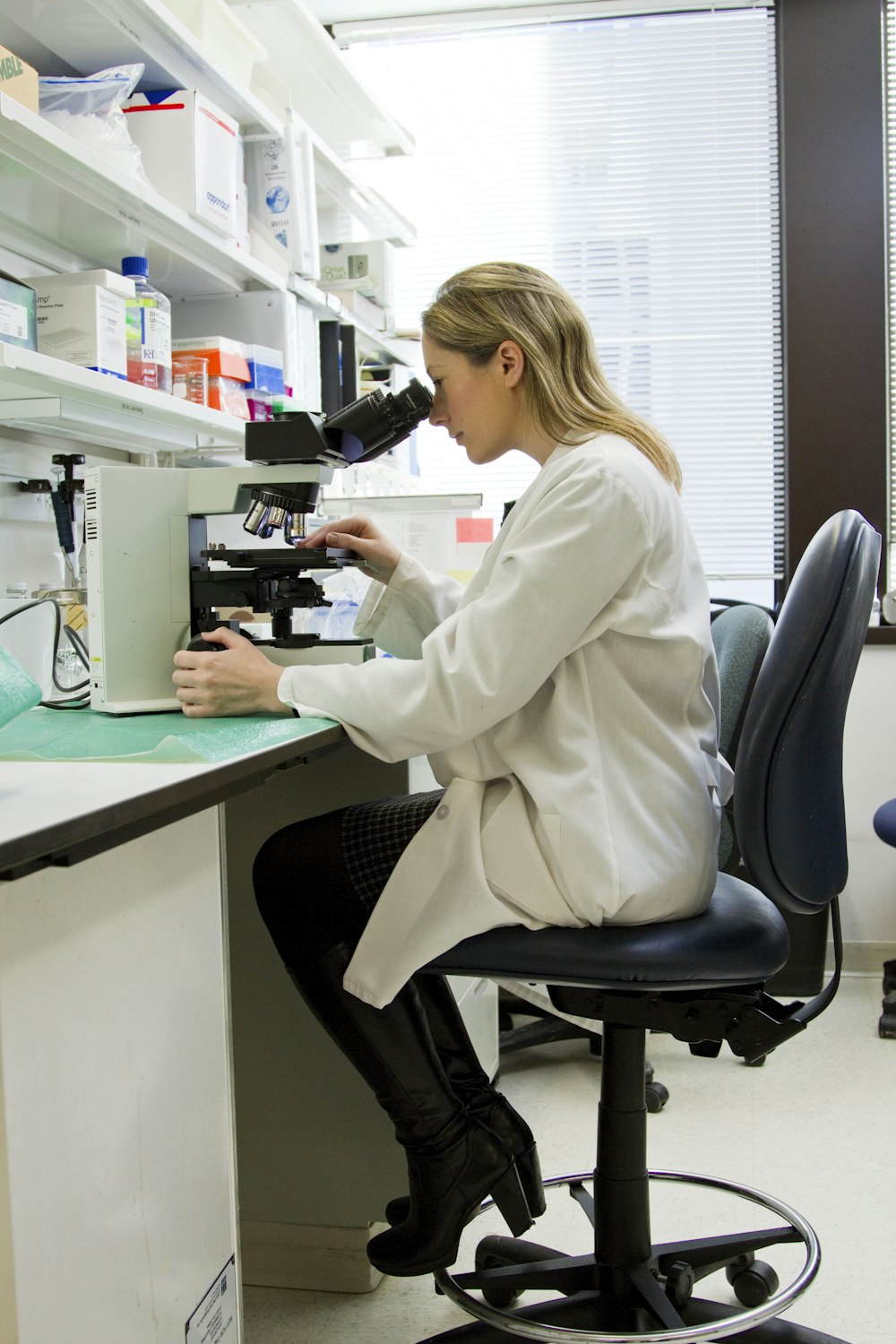
Reagent Selection Criteria
Scientists must evaluate multiple factors when selecting research reagents to ensure experimental reliability and accuracy.
The selection of appropriate research reagents requires careful consideration of multiple factors. Scientists must evaluate specificity (does the reagent target only the intended molecule?), sensitivity (can it detect or effect the desired change at low concentrations?), reproducibility (does it perform consistently across multiple experiments?), and validation (has it been rigorously tested in similar applications?) . This thorough approach to reagent selection reflects the meticulous nature of cutting-edge scientific research, where the quality of tools directly influences the reliability of discoveries 2 .
In modern laboratories, researchers increasingly rely on electronic resources to streamline their reagent selection process. Platforms like BenchSci use machine learning to help scientists identify optimal reagents based on published experimental data, while Biocompare allows comparison of products from multiple vendors 8 . These digital tools help researchers navigate the increasingly complex landscape of research reagents, ensuring they select the best possible materials for their pioneering work 8 .
Conclusion: The Future is Now
The scientific breakthroughs of 2025 represent more than isolated discoveries—they signal a fundamental shift in humanity's capacity to understand and shape our world. From the intricate molecular dance of gene editing to the mind-bending possibilities of quantum computation, these advancements are converging to create tools and knowledge that were unimaginable just a generation ago.
Accelerating Discovery
The pace of change suggests that what we're witnessing is not merely an acceleration of discovery but a transformation in the very process of discovery itself.
Interdisciplinary Convergence
The most exciting developments occur in the interdisciplinary spaces between fields, where biology informs engineering, physics revolutionizes computing, and chemistry transforms medicine.