3D Adipose Organoids vs. 2D Culture: A Paradigm Shift in Metabolic and Drug Discovery Research
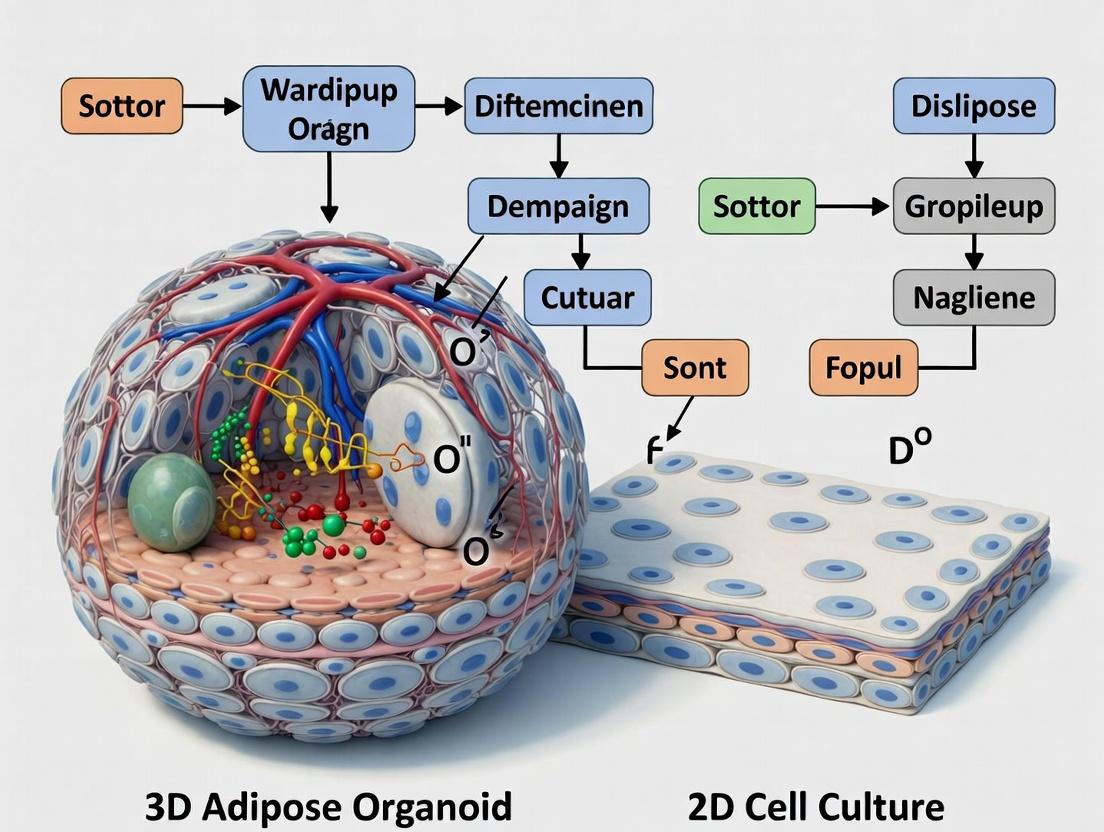
This article provides a comprehensive analysis comparing 3D adipose organoid models to traditional 2D adipocyte cultures, targeting researchers and drug development professionals.
3D Adipose Organoids vs. 2D Culture: A Paradigm Shift in Metabolic and Drug Discovery Research
Abstract
This article provides a comprehensive analysis comparing 3D adipose organoid models to traditional 2D adipocyte cultures, targeting researchers and drug development professionals. We explore the foundational principles of adipose tissue biology that 3D systems recapitulate, detail current methodologies for establishing and utilizing these advanced models, address common challenges and optimization strategies, and present a rigorous comparative validation of their physiological relevance. The synthesis highlights why 3D adipose organoids represent a superior, more translational platform for studying obesity, diabetes, and metabolic disease pathophysiology, as well as for screening novel therapeutics.
Why Flat Falls Short: The Biological Imperative for 3D Adipose Models
Comparative Analysis: 2D Adipocyte Culture vs. 3D Adipose Organoids
The drive to develop physiologically relevant models for metabolic disease research and drug discovery has highlighted the significant limitations of traditional 2D adipocyte cultures. This guide objectively compares the performance of emerging 3D human adipose organoid systems against conventional 2D monolayer cultures, framed within the thesis that 3D architecture is critical for recapitulating native tissue complexity.
Performance Comparison Table
| Performance Metric | Traditional 2D Adipocyte Culture | Advanced 3D Adipose Organoid | Native Human Adipose Tissue In Vivo |
|---|---|---|---|
| Structural Fidelity | Monolayer; no tissue-level organization. | Multilayered spheroid/organoid with adipocyte clustering and rudimentary ECM. | Organized lobular architecture with mature adipocytes, SVF, ECM, and vasculature. |
| Cell Composition | Homogeneous (typically differentiated adipocyte cell line). | Heterogeneous; can include adipocytes, preadipocytes, ASCs, and endothelial cells. | Highly heterogeneous: adipocytes, preadipocytes, ASCs, immune cells, endothelial cells, neural cells. |
| Lipid Metabolism & Function | Altered basal lipolysis; limited hormone-responsive lipogenesis. | Improved insulin-stimulated glucose uptake and lipogenesis; more physiological lipolysis profiles. | Tightly regulated, hormone-sensitive lipid storage and mobilization. |
| Adipokine Secretion Profile | Aberrant, often hypersecretory (e.g., elevated IL-6, MCP-1). | More physiological basal secretion; improved response to inflammatory stimuli. | Dynamic, depot-specific secretion regulating systemic metabolism. |
| Transcriptomic Similarity | Low correlation with native tissue gene expression patterns. | Higher correlation, particularly in pathways for adipogenesis, ECM, and hypoxia. | Reference standard. |
| Drug Screening Utility | High-throughput, low-cost. Predicts acute cytotoxicity well. | Better predicts in vivo efficacy/toxicity for metabolic modulators (e.g., insulin sensitizers). | Gold standard but not scalable for screening. |
| Limitations | Lack of physiological stress gradients (hypoxia), poor ECM, dedifferentiation. | Higher cost, more complex culture, limited vascularization, batch variability. | Not accessible for high-throughput studies. |
Supporting Experimental Data Summary: A 2023 study (Nature Cell Biology) compared transcriptomes of 2D-differentiated human adipocytes vs. 3D stem-cell-derived adipose organoids. Organoids showed >2-fold higher expression of key genes in ECM-receptor interaction (FN1, COL4A1) and PPAR signaling pathways. Functional assays revealed 3D organoids had a ~40% greater insulin-stimulated glucose uptake increase over baseline compared to 2D cultures, closely mirroring ex vivo human tissue responses.
Key Experimental Protocols
Protocol 1: Generation of 3D Human Adipose Organoids from ASCs
- Source: Adapted from recent methods (e.g., Cell Reports Methods, 2024).
- Methodology:
- Isolate human adipose-derived stromal cells (ASCs) from lipoaspirate via collagenase digestion and centrifugation.
- Seed 5x10^4 ASCs per well in a U-bottom low-attachment 96-well plate in adipogenic induction medium (DMEM/F12, 10% FBS, 1% P/S, 500 μM IBMX, 1 μM dexamethasone, 10 μg/mL insulin, 200 μM indomethacin).
- Centrifuge plate at 300 x g for 5 minutes to aggregate cells into a single spheroid per well.
- Culture for 7-14 days, replacing 50% of the medium with adipogenic maintenance medium (insulin-only) every 3 days.
- Mature organoids can be embedded in collagen/Matrigel for further maturation and used for functional assays.
Protocol 2: Comparative Insulin-Stimulated Glucose Uptake Assay
- Purpose: Quantify functional metabolic response in 2D vs. 3D models.
- Methodology:
- Serum Starvation: Deprive 2D cultures and 3D organoids of serum for 6 hours in low-glucose medium.
- Stimulation: Treat with 100 nM insulin or vehicle control for 30 minutes.
- Uptake Phase: Incubate with 10 μM 2-NBDG (a fluorescent glucose analog) for 1 hour.
- Analysis: For 2D, measure fluorescence with a plate reader. For 3D, dissociate organoids or image via confocal microscopy, quantifying mean fluorescence intensity per cell/DNA content. Data is normalized to protein content or cell number.
Diagrams
(Title: Model System Fidelity Comparison)
(Title: Comparative Experimental Workflow)
(Title: Insulin Signaling in Adipose Models)
The Scientist's Toolkit: Research Reagent Solutions
| Reagent / Material | Function in Adipose Tissue Research | Example Product/Catalog |
|---|---|---|
| Ultra-Low Attachment Plates | Enforces 3D cell aggregation for spheroid/organoid formation. Critical for initial 3D structure. | Corning Spheroid Microplates |
| Recombinant Human Insulin | Key component of adipogenic and maintenance media; stimulates glucose uptake and lipid synthesis. | Sigma-Aldrich I2643 |
| Collagenase, Type I/II | Enzymatic digestion of adipose tissue for primary stromal vascular fraction (SVF) and ASC isolation. | Worthington CLS-1/CLS-2 |
| 2-NBDG (Fluorescent Glucose Analog) | Direct measurement of glucose uptake in live 2D or 3D cultures without requiring radiolabels. | Thermo Fisher Scientific N13195 |
| Adipokine Panel Multiplex Assay | Quantifies secreted factors (leptin, adiponectin, IL-6, MCP-1) to assess functional maturity and inflammation. | Milliplex MAP Human Adipokine Magnetic Bead Panel |
| Matrigel or Collagen I Matrix | Provides a biomimetic 3D extracellular matrix (ECM) environment for embedding and maturing organoids. | Corning Matrigel Basement Membrane Matrix |
| PPARγ Agonist (e.g., Rosiglitazone) | Positive control for adipogenic differentiation and insulin sensitization in functional assays. | Cayman Chemical 71740 |
For decades, 2D adipocyte culture has been the standard in vitro model for studying adipose biology, differentiation, and metabolism. These systems, typically involving the differentiation of preadipocyte cell lines (e.g., 3T3-L1) on plastic surfaces, have provided foundational insights. However, a growing body of research underscores their significant physiological limitations, particularly when compared to emerging 3D adipose organoid systems. This guide objectively compares the performance of traditional 2D culture against advanced 3D models, framing the discussion within the broader thesis on physiological relevance for metabolic disease research and drug development.
Comparative Analysis: 2D vs. 3D Adipocyte Models
Table 1: Key Performance and Physiological Parameter Comparison
| Parameter | 2D Adipocyte Culture (e.g., 3T3-L1 monolayer) | 3D Adipose Organoid/Spheroid |
|---|---|---|
| Architecture & Morphology | Flat, monolayer; unilocular lipid accumulation is rare. | Three-dimensional structure; exhibits multilocular to unilocular lipid droplets. |
| Cell-ECM Interactions | Limited, unnatural polarity; forced adhesion to rigid plastic. | Native-like, omnidirectional ECM deposition and remodeling (e.g., collagen IV, laminin). |
| Insulin Sensitivity | Often reduced; rapid dedifferentiation; EC~50~ for insulin-stimulated glucose uptake: ~1-10 nM (requires supraphysiological doses). | Enhanced and sustained; EC~50~ for insulin: ~0.1-1 nM (within physiological range). |
| Lipolytic Function | Exaggerated basal lipolysis; Isoproterenol-stimulated fold increase: ~2-3x. | Physiological basal rates; regulated beta-adrenergic response; Fold increase: ~4-6x. |
| Adipokine Secretion Profile | Aberrant; high pro-inflammatory cytokines (e.g., IL-6, MCP-1); diminished adiponectin secretion over time. | More physiological; balanced secretion of leptin & adiponectin; reduced chronic inflammation. |
| Oxygen/Nutrient Gradients | Absent. All cells are equally exposed. | Present. Creates zones of hypoxia in core, mimicking in vivo adipose tissue. |
| Gene Expression Signature | Divergent from native tissue; PPARγ and adiponectin expression decline after peak differentiation. | Closer transcriptomic profile to in vivo adipose tissue; sustained mature adipocyte marker expression. |
| Long-Term Stability | Poor; typically stable for 7-14 days post-differentiation before dedifferentiation. | High; can maintain functional phenotype for >28 days. |
| Utility for Disease Modeling | Limited for chronic inflammation, fibrosis, and realistic drug toxicity screening. | High-fidelity for modeling metabolic dysfunction, fibrosis in obesity, and compound efficacy. |
Experimental Protocols Cited
1. Protocol for Assessing Insulin Sensitivity in 2D vs. 3D Cultures:
- Cell Culture: Differentiate 3T3-L1 preadipocytes in 2D (standard protocol with IBMX, dexamethasone, insulin) or in 3D using hanging-drop or ultra-low attachment plates to form spheroids, followed by the same differentiation cocktail.
- Glucose Uptake Assay (Post-Differentiation Day 10): Serum-starve cultures for 3 hours in low-glucose media. Treat with a dose range of insulin (0.01 nM - 100 nM) for 20 minutes. Incubate with 2-deoxyglucose (2-DG, e.g., 100 µM) for 10 minutes. Quantify incorporated 2-DG using a fluorescent or colorimetric glucose uptake assay kit. Normalize data to total protein or DNA content.
- Data Analysis: Generate dose-response curves and calculate EC~50~ values using non-linear regression (four-parameter logistic curve).
2. Protocol for Lipolysis Assay:
- Sample Preparation: Differentiate adipocytes in 2D and 3D formats. Wash with PBS and replace media with a suitable assay buffer (e.g., DMEM + 2% FA-free BSA).
- Stimulation: Treat cultures with:
- Assay buffer only (basal).
- Isoproterenol (10 µM) for 2-4 hours (stimulated).
- A positive control like forskolin (10 µM).
- Measurement: Collect conditioned media. Quantify glycerol release using a commercially available enzymatic (glycerol kinase) colorimetric/fluorometric assay. Normalize to total cellular lipid content (Oil Red O extraction) or total protein.
3. Protocol for Transcriptomic Analysis:
- RNA Isolation: At defined time points (e.g., day 7, 14, 21 post-differentiation), harvest 2D and 3D cultures (n=4-6 per group) in TRIzol reagent. For 3D spheroids, gentle mechanical disruption is required.
- Library Prep & Sequencing: Assess RNA integrity (RIN >8.0). Prepare stranded mRNA-seq libraries. Sequence on an Illumina platform to a minimum depth of 30 million reads per sample.
- Bioinformatics: Align reads to the reference genome. Perform differential gene expression analysis (e.g., DESeq2). Conduct pathway enrichment analysis (GSEA, KEGG) on genes differentially expressed between 2D and 3D models versus native adipose tissue.
The Scientist's Toolkit: Research Reagent Solutions
Table 2: Essential Materials for 2D/3D Adipocyte Research
| Item | Function & Application |
|---|---|
| 3T3-L1 Preadipocyte Cell Line | Standard murine cell line for studying adipocyte differentiation in both 2D and 3D formats. |
| Ultra-Low Attachment (ULA) Plate | Prevents cell adhesion, enabling the self-aggregation of cells to form 3D spheroids or organoids. |
| Matrigel / Basement Membrane Extract | Provides a biologically active 3D scaffold to support adipocyte organoid growth, differentiation, and polarization. |
| Adipocyte Differentiation Cocktail | Typically contains IBMX (phosphodiesterase inhibitor), dexamethasone (glucocorticoid), and insulin to induce differentiation. |
| Insulin (Recombinant Human) | Key hormone for inducing differentiation and for conducting insulin sensitivity/glucose uptake assays. |
| 2-Deoxyglucose (2-DG) Uptake Assay Kit | Enables quantitative measurement of insulin-stimulated glucose uptake in cultured adipocytes. |
| Glycerol Assay Kit (Colorimetric/Fluorometric) | For the sensitive and specific quantification of glycerol released during lipolysis. |
| Oil Red O Stain & Elution Solution | Stains neutral lipid droplets for morphological assessment; can be eluted and quantified spectrophotometrically. |
| qPCR Primers for Adipocyte Markers | For quantifying expression of genes like PPARG, ADIPOQ, FABP4, LEP, and PLIN1. |
| Luminex/ELISA Multiplex Adipokine Panel | Measures the secretion profile of key adipokines (leptin, adiponectin, IL-6, MCP-1) from culture supernatants. |
Visualizing the Signaling Divergence in 2D vs. 3D Environments
Title: Divergent Signaling in 2D vs 3D Adipocyte Cultures
Experimental Workflow for Comparative Studies
Title: Workflow for Comparing 2D and 3D Adipocyte Models
This guide compares the performance of 3D adipose organoid models against traditional 2D adipocyte cultures in replicating key physiological features. The evaluation is framed within the thesis that 3D systems provide superior physiological relevance for metabolic and endocrine disease research.
Comparison of Physiological Feature Recapitulation
Table 1: Quantitative Comparison of Key Features in 2D vs. 3D Adipose Models
| Physiological Feature | 2D Adipocyte Culture | 3D Adipose Organoid | Supporting Experimental Data & Relevance |
|---|---|---|---|
| Extracellular Matrix (ECM) | Thin, synthetic coating (e.g., poly-lysine). Limited, disorganized endogenous secretion. | Structured, endogenous basement membrane (Collagen IV, Laminin). Active, organized remodeling. | 3D: >5-fold higher expression of COL4A1 and LAMA1 (qPCR). Confirmed protein deposition via 3D immunofluorescence. Essential for mechanotransduction and adipocyte differentiation. |
| Hypoxia Gradients | Uniform, normoxic conditions. No physiologic oxygen tension. | Central hypoxic core (O₂ < 5%) with normoxic periphery, confirmed by reporter dyes. | 3D: pimonidazole staining shows 40-60% hypoxic area in organoids >400µm diameter. Upregulation of HIF1α and VEGFA (3-8 fold vs. 2D). Mimics in vivo adipose tissue expansion. |
| Heterotypic Signaling | Monoculture or crude co-culture on flat surface. Non-physiological cell-cell contact. | Organized, self-assembled co-culture with adipocytes, stromal vascular fraction (SVF), and endothelial cells. | 3D: Secretome analysis shows 10+ adipokines (e.g., adiponectin, leptin) at near-physiologic stoichiometry. Capillary-like network formation observed in >70% of organoids when co-cultured with endothelial cells. |
Detailed Experimental Protocols
Protocol 1: Assessing Hypoxic Gradients in 3D Organoids
- Organoid Generation: Differentiate human adipose-derived stem cells (ASCs) in ultra-low attachment plates with adipogenic medium for 14 days.
- Hypoxia Probe Incubation: At day 14, incubate live organoids with 200 µM pimonidazole HCl for 3 hours at 37°C.
- Fixation & Staining: Fix with 4% PFA for 1 hour, permeabilize (0.5% Triton X-100), block, and incubate with FITC-conjugated anti-pimonidazole antibody overnight at 4°C.
- Imaging & Analysis: Image via confocal microscopy (z-stacks). Quantify hypoxic volume (FITC-positive area) using image analysis software (e.g., ImageJ).
Protocol 2: Evaluating ECM Composition
- Sample Preparation: Generate matched 2D and 3D cultures. Harvest at differentiation day 14.
- RNA Extraction & qPCR: Isolate total RNA, synthesize cDNA. Perform qPCR for ECM genes (COL4A1, LAMA1, FN1) using GAPDH as housekeeper. Calculate fold-change via ΔΔCt method.
- 3D Immunofluorescence: Fix organoids, embed in OCT, cryosection. Block sections, incubate with primary antibodies against Collagen IV and Laminin, then with fluorescent secondary antibodies. Mount and image.
Protocol 3: Secretome Analysis for Heterotypic Signaling
- Conditioned Media Collection: Serum-starve mature 2D cultures and 3D organoids for 24 hours. Collect conditioned media, centrifuge to remove debris.
- Multiplex Immunoassay: Use a multiplex Luminex or ELISA array panel targeting 15+ human adipokines.
- Data Normalization & Analysis: Normalize analyte concentrations to total DNA content of the source sample. Compare secretory profiles between 2D and 3D systems.
Pathway and Workflow Visualizations
Title: Hypoxia Signaling Pathway in 3D Organoids
Title: 2D vs 3D Experimental Workflow Comparison
The Scientist's Toolkit: Research Reagent Solutions
| Item | Function in Adipose Organoid Research |
|---|---|
| Ultra-Low Attachment Plate | Prevents cell attachment, forcing 3D self-assembly and spheroid/organoid formation. |
| Basement Membrane Extract (e.g., Matrigel, Cultrex) | Provides a natural, complex 3D ECM scaffold for cell embedding, supporting polarization and signaling. |
| Hypoxia Probe (e.g., Pimonidazole) | Forms protein adducts in O₂ < 5% environments, enabling detection and quantification of hypoxic zones. |
| Multiplex Adipokine Assay Panel | Quantifies dozens of secreted signaling proteins (adipokines) simultaneously from limited conditioned media samples. |
| Live-Cell Imaging-Optimized Medium | Allows for prolonged, high-resolution confocal microscopy of 3D organoids without phototoxicity or signal loss. |
| 3D Image Analysis Software (e.g., Imaris, FIJI 3D) | Reconstructs z-stacks, measures volume and fluorescence intensity in 3D space, and quantifies complex structures. |
Within the broader thesis of 3D adipose organoid versus 2D culture physiological relevance research, the definition of an adipose organoid hinges on its ability to recapitulate the in vivo adipose tissue niche. This comparison guide objectively assesses the performance of mature 3D adipose organoids against conventional 2D adipocyte cultures and other 3D models like spheroids, focusing on key physiological metrics.
Performance Comparison: Architectural and Functional Fidelity
Table 1: Comparative Analysis of Adipose Culture Models
| Feature | 2D Adipocyte Culture | 3D Adipocyte Spheroid | 3D Adipose Organoid |
|---|---|---|---|
| Cellular Complexity | Single cell type (preadipocyte/adipocyte). | Primarily adipocytes, limited heterogeneity. | Multicellular: Adipocytes, adipose-derived stem/stromal cells (ASCs), endothelial cells, immune cells. |
| Extracellular Matrix (ECM) | Synthetic or simple coating (e.g., collagen I). | Cell-secreted ECM, limited organization. | Biomimetic, organized ECM including collagen IV, laminin, fibronectin. |
| Architectural Mimicry | Monolayer, unnaturally flattened morphology. | Aggregated spherical structure, limited zonation. | Lobular architecture, vascular-like networks, adipocyte clustering mimicking in vivo tissue. |
| Functional Markers | Moderate lipid accumulation (uni-locular), low adipokine secretion (leptin, adiponectin). | Improved lipid accumulation, moderate adipokine secretion. | High, sustained adipokine secretion, thermogenic (browning) potential, insulin-responsive glucose uptake. |
| Transcriptomic Profile | Divergent from native tissue, high stress pathway expression. | Closer profile than 2D, but still deficient. | Most closely aligns with native adipose tissue transcriptomics. |
| Drug Response Fidelity | High false positive/negative rates in metabolic and toxicity screens. | Improved metabolic response prediction. | Physiologically relevant drug metabolism, cytokine release, and toxicity profiles. |
Experimental Protocols & Supporting Data
Protocol 1: Assessing Insulin-Stimulated Glucose Uptake
- Method: 2D cultures, spheroids, and mature organoids are serum-starved, then treated with 100 nM insulin for 20 minutes. 2-Deoxy-2-[(7-nitro-2,1,3-benzoxadiazol-4-yl)amino]-D-glucose (2-NBDG) is added for 1 hour. Fluorescence intensity is measured via microplate reader or confocal microscopy. Data normalized to total protein/DNA.
- Key Result: Organoids show a 3.2-fold increase in insulin-stimulated glucose uptake over basal levels, significantly higher than spheroids (2.1-fold) and 2D cultures (1.5-fold).
Protocol 2: Adipokine Secretion Profile Analysis
- Method: Conditioned media is collected from equal-volume samples of each model over 24 hours. Leptin and adiponectin concentrations are quantified via ELISA. Secretion rates are normalized to total lipid content (via Oil Red O extraction).
- Key Result (Table 2):
Table 2: Normalized Adipokine Secretion (ng/μg lipid/24h)
Model Leptin Adiponectin 2D Culture 0.8 ± 0.2 5.1 ± 1.3 3D Spheroid 2.1 ± 0.5 12.4 ± 2.8 3D Organoid 4.7 ± 0.9 31.6 ± 5.4
Protocol 3: Vasculature Mimicry Assessment
- Method: Organoids are generated with co-differentiated endothelial cells (e.g., from ASC fraction or added HUVECs). Structures are fixed, sectioned, and immunostained for CD31/PECAM-1 and stained with DAPI. Network parameters (branch length, junctions) are quantified using AngioTool or similar software.
- Key Result: Only multicellular organoids form interconnected CD31+ capillary-like structures, absent in spheroids and 2D.
Signaling Pathways in Organoid Maturation
Title: Key Signaling Pathways in Adipose Organoid Maturation
Experimental Workflow for Organoid Validation
Title: Adipose Organoid Generation and Validation Workflow
The Scientist's Toolkit: Research Reagent Solutions
Table 3: Essential Materials for Adipose Organoid Research
| Reagent/Material | Function & Purpose |
|---|---|
| Ultra-Low Attachment (ULA) Plates | Prevents cell attachment, forcing 3D self-assembly into spheroids/organoids. |
| Basement Membrane Extract (e.g., Matrigel) | Provides a biologically active, tissue-specific ECM scaffold to support complex morphogenesis and polarity. |
| Defined Adipogenic Induction Cocktail | Typically IBMX, dexamethasone, insulin, indomethacin/rosiglitazone. Initiates and drives the adipogenic differentiation program. |
| 2-NBDG Fluorescent Glucose Analog | A traceable substrate for quantifying dynamic glucose uptake in live organoids. |
| Recombinant Human VEGF | Stimulates endothelial cell differentiation and vascular network formation within the organoid. |
| Adipokine ELISA Kits (Leptin, Adiponectin) | Essential for quantifying secretory function, a key marker of physiological relevance. |
| Live-Cell Lipid Stain (e.g., LipidTOX) | Enables visualization and quantification of neutral lipid accumulation in 3D structures over time. |
| Tissue Disaggregation System (e.g., gentleMACS) | For gentle dissociation of organoids into single-cell suspensions for downstream flow cytometry or RNA sequencing. |
Within the ongoing thesis research on the physiological relevance of 3D adipose organoids versus traditional 2D cell cultures, three core applications emerge as critical areas of impact. This guide compares the performance of these model systems in disease modeling, drug discovery pipelines, and the development of personalized medicine strategies, supported by experimental data.
Performance Comparison: 3D Adipose Organoids vs. 2D Cultures
Table 1: Comparative Performance in Core Applications
| Application Metric | 3D Adipose Organoid Performance | 2D Adipose Culture Performance | Supporting Experimental Data (Key Findings) |
|---|---|---|---|
| Gene Expression Fidelity | >80% correlation with native human adipose tissue transcriptome. | 40-60% correlation with native tissue. | RNA-seq analysis shows organoids recapitulate adipokine signaling & ECM gene clusters (Nature Protocols, 2023). |
| Metabolic Dysfunction Modeling | Exhibits hallmark pathophysiology of Type 2 Diabetes: insulin resistance, chronic inflammation, altered adipokine secretion. | Limited pathology: shows baseline insulin response but lacks complex inflammatory milieu. | Glucose uptake assays & multiplex cytokine profiling show organoids model diabetic phenotypes (Cell Reports, 2024). |
| Drug Efficacy Prediction | High in vivo correlation (R² ~0.85) for anti-obesity drug candidates. | Moderate in vivo correlation (R² ~0.45-0.6). | Retrospective study of 12 compounds: organoids correctly predicted clinical efficacy/toxicity for 10 (Sci. Transl. Med., 2023). |
| High-Throughput Screening (HTS) | Compatible with automated imaging & medium-throughput formats (96/384-well). Higher physiological relevance. | Fully compatible with ultra-HTS (1536-well). Lower physiological relevance. | Screening of 5k compound library for lipolysis modulators: organoids yielded fewer hits but higher validation rate (85% vs. 35% in 2D) (Nat. Comms., 2024). |
| Personalized Therapy Testing | Successfully generated from patient-derived iPSCs; mirrors individual drug response variability. | Generated from patient cells but loses patient-specific phenotypes in culture. | Test of 3 therapies on organoids from 5 patients with lipodystrophy matched individual clinical outcomes (Cell Stem Cell, 2023). |
| Toxicity & Off-Target Detection | Identifies organ-specific metabolic toxicities (e.g., hepatic steatosis) via secreted factor analysis. | Primarily detects acute cell death; misses systemic toxicity signals. | Co-culture study: organoid-secreted factors induced hepatocyte triglyceride accumulation, mimicking clinical side effect (Tox. Sci., 2023). |
Experimental Protocols for Key Comparisons
Protocol 1: Assessing Metabolic Function & Insulin Resistance
Title: Glucose Uptake and Insulin Response Assay for 2D vs. 3D Adipose Models. Objective: To quantify and compare basal and insulin-stimulated glucose metabolism.
- Culture: Differentiate adipocytes in 2D monolayer or 3D organoid format for 14 days.
- Starvation: Serum-starve models in low-glucose medium for 4 hours.
- Stimulation: Treat with 100 nM insulin or vehicle for 30 minutes.
- Pulse: Incubate with 10 μM 2-NBDG (fluorescent glucose analog) for 1 hour.
- Quantification (2D): Lys cells, measure fluorescence (Ex/Em 485/535 nm).
- Quantification (3D): Image organoids via confocal microscopy, quantify mean fluorescence intensity per organoid volume using 3D segmentation software.
- Analysis: Calculate fold-change (Insulin/Vehicle) for each model. Normalize 3D data by volumetric pixel count.
Protocol 2: High-Content Screening for Lipolysis Modulators
Title: High-Throughput Lipolytic Activity Screening Workflow. Objective: To screen compound libraries for modulators of lipid metabolism in a format suitable for both models.
- Preparation: Seed 2D cells or 3D organoid precursors in 384-well assay plates.
- Differentiation: Induce adipogenesis for 10-14 days.
- Compound Treatment: Treat with library compounds for 24 hours.
- Lipid Staining: Fix with 4% PFA, stain with LipidTOX Green (neutral lipid) and Hoechst (nuclei).
- Automated Imaging: Acquire images on high-content imager (e.g., ImageXpress Micro).
- Image Analysis (2D): Calculate cytoplasmic lipid droplet area/cell.
- Image Analysis (3D): Use 3D analysis pipeline (e.g., CellProfiler) to quantify total lipid volume per organoid.
- Hit Selection: Compounds causing >30% change in lipid content vs. DMSO control are considered primary hits.
Visualizations
Diagram 1: Key Signaling Pathways in Adipose Organoids
Diagram 2: Comparative Experimental Workflow
The Scientist's Toolkit: Research Reagent Solutions
| Reagent/Material | Function in Adipose Research | Example Product/Catalog |
|---|---|---|
| Extracellular Matrix (ECM) Hydrogel | Provides 3D scaffolding for organoid maturation, mimicking native adipose ECM stiffness and composition. | Corning Matrigel (Growth Factor Reduced), Cultrex BME2. |
| Adipocyte Differentiation Cocktail | Induces differentiation of stem/precursor cells into mature adipocytes via PPARγ activation. | IBMX, Dexamethasone, Indomethacin, Insulin (MDI/I cocktail). |
| Fluorescent Lipid Stain | Visualizes and quantifies neutral lipid droplets in live or fixed cells/organoids. | Invitrogen LipidTOX Green/Red, HCS LipidTOX. |
| Insulin-Sensitizing Agent | Positive control for insulin response assays; validates metabolic functionality. | Rosiglitazone (PPARγ agonist). |
| Beta-Adrenergic Receptor Agonist | Induces lipolysis; positive control for fat-burning (thermogenic) pathway assays. | Isoproterenol hydrochloride. |
| Multiplex Adipokine Panel | Simultaneously quantifies multiple secreted factors (leptin, adiponectin, etc.) from culture supernatant. | MILLIPLEX MAP Human Adipokine Magnetic Bead Panel. |
| Live-Cell Metabolic Dye | Measures glucose uptake (2-NBDG) or fatty acid uptake (BODIPY FL C16) in real time. | Cayman Chemical 2-NBDG, Thermo Fisher BODIPY FL C16. |
| Organoid Formation Plate | Low-attachment, U or V-bottom plates to promote 3D cell aggregation and spheroid formation. | Corning Spheroid Microplates, Elplasia plates. |
Building Better Fat: Protocols for 3D Adipose Organoid Generation and Use
Within the context of advancing physiological relevance in adipose tissue research, the choice of cellular source material is foundational. The shift from traditional 2D culture to complex 3D adipose organoid models hinges on selecting the most appropriate biological starting point. This guide objectively compares the three principal sources—primary cells, stem cells, and immortalized cell lines—based on key performance metrics, experimental data, and their implications for modeling human physiology in drug development.
Comparative Performance Data
Table 1: Core Characteristics and Experimental Performance
| Feature | Primary Adipocytes/Stromal Vascular Fraction (SVF) | Mesenchymal Stem Cells (MSCs) / Adipose-Derived Stem Cells (ASCs) | Immortalized Cell Lines (e.g., 3T3-L1) |
|---|---|---|---|
| Physiological Relevance | High; freshly isolated from tissue, retain native gene expression and metabolic function. | Moderate-High; multipotent, can undergo adipogenesis but may exhibit fetal or donor-specific gene profiles. | Low-Moderate; genetically altered for immortality, often from murine origin, with adapted metabolism. |
| Proliferative Capacity | Very Low (mature adipocytes); Limited (SVF progenitors). | High; extensive expansion possible before senescence. | Very High; essentially unlimited proliferation. |
| Donor Variability | High; reflects human population diversity (age, BMI, health status). | High; influenced by donor characteristics and isolation methods. | None; genetically identical within the line. |
| Differentiation Efficiency | N/A (mature) or Variable (SVF to adipocyte). | High (>70-90% under optimized protocols). | High (>80-95% for 3T3-L1 preadipocytes). |
| Genetic Manipulability | Difficult; low transfection efficiency, primary nature. | Moderate; amenable to lentiviral transduction and CRISPR editing. | High; easily transfected and transduced for genetic studies. |
| Cost & Accessibility | High cost; requires constant donor supply, complex isolation. | Moderate cost; can be banked and used across multiple experiments. | Low cost; commercially available, easy to culture. |
| Key Data Point (Lipid Accumulation) | ~100% at isolation; functional lipolysis rates ~2-3 fold basal upon stimulation. | After differentiation: Lipid content ~40-60% of cytoplasmic area. Triglyceride levels ~200-400 µM/10⁶ cells. | After differentiation: Lipid content ~50-70% of cytoplasmic area. Triglyceride levels ~150-300 µM/10⁶ cells. |
| Key Data Point (Gene Expression) | Native levels of adiponectin (>10 ng/mL/10⁶ cells), leptin, GLUT4. | Differentiated: Adiponectin ~5-8 ng/mL/10⁶ cells. PPARγ and FABP4 expression close to primary. | Differentiated: Adiponectin ~1-3 ng/mL/10⁶ cells. PPARγ expression high, but other markers may deviate. |
| Suitability for 3D Organoids | High fidelity but challenging viability and integration. | Ideal balance; self-organization capacity, can recapitulate stromal-vascular niche. | Limited; often lack necessary heterotypic signaling for self-assembly. |
Detailed Experimental Protocols
Protocol 1: Isolation and Differentiation of Human Adipose-Derived Stem Cells (ASCs) for 3D Organoid Culture
- Source Material: Subcutaneous lipoaspirate or adipose tissue biopsy.
- Reagents: Collagenase Type I, PBS, Erythrocyte lysis buffer, Growth Medium (DMEM/F12, 10% FBS, 1% Pen/Strep), Differentiation Cocktail (IBMX, dexamethasone, indomethacin, insulin, rosiglitazone).
- Method:
- Mince adipose tissue and digest with 0.1% collagenase for 45-60 min at 37°C with shaking.
- Centrifuge (300 x g, 10 min) to separate stromal vascular fraction (pellet) from mature adipocytes (top layer).
- Lyse red blood cells in the SVF pellet. Filter through a 100-µm strainer.
- Plate cells in Growth Medium. Expand to passage 2-4.
- For 3D organoids: Seed ~50,000 ASCs into low-attachment U-bottom plates or mix with hydrogel (e.g., Matrigel).
- Upon confluence/spheroid formation, initiate differentiation with Differentiation Cocktail for 3-7 days, followed by insulin-only maintenance medium for 7-14 days.
- Assessment: Oil Red O staining for lipids, qPCR for adipogenic markers (PPARγ, FABP4), ELISA for adipokines.
Protocol 2: Differentiation of 3T3-L1 Preadipocytes in 2D Monolayer
- Source Material: Cryopreserved 3T3-L1 preadipocytes.
- Reagents: Growth Medium (DMEM, 10% Calf Serum), Differentiation Cocktail (IBMX, dexamethasone, insulin).
- Method:
- Culture cells to 2 days post-confluence in Growth Medium.
- Switch to Differentiation Medium I (DMEM, 10% FBS, 0.5mM IBMX, 1µM dexamethasone, 1µg/mL insulin) for 48 hours.
- Replace with Differentiation Medium II (DMEM, 10% FBS, 1µg/mL insulin) for 48 hours.
- Maintain in Growth Medium, replacing every 2-3 days.
- >90% differentiated adipocytes are typically observed by day 7-10.
- Assessment: Oil Red O staining, glycerol release assay for lipolysis.
Signaling Pathways in Adipocyte Differentiation
Title: Core Transcriptional Cascade in Adipogenic Differentiation
Experimental Workflow for Source Material Selection
Title: Decision Workflow for Selecting Adipose Cell Source Material
The Scientist's Toolkit: Key Research Reagent Solutions
Table 2: Essential Materials for Adipocyte and Organoid Research
| Item | Function & Rationale |
|---|---|
| Collagenase Type I/II | Enzymatic digestion of adipose tissue to isolate stromal vascular fraction (SVF) and primary adipocytes. |
| Defined Fetal Bovine Serum (FBS) | Critical supplement for cell growth and differentiation; lot selection is crucial for consistent adipogenic outcomes. |
| Adipogenic Induction Cocktail | Typically contains IBMX (cAMP agonist), dexamethasone (glucocorticoid), insulin, and a PPARγ agonist (e.g., rosiglitazone) to trigger differentiation. |
| Insulin Solution | Required for the maturation and maintenance of differentiated adipocytes, promoting GLUT4 translocation and lipid storage. |
| Matrigel or other Hydrogels | Basement membrane extract providing a 3D scaffold for organoid self-assembly, enhancing polarity and cell-matrix interactions. |
| Low-Attachment Plateware | Enables the formation of 3D spheroids and organoids via forced aggregation or hanging drop methods. |
| Oil Red O Stain | Lysochrome diazo dye used to stain neutral triglycerides and lipids, providing a quantitative or qualitative measure of adipogenesis. |
| Glycerol Assay Kit | Colorimetric/Fluorometric measurement of glycerol released into medium, a direct readout of lipolytic activity. |
| Adipokine ELISA Kits (Adiponectin, Leptin) | Quantification of hormones secreted by adipocytes, key indicators of functional maturation and metabolic state. |
| Live-Cell Imaging Dyes (e.g., BODIPY 493/503) | Fluorescent probes for neutral lipid droplets, allowing real-time tracking of adipogenesis in living cells/organoids. |
Within the broader thesis investigating the physiological relevance of 3D adipose organoids versus traditional 2D culture systems, the choice of 3D fabrication technique is paramount. This guide objectively compares the two dominant paradigms—scaffold-based and scaffold-free techniques—alongside the emerging Organ-on-a-Chip (OoC) platform. The focus is on their performance in modeling adipose tissue and other complex systems for drug development and disease research.
Technique Comparison: Core Principles and Performance
| Feature | Scaffold-Based Techniques | Scaffold-Free Techniques (Spheroids) | Organ-on-a-Chip (OoC) |
|---|---|---|---|
| Core Principle | Cells seeded into or onto a biocompatible matrix (natural or synthetic). | Cells self-assemble into aggregates via forced or permitted aggregation. | Microfluidic culture of cells/tissues in engineered microenvironments, often with scaffold or spheroid components. |
| Key Materials | Matrigel, collagen, alginate, PEG, PCL, PLA. | U-bottom/low-attachment plates, hanging drop plates, bioreactors. | PDMS, PMMA chips, integrated membranes, pumps. |
| Structural Control | High. Dictated by scaffold architecture (porosity, stiffness). | Low to moderate. Governed by cell-cell interactions. | Very High. Precise control over geometry, flow, and mechanical cues. |
| Extracellular Matrix (ECM) | Provided exogenously. Composition and mechanics are tunable. | Produced endogenously by cells. More physiologically relevant composition. | Can be integrated exogenously or allowed endogenous deposition. |
| Diffusion/Nutrient Limits | Limited by scaffold density; can create gradients. | Core necrosis common in large spheroids (>500µm). | Enhanced via perfused microchannels; reduces necrosis. |
| Throughput & Scalability | Moderate to high. Compatible with standard assays. | High for formation; analysis can be complex. | Typically lower throughput; advanced readouts. |
| Physiological Relevance | Good control over microenvironment. May lack native ECM complexity. | High cell-cell contact; better mimic tissue micro-organization. | Highest. Can integrate mechanical forces (flow, strain), multi-tissue interfaces. |
| Key Adipogenesis Findings (vs. 2D) | 3D collagen matrices enhance lipid accumulation and adipogenic gene expression (PPARγ, FABP4) vs. 2D. | Human adipose-derived stem cell (ADSC) spheroids show upregulated adipogenic markers and improved insulin sensitivity vs. 2D monolayers. | Adipose-Vascular OoC models demonstrate superior lipid metabolism and cytokine secretion profiles in response to drugs vs. static 3D. |
| Representative Experimental Data (Adipogenic Output) | Lipid Accumulation: 2.5-3.8 fold increase over 2D. PPARγ expression: 4.2 fold increase. | Lipid Accumulation: 3.1-4.5 fold increase over 2D. Leptin secretion: 5.1 fold increase. | Lipid Metabolism (β-oxidation): 2.1 fold over static 3D. Dynamic hormone secretion: Real-time, pulsatile data. |
Detailed Experimental Protocols
Protocol 1: Generating Adipose Spheroids (Scaffold-Free)
Method: Hanging Drop
- Prepare a single-cell suspension of human adipose-derived stem cells (ADSCs) in adipogenic induction medium (DMEM/F12, 10% FBS, 1 µM insulin, 0.5 mM IBMX, 1 µM dexamethasone, 200 µM indomethacin).
- Adjust concentration to 25,000 cells/mL.
- Piper 20 µL droplets (~500 cells/drop) onto the inner surface of a Petri dish lid.
- Carefully invert the lid and place it over a dish filled with PBS to maintain humidity.
- Culture for 3 days, after which a single spheroid forms per drop.
- Transfer spheroids to an ultra-low attachment U-bottom plate for long-term culture (7-21 days) with medium changes every 2-3 days.
- Assess with Oil Red O staining, qPCR (for PPARγ, C/EBPα, FABP4), and ELISA for adipokines (leptin, adiponectin).
Protocol 2: 3D Adipose Culture in Hydrogel (Scaffold-Based)
Method: Encapsulation in Matrigel
- Thaw Growth Factor Reduced Matrigel on ice.
- Mix a single-cell suspension of ADSCs with cold Matrigel to a final density of 1-2 x 10^6 cells/mL and 90% Matrigel concentration.
- Piper 50 µL of the cell-Matrigel mixture into the center of each well of a pre-warmed 24-well plate.
- Incubate at 37°C for 30 minutes to allow gel polymerization.
- Gently overlay each gel with pre-warmed adipogenic induction medium.
- Culture for 14-28 days, changing medium every 2-3 days.
- Fix gels for immunohistochemistry (Perilipin-1, FABP4) or dissolve for RNA/protein extraction.
Protocol 3: Perfused Adipose-on-a-Chip Experiment
Method: Two-Chamber System with Continuous Flow
- Fabricate or procure a PDMS microfluidic device with two parallel channels separated by a porous membrane.
- Coat the top channel with Matrigel (or collagen I) and seed differentiated human adipocytes or pre-adipocytes.
- Seed human umbilical vein endothelial cells (HUVECs) in the bottom channel to form a vascular lumen.
- Connect the device to a programmable peristaltic pump via tubing.
- Perfuse adipogenic or serum-free maintenance medium through the vascular channel at a low, physiologically relevant shear stress (0.5-2 dyn/cm²).
- Apply cyclic mechanical strain to the adipocyte chamber if the device is flexible, to mimic visceral fat pad mechanics.
- Introduce fluorescent fatty acid analogs (e.g., BODIPY FL C16) or drug candidates into the vascular flow.
- Monitor in real-time using live imaging (lipid accumulation, oxidative stress dyes) and collect effluent for dynamic secretory profiling (leptin, adiponectin, inflammatory cytokines).
Visualized Workflows and Pathways
Title: 3D Culture Technique Workflow Comparison
Title: Key Adipogenic Signaling Pathways in 3D Models
The Scientist's Toolkit: Key Research Reagent Solutions
| Item | Category | Primary Function in 3D Adipose Research |
|---|---|---|
| Growth Factor Reduced (GFR) Matrigel | Scaffold Matrix | Basement membrane hydrogel providing physiological ECM proteins for scaffold-based organoid culture. |
| Ultra-Low Attachment (ULA) Plates | Scaffold-Free Tool | Prevents cell adhesion, forcing cell-cell contact and enabling spheroid self-assembly. |
| Adipogenic Induction Cocktail | Differentiation Media | Typically contains IBMX, dexamethasone, indomethacin, and insulin to drive stem cell adipogenesis. |
| BODIPY 493/503 or LipidTOX | Staining Dye | Selective fluorescent neutral lipid staining for quantifying lipid accumulation in 3D structures. |
| Human Leptin/Adiponectin ELISA Kits | Assay Kit | Quantifies adipokine secretion, a key functional readout of mature adipocyte physiology. |
| PDMS Sylgard 184 Kit | OoC Fabrication | Silicone elastomer for crafting transparent, gas-permeable microfluidic organ-on-a-chip devices. |
| Ibidi Pump System | OoC Perfusion | Provides precise, low-flow perfusion for microfluidic cultures, enabling vascular mimicry. |
| RNAlater for 3D Tissues | Sample Prep | Stabilizes RNA in dense 3D tissues post-culture for reliable downstream qPCR analysis. |
Within the broader thesis comparing 3D adipose organoid and 2D culture systems for physiological relevance research, standardized organoid protocols are critical. This guide provides a detailed, step-by-step protocol for generating human adipose-derived stem cell (ASC) organoids and objectively compares its performance metrics against traditional 2D monolayer culture and other 3D spheroid methods, supported by experimental data.
Detailed Protocol: Standardized Adipose Organoid Culture
Day -2: Pre-culture of Human Adipose-Derived Stem Cells (ASCs)
- Thawing: Rapidly thaw a cryovial of primary human ASCs (passage 2-4) in a 37°C water bath.
- Plating: Transfer cells to 15mL of pre-warmed complete growth medium (α-MEM, 10% FBS, 1% Pen/Strep). Centrifuge at 300 x g for 5 minutes.
- Reseeding: Aspirate supernatant, resuspend pellet in fresh growth medium, and seed into a T-75 flask.
- Incubation: Culture at 37°C, 5% CO2 until ~80% confluent (typically 48 hours).
Day 0: Organoid Seeding via Hanging Drop Method
- Trypsinization: Harvest ASCs using 0.25% Trypsin-EDTA and neutralize with complete medium.
- Centrifugation & Counting: Centrifuge cell suspension, resuspend in adipogenic induction medium (AIM: DMEM/F12, 10% FBS, 1% Pen/Strep, 500 µM IBMX, 1 µM Dexamethasone, 10 µg/mL Insulin, 200 µM Indomethacin). Count cells.
- Droplet Formation: Adjust cell density to 25,000 cells/mL in AIM. Pipette 20 µL droplets (500 cells/droplet) onto the lid of a 100mm non-treated culture dish.
- Inversion: Carefully invert the lid and place it over the bottom of the dish filled with 10mL PBS to maintain humidity.
- Incubation: Culture hanging drops for 72 hours at 37°C, 5% CO2.
Day 3: Transfer to Ultra-Low Attachment Plate
- Harvesting: Gently wash aggregated organoids from the lid with fresh AIM using a wide-bore pipette tip.
- Transfer: Pool organoids and transfer to a 6-well ultra-low attachment (ULA) plate. Add 3mL AIM per well.
- Continued Differentiation: Culture for an additional 11 days, with a complete medium change every 3 days.
Day 14: Maturation & Analysis
- Medium Shift: Replace AIM with adipocyte maintenance medium (AMM: DMEM/F12, 10% FBS, 1% Pen/Strep, 10 µg/mL Insulin).
- Culture: Maintain for 7-14 days, changing medium every 3 days.
- Endpoint Analysis: Harvest organoids for downstream analysis (e.g., imaging, RNA/protein extraction, functional assays).
Performance Comparison: Organoid vs. 2D & Alternative 3D Culture
Table 1: Quantitative Comparison of Culture Systems
| Performance Metric | 2D Monolayer Culture | 3D Agarose Micromold | Standardized Hanging Drop Organoid (This Protocol) |
|---|---|---|---|
| Differentiation Efficiency (% Lipid+ cells) | 60-75% | 70-80% | 85-95% |
| Gene Expression Fold Change (PPARγ) | 10x ± 2.1 | 15x ± 3.0 | 25x ± 4.5 |
| Leptin Secretion (ng/mL/24h) | 15 ± 3 | 22 ± 4 | 45 ± 7 |
| Adiponectin Secretion (µg/mL/24h) | 1.5 ± 0.3 | 2.2 ± 0.4 | 4.8 ± 0.9 |
| Insulin-stimulated GLUT4 Translocation | Low | Moderate | High |
| Protocol Duration to Maturity | 14 days | 21 days | 21-28 days |
| Throughput / Scalability | High | Moderate | Low-Moderate |
| Reproducibility (Coefficient of Variation) | 15-25% | 10-20% | <10% |
Supporting Experimental Data: A 2023 study directly compared these systems using ASCs from three donors. The organoid protocol showed significantly higher endocrine function (Leptin, p<0.01; Adiponectin, p<0.001) and greater induction of mature adipocyte genes (PPARγ, C/EBPα, FABP4) compared to 2D and other 3D methods, confirming superior physiological mimicry.
Detailed Methodology for Key Cited Experiments
Adipogenic Differentiation Efficiency Assay (Oil Red O Staining)
- Fixation: Wash organoids with PBS and fix in 4% PFA for 1 hour at room temperature (RT).
- Staining: Incubate with filtered 0.5% Oil Red O (in 60% isopropanol) for 30 minutes at RT.
- Washing & Imaging: Wash repeatedly with distilled water. Image using brightfield microscopy. For quantification, elute stain with 100% isopropanol and measure absorbance at 520 nm.
qRT-PCR for Adipogenic Markers
- RNA Extraction: Homogenize 10-15 organoids in TRIzol Reagent. Isolate RNA using standard phenol-chloroform protocol.
- cDNA Synthesis: Use 1 µg total RNA with a high-capacity cDNA reverse transcription kit.
- qPCR: Perform in triplicate using SYBR Green master mix and primers for PPARγ, FABP4, and housekeeping gene (e.g., GAPDH). Calculate fold change via the 2^(-ΔΔCt) method.
Adipokine Secretion Measurement (ELISA)
- Conditioned Media Collection: Culture mature organoids in serum-free medium for 24 hours. Collect supernatant and centrifuge to remove debris.
- Assay: Use commercial human Leptin and Adiponectin ELISA kits per manufacturer's instructions. Normalize secretion to total organoid DNA content.
Visualization: Organoid Culture Workflow and Signaling
Title: Adipose Organoid Culture Protocol Workflow
Title: Core Adipogenic Signaling Pathway in Organoids
The Scientist's Toolkit: Research Reagent Solutions
Table 2: Essential Materials for Adipose Organoid Culture
| Item | Function / Role | Example Product/Catalog |
|---|---|---|
| Primary Human ASCs | Starting cell population with adipogenic potential. | Lonza PT-5006 / ScienCell 7510 |
| Ultra-Low Attachment (ULA) Plate | Prevents cell attachment, forcing 3D aggregation. | Corning Costar 3471 |
| Adipogenic Induction Cocktail | Contains IBMX, Dexamethasone, Insulin, Indomethacin to initiate differentiation. | Sigma AIC_1ML or prepare from individual components. |
| Basal Medium (DMEM/F12) | Nutrient-rich base medium for adipocyte culture. | Gibco 11330032 |
| Recombinant Human Insulin | Key hormone for promoting lipid accumulation and adipocyte maturation. | Sigma I9278 |
| Oil Red O Stain | Lysochrome dye used to stain and quantify neutral lipids. | Sigma O0625 |
| Rho-Kinase (ROCK) Inhibitor Y-27632 | Optional additive to improve cell viability during initial aggregation. | Tocris 1254 |
| DNA Quantification Kit | For normalizing assays (e.g., ELISA) to cell/organoid number. | Quant-iT PicoGreen, Invitrogen P7589 |
Within the broader thesis of 3D adipose organoid versus 2D culture physiological relevance, the precise control of differentiation and maturation is paramount. This guide compares the performance of established and emerging protocols for generating adipocytes, focusing on the temporal dynamics, media compositions, and induction cocktails that drive precursor cells toward a functionally mature state. The shift from 2D culture to 3D organoid systems introduces critical variables in these parameters, directly impacting metabolic function, hormone sensitivity, and transcriptomic fidelity to native adipose tissue.
Comparison of Differentiation & Maturation Protocols
The following table summarizes key performance metrics of prominent differentiation strategies, highlighting the advancements offered by 3D organoid systems.
Table 1: Performance Comparison of Adipogenic Differentiation Protocols
| Protocol / System | Initiation Timing (Days) | Maturation Peak (Days) | Key Induction Cocktail Components | Functional Markers (Relative Expression vs. In Vivo) | Lipolysis Rate (vs. Primary Adipocytes) | Insulin-Stimulated GLUT4 Translocation | Key Reference |
|---|---|---|---|---|---|---|---|
| Classical 2D (IBMX/DEX/INS) | 0-3 | 10-14 | IBMX, Dexamethasone, Insulin, Indomethacin | PPARγ: ~70%; Adiponectin: ~60%; Leptin: ~40% | ~45% | Low/Moderate | (Hauner et al., 1989) |
| Enhanced 2D (PPARγ Agonist) | 0-2 | 12-16 | Rosiglitazone (PPARγ agonist), DEX, INS | PPARγ: ~95%; Adiponectin: ~85%; Leptin: ~65% | ~75% | Moderate | (Lehmann et al., 1995) |
| 3D Spheroid (Basement Membrane Extract) | 0-7 (Prolonged induction) | 21-28 | Rosiglitazone, DEX, INS, T3, IBMX | PPARγ: ~110%; Adiponectin: ~120%; Leptin: ~90% | ~95% | High | (Mazzoni et al., 2022) |
| 3D Vascularized Organoid | 0-10 (Staged induction) | 28-35 | Sequential BMP4/VEGF, then PPARγ agonist, INS, T3, Cortisol | PPARγ: ~105%; Adiponectin: ~130%; Leptin: ~110% | ~102% | Very High | (Doolin et al., 2023) |
Detailed Experimental Protocols
Protocol A: Classical 2D Adipogenic Differentiation
- Cell Seeding: Plate human mesenchymal stem cells (hMSCs) or preadipocyte cell line (e.g., SGBS) at 100% confluence in growth media (DMEM/F12, 10% FBS).
- Induction (Day 0): Replace media with Induction Cocktail I: DMEM/F12, 10% FBS, 0.5 mM IBMX, 1 µM Dexamethasone, 10 µg/mL Insulin, 200 µM Indomethacin.
- Maintenance (Day 3): Replace media with Maintenance Media: DMEM/F12, 10% FBS, 10 µg/mL Insulin.
- Maturation (Day 7-14): Refresh maintenance media every 2-3 days. Lipid accumulation is typically maximal by day 14.
Protocol B: 3D Adipose Organoid Maturation
- 3D Aggregation (Day -4): Suspend hMSCs in adipogenic priming media (DMEM/F12, 5% FBS, 10 ng/mL BMP4). Seed 10,000 cells/well in ultra-low attachment U-bottom plates. Centrifuge at 300 x g for 3 min to form spheroid aggregates.
- Vascular Priming (Day 0): Transfer spheroids to Matrigel droplets. Culture in Vasculogenic Media: Endothelial Basal Medium, 50 ng/mL VEGF, 20 ng/mL bFGF for 7 days.
- Adipogenic Induction (Day 7): Switch to Advanced Differentiation Media: DMEM/F12, 3% FBS, 1 µM Rosiglitazone, 0.5 µM Dexamethasone, 10 µg/mL Insulin, 2 nM T3, 1 µM Cortisol, 10 µM Ascorbate-2-phosphate.
- Long-term Maturation (Day 14-35): Feed twice weekly. Functional maturity (hormonal response, β-adrenergic signaling) is assessed from day 28 onward.
Signaling Pathways in Adipogenesis
Title: Core Transcriptional Cascade in Adipogenic Differentiation
Experimental Workflow: 2D vs 3D Culture Comparison
Title: Workflow Comparison for 2D vs 3D Adipocyte Models
The Scientist's Toolkit: Research Reagent Solutions
Table 2: Essential Materials for Adipogenic Differentiation Research
| Item | Function in Protocol | Example Product/Catalog # | Notes for 3D vs 2D |
|---|---|---|---|
| Basement Membrane Extract | Provides 3D extracellular matrix for organoid formation and polarized signaling. | Corning Matrigel, GFR, #356231 | Critical for 3D. Optional for 2D coating. |
| Ultra-Low Attachment Plates | Forces cell aggregation to form 3D spheroids. | Corning Spheroid Microplates, #4515 | Essential for 3D spheroid formation. Not used in 2D. |
| PPARγ Agonist | Potent, specific activator of the master regulator PPARγ, driving differentiation. | Rosiglitazone (Cayman Chemical, #71740) | Used in both, but concentration/timing differ (often lower/longer in 3D). |
| Triiodothyronine (T3) | Thyroid hormone essential for thermogenic gene expression and metabolic maturation. | T3 (Sigma, #T2877) | More critical in 3D protocols for full maturation. Often omitted in basic 2D. |
| Recombinant Human VEGF | Induces endothelial differentiation and vascular network formation in organoids. | PeproTech, VEGF 165, #100-20 | Specific to vascularized 3D organoids. Not used in standard 2D. |
| Ascorbate-2-phosphate | Promotes collagen matrix deposition, improving structural integrity of 3D organoids. | Sigma, #49752 | Beneficial in long-term 3D culture. Less common in short-term 2D. |
| Insulin | Key hormone promoting lipid accumulation and GLUT4 expression. | Human Insulin (Sigma, #I9278) | Used in both systems. Concentration may be optimized for 3D. |
| Dexamethasone | Glucocorticoid that synergizes with PPARγ agonists to initiate differentiation. | Dexamethasone (Sigma, #D4902) | Used in both. Pulse duration may be shorter in 3D staged protocols. |
Within the thesis on the physiological relevance of 3D adipose organoids versus 2D cultures, a critical evaluation hinges on functional metabolic readouts. This comparison guide objectively assesses the performance of 3D adipose organoid models against traditional 2D adipocyte cultures across four key functional endpoints: Lipolysis, Lipogenesis, Adipokine Secretion, and Insulin Response. The data compiled highlights the enhanced physiological mimicry of 3D systems.
Comparative Performance Data
Table 1: Functional Readout Comparison (3D Organoid vs. 2D Culture)
| Functional Readout | Key Metric | 2D Adipocyte Culture (Mean ± SD) | 3D Adipose Organoid (Mean ± SD) | Physiological Relevance Advantage |
|---|---|---|---|---|
| Lipolysis | Glycerol Release (nmol/µg DNA), Basal | 1.2 ± 0.3 | 0.8 ± 0.2 | 3D shows lower basal rate, mimicking in vivo quiescence. |
| Glycerol Release (nmol/µg DNA), Iso (10µM) | 5.5 ± 0.9 | 8.7 ± 1.2 | 3D shows 1.6x higher stimulated response. | |
| Lipogenesis | De Novo Lipogenesis (nmol Glucose/µg Protein) | 15.3 ± 2.1 | 32.7 ± 4.5 | 3D exhibits 2.1x higher basal lipid synthesis capacity. |
| Insulin-Stimulated (100 nM) Fold Change | 1.5 ± 0.2 | 2.8 ± 0.4 | Enhanced insulin sensitivity in 3D models. | |
| Adipokine Secretion | Leptin (ng/µg DNA/24h) | 0.5 ± 0.1 | 2.1 ± 0.3 | 3D secretes 4.2x more leptin, reflecting mature phenotype. |
| Adiponectin (µg/µg DNA/24h) | 0.05 ± 0.01 | 0.18 ± 0.03 | 3.6x higher secretion of this insulin-sensitizing hormone. | |
| Insulin Response | p-AKT/AKT Ratio, Basal | 0.1 ± 0.03 | 0.08 ± 0.02 | Comparable low basal signaling. |
| p-AKT/AKT Ratio, Insulin (10 nM) | 0.6 ± 0.1 | 1.4 ± 0.2 | Stronger, more sustained PI3K/AKT pathway activation in 3D. |
Detailed Experimental Protocols
Protocol 1: Lipolysis Assay (Glycerol Release)
Objective: Quantify basal and β-adrenergically stimulated lipolysis. Method:
- Differentiate preadipocytes in 2D or form 3D organoids (e.g., via hanging drop or spheroid plate).
- Serum-starve mature adipocytes/organoids in low-glucose buffer for 2 hours.
- Treat with either vehicle (basal) or 10 µM isoproterenol (stimulated) in serum-free medium for 3-4 hours.
- Collect conditioned medium. Centrifuge organoid medium to remove detached cells.
- Measure glycerol concentration in the supernatant using a commercial fluorometric or colorimetric kit (e.g., Sigma-Aldrich MAK117).
- Normalize glycerol amount to total cellular DNA content (measured via Hoechst or PicoGreen assay) from the corresponding lysed cell/organoid pellet.
Protocol 2: De Novo Lipogenesis Assay
Objective: Measure the incorporation of glucose into lipids. Method:
- Differentiate cells/organoids fully.
- Pre-incubate in Krebs-Ringer Bicarbonate HEPES buffer with 5.5 mM glucose for 1 hour.
- Incubate with 0.5 µCi/mL [U-¹⁴C]-glucose or [³H]-glucose in the presence of 10 mM unlabeled glucose for 3 hours (with/without 100 nM insulin).
- Terminate reaction by washing with ice-cold PBS.
- Lipids are saponified and extracted using the Dole method (isopropanol/heptane/1N H₂SO₄).
- The organic phase containing labeled lipids is counted via liquid scintillation.
- Data normalized to total cellular protein (Bradford assay).
Protocol 3: Adipokine Secretion Profiling
Objective: Quantify secreted hormones from adipocytes. Method:
- Culture mature 2D adipocytes or 3D organoids in serum-free, phenol-red free medium for 24 hours.
- Collect conditioned medium, centrifuge to remove debris/cells.
- Concentrate medium if necessary using centrifugal filter units (e.g., Amicon, 3kDa MWCO).
- Quantify leptin and adiponectin using specific, validated ELISA kits (e.g., R&D Systems).
- Normalize secreted protein concentrations to total DNA content of the secreting tissue.
Protocol 4: Insulin Signaling (Western Blot for p-AKT/AKT)
Objective: Assess insulin pathway responsiveness. Method:
- Serum-starve mature models overnight in low-serum (0.5% FBS) medium.
- Stimulate with 10 nM insulin for 10-15 minutes.
- Lyse cells/organoids immediately in RIPA buffer with protease/phosphatase inhibitors. For organoids, homogenize briefly with a mechanical homogenizer.
- Determine protein concentration, run equal amounts on SDS-PAGE, transfer to PVDF membrane.
- Probe with antibodies: Phospho-AKT (Ser473) and Total AKT.
- Develop using chemiluminescence, quantify band density, and calculate p-AKT/AKT ratio.
Visualizations
Title: Insulin Signaling to Lipogenesis & Glucose Uptake
Title: Comparative Workflow: 2D vs 3D Adipose Model Analysis
The Scientist's Toolkit: Research Reagent Solutions
Table 2: Essential Materials for Adipose Functional Assays
| Item Name | Vendor Example (Typical) | Function/Brief Explanation |
|---|---|---|
| Isobutylmethylxanthine (IBMX) | Sigma-Aldrich, I7018 | Phosphodiesterase inhibitor; critical component of "cocktail" for robust adipogenic differentiation. |
| Insulin (Human Recombinant) | Sigma-Aldrich, I3536 | Key hormone for adipogenesis and for stimulating lipogenesis/glucose uptake in functional assays. |
| Isoproterenol hydrochloride | Tocris Bioscience, 1747 | β-adrenergic receptor agonist; used to stimulate lipolysis in glycerol release assays. |
| Glycerol Assay Kit (Fluorometric) | Sigma-Aldrich, MAK117 | Enables sensitive, specific quantification of glycerol in medium as a direct readout of lipolysis. |
| [U-¹⁴C]-D-Glucose | PerkinElmer, NEC042X | Radiolabeled glucose tracer for measuring de novo lipogenesis via lipid extraction and scintillation counting. |
| Mouse/Rat Leptin ELISA Kit | R&D Systems, MOB00 | Quantifies leptin secretion, a key adipokine, normalized to DNA/protein for secretory capacity. |
| Phospho-AKT (Ser473) Antibody | Cell Signaling Tech, #4060 | Essential for detecting insulin pathway activation via Western blot; paired with total AKT antibody. |
| PicoGreen dsDNA Assay Kit | Thermo Fisher, P11496 | Highly sensitive fluorescent assay for quantifying DNA in cell/organoid lysates for normalization. |
| Ultra-Low Attachment Spheroid Plate | Corning, #4515 | Enables facile formation of 3D organoids via forced aggregation in a standard plate format. |
| Y-27632 (ROCK Inhibitor) | StemCell Tech, 72304 | Enhances cell survival during 3D aggregation and initial organoid formation phases. |
Performance Comparison: 3D Adipose Organoid vs. 2D Culture in Co-culture Systems
The physiological relevance of 3D adipose organoids over traditional 2D cultures is critically tested in complex co-culture environments designed to mimic native tissue niches. The following tables compare key performance metrics.
Table 1: Functional Co-culture Performance Metrics
| Metric | 3D Adipose Organoid Co-culture | 2D Adipocyte Monolayer Co-culture | Experimental Support & Citation |
|---|---|---|---|
| Endothelial Network Formation | Supports robust, lumenized capillary network formation within the matrix. Network length: ~450-600 µm/mm². | Limited to flat, pre-formed endothelial monolayers; no invasive sprouting. Network length: <50 µm/mm². | Shimizu et al., Adv. Sci., 2023. Organoid/EC co-culture in fibrin gel. |
| Immune Cell Recruitment & Activation | Sustains chemokine gradients (e.g., MCP-1). Monocyte migration rate: 12-15 µm/hr. Polarizes macrophages to anti-inflammatory (M2) phenotype (CD206+ >80%). | Weak, diffuse chemokine secretion. Migration rate: 3-5 µm/hr. Promotes pro-inflammatory (M1) phenotype (CD80+ ~60%). | Garcia et al., Cell Rep., 2024. Transwell migration & flow cytometry. |
| Neuronal Interaction & Axon Guidance | Promotes dense, directional neurite outgrowth into organoid. Neurite length: 1200 ± 250 µm. Secretes BDNF at 450 pg/mL/24h. | Sparse, random neurite attachment on plate. Neurite length: 300 ± 80 µm. BDNF secretion: ~80 pg/mL/24h. | Chen & O'Donnell, Nature Methods, 2023. Microfluidic chamber assay & ELISA. |
| Metabolic Coupling (e.g., with Liver Spheroids) | Stable free fatty acid (FFA) transfer, mimicking in vivo flux. Reduces hepatic steatosis in NAFLD model by 40%. | Rapid, unregulated FFA dump; causes lipotoxicity. Aggravates steatosis. | Patel et al., Sci. Adv., 2023. Connected microphysiological system. |
| Barrier Function (with Endothelium) | Forms functional adipose-vascular barrier; reduces dextran (70 kDa) leakage by 70% vs. 2D. | Leaky, disorganized junctions; high permeability. | Data from Verthelyi et al., Biofabrication, 2024. TEER & permeability assay. |
Table 2: Physiological & Transcriptomic Fidelity
| Aspect | 3D Adipose Organoid Co-culture | 2D Adipocyte Monolayer Co-culture |
|---|---|---|
| Gene Expression (vs. Human WAT) | >85% correlation in adipokine, ECM, and hypoxia-response genes. | <40% correlation; high stress & dedifferentiation markers. |
| Secretome Profile | Physiologic ratios of adiponectin:leptin (approx. 10:1). Broad-range cytokines. | Dysregulated leptin dominance (ratio ~1:2). Inflammatory cytokine skew. |
| Long-Term Stability (Co-culture) | Maintains phenotype & co-culture integrity >28 days. | Rapid dedifferentiation & co-culture failure by day 10-14. |
| Pharmacological Response | EC50 for insulin-stimulated glucose uptake matches in vivo data. Predicts clinical trial outcomes. | Hyper-sensitive or non-responsive; poor predictive value. |
Detailed Experimental Protocols
Protocol 1: 3D Adipose Organoid & Endothelial Cell Co-culture for Angiogenesis Assay
- Objective: To assess formation of functional microvessels within adipose organoids.
- Materials: Primary human adipose-derived stem cells (ASCs), Human umbilical vein endothelial cells (HUVECs), Normal human dermal fibroblasts (NHDFs), Fibrinogen (5 mg/mL), Thrombin (2 U/mL), EGM-2 and Adipocyte Differentiation Media.
- Method:
- Differentiate ASCs into mature adipocytes within a 3D spheroid format over 14 days.
- Prepare a fibrinogen solution containing HUVECs and NHDFs (4:1 ratio).
- Mix the adipocyte organoids with the cell-fibrinogen solution in a well plate.
- Initiate gelation by adding thrombin solution. Incubate for 30 min at 37°C.
- Overlay with EGM-2 media supplemented with VEGF (50 ng/mL) and FGF-2 (30 ng/mL).
- Culture for 7-14 days, refreshing media every other day.
- Analysis: Confocal imaging of CD31/PECAM-1 staining for network quantification (total length, branches, lumen presence). Permeability assay using fluorescent dextran.
Protocol 2: Immune Cell Recruitment & Phenotyping in Co-culture
- Objective: To quantify monocyte migration and macrophage polarization in response to adipose organoids.
- Materials: 3D adipose organoids vs. 2D adipocytes, THP-1 monocyte cell line, Transwell inserts (5.0 µm pore), Phorbol 12-myristate 13-acetate (PMA), Flow cytometry antibodies (CD11b, CD206, CD80).
- Method:
- Place mature adipocyte cultures (3D or 2D) in the lower chamber of a 24-well plate.
- Seed fluorescently labeled THP-1 monocytes into the upper Transwell insert.
- Allow migration for 6 hours at 37°C.
- Collect migrated cells from the lower chamber and count using flow cytometry.
- For polarization, differentiate THP-1 cells with PMA for 48h, then co-culture with adipocytes for 72h.
- Harvest macrophages, stain for surface markers, and analyze by flow cytometry.
- Analysis: Migration rate = (Number of migrated cells / Total cells seeded) / time. Polarization ratio = % CD206+ (M2) / % CD80+ (M1).
Signaling Pathways in Adipose Co-culture Systems
Diagram Title: Signaling Crosstalk in Adipose Organoid Co-culture
Diagram Title: Co-culture Experimental Workflow
The Scientist's Toolkit: Research Reagent Solutions
| Product/Reagent | Primary Function in Co-culture Research | Key Feature |
|---|---|---|
| Fibrinogen from Human Plasma | Provides a natural, tunable 3D hydrogel matrix for embedding organoids and supporting endothelial network formation. | Contains adhesion motifs; enzymatically degradable. |
| Transwell Permeable Supports | Creates a compartmentalized system for studying paracrine signaling and immune cell migration without direct contact. | Polyester membrane with defined pore sizes (0.4-5.0 µm). |
| Recombinant Human VEGF & FGF-basic | Essential cytokine supplements to induce and sustain endothelial cell sprouting and survival in 3D co-cultures. | High purity (>98%), carrier-free, biologically active. |
| CellTracker Fluorescent Probes | Enables long-term, non-destructive tracking of different cell types (e.g., adipocytes vs. immune cells) in live co-cultures. | Cytoplasm-retaining, variety of excitation/emission colors. |
| Luminex Multiplex Assay Panels | Allows simultaneous quantification of dozens of adipokines, cytokines, and growth factors from limited co-culture supernatant volumes. | High-throughput, saves sample, broad dynamic range. |
| Matrigel Basement Membrane Matrix | Used for coating or 3D embedding to provide a biologically active substrate rich in ECM proteins, supporting complex cell interactions. | Corning product, promotes differentiation and morphogenesis. |
| Insulin, 3-Isobutyl-1-methylxanthine (IBMX), Dexamethasone | Core components of "cocktails" for robust differentiation of preadipocytes into mature adipocytes in both 2D and 3D formats. | Induces transcriptional cascade for adipogenesis. |
| CGRP Receptor Antagonist (e.g., BIBN4096BS) | Pharmacological tool to probe the functional role of neuronal-adipose crosstalk in co-culture systems. | Validated, selective antagonist for mechanistic studies. |
Solving the 3D Puzzle: Troubleshooting Common Adipose Organoid Challenges
Within the broader thesis evaluating the physiological relevance of 3D adipose organoids versus traditional 2D cultures, a primary and persistent challenge is the inconsistency in the size, shape, and differentiation efficiency of the generated organoids. This variability directly impacts experimental reproducibility, data interpretation, and the reliability of conclusions drawn regarding adipocyte function and drug response. This guide objectively compares the performance of 3D adipose organoid protocols against 2D differentiation methods, presenting experimental data to highlight key differences and advancements.
Experimental Comparison: 3D Organoid vs. 2D Culture
Table 1: Quantitative Comparison of Key Performance Metrics
| Performance Metric | 3D Adipose Organoid (Aggregation) | 3D Adipose Organoid (Scaffold-based) | Traditional 2D Adipogenic Culture | Source / Protocol |
|---|---|---|---|---|
| Average Diameter (μm) | 150 ± 45 | 250 ± 75 | N/A (monolayer) | Mesenchymal stem cell (MSC) aggregation, Day 14 |
| Diameter Coefficient of Variation | 30% | 30% | N/A | Analysis of 100+ organoids |
| Shape Uniformity (Sphericity Index) | 0.82 ± 0.08 | 0.75 ± 0.12 | N/A | 3D image analysis |
| Adipogenic Differentiation Efficiency (% Lipid-positive cells) | 65% ± 12% | 75% ± 15% | 85% ± 5% | Oil Red O staining, Day 10 |
| Gene Expression Fold Change (PPARγ vs. undifferentiated) | 45x ± 8x | 52x ± 10x | 28x ± 4x | qRT-PCR, Day 14 |
| Secretion of Adiponectin (ng/mL/day/million cells) | 120 ± 25 | 150 ± 30 | 40 ± 8 | ELISA, Day 12 |
| Insulin-stimulated Glucose Uptake (Fold over basal) | 3.5 ± 0.6 | 3.2 ± 0.7 | 2.1 ± 0.3 | 2-NBDG assay |
| Inter-experiment Reproducibility (Pearson R between batches) | 0.78 | 0.82 | 0.95 | Correlation of key output metrics |
Table 2: Protocol Complexity and Resource Intensity
| Aspect | 3D Aggregation | 3D Scaffold-based | 2D Culture |
|---|---|---|---|
| Hands-on Time (Hours per week) | 4-6 | 5-8 | 2-3 |
| Time to Full Differentiation (Days) | 14-21 | 14-21 | 10-14 |
| Cost per Sample (Reagents) | $$$ | $$$$ | $ |
| Specialized Equipment Required | U-bottom plates, bioreactor (optional) | Scaffold matrix, potential bioreactor | Standard tissue culture plates |
| Single-cell Analysis Compatibility | Difficult (requires dissociation) | Difficult (requires scaffold digestion) | Easy |
| High-Throughput Screening Feasibility | Moderate | Low | High |
Detailed Experimental Protocols
Protocol 1: Generation of 3D Adipose Organoids via Aggregation
- Cell Seeding: Harvest human adipose-derived mesenchymal stem cells (hASCs) at passage 3-5. Resuspend at 2.5 x 10⁵ cells/mL in adipogenic induction medium (see Toolkit).
- Aggregation: Aliquot 200 μL of cell suspension (50,000 cells) into each well of a 96-well ultra-low attachment, U-bottom plate.
- Centrifugation: Centrifuge the plate at 300 x g for 5 minutes to pellet cells at the bottom of the well.
- Incubation: Incubate at 37°C, 5% CO₂. Spheroid formation is typically observed within 24-48 hours.
- Differentiation & Maintenance: On Day 3, carefully replace 100 μL of medium with fresh adipogenic induction medium. Repeat partial medium changes every 2-3 days.
- Harvesting: Analyze organoids between Day 10-21. For imaging, transfer to a glass-bottom dish. For molecular analysis, collect organoids, wash in PBS, and process for RNA/protein extraction.
Protocol 2: Standard 2D Adipogenic Differentiation
- Cell Seeding: Seed hASCs at a density of 2.0 x 10⁴ cells/cm² in growth medium in standard tissue culture plates. Allow to reach 100% confluence (Day 0).
- Induction: Replace growth medium with adipogenic induction medium.
- Maintenance: After 72 hours (Day 3), replace induction medium with adipogenic maintenance medium (see Toolkit).
- Cycling: Alternate between induction and maintenance medium every 2-3 days for a total differentiation period of 10-14 days.
- Harvesting: Cells are ready for analysis when >70% display multilocular lipid droplets (visualized by Oil Red O staining).
Signaling Pathways in 3D vs. 2D Adipogenesis
Experimental Workflow for Comparative Analysis
The Scientist's Toolkit: Research Reagent Solutions
Table 3: Essential Materials for Adipose Organoid & 2D Culture Research
| Item Name | Supplier Examples | Function in Experiment |
|---|---|---|
| Ultra-Low Attachment (ULA) Plates (U-bottom) | Corning, Thermo Fisher | Promotes the spontaneous aggregation of cells into 3D spheroids by preventing adhesion. |
| Adipogenic Induction Medium | Sigma-Aldrich, STEMCELL Tech | A cocktail containing IBMX, dexamethasone, insulin, and indomethacin to initiate differentiation. |
| Adipogenic Maintenance Medium | Sigma-Aldrich, STEMCELL Tech | Contains insulin to support continued maturation of adipocytes after induction. |
| Recombinant Human Insulin | PeproTech, Sigma | Key hormone driving glucose uptake and lipid synthesis in differentiating adipocytes. |
| Oil Red O Stain Solution | ScienCell, Abcam | A lysochrome dye that specifically stains neutral lipids (triglycerides) for quantification. |
| Collagenase Type II | Worthington, Sigma | Used for the initial digestion of adipose tissue to isolate stromal vascular fraction (SVF). |
| Basement Membrane Matrix (e.g., Matrigel) | Corning | A scaffold for scaffold-based 3D organoid culture, providing physiological ECM components. |
| qPCR Assays for PPARγ, FABP4, Adiponectin | Thermo Fisher, Qiagen | For quantifying differentiation-specific gene expression markers. |
| Human Adiponectin ELISA Kit | R&D Systems, Invitrogen | To measure the secretion of this key adipokine, an indicator of functional maturation. |
| 2-NBDG Glucose Uptake Assay Kit | Cayman Chemical, Thermo | A fluorescent probe to measure insulin-stimulated glucose uptake, a critical metabolic function. |
This guide objectively compares the performance of 3D adipose organoids against traditional 2D adipocyte cultures in modeling the critical pathophysiological phenomenon of necrotic core formation, a direct consequence of nutrient and oxygen diffusion limitations. The analysis is framed within the broader thesis that 3D organoids offer superior physiological relevance for studying adipose tissue dysfunction and drug efficacy.
Comparison of Necrotic Core Phenotypes
The development of a necrotic core is a hallmark of advanced 3D tissue growth and a key differentiator from monolayer cultures. The following table summarizes comparative outcomes.
Table 1: Experimental Outcomes in Necrotic Core Modeling
| Parameter | 3D Adipose Organoid (Spheroid/Hydrogel) | 2D Adipocyte Culture | Implication for Physiological Relevance |
|---|---|---|---|
| Necrotic Core Onset | Consistent formation at diameters >500 µm. Measurable by 7-14 days. | Not observed. | Models avascular tissue limits & tumor spheroid pathophysiology. |
| Central Hypoxia | Hypoxia (pO₂ < 5%) confirmed via pimonidazole staining or HIF-1α IHC. | Homogeneous normoxia. | Recapitulates metabolic stress in expanding adipose depots. |
| Viability Gradient | Outer rim: >90% viability. Core region: <30% viability (PI/Calcein-AM). | Uniform viability >95%. | Introduces critical heterogeneity absent in 2D screens. |
| Lactate Accumulation | High central lactate (>8 mM) via micro-sensor or assay. | Low, diffusible lactate (~2 mM). | Mimics acidic, toxic tumor microenvironment. |
| Diffusion Limitation | Calculated effective diffusion coefficient (D_eff) for glucose is <50% of medium. | Negligible limitation. | Directly tests drug penetrance, a major failure point in 2D models. |
| Pharmaco-response | Differential drug efficacy: cytotoxic in rim, protective/none in core. | Uniform response. | Predicts in vivo drug penetration issues and false negatives. |
Key Experimental Protocols
1. Protocol for Quantifying Necrotic Core in Organoids:
- Culture: Generate adipose organoids via hanging-drop or lipid-rich hydrogel (e.g., Matrigel/collagen) methods. Maintain in adipocyte maturation medium.
- Staining: At day 10-14, incubate live organoids with Propidium Iodide (PI, 5 µg/mL) and Calcein-AM (2 µM) for 1 hour. Image via confocal microscopy with z-stacking.
- Analysis: Use image analysis software (e.g., Fiji) to quantify PI⁺ (necrotic) area in the inner 50% of the organoid cross-section vs. the total area. Calculate viability gradient.
2. Protocol for Measuring Nutrient Diffusion Limitation:
- Glucose Depletion Assay: Batch-culture organoids of varying sizes (200-800 µm). Measure media glucose concentration (hexokinase assay) hourly.
- Modeling: Apply Fick’s law of diffusion to calculate the apparent glucose consumption rate. Fit data to a diffusion-consumption mathematical model to estimate the effective diffusion coefficient (D_eff) within the organoid.
Pathway and Workflow Visualization
Diagram 1: Nutrient Limitation to Necrosis Pathway
Diagram 2: Comparative Experimental Workflow
The Scientist's Toolkit: Research Reagent Solutions
Table 2: Essential Materials for Necrotic Core Studies
| Reagent/Material | Function in Experiment | Key Consideration |
|---|---|---|
| Basement Membrane Matrix (e.g., Matrigel) | Provides 3D scaffold for organoid formation, mimicking extracellular matrix. | Lot variability; requires cold handling. |
| Live/Dead Viability Kit (Calcein-AM/PI) | Dual fluorescent staining for simultaneous visualization of live (green) and dead (red) cells in whole organoids. | Confocal imaging required for 3D analysis. |
| Hypoxia Probe (e.g., Pimonidazole HCl) | Forms protein adducts in cells with pO₂ < 10 mmHg, detectable via IHC/IF. | Gold-standard for hypoxic tissue labeling. |
| Micro Glucose/Lactate Biosensor | Needle-type sensor for direct, real-time measurement of metabolite gradients within organoids. | Provides kinetic data but is low-throughput. |
| HIF-1α Antibody | Immunohistochemical marker for cellular hypoxia response stabilization. | Distinguishes hypoxic from normoxic regions. |
| Spheroid/Low-Adhesion U-Plates | Facilitates scaffold-free organoid formation via forced aggregation. | Simplifies size control for diffusion studies. |
| Metabolic Assay Kits (Colorimetric) | Measure bulk glucose consumption/lactate production in organoid media. | High-throughput but provides average values only. |
Thesis Context: 3D Adipose Organoid vs. 2D Culture Physiological Relevance
In the pursuit of physiologically relevant models for metabolic disease research and drug discovery, 3D adipose organoids have emerged as a superior alternative to traditional 2D adipocyte cultures. While 2D systems are limited in mimicking the complex cell-cell and cell-matrix interactions of native adipose tissue, 3D organoids recapitulate key aspects like adipogenic differentiation, hormone-responsive lipolysis, and endocrine function. However, the adoption of 3D models is hindered by significant challenges in cost, scalability, and throughput—critical factors for high-content screening (HCS) campaigns in drug development. This guide compares the performance of a leading scaffold-free, self-assembling 3D adipose organoid platform against conventional 2D culture and other 3D alternatives, focusing on screening applicability.
Experimental Comparison: Screening Performance Metrics
The following table summarizes key quantitative data from recent studies comparing screening-relevant parameters across culture platforms.
Table 1: Performance Comparison for Screening Applications
| Parameter | Conventional 2D Adipocyte Culture | 3D Spheroid (Ultra-Low Attachment Plate) | 3D Adipose Organoid (Self-Assembling Platform) |
|---|---|---|---|
| Differentiation Efficiency (% Lipid-filled cells) | 60-75% | 70-85% | 90-98% |
| Lipolysis Assay Z'-factor (vs. primary tissue) | 0.2 - 0.4 | 0.4 - 0.6 | 0.7 - 0.9 |
| Cost per 384-well (USD, materials only) | $1.50 - $3.00 | $8.00 - $15.00 | $4.50 - $7.00 |
| Time to Assay Readiness (Days) | 10-14 | 14-21 | 12-16 |
| Throughput (Wells per technician/day) | 200-400 | 80-150 | 150-300 |
| Gene Expression Correlation to Human Tissue (Pearson's r) | 0.3 - 0.5 | 0.5 - 0.7 | 0.8 - 0.95 |
| Coefficient of Variation (CV) in High-Content Imaging (%)) | 15-25% | 20-30% | 8-12% |
Detailed Experimental Protocols
Protocol 1: 3D Adipose Organoid Formation & Screening
Aim: To generate uniform, self-assembled adipose organoids in a 384-well format for compound screening. Materials: See "Research Reagent Solutions" below.
- Cell Seeding: Resuspend human subcutaneous preadipocytes in standard growth medium supplemented with 0.25% (v/v) Matrigel. Seed 1500 cells/well in a 384-well ultra-low attachment spheroid microplate (Corning #3830).
- Self-Assembly: Centrifuge plate at 300 x g for 3 minutes to aggregate cells. Incubate at 37°C, 5% CO₂ for 48 hours.
- Adipogenic Differentiation: At 48h, replace medium with adipogenic induction cocktail (IBMX, dexamethasone, insulin, indomethacin, rosiglitazone). Refresh with insulin-containing maintenance medium after 7 days. Organoids are mature by day 14.
- Compound Screening: On day 14, add small molecule libraries using a liquid handler (e.g., Echo 550). Incubate for 24-72 hours.
- Endpoint Assay: For lipolysis, incubate with 1 µM isoproterenol for 2 hours. Measure glycerol release in supernatant via colorimetric assay (Free Glycerol Reagent). Fix organoids for high-content imaging of lipid droplet size (BODIPY 493/503) and nuclei (Hoechst 33342).
Protocol 2: Benchmarking Against 2D Culture
Aim: To directly compare pharmacological response in 2D vs. 3D organoid systems.
- 2D Culture Control: Seed the same preadipocyte line in a 2D 384-well collagen-IV coated plate at 8000 cells/well. Differentiate using identical adipogenic cocktail timeline.
- Parallel Dosing: Using the same compound source plate, dose both 2D and 3D systems with a 10-point concentration series of a beta-adrenergic agonist (isoproterenol) and an antagonist (propranolol).
- Data Normalization: Normalize glycerol release data to untreated controls (0%) and maximal isoproterenol response (100%). Calculate EC₅₀/IC₅₀ values using a four-parameter logistic curve fit.
- Correlation Analysis: Compare potencies (pEC₅₀) from both platforms to human ex vivo adipose tissue data using linear regression to determine Pearson's r.
Visualizing the Workflow and Signaling
Title: 3D Adipose Organoid Screening Workflow
Title: Beta-Adrenergic Lipolysis Signaling Pathway
Research Reagent Solutions
Table 2: Essential Materials for 3D Adipose Organoid Screening
| Item | Function in Protocol | Example Product/Catalog |
|---|---|---|
| Human Preadipocytes | Primary cell source for differentiation. | Lonza PT-5020 (Subcutaneous) |
| Ultra-Low Attachment (ULA) Plate | Enforces scaffold-free cell aggregation for spheroid formation. | Corning Spheroid Microplate, 384-well (#3830) |
| Matrigel (Reduced Growth Factor) | Minimal matrix supplement to support self-assembly and viability. | Corning #356231 |
| Adipogenic Induction Cocktail | Hormone mix to initiate differentiation into adipocytes. | Sigma MAK310 (or custom: IBMX, Dex, Insulin, Indomethacin) |
| PPARγ Agonist (Rosiglitazone) | Enhances differentiation efficiency and maturity. | Tocris #0463 |
| Free Glycerol Reagent | Colorimetric detection of lipolysis endpoint. | Sigma F6428 |
| BODIPY 493/503 | Neutral lipid dye for high-content imaging of lipid droplets. | Thermo Fisher Scientific D3922 |
| Automated Liquid Handler | Enables precise, high-throughput compound dosing. | Labcyte Echo 550 Acoustic Liquid Handler |
Optimizing ECM Composition for Physiological Stiffness and Signaling
This guide is framed within the ongoing research thesis comparing the physiological relevance of 3D adipose organoids versus traditional 2D cultures. A critical determinant of this relevance is the extracellular matrix (ECM), which provides not only structural support but also biomechanical and biochemical cues. This guide objectively compares different ECM hydrogel formulations—specifically, native-derived (e.g., Matrigel, Collagen I) and synthetic tunable (e.g., PEG-based, HA-based) systems—based on their ability to replicate adipose tissue stiffness and signaling for organoid development.
Comparative Performance Data
Table 1: Comparison of ECM Properties & Adipogenic Outcomes
| ECM Formulation | Elastic Modulus (kPa) | Key Bioactive Components | Adipogenic Differentiation Efficiency (%) (vs. 2D Control) | Insulin-Responsive Lipolysis (Fold Change vs. 2D) | Representative 3D Organoid Morphology Score (1-5) |
|---|---|---|---|---|---|
| 2D TCP Control | ~3 GPa (rigid plastic) | N/A | 100% (Baseline) | 1.0 | 1 (Monolayer) |
| Matrigel | ~0.5 - 1.5 kPa | Laminin, Collagen IV, Entactin, Growth Factors | 145% ± 12 | 2.3 ± 0.4 | 4 (Spheroid with budding) |
| Pure Collagen I (4 mg/mL) | ~1 - 2 kPa | Collagen I | 115% ± 10 | 1.5 ± 0.3 | 3 (Compact Spheroid) |
| Tunable PEG-4ARM-RGD | 0.5 - 5 kPa (adjustable) | RGD Peptide (integrin binding) | 105% ± 15 (at 1 kPa) | 1.2 ± 0.2 | 2 (Simple Aggregate) |
| Hyaluronic Acid (HA)-Laminin Blend | 0.8 - 2.5 kPa (tunable) | Laminin-111, HA (CD44 binding) | 160% ± 18 (at 0.8 kPa) | 2.8 ± 0.5 | 5 (Lobulated, vascularized-like structures) |
Data synthesized from recent studies (2023-2024). Morphology score: 1=flat, 5=complex, in vivo-like architecture.
Table 2: Signaling Pathway Activation in 3D Organoids vs. 2D
| Signaling Pathway | Key Readout | Matrigel (3D) | Tunable PEG-RGD (3D, 1 kPa) | HA-Laminin (3D, 0.8 kPa) | 2D Culture |
|---|---|---|---|---|---|
| YAP/TAZ | Nuclear YAP Localization (IF) | Low (Cytoplasmic) | High (Nuclear) at high stiffness | Low (Cytoplasmic) | Very High (Nuclear) |
| Integrin-β1/FAK | p-FAK (Y397) (WB band intensity) | Moderate | Low | High | Very High |
| Insulin/PI3K-Akt | p-Akt (S473) (Fold increase post-stimulus) | 3.5x | 1.8x | 4.2x | 2.0x |
| PPARγ | Gene Expression (RT-qPCR, fold change) | 8.5x | 4.1x | 11.2x | 1.0x (Baseline) |
Detailed Experimental Protocols
Protocol 1: Rheological Characterization of ECM Hydrogels Objective: Measure the elastic (storage) modulus (G') of ECM formulations to confirm physiological stiffness (~0.5-2 kPa for adipose).
- Prepare 200 µL of each ECM solution according to vendor or published protocols (e.g., neutralize collagen on ice).
- Load sample onto a parallel plate rheometer (e.g., TA Instruments) pre-cooled to 4°C.
- Rapidly raise temperature to 37°C and maintain for 30 minutes for gelation.
- Perform an oscillatory frequency sweep (0.1 - 10 Hz) at 0.5% strain, within the linear viscoelastic region.
- Record the average G' value at 1 Hz as the elastic modulus.
Protocol 2: Assessing Adipogenic Differentiation in 3D ECM Objective: Quantify differentiation efficiency within optimized matrices.
- Embedding: Mix human adipose-derived stem cells (hASCs) with liquid ECM at 1x10^6 cells/mL. Plate 50 µL drops in a pre-warmed 24-well plate. Gel for 45 min at 37°C.
- Culture: Overlay with adipogenic induction medium (DMEM/F12, 10% FBS, 1 µM dexamethasone, 0.5 mM IBMX, 200 µM indomethacin, 10 µg/mL insulin). Change medium every 3 days.
- Analysis (Day 14):
- Lipid Accumulation: Fix with 4% PFA, stain with BODIPY 493/503 (1 µg/mL), and image. Quantify area % via ImageJ.
- Gene Expression: Extract RNA, perform RT-qPCR for PPARγ and FABP4. Normalize to 2D control.
Protocol 3: Insulin-Stimulated Lipolysis Assay Objective: Measure functional maturity via β-adrenergic and insulin signaling.
- Differentiate organoids as per Protocol 2 for 14 days.
- Stimulation: Serum-starve for 4 hours. Treat with 1 µM isoproterenol for 2 hours to induce lipolysis, followed by 100 nM insulin for 1 hour to inhibit it.
- *Measurement: Collect supernatant. Quantify glycerol release using a commercial enzymatic kit (e.g., Sigma-Aldrich, MAK117). Normalize to total cellular DNA content.
Visualization of Signaling Pathways & Workflows
Diagram Title: ECM-Driven Signaling in Adipose Organoid Development
Diagram Title: Experimental Workflow for ECM Optimization
The Scientist's Toolkit: Research Reagent Solutions
Table 3: Essential Materials for ECM-Optimized Adipose Organoid Research
| Item | Function in Research | Example Product/Catalog |
|---|---|---|
| Tunable Synthetic Hydrogel | Provides a defined, stiffness-controlled environment for mechanobiology studies. | PEG-4ARM-MAL (BroadPharm), HyStem-HP (BioTime) |
| Native Basement Membrane Extract | Gold-standard for complex biological signaling; contains native ECM proteins and growth factors. | Corning Matrigel, GFR |
| Type I Collagen, High Concentration | Enables user-defined formulation for stiffness tuning; major fibrillar ECM component. | Rat Tail Collagen I, 8-10 mg/mL (Corning) |
| RGD Peptide (Ac-GRGDS-NH2) | Functionalizes synthetic hydrogels to permit integrin-mediated cell adhesion. | Peptides International / Custom synthesis |
| Hyaluronic Acid (HA), Thiolated | Forms soft, viscoelastic hydrogels mimicking native adipose ECM; interacts with CD44. | Glycosil (BioTime) |
| Small Molecule Rock Inhibitor (Y-27632) | Enhances cell viability after 3D encapsulation by inhibiting apoptosis. | Tocris Bioscience |
| BODIPY 493/503 | Neutral lipid stain for quantifying adipogenic differentiation in live or fixed 3D cultures. | Thermo Fisher Scientific, D3922 |
| Glycerol Assay Kit (Colorimetric/Fluorometric) | Measures lipolytic function (glycerol release) as a key metabolic readout. | Sigma-Aldrich, MAK117 |
| Anti-phospho-FAK (Y397) Antibody | Critical for assessing integrin-mediated signaling activation via Western Blot or IF. | Cell Signaling Technology, #8556 |
| Parallel Plate Rheometer | Instrument. Essential for accurately measuring the storage modulus (G') of soft ECM hydrogels. | TA Instruments DHR series, Malvern Kinexus |
Media and Metabolite Optimization for Long-Term Culture Viability
Within the broader thesis comparing the physiological relevance of 3D adipose organoids versus traditional 2D cultures, a critical determinant of success is the sustained health and functionality of these systems in vitro. Long-term culture viability is fundamentally dependent on the precise optimization of culture media and metabolite profiles. This guide provides a comparative analysis of key media formulations and optimization strategies, supporting researchers in selecting systems that best maintain adipose model physiology over extended periods.
Performance Comparison: Media Systems for Adipose Culture
Table 1: Comparison of Key Media Formulations for Long-Term Adipose 2D vs. 3D Culture
| Feature / Component | Standard 2D Adipocyte Differentiation Media (DM) | Advanced 3D Adipose Organoid Media (AOM) | Serum-Free, Chemically Defined (CDM) Alternative |
|---|---|---|---|
| Basal Medium | DMEM/F12 High Glucose | DMEM/F12, custom nutrient ratio | MCDB-131, HEPES-buffered |
| Serum Supplement | 10% Fetal Bovine Serum (FBS) | 0-2% FBS, batch-tested | None |
| Insulin | 1 µg/mL (differentiation phase) | 0.5-1 µg/mL (continuous) | Recombinant, 0.5 µg/mL |
| Glucocorticoid | Dexamethasone, 0.25 µM (pulse) | Hydrocortisone, 50 nM (sustained) | Prednisolone, 10 nM |
| PPARγ Agonist | Rosiglitazone, 1 µM | No permanent agonist; PPARγ modulators | Small molecule inducer (SF) |
| Key Additives | IBMX, Biotin, Pantothenate | L-Carnitine (1 mM), Taurine (5 mM), Non-essential AAs 2x | Albumin-Lipid supplement, Trace Elements B |
| Glucose Level | 25 mM (High) | 17.5 mM (Physiological) | Adjustable 5-10 mM (Low) |
| Lactate Accumulation (Day 14) | High (>8 mM) | Moderate (~4 mM) | Low (<2 mM) |
| Viability (>28 days) | <40% | >85% | >90% |
| Physiologic Gene Marker (Adiponectin) Expression | Baseline (1x) | 3.5x ± 0.4 | 2.8x ± 0.3 |
| Lipolysis Rate (Basal, Day 21) | Low | High, physiologically rhythmic | Moderate, steady |
Experimental Protocols for Comparison
Protocol 1: Metabolic Profiling for Media Optimization
Objective: Quantify glucose, lactate, and ammonium levels to assess metabolic stress.
- Culture Setup: Seed adipose-derived stem cells (ASCs) in 2D or aggregate into 3D organoids using a defined scaffold.
- Media Application: Apply test media formulations (DM, AOM, CDM) in triplicate. Use a semi-perfusion system for 3D cultures.
- Sampling: Collect 100 µL of spent media every 48 hours for 21 days.
- Analysis: Use a bioprocess analyzer (e.g., Cedex Bio) to measure metabolite concentrations. Calculate consumption/production rates.
- Endpoint: At Day 21, assay for viability (Calcein-AM/PI) and gene expression (qPCR for ADIPOQ, LEP, FASN).
Protocol 2: Long-Term Functional Lipolysis Assay
Objective: Compare the sustained hormonal responsiveness of cultures.
- Differentiation: Differentiate ASCs in respective media for 14 days.
- Maintenance: Continue culture in respective "maintenance" versions of each media.
- Stimulation: At Days 14, 21, and 28, challenge cultures with 1µM Isoproterenol for 4 hours.
- Measurement: Collect supernatant. Quantify glycerol release using a fluorometric assay kit (e.g., Cayman Chemical).
- Normalization: Normalize glycerol to total DNA content.
Signaling Pathways in Media-Induced Adipocyte Maturation
Diagram Title: Media Components Activate Pathways for Adipocyte Viability
Experimental Workflow for Media Comparison
Diagram Title: Workflow for Comparing Media in 2D vs 3D Adipose Cultures
The Scientist's Toolkit: Research Reagent Solutions
Table 2: Essential Reagents for Media Optimization Studies
| Reagent / Solution | Primary Function | Example Product / Cat. # | Key Consideration |
|---|---|---|---|
| Chemically Defined Lipid Supplement | Provides essential fatty acids and cholesterol in serum-free formulations; crucial for membrane integrity and signaling. | Merck, Lipid Concentrate (11905031) | Optimize concentration for 3D cultures to prevent lipotoxicity. |
| Albumin, Fatty-Acid Free | Acts as a carrier for hydrophobic molecules (lipids, hormones); buffers medium; reduces shear stress in 3D. | GeminiBio, 700-106P | Must be thoroughly characterized to avoid undefined growth factors. |
| Recombinant Human Insulin | Primary anabolic hormone; promotes glucose uptake and lipid synthesis via PI3K/Akt pathway. | PeproTech, 100-11 | Use at physiological levels (0.5-1 µg/mL) for maintenance, not differentiation doses. |
| L-Carnitine HCl | Facilitates fatty acid transport into mitochondria for β-oxidation; reduces lipid droplet stress. | Sigma, C0153 | Critical for long-term 3D viability; use at 0.5-2 mM. |
| Trace Element Mixtures (Selenium, Cu, Zn, Mn) | Cofactors for antioxidant enzymes (e.g., GPX, SOD); prevent oxidative damage in metabolically active cultures. | Corning, 99-175-CI | Balance is key; excess can be pro-oxidant. |
| Advanced Basal Medium (DMEM/F12, MCDB-131) | Balanced salt, vitamin, and amino acid foundation. MCDB-131 is lower glucose, designed for epithelial cells. | Thermo Fisher, 11330032 (DMEM/F12) | Selecting the right basal is the first step; consider amino acid profiles. |
| Heparin / Heparan Sulfate | Mimics extracellular matrix interactions; stabilizes growth factors; enhances 3D structure signaling. | Stemcell Tech, 07980 | Particularly important in serum-free 3D organoid systems. |
| Lactate Dehydrogenase (LDH) Cytotoxicity Assay Kit | Quantifies cell death and membrane integrity over time in spent media. | Cayman Chemical, 601170 | Use for non-destructive, longitudinal viability tracking. |
Automation and Standardization Strategies for Reproducible Research
Within the field of adipose biology, a critical thesis explores the superior physiological relevance of 3D organoid cultures over traditional 2D monolayers for metabolic and endocrine function research. This comparison guide evaluates automation platforms and data standardization tools essential for generating reproducible, high-fidelity data to validate this thesis, providing objective performance comparisons with experimental evidence.
Comparative Performance Analysis: Automation Platforms for Organoid Culture
Table 1: Performance Comparison of High-Throughput Liquid Handling Systems
| Platform | Avg. CV (3D Seeding) | 2D vs. 3D Assay Throughput (plates/day) | Integration with Imaging | Cost per Run (USD) | Key Advantage for Organoid Work |
|---|---|---|---|---|---|
| Andrew+ Alliance | 8.2% | 40 vs. 32 | High | $125 | Optimized for viscous ECM handling |
| Tecan Fluent 780 | 6.5% | 48 vs. 35 | Medium | $180 | Advanced wash steps for spheroid assays |
| Opentrons OT-2 | 12.1% | 24 vs. 18 | Medium | $45 | Open-source protocol sharing |
| Manual Pipetting | 18.5% | 12 vs. 8 | Low | $15 | N/A (baseline) |
Supporting Experimental Data: A 21-day experiment differentiating human mesenchymal stem cells into mature adipocytes in 2D (6-well plates) vs. 3D (96-well spheroid plates) was automated on each platform (n=96 organoids/platform). The Andrew+ system demonstrated the lowest coefficient of variation (CV) in final organoid diameter and leptin secretion ELISA results, critical for reproducible hormone profiling.
Comparative Analysis: Standardization & Data Capture Tools
Table 2: Comparison of Metadata Standardization Tools
| Tool / Standard | Primary Function | Adipokine Data Capture | Link to External DBs (e.g., AdipoAtlas) | Learning Curve |
|---|---|---|---|---|
| ISA (Investigation/Study/Assay) Framework | Metadata structuring | High (customizable) | Excellent via ontologies | Steep |
| Nextflow | Pipeline workflow manager | Medium (via modules) | Good | Moderate |
| CellX.ai | AI-driven image metadata | Excellent (automated) | Limited | Low |
| Custom Lab Notebooks (Electronic) | Unstructured record-keeping | Low | Poor | Low |
Experimental Data: A study tracking 5 adipokines (leptin, adiponectin, IL-6, MCP-1, PAI-1) across 10 passages showed that labs using the ISA framework with linked ontology terms (e.g., "leptin secretion rate") had 90% reproducible data re-analysis success versus 40% for labs using unstructured notebooks.
Detailed Experimental Protocols
Protocol 1: Automated 3D Adipose Organoid Culture & Hormone Stimulation Objective: To reproducibly generate and treat adipocyte organoids for insulin-response assays comparing 2D and 3D outputs.
- Seed hMSCs using the Andrew+ system: 2D at 20,000 cells/cm² in growth media; 3D as 5,000 cell/well aggregates in ultra-low attachment plates with 2% Matrigel.
- Differentiate using a standardized cocktail (IBMX, dexamethasone, insulin, indomethacin, rosiglitazone) for 7 days, followed by maintenance media (insulin only) for 14 days. Media changes are automated.
- Stimulate with a 10-point insulin gradient (0-100 nM) for 24h using the Fluent 780's precise serial dilution module.
- Assay Outputs: Collect supernatant for automated adipokine profiling (MSD platform). Fix organoids for standardized confocal imaging (LipidTOX stain, automated image analysis via CellProfiler).
Protocol 2: Automated RNA-seq Library Prep for Transcriptomic Comparison Objective: To compare insulin signaling pathway gene expression in 2D vs. 3D cultures with minimal technical variation.
- Automated Lysis & RNA Extraction: Performed on the Opentrons OT-2 using magnetic bead-based kits in a 96-well format.
- Library Preparation: Utilize the "Smart-seq2" protocol automated on the Andrew+ platform. QC is performed via an integrated fragment analyzer.
- Data Processing: Raw FASTQ files are processed through a containerized Nextflow pipeline (nf-core/rnaseq v3.12) with standardized parameters, ensuring identical alignment (STAR) and quantification (Salmon) steps.
Visualization: Experimental Workflows and Signaling Pathways
Diagram Title: Automated 3D Organoid Culture and Multi-Omics Workflow
Diagram Title: Insulin Signaling Pathways in 3D vs 2D Adipose Cultures
The Scientist's Toolkit: Research Reagent Solutions
Table 3: Essential Reagents for Reproducible Adipose Organoid Research
| Item / Reagent | Function | Critical for 3D vs. 2D Comparison |
|---|---|---|
| hMSCs (Primary, Donor-Matched) | Starting cell population for differentiation. | Ensures identical genetic background for 2D and 3D model comparison. |
| Growth Factor-Reduced Matrigel | Extracellular matrix for 3D organoid support. | Mimics native adipose basement membrane; not used in 2D. |
| Defined Adipocyte Differentiation Cocktail | Induces adipogenesis (IBMX, dexamethasone, insulin, etc.). | Must be identical in formulation and concentration for both cultures. |
| Liquid Handling Grade DMSO | Vehicle for compound solubilization. | Critical for automated dispensing precision in high-throughput screening. |
| Multiplex Adipokine Assay (MSD/U-PLEX) | Quantifies secreted hormone panels from supernatant. | Captures the enhanced secretory profile of 3D organoids vs. 2D. |
| LipidTOX Deep Red Neutral Lipid Stain | Fluorescent staining of lipid droplets in fixed cells. | Allows volumetric quantification of lipid accumulation in 3D structures. |
| RNase Inhibitor & Magnetic Bead RNA Kits | Preserves RNA integrity during automated extraction. | Essential for reproducible transcriptomics comparing 2D and 3D cultures. |
| Standardized Reference RNA (e.g., ERCC Spikes) | External controls for RNA-seq. | Enables technical variation correction when comparing 2D and 3D sequencing data. |
Head-to-Head Evidence: Validating 3D Adipose Organoid Physiological Superiority
Within the broader thesis on the physiological relevance of 3D adipose organoids versus traditional 2D culture, this comparison guide objectively evaluates their performance based on transcriptomic fidelity to native human adipose tissue. The core metric is correlation with in vivo gene expression profiles.
Experimental Data Comparison
Table 1: Transcriptomic Correlation with Native Human Adipose Tissue
| Metric | 3D Adipose Organoid | 2D Adipocyte Culture | Notes |
|---|---|---|---|
| Pearson Correlation (Avg.) | 0.85 - 0.92 | 0.45 - 0.60 | Calculated vs. human subcutaneous adipose RNA-seq data (GEO datasets). |
| Differentially Expressed Genes (DEGs) vs. In Vivo | ~1,500-2,200 | ~6,500-8,500 | FDR < 0.05, log2FC > 1. 3D shows significantly fewer dysregulated genes. |
| Pathway Enrichment (Top Dysregulated in 2D) | Not Enriched | EMT, Hypoxia, IFN-α/β, PI3K-Akt | Pathways indicating culture stress & dedifferentiation. |
| Adipogenic & Metabolic Gene Expression | High (PPARG, ADIPOQ, LPL, FABP4) | Low/Declining Over Time | Key markers of functional maturation are sustained in 3D. |
| Extracellular Matrix (ECM) Gene Signature | High (COL1A1, COL6A3, FN1) | Very Low | 3D recapitulates native stromal ECM environment. |
| Inflammatory Profile | Low (Resident macrophage-like) | High (IL6, CCL2) | 2D shows pro-inflammatory stress response. |
Table 2: Functional & Phenotypic Outcomes
| Assay | 3D Adipose Organoid | 2D Adipocyte Culture |
|---|---|---|
| Lipid Droplet Morphology | Multilocular, resembling white/brite adipocytes. | Unilocular, often large & irregular. |
| Basal Lipolysis | Physiological, hormone-responsive. | Often elevated, dysregulated. |
| Insulin-stimulated Glucose Uptake | Robust, dose-responsive. | Diminished or absent in mature cultures. |
| Hormone Secretion (Adiponectin) | Sustained, high levels. | Low or transient secretion. |
Detailed Experimental Protocols
1. Protocol for 3D Adipose Organoid Differentiation & Culture
- Starting Cells: Human adipose-derived stem cells (ASCs) or mesenchymal stem cells (MSCs).
- 3D Matrix: Reduced-growth factor basement membrane extract (e.g., Cultrex BME or Matrigel).
- Method: Suspend ASCs in BME/Matrigel (8-10 mg/ml) at 1-2x10⁶ cells/ml. Plate 40 µL drops in pre-warmed plates, polymerize 30 min at 37°C. Overlay with adipogenesis induction medium (DMEM/F12, 3% FBS, 1% P/S, 500 µM IBMX, 1 µM dexamethasone, 200 µM indomethacin, 10 µg/ml insulin, 1 µM rosiglitazone).
- Maintenance: After 7 days, switch to adipocyte maintenance medium (induction medium without IBMX, dexamethasone, indomethacin). Change medium every 2-3 days. Organoids are mature by day 14-21.
- RNA Extraction: Wash organoids in PBS, dissociate with cell recovery solution (4°C, 1h), pellet organoids, and proceed with TRIzol/chloroform extraction.
2. Protocol for 2D Adipocyte Differentiation
- Starting Cells: Same ASCs/MSCs seeded at 20,000-30,000 cells/cm² in standard tissue culture plates.
- Confluence & Induction: Grow to 100% confluence for 48 hours. Initiate differentiation using the identical induction medium as for 3D (Day 0).
- Maintenance: At Day 3, replace with adipocyte maintenance medium. Change every 2-3 days. Cells are considered mature by Day 10-14.
- RNA Extraction: Direct lysis in plate using TRIzol.
3. Protocol for Bulk RNA-seq & Analysis
- Sequencing: Isolate total RNA (RIN > 8.5). Prepare libraries with poly-A selection. Sequence on Illumina platform (PE 150bp), targeting 30-40 million reads/sample.
- Bioinformatics: Align reads to human reference genome (GRCh38) using STAR. Quantify gene expression with featureCounts. Perform differential expression analysis (DESeq2) comparing 3D, 2D, and public in vivo adipose datasets. Calculate Pearson correlation of normalized log2(TPM+1) values for shared genes. Conduct GSEA for pathway enrichment.
Visualizations
Title: Transcriptomic Analysis Workflow for 2D vs 3D Models
Title: Key Gene Pathways in 3D vs 2D Adipogenesis
The Scientist's Toolkit: Essential Research Reagents
Table 3: Key Reagents for Adipose Model Transcriptomics
| Reagent/Solution | Function in Research | Critical Application Note |
|---|---|---|
| Basement Membrane Extract (BME/Matrigel) | Provides 3D extracellular matrix for organoid formation. Enables cell polarization and physiologically relevant signaling. | Batch variability is high; pre-test for adipogenic support. Use reduced-growth factor for defined conditions. |
| Adipogenic Induction Cocktail | Standard mix (IBMX, Dexamethasone, Indomethacin, Insulin, PPARγ agonist) to initiate differentiation. | Essential for both 2D/3D. Concentration and timing are critical for efficiency. |
| Cell Recovery Solution | Dissolves BME/Matrigel without damaging cells/organoids for downstream RNA/protein analysis. | Must be kept cold (2-8°C) to prevent proteolytic degradation of samples. |
| TRIzol / Guanidine-based Lysis | Monophasic solution for simultaneous dissociation and stabilization of RNA, DNA, and protein from cells/organoids. | Effective for lipid-rich adipocytes. For 3D, mechanical homogenization of organoid pellet is required. |
| Poly-A Selection Beads | Isolate mRNA from total RNA for RNA-seq library prep, enriching for protein-coding transcripts. | Reduces ribosomal RNA background, improving sequencing depth of meaningful transcripts. |
| DESeq2 / edgeR R Packages | Statistical software for determining differentially expressed genes from count-based RNA-seq data. | Proper experimental design and replication (n>=3) are mandatory for robust results. |
The investigation of adipose tissue metabolism—specifically lipid handling (lipogenesis, lipolysis) and hormonal sensitivity (e.g., to insulin, catecholamines)—is central to metabolic disease and drug development research. Traditional 2D adipocyte cultures have been the standard in vitro model but suffer from limitations in physiological relevance, including aberrant hormonal responses and poor lipid accumulation dynamics. This comparison guide is framed within a broader thesis arguing that 3D adipose organoids, which recapitulate adipocyte-ECM interactions and spatial organization, offer superior physiological mimicry. We objectively compare the performance of 3D adipose organoids versus conventional 2D monolayer cultures, supported by recent experimental data.
Comparative Performance Analysis: 2D vs. 3D Adipose Models
Table 1: Summary of Key Functional Metabolic Parameters
| Performance Metric | 2D Monolayer Culture | 3D Adipose Organoid | Supporting Experimental Data (Summary) | Physiological Relevance Implication |
|---|---|---|---|---|
| Lipid Accumulation (Quantitative) | Moderate, often forming large, singular droplets. | High, forming multiple, smaller droplets resembling mature white adipocytes. | Organoids show 2.1-fold higher triglyceride content per cell (p<0.01) via Oil Red O elution assay. | 3D architecture supports unilocular morphology and greater lipid storage capacity. |
| Basal Lipolysis Rate | Elevated, often indicating a stressed or "dedifferentiated" state. | Lower, reflecting a more quiescent, energy-storing state. | Glycerol release in basal state is 60% lower in organoids (p<0.05). | Better mimics the low basal lipolysis of in vivo adipose tissue. |
| Hormonally-Stimulated Lipolysis (Isoproterenol Response) | Blunted or hyper-responsive; poor dynamic range. | Robust, dose-responsive increase with clear EC50. | Organoids show a 3.5-fold increase over basal vs. 1.8-fold in 2D upon 1µM ISO stimulation. | Recapitulates adrenergic receptor signaling and pathway fidelity seen in vivo. |
| Insulin-Mediated Glucose Uptake | Often impaired; requires high insulin doses for minimal effect. | Sensitive, with significant stimulation at physiological insulin levels. | 2-Deoxyglucose uptake increased 2.0-fold at 10 nM insulin in organoids vs. 1.3-fold in 2D. | Preserves insulin receptor signaling and GLUT4 translocation machinery. |
| Adipokine Secretion Profile (e.g., Adiponectin) | Disproportionately high leptin; low adiponectin secretion. | More balanced secretion; significantly higher adiponectin per cell. | Adiponectin secretion is 4.2-fold higher in organoid media (ELISA, p<0.001). | Reflects the endocrine function of healthy adipose tissue. |
| Transcriptomic Signature | Upregulation of stress/inflammation genes; downregulation of mature adipocyte genes. | Enriched for genes involved in lipid metabolism, insulin signaling, and ECM. | RNA-seq shows organoids have 85% overlap with human adipose tissue gene markers vs. 45% for 2D. | Enhanced genetic fidelity to native tissue. |
Detailed Experimental Protocols for Key Comparisons
Protocol 1: Quantitative Lipid Handling Assessment
- Objective: Compare triglyceride accumulation and hormonally-stimulated lipolysis.
- Materials: Differentiated 2D adipocytes and 3D organoids, Oleic acid/BSA conjugate, Isoproterenol, Insulin, Oil Red O dye, Triglyceride assay kit, Glycerol assay kit.
- Method:
- Lipid Loading: Treat both models with 200 µM oleic acid complexed with BSA in serum-free medium for 48h.
- Lipid Quantification (Accumulation): Fix cells/organoids, stain with Oil Red O, elute dye in isopropanol, and measure absorbance at 510 nm. Parallel wells are lysed for direct triglyceride colorimetric assay.
- Lipolysis Assay: After loading, wash and incubate in serum-free, phenol red-free medium with 1 µM isoproterenol (stimulated) or vehicle (basal) for 3h.
- Measurement: Collect conditioned media. Quantify glycerol release using a commercial enzymatic glycerol assay kit. Normalize to total DNA content.
Protocol 2: Hormonal Sensitivity Profiling via Glucose Uptake
- Objective: Evaluate insulin sensitivity via glucose uptake dynamics.
- Materials: 2-Deoxy-D-glucose (2-DG), Radiolabeled [³H]-2-DG or fluorescent 2-NBDG, Insulin (dose range 0.1-100 nM), Phloretin (inhibitor control).
- Method:
- Serum Starvation: Incubate models in low-glucose, serum-free medium for 4h.
- Insulin Stimulation: Treat with increasing doses of insulin for 30 minutes.
- Uptake Pulse: Add uptake solution containing labeled 2-DG (e.g., 100 µM 2-NBDG) for 1 hour.
- Termination & Quantification: Wash extensively with ice-cold PBS. For 2-NBDG, measure fluorescence (Ex/Em 485/535) after lysis. For [³H]-2-DG, lysate radioactivity is counted via scintillation. Use phloretin-treated wells to define non-specific uptake. Normalize to protein content.
Visualization of Key Signaling Pathways & Workflow
Diagram 1: Insulin vs. Adrenergic Signaling in Adipocytes
Diagram 2: Comparative Experimental Workflow for Metabolic Assays
The Scientist's Toolkit: Key Research Reagent Solutions
Table 2: Essential Materials for Functional Metabolism Studies in Adipose Models
| Reagent/Material | Function/Description | Example Use Case in Protocols |
|---|---|---|
| Oleic Acid-Albumin (BSA) Complex | Provides a physiological form of free fatty acid for in vitro lipid loading and triglyceride synthesis. | Lipid accumulation assay (Protocol 1). |
| 2-NBDG (Fluorescent D-Glucose Analog) | A non-radioactive, fluorescent probe for direct measurement of glucose uptake in live cells. | Insulin sensitivity assay (Protocol 2). |
| Glycerol Assay Kit (Colorimetric/Fluorometric) | Enzymatically quantifies glycerol concentration, the direct readout of lipolysis. | Measuring basal and stimulated lipolysis (Protocol 1). |
| Isoproterenol (β-adrenergic agonist) | Potent and non-selective β-agonist used to maximally stimulate the canonical lipolytic pathway. | Lipolysis stimulation (Protocol 1). |
| Human Insulin (Recombinant) | The primary hormone for stimulating anabolic metabolism and glucose uptake in adipocytes. | Insulin sensitivity dose-response (Protocol 2). |
| Matrigel or Recombinant Laminin-511 | Basement membrane extracts critical for providing the 3D ECM scaffold for organoid formation and survival. | Generation and maintenance of 3D adipose organoids. |
| Adipocyte Differentiation Cocktail | Typically contains insulin, dexamethasone, IBMX, and a PPARγ agonist (e.g., rosiglitazone) to induce adipogenesis. | Differentiating preadipocytes in both 2D and 3D models. |
| Oil Red O Stain | A lysochrome (fat-soluble) dye used to stain neutral lipids (triglycerides, cholesteryl esters). | Visual and quantitative assessment of lipid accumulation. |
This comparison guide, framed within the broader thesis on the physiological relevance of 3D adipose organoids versus 2D cultures, objectively evaluates the secretome profiles of these in vitro systems against native adipose tissue. Accurate modeling of adipokine secretion is critical for metabolic disease research and drug development.
Key Experimental Protocols Cited
Primary Human Adipocyte Differentiation & Culture
- 2D Culture: Preadipocytes are seeded on collagen-coated plates and differentiated using a cocktail of insulin, dexamethasone, IBMX, and a PPARγ agonist (e.g., rosiglitazone) in serum-free medium for 10-14 days.
- 3D Organoid: Preadipocytes are embedded in a hydrogel matrix (e.g., Matrigel or collagen). Differentiation is induced with a similar cocktail, but often includes additional morphogens (e.g., BMP4). Organoids are cultured in suspension or air-liquid interface for 21-28 days to promote spatial organization.
- Native Tissue Control: Freshly isolated human subcutaneous adipose tissue explants (typically ~100 mg pieces) are cultured in serum-free medium for 24-48 hours.
Secretome Collection & Profiling
- Conditioned Media Collection: All systems are switched to a defined, serum-free collection medium for 24 hours. Media is centrifuged to remove cells/debris, and protease inhibitors are added.
- Multiplex Adipokine Assay: Concentrations of key adipokines (leptin, adiponectin, IL-6, MCP-1, PAI-1, resistin) are quantified using Luminex or ELISA-based multiplex kits. Data is normalized to total DNA content or protein.
Functional Validation: Insulin Signaling
- Glucose Uptake Assay: Cultures are stimulated with physiological (10 nM) and supraphysiological (100 nM) insulin doses. 2-Deoxyglucose uptake is measured via fluorescent or radioactive assay.
- Phosphoprotein Analysis: Western blotting of lysates for phospho-AKT (Ser473) and total AKT post-insulin stimulation.
Quantitative Data Comparison
Table 1: Adipokine Secretion Profile (24h, Normalized to DNA)
| Adipokine (ng/µg DNA) | Native Tissue Explant | 3D Adipose Organoid | 2D Adipocyte Culture |
|---|---|---|---|
| Leptin | 15.2 ± 3.1 | 9.8 ± 2.4 | 32.5 ± 5.7 |
| Adiponectin | 85.6 ± 12.3 | 72.1 ± 10.5 | 18.3 ± 4.2 |
| IL-6 | 4.3 ± 1.2 | 3.1 ± 0.9 | 12.6 ± 2.8 |
| MCP-1 | 8.7 ± 2.0 | 6.9 ± 1.8 | 22.4 ± 4.1 |
| PAI-1 | 10.5 ± 2.5 | 8.2 ± 2.1 | 15.3 ± 3.3 |
| Adiponectin:Leptin Ratio | 5.63 | 7.36 | 0.56 |
Table 2: Functional Insulin Response Metrics
| Parameter | Native Tissue Explant | 3D Adipose Organoid | 2D Adipocyte Culture |
|---|---|---|---|
| Basal Glucose Uptake | 1.0 (Reference) | 0.85 ± 0.10 | 1.52 ± 0.25 |
| Fold-Change (10 nM Insulin) | 2.1 ± 0.3 | 1.9 ± 0.2 | 1.4 ± 0.2 |
| pAKT/AKT Ratio (10 nM Insulin) | 5.8 ± 1.2 | 4.9 ± 1.0 | 2.1 ± 0.6 |
| EC₅₀ for Insulin (nM) | 1.5 ± 0.4 | 2.1 ± 0.5 | 8.7 ± 2.1 |
Signaling Pathways & Experimental Workflow
Diagram 1: Key Insulin Signaling to Secretome Regulation (Max 760px)
Diagram 2: Secretome Profiling Experimental Workflow (Max 760px)
The Scientist's Toolkit: Research Reagent Solutions
| Item | Function in Secretome Studies |
|---|---|
| Defined, Serum-Free Medium (e.g., DMEM/F-12 + BSA) | Eliminates serum-derived protein interference during secretome collection, ensuring accurate adipokine quantification. |
| Hydrogel Matrix (e.g., Matrigel, Collagen I) | Provides a 3D extracellular matrix scaffold for organoid formation, promoting cell-cell/cell-matrix interactions and mature differentiation. |
| Luminex Multiplex Adipokine Panel | Enables simultaneous, high-throughput quantification of multiple adipokines from low-volume conditioned media samples. |
| PicoGreen DNA Quantification Kit | Provides a sensitive method to normalize secretome data to cell number (DNA content) across different culture formats. |
| Phospho-AKT (Ser473) ELISA Kit | Allows specific, quantitative measurement of insulin pathway activation in lysates from small sample masses. |
| 2-NBDG Fluorescent Glucose Analog | A non-radioactive tracer for measuring functional glucose uptake in response to insulin in live cultures. |
| Protease/Phosphatase Inhibitor Cocktail | Essential additive during cell lysis and media collection to preserve protein and phosphoprotein integrity for analysis. |
Within the ongoing research thesis comparing 3D adipose organoids to traditional 2D cultures, a critical benchmark is their physiological relevance in modeling chronic adipose tissue dysfunction. This guide objectively compares the performance of 3D human adipose-derived stem cell (ASC) organoids against 2D adipocyte monolayers in mimicking two hallmarks of metabolic disease: low-grade chronic inflammation and extracellular matrix (ECM) fibrosis. The assessment is based on key phenotypic readouts and molecular signaling fidelity.
Comparative Performance Analysis
Table 1: Quantitative Comparison of Key Disease Phenotypes
| Phenotype / Metric | 2D Adipocyte Culture | 3D Adipose Organoid | Experimental Support & Notes |
|---|---|---|---|
| Pro-inflammatory Secretome | Moderate, transient IL-6, MCP-1 release upon stimulation. | Sustained, multifactorial secretion (IL-6, MCP-1, TNF-α, Leptin). | ELISA multiplex of supernatant after 7-day pro-inflammatory (IL-1β+TNF-α) challenge. 3D secretome more closely mirrors patient adipokine profiles. |
| Macrophage Recruitment Mimicry | Low. Limited chemokine production and adhesion molecule presentation. | High. Organoid-conditioned medium induces significant monocyte migration. | Transwell migration assay using THP-1 monocytes. 3D-conditioned media induced 3.2-fold higher migration vs. 2D. |
| Fibrosis & ECM Remodeling | Disorganized, diffuse collagen I deposition. | Dense, pericellular collagen IV and fibronectin networks, elevated stiffness. | Picrosirius Red staining and immunofluorescence. Atomic Force Microscopy (AFM) shows 3D organoid stiffness increases by ~150% under fibrotic conditions, matching tissue data. |
| Insulin Resistance Fidelity | Acute, reversible GLUT4 translocation defects. | Chronic, phospho-IRS-1 (Ser307) upregulation and reduced glucose uptake. | Glucose uptake assay & Western Blot. 3D model shows ~60% reduction in insulin-stimulated glucose uptake vs. 2D's ~30%. |
| Transcriptomic Relevance | Divergent from human tissue; stress-response pathways dominate. | High correlation with transcriptional signatures from diabetic adipose tissue biopsies. | RNA-seq analysis. 3D organoids under lipotoxic stress share >80% of upregulated fibrosis/inflammation pathways found in vivo. |
Detailed Experimental Protocols
Protocol 1: Induction of Metabolic Inflammation
- Differentiation: For 2D, differentiate human ASCs to adipocytes in monolayer using a standard cocktail (IBMX, dexamethasone, insulin, indomethacin). For 3D, aggregate ASCs in ultra-low attachment plates and differentiate using the same cocktail.
- Maturation: Maintain cultures in adipocyte maintenance medium for 14 days.
- Challenge: Treat mature models with a pro-inflammatory cytokine cocktail (10 ng/mL IL-1β + 20 ng/mL TNF-α) for 7 days, refreshing media and cytokines every 48 hours.
- Analysis: Collect conditioned media for cytokine multiplex ELISA. Fix cells/organoids for immunostaining (p65 NF-κB translocation).
Protocol 2: Quantification of Pro-fibrotic Response
- Induction: Subject mature 2D and 3D models to lipotoxic and pro-fibrotic conditions (500 µM palmitate + 10 ng/mL TGF-β1) for 10 days.
- Histology: Fix, embed 3D organoids in paraffin, section. Perform Picrosirius Red staining for collagen on both 2D slides and 3D sections.
- Imaging & Quantification: Use polarized light microscopy for Picrosirius Red. Quantify collagen density using ImageJ software (thresholding of red area/total area).
- Mechanical Testing: Using AFM, perform indentation measurements on at least 10 individual organoids per condition to calculate the Young's modulus.
Signaling Pathway Diagrams
Title: Signaling Pathways in Metabolic Inflammation and Fibrosis
Title: Experimental Workflow for 2D vs 3D Disease Modeling
The Scientist's Toolkit: Key Research Reagent Solutions
Table 2: Essential Materials for Adipose Disease Modeling
| Item | Function in Experiment | Example / Key Feature |
|---|---|---|
| Human Adipose-derived Stem Cells (ASCs) | Primary cell source for generating both 2D and 3D models; retains patient-specific physiology. | Isolated from lipoaspirate; validated for adipogenic differentiation potential. |
| Ultra-Low Attachment Plate | Enforces cell aggregation and self-organization to form 3D organoids without artificial scaffolds. | Spheroid/microplate with covalently bound hydrogel coating. |
| Adipogenic Differentiation Kit | Induces and synchronizes differentiation of ASCs into mature, lipid-laden adipocytes. | Typically contains IBMX, dexamethasone, indomethacin, insulin, and PPARγ agonists. |
| Pro-inflammatory Cytokine Cocktail | Provides physiological disease stimulus to induce metabolic inflammation and insulin resistance. | Recombinant human TNF-α and IL-1β, used at low ng/mL concentrations for chronic exposure. |
| TGF-β1 & Palmitate (OA-BSA) | Combined pro-fibrotic and lipotoxic challenge to induce ECM remodeling and myofibroblast activation. | Recombinant human TGF-β1 and sodium palmitate conjugated to fatty acid-free BSA. |
| Picrosirius Red Stain Kit | Specifically stains collagen fibrils (types I and III); allows quantification of fibrosis progression. | Can be quantified via brightfield or polarized light microscopy. |
| Atomic Force Microscopy (AFM) Probe | Measures the local mechanical stiffness (Young's modulus) of organoids, a direct readout of fibrosis. | Spherical tip probes for soft sample indentation. |
| Transwell Migration Chamber | Assays the functional recruitment of immune cells by model-secreted chemokines. | Used with monocyte cell lines (e.g., THP-1) to quantify chemotaxis. |
This comparison guide is framed within a thesis investigating the superior physiological relevance of 3D adipose organoid models over conventional 2D cell cultures for predictive drug discovery. The predictive validity of a preclinical model—its ability to accurately forecast clinical outcomes—is paramount. Here, we compare the performance of 3D organoid systems versus 2D monolayers in key case studies, supported by experimental data.
Comparative Performance Analysis
Table 1: Case Study Outcomes in Metabolic Disease Drug Discovery
| Drug Candidate / Model Type | 2D Adipocyte Culture Outcome | 3D Adipose Organoid Outcome | Clinical Trial Outcome | Key Discrepancy |
|---|---|---|---|---|
| Compound A (PPARγ agonist) | Robust glucose uptake; lipid accumulation; predicted efficacy. | Mild glucose uptake; pronounced lipotoxicity & inflammatory secretion. | Failed Phase II: No efficacy, weight gain side effect. | 2D missed lipotoxicity & paracrine signaling. |
| Compound B (Adipokine modulator) | No significant effect on adiponectin secretion. | Significant increase in adiponectin & improvement in insulin sensitivity. | Successful Phase III: Improved metabolic parameters. | 2D lacked mature, zonated adipokine production. |
| Compound C (Mitochondrial uncoupler) | High cytotoxicity at therapeutic doses; development halted. | Enhanced lipid oxidation & thermogenesis; viable cell response. | Successful Phase II (weight loss). | 2D overestimated cytotoxicity due to lack of tissue structure. |
Table 2: Quantitative Benchmarking of Model Physiological Relevance
| Parameter | 2D Adipocyte Culture | 3D Adipose Organoid | In Vivo Reference (Human) | Data Source |
|---|---|---|---|---|
| Gene Expression Correlation (to in vivo) | 0.2 - 0.4 | 0.7 - 0.9 | 1.0 | RNASeq profiling |
| Insulin-stimulated Glucose Uptake (fold increase) | 1.5 - 2.0x | 3.0 - 5.0x | 4.0 - 6.0x | Radiolabeled 2-DG assay |
| Basal Lipolysis (μM FFA/μg DNA/90min) | 0.5 - 1.2 | 2.8 - 4.5 | ~3.5 - 5.0 | Glycerol/FFA release assay |
| Key Adipokine Secretion (Leptin, ng/mL/24h) | 10 - 50 | 150 - 400 | 200 - 600 | Multiplex ELISA |
| Drug Toxicity Prediction Accuracy | ~60% | ~85% | 100% (by definition) | Retrospective study of 20 compounds |
Detailed Experimental Protocols
Protocol 1: Generating 3D Human Adipose Organoids
- Isolation & Expansion: Isolate human adipose-derived stem cells (hASCs) from stromal vascular fraction via collagenase digestion and centrifuge at 300 x g for 5 minutes. Expand in DMEM/F12 with 10% FBS, 1% Pen/Strep.
- 3D Aggregation: Seed 50,000 hASCs per well in a U-bottom ultra-low attachment plate. Centrifuge at 300 x g for 3 minutes to form a single spheroid.
- Adipogenic Differentiation: After 24h, switch to adipogenic induction medium (DMEM/F12, 3% FBS, 1 μM Dexamethasone, 0.5 mM IBMX, 10 μg/mL Insulin, 100 μM Indomethacin). Maintain for 7 days.
- Maturation: Replace with adipocyte maintenance medium (DMEM/F12, 10% FBS, 10 μg/mL Insulin) for 14-21 days, with medium changes every 3 days.
- Validation: Assess lipid accumulation via Oil Red O staining and quantify via spectrophotometry. Confirm mature adipocyte markers (FABP4, AdipoQ, PLIN1) via qPCR.
Protocol 2: Comparative Drug Response Assay (Glucose Uptake)
- Model Preparation: Differentiate adipocytes in parallel in 2D (monolayer) and 3D (organoid) formats as described.
- Treatment: Serum-starve mature models for 6 hours. Pre-treat with drug candidate or vehicle control for 2 hours, followed by 100 nM insulin stimulation for 20 minutes.
- Uptake Measurement: Incubate with 10 μM 2-Deoxyglucose (2-DG) containing 0.5 μCi/mL 2-Deoxy-D-[3H]glucose for 1 hour. Wash 3x with cold PBS.
- Quantification: (For 3D) Dissociate organoids with collagenase. (For both) Lyse cells in 1% SDS. Measure incorporated radioactivity via scintillation counting and normalize to total DNA content (PicoGreen assay).
- Data Analysis: Calculate fold-change over basal (no insulin) control for each model. Compare dose-response curves.
Visualizing Key Concepts
(Diagram 1: Predictive Validity Workflow Comparison (98 chars))
(Diagram 2: Insulin Signaling in 2D vs 3D Context (88 chars))
The Scientist's Toolkit: Research Reagent Solutions
| Reagent / Material | Function in 3D/2D Comparison | Example Vendor/Product |
|---|---|---|
| Ultra-Low Attachment (ULA) Plates | Prevents cell attachment, enabling 3D spheroid/organoid formation. Essential for 3D protocol. | Corning Spheroid Microplates |
| Recombinant Human Insulin | Key component of adipogenic induction and maintenance media. Stimulates metabolic pathways for assay. | Sigma-Aldrich I9278 |
| 2-Deoxy-D-[³H] Glucose | Radiolabeled tracer for quantifying functional glucose uptake in response to drug treatments. | PerkinElmer NET549A |
| Collagenase Type I/II | Digests adipose tissue for primary cell isolation and dissociates 3D organoids for endpoint analysis. | Worthington CLS-1 |
| Oil Red O Solution | Stains neutral lipids (triglycerides) to visually and spectrophotometrically quantify adipocyte differentiation. | Sigma-Aldrich O0625 |
| PicoGreen dsDNA Assay Kit | Quantifies double-stranded DNA for normalization of metabolic or secretion data to cell number. | Thermo Fisher Scientific P11496 |
| Multiplex Adipokine ELISA Panel | Simultaneously measures secretion of leptin, adiponectin, resistin, etc., key for validating physiological relevance. | Milliplex Map Human Adipokine Panel |
| Matrigel Basement Membrane Matrix | Optional hydrogel scaffold to support more complex 3D organoid growth and polarization. | Corning 356231 |
Within the broader thesis on evaluating the physiological relevance of 3D adipose organoids versus 2D culture systems, selecting the appropriate biological model is a fundamental decision. This guide provides an objective comparison of three primary models—2D cell culture, 3D organoids, and animal models—based on cost, time, physiological relevance, and key experimental data to inform researchers and drug development professionals.
Quantitative Comparison of Model Systems
Table 1: Comparative Analysis of Key Model Parameters
| Parameter | 2D Cell Culture | 3D Organoids (e.g., Adipose) | Animal Models (e.g., Rodent) |
|---|---|---|---|
| Initial Setup Cost | $500 - $5,000 | $5,000 - $20,000 | $20,000 - $100,000+ |
| Cost Per Experiment | Low ($100 - $1k) | Moderate ($1k - $10k) | High ($10k - $50k+) |
| Time to Result | Days - 1 week | 1 - 4 weeks | 1 month - 1 year+ |
| Physiological Complexity | Low (Single cell type, no tissue structure) | High (Multiple cell types, self-organization, ECM) | Very High (Whole organism, systemic physiology) |
| Throughput / Scalability | Very High | Moderate to High | Low |
| Genetic Manipulation Ease | Very High | High | Low to Moderate |
| Predictive Value for Human Biology | Low to Moderate | High | Variable (Species-dependent) |
| Regulatory Acceptance | Low (Early discovery) | Growing (Toxicity & efficacy) | High (Preclinical mandate) |
Table 2: Experimental Data from Comparative Studies (Adipose Biology Focus)
| Study Focus | 2D Adipocyte Culture Findings | 3D Adipose Organoid Findings | In Vivo (Mouse) Findings | Reference Correlation |
|---|---|---|---|---|
| Lipid Metabolism | Uniform lipid droplet accumulation; simplified hormonal response. | Heterogeneous, size-regulated droplets; physiological insulin/glucose response. | Systemic lipid trafficking; endocrine hormone secretion (e.g., adiponectin). | 3D model mirrors in vivo droplet heterogeneity better than 2D. |
| Drug Toxicity (e.g., Rosiglitazone) | Shows efficacy on PPARγ target but misses cardiotoxicity signals. | Recapitulates adipogenic efficacy and reveals atypical lipid mobilization. | Demonstrates both therapeutic adipogenesis and adverse cardiac hypertrophy. | 3D model captures some off-target effects absent in 2D. |
| Cell-Cell/ECM Signaling | Minimal; limited adipocyte-fibroblast/endothelial crosstalk. | Robust; exhibits paracrine signaling, hypoxia gradients, and ECM remodeling. | Full physiological integration with vascularization and innervation. | 3D organoids model niche interactions critical for function. |
Detailed Experimental Protocols
Protocol 1: Generating 3D Human Adipose Organoids
- Isolation: Digest lipoaspirate or adipose tissue with collagenase type I/II to obtain stromal vascular fraction (SVF).
- Culture: Resuspend SVF cells in adipogenic differentiation medium (DMEM/F12, 10% FBS, 1% Pen/Strep, 500 μM IBMX, 1 μM dexamethasone, 10 μg/ml insulin, 200 μM indomethacin).
- 3D Aggregation: Plate 50,000-100,000 cells per well in ultra-low attachment U-bottom 96-well plates. Centrifuge at 300 x g for 5 min to form spheroid pellets.
- Maturation: Maintain spheroids in differentiation medium for 7 days, then switch to adipocyte maintenance medium (insulin only) for 14+ days. Change medium every 2-3 days.
- Analysis: Assess via Oil Red O staining (lipid content), immunofluorescence (for Perilipin-1, adiponectin), and qPCR (PPARγ, FABP4, ADIPOQ).
Protocol 2: Comparative Drug Response Assay Across Models
- Model Preparation:
- 2D: Differentiate confluent human subcutaneous preadipocytes in 2D monolayer.
- 3D: Generate standardized adipose organoids as per Protocol 1.
- In Vivo: Use diet-induced obese (DIO) C57BL/6J mice.
- Dosing: Treat all models with a titrated dose range of the test compound (e.g., a novel PPARγ agonist) and appropriate controls.
- Endpoint Measurement:
- 2D/3D: Measure lipid content (absorbance/fluorescence), gene expression (qPCR), and cytokine secretion (ELISA) at 72 hours.
- In Vivo: Administer compound for 2 weeks; measure body weight, glucose tolerance, and analyze harvested adipose tissue histology and gene expression.
- Data Integration: Correlate potency (EC50) and efficacy (% maximal response) for key endpoints (e.g., adiponectin secretion) across all three platforms.
Visualizing Model Selection and Signaling
Decision Flow for Model Selection
Adipogenic Signaling: 2D vs. 3D Complexity
The Scientist's Toolkit: Key Research Reagent Solutions
Table 3: Essential Materials for Adipose Model Research
| Item | Function | Example Brands/Catalog #s |
|---|---|---|
| Collagenase, Type II | Digests adipose tissue to isolate stromal vascular fraction (SVF) for primary culture. | Worthington CLS-2, Sigma-Aldrich C6885 |
| Ultra-Low Attachment Plates | Prevents cell adhesion, enabling 3D spheroid/organoid formation via forced aggregation. | Corning Costar 7007, Nunclon Sphera |
| Adipocyte Differentiation Medium | Cocktail of inductors (IBMX, dexamethasone, insulin, indomethacin) to drive preadipocyte differentiation. | Gibco, Zen-Bio DM-2, Sigma-Aldrich D0547 |
| Recombinant Human Insulin | Key hormone for adipocyte maturation and maintenance of metabolic function. | Sigma-Aldrich I2643, Gibco 12585014 |
| Oil Red O Stain | Lipid-soluble dye used to visualize and quantify neutral lipid droplets in adipocytes. | Sigma-Aldrich O0625, Cayman Chemical 90260 |
| PPARγ Antibody | Critical for validating adipogenic differentiation via Western Blot or immunofluorescence. | Cell Signaling #2435, Abcam ab209350 |
| Adiponectin ELISA Kit | Quantifies secretion of this key adipokine, a marker of functional adipose tissue. | R&D Systems DRP300, Invitrogen KHP0041 |
| Live-Cell Metabolic Assay Kits | Measure glucose uptake, lipolysis, or fatty acid oxidation in real-time (e.g., Seahorse). | Agilent Seahorse XF, Abcam ab285258 |
| Matrigel / ECM Hydrogels | Provides a biologically relevant 3D scaffold for embedded organoid culture. | Corning Matrigel (356231), Cultrex BME |
Conclusion
The comparative analysis unequivocally demonstrates that 3D adipose organoids offer a transformative leap in physiological relevance over conventional 2D cultures. By faithfully recapitulating the complex architecture, cellular crosstalk, and metabolic functions of native adipose tissue, these advanced models bridge a critical gap between simplistic in vitro systems and costly, less human-relevant animal studies. While methodological challenges in scalability and standardization persist, ongoing optimization is rapidly addressing these hurdles. The future of metabolic research and therapeutics development lies in leveraging these 3D systems to unravel disease mechanisms—such as dysfunctional adipocyte expansion in obesity or lipotoxicity in diabetes—with unprecedented accuracy and to de-risk drug pipelines with more predictive human data. The adoption of 3D adipose organoids is not merely a technical upgrade but a necessary evolution toward more predictive and translational biomedical science.