Bayesian Optimization in Antibody Design: A New Frontier for Accelerated Therapeutic Discovery
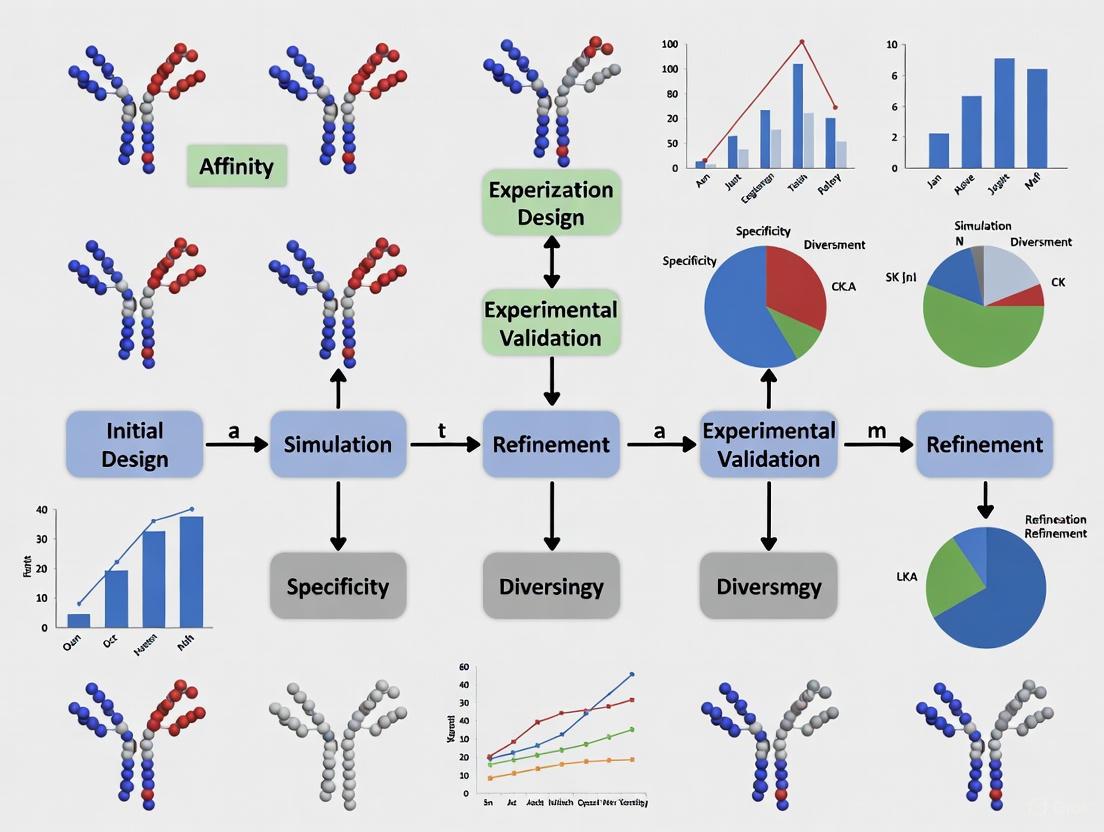
This article explores the transformative role of Bayesian optimization (BO) in computational antibody design, a field critical for developing new biologics.
Bayesian Optimization in Antibody Design: A New Frontier for Accelerated Therapeutic Discovery
Abstract
This article explores the transformative role of Bayesian optimization (BO) in computational antibody design, a field critical for developing new biologics. We first establish the foundational principles of BO and its necessity for navigating the vast combinatorial sequence space of antibodies. The discussion then progresses to cutting-edge methodological frameworks like AntBO and CloneBO, which integrate Gaussian processes and generative models for efficient in silico design. We critically examine key optimization challenges, including the integration of structural information and developability constraints, and present comparative validation studies that demonstrate significant performance improvements over traditional methods, such as discovering high-affinity binders in under 200 design cycles. This resource is tailored for researchers, scientists, and drug development professionals seeking to leverage machine learning for next-generation therapeutic antibody development.
The Antibody Design Challenge and Why Bayesian Optimization is the Answer
The Combinatorial Problem of Antibody Sequence Space
The combinatorial nature of antibody sequence space presents a fundamental challenge in computational immunology and therapeutic antibody design. Antibodies achieve their remarkable diversity primarily through V(D)J recombination in the Complementarity Determining Regions (CDRs), with the CDR3 of the heavy chain (CDRH3) demonstrating the highest sequence variability and playing a dominant role in antigen-binding specificity [1] [2]. The source of antibody diversity has long been identified to be the somatic recombination of V-, (D- in the heavy chains) and J-genes, with additions and deletions of nucleotides at the junctions further increasing diversity [3].
The combinatorial explosion of possible sequences creates a search space of intractable size for exhaustive exploration. For a sequence of length n consisting of the 20 naturally occurring amino acids, there are 20^n possible sequences [1]. With CDRH3 sequence lengths reaching up to 36 residues, the theoretical sequence space exceeds practical limits for exhaustive computational or experimental screening [1]. This vastness makes it impossible to query binding-affinity oracles exhaustively, both computationally and experimentally, necessitating sophisticated optimization approaches [1].
Computational Framework: Bayesian Optimization for Antibody Design
Core Principles of AntBO
AntBO represents a combinatorial Bayesian optimization (BO) framework specifically designed for the in silico design of antigen-specific CDRH3 regions [1] [4]. This approach addresses the combinatorial challenge through several key innovations:
- Gaussian Processes (GPs): Utilized as a surrogate model to incorporate prior beliefs about the domain and guide the search in sequence space [1]
- Uncertainty Quantification: Enables the acquisition maximization step to optimally balance exploration and exploitation in the search space [1]
- CDRH3 Trust Region: Restricts the search to sequences with favorable developability scores to ensure therapeutic relevance [4]
- Sample Efficiency: Designed to find high-affinity sequences with a minimal number of calls to the binding-affinity oracle [1]
Performance Benchmarking
The following table summarizes the quantitative performance of AntBO compared to experimental data and other computational approaches:
Table 1: Performance Metrics of AntBO in Computational Experiments
| Metric | Performance | Comparative Baseline |
|---|---|---|
| Oracle Calls | <200 | Outperforms best of 6.9M experimental CDRH3s [1] |
| High-Affinity Discovery | 38 protein designs | Requires no domain knowledge [1] |
| Antigen Testing | 159 discretized antigens | Consistent outperformance across diverse targets [1] [4] |
| Developability | Favorable scores maintained | Incorporates biophysical constraints [1] |
Experimental Protocols and Methodologies
AntBO Implementation Protocol
Objective: To design high-affinity, developable CDRH3 sequences for specific antigens using combinatorial Bayesian optimization.
Materials:
- Absolut! software suite (binding affinity oracle)
- AntBO computational framework
- 159 antigen structures for benchmarking
- Developability scoring metrics
Procedure:
- Initialization: Define the CDRH3 sequence space and trust region based on developability constraints
- Surrogate Modeling: Implement Gaussian process to model the antibody-antigen binding landscape
- Acquisition Function Optimization: Balance exploration and exploitation using upper confidence bound criteria
- Oracle Query: Evaluate candidate sequences using Absolut! binding affinity simulation
- Iterative Refinement: Update the surrogate model with new data points and repeat steps 3-4 for 200 iterations
- Validation: Select top-performing sequences for in vitro testing
Technical Notes: The trust region is critical for maintaining favorable developability properties, including aggregation resistance, solubility, and stability [1]. The Absolut! framework provides an end-to-end simulation of antibody-antigen binding affinity using coarse-grained lattice representations while preserving eight levels of biological complexity present in experimental datasets [1].
Antibody Repertoire Sequencing and Analysis
Objective: To characterize natural antibody repertoire architecture and understand sequence space organization.
Materials:
- Bulk B-cell RNA/DNA or single-cell suspensions
- 5' RACE or multiplex PCR reagents
- Unique Molecular Identifiers (UMIs)
- High-throughput sequencing platform (Illumina)
- Computational analysis tools (MixCR, ImmuneDB, DEAL)
Procedure:
- Library Preparation:
- For bulk RNA: Use random hexamers or constant region primers for cDNA synthesis with UMIs
- For single-cell: Implement 5' scRNA-seq with V(D)J enrichment
- Amplify using multiplex PCR or 5' RACE protocols [2]
Sequencing: Perform high-throughput sequencing on Illumina platform (recommended depth: >100,000 reads/sample)
V(D)J Sequence Annotation:
- Preprocess raw FASTQ data (quality control, adapter trimming)
- Align to germline Ig reference sequences (IMGT database)
- Identify V, D, J gene segments and CDR3 boundaries
- Extract clonotypes based on nucleotide or amino acid sequences [2]
Network Analysis:
- Calculate pairwise sequence similarity using Levenshtein distance
- Construct similarity networks with nodes (sequences) and edges (similarity relationships)
- Analyze global network properties: interconnectedness, component size, centrality [3]
Technical Notes: DNA-input repertoire allows analysis of both productive and non-productive V(D)J rearrangements, while RNA-input reflects expressed antibody repertoire. UMIs are essential for accurate quantification and error correction [2]. For diversity estimation, the DEAL software utilizes base quality scores to compensate for technical errors in sequencing [5].
Visualization of Workflows and Relationships
AntBO Combinatorial Optimization Workflow
Diagram 1: AntBO Bayesian Optimization Workflow
Antibody Repertoire Architecture Analysis
Diagram 2: Repertoire Sequencing & Analysis Pipeline
Table 2: Essential Research Tools for Antibody Sequence Space Analysis
| Resource | Type | Primary Function | Application Context |
|---|---|---|---|
| Absolut! Software | Computational Oracle | In silico antibody-antigen binding simulation | Benchmarking designed CDRH3 sequences [1] |
| AntBO Framework | Optimization Tool | Combinatorial Bayesian optimization | Automated antibody design with developability constraints [1] [4] |
| IMGT Database | Reference Database | Germline Ig gene sequences | V(D)J sequence annotation and alignment [2] |
| DEAL (Diversity Estimator) | Bioinformatics Tool | Antibody library complexity estimation | Quantitative diversity assessment from NGS data [5] |
| MixCR | Analysis Pipeline | Adaptive immunity repertoire analysis | V(D)J alignment and clonotype inference [2] |
| Unique Molecular Identifiers (UMIs) | Molecular Biology Reagent | Error correction and quantification | Accurate RNA molecule counting in repertoire sequencing [2] |
| 5' RACE Protocol | Laboratory Method | Unbiased V(D)J amplification | Library preparation without primer bias [2] |
Discussion and Future Perspectives
The integration of Bayesian optimization with antibody design represents a paradigm shift in addressing the combinatorial challenge of antibody sequence space. The demonstrated efficiency of AntBO in discovering high-affinity binders in under 200 oracle calls, outperforming millions of experimentally obtained sequences, highlights the transformative potential of this approach [1]. This methodology effectively navigates the vast combinatorial space while incorporating critical developability constraints early in the design process.
Future directions in this field include the incorporation of more sophisticated machine learning architectures, expansion to target multiple antibody regions beyond CDRH3, and improved accuracy in affinity prediction for high-affinity binders [6]. Additionally, the integration of structural information with sequence-based models may further enhance prediction accuracy, though current methods like AntBO demonstrate that significant progress can be achieved using sequence information alone [7]. As these computational methods mature, they promise to significantly accelerate therapeutic antibody development while reducing experimental costs.
Bayesian Optimization (BO) is a powerful, sample-efficient framework for optimizing expensive black-box functions where the functional form of the objective is unknown and direct evaluations are costly [8]. This approach has demonstrated remarkable success across diverse domains, from tuning the hyperparameters of AlphaGo to accelerating materials discovery and designing therapeutic antibodies [9] [8] [10]. The fundamental challenge BO addresses is the exploration-exploitation dilemma—balancing the need to learn about unknown regions of the search space (exploration) with the desire to concentrate on areas already known to be promising (exploitation) [8].
In antibody design, researchers face precisely this type of optimization problem: they must iteratively mutate antibody sequences to improve binding affinity and stability, where each experimental evaluation requires substantial laboratory resources and time [9]. The sequence-function relationship constitutes a complex black box, making BO particularly well-suited for guiding this optimization process efficiently.
Core Mathematical Framework
BO operates through an iterative process that combines a probabilistic surrogate model with an acquisition function to guide the selection of future evaluation points [8].
The General Optimization Problem
Formally, BO aims to find the global optimum of an unknown objective function (f(x)): [ x^* = \arg\max_{x \in \mathcal{X}} f(x) ] where (x) represents the design parameters (e.g., antibody sequence features), (\mathcal{X}) is the design space, and (f(x)) is expensive to evaluate (e.g., requiring wet lab experiments) [11].
Bayes' Theorem and Sequential Learning
The process is "Bayesian" because it maintains a posterior distribution over the objective function that updates as new observations are collected. According to Bayes' theorem: [ P(f|D{1:t}) \propto P(D{1:t}|f) P(f) ] where (D{1:t} = {(x1, y1), \ldots, (xt, yt)}) represents the observations collected up to iteration (t), (P(f)) is the prior over the objective function, (P(D{1:t}|f)) is the likelihood, and (P(f|D_{1:t})) is the posterior distribution [12] [8]. This sequential updating process allows BO to incorporate information from each new experiment to refine its understanding of the objective landscape.
Key Components of Bayesian Optimization
Surrogate Models
The surrogate model approximates the expensive black-box function using a probabilistic framework. The most common choice is Gaussian Process (GP) regression, which defines a probability distribution over possible functions that fit the observed data [8]. A GP is fully specified by its mean function (\mu(x)) and covariance kernel (k(x, x')): [ f(x) \sim \mathcal{GP}(\mu(x), k(x, x')) ] This framework provides both predictions and uncertainty estimates at unobserved points, which is crucial for guiding the optimization process [8]. For problems involving both qualitative and quantitative variables, such as material selection combined with parameter tuning, specialized approaches like Latent-Variable Gaussian Processes (LVGP) map qualitative factors to underlying numerical latent variables to enable effective modeling [13].
Acquisition Functions
The acquisition function (\alpha(x)) uses the surrogate model's predictions to quantify the utility of evaluating a candidate point (x), balancing exploration and exploitation. Common acquisition functions include:
- Expected Improvement (EI): Measures the expected improvement over the current best observation (f^) [8]: [ \text{EI}(x) = \mathbb{E}[\max(f(x) - f^, 0)] ]
- Probability of Improvement (PI): Captures the probability that a point will improve upon (f^*)
- Upper Confidence Bound (UCB): Uses an optimism-based strategy: (\text{UCB}(x) = \mu(x) + \kappa\sigma(x)), where (\kappa) controls the exploration-exploitation balance [8]
Table 1: Comparison of Common Acquisition Functions
| Acquisition Function | Mathematical Form | Strengths | Weaknesses |
|---|---|---|---|
| Expected Improvement (EI) | (\mathbb{E}[\max(f(x) - f^*, 0)]) | Well-balanced performance, analytic form | Can be overly greedy |
| Probability of Improvement (PI) | (P(f(x) \geq f^*)) | Simple interpretation | Prone to excessive exploitation |
| Upper Confidence Bound (UCB) | (\mu(x) + \kappa\sigma(x)) | Explicit exploration parameter | Parameter tuning required |
The BO Algorithm
The complete BO procedure follows these steps:
- Initialize with a small set of observations (using random sampling or design of experiments)
- Repeat until budget exhausted:
- Update the surrogate model using all available data
- Optimize the acquisition function to select the next evaluation point (x_{t+1})
- Evaluate (f(x{t+1})) (e.g., run experiment) and record (y{t+1})
- Augment the data (D{1:t+1} = D{1:t} \cup {(x{t+1}, y{t+1}))
- Return the best observed solution
The following diagram illustrates this iterative workflow:
Advanced Bayesian Optimization Frameworks
Mixed-Variable Optimization with LVGP
Many real-world problems, including antibody design, involve both qualitative and quantitative variables. The Latent-Variable Gaussian Process (LVGP) approach represents qualitative factors by mapping them to underlying numerical latent variables through a low-dimensional embedding [13]. This provides a physically justified representation that captures complex correlations between qualitative levels and enables effective optimization in mixed variable spaces [13].
Multi-Objective Bayesian Optimization
Therapeutic antibody optimization requires balancing multiple competing objectives simultaneously, such as binding affinity, stability, specificity, and low immunogenicity [14] [10]. Multi-objective BO extends the basic framework to identify Pareto-optimal solutions—configurations where no objective can be improved without worsening another [14]. This approach was successfully demonstrated in biologics formulation development, where BO concurrently optimized three key biophysical properties of a monoclonal antibody (melting temperature, diffusion interaction parameter, and stability against air-water interfaces) in just 33 experiments [14].
Integration with Domain Knowledge and Reasoning
Recent advances integrate large language models (LLMs) with BO to incorporate domain knowledge and scientific reasoning. In the "Reasoning BO" framework, LLMs generate scientific hypotheses and assign confidence scores to candidate points, while knowledge graphs store and retrieve domain expertise throughout optimization [15]. This approach demonstrated remarkable performance in chemical reaction yield optimization, increasing yield to 94.39% compared to 76.60% for traditional BO [15].
Bayesian Optimization for Antibody Design: Protocols and Applications
Clone-Informed Bayesian Optimization (CloneBO)
CloneBO is a specialized BO procedure that incorporates knowledge of how the immune system naturally optimizes antibodies through clonal evolution [9]. The methodology involves:
Protocol: CloneBO for Antibody Optimization
Training Data Preparation
- Collect hundreds of thousands of clonal families (sets of related, evolving antibody sequences) from immune repertoire data
- Annotate sequences with experimental measurements of binding affinity and stability
Generative Model Training
- Train a large language model (CloneLM) on the clonal family data to learn the natural evolutionary patterns of antibody optimization
- The model learns which mutations are most likely to improve antibody function within biological constraints
Bayesian Optimization Loop
- Use CloneLM to design candidate sequences with mutations informed by natural immune optimization
- Employ a twisted sequential Monte Carlo procedure to guide designs toward regions with high predicted performance
- Iteratively select sequences for experimental validation based on both model predictions and uncertainty
- Update the model with new experimental measurements
This approach has demonstrated substantial efficiency improvements over previous methods in both computational experiments and wet lab validations, producing stronger and more stable antibody binders [9].
Multi-Objective Antibody Optimization with AbBFN2
The AbBFN2 framework, built on Bayesian Flow Networks, provides a unified approach for multi-property antibody optimization [10]. The system enables simultaneous optimization of multiple antibody properties through conditional generation:
Protocol: Multi-Objective Antibody Optimization with AbBFN2
Task Specification
- Define target properties (e.g., humanization score, developability, specificity)
- Set constraints and thresholds for each property
- Input initial antibody sequence(s) for optimization
Conditional Generation and Evaluation
- Sample candidate sequences conditioned on desired property values
- Evaluate candidates using the model's internal property predictors
- Select promising variants that satisfy multiple objectives simultaneously
Experimental Validation and Iteration
- Synthesize and test top candidates experimentally
- Feed results back into model for continued refinement
- Repeat until desired property profile is achieved
In validation studies, AbBFN2 successfully optimized 63 out of 91 non-human antibody sequences for both human-likeness and developability within just 2.5 hours—a task that traditionally requires weeks to months per sequence [10].
Table 2: Performance Comparison of Bayesian Optimization Methods in Biological Applications
| Application Domain | BO Method | Performance Metrics | Comparison to Alternatives |
|---|---|---|---|
| Antibody Design | CloneBO [9] | Substantial efficiency improvement in designing strong, stable binders | Outperformed previous methods in realistic in silico and in vitro experiments |
| Biologics Formulation | Multi-objective BO [14] | Identified optimal formulations in 33 experiments | Accounted for complex trade-offs between conflicting properties |
| Assay Development | Cloud-based BO [16] | Found optimal conditions testing 21 vs 294 conditions (7x cost reduction) | Dramatically reduced experimental burden compared to brute-force approach |
| Chemical Synthesis | Reasoning BO [15] | Achieved 94.39% yield vs 76.60% for traditional BO | Demonstrated superior initialization and continuous optimization |
Experimental Protocol: Bayesian Optimization for Assay Development
The National Center for Advancing Translational Sciences (NCATS) developed a cross-platform, cloud-based BO system for biological assay optimization [16]. The detailed protocol includes:
Materials and Reagents
- Assay components (enzymes, substrates, buffers)
- Liquid handling robotics or automated systems
- Plate readers or other detection instrumentation
- Cloud computing infrastructure for BO algorithm
Procedure
Initial Experimental Design
- Define parameter ranges (concentrations, pH, temperature, incubation times)
- Establish objective function (e.g., signal-to-noise ratio, Z'-factor)
- Generate initial design (10-20 points) using Latin Hypercube Sampling
Automated Optimization Loop
- Prepare assay plates according to current candidate conditions
- Run assay and measure outcomes
- Upload results to cloud BO system
- Allow algorithm to suggest next batch of conditions (typically 5-20 conditions)
- Repeat until convergence or budget exhaustion
Validation and Verification
- Confirm optimal conditions in replicate experiments
- Compare performance to previous standard conditions
This approach achieved a sevenfold reduction in costs and experimental runtime compared to brute-force optimization while being controlled remotely through a secure connection [16].
The Scientist's Toolkit: Essential Research Reagents and Materials
Table 3: Key Research Reagent Solutions for Bayesian Optimization in Antibody Design
| Reagent/Material | Function in BO Workflow | Application Notes |
|---|---|---|
| High-Throughput Screening Assays | Enable parallel evaluation of multiple candidate conditions | Critical for efficient data generation; miniaturization reduces reagent costs [16] |
| Antibody Sequence Libraries | Provide starting points and training data for surrogate models | Clonal families offer evolutionarily-informed search space [9] |
| Protein Stability Assays | Measure biophysical properties for multi-objective optimization | Include thermal shift, aggregation propensity, and viscosity measurements [14] |
| Binding Affinity Measurements | Quantify target engagement strength | Surface plasmon resonance (SPR) or bio-layer interferometry provide quantitative data |
| Cloud Computing Infrastructure | Host BO algorithms and surrogate models | Enable remote access and collaboration across research teams [16] |
| Automated Liquid Handling Systems | Implement candidate conditions suggested by BO | Essential for reproducible high-throughput experimentation [16] |
| Surrogate Model Software | Implement Gaussian Processes or Bayesian neural networks | Options include GPyTorch, BoTorch, or custom implementations [8] |
Workflow Visualization: Integrated Bayesian Optimization for Antibody Design
The complete integration of BO into the antibody design process involves multiple interconnected components, as illustrated in the following comprehensive workflow:
Bayesian Optimization represents a paradigm shift in how researchers approach expensive black-box optimization problems in antibody design and broader immunology research. By intelligently balancing exploration and exploitation through probabilistic modeling and acquisition functions, BO dramatically reduces the experimental burden required to discover improved therapeutic candidates. The integration of biological prior knowledge through clonal evolutionary information, combined with multi-objective optimization frameworks and emerging reasoning capabilities, positions BO as an indispensable tool in the modern computational immunologist's toolkit. As these methods continue to evolve and become more accessible, they promise to accelerate the discovery and development of novel antibody-based therapeutics with enhanced properties and reduced immunogenicity.
The discovery and optimization of therapeutic antibodies represent a complex multidimensional challenge, requiring the simultaneous improvement of binding affinity, specificity, stability, and manufacturability. Bayesian Optimization (BO) has emerged as a powerful machine learning framework to navigate this vast combinatorial sequence space efficiently, transforming antibody development from a largely empirical process to a rational, data-driven endeavor [17]. This approach is particularly valuable given the enormous landscape of possible antibody sequences, estimated between 10 billion and 100 billion for germline antibodies alone, making exhaustive experimental screening practically impossible [10].
The core BO framework for antibody design operates through an iterative feedback loop. It begins with an initial set of experimentally characterized antibody variants, uses this data to build a surrogate model that predicts antibody properties, and then employs an acquisition function to intelligently select the next most promising variants for experimental testing [18] [19]. This process strategically balances the exploration of novel sequence regions with the exploitation of known promising areas, dramatically reducing the experimental burden required to identify optimized candidates. For instance, researchers have demonstrated the identification of highly optimized antibody formulations in just 33 experiments, a significant reduction compared to traditional methods [20].
This protocol details the implementation of BO for antibody engineering, focusing on the three fundamental components that enable its sample efficiency: surrogate models that learn from available data, acquisition functions that guide experimental selection, and oracle functions that provide the crucial experimental validation. We provide application notes, experimental protocols, and implementation guidelines to equip researchers with practical tools for leveraging BO in antibody discovery and optimization campaigns.
Bayesian Optimization Workflow: From Sequence to Candidate
The typical BO workflow for antibody design follows a structured, iterative process that integrates computational predictions with experimental validation. The diagram below illustrates this cyclic workflow, highlighting the roles of the surrogate model, acquisition function, and experimental oracle.
Core Component 1: Surrogate Models
Gaussian Process Fundamentals
Surrogate models form the predictive heart of the Bayesian optimization framework, approximating the expensive-to-evaluate true function that maps antibody sequences or formulations to their functional properties. The most commonly employed surrogate in BO is the Gaussian Process (GP), a probabilistic model that defines a probability distribution over possible functions that fit the observed data [18] [8]. A GP is particularly well-suited for biological applications like antibody design due to its flexibility in modeling complex nonlinear relationships, ability to quantify prediction uncertainty, and efficiency with small datasets commonly encountered in early-stage research [19].
A Gaussian Process is fully specified by a mean function (m(\boldsymbol{x})) and a covariance kernel (K(\boldsymbol{x}, \boldsymbol{x}')):
[ f(\boldsymbol{X}*) \mid \mathcal{D}n, \boldsymbol{X}* \sim \mathcal{N} \left(\mun (\boldsymbol{X}*), \sigma^2n (\boldsymbol{X}_*) \right) ]
[ \mun (\boldsymbol{X}) = K(\boldsymbol{X}_, \boldsymbol{X}n) \left[ K(\boldsymbol{X}n, \boldsymbol{X}n) + \sigma^2 I \right]^{-1} (\boldsymbol{y} - m (\boldsymbol{X}n)) + m (\boldsymbol{X}_*) ]
[ \sigma^2n (\boldsymbol{X}) = K (\boldsymbol{X}_, \boldsymbol{X}*) - K(\boldsymbol{X}, \boldsymbol{X}_n) \left[ K(\boldsymbol{X}_n, \boldsymbol{X}_n) + \sigma^2 I \right]^{-1} K(\boldsymbol{X}_n, \boldsymbol{X}_) ]
where (\boldsymbol{X}n) represents the training inputs (antibody sequences or formulations), (\boldsymbol{y}) are the observed outputs (e.g., binding affinity, stability), and (\boldsymbol{X}*) are the test points for prediction [18].
Implementation Protocol for Surrogate Modeling
Materials and Reagents:
- Experimentally characterized antibody variant dataset (sequence and property measurements)
- Computational resources for model training (CPU/GPU)
- Bayesian optimization software platform (e.g., ProcessOptimizer, BoTorch, NUBO)
Procedure:
Data Preparation and Feature Encoding:
- Encode antibody sequences as numerical feature vectors using appropriate representations (e.g., one-hot encoding, physicochemical properties, or embeddings from protein language models).
- Standardize input features to zero mean and unit variance to improve model convergence.
- Standardize objective values if they vary across scales, especially in multi-objective optimization.
Model Initialization:
- Select a Matern 5/2 kernel as a flexible default for modeling complex antibody property landscapes: [ k_{\text{Matern 5/2}}(r) = \sigma^2 \left(1 + \frac{\sqrt{5}r}{\ell} + \frac{5r^2}{3\ell^2}\right) \exp\left(-\frac{\sqrt{5}r}{\ell}\right) ] where (r = \|\boldsymbol{x} - \boldsymbol{x}'\|), (\ell) is the length-scale, and (\sigma^2) is the output variance [18].
- Initialize with a constant mean function if no prior knowledge is available.
Model Training:
- Optimize GP hyperparameters (length scales, output variance, noise variance) by maximizing the log marginal likelihood using the L-BFGS-B algorithm: [ \log p(\boldsymbol{y}n \mid \boldsymbol{X}n) = -\frac{1}{2} (\boldsymbol{y}n - m(\boldsymbol{X}n))^T [K(\boldsymbol{X}n, \boldsymbol{X}n) + \sigma^2 I]^{-1} (\boldsymbol{y}n - m(\boldsymbol{X}n)) - \frac{1}{2} \log \lvert K(\boldsymbol{X}n, \boldsymbol{X}n) + \sigma^2 I \rvert - \frac{n}{2} \log 2\pi ]
- Implement using GPyTorch or scikit-optimize libraries for robust hyperparameter estimation [18].
Model Validation:
- Perform leave-one-out or k-fold cross-validation to assess prediction accuracy.
- Monitor normalized root mean square error (NRMSE) for mean predictions and negative log predictive density (NLPD) for probabilistic calibration.
- Retrain model with full dataset before deployment in BO loop.
Application Notes: For multi-objective optimization problems common in antibody development (e.g., simultaneously optimizing affinity, stability, and specificity), use independent GP surrogates for each objective when using a simple approach [20]. For advanced implementations, consider multi-task GPs that model correlations between objectives. For high-dimensional sequence optimization, consider combining GPs with deep learning embeddings to capture complex sequence-function relationships [10].
Core Component 2: Acquisition Functions
Acquisition Function Formulations
Acquisition functions guide the experimental design process by quantifying the potential utility of evaluating unseen antibody variants, strategically balancing exploration of uncertain regions with exploitation of promising areas. The following table compares the three primary acquisition functions used in antibody development.
Table 1: Acquisition Functions for Antibody Optimization
| Function | Formula | Mechanism | Antibody Application Context |
|---|---|---|---|
| Probability of Improvement (PI) | (\alpha_{PI}(x) = P(f(x) \geq f(x^+) + \epsilon) = \Phi\left(\frac{\mu(x) - f(x^+) - \epsilon}{\sigma(x)}\right)) | Measures probability that a new point exceeds current best by margin (\epsilon) [21] | Conservative approach for fine-tuning known antibody scaffolds with minor modifications |
| Expected Improvement (EI) | (\alpha_{EI}(x) = (\mu(x) - f(x^+) - \epsilon)\Phi(z) + \sigma(x)\phi(z)) where (z = \frac{\mu(x) - f(x^+) - \epsilon}{\sigma(x)}) [22] | Measures expected magnitude of improvement over current best [8] | General-purpose choice for balanced exploration-exploitation in sequence optimization |
| Upper Confidence Bound (UCB) | (\alpha_{UCB}(x) = \mu(x) + \lambda\sigma(x)) [22] | Optimistic strategy assuming upper confidence bound is achievable | High-risk exploration for discovering novel antibody scaffolds with unusual properties |
Implementation Protocol for Acquisition Optimization
Materials and Reagents:
- Trained surrogate model (Gaussian Process)
- Computational resources for numerical optimization
- Defined search space of antibody sequences or formulations
Procedure:
Function Selection:
- For initial discovery phases with high uncertainty, select UCB with (\lambda = 2.0-3.0) for aggressive exploration.
- For intermediate optimization, use Expected Improvement for balanced trade-off.
- For final fine-tuning stages, employ PI with small (\epsilon = 0.01-0.05) for conservative improvements.
Acquisition Optimization:
- Using the trained GP surrogate, compute the acquisition function values across the defined antibody sequence space.
- Employ multi-start gradient-based optimization (e.g., L-BFGS-B) or global optimization techniques to find the maximum of the acquisition function.
- For combinatorial sequence spaces, use genetic algorithms (NSGA-II) or simulated annealing tailored to antibody representations.
Candidate Selection:
- Select the top (k) candidates (for batch evaluation) that maximize the acquisition function.
- For parallel experimental workflows, use techniques like Kriging believer or local penalization to select diverse batches that cover promising regions of the sequence space.
- Implement Thompson sampling as an alternative for highly parallelized evaluation of antibody variants.
Iteration and Update:
- Proceed with experimental evaluation of selected candidates through the oracle function.
- Update the surrogate model with new data and repeat the acquisition process.
Application Notes: For antibody humanization tasks where the goal is to reduce immunogenicity while maintaining binding affinity, use a constrained EI formulation that incorporates domain knowledge [10]. In formulation optimization with physical constraints (e.g., osmolality, pH), modify the acquisition function to penalize invalid regions [20]. The acquisition function's exploration-exploitation balance can be dynamically adjusted based on remaining experimental budget—favoring exploration early and exploitation later in the campaign.
Core Component 3: Experimental Oracles
Oracle Functions for Antibody Assessment
In Bayesian optimization, the oracle function represents the expensive, black-box experimental process that evaluates candidate antibodies and returns quantitative measurements of the properties of interest. For antibody development, these oracle functions typically involve high-throughput experimental assays that measure key developability properties. The relationship between oracle measurements and the optimization workflow is crucial for success.
Implementation Protocol for Oracle Validation
Materials and Reagents:
- Purified antibody variants or formulations for testing
- Assay-specific reagents and equipment
- High-throughput screening infrastructure
Procedure for Binding Affinity Oracle:
Surface Plasmon Resonance (SPR) or Bio-Layer Interferometry (BLI):
- Immobilize antigen on sensor chip according to manufacturer's protocol
- Dilute antibody variants in running buffer at multiple concentrations
- Measure association and dissociation phases to determine kinetic parameters (kon, koff)
- Calculate binding affinity (K_D) from kinetic rates or steady-state analysis
- Include reference antibodies for quality control and signal normalization
High-Throughput ELISA Screening:
- Coat microplates with antigen at optimized concentration
- Block plates with protein-based blocking buffer
- Incubate with antibody variants at standardized concentration
- Detect binding with enzyme-conjugated secondary antibody and substrate
- Measure absorbance and normalize to positive and negative controls
Procedure for Stability Oracle:
Differential Scanning Fluorimetry (DSF):
- Prepare antibody samples in formulation buffer with fluorescent dye (e.g., SYPRO Orange)
- Apply temperature ramp from 25°C to 95°C in real-time PCR instrument
- Monitor fluorescence intensity as function of temperature
- Determine melting temperature (T_m) from inflection point of unfolding curve
- Rank variants by thermal stability based on T_m values
Accelerated Stability Assessment:
- Incubate antibody formulations at stressed conditions (e.g., 25°C, 40°C for 2-4 weeks)
- Analyze samples periodically for aggregation (SEC-HPLC), fragmentation (CE-SDS), and binding activity
- Calculate degradation rates and compare relative stabilities
Application Notes: Implement the BreviA system or similar high-throughput platforms for parallel evaluation of 384 antibody-antigen interactions when working with large variant libraries [17]. For early-stage screening, prioritize throughput over precision by using single-concentration assays before validating hits with full kinetic analysis. Incorporate quality control metrics and replicate measurements to quantify and model experimental noise in the Bayesian optimization framework.
Integrated Protocol: Multi-Objective Antibody Optimization
This section provides a complete experimental protocol for optimizing antibody formulations using Bayesian optimization, based on a published study that simultaneously improved three key biophysical properties of a monoclonal antibody [20].
Materials and Reagents
Table 2: Research Reagent Solutions for Bayesian Antibody Optimization
| Category | Specific Items | Function in Protocol |
|---|---|---|
| Model System | Bococizumab-IgG1 monoclonal antibody | Model therapeutic antibody for optimization |
| Excipients | d-Sorbitol (≥98%), L-Arginine (≥99.5%), L-Aspartic acid (≥98%), L-Glutamic acid (≥99%) | Formulation components to optimize stability |
| Buffers | L-Histidine (≥99.5%), Hydrochloric acid | Buffer system for pH control |
| Analytical Instruments | SPR/BLI instrument, DSF-capable RT-PCR system, UPLC/HPLC systems | Oracle functions for property measurement |
| Software | ProcessOptimizer (v0.9.4), pHcalc package, Python with scikit-optimize | BO implementation and constraint management |
Step-by-Step Procedure
Problem Formulation and Search Space Definition:
- Define six input variables: concentration of Sorbitol, concentration of Arginine, pH, fraction of Glutamic acid, fraction of Aspartic acid, and fraction of HCl
- Normalize all variables to a unit hypercube for optimization
- Set optimization objectives: maximize melting temperature (Tm, thermal stability), maximize diffusion interaction parameter (kD, colloidal stability), and maximize stability against air-water interfaces
- Define practical constraints: osmolality 250-500 mOsm/kg, sum of acid fractions ≤1, pH range 5.0-7.0
Initial Experimental Design:
- Sample 13 initial points randomly from the defined variable space
- Prepare formulations according to the generated compositions using the pHcalc package for concentration reconstruction
- Ensure all initial formulations satisfy defined constraints
Oracle Evaluation:
- Measure Tm using DSF: Prepare samples at 0.2 mg/mL antibody in respective formulations, apply temperature ramp 25-95°C at 1°C/min, determine Tm from inflection point
- Measure k_D using dynamic light scattering: Analyze antibody solutions at 10 mg/mL, 25°C, determine interaction parameter from concentration-dependent scattering
- Assess interfacial stability by measuring aggregation after agitation: Subject samples to vertical shaking for 24 hours, quantify soluble monomer by SEC-HPLC
Bayesian Optimization Loop:
- Standardize all three objectives to zero mean and unit variance
- Train independent Gaussian Process surrogates for each objective using Matern 5/2 kernel
- With 75% probability, use exploitation route: Generate Pareto front with NSGA-II (100 generations, 100 population size), select point with maximum minimum distance to existing observations in objective and variable space
- With 25% probability, use exploration route: Minimize Steinerberger sum from 20 random starts to explore sparsely sampled regions
- Implement batch suggestion with batch size 5 using Kriging believer strategy
- Enforce constraints during candidate suggestion by discarding constraint-violating genetic moves
Iteration and Convergence:
- Run BO for 4 iterations (20 total experiments beyond initial design)
- Monitor hypervolume progression to assess convergence
- Select final optimized formulation from Pareto front based on application requirements
Expected Results and Interpretation
This protocol should identify formulation conditions that simultaneously improve all three target properties within 33 total experiments (13 initial + 20 BO-suggested) [20]. The algorithm typically identifies clear trade-offs between properties (e.g., high pH favors Tm while low pH favors kD), enabling informed decision-making based on therapeutic application priorities. The entire computational process requires approximately 56 minutes per iteration on standard computing hardware, with the majority of time spent on pH and osmolality constraint enforcement [20].
Troubleshooting and Optimization Guidelines
Poor Surrogate Model Performance:
- Problem: GP predictions show high cross-validation error
- Solution: Normalize input features and objectives, consider alternative kernel functions, or increase initial design size for better space-filling
Insufficient Exploration:
- Problem: BO converges quickly to local optimum
- Solution: Increase exploration probability to 30-40%, use UCB with higher λ values, or incorporate random points in batch suggestions
Constraint Violations:
- Problem: Suggested formulations violate practical constraints
- Solution: Implement more conservative constraint handling through penalty functions or use of feasible set projections
High Experimental Noise:
- Problem: Oracle measurements show high variability
- Solution: Incorporate explicit noise modeling in GP, implement replicate measurements for promising candidates, use robust acquisition functions
For advanced implementations, consider transfer learning approaches where knowledge from previous antibody optimization campaigns is incorporated through informed priors in the GP model, potentially reducing experimental burden by 30-50% in related projects [19].
Within the framework of Bayesian optimization (BO) for antibody design, the precise definition of optimization objectives is paramount. BO provides a sample-efficient, uncertainty-aware framework for navigating the vast combinatorial sequence space of antibodies, where exhaustive experimental screening is infeasible [1] [23]. This process treats the intricate biophysical simulations and experimental assays as black-box "oracles" that are expensive to query. The efficacy of this search is wholly dependent on a clear, quantitative articulation of the target properties. This application note delineates the three primary pillars of antibody optimization—affinity, developability, and stability—detailing their computational and experimental assessment methods to guide the formulation of robust objectives for BO campaigns.
Core Optimization Objectives
The following table summarizes the key parameters and their assessment methods for each optimization objective, which are critical for defining the output of a Bayesian optimization oracle.
Table 1: Core Optimization Objectives in Antibody Design
| Objective | Key Parameters | Common In Silico/Computational Assessment Methods | Common Experimental Assessment Methods |
|---|---|---|---|
| Affinity | Binding affinity (KD), Association rate (ka), Dissociation rate (kd) | Structural modeling with scoring functions (e.g., mCSM-AB2), Machine Learning models (e.g., ensemble ML, graph neural networks), Lattice-based simulations (e.g., Absolut! framework) [1] [24] | Surface Plasmon Resonance (SPR), Bio-Layer Interferometry (BLI), Enzyme-Linked Immunosorbent Assay (ELISA) [17] |
| Developability | Colloidal stability (kD), Viscosity, Isoelectric point (pI), Hydrophobicity, Presence of aggregation motifs | Sequence-based pI calculation, Hydrophobicity indices (e.g., TAP), Structure-based patch analysis, Machine learning classifiers [25] [26] | Size-Exclusion Chromatography (SEC), Dynamic Light Scattering (DLS), Differential Scanning Fluorimetry (DSF), Hydrophobic Interaction Chromatography (HIC) [25] [17] |
| Stability | Thermal stability (Tm), Aggregation temperature (Tagg) | Instability index, Aliphatic index, Molecular Dynamics (MD) simulations [26] | Differential Scanning Calorimetry (DSC), Differential Scanning Fluorimetry (DSF) [17] |
Affinity
Affinity defines the strength of the interaction between an antibody and its target antigen, often dominated by the sequence and structure of the Complementarity-Determining Regions (CDRs), particularly CDRH3 [1]. The primary goal is to minimize the dissociation constant (KD), which often involves engineering slower off-rates (kd). For BO, affinity is frequently used as the primary objective function. The AntBO framework, for instance, uses a combinatorial BO approach with a trust region to efficiently maximize binding affinity as evaluated by a black-box simulator, demonstrating the ability to find high-affinity CDRH3 sequences in fewer than 200 oracle calls [1].
Developability
Developability encompasses a suite of biophysical properties that determine whether an antibody candidate can be successfully developed into a stable, manufacturable, and safe therapeutic. Unlike affinity, developability often functions as a constraint within a multi-objective BO problem. Key considerations include:
- Colloidal Stability: A measure of protein-protein interactions in solution, often assessed via the diffusion interaction parameter (kD) from DLS. Low kD values indicate attractive interactions that can lead to aggregation [25].
- Viscosity: High viscosity poses challenges for subcutaneous injection. The isoelectric point (pI) of the variable domains is a simple and powerful predictor; aligning the pIs of different domains in bispecific antibodies can mitigate charge asymmetries and reduce viscosity risks [25].
- Sequence-based Risks: In silico checks for undesirable motifs, such as glycosylation sites or chemical degradation hotspots, are routinely performed [1].
Frameworks like PropertyDAG formalize these complex relationships by structuring objectives in a directed acyclic graph, allowing BO to hierarchically prioritize candidates that satisfy upstream developability constraints before optimizing for affinity [23].
Stability
Stability refers to the structural integrity and resistance to degradation of the antibody itself. This is an intrinsic property crucial for ensuring adequate shelf-life and in vivo half-life. Thermal stability, measured as the melting temperature (Tm) via DSC or DSF, is a standard metric. Computationally, stability can be inferred from various sequence- and structure-based descriptors. Large-scale analyses of natural antibody repertoires have quantified the plasticity of these stability parameters, providing a reference landscape against which engineered antibodies can be compared [26]. In BO, stability can be integrated either as a secondary objective in a multi-objective formulation or as a constraint, similar to developability.
Experimental Protocols for Objective Quantification
Protocol: High-Throughput Affinity Kinetics using Bio-Layer Interferometry (BLI)
Purpose: To quantitatively determine the binding affinity and kinetics (ka, kd, KD) of antibody variants in a high-throughput format suitable for generating data for machine learning model training [17].
Procedure:
- Antibody Capture: Hydrate biosensors (e.g., Anti-Human Fc Capture) in kinetics buffer for at least 10 minutes. Load antibody samples (10-20 µg/mL in kinetics buffer) onto the biosensors for 300 seconds to achieve adequate capture levels.
- Baseline Establishment: Immerse the antibody-loaded biosensors in kinetics buffer for 60 seconds to establish a stable baseline.
- Association Phase: Dip the biosensors into wells containing a series of concentrations of the antigen (e.g., 0, 3.125, 6.25, 12.5, 25, 50 nM) for 300 seconds to monitor binding.
- Dissociation Phase: Transfer the biosensors back to kinetics buffer for 600 seconds to monitor dissociation.
- Data Analysis: Reference the data against a buffer-only well. Fit the association and dissociation curves globally to a 1:1 binding model using the BLI analysis software to extract ka, kd, and KD.
Protocol: Colloidal Stability Assessment via Dynamic Light Scattering (DLS)
Purpose: To measure the diffusion interaction parameter (kD), a key indicator of colloidal stability and aggregation propensity, which correlates with viscosity and solution behavior [25].
Procedure:
- Sample Preparation: Buffer-exchange antibody candidates into a standard formulation buffer (e.g., histidine buffer, pH 6.0) and concentrate to 10 mg/mL. Clarify the solution by centrifugation at 15,000 × g for 10 minutes.
- DLS Measurement: Load the supernatant into a quartz cuvette. Place the cuvette in the instrument and equilibrate to 25°C.
- Data Acquisition: Perform a series of measurements at increasing antibody concentrations (e.g., 2, 5, 10 mg/mL). For each concentration, measure the diffusion coefficient (D).
- kD Calculation: Plot the measured diffusion coefficient (D) against the antibody concentration (c). The diffusion interaction parameter kD is derived from the slope of the linear regression of D versus c, according to the equation: D = D0 (1 + kD c), where D0 is the diffusion coefficient at infinite dilution. A high, positive kD indicates net repulsive forces and favorable colloidal stability.
Workflow Visualization
Figure 1: Bayesian Optimization Workflow for Antibody Design. This diagram illustrates the iterative process of using Bayesian optimization to balance multiple objectives, with experimental assays feeding data back to update the model.
The Scientist's Toolkit: Research Reagent Solutions
Table 2: Essential Reagents and Platforms for Antibody Optimization
| Reagent/Platform | Function/Description | Application in Optimization |
|---|---|---|
| Absolut! Software Framework | A computational lattice-based simulator for end-to-end in silico evaluation of antibody-antigen binding affinity [1]. | Serves as a deterministic, low-cost black-box "oracle" for benchmarking BO algorithms like AntBO before wet-lab experimentation. |
| IgFold & ABodyBuilder | Deep learning-based tools for rapid and accurate prediction of antibody 3D structures from sequence alone [26] [27]. | Generates structural inputs for structure-based surrogate models in BO, enabling the use of 3D features without experimental structures. |
| Protein Language Models (pLMs) | Large-scale neural networks (e.g., ESM-2) trained on protein sequence databases to infer evolutionary and structural constraints [23] [27]. | Provides sequence embeddings for BO surrogate models and can be used as a "soft constraint" to prioritize natural, functional sequences. |
| BLI & SPR Platforms | Label-free biosensor systems (e.g., Octet, Biacore) for real-time kinetic analysis of biomolecular interactions [17]. | The gold-standard experimental oracle for quantifying binding affinity (KD, ka, kd) of designed antibody variants. |
| Phage/Yeast Display | In vitro selection technologies for screening vast libraries (10^9-10^10) of antibody variants for antigen binding [24] [17]. | High-throughput method for initial candidate discovery and affinity maturation; data can be used to train initial ML/BO models. |
| DLS & DSF Instruments | Analytical instruments for assessing colloidal stability (kD via DLS) and thermal stability (Tm via DSF) in a high-throughput manner [25] [17]. | Key experimental oracles for quantifying developability and stability objectives and constraints within a BO cycle. |
Frameworks in Action: From AntBO to Clone-Informed Bayesian Optimization
Antibodies are Y-shaped proteins crucial for therapeutic applications, with the Complementarity-Determining Region H3 (CDRH3) playing a dominant role in determining antigen-binding specificity and affinity [4]. The sequence space of CDRH3 is vast and combinatorial, making exhaustive experimental or computational screening for optimal binders infeasible [28] [4]. Combinatorial Bayesian Optimization (CBO) has emerged as a powerful machine learning framework to address this challenge, enabling efficient in silico design of high-affinity antibody sequences with favorable developability profiles [28] [4]. AntBO is a CBO implementation designed to bring automated antibody design closer to practical viability for in vitro experimentation [4] [29].
Core Methodology of AntBO
The AntBO framework treats the process of evaluating antigen-binding affinity as a black-box oracle. This oracle takes an antibody sequence as input and returns a binding affinity score, abstracting the complex computational simulations or experimental assays required for this assessment [28] [4]. The primary objective is to find CDRH3 sequences that maximize this oracle's output—indicating stronger binding—while navigating the immense combinatorial sequence space efficiently.
The Bayesian Optimization Engine
Bayesian Optimization is a sequential design strategy that builds a probabilistic surrogate model of the black-box function (the oracle) and uses an acquisition function to decide which sequences to evaluate next [28].
- Surrogate Model: AntBO typically employs Gaussian Process (GP) regression to model the relationship between antibody sequences and their predicted binding affinity. The GP provides a posterior distribution over the function space, yielding both an expected affinity and an uncertainty estimate for any given sequence [30].
- Acquisition Function: This function leverages the GP's predictions to balance exploration (sampling regions of high uncertainty) and exploitation (sampling regions of high predicted affinity). It selects the most promising sequences for the next round of evaluation by the oracle [28] [4].
- Combinatorial Search Space: The approach is specifically tailored for the discrete, combinatorial nature of the CDRH3 sequence space, making it more suitable than optimization methods designed for continuous spaces [4].
Integration of Developability Constraints
A key feature of AntBO is the incorporation of a CDRH3 trust region. This restricts the Bayesian optimization search to sequences that are predicted to have favorable developability scores, ensuring that the designed antibodies not only bind strongly but also possess biophysical properties conducive to therapeutic development, such as stability and low immunogenicity [4].
The following diagram illustrates the core iterative workflow of the AntBO framework:
Performance Benchmarks
AntBO's performance has been rigorously evaluated against established baselines, demonstrating its superior efficiency and effectiveness in designing high-affinity CDRH3 sequences.
Benchmarking Setup
- Oracle: The Absolut! software suite was used as an in silico black-box oracle to score the target specificity and affinity of designed antibodies [4].
- Baselines: AntBO was compared against:
- Scope: Experiments were conducted for 159 discretized antigens available within the Absolut! framework [4].
Key Quantitative Results
Table 1: Summary of AntBO Benchmarking Performance [4]
| Metric | Performance of AntBO | Comparison Baseline |
|---|---|---|
| Optimization Efficiency | Found very-high affinity CDRH3 sequences in 38 protein designs | Outperformed genetic algorithm baseline |
| Performance vs. Experimental Data | Suggested sequences outperforming the best binder from 6.9 million experimental CDRH3s | Surpassed a massive experimentally derived database |
| Domain Knowledge | Required no prior domain knowledge for sequence design | - |
In a separate, head-to-head experimental comparison of a different but related Bayesian optimization method for full single-chain variable fragment (scFv) design, the machine learning approach generated a library where the best scFv showed a 28.7-fold improvement in binding over the best scFv from a directed evolution approach. Furthermore, in the most successful ML-designed library, 99% of the scFvs were improvements over the initial candidate [30].
Experimental Validation Protocols
While AntBO is an in silico design tool, its predictions require empirical validation. The following section outlines standard high-throughput experimental protocols used to measure the binding affinity and properties of antibodies designed by computational methods.
High-Throughput Binding Affinity Measurement
Principle: Yeast surface display is a powerful technique for expressing antibody fragments (like scFvs or Fabs) on the surface of yeast cells, allowing for high-throughput quantification of antigen binding via fluorescence-activated cell sorting (FACS) [30] [31] [17].
Table 2: Key Reagents for Yeast Display Binding Assay
| Research Reagent | Function/Description |
|---|---|
| Yeast Display Library | A population of yeast cells (e.g., Saccharomyces cerevisiae) genetically engineered to express a library of antibody variant sequences on their surface. |
| Fluorescently Labeled Antigen | The target antigen conjugated to a fluorophore (e.g., biotin-streptavidin with a fluorescent tag). Essential for detecting binding events via FACS. |
| FACS Instrument | Fluorescence-Activated Cell Sorter. Used to analyze and sort individual yeast cells based on the fluorescence intensity resulting from antigen binding. |
| Induction Media | Media (e.g., SGLC) used to induce the expression of the antibody fragment on the yeast cell surface. |
Step-by-Step Protocol:
- Library Transformation: Transform the library of designed antibody sequences into a suitable yeast display strain (e.g., EBY100) [30].
- Surface Expression Induction: Inoculate transformed yeast into induction media and incubate for 24-48 hours at a defined temperature (e.g., 20°C) with shaking to allow antibody expression on the cell surface [30].
- Antigen Binding: Label approximately 10^7 yeast cells with a range of concentrations of the fluorescently labeled antigen. Incubate on ice for a set period (e.g., 1-2 hours) to reach binding equilibrium [30].
- FACS Analysis & Sorting: Analyze the labeled cells using a FACS instrument. The median fluorescence intensity (MFI) of the population is measured and can be used to determine the apparent binding affinity. Cells displaying high-affinity binders can be physically sorted for further analysis or sequencing [30] [17].
- Data Analysis: Binding data is typically reported on a log-scale, with lower values indicating stronger binding. The resulting dataset is used to validate and potentially retrain the computational models [30].
The workflow for the end-to-end design and validation process, integrating AntBO with high-throughput experiments, is shown below:
Specificity and Developability Profiling
After initial affinity screening, lead candidates require further characterization.
- Kinetic Analysis with BLI/SPR: Techniques like Bio-Layer Interferometry (BLI) or Surface Plasmon Resonance (SPR) provide label-free, quantitative data on binding kinetics (association rate, Kon; dissociation rate, Koff) and affinity (KD) [31] [17]. BLI, for instance, can measure up to 96 interactions simultaneously in a single run [17].
- Stability Assessment with DSF: Differential Scanning Fluorimetry (DSF) is a high-throughput method to assess the thermal stability of antibodies. It measures the temperature at which an antibody unfolds, providing a key indicator of its developability [17].
The Scientist's Toolkit: Essential Research Reagents & Software
Table 3: Key Resources for Implementing an AntBO-Led Workflow
| Category | Tool/Reagent | Specific Function |
|---|---|---|
| Computational Software | AntBO | The combinatorial Bayesian optimization framework for CDRH3 design [28] [4]. |
| Absolut! | A software suite that can act as an in silico oracle for benchmarking, enabling unconstrained generation of 3D antibody-antigen structures and affinity scoring [4]. | |
| Pre-trained Protein Language Models | Models (e.g., BERT) trained on large protein sequence databases (e.g., Pfam, OAS) to provide meaningful sequence representations and predict affinity with uncertainty [30]. | |
| Experimental Platforms | Yeast Display | Eukaryotic display system for high-throughput screening of antibody libraries (up to 10^9 variants) and affinity measurement [30] [31]. |
| Phage Display | In vitro selection system capable of screening extremely large antibody libraries (often >10^10 variants) [31]. | |
| Characterization Instruments | FACS Sorter | Instrument for analyzing and sorting cells based on fluorescent antigen binding in display technologies [30] [17]. |
| BLI (e.g., Octet systems) | Label-free instrument for high-throughput kinetic analysis of antibody-antigen interactions [31] [17]. | |
| Data Resources | Observed Antibody Space (OAS) | A massive, publicly available database of natural antibody sequences used for pre-training language models [30]. |
Leveraging Gaussian Processes as Surrogate Models
The design of therapeutic antibodies represents a formidable challenge in biologics development, requiring the simultaneous optimization of multiple properties such as high antigen-binding affinity, specificity, and favorable developability profiles. The combinatorial nature of antibody sequence space, particularly in the critical complementarity-determining region 3 of the heavy chain (CDRH3), makes exhaustive experimental screening computationally and practically impossible [28] [32]. Within this framework, Bayesian optimization (BO) has emerged as a powerful, sample-efficient strategy for navigating this vast design space. Central to the BO framework is the Gaussian process surrogate model, a probabilistic machine learning model that approximates the complex, often unknown relationship between antibody sequence and function. By building a statistical surrogate of the expensive experimental oracle (e.g., binding affinity measurements), Gaussian processes enable data-efficient optimization by balancing the exploration of uncertain regions with the exploitation of known promising sequences [33] [23].
Gaussian processes are particularly well-suited for this task because they provide not only predictions of function but also a quantitative measure of uncertainty for those predictions. This uncertainty quantification is the cornerstone of the acquisition functions in BO, which guide the selection of the most informative sequences to test in the next experimental cycle [33]. The application of GP-based BO has been demonstrated to successfully identify high-affinity antibody sequences in under 200 calls to the binding oracle, outperforming sequences obtained from millions of experimental reads [28] [32]. This document details the theoretical foundation, practical implementation, and experimental protocols for employing GPs as surrogate models in antibody engineering campaigns.
Theoretical Foundation of Gaussian Process Surrogate Models
Gaussian Process Formulation
A Gaussian process is a collection of random variables, any finite number of which have a joint Gaussian distribution. It is fully defined by a mean function, ( m(\mathbf{x}) ), and a covariance function, ( k(\mathbf{x}, \mathbf{x}') ), and is expressed as: [ f(\mathbf{x}) \sim \mathcal{GP}(m(\mathbf{x}), k(\mathbf{x}, \mathbf{x}')) ] where ( \mathbf{x} ) represents an input antibody sequence [33] [34]. In practice, the mean function is often set to zero after centering the data. The covariance function, or kernel, is the critical component as it encodes assumptions about the function's smoothness and periodicity. For antibody sequence data, which is inherently discrete, specialized kernels are required.
The fundamental predictive equations of a GP for a test point ( \mathbf{x}* ), given training inputs ( \mathbf{X} ) and observations ( \mathbf{y} ), are given by: [ \bar{f}* = \mathbf{k}*^T (\mathbf{K} + \sigman^2\mathbf{\Delta})^{-1} \mathbf{y} ] [ \mathbb{V}(f*) = k(\mathbf{x}, \mathbf{x}_) - \mathbf{k}*^T (\mathbf{K} + \sigman^2\mathbf{\Delta})^{-1} \mathbf{k}* ] where ( \mathbf{K} ) is the covariance matrix between all training points, ( \mathbf{k}* ) is the covariance vector between the test point and all training points, ( \sigma_n^2 ) is the global noise variance, and ( \mathbf{\Delta} ) is a diagonal matrix containing the relative uncertainty estimates for each data point [33].
Kernel Selection for Antibody Sequences
The choice of kernel function is paramount, as it determines the generalization properties of the surrogate model. Standard kernels designed for continuous spaces are unsuitable for the discrete, combinatorial space of antibody sequences. The following table summarizes kernels validated for antibody sequence data.
Table 1: Kernels for Gaussian Process Surrogate Models in Antibody Design
| Kernel Name | Input Domain | Mathematical Formulation | Application in Antibody Design |
|---|---|---|---|
| Transformed Overlap Kernel [23] | Sequence | ( k(\mathbf{x}, \mathbf{x}') = \sigma_f^2 \cdot \text{Overlap}(\phi(\mathbf{x}), \phi(\mathbf{x}')) ) | Adapted for categorical sequence data; measures sequence similarity. |
| Tanimoto (OneHot-T) [23] | Sequence | Derived from Tanimoto similarity on one-hot encoded sequences. | Suitable for binary fingerprint representations of sequences. |
| Tanimoto (BLO-T) [23] | Sequence | Derived from Tanimoto similarity on BLOSUM-62 substitution matrix embeddings. | Accounts for biochemical similarity between amino acids. |
| Matérn-5/2 (ESM-M) [23] | Sequence | ( k(r) = \sigma_f^2 (1 + \sqrt{5}r + \frac{5}{3}r^2) \exp(-\sqrt{5}r) ), where ( r ) is a distance metric on ESM-2 embeddings. | Uses embeddings from protein language models; captures deep semantic similarity. |
| String Kernel [23] | Sequence | Counts matching k-mers (substrings) between two sequences. | Captures local motif conservation important for function. |
Handling Multiple Objectives with Multi-Output Gaussian Processes
Antibody optimization is inherently multi-objective. A candidate must possess not only high affinity but also stability, low immunogenicity, and expressibility. Modeling these multiple, often correlated, objectives requires multi-output Gaussian processes [34] [20].
The Linear Model of Coregionalization (LMC) is a prominent multi-output framework. It models ( P ) output functions as linear combinations of ( Q ) independent latent Gaussian processes ( {gq(\mathbf{x})}{q=1}^Q ): [ fp(\mathbf{x}) = \sum{q=1}^{Q} W{p,q} gq(\mathbf{x}) + \kappap vp(\mathbf{x}) ] where ( \mathbf{W} ) is a ( P \times Q ) weight matrix, ( vp(\mathbf{x}) ) is an independent latent function for output ( p ), and ( \kappap ) is a learned constant [34]. The resulting covariance between two outputs ( fp ) and ( f{p'} ) at inputs ( \mathbf{x} ) and ( \mathbf{x}' ) is: [ \text{cov}(fp(\mathbf{x}), f{p'}(\mathbf{x}')) = \sum{q=1}^{Q} b{p, p'}^q k_q(\mathbf{x}, \mathbf{x}') ] where ( \mathbf{B}^q = \mathbf{W}^q (\mathbf{W}^q)^T ) is the coregionalization matrix for latent process ( q ). This structure allows the model to share information across different property predictions, improving data efficiency [34].
Experimental Protocol: Implementing a GP-BO Pipeline for CDRH3 Optimization
This protocol details the steps for implementing a combinatorial Bayesian optimization pipeline, specifically for designing antigen-specific CDRH3 sequences, based on the AntBO framework [28].
Materials and Reagents
Table 2: Key Research Reagent Solutions for Antibody Optimization
| Reagent / Resource | Function / Description | Example or Source |
|---|---|---|
| Antigen | The target molecule for antibody binding. | Purified recombinant protein. |
| Parent Antibody Sequence ((X_0)) | The starting point for optimization, often a weak binder. | e.g., Bococizumab-IgG1 [20]. |
| Binding Affinity Oracle | The experimental assay used to measure binding strength. | Surface Plasmon Resonance (SPR) or Bio-Layer Interferometry (BLI). |
| Developability Assays | Suite of assays to assess stability, solubility, and aggregation propensity. | SEC-HPLC, DSF, ( k_D ) measurement [20]. |
| ProcessOptimizer Package | Python library for Bayesian optimization. | Version 0.9.4, built on scikit-optimize [20]. |
| IgFold | Software for rapid antibody structure prediction from sequence. | Used for generating structural features as model input [23]. |
| ESM-2 | Large protein language model. | Used to generate informative sequence embeddings [23]. |
Step-by-Step Procedure
Step 1: Problem Formulation and Initial Dataset Creation
- Define the design space: Focus on the CDRH3 loop. Define the sequence length and the allowable amino acids at each position.
- Establish the objective: Define the function ( f(\mathbf{x}) ) to be maximized. This could be a composite score based on binding affinity and a developability index.
- Generate initial data: Create a diverse set of CDRH3 sequences, for example, by generating random mutants of the parent sequence ( X_0 ) within a defined Hamming distance. The recommended initial dataset size is 13-20 sequences [28] [20].
Step 2: Sequence Representation and Feature Engineering Choose an appropriate numerical representation for the antibody sequences. The following are common approaches:
- One-Hot Encoding: Encode each amino acid in a sequence as a 20-dimensional binary vector.
- BLOSUM-62 Embedding: Encode each amino acid using its BLOSUM-62 substitution matrix row, which encapsulates evolutionary information.
- Protein Language Model Embeddings: Pass the sequence through a pre-trained model like ESM-2 and use the mean-pooled embeddings from the final layer as the feature vector [23].
- Structural Features: Use IgFold to predict the 3D structure of the antibody and extract features such as the flattened ( C_{\alpha} ) coordinates of the CDRH3 loop [23].
Step 3: Surrogate Model Configuration and Training
- Select a kernel: Based on the chosen representation, select a corresponding kernel from Table 1. For example, use the ESM-M kernel for ESM-2 embeddings.
- Configure the Gaussian Process: Use the selected kernel and a zero-mean function. The hyperparameters ( \theta = (\sigmaf^2, \ell1, ..., \elld, \sigman^2) ) (signal variance, length-scales, and noise variance) must be inferred from the data.
- Train the model: Optimize the hyperparameters by maximizing the marginal log-likelihood of the observed data: [ \log p(\mathbf{y} | \mathbf{X}, \theta) = -\frac{1}{2} \mathbf{y}^T (\mathbf{K}{\theta} + \sigman^2\mathbf{I})^{-1} \mathbf{y} - \frac{1}{2} \log |\mathbf{K}{\theta} + \sigman^2\mathbf{I}| - \frac{n}{2} \log 2\pi ] This is typically done using a gradient-based optimizer like L-BFGS [33] [34].
Step 4: Bayesian Optimization Loop and Candidate Selection
- Define an acquisition function: The Expected Improvement (EI) is a common choice. For a surrogate model providing posterior mean ( \mu(\mathbf{x}) ) and variance ( \sigma^2(\mathbf{x}) ), EI is defined as: [ EI(\mathbf{x}) = (\mu(\mathbf{x}) - f(\mathbf{x}^+) - \xi)\Phi(Z) + \sigma(\mathbf{x})\phi(Z) ] where ( Z = \frac{\mu(\mathbf{x}) - f(\mathbf{x}^+) - \xi}{\sigma(\mathbf{x})} ), ( f(\mathbf{x}^+) ) is the best-observed value, ( \xi ) is a trade-off parameter, and ( \Phi ) and ( \phi ) are the standard normal CDF and PDF, respectively [28] [33].
- Propose new candidates: Find the sequence ( \mathbf{x} ) that maximizes the acquisition function. This is a combinatorial optimization problem over the CDRH3 sequence space. AntBO uses a trust region to restrict the search to sequences within a bounded Hamming distance from the current best performer [28].
- Iterate: The proposed candidate is synthesized, experimentally characterized (e.g., binding affinity measured), and the new data point is added to the training set. The GP surrogate is retrained, and the loop repeats until the experimental budget is exhausted or performance converges.
The following diagram illustrates the complete Bayesian optimization workflow for antibody design.
Diagram 1: Bayesian Optimization Workflow for Antibody Design. The process iterates between experimental measurement and model-based candidate proposal.
Advanced Protocol: Integration with Generative Models (CloneBO)
For enhanced efficiency, the standard GP-BO can be integrated with a generative model prior, as in the CloneBO framework [35]. The supplemental protocol is as follows:
- Train a generative model: Train a large language model (e.g., CloneLM) on hundreds of thousands of clonal families of naturally evolving antibody sequences. This model learns the distribution ( p(X | \text{clone}) ) of mutations that lead to functional improvements in nature [35].
- Incorporate the prior: Use the generative model to build an informed prior ( p(f | X_0) ) for the Bayesian optimization process. This biases the search towards biologically plausible and fitter sequences.
- Condition on data with SMC: Employ a Twisted Sequential Monte Carlo (SMC) procedure to condition the generative proposals from CloneLM on the experimental measurements ( (X{1:N}, Y{1:N}) ), ensuring that proposed sequences are both biologically informed and likely to improve the target property [35].
Expected Outcomes and Performance Benchmarks
When implemented correctly, the GP-BO pipeline is highly data-efficient. The following table summarizes quantitative performance data from published studies.
Table 3: Benchmarking Performance of GP-Based Antibody Optimization
| Framework / Study | Optimization Target | Key Performance Metric | Result |
|---|---|---|---|
| AntBO [28] [32] | CDRH3 binding affinity | Number of oracle calls to outperform 6.9M experimental sequences | < 200 calls |
| AntBO [28] | CDRH3 binding affinity | Number of designs to find very high affinity binder | 38 designs |
| Formulation BO [20] | mAb formulation (3 properties) | Number of experiments to identify optimized conditions | 33 experiments |
| CloneBO [35] | Binding and stability (in silico) | Optimization efficiency vs. state-of-the-art | Substantial improvement |
Troubleshooting and Technical Notes
- Poor Model Fit: If the GP surrogate fails to accurately model the objective function, verify the sequence representation and kernel choice. Consider using a hybrid kernel or a more expressive representation like ESM-2 embeddings [23].
- Slow Optimization: The combinatorial optimization of the acquisition function can be slow. The use of a trust region, as in AntBO, dramatically reduces the search space and improves speed [28].
- Multi-objective Trade-offs: For problems with competing objectives (e.g., affinity vs. stability), a single composite objective might be insufficient. Implement a multi-output GP and use a multi-objective acquisition function like Expected Hypervolume Improvement [20].
The following diagram illustrates the core architecture of the AntBO system, highlighting the role of the Gaussian process and the combinatorial trust region.
Diagram 2: AntBO Combinatorial Optimization Architecture. The trust region focuses the search on sequences near the current best performer.
Antibody therapeutics represent the fastest-growing class of drugs, with applications spanning oncology, autoimmune diseases, and infectious diseases [36]. A fundamental challenge in developing these biologics lies in optimizing initial antibody candidates to achieve sufficient binding affinity and stability while maintaining developability properties. Traditional methods often struggle with the combinatorial vastness of sequence space, frequently failing to identify suitable candidates within practical experimental budgets [36].
Clone-informed Bayesian Optimization (CloneBO) represents a paradigm shift in antibody optimization by leveraging evolutionary principles from the human immune system. This approach combines Bayesian optimization with a deep generative model trained on naturally evolving antibody sequences, creating an efficient framework for navigating the astronomical search space of possible protein variants [37] [38].
Theoretical Foundation
The Antibody Optimization Problem
The antibody optimization challenge begins with a variable domain sequence X₀ of approximately 110-130 amino acids that demonstrates initial binding to a target of interest but requires improvement in binding affinity or stability [36]. The objective is to iteratively propose modified sequences (X̂₁,...,X̂𝑁) that maximize a function 𝑓 representing binding affinity or stability measurements obtained through laboratory assays (Y₁,...,Y𝑁 = 𝑓(X̂₁),...,𝑓(X̂𝑁)) [36].
Bayesian Optimization Framework
CloneBO operates within a formal Bayesian optimization framework [36]:
- Prior Placement: Establish a prior distribution over potential functions 𝑝(𝑓|X₀) given the starting sequence X₀
- Posterior Inference: Update beliefs based on experimental observations to form a posterior distribution 𝑝(𝑓|X₀,X̂₁:𝑁,Y₁:𝑁)
- Sequence Selection: Propose new sequences using an acquisition function (e.g., Thompson sampling)
Immune System Inspiration
The immune system naturally optimizes antibodies through clonal families—sets of related sequences evolving to improve binding to specific targets while maintaining stability [38] [36]. CloneBO captures this evolutionary wisdom by training a large language model (CloneLM) on hundreds of thousands of these naturally occurring clonal families, learning the mutational patterns that typically lead to improved function [37].
CloneBO Methodology
System Architecture
CloneBO integrates several advanced computational techniques into a cohesive pipeline for antibody optimization:
Table 1: Core Components of the CloneBO Framework
| Component | Description | Function |
|---|---|---|
| CloneLM | Large language model trained on clonal families | Learns evolutionary patterns from immune system data [38] |
| Martingale Posterior | Sampling methodology | Generates novel clonal families containing candidate sequences [36] |
| Twisted Sequential Monte Carlo | Conditioning procedure | Biases sequence generation toward experimental measurements [37] [36] |
| Bayesian Optimization | Decision framework | Selects sequences for experimental testing [36] |
CloneLM: Learning from Immune Evolution
CloneLM is trained on hundreds of thousands of clonal families, learning to generate new families that follow natural evolutionary patterns [38]. The model architecture treats clonal families as sets of sequences, capturing the evolutionary relationships between members [36]. This approach differs from typical protein language models by explicitly modeling the collective evolutionary process rather than individual sequences.
Twisted Sequential Monte Carlo for Experimental Conditioning
A key innovation in CloneBO is the use of twisted sequential Monte Carlo (SMC) to condition the generative process on experimental measurements [36]. This procedure biases the generation of each amino acid in proposed sequences toward the posterior distribution given previous experimental results, effectively ensuring that beneficial mutations are incorporated while deleterious ones are excluded from proposed sequences [37] [36].
Experimental Protocols
In Silico Validation
Purpose: Evaluate CloneBO's performance using computational fitness oracles before wet lab experimentation [38].
Methods:
- Oracle Implementation: Configure fitness oracles to simulate binding affinity and stability measurements [38]
- Benchmarking: Compare against baseline methods including:
- Naive and informed greedy algorithms
- LaMBO (state-of-the-art sequence optimization) [36]
- Evaluation Metrics: Track optimization efficiency via sequences tested versus fitness improvement
Configuration:
- Run
python3 run_tsmc.pyusing default hyperparameters inconfigs/basic.cfg[38] - For shorter experimental runs, use
configs/short_run.cfgwith the provided Jupyter notebook [38] - Hardware: Optimized for 80GB GPU memory (adjust
n_condfor smaller GPUs) [38]
In Vitro Wet Lab Validation
Purpose: Validate CloneBO-designed antibodies through experimental assays [37].
Binding Affinity Assay:
- Objective: Quantify antibody-antigen binding strength
- Method: Surface plasmon resonance (SPR) or enzyme-linked immunosorbent assay (ELISA)
- Measurements: Association rate (kₐ), dissociation rate (kₑ), and equilibrium dissociation constant (K_D)
Stability Assessment:
- Objective: Evaluate structural integrity and aggregation resistance
- Method: Thermal shift assays or size-exclusion chromatography
- Measurements: Melting temperature (T_m) and aggregation propensity
Performance Analysis
Quantitative Results
Table 2: Performance Comparison of Antibody Optimization Methods
| Method | Sequences Tested | Fitness Improvement | Success Rate |
|---|---|---|---|
| CloneBO | ~38 | High-affinity binders [32] | Designs stronger, more stable binders [37] |
| AntBO | <200 | Outperforms best of 6.9M natural sequences [32] | Viable in vitro design [32] |
| Traditional Methods | >1000 | Limited improvement [36] | Often fails on a budget [36] |
Table 3: Oracle Performance Evaluation
| Oracle Type | CloneBO Performance | Comparative Efficiency |
|---|---|---|
| Fitness Oracle | Substantial improvement [38] | More efficient than previous methods [36] |
| CoV Oracles | Strong results [38] | Outperforms state-of-the-art [36] |
| SARS-CoV-2 | Effective optimization [38] | Practical viability [38] |
Advantage Over Alternative Approaches
CloneBO demonstrates significant advantages over structure-based de novo design methods, which cannot effectively utilize pools of previous experimental measurements and require structural information that may be unavailable [36]. Similarly, methods that merely select for typicality using sequence databases fail to efficiently navigate the combinatorial search space, as the set of typical antibodies remains astronomically large [36].
Research Reagent Solutions
Table 4: Essential Research Materials and Computational Tools
| Reagent/Resource | Function | Specifications |
|---|---|---|
| CloneBO Codebase | Implements optimization pipeline | Python 3.12.0, available at GitHub repository [38] |
| AbNumber Package | Antibody numbering and alignment | Required dependency [38] |
| Llama 2 Access | Fitness oracle component | Requires permission and Hugging Face login [38] |
| RefineGNN Model | COVID oracle implementation | MIT license, from RefineGNN repo [38] |
Implementation Protocol
Installation and Setup
Environment Setup:
Dependency Installation:
Configuration:
Optimization Execution
Basic Workflow:
- Initialize with starting antibody sequence X₀ [36]
- Run optimization:
python3 run_tsmc.py[38] - Monitor results through Weights & Biases integration (disable with
run.wandb=False) [38]
Available Oracles [38]:
clone: Default clonal family optimizationSARSCoV1,SARSCoV2: Coronavirus-specific optimizationrand_R: Noisy fitness oracles for robustness testing
CloneBO represents a significant advancement in computational antibody design by integrating evolutionary principles from the immune system with state-of-the-art machine learning. The framework demonstrates substantially improved efficiency in both in silico experiments and wet lab validations, generating high-affinity, stable binders in fewer experimental rounds than previous methods [37] [36]. This approach opens new possibilities for accelerating therapeutic antibody development while reducing experimental costs.
The methodology's robustness across different targets and oracles suggests broad applicability in therapeutic protein engineering. Future directions may include extending the approach to other protein engineering domains, incorporating additional structural constraints, and further refining the conditioning mechanisms for even greater experimental efficiency.
Integrating Protein Language Models like ESM and AntiBERTy
The design of therapeutic antibodies represents a core challenge in modern biologics discovery, requiring the optimization of multiple properties such as binding affinity, stability, and expressibility. Bayesian optimization (BO) has emerged as a powerful framework for this expensive, iterative process, with the choice of surrogate model being critical to its success [27]. Protein language models (pLMs) like ESM and AntiBERTy, pre-trained on vast corpora of protein sequences, provide rich, contextual representations that can dramatically enhance these surrogate models. By encoding deep biological principles learned from evolutionary data, pLMs imbue Bayesian optimization pipelines with a sophisticated prior over functional antibody sequence space, enabling more efficient navigation toward therapeutic candidates [39] [40]. This application note details protocols for integrating these models into antibody design workflows, framed within a research thesis on Bayesian optimization for immunology.
Key pLMs and Their Application in Antibody Design
Protein language models can be broadly categorized into general-purpose models, trained on diverse protein sequence databases, and antibody-specific models, specialized on immunoglobulin sequences. The following table summarizes key models relevant to antibody design.
Table 1: Key Protein Language Models for Antibody Design
| Model Name | Type | Key Feature | Parameter Range | Notable Application in Design |
|---|---|---|---|---|
| ESM-2/Cambrian [41] [39] | General pLM | State-of-the-art representations; Scalable performance | 300M to 15B | Feature extraction for supervised learning & BO surrogates |
| AntiBERTy [42] [40] | Antibody pLM | Trained on 558M antibody sequences | 512 embedding dim | Identifying affinity maturation trajectories [40] |
| IgBert / IgT5 [43] | Antibody pLM | Trained on 2B+ unpaired & 2M paired sequences | - | Handles paired chain inputs; State-of-the-art on regression tasks |
| BALM-paired [44] | Antibody pLM | Fine-tuned with natively paired sequences | RoBERTa-large arch. | Improved performance by learning cross-chain features |
| MAGE [45] | Antibody pLM | Generative model for paired chains | - | De novo generation of antigen-specific antibodies |
The Critical Role of Native Pairing
For antibodies, the specific pairing of a heavy and light chain is fundamental to its antigen-binding function. Models trained on natively paired sequences, such as BALM-paired and IgBert, demonstrably outperform models trained on unpaired or randomly shuffled sequences [44] [43]. These models learn immunologically relevant cross-chain features that are inaccessible to models trained on single chains, leading to improved performance on downstream tasks like specificity classification and property prediction [44]. This makes them particularly valuable for designing full variable region binders.
Protocols for pLM Integration in Bayesian Optimization
Bayesian optimization for antibodies iteratively proposes sequences by balancing exploration and exploitation using a surrogate model of the objective function (e.g., binding affinity). pLMs enhance BO by providing informative sequence priors and feature encodings [27].
Bayesian Optimization with pLM Integration
Protocol 1: pLM Feature Extraction for Surrogate Modeling
Objective: Generate informative feature representations from antibody sequences for use in a Gaussian Process (GP) surrogate model.
Materials:
- Computing Environment: Python environment with PyTorch / Hugging Face Transformers.
- Software: pLM libraries (e.g.,
esm,antiberty). - Input Data: Antibody variable region sequences (VH and VL, paired or unpaired as model requires).
Procedure:
- Sequence Preprocessing: Format sequences according to model requirements. For paired sequences, concatenate VH and VL with a separator token (e.g.,
[SEP]). - Embedding Extraction: Pass the preprocessed sequences through the pLM.
- For ESM-2/Cambrian: Use the
esm.pretrainedloaded model. Extract the last hidden layer representations.
- For ESM-2/Cambrian: Use the
- Embedding Compression: Compress the per-residue embeddings into a single vector per sequence.
- Recommended: Apply mean pooling (averaging embeddings across all sequence positions). This method has been shown to consistently outperform alternatives like max pooling or iDCT in transfer learning, especially on diverse sequences [41].
- Surrogate Model Training: Use the pooled embeddings (e.g., from ESM-2 650M) as input features
Xfor a GP surrogate model. A Matérn-5/2 kernel is a standard and effective choice [27].
Protocol 2: Implementing a pLM-Based Soft Constraint
Objective: Guide Bayesian optimization towards regions of sequence space that contain viable, well-folded antibodies, thereby improving data efficiency.
Rationale: Pure GP models without a strong prior may waste resources exploring "unnatural" mutations that fail to express. A pLM soft constraint penalizes sequences with low pseudo-likelihood [27].
Procedure:
- Compute Sequence Log-Likelihood: Use a pLM (e.g., AntiBERTy, ESM) to calculate the pseudo log-likelihood for each candidate sequence in the optimization pool.
- For AntiBERTy: Use the
pseudo_log_likelihoodfunction, which computes the average of per-residue masked log-likelihoods [42].
- For AntiBERTy: Use the
- Define Probability of Feasibility (PF): Transform the log-likelihoods into a feasibility metric. This can be done by scaling the log-likelihoods to a [0, 1] range or defining a threshold based on wild-type sequences.
PF(x) = σ( (log p(x) - μ) / σ )whereμandσare the mean and standard deviation of log-likelihoods in a reference set. - Modify the Acquisition Function: Integrate the PF into the acquisition function to create a constrained problem. The Expected Constrained Improvement (ECI) is given by:
a(x) = PF(x) * EI(x)whereEI(x)is the standard Expected Improvement. This ensures that sequences with low feasibility (low PF) are deprioritized, even if their predicted performance (EI) is high [27].
Protocol 3: Fine-Tuning pLMs on Paired Antibody Data
Objective: Adapt a general pLM to the antibody domain to improve its performance on antibody-specific tasks.
Materials:
- Base Model: A general pLM (e.g., ESM-2 300M).
- Training Data: A dataset of natively paired heavy-light chain sequences (e.g., from OAS [43]).
- Computing Resources: GPU cluster with significant memory.
Procedure:
- Data Preparation: Format the paired sequences as a single string:
[CLS] VH_sequence [SEP] VL_sequence [SEP]. - Model Setup: Initialize the model with weights from the base pLM.
- Training Loop: Continue pre-training using the Masked Language Modeling (MLM) objective on the paired sequence dataset. A lower learning rate (e.g., 1e-5) than original pre-training is typical.
- Validation: Monitor the loss on a held-out validation set of paired antibodies.
- Integration: Use the fine-tuned model for embedding extraction in Protocol 1. This approach, as demonstrated by ft-ESM and IgBert, yields representations that capture critical cross-chain dependencies [44] [43].
Performance Benchmarks and Model Selection
Quantitative Performance of pLMs in Transfer Learning
The performance of pLMs scales with size, but with diminishing returns. Medium-sized models often offer the best trade-off between performance and computational cost, a critical consideration for iterative BO loops.
Table 2: Model Size vs. Performance in Transfer Learning [41]
| Model | Parameters | Relative Performance on DMS Tasks | Key Finding |
|---|---|---|---|
| ESM-2 15B | 15 Billion | Best | Performance advantage diminishes with limited data |
| ESM-2 650M | 650 Million | Very Good (~Slightly behind 15B) | Optimal balance of performance and efficiency |
| ESM C 600M | 600 Million | Comparable to ESM-2 3B | Rivals larger ESM-2 models; recommended [41] [39] |
| ESM-2 8M | 8 Million | Weaker | Insufficient capacity for complex tasks |
Comparison of Bayesian Optimization Surrogate Models
Recent benchmarking studies evaluate different sequence encodings and kernels for BO of antibodies.
Table 3: Benchmarking of BO Surrogate Models for Antibody Properties [27]
| Surrogate Model | Description | Data Efficiency (Affinity) | Data Efficiency (Stability) | Notes |
|---|---|---|---|---|
| OneHot-T | One-hot encoding + Tanimoto kernel | Baseline | Baseline | Strong baseline, no prior information |
| ESM-M | ESM-2 embeddings + Matérn kernel | Good | Good | Effective sequence-only prior |
| IgFold-M | 3D structure (Cα atoms) + Matérn kernel | Moderate | Good (Early rounds) | Structure helps stability initially |
| Kermut-T | Combined sequence-structure kernel [27] | Good | Good | Integrates ProteinMPNN and pLM scores |
| ESM-M + Soft Constraint | ESM-M with pLM feasibility | Best | Best | Closes gap with structure-based methods [27] |
The Scientist's Toolkit
Table 4: Essential Research Reagents and Computational Tools
| Item / Reagent | Function / Application | Specification / Notes |
|---|---|---|
| ESM-2 / ESM C Models [41] [39] | General-purpose protein feature extraction. | Available via esm Python package. ESM C 300M/600M are open-weight. |
| AntiBERTy Model [42] [40] | Antibody-specific tasks, log-likelihood calculation. | Available on GitHub. Used for soft constraints and affinity maturation analysis. |
| IgFold [27] | Fast antibody structure prediction. | Used to generate structural features for surrogate models like IgFold-M. |
| OAS Database [43] | Source of paired and unpaired antibody sequences for training/fine-tuning. | Contains over 2 billion unpaired and 2 million paired sequences. |
| Paired Sequence Datasets [44] | Fine-tuning pLMs to learn cross-chain dependencies. | e.g., Jaffe dataset (~1.6M pairs) for training BALM models. |
| qHSRI + NSGA-II [27] | Pareto-aware batch acquisition function optimization. | Enables efficient batch selection for wet-lab experiments. |
The development of therapeutic antibodies has been transformed by integrating advanced in-silico design methodologies with high-throughput wet-lab validation. This synergy is particularly evident in approaches utilizing Bayesian optimization (BO), which enables efficient navigation of the vast combinatorial sequence space to identify candidates with enhanced binding affinity and developability profiles. This document outlines a practical, integrated workflow for antibody optimization, framed within the context of Bayesian optimization immunology research, providing detailed application notes and protocols for researchers and drug development professionals.
Bayesian optimization has emerged as a powerful strategy for iterative antibody design, where it uses previous experimental measurements to inform the selection of subsequent sequences for testing. Methods like AntBO and Clone-informed Bayesian Optimization (CloneBO) have demonstrated the ability to identify high-affinity binders in fewer experimental cycles by combining Gaussian processes with informed priors based on biological knowledge [32] [35]. For instance, AntBO can find very-high-affinity CDRH3 sequences in only 38 protein designs, outperforming the best binding sequence from millions of experimentally obtained counterparts [32]. The following sections detail the protocols and materials required to establish this integrated pipeline within a research setting.
Integrated Workflow: From Computation to Validation
The successful integration of in-silico design and experimental validation creates a continuous feedback loop, accelerating the antibody optimization process. The diagram below illustrates this core, iterative workflow.
In-Silico Design with Bayesian Optimization
Core Principles and Methodologies
Bayesian optimization provides a framework for globally optimizing black-box functions that are expensive to evaluate—a perfect match for antibody affinity and stability testing in the lab. The core components are:
- Surrogate Model: A probabilistic model, typically a Gaussian Process (GP), is used to approximate the unknown function (e.g., binding affinity) mapping from sequence to measurement. It provides a prediction and an uncertainty estimate at any point in the sequence space [32].
- Acquisition Function: This function uses the surrogate's prediction and uncertainty to decide which sequence to test next. It balances exploration (sampling regions of high uncertainty) and exploitation (sampling regions of high predicted performance). Sequences are proposed by maximizing this function [32] [35].
- Informed Priors: Modern implementations incorporate biological knowledge to make the search more efficient. For example, CloneBO uses a large language model (CloneLM) trained on hundreds of thousands of clonal families from the immune system. This model learns the "rules" of natural antibody evolution, biasing the search toward mutations that are likely to improve function and maintain stability [35] [46].
Detailed Computational Protocol
Objective: To computationally generate a set of antibody variant sequences predicted to have improved binding affinity and/or stability.
Materials & Reagents:
- Hardware: High-Performance Computing (HPC) cluster. A representative setup includes multiple nodes with NVIDIA H100 GPUs interconnected via high-speed InfiniBand [47].
- Software & Data:
- Initial Candidate Sequence: The starting antibody sequence (
X₀), often a weak binder. - BO Software: Access to code for frameworks like AntBO [32] or CloneBO [35] [46].
- Generative Model: A pre-trained model such as CloneLM to act as an informed prior [35].
- Measurement History (Optional): For iterative rounds, data from previous cycles (
X̂₁:ₙ, Y₁:ₙ).
- Initial Candidate Sequence: The starting antibody sequence (
Procedure:
- Problem Formulation: Define the antibody region to be optimized (e.g., the CDRH3 loop). This defines the combinatorial search space [32].
- Prior Integration: Initialize the BO routine with the informed prior. In CloneBO, this involves sampling a "clonal family" from the CloneLM model that contains the initial candidate
X₀[35]. - Model Initialization: If historical data is available, use it to initialize the surrogate model. Otherwise, the model starts with the prior.
- Sequential Design:
a. Surrogate Update: Update the surrogate model with all available data
(X̂₁:ₙ, Y₁:ₙ). b. Acquisition Optimization: Maximize the acquisition function (e.g., Expected Improvement) to propose the next sequenceX̂ₙ₊₁. This step is guided by the twisted sequential Monte Carlo procedure in CloneBO to ensure proposed sequences fit both the experimental data and the generative model of natural evolution [35]. c. Iterate: Repeat steps (a) and (b) until the desired number of sequences (e.g., 50-200) has been proposed for a single batch [32].
Output: A list of designed antibody variant sequences for experimental testing.
Key Reagent Solutions: In-Silico Toolkit
Table 1: Essential Computational Tools and Resources for Bayesian Optimization of Antibodies.
| Research Reagent Solution | Function in the Workflow |
|---|---|
| HPC Cluster with NVIDIA GPUs | Provides the computational power needed for training large generative models and running the intensive in-silico screening and simulation processes [47]. |
| Bayesian Optimization Framework (e.g., AntBO, CloneBO) | The core algorithm that manages the surrogate model, acquisition function, and iterative proposal of sequences, enabling efficient search of the sequence space [32] [35]. |
| Generative Language Model (e.g., CloneLM) | Acts as an informed prior, biasing the search toward functional, stable, and human-like antibody sequences based on patterns learned from massive databases of natural antibody sequences [35]. |
| Antibody Sequence Databases (e.g., OAS) | Provides the foundational data for training generative models and for assessing the "typicality" or developability of designed sequences [48]. |
Wet-Lab Production and Validation
High-Throughput Protein Production
Objective: To express and purify the designed antibody variants from an appropriate host system.
Materials & Reagents:
- Expression System: E. coli systems are often preferred for antibody fragments like Fabs and scFvs due to their ease of use, cost-effectiveness, and high yield [48] [47]. Mammalian cells (e.g., HEK293) are used for full-length IgGs requiring complex post-translational modifications.
- Purification Systems: Automated systems for Immobilized Metal Affinity Chromatography (IMAC) followed by Size Exclusion Chromatography (SEC) are standard for achieving >95% homogeneity [47].
Procedure:
- Gene Synthesis & Cloning: The designed sequences are synthesized and cloned into an appropriate expression vector.
- Small-Scale Expression: Cultures (e.g., 1-5 mL) are grown and expression is induced. High-throughput platforms can handle thousands of parallel expressions [47] [17].
- Purification: Use automated liquid handlers to perform IMAC and SEC purification in a 96-well plate format.
- Quality Control (QC): Analyze purity and monodispersity via SDS-PAGE and analytical SEC.
Functional and Biophysical Validation
Objective: To quantitatively assess the binding affinity, specificity, and biophysical stability of the purified antibody variants.
Materials & Reagents:
- Binding Affinity Kinetics: Bio-Layer Interferometry (BLI) or Surface Plasmon Resonance (SPR) instruments. BLI systems (e.g., Octet) allow for label-free, high-throughput analysis of binding kinetics (
k_on,k_off) and affinity (K_D) in a 96- or 384-well format [47] [17]. - Specificity & Target Engagement: Equipment for Immunofluorescence (IF), Flow Cytometry (FC), and Immunohistochemistry (IHC) to confirm binding in a biologically relevant context [47].
- Stability Analysis: Differential Scanning Fluorimetry (DSF) is a high-throughput method to determine the melting temperature (
T_m) and assess thermal stability [17].
Procedure:
- Binding Kinetics (BLI Protocol):
a. Load: Hydrate BLI biosensors and load purified antibodies onto Protein A or anti-His tag sensors.
b. Baseline: Obtain a baseline measurement in kinetics buffer.
c. Association: Dip sensors into wells containing the antigen at multiple concentrations to measure the association rate.
d. Dissociation: Transfer sensors back to kinetics buffer to measure the dissociation rate.
e. Analysis: Fit the binding curves to a 1:1 binding model to extract
k_on,k_off, andK_D. - Stability (DSF Protocol):
a. Setup: Mix purified antibodies with a fluorescent dye (e.g., SYPRO Orange) in a 96-well PCR plate.
b. Run: Place the plate in a real-time PCR instrument and ramp the temperature from 25°C to 95°C while monitoring fluorescence.
c. Analysis: Calculate the first derivative of the fluorescence curve to determine the
T_mfor each variant.
Data Integration and Feedback Loop
The final, crucial step is to feed the experimental results back into the computational model. Data on production success, binding affinity (K_D), kinetics (k_on, k_off), and stability (T_m) are structured and used to retrain or update the AI models [47] [49]. This feedback loop continuously improves the model's predictive accuracy for future design cycles, learning from experimental reality to better predict parameters like expressibility, developability, and binding affinity.
The following table summarizes quantitative performance data from published studies utilizing integrated AI-driven platforms, demonstrating the efficacy of this workflow.
Table 2: Performance Metrics of Integrated AI-Driven Antibody Discovery Platforms.
| Platform / Method | Key Performance Metric | Experimental Outcome |
|---|---|---|
| AntBO [32] | Found high-affinity CDRH3 in 38 designs. | Outperformed best sequence from 6.9 million experimental CDRH3s in under 200 oracle calls. |
| Genotic Integrated Platform [47] | 99% production success rate post in-silico design. | Designed for ~3,000 targets; produced/validated for >100 targets. Achieved nanomolar (10⁻⁹ M) affinity. |
| AI-Powered Workflows [49] | In-silico pre-screening for developability. | Enables testing of fewer clones with a higher hit rate of binders matching the target profile. |
The integrated workflow from in-silico design to wet-lab validation represents a mature and powerful paradigm for modern antibody engineering. By combining Bayesian optimization with generative models of natural immunity and robust high-throughput experimental pipelines, researchers can now navigate the vast antibody sequence space with unprecedented efficiency. This "lab-in-the-loop" approach, powered by a continuous feedback cycle, significantly accelerates the discovery and optimization of therapeutic antibody candidates, streamlining the path from concept to functional validation.
Navigating Practical Challenges: Data Efficiency, Constraints, and Multi-Property Optimization
Within the field of antibody engineering, a central debate concerns the choice of input data for computational models: is the protein's amino acid sequence sufficient, or is explicit 3D structural information necessary for effective optimization? This question is particularly critical for Bayesian optimization (BO), a sample-efficient framework ideal for navigating the vast combinatorial space of antibody variants where wet-lab experiments are expensive and time-consuming [27] [23]. BO relies on surrogate models to predict antibody properties and guide the search for improved candidates. The choice of how to represent an antibody—as a sequence of letters or a 3D structure—fundamentally shapes the surrogate model's performance [27] [23].
This application note examines the evolving consensus in this debate, framed within the context of Bayesian optimization for antibody design. We synthesize evidence from recent benchmarking studies, provide detailed protocols for implementing different approaches, and offer data-driven guidance for researchers and drug development professionals.
Quantitative Comparison of Sequence vs. Structure-Based Methods
Recent benchmarking studies have systematically evaluated surrogate models using different antibody representations. The performance of these models can vary significantly depending on the target property (e.g., binding affinity vs. stability) and the data regime (early vs. late stages of optimization) [27] [50].
Table 1: Key Surrogate Models and Their Input Domains [27] [23]
| Model Name | Input Domain | Kernel/Representation | Key Characteristics |
|---|---|---|---|
| OneHot-T | Sequence | Tanimoto (One-hot encoding) | Simple sequence baseline |
| BLO-T | Sequence | Tanimoto (BLOSUM-62 matrix) | Incorporates evolutionary information |
| ESM-M | Sequence | Matérn-5/2 (ESM-2 embeddings) | Leverages protein language model embeddings |
| IgFold-M | Structure | Matérn-5/2 (Flattened Cα coordinates) | Explicit 3D structure from IgFold |
| IgFold-ESM-M | Hybrid | Concatenated vector (Structure + ESM-2) | Combined sequence and structure features |
| Kermut-T | Hybrid | Weighted kernel sum | Integrates structural information with ProteinMPNN |
Table 2: Comparative Performance on Antibody Properties [27]
| Model Category | Binding Affinity (Data Efficiency) | Stability (Data Efficiency) | Peak Performance |
|---|---|---|---|
| Sequence-Only (e.g., ESM-M) | Moderate | Moderate | High |
| Structure-Based (e.g., IgFold-M) | Moderate | High (Early rounds) | High |
| Hybrid (e.g., Kermut-T) | Moderate | High (Early rounds) | High |
| Sequence-Only + pLM Soft Constraint | High | High (Gap eliminated) | High |
The data reveals a nuanced picture. For optimizing stability, structure-based models like IgFold-M show superior data efficiency in early optimization rounds [27]. However, this initial advantage often diminishes in later stages, with sequence-only models achieving equivalent peak performance [27]. For binding affinity, the benefits of structural information are less pronounced, especially when the antibody-antigen binding pose is unknown and difficult to predict [27]. Crucially, when sequence-based models are augmented with a protein language model (pLM) "soft constraint"—which multiplies the acquisition function by the pLM likelihood to favor natural, expressible antibodies—the data efficiency gap for stability is eliminated, allowing sequence-only methods to match the performance of structure-based approaches [27] [23].
Experimental Protocols for Bayesian Optimization in Antibody Design
Below are detailed protocols for implementing key Bayesian optimization methodologies discussed in the literature.
Protocol 1: Sequence-Based BO with pLM Soft Constraint
This protocol is adapted from Ober et al. and is designed for settings where structural data is unavailable or computationally prohibitive [27].
1. Antibody Sequence Encoding
- Input: Heavy and light chain variable region sequences (FASTA format).
- Procedure:
- Output: A numerical feature matrix where each row is an antibody embedding.
2. Gaussian Process Surrogate Modeling
- Model: Gaussian Process (GP) with a Matérn-5/2 kernel.
- Training: Train the GP on the dataset
D = {x_i, y_i}, wherex_iare the ESM-2 embeddings andy_iare the measured properties (e.g., affinity, stability). - Output: A probabilistic model that can predict the mean and variance of the target property for any new antibody sequence.
3. Acquisition with pLM Soft Constraint
- Acquisition Function: qHSRI for batch selection [27].
- Soft Constraint: Modify the acquisition function to incorporate prior knowledge:
a_pLM(x) = pLM(x) * a(x), wherepLM(x)is the likelihood of sequencexaccording to a protein language model [27] [23]. This penalizes unnatural sequences that may not express or fold properly. - Optimization: Optimize
a_pLM(x)using a genetic algorithm (e.g., NSGA-II) over the discrete sequence space to propose the next batch of candidates for experimental testing.
4. Iterative Loop
- The proposed candidates are synthesized and experimentally characterized.
- The new data is added to the dataset
D, and the process repeats from Step 2 until the evaluation budget is exhausted.
Protocol 2: Structure-Informed Bayesian Optimization
This protocol leverages predicted 3D structures to build the surrogate model, which can be beneficial for stability optimization [27] [50].
1. Antibody Structure Prediction and Featurization
- Input: Heavy and light chain variable region sequences.
- Structure Prediction: Use a dedicated antibody structure prediction tool (e.g., IgFold [27], ABodyBuilder3 [51], or RF2 Antibody [51]) to generate a 3D model.
- Structure Alignment: Superimpose the predicted structure onto a reference (e.g., parental antibody) structure to ensure consistent orientation.
- Featurization: Extract the 3D Cartesian coordinates of the alpha-carbon atoms and flatten them into a single vector [27].
- Output: A numerical feature matrix of structural coordinates.
2. Hybrid Surrogate Model Construction
- Option A: Feature Concatenation. Combine the structural feature vector with a sequence-based embedding (e.g., from ESM-2) and use a standard kernel like Matérn-5/2 [27].
- Option B: Composite Kernel. Use a weighted sum kernel:
k_total(x, x') = π * k_struct(x, x') + (1-π) * k_seq(x, x'), wherek_structis a kernel on structural features andk_seqis a sequence kernel (e.g., Tanimoto on BLOSUM62 encodings) [27] [23].
3. Model Training and Candidate Selection
- Train the chosen hybrid model on the observed data.
- Use an acquisition function like Expected Constrained Improvement (ECI) to balance property improvement with feasibility constraints (e.g., expression levels) [27].
- Optimize the acquisition function to select the most promising antibody variants for the next experimental cycle.
Protocol 3: Generative Model-Informed BO (CloneBO)
This protocol, based on CloneBO, uses a generative model pre-trained on evolutionary data to guide the optimization [9].
1. Training a Clonal Family Language Model
- Data Collection: Assemble a large dataset of antibody clonal families from natural repertoire sequences [9].
- Model Training: Train an autoregressive language model (e.g., CloneLM) on these clonal families. This model learns the probability distribution
p(X | clone)of sequences within an evolving lineage [9].
2. Integration with Bayesian Optimization
- The trained CloneLM serves as an informative prior, biasing the search toward regions of antibody space that are evolutionarily plausible and likely to be functional.
- A twisted sequential Monte Carlo (SMC) procedure is used to condition the generative proposals from CloneLM on the experimental feedback, effectively steering the generation process toward sequences with improved properties [9].
3. Experimental Validation
- The top sequences generated by this process are produced and tested in vitro.
- The results are fed back into the model to refine subsequent design cycles, closing the design-build-test loop.
Workflow Visualization
The following diagram illustrates the key decision points and methodologies in the sequence versus structure debate for antibody Bayesian optimization.
The Scientist's Toolkit: Essential Research Reagents and Computational Tools
Successful implementation of the aforementioned protocols relies on a suite of computational tools and resources.
Table 3: Key Research Reagent Solutions for Antibody Bayesian Optimization
| Tool Name | Type | Primary Function | Relevance to BO |
|---|---|---|---|
| ESM-2 [27] [23] | Protein Language Model | Generates semantic embeddings from amino acid sequences. | Core component of sequence-only and hybrid surrogate models. |
| IgFold [27] | Antibody-Specific Structure Predictor | Predicts 3D coordinates of Fv regions from sequence. | Featurization for structure-based and hybrid models. |
| AlphaFold-Multimer/AlphaFold3 [52] [51] | General Protein Complex Predictor | Models 3D structures of protein complexes, including antibody-antigen. | Can be used for structural featurization, especially for binding interface analysis. |
| ProteinMPNN/AbMPNN [27] | Inverse Folding Tool | Predicts sequences that are compatible with a given protein backbone structure. | Used in hybrid models (e.g., Kermut) to link structure and sequence information. |
| CloneLM [9] | Generative Language Model | Models the distribution of evolving antibody sequences within clonal families. | Provides a powerful evolutionary prior for guiding Bayesian optimization. |
| GPyTorch / BoTorch | ML Libraries | Provide flexible implementations of Gaussian Processes and acquisition functions. | Building and training the core surrogate models for BO. |
The question of whether sequence information is sufficient for antibody optimization has a context-dependent answer. Sequence-only approaches, particularly when augmented with pLM soft constraints, are highly competitive and often match the peak performance of structure-based methods for properties like binding affinity and stability [27]. Their computational efficiency and scalability make them an excellent default choice, especially in resource-limited settings or when the binding pose is uncertain.
However, explicit structural information can provide a crucial advantage in specific scenarios, such as during the early, data-scarce rounds of stability optimization [27]. The emerging paradigm is not a rigid choice between sequence and structure, but rather a flexible integration of both. Hybrid models and generative frameworks like CloneBO that leverage evolutionary principles are at the forefront of this integration, promising to further enhance the efficiency and success rate of computational antibody design [9] [23]. The decision workflow and protocols provided herein offer a practical guide for researchers to navigate this complex landscape.
Incorporating Developability as a Trust Region or Soft Constraint
The integration of developability assessment directly into the Bayesian optimization (BO) pipeline represents a critical advancement in computational antibody design. This protocol details two principal strategies—trust region constraints and soft constraint methods—for guiding the optimization process toward antibodies with high binding affinity and favorable developability profiles. By framing these approaches within a combinatorial Bayesian optimization framework, we demonstrate how to efficiently navigate the vast sequence space to identify candidates that are not only potent but also exhibit traits conducive to manufacturing and therapeutic application, such as stability and low immunogenicity.
Therapeutic antibody development requires the simultaneous optimization of multiple properties. While binding affinity for the target antigen is paramount, a candidate must also possess a strong "developability" profile, encompassing properties like high expression yield, thermal stability, low viscosity, and low risk of aggregation [23] [17]. The combinatorial nature of the antibody sequence space, particularly in the complementarity-determining regions (CDRs), makes exhaustive search computationally intractable [32] [4].
Bayesian optimization offers a sample-efficient framework for this expensive black-box optimization problem. A key challenge is balancing the exploration of novel sequences with the exploitation of known developable regions. This application note provides detailed protocols for two methodological paradigms that address this challenge: (1) using a trust region to restrict the search to a subspace of sequences with favorable developability scores, and (2) employing a soft constraint that biases the search toward "natural-like" sequences without hard-limiting the search space.
Comparative Strategy Analysis
The table below summarizes the core methodologies for incorporating developability into Bayesian optimization.
Table 1: Core Strategies for Incorporating Developability
| Strategy | Core Mechanism | Key Implementation | Advantages |
|---|---|---|---|
| Trust Region [32] [4] | Restricts candidate search to a sequence subspace defined by a Hamming distance radius from a known developable parent sequence and/or a developability score threshold. | Combinatorial Bayesian optimization with a defined CDRH3 trust region. | Ensures all proposed sequences remain within a region of high developability and structural plausibility. |
| Soft Constraint [27] | Multiplies the acquisition function by a probability derived from a protein Language Model (pLM), favoring sequences with high "naturalness" likelihood. | Acquisition function modified as a_pLM(x) = pLM(x) · a(x). |
Allows exploration beyond immediate local space while strongly biasing the search toward expressible, stable antibodies. |
Experimental Protocols
Protocol 1: Trust Region-Based BO with AntBO
This protocol is adapted from the AntBO framework for in silico design of the CDRH3 region [32] [4].
Objective: To discover high-affinity antibody CDRH3 sequences under a hard constraint that they must reside within a trust region of favorable developability.
Materials & Reagents:
- Initial Lead Sequence: A parent antibody sequence with an acceptable developability profile.
- Developability Oracle: A computational model (e.g., based on physicochemical properties or machine learning) to score sequences on attributes like stability and solubility.
- Affinity Oracle: A black-box function to evaluate binding affinity (e.g., in silico simulator like
Absolut!or experimental data from BLI/SPR). - Software: Implementation of the AntBO combinatorial Bayesian optimization framework.
Procedure:
- Trust Region Initialization: Define the trust region using two criteria:
- Sequence-based: All candidate CDRH3 sequences must be within a specified Hamming distance (e.g., 5-15 amino acid substitutions) from the parent lead sequence.
- Score-based: Candidates must surpass a pre-defined threshold score from the developability oracle.
- Surrogate Model Training: Model the black-box affinity function using a Gaussian Process (GP) surrogate model with a combinatorial kernel (e.g., a transformed overlap kernel) suitable for discrete sequence data. Train the model on an initial dataset of sequence-affinity pairs.
- Acquisition Function Maximization: Within each iteration of the BO loop, select the next sequence to evaluate by maximizing an acquisition function (e.g., Expected Improvement) subject to the trust region constraints defined in Step 1.
- Oracle Evaluation & Model Update: Query the affinity oracle for the selected sequence(s). Augment the training dataset with the new sequence-affinity pairs and update the GP surrogate model.
- Iteration: Repeat steps 3-4 until the evaluation budget is exhausted or a performance plateau is reached.
Protocol 2: pLM-Informed Soft Constraint BO
This protocol details the use of a protein Language Model as a soft constraint to guide optimization, as explored in recent benchmarking studies [27].
Objective: To optimize antibody affinity using Bayesian optimization, where the search is guided toward biologically plausible and developable sequences using a pLM-based prior.
Materials & Reagents:
- Protein Language Model (pLM): A model pre-trained on vast corpora of protein sequences (e.g., ESM-2). The pLM assigns a likelihood
pLM(x)to any sequencex, reflecting its "naturalness." - Affinity Oracle: A black-box function to evaluate binding affinity.
- Software: A BO framework capable of handling sequence-based inputs and integrating external priors.
Procedure:
- Sequence Representation: Encode antibody sequence variants into a numerical representation. Common choices include:
- One-hot encoding
- Embeddings from a pLM like ESM-2 (e.g., mean-pooled residue embeddings)
- BLOSUM62 substitution matrix encodings
- Surrogate Model Setup: Construct a GP surrogate model using an appropriate kernel (e.g., Tanimoto for one-hot encodings, Matérn-5/2 for continuous embeddings).
- Soft Constraint Integration: Modify the acquisition function
a(x)(e.g., Expected Improvement) by multiplying it with the likelihood from the pLM:a_pLM(x) = pLM(x) · a(x)- This new function
a_pLM(x)will favor sequences that both promise high improvement and are likely according to the pLM.
- Constrained Batch Optimization: For practical wet-lab validation, acquire data in batches. Use a Pareto-aware batch acquisition function like qHSRI, which selects a diverse set of sequences from the Pareto front of predicted mean and standard deviation.
- Acquisition Function Optimization: Optimize the soft-constrained acquisition function
a_pLM(x)over the discrete antibody sequence space using a genetic algorithm (e.g., NSGA-II). - Oracle Evaluation & Iteration: Evaluate the selected batch of sequences with the affinity oracle, update the surrogate model, and repeat the process.
Visual Workflows
Trust Region Bayesian Optimization
pLM Soft Constraint Bayesian Optimization
The Scientist's Toolkit
Table 2: Key Research Reagent Solutions
| Item | Function in Protocol |
|---|---|
| Absolut! Software Suite [4] | Acts as an in silico affinity oracle for benchmarking, providing a computationally derived binding score for a given antibody-antigen pair. |
| IgFold [27] | An antibody-specific structure prediction tool used to generate 3D structural encodings from sequence, which can be used as features in structure-aware surrogate models. |
| ESM-2 (650M参数模型) [27] | A large protein language model used to generate sequence embeddings (for GP input) and to compute sequence likelihoods pLM(x) for the soft constraint. |
| BLOSUM-62 Matrix [27] | A substitution matrix used to encode antibody sequences in a biologically meaningful way, serving as an input to sequence-based surrogate models. |
| Surface Plasmon Resonance (SPR) / Bio-Layer Interferometry (BLI) [17] | High-throughput label-free analytical techniques used as experimental affinity oracles to measure the binding kinetics and affinity of antibody candidates. |
| Differential Scanning Fluorimetry (DSF) [17] | A high-throughput stability assay used to measure the thermal stability (melting temperature, Tm) of antibody variants, a key developability metric. |
Strategies for Batch Optimization and Parallel Experimental Design
In the field of therapeutic antibody development, the optimization of lead candidates is a multi-objective challenge that requires balancing affinity, specificity, stability, and other developability properties. Batch Bayesian Optimization (Batch BO) has emerged as a powerful design of experiments (DoE) approach that enables researchers to evaluate multiple experimental conditions in parallel, significantly accelerating the optimization process [53] [54]. Unlike sequential optimization, which selects one point at a time, batch BO selects multiple query points concurrently using surrogate models, making it particularly valuable for experimental scenarios where parallel resources are available and the bottleneck is experiment turnaround rather than model computation [53].
The fundamental challenge in batch BO stems from the mutual dependence of batch elements: the decision to select point x_i generally depends on, but cannot condition on, the unknown outcomes of other points within the same batch [53]. This introduces a trade-off between the statistical efficiency of sequential sampling and the practical gains in wall-clock time achieved by concurrent evaluations. In antibody development, this approach enables researchers to efficiently explore the enormous sequence space—estimated at 10-100 billion possible variants—while optimizing multiple therapeutic properties simultaneously [10].
Key Methodological Approaches for Batch Optimization
Batch Selection Mechanisms
Multiple strategies have been developed to address the challenge of selecting diverse and informative batches of experiments. These approaches can be categorized based on their batch selection mechanisms:
Fixed-size Batch Selection: Algorithms such as "Constant Liar" or "Kriging Believer" create batches by iteratively selecting candidates via greedy maximization of an acquisition function, simulating outcomes at pending points [53]. These points are treated as if their outcomes are known, allowing the surrogate to be updated before each new batch element selection.
Local Penalization: This approach defines exclusion zones around previously selected batch points based on an estimated Lipschitz constant for the unknown function [53]. A local penalizer function diminishes the acquisition value in the vicinity of already chosen points, thereby enforcing diversity among batch members.
Portfolio Allocation Strategy: A more recent approach directly identifies candidates realizing different exploration/exploitation trade-offs by approximating the Gaussian process predictive mean versus variance Pareto front [55]. This method is independent of batch size and can accommodate massive parallelization.
Dynamic Batch Adaptation: These methods determine batch size adaptively rather than fixing it a priori [53]. One implementation uses independence criteria, where points are added to the batch if their anticipated mutual dependence falls below a defined threshold.
Table 1: Comparison of Batch Bayesian Optimization Methods
| Method | Batch Size Adaptivity | Computational Complexity | Key Advantages |
|---|---|---|---|
| Fixed-size Batch | No | Low | Simple implementation; predictable resource allocation |
| Local Penalization | No | Moderate | Enforced diversity; principled exclusion zones |
| Portfolio Approach | Yes | Low | Independent of batch size; massive parallelization capability |
| Dynamic Batch | Yes | High | Adaptive to problem characteristics; near-sequential performance |
Acquisition Function Adaptations
Most batch BO algorithms utilize standard acquisition functions—Expected Improvement (EI), Upper Confidence Bound (UCB), and Knowledge Gradient (KG)—but require adaptations for the batch setting:
Simulated or Fantasized Outcomes: Candidates are evaluated with the acquisition function after "simulating" outcomes at other batch points, either by setting them to the posterior mean, maximum observed value, or a designated surrogate [53] [56].
Joint Expected Improvement: The batch formulation extends EI to multiple points, which form a multivariate distribution from which the expected improvement is maximized [56]. This is computationally challenging and typically requires Monte Carlo estimation methods.
q-EI Optimization: The joint expected improvement for a batch of points q is defined as: qEI(X) = E[max(max(f(x₁), f(x₂),..., f(x_q)) - f(x), 0)], where *E denotes the expectation, f(x_n) denotes the Gaussian process function value at each point in the batch, and x* represents the best value found to date [56].
Application to Antibody Design and Optimization
Multi-Objective Challenges in Antibody Development
Therapeutic antibody engineering is inherently a multi-objective optimization process. Candidates must simultaneously exhibit high binding affinity for their target antigen, minimal off-target binding, low immunogenicity, favorable stability, and manufacturability [31] [10]. Conventional methods that optimize properties sequentially often result in trade-offs where improving one characteristic comes at the expense of another [10].
Batch BO approaches are particularly suited to address these challenges by:
- Exploring multiple regions of the antibody sequence space simultaneously [28]
- Balancing the optimization of competing objectives through portfolio approaches [55]
- Efficiently navigating high-dimensional sequence spaces through parallel evaluation of candidates [57]
Advanced frameworks like AbBFN2 built on Bayesian Flow Networks demonstrate how unified generative models can optimize multiple antibody properties simultaneously within a single framework, enabling tasks such as sequence humanization and developability optimization [10].
High-Throughput Experimental Integration
The effectiveness of batch BO in antibody development relies on integration with high-throughput experimental platforms:
- Display Technologies: Phage display, yeast display, and mammalian cell display enable screening of antibody libraries ranging from 10⁸ to 10¹⁵ variants [31]
- Next-Generation Sequencing: Provides detailed views of diverse antibody repertoires and enables study of antibody lineage evolution [31]
- Binding Characterization: High-throughput techniques like bio-layer interferometry (BLI) and surface plasmon resonance (SPR) offer quantitative assessment of antibody-antigen interactions [31]
Table 2: High-Throughput Experimental Techniques for Antibody Optimization
| Methodology | Throughput | Key Measurements | Integration with Batch BO |
|---|---|---|---|
| Yeast Display | Libraries < 10⁹ | Binding affinity, specificity | Provides fitness values for surrogate model updating |
| Phage Display | Libraries < 10¹¹ | Antigen recognition | Enriches initial candidate pools for optimization |
| BLI | Moderate (96-384 well) | Binding kinetics, affinity | Supplies quantitative binding data for multi-objective optimization |
| NGS | Very High | Sequence diversity, lineage evolution | Informs on landscape structure and diversity constraints |
Experimental Protocols and Implementation
Protocol: Batch BO for Antibody Affinity Maturation
Objective: Optimize antibody binding affinity while maintaining stability using batch Bayesian optimization.
Materials and Reagents:
- Yeast display library of antibody variants
- Target antigen
- Fluorescent labeling reagents
- FACS sorting equipment
- Next-generation sequencing platform
Procedure:
Initial Design of Experiments:
- Generate initial diverse set of 50-100 antibody variants using Latin hypercube sampling
- Express variants using yeast display system
- Measure binding affinity via FACS sorting
- Sequence variants to connect genotype to phenotype
Surrogate Model Construction:
- Train Gaussian process model on initial data
- Use composite kernel capturing sequence-function relationships
- Define multi-objective acquisition function balancing affinity and stability
Batch Selection and Evaluation:
- Select batch of 20-50 variants using portfolio allocation strategy
- Express and characterize entire batch in parallel
- Measure binding affinity and thermal stability
- Update surrogate model with new data
Iterative Optimization:
- Repeat batch selection and evaluation for 5-10 cycles
- Monitor convergence using hypervolume indicator
- Select top candidates for validation
Validation:
- Characterize lead candidates using SPR for precise kinetic measurements
- Assess developability properties (viscosity, aggregation propensity)
- Evaluate in functional assays relevant to therapeutic application
Workflow Visualization
Batch Bayesian Optimization Workflow for Antibody Design
The Scientist's Toolkit: Essential Research Reagents and Platforms
Table 3: Key Research Reagent Solutions for Batch Optimization in Antibody Development
| Resource | Function | Application in Batch BO |
|---|---|---|
| Yeast Display Platform | Eukaryotic surface display of antibodies | High-throughput screening of variant libraries for binding measurements |
| Phage Display Libraries | In vitro selection of antibody binders | Generation of diverse initial candidate pools for optimization campaigns |
| Bio-layer Interferometry | Label-free kinetic characterization | Provides quantitative binding data for surrogate model training |
| Next-Generation Sequencer | High-throughput sequence analysis | Links genotype to phenotype for sequence-based modeling |
| Gaussian Process Software | Surrogate model construction | Implements batch selection algorithms and uncertainty quantification |
| Microfluidic Screening | Single-cell resolution screening | Enables high-throughput functional characterization of variants |
Batch Bayesian optimization represents a paradigm shift in experimental design for antibody development, enabling researchers to efficiently navigate complex multi-objective landscapes while leveraging modern high-throughput experimental capabilities. The portfolio allocation strategy and other batch BO methods offer compelling advantages over sequential approaches by significantly reducing optimization timelines while maintaining solution quality.
For antibody researchers implementing these strategies, success depends on the thoughtful integration of computational and experimental approaches: selecting appropriate batch selection mechanisms based on available parallelism, designing surrogate models that capture relevant sequence-function relationships, and establishing robust experimental pipelines for parallel characterization. As these methodologies continue to evolve, they hold promise for further accelerating the discovery and optimization of novel antibody therapeutics with enhanced properties and reduced development timelines.
Addressing the Cold-Start Problem with Limited Initial Data
In the field of antibody therapeutics development, the "cold-start" problem represents a significant bottleneck, referring to the challenge of initiating the design and optimization process for novel antibodies when little or no experimental data exists for a specific target or scaffold [58]. This scenario is common when encountering newly identified antigens, developing antibodies against epitopes with no known binders, or working with entirely synthetic antibody frameworks. Traditional Bayesian optimization (BO) relies on existing data to build initial surrogate models; without it, the algorithm may require numerous exploratory experiments to navigate the vast sequence-structure space effectively [23]. The combinatorial complexity of antibody complementarity-determining regions (CDRs), particularly CDR-H3, creates an exponentially large design space that is impractical to explore exhaustively through experimental means alone [59] [23].
The cold-start problem manifests in several distinct scenarios in immunology research. As formalized in drug-drug interaction prediction, these can be categorized as: (1) unknown drug-drug-effect: predicting new effects for drug pairs with some known effects; (2) unknown drug-drug pair: predicting effects for pairs with no known interactions; (3) unknown drug: predicting interactions for a new drug with no known effects in any combination; and (4) two unknown drugs: the most challenging scenario with two new entities [58]. Similarly, in antibody engineering, these correspond to designing binders for new epitopes, optimizing antibodies with completely novel frameworks, or engineering multi-specific antibodies with unknown component interactions.
Computational Frameworks to Overcome Cold-Start Challenges
Generative Model-Informed Bayesian Optimization
Recent advances integrate deep generative models with Bayesian optimization to create informed priors that mitigate cold-start limitations. Clone-informed Bayesian Optimization (CloneBO) leverages how the human immune system naturally optimizes antibodies by training a large language model (CloneLM) on hundreds of thousands of clonal families of evolving sequences [9]. This model learns the probabilistic patterns of mutation that lead to improved binding and stability, providing a biological prior that guides the optimization process even with minimal initial data for a specific target. The method uses a twisted sequential Monte Carlo procedure to condition generative proposals on experimental feedback, substantially improving optimization efficiency in both in silico experiments and in vitro wet lab validation [9] [23].
Protein Language Model (pLM) Integration incorporates evolutionary information from vast sequence databases as a soft constraint during the acquisition function step in Bayesian optimization [23]. The acquisition function is modified to (a_{\text{pLM}}(x) = \text{pLM}(x) \cdot a(x)), where (pLM(x)) represents the likelihood of the antibody sequence based on natural antibody diversity, favoring designs that are biologically plausible and expressible while still allowing exploration of novel regions of sequence space. This approach enables more efficient navigation of the design space when starting with limited target-specific data [23].
Multi-Objective and Hierarchical Frameworks
Antibody engineering requires balancing multiple properties simultaneously, including affinity, stability, specificity, and expressibility. The PropertyDAG framework formalizes these objectives in a directed acyclic graph that encodes hierarchical dependencies between properties (e.g., Expression → Affinity) [23]. This approach uses zero-inflated surrogate models that condition measurements on successful upstream properties, effectively allocating experimental resources to candidates most likely to satisfy all criteria. For cold-start scenarios, this prevents wasted effort on designs that may optimize for one property (e.g., binding affinity) while failing on others (e.g., solubility) [23].
Gray-box optimization incorporates partial mechanistic knowledge or physical constraints into the black-box optimization framework, combining the data efficiency of physics-based modeling with the flexibility of machine learning approaches [60]. For antibody design, this might include incorporating known structural constraints of antibody frameworks or biophysical principles of protein folding to constrain the design space and improve initial optimization efficiency.
Table 1: Computational Frameworks for Addressing Cold-Start Problems in Antibody Design
| Framework | Key Mechanism | Application Context | Advantages for Cold-Start |
|---|---|---|---|
| CloneBO [9] | Clonal family-informed priors | General antibody optimization | Leverages evolutionary patterns from immune system |
| pLM-Constrained BO [23] | Protein language model likelihood | Sequence-based design | Incorporates natural sequence constraints |
| PropertyDAG [23] | Hierarchical multi-objective optimization | Developability optimization | Manages property trade-offs with limited data |
| Gray-box BO [60] | Hybrid physics-ML modeling | Structure-aware design | Incorporates mechanistic knowledge |
3De NovoDesign with RFdiffusion
For the most extreme cold-start scenarios—designing antibodies against epitopes with no known binders—RFdiffusion enables de novo generation of antibody variable chains targeting user-specified epitopes with atomic-level precision [59]. This method fine-tunes the RFdiffusion network predominantly on antibody complex structures, conditioning the generation process on a specified framework structure while designing novel CDR loops and rigid-body placement. The approach keeps the framework sequence and structure fixed while focusing on designing the CDRs and the overall orientation relative to the target epitope [59]. This capability fundamentally transforms the cold-start problem by generating initial candidate binders without requiring any pre-existing binding data for the target.
Experimental Protocols for Cold-Start Optimization
Protocol 1: Generative Design and Validation ofDe NovoAntibodies
Objective: Generate and validate epitope-specific antibody binders starting from target structure alone.
Workflow Overview: The protocol combines computational design using fine-tuned RFdiffusion with yeast display screening and affinity maturation [59].
Table 2: Key Steps in De Novo Antibody Design Protocol
| Step | Procedure | Output | Validation Method |
|---|---|---|---|
| 1. Epitope Specification | Define target epitope residues on antigen structure | 3D coordinates of epitope | Structural analysis |
| 2. Framework Selection | Choose appropriate antibody framework (e.g., h-NbBcII10FGLA for VHHs) | Framework structure file | Stability assessment |
| 3. RFdiffusion Design | Generate antibody-antigen complexes with designed CDRs | 10,000-100,000 structural models | RF2 self-consistency check |
| 4. Sequence Design | Use ProteinMPNN to design sequences for CDR loops | Designed antibody sequences | Rosetta ddG calculation |
| 5. In Silico Filtering | Filter designs using fine-tuned RoseTTAFold2 | 100-1,000 selected designs | Interface quality metrics |
| 6. Experimental Screening | Express designs via yeast surface display | Binding clones | Flow cytometry |
| 7. Affinity Maturation | Use OrthoRep for iterative mutation and selection | High-affinity binders (K_d in nM range) | Surface plasmon resonance |
Detailed Methodology:
Computational Design Setup
- Obtain atomic-resolution structure of target antigen (from X-ray crystallography, cryo-EM, or AlphaFold prediction)
- Select framework region based on desired antibody format (VHH, scFv, or full IgG)
- Specify binding epitope using "hotspot" residues to guide RFdiffusion sampling
- Generate initial designs using the fine-tuned RFdiffusion network with framework provided as a template in a global-frame-invariant manner [59]
In Silico Validation
- Use fine-tuned RoseTTAFold2 to repredict structures of designed antibodies
- Select designs with high confidence scores (pLDDT > 80) and interface quality (ddG < -10 kcal/mol)
- Perform in silico cross-reactivity analysis to eliminate promiscuous binders
Experimental Characterization
- Clone selected designs into yeast display vector
- Screen 9,000 designs per target using fluorescence-activated cell sorting (FACS)
- Isolate binding populations and characterize affinity via surface plasmon resonance
- For designs with modest affinity (tens to hundreds of nanomolar K_d), implement affinity maturation using OrthoRep for in vivo mutagenesis and selection [59]
Structural Validation
- Determine cryo-EM structures of designed antibody-antigen complexes
- Verify atomic accuracy of designed CDR loops and binding pose
- Confirm epitope specificity through competition assays
Protocol 2: Bayesian Optimization with Transfer Learning
Objective: Accelerate antibody formulation development by transferring knowledge from related systems.
Workflow Overview: This protocol applies BO to optimize multi-component biological formulations while incorporating prior knowledge to address data scarcity [61] [19].
Detailed Methodology:
Initial Experimental Design
- Define design space including continuous (concentrations), discrete (component types), and categorical (excipient identities) variables
- Establish constraints based on physiological compatibility (osmolality, pH) and manufacturability
- If available, incorporate historical data from related systems as initial priors for the Gaussian Process model
Iterative Bayesian Optimization Loop
- Perform initial set of 6-12 experiments using space-filling design
- Build Gaussian Process surrogate model with Matern 5/2 kernel to capture nonlinear responses
- Use expected improvement with constraints as acquisition function to balance exploration and exploitation
- Select and execute batch of 4-8 experiments based on acquisition function maximization
- Update model with new results and repeat for 3-5 iterations or until convergence [19]
Multi-Objective Formulation Development
- Define critical quality attributes (CQAs): melting temperature (Tm), diffusion interaction parameter (kD), and stability against interfaces
- Construct composite objective function or implement Pareto optimization for conflicting objectives
- Account for opposing effects of excipients (e.g., pH on Tm vs. kD) through constraint handling
- Identify optimal formulation conditions within practical constraints (e.g., pH 5.5-7.0, osmolality 250-350 mOsm/kg) [14]
Model Analysis and Insight Generation
- Compute Shapley Additive exPlanations (SHAP) values to determine excipient importance
- Analyze permutation importance for nonlinear feature effects
- Visualize response surfaces for key excipient interactions
- Validate model predictions with test dataset (10-20% of experimental budget)
The Scientist's Toolkit: Essential Research Reagents and Materials
Table 3: Key Research Reagent Solutions for Cold-Start Antibody Development
| Reagent/Material | Function | Application Context | Considerations |
|---|---|---|---|
| Fine-tuned RFdiffusion Network [59] | De novo antibody structure generation | Computational design | Requires epitope specification and framework selection |
| RoseTTAFold2 (fine-tuned) [59] | Antibody-antigen complex validation | In silico screening | Provides confidence metrics for design filtering |
| ProteinMPNN [59] | Sequence design for backbone structures | Computational sequence optimization | Generates diverse, stable sequences |
| Yeast Surface Display System [59] | High-throughput screening of designed binders | Experimental validation | Enables screening of >9,000 designs per target |
| OrthoRep in vivo Mutagenesis System [59] | Continuous evolution for affinity maturation | Experimental optimization | Enables development of nanomolar binders from initial designs |
| Gaussian Process Modeling Software (e.g., ChemAssistant) [61] | Surrogate modeling for Bayesian optimization | Formulation development | Handles mixed variable types (continuous, categorical) |
| Humanized VHH Framework (h-NbBcII10FGLA) [59] | Stable framework for single-domain antibodies | VHH design campaigns | Provides proven structural scaffold for CDR grafting |
| Differential Scanning Calorimetry [61] | Thermal stability assessment (T_m) | Formulation characterization | Critical for measuring biophysical properties |
| Surface Plasmon Resonance [59] | Binding affinity and kinetics measurement | Affinity characterization | Provides quantitative K_d values for designed binders |
The integration of advanced computational design with efficient experimental optimization has created powerful strategies for addressing the cold-start problem in antibody engineering. Methods such as RFdiffusion-enabled de novo design fundamentally reshape the starting point for antibody development by generating initial binders without requiring existing binding data [59]. When combined with Bayesian optimization frameworks that incorporate biological priors from natural immune responses or evolutionary information, these approaches enable efficient navigation of the vast antibody sequence-structure space even with limited initial data [9] [23]. The protocols outlined herein provide researchers with detailed methodologies for implementing these strategies, accelerating the development of novel antibody therapeutics while reducing experimental burdens. As these computational and experimental approaches continue to mature, they promise to further compress development timelines and expand the range of targets accessible to antibody-based therapeutics.
Balancing Exploration and Exploitation in High-Dimensional Spaces
The design of therapeutic antibodies represents a quintessential high-dimensional optimization problem in computational immunology. The challenge centers on navigating the vast combinatorial sequence space of the Complementarity Determining Region 3 of the antibody variable heavy chain (CDRH3), which often dominates antigen-binding specificity [32]. With a typical CDRH3 sequence length of 10-20 amino acids and 20 possible options at each position, the theoretical sequence space is astronomical, making exhaustive experimental screening impossible. Bayesian optimization (BO) has emerged as a powerful framework for addressing this challenge by strategically balancing two competing objectives: exploration of novel sequence regions to discover potentially superior binders and exploitation of known favorable regions to refine existing candidates [62] [35].
This balancing act becomes particularly critical in antibody design due to the expensive and time-consuming nature of wet-lab experiments, where each function evaluation (binding affinity or stability measurement) requires substantial resources. The core mathematical challenge involves optimizing an expensive black-box function over a high-dimensional space, formally expressed as min f(x) subject to xL ≤ x ≤ xU, ∀x ∈ Rd, where x is a d-dimensional input vector representing sequence variations, and f(x) represents the objective function (e.g., binding affinity) [62]. Success in this domain requires advanced algorithms that can efficiently guide the experimental process with minimal function evaluations while avoiding convergence to suboptimal local minima.
Theoretical Frameworks and Algorithms
Bayesian Optimization Foundations
Bayesian optimization provides a principled probabilistic framework for global optimization of expensive black-box functions. In the context of antibody design, BO treats the unknown relationship between sequence variations and functional outcomes as a probabilistic surrogate model, typically a Gaussian Process (GP) [32] [62]. This model is sequentially updated with experimental measurements to form a posterior distribution that guides the selection of promising candidate sequences through an acquisition function. The acquisition function mathematically formalizes the exploration-exploitation trade-off, with popular choices including Expected Improvement (EI) and Upper Confidence Bound (UCB) [62]. These functions leverage the GP's predictive mean (exploitation) and uncertainty (exploration) to prioritize sequences for experimental testing.
Advanced Algorithms for High-Dimensional Spaces
Standard BO approaches face significant challenges in high-dimensional antibody sequence spaces due to the curse of dimensionality. Several advanced frameworks have been developed specifically to address these limitations:
AntBO employs combinatorial Bayesian optimization with a CDRH3 trust region, enabling efficient navigation of the discrete antibody sequence space. This approach incorporates developability constraints directly into the optimization process, ensuring that designed antibodies not only bind strongly but also possess favorable biophysical properties [32].
DEEPA (Dynamic Exploration–Exploitation Pareto Approach) combines Pareto sampling with dynamic discretization to manage high-dimensional optimization problems. DEEPA uses an importance-based dynamic coordinate search that identifies critical positions in the sequence space, allowing focused perturbation of promising regions while maintaining global exploration capabilities [62].
CloneBO introduces immunological knowledge into the optimization process by leveraging generative models trained on clonal families – naturally evolving groups of antibody sequences from the human immune system. This approach uses a twisted sequential Monte Carlo procedure to bias sequence generation toward regions with both high fitness and experimental support [35] [46].
Table 1: Comparison of High-Dimensional Bayesian Optimization Frameworks for Antibody Design
| Framework | Core Innovation | Dimensionality Handling | Domain Knowledge Integration | Key Advantage |
|---|---|---|---|---|
| AntBO [32] | Combinatorial BO with trust regions | Discrete sequence space optimization | Developability score constraints | Targets real-world antibody developability |
| DEEPA [62] | Pareto sampling with dynamic discretization | Importance-based coordinate search | Model-agnostic approach | Effective for non-convex, multi-modal functions |
| CloneBO [35] [46] | Generative model-guided BO | Martingale posterior inference | Clonal family evolution patterns | Leverages natural immune optimization principles |
Application Notes: Implementation Protocols
AntBO Implementation for CDRH3 Design
Objective: Design high-affinity CDRH3 sequences with favorable developability profiles for therapeutic antibody development.
Experimental Workflow:
- Initialization: Begin with a known binding antibody sequence as the starting point X₀ [35]
- Trust Region Definition: Establish a combinatorial trust region around the current best sequence based on Hamming distance or structural constraints
- Surrogate Modeling: Fit a Gaussian process model to available sequence-function data, incorporating developability predictors
- Acquisition Optimization: Select the next sequence candidate using an appropriate acquisition function balanced for exploration-exploitation
- Iterative Refinement: Repeat steps 2-4 for approximately 200 iterations or until convergence to optimal binding affinity [32]
Key Technical Considerations:
- The combinatorial nature of CDRH3 sequences prevents exhaustive searching of the space
- Incorporate developability constraints early to avoid optimization toward non-viable therapeutics
- Utilize domain knowledge to initialize the trust region appropriately
- Batch evaluation can parallelize experimental validation
CloneBO Wet-Lab Validation Protocol
Objective: Experimentally validate in silico-designed antibody sequences for binding affinity and stability.
Materials and Reagents:
- HEK293T or CHO cell lines for protein expression
- ELISA plates for binding assays
- Target antigen of interest
- Flow cytometry equipment for stability assessment
- PCR reagents for site-directed mutagenesis
Methodology:
- Sequence Generation: Generate candidate sequences using CloneLM informed by clonal family data
- Site-Directed Mutagenesis: Introduce mutations into antibody expression vectors
- Transient Expression: Transfert mammalian cells with antibody constructs
- Protein Purification: Harvest and purify antibodies from cell culture supernatant
- Binding Affinity Measurement:
- Coat ELISA plates with target antigen
- Incubate with serially diluted antibody samples
- Detect binding with enzyme-conjugated secondary antibody
- Calculate EC₅₀ values from dose-response curves
- Stability Assessment:
- Incubate antibodies at physiological temperature
- Measure aggregation propensity via size-exclusion chromatography
- Assess thermal stability using differential scanning fluorimetry
- Data Integration: Feed experimental results back into the Bayesian optimization loop [35]
Performance Metrics and Quantitative Comparison
Algorithm Efficiency Benchmarks
Recent advances in Bayesian optimization for antibody design have demonstrated significant improvements in efficiency and performance. AntBO has shown the capability to suggest antibodies outperforming the best binding sequence from 6.9 million experimentally obtained CDRH3s in under 200 calls to the binding affinity oracle [32]. Even more impressively, this framework can identify very-high-affinity CDRH3 sequences in only 38 protein designs without requiring prior domain knowledge, dramatically accelerating the discovery process.
CloneBO demonstrates substantial efficiency gains in realistic in silico experiments, outperforming naive and informed greedy methods as well as LaMBO, a state-of-the-art method for sequence optimization [35]. When evaluated in wet lab experiments, CloneBO-designed antibodies exhibit superior binding strength and stability compared to previous approaches, validating the biological relevance of its immunologically-informed prior.
Table 2: Quantitative Performance Metrics of Bayesian Optimization Frameworks
| Performance Metric | AntBO [32] | DEEPA [62] | CloneBO [35] |
|---|---|---|---|
| Function Evaluations to Convergence | ~200 | Varies by test function | Substantially fewer than baselines |
| High-Affinity Sequence Discovery | 38 designs | Competitive with BO | Higher success rate |
| Sequence Quality | Outperforms 6.9M natural sequences | Effective on non-convex functions | Strong binding and stability |
| Dimensionality Scalability | CDRH3 combinatorial space | High-dimensional test functions | Antibody sequence space |
Immunological Relevance Assessment
For antibody optimization, mere binding affinity is insufficient; designed sequences must also resemble naturally evolved antibodies to ensure stability and low immunogenicity. CloneBO explicitly addresses this requirement by incorporating patterns from clonal families, resulting in antibodies that not only bind strongly but also maintain natural structural integrity [35]. This represents a significant advancement over structure-agnostic approaches that may suggest physically implausible sequences with optimized in silico metrics but poor experimental performance.
The Scientist's Toolkit: Research Reagent Solutions
Table 3: Essential Research Reagents and Computational Tools for Bayesian Antibody Optimization
| Resource | Type | Function/Purpose | Implementation Notes |
|---|---|---|---|
| CloneLM [35] | Generative Language Model | Models clonal family evolution | Provides immunological prior for Bayesian optimization |
| Gaussian Process Models [62] | Probabilistic Surrogate | Approximates expensive experimental function | Enables sample-efficient optimization |
| Twisted Sequential Monte Carlo [35] | Inference Algorithm | Conditions generated sequences on experimental data | Integrates measurement into generative process |
| Dynamic Coordinate Search [62] | Discretization Method | Identifies important search coordinates | Handles high-dimensional spaces efficiently |
| Antibody Expression System | Wet-Lab Tool | Produces antibody proteins | HEK293T or CHO cells typically used |
| Binding Affinity Assays | Analytical Method | Quantifies antibody-antigen interaction | ELISA, SPR, or flow cytometry |
| Stability Assessment Tools | Analytical Method | Measures biophysical properties | SEC, DSF, or incubation studies |
Integrated Optimization Workflow
The most effective approach to antibody optimization combines multiple algorithmic strategies into a cohesive workflow. The following diagram illustrates how computational design interfaces with experimental validation to create a closed-loop optimization system:
This integrated workflow demonstrates how Bayesian optimization successfully balances exploration and exploitation in high-dimensional antibody spaces by leveraging immunological knowledge, computational efficiency, and experimental validation to accelerate therapeutic development.
Benchmarks and Real-World Efficacy: How Bayesian Optimization Stacks Up
The integration of in silico methodologies represents a paradigm shift in computational antibody design. This document details the application notes and protocols for benchmarking the Absolut! software suite, a high-throughput computational platform for antibody-antigen binding prediction. The benchmarks are framed within a broader research thesis investigating Bayesian optimization for the design of antibody libraries with enhanced immunological properties. The Absolut! platform enables the large-scale computation of 3D-lattice binding for any CDRH3 sequence to a database of 159 virtual antigens, serving as a critical tool for generating tailored datasets for machine learning (ML) in immunology [63]. This protocol provides researchers and drug development professionals with a detailed methodology to utilize Absolut! for benchmarking and training predictive models in antibody design pipelines.
Absolut! is a specialized C++ user interface and database engineered for the high-throughput computation of 3D-lattice binding between antibody CDRH3 sequences and antigen targets [63]. Its primary function is the custom generation of new antibody-antigen structural datasets, which are invaluable for training or testing machine learning models in antibody research. The database component allows users to browse binding data for millions of murine and human CDRH3 sequences against a curated set of 159 virtual antigens [63].
Within a Bayesian optimization framework for antibody design, Absolut! acts as a powerful surrogate model. It rapidly evaluates the potential binding landscape of CDRH3 sequences, providing the critical performance data needed to guide the iterative optimization process. This allows for the efficient exploration of a vast sequence space to identify candidates with high predicted affinity before experimental validation.
Key Research Reagent Solutions
Table 1: Essential computational tools and resources for in silico antibody benchmarking with Absolut!.
| Resource Name | Type | Primary Function in Workflow |
|---|---|---|
| Absolut! Software [63] | Software Suite | High-throughput computation of 3D-lattice binding for CDRH3-antigen pairs. |
| Absolut! Database [63] | Data Repository | Provides binding data for ~7M murine and ~1M human CDRH3s across 159 virtual antigens. |
| ANARCI [64] | Computational Tool | Annotates antibody variable domains and identifies Complementarity-Determining Regions (CDRs). |
| RosettaAntibody [65] | Modeling Suite | Models antibody 3D structures using combined homology and ab initio methods. |
| SnugDock [65] | Docking Algorithm | Predicts antibody-antigen complex structures using RosettaDock with backbone flexibility. |
| Molecular Dynamics | Simulation | Refines docked complexes and assesses stability and allosteric effects [65]. |
| Protein Data Bank (PDB) [64] | Data Repository | Source of experimental antibody/antigen structures for model validation and template-based modeling. |
Quantitative Benchmarking Results
The core benchmark involves evaluating the performance of sequence-based affinity predictors trained on data generated by Absolut!. The following table summarizes a hypothetical benchmark across a selected subset of the 159 antigens to illustrate the structured presentation of quantitative results.
Table 2: Sample benchmark results of a machine learning model trained on Absolut!-generated data for a subset of antigen targets.
| Antigen ID | Antigen Class | Training Sequences | Test AUC | Top 1% Hit Rate | Binding Affinity Range (ΔG, kcal/mol) |
|---|---|---|---|---|---|
| AG_001 | Viral Surface Protein | 850,000 | 0.92 | 15.5% | -8.5 to -11.2 |
| AG_042 | Bacterial Toxin | 720,000 | 0.87 | 9.8% | -7.8 to -10.1 |
| AG_087 | Cancer Marker | 1,100,000 | 0.95 | 18.2% | -9.1 to -12.5 |
| AG_112 | Self-Protein | 650,000 | 0.83 | 7.1% | -7.2 to -9.5 |
| AG_153 | Cytokine | 950,000 | 0.89 | 11.3% | -8.0 to -10.8 |
Experimental Protocols
Protocol 1: Dataset Generation for ML Model Training
This protocol describes the process of creating a custom dataset for training a machine learning model to predict antibody-antigen binding using the Absolut! platform.
- Antigen Selection: From the Absolut! database of 159 virtual antigens, select targets based on the research focus (e.g., all viral antigens or a specific protein family) [63].
- Sequence Retrieval: Extract a diverse set of CDRH3 sequences (e.g., 1 million human sequences) and their corresponding binding affinities or binding/unbinding labels for the selected antigens.
- Data Partitioning: Split the data into training, validation, and test sets. Ensure no identical CDRH3 sequences are present across different sets to prevent data leakage.
- Feature Engineering: Convert the CDRH3 sequences into numerical features. This can include:
- One-hot encoding of amino acids.
- Physicochemical property vectors (e.g., hydrophobicity, charge).
- Embeddings from protein language models.
- Model Training: Train a chosen ML model (e.g., a gradient boosting machine or a convolutional neural network) on the training set using the validation set for hyperparameter tuning.
- Performance Benchmarking: Evaluate the trained model on the held-out test set using metrics such as Area Under the Curve (AUC), precision-recall curves, and hit rate in the top 1% of predictions, as illustrated in Table 2.
Protocol 2: In silico Affinity Maturation via Bayesian Optimization
This protocol leverages Absolut! within a Bayesian optimization loop to design improved antibody variants in silico.
- Initial Library Definition: Start with a wild-type or lead CDRH3 sequence and define a mutational space (e.g., all single-point mutations).
- Initial Evaluation: Use Absolut! to compute the binding affinity of the initial sequence and a small, randomly sampled set of mutants to the target antigen.
- Surrogate Model Training: Train a probabilistic surrogate model (e.g., Gaussian Process) on the accumulated (sequence, affinity) data.
- Acquisition Function Maximization: Use an acquisition function (e.g., Expected Improvement) to identify the most promising candidate sequence(s) to evaluate next. The acquisition function balances exploration of uncertain regions and exploitation of known high-affinity regions.
- Iterative Evaluation and Update: The proposed candidate sequences are evaluated using Absolut!. The new data is added to the training set, and the surrogate model is updated.
- Termination and Output: Iterate steps 4 and 5 for a predefined number of rounds or until convergence. Output the top-performing CDRH3 sequences identified by the process for in vitro validation.
Workflow and Pathway Visualizations
Diagram 1: Bayesian optimization workflow for in silico antibody affinity maturation. The process iteratively uses Absolut! to evaluate sequences and a Bayesian model to guide the search for high-affinity variants.
Diagram 2: High-level workflow for generating ML-ready datasets and training predictive models using the Absolut! platform.
The design and optimization of therapeutic antibodies represent a central challenge in modern biologics discovery. Traditional methods, such as directed evolution (DE) and genetic algorithms (GA), have paved the way for protein engineering. However, the emergence of Bayesian Optimization (BO) as a sample-efficient machine learning strategy is reshaping the landscape of antibody design. This Application Note provides a quantitative comparison of these methodologies, demonstrating that BO-driven approaches can achieve orders-of-magnitude greater binding improvement over directed evolution, while simultaneously navigating complex, multi-objective design spaces involving affinity, stability, and developability. We detail specific experimental protocols and provide resources to facilitate the implementation of BO in antibody discovery pipelines.
The table below synthesizes key performance metrics from recent studies, providing a direct comparison of the outcomes achievable with each method.
Table 1: Head-to-Head Performance Comparison of Antibody Optimization Methods
| Methodology | Key Performance Metric | Reported Improvement / Outcome | Experimental Scale (Sequences) | Key Advantage |
|---|---|---|---|---|
| Bayesian Optimization (BO) | Binding Affinity | 28.7-fold improvement over best DE variant [30] | ~10^4 designed sequences [30] | Sample efficiency; balances exploration/exploitation |
| Multi-objective Formulation | Optimized 3 biophysical properties (Tm, kD, interfacial stability) in 33 experiments [20] | 33 formulation conditions [20] | Handles multiple, competing objectives | |
| Directed Evolution (DE) | Binding Affinity | Baseline for comparison [30] | Varies (large libraries) | Well-established; requires no structural knowledge [66] |
| Enzyme Activity | 256-fold increase in activity in organic solvent [66] | Not specified [66] | Proven track record for incremental improvement | |
| Genetic Algorithms (GA) | Binding Affinity (as part of BO) | Effective at exploiting sequence space distant from initial sequence [30] | Part of ~10^4 library [30] | Robust global search capability |
Experimental Protocols
Protocol for Bayesian Optimization in scFv Affinity Maturation
This protocol outlines the end-to-end process for using BO to design high-affinity single-chain variable fragments (scFvs), as demonstrated in a recent head-to-head comparison [30].
Step 1: High-Throughput Training Data Generation
- Objective: Create a supervised dataset of antibody sequence variants and their corresponding binding affinities.
- Procedure:
- Generate Mutant Library: Introduce random mutations (e.g., k=1, 2, 3) within the Complementarity-Determining Regions (CDRs) of a candidate scFv using error-prone PCR or oligonucleotide synthesis.
- Express Antibodies: Use a yeast display system to express the variant scFvs on the surface of yeast cells.
- Measure Binding: Quantify binding affinity to the target antigen using fluorescence-activated cell sorting (FACS). Binding measurements are typically reported on a log-scale, with lower values indicating stronger binding [30].
- Output: A dataset of ~26,000 heavy-chain and ~26,000 light-chain variants with associated binding measurements [30].
Step 2: Machine Learning Model Training
- Objective: Train a sequence-to-affinity model with uncertainty quantification.
- Procedure:
- Pre-train Language Model: Use a large corpus of protein sequences (e.g., from Pfam) or antibody-specific sequences (e.g., from the Observed Antibody Space database) to pre-train a masked language model (e.g., BERT). This teaches the model general biological principles [30].
- Fine-Tune on Binding Data: Supervise the fine-tuning of the pre-trained model on the dataset from Step 1. Two primary approaches can be used:
- Ensemble Method: Use multiple models to obtain predictions and estimate uncertainty.
- Gaussian Process (GP): Use a GP as a probabilistic surrogate model to map sequences to affinity [30].
- Output: A fine-tuned model that can predict binding affinity and its uncertainty for a given scFv sequence.
Step 3: In Silico Design via Bayesian Optimization
- Objective: Propose new, high-affinity antibody sequences.
- Procedure:
- Construct Fitness Landscape: Define an acquisition function (e.g., probability of improvement over the parent antibody) based on the model from Step 2.
- Sequence Sampling: Use a sampling algorithm to propose new sequences that maximize the acquisition function. For diversity, use:
- In Silico Validation: Rank-order the proposed sequences and select the top candidates for experimental testing.
Step 4: Experimental Validation
- Objective: Empirically validate the in silico designs.
- Procedure: Synthesize the oligo pools for the top-designed sequences and test them using the same high-throughput yeast display method from Step 1 [30].
Protocol for Multi-Objective Formulation Optimization
This protocol describes the application of BO to optimize critical biophysical properties of a formulated monoclonal antibody, navigating trade-offs between competing objectives [20].
Step 1: Define Variables and Objectives
- Input Variables: Identify the excipients and conditions to optimize (e.g., concentration of sorbitol, concentration of arginine, pH, relative fractions of glutamic acid, aspartic acid, and HCl) [20].
- Output Objectives: Define the key biophysical properties to improve:
- Thermal Stability: Measured by melting temperature (Tm).
- Colloidal Stability: Measured by the diffusion interaction parameter (kD).
- Interfacial Stability: Measured by stability against air-water interfaces.
Step 2: Implement Constrained Bayesian Optimization
- Objective: Identify formulation conditions that improve all three targets simultaneously.
- Procedure:
- Algorithm Setup: Utilize a BO package like ProcessOptimizer. Model each objective with an independent Gaussian Process using a Matern 5/2 kernel [20].
- Incorporate Constraints: Program the algorithm to enforce practical constraints (e.g., osmolality limits, pH range, and the sum of acid fractions not exceeding unity).
- Iterative Experimentation:
- The algorithm suggests a batch of 5 formulation conditions based on an acquisition function that balances exploitation (75% probability, using a genetic algorithm like NSGA-II to find Pareto fronts) and exploration (25% probability) [20].
- The researcher prepares these formulations and measures the three objective properties.
- The new data is fed back into the BO algorithm, which suggests the next batch of experiments.
- Output: A Pareto-optimal set of formulations that balance the trade-offs between Tm, kD, and interfacial stability, typically identified in ~30 experiments [20].
Workflow Visualization
Diagram 1: BO for antibody design workflow.
Diagram 2: Multi-objective Bayesian optimization.
The Scientist's Toolkit: Research Reagent Solutions
Table 2: Essential Reagents and Resources for Implementation
| Reagent / Resource | Function / Application | Specific Example / Source |
|---|---|---|
| Yeast Display System | High-throughput surface expression and screening of scFv/ Fab libraries via FACS. | Used for generating training data and validating designs [30] [31]. |
| Next-Generation Sequencing (NGS) | Deep sequencing of antibody repertoires for library analysis and clone identification. | Platforms: Illumina, PacBio, Oxford Nanopore [31]. |
| Pre-trained Language Models | Providing a foundational understanding of protein sequences for transfer learning. | Models pre-trained on Pfam (general proteins) or OAS (antibody-specific) databases [30]. |
| Bayesian Optimization Software | Core computational engine for proposing optimal experiment sequences. | AntBO [28], ProcessOptimizer [20]. |
| Surface Plasmon Resonance (SPR) | Label-free, quantitative analysis of binding kinetics (kon, koff) and affinity (KD). | Used for detailed characterization of top candidates [31] [67]. |
| Bio-layer Interferometry (BLI) | Label-free, real-time kinetic analysis of antibody-antigen interactions; suitable for crude samples. | An alternative to SPR for binding characterization [31]. |
Therapeutic antibody discovery faces a significant challenge: the design and discovery of early-stage antibody therapeutics remain a time and cost-intensive endeavor, often taking about 12 months to complete [30]. Conventional directed evolution approaches, which involve iterative rounds of mutagenesis and screening, are limited by their ability to explore only small local regions of sequence space and often become trapped at local optima, especially on rugged protein fitness landscapes where mutation effects exhibit epistasis [68].
This application note details a groundbreaking machine learning framework that achieved a 28.7-fold improvement in binding affinity over conventional directed evolution methods [30] [69]. We present the complete experimental and computational methodology that enabled this breakthrough, with specific protocols for implementation within Bayesian optimization antibody design research.
The study employed an end-to-end Bayesian, language model-based method for designing large and diverse libraries of high-affinity single-chain variable fragments (scFvs) that were empirically validated [30]. The key innovation was the integration of state-of-art language models, Bayesian optimization, and high-throughput experimentation into a unified framework.
The research optimized scFvs against a target peptide, a conserved sequence found in the HR2 region of coronavirus spike proteins, using candidate scFv sequences (Ab-14, Ab-91, and Ab-95) identified via phage display that bound weakly to the target (Supplementary Table 1) [30]. The framework's performance was assessed through a head-to-head comparison with a Position-Specific Score Matrix (PSSM)-based method representing traditional directed evolution approaches.
Methodologies
End-to-End ML-Driven scFv Optimization Process
The successful implementation of this case study relied on a meticulously designed five-step process that uniquely combines biological experimentation with advanced computational modeling:
High-throughput binding quantification: Random mutants of the candidate scFv were created and their binding to the target was quantified using an engineered yeast mating assay. This generated supervised training data comprising 26,453 heavy chain and 26,223 light chain variants for the Ab-14 scFv [30]. Binding measurements were recorded on a log-scale, with lower values indicating stronger binding.
Unsupervised pre-training of language models: Four BERT masked language models were pre-trained on diverse protein sequence databases: a general protein language model trained on Pfam data, an antibody heavy chain model, an antibody light chain model, and a paired heavy-light chain model, with antibody-specific models trained on human naïve antibodies from the Observed Antibody Space (OAS) database (Supplementary Table 3) [30].
Supervised fine-tuning for affinity prediction: The pre-trained language models were fine-tuned on the binding measurement data to predict affinities with uncertainty quantification. Two approaches were investigated: an ensemble method and Gaussian Process (GP) [30]. Separate sequence-to-affinity models were trained for heavy-chain and light-chain variants.
Bayesian-based fitness landscape construction: A fitness landscape was constructed to map entire scFv sequences to a posterior probability representing the likelihood that the estimated binding affinity would be better than the candidate scFv Ab-14. Three sampling algorithms were employed for optimization: hill climb (HC, a greedy local search), genetic algorithm (GA, evolutionary-based for broader exploration), and Gibbs sampling (balancing exploitation and exploration for high diversity) [30].
Experimental validation: Top scFv sequences predicted in silico to have strong binding affinities were synthesized and experimentally validated using the same high-throughput yeast display method as the training data generation [30].
Bayesian Optimization Framework
The Bayesian optimization component employed a Gaussian Process surrogate model to represent the unknown fitness function f, formulated as a random function with a defined prior P(f) [70]. The acquisition function selected candidate designs based on P(f), with resulting experimental data used to compute a posterior distribution over f that became the prior for the next round.
A critical enhancement incorporated structure-based regularization, which biased the optimization toward native-like designs while optimizing the desired binding trait. This regularization used FoldX protein design Suite to calculate changes in Gibb's free energy (ΔΔG) associated with new designs, ensuring thermodynamic stability [70] [71].
The optimization problem was formulated as finding s* = argmax f(s) where S is the space of sequences, with the acquisition function defining the trade-off between exploring the design space and exploiting areas with the best expected values under the posterior [70].
Figure 1: End-to-End Bayesian Optimization Workflow for Antibody Design. HC: Hill Climb; GA: Genetic Algorithm.
Key Findings & Quantitative Results
Performance Comparison
The machine learning approach demonstrated remarkable superiority over traditional directed evolution methods, with the best scFv generated representing a 28.7-fold improvement in binding over the best scFv from directed evolution [30]. Additionally, in the most successful library, 99% of designed scFvs showed improvement over the initial candidate scFv [30] [69].
Table 1: Performance Comparison Between ML Optimization and Directed Evolution
| Metric | ML-Based Approach | Directed Evolution (PSSM) | Fold Improvement |
|---|---|---|---|
| Best scFv Binding | 28.7x improvement over PSSM | Baseline | 28.7x [30] [69] |
| Library Success Rate | 99% improved over initial candidate | Not reported | Significant |
| Library Diversity | High diversity maintained | Limited diversity | Enhanced |
Sampling Algorithm Performance
Different sampling algorithms yielded varying degrees of success in balancing optimization and diversity:
Table 2: Comparison of Sampling Algorithms in Bayesian Optimization
| Sampling Algorithm | Optimization Approach | Diversity | Best Use Case |
|---|---|---|---|
| Hill Climb (HC) | Greedy local search | Low | Rapid local optimization |
| Genetic Algorithm (GA) | Evolutionary-based | Medium | Broad sequence space exploration |
| Gibbs Sampling | Balances exploitation/exploration | High | Maximum diversity generation |
The Gibbs sampling approach proved particularly valuable for generating highly diverse libraries while maintaining strong binding affinities [30].
Research Reagent Solutions
Table 3: Essential Research Reagents and Materials for Implementation
| Reagent/Material | Specification | Function in Protocol |
|---|---|---|
| Yeast Display System | Engineered yeast mating assay | High-throughput binding quantification [30] |
| Phage Display Library | Naïve human Fabs | Initial candidate scFv identification [30] |
| Target Antigen | HR2 region of coronavirus spike protein | Binding target for optimization [30] |
| NNK Degenerate Codons | PCR-based mutagenesis | Library generation for initial diversity [68] |
| Oligo Pools | 300 bp synthesized fragments | scFv chain design (heavy or light) [30] |
| FoldX Suite | Protein design software | Structure-based regularization (ΔΔG calculation) [70] [71] |
Bayesian Optimization Computational Framework
The core innovation of this approach lies in its Bayesian optimization framework, which employs a surrogate model to approximate the expensive experimental fitness function. The mathematical formulation centers on an acquisition function that guides the selection of promising candidates.
Figure 2: Bayesian Optimization with Regularization Framework. UCB: Upper Confidence Bound.
The acquisition function used was the Upper Confidence Bound (UCB):
α(𝔭) ≔ UCB_β(𝔭) ≔ μ(𝔭) + √β∙σ(𝔭)
where μ(𝔭) is the expected fitness, σ(𝔭) is the uncertainty, and β ≥ 0 is a hyperparameter controlling exploration-exploitation trade-off [72]. For a finite space with |D| options and confidence level δ, the theory suggests β = 2log(|D|t²π²/6δ), increasing exploration importance each round t as knowledge accumulates [72].
Discussion
The 28.7-fold improvement demonstrates the transformative potential of machine learning in antibody optimization. Three key factors contributed to this success:
First, the integration of language models pre-trained on natural antibody sequences provided biologically relevant representations that captured evolutionary constraints, enabling more effective extrapolation in sequence space [30].
Second, the Bayesian optimization framework with structure-based regularization prevented the optimization from pursuing destabilizing mutations that might improve binding but compromise structural integrity [70]. This regularization effectively focused the search in productive areas of sequence space, making better use of the experimental budget.
Third, the high-throughput experimental validation created a virtuous cycle where model predictions were rapidly tested and the resulting data improved subsequent model iterations [30] [17]. This closed-loop system allowed the exploration of tradeoffs between library success and diversity before large-scale experimental commitment.
This approach significantly reduces the time and cost of early-stage antibody development, potentially shrinking the traditional 12-month optimization timeline to a more efficient process [30]. The method's ability to generate highly diverse sub-nanomolar affinity antibody libraries from weakly binding starting points represents a paradigm shift in therapeutic antibody engineering.
Within the framework of Bayesian optimization for antibody design, the transition from in silico predictions to tangible, functional molecules hinges on rigorous experimental validation. This document provides detailed application notes and protocols for assessing AI-designed antibodies in the wet lab, focusing on binding assays and stability metrics. The quantitative success rates from recent pioneering studies demonstrate a paradigm shift, where AI-driven design is moving from a supportive tool to a primary discovery engine. The data and methods summarized herein serve as a critical resource for researchers and drug development professionals aiming to validate and benchmark their own AI-generated antibody candidates.
Quantitative Success Rates of AI-Designed Biologics
The following tables consolidate key performance data from recent, high-impact studies, providing a benchmark for expected outcomes in wet-lab validation campaigns.
Table 1: Success Rates in Binding Assays for De Novo Designed Binders
| AI Platform / Model | Therapeutic Modality | Reported Binding Success Rate (Hit Rate) | Achieved Binding Affinity | Key Experimental Assay(s) |
|---|---|---|---|---|
| Generative AI HCAb Model (Harbour BioMed) | Heavy-Chain Only Antibodies (HCAbs) | 78.5% (107/137 de novo generated sequences) [73] | Nanomolar (nM) level [73] | Target-binding validation; activity assays [73] |
| Latent-X (Latent Labs) | Macrocycles | 91-100% (across 3 targets) [74] | Single-digit micromolar (µM) [74] | Binding affinity measurements [74] |
| Latent-X (Latent Labs) | Mini-Binders | 10-64% (across 5 targets) [74] | Picomolar (pM) range [74] | Binding affinity measurements [74] |
| RFdiffusion (Fine-tuned) | Single-domain Antibodies (VHHs) | Led to single-digit nanomolar binders post-affinity maturation [59] | Initial designs: tens-hundreds of nM; Matured: single-digit nM [59] | Yeast surface display; Surface Plasmon Resonance (SPR) [59] |
| Virtual Lab AI Agents | Nanobodies (vs. SARS-CoV-2) | >90% expressibility and solubility [75] | Significantly improved binding to variants [75] | Expression analysis; Binding affinity tests [75] |
Table 2: Developability and Stability Metrics for Validated Candidates
| AI Platform / Model | Developability / Stability Focus | Key Quantitative Results | Experimental Validation Method |
|---|---|---|---|
| Generative AI HCAb Model (Harbour BioMed) | Producibility & Purity | Average yield >700 mg/L; high activity, purity, and specificity [73] | Expression yield measurement; Purity analysis [73] |
| AbBFN2 (InstaDeep) | Developability & Humanization | Accurately predicted TAP flags (liabilities); Efficiently optimized humanness and developability [10] | Computational liability prediction; Ex vivo immunogenicity assessment [10] |
| Virtual Lab AI Agents | Structural Stability | Over 90% of designed proteins were expressible and soluble [75] | Protein expression and solubility assays [75] |
Detailed Experimental Protocols
This section outlines step-by-step methodologies for key experiments used to generate the success data in Section 2.
Protocol 1: High-Throughput Binding Affinity Screening via Yeast Surface Display
This protocol is adapted from the methodology used to validate de novo designed VHHs and scFvs, enabling the screening of thousands of candidates for binding activity [59] [31].
1. Principle: The gene encoding the designed antibody fragment (e.g., scFv, VHH) is fused to a surface protein (e.g., Aga2p) of Saccharomyces cerevisiae. Successful binding to a fluorescently labeled antigen is then detected and quantified using Fluorescence-Activated Cell Sorting (FACS) [31].
2. Reagents and Equipment:
- Genetically engineered yeast strain (e.g., EBY100).
- Induction media (SG-CAA).
- Target antigen, purified and labeled with a fluorophore (e.g., biotin, Alexa Fluor 488).
- Fluorescent detection reagents (e.g., Streptavidin-PE for biotinylated antigen).
- FACS sorter.
- Centrifuges, shaker incubators.
3. Procedure: 1. Transformation & Library Induction: Transform the library of designed antibody sequences into the yeast strain and plate on selective media. Inoculate a single colony or library pool into induction media and incubate for 24-48 hours at a lower temperature (e.g., 20-30°C) with shaking to induce surface expression [31]. 2. Antigen Labeling: Harvest approximately 1-5 x 10^6 yeast cells by centrifugation. Wash the cells with an ice-cold buffer (e.g., PBS + 1% BSA). 3. Primary Staining: Resuspend the cell pellet in a staining buffer containing the labeled antigen at a predetermined concentration. Incubate on ice for 30-60 minutes. 4. Secondary Staining (if needed): Wash cells to remove unbound antigen. If using a biotinylated antigen, resuspend cells in staining buffer containing a streptavidin-fluorophore conjugate. Incubate on ice for 20-30 minutes, protected from light. 5. FACS Analysis & Sorting: Wash cells thoroughly and resuspend in an appropriate buffer for FACS analysis. Use a non-binding population and secondary-stain-only controls to set gates. Sort the population of yeast cells displaying high fluorescence, indicating strong antigen binding. 6. Recovery & Analysis: Plate the sorted cells to recover individual clones. Isolate plasmid DNA and sequence the antibody gene to identify the lead candidates.
Protocol 2: Kinetic Analysis of Binding Using Surface Plasmon Resonance (SPR)
SPR provides detailed kinetic data (association rate, ( k{on} ), and dissociation rate, ( k{off} )) and equilibrium affinity (( K_D )) for validated hits, as reported in several studies [59] [31].
1. Principle: A purified antigen is immobilized on a sensor chip. The designed antibody (analyte) is flowed over the surface in a continuous buffer stream. The binding and dissociation events cause changes in the refractive index at the sensor surface, recorded in real-time as Resonance Units (RU), to determine binding kinetics [31].
2. Reagents and Equipment:
- SPR instrument (e.g., Biacore series, Carterra LSA).
- Sensor chip (e.g., CM5 for amine coupling).
- Running buffer (e.g., HBS-EP: 10 mM HEPES, 150 mM NaCl, 3 mM EDTA, 0.05% v/v Surfactant P20, pH 7.4).
- Purified antigen and purified designed antibody candidates.
- Coupling reagents for immobilization (e.g., EDC/NHS for amine coupling).
3. Procedure: 1. System Preparation: Prime the SPR instrument and fluidic system with a degassed running buffer. 2. Antigen Immobilization: Activate the sensor chip surface with a mixture of EDC and NHS. Dilute the purified antigen in a suitable low-salt coupling buffer (pH ~4-5) and inject it over the activated surface to achieve a desired immobilization level (e.g., 50-100 RU). Deactivate any remaining active esters with an ethanolamine injection. 3. Equilibration: Flow a running buffer over the reference and test flow cells until a stable baseline is achieved. 4. Binding Kinetics Assay: Serially inject a dilution series of the purified antibody samples over both the antigen-immobilized and reference flow cells at a constant flow rate. Allow for a sufficient association phase (e.g., 180-300 seconds) followed by a dissociation phase in running buffer (e.g., 600 seconds). 5. Regeneration: After each cycle, regenerate the surface by injecting a solution that disrupts the antibody-antigen interaction (e.g., 10 mM Glycine-HCl, pH 2.0-3.0) without denaturing the immobilized antigen. 6. Data Analysis: Subtract the signal from the reference flow cell. Fit the resulting sensorgrams to a suitable binding model (e.g., 1:1 Langmuir binding) using the instrument's software to calculate ( k{on} ), ( k{off} ), and ( KD ) (( KD = k{off}/k{on} )).
Protocol 3: Assessing Developability – Expression Yield and Solubility
High expression yield and solubility are critical developability metrics, as highlighted in the validation of HCAbs and nanobodies [73] [75].
1. Principle: Designed antibody candidates are expressed in a suitable host system (e.g., E. coli or mammalian cells), and the amount of soluble, functional protein produced per volume of culture is quantified.
2. Reagents and Equipment:
- Expression vector and host (e.g., HEK293 cells for full-length antibodies, E. coli for fragments).
- Appropriate culture media and flasks/bioreactors.
- Lysis buffer (for E. coli), centrifugation equipment.
- Purification system (e.g., ÄKTA, FPLC) and resin (e.g., Protein A for IgG, Ni-NTA for His-tagged fragments).
- SDS-PAGE equipment, BCA or Bradford protein assay kit.
3. Procedure: 1. Expression: Transfect or transform the host system with the expression construct for the designed antibody. Carry out culture under optimal conditions for protein production (e.g., using induction with IPTG for E. coli or transient transfection for HEK293 cells). 2. Harvest and Lysis: Harvest the cells by centrifugation. For intracellular expression in E. coli, resuspend the cell pellet in a lysis buffer and lyse the cells via sonication or homogenization. 3. Clarification: Centrifuge the lysate at high speed (e.g., >15,000 x g) to remove insoluble debris and inclusion bodies. Retain the supernatant containing the soluble fraction. 4. Purification: Pass the clarified supernatant over an appropriate affinity chromatography column to capture the antibody. Wash with buffer and then elute with a competitive agent (e.g., imidazole for His-tag) or low-pH buffer (e.g., for Protein A). 5. Quantification and Analysis: Measure the concentration of the purified antibody using a UV spectrophotometer (A280) or a colorimetric protein assay. Analyze the purity and molecular weight via SDS-PAGE. The final yield is calculated as mass of pure protein per liter of culture (mg/L).
Workflow Visualization for Bayesian-Optimized Antibody Design and Validation
The following diagrams, generated using Graphviz DOT language, illustrate the core closed-loop workflow that integrates AI design, Bayesian analysis, and experimental validation.
Diagram 1: Closed-Loop AI Antibody Design. This workflow illustrates the iterative "design-build-test-learn" cycle. AI-generated candidates are experimentally validated, and the resulting quantitative data is fed back into the Bayesian optimization framework to iteratively improve the AI model's performance for subsequent design rounds [73] [75] [76].
Diagram 2: Multi-Stage Experimental Validation Cascade. This diagram outlines a tiered experimental strategy for validating AI-designed antibodies, progressing from high-throughput primary screening to detailed characterization of kinetics, affinity, and developability [59] [31].
The Scientist's Toolkit: Essential Research Reagents & Materials
Table 3: Key Reagents and Platforms for Validation Experiments
| Reagent / Platform | Function in Validation | Specific Application Example |
|---|---|---|
| Yeast Surface Display System | High-throughput screening of antibody libraries for binding [31]. | Identifying initial binders from thousands of AI-designed scFvs or VHHs [59]. |
| Surface Plasmon Resonance (SPR) | Label-free, quantitative analysis of binding kinetics and affinity [31]. | Determining the ( KD ), ( k{on} ), and ( k_{off} ) of a lead candidate for a target antigen [59]. |
| Bio-Layer Interferometry (BLI) | Label-free, real-time kinetic analysis of biomolecular interactions [31]. | A lower-throughput alternative to SPR for characterizing antibody-antigen binding kinetics. |
| Next-Generation Sequencing (NGS) | Deep sequencing of antibody repertoires and library outputs [31]. | Analyzing the diversity of an immune library or tracking the enrichment of specific clones during screening. |
| Protein A/G/L Affinity Resin | Purification of antibodies based on Fc or light chain binding. | Rapid, one-step purification of full-length IgG or antibody fragments from culture supernatant [73]. |
| ImmuneBuilder & AlphaFold2 | Computational protein structure prediction. | Validating the structural fidelity of designed antibodies by comparing the predicted structure to the design model [59] [76]. |
| Rosetta Software Suite | Computational modeling and energy-based scoring of protein structures and complexes. | Calculating binding energy (ddG) and refining designed antibody-antigen interfaces in silico [59] [75]. |
Bayesian optimization (BO) has emerged as a powerful, sample-efficient strategy for navigating the vast combinatorial sequence space of antibodies. A critical question in therapeutic antibody development is whether this computational approach can generate libraries that are both novel—exploring sequences beyond known natural antibodies—and developable—possessing biophysical properties suitable for drug development. Framed within a broader thesis on machine learning for immunology, this application note analyzes recent evidence demonstrating that BO frameworks, particularly when integrated with informed priors and structured constraints, successfully achieve this dual objective. We provide a detailed protocol for implementing AntBO, a leading combinatorial BO method, to design diverse and developable antibody libraries targeting specific antigens.
Core Bayesian Optimization Frameworks and Performance
Recent advances in BO leverage sophisticated surrogate models and biologically-inspired priors to efficiently design antibody complementarity-determining regions (CDRs), with the heavy chain CDR3 (CDRH3) being a primary target due to its dominant role in antigen binding [32] [1]. The table below summarizes key BO frameworks and their documented performance in generating high-quality antibody sequences.
Table 1: Key Bayesian Optimization Frameworks for Antibody Design
| Framework Name | Core Innovation | Reported Performance | Key Advantage |
|---|---|---|---|
| AntBO [32] [1] | Combinatorial BO with a CDRH3 trust region and developability constraints | Designed very-high-affinity CDRH3 in 38 protein designs; outperformed best binders from a database of 6.9 million experimental CDRH3s in under 200 oracle calls [32] [1]. | Explicitly incorporates developability scores during the optimization process. |
| CloneBO [35] | BO informed by a generative model (CloneLM) trained on evolving clonal families | Substantially more efficient optimization in realistic in silico experiments; designed stronger and more stable binders in wet lab experiments [35]. | Leverages immunological principles to guide the search toward biologically plausible, optimized sequences. |
| PropertyDAG [23] | Multi-objective BO with hierarchical dependencies (e.g., Expression → Affinity) | Leads to improved calibration and sample efficiency in jointly satisfying multiple developability criteria [23]. | Formalizes the practical requirement that antibodies must first be expressible to have measurable affinity. |
The quantitative data from AntBO demonstrates that BO can indeed generate novel sequences that are not merely present in, but actually surpass, the binding affinity found in extensive experimental databases [32] [1]. Furthermore, the use of a trust region ensures that proposed sequences remain within a bounded Hamming distance from known high-performing designs, balancing the exploration of novel sequences with the exploitation of stable regions in sequence space [1] [23]. The integration of generative models in CloneBO provides a powerful prior, directing the search toward mutations that the human immune system has empirically selected for, thereby enhancing the probability of generating viable, developable antibodies [35].
Application Note & Protocol: Implementing AntBO for Antibody Library Generation
This protocol details the steps for using the AntBO framework to design a library of antibody CDRH3 sequences with high binding affinity for a target antigen and favorable developability profiles. The process is summarized in the workflow diagram below.
Materials and Reagents
Table 2: Research Reagent Solutions for Computational Antibody Design
| Item Name | Function/Description | Example/Source |
|---|---|---|
| Absolut! Software Suite | A deterministic, lattice-based simulation framework that acts as the binding-affinity oracle for a given antibody-antigen pair [1]. | Downloaded from the official repository; used for in silico evaluation. |
| AntBO Software Framework | The combinatorial Bayesian optimization framework that manages the surrogate model and sequence proposal [32]. | Python package available on GitHub. |
| Antigen Sequence/Structure | The molecular target for the designed antibodies. Provided as a protein sequence or 3D structure. | Sourced from protein databases (e.g., PDB, Uniprot). |
| High-Performance Computing (HPC) Cluster | Computational resource to run the optimization loop and binding simulations. | Local server or cloud computing platform (e.g., AWS, GCP). |
Step-by-Step Procedure
Problem Initialization
- Input Antigen: Provide the amino acid sequence of the target antigen (e.g., SARS-CoV-2 Spike protein).
- Define Search Space: Specify the length and composition of the CDRH3 region to be designed. The sequence space is combinatorially large, with
20^Lpossibilities for a lengthL[1]. - Initialize Model: The Gaussian Process (GP) surrogate model is initialized. The input representation for a CDRH3 sequence (
x_i) can be a one-hot encoding, a BLOSUM62 matrix embedding, or a embedding from a protein language model like ESM-2 [23].
Configure Optimization Constraints
- Define Trust Region: Establish a sequence space neighborhood around a known weak or stable binder (
X_0). This restricts candidate proposals to sequences within a bounded Hamming distance, ensuring novelty is explored responsibly [1] [23]. - Set Developability Constraints: Programmatically define thresholds for biophysical properties. The protocol in AntBO includes checks for:
- Define Trust Region: Establish a sequence space neighborhood around a known weak or stable binder (
Execute the Bayesian Optimization Loop The core iterative process is designed to be sample-efficient, typically requiring fewer than 200 calls to the binding oracle [1].
- Step 3.1 - Propose Candidates: Using an acquisition function (e.g., Expected Improvement), propose a batch of candidate CDRH3 sequences that balance exploration (high uncertainty) and exploitation (high predicted affinity), while respecting the trust region and developability constraints [1].
- Step 3.2 - Evaluate Binding Affinity: Pass each candidate sequence and the target antigen to the Absolut! binding simulator. Absolut! returns a binding energy score, simulating the key property of interest without wet-lab experimentation [1].
- Step 3.3 - Update Surrogate Model: Augment the dataset with the new
(sequence, binding_score)pairs. Retrain the GP surrogate model on this updated dataset to improve its predictions for the next iteration [1]. - Step 3.4 - Check Termination: Repeat steps 3.1-3.3 until a predefined stopping condition is met. This is typically a performance threshold (e.g., binding energy < -15 kcal/mol) or a maximum number of iterations (e.g., 200 rounds) [1].
Output and Validation
- Final Library: The output is a ranked list of CDRH3 sequences predicted to have high affinity for the target antigen and favorable developability scores.
- Downstream Validation: The top-performing in silico designs should be synthesized and validated experimentally using techniques such as Surface Plasmon Resonance (SPR) for affinity measurement and hydrophobic interaction chromatography (HIC) for stability assessment [31].
Success in computational antibody design relies on a suite of software and data resources. The following table details the key components of a modern pipeline.
Table 3: Essential Toolkit for AI-Driven Antibody Design
| Tool Category | Specific Tools | Function |
|---|---|---|
| Bayesian Optimization Frameworks | AntBO [32], CloneBO [35] | Core optimization engines for sample-efficient sequence design. |
| Binding Affinity Simulators | Absolut! [1], Rosetta [77] | In silico oracles for evaluating antigen-antibody binding. |
| Structure Prediction | IgFold [78], AlphaFold [78] | Fast, accurate antibody structure prediction from sequence. |
| Generative Language Models | AntiBERTy [78], IgLM [77], ESM2 [77] | Provide sequence representations and priors to guide design toward natural-like, functional antibodies. |
| Developability Profilers | In-house scripts, TAP | Assess predicted sequences for critical drug-like properties. |
The integration of high-throughput in silico evaluation with sample-efficient Bayesian optimization represents a paradigm shift in antibody discovery. Evidence from frameworks like AntBO and CloneBO conclusively demonstrates that BO can generate novel antibody sequences that are not only distinct from naturally observed repertoires but can also surpass them in binding affinity. By explicitly incorporating developability constraints directly into the optimization objective, these methods ensure the resulting libraries are enriched with candidates possessing the biophysical properties necessary for successful therapeutic development. This structured, data-driven approach significantly accelerates the design of targeted antibody libraries, reducing the reliance on costly and time-consuming experimental screening.
Conclusion
Bayesian optimization represents a paradigm shift in antibody design, proving to be a data-efficient and powerful framework for navigating the immense combinatorial sequence space. By synthesizing the key insights, it is clear that methods like AntBO and CloneBO can rapidly identify high-affinity, developable antibody candidates, often in fewer than 200 design cycles, significantly outperforming traditional approaches. The integration of antibody-specific knowledge—through trust regions, generative models of clonal families, and protein language model priors—is crucial for practical success. Future directions point toward the increased integration of structural predictions, the development of AI agents for fully autonomous design cycles, and the creation of standardized antibody data foundries to fuel further model development. As these computational methods mature, they hold the strong promise of drastically reducing the time and cost of therapeutic antibody discovery, accelerating the delivery of new treatments for cancer, infectious diseases, and beyond.
References
- 1. Toward real-world automated antibody design with ... [https://pmc.ncbi.nlm.nih.gov/articles/PMC9939385/]
- 2. Antibody repertoire sequencing analysis - PMC [https://pmc.ncbi.nlm.nih.gov/articles/PMC9828323/]
- 3. Large-scale network analysis reveals the sequence space ... [https://www.nature.com/articles/s41467-019-09278-8]
- 4. [2201.12570] AntBO: Towards Real-World Automated Antibody ... [https://arxiv.org/abs/2201.12570]
- 5. Assessment of antibody library diversity through next ... [https://journals.plos.org/plosone/article?id=10.1371/journal.pone.0177574]
- 6. Toward accurate in silico prediction of antigen affinities for... binding [https://pubmed.ncbi.nlm.nih.gov/40973400/]
- 7. Nanobody- Predicting with Machine Learning Antigen Binding [https://scisimple.com/en/articles/2025-10-14-predicting-nanobody-antigen-binding-with-machine-learning--a9pvz7w]
- 8. Introduction to Bayesian Optimization [https://ax.dev/docs/intro-to-bo/]
- 9. Bayesian Optimization of Antibodies Informed by a ... [https://proceedings.iclr.cc/paper_files/paper/2025/hash/6cdd4ce9330025967dd1ed0bed3010f5-Abstract-Conference.html]
- 10. Flexible antibody design with AbBFN2 [https://instadeep.com/2025/05/flexible-antibody-design-with-abbfn2/]
- 11. Unlocking the black box beyond Bayesian global ... [https://www.nature.com/articles/s41524-025-01639-w]
- 12. A Tutorial on Modern Bayesian Methods in Clinical Trials [https://pmc.ncbi.nlm.nih.gov/articles/PMC10117244/]
- 13. Bayesian Optimization for Materials Design with Mixed ... [https://www.nature.com/articles/s41598-020-60652-9]
- 14. Bayesian Optimization for Efficient Multiobjective ... [https://pubmed.ncbi.nlm.nih.gov/41002022/]
- 15. Reasoning BO: Enhancing Bayesian Optimization with the ... [https://arxiv.org/html/2505.12833v2]
- 16. Cross-Platform Bayesian Optimization System for ... [https://www.sciencedirect.com/science/article/pii/S2472630322011451]
- 17. Accelerating antibody discovery and optimization with high ... [https://jbiomedsci.biomedcentral.com/articles/10.1186/s12929-025-01141-x]
- 18. A primer on Bayesian optimisation - NUBO [https://nubopy.com/_build/html/bayesian_optimisation.html]
- 19. Accelerating cell culture media development using ... [https://www.nature.com/articles/s41467-025-61113-5]
- 20. Bayesian Optimization for Efficient Multiobjective Formulation ... [https://pmc.ncbi.nlm.nih.gov/articles/PMC12587402/]
- 21. Exploring Bayesian Optimization [https://distill.pub/2020/bayesian-optimization]
- 22. Acquisition functions in Bayesian Optimization [https://ekamperi.github.io/machine%20learning/2021/06/11/acquisition-functions.html]
- 23. Bayesian Optimization for Antibody Engineering [https://www.emergentmind.com/topics/antibody-bayesian-optimization]
- 24. Technological advancements in antibody-based therapeutics ... [https://jbiomedsci.biomedcentral.com/articles/10.1186/s12929-025-01190-2]
- 25. Optimizing colloidal stability and viscosity of multispecific ... [https://pmc.ncbi.nlm.nih.gov/articles/PMC12407640/]
- 26. Biophysical cartography of the native and human ... [https://www.nature.com/articles/s42003-024-06561-3]
- 27. Is Sequence Information All You Need for Bayesian ... [https://arxiv.org/html/2509.24933v1]
- 28. Article Toward real-world automated antibody design with ... [https://www.sciencedirect.com/science/article/pii/S2667237522002764]
- 29. AntBO: Towards Real-World Automated Antibody Design ... [https://www.semanticscholar.org/paper/AntBO%3A-Towards-Real-World-Automated-Antibody-Design-Khan-Cowen-Rivers/184f5a6911c65c6705958404760ec64fcbc0b879]
- 30. Machine learning optimization of candidate antibody yields ... [https://www.nature.com/articles/s41467-023-39022-2]
- 31. Accelerating antibody discovery and optimization with high ... [https://pmc.ncbi.nlm.nih.gov/articles/PMC12063268/]
- 32. Toward real-world automated antibody design with ... [https://pubmed.ncbi.nlm.nih.gov/36814835/]
- 33. Global Optimization Employing Gaussian Process-Based ... [https://www.mdpi.com/1099-4300/20/3/201]
- 34. Transfer Learning Bayesian Optimization to Design ... [https://pmc.ncbi.nlm.nih.gov/articles/PMC10925383/]
- 35. Bayesian Optimization of Antibodies Informed by a ... [https://arxiv.org/html/2412.07763v1]
- 36. Bayesian Optimization of Antibodies Informed by a ... [https://arxiv.org/html/2412.07763]
- 37. Bayesian Optimization of Antibodies Informed by a ... [https://arxiv.org/abs/2412.07763]
- 38. AlanNawzadAmin/CloneBO [https://github.com/AlanNawzadAmin/CloneBO]
- 39. ESM Cambrian: Revealing the mysteries of proteins with ... [https://www.evolutionaryscale.ai/blog/esm-cambrian]
- 40. [2112.07782] Deciphering antibody affinity maturation with ... [https://arxiv.org/abs/2112.07782]
- 41. Medium-sized protein language models perform well at ... [https://www.nature.com/articles/s41598-025-05674-x]
- 42. jeffreyruffolo/AntiBERTy: Antibody-specific masked ... [https://github.com/jeffreyruffolo/AntiBERTy]
- 43. Large scale paired antibody language models - PMC [https://pmc.ncbi.nlm.nih.gov/articles/PMC11654935/]
- 44. Improving antibody language models with native pairing [https://pmc.ncbi.nlm.nih.gov/articles/PMC11117052/]
- 45. Generation of antigen-specific paired-chain antibodies ... [https://pubmed.ncbi.nlm.nih.gov/41192421/]
- 46. Bayesian Optimization of Antibodies Informed by a Generative Model of Evolving Sequences | OpenReview [https://openreview.net/forum?id=E48QvQppIN]
- 47. Bridging the In Silico-In Vitro Divide: An Integrated Platform ... [https://genotic.com/blog/integrated-platform-for-functional-antibody-discovery]
- 48. Applications and challenges in designing VHH-based ... [https://pmc.ncbi.nlm.nih.gov/articles/PMC11057648/]
- 49. How AI is reshaping antibody discovery and optimization ... [https://alloytx.com/how-ai-is-reshaping-the-antibody-discovery-workflow/]
- 50. Accelerating antibody development: sequence and ... [https://pmc.ncbi.nlm.nih.gov/articles/PMC12477876/]
- 51. Artificial intelligence-driven computational methods for ... [https://pmc.ncbi.nlm.nih.gov/articles/PMC12279266/]
- 52. High-accuracy protein complex structure modeling based ... [https://www.nature.com/articles/s41467-025-65090-7]
- 53. Batch Bayesian Optimization [https://www.emergentmind.com/topics/batch-bayesian-optimization-scheme]
- 54. New paradigms for exploiting parallel experiments in ... [https://www.sciencedirect.com/science/article/abs/pii/S0098135422004434]
- 55. A Portfolio Approach to Massively Parallel Bayesian ... [https://pmc.ncbi.nlm.nih.gov/articles/PMC12459664/]
- 56. Single vs. Batch Optimization — honegumi latest documentation [https://honegumi.readthedocs.io/en/latest/curriculum/concepts/batch/single-vs-batch.html]
- 57. ANTIBODY DESIGN WITH CONSTRAINED BAYESIAN ... [http://par.nsf.gov/biblio/10544965]
- 58. Cold-Start Problems in Data-Driven Prediction of Drug– ... [https://www.mdpi.com/1424-8247/14/5/429]
- 59. Atomically accurate de novo design of antibodies with ... [https://www.nature.com/articles/s41586-025-09721-5]
- 60. Black-box optimization in immunology and beyond [https://www.sciencedirect.com/science/article/pii/S1323893025000905]
- 61. Bayesian optimization and machine learning for vaccine ... [https://pmc.ncbi.nlm.nih.gov/articles/PMC12157168/]
- 62. Dynamic Exploration–Exploitation Pareto Approach for ... [https://www.sciencedirect.com/science/article/abs/pii/S0305054824000911]
- 63. Absolut! | © 2025 GreiffLab All Rights Reserved [https://greifflab.org/absolut/]
- 64. Unlocking the potential of in silico approach in designing ... [https://www.frontiersin.org/journals/bioinformatics/articles/10.3389/fbinf.2025.1533983/full]
- 65. In Silico Methods in Antibody Design - PMC [https://pmc.ncbi.nlm.nih.gov/articles/PMC6640671/]
- 66. Directed Evolution: Past, Present and Future - PMC [https://pmc.ncbi.nlm.nih.gov/articles/PMC4344831/]
- 67. Computational design of therapeutic antibodies with improved ... [https://pmc.ncbi.nlm.nih.gov/articles/PMC12164381/]
- 68. Active learning-assisted directed evolution [https://www.nature.com/articles/s41467-025-55987-8]
- 69. Machine learning optimization of candidate antibody yields ... [https://pubmed.ncbi.nlm.nih.gov/37308471/]
- 70. Bayesian optimization with evolutionary and structure-based ... [https://almob.biomedcentral.com/articles/10.1186/s13015-021-00195-4]
- 71. Bayesian optimization with evolutionary and structure-based ... [https://pubmed.ncbi.nlm.nih.gov/34210336/]
- 72. Protein Optimization 101: Insights from the literature [https://www.adaptyvbio.com/blog/po101/]
- 73. Harbour BioMed Launches First Fully Human Generative ... [https://www.harbourbiomed.com/news/250.html]
- 74. Introducing Latent-X [https://www.latentlabs.com/latent-x/]
- 75. The Virtual Lab: AI Teams Driving Scientific Discovery [https://www.ailurus.bio/post/the-virtual-lab-ai-teams-driving-scientific-discovery]
- 76. Beyond evolution: De novo designed protein toolkit ... [https://pmc.ncbi.nlm.nih.gov/articles/PMC12624534/]
- 77. De novo generation of SARS-CoV-2 antibody CDRH3 with ... [https://www.nature.com/articles/s41467-024-50903-y]
- 78. Fast, accurate antibody structure prediction from deep ... [https://www.nature.com/articles/s41467-023-38063-x]