Beyond Random Screening: A Practical Guide to Bayesian Optimization for Next-Generation Antibody Design
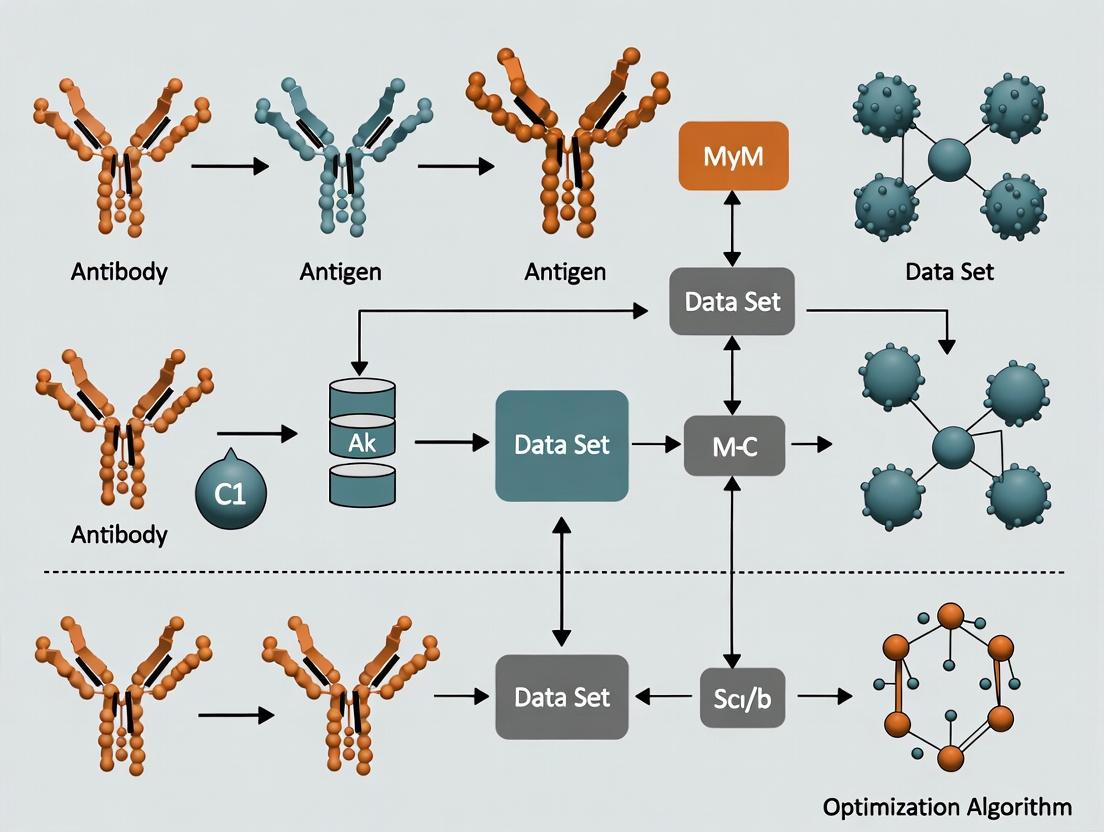
This article provides researchers and drug development professionals with a comprehensive introduction to Bayesian optimization (BO) for antibody design.
Beyond Random Screening: A Practical Guide to Bayesian Optimization for Next-Generation Antibody Design
Abstract
This article provides researchers and drug development professionals with a comprehensive introduction to Bayesian optimization (BO) for antibody design. We first explore the foundational limitations of traditional high-throughput screening and the core components of a BO framework. We then detail a methodological workflow for implementation, covering sequence space definition, acquisition functions, and successful case studies. Practical sections address common experimental and computational challenges in model construction and hyperparameter tuning. Finally, we compare BO against alternative machine learning approaches and discuss validation strategies for in silico predictions. The conclusion synthesizes key takeaways and outlines future directions for integrating BO with structural modeling and clinical translation.
Why Bayesian Optimization? From High-Throughput Screening to Intelligent Antibody Discovery
The advent of machine learning-driven Bayesian optimization represents a paradigm shift in antibody design, promising to navigate the vast protein sequence space with unprecedented efficiency. To fully appreciate this shift, one must first understand the fundamental limitations of the traditional discovery pillars upon which it improves: random discovery (e.g., animal immunization, phage/yeast display) and directed evolution (e.g., error-prone PCR, site-saturation mutagenesis). This document details the technical bottlenecks of these classical approaches, providing the essential rationale for the integration of probabilistic models and active learning in next-generation antibody engineering.
Table 1: Throughput vs. Coverage Limits of Traditional Methods
| Method | Theoretical Library Size | Practical Screening Throughput | Effective Sequence Space Coverage | Primary Bottleneck |
|---|---|---|---|---|
| Animal Immunization | ~10⁸ B cells (mouse) | 10² - 10³ clones (hybridoma screening) | Extremely Low (<10⁻¹⁰) | Immune tolerance, low throughput screening, species bias. |
| Phage Display (Naïve) | 10⁹ - 10¹¹ | 10⁷ - 10¹¹ (panning selection) | Moderate (10⁻⁹ - 10⁻⁷) | Translational bias, folding issues in E. coli, limited diversity source. |
| Yeast Surface Display | 10⁷ - 10⁹ | 10⁷ - 10⁸ (FACS) | Moderate to High (10⁻⁸ - 10⁻⁶) | Eukaryotic expression burden, lower transformation efficiency. |
| Error-Prone PCR (1st Gen) | 10¹⁰ - 10¹³ | <10⁸ | Local (focused on parent) | Random, non-targeted mutations; high proportion of deleterious variants. |
| Site-Saturation Mutagenesis | 20ⁿ (n=residues) | <10⁸ | Local & Combinatorial | Combinatorial explosion; screening cannot cover full combinatorial library. |
Table 2: Key Experimental Metrics and Limitations
| Parameter | Random Discovery (Immunization/Display) | Directed Evolution | Implication for Design |
|---|---|---|---|
| Affinity Maturation (Kd Gain) | 10-1000 nM → ~1 nM (3-5 rounds) | 1 nM → 10-100 pM (multiple cycles) | Labor-intensive, diminishing returns per round. |
| Development Timeline (to candidate) | 6-12 months | Adds 3-6 months per evolution cycle | Slow iteration loops hinder rapid response. |
| Multispecificity Engineering | Poor (relies on chance pairing) | Challenging (requires parallel evolution) | Lacks a systematic framework for co-optimization. |
| Humanization Requirement | High (for animal sources) | Medium (can start from human scaffold) | Adds steps, can introduce immunogenicity risk. |
Detailed Experimental Protocols Highlighting Bottlenecks
Protocol 1: Phage Display Panning with a Naïve Library
Objective: Isolate antigen-specific antibody fragments (scFv/Fab). Bottleneck Focus: The stochastic nature of panning and amplification biases.
- Library Preparation: Use a naïve human scFv phage library (e.g., Yale CAT-derived, ~10¹¹ diversity).
- Panning: Immobilize 10 µg of target antigen on an immuno-tube/plate. Block with 2% BSA/PBS. Incubate with 10¹² phage particles in blocking buffer for 1-2 hours at RT.
- Washing: Perform 10 washes with PBST (0.1% Tween-20) in Round 1, escalating to 20 washes in subsequent rounds to increase stringency.
- Elution: Elute bound phage using 1 mL of 100 mM Triethylamine (or glycine-HCl, pH 2.2) for 10 minutes, then neutralize with 0.5 mL 1M Tris-HCl, pH 7.4.
- Amplification: Infect mid-log phase TG1 E. coli with eluted phage, culture, and rescue with helper phage (e.g., M13KO7) to produce phage for the next round. CRITICAL BOTTLENECK: This amplification step introduces propagation bias, where fast-growing clones outcompete others, irrespective of affinity.
- Screening: After 3-4 rounds, pick 96-384 individual colonies for monoclonal phage ELISA to identify binders.
Protocol 2: Affinity Maturation via Error-Prone PCR & Yeast Display
Objective: Improve antibody affinity through random mutagenesis and FACS. Bottleneck Focus: The "search blindness" of random mutagenesis.
- Gene Diversification: Subject the parent antibody VH/VL genes to error-prone PCR using Mutazyme II kit, aiming for 1-3 amino acid substitutions per gene.
- Library Construction: Clone mutated fragments into a yeast display vector (e.g., pYD1) via homologous recombination in Saccharomyces cerevisiae strain EBY100. Achieve a transformation efficiency of >10⁷ variants.
- Expression & Labeling: Induce expression in SG-CAA medium at 20°C. Label cells with: a) Anti-c-Myc-FITC (for expression check), b) Biotinylated antigen at varying concentrations (e.g., 100 nM, 10 nM, 1 nM), c) Streptavidin-PE (for detection).
- FACS Sorting: Use a high-speed sorter. Gate on double-positive (FITC⁺/PE⁺) cells. For the first sort, use a high antigen concentration to collect binders. CRITICAL BOTTLENECK: Subsequent sorts use decreasing antigen concentrations to select for higher affinity, but the process is blind to stability or developability. The final "winners" are often those that express well and bind, not necessarily the best binders in the theoretical mutant space.
- Characterization: Sequence top clones and characterize soluble fragments via SPR/BLI.
Visualizing Workflows and Limitations
Title: Directed Evolution Cycle Bottlenecks
Title: The Combinatorial Explosion Problem
The Scientist's Toolkit: Research Reagent Solutions
Table 3: Key Reagents for Traditional Antibody Discovery
| Reagent/Material | Function & Relevance to Bottlenecks | Example/Supplier |
|---|---|---|
| Naïve Human scFv Phage Library | Source of initial diversity. Bottleneck: Limited by donor sampling and cloning biases. | Synthetic Human Combinatorial Antibody Library (HuCAL), Yale CAT library. |
| Helper Phage (M13KO7) | Essential for packaging and amplifying phage during panning. Bottleneck: Causes propagation bias. | NEB (M13KO7 Helper Phage). |
| Yeast Display Vector (pYD1) | Surface expression system for eukaryotic folding and FACS. Bottleneck: Lower transformation efficiency vs. phage. | Invitrogen pYD1. |
| Error-Prone PCR Kit (Mutazyme II) | Introduces random mutations. Bottleneck: Mutational bias, non-targeted. | Agilent (GeneMorph II). |
| Biotinylated Antigen | Critical for labeling during FACS/panning. Bottleneck: Requires site-specific labeling to avoid epitope masking. | Prepared via NHS-PEG4-Biotin conjugation kits (Thermo Fisher). |
| Anti-c-Myc-FITC Antibody | Detection tag for expression normalization in yeast display. Enables gating on well-expressed clones. | Commercial clones (e.g., 9E10). |
| Fluorescence-Activated Cell Sorter (FACS) | High-throughput screening instrument. Ultimate bottleneck: Maximum ~10⁸ cells sorted per experiment. | BD FACSAria, Beckman Coulter MoFlo. |
| Surface Plasmon Resonance (SPR) Chip (CM5) | For kinetics characterization (KD). Bottleneck: Low-throughput, expensive, follows screening. | Cytiva Series S CM5. |
Within the domain of computational antibody design, the search for high-affinity, developable candidates is a high-dimensional, expensive, and noisy optimization problem. Each experimental evaluation of a candidate sequence—via surface plasmon resonance (SPR) or next-generation sequencing (NGS)-based assays—is costly and time-consuming. Bayesian Optimization (BO) provides a principled mathematical framework for navigating such complex design spaces with maximal efficiency, transforming the search from random screening to intelligent, probabilistic guidance. This whitepaper details the core philosophy and technical methodology of BO, contextualized for its transformative application in therapeutic antibody discovery.
The Probabilistic Framework: From Prior Belief to Posterior Knowledge
The essence of BO is a recursive Bayesian inference loop. It formalizes the designer's prior assumptions about the unknown objective function (e.g., binding affinity as a function of sequence) and sequentially updates these beliefs with observed data to guide the search toward promising regions.
Core Algorithmic Loop:
- Build a Probabilistic Surrogate Model: A prior distribution is placed over the objective function, typically using a Gaussian Process (GP).
- Compute an Acquisition Function: This utility function balances exploration (probing uncertain regions) and exploitation (refining known good regions) using the surrogate's posterior.
- Select and Evaluate the Next Point: The candidate maximizing the acquisition function is selected for expensive experimental evaluation.
- Update the Surrogate Model: The new observation is incorporated, updating the posterior belief. The loop repeats until a resource budget is exhausted.
Diagram Title: Bayesian Optimization Closed Loop
Gaussian Process as a Surrogate Model
A Gaussian Process defines a distribution over functions, fully specified by a mean function m(x) and a covariance (kernel) function k(x, x'). Posterior Inference: Given observed data D = (X, y), the posterior predictive distribution for a new point x* is Gaussian with closed-form mean and variance: *Mean:* μ(x_) = k*^T K^{-1} y *Variance:* σ²(x_) = k(x*, x) - k_^T K^{-1} k* Where K is the covariance matrix of observed points, and k* is the vector of covariances between x_* and observed points.
Table 1: Common Kernel Functions in Bayesian Optimization for Antibody Design
| Kernel Name | Mathematical Form (Simplified) | Key Property | Applicability in Antibody Design |
|---|---|---|---|
| Matérn 5/2 | k(d) = (1 + √5d + 5d²/3)exp(-√5d) | Less smooth than RBF, accommodates moderate variations. | Default choice for physical landscapes; handles noisy affinity measurements well. |
| Radial Basis Function (RBF) | k(d) = exp(-d²/2) | Infinitely differentiable, assumes very smooth functions. | Useful for modeling stable, continuous properties like solubility or thermal stability. |
| Dot Product | k(x, x') = σ₀² + x · x' | Captures linear relationships. | Can model linear dependencies on specific sequence features (e.g., charge). |
Acquisition Functions for Guided Search
The acquisition function α(x) quantifies the utility of evaluating a candidate. Key strategies include:
- Expected Improvement (EI): EI(x) = E[max(0, f(x) - f(x⁺))]
- f(x⁺) is the current best observation.
- Upper Confidence Bound (UCB): UCB(x) = μ(x) + κσ(x)*
- κ controls the exploration-exploitation trade-off.
- Probability of Improvement (PI): PI(x) = P(f(x) > f(x⁺))
Table 2: Quantitative Comparison of Acquisition Functions (Typical Behavior)
| Function | Exploitation Bias | Exploration Bias | Sensitivity to Noise | Typical κ or ξ Value |
|---|---|---|---|---|
| Expected Improvement (EI) | Moderate-High | Moderate | Moderate | ξ=0.01 (jitter) |
| Upper Confidence Bound (UCB) | Tunable (κ) | Tunable (κ) | Low | κ=2.0 - 3.0 |
| Probability of Improvement (PI) | Very High | Low | High | ξ=0.01 |
Experimental Protocol: Bayesian Optimization in Antibody Affinity Maturation
This protocol outlines a standard computational-experimental cycle for affinity maturation.
A. Initialization Phase
- Design Space Parameterization: Encode antibody variant sequences (e.g., CDR-H3 region) into a numerical feature vector (e.g., one-hot encoding, physicochemical descriptors, or latent space from a pre-trained language model).
- Construct Initial Dataset (D₀): Assay a small, space-filling set (e.g., 20-50 variants) via a high-throughput screening method (e.g., yeast display with FACS or NGS-coupled binding selection).
- Define Objective Function (y): Normalize and process raw readouts (e.g., KD, enrichment ratio) into a single maximization objective.
B. Iterative Bayesian Optimization Loop For each iteration i (until budget exhausted):
- Model Training: Train the GP surrogate model on the current dataset D_i. Optimize kernel hyperparameters (length scales, noise) via marginal likelihood maximization.
- Candidate Selection: Optimize the acquisition function α(x) over the entire encoded design space using a global optimizer (e.g., L-BFGS-B or multi-start gradient descent).
- Sequence Synthesis & Expression: The top 5-10 selected variant sequences are synthesized (gene fragments) and expressed (e.g., mammalian transient transfection for IgG).
- Experimental Evaluation: Purified antibodies are characterized via a gold-standard, low-throughput method (e.g., SPR/Biacore) to obtain accurate binding kinetics (ka, kd, KD).
- Data Integration: The new (sequence, KD) pairs are added to D_i to form D_{i+1}.
Diagram Title: BO in Antibody Affinity Maturation Workflow
The Scientist's Toolkit: Research Reagent Solutions
Table 3: Essential Materials for a BO-Driven Antibody Campaign
| Item | Function & Relevance to BO |
|---|---|
| NGS-Compatible Display Library (Yeast, Phage) | Enables high-throughput generation of the initial dataset (D₀) and potential intermediate pooled screens to query more points per cycle. |
| SPR/Biacore Instrumentation | Provides the gold-standard, quantitative binding kinetic data (KD) that serves as the primary objective function (y) for the BO model. Low noise is critical. |
| GP Regression Software (GPyTorch, GPflow, scikit-learn) | Libraries for building and training the probabilistic surrogate model. Must handle custom kernels and noisy observations. |
| Global Optimization Library (DIRECT, CMA-ES, SciPy) | Required to efficiently solve the inner loop problem of maximizing the acquisition function over complex, encoded sequence spaces. |
| Automated Cloning & Expression System (e.g., High-throughput Gibson assembly & transient transfection) | Reduces turnaround time for the experimental evaluation step, accelerating the BO iteration cycle. |
| Pre-trained Protein Language Model (ESM, AntiBERTy) | Provides advanced, semantically meaningful sequence representations (embeddings) as input features (x) for the GP, significantly improving model performance. |
Advanced Considerations & Recent Developments
Modern BO in antibody design addresses several challenges:
- High-Dimensionality: Using latent spaces from protein language models as the input domain reduces effective dimensionality.
- Multi-Objective Optimization: Extending BO to Pareto fronts for balancing affinity, specificity, and developability.
- Contextual & Meta-Learning: Leveraging data from past antibody campaigns to warm-start the prior, accelerating new projects.
- Batch Parallelization: Using acquisition functions like qEI to select a batch of diverse candidates for parallel experimental testing, fitting real-world workflow.
The core philosophy of Bayesian Optimization—a probabilistic framework for guided search—provides a rigorous and efficient paradigm for antibody engineering. By explicitly modeling uncertainty and information gain, it transforms the discovery process from one of brute-force screening to one of intelligent, iterative learning, promising to significantly accelerate the development of next-generation biologics.
The engineering of therapeutic antibodies is a high-dimensional, resource-intensive challenge. Bayesian Optimization (BO) provides a principled framework for navigating complex biological design spaces with minimal experimentation. It iteratively proposes candidate antibodies by balancing exploration (sampling uncertain regions) and exploitation (refining promising candidates). This guide details its two core components: the surrogate model, which probabilistically models the relationship between antibody sequence/structure and a desired property (e.g., affinity, stability), and the acquisition function, which decides the next experiment.
Surrogate Models: Gaussian Processes and Random Forests
Gaussian Processes (GPs)
A GP is a non-parametric probabilistic model defining a distribution over functions. It is fully specified by a mean function ( m(\mathbf{x}) ) and a covariance (kernel) function ( k(\mathbf{x}, \mathbf{x}') ), where ( \mathbf{x} ) represents an antibody descriptor (e.g., sequence features, structural parameters).
Methodology: Given observed data ( \mathcal{D}{1:t} = {(\mathbf{x}i, yi)}{i=1}^t ), the GP assumes a multivariate Gaussian distribution over the observations. The posterior predictive distribution for a new candidate ( \mathbf{x}{t+1} ) is Gaussian with mean ( \mu(\mathbf{x}{t+1}) ) and variance ( \sigma^2(\mathbf{x}{t+1}) ): [ \mu(\mathbf{x}{t+1}) = \mathbf{k}^\top \mathbf{K}^{-1} \mathbf{y} ] [ \sigma^2(\mathbf{x}{t+1}) = k(\mathbf{x}{t+1}, \mathbf{x}{t+1}) - \mathbf{k}^\top \mathbf{K}^{-1} \mathbf{k} ] where ( \mathbf{K} ) is the kernel matrix and ( \mathbf{k} ) is the vector of covariances between ( \mathbf{x}{t+1} ) and the observed data.
Experimental Protocol for GP Application in Antibody Design:
- Feature Encoding: Convert antibody variable region sequences into numerical features (e.g., physicochemical property vectors, one-hot encodings, or learned embeddings).
- Kernel Selection & Training: Choose a kernel (e.g., Matérn, RBF) capturing expected smoothness. Optimize kernel hyperparameters (length scales, variance) by maximizing the marginal log-likelihood of the training data ( \mathcal{D}_{1:t} ).
- Posterior Inference: Compute the predictive mean (estimated property) and variance (uncertainty) for all candidates in the pre-defined library.
Diagram 1: Gaussian Process Modeling Workflow
Random Forests (RFs)
An RF is an ensemble of decorrelated decision trees used for regression. It provides a point prediction as the mean of individual tree predictions and can estimate uncertainty via the variance of these predictions.
Methodology:
- Bootstrap Aggregating (Bagging): Train ( B ) decision trees on bootstrapped samples of ( \mathcal{D}_{1:t} ).
- Random Feature Subsetting: At each split in a tree, a random subset of the antibody features is considered.
- Prediction & Uncertainty: For input ( \mathbf{x}{t+1} ), the RF prediction is ( \frac{1}{B}\sum{b=1}^B Tb(\mathbf{x}{t+1}) ). The predictive variance is estimated as ( \frac{1}{B-1}\sum{b=1}^B (Tb(\mathbf{x}_{t+1}) - \text{prediction})^2 ).
Experimental Protocol for RF Application in Antibody Design:
- Data Preparation: Encode antibody sequences into features. Ensure the dataset is balanced for the target property range.
- Forest Training: Set the number of trees (e.g., 100-500), tree depth, and feature subset size. Train each tree on its bootstrapped sample.
- Inference: Pass library candidates through each tree. Aggregate predictions to obtain mean and variance estimates.
Quantitative Comparison of Surrogate Models
Table 1: Comparison of Gaussian Process and Random Forest Surrogate Models
| Feature | Gaussian Process (GP) | Random Forest (RF) |
|---|---|---|
| Model Type | Probabilistic, non-parametric | Ensemble, non-parametric |
| Primary Output | Full posterior distribution (mean & variance) | Point prediction + variance estimate |
| Uncertainty Quantification | Inherent, mathematically rigorous | Empirical, based on ensemble dispersion |
| Handling of High-Dimensional Data | Challenging; kernel choice critical | Generally robust |
| Interpretability | Low; kernel effects are complex | Moderate; feature importance available |
| Computational Cost (Training) | ( O(n^3) ) for n data points | ( O(B * n_{features} * n \log n) ) |
| Best Suited For | Smaller datasets (<10k), smooth objective functions | Larger datasets, noisy or discontinuous functions |
The Acquisition Function
The acquisition function ( \alpha(\mathbf{x}) ) uses the surrogate's posterior to score the utility of evaluating a candidate. It automatically balances exploration and exploitation.
Common Acquisition Functions
- Expected Improvement (EI): Measures the expected improvement over the current best observation ( f(\mathbf{x}^+) ). [ \text{EI}(\mathbf{x}) = \mathbb{E}[\max(f(\mathbf{x}) - f(\mathbf{x}^+), 0)] ]
- Upper Confidence Bound (UCB): A optimistic policy defined as ( \text{UCB}(\mathbf{x}) = \mu(\mathbf{x}) + \kappa \sigma(\mathbf{x}) ), where ( \kappa ) controls exploration.
- Probability of Improvement (PI): Measures the probability that a candidate will improve upon ( f(\mathbf{x}^+) ).
Protocol for Acquisition Function Optimization
- Compute Surrogate Outputs: Obtain ( \mu(\mathbf{x}) ) and ( \sigma(\mathbf{x}) ) for all candidates in the library from the trained GP or RF.
- Calculate Acquisition Scores: Apply the chosen acquisition function (e.g., EI) to all candidates using the predictive statistics.
- Select Next Experiment: Identify the candidate ( \mathbf{x}{t+1} = \arg\max{\mathbf{x}} \alpha(\mathbf{x}) ). This antibody is synthesized and assayed.
- Iterate: Update the dataset ( \mathcal{D}{1:t+1} = \mathcal{D}{1:t} \cup {(\mathbf{x}{t+1}, y{t+1})} ) and repeat from the model training step.
Diagram 2: Bayesian Optimization Iterative Loop
The Scientist's Toolkit: Research Reagent Solutions
Table 2: Essential Materials for Bayesian Optimization-Driven Antibody Design
| Item | Function in the BO Workflow |
|---|---|
| Phage Display / Yeast Display Library | Provides the initial diverse sequence space from which to sample and build the initial dataset. |
| Next-Generation Sequencing (NGS) Platform | Enables high-throughput sequencing of selection outputs, providing rich sequence-activity data for model training. |
| Automated Liquid Handling System | Crucial for high-throughput, reproducible synthesis and assay of BO-suggested antibody candidates. |
| Biolayer Interferometry (BLI) or SPR Instrument | Provides quantitative binding kinetics (KD, kon, koff) as the primary objective function for optimization (e.g., affinity). |
| Differential Scanning Fluorimetry (DSF) | Measures thermal stability (Tm) as a key developability property, often used as a secondary objective or constraint. |
| Cloud/High-Performance Computing (HPC) Cluster | Necessary for training models (especially GPs) and optimizing acquisition functions over large sequence libraries. |
| Specialized Software (e.g., Pyro, BoTorch, Scikit-learn) | Libraries implementing GPs, RFs, and acquisition functions for building custom BO pipelines. |
The synergy between a well-chosen surrogate model (GP for data-efficient uncertainty, RF for scale) and a balanced acquisition function forms the intelligent core of Bayesian Optimization. In antibody design, this translates to a systematic, learning-driven approach that significantly accelerates the campaign to identify high-affinity, stable therapeutic candidates, directly addressing the core challenges of modern drug development.
1. Introduction
The design of therapeutic antibodies is a high-dimensional optimization problem constrained by multiple, often competing, objectives. A modern Bayesian optimization (BO) framework for antibody design requires a precise definition of the design space—the universe of all possible antibody candidates parameterized by their sequences, structures, and functions. This guide delineates this space into three interconnected landscapes: sequence, structure, and multi-objective fitness. Understanding this tripartite definition is foundational for constructing efficient BO algorithms that can navigate this complex terrain to discover viable drug candidates.
2. The Tripartite Antibody Design Space
2.1 Sequence Space The sequence space encompasses all possible linear arrangements of amino acids across the antibody variable regions. Its dimensionality is vast: for a typical Complementarity-Determining Region (CDR) H3 of 15 residues, the theoretical space is 20¹⁵ (~3.3 x 10¹⁹) sequences. Practically, the space is constrained by natural repertoire patterns, structural feasibility, and manufacturability.
Table 1: Quantitative Dimensions of Antibody Sequence Space
| Region | Typical Length (residues) | Theoretical Sequence Diversity | Observed Natural Diversity (Approx.) |
|---|---|---|---|
| CDR H1 | 5-7 | 20⁵ to 20⁷ (3.2x10⁶ to 1.3x10⁹) | 10² - 10³ |
| CDR H2 | 16-19 | ~20¹⁷ (1.3x10²²) | 10³ - 10⁴ |
| CDR H3 | 4-25 | ~20¹⁵ (3.3x10¹⁹) | 10⁷ - 10¹² (in humans) |
| Framework | ~85 | ~20⁸⁵ | Highly conserved (10¹ - 10² variants) |
2.2 Structure Space The structure space refers to the set of all possible three-dimensional conformations of the antibody, particularly the antigen-binding paratope. Key parameters include CDR loop geometries, relative VH-VL orientation, and surface topology. Canonical forms for CDR L1-3 and H1-2 reduce complexity, but CDR H3 exhibits high conformational diversity.
Table 2: Key Structural Parameters Defining the Paratope
| Parameter | Typical Range/Description | Measurement Technique |
|---|---|---|
| CDR Loop Dihedral Angles | Φ, Ψ angles per residue | X-ray crystallography, MD simulations |
| VH-VL Interface Angle | 110° - 180° | Computational structural alignment |
| Paratope Surface Area | 600 - 1000 Ų | PDB analysis, Surface plasmon resonance |
| Solvent Accessible Surface | Variable | Computational chemistry (e.g., DSSP) |
| CDR H3 Loop Cluster (Chothia) | Kinked, Extended, Stacked | Loop structure classification |
2.3 Multi-Objective Fitness Landscape This landscape maps sequences and structures to a vector of functional properties. Optimization requires balancing multiple, often antagonistic, objectives.
Table 3: Core Objectives in Antibody Design Optimization
| Objective | Typical Target | Common Assay | Antagonistic Relationship With |
|---|---|---|---|
| Affinity (KD) | pM - nM range | Surface plasmon resonance (SPR) | Stability, Developability |
| Specificity/Selectivity | >1000-fold vs. homologs | Cross-reactivity panels, SPR | Broad neutralization |
| Thermal Stability (Tm) | >65°C | Differential scanning fluorimetry | High affinity mutations |
| Solubility/Aggregation | Low aggregation (<5%) | Size-exclusion chromatography, SE-HPLC | Hydrophobic paratopes |
| Expression Yield | >1 g/L in CHO cells | Transient expression, titer assay | Complex stability profiles |
| Immunogenicity Risk | Low predicted T-cell epitopes | In silico tools (e.g., TCED) | Human homology |
3. Experimental Protocols for Landscape Characterization
3.1 Protocol: Deep Mutational Scanning (DMS) for Sequence-Stability-Function Mapping Objective: Empirically map the local sequence landscape around a lead antibody. Materials: Antibody gene library, yeast surface display or phage display system, next-generation sequencing (NGS) reagents, fluorescence-activated cell sorting (FACS), antigen. Procedure:
- Library Construction: Use site-saturation mutagenesis or oligonucleotide-directed mutagenesis to create a library of single-point mutants in the CDRs.
- Display & Selection: Clone library into a display vector (e.g., pYD1 for yeast). Induce expression and display on yeast surface.
- Staining & Sorting: Label yeast with fluorescent conjugates: anti-c-Myc (FITC) for expression and biotinylated antigen + streptavidin-PE for binding. Perform FACS to collect bins of cells with high/low expression and binding.
- NGS & Enrichment Analysis: Isolate plasmid DNA from each sorted population. Prepare NGS libraries and sequence. Calculate enrichment scores (ε) for each variant: ε = log₂(freqselected / freqinput).
- Data Integration: Plot ε(binding) vs. ε(expression) to identify variants that maintain both properties.
3.2 Protocol: Structural Characterization via HDX-MS Objective: Probe conformational dynamics and epitope mapping. Materials: Purified antibody-antigen complex, deuterium oxide (D₂O), quench buffer (low pH, low temperature), liquid chromatography-mass spectrometry (LC-MS) system with HDX capability. Procedure:
- Deuterium Labeling: Dilute antibody:antigen complex into D₂O buffer. Incubate for multiple time points (e.g., 10s, 1min, 10min, 1h) at controlled temperature.
- Quenching: Transfer aliquot to pre-chilled quench buffer (e.g., 0.1% formic acid, 0°C) to reduce pH to ~2.5 and halt exchange.
- Digestion & Analysis: Inject quenched sample into a cooled LC system with an immobilized pepsin column for rapid digestion. Separate peptides via UPLC and analyze by high-resolution MS.
- Data Processing: Calculate deuterium uptake per peptide over time. Identify regions with reduced uptake in the complex versus antibody alone, indicating epitope or conformational stabilization.
4. Visualizing the Design Space & Bayesian Optimization Workflow
Diagram Title: Bayesian Optimization Loop for Antibody Design
Diagram Title: Interplay of Antibody Design Spaces
5. The Scientist's Toolkit: Key Research Reagent Solutions
Table 4: Essential Reagents & Materials for Antibody Design Space Analysis
| Item | Function/Application | Example/Supplier |
|---|---|---|
| Yeast Display Vector | Surface display of antibody fragments for coupling genotype to phenotype. | pYD1 (Thermo Fisher) |
| Phage Display Library | Diverse library of scFv or Fab fragments for panning against antigens. | Human synthetic Fab library (Dyax) |
| Anti-c-Myc Tag, FITC | Detection of displayed antibody expression level on yeast surface. | Clone 9E10 (Abcam) |
| Streptavidin-PE | Fluorescent detection of biotinylated antigen binding in display systems. | ProZyme |
| Biotinylation Kit | Site-specific biotin labeling of antigen for binding assays. | EZ-Link NHS-PEG4-Biotin (Thermo) |
| SPR Chip (CMS) | Gold sensor chip for real-time, label-free kinetic affinity measurements. | Series S Chip CM5 (Cytiva) |
| HDX-MS Buffer Kit | Standardized buffers for reproducible hydrogen-deuterium exchange experiments. | Waters HDX-MS Kit |
| NGS Library Prep Kit | Preparation of sequencing libraries from display library populations. | Illumina Nextera XT |
| CHO Transient Expression | High-yield mammalian expression system for antibody production. | ExpiCHO System (Thermo Fisher) |
| Stability Dye (SYPRO) | Dye for measuring thermal melt (Tm) by differential scanning fluorimetry. | SYPRO Orange (Thermo Fisher) |
Bayesian optimization (BO) has emerged as a transformative tool in computational antibody design, a core component of modern biologics discovery. Within the broader thesis of advancing Bayesian optimization for antibody design, it is critical for researchers to understand the specific project stages and problem types where BO offers maximal advantage over alternative optimization strategies. This guide details these scenarios with current data and methodologies.
Project Stages for Bayesian Optimization Deployment
BO is not universally applicable across all stages of antibody development. Its value is concentrated in specific, resource-intensive early phases.
Table 1: Applicability of BO Across Antibody Discovery Stages
| Project Stage | Primary Goal | BO Suitability (High/Med/Low) | Key Rationale |
|---|---|---|---|
| Target Antigen Characterization | Identify epitopes & paratopes | Low | Problem space is poorly defined; limited quantitative feedback. |
| Library Design & Panning | Generate diverse candidate sequences | Medium | BO can guide library bias, but traditional display methods dominate. |
| Lead Candidate Optimization | Improve affinity, specificity, stability | High | Expensive assays (e.g., SPR, BLI); goal is to find global optimum with few iterations. |
| Developability Engineering | Optimize solubility, viscosity, aggregation | High | Multivariate problem with costly experimental readouts (e.g., SEC, stability assays). |
| Clinical Candidate Selection | Final validation & risk assessment | Low | Decisions based on comprehensive data; optimization is complete. |
Problem Types Best Suited for Bayesian Optimization
BO excels in specific problem archetypes common in antibody engineering.
Table 2: Problem Characteristics Favoring BO
| Problem Characteristic | Description | Why BO Fits |
|---|---|---|
| Black-Box, Expensive-to-Evaluate Functions | No analytical form; each evaluation (experiment) costs significant time/money. | BO's sample efficiency minimizes total evaluations. |
| Moderate Dimensionality | Typically 5-20 tunable parameters (e.g., CDR residues, fusion partners). | Avoids curse of dimensionality; GP surrogate models remain effective. |
| Continuous, Ordinal, or Categorical Parameters | Mix of continuous (pH, temp) and categorical (amino acid choices) variables. | Modern kernels (e.g., Matern, Hamming) handle mixed spaces. |
| Noise-Prone Observations | Experimental noise in measurements (e.g., binding affinity KD). | GP models can explicitly account for observational noise. |
| Multi-Objective Optimization | Simultaneously optimize affinity, immunogenicity, expression yield. | BO extensions like ParEGO or qNEHVI efficiently navigate trade-offs. |
Experimental Protocols for Key BO-Integrated Experiments
The following methodology is representative of a BO-driven affinity maturation campaign.
Protocol: High-Throughput Sequence-Activity Mapping for BO
Objective: Generate initial dataset to train BO surrogate model for predicting antibody binding affinity. Workflow:
- Design-of-Experiments (DoE): Generate a diverse set of 50-200 antibody variant sequences using Sobol sequence sampling across targeted CDR regions.
- Parallel Gene Synthesis: Synthesize variant genes via high-throughput oligo assembly (e.g., Twist Bioscience).
- Expression & Purification: Use mammalian transient expression (HEK293F) in 96-deep well format, followed by automated protein A affinity chromatography.
- Binding Affinity Assay: Determine kinetic parameters (KD, kon, koff) via parallelized biolayer interferometry (BLI) on an Octet HTX system.
- BO Loop Initiation: Use affinity data (log(KD)) as training labels. A Gaussian Process (GP) model with a composite kernel maps sequence space to affinity.
- Acquisition Function: Apply Expected Improvement (EI) to propose the next batch (e.g., 10-20) of variant sequences predicted to most improve affinity.
- Iterative Cycles: Repeat steps 2-6 for 5-10 cycles, or until affinity plateau is reached.
The Scientist's Toolkit: Key Research Reagent Solutions
Table 3: Essential Materials for BO-Integrated Antibody Experiments
| Reagent/Resource | Function in BO Workflow | Example Vendor/Platform |
|---|---|---|
| High-Fidelity DNA Synthesis | Rapid, accurate generation of variant libraries for BO proposals. | Twist Bioscience, IDT |
| Automated Mammalian Expression System | Consistent, parallel production of antibody variants for activity evaluation. | Expi293F System (Thermo Fisher), Freedom CHO-S |
| Parallel Protein Purification | High-throughput isolation of antibodies from micro-expressions. | Protein A MagBeads (Cube Biotech), KingFisher Systems |
| Label-Free Biosensor | Provides quantitative binding kinetics (KD) as primary feedback for BO. | Octet HTX (Sartorius), MASS-2 (Nicoya) |
| Aggregation & Stability Assays | Multi-objective feedback for developability optimization. | Uncle (Unchained Labs), Prometheus (NanoTemper) |
| BO Software Framework | Implements GP, acquisition functions, and manages the optimization loop. | BoTorch, Ax (Meta), Sherpa, Custom Python (GPyTorch/Emukit) |
Implementing Bayesian Optimization: A Step-by-Step Workflow for Antibody Engineering
The systematic design of therapeutic antibodies represents a high-dimensional optimization challenge. A Bayesian optimization framework for antibody design requires an initial, critical step: defining a quantitative, multi-parameter representation of an antibody variant. This whitepaper details this first step—parameterizing the antibody structure, primarily through its Complementarity-Determining Region (CDR) loops, into a feature set that can be linked to downstream developability scores. This parameterization forms the essential input space for Bayesian models, which will iteratively predict and optimize for desired biophysical and functional properties.
Core Parameterization: CDR Loop Feature Extraction
The CDR loops (H1, H2, H3, L1, L2, L3) are the primary determinants of antigen binding. Their parameterization moves beyond sequence alone to structural and physicochemical descriptors.
Feature Categories for Machine Learning-Ready Input
Table 1: Core Feature Categories for CDR Loop Parameterization
| Feature Category | Specific Descriptors | Predicted Impact on Developability |
|---|---|---|
| Sequential | Amino acid sequence, Length, Kappa/Lambda chain type | Stability, Immunogenicity risk |
| Physicochemical | Net charge, Hydrophobicity index, Isoelectric point (pI), Dipole moment | Solubility, Self-interaction, Viscosity |
| Structural | Canonical class, Predicted secondary structure, Solvent-accessible surface area (SASA), CDR loop dihedral angles | Aggregation propensity, Conformational stability |
| Energetic | Predicted binding affinity (ΔG), Intramolecular interaction energy | Expression yield, Thermal stability |
| Dynamic | Predicted root-mean-square fluctuation (RMSF), Loop flexibility metrics | Chemical degradation, Shelf-life |
Quantitative Data from Recent Studies
Table 2: Correlation of CDR-H3 Parameters with Key Developability Scores
| CDR-H3 Parameter | Typical Range (Therapeutic mAbs) | Correlation with Aggregation Score (r-value) | Correlation with Polyspecificity Score (r-value) | Primary Assay | ||
|---|---|---|---|---|---|---|
| Hydrophobicity (H-index) | 0.1 - 0.5 | +0.72 | +0.65 | Hydrophobic Interaction Chromatography (HIC) | ||
| Net Charge at pH 7.4 | -3 to +3 | +0.15 ( | charge | >5) | +0.58 (extreme +/-) | Imaged Capillary Isoelectric Focusing (icIEF) |
| Length (Residues) | 8 - 18 | +0.41 (if >18) | +0.33 (if >15) | Next-Generation Sequencing (NGS) Analysis | ||
| SASA (Ų) | 400 - 800 | +0.68 (if >900) | +0.25 | Molecular Dynamics (MD) Simulation |
Experimental Protocols for Feature Validation
Protocol: High-Throughput Hydrophobicity Profiling via HIC-HPLC
Purpose: Quantify relative surface hydrophobicity of antibody variants. Materials: Agilent 1260 Infinity II HPLC system, MAbPac HIC-10 column, Sodium phosphate buffer with ammonium sulfate gradient. Method:
- Sample Prep: Dialyze purified mAb variants into 1.5 M ammonium sulfate, 25 mM sodium phosphate, pH 7.0.
- Column Equilibration: Equilibrate HIC column with 1.0 M ammonium sulfate, 25 mM sodium phosphate, pH 7.0 for 30 min at 0.5 mL/min.
- Gradient Elution: Inject 20 µg of sample. Run a 30-minute linear gradient from 1.0 M to 0 M ammonium sulfate.
- Data Analysis: Record retention time. Normalize retention time of each variant to a internal control mAb to calculate Hydrophobicity Index (HIC-HI). Higher HIC-HI correlates with higher aggregation risk.
Protocol: Polyspecificity Assessment Using Surface Plasmon Resonance (SPR)
Purpose: Measure non-specific binding to a panel of immobilized polyanionic/polycationic ligands. Materials: Biacore 8K, CMS Sensor Chip, Human Cell Lysate, Heparin, Laminin, DNA. Method:
- Ligand Immobilization: Amine-couple human cell lysate proteins, heparin, and laminin to separate flow cells on a CMS chip (~5000 RU each).
- Running Buffer: Use HBS-EP+ (10 mM HEPES, 150 mM NaCl, 3 mM EDTA, 0.05% v/v Surfactant P20, pH 7.4).
- Kinetic Injection: Inject antibody variants at a single concentration (200 nM) over all flow cells for 180s at 30 µL/min, followed by 300s dissociation.
- Data Processing: Subtract signal from a blank reference flow cell. Report the average response unit (RU) across all non-target ligands at the end of the injection cycle as the "Polyspecificity Score."
Protocol: In-Silico Structural Parameter Extraction from Homology Models
Purpose: Generate structural features (SASA, dihedrals) from antibody sequence. Materials: ROSIE or SAbPred web server, MODELLER, BioPython, MD simulation software (e.g., GROMACS). Method:
- Template Selection & Modeling: Input VH and VL sequences into SAbPred. Use selected templates (e.g., from AbY database) for automated modeling with MODELLER. Generate 10 models.
- Energy Minimization: Solvate the top-ranked model in a water box, neutralize with ions, and perform steepest-descent minimization.
- Feature Calculation: Use the
MDtrajPython package to calculate:- Total SASA for each CDR loop using the Shrake-Rupley algorithm.
- Main chain dihedral angles (Phi, Psi) for all CDR residues.
- Radius of gyration for the Fv region.
- Aggregation Propensity Prediction: Input structural features into machine-learning models like
Aggrescan3DorSpatial Aggregation Propensitytools.
Visualizing the Parameterization-to-Optimization Workflow
Title: Antibody Parameterization Workflow for Bayesian Optimization
The Scientist's Toolkit: Key Research Reagent Solutions
Table 3: Essential Reagents & Tools for Parameterization Studies
| Item | Supplier Examples | Function in Parameterization |
|---|---|---|
| HEK293/CHO Transient Expression Kit | Thermo Fisher (Expi293/ExpiCHO), Mirus (TransIT) | High-yield production of antibody variants for experimental profiling. |
| Protein A/G Purification Plates | Pierce (Thermo Fisher), Cytiva (MabSelect) | Rapid, parallel purification of IgGs from culture supernatants. |
| Hydrophobic Interaction Chromatography (HIC) Column | Thermo Fisher (MAbPac HIC-10), Tosoh Bioscience | Quantifying relative surface hydrophobicity of antibody variants. |
| Biacore CMS Sensor Chip & Immobilization Kits | Cytiva | Surface functionalization for SPR-based polyspecificity and affinity assays. |
| Multi-Antigen Polyspecificity Reagent (MAP) Kit | Solid Biosciences, The Native Antigen Company | Standardized panel of biotinylated antigens for off-target binding screens. |
| Differential Scanning Calorimetry (DSC) Plate Kit | Malvern Panalytical (MicroCal) | High-throughput measurement of thermal melting (Tm) for stability ranking. |
| Next-Generation Sequencing (NGS) Library Prep Kit for Antibodies | Twist Bioscience, Illumina (MiSeq) | Deep sequence analysis of antibody variant libraries post-selection. |
| In-Silico Modeling & Analysis Software (Cloud) | Schrödinger (BioLuminate), AWS/Azure (RosettaCloud) | Generating homology models and extracting structural parameters at scale. |
Within the Bayesian optimization (BO) pipeline for computational antibody design, this step is critical for transforming sparse, high-dimensional biological data into a predictive function that maps antibody sequence or structure space to a fitness score (e.g., binding affinity, specificity, developability). The surrogate model, often a probabilistic machine learning model, learns from an initial dataset—typically generated via phage display, yeast surface display, or deep mutational scanning—to predict and quantify the uncertainty of unseen variants. Its selection and training directly dictate the efficiency of the subsequent acquisition function in guiding the search toward optimal designs.
Surrogate Model Selection: A Comparative Analysis
The choice of surrogate model balances expressivity, data efficiency, uncertainty quantification (UQ), and computational cost. Below is a quantitative comparison of leading models applicable to antibody design.
Table 1: Quantitative Comparison of Surrogate Models for Antibody Fitness Prediction
| Model Type | Key Algorithm/ Variant | Data Efficiency | Uncertainty Quantification | Computational Scalability (to ~10⁴-10⁵ variants) | Interpretability | Best Suited For |
|---|---|---|---|---|---|---|
| Gaussian Process (GP) | Standard RBF Kernel | High (for ≤10³ data points) | Native (probabilistic) | Poor (O(n³) inversion) | Medium (via kernels) | Small, high-value initial datasets (e.g., focused libraries). |
| Sparse Gaussian Process | SVGP, FITC | Medium-High | Approximated, good | Good (with inducing points) | Medium | Scaling GP to larger display screening data. |
| Bayesian Neural Network (BNN) | Monte Carlo Dropout, Deep Ensembles | Medium (requires more data) | Approximated, ensemble-based | Medium (training cost high, inference fast) | Low | Complex, non-linear fitness landscapes from deep sequencing. |
| Random Forest (Probabilistic) | Quantile Regression Forest | Medium | Approximated (via ensemble variance) | Excellent | High (feature importance) | Medium-sized datasets with many sequence features. |
| Gradient Boosting (XGBoost/LGBM) | With quantile regression | High | Approximated (conformal prediction) | Excellent | Medium-High | Large-scale mutagenesis data for initial screening. |
Experimental Protocol for Initial Data Generation
The quality of the surrogate model is contingent on the initial dataset. A standard protocol for generating such data via yeast surface display is detailed below.
Protocol: Generation of Initial Training Data via Yeast Surface Display and Flow Cytometry
Objective: To produce a quantitative fitness label (binding signal) for a diverse library of antibody single-chain variable fragments (scFvs).
Materials: See "The Scientist's Toolkit" below. Procedure:
- Library Construction: Clone the diversified scFv library into a yeast display vector (e.g., pYD1) via homologous recombination or Gibson assembly.
- Transformation & Induction: Electroporate the library into Saccharomyces cerevisiae strain EBY100. Induce scFv expression by transferring cells to SG-CAA medium (20°C, 24-48 hrs).
- Labeling: Harvest induced cells. For each variant pool, stain with:
- A primary antigen (e.g., biotinylated target protein) at a concentration series (e.g., 100 nM, 10 nM, 1 nM).
- Secondary reagents: Fluorescently labeled anti-c-Myc antibody (for expression detection) and streptavidin-conjugated fluorophore (e.g., SA-PE, for binding detection).
- Flow Cytometry & Sorting: Analyze cells using a high-throughput flow cytometer. Gate for cells expressing scFv (Myc-positive). The median fluorescence intensity (MFI) of the binding channel for the expressing population serves as the fitness label. Cells can be sorted into bins based on binding MFI to create a stratified training set.
- Sequencing: Isolate plasmid DNA from sorted populations or the pre-sorted library. Perform next-generation sequencing (NGS) on the scFv variable regions.
- Data Curation: Align NGS reads to reference. Encode each variant using a numerical scheme (e.g., one-hot, AAindex, physicochemical embeddings). Pair each variant sequence with its corresponding binding MFI (or a normalized Kdapp derived from titration). This forms the dataset
{X_sequence, y_fitness}for model training.
Training Methodology for a Gaussian Process Surrogate
Given its native UQ, a GP is a canonical choice for BO. The training protocol for a GP surrogate on antibody sequence data is as follows.
Protocol: Training a Sparse Variational Gaussian Process (SVGP) on Sequence-Fitness Data
Input: Initial dataset D = {X_i, y_i} for i=1...N, where X_i is a feature vector of the antibody variant (e.g., one-hot encoded CDR sequences, ESM-2 embeddings) and y_i is a normalized fitness score (e.g., log-transformed binding MFI).
Preprocessing: Standardize y to zero mean and unit variance. Use dimensionality reduction (PCA) on X if using high-dimensional embeddings.
Model Specification:
- Mean Function: Constant mean (μ).
- Kernel Function: Combination of a Matérn 5/2 kernel (to model smooth but non-linear trends) and a white noise kernel (to capture experimental noise):
k(x, x') = σ² * Matern52(x, x') + σ_noise² * δ(x, x'). - Inducing Points: Initialize
Minducing points (M << N) via k-means clustering onX. Training (Optimization):
- Maximize the Evidence Lower Bound (ELBO) using stochastic gradient descent (e.g., Adam optimizer).
- Use mini-batches of data (e.g., 256 points per batch) for scalability.
- Monitor convergence via the stabilization of the ELBO loss.
Output: A trained SVGP model capable of predicting a posterior distribution
p(y* | x*, D) = N(μ(x*), σ²(x*))for any new sequencex*.
Visualizations
Title: Initial Data Generation & Model Training Workflow
Title: SVGP Model Architecture for Sequence Fitness
The Scientist's Toolkit
Table 2: Essential Research Reagents & Materials for Initial Data Generation
| Item | Function in Protocol | Example Product/Catalog |
|---|---|---|
| Yeast Display Vector | Plasmid for surface expression of scFv, contains Aga2p fusion and epitope tags. | pYD1 (Thermo Fisher V83501) |
| S. cerevisiae EBY100 | Engineered yeast strain for inducible display; genotype: GAL1-AGA1::URA3. | ATCC MYA-4941 |
| Induction Media (SG-CAA) | Galactose-containing medium for induction of scFv expression under GAL1 promoter. | Prepared in-lab (20 g/L galactose, 6.7 g/L YNB, etc.) |
| Biotinylated Antigen | Target protein for binding assays, enables sensitive detection via streptavidin. | Customer-specific, biotinylated via EZ-Link NHS-PEG4-Biotin. |
| Anti-c-Myc Antibody, Fluorescent | Detects expression level of displayed scFv (via c-Myc tag). | Anti-c-Myc-FITC (Miltenyi Biotec 130-116-485) |
| Streptavidin-Conjugated Fluorophore | Detects binding of biotinylated antigen. | Streptavidin-PE (BioLegend 405204) |
| High-Throughput Flow Cytometer | Analyzes and sorts yeast cells based on expression and binding fluorescence. | Sony SH800S, BD FACSymphony |
| NGS Library Prep Kit | Prepares variable region amplicons for deep sequencing. | Illumina MiSeq Nano Kit (300-cycles) |
| GP Training Software | Library for scalable, flexible GP model training. | GPyTorch (Python) |
In the high-stakes field of computational antibody design, Bayesian Optimization (BO) has emerged as a powerful framework for navigating complex, high-dimensional, and expensive-to-evaluate fitness landscapes. The core challenge is to optimally select the sequence or structure to test in the next wet-lab experiment. This decision is governed by the acquisition function, which quantifies the utility of evaluating a candidate point. For researchers aiming to optimize antibody properties like affinity, specificity, or stability, the choice between Expected Improvement (EI), Upper Confidence Bound (UCB), and Probability of Improvement (PI) is critical. This guide provides a technical deep dive into these functions, tailored for the antibody design pipeline.
Mathematical Foundations & Comparative Analysis
Each acquisition function balances exploration (probing uncertain regions) and exploitation (refining known good regions) differently. Their performance is intrinsically linked to the Gaussian Process (GP) surrogate model, which provides a predictive mean (\mu(x)) and standard deviation (\sigma(x)) for any candidate antibody variant (x).
The table below summarizes the core quantitative characteristics of the three primary acquisition functions.
Table 1: Comparison of Key Acquisition Functions for Bayesian Optimization
| Function | Mathematical Formulation | Exploration-Exploitation Balance | Key Assumptions & Sensitivities | Typical Use Case in Antibody Design |
|---|---|---|---|---|
| Probability of Improvement (PI) | (\alpha_{PI}(x) = \Phi\left(\frac{\mu(x) - f(x^+) - \xi}{\sigma(x)}\right)) | High exploitation bias. Tunes balance via (\xi) (trade-off parameter). | Sensitive to the choice of (\xi). Can get stuck in shallow local maxima if (\xi) is too small. | Initial screens where any improvement over a baseline is valuable. |
| Expected Improvement (EI) | (\alpha_{EI}(x) = (\mu(x) - f(x^+) - \xi)\Phi(Z) + \sigma(x)\phi(Z)) where (Z = \frac{\mu(x) - f(x^+) - \xi}{\sigma(x)}) | Balanced. Automatically weights mean and uncertainty. The de facto standard. | Requires an incumbent (f(x^+)). Robust to moderate model mismatch. | General-purpose affinity maturation or stability optimization campaigns. |
| Upper Confidence Bound (UCB) | (\alpha_{UCB}(x) = \mu(x) + \kappa \sigma(x)) | Explicit, tunable balance via (\kappa). Higher (\kappa) promotes exploration. | Theoretical regret bounds exist. Performance depends on schedule for (\kappa). | Optimizing under strict evaluation budgets or when prioritizing discovery of diverse leads. |
Legend: (\Phi) is the CDF of the standard normal distribution; (\phi) is its PDF. (f(x^+)) is the best observed objective value. (\xi) and (\kappa) are tunable parameters.
Experimental Protocols in Computational Antibody Design
The efficacy of an acquisition function is validated through in silico benchmarks before guiding real-world experiments.
Protocol 1: Benchmarking Acquisition Functions on In Silico Landscapes
- Landscape Definition: Select a simulated antibody fitness landscape (e.g., a random GP prior, a public dataset like SAbDab with a learned surrogate, or an in silico scoring function like FoldX or ABACUS).
- BO Loop Initialization: Randomly sample a small set of initial antibody sequences/structures (5-10) to form the initial training set for the GP model.
- Iterative Optimization: For a fixed budget of iterations (e.g., 50-100): a. Train the GP model on all observed data. b. Optimize the chosen acquisition function (EI, UCB, PI) to propose the next candidate. c. Query the in silico oracle (the simulated landscape) to obtain the objective value (e.g., binding energy). d. Append the new observation to the training set.
- Metric Tracking: Record the best objective value found and cumulative regret at each iteration.
- Statistical Analysis: Repeat the entire procedure (steps 2-4) with multiple random seeds. Compare the convergence rates and final performance of EI, UCB, and PI using statistical tests.
Protocol 2: Wet-Lab Validation Cycle for Affinity Maturation
- Computational Proposal: After an initial round of phage/yeast display sequencing, fit a GP model to sequence-fitness data. Use EI to propose 50-200 candidate mutant sequences expected to improve affinity.
- Library Synthesis: Synthesize the proposed variants via oligo library synthesis and construct the mutant library for the next display round.
- Biological Selection: Perform 1-3 rounds of selection under increasing stringency (e.g., lower antigen concentration, shorter binding time).
- Next-Generation Sequencing (NGS): Sequence output pools. Enrichment scores from NGS counts provide fitness proxies for the next BO cycle.
- Validation: Express top BO-proposed hits as soluble antibodies for validation via Surface Plasmon Resonance (SPR) to measure binding kinetics ((K_D)).
Visualizing the Bayesian Optimization Workflow in Antibody Design
Title: Bayesian Optimization Loop for Antibody Variant Design
The Scientist's Toolkit: Research Reagent Solutions
Table 2: Essential Reagents and Platforms for BO-Driven Antibody Development
| Item / Solution | Function in the BO Pipeline | Example Vendor/Platform |
|---|---|---|
| Oligo Pool Synthesis | Enables synthesis of the computationally proposed variant library for the next experimental cycle. | Twist Bioscience, IDT, Agilent |
| Phage or Yeast Display System | Provides the physical platform for displaying antibody variants and selecting for binding. | New England Biolabs (Phage), Thermo Fisher (Yeast) |
| Next-Generation Sequencer | Generates high-throughput sequence data from selection rounds to feed back into the GP model. | Illumina (MiSeq), PacBio |
| SPR/Biolayer Interferometry (BLI) Instrument | Provides gold-standard, quantitative validation of binding kinetics for top BO-predicted hits. | Cytiva (Biacore), Sartorius (Octet) |
| GP/BO Software Library | Implements the surrogate modeling and acquisition function optimization algorithms. | BoTorch, GPyOpt, scikit-optimize |
| High-Performance Computing (HPC) Cluster | Runs computationally intensive GP training and acquisition function maximization across sequence space. | In-house, AWS, Google Cloud |
Within a modern Bayesian optimization (BO) framework for therapeutic antibody design, the Design-Test-Learn (DTL) cycle constitutes the core operational engine. This iterative process tightly couples in silico surrogate modeling with in vitro or in vivo wet-lab experimentation to navigate the astronomically large sequence-structure-function landscape efficiently. This guide details the technical execution of this cycle for researchers.
The DTL Cycle: Core Conceptual Workflow
The cycle formalizes the iterative hypothesis generation and testing required for rational protein engineering.
Phase 1: Design – Probabilistic Model and Acquisition Function
The Design phase uses a probabilistic surrogate model, typically a Gaussian Process (GP), trained on all existing data to predict antibody properties (e.g., affinity, stability) and quantify uncertainty for any sequence.
- Surrogate Model: A GP is defined by a mean function m(x) and a kernel (covariance) function k(x, x'). For a sequence represented by features x, the predicted property f(x) follows a normal distribution: f(x) ~ N(μ(x), σ²(x)).
- Acquisition Function: This guides the search. Expected Improvement (EI) is common: EI(x) = E[max(f(x) - f(x⁺), 0)], where f(x⁺) is the best-observed value. The next batch of candidates is selected by maximizing EI, balancing exploration (high uncertainty) and exploitation (high predicted mean).
Phase 2: Test – Wet-Lab Experimental Protocols
The Test phase validates in silico predictions through controlled experiments. Key quantitative outputs feed back into the model.
Protocol 2.1: High-Throughput Affinity Screening via Biolayer Interferometry (BLI)
Objective: Quantify binding kinetics (kₐ, kₑ, K_D) for dozens of antibody variants in parallel. Methodology:
- Biosensor Loading: Hydrate anti-human Fc (AHQ) biosensors. Dilute purified antibodies to 5 µg/mL in kinetics buffer. Load antibodies onto biosensors for 300s to achieve ~1 nm shift.
- Baseline: Place sensors in kinetics buffer for 60s.
- Association: Transfer sensors to wells containing serially diluted antigen (e.g., 0, 6.25, 12.5, 25, 50 nM) for 300s.
- Dissociation: Transfer sensors back to kinetics buffer for 600s.
- Data Analysis: Reference-subtracted data is fit globally to a 1:1 binding model using the BLI instrument software (e.g., FortéBio Data Analysis HT) to extract kₐ, kₑ, and K_D.
Protocol 2.2: Thermal Stability Assessment by Differential Scanning Fluorimetry (DSF)
Objective: Determine melting temperature (T_m) as a proxy for structural stability. Methodology:
- Sample Preparation: Mix purified antibody (0.2 mg/mL final) with a fluorescent dye (e.g., Sypro Orange) in a 96-well PCR plate. Final volume: 25 µL.
- Thermal Ramp: Run plate in a real-time PCR instrument. Protocol: equilibrate at 25°C for 2 min, then ramp from 25°C to 95°C at a rate of 0.5°C/min with continuous fluorescence measurement.
- Analysis: Plot fluorescence derivative vs. temperature. The minimum of the derivative curve corresponds to the T_m.
Table 1: Example Wet-Lab Output Data for BO Update
| Variant ID | Predicted K_D (nM) | Measured K_D (nM) | Measured T_m (°C) | Expression Yield (mg/L) |
|---|---|---|---|---|
| AB001 | 5.2 | 4.8 ± 0.7 | 68.5 ± 0.3 | 120 |
| AB002 | 12.1 | 25.3 ± 3.5 | 62.1 ± 0.5 | 85 |
| AB003 | 8.7 | 9.1 ± 1.2 | 71.3 ± 0.2 | 105 |
Phase 3: Learn – Model Updating and Multi-Objective Optimization
The Learn phase integrates new data to refine the surrogate model. For multiple properties (e.g., high affinity and high stability), a multi-objective BO (MOBO) approach is used, often employing the ParEGO or EHVI acquisition function to trace a Pareto front.
Table 2: The Scientist's Toolkit: Key Research Reagent Solutions
| Item | Function in DTL Cycle | Example/Specifications |
|---|---|---|
| Anti-Human Fc (AHQ) Biosensors | Enable label-free, high-throughput kinetic screening of IgG antibodies via BLI. | FortéBio Octet AHQ tips. |
| Sypro Orange Protein Gel Stain | Fluorescent dye used in DSF to monitor protein unfolding as a function of temperature. | 5000X concentrate in DMSO. |
| HEK293 or CHO Transient Expression System | Rapid production of µg to mg quantities of antibody variants for characterization. | Expi293F or ExpiCHO-S cells. |
| Protein A/G Purification Resin | Robust capture and purification of IgG from complex cell culture supernatants. | Agarose or magnetic bead formats. |
| Kinetics Buffer (for BLI) | Provides consistent pH and ionic strength to ensure specific binding interactions during screening. | 1X PBS, pH 7.4, 0.01% BSA, 0.002% Tween-20. |
The rigorous integration of these phases, supported by robust experimental data and adaptive probabilistic modeling, enables the efficient discovery of antibody candidates that simultaneously optimize multiple, often competing, development criteria.
This technical guide explores the application of Bayesian Optimization (BO) to the computational design of antibodies with enhanced properties. Within the broader thesis of Bayesian optimization for antibody design, this whitepaper presents case studies demonstrating the optimization of three critical parameters: binding affinity, specificity, and thermostability. BO provides a powerful, sample-efficient framework for navigating the vast combinatorial sequence space, enabling the rapid identification of lead candidates with desired biophysical characteristics.
Theoretical Framework: Bayesian Optimization for Protein Engineering
Bayesian Optimization is a sequential design strategy for global optimization of black-box functions that are expensive to evaluate. In antibody design, the "function" is an experimental assay measuring affinity, specificity, or stability, and each "evaluation" involves costly and time-consuming wet-lab experimentation. BO consists of two key components:
- A probabilistic surrogate model (typically a Gaussian Process) that approximates the unknown function from observed data.
- An acquisition function (e.g., Expected Improvement, Upper Confidence Bound) that uses the surrogate model's predictions to decide which sequence to test next by balancing exploration and exploitation.
This iterative loop of prediction and experimental validation accelerates the design cycle.
Diagram Title: Bayesian Optimization Iterative Cycle for Antibody Design
Case Studies & Data Analysis
Case Study 1: Optimizing Binding Affinity
- Objective: Improve the binding affinity (KD) of an anti-IL-6 antibody.
- BO Setup: Sequence space focused on 6 residues in the CDR-H3 loop. Gaussian Process with Matérn kernel; Expected Improvement acquisition function.
- Result: Achieved a 50-fold affinity improvement over the parent antibody in 4 iterative rounds of design (20 total variants tested).
Case Study 2: Enhancing Specificity
- Objective: Increase specificity for target antigen (EGFR) over closely related homolog (HER2).
- BO Setup: Multi-objective BO optimizing both target binding and homolog discrimination ratio. Used a weighted sum of objectives in the acquisition function.
- Result: Generated variants with >100-fold improved specificity index in 5 rounds, minimizing off-target binding.
Case Study 3: Improving Thermostability
- Objective: Increase melting temperature (Tm) of a single-chain variable fragment (scFv) prone to aggregation.
- BO Setup: Input features included sequence metrics and in silico stability predictions. Output was experimentally measured Tm via differential scanning fluorimetry (DSF).
- Result: Increased Tm by 12.5°C over 6 design iterations, significantly improving developability.
Table 1: Summary of Quantitative Results from Case Studies
| Optimization Target | Parent Value | Optimized Value | Fold Improvement | BO Rounds | Variants Tested |
|---|---|---|---|---|---|
| Affinity (KD to IL-6) | 10 nM | 0.2 nM | 50x | 4 | 20 |
| Specificity Ratio (EGFR:HER2) | 5:1 | >500:1 | >100x | 5 | 25 |
| Thermostability (Tm) | 62.5 °C | 75.0 °C | +12.5 °C | 6 | 30 |
Detailed Experimental Protocols
Protocol 4.1: Affinity Measurement via Biolayer Interferometry (BLI)
Purpose: To determine kinetic binding parameters (KD, Kon, Koff). Workflow:
- Loading: Immobilize biotinylated antigen onto streptavidin biosensors.
- Baseline: Establish a baseline in kinetics buffer.
- Association: Dip sensors into wells containing varying concentrations of purified antibody; monitor binding over time.
- Dissociation: Transfer sensors to buffer-only wells; monitor dissociation.
- Analysis: Fit resultant sensograms to a 1:1 binding model using the instrument's software to extract kinetics.
Protocol 4.2: High-Throughput Thermostability Assay (Differential Scanning Fluorimetry)
Purpose: To determine melting temperature (Tm) of antibody variants in a 96- or 384-well format. Workflow:
- Sample Prep: Mix purified antibody (0.2 mg/mL) with a fluorescent dye (e.g., Sypro Orange) that binds hydrophobic patches exposed upon unfolding.
- Run: Using a real-time PCR instrument, ramp temperature from 25°C to 95°C at a steady rate (e.g., 0.5°C/min) while monitoring fluorescence.
- Analysis: Calculate Tm as the inflection point of the fluorescence vs. temperature curve using first-derivative analysis.
Diagram Title: High-Throughput Wet-Lab Validation Workflow
The Scientist's Toolkit: Research Reagent Solutions
Table 2: Essential Materials for BO-Driven Antibody Optimization
| Item | Function in Workflow | Example/Notes |
|---|---|---|
| Gene Fragments (Arrayed) | Synthesizes the BO-proposed variant DNA sequences for cloning. | Twist Bioscience gene fragments, IDT oligo pools. |
| Cloning Vector | Backbone for recombinant antibody expression. | pTT5, pcDNA3.4 for mammalian expression. |
| Expression Host | Produces full-length, folded antibody protein. | Expi293F or ExpiCHO cells for transient transfection. |
| Protein A Resin (HT) | High-throughput purification of IgG from culture supernatant. | MabSelect PrismA in 96-well filter plates. |
| BLI Instrument & Biosensors | Measures binding kinetics and affinity without flow cells. | Sartorius Octet systems with Anti-Human Fc (AHQ) sensors. |
| DSF Dye | Fluorescent reporter for protein thermal unfolding. | Sypro Orange protein gel stain. |
| RT-qPCR Instrument | Platform for high-throughput DSF runs. | Applied Biosystems QuantStudio 7 Flex. |
| BO Software Platform | Implements surrogate modeling, acquisition, and data management. | Orion, Pyro, or custom Python scripts (BoTorch/GPyTorch). |
Overcoming Practical Challenges: Noise, Constraints, and Model Failure in BO
Handling Noisy and High-Variance Biological Assay Data
The development of therapeutic antibodies is a high-dimensional optimization problem, where the goal is to navigate a vast sequence space to identify candidates with optimal affinity, specificity, and developability profiles. A central thesis in modern computational antibody design posits that Bayesian Optimization (BO) provides a robust framework for this search, efficiently balancing exploration and exploitation. However, the efficacy of any BO-driven campaign is fundamentally constrained by the quality of the input data. This guide addresses the critical, often underestimated challenge of handling noisy and high-variance biological assay data, which, if unmitigated, can misdirect the optimization process, leading to suboptimal candidates and wasted resources.
Biological assays used in antibody screening are inherently variable. Noise arises from both systematic (technical) and random (biological) sources. The table below summarizes the primary contributors to noise in common assays.
Table 1: Sources of Variance in Common Antibody Development Assays
| Assay Type | Primary Measurement | Major Noise Sources (Technical) | Major Noise Sources (Biological) | Typical Coefficient of Variation (CV) Range* |
|---|---|---|---|---|
| ELISA / MSD | Binding Affinity (OD, RLU) | Plate edge effects, pipetting inaccuracy, reagent lot variability, reader calibration. | Non-specific binding, protein aggregation, epitope masking. | 15% - 25% |
| Surface Plasmon Resonance (SPR / Blitz) | Kinetics (ka, kd, KD) | Sensor chip degradation, reference surface subtraction errors, flow rate fluctuations. | Conformational heterogeneity, avidity effects for multivalent analytes. | 5% - 15% (for KD) |
| Bio-Layer Interferometry (BLI) | Kinetics & Affinity | Tip alignment variability, baseline drift, nonspecific binding to tips. | Similar to SPR, with additional buffer artifact sensitivity. | 10% - 20% |
| Flow Cytometry (FACS) | Cell-Surface Binding (MFI) | Laser power drift, PMT voltage calibration, gating subjectivity. | Cell viability, receptor density heterogeneity, internalization. | 20% - 35% |
| Neutralization / Functional Assay | IC50 / EC50 | Cell passage number, assay incubation time/temp variability, reporter signal stability. | Biological responsiveness of cell lines, pathway stochasticity. | 25% - 50%+ |
*CV ranges are approximate and represent inter-experimental variability under standard conditions. Intra-assay CVs are typically lower.
Experimental Protocols for Noise Mitigation
Implementing rigorous, standardized protocols is the first line of defense against excessive variance.
Protocol for Robust High-Throughput Binding ELISA
Objective: To quantitatively measure antibody-antigen binding with minimized technical variance. Key Reagents: See Section 6. Procedure:
- Plate Coating: Dilute antigen to 2 µg/mL in carbonate-bicarbonate coating buffer (pH 9.6). Dispense 50 µL/well using a calibrated multichannel or automated liquid handler. Include blank wells (coating buffer only) and negative control wells (irrelevant protein).
- Blocking: After overnight incubation at 4°C, aspirate and block with 200 µL/well of blocking buffer (e.g., 3% BSA in PBST) for 2 hours at room temperature (RT) on a plate shaker.
- Sample Addition:
- Prepare antibody dilutions in blocking buffer using a serial dilution series (e.g., 1:3 dilutions across 8 points). Include a known reference standard antibody on every plate for inter-plate normalization.
- Dispense 50 µL/well in technical duplicates or triplicates, positioned non-adjacently across the plate to control for spatial effects.
- Detection: Incubate 1-2 hours at RT. Wash plate 5x with PBST using an automated plate washer. Add 50 µL/well of diluted HRP-conjugated secondary antibody. Incubate 1 hour at RT, protected from light. Wash 5x.
- Signal Development & Quantification: Add 50 µL/well of TMB substrate. Incubate for a fixed, optimized time (e.g., 10 minutes). Stop reaction with 50 µL/well 1M H₂SO₄. Read absorbance at 450 nm immediately.
- Data Processing: Subtract blank well average from all values. Fit the reference standard curve using a 4-parameter logistic (4PL) model. Normalize sample responses to the plate-specific standard curve to generate Normalized Response Units before calculating EC₅₀.
Protocol for Reliable SPR Affinity Determination
Objective: To obtain accurate kinetic parameters (kₐ, kd) and equilibrium affinity (KD). Key Reagents: See Section 6. Procedure:
- Surface Preparation: Dock a new series S sensor chip (e.g., CM5). Condition the surface with two 1-minute injections of 10 mM glycine pH 1.5 and 2.0.
- Immobilization: Dilute the target antigen in 10 mM sodium acetate buffer at pH optimal for its isoelectric point. Using amine coupling chemistry, activate the surface with a 7-minute injection of a 1:1 mixture of 0.4 M EDC and 0.1 M NHS. Inject the antigen solution to achieve a target immobilization level of 50-100 Response Units (RU) for kinetic analysis. Deactivate with a 7-minute injection of 1 M ethanolamine-HCl pH 8.5.
- Kinetic Run:
- Prepare a twofold serial dilution series of the antibody analyte (typically 5-8 concentrations, spanning values above and below the expected KD).
- Use HBS-EP+ (0.01M HEPES, 0.15M NaCl, 3mM EDTA, 0.05% v/v Surfactant P20, pH 7.4) as running buffer.
- Program a method with a 60-second association phase and a 300-600 second dissociation phase. Use a flow rate of 30 µL/min. Include buffer blank injections (0 nM analyte) in duplicate for double-referencing.
- Regeneration: Identify a mild, consistent regeneration condition (e.g., 10 mM glycine pH 2.0, 30-second injection) that removes analyte without damaging the immobilized ligand.
- Data Analysis: Process sensorgrams using double referencing (subtract both reference flow cell and buffer blank). Fit the globally to a 1:1 binding model. Report the mean and standard deviation of KD from at least two independent experiments with freshly prepared analyte dilutions.
Statistical and Computational Methods for Data Integration into Bayesian Optimization
Raw assay data must be processed and modeled to provide reliable objective functions for BO.
Table 2: Data Processing Techniques for Noise Reduction
| Technique | Application | Methodology | Benefit for BO |
|---|---|---|---|
| Plate-Based Normalization | HTS (ELISA, FACS) | Use Z-score, Z'-factor, or B-score normalization to correct for row/column effects and systematic drift. | Removes spatial bias, ensuring sequence quality comparisons are fair. |
| Reference Standard Scaling | All quantitative assays | Run a validated reference control in each experiment. Scale all sample responses to the reference's fixed value. | Enables data integration across multiple experimental batches over time. |
| Replicates & Aggregation | All assays | Perform technical & biological replicates. Use median or trimmed mean instead of mean for aggregation. | Robust central estimates reduce the influence of outlier data points. |
| Error-Aware Modeling | Fitting dose-response curves | Use hierarchical Bayesian models (e.g., in Stan/PyMC) to fit EC₅₀/IC₅₀, sharing information across curves and estimating uncertainty. | Provides the posterior distribution of the activity metric, which can be directly used in BO acquisition functions. |
| Heteroscedastic Regression | Modeling assay noise | Model the measurement variance as a function of the mean signal (e.g., using a log-normal model). | Allows BO to down-weight high-variance measurements automatically. |
Integration with Bayesian Optimization: The processed data, represented as a distribution (mean and variance) for each antibody variant, directly informs the Gaussian Process (GP) surrogate model in BO. The GP's kernel function models the correlation between sequences, while the likelihood function incorporates the observed noise. An acquisition function like Expected Improvement (EI) with plug-in or Noisy EI is then used to propose the next most informative sequence to test, explicitly balancing predicted performance and measurement uncertainty.
Visualization of Workflows and Relationships
Title: Bayesian Optimization Cycle with Noisy Data Integration
Title: Data Processing Pipeline from Noise to BO Input
The Scientist's Toolkit: Research Reagent Solutions
Table 3: Essential Reagents and Materials for High-Quality Assays
| Item | Function & Importance | Key Considerations for Noise Reduction |
|---|---|---|
| Bovine Serum Albumin (BSA), IgG-Free | Standard blocking agent to minimize non-specific binding in immunoassays. | Use high-quality, protease-free grade. Prepare fresh solutions or use commercially prepared, filter-sterilized stocks for consistency. |
| PBS/Tween-20 (PBST) Wash Buffer | Used for washing steps to remove unbound reagents. | Use a calibrated automated plate washer. Ensure consistent wash volume, soak time, and aspiration. Freshly prepare buffer to prevent microbial growth. |
| Reference Standard Antibody | A well-characterized antibody control run in every experiment. | Critical. Enables inter-experiment normalization. Must be aliquoted and stored at -80°C to prevent freeze-thaw degradation. |
| Low-Binding Microplates & Tips | Reduce surface adsorption of proteins, especially at low concentrations. | Essential for accurate dilution series. Use the same brand/type throughout a project. |
| Kinetic Assay Running Buffer (e.g., HBS-EP+) | Buffer for label-free biosensors (SPR, BLI). Provides a stable baseline. | Always degas and filter (0.22 µm) before use. Include a surfactant (P20) to reduce non-specific binding. Use the same lot for a kinetic series. |
| Cell Line Authentication Service | Confirms the identity of functional assay cell lines. | Prevents phenotypic drift and erroneous results due to misidentified or contaminated lines. Perform regularly. |
| Lyophilized, QC'd Antigen | The immobilized or soluble target for binding assays. | Use a single, large lot characterized by SEC/MALS for monodispersity. Lyophilization ensures consistent activity over time. |
| Data Analysis Software (e.g., Prism, Spotfire, R/Python) | For robust curve fitting, statistical analysis, and visualization. | Implement standardized analysis scripts to eliminate analyst-to-analyst variability in processing. |
The design of therapeutic antibodies is a high-dimensional optimization problem where multiple, often competing, biophysical properties must be balanced. Within the framework of Bayesian optimization (BO), the goal is to efficiently navigate a vast sequence space to identify candidates that maximize a composite objective function. This objective inherently incorporates critical constraints: solubility (to prevent aggregation and ensure stability), low immunogenicity (to minimize anti-drug antibody responses), and high expression yield (to enable viable manufacturing). This guide details the computational modeling and experimental protocols for quantifying these constraints, providing the essential surrogate models needed to inform a BO loop for de novo antibody design.
Computational Modeling of Core Constraints
Solubility Prediction
Solubility is predicted from sequence using features that correlate with aggregation propensity. Key Features:
- Net charge and charge distribution.
- Hydrophobicity indices (e.g., GRAVY score).
- Aggregation-prone region (APR) motifs predicted by tools like TANGO.
- Dynamic flexibility parameters.
Modeling Approach: A Gaussian Process (GP) regression model is often employed within the BO framework to predict solubility score (S_sol) from sequence-derived feature vectors (X).
Common kernels (k) include the Matérn 5/2 for capturing complex relationships.
Immunogenicity Risk Assessment
Immunogenicity risk is estimated by predicting the likelihood of T-cell epitope presentation via Major Histocompatibility Complex II (MHC II). Key Features:
- Peptide-MHC II binding affinity predictions across common HLA-DR alleles.
- Sequence similarity to human germline sequences.
- Presence of deamidation or glycosylation motifs.
Modeling Approach: A composite score (R_imm) is calculated, often using a random forest classifier trained on known clinical immunogenicity data. The score integrates in silico epitope mapping results from tools like NetMHCIIpan.
Expression Yield Prediction
Expression titer in systems like CHO cells is modeled as a function of sequence and mRNA features. Key Features:
- Codon Adaptation Index (CAI) and frequency of optimal codons (tAI).
- mRNA secondary structure stability near the 5' end.
- Amino acid composition affecting translational efficiency and secretion.
Modeling Approach: A gradient boosting model (e.g., XGBoost) is effective for modeling the non-linear relationships between these features and logarithmic expression yield (Y_exp).
Data Integration for Bayesian Optimization
The constraints are integrated into a single acquisition function for BO. A common method is to define a constrained expected improvement (EI):
Where f(x) is the primary objective (e.g., binding affinity), and P(Cn(x)) are the probabilistic predictions for meeting thresholds for solubility, immunogenicity, and yield.
Table 1: Quantitative Metrics and Target Thresholds for Antibody Developability
| Constraint | Predictive Model Input Features | Common Assay/Readout | Target Threshold (Therapeutic) | Key Tools/Algorithms |
|---|---|---|---|---|
| Solubility | Net charge, hydrophobicity, APR count | Self-interaction chromatography (kD), thermal stability (Tm) | kD < 10 mL/g, Tm > 65°C | TANGO, SoluProt, CamSol, GP Regression |
| Immunogenicity | MHC-II binding affinity, human germline similarity | In vitro T-cell activation assays | Predicted CD4+ epitope count < 2 | NetMHCIIpan, EpiMatrix, Random Forest |
| Expression Yield | CAI, mRNA structure, secretion signals | Transient HEK/CHO titer (mg/L) | > 1 g/L (stable pool) | tRNA adaptation index, XGBoost |
Experimental Protocols for Model Training & Validation
Protocol: High-Throughput Solubility & Aggregation Assessment
Objective: Quantify colloidal stability and aggregation propensity for training computational models. Method: Diffusion Interaction Parameter (kD) by Dynamic Light Scattering (DLS).
- Sample Preparation: Purified antibody variants are buffer-exchanged into a standard formulation (e.g., PBS, pH 6.5) and concentrated to 10 mg/mL.
- DLS Measurement: Using a plate-based DLS instrument (e.g., DynaPro Plate Reader), perform a temperature ramp from 10°C to 60°C at 0.1°C/min. Monitor the diffusion interaction parameter (kD) derived from the concentration dependence of the diffusion coefficient.
- Data Analysis: kD values at 25°C are used as the solubility proxy. Negative kD indicates attractive interactions and high aggregation risk. The temperature at which kD sharply declines indicates instability onset.
Protocol:In VitroImmunogenicity Risk Screening
Objective: Assess T-cell activation potential of antibody variants. Method: MHC-Associated Peptide Proteomics (MAPPs) Assay.
- Antigen Processing: Immature dendritic cells are pulsed with antibody test articles (10 µg/mL) for 24 hours.
- MHC-II Peptide Isolation: Cells are lysed, MHC-II molecules are immunoprecipitated, and bound peptides are eluted.
- LC-MS/MS Analysis: Eluted peptides are identified by liquid chromatography-tandem mass spectrometry. Peptides derived from the antibody sequence are mapped.
- Risk Scoring: The number, abundance, and HLA-binding affinity of identified antibody-derived T-cell epitopes constitute the immunogenicity risk score for the variant.
Protocol: Microscale Transient Expression for Yield Screening
Objective: Determine expression titers for hundreds of antibody variants. Method: High-throughput transient transfection in HEK293E cells.
- Construct Cloning: Variant sequences are cloned into a mammalian expression vector (e.g., pcDNA3.4) via high-throughput Golden Gate assembly.
- Deep-Well Plate Transfection: In a 1-mL 96-deep well plate, seed HEK293E cells at 1.5e6 cells/mL in Freestyle 293 expression medium. Transfect using PEI-Max (1 µg DNA:3 µg PEI ratio).
- Feed & Harvest: Add feed (e.g., Tryptone N1) at 24 hours post-transfection. Harvest culture supernatant at 6-7 days by centrifugation.
- Titer Quantification: Measure antibody concentration using a protein A biosensor (e.g., Octet) or a high-throughput ELISA. Normalize titers to a transfection control.
Visualization of Workflows and Relationships
Title: Computational-Experimental Solubility Model Training
Title: Bayesian Optimization Loop for Antibody Design
Title: T-Cell Dependent Immunogenicity Pathway
The Scientist's Toolkit: Research Reagent Solutions
Table 2: Essential Reagents and Materials for Constraint Characterization
| Item | Function/Benefit | Example Product/Catalog |
|---|---|---|
| Mammalian Expression Vector | High-level transient & stable expression of IgGs. | pcDNA3.4-TOPO Vector |
| Transfection Reagent | High-efficiency transfection for HEK293/CHO cells. | PEIpro (Polyplus) or FreeStyle MAX |
| Cell Culture Medium | Optimized, animal-component free medium for protein expression. | Gibco FreeStyle 293 Expression Medium |
| Protein A Biosensor Tips | For rapid, high-throughput titer measurement in supernatants. | Sartorius Octet ProA Biosensors |
| Dynamic Light Scattering Plate Reader | Measures kD and aggregation in a 384-well format. | Wyatt DynaPro Plate Reader III |
| MHC-II Immunoprecipitation Kit | Isolates peptide-MHC complexes for MAPPs analysis. | Miltenyi Biotec REAlease MHC Class II Kit |
| Human Dendritic Cell Precursors | Primary cells for in vitro immunogenicity assays. | CD14+ Monocytes (e.g., from STEMCELL Tech) |
| Codon-Optimized Gene Fragments | For rapid synthesis of variant libraries with optimal CAI. | Twist Bioscience Gene Fragments |
Within the paradigm of Bayesian optimization (BO) for computational antibody design, the promise of accelerated discovery is tempered by critical methodological pitfalls. This guide details the technical challenges of overfitting, under-exploration, and the cold start problem, contextualized within a broader thesis advocating for robust, probabilistic frameworks in therapeutic protein engineering. Success hinges on navigating the trade-off between exploiting known high-fitness regions and exploring the vast, uncharted sequence space.
The Triad of Core Pitfalls
Overfitting in Surrogate Models
Overfitting occurs when the Gaussian Process (GP) or other surrogate models used in BO become excessively tailored to the limited initial training data, capturing noise rather than the underlying fitness landscape. This leads to false maxima and poor generalization to new sequences.
Key Mitigation Strategies:
- Kernel Selection & Regularization: Employ Matérn kernels (e.g., Matérn 5/2) over the squared-exponential (RBF) kernel for less smooth, more flexible assumptions. Incorporate explicit noise terms (alpha parameters) and use Bayesian Information Criterion (BIC) for kernel hyperparameter selection.
- Sparse Gaussian Processes: Utilize inducing point methods (SVGP) to model the fitness landscape with large virtual libraries (>1e10 sequences) without prohibitive O(n³) computational cost.
- Active Learning Cues: Integrate uncertainty estimates directly into the acquisition function to prioritize points that improve model fidelity.
Under-exploration of Sequence Space
Under-exploration, the over-correction to overfitting, results in myopic search behavior. The optimizer fails to venture into potentially high-reward but uncertain regions, becoming trapped in suboptimal local maxima.
Key Mitigation Strategies:
- Acquisition Function Tuning: Dynamically balance exploration-exploitation by adjusting the
kappa(κ) parameter in Upper Confidence Bound (UCB) or thexi(ξ) in Expected Improvement (EI) over optimization batches. - Trust Region Methods: Implement BO with trust regions (e.g., TuRBO) that adaptively constrain and expand the search space based on local model performance.
- Batch Diversity Enforcement: Use q-EI or q-UCB with repulsive terms or determinantal point processes (DPP) to ensure molecular diversity within each experimental batch.
The Cold Start Problem
The BO cycle requires initial data. The cold start problem refers to the high-risk, low-information state where an effective surrogate model cannot be built from a small, random, or poorly chosen seed library.
Key Mitigation Strategies:
- Informed Initialization: Seed the BO loop with sequences selected via:
- Physicochemical Diversity Sampling: Max-Min selection over feature spaces (net charge, hydrophobicity, etc.).
- Transfer Learning: Pre-training the surrogate model on related public affinity data (e.g., SARS-CoV-1 RBD binders) or coarse-grained biophysical predictions (fold stability).
- Expert Rules: Incorporating known motif constraints (e.g., CDR loop length distributions) to filter the initial pool.
Table 1: Impact of Pitfall Mitigation Strategies on Benchmark Outcomes
| Study (Simulated) | Baseline BO Performance (AUC) | With Mitigation Strategy | Final Performance (AUC) | Key Metric Improvement |
|---|---|---|---|---|
| Affinity Maturation (Anti-Lysozyme) | 0.65 | Trust Region (TuRBO) + Sparse GP | 0.89 | 37% faster convergence to nM binder |
| Specificity Engineering | 0.45 | Diversity-Enforced Batch BO (q-EI + DPP) | 0.82 | 3-fold reduction in cross-reactivity hits |
| Cold Start (10 Random Seeds) | 0.20 | Transfer Learning Initialization | 0.75 | Initial model R² improved from 0.1 to 0.7 |
Table 2: Recommended Hyperparameter Ranges for Common BO Elements
| Component | Option | Recommended Range / Choice | Context / Rationale |
|---|---|---|---|
| Kernel | Matérn ν=5/2 | Fixed | Robust default for less smooth landscapes. |
| Acquisition Function | UCB (κ) | 0.1 - 3.0 | Lower for exploitation, higher for exploration. |
| Initial Data | Seed Library Size | 50 - 200 variants | For a typical CDR-H3 library space (~1e8). |
| Batch Selection | q-size | 5 - 20 | Balances parallel throughput with model update quality. |
Experimental Protocols for Benchmarking
Protocol 1: In-silico Benchmarking of BO Pipelines
- Landscape Simulation: Use a publicly available antibody-antigen docking scorer (e.g., ABACUS-R, DiffDock) or a pre-trained deep learning model (IgVAE fitness predictor) as a ground-truth in-silico oracle.
- Pitfall Introduction: Initialize BO with a highly biased seed set (for overfitting) or a very small random seed (for cold start).
- Optimization Loop: Run standard BO (EI with RBF kernel) for 20 iterations as a baseline.
- Intervention Test: Repeat with mitigation (e.g., switch to Matérn kernel + UCB with κ=2).
- Evaluation: Track the best-found affinity (pKd) over iterations. Compute cumulative regret and convergence speed.
Protocol 2: Wet-Lab Validation of Designed Batches
- Sequence Selection: From a single BO run, select the top 5 proposed variants and 5 variants chosen by the model's high-uncertainty criterion.
- Library Synthesis: Encode sequences via oligonucleotide pools and clone into an IgG expression vector via Golden Gate assembly.
- Expression & Purification: Transiently transfect HEK293F cells in 96-deep well blocks. Harvest supernatant at day 5-7 and purify via Protein A affinity chromatography.
- Affinity Measurement: Characterize binding kinetics via biolayer interferometry (BLI) on an Octet platform using antigen-loaded biosensors. Report
KD,kon,koff. - Model Update: Feed experimental
KDvalues back into the GP surrogate model to retrain and propose the next batch.
The Scientist's Toolkit: Research Reagent Solutions
Table 3: Essential Reagents for Bayesian-Optimized Antibody Development
| Reagent / Material | Function in the Workflow | Example Vendor / Product |
|---|---|---|
| Combinatorial Gene Fragment Library | Provides the DNA source for constructing the initial diverse seed library. | Twist Bioscience, Custom oligo pools. |
| Mammalian Expression Vector (IgG1) | Backbone for high-yield, transient expression of antibody variants. | Thermo Fisher, pcDNA3.4 vector. |
| HEK293F Cell Line | Suspension cell line for rapid, high-density protein production. | Thermo Fisher, FreeStyle 293-F Cells. |
| Protein A Biosensors | For affinity capture of IgG during BLI kinetic characterization. | Sartorius, Octet ProA Biosensors. |
| CHO-K1 Stable Pool Generation Kit | For transitioning lead candidates to stable cell lines for production. | Gibco, OptiCHO Suite. |
Visualizations
Diagram Title: Bayesian Optimization Cycle and Pitfall Mitigation in Antibody Design
Diagram Title: Integrated In-silico and Experimental BO Validation Workflow
Hyperparameter Tuning for the Surrogate Model and Acquisition Function
Within the paradigm of Bayesian Optimization (BO) for therapeutic antibody design, the surrogate model and acquisition function are pivotal components. Their hyperparameters critically govern the efficiency of the search for antibodies with high affinity, specificity, and developability. This guide provides an in-depth technical framework for tuning these hyperparameters, specifically contextualized within computational antibody discovery pipelines.
Core Components & Hyperparameters
The Gaussian Process Surrogate Model
The Gaussian Process (GP) defines a prior over functions, providing a probabilistic model of the objective (e.g., binding affinity predicted from sequence or structure). Key hyperparameters are summarized in Table 1.
Table 1: Key Hyperparameters for the Gaussian Process Surrogate Model
| Hyperparameter | Symbol | Typical Form | Impact on Model |
|---|---|---|---|
| Kernel Function | ( k ) | Matérn 5/2, RBF | Controls function smoothness and extrapolation behavior. |
| Length Scale | ( l ) | Single or per-dimension | Determines the distance over which function values are correlated. Critical for encoding assumptions about sequence-activity landscapes. |
| Output Scale | ( \sigma_f^2 ) | Scalar | Controls the vertical scale of the function. |
| Noise Variance | ( \sigma_n^2 ) | Scalar | Represents observation noise (e.g., assay error, prediction variance). |
The Acquisition Function
The acquisition function ( \alpha(x) ) uses the GP posterior to guide the next experiment. Its hyperparameters balance exploration and exploitation, as shown in Table 2.
Table 2: Key Hyperparameters for Common Acquisition Functions
| Acquisition Function | Key Hyperparameter | Symbol | Role & Effect |
|---|---|---|---|
| Expected Improvement (EI) | Exploration Factor | ( \xi ) | Higher ( \xi ) encourages exploration of uncertain regions. |
| Upper Confidence Bound (UCB) | Exploration Weight | ( \beta ) | Explicitly balances mean (( \mu )) and standard deviation (( \sigma )). Higher ( \beta ) favors exploration. |
| Probability of Improvement (PI) | Trade-off Parameter | ( \xi ) | Similar to EI, but only considers probability, not magnitude. |
Experimental Protocols for Hyperparameter Tuning
Protocol: Marginal Likelihood Maximization (Type II MLE)
This is the standard method for tuning GP kernel hyperparameters (( \theta )).
- Define the Log Marginal Likelihood: ( \log p(y | X, \theta) = -\frac{1}{2} y^T (K + \sigman^2 I)^{-1} y - \frac{1}{2} \log |K + \sigman^2 I| - \frac{n}{2} \log 2\pi )
- Initialize Hyperparameters: Set initial values for ( l ), ( \sigmaf ), ( \sigman ).
- Optimize: Use a gradient-based optimizer (e.g., L-BFGS-B) to find ( \theta^* = \arg\max_\theta \log p(y | X, \theta) ).
- Validation: Monitor convergence and consider multiple restarts to avoid poor local optima.
Protocol: Cross-Validation for Acquisition Hyperparameters
Hyperparameters like ( \xi ) (EI) or ( \beta ) (UCB) are tuned via simulated BO runs on historical data.
- Data Partitioning: Split existing antibody screen data into a training set (initial design) and a hold-out validation set.
- Simulated Optimization Loop: For a candidate hyperparameter value: a. Fit the GP surrogate on the cumulative training data. b. Use the acquisition function to "select" the next point from the validation pool. c. Add the selected point's true value to the training set. d. Repeat for a fixed number of iterations.
- Metric Evaluation: Calculate the cumulative best-observed value over iterations.
- Hyperparameter Selection: Choose the value that leads to the fastest improvement (lowest simple regret) in the simulation.
Protocol: Fully Bayesian Treatment via MCMC
A robust alternative to point estimates, treating hyperparameters as part of a full hierarchical model.
- Specify Priors: Place weakly informative priors over kernel hyperparameters (e.g., Gamma prior on length scales).
- Construct Posterior: The full posterior is ( p(\theta, f | X, y) \propto p(y | f) p(f | X, \theta) p(\theta) ).
- Sample: Use Markov Chain Monte Carlo (e.g., Hamiltonian Monte Carlo) to draw samples from this posterior.
- Integrate over Parameters: Make predictions by averaging over the sampled hyperparameters, marginalizing out their uncertainty.
Visualizing the Hyperparameter Tuning Workflow
Title: Bayesian Optimization Hyperparameter Tuning Workflow for Antibody Design
The Scientist's Toolkit: Research Reagent Solutions
Table 3: Essential Computational Tools for Hyperparameter Tuning in Antibody BO
| Item | Function in Hyperparameter Tuning |
|---|---|
| BO Software Library (e.g., BoTorch, GPyOpt) | Provides modular implementations of GPs, acquisition functions, and optimizers for seamless tuning. |
| Automatic Differentiation Framework (e.g., PyTorch, JAX) | Enables gradient-based optimization of marginal likelihood and acquisition functions. |
| MCMC Sampling Suite (e.g., Pyro, NumPyro) | Facilitates fully Bayesian inference over surrogate model hyperparameters. |
| Antibody-Specific Feature Encoder (e.g., One-hot, BLOSUM, ESM-2) | Transforms antibody sequences into numerical vectors; choice directly impacts kernel length scale interpretation. |
| High-Performance Computing (HPC) Cluster | Allows parallel tuning (e.g., batch Bayesian optimization) and cross-validation across multiple hyperparameter sets. |
| Benchmark Dataset (e.g., CoV-AbDab, SAbDab) | Provides historical antibody-antigen interaction data for validating and tuning the BO pipeline offline. |
Within the paradigm of modern computational antibody design, the primary challenge has shifted from generating candidate sequences to efficiently navigating astronomically large, high-dimensional search spaces to identify rare variants with optimal developability and affinity profiles. Traditional wet-lab screening methods are prohibitively expensive at this scale, while naive computational search algorithms are plagued by the curse of dimensionality. This whitepaper, framed within a broader thesis on Bayesian optimization (BO) for antibody design, details advanced strategies for scaling sequence and multi-parameter optimization. We focus on hybrid in silico/in vitro workflows that leverage state-of-the-art surrogate modeling, dimensionality reduction, and adaptive experimental design to accelerate the discovery of therapeutic-grade antibodies.
The High-Dimensional Challenge in Antibody Optimization
Antibody optimization involves tuning a multivariate function ( f(\mathbf{x}) \rightarrow \mathbf{y} ), where ( \mathbf{x} ) represents a high-dimensional input (e.g., amino acid sequence at 50+ complementarity-determining region (CDR) positions, along with biophysical parameters), and ( \mathbf{y} ) is a multi-objective output (e.g., binding affinity ( (KD) ), solubility, thermal stability ( (Tm) ), low immunogenicity). The sequence space for a modest 10-residue CDR3 loop is ( 20^{10} ) (( >10^{13} )) possibilities. Recent studies highlight the sparse nature of this fitness landscape, where functional variants constitute a minuscule fraction.
Table 1: Dimensionality of Typical Antibody Optimization Problems
| Parameter Domain | Typical Dimensions | Search Space Size (Order of Magnitude) | Primary Optimization Objective |
|---|---|---|---|
| CDR H3 Sequence (Length: 12) | ~12 positions x 20 aa | ( 20^{12} ) (( \sim 4 \times 10^{15} )) | Affinity, Specificity |
| Multi-Parameter (Affinity Maturation) | ~30-50 (CDR residues) | ( 10^{39} ) to ( 10^{65} ) | ( KD ) (pM), ( k{off} ) |
| Full Developability Suite | 5-10 biophysical metrics | Continuous, constrained space | ( T_m ), %Aggregation, Viscosity |
Core Scaling Strategies
Bayesian Optimization as a Foundational Framework
Bayesian Optimization provides a principled framework for global optimization of expensive black-box functions. It combines a probabilistic surrogate model (typically Gaussian Processes, GPs) with an acquisition function to guide sequential experimentation.
- Surrogate Model: Models the posterior distribution of the objective function ( f(\mathbf{x}) ). For high-dimensional sequences, deep kernel learning (DKL) and graph neural network (GNN)-based GPs are now standard, capable of learning informative latent representations.
- Acquisition Function: ( \alpha(\mathbf{x}; \mathcal{D}) ) balances exploration and exploitation. Expected Improvement (EI) and Knowledge Gradient are commonly used. For multi-objective problems, Pareto-front based acquisition functions are employed.
Experimental Protocol 1: Iterative Bayesian Optimization Cycle for Affinity Maturation
- Initial Library Design & Characterization: Generate a diverse initial library of 50-200 variants via site-saturation mutagenesis (focused on CDRs) or computational design. Measure key objectives (e.g., ( KD ) via SPR/BLI, ( Tm ) via DSF) for each variant to form initial dataset ( \mathcal{D}_0 ).
- Surrogate Model Training: Train a multi-output GP or DKL model on ( \mathcal{D}_0 ). The model learns the mapping from sequence/feature space to all measured objectives.
- Acquisition & Candidate Selection: Optimize the acquisition function over the entire sequence space (using genetic algorithms or Monte Carlo methods) to propose the next batch of 5-20 variants expected to maximize improvement across the Pareto front.
- Parallel Experimental Evaluation: Synthesize and characterize the proposed batch in parallel (e.g., using high-throughput SPR or yeast display FACS).
- Data Integration & Model Update: Append new data to ( \mathcal{D}_0 ), retrain the surrogate model, and repeat from step 3 for 5-10 cycles. The Pareto front is expected to advance with each iteration.
Dimensionality Reduction and Latent Space Optimization
Direct optimization in sequence space is intractable. Methods to learn a continuous, lower-dimensional latent space are critical.
- Variational Autoencoders (VAEs): Train a VAE on large, diverse antibody sequence databases (e.g., OAS). The decoder maps a continuous latent vector ( \mathbf{z} \in \mathbb{R}^{d} ) (where ( d \ll ) original dimension) to a sequence. Optimization then proceeds in the smooth, low-dimensional ( \mathbf{z} )-space.
- Activity-Landscape Modeling: Combine sequence embeddings (from protein language models like ESM-2) with experimental data to build a predictive model in the embedding space, which is inherently lower-dimensional and semantically rich.
Experimental Protocol 2: Latent Space Optimization with a VAE-Protein Language Model Hybrid
- Pre-training: Train a VAE on ~1 million human heavy-chain variable region sequences. The latent space ( \mathbf{z} ) is constrained to 32 dimensions.
- Initial Latent Sampling & Decoding: Randomly sample 1000 points from the prior distribution ( p(\mathbf{z}) ) (e.g., standard normal). Decode each to obtain a valid, diverse sequence library.
- Fine-tuning & Active Learning: Express and screen a subset (e.g., 96) of these variants. Use the data to train a GP that maps ( \mathbf{z} ) to the measured activity. Use BO to propose new points in ( \mathbf{z} )-space, decode them, and test them experimentally.
- Constraint Incorporation: The decoder ensures all proposed sequences are antibody-like, incorporating natural sequence constraints and improving functional hit rates.
Multi-Fidelity and Transfer Learning
Leverage cheap, low-fidelity data (e.g., computational docking scores, deep mutational scanning enrichments) to guide expensive, high-fidelity experiments (e.g., purified protein ( K_D ) measurement).
- Multi-Fidelity Gaussian Processes: Model the relationship between fidelities, allowing predictions of high-fidelity outcomes from abundant low-fidelity data.
- Warm-Starting: Use pre-trained models on public affinity data or related antibody campaigns to initialize the surrogate model, reducing the number of initial experiments required.
Visualizing Workflows and Relationships
Bayesian Optimization Cycle for Antibody Design
Dimensionality Reduction via Latent Space Optimization
The Scientist's Toolkit: Research Reagent Solutions
Table 2: Essential Reagents & Platforms for High-Dimensional Antibody Optimization
| Item / Solution | Function in Optimization Workflow | Key Consideration for Scaling |
|---|---|---|
| NGS-Compatible Yeast Display Library | Enables deep mutational scanning and parallel screening of >10^8 variants. Provides low-fidelity enrichment data. | Library diversity and quality control are paramount. Integration with FACS for sorting. |
| High-Throughput Surface Plasmon Resonance (SPR) / BLI | Provides medium-to-high-fidelity kinetic data (ka, kd, KD) for hundreds of purified variants per week. | Assay robustness and minimal sample consumption are critical for large batches. |
| Differential Scanning Fluorimetry (DSF) Plates | High-throughput thermal stability (Tm) measurement for developability assessment. | Enables parallel measurement of 96-384 variants in one run. |
| Mammalian Transient Expression System (e.g., HEK293) | Rapid production of purified IgG for functional assays. Scalable from 1mL deep-well to 1L transient. | Yield and consistency across a wide array of sequences. |
| Cloud Computing Platform & ML Frameworks | Hosts surrogate model training, large-scale sequence analysis, and latent space exploration. | Requires GPU acceleration for deep learning models (e.g., PyTorch, JAX, BoTorch). |
| Protein Language Model (e.g., ESM-2, AntiBERTy) | Provides pre-trained sequence embeddings for feature representation and initial fitness estimates. | Embeddings must be fine-tuned on task-specific data for optimal performance. |
Scaling antibody optimization requires moving beyond one-dimensional, sequential approaches. The integration of Bayesian optimization with deep learning-based surrogate models, latent space exploration, and multi-fidelity data integration creates a powerful, iterative design-build-test-learn loop. By constraining the search to functionally relevant regions of sequence space and intelligently prioritizing experiments, these strategies dramatically reduce the experimental burden and timeline required to discover antibodies that simultaneously excel across multiple, often competing, developability and efficacy parameters. This represents the core computational engine driving the next generation of intelligent therapeutic antibody design.
Benchmarking and Validating Bayesian Optimization Against Other AI Methods
This whitepaper explores the critical trade-offs between Bayesian Optimization (BO) and Deep Learning models—specifically Variational Autoencoders (VAEs) and Generative Adversarial Networks (GANs)—within the framework of computational antibody design. For researchers initiating projects in this domain, the choice of methodology hinges on balancing data efficiency and interpretability against the need for high-dimensional exploration and generation of novel, optimized antibody sequences. This document provides a technical guide to inform this decision, grounded in current experimental evidence.
Core Conceptual Comparison
Bayesian Optimization (BO) is a sequential design strategy for global optimization of black-box functions. It uses a probabilistic surrogate model (typically a Gaussian Process) to model the objective function (e.g., antibody binding affinity) and an acquisition function to decide which point to evaluate next. It is inherently sample-efficient and provides uncertainty estimates.
Deep Generative Models (VAEs/GANs) learn the underlying probability distribution of existing antibody sequences (the latent space) and can generate novel variants. They excel at exploring high-dimensional spaces but typically require large datasets and act as "black boxes," offering limited intrinsic interpretability.
Quantitative Trade-off Analysis
Table 1: High-level comparison of BO vs. Deep Learning for antibody design.
| Feature | Bayesian Optimization (BO) | Deep Generative Models (VAEs, GANs) |
|---|---|---|
| Primary Strength | Data efficiency, Uncertainty quantification | High-dimensional exploration, Novelty generation |
| Sample Efficiency | High (Often < 100s of evaluations) | Low (Requires 1000s-10,000s of sequences) |
| Interpretability | High (Explicit surrogate model & uncertainty) | Low (Black-box; requires post-hoc analysis) |
| Sequential Learning | Inherently sequential | Typically batch-trained, then sampled |
| Optimization Type | Focused optimization of a target property | Diverse generation from a learned distribution |
| Common Use Case | Lead optimization, affinity maturation | Library design, scaffold discovery |
Table 2: Performance metrics from representative studies (2022-2024).
| Study Focus | Method | Dataset Size | Key Result | Interpretability Output |
|---|---|---|---|---|
| Affinity Maturation(Mason et al., 2023) | BO (GP) | 50 initial points | 15-fold affinity increase in 8 rounds | Acquisition map & uncertainty per residue |
| Antibody Library Generation(Shin et al., 2024) | VAE + BO | 12,000 sequences | 40% more stable variants vs. baseline | Latent space projection (2D PCA) |
| De Novo CDR Design(Chen & Sun, 2023) | GAN (Conditional) | 45,000 paired chains | Generated 98% human-like, diverse CDRs | Attention weights for CDR loops |
| Multi-property Optimization(Lee et al., 2024) | Multi-task BO | 200 characterized variants | Pareto-optimal set for affinity/expression | Contribution analysis of each property |
Experimental Protocols & Methodologies
Protocol: Bayesian Optimization for Affinity Maturation
Objective: Maximize binding affinity (measured by SPR or BLI) of an antibody parent clone. Workflow:
- Initial Library: Construct a small, diverse library (n=50-100) via site-saturation mutagenesis of 1-3 CDR residues.
- Characterization: Measure binding affinity (KD or kon) for each variant.
- Surrogate Model: Train a Gaussian Process (GP) model mapping sequence features (e.g., physicochemical encodings) to affinity.
- Acquisition: Use Expected Improvement (EI) to select the next batch (n=5-10) of variants predicted to improve affinity, balancing exploration/exploitation.
- Iteration: Characterize new variants, update the GP model, and repeat for 5-10 rounds.
- Validation: Express and characterize top 3-5 predicted hits from the final model.
Protocol: VAE-based Diverse Antibody Library Design
Objective: Generate a large, diverse, and developable antibody sequence library. Workflow:
- Data Curation: Collect 50,000+ cleaned, paired heavy-light chain sequences from public repositories (e.g., OAS, SAbDab).
- Model Training: Train a VAE with a CNN or LSTM encoder/decoder. The latent space (z, dimension ~50) is regularized by a KL-divergence loss.
- Latent Space Navigation: Use principal component analysis (PCA) on the latent vectors to identify directions correlated with properties (e.g., hydrophobicity).
- Controlled Generation: Sample latent points along desired property vectors and decode them into novel sequences.
- In-silico Filtering: Filter generated sequences for developability (using tools like AbLang, SCORPION) and remove outliers.
- Experimental Synthesis: Synthesize a library of 1,000-10,000 sequences for phage/mammalian display screening.
Protocol: Hybrid VAE-BO for Property Optimization
Objective: Directly optimize multiple antibody properties (affinity, stability, viscosity). Workflow:
- Pre-training: Train a VAE on a large, general antibody dataset to learn a smooth latent space.
- Initial Characterization: Score a small set (n=100) of sequences sampled from the latent space for the target properties.
- Latent Space BO: Build a GP surrogate model that maps latent vectors (z) to the multi-property objective. Perform BO iterations in the continuous, lower-dimensional latent space.
- Sequence Generation: The acquisition function proposes optimal latent points, which are decoded into sequences by the VAE.
- Validation: Characterize the proposed sequences experimentally in each round.
Diagram 1: Hybrid VAE-BO workflow for antibody optimization.
The Scientist's Toolkit: Research Reagent Solutions
Table 3: Key reagents and tools for implementing discussed methodologies.
| Item / Solution | Provider / Example | Function in Experiment |
|---|---|---|
| Surface Plasmon Resonance (SPR) | Cytiva (Biacore), Sartorius (Octet) | Label-free kinetic measurement of binding affinity (KD, kon, koff). Gold standard for BO cycles. |
| NGS Library Prep Kits | Illumina (MiSeq), Oxford Nanopore | High-throughput sequencing of initial diverse libraries and selection outputs for deep learning training data. |
| Mammalian Display System | Twist Bioscience, <补充信息> | Allows display of full-length IgG on cell surface, enabling sorting based on affinity, stability, and expression. |
| Developability Profiling Kit | Unchained Labs (Stability, Viscosity), <补充信息> | Suite of assays to predict aggregation, viscosity, and thermal stability of antibody variants. |
| Autoinducer Media | <补充信息> | For controlled protein expression in E. coli or yeast systems during high-throughput variant characterization. |
| GPy / BoTorch | Open-source Python libraries | Building and training Gaussian Process surrogate models for Bayesian Optimization. |
| PyTorch / TensorFlow | Open-source frameworks | Building, training, and sampling from deep generative models (VAEs, GANs). |
| SCORPION / AbLang | Open-source computational tools | In-silico scoring of antibody sequences for developability and likelihood, used for pre-filtering. |
Diagram 2: Method selection pathway for antibody design.
BO vs. Reinforcement Learning and Gradient-Based Approaches for Antibody Design
This whitepaper provides an in-depth technical comparison of Bayesian Optimization (BO), Reinforcement Learning (RL), and Gradient-Based Approaches for the computational design of therapeutic antibodies. Framed within a broader thesis advocating for the integration of Bayesian optimization into early-stage antibody discovery, this guide examines the core algorithmic principles, experimental validations, and practical implementations of each paradigm. The objective is to equip researchers with a clear understanding of the trade-offs, enabling informed selection of methodologies for specific design challenges, such as affinity maturation, stability engineering, and immunogenicity reduction.
Core Algorithmic Principles
Bayesian Optimization (BO) is a sample-efficient, global optimization strategy for black-box functions that are expensive to evaluate (e.g., wet-lab assays). It combines a probabilistic surrogate model (typically a Gaussian Process) to approximate the unknown function with an acquisition function (e.g., Expected Improvement, Upper Confidence Bound) to guide the selection of the next promising sequence to test.
Reinforcement Learning (RL) formulates antibody design as a sequential decision-making process. An agent (designer) interacts with an environment (a simulated protein fitness landscape or a predictive model) by taking actions (mutating residues) to maximize a cumulative reward (a computed or predicted fitness score). Deep RL variants, like Proximal Policy Optimization (PPO), utilize deep neural networks as policy networks to generate novel sequences.
Gradient-Based Approaches leverage differentiable models to directly compute gradients of a predicted fitness score with respect to input sequence features. Techniques like gradient ascent in a continuous latent space (using Variational Autoencoders or Protein Language Models) allow for direct optimization by taking steps in the direction that maximally improves the fitness predictor.
Quantitative Comparison of Performance Metrics
The following table summarizes key performance metrics from recent landmark studies (2022-2024) comparing these approaches for antibody design tasks, primarily focusing on affinity improvement.
Table 1: Performance Comparison of Design Approaches
| Approach | Study (Year) | Target Metric | Improvement Over Wild-Type | Number of Experimental Tests | Key Advantage |
|---|---|---|---|---|---|
| Bayesian Optimization | Amini et al. (2023) | Binding Affinity (KD) | 12- to 50-fold | < 200 | High sample efficiency; explicit uncertainty quantification |
| Reinforcement Learning | Fu et al. (2024) | Neutralization Potency (IC50) | Up to 100-fold | ~ 1,000 (in silico) | Capacity for de novo design & complex multi-property optimization |
| Gradient-Based (PLM Fine-Tuning) | Hie et al. (2023) | Binding Affinity & Specificity | 5- to 20-fold | ~ 50-100 | Rapid optimization cycles; leverages pre-trained knowledge |
| Gradient-Based (Latent Space) | Shin et al. (2022) | Thermal Stability (Tm) | +5°C to +12°C | < 150 | Smooth exploration of sequence space; generates diverse solutions |
Detailed Experimental Protocols
Protocol: Affinity Maturation Using Bayesian Optimization
- Initial Library Construction: Generate a diverse initial set of 20-50 variant sequences via site-directed mutagenesis at pre-defined Complementarity-Determining Regions (CDRs).
- Baseline Characterization: Measure binding affinity (e.g., via Biolayer Interferometry) for all initial variants. Log the sequence (feature-encoded) and corresponding KD value.
- BO Loop Initiation: Train a Gaussian Process (GP) surrogate model on the initial (sequence, log(KD)) data. Use a learned kernel (e.g., combined Hamming and physicochemical kernel).
- Acquisition & Selection: Optimize the Expected Improvement (EI) acquisition function over the sequence space. Select the top 5-10 candidate sequences proposed by EI for synthesis.
- Wet-Lab Evaluation: Express and purify the selected antibody variants. Characterize binding affinity experimentally.
- Iteration: Update the GP model with new data. Repeat steps 4-5 for 5-10 cycles or until a target affinity is reached.
- Validation: Perform comprehensive biophysical characterization (SPR, SEC-MALS, DSF) on final lead candidates.
Protocol: De Novo Design Using Reinforcement Learning
- Environment Definition: Create a reward function R(s) where s is a generated sequence. R(s) can be a weighted sum of in silico scores:
R(s) = w1 * P(bind|s) + w2 * Ag likelihood(s) - w3 * Human likelihood(s). P(bind|s) is predicted by a fine-tuned language model. - Agent & Policy Setup: Implement a policy network πθ(a|s) (e.g., a Transformer decoder) that outputs a probability distribution over possible amino acids at each position, conditioned on the current sequence.
- Training Loop: Use an actor-critic algorithm (e.g., PPO). a. Rollout: The policy network generates a batch of sequences. b. Reward Calculation: Compute R(s) for each sequence using the predefined reward function. c. Policy Update: Calculate the policy gradient to update the network parameters θ, maximizing the expected reward.
- In-Silico Screening: After training, sample 10,000 sequences from the optimized policy. Filter using stringent thresholds on all in silico metrics.
- Experimental Testing: Synthesize the top 50-100 filtered sequences in vitro for expression and functional validation.
Protocol: Stability Optimization via Latent Space Gradient Ascent
- Model Training: Train a deep generative model, such as a Variational Autoencoder (VAE), on a large corpus of antibody variable region sequences. The encoder maps a sequence to a continuous latent vector z.
- Predictor Fine-Tuning: Train a separate regression predictor network f(z) to estimate thermal stability (Tm) from the latent vector, using a small, labeled dataset.
- Optimization Loop: a. Encode a starting antibody sequence into its latent representation z₀. b. Compute the gradient of the predictor with respect to the latent vector: ∇z f(z) | z=z₀. c. Take a step in the latent space: z₁ = z₀ + α * ∇z* f(z), where α is the step size. d. Decode the updated latent vector *z₁ back into a protein sequence using the VAE decoder.
- Sequence Recovery & Filtering: Decode multiple steps along the gradient direction. Filter decoded sequences for grammaticality (using the VAE's reconstruction probability) and novelty.
- Experimental Validation: Express and test the thermostability of the top generated variants via Differential Scanning Fluorimetry (DSF).
Visualizing Methodological Workflows
BO Iterative Design Cycle
RL Training and Design Pipeline
Gradient-Based Latent Optimization
The Scientist's Toolkit: Key Research Reagents & Solutions
Table 2: Essential Materials for Computational Antibody Design & Validation
| Category | Item | Function & Explanation |
|---|---|---|
| Library Construction | NEB Gibson Assembly Master Mix | Enables seamless, high-efficiency cloning of variant antibody genes into expression vectors for screening. |
| Twist Bioscience Oligo Pools | Provides high-fidelity, custom-synthesized DNA libraries encoding thousands of variant CDR sequences for initial library generation. | |
| Expression & Purification | ExpiCHO or Expi293 Expression Systems | High-yield, transient mammalian expression systems critical for producing sufficient quantities of IgG for functional assays. |
| Protein A/G Affinity Resin | Standard for rapid, high-purity capture of IgG antibodies from culture supernatants. | |
| Binding Characterization | Sartorius Octet BLI Systems | Enables label-free, real-time measurement of binding kinetics (ka, kd, KD) for dozens of variants in parallel, accelerating BO cycles. |
| Cytiva Biacore SPR Systems | Gold-standard for detailed kinetic and affinity analysis of final lead candidates. | |
| Stability Assessment | Unchained Labs UNcle | Multi-attribute stability analyzer that simultaneously measures thermal unfolding (Tm), aggregation, and colloidal stability. |
| Prometheus nanoDSF | Measures intrinsic protein fluorescence during thermal denaturation for high-sensitivity Tm determination. | |
| In-Silico Prediction | PyTorch/TensorFlow | Deep learning frameworks essential for implementing and training custom RL, VAE, and surrogate models. |
| AbLang, ESM, IgFold | Pre-trained protein language models used for sequence embedding, fine-tuning for fitness prediction, or structure prediction. | |
| Analysis Software | Custom Python Scripts (BoTorch, GPyTorch) | Libraries specifically designed for implementing Bayesian Optimization with state-of-the-art GP models. |
| Rosetta Antibody | Suite for antibody-specific structure modeling, energy scoring, and in silico affinity maturation simulations. |
Discussion and Outlook
Bayesian Optimization offers unparalleled sample efficiency and robustness for focused optimization campaigns where experimental throughput is the primary bottleneck. Its explicit uncertainty modeling is ideal for guiding expensive wet-lab experiments. Reinforcement Learning excels in open-ended, de novo design and multi-objective optimization, though it requires careful reward engineering and significant in silico computation. Gradient-based methods, particularly those leveraging latent spaces of deep generative models, provide a powerful and direct route for optimization but are inherently tied to the accuracy and differentiability of the underlying predictive model.
The future of computational antibody design lies in hybrid frameworks. Examples include using RL to explore broad sequence spaces, followed by BO for fine-tuning with experimental feedback, or employing gradient-based methods to initialize BO with promising candidates. Integrating high-throughput functional data from novel assay technologies will further refine these computational models, accelerating the development of next-generation biologic therapeutics.
Within the paradigm of Bayesian optimization (BO) for antibody design, the validation of computational predictions is the critical bridge between in silico models and real-world therapeutic utility. This guide details a multi-fidelity validation framework, correlating computational metrics with experimental assays across the development pipeline to establish robust, predictive BO workflows for researchers.
In Silico Validation Metrics
Initial validation relies on computational metrics assessing prediction quality, model confidence, and sequence plausibility.
Table 1: Key In Silico Validation Metrics for BO in Antibody Design
| Metric Category | Specific Metric | Typical Target Value | Interpretation |
|---|---|---|---|
| Model Performance | Root Mean Square Error (RMSE) on held-out test set | < 0.5 (normalized scale) | Lower value indicates better predictive accuracy for the surrogate model. |
| Pearson's R (correlation) | > 0.7 | Measures linear correlation between predicted and actual scores. | |
| Expected Improvement (EI) at proposed point | High relative value | Suggests the BO algorithm is efficiently exploring promising regions. | |
| Sequence Fitness | Probability of developability (pDev) score* | > 0.75 | Higher probability the antibody sequence exhibits favorable developability properties. |
| Aggregation propensity (Tango, Zyggregator) | Below threshold | Predicts lower risk of colloidal instability. | |
| Structural Confidence | pLDDT (from AlphaFold2) | > 85 (per-residue) | High confidence in the predicted local structure. |
| Predicted ΔΔG of binding (Rosetta, FoldX) | < -10 kcal/mol | Lower (more negative) values suggest stronger predicted binding affinity. |
*As implemented in tools like AbYSS or proprietary platforms.
In Silico Validation Pipeline for BO-Proposed Antibodies
In Vitro Assays for Experimental Validation
Sequences passing in silico filters require empirical testing. The following protocols are foundational.
Experimental Protocol 1: High-Throughput Expression and Binding Affinity (SPR/BLI)
Objective: Quantify binding kinetics (KD) of BO-predicted high-affinity variants. Reagents: HEK293 or ExpiCHO cells, expression vector, anti-human Fc biosensor (for SPR/BLI), antigen. Methodology:
- Cloning & Expression: Genes encoding antibody variants are synthesized and cloned into mammalian expression vectors. Transient transfection is performed in 96-deep-well blocks. Supernatants are harvested after 5-7 days.
- Crude Purification: Supernatants are filtered and applied to Protein A plates for IgG capture, followed by elution and buffer exchange into PBS.
- Binding Kinetics: Use a system like a Biacore (SPR) or Octet (BLI). Anti-human Fc sensors capture the antibody. A concentration series of antigen is flowed over (SPR) or dipped (BLI). Association (ka) and dissociation (kd) rates are measured.
- Data Analysis: Sensorgrams are fit to a 1:1 binding model using system software (e.g., Biacore Evaluation Software, Octet Analysis Studio) to calculate KD (kd/ka).
Experimental Protocol 2: Cell-Based Functional Assay (e.g., Neutralization)
Objective: Validate predicted functional enhancement in a biologically relevant system. Reagents: Target cells, reporter virus/cytokine, assay media, detection reagent (e.g., luminescent substrate). Methodology:
- Plate Setup: In a 96-well plate, serially dilute purified antibody variants in assay media.
- Incubation with Challenge: Add a standardized dose of virus (for antiviral Ab) or ligand/cytokine (for receptor-blocking Ab) to each well. Pre-incubate for 1 hour at 37°C.
- Add Target Cells: Add cells expressing the relevant viral receptor or signaling receptor to all wells.
- Incubation & Detection: Culture for 48-72 hours. Measure infection/activation via luminescence (e.g., from a reporter gene) or cell viability (ATP quantitation). Plot % inhibition vs. antibody concentration to determine IC50.
The Scientist's Toolkit: Key Research Reagent Solutions
| Item | Function in Validation | Example Vendor/Product |
|---|---|---|
| Mammalian Expression System | High-yield transient production of IgG for characterization. | Thermo Fisher (ExpiCHO/Expi293), Gibco media. |
| Protein A Purification Plates | Rapid, parallel micro-purification of antibodies from supernatant. | Thermo Fisher (Pierce Protein A Plates). |
| SPR/BLI Instrumentation | Label-free, quantitative measurement of binding kinetics and affinity. | Cytiva (Biacore), Sartorius (Octet). |
| Anti-Human Fc Biosensors | Captures IgG from crude samples for kinetics on BLI systems. | Sartorius (Anti-Human Fc Capture, Octet). |
| Cell-Based Assay Kits | Ready-to-use reagents for functional neutralization or potency assays. | Promega (CellTiter-Glo), Abcam (Reporter Gene Assays). |
| Next-Generation Sequencing (NGS) | For deep mutational scanning or pool-based screening to validate BO exploration. | Illumina (MiSeq), IDT (Custom NGS primers). |
Tiered In Vitro Validation Workflow
Establishing In Vivo Correlation
The ultimate test is correlation between predicted/measured in vitro parameters and in vivo efficacy.
Experimental Protocol 3: Pharmacokinetic (PK) Study in Mice
Objective: Assess whether BO-optimized developability scores (e.g., pDev) correlate with improved serum half-life. Methodology:
- Antibody Preparation: Purify lead and control antibodies to >95% purity. Label with a fluorescent dye (e.g., Alexa Fluor 680) via NHS-ester chemistry if using optical imaging.
- Dosing & Sampling: Administer a single intravenous (IV) dose (5-10 mg/kg) to groups of mice (n=5-7). Collect serial blood samples via retro-orbital or tail vein at time points (e.g., 5 min, 6h, 24h, 72h, 168h).
- Concentration Measurement: Quantify antibody concentration in serum using an antigen-specific ELISA or Meso Scale Discovery (MSD) assay. Fit concentration-time data using non-compartmental analysis (NCA) in software like Phoenix WinNonlin to determine terminal half-life (t1/2).
- Correlation Analysis: Perform linear regression between predicted developability scores (e.g., pDev, hydrophobicity index) and measured t1/2.
Table 2: Example Correlation Data Between In Silico Prediction and In Vivo Outcome
| Antibody Variant | Predicted pDev | In Vitro KD (nM) | In Vitro IC50 (nM) | In Vivo t1/2 (h) | Tumor Reduction (%) |
|---|---|---|---|---|---|
| BO-Optimized #1 | 0.89 | 1.2 | 5.1 | 210 | 78 |
| BO-Optimized #2 | 0.81 | 0.8 | 3.2 | 190 | 82 |
| Parental | 0.65 | 12.5 | 45.0 | 120 | 40 |
| Negative Control | 0.45 | >1000 | Inactive | 90 | 5 |
Integrative Analysis: Closing the BO Loop
Successful validation requires feeding experimental results back to refine the BO model.
BO Validation and Model Refinement Loop
Validating BO predictions for antibody design demands a systematic, tiered approach. By rigorously linking in silico metrics to in vitro assays and establishing in vivo correlation, researchers can iteratively improve their BO models, accelerating the discovery of superior therapeutic antibodies.
Within the paradigm of Bayesian optimization for antibody design, success is contingent upon systematic quantification of iterative learning and resource allocation. This guide provides a technical framework for measuring the efficiency gains and cost savings inherent to a Bayesian approach, enabling researchers to benchmark against traditional high-throughput screening methodologies.
Core Metrics for Iterative Efficiency
The efficiency of a Bayesian optimization (BO) campaign is measured by its convergence rate—the reduction in experimental rounds needed to discover candidates meeting target affinity and developability criteria.
Table 1: Key Performance Indicators for Iterative Efficiency
| Metric | Formula/Target | Traditional Screening Benchmark | Bayesian Optimization Target |
|---|---|---|---|
| Rounds to Lead | Number of design-build-test-learn cycles | 4-6 cycles | 2-3 cycles |
| Sequential Yield | % of candidates in round n exceeding best in round n-1 | 5-15% per round | 25-50% per round |
| Model Accuracy | R² or Spearman's ρ between predicted vs. observed binding affinity | Not Applicable | ρ > 0.7 by round 3 |
| Information Gain per Cycle | Reduction in surrogate model uncertainty (nat/experiment) | Low | > 0.5 nat/experiment |
Quantifying Resource Savings
Resource savings are calculated from reductions in reagent consumption, personnel time, and capital instrument use.
Table 2: Comparative Resource Utilization (Per Campaign)
| Resource | Traditional Mutagenesis/Screening | Bayesian-Guided Design | Estimated Savings |
|---|---|---|---|
| Protein Consumed | 50-100 mg | 10-20 mg | 70-80% |
| Assay Plates | 200-400 | 40-80 | 80% |
| FTE Months (Lab) | 6-9 | 2-4 | 55-70% |
| Sequencing Costs | $10k - $20k | $4k - $8k | 60% |
| Total Elapsed Time | 6-9 months | 3-5 months | 40-50% |
Experimental Protocols for Benchmarking
Protocol A: Establishing a Baseline with Random Sampling
Objective: To establish the baseline hit rate and quality of a naive library.
- Library Construction: Generate a diverse scFv or Fab library via error-prone PCR or oligo synthesis targeting the CDR regions. Use a mammalian display system (e.g., yeast, phage).
- Selection: Perform 2-3 rounds of FACS or panning against biotinylated antigen. Use a stringent gate or wash to isolate binders.
- Screening: Express 200-500 clones as soluble monovalents. Characterize via ELISA and Octet/Biacore for kinetics (kon, koff).
- Analysis: Plot affinity distribution. The top 5% of binders (by KD) define the baseline for "success."
Protocol B: Bayesian Optimization Cycle
Objective: To execute one complete iteration of a BO-driven design cycle.
- Initial Training Set: Select 50-100 variants from historical data or a sparse sampling of the library (Protocol A).
- Model Training: Use a Gaussian Process (GP) regression model with a composite kernel (Matern 5/2 + white noise). Input features: antibody sequence (one-hot encoded or physicochemical descriptors). Target variable: log(KD) or binding signal.
- Acquisition Function: Calculate Upper Confidence Bound (UCB) or Expected Improvement (EI) for 10,000 in silico variants.
- Next-Batch Selection: Choose the top 20-40 candidates from the acquisition function, ensuring diversity (e.g., via clustering).
- Experimental Testing: Express and characterize the selected batch via high-throughput kinetics (e.g., Octet HTX).
- Model Update: Augment training data with new results and retrain GP. Calculate efficiency metrics (see Table 1).
Visualization of Workflows and Relationships
Diagram Title: Bayesian Optimization Iterative Cycle for Antibody Design
Diagram Title: BO Model Data Flow from Sequence to Experiment
The Scientist's Toolkit: Research Reagent Solutions
Table 3: Essential Reagents and Materials for BO-Driven Antibody Campaigns
| Item | Function & Relevance to BO |
|---|---|
| Mammalian Display System (e.g., Yeast Surface Display) | Enables quantitative sorting based on binding affinity, providing continuous data critical for GP model training. |
| Biotinylated Antigen | Essential for controlled selection pressure in display and for label-free kinetics assays. |
| Anti-tag Antibody (Biotin/荧光 Conjugate) | For detection in FACS or ELISA during screening rounds. |
| High-Throughput SPR/BLI System (e.g., Octet HTX, Biacore 8K) | Provides rapid kinetic data (kon, koff) for tens to hundreds of clones per cycle as model training targets. |
| Cloning & Expression Kit (e.g., Gibson Assembly, HEK293 Transient) | Rapid, parallel recombinant production of selected variant batches for testing. |
| GPyTorch or scikit-learn Library | Open-source Python libraries for building and training the Gaussian Process surrogate model. |
| Custom Oligo Pool Library | Synthesized gene fragments encoding the designed variant batch for each cycle. |
This whitepaper details a core methodological advancement within a broader thesis focused on accelerating de novo antibody design. The traditional drug discovery pipeline for therapeutic antibodies is costly and time-intensive. A paradigm shift is emerging at the intersection of Bayesian Optimization (BO) and Deep Generative Models (DGMs), creating a powerful iterative cycle for searching vast, complex sequence spaces. This hybrid paradigm aims to intelligently navigate the fitness landscape of antibody properties (e.g., affinity, stability, developability) to propose novel, high-probability candidates for experimental validation, dramatically reducing design cycles.
Foundational Concepts
Bayesian Optimization (BO) is a sample-efficient strategy for optimizing expensive black-box functions. It uses a surrogate model (typically a Gaussian Process) to approximate the objective function and an acquisition function to decide which point to evaluate next, balancing exploration and exploitation.
Deep Generative Models (DGMs) for sequences, such as Variational Autoencoders (VAEs), Generative Adversarial Networks (GANs), and language models (e.g., GPT, ESM), learn the underlying probability distribution of biological sequences (like antibodies) from data. They can generate novel, realistic sequences.
The Hybrid Paradigm closes the loop between in silico design and in vitro/in vivo testing. A DGM generates candidate sequences, which are scored by a surrogate model in BO. Experimental feedback on selected candidates is used to update both the surrogate model and, crucially, to retrain or guide the DGM, refining its generative capabilities toward high-fitness regions.
Core Methodological Framework & Protocol
The standard workflow for hybrid BO-DGM in antibody design is detailed below.
Experimental & Computational Workflow
Diagram Title: Hybrid BO-DGM Workflow for Antibody Design
Detailed Experimental Protocols
Protocol 1: Initial DGM Training and Candidate Generation
- Input: Curated dataset of antibody variable region sequences (e.g., from OAS, PDB) with optional paired affinity/stability labels.
- Method: Train a conditional VAE or a fine-tuned protein language model (e.g., ESM-2). The model learns a latent space representation of antibody sequences.
- Generation: Sample latent vectors, optionally guided by a desired property, and decode them into novel Fv (Fragment variable) sequences. Filter for structural plausibility using tools like ABodyBuilder or SCREAM.
Protocol 2: In Vitro Affinity Measurement (Surface Plasmon Resonance)
- Objective: Measure binding kinetics (KD, kon, koff) of selected antibody variants.
- Materials: See Scientist's Toolkit.
- Steps:
- Immobilize the target antigen on a CMS sensor chip via amine coupling.
- Flow purified antibody candidates at 5-6 concentrations over the chip surface in HBS-EP buffer.
- Record association and dissociation phases.
- Fit sensorgrams to a 1:1 Langmuir binding model using Biacore Evaluation Software.
- Output: Quantitative KD values for each candidate.
Protocol 3: High-Throughput Stability Screening (Differential Scanning Fluorimetry)
- Objective: Determine melting temperature (Tm) as a proxy for structural stability.
- Steps:
- Mix purified antibody variant with SYPRO Orange dye in a 96-well PCR plate.
- Perform a thermal ramp from 25°C to 95°C at 1°C/min in a real-time PCR machine.
- Monitor fluorescence intensity.
- Calculate Tm from the first derivative of the melt curve.
- Output: Tm value for each candidate.
Data Presentation: Comparative Performance
Table 1: Comparison of Optimization Methods for De Novo Antibody Design
| Method | Key Mechanism | Avg. Design Cycles to Hit | Typical KD Improvement (nM) | Computational Cost | Experimental Cost |
|---|---|---|---|---|---|
| Phage Display | Library Panning | 3-5 | 10 → 1 | Low | Very High |
| BO Alone | Gaussian Process Surrogate | 5-8 | 100 → 10 | Medium | High |
| DGM Alone | Sequence Generation | 1 (but low hit rate) | Variable | High | Medium |
| Hybrid BO-DGM | Iterative Feedback Loop | 2-4 | 100 → 0.5 | High | Medium-Low |
Table 2: Example Results from a Hybrid BO-DGM Study (Affinity Maturation)
| Iteration | Candidates Tested | Top KD (nM) | Avg. Tm (°C) | Model Retraining Step |
|---|---|---|---|---|
| Initial Library | 96 | 12.5 | 65.2 | N/A |
| BO-DGM Cycle 1 | 48 | 1.8 | 66.1 | VAE fine-tuned with top 10% |
| BO-DGM Cycle 2 | 48 | 0.22 | 67.5 | VAE latent space constrained by GP |
The Scientist's Toolkit: Key Research Reagent Solutions
Table 3: Essential Materials for Hybrid Antibody Design Workflow
| Item | Function & Application | Example Vendor/Product |
|---|---|---|
| Biacore 8K / Sierra SPR | Gold-standard for label-free, real-time kinetics (KD) measurement of antibody-antigen interactions. | Cytiva |
| Prometheus NT.48 | Measures thermal stability (Tm) and conformational stability via nanoDSF. | NanoTemper |
| HEK293 / ExpiCHO Cells | Mammalian expression systems for high-yield, transient production of antibody variants. | Thermo Fisher |
| Protein A/G Purification Kits | Rapid capture and purification of IgG antibodies from culture supernatant. | Cytiva, Thermo Fisher |
| NovaSeq 6000 | High-throughput sequencing for deep mutational scanning or library composition analysis. | Illumina |
| Pyroglutamate Aminopeptidase | Cleaves N-terminal pyroglutamate from antibodies for uniform mass spec analysis. | Roche |
| Octet RED96e | High-throughput, dip-and-read biosensor for kinetic screening. | Sartorius |
| Custom Gene Fragments | Synthesis of designed antibody variant sequences for cloning. | Twist Bioscience, IDT |
Conclusion
Bayesian optimization represents a paradigm shift in antibody design, offering a data-efficient, principled framework to navigate vast combinatorial landscapes. By moving beyond brute-force screening, researchers can intelligently balance exploration of novel sequences with exploitation of known beneficial traits. Successful implementation requires careful definition of the design space, integration of high-quality experimental feedback, and awareness of common pitfalls like noise handling and constraint management. While BO excels in data-scarce, expensive-to-evaluate scenarios, its future lies in hybrid approaches that combine its guided search with the representational power of deep learning for *de novo* generation. As these methodologies mature, they promise to accelerate the discovery of not just higher-affinity antibodies, but molecules optimized for the complex multi-objective reality of clinical success—encompassing developability, specificity, and safety. The integration of structural predictions and large language models into the BO loop will further refine its precision, solidifying its role as an indispensable tool in the next generation of therapeutic antibody development.