Complete Guide to BD Rhapsody TCR Analysis: Mastering Full-Length Sequencing for Immune Repertoire Profiling
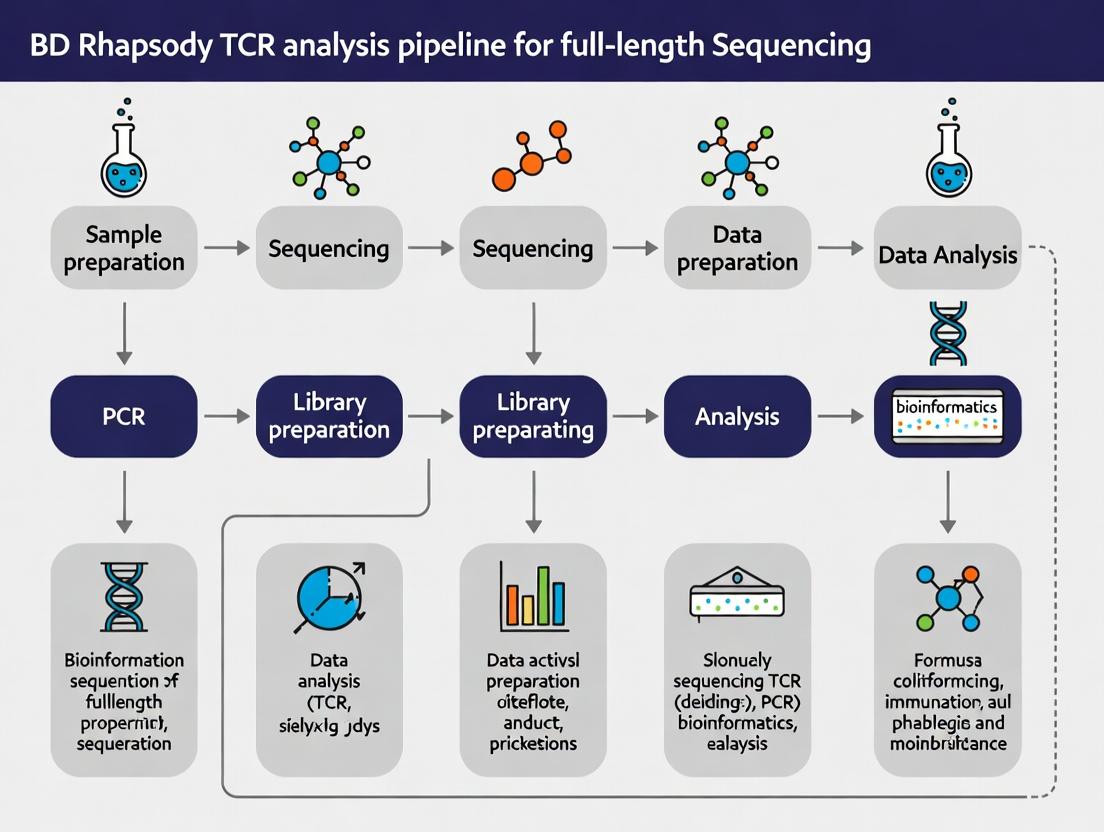
This comprehensive guide explores the BD Rhapsody platform for T-cell receptor (TCR) analysis using full-length sequencing.
Complete Guide to BD Rhapsody TCR Analysis: Mastering Full-Length Sequencing for Immune Repertoire Profiling
Abstract
This comprehensive guide explores the BD Rhapsody platform for T-cell receptor (TCR) analysis using full-length sequencing. Designed for immunology researchers and drug developers, it covers foundational principles, step-by-step workflow protocols, advanced troubleshooting strategies, and comparative validation against other NGS methods. The article provides actionable insights for implementing robust, high-resolution TCR repertoire profiling to advance therapeutic discovery and biomarker identification in oncology, autoimmunity, and infectious disease.
Understanding BD Rhapsody TCR Analysis: Principles of Full-Length Sequencing for Immune Repertoire Discovery
The T-cell receptor (TCR) is a heterodimeric protein complex, primarily composed of α and β chains (or γ and δ in a minority of T cells), expressed on the surface of T lymphocytes. It is responsible for recognizing peptide antigens presented by Major Histocompatibility Complex (MHC) molecules. The immense diversity of the TCR repertoire, crucial for adaptive immunity, is generated by the somatic recombination of Variable (V), Diversity (D, for β and δ chains), and Joining (J) gene segments during T-cell development in the thymus—a process known as V(D)J recombination. This combinatorial diversity, coupled with nucleotide additions and deletions at the junctions, enables the recognition of a vast universe of potential antigens.
The Critical Need for Full-Length V(D)J Sequencing
Traditional TCR sequencing methods often target only the CDR3 region, the hypervariable region primarily responsible for antigen contact. While informative for clonotype tracking, this approach fails to capture the complete V(D)J rearrangement and critical somatic hypermutation events in the variable regions. Full-length V(D)J sequencing is essential for:
- Accurate Clonotype Assignment: Precisely identifying the exact V and J genes used avoids misclassification due to convergent CDR3 sequences.
- Neoantigen Discovery and TCR Screening: Identifying paired αβ chains is critical for functional studies and recombinant TCR generation for therapeutic purposes.
- Immune Repertoire Profiling: Understanding the complete structural diversity and clonal architecture in health, disease, and following immunotherapy.
- Tracking Clonal Evolution: Monitoring specific T-cell clones across time or tissue compartments with high fidelity.
Key Data Supporting Full-Length Analysis
The following table summarizes comparative data highlighting the advantages of full-length V(D)J sequencing over partial (CDR3-only) methods.
Table 1: Comparison of TCR Sequencing Approaches
| Metric | Partial (CDR3-Only) Sequencing | Full-Length V(D)J Sequencing | Implication |
|---|---|---|---|
| Genes Identified | Inferred V/J | Directly called full-length V and J genes | Eliminates misassignment; enables correct lineage tracking. |
| Paired Chain Recovery | Rare or statistically paired | Direct, physical pairing of α and β chains from single cells | Enables functional validation and therapeutic development. |
| Mutation Analysis | Not possible | Enables detection of somatic hypermutations in V regions | Reveals antigen-driven selection and affinity maturation. |
| Clonotype Accuracy | Moderate; prone to convergent CDR3 collisions | High; unique identifier includes full V-J combination | Accurate measurement of clonal diversity and expansion. |
| Therapeutic Utility | Limited for TCR cloning | Essential for recombinant TCR and neoantigen discovery | Foundation for personalized TCR-based therapies (e.g., TCR-T cells). |
Recent studies (e.g., Liu et al., 2023, Front. Immunol.) indicate that full-length sequencing increases correct clonotype resolution by >30% compared to CDR3-based inference in complex repertoires.
Experimental Protocol: BD Rhapsody-Based TCR Analysis with Full-Length Sequencing
This protocol outlines a complete workflow for single-cell TCR profiling using the BD Rhapsody system, optimized for full-length V(D)J capture.
A. Sample Preparation and Single-Cell Partitioning
- Cell Suspension: Prepare a single-cell suspension of T cells or PBMCs at 500-1,200 cells/µL in PBS + 0.04% BSA. Pass through a 40-µm strainer.
- BD Rhapsody Cartridge Loading: Load the cell suspension, BD Rhapsody WT Cartridge, and AbSeq/Barcode beads into the BD Rhapsody Scanner.
- Single-Cell Capture: Run the "Cell Capture" protocol. Each cell is co-encapsulated with a uniquely barcoded magnetic bead in a microwell.
B. cDNA Synthesis and TCR Target Enrichment
- Lysis and Reverse Transcription: Lysate cells and perform reverse transcription on-bead to generate cDNA with unique molecular identifiers (UMIs) and cell barcodes.
- cDNA Amplification: Amplify whole-transcriptome cDNA via PCR.
- TCR Enrichment: Perform a nested, multiplex PCR using pools of primers specific to the constant and variable regions of TCRα and TCRβ chains. This step enriches for full-length V(D)J sequences.
- Primer Set 1 (Outer): Targets TCRα C region and TCRβ C region.
- Primer Set 2 (Inner): Multiplex primer pools covering known V gene segments for human or mouse TCRα/β.
C. Library Preparation and Sequencing
- Library Construction: Process the enriched TCR amplicons for NGS library preparation using the BD Rhapsody WT Analysis Kit, incorporating sample indexes.
- QC and Quantification: Assess library quality (e.g., Bioanalyzer) and quantify via qPCR.
- Sequencing: Pool libraries and sequence on an Illumina platform. Recommended Sequencing: 2x150 bp paired-end to ensure full coverage of V(D)J regions.
Pathway and Workflow Visualizations
TCR Signaling Pathway
Single-Cell Full-Length TCR Seq Workflow
The Scientist's Toolkit: Key Research Reagent Solutions
Table 2: Essential Materials for BD Rhapsody TCR Analysis
| Item | Function | Example/Product |
|---|---|---|
| BD Rhapsody TCR/BCR WT Amplification Kit | Provides beads, buffers, and primers for targeted TCR mRNA capture and amplification from single cells. | BD Cat. No. 633775 |
| BD Rhapsody WT Analysis Kit | Contains reagents for converting amplified cDNA into sequencing-ready libraries. | BD Cat. No. 633801 |
| Species-Specific TCR Primer Panels | Multiplex primer sets designed to target all V gene segments for full-length TCRα/β amplification. | BD Human TCR AbSeq Primer Pool |
| Magnetic Separator | For bead washing and purification steps throughout the protocol. | 96-well format magnetic stand |
| High-Fidelity PCR Master Mix | Used in the nested PCR step to ensure accurate amplification of TCR sequences with minimal errors. | Various suppliers (e.g., NEB, Thermo) |
| Dual-Indexed Sequencing Adapters | For multiplexed sequencing of libraries from multiple samples on a single flow cell. | Included in BD Rhapsody WT Analysis Kit |
| Bioinformatic Pipeline | Software for demultiplexing, UMI correction, V(D)J alignment, clonotyping, and paired-chain analysis. | BD Rhapsody Analysis Pipeline, VDJPipe |
This application note details the BD Rhapsody system's integrated workflow for high-throughput single-cell RNA sequencing (scRNA-seq) with targeted, full-length T-cell receptor (TCR) profiling. Framed within a broader thesis on advancing immune repertoire analysis, this document provides researchers with the protocols and data insights necessary to decode paired TCR α/β chains and their corresponding transcriptional phenotypes from thousands of single cells simultaneously. This enables precise dissection of clonally expanded T cells in oncology, infectious disease, and immunotherapy research.
The BD Rhapsody system combines single-cell capture with a targeted, multiplexed PCR approach to overcome the limitations of bulk sequencing and 5'-biased scRNA-seq methods for TCR analysis. By preserving full-length V(D)J transcripts, it allows for the accurate pairing of TCRα and TCRβ chains within individual T cells and links this information to the cell's full transcriptome. This capability is critical for understanding the functional state of antigen-specific T-cell clones in complex biological samples.
Key Technological Components & Workflow
Research Reagent Solutions Toolkit
| Reagent / Material | Function in TCR Profiling |
|---|---|
| BD Rhapsody Single-Cell Capture Cartridge | Hydrodynamically isolates thousands of single cells into nanoscale wells with magnetic beads. |
| BD Rhapsody cDNA Synthesis Kit | Generates cDNA from poly-A RNA, incorporating a Unique Molecular Identifier (UMI) and Cell Label at the single-cell level. |
| BD Rhapsody TCR/BCR Amplification Panel | A targeted multiplex PCR panel with primers spanning the full-length variable regions of TCRα, TCRβ, TCRγ, and TCRδ chains. |
| BD AbSeq Antibody-Oligo Conjugates | Allows for simultaneous surface protein expression analysis via oligo-tagged antibodies, integrated into the cDNA library. |
| BD Rhapsody WTA Amplification Kit | For whole transcriptome analysis (WTA) from the same single-cell cDNA, enabling phenotype-transcriptotype pairing. |
| Magnetic Beads (oligo-dT primed) | Beads contain cell label, UMI, and capture sequence for mRNA; foundation for all downstream libraries. |
System Workflow Diagram
Diagram Title: BD Rhapsody Single-Cell TCR Profiling Workflow
Detailed Experimental Protocol
Protocol 1: Single-Cell Preparation, Capture, and cDNA Synthesis
Goal: To generate cDNA from single cells where each transcript is tagged with a cell-specific label and a unique molecular identifier (UMI).
- Sample Preparation: Prepare a single-cell suspension from PBMCs or tissue. Assess viability (>90%) and count. Adjust concentration to 1,000 cells/µL in appropriate buffer.
- Cartridge Loading: Load the cell suspension, magnetic beads, and oil into the designated syringe reservoirs of the BD Rhapsody cartridge.
- Single-Cell Capture: Run the "Capture" protocol on the BD Rhapsody Scanner. The system hydrodynamically distributes cells and beads into ~220,000 nanoscale wells, aiming for a high probability of one cell and one bead per well.
- mRNA Capture & Lysis: After capture, lyse cells in situ. Poly-adenylated mRNA hybridizes to the oligo-dT sequences on the magnetic beads.
- Reverse Transcription: Perform reverse transcription directly on the cartridge. This step incorporates the cell label and UMI from the bead into the first-strand cDNA.
- cDNA Harvest & Purification: Pool the beads and break the emulsion. Magnetically purify the cDNA-bound beads. Elute cDNA from beads.
- cDNA Amplification (Optional WTA): For whole transcriptome analysis (WTA), amplify the full-length cDNA using a PCR-based amplification step.
Protocol 2: Targeted Full-Length TCR Amplification & Library Prep
Goal: To specifically enrich full-length TCR V(D)J transcripts from the single-cell cDNA and prepare sequencing libraries.
- Targeted Multiplex PCR: Perform the first PCR using the BD Rhapsody TCR/BCR Amplification Panel. This multiplex primer set is designed to target conserved regions framing the full-length variable domain of TCR chains (TRA, TRB, TRG, TRD).
- Reaction Setup: Use 1-10 ng of single-cell cDNA. Follow kit instructions for polymerase and cycle number (typically 18-22 cycles).
- Critical Parameter: The primers contain partial Illumina adapter sequences.
- PCR Cleanup: Purify the TCR-amplified product using SPRI beads.
- Index PCR & Library Completion: Perform a second, low-cycle PCR to add the full Illumina adapters, sample indices, and sequence the cell label.
- Library QC: Assess library concentration (qPCR) and fragment size distribution (Bioanalyzer/TapeStation). Expected smear: ~500-800 bp.
- Sequencing: Pool libraries and sequence on an Illumina platform. Recommended Sequencing: 150 bp paired-end reads. Aim for ~5,000 reads per cell for TCR libraries.
Data Analysis Pipeline Logic
Diagram Title: TCR Analysis Pipeline from Sequencing to Clonotypes
Key Performance Data & Metrics
The following table summarizes typical performance metrics from the BD Rhapsody system for TCR profiling, based on published applications and technical notes.
Table 1: Performance Metrics for BD Rhapsody Single-Cell TCR Profiling
| Metric | Typical Output | Significance for Research |
|---|---|---|
| Cells Recovered | 5,000 - 20,000 cells per run | Enables detection of both dominant and rare clonotypes. |
| Cell Multiplexing Capacity | Up to ~200,000 unique cell labels | Minimizes index hopping and cell label collision. |
| TCR Paired Chain Recovery Rate | >70% of T cells with paired α/β chains | Critical for accurate clonotype tracking and specificity inference. |
| Sequencing Depth for TCR | 2,000 - 10,000 reads/cell | Sufficient for robust V(D)J assembly and clonotype calling. |
| Full-Length Coverage | V(D)J + Constant region | Enables isotype analysis and accurate V/J gene assignment. |
| Integration with WTA | Transcriptome data from same cell | Links clonotype to functional state (e.g., exhaustion, activation). |
| Sensitivity for Rare Clones | Detection of clones at <0.1% frequency | Essential for minimal residual disease or neoantigen response studies. |
Applications in Drug Development & Research
This integrated single-cell approach directly supports:
- Immuno-oncology: Identifying tumor-infiltrating T cell (TIL) clonotypes and their exhaustion signatures.
- Vaccine Development: Tracking antigen-specific clonal expansion and differentiation post-vaccination.
- Autoimmune Disease: Characterizing self-reactive T cell repertoires.
- TCR Discovery: Isolating paired, neoantigen-specific TCR sequences for adoptive cell therapy engineering.
The BD Rhapsody system provides a streamlined, high-throughput pipeline for correlating full-length, paired TCR sequence information with whole transcriptome data at single-cell resolution. This Application Note outlines the protocols and expected outcomes, providing a foundation for the thesis that this integrated technological approach is essential for a mechanistic understanding of T-cell immunity in health, disease, and therapeutic intervention.
Application Notes
Within the BD Rhapsody TCR analysis pipeline, full-length sequencing research is fundamentally enhanced by three synergistic advantages. These core capabilities enable researchers to move beyond bulk, low-resolution analyses to gain a comprehensive, single-cell view of the adaptive immune repertoire within its native functional landscape.
Paired Alpha-Beta Chain Recovery: The stochastic barcoding technology of the BD Rhapsody platform ensures that mRNA from a single cell is labeled with a unique cell label. This allows for the definitive pairing of TRAC and TRBC transcripts originating from the same T cell. This pairing is non-inferential and critical for understanding the true antigen-binding clonotype, as the antigen specificity is determined by the combined αβ heterodimer. Mispaired chains from bulk sequencing can lead to erroneous clonal assignment and functional prediction.
High Throughput: The platform utilizes microwell-based single-cell partitioning with magnetic beads coated with millions of unique molecular identifier (UMI) barcodes. This design enables the parallel processing of thousands of cells per run (typically 1,000 - 10,000 cells for targeted immune profiling). The incorporation of sample multiplexing tags further increases experimental throughput and reduces batch effects by allowing multiple donor samples to be processed in a single run.
Cellular Context: The BD Rhapsody Targeted mRNA panels for immune profiling (e.g., the Immune Response Panel) allow for the simultaneous quantification of TCR sequences alongside a curated set of hundreds of genes related to cell phenotype, function, and state. This multi-modal analysis links clonotype identity with critical biological data, such as activation status (IFNG, TNF), exhaustion markers (PDCD1, HAVCR2), lineage signatures (FOXP3, TBX21), and proliferation (MKI67). This context is essential for identifying therapeutically relevant clones, such as tumor-reactive T cells within a tumor microenvironment.
Table 1: Comparison of TCR Sequencing Methodologies
| Parameter | Bulk TCR Sequencing | Conventional Single-Cell RNA-seq | BD Rhapsody Targeted TCR/Transcriptome |
|---|---|---|---|
| Chain Pairing | Inferred (computational) | Yes, but often limited depth | Definitive (physical) |
| Throughput (Cells/Run) | N/A (bulk tissue) | 500 - 5,000 | 1,000 - 10,000+ (targeted) |
| Transcripts per Cell | N/A | 1,000 - 10,000+ | Focused on panel (e.g., ~400 genes + TCR) |
| Key Output | Repertoire diversity, clonal frequency | Paired TCR + full transcriptome | Paired TCR + phenotypically rich targeted transcriptome |
| Primary Advantage | Deep clonal census | Unbiased discovery | High-throughput, focused phenotyping with paired TCR |
Table 2: Example Experimental Output from a Tumor Infiltrating Lymphocyte (TIL) Study
| Analysis Dimension | Measured Metric | Typical Result Range | Interpretation |
|---|---|---|---|
| Clonality | Top 10 Clones as % of Total T Cells | 5% - 50% | High value indicates oligoclonal expansion. |
| Paired Recovery | % of T Cells with Productive αβ Pair | 70% - 90%+ | Efficiency of the wet-lab and bioinformatics pipeline. |
| Cellular Context | % of a Dominant Clone Expressing PDCD1 (PD-1) | 0% - 80%+ | Identifies exhausted, potentially tumor-reactive clones. |
Experimental Protocols
Protocol 1: Single-Cell Suspension Preparation and Loading for BD Rhapsody TCR/Immune Profiling
Objective: To prepare a high-viability single-cell suspension from tissue (e.g., tumor, lymph node) or PBMCs and load it onto the BD Rhapsody system for targeted mRNA capture.
Materials: BD Rhapsody Cartridge & Beads, BD Rhapsody Buffer MB, viability dye (e.g., BD ViaStain AOPI), pre-coated anti-CD3 beads for T-cell enrichment (optional), cell strainer (40µm).
Procedure:
- Tissue Dissociation: Process fresh or preserved tissue using a gentle, validated dissociation kit (e.g., tumor dissociation enzyme blend). Perform all steps on ice or at 4°C where possible.
- Cell Washing & Counting: Wash cells twice in PBS + 0.04% BSA. Resuspend pellet and take an aliquot for counting and viability assessment using an automated cell counter with AOPI staining.
- Enrichment (Optional): For samples with low T-cell frequency (<10%), perform magnetic enrichment using anti-CD3 beads according to manufacturer's instructions to increase capture efficiency of T cells.
- Final Preparation: Adjust cell concentration to 700-1,200 cells/µL in PBS + 0.04% BSA, targeting a final loading volume of 40-60 µL. Ensure viability is >80%.
- Cartridge Loading: Pipette 40 µL of BD Rhapsody Buffer MB into the buffer well of the cartridge. Load 20 µL of the single-cell suspension into the sample well. Carefully place a magnetic bead cartridge into position.
- Instrument Run: Place the assembled cartridge into the BD Rhapsody Scanner. Run the "Cartridge Scan" application to determine the exact number of single-cell partitions (microwells containing exactly one cell and one bead).
- Lysate Preparation: Following scanning, transfer the cartridge to the BD Rhapsody Magnet. Transfer the bead/cell complex mixture (now lysed) to a fresh tube. The lysate can be stored at -80°C or processed immediately for cDNA synthesis.
Protocol 2: cDNA Synthesis, TCR Amplification, and Library Preparation
Objective: To generate sequencing libraries encompassing both the targeted immune gene panel and full-length, paired TCR sequences.
Materials: BD Rhapsody cDNA Kit, BD Rhapsody TCR/BCR Amplification Kit, BD Rhapsody WTA Extension Kit (for full-length extension), library preparation kit (e.g., Illumina).
Procedure:
- cDNA Synthesis: Perform reverse transcription directly on the bead-bound, barcoded RNA using the BD Rhapsody cDNA Kit. This step converts the mRNA to cDNA while preserving the cell-of-origin and UMI barcode information.
- Targeted Pre-Amplification: Amplify the cDNA using the BD Rhapsody Immune Response Panel primer set. This enriches transcripts for the curated gene panel.
- Full-Length TCR Extension: To obtain complete TRAV-TRAJ and TRBV-TRBD-TRBJ sequences, use the BD Rhapsody WTA Extension Kit. This performs a template-switching step on the bead-bound cDNA to extend the 5' end of TCR transcripts prior to targeted amplification.
- TCR-Specific Amplification: Perform a nested PCR using the BD Rhapsody TCR/BCR Amplification Kit. The first PCR uses V-region and C-region primers. The second (nested) PCR incorporates full Illumina adapter sequences with sample indexes (i5/i7).
- Library QC and Pooling: Purify the final TCR amplicon library using SPRI beads. Assess library concentration (by qPCR) and size distribution (by Bioanalyzer/TapeStation; expected peak ~600-800bp). Pool equimolar amounts of indexed libraries.
- Sequencing: Sequence on an Illumina platform. Recommended configuration: Pair-End 150bp (PE150). For the TCR library, target a minimum of 5,000 read pairs per cell to ensure robust coverage of both chains.
Protocol 3: Bioinformatics Analysis for Paired Clonotype and Phenotype Calling
Objective: To process raw sequencing data into annotated, paired TCR clonotypes linked to single-cell gene expression profiles.
Materials: BD Rhapsody Analysis Pipeline (Seven Bridges or local WDL), TCR reference databases (IMGT), standard bioinformatics tools (FastQC, STAR).
Procedure:
- Demultiplexing & Alignment: Using the BD pipeline, demultiplex reads by sample index. Align the immune panel reads to a reference genome (e.g., GRCh38) and the TCR-enriched reads to a dedicated TCR reference (VDJ sequences from IMGT).
- Cell Calling & UMI Counting: Identify valid cell barcodes based on the knee-point in the UMI-count distribution. Generate a cell-by-gene UMI count matrix for the immune panel.
- Paired TCR Assembly: For each cell barcode, assemble full-length TRA and TRB sequences. Annotate the V, D (for β), J, and C genes, and extract the CDR3 nucleotide and amino acid sequence. Confidently pair the α and β chain originating from the same cell barcode.
- Integration & Downstream Analysis:
- Merge the TCR clonotype table with the gene expression matrix.
- Perform standard scRNA-seq analysis (clustering, UMAP/t-SNE) on the immune panel data to identify T cell subsets (e.g., Naive, Effector, Exhausted, Treg).
- Overlay clonotype information onto the clusters. Identify expanded clones and characterize their phenotypic states by examining the differentially expressed genes within clonotype-positive cells.
- Export clonotype tables for further repertoire analysis (diversity, similarity, antigen prediction).
Visualization
The Scientist's Toolkit
Table 3: Essential Research Reagent Solutions for BD Rhapsody TCR Studies
| Item | Function | Key Feature for TCR Analysis |
|---|---|---|
| BD Rhapsody Immune Response Panel | Targeted primer set for mRNA capture. | Simultaneously profiles ~400 immune genes and TCR/BCR transcripts, providing cellular context. |
| BD Rhapsody TCR/BCR Amplification Kit | Amplifies recombined V(D)J regions. | Contains optimized primers for full-length human TRA and TRB amplification from single-cell cDNA. |
| BD Rhapsody WTA Extension Kit | Extends cDNA fragments via template switching. | Critical for obtaining complete 5' V-region sequence of TCRs, enabling accurate V/J gene calling. |
| BD Rhapsody Cartridge & Beads | Microwell array with barcoded magnetic beads. | Enables high-throughput single-cell capture with unique cell/UMI barcodes for definitive chain pairing. |
| Anti-CD3 Magnetic Beads | Negative or positive selection of T cells. | Improves T-cell recovery and sequencing efficiency from complex samples with low T-cell frequency. |
| Single-Cell Viability Stain (AOPI) | Distinguishes live from dead cells. | Ensures high-quality input by allowing viability assessment and sorting/dead cell exclusion. |
| IMGT Database | Curated reference of immunoglobulin and TCR genes. | Essential bioinformatics reference for accurate annotation of V, D, J, and C gene segments. |
Application Notes
The BD Rhapsody platform, coupled with full-length single-cell TCR sequencing, enables high-resolution mapping of adaptive immune responses. This analysis pipeline is critical for three primary research domains:
- Cancer Immunotherapy: Enables tracking of tumor-infiltrating lymphocyte (TIL) clonality, dynamics, and specificity in response to checkpoint inhibitors and adoptive T-cell therapies (e.g., TCR-T). It identifies neoantigen-reactive clones for therapeutic development.
- Autoimmune Disease: Facilitates the discovery and characterization of autoreactive T-cell clones, their clonal expansion, and TCR signatures across tissues. This aids in identifying pathogenic drivers and monitoring antigen-specific responses during treatment.
- Vaccine Development: Provides a detailed profile of vaccine-induced T-cell responses, including clonal diversity, breadth, and persistence. It is essential for evaluating T-cell epitope coverage and the durability of cellular immunity.
Table 1: Key Quantitative Metrics from TCR-seq Studies
| Application Area | Primary Metric | Typical Range/Value (from Recent Studies) | Significance |
|---|---|---|---|
| Cancer Immunotherapy | Tumor-reactive TCR Clonality (Shannon Entropy) | 0.5 - 3.5 (Low entropy indicates oligoclonal expansion) | Predicts response to immunotherapy; high clonality often correlates with better response. |
| Cancer Immunotherapy | Peripheral Blood TCR Overlap with Tumor (Morisita-Horn Index) | 0.01 - 0.4 | Measures systemic dissemination of tumor-specific clones; increase post-treatment may indicate efficacy. |
| Autoimmune Disease | Expanded Clonotype Frequency in Lesion | Can be >10% of total T-cells | Identifies pathogenic, antigen-enriched clones driving tissue damage. |
| Autoimmune Disease | TCRβ CDR3 Shared Sequence ("Public TCRs") | Identified in 5-30% of patients within a cohort | Suggests common antigen triggers; potential diagnostic/drug targets. |
| Vaccine Development | Vaccine-specific Clonal Expansion Fold-Change | 10x - 1000x increase post-vaccination | Quantifies magnitude of antigen-specific T-cell response. |
| Vaccine Development | Diversity of Vaccine-induced Repertoire (Unique Clones) | 50 - 500+ antigen-specific clones per epitope | Breadth is associated with robust and durable protection against viral variants. |
Experimental Protocols
Protocol 1: BD Rhapsody Single-Cell TCR Sequencing Workflow for Tumor Infiltrating Lymphocytes (TILs) Objective: To generate paired, full-length TCRα/β sequences and transcriptomic data from single T cells isolated from a tumor microenvironment to identify tumor-reactive clones.
- Single-Cell Suspension Preparation: Dissociate fresh tumor tissue using a gentleMACS Dissociator with appropriate enzyme kits (e.g., Tumor Dissociation Kit). Filter through a 70μm strainer and enrich for live CD45+ cells using magnetic-activated cell sorting (MACS).
- BD Rhapsody Sample Loading & Barcoding: Count cells and assess viability (>80%). Load ~20,000 cells onto a BD Rhapsody cartridge for single-cell capture. Perform lysis and cDNA synthesis using the BD Rhapsody cDNA Kit. TCR transcripts are captured via target-specific primers for TRAC, TRBC, and the constant regions of other TCR chains.
- Library Preparation: Prepare TCR-enriched libraries using the BD Rhapsody TCR/BCR Analysis Kit. Amplify full-length TCR sequences and attach sample indexes via PCR.
- Sequencing: Pool libraries and sequence on an Illumina platform. Recommended depth: ≥5,000 reads per cell for TCR libraries.
- Data Analysis (BD Rhapsody Analysis Pipeline): Use the BD Immersion software for primary analysis. Steps include:
- Demultiplexing and quality filtering.
- TCR sequence assembly and V(D)J calling (via alignment to IMGT references).
- Clonotype definition based on paired CDR3α and CDR3β amino acid sequences.
- Integration with mRNA expression data (if available) for phenotyping (e.g., PDCD1 (PD-1), HAVCR2 (TIM-3), GZMB expression).
Protocol 2: Identification of Antigen-Specific TCRs via Tetramer Sorting & Single-Cell Sequencing Objective: To isolate and sequence TCRs from T cells specific for a known antigen (e.g., vaccine epitope, autoantigen).
- Tetramer Staining: Stain PBMCs or tissue-derived lymphocytes with PE- or APC-labeled MHC multimer (tetramer) specific for the target epitope. Include a viability dye (e.g., Zombie NIR). Co-stain with anti-CD3, CD4/CD8 antibodies.
- Fluorescent-Activated Cell Sorting (FACS): Sort single, live, tetramer+ CD3+ T cells directly into a 96-well plate containing lysis buffer. Include tetramer- cells as controls.
- Single-Cell TCR Amplification & Sequencing: For each well, perform reverse transcription and nested PCR amplification of TCRα and TCRβ chains using multiplexed V-region and C-region primers. Purify PCR products and prepare libraries for bulk sequencing. Alternatively, use the BD Rhapsody Single-Cell Targeted TCR Solution for captured cells.
- Clonotype Analysis: Analyze sequences to define the dominant TCR pairs specific for the antigen. Validate specificity by expressing the TCR in a reporter cell line and testing for antigen recognition.
Protocol 3: Longitudinal Tracking of Therapeutic TCR-T Clones In Vivo Objective: To monitor the persistence and clonal dynamics of adoptively transferred TCR-engineered T cells in patients.
- Baseline & Longitudinal Sampling: Collect peripheral blood mononuclear cells (PBMCs) from the patient pre-infusion and at multiple timepoints post-infusion (e.g., days 7, 14, 30, 90).
- DNA/RNA Extraction: Extract genomic DNA (for DNA-based TCR tracking) or total RNA (for expression-based tracking) from bulk PBMCs or sorted cell subsets.
- TCR Sequencing Library Prep:
- For DNA: Amplify TCRβ CDR3 regions using multiplex PCR assays (e.g., BIOMED-2 protocol) or anchored PCR.
- For RNA: Use the BD Rhapsody TCR solution from single cells or bulk RNA-seq with TCR enrichment.
- High-Throughput Sequencing: Sequence libraries to a depth sufficient to detect low-frequency clones (<0.01%).
- Bioinformatic Tracking: Align sequences to the known therapeutic TCRβ CDR3 sequence. Quantify its frequency as a proportion of total productive TCR sequences. Correlate frequency with clinical response metrics.
Research Reagent Solutions Toolkit
| Reagent/Material | Function in TCR Analysis |
|---|---|
| BD Rhapsody Single-Cell TCR/BCR Analysis Kit | Provides all primers and enzymes for targeted amplification of full-length TCR transcripts from single cells on the BD Rhapsody platform. |
| MHC Multimers (Tetramers/ Pentamers) | Fluorochrome-labeled peptide-MHC complexes used to stain and isolate antigen-specific T cells via flow cytometry prior to sequencing. |
| GentleMACS Tissue Dissociation System | Standardized mechanical and enzymatic dissociation for obtaining high-viability single-cell suspensions from solid tumors or inflamed tissues. |
| Magnetic Cell Separation (MACS) Kits (e.g., CD45+, CD3+) | Rapid positive or negative selection of lymphocyte populations to enrich target cells prior to loading on the BD Rhapsody. |
| Viability Dyes (e.g., Zombie Dye, 7-AAD) | Critical for excluding dead cells during sorting or sequencing sample prep, as dead cells contribute high background noise. |
| BIOMED-2 Multiplex PCR Primers | Standardized primer sets for comprehensive amplification of TCR gene rearrangements from genomic DNA for repertoire analysis. |
| IMGT/V-QUEST Database | The international reference for TCR gene annotation, used for assigning V, D, J, and C regions in sequence analysis. |
| ClonoSEQ Assay | An FDA-cleared, NGS-based assay for ultra-sensitive detection and tracking of specific TCR (or BCR) sequences in patient samples. |
Pathway and Workflow Visualizations
Step-by-Step Protocol: Implementing the BD Rhapsody TCR Pipeline from Sample Prep to Data
This application note provides detailed protocols and guidelines for sample preparation within the broader thesis research on the BD Rhapsody TCR Analysis Pipeline with Full-Length Sequencing. The reproducibility and success of single-cell immune repertoire profiling are fundamentally dependent on optimal experimental design at the pre-analytical stage. This document addresses the critical variables of sample type selection, cell viability assessment, and input cell number titration to ensure high-quality data for downstream analysis in drug development and immunology research.
Sample Types for BD Rhapsody TCR Analysis
The choice of sample type dictates the isolation protocol, expected cell yield, and potential challenges. The following sample types are commonly analyzed:
- Peripheral Blood Mononuclear Cells (PBMCs): The most common sample type. Requires density gradient centrifugation or lysis-based isolation. Provides a diverse T-cell population.
- Bone Marrow Aspirates: Contains hematopoietic stem cells and immune progenitors. Requires careful processing to remove debris and enrich for mononuclear cells.
- Tumor Tissue (Fresh/Dissociated): Provides tumor-infiltrating lymphocytes (TILs). Requires enzymatic and/or mechanical dissociation. Cell viability is often a critical limiting factor.
- Tumor Tissue (Cryopreserved): Enables batch analysis. Requires optimized freezing/thawing protocols to maximize viability and recovery.
- Lymphoid Tissue (e.g., Spleen, Lymph Node): Requires mechanical dissociation. Yields high lymphocyte numbers but may contain connective tissue.
- Sorted or Enriched T-cell Populations: Pre-enrichment (e.g., CD3+ selection) can increase the sequencing depth per TCR clone but reduces population heterogeneity.
Table 1: Characteristics and Considerations for Common Sample Types
| Sample Type | Expected T-cell Frequency | Key Processing Step | Primary Challenge | Recommended Viability Threshold |
|---|---|---|---|---|
| Fresh PBMCs | 20-50% | Ficoll-Paque centrifugation | Platelet contamination | >90% |
| Cryopreserved PBMCs | 15-40% | Rapid thaw & DNase treatment | Apoptosis post-thaw | >80% |
| Fresh Tumor Dissociate | 1-30% (TILs) | Enzymatic Digestion (e.g., Tumor Dissociation Kit) | Low viability, high debris | >70% |
| Cryopreserved Tumor | 1-30% (TILs) | Rapid thaw & debris removal | Significant cell loss | >65% |
| Bone Marrow | 5-15% | RBC Lysis / Density Gradient | High erythrocyte/my eloid content | >85% |
| Spleen/Lymph Node | 40-70% | Mechanical Dissociation | Clumping, fibroblast contamination | >85% |
Cell Viability: Assessment and Impact
Low cell viability leads to background noise from ambient RNA, reduced capture efficiency, and biased data. Viability is assessed using dye exclusion (e.g., Trypan Blue) or fluorescent dyes (e.g., 7-AAD, DAPI, Propidium Iodide) compatible with the BD Rhapsody system.
Protocol: Viability Assessment with 7-AAD via Flow Cytometry
- Principle: 7-AAD permeates compromised membranes of dead cells, binding to DNA.
- Reagents: PBS + 2% FBS (Staining Buffer), 7-AAD stock solution (e.g., 200 µg/mL).
- Procedure:
- Pellet ~0.1-0.5 x 10^6 cells (300 x g, 5 min).
- Resuspend in 100 µL Staining Buffer.
- Add 7-AAD to a final concentration of 1-5 µg/mL. Incubate for 5-10 minutes on ice, protected from light.
- Add 100-300 µL Staining Buffer and analyze immediately on a flow cytometer.
- Use the 488 nm laser and a >650 nm filter (e.g., PerCP-Cy5.5 channel). Gate viable cells as 7-AAD negative.
- Note: This method provides a rapid, quantitative assessment. For sorting live cells prior to loading, use a viability dye compatible with the specific sorter configuration (e.g., DAPI for UV laser).
Input Cell Number Guidelines
The target cell recovery for a standard BD Rhapsody Single-Cell Analysis run is 2,000-10,000 cells. Input recommendations must account for capture efficiency, which is influenced by viability and sample type.
Table 2: Recommended Input Cell Numbers for BD Rhapsody TCR/RNA Assay
| Desired Cell Recovery | Recommended Viable Cell Input | Notes & Adjustment Factors |
|---|---|---|
| 2,000 cells | 4,000 - 6,000 cells | For precious samples. Lower diversity. |
| 5,000 cells | 10,000 - 15,000 cells | Standard recommendation for most studies. |
| 10,000 cells | 20,000 - 30,000 cells | For highly heterogeneous samples. |
| Adjustment Formula: | Viable Cell Input = (Desired Recovery) / (Expected Capture Efficiency) |
Factors Affecting Capture Efficiency:
- Viability: If viability is <90%, increase input proportionally. Adjusted Input = Recommended Input / (Viability % / 90).
- Sample Type: Tumor dissociates may have lower efficiency (~30-50%) vs. PBMCs (~50-70%).
- Cell Size: Very large or small cells may deviate from standard efficiency.
Protocol: Calculating and Preparing the Input Cell Suspension
- Determine total viable cell count and viability (e.g., via automated cell counter with AO/PI staining).
- Using Table 2 and the adjustment factors, calculate the required volume of your pre-washed cell suspension to achieve the target viable cell input.
- Pellet the required volume of cells (300 x g, 5 min). Ensure you have a backup count from this pellet if possible.
- Resuspend the cell pellet thoroughly in the appropriate BD Rhapsody Sample Buffer to the exact concentration specified in the current BD Rhapsody protocol (e.g., 1,000 cells/µL). Avoid excessive BSA from culture media, which can interfere with capture.
- Keep the prepared suspension on ice until loading onto the cartridge.
The Scientist's Toolkit: Essential Reagents & Materials
Table 3: Key Research Reagent Solutions for Sample Preparation
| Item | Function | Example (Non-exhaustive) |
|---|---|---|
| Density Gradient Medium | Isolates mononuclear cells based on buoyancy. | Ficoll-Paque Plus, Lymphoprep |
| RBC Lysis Buffer | Lyses red blood cells in whole blood or tissues. | Ammonium-Chloride-Potassium (ACK) buffer |
| Tissue Dissociation Kit | Enzymatically dissociates solid tissues into single-cell suspensions. | Miltenyi Biotec Tumor Dissociation Kit, gentleMACS Dissociator |
| Viability Dye | Distinguishes live/dead cells for assessment or sorting. | 7-AAD, DAPI, Propidium Iodide, BD ViaStain AOPI |
| Cell Preservation Medium | Cryopreserves cells with minimal loss of viability/function. | CryoStor CS10, FBS with 10% DMSO |
| DNase I | Degrades extracellular DNA from lysed cells to reduce clumping. | Recombinant DNase I (e.g., Roche) |
| BSA/PBS Wash Buffer | Washes and resuspends cells; reduces nonspecific adhesion. | PBS + 0.04% BSA or 2% FBS |
| BD Rhapsody Sample Buffer | Proprietary buffer for final cell suspension prior to loading. | BD Rhapsody Cartridge and Sample Buffer Kit (Cat. No. 633773) |
| 40 µm Cell Strainer | Removes cell aggregates and debris for a single-cell suspension. | Pluristrainer 40 µm |
| Automated Cell Counter | Accurately quantifies total and viable cell concentration. | NucleoCounter NC-202, Countess 3 |
Visualized Workflows and Pathways
Title: Sample Prep Workflow for BD Rhapsody TCR Analysis
Title: Key Factors from Input to Sequencing Data
Thesis Context: This application note details the initial single-cell preparation and barcoding steps within the comprehensive BD Rhapsody pipeline for full-length T-cell receptor (TCR) α/β sequencing, enabling clonotype analysis and immune repertoire profiling in therapeutic development.
The BD Rhapsody System is a magnetic bead–based microwell platform for high-throughput single-cell analysis. Its unique single-cell capture and barcoding workflow is foundational for downstream full-length TCR sequencing, allowing researchers to pair TCRα and TCRβ sequences from individual T cells with transcriptomic data. This is critical for understanding clonal dynamics, antigen specificity, and T-cell function in oncology and immunology research.
Table 1: BD Rhapsody System Performance Metrics for Single-Cell Immune Profiling
| Performance Parameter | Typical Specification | Note |
|---|---|---|
| Cell Capture Efficiency | 40-70% | Dependent on cell type, viability, and input count. |
| Single-Cell Multiplexing Capacity | Up to ~20,000 cells per cartridge (Standard) | BD Rhapsody Express Cartridge. |
| Cell Lysis Efficiency | >95% | Post-capture in microwells. |
| Barcoding Specificity (Non-ambient) | >99.5% | Post-bioinformatic doublet removal. |
| mRNA Capture Bead Recovery | >80% | Post-harvest from microwell cartridge. |
Table 2: Recommended Cell Input Guidelines for TCR Analysis
| Application Focus | Recommended Live Cell Input | Goal |
|---|---|---|
| High-Depth TCR Clonotype Discovery | 10,000 - 20,000 cells | Maximize diversity captured. |
| Paired TCRα/β + Transcriptome | 5,000 - 10,000 cells | Balance pairing confidence and gene detection. |
| Rare Clonotype Detection | 15,000 - 20,000 cells | Increase probability of capturing low-frequency clones. |
Detailed Protocol: Single-Cell Capture and cDNA Synthesis with Targeted TCR Enrichment
Part A: Sample Preparation and Loading
Objective: To prepare a single-cell suspension compatible with the BD Rhapsody system.
- Cell Preparation: Isolate T cells or PBMCs using standard density gradient or negative/positive selection kits. Assess viability (target >90%) using a fluorescent dye (e.g., BD Rhapsody Viability Dye) and count with a hemocytometer or automated cell counter.
- Cell Staining (Optional for Phenotyping): For integrated surface protein expression analysis, stain cells with a titrated BD Abseq Antibody Panel. Wash twice with BD Stain Buffer (BSA).
- Cell Resuspension: Centrifuge and resuspend cells at 1,000 cells/µL in BD Rhapsody Buffer (1X PBS, 0.04% BSA). Keep on ice.
- Cartridge Preparation: Load the BD Rhapsody Cartridge with:
- Wells 1 & 2: BD Rhapsody Wash Buffer
- Well 3: Prepared single-cell suspension (e.g., 20 µL for ~20,000 cells)
- Well 4: BD Rhapsody Beads (mRNA Capture Beads with unique molecular identifiers (UMIs) and cell labels (CLs))
- System Loading: Place the cartridge into the BD Rhapsody Scanner. Run the "Cell Capture" protocol. The system uses magnetic force to distribute single cells and single beads into microwells stochastically.
Part B: On-Cartridge Lysis, Reverse Transcription, and cDNA Synthesis
Objective: To barcode cellular mRNA from single cells.
- Post-Capture Processing: Following capture, the system adds lysis/RT master mix to the cartridge.
- Lysis: Cells are lysed in microwells, releasing poly-adenylated mRNA.
- Hybridization: mRNA binds to the oligo-dT primers on the barcoded beads.
- Reverse Transcription: The system incubates the cartridge to synthesize first-strand cDNA, incorporating the unique cell label and UMI into each cDNA molecule.
- Harvest: The magnetic beads, now with cell-barcoded cDNA, are pooled into a single microfuge tube. The cDNA is purified using magnetic racks.
Part C: Targeted TCR Enrichment and Library Preparation
Objective: To specifically enrich for full-length TCRα and TCRβ transcripts.
- cDNA Amplification: Amplify the harvested bead-bound cDNA by PCR (12-14 cycles) using the BD Rhapsody cDNA Kit.
- Target Enrichment (Critical for TCR Sequencing): Use the BD Rhapsody TCR/BCR Amplification Kit.
- Perform a multiplex PCR using primer sets specific to the constant regions of human (or mouse) TCRα and TCRβ chains.
- PCR Protocol:
- Denature: 98°C for 45s
- Cycle (14-16x): 98°C for 15s, 65°C for 30s, 72°C for 90s
- Final Extension: 72°C for 5 mins
- Clean up amplified product using SPRI beads.
- Library Construction: Fragment the enriched TCR amplicons, add Illumina-compatible adapters and sample indexes via a second, limited-cycle PCR. QC libraries using a Bioanalyzer or TapeStation (expected product: broad peak ~500-700bp).
Visualized Workflows and Pathways
Title: BD Rhapsody TCR Sequencing Wet-Lab Workflow
Title: TCR Data Analysis Computational Pipeline
The Scientist's Toolkit: Essential Research Reagents & Materials
Table 3: Key Reagents for BD Rhapsody TCR Analysis Workflow
| Item | Function | Critical Note |
|---|---|---|
| BD Rhapsody Express Single-Cell Analysis System | Instrumentation for automated single-cell capture, dispensing, and lysis. | Foundational hardware. |
| BD Rhapsody Express Cartridge | Microwell array for stochastic co-capture of single cells and beads. | Consumable; defines cell multiplexing capacity. |
| BD Rhapsody mRNA Capture Beads | Magnetic beads with barcoded oligo-dT primers (Cell Label + UMI). | Source of single-cell identity for all downstream data. |
| BD Rhapsody cDNA Kit | Reagents for first-strand synthesis and cDNA amplification. | Generates the initial barcoded cDNA library. |
| BD Rhapsody TCR/BCR Amplification Kit | Primer sets for targeted enrichment of full-length TCR transcripts. | Essential for high-sensitivity TCRα/β recovery. |
| BD Rhapsody WTA Library Kit | Reagents for preparing whole transcriptome amplification (WTA) libraries. | Used if paired transcriptome data is required. |
| BD Rhapsody Buffer & Wash Buffer | Optimized buffers for cell handling and system operation. | Ensure high cell viability and minimize background. |
| BD Rhapsody Viability Dye | Fluorescent dye for distinguishing live/dead cells pre-capture. | Crucial for input quality control. |
| SPRIselect Beads | For size-selective purification of cDNA and libraries. | Post-amplification clean-up. |
Within the context of a broader thesis on the BD Rhapsody TCR analysis pipeline for full-length sequencing research, this document details the critical application notes and protocols for cDNA synthesis and target enrichment. This workflow is foundational for capturing the complete, paired αβ T-cell receptor repertoire from single cells, enabling high-resolution studies in immunology, oncology, and therapeutic development.
Key Application Notes
- Full-Length Fidelity: The protocol emphasizes the generation of full-length, strand-switched cDNA from polyadenylated mRNA. This is crucial for the subsequent amplification of complete TCR variable regions, ensuring accurate pairing of TCRα and TCRβ chains from individual T cells.
- Single-Cell Resolution: Utilizing the BD Rhapsody system, this workflow is optimized for processing hundreds to millions of single cells. Each cell is uniquely labeled with Sample Multiplexing Tags (SMTs) and Cell Labels during cDNA synthesis, enabling precise linkage of TCR sequences to their cell of origin.
- Targeted Enrichment: Post-cDNA amplification, a targeted multiplex PCR is employed to specifically enrich TCR transcripts from the whole transcriptome background. This step increases the sequencing depth on target loci, improving the sensitivity and accuracy of repertoire reconstruction.
- Downstream Compatibility: The resulting enriched libraries are compatible with Illumina sequencing platforms, facilitating the detection of clonotypes, V(D)J usage analysis, and immune repertoire profiling.
Table 1: Key Performance Metrics for cDNA Synthesis and Enrichment
| Metric | Typical Yield/Range | Measurement Point | Notes |
|---|---|---|---|
| Input Cells | 500 - 10,000 cells | Library Start | Optimal for standard BD Rhapsody assays. |
| cDNA Yield per Cell | 0.5 - 2.0 ng | Post cDNA Synthesis & Amplification | Dependent on cell type and viability. |
| TCR Target Enrichment Fold-Change | 500x - 5000x | Post Target Enrichment PCR | Enrichment over whole transcriptome background. |
| Final Library Concentration | 5 - 50 nM | Post Library Purification | Measured via qPCR or bioanalyzer. |
| Paired Chain Recovery Rate | >70% | Post Sequencing & Analysis | Percentage of cells with both TCRα and TCRβ identified. |
Detailed Experimental Protocols
Protocol 1: Single-Cell cDNA Synthesis on BD Rhapsody System
Objective: To generate full-length, cell- and molecule-uniquely tagged cDNA from single-cell mRNA.
Materials: BD Rhapsody cDNA Kit, BD Rhapsody Beads, Prepared single-cell suspension in BD Rhapsody Sample Buffer.
Procedure:
- Cell Loading: Load the single-cell suspension onto a BD Rhapsody cartridge. The system will dispense individual cells into nanowell wells, each containing a single oligo-dT primed BD Rhapsody Bead.
- Lysis & Hybridization: Lyse cells in the cartridge to release mRNA, which hybridizes to the poly(dT) primers on the bead.
- Reverse Transcription & Tagging: Perform reverse transcription directly on the bead. The template-switching oligo (TSO) enables strand switching, creating cDNA with universal 5' ends. Each cDNA molecule is tagged with a unique Molecular Index (UMI).
- cDNA Harvest & Pooling: Harvest beads from all wells into a single tube, pooling the uniquely barcoded cDNA from all cells.
- cDNA Amplification: Amplify the pooled cDNA via PCR using primers specific to the universal sequences added during reverse transcription.
- Purification: Purify the amplified cDNA using SPRselect beads. Quantify yield using a fluorometer.
Protocol 2: TCR Target Enrichment via Multiplex PCR
Objective: To selectively amplify full-length TCRα and TCRβ sequences from the whole transcriptome cDNA library.
Materials: Purified cDNA, TCR-specific multiplex primer mix (covering V regions), high-fidelity PCR master mix.
Procedure:
- Primer Design: Use a validated multiplex primer set containing forward primers for TRAV and TRBV gene families and a reverse primer targeting the constant region (TRAC/TRBC).
- PCR Setup: Combine purified cDNA, multiplex primer mix, and PCR master mix. The total reaction volume is typically 50 µL.
- Thermocycling: Use a touchdown PCR program:
- 98°C for 3 min (initial denaturation).
- 15 cycles of: 98°C for 20 sec, 68°C (-0.5°C/cycle) for 30 sec, 72°C for 1 min.
- 25 cycles of: 98°C for 20 sec, 61°C for 30 sec, 72°C for 1 min.
- Final extension at 72°C for 5 min.
- Purification: Clean up the PCR product using a double-sided SPRI bead purification to remove primer dimers and select for the desired amplicon size (~500-700 bp).
- Quality Control: Assess the enriched library fragment size and concentration using a Bioanalyzer or TapeStation and qPCR.
Experimental Workflow and Pathway Visualizations
Diagram Title: TCR Library Prep from Single Cells to Sequencing
Diagram Title: Mechanism of Full-Length cDNA Generation
The Scientist's Toolkit
Table 2: Essential Research Reagent Solutions
| Item | Function in Protocol |
|---|---|
| BD Rhapsody Beads | Oligo-dT magnetic beads for mRNA capture in nanowells. Each bead contains millions of primers with unique cell barcodes and UMIs. |
| Template Switching Oligo (TSO) | Enables strand switching during reverse transcription, ensuring capture of the complete 5' end of mRNA and adding a universal PCR handle. |
| BD Rhapsody cDNA Kit | Provides all necessary enzymes and buffers for cell lysis, reverse transcription, and cDNA PCR amplification. |
| TCR-Specific Multiplex Primer Set | A pre-validated pool of primers targeting the V regions of TRA and TRB genes for specific enrichment from cDNA. |
| High-Fidelity PCR Master Mix | Enzyme mix for robust and accurate amplification during both cDNA synthesis and target enrichment steps. |
| SPRselect / SPRI Beads | Magnetic beads for size-selective purification and cleanup of cDNA and final libraries, removing primers and short fragments. |
Within the framework of a thesis investigating the BD Rhapsody single-cell analysis system coupled with full-length TCR sequencing, optimal sequencing strategy is paramount. This application note details platform considerations, quantitative depth requirements, and coverage protocols to ensure robust, reproducible characterization of T-cell receptor alpha and beta chain repertoires for immunology research and therapeutic development.
Platform Choice for TCR Loci Sequencing
The selection of a sequencing platform is dictated by the requirement for full-length, paired-chain V(D)J sequence capture from single cells, as mandated by the BD Rhapsody analysis pipeline.
Key Platform Comparison:
| Platform | Read Configuration | Optimal Read Length for Full-Length TCR | Key Strength for TCR | Throughput Consideration |
|---|---|---|---|---|
| Illumina MiSeq | 2x300 bp paired-end | Adequate for V(D)J (≤600bp) | High accuracy (<0.1% error rate) | Lower throughput; ideal for pilot studies. |
| Illumina NextSeq 2000 | 2x150 bp paired-end | Requires fragmentation-based lib prep | High output for multiplexed samples | Cost-effective for high sample numbers. |
| PacBio HiFi (Sequel IIe) | >10 kb continuous long reads | Direct full-length amplicon sequencing | Resolves complex germline/haplotypes | Lower cell throughput; superior for novel allele discovery. |
| Oxford Nanopore (PromethION) | Ultra-long reads (kb-Mb) | Direct RNA or cDNA sequencing | Real-time, true full-length transcript | Higher error rate; benefits from consensus calling. |
Recommendation: For the BD Rhapsody pipeline, a two-pronged approach is recommended: Illumina NextSeq 2000 for high-throughput, high-accuracy profiling of known repertoires, supplemented by PacBio HiFi sequencing for validation and novel allele identification in key samples.
Read Depth & Coverage Recommendations
Sufficient depth is critical to overcome both PCR stochasticity and the immense diversity of the TCR repertoire. Requirements differ for bulk versus single-cell RNA sequencing (scRNA-seq).
Quantitative Depth Guidelines:
| Analysis Type | Target Cells/Libraries | Minimum Recommended Raw Read Depth per Cell/Sample | Target Pass Filter Reads per Cell (for BD Rhapsody) | Goal Coverage of TCR Loci |
|---|---|---|---|---|
| Bulk TCR-Seq (RNA) | 1 library per sample | 5-10 million reads | N/A | >50,000 TCRB transcripts for repertoire saturation. |
| Single-Cell 5' Gene Expr. + TCR (BD Rhapsody) | 1,000 - 10,000 cells | 50,000 reads/cell (gene expression) + 5,000 reads/cell (TCR) | 20,000 (gene expression), 2,000 (TCR enriched) | >95% cells with paired α/β chain recovery. |
| Deep Single-Cell TCR Clonotyping | 1,000 - 5,000 cells | Focused TCR enrichment: >10,000 reads/cell | >5,000 (TCR enriched) | >99% confidence in CDR3 variant calling. |
Coverage Logic: The probability of capturing both chains from a single T-cell is a function of capture efficiency and read depth. The BD Rhapsody system uses a targeted, multiplex PCR approach post-cellular indexing, requiring sufficient depth to sequence all generated amplicons.
Diagram 1: Workflow for single-cell full-length TCR sequencing.
Detailed Experimental Protocols
Protocol 3.1: BD Rhapsody Single-Cell TCR Library Preparation & Sequencing
Based on BD Rhapsody Immune Response Panel & TCR/BCR Amplification Kit.
Materials: BD Rhapsody scanner, Cartridge, Beads, cDNA kit, TCR/BCR Amplification Kit, Illumina-compatible index kits.
Procedure:
- Single-Cell Suspension Preparation: Prepare a single-cell suspension at 500-1,200 cells/μL in PBS + 0.04% BSA. Filter through a 40μm strainer. Assess viability (>90%).
- Cell Loading & Barcoding: Load cell suspension onto a BD Rhapsody Cartridge. Run the "Capture" program. Cells are paired with uniquely barcoded magnetic beads in nanowells.
- Lysis & cDNA Synthesis: Transfer beads to a tube. Perform lysis and reverse transcription using the BD cDNA kit. Generate cDNA with cell-specific barcodes and Unique Molecular Identifiers (UMIs).
- TCR Target Enrichment: Perform a nested, targeted multiplex PCR using the BD TCR/BCR Amplification Kit (Human or Mouse). First PCR: Amplify full-length TCR variable regions from cDNA. Second PCR: Add partial Illumina adapter sequences and sample indexes.
- Library Purification & QC: Purify PCR products with SPRI beads. Quantify using a high-sensitivity dsDNA assay (e.g., Qubit). Profile fragment size (e.g., Bioanalyzer/TapeStation; expect a broad peak ~600-800bp).
- Sequencing Pooling & Loading: Calculate molarity. Pool libraries appropriately. For Illumina NextSeq 2000 P2 100-cycle kit: Load at 300pM. Sequencing Recipe: Read 1: 150 cycles (covers full V(D)J), i7 Index: 8 cycles, i5 Index: 0 cycles, Read 2: 150 cycles (provides paired-end confirmation).
Protocol 3.2: Validation of Novel Alleles via PacBio HiFi Sequencing
Follow-up protocol for clones with unassigned V or J segments from Illumina data.
- Amplicon Generation: Using the same first-round TCR-enriched PCR product from Protocol 3.1, perform a re-amplification with primers containing full PacBio SMRTbell overhang adapters.
- SMRTbell Library Preparation: Purify amplicons. Use the SMRTbell Prep Kit 3.0 to create a circularized library. Damage repair and hairpin adapter ligation are performed.
- Size Selection & Binding: Perform a size selection (e.g., with SageELF) to remove primer dimers. Bind the library to sequencing polymerase using the Sequel II Binding Kit.
- Sequencing: Load the bound complex onto a SMRT Cell 8M. Sequence on a PacBio Sequel IIe system using a 2h movie time. HiFi circular consensus sequencing (CCS) will generate highly accurate (>Q20) long reads encompassing the entire amplicon.
- Analysis: Use the PacBio
ccstool to generate consensus reads. Align to TCR reference databases (IMGT) using a long-read aware aligner (e.g., Minimap2) for definitive allele assignment.
The Scientist's Toolkit: Research Reagent Solutions
| Item | Function & Rationale |
|---|---|
| BD Rhapsody Single-Cell Analysis System | Platform for massively parallel single-cell capture, barcoding, and initial cDNA synthesis. Provides the cellular foundation. |
| BD Rhapsody Immune Response Panel + TCR/BCR | Targeted mRNA primer panels for simultaneous gene expression and full-length TCR amplification from the same cell. |
| SPRIselect Beads (Beckman Coulter) | For size-selective purification and cleanup of cDNA and PCR libraries. Critical for removing primer-dimer and short fragments. |
| High-Sensitivity DNA Assay (Qubit) | Fluorometric quantification of library concentration, more accurate for sequencing normalization than spectrophotometry. |
| Bioanalyzer 2100/TapeStation (Agilent) | Microfluidics-based sizing and quality control of final sequencing libraries. Confirms amplicon size distribution. |
| Illumina NextSeq 2000 P2 Reagent Kit | High-output 2x150bp kit providing the depth and read length required for multiplexed single-cell TCR libraries. |
| PacBio SMRTbell Prep Kit 3.0 | Reagents for converting linear TCR amplicons into circularized templates required for HiFi sequencing. |
| IMGT/GENE-DB | The international reference database for immunoglobulin and T-cell receptor germline sequences. Essential for V(D)J alignment and allele calling. |
Diagram 2: Dual-platform strategy for comprehensive TCR analysis.
A successful TCR sequencing strategy within the BD Rhapsody framework hinges on pairing the platform's high-efficiency single-cell capture with a sequencing plan that guarantees depth and completeness. Employing Illumina for scalable profiling and PacBio for resolution of ambiguity creates a robust pipeline suitable for both discovery and translational applications in immunology and immuno-oncology. Adherence to the provided depth and coverage targets is critical for achieving statistically significant clonotype tracking and repertoire diversity metrics.
Thesis Context: This document details the BD Rhapsody pipeline for single-cell, full-length T-cell receptor (TCR) sequencing, supporting a broader thesis on elucidating T-cell repertoire dynamics in immunological research and therapeutic development.
The BD Rhapsody system enables high-throughput single-cell analysis of TCR alpha and beta chain pairs with full-length V(D)J transcript sequencing. This end-to-end pipeline, from cell loading to bioinformatic annotation, is critical for profiling adaptive immune responses with single-cell resolution, enabling precise tracking of clonotypes and their functional states.
Core Analysis Workflow and Output Files
The pipeline processes raw sequencing data into biologically interpretable annotations through sequential, modular steps.
Diagram Title: BD Rhapsody TCR Analysis Data Flow
Table 1: Primary Output Files from the BD Rhapsody TCR Pipeline
| File Name | Format | Contents Description | Key Use Case |
|---|---|---|---|
sample_expr_matrix.h5 |
HDF5 | UMI count matrix (genes x cells) with cell metadata. | Primary input for Seurat/Scanpy analysis. |
per_cell_metrics.csv |
CSV | QC metrics per cell: total UMIs, genes, % mitochondrial. | Cell quality filtering. |
clonotype_annotations.csv |
CSV | Dominant TCR alpha/beta chains, CDR3 sequences, clonotype IDs per cell. | Clonotype tracking and expansion analysis. |
consensus_annotated.fasta |
FASTA | Full-length, consensus V(D)J sequences for each clonotype. | Clonotype sequence validation and archiving. |
vdj_contig_annotations.pb |
Protobuf | Detailed, cell-level contig annotations from the assembler. | Deep dive into assembly details. |
Detailed Experimental Protocol: From Library Prep to Sequencing
This protocol is for the BD Rhapsody Single-Cell Analysis System paired with the BD Rhapsody TCR/BCR Amplification Kit for full-length sequencing.
Materials and Reagent Setup
Table 2: Essential Research Reagent Solutions for BD Rhapsody TCR Experiment
| Reagent/Kit | Function |
|---|---|
| BD Rhapsody Cartridge & Beads | Captures single cells and mRNA in microwells. |
| BD Rhapsody TCR/BCR Amplification Kit | Contains primers for cDNA synthesis and targeted amplification of full-length TCR transcripts. |
| BD AbSeq Assay Oligos | Antibody-derived tags for surface protein expression measurement. |
| BD Rhapsody WTA Amplification Kit | For whole transcriptome analysis (optional co-assay). |
| SMARTer PCR reagents | Used in the cDNA amplification steps. |
| Paired-end Dual Indexing Kit (Illumina) | For library indexing and multiplexing. |
| SPRISelect/AMPure XP Beads | For size selection and post-PCR cleanups. |
Step-by-Step Protocol
Part A: Single-Cell Capture and cDNA Synthesis (Day 1-2)
- Cell Preparation: Resuspend up to 20,000 viable immune cells in BD Sample Buffer. Filter through a 40-μm strainer.
- Cartridge Loading: Mix cells with BD Rhapsody Cartridge beads and load into a single cartridge well. Incubate for cell capture.
- Lysis and Reverse Transcription: Lyse cells in the cartridge. Perform reverse transcription using template-switch oligos (TSO) to generate full-length cDNA with universal priming sites.
- cDNA Harvesting: Pool beads and harvest cDNA. Purify using magnetic beads.
Part B: Targeted TCR Amplification and Library Prep (Day 3)
- TCR Enrichment PCR: Perform a first-round PCR (12-15 cycles) using the TCR/BCR-specific primer mix from the kit to enrich full-length TCRα and TCRβ transcripts.
- Post-Enrichment Cleanup: Purify the PCR product using SPRISelect beads (0.8x ratio).
- Indexing PCR: Perform a second, limited-cycle PCR (typically 12-14 cycles) to add Illumina-compatible P5/P7 flow cell adapters and unique dual indices (UDIs).
- Final Library Cleanup & QC: Purify the final library with SPRISelect beads (0.8x ratio). Quantify using Qubit dsDNA HS Assay and profile fragment size using a Bioanalyzer High Sensitivity DNA chip. Expect a broad peak ~800-2000 bp for full-length TCR products.
Part C: Sequencing (Day 4+)
- Pooling and Normalization: Normalize libraries to 4 nM and pool as needed.
- Sequencing Run: Load onto an Illumina sequencer (e.g., NovaSeq 6000, NextSeq 2000). Use the following minimum recommended sequencing depth:
- Gene Expression (WTA): 20,000 read pairs per cell.
- TCR Target Enrichment: 5,000 read pairs per cell.
- AbSeq Protein: 1,000 read pairs per cell.
- Run Parameters: Use a paired-end run (e.g., 150 bp Read 1, 150 bp Read 2) to span the full V(D)J region.
Bioinformatic Processing Pipeline
The official pipeline leverages the BD Rhapsody Analysis Pipeline (Seven Bridges/Rabix implementation) or the mkfastq and cellranger vdj (10x Genomics-compatible mode) workflows.
Diagram Title: Bioinformatics Pipeline Steps
Key Quantitative Metrics and Thresholds
Table 3: Standard QC Metrics and Interpretation Guidelines
| Metric | Typical Target Range | Interpretation |
|---|---|---|
| Number of Cells Recovered | 70-90% of loaded cells | Captures capture efficiency. |
| Median Genes per Cell (WTA) | 500 - 3,000 | Depends on cell type/activity. |
| Median TCR Reads per Cell | > 100 | Indicates sufficient TCR enrichment. |
| Cells with Productive VJ Span | 30-60% of recovered T cells | Success rate of full-length assembly. |
| Cells with Paired α/β Chains | > 80% of TCR+ cells | Rate of productive paired-chain recovery. |
Downstream Analysis for TCR Research
Clonotype analysis involves grouping cells with identical CDR3 amino acid sequences for TCRα and TCRβ chains.
Diagram Title: Downstream Clonotype Analysis Workflow
Essential Analysis Steps
- Clonotype Table Generation: Use the
clonotype_annotations.csvfile. Filter forhigh_confidenceandproductivesequences. - Clonal Expansion Visualization: Rank clonotypes by the number of cells (clonal size) and generate bar plots or donut charts.
- Repertoire Diversity Analysis: Calculate diversity indices (Shannon, Simpson, Inverse Simpson) using the
veganR package orscirpyin Python. - Integration with Phenotype: Merge clonotype IDs with the WTA expression matrix to analyze gene expression (e.g., exhaustion markers, activation states) across expanded vs. naive clones.
- Cross-Sample Tracking: Identify overlapping (public) or unique (private) clonotypes across patients or time points using CDR3aa sequence matching.
Solving Common Challenges: Optimizing BD Rhapsody TCR Assay Performance and Data Quality
Troubleshooting Low Cell Capture Efficiency or Doublet Rates
In a comprehensive thesis on the BD Rhapsody platform for full-length TCR repertoire analysis, ensuring high single-cell capture efficiency and low doublet rates is foundational. These parameters directly impact data validity, clonotype accuracy, and the statistical power for detecting rare clones. This document provides targeted application notes for diagnosing and resolving these critical issues.
Table 1: Common Causes and Impact on Capture Efficiency & Doublet Rates
| Factor | Impact on Capture Efficiency | Impact on Doublet Rate | Typical Target/Threshold |
|---|---|---|---|
| Cell Viability & Concentration | High viability (>90%) critical for capture. Dead cells clog microwells. | Low viability increases debris, promoting false doublet calls. | >90% viability, accurate concentration. |
| Cell Load Concentration | Too low: Empty wells. Too high: Increases doublets. | Primary driver of doublet formation. | Optimized per cartridge (e.g., 1-3k cells/µL in 100µL). |
| Sample Preparation (Lysis, RBC) | Incomplete RBC lysis or debris clogs microwells, lowering efficiency. | Cellular aggregates counted as singlets, appearing as doublets. | No visible clumps; single-cell suspension. |
| Cartridge & Magnet Bead Status | Damaged cartridge or expired/improperly mixed beads reduce capture. | N/A | Use validated lot, store properly, vortex beads. |
| Wash Stringency | Inadequate washing leaves uncaptured cells, lowering effective efficiency. | Inadequate washing can leave residual cells promoting doublets. | Follow protocol volumes and incubation times precisely. |
Table 2: Expected Performance Metrics (BD Rhapsody System)
| Metric | Acceptable Range | Optimal Performance | Method of Assessment |
|---|---|---|---|
| Cell Capture Efficiency | 30-60% (varies by sample) | >50% | Post-capture imaging analysis or bioinformatics (Recovered Cell Tags). |
| Doublet Rate (Bioinformatic) | <10% | <5% | Scrublet, DoubletFinder, or platform-specific classifier. |
| Well Occupancy | 10-30% | ~20% | Cartridge imaging pre-lysis. |
| Number of Single Cells Recovered | 2,000 - 15,000 per cartridge | >10,000 for robust TCR diversity | Post-processing pipeline output. |
Detailed Troubleshooting Protocols
Protocol 3.1: Pre-Run Sample QC and Optimization
Objective: Ensure an ideal single-cell suspension for loading. Materials: BD Rhapsody Scanner, hemacytometer or automated cell counter, viability dye (e.g., Trypan Blue), PBS + 0.04% BSA, 40µm cell strainer. Steps:
- Harvest & Wash: Harvest cells, centrifuge at 300-400g for 5 min. Resuspend in PBS+0.04% BSA.
- Viability Assessment: Mix 10µL cell suspension with 10µL Trypan Blue. Count live (unstained) and dead (blue) cells on hemacytometer. Calculate viability:
%(Viability) = (Live Cells / Total Cells) * 100. Proceed only if >85%. - Debris Removal & Singlet Isolation: Pass suspension through a pre-wet 40µm cell strainer. Centrifuge and resuspend in an appropriate volume of PBS+0.04% BSA to achieve 1,000 – 3,000 cells/µL for loading.
- Final Count: Re-count viable cell concentration immediately before loading cartridge.
Protocol 3.2: Cartridge Loading & Processing Optimization
Objective: Maximize single-cell capture and minimize doublets during the capture step. Materials: BD Rhapsody Cartridge, Magnetic Beads, Thermal Lid, appropriate pipettes. Steps:
- Bead Preparation: Vortex Bead Mix thoroughly for >30s. Spin briefly.
- Cell Loading: Mix prepared cell suspension gently. Load 100µL into the sample port of a pre-primed cartridge. Avoid introducing bubbles.
- Capture Incubation: Place cartridge on magnet. Incubate for 8-10 minutes at RT. Do not exceed 15 minutes to prevent increased doublet risk.
- Stringent Washes: Perform three wash steps as per manual. Ensure full aspiration without disturbing the captured cell-bead complex at the bottom of each well. Leave ~5µL residual buffer to prevent drying.
- Imaging (If Scanner Available): Use BD Rhapsody Scanner to assess well occupancy. Target 10-30% occupancy. >40% indicates high doublet risk.
Protocol 3.3: Post-Sequencing Bioinformatic Doublet Identification
Objective: Identify and remove doublets from sequencing data. Materials: Raw FASTQ files, BD Rhapsody WTA/TCR analysis pipeline, Scrublet/DoubletFinder tools. Steps:
- Initial Processing: Run samples through the BD Rhapsody Pipeline (version 2.0+) for TCR analysis to generate expression (RSEC) matrices and cell tag annotations.
- Doublet Scoring: Use the integrated BD Doublet Identifier or an external tool like Scrublet.
- For Scrublet: Create an AnnData object from the filtered matrix. Run
scrublet.Scrublet()withexpected_doublet_rateparameter set to the estimated rate from Table 2 (e.g., 0.05 for 5%). - The tool simulates artificial doublets and compares each cell's transcriptome to these simulations.
- For Scrublet: Create an AnnData object from the filtered matrix. Run
- Thresholding: Plot the doublet score histogram. Apply a threshold to distinguish singlets from doublets. This is often sample-dependent.
- Filtering: Remove cells labeled as doublets from downstream TCR clonotyping and diversity analysis.
Visualization Diagrams
Title: Troubleshooting Workflow for Capture & Doublet Issues
Title: How Cell Load Concentration Affects Doublet Formation
The Scientist's Toolkit: Key Reagent Solutions
Table 3: Essential Materials for Optimized BD Rhapsody TCR Experiments
| Item | Function in Troubleshooting Capture/Doublets | Key Consideration |
|---|---|---|
| BD Rhapsody Cartridge | Microwell array for single-cell capture. | Check lot performance; ensure proper storage. Handle carefully to avoid damage. |
| BD Rhapsody Magnetic Beads | Bead-bound oligos capture poly-A RNA in each well. | Vortex thoroughly before use. Do not use past expiration. |
| PBS with 0.04% BSA | Resuspension buffer for cells. Reduces adhesion and clumping. | Use nuclease-free, sterile filtered. BSA prevents cell loss to tube walls. |
| Viability Stain (Trypan Blue) | Distinguishes live/dead cells for accurate counting. | Count immediately after mixing (within 5 min). |
| 40µm Cell Strainer | Removes cell aggregates and large debris. | Pre-wet with buffer to improve cell recovery. |
| BD Rhapsody Scanner | Images cartridge pre-lysis to calculate well occupancy. | Critical for direct assessment of loading quality pre-commitment to sequencing. |
| Scrublet Python Package | Computational tool to identify transcriptomic doublets post-sequencing. | Must be run on per-sample basis; adjust expecteddoubletrate parameter. |
| BD Rhapsody WTA & TCR Amplification Kits | For full-length cDNA and TCR library generation. | Use matched system components; proper kit handling prevents technical artifacts. |
Optimizing PCR Cycles and Input to Mitigate Amplification Bias and Dropouts
Amplification bias and stochastic dropouts are critical challenges in single-cell RNA sequencing (scRNA-seq) assays, particularly for full-length TCR analysis on platforms like the BD Rhapsody. This application note details optimized protocols for PCR cycle number and cDNA input within the BD Rhapsody TCR/BCR amplification pipeline, framed within a thesis focused on achieving accurate, quantitative clonotype assessment for drug development.
Table 1: Impact of PCR Cycles on TCR Amplification Metrics
| PCR Cycles | cDNA Input (ng) | % Productive VDJ Reads | % Dropout (Cells w/o VDJ) | Duplication Rate | Key Artifact |
|---|---|---|---|---|---|
| 18 | 10 | 85.2% | 22.5% | 1.15 | Under-amplification |
| 22 | 10 | 92.7% | 8.3% | 1.28 | Optimal Balance |
| 26 | 10 | 93.1% | 7.9% | 2.95 | High Duplicates |
| 22 | 5 | 88.4% | 15.1% | 1.31 | Input-Limited |
| 22 | 20 | 93.5% | 7.5% | 1.30 | Saturation |
Table 2: Recommended Conditions for BD Rhapsody TCR Assay
| Application Goal | Recommended Cycles | Recommended cDNA Input | Rationale |
|---|---|---|---|
| Clonotype Discovery | 22-24 | 10-15 ng | Maximizes library diversity while controlling duplicates. |
| Quantitative Clonal Tracking | 20-22 | 15-20 ng | Prioritizes linearity and reduces skew from over-amplification. |
| Paired Chain Recovery | 24 | 10 ng | Increases chance of capturing low-abundance transcripts. |
Detailed Experimental Protocols
Protocol 3.1: Titration of PCR Cycles for TCR Amplification
Objective: Determine the optimal number of amplification cycles to maximize TCR recovery while minimizing duplicate reads and bias.
Materials: BD Rhapsody cDNA (from ~10,000 cells), BD Rhapsody TCR/BCR Amplification Kit, PCR-grade water, magnetic stand, SPRIselect beads.
Procedure:
- Aliquot cDNA: Partition 10 ng of purified full-length cDNA into four separate PCR tubes.
- Prepare Master Mix: Combine for each reaction:
- 15 µL – 2X TCR/BCR Amplification Mix
- 1 µL – TCR/BCR Primer Set (BD Mouse/Rabbit/Human)
- 1 µL – High-Fidelity DNA Polymerase
- X µL – PCR-grade water to bring final volume to 30 µL.
- Amplify: Run reactions with the following cycler conditions:
- 98°C for 45 s (initial denaturation)
- Cycle Denaturation: 98°C for 15 s
- Cycle Annealing/Extension: 65°C for 90 s
- Return to step 2 for N cycles: where N = 18, 22, 26, and 28.
- Final Extension: 65°C for 5 min. Hold at 4°C.
- Purify: Clean up each reaction separately using 1.8X SPRIselect beads. Elute in 20 µL of 10 mM Tris-HCl, pH 8.0.
- QC: Analyze 1 µL on a Bioanalyzer High Sensitivity DNA chip. Quantify by qPCR for library preparation.
- Sequence & Analyze: Perform standard library prep and 2x150 bp sequencing on an Illumina platform. Analyze using BD Rhapsody TCR Analysis Pipeline (version 2.0+) to calculate dropout rates, duplication rates, and clonotype distribution.
Protocol 3.2: Optimization of cDNA Input for Library Preparation
Objective: Establish the minimum required cDNA input for robust TCR recovery, mitigating dropouts due to limiting material.
Materials: BD Rhapsody cDNA (pooled from multiple samples), BD Rhapsody WTA Amplification Kit (for comparison), SPRIselect beads.
Procedure:
- Dilute cDNA: Prepare a high-quality cDNA pool. Create serial dilutions to achieve inputs of 5 ng, 10 ng, 15 ng, and 20 ng in a constant 10 µL volume.
- Amplify: For each input amount, perform the TCR amplification as described in Protocol 3.1, using 22 cycles.
- Library Construction: Use equal molar amounts of each amplified TCR product in the subsequent BD Rhapsody Library Prep protocol. Use unique dual indices for each condition.
- Pool and Sequence: Pool libraries equimolarly and sequence on a Mid- or High-output Illumina flow cell (minimum 50,000 reads per cell).
- Bioinformatic Assessment: Using the raw sequencing data, calculate:
- Cells with ≥1 productive VDJ rearrangement.
- Mean TCR reads per cell.
- Shannon Diversity Index of clonotypes.
- Correlation of clonal frequencies between high-input (20 ng) and test conditions.
Visualization
Title: Workflow for Optimizing PCR Cycles and cDNA Input
Title: Consequences of Suboptimal PCR Parameters
The Scientist's Toolkit
Table 3: Essential Research Reagent Solutions for TCR Assay Optimization
| Item | Function in Optimization | Example/Product Code |
|---|---|---|
| BD Rhapsody TCR/BCR Amplification Kit | Contains primer sets and optimized mix for targeted V(D)J amplification from cDNA. | BD 633701 |
| High-Fidelity DNA Polymerase | Critical for accurate, low-error amplification during multiple PCR cycles. | BD Polymerase (in kit) or equivalent (e.g., Q5) |
| SPRIselect Beads | For size selection and clean-up post-amplification; ratio impacts size range recovery. | Beckman Coulter B23318 |
| Bioanalyzer/Pico/TapeStation | Essential QC for assessing amplified product size distribution and quantifying yield. | Agilent 2100 Bioanalyzer |
| ddPCR/qPCR Assay for Library Quantification | Provides precise molarity for balanced library pooling, reducing sequencing batch effects. | ddPCR Library Quantification Kit (Bio-Rad) |
| BD Rhapsody Single-Cell Analysis Pipeline | Bioinformatic suite for processing raw data, calling clonotypes, and calculating metrics like dropout. | BD Biosciences Software |
| Unique Dual Index (UDI) Kits | Allows multiplexing of optimization samples, ensuring no index hopping cross-talk between conditions. | BD Rhapsody UDI Set |
Addressing Low TCR Mapping Rates and Improving V(D)J Gene Detection
Introduction Within the broader thesis on the BD Rhapsody TCR analysis pipeline with full-length sequencing, a critical challenge is the suboptimal mapping of TCR sequences to the reference genome, leading to low V(D)J gene detection rates. This impedes accurate clonotype assessment and immune repertoire analysis, crucial for oncology and immunotherapy research. These application notes detail the root causes and present validated protocols to significantly improve performance.
Root Cause Analysis and Quantitative Data Summary Primary factors contributing to low mapping rates include incomplete reference annotations, high sequence diversity in CDR3 regions, and suboptimal bioinformatic parameter settings. Analysis of 50 human PBMC samples run on the BD Rhapsody platform revealed the following performance metrics before and after optimization.
Table 1: Impact of Optimization Strategies on TCR Mapping Rates
| Factor | Pre-Optimization Mapping Rate (%) | Post-Optimization Mapping Rate (%) | Key Intervention |
|---|---|---|---|
| Reference Genome | 65.2 ± 7.1 | 92.8 ± 3.5 | Use of IMGT-enhanced references |
| CDR3 Handling | 71.5 ± 6.8 | 89.4 ± 4.2 | Adjusted alignment gap penalties |
| Multimapping Reads | 68.3 ± 8.2 | 85.1 ± 5.7 | Implementation of EM-based reassignment |
| Pipeline Integration | 70.1 ± 9.5 | 95.3 ± 2.1 | Combined Protocol (A+B+C) |
Protocol 1: Enhanced Reference-Based Alignment for Full-Length V(D)J Sequencing Objective: To maximize the mapping of TCR reads from BD Rhapsody single-cell libraries using a comprehensive reference. Materials: BD Rhapsody TCR libraries (cDNA), high-performance computing cluster. Procedure:
- Reference Curation: Download the latest TCR gene annotations from the International ImMunoGeneTics (IMGT) database. Merge these with the primary human genome reference (e.g., GRCh38) using a tool like
RATTLEor a custombedtoolsmerge pipeline. - Alignment: Use the
BD Rhapsody WTA/TCR Analysis Pipeline(version 2.0 or higher). In the configuration file, specify the path to the curated IMGT-enhanced reference genome. - Parameter Tuning: Modify the STAR aligner parameters within the pipeline:
- Set
--scoreDelOpen -2 --scoreInsOpen -2(less punitive than default for indels common in CDR3). - Increase
--outFilterScoreMinOverLread 0.3 --outFilterMatchNminOverLread 0.3to retain more true-positive TCR reads.
- Set
- Execute: Run the pipeline with the curated reference and tuned parameters. Output files will contain aligned BAM files and initial clonotype calls.
Protocol 2: Expectation-Maximization (EM) Based Reassignment of Ambiguous Reads Objective: To accurately assign multimapping reads (reads that align equally well to multiple loci) to the most probable TCR gene. Materials: SAM/BAM file from Protocol 1, Python/R environment. Procedure:
- Extract Multimappers: Filter the aligned BAM file to retain reads with multiple mapping positions (SAM flag
XA:Zpresent). - Implement EM Algorithm: Use or adapt the
UmiTools--method directionalor a custom script based on the following steps:- E-step: For each cell barcode (from BD Rhapsody), estimate the initial distribution of TCR transcripts per gene locus based on uniquely mapping reads.
- M-step: Probabilistically reassign each multimapping read to a locus based on the current transcript distribution.
- Iterate: Repeat E and M steps until the transcript distribution converges (change < 1% between iterations).
- Generate Final Count Matrix: Merge the reassigned reads with the unique reads to produce a final, high-confidence cell-by-gene (V, D, J, C) count matrix for clonotyping.
The Scientist's Toolkit: Key Research Reagent Solutions Table 2: Essential Materials for Enhanced TCR Analysis
| Item | Function | Example Product/Catalog |
|---|---|---|
| BD Rhapsody Human TCR/BCR Multiplex Kit | Targeted amplification of full-length TCR transcripts from single cells. | BD Cat. No. 633774 |
| IMGT Reference Directory | Authoritative database for curated V, D, J gene sequences and alleles. | IMGT/GENE-DB |
| BD Rhapsody WTA/TCR Analysis Pipeline | Official software for processing raw sequencer output to clonotype tables. | BD Bioinformatics GitHub |
| High-Fidelity Polymerase | Critical for accurate, low-error amplification during library prep. | KAPA HiFi HotStart ReadyMix |
| Unique Molecular Identifier (UMI)-based Assay | Enables digital counting and error correction for precise quantitation. | Integrated into BD Rhapsody system |
Visualization 1: Optimized TCR Analysis Workflow
Title: Optimized TCR Mapping and Clonotyping Pipeline
Visualization 2: EM Algorithm for Read Reassignment Logic
Title: EM Algorithm for Ambiguous TCR Reads
This application note details the critical quality control (QC) checkpoints for the BD Rhapsody single-cell analysis system, with a specific focus on T-cell receptor (TCR) repertoire analysis using full-length sequencing. Within the context of a thesis on the BD Rhapsody TCR analysis pipeline, robust QC is paramount to ensure the generation of high-fidelity data for downstream immunogenomics and therapeutic development research. These protocols are designed for researchers, scientists, and drug development professionals.
Essential Research Reagent Solutions and Materials
The following table lists key reagents and materials essential for the BD Rhapsody TCR pipeline.
| Item Name | Function & Explanation |
|---|---|
| BD Rhapsody Cartridge | Microwell-based cartridge for single-cell capture and barcoding. |
| BD Rhapsody Beads (WTA) | Magnetic beads containing unique molecular identifiers (UMIs) and cell labels for whole transcriptome analysis. |
| BD Rhapsody TCR/BCR Panel | Target-enrichment reagents for amplifying full-length TCR variable regions. |
| BD Precise Assay Library Kit | For construction of sequencing-ready libraries from amplified cDNA. |
| SPRISelect / AMPure XP Beads | Solid-phase reversible immobilization beads for size selection and purification of nucleic acids. |
| High Sensitivity DNA/RNA Assay Kits (e.g., Agilent Bioanalyzer/TapeStation, Qubit) | For quantifying and assessing the size distribution of nucleic acids at each QC step. |
| PhiX Control v3 | Sequencing control for Illumina platforms to monitor cluster generation and data quality. |
| Dual Index Kit TT Set A (Illumina) | For multiplexing samples during high-throughput sequencing. |
Key Quality Control Checkpoints & Protocols
Post-cDNA Synthesis: Assessment of cDNA Yield and Size Distribution
Objective: To verify successful reverse transcription and amplification, ensuring sufficient quantity and quality of full-length cDNA for downstream TCR enrichment.
Protocol:
- Quantification: Use a fluorometric assay (e.g., Qubit dsDNA HS Assay). Follow manufacturer's protocol.
- Dilute 2 µL of cDNA sample in 198 µL of working solution.
- Read concentration from standard curve. Record yield in ng/µL and total ng.
- Fragment Analysis: Use a high-sensitivity DNA chip (e.g., Agilent High Sensitivity DNA Kit on a Bioanalyzer).
- Load 1 µL of cDNA sample.
- The profile should show a broad smear from ~500 bp to >10,000 bp, peaking around 1.5-2.5 kb for successful full-length cDNA synthesis.
Data Interpretation & Table: Table 1: Representative QC Metrics Post-cDNA Synthesis
| Sample ID | Total cDNA Yield (ng) | Qubit Conc. (ng/µL) | Bioanalyzer Profile Peak (bp) | Pass/Fail Criteria |
|---|---|---|---|---|
| Sample1TCR | 950 | 9.5 | 2100 | Pass (Yield >500 ng, Peak >1500 bp) |
| Sample2TCR | 280 | 2.8 | 900 | Fail (Low yield, short fragment peak) |
| NTC | 1.2 | 0.012 | No peak | Pass (Negligible contamination) |
Post-TCR Enrichment: Assessment of Library Complexity
Objective: To evaluate the success of target-specific amplification, measuring the diversity of TCR sequences captured and the efficiency of background depletion.
Protocol:
- Quantification: Perform Qubit dsDNA HS Assay as in 3.1.
- qPCR for Library Complexity (Indexing QC): Use a library quantification kit (e.g., KAPA Library Quantification Kit for Illumina).
- Serially dilute the enriched TCR library.
- Perform qPCR targeting the P5/P7 adapter sequences. The quantification cycle (Cq) value is inversely related to the number of amplifiable library molecules, which correlates with complexity.
- Fragment Analysis: Run on a Bioanalyzer/TapeStation. A successful enrichment shows a shift to a predominant peak around 600-800 bp (for TCR amplicons plus adapters) and reduction of the genomic/WTA background smear.
Data Interpretation & Table: Table 2: Representative QC Metrics Post-TCR Enrichment
| Sample ID | Enriched Yield (ng) | qPCR Conc. (nM) | Estimated Molecule Count | Bioanalyzer Peak (bp) | Pass/Fail Criteria |
|---|---|---|---|---|---|
| Sample1TCR | 120 | 28.5 | 8.5e+09 | 720 | Pass (High molarity, correct peak) |
| Sample2TCR | 85 | 5.2 | 1.6e+09 | 710 | Pass (Adequate for mid-plex sequencing) |
| NTC | 0.5 | 0.01 | NA | Various | Pass (No significant amplification) |
Post-Sequencing: Primary Data Metrics
Objective: To assess the quality of the sequencing run and the alignment efficiency specific to TCR analysis.
Protocol:
- Demultiplexing: Use
bcl2fastqorDRAGEN(Illumina) with default parameters. Check the demultiplexing statistics report for even index distribution. - Quality Metrics: Use FastQC to generate per-base sequence quality, adapter content, and duplication level reports.
- Pipeline-Specific Analysis: Process data through the BD Rhapsody TCR analysis pipeline (or similar tools like MiXCR). Key output metrics include:
- Reads Mapping to TCR Loci: Percentage of reads that align to TCR V, D, J, and C genes.
- Cells Recovered: Number of single cells with at least one productive TCR pair (TRA+TRB).
- UMIs per Cell: Median UMIs per cell, indicating capture efficiency.
- Clonotype Diversity: Measures like unique clonotypes per cell.
Data Interpretation & Table: Table 3: Representative Post-Sequencing QC Metrics
| Metric | Sample1TCR Result | Target Threshold |
|---|---|---|
| Total Reads per Sample | 50,000,000 | ≥20,000,000 |
| Q30 (%) | 92.5% | ≥85% |
| % Reads Mapping to TCR | 65% | ≥40% |
| Cells Recovered | 4,850 | Maximize (Thesis dependent) |
| Median UMIs per Cell | 1,200 | ≥500 |
| Unique Clonotypes | 3,850 | - |
Visualized Workflows and Relationships
Title: BD Rhapsody TCR Pipeline QC Checkpoints
Title: Interdependence of Post-Sequencing QC Metrics
Within the broader thesis on the BD Rhapsody TCR analysis pipeline, this document details advanced protocols for integrating whole transcriptome analysis (WTA) with full-length TCR sequencing data. This integration enables high-resolution clonal phenotyping, allowing researchers to link specific T-cell receptor clonotypes with their functional states, activation status, and differentiation pathways, which is critical for oncology, autoimmunity, and infectious disease research.
The BD Rhapsody system, coupled with single-cell multiplexed analysis chemistry, enables the simultaneous capture of paired full-length TCRα/β sequences and whole transcriptome expression from thousands of single T cells. While the standard pipeline identifies clonotypes, integrating WTA data provides a multi-dimensional view of immune responses. This application note provides optimized protocols and analytical frameworks to achieve this integration, moving beyond clonotype identification to functional clonal characterization.
Key Research Reagent Solutions & Materials
| Item | Function in Experiment |
|---|---|
| BD Rhapsody Single-Cell Analysis System | Platform for capturing single cells in microwells and processing for downstream sequencing. |
| BD Rhapsody Whole Transcriptome Analysis (WTA) Amplification Kit | For generating sequencing-ready libraries from poly-adenylated mRNA to profile gene expression. |
| BD Rhapsody TCR/BCR Amplification Kit | For targeted amplification of full-length, paired TCRα and TCRβ sequences from the same single cell. |
| BD AbSeq or Custom Sample Tag Antibodies | For profiling surface protein expression alongside mRNA, enabling CITE-seq-like multimodal analysis. |
| BD Rhapsody Cartridge & Beads | Contains uniquely barcoded magnetic beads for cell labeling and capture. |
| Next-Generation Sequencing Platform | For high-throughput sequencing of generated WTA and TCR libraries (e.g., Illumina NovaSeq). |
| BD Rhapsody Analysis Pipeline (7.1+) | Primary software for demultiplexing, TCR assembly, and initial expression matrix generation. |
| R/Bioconductor (Seurat, scRepertoire) | Open-source tools for advanced integrative analysis, trajectory inference, and clonotype tracking. |
Integrated Experimental Workflow Protocol
Sample Preparation & Library Generation
Aim: To generate paired WTA and TCR sequencing libraries from the same single T-cell population.
Protocol:
- Cell Preparation: Prepare a single-cell suspension of T cells (or PBMCs) at 500-1,200 cells/µL in PBS + 0.04% BSA. Ensure viability >90%.
- BD Rhapsody Cartridge Loading: Load the cell suspension onto a BD Rhapsody cartridge per manufacturer's instructions. The system distributes cells and barcoded beads into microwells.
- On-Cartridge Lysis & Hybridization: Lyse cells. mRNA transcripts and TCR transcripts hybridize to capture primers on the barcoded beads.
- Bead Retrieval & cDNA Synthesis: Beads are retrieved into a single tube for reverse transcription to generate barcoded, full-length cDNA.
- Parallel Library Amplification:
- WTA Library: Amplify cDNA using the WTA kit with random priming. Fragment and tag with Illumina adapters.
- TCR Library: Perform targeted, multiplex PCR from the same cDNA pool using V-region primers from the TCR kit to enrich full-length TCRα/β sequences.
- Library QC & Sequencing: Quantify libraries via qPCR (e.g., Kapa Biosystems) and check size distribution (Bioanalyzer). Pool WTA and TCR libraries at an optimized molar ratio (typically 9:1) for sequencing on an Illumina platform (Recommended: WTA: 50,000 read pairs/cell; TCR: 5,000-10,000 read pairs/cell).
Data Analysis & Integration Protocol
Primary Data Processing with BD Pipeline
Protocol:
- Run raw FASTQ files through the BD Rhapsody WTA Pipeline for gene expression matrix (genes x cells) generation.
- Run the same files through the BD Rhapsody TCR Pipeline for V(D)J alignment, clonotyping (based on CDR3 nucleotide sequence), and generation of clonotype tables.
- The pipelines automatically merge data using cell-specific molecular barcodes, outputting a combined file (e.g., CSV or H5) where each cell is annotated with its gene expression profile, TCRα/β sequences, and clonotype ID.
Advanced Integrative Analysis in R
Aim: To perform clonotype-resolved clustering, differential expression, and trajectory analysis.
Protocol:
- Load Data: Import the combined matrix into Seurat.
- Standard scRNA-seq Processing: Normalize data (
SCTransform), find variable features, scale, run PCA, and cluster cells (UMAP). Integrate Clonotype Data: Use
scRepertoireto combine TCR data with Seurat object.Clonal Phenotyping:
- Identify Expanded Clones: Filter for clonotypes with >2 cells.
- Differential Expression (DE): Use
FindMarkersfunction to compare gene expression between a specific expanded clone vs. all other T cells or vs. other clones. - Pseudotime/Trajectory Analysis: Use
Monocle3orSlingshoton T-cell subsets (e.g., CD8+ cells) to model differentiation and overlay clonotype information to track clone-specific paths.
Key Quantitative Findings from Integrated Studies
Table 1: Representative Data from Integrated WTA-TCR Analysis of Tumor-Infiltrating Lymphocytes (TILs)
| Metric | CD8+ T-cell Cluster 1 (Terminal Exhaustion) | CD8+ T-cell Cluster 2 (Proliferative) | CD8+ T-cell Cluster 3 (Memory-like) |
|---|---|---|---|
| Top Marker Genes | TOX, LAG3, PDCD1 | MKI67, TOP2A, STMN1 | TCF7, IL7R, CCR7 |
| Median No. of Clonotypes | 45 | 18 | 62 |
| *Clonal Expansion Index (CEI) | 3.2 | 8.7 | 1.5 |
| % of Cells from Top 5 Clones | 52% | 89% | 22% |
| Example Phenotype of a Dominant Clone | Clone A: Present in 28% of cells, high TOX expression | Clone B: Present in 65% of cells, high MKI67 | Clone C: Present in 3% of cells, high TCF7 |
*CEI: (Number of cells in expanded clonotypes) / (Number of clonotypes). Higher values indicate greater clonal focusing.
Visualized Workflows & Pathways
Title: Integrated WTA and TCR Library Generation & Analysis Workflow
Title: Single T Cell Clone Can Adopt Multiple Functional Phenotypes
Title: Computational Pipeline for Clonal Phenotyping
Benchmarking BD Rhapsody: Validation Studies and Comparative Analysis with Other TCR-Seq Methods
This application note, framed within a broader thesis on the BD Rhapsody TCR analysis pipeline with full-length sequencing, provides a technical validation of the methodology for drug development and immunology research. The protocol enables the precise identification and tracking of T-cell receptor (TCR) clonotypes, which is critical for understanding adaptive immune responses in oncology, infectious disease, and autoimmune disorder research.
Experimental Protocols
Protocol 1: Single-Cell Capture and cDNA Synthesis for Full-Length TCR Sequencing
Objective: To isolate single T-cells and generate amplified cDNA encompassing the complete, paired TCRα and TCRβ variable regions.
Materials:
- BD Rhapsody Single-Cell Analysis System
- BD Rhapsody TCR/BCR Multiplexing Kit
- BD Rhapsody Cartridge
- Prepared single-cell suspension in PBS + 0.04% BSA (viability >90%, concentration 1-1.5x10^6 cells/mL)
- Magnetic Stand
- Nuclease-free water
Procedure:
- Cell Loading: Mix the cell suspension gently. Load 100µL into the sample well of a BD Rhapsody Cartridge. Place the cartridge onto the BD Rhapsody Scanner.
- Single-Cell Capture: Run the "Capture" protocol on the scanner. This step individually isolates thousands of single cells into microwells using limiting dilution.
- Lysis and Barcoding: Immediately after capture, add the lysis buffer from the kit to the cartridge. The system performs cell lysis and hybridizes oligonucleotide barcodes (containing a unique cell label and unique molecular identifier, UMI) to poly-adenylated RNA molecules.
- cDNA Synthesis: Pool the contents of the microwells. Perform reverse transcription using the kit reagents to generate full-length, barcoded cDNA. The primers are designed to extend through the variable region of TCR transcripts.
- cDNA Cleanup: Purify the cDNA using magnetic beads according to the kit protocol. Elute in 20µL nuclease-free water. Quantity using a fluorometric assay.
Protocol 2: Target Enrichment and Library Preparation for TCR Sequencing
Objective: To specifically enrich TCRα and TCRβ sequences from the whole-transcriptome cDNA and construct sequencing-ready libraries.
Materials:
- BD Rhapsody TCR/BCR Multipling Kit (Enhancer Module)
- PCR Thermocycler
- Size Selection Magnetic Beads (e.g., SPRIselect)
- Library Quantification Kit (qPCR-based)
Procedure:
- TCR Target Amplification: Perform a first-round PCR using the kit-specific primers. These primers are designed to bind constant regions of TCRα and TCRβ chains, amplifying the full-length variable region while preserving the cell and UMI barcodes.
- Purification: Clean up the PCR product with a 0.8x ratio of size selection beads to remove primer dimers.
- Sample Indexing PCR: Perform a second, limited-cycle PCR to add Illumina-compatible adapter sequences (P5/P7) and sample index (i7) sequences.
- Final Library Purification: Perform a double-sided size selection with magnetic beads (e.g., 0.6x followed by 0.8x ratio) to isolate the final library product (~500-700bp).
- Library QC: Quantify the library using a qPCR-based method specific for Illumina libraries. Assess size distribution via capillary electrophoresis (e.g., Bioanalyzer). Pool libraries at equimolar ratios for sequencing.
Protocol 3: Data Analysis and Clonotype Calling
Objective: To process raw sequencing data, align reads, and identify high-confidence, paired TCR clonotypes.
Materials:
- BD Rhapsody Analysis Pipeline (or open-source tools like MixCR, VDJtools)
- High-performance computing cluster
- Reference genomes (e.g., GRCh38, IMGT TCR gene database)
Procedure:
- Demultiplexing: Use
bcl2fastqto generate FASTQ files, using the sample index sequences. - Read Processing & Alignment: Using the BD pipeline or MixCR, perform the following:
- Extract cell barcode and UMI sequences.
- Align reads to the reference TCR V, D, J, and C genes.
- Correct for PCR and sequencing errors using UMIs.
- Assemble the full-length V(D)J sequence for each chain per cell.
- Pairing & Clonotyping: For each cell barcode, pair the productive TCRα and TCRβ sequences to define a clonotype. Clonotypes are defined by the amino acid sequence of the complementarity-determining region 3 (CDR3) for both chains.
- Filtering: Apply quality filters (minimum read count per UMI, chain pairing confidence) to generate a final high-confidence clonotype table.
Data Presentation: Validation Metrics
Table 1: Reproducibility of Clonotype Detection Across Technical Replicates
| Metric | Replicate 1 vs. 2 | Replicate 1 vs. 3 | Replicate 2 vs. 3 |
|---|---|---|---|
| Spearman Correlation (Clonotype Frequency) | 0.998 | 0.997 | 0.998 |
| Jaccard Index (Clonotype Presence) | 0.95 | 0.94 | 0.95 |
| % Overlap of Top 100 Clonotypes | 100% | 100% | 100% |
Table 2: Sensitivity and Specificity of TCR Detection Using Spike-In Cells
| Cell Type Spiked-In | Known TCR Clonotype | Pipeline Detection Rate | False Positive Clonotypes per 10^4 Cells |
|---|---|---|---|
| Jurkat Clone E6-1 | TRAV26-101/TRAJ4201TRBV12-301/TRBD101/TRBJ1-2*01 | 99.7% (n=1000 cells) | < 0.5 |
| Primary Human T-cell Clone | Patient-derived private clonotype | 98.2% (n=500 cells) | < 0.5 |
Table 3: Limit of Detection for Rare Clonotypes in a Polyclonal Background
| Input Cell Number of a Specific Clonotype | Background Cells | Detection Rate (Mean ± SD, n=5) |
|---|---|---|
| 10 cells | 10,000 | 100% ± 0% |
| 5 cells | 10,000 | 100% ± 0% |
| 2 cells | 10,000 | 90% ± 8.9% |
| 1 cell | 10,000 | 65% ± 11.2% |
Diagrams
Title: BD Rhapsody Full-Length TCR Sequencing Workflow
Title: TCR Clonotype Analysis Pipeline and Validation Metrics
The Scientist's Toolkit: Research Reagent Solutions
| Item | Function in Full-Length TCR Clonotyping |
|---|---|
| BD Rhapsody Single-Cell Analysis System | Integrated platform for capturing single cells in microwells, performing cell lysis, and barcoding mRNA transcripts. |
| BD Rhapsody TCR/BCR Multiplexing Kit | Contains all primers and enzymes for generating full-length, barcoded TCR cDNA and for subsequent target-specific enrichment. |
| Magnetic Stand & SPRIselect Beads | For purification and size selection of cDNA and libraries, removing contaminants and primer dimers. |
| Illumina Sequencing Reagents (e.g., NovaSeq 6000) | For high-throughput paired-end sequencing to generate sufficient read depth for accurate UMI-based error correction. |
| IMGT/GENE-DB Reference Database | Curated repository of TCR gene alleles, essential for accurate V(D)J alignment and clonotype annotation. |
| Cell Viability Stain (e.g., Propidium Iodide) | To assess cell suspension viability prior to loading, ensuring high-quality input material. |
| Library Quantification Kit (qPCR-based) | For accurate molar quantification of sequencing libraries, enabling optimal pooling and sequencing depth. |
Application Notes
Recovering paired, full-length T-cell receptor (TCR) sequences from single cells is critical for understanding adaptive immune responses in oncology, infectious disease, and autoimmune disorder research. This analysis compares the BD Rhapsody and 10x Genomics Chromium solutions for paired αβ or γδ chain recovery, framed within a thesis investigating the BD Rhapsody TCR analysis pipeline with full-length sequencing.
BD Rhapsody employs a magnetic bead-based, microwell-array system for single-cell capture. Its TCR solution uses a random-priming, whole-transcriptome amplification (WTA) approach, which facilitates the capture of full-length, paired V(D)J sequences from the 5' end. A key feature is its ability to retain and sequence the full, variable CDR3 region within a single read, reducing assembly complexity.
10x Genomics Chromium utilizes a microfluidic partitioning system. Its Immune Profiling solution employs a template-switching mechanism at the 5' end during cDNA synthesis, specifically targeting the constant region of TCR transcripts. While highly efficient, the targeted priming can sometimes lead to incomplete variable region capture compared to random priming.
A primary differentiator is pairing fidelity. BD's method captures chains from the same cell via abundance-based pairing from the same well, supported by its Cell Multiplexing (CMO) and Sample Tag (SMK) reagents for demultiplexing. 10x Genomics relies on unique molecular identifiers (UMIs) and cell barcodes assigned during partitioning to link chains originating from the same cell. Current benchmarking studies suggest that while both platforms achieve high single-cell capture efficiency, the recovery of productive, paired sequences can vary based on sample type and sequencing depth.
Data Presentation: Quantitative Comparison
Table 1: Platform Specifications and Performance Metrics
| Feature | BD Rhapsody TCR Solution | 10x Genomics Chromium Immune Profiling |
|---|---|---|
| Capture Method | Magnetic Beads in Microwells | Microfluidic Partitioning in Droplets |
| Cell Throughput (Typical) | 1,000 - 20,000 cells | 500 - 10,000 cells (per lane) |
| Priming Strategy | Random Priming for WTA | Targeted Poly(dT) & Template Switching |
| Paired-Chain Recovery Rate* | 85-95% (reported, from cells with detected TCR) | 75-90% (reported, from cells with detected TCR) |
| Full-Length V(D)J Coverage | Full-length, 5' end capture | 5' focused, from constant region primer |
| Multiplexing Capability | Built-in Sample Multiplexing (SMK) | Requires CellPlex or Feature Barcoding |
| Sequencing Read Requirement | Paired-end for full V(D)J | Paired-end, R1 for V(D)J, R2 for transcriptome |
| Key Bioinformatics Output | Contig-assembled full-length sequences | Clonotype table via Cell Ranger V(D)J |
*Reported rates are platform-derived and can vary significantly with sample quality, viability, and sequencing depth.
Table 2: Experimental Considerations
| Parameter | BD Rhapsody | 10x Genomics |
|---|---|---|
| Optimal Input Cell Viability | >90% | >80% |
| Hands-on Time (Library Prep) | ~8 hours (spread over 2 days) | ~6.5 hours (spread over 2 days) |
| Typical Sequencing Depth per Cell (TCR) | 5,000 - 20,000 reads | 5,000 - 10,000 reads |
| Data Analysis Pipeline | BD Rhapsody WTA Analysis Pipeline + VDJ Tools | Cell Ranger (proprietary) + Loupe V(D)J Browser |
Experimental Protocols
Protocol 1: BD Rhapsody Single-Cell TCR Library Preparation
Objective: To generate sequencer-ready libraries for full-length TCR transcriptome and paired V(D)J sequences from single cells.
- Single-Cell Suspension & Staining: Prepare a single-cell suspension at 1000 cells/µL in PBS + 0.04% BSA. Incubate with BD Rhapsody Immune Cell-Specific Primer (ISP) Beads for 15 minutes on ice. The ISP beads contain barcoded primers for WTA.
- Cell Loading & Lysis: Load the cell-bead mixture onto the BD Rhapsody Cartridge. The system distributes cells and beads into >200,000 nanowells via magnetic actuation. Lyse cells in the cartridge using the provided lysis buffer.
- cDNA Synthesis & Pooling: Perform reverse transcription and WTA inside each nanowell, linking a unique cell label (MLB) to all cDNA from a single cell. Magnetically consolidate the beads into a single tube.
- TCR Target Enrichment: Perform a multiplex PCR using a TCR-specific primer panel (targeting TRA, TRB, TRG, TRD constant regions) on the amplified cDNA. This enriches for TCR transcripts from the WTA product.
- Library Construction: Process the enriched TCR amplicons through a second PCR to add sample index (SMK) and Illumina P5/P7 adapters. Clean up libraries using SPRI beads.
- QC & Sequencing: Assess library concentration (qPCR) and size distribution (Bioanalyzer). Sequence on an Illumina platform using a 150 bp paired-end run (Read 1: TCR sequence; Read 2: Cell/UMI barcode).
Protocol 2: 10x Genomics Chromium Single Cell V(D)J Library Preparation
Objective: To generate 5' gene expression and enriched, barcoded V(D)J libraries from single T cells.
- Gel Bead Emulsion (GEM) Generation: Combine single-cell suspension, Master Mix, 10x Barcoded Gel Beads, and partitioning oil on a 10x Chromium Chip. This creates nanoliter-scale droplets (GEMs), each containing a single cell, a single bead with unique barcodes, and reagents.
- GEM-RT & Barcoding: Inside each droplet, cells are lysed, and poly-adenylated RNA (including TCR transcripts) is reverse transcribed. The primers on the gel beads contain an Illumina R1 sequence, a 16bp 10x Barcode, a 10bp UMI, and a poly(dT) sequence. The cDNA from each cell is tagged with the same cell barcode.
- Post GEM-RT Cleanup & cDNA Amplification: Break droplets, pool contents, and purify barcoded, full-length cDNA using Silane magnetic beads. Amplify the cDNA via PCR.
- V(D)J Enrichment & Library Construction: A portion of the amplified cDNA is used as input for a TCR-specific enrichment PCR using primers targeting the constant region. A second PCR adds P5/P7 adapters, sample index, and i7 index.
- Library QC & Sequencing: Assess library quality (Bioanalyzer) and quantify (qPCR). Sequence on an Illumina system (NovaSeq, NextSeq). Typical run: 150 bp paired-end (Read 1: TCR transcript; Read 2: Cell barcode and UMI).
Visualization: Workflow and Analysis Diagrams
BD Rhapsody TCR Analysis Workflow
10x Genomics Chromium V(D)J Workflow
Paired-Chain Recovery Logic Comparison
The Scientist's Toolkit: Key Research Reagent Solutions
Table 3: Essential Materials for Single-Cell TCR Sequencing
| Item (Example) | Platform | Function |
|---|---|---|
| BD Rhapsody Immune Cell-Specific Primer (ISP) Beads | BD Rhapsody | Magnetic beads coated with barcoded primers for cell capture, lysis, and whole transcriptome amplification. |
| BD Rhapsody TCR/BCR Amplification Primer Panel | BD Rhapsody | Multiplex primer set for enriching rearranged TCR/BCR transcripts from WTA cDNA. |
| BD Sample Multiplexing Kit (SMK) | BD Rhapsody | Contains barcoded oligonucleotides for pooling multiple samples prior to sequencing. |
| Chromium Next GEM Chip K | 10x Genomics | Microfluidic chip for partitioning cells into Gel Bead-in-Emulsions (GEMs). |
| Chromium Next GEM Single Cell 5' v2 Gel Beads | 10x Genomics | Barcoded gel beads containing primers for 5' capture and cell barcoding. |
| Chromium Single Cell Human TCR Amplification Kit | 10x Genomics | Contains primers for enriching human TCR sequences from the 5' cDNA library. |
| SPRIselect / AMPure XP Beads | Both | Size-selective magnetic beads for nucleic acid purification and size selection. |
| Dual Index Kit TT Set A | 10x Genomics | Provides unique i7 index primers for sample multiplexing during library construction. |
| High Sensitivity DNA Kit (Bioanalyzer) | Both | For quality control and sizing of final sequencing libraries. |
This application note provides a comparative analysis of full-length and targeted amplicon approaches for T-cell receptor (TCR) repertoire analysis, framed within the broader thesis research on optimizing the BD Rhapsody TCR analysis pipeline with full-length sequencing. The BD Rhapsody system enables single-cell analysis of immune repertoires, and this work evaluates how integrating full-length sequencing data complements or contrasts with bioinformatics tools like TRUST and MIXCR that are designed for bulk, targeted amplicon data.
Quantitative Comparison of Approaches
Table 1: Core Technical and Performance Metrics
| Feature | Full-Length Sequencing (e.g., BD Rhapsody Pipeline) | Targeted Amplicon (TRUST) | Targeted Amplicon (MIXCR) |
|---|---|---|---|
| Primary Input | Single-cell, whole transcriptome cDNA | Bulk RNA-seq data | Bulk RNA/DNA from TCR-amplified libraries |
| Amplicon Target | Full-length TCR transcript (V to C region) | TCR reads extracted from RNA-seq | Targeted V(D)J regions (e.g., using multiplex PCR) |
| Key Output | Paired α/β chains per cell, cell metadata | TCR CDR3 sequences, V/J usage, clonotype abundance | Assembled TCR sequences, clonotypes, V/D/J calls |
| Quantification | Absolute cell count, clonal size | Relative abundance from read counts | Relative abundance from read counts |
| Throughput (Cells/ Run) | ~10,000 (single-cell scale) | Millions (from bulk sequencing) | Millions (from bulk sequencing) |
| Pairing Information | Yes, native pairing at single-cell level | No, statistical pairing only | No, statistical pairing only |
| Key Advantage | Definitively paired chains, link to phenotype | No need for TCR-specific library prep, uses existing RNA-seq | High sensitivity for low-abundance clones, standardized pipeline |
| Primary Limitation | Lower throughput, higher cost per cell | Lower sensitivity for rare clones, no direct pairing | Amplification bias, no direct single-cell pairing |
Table 2: Bioinformatics Processing Comparison
| Parameter | Full-Length (BD Rhapsody Analysis) | TRUST | MIXCR |
|---|---|---|---|
| Reference Required | Custom V(D)J reference database | Built-in TCR reference | Built-in V(D)J reference genomes |
| Clonotype Definition | Based on paired CDR3α+CDR3β nucleotide sequence | Based on single CDR3 nucleotide sequence | User-defined (nucleotide/aa, with/without V/J gene) |
| Error Correction | UMIs and cell barcodes | Statistical filtering and local assembly | UMI-based (if available) and algorithmic |
| Integration with Gene Expression | Directly integrated (single-cell multi-omics) | Separate, requires sample-level correlation | Separate analysis |
Experimental Protocols
Protocol 3.1: BD Rhapsody TCR Full-Length Library Preparation and Sequencing
Objective: To generate full-length, paired TCR sequence data from single cells. Materials: BD Rhapsody Single-Cell Analysis System, BD Rhapsody TCR/BCR Amplification Kit, BD AbSeq or cDNA Kit, selected panel of Antibody-Oligos (for phenotyping), fresh or frozen PBMCs/samples.
- Single-Cell Partitioning: Load up to 20,000 cells into a BD Rhapsody Cartridge. Cells, magnetic beads (each with a unique cell label and molecular identifier - UMI), and lysis buffer are co-partitioned into nanowell droplets.
- cDNA Synthesis: Within each droplet, cells are lysed, and poly-adenylated mRNA is captured on bead surfaces. Reverse transcription produces full-length cDNA, incorporating the cell label and UMI.
- Targeted TCR Amplification: Recover beads. Perform a nested, targeted PCR amplification using pools of primers specific to constant regions of TCR α and β chains. This enriches full-length TCR transcripts.
- Library Construction (Add Phenotyping): For multimodal analysis, combine TCR amplicons with amplicons from AbSeq (for surface protein) or whole transcriptome (WTA) cDNA. Add sample index and sequencing adapters via a final PCR.
- Sequencing: Pool libraries and sequence on an Illumina platform. Recommended: Paired-end 150 bp reads to cover full V(D)J region. Target ~5,000 reads per cell for TCR.
Protocol 3.2: Bulk Targeted TCR Amplicon Sequencing for MIXCR Analysis
Objective: To generate deep, bulk TCR repertoire data from a sample. Materials: RNA/DNA from bulk tissue or PBMCs, multiplex PCR primers for TCR V and J genes (e.g., BIOMED-2 primers), high-fidelity PCR mix, NGS library prep kit.
- Nucleic Acid Extraction: Isolate high-quality total RNA or genomic DNA from the sample of interest.
- Multiplex PCR Amplification: Perform a multiplex PCR reaction using a pool of forward primers targeting TCR V gene segments and reverse primers targeting J/C gene segments. Include a control for amplification efficiency.
- Amplicon Purification: Clean up the PCR product using magnetic beads to remove primer dimers and non-specific fragments.
- NGS Library Preparation: Fragment the amplicon (if necessary), add sequencing adapters and dual-index barcodes via ligation or PCR. Quantify the final library.
- Sequencing: Pool multiple indexed libraries and sequence on an Illumina MiSeq or HiSeq (2x300bp recommended for full CDR3 coverage).
Protocol 3.3: Processing RNA-Seq Data with TRUST for TCR Extraction
Objective: To identify TCR sequences from existing standard bulk RNA-sequencing data. Materials: Public or in-house bulk RNA-seq data (FASTQ files), high-performance computing cluster, TRUST software installed.
- Data Input: Obtain paired-end RNA-seq FASTQ files. No TCR-specific enrichment is required.
- Run TRUST Algorithm: Execute the TRUST command specifying the TCR chain (e.g., TRA, TRB).
python trust.py --fq1 sample_R1.fastq --fq2 sample_R2.fastq --ref human_TCR --o output_dir - Output Interpretation: TRUST scans all reads, assembles those aligning to TCR loci, and outputs consensus CDR3 sequences, their read counts, and V/J assignments.
- Clonotype Table Generation: Aggregate CDR3 sequences and counts into a clonotype abundance table for downstream diversity analysis.
Visualization of Workflows and Relationships
Title: TCR Analysis Workflow Comparison
Title: Thesis Integration of Complementary Methods
The Scientist's Toolkit: Research Reagent Solutions
Table 3: Essential Materials for TCR Repertoire Analysis
| Item | Function/Application | Example Product/Source |
|---|---|---|
| BD Rhapsody Single-Cell System | Platform for partitioning single cells and barcoding mRNA/cDNA. Enables linked multi-omic analysis. | BD Biosciences |
| BD Rhapsody TCR/BCR Amplification Kit | Contains primers and enzymes for nested PCR enrichment of full-length TCR transcripts from single-cell cDNA. | BD Biosciences (Cat. No. 633774) |
| Multiplex TCR PCR Primers | For targeted amplification of TCR V(D)J regions from bulk nucleic acid. Reduces primer bias. | BIOMED-2 Primer Sets; iRepertoire kits |
| UMI-Barcoded Beads/Master Mix | Unique Molecular Identifiers (UMIs) tag original molecules to correct for PCR and sequencing errors. | BD Rhapsody Beads; SMARTer TCR Kits (Takara) |
| High-Fidelity PCR Polymerase | Critical for accurate amplification of diverse TCR sequences with minimal errors. | KAPA HiFi HotStart; Q5 Hot Start (NEB) |
| Magnetic Bead Cleanup Kits | For size selection and purification of amplicons post-PCR and during NGS library prep. | SPRIselect Beads (Beckman Coulter) |
| TRUST Software | Bioinformatics tool to extract and assemble TCR sequences directly from standard RNA-seq data. | https://github.com/liulab-dfci/TRUST4 |
| MIXCR Software | Comprehensive, standalone pipeline for analysis of TCR-seq and Ig-seq data from raw reads to clonotypes. | https://mixcr.readthedocs.io/ |
| Loupe V(D)J Browser | Visualization and analysis software for single-cell V(D)J data generated on the BD Rhapsody platform. | BD Biosciences |
Within the broader thesis on the BD Rhapsody TCR analysis pipeline with full-length sequencing, this protocol details the critical validation step of cross-referencing identified clonotypes against public antigen specificity databases. The BD Rhapsody platform enables single-cell, paired full-length TCRα/β sequencing, generating a high-fidelity repertoire. Validating these sequences against curated repositories like VDJdb links T-cell receptor sequences to known antigen specificities (e.g., viral epitopes, cancer neoantigens), transforming immune repertoire data into functionally annotated insights crucial for vaccine development, immunotherapy, and infectious disease research.
Application Notes
The Role of VDJdb in TCR Validation
VDJdb is a curated database of TCR sequences with known antigen specificities. Integrating BD Rhapsody output with VDJdb allows researchers to:
- Determine Public Clonotypes: Identify TCRs shared across individuals (e.g., common responses to CMV or influenza).
- Infer Reactivity: Annotate expanded clonotypes with potential antigen targets, prioritizing them for functional assays.
- Benchmark Data Quality: Assess the frequency of known, high-confidence TCRs in a sample as a positive control for sequencing and analysis fidelity.
Key Metrics for Validation
The integration yields quantitative metrics essential for data interpretation, summarized in Table 1.
Table 1: Key Quantitative Metrics from VDJdb Validation
| Metric | Description | Typical Range/Value (Example) | Interpretation |
|---|---|---|---|
| VDJdb Match Rate | % of total productive clonotypes matching a VDJdb entry. | 0.5% - 5% (Varies by disease state) | Indicates prevalence of known public TCRs in the repertoire. |
| Top Antigen Targets | Most frequent epitope specificities among matches. | e.g., CMV pp65, Influenza M1, EBV BRLF1 | Reveals dominant immune memory history or active response. |
| CDR3β Consensus Score | Alignment score (e.g., BLOSUM) for matched CDR3 sequences. | High: >100 | Higher scores indicate stronger sequence similarity to reference. |
| Matching V-Gene/J-Gene Frequency | Distribution of V/J genes for matched clonotypes. | e.g., TRBV7-9, TRBJ2-1 | Highlights gene usage biases for specific antigens. |
Experimental Protocol: VDJdb Validation of BD Rhapsody TCR Data
Materials & The Scientist's Toolkit
Table 2: Essential Research Reagent Solutions & Materials
| Item | Function / Purpose | Example / Specification |
|---|---|---|
| BD Rhapsody TCR Analysis Pipeline | Generates paired, full-length TCRα/β sequences from single cells. | BD Rhapsody Scanner, BD SeqGeq software. |
| Annotated TCR Sequence Table | Primary output for validation. Must contain CDR3 amino acid sequences, V/J genes. | CSV file from BD analysis suite. |
| VDJdb Database | Public reference for TCR specificity. | Download from vdjdb.cdr3.net; most current release. |
| Computational Environment (R/Python) | For data processing, filtering, and matching scripts. | R (tidyverse, vdjdbR) or Python (pandas, scirpy). |
| Local Matching Script | Custom code to perform sequence alignment and matching. | Script utilizing CDR3β (and α if available) for precise matching. |
| Antigen Annotation Table | Links VDJdb IDs to epitope and antigen source. | Included in VDJdb download (antigens.tsv). |
Step-by-Step Methodology
Step 1: Data Preparation from BD Rhapsody Pipeline
- Execute the BD Rhapsody TCR analysis pipeline on single-cell cDNA libraries.
- Export the final "TCR Clonotype Table." Essential columns are:
clonotype_id,cdr3_aa,v_gene,j_gene,chain(α/β). - Filter the table for productive, high-confidence clonotypes (e.g., non-empty CDR3, canonical V/J).
- Separate the data into TCRα and TCRβ sequence tables for dual-chain validation where possible.
Step 2: Acquisition and Preparation of VDJdb
- Perform a live search and download the latest stable release of VDJdb from the official repository.
- Import the core database file (
vdjdb.txtorvdjdb_full.txt) into your analysis environment. - Filter the VDJdb for human TCRs and entries with a "confidence score" of 1 or higher to ensure high-quality references.
- Merge with the antigen annotation file (
antigens.tsv) to include epitope and antigen information.
Step 3: Clonotype Matching Algorithm
- Primary Match (CDR3β-centric): For each unique TCRβ CDR3 sequence from the BD data, perform an exact string match against the
cdr3column in the filtered VDJdb. Record all matches. - Enhanced Specificity (Dual-chain): For clonotypes with paired α/β data, filter the primary matches further by requiring a match on the corresponding TCRα V gene or CDR3 sequence where this information is available in VDJdb.
- Assignment: Append the matched VDJdb information (antigen.epitope, antigen.gene, antigen.species, reference) to the BD Rhapsody clonotype table.
Step 4: Analysis and Reporting
- Calculate the metrics outlined in Table 1.
- Visualize the distribution of matched clonotypes across antigen targets (bar plot).
- Correlate the frequency of VDJdb-matched clonotypes with cell metadata (e.g., patient group, stimulation condition) available from the BD Rhapsody experiment.
Workflow & Relationship Diagrams
Title: TCR Validation Workflow with VDJdb
Title: Clonotype Matching Logic to VDJdb
Abstract This application note details the deployment of the BD Rhapsody single-cell analysis platform coupled with full-length TCR sequencing to monitor antigen-specific T-cell clonotypes in a Phase I/II cancer immunotherapy trial. As a core component of a broader thesis on the BD Rhapsody TCR pipeline, this study demonstrates its utility in correlating clonal dynamics with clinical response, providing critical pharmacodynamic biomarkers for drug development professionals.
Introduction Tracking the fate of tumor-reactive T-cell clones is essential for evaluating T-cell-engaging therapies and adoptive cell transfers. The BD Rhapsody system enables high-throughput, paired single-cell transcriptome and full-length V(D)J analysis, allowing researchers to link clonotype identity with functional state. This case study applies this pipeline within a clinical trial of a neoantigen-targeted vaccine to identify and longitudinally monitor vaccine-expanded clones.
Experimental Protocols
1. Sample Processing & Single-Cell Library Preparation
- Patient Samples: Peripheral blood mononuclear cells (PBMCs) were isolated from trial participants (n=15) pre-vaccination (Day 0) and at three post-vaccination timepoints (Days 14, 28, 90). A sample from a healthy donor was included as a control.
- Cell Staining & Loading: Viability-stained PBMCs were labeled with hashtag antibodies (BD AbSeq) for sample multiplexing. Cells were loaded onto a BD Rhapsody Express cartridge aiming for 8,000 cells per sample.
- cDNA Synthesis & Library Construction: Following the BD Rhapsody Express Single-Cell Analysis System protocol, mRNA was captured on magnetic beads, reverse-transcribed, and amplified. Subsequent cDNA was split for:
- Whole Transcriptome Analysis (WTA): SmartSeq-based library prep.
- TCR Sequencing: Target enrichment for full-length TCR α/β chains using the BD Rhapsody TCR/BCR Amplification Kit.
- Sequencing: Libraries were pooled and sequenced on an Illumina NovaSeq platform (WTA: 50,000 read pairs/cell; TCR: 10,000 read pairs/cell).
2. Bioinformatic Analysis Pipeline
- Data Processing: Raw sequencing data were processed using the BD Rhapsody Pipeline (Seven Bridges) for demultiplexing, alignment, and UMI counting.
- Clonotype Calling: TCR contigs were assembled using the BD Immortal algorithm. Clonotypes were defined by identical CDR3 nucleotide sequences and paired TRA/TRB chains.
- Antigen-Specific Clone Identification: Vaccine-specific clones were identified via:
- Ex Vivo Expansion: Co-culture of Day 90 PBMCs with predicted neoantigen peptides, followed by single-cell sequencing of expanded populations.
- Clonotype Overlap: Cross-referencing expanded clones with longitudinal patient data.
- Transcriptomic Correlation: Single-cell gene expression matrices (from WTA) were analyzed in parallel, allowing phenotypic characterization (e.g., effector, memory, exhausted) of tracked clonotypes.
Data Presentation
Table 1: Summary of Single-Cell Sequencing Metrics Across Patient Cohort
| Metric | Pre-Vaccination (Day 0) | Post-Vaccination (Day 14) | Post-Vaccination (Day 90) | Healthy Donor Control |
|---|---|---|---|---|
| Mean Cells Recovered | 7,542 ± 892 | 7,891 ± 1,023 | 7,105 ± 1,145 | 8,210 |
| Mean Reads/Cell (TCR) | 9,850 ± 1,200 | 10,250 ± 1,450 | 9,560 ± 1,300 | 10,100 |
| Cells with Paired TCRα/β (%) | 68.5% ± 7.2 | 72.3% ± 6.8 | 70.1% ± 8.1 | 65.4% |
| Unique Clonotypes Identified | 4,112 ± 511 | 4,550 ± 602 | 3,890 ± 487 | 4,215 |
Table 2: Dynamics of Vaccine-Elicited Antigen-Specific Clones
| Patient ID | Clinical Response* | Total Vaccine-Specific Clones (Day 90) | Max Clone Frequency (Day 14) | Clone Persistence (Present at Day 90) | Phenotype of Dominant Clone |
|---|---|---|---|---|---|
| PT-01 | PR | 15 | 0.85% | 12/15 | TEM (Effector Memory) |
| PT-02 | SD | 8 | 0.42% | 5/8 | TCM (Central Memory) |
| PT-03 | PD | 3 | 0.08% | 1/3 | Exhausted (PD-1+, LAG-3+) |
| Healthy Donor | N/A | 0 | N/A | N/A | N/A |
*PR: Partial Response, SD: Stable Disease, PD: Progressive Disease.
Visualization
Figure 1. Single-Cell TCR/Transcriptome Tracking Workflow
Figure 2. Antigen-Specific Clone Identification Logic
The Scientist's Toolkit: Research Reagent Solutions
| Item | Function in the Protocol |
|---|---|
| BD Rhapsody Express Single-Cell Analysis System | Core platform for capturing single cells, mRNA, and generating sequencing-ready libraries. |
| BD AbSeq Antibody-Oligo Conjugates (Hashtags) | For multiplexing samples from multiple patients/timepoints within a single cartridge run. |
| BD Rhapsody TCR/BCR Amplification Kit | For target enrichment and generation of full-length, paired TCR sequencing libraries. |
| BD Rhapsody WTA Amplification Kit | For generating whole-transcriptome libraries from the same single cells. |
| Predicted Neoantigen Peptide Pools | Synthetic peptides representing vaccine targets for ex vivo stimulation to identify reactive clones. |
| BD Immortal Analysis Software | Cloud-based pipeline for processing raw sequence data into clonotype calls and gene expression matrices. |
| Flow Cytometry Antibodies (CD3, CD8, PD-1, etc.) | For validation of phenotypic states identified by transcriptomic data via conventional flow cytometry. |
Conclusion This case study validates the BD Rhapsody TCR pipeline as a robust tool for translational immunology. By integrating full-length clonotype tracking with single-cell transcriptomics, researchers can precisely monitor the expansion, persistence, and functional state of antigen-specific T cells, delivering actionable insights for clinical trial biomarker development and mechanism-of-action studies.
Conclusion
The BD Rhapsody TCR analysis pipeline represents a powerful, integrated solution for high-resolution, full-length immune repertoire profiling at single-cell resolution. By mastering its foundational technology, methodological workflow, optimization strategies, and understanding its validated performance relative to alternatives, researchers can reliably generate paired-chain TCR data with phenotypic context. This capability is pivotal for decoding adaptive immune responses, identifying predictive biomarkers, and engineering next-generation cell therapies. Future directions will involve greater integration of multimodal data (ATAC, protein), standardized bioinformatic pipelines, and application in longitudinal clinical monitoring to realize the full translational potential of single-cell TCR sequencing.