Decoding B-Cell Evolution: A Guide to Phylogenetic Analysis for Therapeutic Discovery
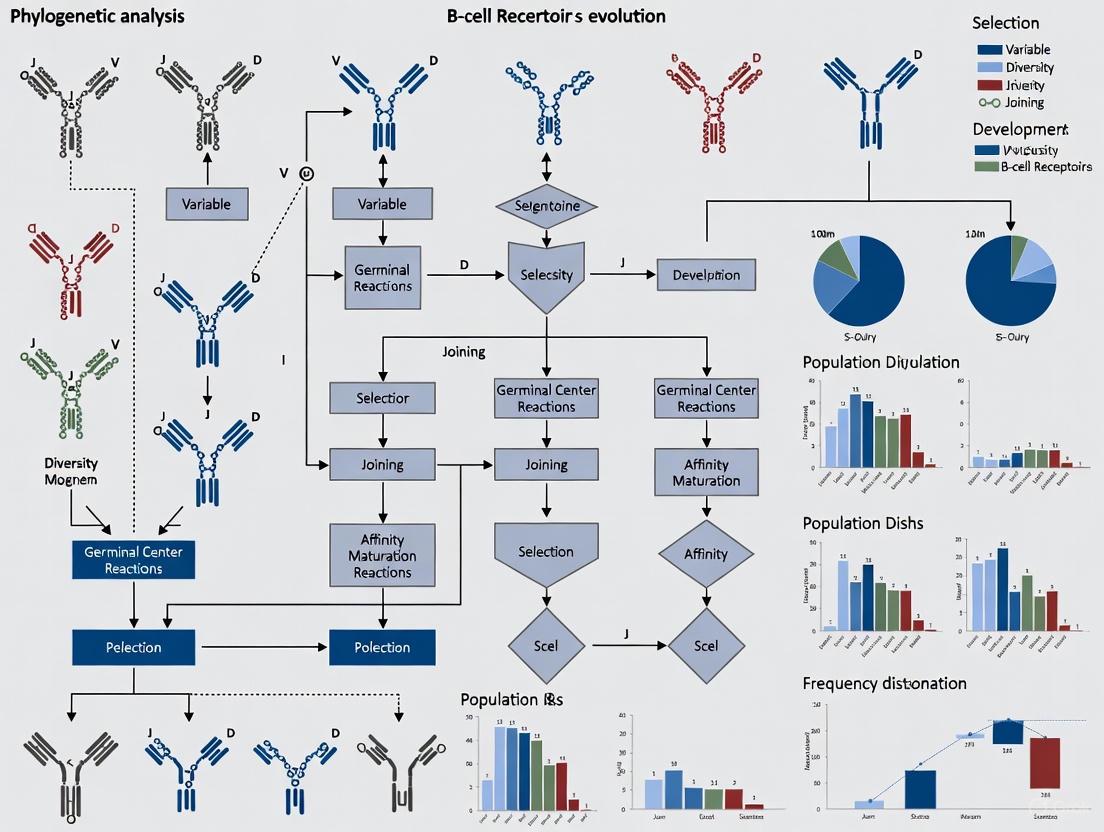
This article provides a comprehensive resource for researchers and drug development professionals on the application of phylogenetic analysis to B-cell receptor (BCR) repertoires.
Decoding B-Cell Evolution: A Guide to Phylogenetic Analysis for Therapeutic Discovery
Abstract
This article provides a comprehensive resource for researchers and drug development professionals on the application of phylogenetic analysis to B-cell receptor (BCR) repertoires. It covers the foundational principles that distinguish B-cell phylogeny from species evolution, explores current methodological approaches and computational tools for clonal family delimitation, and addresses key challenges and optimization strategies for robust analysis. Further, it validates and compares the performance of leading tools like SCOPer, Change-O, and mPTP, and highlights how these techniques are being applied in cutting-edge research to identify broadly neutralizing antibodies and guide the development of vaccines and therapeutics against evolving viral threats and cancer.
The Engine of Adaptation: How B-Cell Phylogeny Drives Immune Evolution
The reconstruction of evolutionary history through phylogenetics is a cornerstone of modern biology. While traditionally applied to the evolution of species over geological timescales, these principles are now pivotal for understanding rapid cellular evolution within the adaptive immune system. This whitepaper delineates the fundamental biological distinctions between B-cell phylogeny, which traces the somatic evolutionary history of B-cell clones within an individual, and species phylogeny, which reconstructs the genetic heritage across species or populations over millennia. Framing these differences is essential for researchers and drug development professionals applying phylogenetic analysis to B-cell repertoire evolution, as the core assumptions, mechanisms, and analytical methods differ significantly between these domains [1] [2].
Core Biological Distinctions
The evolutionary processes governing B cells and species operate on different scales, under different mechanisms, and with distinct ends. The table below summarizes the core biological distinctions that inform methodological choices in phylogenetic analysis.
Table 1: Key Biological Distinctions Between B-Cell and Species Phylogeny
| Feature | B-Cell Phylogeny | Species Phylogeny |
|---|---|---|
| Evolutionary Scale | Within an individual organism (somatic) | Between populations or species (germline) |
| Primary Mechanism | Somatic Hypermutation (SHM) and antigen-driven selection [1] | Natural selection and genetic drift on random mutations |
| Time Scale | Days to weeks (e.g., during an immune response) [3] | Thousands to millions of years (macroevolution) |
| Tree Root | Known or inferred unmutated germline sequence [4] | Unknown; usually inferred using outgroups or molecular clocks |
| Selection Pressure | Strong selection for antigen binding affinity [4] | Diverse and variable selection pressures |
| Key Processes | V(D)J recombination, SHM, affinity maturation, class switching [1] | Mutation, recombination, gene flow, speciation |
| Independence Assumption | Sites do not evolve independently (SHM hotspots/coldspots) [1] | Sites often assumed to evolve independently in standard models |
| Tree Topology | Often asymmetric, with multifurcations [2] | Typically bifurcating in most models |
Methodological Implications for Phylogenetic Analysis
The biological distinctions in Table 1 directly translate into divergent methodological practices for reconstructing and interpreting phylogenetic trees.
Data Processing and Tree Building
- Sequence Alignment and Clonal Clustering: B-cell receptor (BCR) sequences must first be aligned to species-specific germline V, D, and J gene references (e.g., using IMGT/V-QUEST or IgBLAST) rather than undergoing multiple sequence alignment [1]. Critically, tree building is only performed on sequences from the same clone, defined by a shared V(D)J rearrangement event. Clonal clustering with tools like SCOPer or Partis is therefore a essential, prerequisite step [1] [2].
- Tree Building Methods: While standard phylogenetic methods (parsimony, likelihood, distance) are used, B-cell phylogenetics often employs specialized tools that account for unique biological features.
- Selection Analysis: A primary application of B-cell trees is to detect antigen-driven selection. Methods like BASELINe use tree topology and branch lengths to identify positive selection in the complementarity-determining regions (CDRs) versus negative selection in the framework regions (FWRs) [1].
Table 2: Comparison of Phylogenetic Software in B-Cell and Species Evolution
| Software | Method | Key Features / Application Context |
|---|---|---|
| IgPhyML [1] | Maximum Likelihood | Incorporates a codon substitution model with SHM hotspots/coldspots; for B-cell lineages. |
| ClonalTree [4] | Minimum Spanning Tree (MST) & Abundance | Integrates cellular genotype abundance for fast B-cell lineage tree inference. |
| GCtree [1] | Maximum Parsimony | Uses a branching process model and genotype abundances; accurate but computationally intensive. |
| RAxML [1] | Maximum Likelihood | General-purpose species tree inference; high efficiency on large datasets. |
| BEAST [1] | Bayesian | Infers species divergence times and evolutionary rates; uses molecular clock models. |
Experimental Workflows in B-Cell Phylogenetics
A typical workflow for B-cell phylogenetic analysis integrates single-cell sequencing with sophisticated computational pipelines. The diagram below outlines the key steps from sample preparation to tree-based analysis.
Detailed Methodological Protocols
Protocol A: Building a B-Cell Lineage Tree from Single-Cell RNA-Seq Data
This protocol is adapted from current best practices for processing paired single-cell RNA and BCR sequencing data [1].
- BCR Sequence Processing and Error Correction: Raw BCR sequencing reads from platforms like 10X Genomics are processed using tools such as Cell Ranger [5] or pRESTO [1] to correct sequencing errors, which are critical as they can be misinterpreted as mutations.
- Germline Alignment and Clonal Clustering: The corrected sequences are aligned to germline V, D, and J gene databases (e.g., IMGT) using IgBLAST or MiXCR. Sequences are then grouped into clones based on shared V(D)J rearrangement and similar CDR3 regions using tools like SCOPer or Partis [1].
- Tree Inference with Specialized Software: For a given clone, a multiple sequence alignment is created. Phylogenetic trees are inferred using B-cell-specific tools like IgPhyML (for maximum likelihood with SHM models) or ClonalTree (for fast MST-based inference with abundance data) [1] [4].
- Ancestral State Reconstruction: The unmutated germline sequence is used to root the tree. Intermediate node sequences (ancestral BCRs) are reconstructed using parsimony or likelihood methods available in packages like Alakazam or Dowser [1] [2].
Protocol B: Investigating the Functional Impact of Mechanical Forces
Recent research highlights that B cells use active physical forces to extract antigen, a process that directly influences clonal fitness and evolution [3]. The following diagram models this tug-of-war mechanism.
The theoretical framework models the system with a combined free energy landscape: U(xa, xb; t) = Ua(xa) + Ub(xb) + Vpull(xa + xb; t), where Vpull(x; t) = -F(t)x represents the deformation caused by the pulling force F(t). The stochastic dynamics of bond rupture and thus antigen acquisition are governed by Langevin equations, mapping binding characteristics to clonal fitness [3]. This mechanical proofreading enhances affinity discrimination, and the predicted optimal force range of 10-20 pN aligns with experimental measurements [3].
The Scientist's Toolkit: Essential Research Reagents
Cutting-edge research in B-cell phylogenetics and evolution relies on a specific set of reagents and tools. The following table details key solutions for researchers in this field.
Table 3: Essential Research Reagents and Solutions for B-Cell Phylogenetics
| Research Reagent | Function / Application | Specific Example / Note |
|---|---|---|
| Single-Cell 5' Kit (10x Genomics) | Paired V(D)J and gene expression profiling from single cells. | Enables linking BCR sequence to cell phenotype [1]. |
| Germline Gene Database | Reference for V(D)J alignment and germline inference. | IMGT/GENE-DB; essential for root identification [1]. |
| hCD40L-expressing L-cells + IL-21 | In vitro B-cell immortalization and culture. | Critical for generating immortalized B-cell libraries for functional screening [6]. |
| Anti-Trout IgM mAb (1.14) | Depletion of IgM in serum neutralization assays. | Used in fish models (e.g., trout) to confirm IgM-mediated protection [7]. |
| DNA-based Tension Probes | Measurement of molecular forces exerted by live B cells. | Validates theoretical models of force usage (e.g., 10-20 pN range) [3]. |
B-cell phylogeny and species evolution represent two distinct paradigms of descent with modification. B-cell phylogeny is characterized by its somatic scale, rapid pace, directed and strong selection pressures, and dependence on specific molecular mechanisms like SHM. These distinctions necessitate specialized analytical methods and experimental frameworks. A deep understanding of these differences is not merely academic; it is fundamental for accurately reconstructing antibody lineages, identifying broadly neutralizing antibodies, and designing next-generation vaccines and therapeutics that harness the body's own evolutionary machinery. As single-cell technologies and biophysical models continue to advance, they will further refine our ability to trace and interpret the evolutionary history of the immune system.
The adaptive immune system's ability to recognize and neutralize an almost limitless array of pathogens hinges on two sophisticated genetic diversification mechanisms: V(D)J recombination and somatic hypermutation (SHM). V(D)J recombination assembles the primary B-cell receptor (BCR) repertoire in developing B cells in the bone marrow, while SHM fine-tunes antibody affinity for antigen within germinal centers of secondary lymphoid tissues following antigen exposure [8] [9]. Together, these processes generate the extraordinary diversity of antibodies essential for effective humoral immunity. Within the context of modern phylogenetic analysis of B-cell repertoires, understanding these mechanisms is paramount for tracing clonal lineages, reconstructing evolutionary histories of antibody responses, and designing novel vaccine strategies [2] [1]. This technical guide examines the molecular mechanisms, experimental methodologies, and analytical frameworks that underpin these fundamental immunological processes.
Molecular Mechanisms of V(D)J Recombination
V(D)J recombination is the site-specific genetic rearrangement process that occurs during early B cell development, generating the initial diversity of immunoglobulins.
Genetic Architecture and the 12/23 Rule
The variable regions of immunoglobulin heavy and light chains are encoded by multiple gene segments located on different chromosomes. The heavy chain variable region is assembled from Variable (V), Diversity (D), and Joining (J) segments, while the light chain (kappa or lambda) uses only V and J segments [8] [10]. The recombination process is guided by Recombination Signal Sequences (RSSs) that flank each coding segment. Each RSS consists of a heptamer (consensus 5'-CACAGTG-3'), a nonamer (consensus 5'-ACAAAAACC-3'), and a spacer region of either 12 or 23 base pairs [8]. The "12/23 rule" dictates that recombination occurs only between segments flanked by RSSs with different spacer lengths, ensuring proper segment joining [10].
Table 1: Human Immunoglobulin Gene Segments and Genomic Organization
| Locus | Chromosome | Gene Segments | Constant Genes |
|---|---|---|---|
| IGH | 14 | 44 V, 27 D, 6 J | Cμ, Cδ, Cγ, Cε, Cα |
| IGK | 2 | Numerous V, 5 J | Cκ |
| IGL | 22 | Numerous V, 4-5 J | Cλ |
Enzymatic Machinery and Breaking/Repair Mechanisms
V(D)J recombination is initiated by the lymphoid-specific proteins RAG1 and RAG2 (Recombination-Activating Genes), which together form the V(D)J recombinase [8] [10]. The mechanism involves a series of coordinated steps:
- Synapsis and Nicking: The RAG complex binds one RSS and introduces a single-strand nick between the coding segment and the heptamer of the RSS, creating a free 3'-OH group [10].
- Hairpin Formation and Cleavage: The 3'-OH group attacks the complementary DNA strand, forming a double-strand break with a hairpin-sealed coding end and a blunt signal end [10].
- Coding End Processing: The hairpin coding ends are opened by the Artemis nuclease, often asymmetrically to generate P-nucleotides [10].
- Junctional Diversity: The enzyme Terminal deoxynucleotidyl Transferase (TdT) adds N-nucleotides randomly to the coding ends before ligation [10].
- Ligation: The processed coding ends are ligated by Non-Homologous End Joining (NHEJ) pathway proteins, including DNA-PKcs, XRCC4, XLF, and DNA Ligase IV [8] [10].
The combination of P-nucleotide addition, N-region nucleotide insertion by TdT, and imprecise joining at junctions creates tremendous junctional diversity, substantially expanding the antibody repertoire beyond what would be achieved by combinatorial diversity alone [10].
Diagram 1: V(D)J recombination mechanism showing coding and signal joint formation.
Somatic Hypermutation and Affinity Maturation
Following antigen exposure, activated B cells migrate to germinal centers where SHM introduces point mutations into the variable regions of immunoglobulin genes, enabling affinity maturation.
The SHM Molecular Mechanism
SHM is initiated by Activation-Induced Cytidine Deaminase (AID), which deaminates cytosine residues to uracils in single-stranded DNA substrates within the variable region exons [11]. This process is tightly coupled to transcription, as AID requires single-stranded DNA for activity. The resulting U:G mismatches are then processed by multiple DNA repair pathways:
- Base Excision Repair (BER): Uracils are recognized by uracil-DNA glycosylase (UNG), creating abasic sites that are processed by apurinic/apyrimidinic endonucleases, leading to transition or transversion mutations at the original C:G base pairs [8].
- Mismatch Repair (MMR): The U:G mismatch is recognized by the MMR machinery, which involves proteins such as MSH2/MSH6, leading to error-prone repair by polymerases like Pol η that introduces mutations primarily at adjacent A:T base pairs [8].
AID preferentially targets cytosine residues within specific hotspot motifs (WRCH, where W = A/T, R = A/G, H = A/C/T), with mutation frequency influenced by the surrounding sequence context [11].
Beyond Affinity Improvement: Generation of de novo Specificities
Recent research has revealed that SHM's role extends beyond merely improving pre-existing antigen affinity. Under conditions of limited B cell competition, SHM can generate de novo antigen recognition to multiple epitopes across diverse antigens [12]. Phylogenetic analyses have identified diverse mutational pathways leading to these new antigen affinities, demonstrating that SHM can reshape antibody specificity rather than simply "ripening" existing interactions [12]. This flexibility highlights the adaptive immune system's capacity to explore antibody-antigen interactions beyond those encoded by the primary V(D)J repertoire.
Table 2: Key Enzymes in Somatic Hypermutation and Their Functions
| Enzyme/Pathway | Function in SHM | Mutation Pattern |
|---|---|---|
| AID | Cytosine deamination in ssDNA | Initiates all SHM at C:G base pairs |
| UNG | Uracil excision from DNA | Base excision repair leading to transitions/transversions at C:G |
| MSH2/MSH6 | Mismatch recognition | Recruits error-prone polymerases for mutations at A:T pairs |
| Pol η | Error-prone DNA synthesis | Introduces mutations primarily at A:T base pairs |
| BER Pathway | Processes abasic sites | Generates mutations at original C:G sites |
Experimental Protocols for Studying Diversity Mechanisms
Analyzing V(D)J Recombination Products
Protocol 1: Bulk BCR Sequencing and Analysis
- Sample Preparation: Isolate genomic DNA or RNA from B cells (e.g., from peripheral blood mononuclear cells or lymphoid tissues).
- Library Preparation: Amplify immunoglobulin variable regions using multiplex PCR primers targeting V and J gene families or 5' RACE-based methods.
- High-Throughput Sequencing: Sequence amplified products using platforms such as Illumina to obtain millions of BCR sequences.
- Bioinformatic Analysis:
- Quality Control and Error Correction: Use tools like pRESTO to remove low-quality sequences and correct sequencing errors [2].
- V(D)J Assignment: Align sequences to germline V, D, and J gene references using IgBLAST or IMGT/V-QUEST to identify gene usage and junctional regions [2].
- Clonal Grouping: Cluster sequences into clones based on shared V and J genes and similar CDR3 lengths using tools like SCOPer or Partis [1].
- Junctional Analysis: Extract CDR3 sequences and analyze N/P nucleotide additions and indel patterns.
Protocol 2: Single-Cell BCR Sequencing
- Single-Cell Isolation: Use fluorescence-activated cell sorting (FACS) or microfluidic platforms (e.g., 10X Genomics) to isolate individual B cells.
- Library Preparation: Employ commercially available systems (e.g., 10X Genomics 5' Immune Profiling) that capture paired heavy and light chain information.
- Sequence Processing: Use Cell Ranger for demultiplexing, barcode processing, and V(D)J contig assembly [1].
- Downstream Analysis: Analyze paired heavy-light chain relationships and clonal families with tools like Platypus or Alakazam [1].
Tracking Somatic Hypermutation in Antigen-Specific Responses
Protocol 3: SHM Analysis in Vaccine Responses
- Sample Collection: Collect peripheral blood B cells before and after vaccination at multiple time points (e.g., weeks 0, 2, 4, 8).
- Antigen-Specific B Cell Sorting: Use fluorescently labeled antigen baits (e.g., HIV Env proteins for HIV vaccine studies) to sort antigen-reactive B cells by FACS [13].
- Single-Cell BCR Sequencing: Sequence BCRs from sorted cells using single-cell methods as described in Protocol 2.
- SHM Analysis:
- Mutation Identification: Compare each BCR sequence to its inferred germline precursor to identify somatic mutations.
- Lineage Tree Construction: Build phylogenetic trees for each B cell clone using tools such as IgPhyML or Dowser to visualize mutational pathways [1].
- Selection Analysis: Apply selection tests (e.g., BASELINe) to identify evidence of antigen-driven selection in complementarity-determining regions (CDRs) versus framework regions (FWRs) [2].
Diagram 2: BCR repertoire analysis workflow from sample to phylogenetic insights.
Research Reagent Solutions for B Cell Repertoire Studies
Table 3: Essential Research Reagents and Tools for B Cell Receptor Analysis
| Reagent/Tool Category | Specific Examples | Application and Function |
|---|---|---|
| Single-Cell Platforms | 10X Genomics Immune Profiling, BD Rhapsody | Simultaneous capture of paired heavy and light chain BCR sequences from individual B cells |
| Sequence Alignment Tools | IgBLAST, IMGT/V-QUEST, MiXCR | Annotation of V(D)J gene segments and identification of somatic mutations |
| Clonal Grouping Software | SCOPer, Partis, Change-O | Statistical inference of clonally related BCR sequences from the same ancestral cell |
| Phylogenetic Analysis Packages | IgPhyML, Dowser, GCTree | Building B cell lineage trees, inferring intermediate sequences, and testing selection pressures |
| Germline Reference Databases | IMGT GENE-DB, OGRDB | Species-specific references for germline V, D, and J gene sequences |
| Antigen Probes | HIV Env trimer baits, fluorescently labeled antigens | Isolation of antigen-specific B cells via FACS for functional repertoire analysis |
Applications in Vaccine Design and Immunotherapy
The principles of V(D)J recombination and SHM have direct applications in rational vaccine design and therapeutic antibody development. For complex pathogens like HIV, researchers are designing germline-targeting immunogens that specifically engage naive B cells bearing BCRs with potential to develop into broadly neutralizing antibodies (bNAbs) [13]. Sequential immunization strategies then use booster immunogens designed to guide these B cell lineages through appropriate mutational pathways via SHM to achieve broad neutralization capacity [13].
Clinical trials (e.g., IAVI G001 and HVTN 301) are testing engineered immunogens like eOD-GT8 and 426c.Mod.Core that target precursors of VRC01-class bNAbs, which recognize the CD4-binding site of HIV Env [13]. These approaches rely on deep understanding of SHM patterns and lineage tracing to design effective vaccination protocols. Similarly, phylogenetic analyses of B cell clones from individuals who naturally develop bNAbs against HIV provide blueprints for reverse engineering vaccination strategies that recapitulate these mutational trajectories [2].
V(D)J recombination and somatic hypermutation represent two genetically distinct but functionally complementary mechanisms that generate and refine antibody diversity throughout B cell development. While V(D)J recombination creates the primary repertoire through combinatorial assembly and junctional diversity, SHM introduces point mutations that enable affinity maturation and, as recent evidence shows, can even generate entirely new antigen specificities not present in the primary repertoire [12]. Advanced single-cell sequencing technologies coupled with sophisticated phylogenetic analysis tools are revolutionizing our ability to track these processes at unprecedented resolution, providing insights crucial for developing next-generation vaccines and immunotherapies. As these analytical methods continue to evolve, they will further illuminate the complex evolutionary dynamics of B cell responses across infection, vaccination, autoimmunity, and cancer.
The adaptive immune system employs a sophisticated evolutionary process to generate high-affinity antibodies against diverse pathogens. This whitepaper details the mechanisms of clonal expansion and affinity maturation, framing them within the context of B cell receptor (BCR) repertoire evolution and phylogenetic analysis. We examine how somatic hypermutation (SHM) and germinal center (GC) selection operate as a micro-evolutionary process, producing antibodies with progressively higher antigen affinity. For researchers and drug development professionals, this document provides a technical guide to the underlying biology, current analytical methodologies, and applications in therapeutic development, complete with structured data and experimental workflows.
The humoral immune response is fundamentally a process of clonal selection and evolution. Upon encountering an antigen, B cells that recognize it are activated and undergo rapid proliferation, a phase known as clonal expansion [14]. This creates a large population of B cells derived from a common progenitor, forming the substrate for subsequent adaptation. The process of affinity maturation refines this response, using iterative rounds of mutation and selection within germinal centers to produce B cells and antibodies with significantly increased affinity for the inciting antigen [14] [15].
In the broader context of phylogenetic B-cell repertoire analysis, each clonally expanded family of B cells represents a distinct lineage whose evolutionary history can be reconstructed from its BCR sequences. High-throughput sequencing and advanced computational tools now allow researchers to trace this micro-evolution in exquisite detail, providing insights critical for understanding immune responses, designing effective vaccines, and developing therapeutic antibodies [16] [1].
Core Biological Mechanisms
The Germinal Center Reaction
Affinity maturation is a structured process occurring within the germinal centers of secondary lymphoid organs, such as lymph nodes and the spleen [14] [17]. The germinal center is functionally divided into two zones:
- Dark Zone: Here, activated B cells (centroblasts) undergo massive clonal expansion. During multiple rounds of cell division, their immunoglobulin genes are targeted by somatic hypermutation (SHM), introducing point mutations at a rate approximately 1,000,000 times higher than the background mutation rate in other cell lines [14] [17].
- Light Zone: B cells (now called centrocytes) migrate here to be tested for antigen affinity. They must successfully bind antigen presented by follicular dendritic cells (FDCs) and receive survival signals from T follicular helper (TFH) cells [14]. B cells with mutations that confer higher affinity for the antigen are positively selected and may re-enter the dark zone for further rounds of mutation and selection. Low-affinity B cells undergo apoptosis [14] [17]. This iterative process can lead to antibodies with affinities several-fold greater than those produced in the initial primary immune response [14].
The following diagram illustrates the cyclical nature of this process.
Molecular Drivers: Somatic Hypermutation and Selection
Somatic Hypermutation (SHM) is the engine of diversity in affinity maturation. The enzyme activation-induced cytidine deaminase (AID) initiates SHM by deaminating cytosine to uracil in the variable regions of immunoglobulin genes [17]. Subsequent error-prone repair by DNA polymerases introduces point mutations, insertions, and deletions at a high frequency. This results in 1-2 mutations per complementarity-determining region (CDR) per cell generation [14]. The CDRs are the antigen-binding sites of the antibody, and mutations here directly alter binding specificity and affinity.
Clonal selection is the force that shapes this random variation. Because resources in the germinal center (antigen and T cell help) are limited, B cell progeny must compete for survival [14]. Only B cells whose mutated BCRs bind antigen with sufficient affinity receive pro-survival signals, a process often described as Darwinian evolution on a cellular level [18]. Over several rounds of this mutation-and-selection cycle, the average affinity of the B cell population for the antigen increases significantly.
Phylogenetic Analysis of B Cell Repertoires
Phylogenetic trees constructed from BCR sequencing data provide a powerful quantitative framework for studying clonal expansion and affinity maturation. These trees map the evolutionary history of a B cell clone, tracing the accumulation of SHMs from a common ancestor [1] [2].
Building B Cell Phylogenies
Constructing accurate B cell phylogenies involves a multi-step computational process [1]:
- Sequence Pre-processing & Error Correction: Raw BCR sequences are processed using tools like pRESTO (for bulk data) or Cell Ranger (for 10X Genomics single-cell data) to correct sequencing errors [1].
- Germline Alignment & Clonal Clustering: Sequences are aligned to germline V, D, and J gene references using specialized tools (e.g., IgBLAST, IMGT V-QUEST). Sequences originating from the same ancestral V(D)J recombination event are then grouped into clones using tools like SCOPer or Partis [1].
- Tree Building: Phylogenetic trees are inferred for each clone using the pattern of shared mutations. Common methods include:
- Maximum Likelihood (ML): Uses a model of nucleotide change to find the most likely tree topology and branch lengths. Tools: IgPhyML, RAxML [1] [19].
- Maximum Parsimony (MP): Finds the tree requiring the fewest number of mutations. Tools: Alakazam, GCTree [1].
- Bayesian Methods: Estimate a posterior distribution of likely trees. Tools: BEAST2, RevBayes [1].
Table 1: Common Phylogenetic Tree-Building Methods and Software for B Cell Repertoire Analysis
| Method | Underlying Principle | Example Software | Advantages | Limitations |
|---|---|---|---|---|
| Maximum Likelihood | Finds the tree with the highest probability given the sequence data and an evolutionary model. | IgPhyML, RAxML, Phangorn | High accuracy; incorporates a model of sequence evolution; robust to homoplasy. | Computationally intensive for very large datasets. |
| Maximum Parsimony | Finds the tree requiring the smallest number of total mutations. | Alakazam, GCTree, Immunarch | Computationally fast; intuitive. | Can be biased when mutations are common (saturation). |
| Bayesian Inference | Estimates the posterior probability distribution of trees. | BEAST2, RevBayes, ImmuniTree | Provides measures of statistical confidence (posterior probabilities). | Very computationally intensive; complex setup. |
| Distance-Based | Clusters sequences based on pairwise genetic distances. | IgTree, neighbor-joining in PHYLIP | Extremely fast. | Lower accuracy; discards information in the sequence data. |
The following workflow outlines the key steps for obtaining a B cell phylogeny from raw sequencing data.
Characterizing Mutation and Selection from Trees
Beyond tree topology, B cell phylogenies are used to quantify selection pressures. A key metric is the ratio of replacement-to-silent mutations (R/S) in the framework regions (FWRs) and complementarity-determining regions (CDRs) [1] [2]. An R/S ratio significantly higher than the expected baseline in the CDRs is a strong indicator of positive selection for improved antigen binding. Conversely, negative selection to preserve structural integrity is indicated by low R/S ratios in the FWRs.
Phylogenetic trees also enable the reconstruction of ancestral sequences, including the unmutated common ancestor (UCA) of a lineage and intermediate variants [15] [1]. This is particularly valuable for vaccine design, as it allows researchers to trace the developmental pathway of a broadly neutralizing antibody and design immunogens that can initiate or steer similar pathways in a naive host [15].
Quantitative Insights and Data
The processes of clonal expansion and affinity maturation can be quantified through repertoire sequencing, revealing key statistical properties of immune responses.
Table 2: Key Quantitative Features of B Cell Clonal Expansion and Affinity Maturation
| Feature | Typical Value or Observation | Biological Significance / Interpretation |
|---|---|---|
| SHM Rate | Up to 10⁻³ per base per generation (1,000,000x background) [14] | Enables rapid generation of antibody variant diversity for selection. |
| Mutation Load in Mature Antibodies | Influenza: 5-10% from germline [15]HIV broadly neutralizing antibodies: 15-30% from germline [15] | Reflects the extent of selection pressure and number of cycles required for protection; highly mutated antibodies often indicate a long co-evolution with a rapidly evolving pathogen. |
| Clone Size Distribution | Long-tailed, following a power-law distribution [18] | A few clones expand massively (immunodominance), while many clones remain small. |
| Memory B Cell Diversity | Higher diversity and lower antigen specificity than plasma cells [18] | Suggests a strategy to maintain a broad repertoire for protection against future, variant pathogens. |
Experimental Protocols for Key Analyses
This section outlines detailed methodologies for two critical experiments in B cell repertoire research.
Protocol: B Cell Receptor Repertoire Sequencing and Clonal Lineage Analysis
Objective: To sequence the BCR repertoire from an immune tissue or cell population, identify clonally related sequences, and reconstruct their phylogenetic relationships [1] [19].
Sample Preparation & Single-Cell Sorting:
- Isolate mononuclear cells from tissue (e.g., lymph node, spleen, blood) using density gradient centrifugation.
- Stain cells with fluorescently labeled antibodies against B cell surface markers (e.g., CD19, CD20) and other differentiation markers (e.g., CD27 for memory B cells).
- Use fluorescence-activated cell sorting (FACS) to sort desired B cell populations (e.g., naive, memory, plasma cells) into 96-well plates or prepare a single-cell suspension for droplet-based sequencing.
Library Preparation and Sequencing:
- For plate-based methods: Perform reverse transcription and PCR amplification of IgH and IgL genes using nested, multiplexed V-gene primers.
- For droplet-based methods (e.g., 10X Genomics): Use a commercial solution that captures poly-adenylated RNA, including BCR transcripts, within oil droplets containing barcoded beads.
- Sequence the amplified libraries on a high-throughput platform (Illumina MiSeq/NextSeq) to achieve sufficient depth and read length for V(D)J analysis.
Computational Analysis:
- Pre-processing & Error Correction: Use pRESTO or the 10X Cell Ranger pipeline to quality-filter reads, correct sequencing errors, and assemble full-length V(D)J sequences.
- Germline Alignment & Clonal Clustering: Align sequences to IMGT germline references using IgBLAST. Group sequences into clones based on shared V and J genes and highly similar CDR3 nucleotide sequences using SCOPer or Partis.
- Phylogenetic Tree Building: For each clone, perform multiple sequence alignment and reconstruct a phylogenetic tree using a maximum likelihood (IgPhyML) or maximum parsimony (GCTree) method, with the inferred germline sequence as the root.
- Selection Analysis: Calculate the R/S ratio in the FWR and CDR using tools like BASELINe or ShazaM to infer antigen-driven selection.
Protocol: In Vitro Affinity Maturation via Phage Display
Objective: To artificially evolve an antibody fragment to higher affinity for a target antigen through iterative rounds of mutagenesis and selection [14] [15].
Library Generation:
- Start with a gene encoding the antibody variable region of interest (e.g., a scFv or Fab).
- Introduce random mutations into the CDRs using error-prone PCR or by using synthetic oligonucleotides for DNA shuffling.
- Clone the diversified library into a phage display vector, creating a fusion between the antibody fragment and a phage coat protein.
Panning and Selection:
- Incubate the phage library with immobilized target antigen.
- Wash away unbound and weakly binding phage particles with increasingly stringent conditions.
- Elute the specifically bound phages, typically by lowering pH or using a competitive ligand.
- Infect E. coli with the eluted phages to amplify the selected pool for the next round.
Screening and Characterization:
- After 3-4 rounds of panning, isolate individual clones and express their antibody fragments.
- Screen clones for improved antigen binding using ELISA or surface plasmon resonance (SPR) to quantify binding affinity (KD).
- Sequence the variable regions of high-affinity binders to identify the key mutations responsible for improvement.
The Scientist's Toolkit
Table 3: Essential Reagents and Tools for B Cell Repertoire and Affinity Maturation Research
| Category / Item | Specific Examples | Function / Application |
|---|---|---|
| Single-Cell Sequencing Platforms | 10X Genomics Chromium, BD Rhapsody | Enables paired heavy- and light-chain BCR sequencing from thousands of individual B cells. |
| BCR Sequence Analysis Software | Cell Ranger, IgBLAST, MiXCR | Processes raw sequencing data, performs V(D)J alignment, and annotates mutations. |
| Clonal Clustering Tools | SCOPer, Partis | Groups BCR sequences into clonal lineages based on shared ancestry. |
| Phylogenetic Tree Building Software | IgPhyML, GCTree, Alakazam | Reconstructs evolutionary trees of B cell clones to trace mutation history and selection. |
| In Vitro Display Technologies | Phage display, Yeast display | Platforms for screening antibody libraries for high-affinity binders through iterative selection. |
| Activation-Induced Deaminase (AID) | N/A | The key enzyme that initiates somatic hypermutation by deaminating cytosine in antibody genes. |
Applications in Immunology and Drug Development
The principles of clonal expansion and affinity maturation are directly applied in biotechnology and medicine.
- Vaccine Design: By isolating broadly neutralizing antibodies from infected individuals and using phylogenetic analysis to reconstruct their developmental pathways, researchers can design sequential immunogens that "guide" the affinity maturation process in naive individuals towards a desired, protective antibody response [15]. This is a key strategy for vaccines against rapidly evolving viruses like HIV and influenza.
- Therapeutic Antibody Engineering: In vitro affinity maturation is a standard industry practice for optimizing therapeutic antibody candidates. Techniques like phage display and yeast display mimic the natural process by creating diverse antibody libraries and applying stringent in vitro selection to isolate variants with picomolar affinities and improved biophysical properties [14] [17].
- Understanding Autoimmunity and Cancer: Aberrant clonal expansion and SHM can contribute to disease. Phylogenetic analysis of BCR repertoires can identify expanded, pathogenic clones in autoimmune conditions or B-cell lymphomas, providing insights into disease mechanisms and potential targets for therapy [16] [1].
Germinal centers (GCs) are transient, specialized microenvironments that form within secondary lymphoid organs, such as lymph nodes and the spleen, following exposure to an antigen. They are the primary sites where B cells undergo affinity maturation, a Darwinian evolutionary process that optimizes the antibody response [20]. Within GCs, B cells undergo iterative cycles of proliferation, somatic hypermutation (SHM) of their immunoglobulin genes, and selection based on antigen-binding affinity. This process results in the production of B cells expressing antibodies with significantly increased affinity for the initiating antigen, and their differentiation into long-lived plasma cells and memory B cells, which are fundamental to durable humoral immunity and vaccine efficacy [20] [21]. Understanding the evolutionary dynamics within GCs is not only crucial for fundamental immunology but also for advancing therapeutic goals, such as the design of vaccines against difficult-to-neutralize viruses [20]. This whitepaper delves into the core mechanisms, quantitative dynamics, and state-of-the-art methodologies used to dissect GCs as sophisticated in vivo evolution machines, framing the discussion within the context of phylogenetic analysis of B-cell repertoire evolution.
Core Evolutionary Mechanisms in the Germinal Center
The GC reaction is spatially organized into two primary functional zones: the dark zone (DZ) and the light zone (LZ). B cells continuously cycle between these zones, with each cycle refining the antibody population.
The Dark Zone: Proliferation and Diversification
In the DZ, B cells undergo rapid clonal expansion. Critically, this proliferation is coupled with somatic hypermutation (SHM), an enzymatic process that introduces point mutations into the variable regions of immunoglobulin genes at a remarkably high rate [21]. Traditionally, SHM was believed to occur at a fixed rate of approximately (1 \times 10^{-3}) per base pair per cell division. However, recent research challenges this paradigm, suggesting the rate is regulated.
The Light Zone: Selection Based on Fitness
Following mutation and division, B cells migrate to the LZ. Here, they encounter a critical bottleneck. They must compete for two scarce resources:
- Antigen: Displayed as immune complexes on the surface of follicular dendritic cells (FDCs).
- T Cell Help: Signals from T follicular helper (Tfh) cells [21].
B cells that have acquired mutations allowing their B cell receptors (BCRs) to bind antigen with higher affinity are more successful at internalizing antigen and presenting it to Tfh cells. This successful presentation secures pro-survival and pro-proliferative signals, determining which B cells are selected to re-enter the DZ for further rounds of mutation and expansion or to exit the GC as plasma cells or memory B cells [21]. This iterative process of random mutation followed by affinity-based selection is the engine of affinity maturation.
The following diagram illustrates this cyclic process of evolution within the germinal center.
Quantitative Dynamics of GC Evolution
A central, unresolved question in GC biology has been the precise mathematical relationship between BCR affinity and cellular fitness—termed the "affinity-fitness response function." A landmark study used simulation-based deep learning to infer this function from a unique "replay" experiment in mice, where all GCs were seeded by genetically identical B cells [20] [22].
The Affinity-Fitness Relationship
The research quantified how the intrinsic birth rate of a B cell (its fitness in the absence of constraints) changes with its affinity. The inferred response function is not linear but demonstrates a sharp increase, as summarized below.
Table 1: Inferred Affinity-Fitness Response Function [20] [22]
| Affinity State | Relative Intrinsic Birth Rate (Fitness) |
|---|---|
| Naive (Affinity 0) | 1x (Baseline) |
| Intermediate (Affinity 1) | ~3x Baseline |
| High (Affinity 2) | ~9x Baseline |
This finding means a B cell that acquires a mutation conferring an intermediate affinity advantage early in the GC reaction would replicate approximately three times faster than its peers, granting it a significant selective advantage [20] [22].
Regulation of Somatic Hypermutation
To protect high-affinity lineages from the detrimental effects of random mutations, GCs employ a sophisticated regulatory mechanism for SHM. Experimental data from mice immunized with SARS-CoV-2 vaccines or a model antigen show that B cells receiving strong Tfh signals undergo more cell divisions but paradoxically exhibit a lower mutation rate per division [21].
Table 2: Mutation Probability per Division Based on Tfh Cell Help [21]
| Number of Divisions (D) Programmed by Tfh Help | Mutation Probability per Division (p_mut) |
|---|---|
| D = 1 | 0.6 |
| D = 6 | 0.2 |
This affinity-dependent dampening of SHM safeguards high-affinity B cell lineages. In simulations, a constant mutation rate (pmut=0.5) for a B cell dividing six times produced an average of only 27 progeny, with over 40% having lower affinity than the parent. In contrast, a decreasing pmut yielded an average of 41 progeny, with only 22% exhibiting lower affinity, thereby enhancing the clonal expansion of high-affinity variants without generational "backsliding" [21].
Advanced Methodologies for Deconstructing GC Dynamics
The "Replay" Experiment and Simulation-Based Inference
To quantitatively dissect GC evolutionary parameters, researchers developed a "replay" experimental system. This uses engineered mice where all naive B cells seeding GCs carry the same pre-rearranged BCR genes, ensuring an identical starting point for affinity maturation [20] [22]. The experimental and computational workflow is complex, integrating data from multiple sources to infer the underlying evolutionary dynamics.
The following diagram outlines the key steps in this sophisticated inference pipeline.
Protocol Overview:
- Experimental Data Generation: Individual GCs are extracted from immunized mice at specific time points (e.g., 15 or 20 days post-immunization), and BCR sequences from single cells are obtained [20] [22].
- Phylogenetic Analysis: For each GC, a phylogenetic tree is reconstructed from the BCR sequences using tools like IQ-TREE, with the known naive sequence as an outgroup. Ancestral sequence reconstruction is performed for all internal nodes [20] [22].
- Affinity Annotation: A pre-existing deep mutational scan (DMS) of the naive antibody sequence is used to map each observed mutation (and combinations thereof) to a quantitative affinity value. This maps affinity onto every node of the phylogenetic tree [20].
- Simulation-Based Inference (SBI): A birth-death model of GC dynamics is simulated, where birth rates are a function of the affinity-fitness response function. Since the likelihood for this complex model is intractable, deep learning and SBI techniques are used to find the parameters of the response function that produce phylogenetic trees most closely matching the observed data [20] [22].
3D Spatial Imaging of Whole Lymph Nodes
Understanding the spatial context of GC evolution is vital. A recent protocol enables rapid, high-resolution, multicolor 3D imaging of whole immunized mouse lymph nodes using light sheet fluorescence microscopy [23].
Protocol Overview: [23]
- Immunization & Harvesting: Mice are immunized subcutaneously. After 7-35 days, lymph nodes are harvested and fixed.
- Staining & Clearing: Fixed lymph nodes undergo permeabilization, followed by multiplexed antibody staining (e.g., for Bcl6+ GC B cells, CD3+ T cells, CD138+ plasma cells, CD35/21+ FDCs). The tissue is then cleared to render it optically transparent.
- Image Acquisition & Analysis: Cleared whole lymph nodes are imaged using a light sheet microscope, capturing the entire 3D architecture in approximately 30 minutes. Analysis with software like Imaris allows for the segmentation and quantification of key immune subsets at single-cell resolution within their native spatial context [23].
Ecological Analysis of Tissue Spatial Organization
The MESA (Multiomics and Ecological Spatial Analysis) framework adapts concepts from ecology to quantitatively characterize cellular diversity and spatial organization in tissues using spatial-omics data [24]. It introduces metrics like the Multiscale Diversity Index (MDI) to quantify how cellular diversity changes across spatial scales, and identifies hot spots (clusters of high diversity) and cold spots (clusters of low diversity) [24]. Applying MESA to human tonsil data, for example, revealed distinct subniches within germinal centers that were not detected by conventional analysis methods, providing a more nuanced view of the GC microenvironment [24].
The Scientist's Toolkit: Essential Research Reagents & Materials
Table 3: Key Reagent Solutions for Germinal Center Research
| Research Reagent / Material | Function in GC Research | Example Usage |
|---|---|---|
| "Replay" Mouse Model | Provides a genetically identical B cell repertoire, enabling precise evolutionary studies by controlling for naive sequence variation. | Inference of affinity-fitness dynamics [20] [22]. |
| H2b-mCherry Reporter Mouse | Tracks cell division history in vivo via fluorescence dilution. Allows sorting of B cells based on division number. | Investigating the link between division count and SHM rate [21]. |
| Antibody Panels for Flow/CyTOF | Identifies and characterizes GC B cell, Tfh, and other immune populations based on surface and intracellular protein markers. | Phenotyping GC populations; isolating GC B cells for sequencing. |
| Single-Cell BCR Sequencing | Resolves clonal relationships and somatic mutations between B cells at the individual sequence level. | Phylogenetic tree reconstruction; SHM analysis [20] [21]. |
| Deep Mutational Scan (DMS) | Empirically measures the functional effect of all possible single mutations in an antibody on antigen binding. | Mapping BCR sequence to affinity for phylogenetic nodes [20]. |
| Multiplex Antibody Panels for Imaging | Enables simultaneous detection of multiple cell types and structures in fixed tissue (e.g., B cells, T cells, FDCs). | 3D spatial analysis of GC architecture and cellular neighborhoods [23] [24]. |
| SBI Software (e.g., gcdyn) | Open-source computational tools for performing simulation-based inference on phylogenetic trees from GCs. | Inferring evolutionary parameters like the affinity-fitness function [20]. |
Affinity maturation in germinal centers (GCs) relies on somatic hypermutation (SHM) to generate high-affinity antibodies. A fundamental challenge arises during rapid, large-scale clonal expansions ("clonal bursts"), where the high rate of cell division could lead to an accumulation of deleterious mutations, compromising antibody affinity. This whitepaper details a mechanism identified in a 2025 Nature study: the transient suppression of SHM during proliferative bursts. We summarize the quantitative evidence supporting this model, describe the key experimental protocols, and contextualize its significance for phylogenetic analysis of B-cell receptor (BCR) repertoires and therapeutic antibody development [25] [26] [27].
In the germinal center, B cells undergo cycles of mutation and selection. Somatic hypermutation (SHM), catalyzed by activation-induced cytidine deaminase (AID), introduces point mutations into immunoglobulin genes at an estimated rate of ~10⁻³ per base pair per cell generation [25] [27]. While this process is essential for affinity maturation, the random nature of SHM means deleterious mutations outnumber beneficial ones.
This creates a specific problem during clonal bursts – rapid, large-scale expansions of a single B cell clone. These bursts are driven by strong proliferative signals from T follicular helper cells and involve multiple rounds of cell division in the absence of affinity-based selection. Under a constant SHM rate model, such rapid proliferation would inevitably lead to the accumulation of deleterious mutations in a majority of the progeny, precipitating a decline in average affinity across the clone. The discovery of a mechanism to transiently silence hypermutation resolves this apparent contradiction, revealing a sophisticated layer of regulation in GC dynamics [25] [27].
Core Discovery and Quantitative Evidence
The central finding is that GC B cells actively downregulate SHM during clonal-burst-type expansion. This ensures a large fraction of the progeny retains the ancestral, high-affinity genotype, preserving affinity in the absence of selection [25].
Phylogenetic Analysis of Clonal Bursts
The study employed the gctree algorithm to build mutational phylogenies from B cells isolated from single-colored GCs in AID-Brainbow mice.
Table 1: Analysis of Parental Node Size in Clonal Burst Phylogenies
| Germinal Center (GC) | Estimated Total Cells in Clone | Number of Sequenced Cells | Fraction of Parental-Type Cells |
|---|---|---|---|
| GC i | ~2,000 | 45 | 0.27 |
| GC ii | ~2,000 | 56 | 0.32 |
| GC iii | ~2,000 | 42 | 0.45 |
| GC iv | ~2,000 | 38 | 0.21 |
| GC xi | ~2,000 | 41 | 0.11 |
| Average (12 GCs) | ~2,000 | - | 0.32 ± 0.14 |
The data show that a significant proportion of cells in a burst (average of 32%) are genetically identical, forming a large "parental node" in the phylogeny. This is incompatible with a constant, high SHM rate [25].
Birth-Death Simulations to Estimate SHM Rate
The researchers used birth-death process simulations to determine the SHM rate that would best reproduce the observed phylogenetic structures.
Table 2: Comparison of SHM Rates from Simulation vs. Literature
| SHM Rate Scenario | Mutation Probability (per Ighv region per daughter cell) | Equivalent Mutation Rate (per 10³ bases per generation) |
|---|---|---|
| Previously Established Average | ~0.33 | ~1.0 |
| Inferred from Clonal Burst Phylogenies | 0.10 (range: 0.043 - 0.16) | 0.30 (range: 0.13 - 0.46) |
These simulations demonstrated that the observed phylogenies are only consistent with an SHM rate that is one-half to one-eighth of the previously established average for GC B cells, confirming strong downregulation of SHM during bursts [25].
Detailed Experimental Protocols
The discovery was achieved through a combination of in vivo models, imaging, and computational biology.
In Vivo Mouse Model and GC Isolation
- Genetic Model: AicdaCreERT2/+.Rosa26Confetti/Confetti (AID-Brainbow) mice for multicolour fate-mapping of B cell clones [25].
- Immunization: Mice were immunized with chicken IgY in alum adjuvant to form GCs.
- Clonal Burst Identification: Popliteal lymph nodes were scanned for single-coloured GCs with a normalized dominance score (NDS) > 0.5 at days 17 or 21 post-immunization.
- Single-Cell Sequencing: B cells from identified GCs were isolated via microdissection, and their Ighv genes were sequenced. The unmutated germline sequence was used to root the phylogenetic trees [25] [1].
Intravital Imaging and Cell Cycle Analysis
- CDK2 Activity Reporter: A mouse strain carrying a reporter for cyclin-dependent kinase 2 (CDK2) activity was used.
- Image-Based Cell Sorting: B cells actively undergoing proliferative bursts were identified and sorted based on their CDK2 activity profile.
- Key Finding: Bursting B cells were found to lack the transient CDK2low 'G0-like' phase of the cell cycle. Since SHM is linked to this phase, its absence results in the transient silencing of hypermutation during rapid cycling [25].
Phylogenetic Tree Construction and Analysis
- Data Processing: BCR sequences were aligned to germline V(D)J reference databases using tools like IgBLAST or IMGT/V-QUEST. Sequences were then grouped into clones based on similarity using statistical inference tools [1].
- Tree Building: Mutational phylogenies for each clone were built using the
gctreealgorithm, which can utilize sequence abundance data to improve accuracy. The germline sequence was used to root the tree [25] [1]. - Simulation & Modeling: A birth-death process simulation was used to model clonal expansion under different SHM rate parameters. The simulated outcomes were statistically compared to the empirical phylogenetic data to infer the most likely in vivo SHM rate [25].
Diagram 1: Mechanism of SHM regulation during standard cycling versus clonal bursting. Bursting cells skip the G0-like phase where SHM occurs, delaying mutation until after proliferation [25] [27].
The Scientist's Toolkit: Key Research Reagents & Solutions
This research relied on several critical reagents and computational tools, which are also essential for scientists aiming to replicate or build upon these findings.
Table 3: Essential Research Reagents and Tools
| Reagent / Tool Name | Function / Application in the Study | Key Utility |
|---|---|---|
| AID-Brainbow Mouse Model (AicdaCreERT2/+.Rosa26Confetti/Confetti) | In vivo fate-mapping of B cell clones; enables visual identification of clonal bursts. | Critical for linking cellular phylogeny to spatial organization in GCs. |
| CDK2 Activity Reporter | Live imaging and sorting of B cells based on cell cycle phase (G0-like vs. inertial cycling). | Directly linked SHM suppression to the absence of the CDK2low phase. |
| Ccnd3T283A Mutant Mouse | Models Burkitt-lymphoma-associated mutation; increases inertial cycling to test SHM rate. | Provided genetic evidence that increased divisions did not increase mutations. |
| gctree Algorithm | Phylogenetic tree building from BCR sequences, using sequence abundance data. | Enabled accurate reconstruction of mutational phylogenies from burst clones. |
| Birth-Death Simulation Model | Computational framework to infer SHM rates by comparing simulated vs. observed phylogenies. | Provided quantitative, model-based evidence for reduced SHM rates. |
| IgBLAST / IMGT V-QUEST | Bioinformatics tools for aligning BCR sequences to germline V, D, J genes. | Essential first step for accurate phylogenetic analysis and mutation calling [1]. |
Implications for B-Cell Phylogenetics and Repertoire Analysis
The phenomenon of transient SHM silencing has profound implications for how we interpret B cell phylogenetic trees and repertoire data.
- Tree Topology Interpretation: The presence of large polytomies (nodes with many identical sequences) in a phylogeny may not indicate simultaneous divergence but rather a period of rapid, mutation-free expansion. Analytical tools must account for this possibility to avoid misinterpretation [25] [28].
- Affinity Maturation Models: Models of affinity maturation must be updated to include phases of variable mutation rates. The SHM rate is not a fixed parameter but a dynamically regulated variable, fine-tuned by cell cycle kinetics and T cell help [27] [20].
- Candidate Antibody Selection: In antibody discovery workflows, phylogenetic trees are used to select candidates. Understanding that cells in a large, dominant clade may have undergone a burst with suppressed SHM highlights that the ancestral node sequence might be a high-value candidate, as it is preserved in many progeny [28].
Diagram 2: Integrated workflow from in vivo modeling to computational validation, illustrating the multi-disciplinary approach required for this discovery [25].
The discovery that B cells transiently silence hypermutation during clonal bursts represents a paradigm shift in our understanding of germinal center biology. It resolves the long-standing dilemma of how affinity is preserved during rapid expansion and reveals cell cycle modulation as a key regulatory layer controlling SHM.
For researchers in phylogenetics and drug development, this insight provides a new framework for analyzing BCR repertoire data. It suggests that therapeutic strategies, including vaccine design, could aim to modulate not only the selection of B cells but also the timing and rate of their mutation, potentially leading to more robust and high-affinity antibody responses [27]. Future work will focus on elucidating the precise molecular signals that control this inertial cycling and how these mechanisms vary across different immune challenges.
From Data to Discovery: Methods and Workflows for B-Cell Lineage Tracing
The adaptive immune system generates a formidable diversity of B-cell receptors (BCRs) to recognize and neutralize a vast spectrum of pathogens [29] [30]. This diversity originates from two primary mechanisms: V(D)J recombination, which randomly assembles gene segments to create a naive BCR, and somatic hypermutation (SHM), which introduces point mutations into the BCR genes of antigen-activated B cells during affinity maturation [29] [31]. A clonal family (CF) is defined as the collective group of B cells originating from a single, unique V(D)J rearrangement event and subsequently diversified through SHM [29] [30]. Delimiting these clonal families from high-throughput sequencing data is the foundational step upon which all subsequent analysis of B-cell repertoire evolution, dynamics, and function is built [32] [31]. Without accurate family delineation, the interpretation of immune responses—from the identification of broadly neutralizing antibodies to the understanding of autoimmune diseases—becomes fundamentally compromised.
The Biological and Analytical Imperative
The process of B-cell activation and differentiation creates a natural evolutionary tree within an organism. Upon binding its cognate antigen, a naive B cell proliferates, and its progeny undergo SHM, forming a lineage of related cells [29]. Identifying these lineages is crucial because sequences within a clonal family, sharing a common ancestral B cell, are not statistically independent and must be analyzed collectively [29] [30].
Accurate clonal family delimitation enables researchers to:
- Infer Antigen-Driven Expansion: Identify which B-cell clones have expanded in response to antigenic challenge, pinpointing the immune system's active targets [30].
- Quantify Affinity Maturation: Track the patterns of somatic hypermutation within a lineage to study the process of selection for higher-affinity antibodies [29] [31].
- Reconstruct Phylogenetic Lineages: Build mutational trees and networks to understand the evolutionary history and relationships between B cells in a response [33].
- Discover Therapeutic Antibodies: Identify and trace the development of antibodies with desired properties, such as broad neutralization against viruses like HIV or SARS-CoV-2 [29] [34].
Methodological Landscape: Strategies for Delimitation
A range of computational methods has been developed to solve the clonal family inference problem, each with distinct strategies and requirements. They can be broadly categorized by their reliance on a reference genome and their underlying algorithmic approach.
Table 1: Comparison of Key Clonal Family Delimitation Methods
| Method | Core Principle | Requires Germline Reference? | Key Features |
|---|---|---|---|
| Change-O | Groups sequences by V/J genes and junction region similarity using a defined threshold [29] [30]. | Yes [29] [30] | Often used with a 0.15 dissimilarity threshold for human repertoires [29]. |
| SCOPer-H | Hierarchical method using a user-defined, global threshold for junction region similarity [29] [30]. | Yes [29] [30] | An implementation of the Change-O threshold approach [29]. |
| SCOPer-S | Spectral clustering that adaptively calculates the optimal similarity cutoff for each V-J group [29] [30]. | Yes [29] [30] | Accounts for variation in SHM rates across different clonal families [30]. |
| MiXCR | Aligns sequences to a reference genome and assembles clonotypes based on identical or similar user-defined features [29] [30]. | Yes [29] [30] | Tolerates PCR and sequencing errors through fuzzy matching [29] [30]. |
| mPTP | Phylogenetic species delimitation method applied to a tree of all B-cell sequences to identify clonal families [29] [30]. | No [29] [30] | Infers families from branching patterns, ideal for non-model organisms [29]. |
| HILARy | Combines probabilistic models of V(D)J recombination with clustering, leveraging CDR3 distances and shared mutations [31]. | Implied | Designed for both speed and accuracy on large-scale datasets; uses "VJl" classes [31]. |
| AntibodyForests | Infers mutational networks and phylogenetic trees for pre-defined clonal lineages [33]. | Flexible | A tool for intra-clonal analysis post-delimitation, supporting multiple tree-building algorithms [33]. |
The Central Challenge of the CDR3
The complementarity-determining region 3 (CDR3) is the most variable part of the BCR, encompassing parts of the V and J genes, the entire D gene, and junctional insertions and deletions [29] [30]. Its hypervariability makes it a strong fingerprint for a specific V(D)J recombination event, as it is highly unlikely for two independent recombination events to produce identical or highly similar CDR3 sequences [31]. Consequently, most methods initiate clustering by grouping sequences that share the same V gene, J gene, and CDR3 length (a "VJl" class) before performing finer-grained clustering within these groups based on nucleotide or amino acid similarity [31].
Performance Benchmarks and Comparative Evaluations
Given the critical nature of this first step, systematic evaluations have been conducted to assess the performance of different methods. A comprehensive study applying eight different inference approaches to multiple datasets found that while most methods perform similarly, factors like sequencing depth and mutation load significantly impact reconstruction [32]. The study concluded that Change-O best reproduced the true CF structure in simulations, and that more complex methods do not necessarily outperform simpler ones [32].
Another evaluation focusing on phylogenetic methods demonstrated that the mPTP method, which uses a phylogenetic tree to delimit clones, had lower error rates than several immunology-specific tools in the absence of a complete reference genome [30]. This highlights mPTP as a powerful alternative for studying antibody evolution in non-model organisms [30]. Meanwhile, SCOPer-H consistently yielded superior results in simulations that assumed a good reference germline assembly was available [30].
Table 2: Relative Performance Characteristics of Methods
| Method | Reported Strengths | Reported Limitations / Context |
|---|---|---|
| Change-O | Best reproduces true CF structure in simulations [32]. | Performance depends on chosen threshold [29] [32]. |
| SCOPer-H | Top performer when a good germline reference is available [30]. | Relies on a reference genome; less suitable for non-model systems [29] [30]. |
| SCOPer-S | Accounts for variable SHM rates across families [30]. | Performance similar to other methods in some evaluations [32]. |
| mPTP | Competitive performance without a reference genome; lower error rates than some immunology-specific tools [29] [30]. | Requires building a phylogenetic tree of all sequences [29] [30]. |
| HILARy | Achieves high precision and sensitivity; efficient on large datasets [31]. | -- |
| Alignment-Free | Does not require a reference genome. | Underperformed relative to other methods in a prior study [29]. |
Detailed Experimental Protocol: Implementing HILARy
The HILARy method provides a robust, two-algorithm approach for clonal family inference. The following protocol is adapted from its description for use with IgH sequence data [31].
Preprocessing and Initial Data Partitioning
- Sequence Quality Control and Alignment: Process raw sequencing reads through a tool like pRESTO to perform quality filtering, demultiplexing, and merging of paired-end reads. Align the resulting high-quality sequences to a database of V and J germline gene references using IgBLAST to assign gene calls and define the CDR3 regions.
- Define
VJlClasses: Partition the aligned sequences into distinct subsets, or "VJl" classes, where all sequences within a subset share the same assigned V gene, J gene, and CDR3 nucleotide lengthl[31]. This drastically reduces the number of pairwise comparisons needed.
Core Clustering with HILARy-CDR3
- Estimate Positive Pair Prevalence: For each
VJlclass, model the distribution of pairwise CDR3 nucleotide Hamming distances. Fit this distribution as a mixture model to estimateρ, the prevalence of truly clonally related ("positive") pairs [31]. - Determine Length-Dependent Threshold: Using the estimated
ρand the CDR3 lengthl, calculate a clustering threshold. This threshold is tuned to achieve a desired precision (e.g., 99%) by leveraging precomputed distributions of distances for both related and unrelated pairs, the latter generated using a probabilistic model of V(D)J recombination like soNNia [31]. - Single-Linkage Clustering: Within the
VJlclass, perform single-linkage clustering on the sequences based on their pairwise CDR3 Hamming distances, using the calculated threshold. Any two sequences with a distance below the threshold are linked and grouped into the same preliminary clonal family.
Refinement with HILARy-Full
- Identify Ambiguous Clusters: Flag clusters that contain sequences with a large range of mutations or that have a high internal variance in mutation count for further analysis.
- Exploit Phylogenetic Signal: For sequences within these ambiguous clusters, perform a multiple sequence alignment of the entire V(D)J region. Construct a phylogenetic tree or use a statistical test to identify pairs of sequences that share an unlikely number of common mutations outside the CDR3, providing strong evidence for clonal relatedness [31].
- Merge Clusters: Merge preliminary clusters that are connected by these statistically supported shared mutations to form the final, refined clonal families.
Visualizing Workflows and Lineages
The following diagrams illustrate the core logical relationship of the clonal delimitation process and the resulting lineage structures.
Clonal Family Delimitation Workflow
B-Cell Lineage Tree Structure
Successful clonal family analysis relies on a suite of software tools and curated biological databases.
Table 3: Key Resources for Clonal Family Analysis
| Resource Name | Type | Primary Function in Delimitation |
|---|---|---|
| IgBLAST | Software Tool | The standard for aligning BCR sequences to V, D, and J germline gene references, providing essential gene calls and CDR3 definitions [29] [30]. |
| IMGT/HighV-QUEST | Web Tool / Database | A highly curated online system for immunoglobulin sequence alignment and annotation, serving as a key alternative to IgBLAST [29] [30]. |
| Change-O & SCOPer | Software Suite | A comprehensive toolkit for post-alignment analysis; Change-O handles initial grouping, while SCOPer performs hierarchical or spectral clustering [29] [32] [30]. |
| Immcantation Portal | Software Framework | Provides a standardized pipeline for repertoire analysis, integrating tools like Change-O and SCOPer for an end-to-end workflow [29]. |
| MiXCR | Software Tool | An integrated pipeline that performs alignment, assembly, and clonotyping of repertoire sequencing data [29] [30]. |
| AntibodyForests | R Package | Infers and analyzes phylogenetic trees and networks for pre-defined clonal lineages, enabling deep intra-clonal evolutionary study [33]. |
| IMGT Gene Database | Biological Database | The international reference for immunoglobulin germline gene sequences, essential for accurate alignment and annotation [29]. |
Clonal family delimitation is more than a preliminary bioinformatic step; it is the process that transforms a disorganized collection of BCR sequences into biologically meaningful lineages. The choice of method—whether a reference-dependent tool like SCOPer-H for model organisms or a phylogenetically-aware tool like mPTP for non-model systems—has a profound impact on all downstream biological interpretations [32] [30]. As repertoire sequencing scales to ever-greater depths and single-cell resolution, the continued development and rigorous benchmarking of accurate, robust, and efficient delimitation algorithms will remain essential for unlocking the secrets of adaptive immunity.
The adaptive immune system's capacity to evolve is epitomized by the complex phylogenetic landscape of B-cell receptors (BCRs). Analyzing the evolution of B-cell repertoires requires sophisticated computational tools that can reconstruct clonal lineages, infer phylogenetic relationships, and quantify somatic hypermutation (SHM). Within this research domain, three reference-based frameworks have become foundational: the comprehensive MiXCR platform, the Change-O toolkit for advanced BCR analysis, and the broader Immcantation framework that encompasses both. These tools enable researchers to process high-throughput sequencing data, from raw reads to biologically meaningful phylogenetic trees, tracing the evolutionary history of B-cell clones in response to infection, vaccination, and autoimmunity. This technical guide provides an in-depth comparison of these tools, detailing their methodologies, applications, and implementation for B-cell repertoire evolution research.
Functional Capabilities and Performance
The selection of an appropriate tool is critical and must be guided by experimental design, data type, and research objectives. The table below summarizes the core characteristics, strengths, and primary applications of MiXCR, Change-O, and the Immcantation framework.
Table 1: Core Functional Overview of B-Cell Repertoire Analysis Tools
| Tool / Framework | Primary Function | Key Strengths | Typical Application Context |
|---|---|---|---|
| MiXCR [35] [36] [37] | End-to-end clonotype analysis & lineage tracing | High speed, comprehensive all-in-one tool, superior accuracy, user-friendly presets | Large-scale bulk and single-cell repertoire studies, rapid profiling, allele discovery |
| Change-O [38] [39] | Downstream analysis of pre-aligned data | Specialized utilities for clonal grouping, lineage tree building, and diversity analysis | Advanced phylogenetic analysis and hypothesis testing on defined clonotype sets |
| Immcantation [40] [39] | Framework for adaptive immune repertoire analysis | Modular, open-source ecosystem; integrates Change-O, Dowser, and pRESTO | Flexible, customizable pipelines for in-depth B-cell immunology research |
Beyond core functionalities, performance metrics such as processing speed and accuracy are paramount for large-scale studies. Independent benchmarking reveals significant differences.
Table 2: Performance Benchmarking of V(D)J Analysis Tools (Adapted from [35])
| Performance Metric | MiXCR | Immcantation | TRUST4 |
|---|---|---|---|
| Processing Time (20M reads) | ~2 hours | >10 hours | Not specified |
| Relative Speed | Fastest (up to 6x faster) | Slowest | Intermediate |
| Sensitivity (on simulated data) | Highest, robust to errors | Lower | Lower |
| False Positives (Hybridoma Test) | Minimal clones identified | 100-200x more than MiXCR | ~20x more than MiXCR |
Experimental Protocols for Key Analyses
MiXCR Protocol for B-Cell Lineage Tracing
The following protocol outlines a complete workflow for B-cell lineage tracing from raw sequencing data using MiXCR, including allele inference to improve phylogenetic accuracy [36].
Upstream Analysis and QC: Process raw FASTQ files using the
analyzecommand with a preset for the specific sequencing kit.Generate quality control reports to assess alignment rates and UMI coverage.
Personalized Allele Inference: Infer individual-specific alleles to distinguish true germline variants from somatic hypermutations, which is critical for accurate lineage tree reconstruction.
Clonotype Export and Lineage Tree Reconstruction: Export the refined clonotypes and reconstruct somatic hypermutation lineage trees.
Immcantation Protocol for Single-Cell BCR Analysis
This protocol uses the Immcantation Docker image to define clonal families and build lineage trees from 10x Genomics single-cell BCR data [39].
Data Preprocessing with IgBLAST: Generate AIRR-compliant rearrangement data from Cell Ranger output files.
R-Based Downstream Analysis: Load the required R libraries and the AIRR data for analysis.
Clonal Grouping and Lineage Tree Construction: Use the
dowserpackage to define clones and build phylogenetic trees.
Workflow Visualization and Experimental Setup
End-to-End Analysis Workflow
The following diagram illustrates the logical flow of a complete B-cell repertoire phylogenetic analysis, from raw data to biological insight, integrating steps common to both MiXCR and Immcantation protocols.
The Scientist's Toolkit: Essential Research Reagents and Materials
Successful execution of B-cell repertoire phylogenetic studies relies on a suite of wet-lab and computational reagents. The following table details key components and their functions.
Table 3: Essential Research Reagent Solutions for B-Cell Repertoire Studies
| Reagent / Material | Function / Description | Example Use Case |
|---|---|---|
| Commercial BCR-seq Kits [36] | Library preparation with optimized primers for IG genes | MiLaboratories Human IG RNA Multiplex kit for bulk BCR sequencing |
| 10x Genomics Single Cell Immune Profiling [37] [39] | Simultaneous capture of paired-chain BCR sequences and cell barcodes | Linking BCR clonotype to cell phenotype in single-cell studies |
| Reference Germline Libraries [41] | Curated databases of V/D/J gene alleles for sequence alignment | IMGT database; MiXCR's built-in curated library with continuous updates |
| Docker Container Images [39] | Pre-configured computational environments for reproducible analysis | Immcantation Lab Docker image for a seamless setup of the full framework |
| Flow Cytometry Antibodies [34] | Cell sorting and immunophenotyping (e.g., anti-IgG, -IgA, -IgM) | Isolating specific B-cell populations (e.g., memory B cells) pre-sequencing |
Implementation and Best Practices
Computational Environment and Data Considerations
For researchers implementing these pipelines, setting up an efficient computational environment is the first critical step. The Immcantation framework is most easily deployed via its dedicated Docker image, which ensures version compatibility across all tools [39]. While MiXCR is available as a standalone Java application, its performance is optimized when allocated sufficient computational resources; benchmarking was performed on a server with 24 CPU cores and 128 GB of RAM [35].
Data quality checks are non-negotiable. Before proceeding to advanced phylogenetic analysis, researchers should rigorously verify alignment rates (e.g., >90% is optimal [36]) and inspect UMI coverage distributions to confirm that cDNA molecules are sufficiently covered by sequencing reads. Furthermore, the choice of template—genomic DNA for total diversity versus cDNA for the actively expressed repertoire—profoundly impacts biological interpretation [42].
A pivotal best practice is moving beyond standardized germline references. Using population-matched references with allele discovery can recover 15-20% more productive sequences than using static IMGT-only approaches, dramatically reducing the misclassification of germline polymorphisms as somatic hypermutations [41]. MiXCR's findAlleles command and the TIgGER tool within the Immcantation ecosystem are specifically designed for this purpose [36] [41]. This step is particularly crucial for studies involving non-European populations or for the accurate reconstruction of lineage trees, as it establishes the true starting germline sequence for each clone.
MiXCR, Change-O, and the Immcantation framework provide a powerful, complementary toolkit for dissecting the phylogenetic evolution of B-cell repertoires. MiXCR excels as a fast, accurate, and comprehensive solution for the initial processing of raw sequencing data into clonotypes. In contrast, Change-O and the broader Immcantation framework offer deep specialization for the downstream phylogenetic analysis of these clonotypes, including sophisticated lineage tree reconstruction and selection analysis. The choice between them is not mutually exclusive; a robust research strategy often involves using MiXCR for initial clonotyping and leveraging Immcantation's tools for specialized downstream phylogenetic investigations. Together, these tools empower researchers to decode the complex evolutionary narratives of B-cell responses, accelerating discoveries in vaccinology, autoimmunity, and infectious disease.
The delimitation of clonal families from B-cell receptor (BCR) sequencing data is a fundamental step in adaptive immune repertoire analysis. Traditional methods rely heavily on mapping sequences to a reference set of germline V(D)J alleles, which presents a significant limitation for studying non-model organisms or populations with undocumented allelic diversity. This whitepaper explores the multi-rate Poisson Tree Processes (mPTP) method, a reference-free phylogenetic approach that addresses this constraint. The mPTP method applies species delimitation logic to single-gene trees, successfully identifying sequence groups originating from the same ancestral V(D)J recombination event without prerequisite germline alignment. We demonstrate that mPTP performs competitively with germline-dependent tools, providing a robust analytical framework for studying B-cell clonal dynamics in broader immunological and evolutionary contexts.
Following antigen exposure, B-cells undergo clonal expansion and somatic hypermutation (SHM), creating a phylogenetic tree of related sequences within an individual. A clonal family comprises all B-cells descended from a single naïve B-cell that underwent a unique V(D)J recombination event. Accurate identification of these families is a prerequisite for subsequent analyses, including the quantification of SHM statistics, inference of selection pressures during affinity maturation, and identification of broadly neutralizing antibodies for vaccine design [29].
The primary challenge in B-cell clonal delimitation lies in distinguishing the deep evolutionary history of the germline V(D)J genes from the recent diversification of clonal families via SHM. The mPTP method addresses this by leveraging the different branching patterns these processes generate on a phylogenetic tree, applying a well-established concept from evolutionary biology to the problem of clonal family assignment.
The mPTP Model: Theory and Application
Conceptual Foundation: From Species Delimitation to Clonal Family Identification
The mPTP method is adapted from the field of species delimitation. In phylogenetics, the Poisson Tree Processes (PTP) model uses a Poisson process to model the number of substitutions on a phylogenetic tree, identifying shifts in branching rates that signify the transition from within-species coalescence to between-species diversification [29].
The multi-rate PTP (mPTP) extension accounts for variation in the rate of branching across different lineages. This is particularly apt for modeling B-cell evolution because the number of SHM events can vary significantly between different clonal families, even stochastically. In this analogy:
- Between-species branching corresponds to the deep evolutionary divergence between different germline V genes.
- Within-species branching corresponds to the recent diversification of a single clonal family through SHM.
The model analyzes the distribution of branch lengths within a tree of BCR sequences to identify the points where the branching pattern transitions from the between-family to the within-family distribution, thereby delimiting the clonal families [29].
The mPTP Workflow
The following diagram illustrates the standard analytical workflow for delimiting B-cell clonal families using the mPTP method:
Comparative Performance of mPTP Against Standard Methods
A performance comparison referenced in the literature evaluates mPTP against several state-of-the-art, germline-dependent methods [29]:
- MiXCR: Involves an initial alignment of sequences to a reference genome, followed by the assembly of clonotypes based on identical sequences for user-defined gene features.
- Change-O: Utilizes pre-computed alignments (from IMGT/HighV-QUEST or IgBLAST) to reconstruct germline sequences and groups sequences by the same V gene, J gene, and junction region. It is often used with a user-defined dissimilarity threshold (e.g., 0.15 for human studies).
- SCOPer: A hierarchical (
SCOPer-H) and a spectral (SCOPer-S) model.SCOPer-His a different implementation of theChange-Othreshold approach, whileSCOPer-Sadaptively calculates the optimal cutoff for each group.
Quantitative Performance Analysis
The following table summarizes the performance characteristics of mPTP and other methods as reported in a benchmarking study using both simulated and empirical data [29]:
| Method | Requires Germline Reference | Key Algorithm/Parameter | Reported Performance |
|---|---|---|---|
| mPTP | No | Multi-rate Poisson Tree Processes on phylogenetic tree | Competitively performs similarly to state-of-the-art reference-based methods. |
| MiXCR | Yes | Alignment & assembly based on identical gene features | N/A (Specific performance metrics not detailed in provided context) |
| Change-O (identical) | Yes | Groups by identical V, J, and junction region | N/A (Specific performance metrics not detailed in provided context) |
| Change-O (0.15) | Yes | 0.15 dissimilarity threshold on junction region | Identified as a top-performing method in a separate, recent study. |
| SCOPer-H | Yes | Hierarchical clustering (implements Change-O threshold) | Results shown together with Change-O (0.15). |
| SCOPer-S | Yes | Spectral clustering; adaptive per-group cutoff | N/A (Specific performance metrics not detailed in provided context) |
The same analysis concluded that mPTP "performs similarly to state-of-the-art techniques developed specifically for B-cell data even when we have a complete reference allele set" [29].
Experimental Protocol: Applying mPTP to B-Cell Repertoire Data
Key Research Reagents and Computational Tools
The following table lists essential materials and tools for conducting an mPTP-based clonal family analysis:
| Research Reagent / Tool | Function / Explanation |
|---|---|
| BCR Sequencing Data | The raw input; high-throughput sequencing data (AIRR-seq) of B-cell receptor heavy and/or light chains. |
| Alignment Tool (e.g., MAFFT) | Software for performing multiple sequence alignment of the input BCR sequences, a prerequisite for tree building. |
| Phylogenetic Inference Tool (e.g., RAxML, IQ-TREE) | Software for reconstructing the phylogenetic tree from the multiple sequence alignment. |
| mPTP Software | The core analytical tool that implements the multi-rate Poisson Tree Processes model on the input tree to delimit clusters. |
| Germline V(D)J Database (Optional) | A reference database (e.g., from IMGT) for V, D, and J genes; required for benchmarking but not for the mPTP analysis itself. |
Detailed Step-by-Step Methodology
Data Preprocessing and Alignment:
- Begin with Adaptive Immune Receptor Repertoire (AIRR)-sequencing data. Quality control and error correction are recommended.
- Generate a Multiple Sequence Alignment of all BCR sequences intended for analysis. This is a critical step, as the accuracy of the subsequent phylogenetic tree depends on a high-quality alignment.
Phylogenetic Tree Inference:
- Using the multiple sequence alignment, infer a phylogenetic tree using a standard method (e.g., Maximum Likelihood implemented in RAxML or IQ-TREE).
- The resulting tree file (often in Newick format) is the direct input for the mPTP analysis.
mPTP Analysis Execution:
- Run the mPTP algorithm on the inferred phylogenetic tree. The model will analyze the distribution of branch lengths.
- The mPTP algorithm fits the tree data to its model, identifying the shift in branching rates from between-clonal-family to within-clonal-family dynamics. This process automatically identifies the optimal placement of clonal family boundaries without user-defined thresholds.
Output and Downstream Analysis:
- The primary output of mPTP is the assignment of each input sequence to a specific clonal family.
- These assignments can then be used for subsequent immunological analyses, such as calculating SHM statistics, inferring ancestral germline sequences, and studying lineage trajectories.
The mPTP method represents a powerful, reference-free approach for B-cell clonal family delimitation. Its independence from germline allele annotations makes it particularly valuable for immunological research in non-model organisms, where such references are often incomplete or unavailable. Furthermore, its performance is competitive with established, germline-dependent tools, suggesting it can be a reliable primary or complementary method even in well-studied systems like humans.
Future applications of mPTP could extend beyond basic research into drug development, particularly in the isolation and engineering of therapeutic antibodies from diverse host species. The integration of phylogenetic methods like mPTP with established mapping-based approaches also promises a path toward more robust and comprehensive frameworks for analyzing B-cell clonal dynamics.
The phylogenetic analysis of B-cell receptor (BCR) repertoires represents a powerful methodology for elucidating the evolutionary pathways of antibody development and facilitating the discovery of therapeutic candidates. Unlike classical species phylogeny, B cell phylogeny necessitates specialized computational approaches that account for its unique biological characteristics, including context-dependent somatic hypermutation, the potential for coexisting ancestral and descendant cells, and the known germline origin. This technical guide delineates a comprehensive workflow for reconstructing B-cell lineage trees, from high-throughput sequencing data to the generation and annotation of phylogenetic trees, with a specific focus on the integration capabilities of the IGX Platform. We provide detailed methodologies, benchmark performance data, and visualization strategies to equip researchers with a robust framework for accelerating antibody discovery and development.
The process of affinity maturation within germinal centers is a micro-evolutionary process where B cells undergo somatic hypermutation (SHM) and antigen-driven selection [43]. This results in clonal families of B cells, all descended from a common naïve B cell ancestor but possessing accumulated mutations in their BCR sequences [43]. Phylogenetic analysis is the principal computational technique used to reconstruct the evolutionary relationships and history of these related B cells.
Phylogenetic trees provide a visual and quantitative framework for understanding the clonal expansion and affinity maturation process. In antibody discovery, they are indispensable for selecting and prioritizing lead candidates by enabling researchers to visualize mutation patterns, infer ancestral sequences, and identify lineages that exhibit strong signs of antigen-driven selection [28].
However, reconstructing phylogenies for B cells presents unique challenges that distinguish it from traditional species phylogeny [28]:
- Context-Dependent Mutation: The somatic hypermutation process is not random but is influenced by local nucleotide context, creating hotspots and coldspots [43].
- Non-Constant Rate: A constant mutation rate cannot be assumed, as SHM depends on nucleotide context and antigen presence [28].
- Sequence Abundance: Due to clonal expansion, identical receptor sequences can be found in multiple cells, information that can guide tree reconstruction [28].
- Sampled Ancestors: Parent B cells and their mutated descendants can coexist and be sequenced simultaneously, meaning observed sequences are not always placed on the tips of the tree [43] [28].
- Known Root Sequence: The unmutated germline sequence for a given lineage is known or can be reliably inferred, providing a solid root for the phylogenetic tree [43] [28].
The B-Cell Phylogenetic Workflow
The journey from a biological sample to an analyzed phylogenetic tree involves a multi-step computational process. The workflow below illustrates the key stages, from raw sequencing data to the final, annotated phylogenetic tree, highlighting the integration points for the IGX Platform.
Workflow Stages and IGX Platform Integration
- Data Preprocessing and Quality Control (QC): Raw sequencing reads (FASTQ) are processed to ensure data quality. This includes trimming adapter sequences, filtering low-quality reads, and merging paired-end reads if applicable. Standardized QC pipelines for BCR sequencing data are critical at this stage [44].
- V(D)J Alignment and Germline Assignment: Quality-controlled reads are aligned to reference V, D, and J gene segments to identify the rearranged variable region. The originating germline genes for each sequence are inferred, a process that requires a well-curated germline database [44].
- Clonal Grouping: Sequences are partitioned into clonal families, groups of B cells that descend from a common naïve B cell ancestor. This is typically based on shared V and J gene usage and nucleotide similarity in the CDR3 region. The IGX-Cluster App within the IGX Platform performs this critical step, grouping sequences into lineages for subsequent phylogenetic analysis [28].
- Multiple Sequence Alignment (MSA): The nucleotide or amino acid sequences within a clonal family are aligned to identify homologous sites, a prerequisite for phylogenetic tree building.
- Phylogenetic Tree Reconstruction: A tree topology is inferred from the aligned sequences. This guide will later benchmark different algorithms (e.g., IgPhyML, IQ-TREE) suitable for this task, considering B-cell-specific nuances. The IGX-Branch App is specialized for this reconstruction step [28].
- Tree Annotation and Analysis: The inferred tree is annotated with additional data to extract biological insights. This can include mutational distance, sample timepoints, affinity measurements, or sequence liabilities calculated by tools like IGX-Annotate [28].
Computational Methods for Tree Reconstruction
Selecting an appropriate phylogenetic inference method is crucial for accuracy. The table below summarizes the key algorithms, highlighting their suitability for B-cell data.
Table 1: Benchmarking of Phylogenetic Inference Tools for B-Cell Receptor Sequences
| Tool | Type | Key Features | Pros | Cons |
|---|---|---|---|---|
| IgPhyML [43] [28] | B-cell Specific (ML) | Uses a context-dependent codon substitution model based on SHM statistics. | Highly accurate for BCR data; models SHM realistically. | Computationally expensive, less suitable for very large lineages. |
| GCtree [43] | B-cell Specific (Parsimony) | Uses maximum parsimony and ranks trees based on a Galton-Watson branching process. | Incorporates cellular abundance from single-cell data. | Requires single-cell data for optimal performance. |
| IQ-TREE [43] [28] | General Purpose (ML) | Fast, highly customizable; allows user-defined codon substitution models. | Balances speed and accuracy; configurable for B-cell biology. | Does not natively model all B-cell specificities like context-dependent SHM. |
| dnaml/dnapars (PHYLIP) [43] | General Purpose (ML/MP) | Classical tools frequently used in early BCR phylogenetic studies. | Well-established; parsimony can work well with limited divergence. | Uses oversimplified evolutionary models; less accurate. |
The choice of tool involves a trade-off between biological accuracy and computational efficiency. B-cell-specific tools like IgPhyML incorporate more realistic biological assumptions but are computationally intensive [28]. General-purpose tools like IQ-TREE are faster and more configurable but may not capture all the nuances of SHM [43]. The IGX Platform addresses this challenge by implementing a robust and fast approach to tree reconstruction, enabling the analysis of many lineages in a practical timeframe [28].
The Scientist's Toolkit: Essential Research Reagents and Solutions
A successful B-cell phylogenetic workflow relies on a combination of biological reagents, data analysis tools, and integrated software platforms.
Table 2: Key Research Reagent Solutions for B-Cell Repertoire Sequencing and Analysis
| Item / Solution | Function | Application in Workflow |
|---|---|---|
| IGX Platform (ENPICOM) [45] [28] | A comprehensive data management and analysis platform for immune repertoire data. | Serves as the central hub for the entire workflow, from data integration to phylogenetic analysis and candidate selection. |
| Application Programming Interface (API) [45] | Allows communication between siloed data sources (e.g., LIMS, ELN) and analysis software like the IGX Platform. | Enables automation and synchronization of experimental data, connecting legacy or proprietary datasets to the analysis workflow. |
| Germline Gene Database (e.g., from IgDiscover) [44] | A curated set of reference V, D, and J gene sequences for a given species. | Essential for accurate V(D)J alignment and germline assignment in Step 2 of the workflow. |
| Single Cell BCR + RNA-seq Kit (e.g., 10X Genomics) [44] | Enables simultaneous sequencing of the BCR and transcriptome from individual B cells. | Provides linked heavy/light chain data and cellular abundance information, which can be integrated into phylogenetic trees using tools like Immcantation. |
| IgPhyML Algorithm [43] [28] | A maximum likelihood phylogenetic algorithm designed specifically for BCR sequences. | Used for accurate tree reconstruction in Step 5, as it models the context-dependent nature of somatic hypermutation. |
Experimental Protocol: Phylogeny-Guided Antibody Candidate Selection
This protocol outlines a detailed methodology for using phylogenetic analysis to identify and prioritize antibody candidates from a sequenced B-cell repertoire.
Sample Preparation and Sequencing
- Immunization/Sample Collection: Collect B cells from an immunized subject, an infected individual, or from tissues of interest (e.g., tumor infiltrating lymphocytes). Time-course samples are highly valuable.
- Library Preparation & Sequencing: Isolate RNA/DNA. For antibody discovery, single-cell V(D)J sequencing is recommended to preserve native heavy and light chain pairing [44]. Use a platform like 10X Genomics to generate linked-read data. Prepare libraries according to the manufacturer's instructions and sequence on a high-throughput platform (e.g., Illumina).
Data Processing and Clonal Family Inference
- Data Import and QC: Upload raw FASTQ files to the IGX Platform. The platform's automated pipelines will perform base calling, adapter trimming, and quality filtering.
- V(D)J Assignment and Clustering: Execute the IGX-Cluster App to identify V, D, J genes and CDR3 sequences, followed by clustering of sequences into clonal lineages based on shared germline and CDR3 similarity [28].
Phylogenetic Tree Reconstruction
- Multiple Sequence Alignment: For a selected clonal family, perform a multiple sequence alignment of the variable region nucleotide sequences.
- Tree Building with IGX-Branch: Use the IGX-Branch App to reconstruct a rooted phylogenetic tree. The root should be set to the inferred or known germline sequence for that lineage. The app employs fast algorithms capable of handling B-cell-specific challenges [28].
- Algorithm Selection Consideration: For high-accuracy requirements on smaller lineages, consider exporting sequences and using IgPhyML [43]. For larger datasets or rapid analysis, rely on the optimized algorithms within IGX-Branch.
Tree Annotation and Analysis
- Annotate with Mutational Distance: Calculate the number of mutations from the germline for each branch and node. Longer branches often indicate stronger antigen-driven selection.
- Annotate with Functional Data: If available, overlay functional data such as affinity measurements (e.g., from surface plasmon resonance) or neutralization potency onto corresponding tree nodes.
- Identify Sequence Liabilities: Run the IGX-Annotate App to generate 3D structural models and identify surface-exposed sequence liabilities (e.g., unpaired cysteines, aggregation-prone regions) [28]. Tag clones with high liability scores for exclusion.
- Visual Inspection and Candidate Selection: Visually inspect the annotated tree to identify key nodes. High-priority candidates often reside at the tips of long, expanding branches, share a recent common ancestor with a known high-affinity clone, and lack sequence liabilities.
The integration of high-throughput B-cell receptor sequencing with robust phylogenetic analysis represents a powerful paradigm in modern antibody discovery. This guide has detailed a complete workflow, from sample to phylogenetic tree, emphasizing the critical role of integrated platforms like IGX in managing data complexity and enabling sophisticated analyses such as lineage tracing and developability assessment. By leveraging B-cell-specific computational tools and following structured experimental protocols, researchers can systematically decode the evolutionary history of immune responses, thereby streamlining the identification and optimization of next-generation therapeutic antibodies.
The continuous evolution of SARS-CoV-2, characterized by the emergence of numerous variants with mutations predominantly in the spike protein, presents a significant challenge for maintaining effective antibody-mediated immunity [46]. The spike protein serves as the primary target for neutralizing antibodies, and viral mutations in key antigenic sites enable immune escape from antibodies generated by previous infection or vaccination [47]. This dynamic interplay between host immunity and viral evolution creates a shifting "immune landscape" that directly influences variant fitness and transmission dynamics [46].
In this context, cross-reactive antibodies—those capable of recognizing and neutralizing multiple SARS-CoV-2 variants—have become a central focus of therapeutic and vaccine research. These antibodies typically target conserved epitopes within the viral spike protein, regions that are critical for viral function and thus less prone to mutation [48]. This technical guide details the advanced methodologies being employed to identify, characterize, and engineer such cross-reactive antibodies, with a specific focus on applications within phylogenetic analysis of B-cell repertoire evolution.
Methodological Approaches for Identifying Cross-Reactive Antibodies
Immortalized B Cell Library Technology
A powerful method for capturing the diversity of human B cell responses involves the creation of immortalized B cell libraries. This technique allows for the functional preservation and expansion of primary human B cells, enabling large-scale screening for desired antibody specificities.
- Donor Material: Libraries are generated from human peripheral blood mononuclear cells (PBMCs) or tissues such as tonsils, ideally from convalescent or vaccinated individuals. For example, one study utilized a PBMC donor with a self-reported Wuhan infection and 2021 vaccination, and a tonsil donor with a Delta infection [6].
- Immortalization Protocol: B cells are isolated and activated on hCD40L-expressing L-cells with IL-21 (50 ng/ml) for 36 hours. The activated B cells are then transduced with retroviral vectors encoding apoptosis inhibitors Bcl6 and Bcl-xL, which confer indefinite expansion capabilities. This method achieves high transduction efficiencies of 67.5% for PBMCs and 50.2% for tonsil-derived cells [6].
- Screening and Selection: Immortalized cells are cultured in small pools, and the resulting supernatants are screened for binding and neutralization activity against a panel of SARS-CoV-2 variants. This high-throughput functional screening can process approximately 40,000 B cells per library to identify clones with broad neutralization activity [6].
- Directed Evolution (Kling-EVOLVE Technology): A key advantage of this system is that immortalized clones retain the capacity for somatic hypermutation (SHM). By applying ex vivo activation-induced cytidine deaminase (AID) to introduce SHM, researchers can perform directed evolution on lead antibody candidates to enhance their affinity and cross-reactivity against emerging escape variants like EG.5.1 and JN.1 [6].
The following diagram illustrates the core workflow for creating and screening immortalized B cell libraries.
Viral Evolution Prediction via Deep Mutational Scanning
An anticipatory approach to identifying broadly neutralizing antibodies (bnAbs) involves predicting viral evolution to screen for antibodies that are resilient to future variants. Deep mutational scanning (DMS) is a high-throughput method that maps how all possible single amino acid mutations in a viral protein affect antibody binding and escape.
- DMS Workflow: DMS is used to profile a large panel of monoclonal antibodies (e.g., 836 antibodies aggregated into epitope classes) by assigning "escape fractions" to sites in the receptor-binding domain (RBD). This identifies mutation hotspots that confer antibody resistance [47] [46].
- Predictive Modeling: The DMS escape profiles are integrated with data on codon preferences, human ACE2 (hACE2) binding, and RBD expression impacts to map evolutionary hotspots on the RBD (e.g., R346, K378, K417, K444-G446, L452, F486) [47].
- Antibody Screening with Predicted Mutants: To retrospectively validate this strategy, researchers constructed pseudoviruses encoding single amino acid substitutions or combinations of these predicted hotspot mutations (e.g., B.1-S3: R346T+K417T+K444N+L452R+E484K+F486S). Potent NAbs are then screened against these "future-proof" pseudovirus panels. This method dramatically increased the probability of identifying bnAbs effective against the XBB.1.5 strain from 1% to 40% in an early pandemic antibody set [47].
Key Findings and Characterization of Cross-Reactive Antibodies
Conserved Epitopes are the Key to Breadth
Research has consistently shown that the breadth of neutralization is directly linked to the antibody's epitope. Antibodies that target the receptor-binding motif (RBM), which directly interfaces with the hACE2 receptor, are often potent but strain-specific due to high sequence variability in this region. In contrast, broadly neutralizing antibodies (bnAbs) frequently target conserved epitopes in the RBD core.
- Class 4 and Class 5 Epitopes: These epitopes, located outside the direct ACE2 interface, are more functionally constrained and thus exhibit higher sequence conservation across sarbecoviruses [48]. For instance, antibody C68.61, a class 5 bnAb, targets a conserved RBD core epitope and shows remarkable neutralization breadth against SARS-CoV-2 variants and diverse animal sarbecoviruses. Critically, it did not select for escape variants in culture, suggesting its epitope is under strong functional constraint [48].
- Receptor Mimicry: Structural analyses of some ultra-broad bnAbs, such as BD55-1205 identified through DMS prediction, reveal a mechanism of receptor mimicry, which explains their exceptionally broad reactivity across variants like XBB.1.5, HK.3.1, and JN.1 [47].
Quantitative Profiling of Antibody Breadth
The following table summarizes the characteristics of several key cross-reactive and broadly neutralizing antibodies identified through the methodologies described above.
Table 1: Characteristics of Key Cross-Reactive and Broadly Neutralizing Antibodies
| Antibody Name | Discovery Method | Target Epitope | Neutralization Breadth (Notable Variants) | Key Feature/Mechanism |
|---|---|---|---|---|
| C68.61 [48] | Immortalized B cell library (Delta breakthrough donor) | RBD, Class 5 | SARS-CoV-2 variants (Delta, BA.5), SARS-CoV-1, diverse animal sarbecoviruses | No escape variants selected in culture; epitope is functionally constrained. |
| BD55-1205 [47] | DMS Viral Evolution Prediction | RBD, Class 1 | All tested variants, including XBB.1.5, HK.3.1, and JN.1 | Receptor mimicry mechanism; mRNA-encoded delivery in mice achieved high neutralizing titers. |
| S2H97 [48] | Conventional isolation | RBD, Class 5 | SARS-CoV-2 Omicron variants, animal sarbecoviruses | One of the first described "pan-sarbecovirus" bnAbs. |
| KBA2401/KBA2402 [6] | Immortalized B cell library & Directed Evolution | Biparatopic (Two distinct RBD epitopes) | Enhanced potency against JN.1 and KP.3 | Engineered biparatopic antibody combining a broadly neutralizing Ab with a broadly binding non-neutralizing Ab. |
B Cell Repertoire Analysis Reveals Convergent Responses
High-throughput sequencing of the B cell receptor (BCR) repertoires from COVID-19 patients provides a systems-level view of the antibody response. Studies have identified convergent antibody responses, where different patients independently produce antibodies with highly similar or identical BCR sequences in response to SARS-CoV-2.
- Shared Clonotypes: Analysis of IgH repertoires has identified shared spike-specific antibody sequences across different COVID-19 patients. These shared clonotypes are derived from the same lineage as several known neutralizing mAbs, such as REGN10977 and 4A8 [49].
- Dynamic SHM and Isotype Switching: Longitudinal repertoire sequencing reveals that SARS-CoV-2 infection induces a rapid but initially lowly mutated antibody response. The proportion of low-SHM IgG clones strongly correlates with spike-specific antibody titers, highlighting the significant activation of naive B cells. The repertoire also shows a transient IgA surge in the first week post-infection, followed by a sustained IgG elevation [49].
The Scientist's Toolkit: Essential Reagents and Solutions
Table 2: Key Research Reagent Solutions for Tracking Cross-Reactive Antibodies
| Reagent / Solution | Function / Application | Example Use Case |
|---|---|---|
| Bcl6/Bcl-xL Retroviral Vector [6] | Immortalizes human B cells by inhibiting apoptosis, enabling creation of stable B cell libraries. | Core reagent in the Kling-SELECT technology for generating long-lived, antibody-secreting B cell lines. |
| hCD40L-expressing L-cells + IL-21 [6] | Provides critical activation and survival signals to B cells ex vivo, a prerequisite for efficient retroviral transduction. | Used for the in vitro activation of primary human B cells isolated from PBMCs or tonsils. |
| Yeast Display RBD Libraries [48] | A deep mutational scanning platform presenting a vast diversity of RBD mutants on the yeast surface. | Used for mapping antibody epitopes and profiling escape mutations at high resolution (e.g., for antibody C68.61). |
| Panel of Mutant Pseudoviruses [47] | Replication-incompetent viruses engineered to carry specific spike mutations; used in neutralization assays. | Screening antibody effectiveness against historical, circulating, and predicted future variants (e.g., B.1-S3 mutant). |
| mRNA–Lipid Nanoparticles (LNPs) [47] | A delivery platform for in vivo expression of antibody genes. | Enables rapid evaluation of antibody efficacy in animal models, as demonstrated for BD55-1205-IgG. |
The fight against rapidly evolving pathogens like SARS-CoV-2 requires a multi-faceted research strategy. The most powerful outcomes arise from the integration of the methodologies detailed in this guide. For instance, antibodies identified from immortalized B cell libraries can be further refined using directed evolution and validated against pseudoviruses engineered from DMS prediction data [6] [47]. Furthermore, delivering these optimized bnAbs via mRNA-LNP technology represents a promising rapid-response platform for both prophylaxis and therapy [47].
The workflow below synthesizes these advanced techniques into a cohesive strategy for discovering and deploying next-generation antibody countermeasures.
This integrated approach, firmly rooted in the analysis of B-cell repertoire evolution, not only deepens our understanding of immune responses to SARS-CoV-2 but also provides a robust blueprint for responding to future viral threats with pandemic potential.
Navigating Computational Challenges and Optimizing Phylogenetic Inference
The reconstruction of B cell lineage trees from B cell receptor (BCR) sequencing data is a cornerstone of modern immunology, enabling researchers to trace the micro-evolutionary processes of somatic hypermutation (SHM) and affinity maturation that occur during adaptive immune responses [50] [1]. These trees provide critical insights into immune responses to infection, vaccination, and in autoimmune diseases [1]. However, the accurate inference of B cell phylogenies presents unique computational challenges that distinguish it from standard phylogenetic analysis. Within the context of a broader thesis on phylogenetic analysis of B-cell repertoires, this technical guide details three fundamental pitfalls that can compromise reconstruction accuracy: improper handling of cellular abundance data, inadequate rooting methodologies, and oversimplified modeling of context-dependent mutation rates. Evidence from benchmarking studies reveals that methodological choices in these areas can lead to substantially different tree topologies and ancestral sequence inferences, potentially altering biological interpretations [51]. The following sections dissect each pitfall, provide structured experimental comparisons, and outline best practices for robust B cell lineage analysis.
Pitfall 1: Neglecting Cellular Abundance Data
The Critical Role of Genotype Abundance in Evolutionary Inference
B cell affinity maturation is a Darwinian process where B cells with higher antigen affinity undergo clonal expansion, while those with lower affinity are eliminated [52]. This fundamental principle means that the cellular abundance of a BCR genotype (the number of cells sharing that identical sequence) is not mere noise but a direct reflection of clonal selection dynamics. Ignoring this abundance information discards a critical data dimension, potentially leading to phylogenies that misrepresent the underlying evolutionary history. Methods that treat each unique sequence as a single data point, regardless of how many cells it was recovered from, fail to capture the population dynamics central to the germinal center reaction [52].
The incorporation of genotype abundance allows phylogenetic methods to rank equally parsimonious trees by assuming that more abundant parents are more likely to generate mutant descendants—a principle modeled using branching processes like the Galton-Watson process [52] [51]. For example, GCtree leverages this information to achieve high accuracy, but at a high computational cost that can become prohibitive for analyzing large numbers of sequences [52] [51].
Comparative Performance of Abundance-Aware Methods
Table 1: Comparison of B Cell Lineage Tree Reconstruction Methods Incorporating Abundance Data
| Method | Algorithm Type | Use of Abundance Data | Computational Efficiency | Key Features |
|---|---|---|---|---|
| GCtree [52] [51] | Maximum Parsimony + Branching Process | Ranks parsimonious trees using Galton-Watson process | Low (exhaustive search) | High accuracy; suitable for smaller datasets |
| ClonalTree [52] | Multi-objective Minimum Spanning Tree (MST) | Hierarchical optimization: 1) min edge cost, 2) max abundance | High (minutes/seconds for large sets) | Balances accuracy and speed; ideal for high-throughput data |
| GLaMST [52] | Minimum Spanning Tree (MST) | Does not use abundance information | High | Time-efficient but potentially less accurate |
As illustrated in Table 1, ClonalTree presents a balanced solution by formulating tree inference as a multi-objective optimization problem. It first minimizes the total edge cost (mutations) in the tree and then maximizes the genotype abundance of parent nodes, achieving accuracy comparable to GCtree while being hundreds to thousands of times faster [52]. This makes abundance-aware analysis feasible for large-scale repertoire studies, such as those in clinical settings where time constraints are significant.
Pitfall 2: Inadequate Rooting Practices
The Advantage of Known Germline Sequences
In standard phylogenetics, the root of the tree is typically unknown and must be inferred. B cell phylogenetics benefits from a unique advantage: the root sequence—the unmutated, germline BCR sequence that initiated the clonal lineage—can be deduced with high accuracy [52] [1]. This is achieved by aligning the observed variable region sequences to a reference database of germline V, D, and J genes (e.g., IMGT/GENE-DB) to infer the original, pre-mutation sequence [52] [1] [50]. This known root provides a fixed starting point for the entire phylogenetic tree, significantly constraining the possible evolutionary pathways and improving inference accuracy.
Consequences and Best Practices for Rooting
Failing to properly leverage this known germline root or incorrectly inferring it introduces substantial error. The root sequence must be inferred specifically for each clonal family, as using an incorrect or generic germline sequence will distort the entire tree topology and branch lengths. The standard practice is to include the inferred, unmutated ancestor as the root node explicitly, from which all observed sequences are reachable [52]. Furthermore, in a B cell lineage tree, observed sequences can appear as both leaves and internal nodes, the latter representing intermediate ancestral states that were sampled and persisted in the population [52] [53]. This contrasts with standard phylogenetic trees where only the leaves represent observed data. Methods must therefore accommodate the possibility of "sampled ancestors," which is a common feature in densely sampled B cell clones [51].
Figure 1: Workflow for proper rooting of B cell lineage trees and the consequences of inadequate practices.
Pitfall 3: Oversimplified Mutation Models
Context-Dependent Somatic Hypermutation
The somatic hypermutation (SHM) process is driven by specialized molecular machinery, such as the Activation-Induced Cytidine Deaminase (AID) enzyme, which creates mutations in a highly context-dependent manner [51] [54]. This means the probability of a mutation at a specific nucleotide is strongly influenced by its flanking nucleotide sequence (its "context"). Certain motifs, like the AID hotspot WRCH (W=A/T, R=A/G, H=A/C/T), are highly mutable, while others are "coldspots" [1] [54]. This context dependence directly violates a key assumption of most standard phylogenetic models: that sites evolve independently and identically [51]. Applying such over-simplified models to BCR data can systematically bias the inferred tree topology and ancestral sequences.
Advanced Models for SHM
Advanced, B cell-specific phylogenetic tools have been developed to incorporate these mutational biases. IgPhyML integrates a codon substitution model that accounts for SHM hot- and cold-spot biases, thereby providing a more realistic model of sequence evolution [52] [51]. Similarly, the SAMM package incorporates an SHM-specific substitution model to rank equally parsimonious trees [51]. Recent research has focused on developing even more sophisticated "thrifty" wide-context models. These models use machine learning techniques, such as convolutional neural networks on 3-mer embeddings, to capture the influence of a wider nucleotide context (e.g., 7-mers or more) without an exponential increase in parameters, offering slight but consistent performance improvements [54].
Table 2: Mutation Models and Their Application in B Cell Phylogenetics
| Model/Feature | Context Size | Key Characteristics | Implementation in Software |
|---|---|---|---|
| Standard Phylogenetic Model [51] | Independent sites | Assumes identical & independent evolution across sites; biased for BCRs | RAxML, PHYLIP's dnaml |
| 5-mer Model (S5F) [54] | 5 nucleotides (position ±2) | Classic model for SHM hotspots/coldspots; many parameters | Earlier versions of IgPhyML, BASELINe |
| "Thrifty" Wide-context Model [54] | ~7-21 nucleotides | Uses CNNs for parameter efficiency; slight performance gain | Custom Python packages (e.g., netam) |
| Codon Model with SHM Biases | Codon-based | Marginalizes motif effects across codons for tractability | IgPhyML |
Furthermore, the pattern of mutations differs significantly between the Framework Regions (FWRs) and Complementarity Determining Regions (CDRs) of the BCR. FWRs are primarily under purifying selection to maintain structural integrity, as most non-synonymous mutations are deleterious [50]. In contrast, CDRs experience a combination of purifying and positive selection, as non-synonymous mutations can directly improve antigen binding [50]. This biological reality must be accounted for in evolutionary models.
Figure 2: The challenge of context-dependent mutation and the advanced modeling solutions required to address it.
Integrated Experimental Protocol for Robust Tree Inference
A Step-by-Step Workflow from Raw Data to Tree Validation
To avoid the pitfalls described, a rigorous and integrated experimental protocol is essential. The following workflow outlines key steps for robust B cell lineage tree reconstruction, synthesizing critical methodologies from the literature.
- Sequence Processing & Error Correction: Begin with raw BCR sequencing data (bulk or single-cell). Use tools like pRESTO (for bulk data) or Cell Ranger (for 10x Genomics single-cell data) to correct sequencing errors, which can otherwise be misinterpreted as mutations and create false nodes [50] [1].
- Germline V(D)J Alignment & Clonal Grouping: Align corrected sequences to germline V, D, and J gene references using IgBLAST or IMGT/HighV-QUEST [50] [1]. Then, partition sequences into clonally related groups (clones) using tools like SCOPer or Partis, ensuring that each tree is built from sequences sharing a common V(D)J rearrangement event [1].
- Infer Unmutated Ancestor (Root): For each clone, infer the unmutated germline ancestor sequence from the aligned V(D)J genes. This sequence will serve as the known root for the lineage tree [52] [1].
- Model Selection & Tree Building: Select a phylogenetic method that is appropriate for your data and research question. If single-cell count data is available and the clone size is manageable, GCtree is an excellent choice for its accuracy [51]. For larger datasets or when computational speed is important, ClonalTree provides a strong balance of speed and accuracy by incorporating abundance into an MST [52]. If analyzing mutational patterns is a primary goal, IgPhyML with its context-aware model is highly recommended [52] [51] [54].
- Validation and Biological Analysis: Where possible, use complementary data to validate tree inferences. For example, if isotype information is available from single-cell data, a tool like TRIBAL can model class switch recombination (CSR) in addition to SHM, and the parsimony of isotype switching events on the tree can serve as a biological validation [55]. Finally, analyze tree topology and branch lengths to infer selection pressures, for instance, using the BASELINe method on FWR and CDR regions [50].
Essential Research Reagent Solutions
Table 3: Key Computational Tools and Resources for B Cell Lineage Reconstruction
| Reagent/Tool | Primary Function | Brief Description of Role |
|---|---|---|
| IMGT/GENE-DB [1] | Germline Reference Database | Definitive international reference for immunoglobulin germline V, D, J genes. |
| IgBLAST [1] | Sequence Alignment | Aligns BCR sequences to germline genes and annotates V(D)J segments. |
| pRESTO [50] [1] | Sequence Pre-processing | Processes raw bulk BCR sequencing data, including error correction. |
| SCOPer / Partis [1] | Clonal Grouping | Partitions BCR sequences into clonally related families. |
| GCtree [52] [51] | Tree Building | Infers trees using maximum parsimony and a Galton-Watson branching process (uses abundance). |
| IgPhyML [52] [51] | Tree Building | Infers trees using a context-dependent codon model for SHM. |
| ClonalTree [52] | Tree Building | Fast MST-based algorithm that incorporates genotype abundance. |
| BASELINe [50] | Selection Analysis | Quantifies selection pressure by analyzing S and NS mutation distributions. |
Accurate reconstruction of B cell lineage trees is pivotal for deciphering the molecular evolution of adaptive immunity. This guide has highlighted three critical pitfalls—ignoring cellular abundance, employing inadequate rooting, and using oversimplified mutation models—that can severely distort biological interpretation. The integration of genotype abundance data, strict adherence to proper rooting using inferred germline sequences, and the application of context-aware mutational models are not merely optional refinements but essential practices. As the field progresses with the adoption of single-cell technologies and more complex biological questions, future methods must continue to integrate multiple data modalities, such as paired heavy-light chain sequences and transcriptomic profiles, to further enhance the accuracy and biological relevance of B cell phylogenetic inference.
In the field of B-cell receptor (BCR) repertoire evolution research, phylogenetic analysis is indispensable for reconstructing the evolutionary history of antibody sequences during affinity maturation. This process, which occurs in germinal centers, is a micro-evolutionary process of coupled mutation and selection that generates clonal families of B cells descended from a common naive ancestor [51]. Accurately inferring the phylogenetic relationships and ancestral sequences within these families is critical for understanding immune responses, guiding vaccine design, and developing therapeutic antibodies.
Two primary computational approaches dominate this space: Bayesian phylogenetic methods and specialized tools like IgPhyML. The core challenge in applying these methods lies in navigating the inherent trade-off between statistical accuracy and computational speed. Bayesian methods, while offering robust uncertainty quantification, are notoriously computationally intensive [56]. In contrast, methods like IgPhyML incorporate domain knowledge to improve efficiency but introduce their own assumptions and complexities [51]. This technical guide examines these trade-offs within the context of BCR analysis, providing researchers with a framework for selecting and optimizing computational protocols for their specific research goals.
Core Computational Challenges in B-Cell Phylogenetics
Reconstructing BCR phylogenies presents unique challenges that differentiate it from standard phylogenetic problems and exacerbate the speed-accuracy dilemma:
- Somatic Hypermutation (SHM): The SHM process is highly context-dependent, with specific DNA motifs acting as mutation "hotspots" or "coldspots" [51]. This violates the common phylogenetic assumption of independent and identical mutation processes across sites.
- Strong Selective Pressure: BCR sequences are under intense selection for improved antigen binding within germinal centers [51]. This strong non-neutral evolution contradicts the neutral evolution assumptions foundational to many standard phylogenetic algorithms.
- Dense Sampling and Limited Divergence: High-throughput sequencing of BCR repertoires often produces datasets with many closely related sequences [51]. This results in short branch lengths and the common occurrence of "sampled ancestors"—sequences genetically identical to their ancestral cells—which complicate tree inference.
These biological realities necessitate either adapting general-purpose phylogenetic tools or developing specialized software, each path presenting distinct trade-offs.
Model and Methodological Comparison
Bayesian Phylogenetic Inference
Bayesian approaches in phylogenetics aim to estimate the posterior probability distribution of phylogenetic trees and model parameters given the observed sequence data [56]. The core Bayesian framework is expressed as:
( P(Tree, Parameters | Data) = \frac{P(Data | Tree, Parameters) \times P(Tree) \times P(Parameters)}{P(Data)} )
where ( P(Data | Tree, Parameters) ) is the likelihood, ( P(Tree) ) and ( P(Parameters) ) are the prior distributions, and ( P(Data) ) is the marginal likelihood [56].
A significant computational bottleneck in Bayesian phylogenetics is the exploration of tree space. The performance of Markov Chain Monte Carlo (MCMC) sampling, the standard algorithm for Bayesian phylogenetic inference, is highly dependent on effective proposal mechanisms that suggest new states for the Markov chain [56]. Inefficient proposals lead to poor "mixing," requiring longer chains and more computational time to adequately sample the posterior distribution.
Table 1: Key Characteristics of Bayesian Phylogenetic Inference
| Feature | Description | Impact on Speed-Accuracy Trade-off |
|---|---|---|
| Uncertainty Quantification | Provides posterior distributions for trees and parameters, capturing estimation uncertainty. | Accuracy Pro: Offers a complete picture of uncertainty, which is valuable for downstream analysis. |
| Prior Incorporation | Allows integration of pre-existing knowledge through prior distributions. | Accuracy Pro: Can improve accuracy when informative priors are available. Speed Con: Requires careful specification and can slow convergence if priors are misspecified. |
| Computational Demand | MCMC sampling requires a vast number of likelihood evaluations for convergence. | Speed Con: Can be prohibitively slow for large datasets (dozens to hundreds of sequences). |
| Relaxed Clock Models | Allows evolutionary rates to vary across branches, adding biological realism. | Accuracy Pro: More realistic for BCR evolution. Speed Con: Introduces more parameters, increasing computational burden and potentially slowing MCMC mixing [56]. |
IgPhyML: A Specialized Model for BCR Evolution
IgPhyML is a maximum likelihood (ML) method tailored specifically for B cell receptor sequences [51]. It extends the standard codon substitution model (GY94) by incorporating parameters that model the motif-dependent mutation rates intrinsic to the somatic hypermutation process.
This specialization directly addresses one of the core challenges of BCR phylogenetics. However, to maintain computational tractability, IgPhyML marginalizes the contribution of mutation motifs across codons, resulting in a likelihood function that is independent across codons and compatible with standard ML optimization techniques [51]. IgPhyML is built upon the CodonPhyML software for tree inference and likelihood calculations.
Performance Benchmarking Insights
A benchmark study evaluating phylogenetic tools on simulated BCR sequences provides critical quantitative data on the speed-accuracy trade-offs. The simulations modeled key features of affinity maturation, including context-dependent mutation and affinity-based selection.
Table 2: Benchmarking Results of Phylogenetic Tools on Simulated BCR Data [51]
| Method | Type | Key Features | Inferential Accuracy | Computational Speed |
|---|---|---|---|---|
| dnaml (PHYLIP) | General ML | Standard DNA substitution model | Lower | Medium |
| dnapars (PHYLIP) | General MP | Maximum parsimony criterion | Lower | Fast |
| IgPhyML | Specialized ML | Models motif-dependent SHM | Higher | Medium |
| GCtree | Specialized MP | Uses branching process on cellular abundance | Varies | Medium |
| SAMM | Specialized | Ranks parsimony trees using SHM motif likelihood | Higher (on selected trees) | Fast (depends on dnapars) |
The benchmark study by [51] concluded that:
- Tools specifically designed for BCR sequences, such as IgPhyML, generally outperformed general-purpose methods in terms of inferential accuracy for both tree topology and ancestral sequence reconstruction.
- The presence of affinity-based selection in the simulation made the phylogenetic inference problem significantly more difficult for all methods, widening the performance gap between general and specialized models.
- There remain "large performance gains to be achieved by modeling the special mutation process of B cell receptors," indicating that current methods, including IgPhyML, still do not fully capture the complexity of BCR evolution [51].
Experimental Protocols for Performance Evaluation
For researchers seeking to evaluate these methods, either on their own data or to reproduce benchmarking studies, the following protocols are essential.
Data Simulation Protocol
A robust simulation framework is critical for controlled performance testing.
- Tree and Sequence Generation: Use a simulator that can generate phylogenetic trees and corresponding sequence alignments under a specified evolutionary model. The General Time Reversible (GTR) model with site rate heterogeneity (GTR+I+G) is a common standard for nucleotide data [57]. For B-cell specific simulations, a context-dependent mutation model is ideal [51].
- Parameter Variation: Systematically vary key parameters to test robustness:
- Number of Taxa: Test with datasets of different sizes (e.g., 20, 50, 100 sequences).
- Sequence Length: Use different sequence lengths (e.g., from 128 to 1024 nucleotides) [57].
- Evolutionary Rate / Tree Length: Simulate data under different overall rates of evolution to create easier (shorter branches) and more difficult (longer branches) inference problems.
- Incorporating Selection: To realistically model BCR evolution, implement a simulation where sequence fitness is a function of antigen binding. A simple model can use binding kinetics within a germinal center to dictate birth and death rates during a forward-time simulation [51].
Inference and Benchmarking Protocol
- Tool Execution: Run the phylogenetic tools (e.g., Bayesian software like BEAST2, IgPhyML, etc.) on the simulated alignments.
- Performance Metrics: Quantify performance using:
- Topological Accuracy: Measure the Robinson-Foulds distance or similar metric between the inferred and true tree.
- Ancestral Sequence Accuracy: Calculate the proportion of correctly inferred ancestral states at internal nodes.
- Branch Length / Divergence Time Accuracy: Compute the correlation or mean squared error between inferred and true branch lengths.
- Computational Efficiency: Record the wall-clock time and memory usage. For Bayesian methods, calculate the effective samples per hour (ESSPH) for key parameters, which combines speed and MCMC mixing efficiency [56].
- Validation on Real Data: Where true trees are unknown, use indirect validation. For example, [51] used the rules of isotype switching in real BCR data to count phylogenetic violations (e.g., an isotype switch that must have occurred but is not present in the inferred ancestry) as a proxy for accuracy.
Workflow Visualization
The following diagram illustrates the key steps and decision points in a phylogenetic analysis of BCR data, highlighting where choices impact the speed-accuracy trade-off.
The Scientist's Toolkit: Research Reagent Solutions
The following table details key software and data resources essential for conducting phylogenetic analysis of B cell repertoires.
Table 3: Essential Research Reagents for B-Cell Phylogenetics
| Tool / Resource | Type | Primary Function | Relevance to Trade-offs |
|---|---|---|---|
| BEAST2 [56] | Software Package | Bayesian evolutionary analysis sampling trees. | The gold-standard for flexible Bayesian analysis; high accuracy potential but steep computational cost. Plugins can implement new operators to improve efficiency [56]. |
| IgPhyML [51] | Software Package | Maximum likelihood phylogenetics with a BCR-specific substitution model. | Balances accuracy and speed by incorporating biological knowledge of SHM, offering a middle-ground option. |
| PHYLIP (dnapars/dnaml) [51] | Software Package | Suite of general-purpose phylogenetic tools (Parsimony, ML). | Fast and established, but lower accuracy on BCR data due to lack of specialized models. Useful for initial exploration or as part of a larger pipeline (e.g., GCtree). |
| GCtree [51] | Software Package | Ranks parsimony trees using a branching process model; requires single-cell data. | Uses cellular abundance information to improve upon pure parsimony, offering an alternative approach to incorporating BCR biology. |
| RevBayes [58] | Software Package | Highly modular platform for Bayesian phylogenetic analysis. | Offers great model flexibility for customizing analyses, which can improve accuracy but requires expertise and increases computational and model-specification complexity. |
| Simulation Tools (e.g., BEAST2's SImulator, [51]) | Software Module | Generates synthetic sequence data under evolutionary models. | Crucial for benchmarking, method development, and verifying analysis pipelines by providing ground-truth data. |
The choice between Bayesian methods and specialized tools like IgPhyML for B-cell receptor phylogenetics is not a simple binary decision but a strategic balancing act. Bayesian inference provides a powerful framework for uncertainty quantification and can incorporate complex prior knowledge at the cost of significant computational resources. In contrast, IgPhyML leverages domain knowledge of the somatic hypermutation process to achieve a favorable balance of accuracy and speed for a specific, but critical, biological context.
The prevailing evidence suggests that for B-cell repertoire studies, methods incorporating BCR-specific biology, like IgPhyML, generally offer superior performance compared to general-purpose tools [51]. However, Bayesian approaches remain invaluable when robust uncertainty quantification is the primary research objective. Future progress in the field will likely stem from the development of more efficient Bayesian algorithms [56] and the continued refinement of specialized models that more completely capture the complex realities of B-cell evolution.
The Impact of SHM Patterns and Clonal Bursting on Analysis
Somatic hypermutation (SHM) is the engine of antibody affinity maturation in germinal centers (GCs), introducing point mutations into the variable regions of immunoglobulin (Ig) genes at a rate estimated to be ~1×10⁻³ per base pair per cell division [59] [60]. For decades, phylogenetic analysis of B cell receptor (BCR) sequences has operated on a foundational assumption: that this mutation rate is relatively constant. However, recent groundbreaking research reveals that SHM is not a constant process but is dynamically and transiently silenced during periods of rapid clonal expansion [25] [26]. This discovery fundamentally impacts how researchers must interpret B cell phylogenetic trees and clonal dynamics. The presence of large nodes of genetically identical cells within a phylogeny, previously considered an anomaly, is now recognized as a signature of this regulated mutational silencing. This technical guide details these new findings, provides methodologies for their investigation, and frames their critical implications for the analysis of B cell repertoire evolution within the context of advanced phylogenetic research.
Core Concepts: SHM Targeting and the Discovery of Regulated Mutational Silencing
Established Models of SHM Targeting and Substitution
Traditional models of SHM are built on the analysis of synonymous mutations to avoid the confounding effects of antigenic selection. High-throughput Ig sequencing has enabled the development of sophisticated models like the S5F model, which accounts for dependencies on the adjacent four nucleotides (a 5-mer motif) surrounding the mutated base [59]. These models have established that:
- Targeting is Context-Dependent: Both mutation targeting and nucleotide substitution are significantly influenced by neighboring bases, with variability across motifs being much larger than previously estimated [59].
- AID-Centric Mechanism: The enzyme Activation-Induced Cytidine Deaminase (AID) initiates SHM, with error-prone repair processes then introducing substitutions, with a strong bias for transitions over transversions [59].
The Clonal Bursting Phenomenon and an Apparent Paradox
In GCs, B cells receiving strong T follicular helper (TFH) cell signals can undergo "inertial" or "clonal-burst-type" expansion, undergoing several cell cycles in the dark zone (DZ) without interspersed affinity-based selection in the light zone (LZ) [25]. This poses a significant theoretical problem: if SHM occurs at a constant rate of ~0.5-1 mutation per Ighv region per division, rapid proliferation would lead to the accumulation of predominantly deleterious mutations, causing generational "backsliding" in affinity and threatening the integrity of high-affinity lineages [25] [61].
The Resolution: Transient Silencing of Hypermutation
Recent in vivo mouse experiments resolve this paradox by demonstrating that SHM is strongly suppressed during clonal bursts. Key evidence includes:
- Phylogenetic Analysis of Clonal Bursts: Sequencing of dominant clones from single-colour GCs (indicative of a clonal burst) revealed phylogenies with large parental nodes containing numerous B cells with identical Ighv sequences. The fraction of parental-type cells was far higher than simulations assuming a constant SHM rate could explain [25].
- Quantification of Reduced SHM Rate: Birth-death process simulations fitted to the empirical phylogenies estimated that the SHM rate during bursting is significantly lower, averaging 0.10 mutations per Ighv region per daughter cell (range 0.043–0.16), which is between one-half and one-eighth of the established average GC mutation rate [25].
- Cell Cycle-Dependent Mechanism: Intravital imaging showed that B cells undergoing proliferative bursts lack a transient CDK2low 'G0-like' phase of the cell cycle, which is the phase where SHM is known to take place. This suggests that inertially cycling cells delay SHM until after their final division [25].
Table 1: Key Quantitative Findings from Clonal Burst Studies
| Parameter | Constant SHM Model | Regulated SHM Model (Experimental Data) | Source |
|---|---|---|---|
| SHM Rate during Burst | ~0.5 - 1 mutation per Ighv region/division | ~0.10 mutations per Ighv region/division (avg.) | [25] |
| Expected Parental Cells (after 10 divisions) | ~18 of 1024 cells | Several hundred of ~2000 cells | [25] |
| Progeny with Lower Affinity (6 divisions) | >40% | ~22% (with help-modulated SHM) | [61] |
| Maximum Group of Identical B Cells | <15 cells | Long-tailed distribution, much larger groups | [61] |
Experimental Protocols and Methodologies
In Vivo Phylogenetic Reconstruction of Clonal Bursts
Objective: To isolate and sequence clonal bursts from germinal centers and reconstruct their mutational phylogenies. Key Reagents: AicdaCreERT2/+.Rosa26Confetti/Confetti (AID-Brainbow) mice [25].
- Immunization & Fate-Mapping: Immunize mice with a model antigen (e.g., chicken IgY in alum). On day 5-post immunization, administer tamoxifen to trigger Brainbow recombination in AID-expressing B cells, labeling clones with distinct colours [25].
- GC Identification and Microdissection: At later time points (e.g., day 17 or 21), scan lymph nodes for single-coloured GCs with a high normalized dominance score (>0.5), indicating a clonal burst. Microdissect these identified GCs [25].
- Single-Cell Sorting and Sequencing: Isolate B cells from microdissected GCs and perform single-cell BCR sequencing to obtain Ighv gene sequences from the dominant clone [25].
- Phylogenetic Tree Building: Use algorithms such as gctree to build mutational phylogenies in an unsupervised manner. These phylogenies will visualize the clonal structure, highlighting large nodes of identical sequences [25].
- Simulation and Rate Estimation: Employ birth-death process simulations to model the phylogeny assuming different SHM rates. The rate that best reproduces the observed high fraction of parental-type cells is taken as the estimated SHM rate during the burst [25].
Linking Cell Division History to SHM and Affinity
Objective: To correlate the number of divisions a B cell has undergone with its mutation load and affinity. Key Reagents: H2b-mCherry mice (constitutive mCherry expression, off with doxycycline) [61].
- Immunization and Division Tracking: Immunize H2b-mCherry mice with an antigen like NP-OVA. Administer doxycycline (DOX) at the peak of the GC response (e.g., day 12.5) to turn off the mCherry reporter [61].
- Flow Cytometric Sorting: After DOX administration (e.g., at 36 hours), harvest GC B cells. Cells that have divided extensively will have diluted the mCherry signal (mCherrylow), while quiescent or slowly dividing cells will remain mCherryhigh. Sort these populations [61].
- Single-Cell Multi-Omics Analysis: Perform single-cell RNA sequencing (scRNA-seq) on the sorted populations using a platform like 10X Genomics to simultaneously obtain transcriptome data and paired Ig heavy- and light-chain sequences [61].
- Clonal and Phylogenetic Analysis: Reconstruct B cell clones from the paired BCR sequences. Build genotype-collapsed phylogenetic trees to visualize the relationship between somatic variants, mapping division history (mCherry level) and affinity-enhancing mutations onto the tree topology [61].
Impact on Phylogenetic Analysis and Data Interpretation
The discovery of regulated SHM silencing necessitates a major shift in how B cell phylogenetic data is interpreted.
Table 2: Interpreting Phylogenetic Tree Topologies in Light of Regulated SHM
| Tree Feature | Traditional Interpretation | Revised Interpretation Considering Clonal Bursting |
|---|---|---|
| Large nodes of identical sequences | Potential artifact; undersampling; or recent, unmutated founder. | Signature of a clonal burst with transient SHM silencing; indicates a high-affinity lineage undergoing rapid, faithful expansion. |
| Tree shape and balance | Asymmetric, "ladder-like" trees may indicate strong selective sweeps. | Asymmetry can also result from bursts of mutation-free proliferation followed by phases of diversification, not just selection. |
| Branch lengths | Directly proportional to number of cell divisions and time. | Branch lengths may be shorter than expected in rapidly dividing lineages due to suppressed SHM, complicating molecular clock assumptions. |
| Assessment of affinity maturation | Lineages with more mutations are assumed to have undergone more rounds of selection. | High-affinity lineages may be dominated by large, identical subclones with fewer mutations than expected, preserved by silenced SHM during bursts. |
Analytical and Computational Considerations
- Tree Building Methods: Choosing appropriate phylogenetic methods is critical. Methods like maximum parsimony can perform well with few mutations, while maximum likelihood methods (e.g., IgPhyML, which incorporates SHM context-dependence) are more robust when mutations are common [1] [2]. Newer methods that account for node abundance, like GCTree, can be particularly valuable [1].
- Sequence Processing: Rigorous sequence pre-processing, error correction (using tools like pRESTO or Cell Ranger), and accurate clonal clustering (using SCOPer or Partis) are foundational, as errors in these steps profoundly impact tree inference [1] [2].
- Beyond Topology: Analysis should move beyond simple tree topology to incorporate features like node size (number of identical cells) and the distribution of mutations across the tree, which are direct reflections of underlying clonal dynamics, including bursting [25] [1].
Visualizing the Mechanism
The following diagrams, generated with Graphviz DOT language, illustrate the core mechanisms and experimental workflows discussed.
Inertial Cycling Silences SHM
Help-Modulated Mutation Model
The Scientist's Toolkit: Essential Research Reagents and Solutions
Table 3: Key Reagents for Investigating SHM and Clonal Bursting
| Reagent / Tool | Function / Application | Key Utility in This Context |
|---|---|---|
| AicdaCreERT2; Rosa26Confetti/Confetti (AID-Brainbow) Mice | Fate-mapping model for GC B cells. Tamoxifen-induced Cre recombination permanently labels AID-expressing cells and their progeny with one of few colours. | Visual identification and isolation of clonal bursts (single-coloured GCs) for sequencing [25]. |
| H2b-mCherry (or similar) Reporter Mice | Histone-fused fluorescent reporter allows tracking of cell division history via fluorescence dilution upon doxycycline administration. | Directly links a B cell's division count to its SHM load and affinity, enabling sorting of high- vs. low-division GC B cells [61]. |
| IgPhyML | Maximum likelihood phylogenetic inference software specifically designed for BCR sequences. | Incorporates models of SHM targeting biases, improving the accuracy of tree reconstruction from mutated BCR data [1] [2]. |
| GCTree | Phylogenetic tree building algorithm that uses maximum parsimony and incorporates genotype abundances. | Effectively reconstructs phylogenies with large nodes of identical cells, a key feature of clonal bursts [25] [1]. |
| 10X Genomics Single Cell Immune Profiling | Commercial platform for simultaneous 5' gene expression and paired V(D)J sequencing from single cells. | Provides the paired heavy- and light-chain BCR data essential for accurate clonal clustering and phylogenetic analysis from complex samples [1] [61]. |
The paradigm of a constant SHM rate has been overturned. The dynamic regulation of SHM, specifically its transient silencing during T cell help-driven clonal bursting, is a fundamental mechanism that safeguards high-affinity B cell lineages from mutational degradation. For researchers conducting phylogenetic analysis of B cell repertoires, this demands new analytical frameworks. Phylogenetic trees must now be interpreted with the knowledge that large, identical nodes are not noise but signal—the signal of a high-affinity clone undergoing rapid, faithful expansion. Integrating this new biological reality is essential for accurate models of B cell evolution, with profound implications for understanding adaptive immune responses, autoimmune diseases, and the rational design of next-generation vaccines and therapeutics.
Handling Non-Model Organisms Without a Reference Germline
The study of B-cell receptor (BCR) evolution is fundamental to understanding adaptive immunity, with direct applications in vaccine development, monoclonal antibody discovery, and therapeutic design for autoimmune diseases. For model organisms like humans and mice, established reference germline gene databases provide the foundation for analyzing BCR repertoire sequencing data. However, research in non-model organisms—spanning wildlife, agricultural species, and novel animal models—lacks this critical resource. The absence of a known, high-quality germline genome sequence presents a significant technical hurdle, compliculating the analysis of somatic hypermutation (SHM), lineage tracing, and the identification of selection pressures. This guide provides a detailed technical framework for overcoming this challenge, enabling robust phylogenetic analysis of B-cell repertoires in non-model organisms.
The Core Challenge: Germline Absence in B-Cell Analysis
In a typical BCR analysis pipeline, sequenced reads from antigen-experienced B cells are aligned to a set of reference germline V (variable), D (diversity), and J (joining) genes. This allows researchers to pinpoint the precise nucleotide changes introduced by SHM during affinity maturation. Without this reference, it is impossible to distinguish the foundational germline sequence from somatic mutations.
This limitation directly impacts phylogenetic studies of B-cell evolution. Constructing accurate lineage trees, which trace the evolutionary relationship between related B cells from a common germline ancestor, requires knowledge of the starting sequence. The absence of a germline reference forces researchers to infer the ancestral state, introducing substantial uncertainty and potential bias into the phylogenetic reconstruction and subsequent selection analysis [62] [63].
The most robust solution is to generate a species-specific germline reference. This involves de novo genome sequencing and assembly, a process that requires careful planning and execution [64].
Strategic Planning and Sample Selection
- Define Research Objectives: The required quality of the germline assembly depends on the scientific question. For identifying VDJ gene segments and their genomic organization, a chromosome-level assembly is ideal but not always necessary. A more fragmented assembly may still contain most coding sequences, which can be sufficient for initial repertoire analysis [64].
- Sample Selection: For germline sequencing, the DNA source is critical. Use non-lymphoid tissues (e.g., skin, buccal swabs) or specific pathogen-free animals to avoid contamination from somatically rearranged BCR loci. High Molecular Weight (HMW) DNA is essential for long-read sequencing technologies [64] [65].
Sequencing and Assembly Strategies
A combination of long-read and short-read sequencing often yields the best results. The following table summarizes the core strategies.
Table 1: Strategies for de novo Germline Genome Assembly
| Strategy | Description | Key Advantages | Considerations |
|---|---|---|---|
| Long-Read Sequencing (PacBio, Nanopore) | Sequences long DNA fragments (10kb - 100kb+). | Resolves repetitive regions common in immune gene loci; produces more contiguous assemblies [64]. | Higher DNA input requirements; historically higher error rates (though improving). |
| Short-Read Sequencing (Illumina) | Sequences short fragments (50-300bp). | High base-level accuracy; lower cost; useful for polishing long-read assemblies [65]. | Poor performance in repetitive regions; highly fragmented assemblies [64]. |
| Linked-Reads & Hi-C (10x Genomics, Hi-C) | Preserves long-range information with short reads. | Scaffolds contigs into chromosome-scale assemblies; reveals topological organization [64]. | Adds complexity and cost to the workflow. |
The following workflow diagram outlines the key steps in this phase:
Phase 2: Analytical Methods for Germline Inference and Selection Analysis
When a high-quality genome is not available, computational methods can infer germline genes directly from BCR sequencing data.
Inferring Germline Genes from Rep-Seq Data
This approach treats the repertoire sequencing data itself as a source for germline discovery. The core principle is to cluster similar sequences and reconstruct the common ancestral V, D, and J genes.
- Preprocessing and Clustering: After standard quality control (e.g., using Fastp [65]), group sequences by their V and J gene identity using basic alignment tools and clustering algorithms.
- Germline Reconstruction: Use tools like
PartisorIgSCUEALto build a phylogenetic tree for each cluster and infer the unmutated common ancestor sequence, which represents the germline gene [62]. - Validation: The inferred germline genes should be checked for the presence of conserved motifs (e.g., cysteines in framework regions) and the absence of stop codons.
Quantifying Selection with an Evolutionary Framework
A powerful method for quantifying selection pressure on BCRs, developed by McCoy et al., leverages out-of-frame rearrangements as an internal control for the neutral mutation process [62] [63].
- Rationale: During VDJ recombination, some B cells produce non-functional, out-of-frame rearrangements. These sequences are not expressed as protein and thus are not subject to antigen-driven selection. However, they undergo the same SHM process as productive rearrangements.
- Method: By comparing the evolutionary patterns of in-frame (functional) sequences to out-of-frame (neutral) sequences, one can directly quantify the site-specific selection pressures acting on the BCR. This is done using a General Time-Reversible (GTR) nucleotide substitution model with gamma-distributed rate variation across sites, fitted separately for different gene segments (V, D, J) [62].
- Application: This method generates a per-residue map of selection, effectively differentiating between negative selection (constraining change in framework regions) and positive selection (driving change in complementarity-determining regions, CDRs) [62].
The logical relationship and workflow for this analytical method is shown below:
The Scientist's Toolkit: Essential Research Reagents and Solutions
Success in this field relies on a combination of wet-lab reagents and computational tools.
Table 2: Key Research Reagent Solutions for Non-Model Organism B-Cell Research
| Category / Item | Function / Description | Technical Notes |
|---|---|---|
| High Molecular Weight (HMW) DNA Extraction Kits (e.g., Qiagen MagAttract, PacBio) | To isolate long, intact DNA strands crucial for long-read sequencing and high-quality genome assembly. | DNA integrity number (DIN) >7 is often recommended for long-read sequencing [64]. |
| Long-Range PCR Kits | To amplify large segments of the immunoglobulin loci from genomic DNA for targeted sequencing. | Useful when whole-genome sequencing is not feasible; requires prior partial sequence knowledge. |
| Single-Cell BCR Sequencing Kits (e.g., 10x Genomics) | To capture paired heavy and light chain information from individual B cells, preserving native pairings. | Allows for direct observation of lineage relationships and convergent responses [53]. |
| Computational Tools | ||
| ABySS, SPAdes | For de novo genome assembly from short-read data. | Effective for initial contig formation [66]. |
| Canu, Flye | For de novo assembly from long-read sequencing data. | Specialized in handling higher error rates and producing more contiguous assemblies [64]. |
| Partis, IgSCUEAL | For inferring germline VDJ genes and building phylogenetic trees from BCR repertoire data. | Implements probabilistic models for ancestral sequence reconstruction [62]. |
| Custom R/Python Scripts | For implementing specialized evolutionary models (e.g., GTR+Γ) and selection analyses. | Essential for replicating advanced statistical methods like those in McCoy et al. [67] [62]. |
Best Practices and Validation
- Leverage All Data: Do not discard unmapped reads after alignment to a preliminary genome assembly. These reads may contain highly divergent or missing immune gene segments. Analyze them through de novo assembly and cross-individual comparison to recover biologically relevant information [66].
- Benchmark and Validate: Use synthetic datasets or spike-in controls to benchmark germline inference tools. If possible, validate computationally inferred germline genes using long-range PCR and Sanger sequencing from genomic DNA.
- Phylogenetic Tree Assessment: When constructing phylogenetic trees of B-cell lineages (e.g., using Maximum Likelihood methods), always assess branch support using statistical techniques like bootstrapping [67] [68]. This is crucial when the underlying germline is inferred and contains uncertainty.
Navigating B-cell repertoire evolution in non-model organisms is a complex but surmountable challenge. The path forward involves a synergistic combination of modern genomic techniques to build foundational germline resources and sophisticated computational biology methods to infer evolutionary signals directly from repertoire data. By adopting the integrated wet-lab and computational strategies outlined in this guide—from de novo genome sequencing to the use of out-of-frame sequences as a neutral evolutionary model—researchers can unlock profound insights into the immune system's evolution and function across the tree of life, accelerating drug and vaccine development for a wider range of species.
Best Practices for Parameter Configuration and Model Selection
This technical guide provides a comprehensive framework for parameter configuration and model selection within the context of phylogenetic analysis of B-cell repertoire evolution. As adaptive immune responses drive affinity maturation through somatic hypermutation—a process with an extraordinarily high rate estimated at ~2×10⁻⁄ to 10⁻³ per base pair per generation—appropriate analytical approaches are essential for accurately reconstructing evolutionary relationships. This whitepaper synthesizes methodological best practices to guide researchers and drug development professionals in optimizing their phylogenetic inference workflows, thereby enhancing the reliability of conclusions drawn from B-cell receptor sequencing data.
B-cell repertoire diversification occurs during germinal center reactions where B cells undergo rapid evolution driven by somatic hypermutation and selection. The phylogenetic trees constructed from B-cell receptor (BCR) sequences serve as critical tools for visualizing and quantifying this evolutionary process, revealing patterns of clonal expansion, antigen-driven selection, and affinity maturation. These trees consist of nodes representing taxonomic units and branches depicting evolutionary relationships, with internal nodes symbolizing hypothetical taxonomic units and external nodes (leaf nodes) representing operational taxonomic units (typically individual B-cell sequences).
In B-cell research, phylogenetic analysis provides the computational foundation for investigating how immune responses develop against pathogens, how broadly neutralizing antibodies evolve in HIV infection, and how vaccination strategies can be optimized to elicit desired immune responses. The accuracy of these phylogenetic inferences depends fundamentally on two interrelated methodological considerations: appropriate parameter configuration that captures the biological reality of B-cell evolution, and evidence-based model selection for nucleotide substitution that matches the underlying molecular evolutionary processes.
Parameter Configuration Methodologies
Fundamentals of Parameter Configuration
Parameter configuration defines the range of permissible values for parameters used in phylogenetic analysis, treating them as variables rather than fixed defaults. This approach is particularly valuable in B-cell repertoire analysis because different parameter values can significantly impact inferences about evolutionary relationships and selection pressures. Proper parameter configuration allows researchers to:
- Account for biological variability in mutation rates across different B-cell clones
- Model the effects of different selection pressures on affinity maturation
- Explore how alternative evolutionary parameters affect tree topology and branch length estimates
- Identify parameter values that optimize the fit between model and empirical data
A robust parameter configuration workflow involves both assessing whether parameter values impact analytical objectives and systematically varying parameters to determine their influence on phylogenetic inference outcomes.
Experimental Protocols for Parameter Configuration
Protocol 1: Systematic Parameter Exploration
Identify key parameters: For B-cell receptor sequence analysis, prioritize parameters including substitution rate, gamma distribution shape parameter for rate heterogeneity, proportion of invariant sites, and branch-specific evolutionary rates.
Define parameter ranges: Establish biologically plausible ranges for each parameter based on empirical evidence. For somatic hypermutation rates, this typically spans 2×10⁻⁴ to 10⁻³ per base pair per generation.
Configure parameter space: Use parameter configuration files to specify value ranges rather than fixed values, enabling comprehensive exploration of parameter combinations.
Execute iterative analysis: Run phylogenetic analyses across the defined parameter space, documenting how different parameter values influence tree topology, branch lengths, and support values.
Validate parameter sets: Identify parameter configurations that produce stable, well-supported phylogenetic trees with strong biological plausibility.
Protocol 2: Model-Based Parameter Optimization
Establish baseline model: Begin with a standard substitution model (e.g., GTR+Γ) with default parameters.
Implement sensitivity analysis: Systematically vary one parameter while holding others constant to assess its individual impact on phylogenetic inference.
Evaluate model fit: Use statistical criteria such as Akaike Information Criterion (AIC) or Bayesian Information Criterion (BIC) to compare model performance across different parameter values.
Incorplement biological constraints: Refine parameter ranges based on biological knowledge about B-cell evolution, such as known mutation hotspots in immunoglobulin genes.
Document optimal configurations: Record parameter values that maximize model performance while maintaining biological realism.
Model Selection Frameworks
Model selection involves identifying the most appropriate nucleotide substitution model for phylogenetic inference based on the specific characteristics of the sequence data being analyzed. Statistical models used in phylogenetic analysis approximate the complex evolutionary processes that have shaped the sequences, with different models making different assumptions about how substitutions occur. For B-cell receptor sequences, which evolve under unique selective pressures, model selection is particularly important as it can significantly impact estimates of evolutionary relationships and divergence times.
Performance Comparison of Model Selection Criteria
Comprehensive studies based on simulated datasets have evaluated the performance of various model selection criteria, providing evidence-based guidance for researchers. The table below summarizes the performance characteristics of the four primary model selection criteria:
Table 1: Performance Comparison of Model Selection Criteria
| Criterion | Accuracy | Precision | Model Preference | Key Strengths | Key Limitations |
|---|---|---|---|---|---|
| Hierarchical Likelihood-Ratio Test (hLRT) | Variable | Moderate | Complex models | Straightforward implementation | Performance depends on starting point in model hierarchy; fails to recover SYM-like models |
| Akaike Information Criterion (AIC) | Moderate | Low | Parameter-rich models | Good with complex models | Low precision; selects many different models across replicate datasets |
| Bayesian Information Criterion (BIC) | High | High | Simpler models | High accuracy and precision; performs well with most models | May select overly simple models when invariable sites present |
| Decision Theory (DT) | High | High | Simpler models | High accuracy and precision; performance similar to BIC | May select overly simple models when invariable sites present |
Based on comprehensive simulation studies, the Bayesian Information Criterion (BIC) and Decision Theory (DT) demonstrate superior performance for model selection, showing both high accuracy and precision across most conditions. These criteria generally exhibit similar performance to each other, while the hierarchical Likelihood-Ratio Test (hLRT) and Akaike Information Criterion (AIC) show more variable performance [69].
Experimental Protocols for Model Selection
Protocol 3: Model Selection Workflow for B-cell Receptor Sequences
Sequence Alignment: Collect and align homologous BCR sequences using specialized immunoglobulin-aware alignment tools that account of conserved framework regions and hypervariable complementarity-determining regions.
Model Testing: Use software such as jModelTest or ModelTest to evaluate a range of potential substitution models, including JC69, K80, HKY85, TN93, and GTR, with possible extensions for proportion of invariable sites (I) and gamma-distributed rate heterogeneity (Γ).
Statistical Comparison: Apply multiple model selection criteria (prioritizing BIC and DT) to identify the best-fitting model for the data.
Model Adequacy Assessment: Verify that the selected model adequately describes the patterns in the empirical data, particularly focusing on aspects relevant to B-cell evolution such as transition-transversion bias.
Sensitivity Analysis: Conduct phylogenetic inference under multiple plausible models to assess the robustness of key conclusions to model specification.
Protocol 4: Model Selection for Time-Stratified B-cell Sequences
Temporal Partitioning: For longitudinal BCR sequencing data, partition sequences by time points to account for potential temporal heterogeneity in evolutionary processes.
Separate Model Selection: Perform independent model selection for each temporal partition to identify potential changes in evolutionary processes over time.
Complex Model Implementation: If different models are selected for different partitions, implement partitioned analysis with model-specific parameters for each subset.
Biological Validation: Interpret model selection results in the context of known biological processes in B-cell evolution, such as affinity maturation and selection pressure changes.
Integrated Workflow for Parameter Configuration and Model Selection
The following diagram illustrates the integrated workflow combining parameter configuration and model selection for phylogenetic analysis of B-cell repertoire evolution:
Diagram 1: Integrated phylogenetic analysis workflow for B-cell repertoire data (Max Width: 760px)
Phylogenetic Tree Construction Methods
Multiple methods exist for constructing phylogenetic trees from molecular sequence data, each with distinct theoretical foundations, assumptions, and applications. The table below summarizes the primary phylogenetic tree construction methods used in evolutionary analysis:
Table 2: Phylogenetic Tree Construction Methods for B-cell Receptor Sequences
| Method | Principle | Hypothesis/Model | Selection Criteria | Advantages | Limitations |
|---|---|---|---|---|---|
| Neighbor-Joining (NJ) | Minimal evolution: minimizing total branch length | BME branch length estimation model | Produces single tree | Fast computation; suitable for large datasets; allows different branch lengths | Loss of sequence information when divergence is substantial |
| Maximum Parsimony (MP) | Minimize evolutionary steps (nucleotide substitutions) | No explicit model required | Tree with fewest substitutions | Straightforward interpretation; no model assumptions | Poor performance with large datasets; multiple equally parsimonious trees |
| Maximum Likelihood (ML) | Maximize probability of observing data given tree and model | Sites evolve independently; branches may have different rates | Tree with highest likelihood value | Statistical framework; model-based; good performance with distant relationships | Computationally intensive; model misspecification risk |
| Bayesian Inference (BI) | Bayes' theorem to compute posterior probability of trees | Continuous-time Markov substitution model | Most sampled tree in MCMC | Provides posterior probabilities; incorporates prior knowledge | Computationally intensive; sensitive to prior specification |
For B-cell receptor sequence analysis, Maximum Likelihood and Bayesian Inference methods are generally preferred due to their statistical robustness and ability to incorporate complex evolutionary models that can capture the unique features of immunoglobulin gene evolution.
Experimental Protocols for Tree Construction
Protocol 5: Maximum Likelihood Analysis of B-cell Clonal Families
Data Preparation: Extract heavy chain and light chain variable region sequences from BCR sequencing data, grouping sequences into clonal families based on V and J gene usage and CDR3 similarity.
Model Implementation: Implement the best-fit substitution model identified through model selection procedures, with appropriate parameters for rate heterogeneity across sites.
Tree Search: Conduct heuristic tree search using algorithms such as Subtree Pruning and Regrafting (SPR) or Nearest Neighbor Interchange (NNI) to identify the tree topology with the highest likelihood.
Branch Support Assessment: Perform bootstrap analysis (typically 100-1000 replicates) to assess confidence in tree topology, or use alternative support measures such as approximate likelihood ratio tests.
Tree Annotation and Visualization: Annotate trees with metadata including sampling time points, cell phenotypes, and binding affinity measurements to facilitate biological interpretation.
Protocol 6: Bayesian Evolutionary Analysis of B-cell Sequences
Prior Specification: Set appropriate priors for evolutionary parameters based on biological knowledge of B-cell evolution, including clock models for time-structured data and population size priors.
Markov Chain Monte Carlo Setup: Configure MCMC parameters including chain length, sampling frequency, and burn-in period to ensure adequate exploration of parameter space and convergence.
Parallel Analysis: Run multiple independent MCMC analyses to assess convergence using diagnostics such as effective sample size and potential scale reduction factors.
Posterior Distribution Analysis: Summarize tree samples as a maximum clade credibility tree with posterior probabilities indicating support for nodes.
Evolutionary Rate Estimation: Estimate rates of evolution across different branches and time points to identify periods of accelerated evolution potentially associated with affinity maturation.
The Scientist's Toolkit: Research Reagent Solutions
Table 3: Essential Research Reagents for B-cell Repertoire and Phylogenetic Analysis
| Reagent/Resource | Function | Application in B-cell Research |
|---|---|---|
| BCR Sequencing Kits | Amplification and sequencing of immunoglobulin genes | High-throughput sequencing of B-cell receptor repertoires |
| Alignment Software | Multiple sequence alignment of BCR sequences | Preparing sequence data for phylogenetic analysis |
| Model Testing Software (jModelTest, ModelTest) | Statistical comparison of substitution models | Identifying best-fit evolutionary model for BCR sequences |
| Phylogenetic Software (RAxML, MrBayes, BEAST) | Construction of evolutionary trees | Inferring phylogenetic relationships among B-cell clones |
| Tree Visualization Tools (FigTree, iTOL) | Visualization and annotation of phylogenetic trees | Interpreting and presenting evolutionary relationships |
| Immune Receptor Databases (IMGT, VDJdb) | Reference databases for immunoglobulin genes | Annotation of V(D)J gene usage and mutation analysis |
Optimal parameter configuration and model selection are fundamental to robust phylogenetic analysis of B-cell repertoire evolution. The integrated workflow presented in this guide, emphasizing evidence-based model selection using BIC or DT criteria combined with systematic parameter configuration, provides a rigorous foundation for investigating the evolutionary dynamics of B-cell responses. As B-cell receptor sequencing continues to transform immunology research and vaccine development, adherence to these methodological best practices will enhance the reliability and biological relevance of phylogenetic inferences, ultimately supporting advances in understanding adaptive immunity and developing novel therapeutic interventions.
Benchmarking Tools and Validating Insights for Robust Research
The adaptive immune system relies on B cells and their diverse B cell receptors (BCRs) to recognize a vast array of antigens. Each B cell possesses a unique BCR, and the collective entirety of these BCRs throughout the body forms the "BCR repertoire" [70]. The tremendous diversity of BCRs is generated through somatic recombination of variable (V), diversity (D), and joining (J) gene segments, with the complementarity determining region 3 (CDR3) being the primary source of diversity [70]. Upon antigen exposure, B cells undergo affinity maturation in germinal centers, a process involving somatic hypermutation (SHM) and antigen-driven selection, which progressively increases antibody affinity and forms distinct B cell lineages [4].
Analyzing the evolution of these B cell lineages is crucial for understanding fundamental biological processes, such as clonal selection during immune responses, and has direct applications in vaccine development, therapeutic monoclonal antibody discovery, and understanding B cell tumorigenesis [4]. Phylogenetic analysis of BCR repertoire evolution presents unique challenges that distinguish it from standard species phylogenetics. These include a known root (the unmutated naive B cell sequence), the potential for observed sequences to appear as both leaves and internal nodes, common multifurcations due to simultaneous divergences, and the critical importance of cellular abundance (genotype frequency) information for understanding clonal selection dynamics [71] [4].
This technical guide examines the performance metrics and methodologies used to evaluate computational tools for reconstructing B cell lineage trees, focusing on applications using both simulated and empirical data. We synthesize current evaluation standards, detail experimental protocols, and provide a scientific toolkit for researchers in immunoinformatics and drug development.
Core Performance Metrics for B Cell Lineage Reconstruction
Evaluating the performance of B cell lineage tree reconstruction methods requires a multifaceted approach, assessing not only topological accuracy but also computational efficiency and scalability. The metrics can be broadly categorized into those measuring tree similarity and those quantifying resource consumption.
Tree Comparison Metrics
- Novel Generalized Metric based on Branch Length Distance: This recently developed metric enhances the precision of comparing B cell lineage trees by quantifying dissimilarities based on branch length distance and node weight (abundance). It integrates principles of the Jaccard index and Minkowski distance, providing a framework that systematically classifies lineage trees by accounting for node overlaps, branch lengths, and Euclidean distance-based metrics. This is particularly valuable for developing predictive models for immunotherapy and vaccines [71].
- Robinson-Foulds (RF) Distance and Generalizations: The RF distance measures topological dissimilarity by counting the bipartitions that differ between two trees. Generalizations, such as the Bourque distances, extend this concept to account for specific features of B cell trees, including multifurcations and node abundances [71].
- Common Ancestor Set (CASet) and Distinctly Inherited Set Comparison (DISC) Distances: Originally developed for comparing clonal cancer trees, these metrics account for subclonal mutations and can be adapted to assess the accuracy of inferred ancestral relationships in B cell lineages [71].
Computational Performance Metrics
- Wall-clock Runtime: The actual time taken by an algorithm to reconstruct a lineage tree, typically measured in seconds, minutes, or hours. This is critical for high-throughput BCR sequencing data [4].
- Memory Usage: The amount of computer memory (RAM) consumed during tree inference, which can become a limiting factor for large datasets [72].
- Scalability: The ability of a method to maintain performance as the number of input BCR sequences (taxa) and the evolutionary divergence (mutation rate) increase. Performance often degrades with larger, more complex datasets [72].
Quantitative Performance Comparison of Reconstruction Tools
The following tables summarize the performance characteristics of various B cell lineage and general phylogenetic network inference tools as reported in the literature.
Table 1: Comparison of B Cell Lineage Tree Reconstruction Tools
| Tool | Core Methodology | Key Features | Reported Performance | Key Reference |
|---|---|---|---|---|
| ClonalTree | Minimum Spanning Tree (MST) with multi-objective optimization | Incorporates genotype abundances; hierarchical optimization (minimize edge weight, then maximize abundance) | Outperforms MST-based algorithms; comparable accuracy to GCtree; hundreds to thousands of times faster than exhaustive approaches. | [4] |
| GCtree | Maximum Parsimony with Galton-Watson Branching process | Incorporates cellular abundance to rank parsimonious trees; assumes more abundant parents are more likely | High accuracy but high computational complexity; becomes prohibitive with a high number of sequences. | [4] |
| GLaMST | Minimum Spanning Tree (MST) | Iteratively builds tree from root to leaves by adding minimal edge costs | Time-efficient but ignores genotype abundance information. | [4] |
| IgPhyML | Maximum Likelihood with codon substitution model | Incorporates hot/cold-spot biases of SHM into a Markov model of codon evolution | Accounts for context-dependent SHM; performance varies based on dataset and model parameters. | [4] |
| IgTree | Maximum Parsimony | Constructs a preliminary tree of observed sequences, then adds internal nodes based on mutation scores | Designed for BCR sequences; performance depends on the parsimony criterion and scoring function. | [4] |
Table 2: Performance of General Phylogenetic Network Inference Methods on Large Datasets (Simulations with a Single Reticulation)
| Method Category | Examples | Topological Accuracy Trend | Computational Scalability | Key Reference |
|---|---|---|---|---|
| Probabilistic (Full Likelihood) | MLE, MLE-length (PhyloNet) | Most accurate on smaller datasets | Runtime and memory prohibitive beyond ~25 taxa; did not complete analyses with 30+ taxa. | [72] |
| Probabilistic (Pseudo-Likelihood) | MPL, SNaQ | High accuracy, close to full-likelihood methods | More scalable than full-likelihood methods, but still faces challenges with larger datasets. | [72] |
| Parsimony-Based | MP (Minimize Deep Coalescence) | Lower accuracy compared to probabilistic methods | More time-efficient than probabilistic methods, but accuracy is a limiting factor. | [72] |
| Concatenation-Based | Neighbor-Net, SplitsNet | Lower accuracy in the presence of gene flow and ILS | Designed for scalability, but biological realism is limited for B cell inference. | [72] |
Experimental Protocols for Performance Evaluation
A rigorous evaluation of B cell lineage reconstruction tools involves a structured pipeline using both simulated and empirical data to benchmark accuracy and efficiency.
Workflow for Benchmarking B Cell Lineage Tools
The following diagram outlines the standard workflow for evaluating the performance of computational tools designed to reconstruct B cell lineage trees.
Diagram Title: B Cell Lineage Tool Benchmarking Workflow
Protocol for Simulation-Based Evaluation
Using simulated data is critical as it provides a "ground truth" tree against which inferred trees can be compared.
Define Simulation Parameters:
- Number of Taxa: The number of unique BCR sequences to simulate, typically ranging from tens to hundreds to test scalability [72] [4].
- Mutation Rate: The rate of somatic hypermutation, which increases sequence divergence and complexity. Studies often test a range of mutation rates [72].
- Selection Strength: Model the antigen-driven selection pressure that favors B cells with higher-affinity BCRs.
- Abundance Model: Generate cellular abundances for sequences, often using models like the Galton-Watson branching process to reflect clonal expansion [4].
Simulate BCR Sequence Evolution:
- Use a simulation tool that starts from a known naive BCR sequence (the root).
- Evolve the sequence by introducing mutations, insertions, and deletions according to the defined parameters and a model of SHM (e.g., incorporating hot/cold-spot biases) [4].
- The output is a set of simulated BCR sequences and their known evolutionary history (the "true" tree).
Run Reconstruction Tools:
- Input the simulated sequences (and optionally, their abundances) into the tools being evaluated (e.g., ClonalTree, GCtree, IgPhyML).
- Record the runtime and memory usage for each tool.
Compare Inferred Trees to Ground Truth:
Protocol for Empirical Data Validation
Validation with real-world data tests the biological plausibility and practical utility of the tools.
Data Curation:
- Obtain empirical BCR repertoire data from high-throughput sequencing of B cells from immunized individuals or those with an active immune response [73] [4].
- Pre-process raw sequencing data: perform quality control, V(D)J gene assignment, and clonal grouping to define sets of sequences believed to originate from the same naive B cell.
Infer Naive Sequence:
- For each clonal group, infer the unmutated common ancestor sequence by aligning the BCR sequences to germline V, D, and J gene references from a database like IMGT [4].
Tree Reconstruction and Analysis:
- Run the reconstruction tools on the clonal family, using the inferred naive sequence as the root.
- Since the true tree is unknown, evaluation relies on indirect measures:
- Biological Plausibility: Assess if the tree topology and inferred mutation paths are consistent with known biology of SHM and selection [4].
- Support for Experimental Data: Evaluate if the tree structure correlates with independently measured data, such as antibody affinity or antigen specificity labels obtained through experimental selections [73].
This section details key computational tools, data types, and resources essential for conducting performance evaluations in B cell repertoire evolution research.
Table 3: Essential Toolkit for B Cell Lineage Performance Research
| Category | Item | Function and Description |
|---|---|---|
| Computational Tools | ClonalTree, GCtree, GLaMST, IgPhyML | Specialized software for reconstructing B cell lineage trees from BCR sequencing data. Each implements different algorithms (MST, Maximum Parsimony, Maximum Likelihood). [4] |
| PhyloNet | Software package containing implementations of probabilistic phylogenetic network inference methods (e.g., MLE, MPL). Useful for comparative methodology. [72] | |
| Data Types | Simulated BCR Datasets | Data generated in silico with a known "ground truth" evolutionary history. Critical for quantitatively benchmarking tool accuracy. [4] |
| Empirical BCR Repertoire Data | Real BCR sequencing data from immunized or infected organisms, often with antigen-specificity labels. Used for validation and testing biological relevance. [73] | |
| Analysis & Metrics | Novel Generalized Metric | A recently developed metric for comparing B cell lineage trees by quantifying dissimilarities based on branch length distance and node weight/abundance. [71] |
| Robinson-Foulds & Related Distances | Standard topological metrics for comparing tree structures. Generalizations exist to handle node abundances and other features of lineage trees. [71] | |
| Experimental Validation | Antigen-Specificity Labels | Experimental data (e.g., from FACS or phage display) that identifies which B cells bind to a specific antigen. Used to validate if computationally inferred lineages are functionally coherent. [73] |
| Supporting Resources | Germline Gene Databases (e.g., IMGT) | Reference databases of unmutated V, D, and J gene sequences. Essential for inferring the naive BCR sequence that serves as the root of the lineage tree. [4] |
The adaptive immune response relies on a diverse repertoire of B-cell receptors (BCRs), each characterized by a unique sequence generated through V(D)J recombination. Upon antigen encounter, B-cells undergo clonal expansion and somatic hypermutation (SHM), creating families of related cells originating from a common ancestor. Accurately identifying these clonal families from high-throughput sequencing data is a crucial prerequisite for analyzing B-cell dynamics, tracking immune responses, and guiding vaccine development [30] [29]. This whitepaper provides a comprehensive technical comparison of three distinct methodological approaches for B-cell clonal family assignment: SCOPer-H (hierarchical), Change-O, and mPTP (multi-rate Poisson Tree Processes). Each method embodies a different philosophical approach to the problem, with significant implications for research in B-cell repertoire evolution.
The core challenge lies in distinguishing sequences that differ due to SHM within a clone from those arising from independent V(D)J recombination events. This problem is analogous to species delimitation in phylogenetics, where the goal is to distinguish between-species diversification from within-species variation [29]. We frame this comparison within a broader thesis that robust phylogenetic analysis of B-cell repertoires requires carefully selecting delimitation methods aligned with specific experimental contexts—whether studying model organisms with well-characterized germlines or exploring immune responses in non-model systems.
Core Algorithmic Approaches and Technical Requirements
Fundamental Methodological Philosophies
The three tools represent fundamentally different approaches to clonal grouping:
Change-O serves as a foundational toolkit for processing B-cell receptor repertoire sequencing data. It requires preliminary V(D)J alignment using tools like IMGT/HighV-QUEST or IgBLAST, then groups sequences based on common V gene, J gene, and junction region sequence similarity [74] [38]. The junction region encompasses the CDR3 area plus flanking residues, which is a critical determinant of receptor specificity.
SCOPer-H (Hierarchical) extends the Change-O framework with a specific clustering strategy. It operates on the principle that sequences sharing highly similar junction regions likely originate from the same clonal ancestor, as different recombination events rarely produce identical junctions. This method uses a fixed, user-defined threshold to delineate the minimum similarity for clonal relatedness [30] [29].
mPTP (multi-rate Poisson Tree Processes) takes a phylogenetics-based approach, originally designed for species delimitation. This method analyzes the branching patterns in a phylogenetic tree to distinguish between two Poisson processes: one representing the formation of new clones (analogous to speciation) and another representing somatic hypermutation within existing clones (analogous to population coalescence) [75] [76]. Unlike the other methods, mPTP does not require a germline reference genome.
Technical Specifications and Requirements
Table 1: Technical Requirements and Capabilities Comparison
| Method | Germline Reference Dependence | Primary Input | Core Algorithm | Key Output |
|---|---|---|---|---|
| Change-O | Required | V(D)J alignments from IMGT/HighV-QUEST or IgBLAST | Groups by V gene, J gene, and junction region similarity | Clonal groups, germline reconstructions |
| SCOPer-H | Required | Change-O processed data | Hierarchical clustering with fixed threshold on junction regions | Refined clonal families |
| mPTP | Not required | Phylogenetic tree (Newick format) | Multi-rate Poisson process model on branch lengths | Species/clonal delimitations with support values |
The reference dependence of Change-O and SCOPer-H represents a significant constraint for researchers working with non-model organisms, where high-quality germline references are often unavailable. In such organisms, germline databases are typically based on smaller sample sizes, potentially containing missing or false alleles that can compromise clonal assignment accuracy [30]. mPTP circumvents this limitation by operating directly on sequence relationships inferred through phylogenetics.
Performance Benchmarking and Quantitative Comparison
Error Rate Analysis Under Controlled Simulations
Recent studies have conducted extensive simulations of B-cell repertoires to evaluate clonal assignment accuracy under various conditions, including different clone counts, somatic hypermutation rates, and average lineage counts per clone [30]. These simulations provide critical performance metrics under controlled conditions where the true clonal families are known.
Table 2: Performance Comparison Based on Simulation Studies
| Method | Overall Error Rate | Reference Dependence | Strengths | Limitations |
|---|---|---|---|---|
| SCOPer-H | Lowest | Required | Superior performance across parameters; consistent results | Depends on quality of germline reference |
| Change-O (threshold-based) | Moderate | Required | Flexible threshold adjustment; comprehensive toolkit | Performance varies with threshold selection |
| mPTP | Lower than immunogenetic methods | Not required | Handles variable SHM rates; no reference needed; fast computation | May be less accurate than SCOPer-H with perfect reference |
Simulation results demonstrate that SCOPer-H consistently yields superior results across diverse parameters, establishing it as the current benchmark for accuracy when a reliable germline reference is available [30]. Notably, mPTP shows competitive performance, with lower error rates than several tailor-made immunogenetic methods, making it a viable alternative, particularly for non-model organisms [30].
Empirical Dataset Validation
Beyond simulations, evaluations on empirical datasets provide insights into real-world performance. A systematic evaluation of multiple clonal family inference approaches found that after accounting for dataset variability (particularly sequencing depth and mutation load), the choice of reconstruction approach significantly impacts key outcome measures, including the number of identified clonal families [32]. Change-O was shown to best reproduce the true clonal family structure in benchmarked datasets, though it didn't necessarily produce clonal families with higher light-chain concordance [32].
Detailed Experimental Protocols
Standard Workflow for Change-O and SCOPer-H
The standard analytical pipeline for reference-dependent methods follows a sequential process:
Step 1: V(D)J Gene Annotation
- Input raw sequencing reads (FASTA/FASTQ format)
- Perform germline gene assignment using IgBLAST or IMGT/HighV-QUEST
- For IgBLAST, use command:
AssignGenes.py igblast -s input.fasta -b germline_database --organism human --loci ig --format blast --outdir output_directory --nproc 8[77] - Critical parameters: Specify correct organism and receptor type (ig for B-cell receptor)
Step 2: Data Standardization
- Parse raw annotation output into standardized Change-O format
- Use
MakeDb.pyutility to convert IMGT or IgBLAST output to Change-O format - This creates a tab-separated file with consistent column structure for downstream analysis
Step 3: Clonal Grouping
- For basic Change-O:
DefineClones.py -d input.tab --model ham --dist 0.15[29] - For SCOPer-H:
DefineClones.py -d input.tab --model hamming --threshold 0.15[30] - The threshold parameter (typically 0.10-0.15 for human repertoires) specifies maximum allowed junction region dissimilarity
Step 4: Germline Reconstruction
- Infer unmutated ancestral sequence for each clonal family
- Command:
CreateGermlines.py -d input.tab -g germline_database --cloned
mPTP Implementation Protocol
The phylogenetic approach follows a different pathway:
Step 1: Multiple Sequence Alignment
- Input unannotated nucleotide sequences of B-cell receptors
- Perform multiple sequence alignment using tools like MUSCLE or MAFFT
- For large datasets, use computationally efficient aligners like Clustal Omega
Step 2: Phylogenetic Tree Construction
- Build phylogenetic tree from aligned sequences
- Recommended tools: RAxML (for maximum likelihood) or FastTree (for approximate likelihood)
- Command example:
raxml-ng --msa alignment.fa --model GTR+G --tree pars{10} --threads 8
Step 3: mPTP Analysis
- Run mPTP on the resulting phylogenetic tree
- Basic command:
mptp --tree_file input.tree --output_file output_delimitation - For large datasets (>10,000 sequences):
mptp --tree_file large_input.tree --minbr_auto[75] - mPTP automatically estimates the transition point between inter-clonal and intra-clonal branching processes
Step 4: Result Integration
- Map mPTP delimitations back to original sequences
- Extract clonal families for downstream analysis
Figure 1: Comparative Workflows for Reference-Based and Phylogenetic Approaches to B-Cell Clonal Family Delimitation
Table 3: Essential Research Reagents and Computational Tools
| Category | Specific Tool/Resource | Function | Implementation Notes |
|---|---|---|---|
| Alignment Tools | IgBLAST, IMGT/HighV-QUEST | V(D)J gene segment identification | IgBLAST faster for large datasets; IMGT more comprehensive |
| Germline References | IMGT Germline Database | Reference sequences for gene assignment | Requires species-specific customization for non-models |
| Analysis Frameworks | Immcantation Platform | Containerized environment for BCR analysis | Includes Change-O, SCOPer, and related utilities [77] |
| Phylogenetic Tools | RAxML-NG, FastTree, mPTP | Tree building and delimitation | RAxML-NG for accuracy; FastTree for speed; mPTP for delimitation |
| Visualization | Graphviz, ggtree | Tree and network visualization | ggtree (R) excellent for annotated phylogenies |
Discussion and Strategic Implementation Guidelines
Context-Dependent Method Selection
The optimal choice for clonal family delimitation depends on specific research contexts:
For Model Organisms with Quality References: When studying human or mouse B-cell responses where comprehensive germline databases exist (e.g., IMGT), SCOPer-H provides the most accurate clonal assignments according to simulation studies [30]. Its hierarchical approach with optimized thresholds outperforms other methods when the prerequisite genomic resources are available.
For Non-Model Organisms: In species lacking well-characterized germline references, mPTP offers a powerful alternative. Its performance is competitive with specialized immunogenetic methods, making it particularly valuable for comparative immunology studies across diverse species [30] [29]. The method's independence from reference genomes circumvents a major limitation in non-model system research.
For Hybrid Approaches: Researchers can implement convergent analysis using both reference-based and phylogenetic approaches. Discrepancies between methods can identify sequences with ambiguous assignments that warrant further investigation, potentially improving overall robustness.
Implications for B-Cell Repertoire Evolution Research
Understanding the phylogenetic relationships within and between B-cell clonal families is fundamental to studying immune response evolution. Accurate delimitation enables researchers to:
- Trace the evolutionary trajectories of antibody affinity maturation
- Identify broadly neutralizing antibodies through lineage development analysis
- Quantify selection pressures during immune responses
- Understand the dynamics of repertoire diversification over time
The methodological comparisons presented here provide a framework for selecting appropriate analytical strategies based on specific research goals and available genomic resources. As the field progresses toward multi-omics integration in immunology, robust clonal delineation will remain a cornerstone of B-cell repertoire analysis.
Figure 2: Strategic Decision Framework for Method Selection in B-Cell Clonal Family Delimitation
Accuracy in Clonal Assignment and Ancestral Sequence Reconstruction
The adaptive immune system relies on the vast diversity of B cell receptors (BCRs) to recognize and respond to a wide array of antigens. This diversity is generated through somatic recombination processes and further refined by somatic hypermutation (SHM) and affinity maturation [1] [78]. Understanding the evolution of B cell clones during immune responses is crucial for fundamental immunology and applied clinical research, including vaccine development and therapeutic antibody design [13]. Phylogenetic analysis provides the computational framework to reconstruct the evolutionary history of B cell lineages, with two fundamental processes at its core: clonal assignment, which groups B cells into families descended from a common progenitor, and ancestral sequence reconstruction (ASR), which infers the genetic sequences of historical intermediates [1] [2].
The accuracy of these processes is paramount. Inaccurate clonal assignment can misrepresent the true diversity and relationships between B cell lineages, while errors in ASR can lead to incorrect inferences about the mutational pathways that give rise to antibodies with desirable properties, such as broad neutralization [13]. Within the context of B cell repertoire evolution research, this technical guide examines the critical methodologies, challenges, and advanced tools that define the current state of the art in achieving high precision in both clonal assignment and ancestral sequence reconstruction.
Foundational Concepts and Technical Challenges
The B Cell Phylogenetics Pipeline
Analyzing B cell repertoire evolution follows a structured pipeline, each stage of which can introduce specific errors that affect the final phylogenetic interpretation [1] [78]. The initial stages involve sequence processing and error correction, which are vital because uncorrected sequencing errors can manifest as false tip nodes and artificially long branches in phylogenetic trees [1]. Tools such as pRESTO (for bulk data) and Cell Ranger (for 10X Genomics single-cell data) are commonly employed for this purpose [1]. This is followed by VDJ alignment, where BCR sequences are aligned to species-specific germline gene databases (e.g., IMGT GENE-DB) using tools like IgBLAST or MiXCR [1].
The next critical stage is clonal clustering, wherein sequences derived from the same original V(D)J recombination event are grouped. This step is foundational, as building phylogenetic trees from multiple clones will result in biologically meaningless relationships, with branch lengths representing a combination of SHM and V(D)J recombination events [1]. Tools such as SCOPer and Partis are specifically designed for this statistical inference problem [1]. Finally, phylogenetic tree building is performed on each clonal cluster using methods based on parsimony, likelihood, or genetic distance [1] [2]. The entire process, while sequential, is interdependent, and inaccuracies in early stages propagate to subsequent analyses, ultimately compromising the reliability of the inferred evolutionary history.
Several technical factors directly impact the accuracy of clonal assignment and ASR. The choice of sequencing template introduces different biases: genomic DNA (gDNA) captures both productive and non-productive rearrangements, enabling estimation of total repertoire diversity, but does not reflect transcriptional activity. In contrast, RNA/cDNA templates represent the functionally expressed repertoire but are prone to biases during extraction and reverse transcription [78].
The sequencing approach itself—bulk versus single-cell—presents a fundamental trade-off. Bulk sequencing is scalable and cost-effective for profiling overall repertoire diversity but averages the population and, crucially, loses information about the natural pairing of heavy and light chains in BCRs [78]. Single-cell sequencing preserves this pairing and provides cellular context but at a higher cost and computational complexity [78]. Finally, the region targeted for sequencing dictates the scope of functional insight. CDR3-only sequencing focuses on the most variable and antigen-specific region, which is efficient for tracking clonotypes. However, full-length sequencing of variable regions, including CDR1 and CDR2, is necessary for a comprehensive understanding of antigen recognition, including interactions with MHC molecules, and is critical for recombinant antibody expression [78].
Methodologies for Accurate Clonal Assignment
Clonal Clustering Algorithms and Tools
Clonal assignment, the grouping of B cells that share a common V(D)J rearrangement ancestor, is the critical first step in defining lineages for phylogenetic analysis. Accuracy here is paramount, as errors will propagate through all downstream analyses. The core challenge is to distinguish true clonal relatives from B cells with similar but independently rearranged receptors.
Table 1: Comparison of Clonal Clustering Tools
| Tool Name | Methodological Approach | Key Features / Notes | Reference |
|---|---|---|---|
| SCOPer | Spectral clustering-based | Groups sequences based on sequence similarity; handles large-scale datasets. | [1] |
| Partis | Likelihood-based, hidden Markov model | Provides unified VDJ annotation and clonal clustering; improved accuracy. | [1] |
| Cell Ranger | Alignment and barcode processing | Integrated pipeline for 10X Genomics single-cell data, including error correction. | [1] |
| MiXCR | Alignment and clustering | Comprehensive adaptive immunity profiling; can perform intermediate sequence reconstruction. | [1] |
These tools leverage different statistical frameworks to infer clonal relatedness. The most accurate methods typically use probabilistic models that account for the underlying biology of V(D)J recombination and SHM [1]. For single-cell data, the ability to use paired heavy and light chain information significantly improves clustering accuracy by providing two independent data points to confirm clonal relationships [78].
Experimental Protocols for High-Quality Clonal Assignment
Protocol 1: Clonal Clustering from Single-Cell RNA-Seq Data with Paired BCRs
This protocol is designed for data generated from platforms like 10X Genomics that simultaneously capture the transcriptome and paired V(D)J sequences from single cells.
- Sequence Pre-processing and Error Correction: Begin with raw sequencing reads (BCR FASTQ files). Use the
cellranger vdjpipeline (Cell Ranger) to perform sample demultiplexing, barcode processing, and read alignment to a reference V(D)J database. This step corrects sequencing errors and generates a consensus sequence for each cell [1]. - VDJ Annotation and Clonal Grouping: Import the filtered contig annotations file (containing paired heavy and light chain information for each cell) into a clustering tool such as SCOPer or the
immunarchR package. These tools use sequence similarity in the V, J, and junction regions, leveraging the paired chain information to group cells into clonal families with high confidence [1] [2]. - Validation and Output: The output is a list of clonal clusters. Validate clusters by ensuring that sequences within a cluster use the same V and J genes and have highly similar CDR3 lengths and nucleotide sequences. Export the sequences for each clonal family in FASTA format for downstream phylogenetic tree construction.
Protocol 2: Clonal Inference from Bulk BCR Repertoire Sequencing Data
This protocol is for use with bulk sequencing data, where cellular origin and chain pairing are lost.
- Data Pre-processing: Process raw bulk sequencing reads with a tool suite like pRESTO. This includes quality filtering, merging paired-end reads, and correcting sequencing errors [1].
- Alignment and Clonal Grouping: Align the processed sequences to germline V, D, and J gene references using IgBLAST. Subsequently, use a tool like Partis, which employs a sophisticated hidden Markov model to account for the uncertainties of V(D)J recombination and SHM, to infer clonal families from the bulk sequence data [1].
- Handling Ambiguity: Since chain pairing information is absent, clustering in bulk data relies solely on heavy chain sequence similarity. Be aware that this can lead to lower resolution compared to single-cell methods. The output is a set of clonal clusters, each representing a group of BCR sequences believed to originate from the same founding B cell.
Methodologies for Accurate Ancestral Sequence Reconstruction
Tree Building and ASR Algorithms
Once accurate clonal families are defined, phylogenetic trees are built for each family to model their evolutionary history. Ancestral sequence reconstruction is then performed to infer the sequences of unobserved ancestors at the internal nodes of these trees.
Table 2: Phylogenetic Tree Building Methods for B Cell Clones
| Method Category | Key Principle | Advantages | Disadvantages | Example Tools |
|---|---|---|---|---|
| Maximum Parsimony | Finds the tree requiring the fewest mutations. | Simple, intuitive; performs well with few mutations. | Biased when mutations are common; can be misleading. | Alakazam, Phangorn [1] |
| Maximum Likelihood | Finds the tree and branch lengths that maximize the probability of observing the data given an evolutionary model. | Generally high accuracy; good compromise of speed and accuracy; models sequence evolution. | Can be computationally intensive for large datasets. | IgPhyML, RAxML, Dowser [1] [2] |
| Bayesian Methods | Estimates the posterior distribution of tree topologies, branch lengths, and model parameters. | Quantifies uncertainty in tree estimates; robust. | Computationally slow; complex setup and analysis. | BEAST, RevBayes, Clonalyst [1] |
| Distance-Based | Clusters sequences based on a matrix of genetic distances. | Very fast and simple. | Lower accuracy compared to model-based methods. | IgTree, Immunarch [1] [2] |
B cell biology presents unique challenges for phylogenetic models. SHM occurs more frequently at specific nucleotide "hotspots," violating the standard assumption of independent site evolution [1]. To address this, B cell-specific tools like IgPhyML and SAMM incorporate models of SHM hotspot context to improve the accuracy of both tree building and ASR [1]. Furthermore, a new class of generative models is emerging that explicitly accounts for epistasis (the context-dependence of mutations) during ASR. These models, trained on large ensembles of evolutionarily related protein sequences, have been shown to outperform state-of-the-art methods and can sample a greater diversity of potential ancestors, reducing reconstruction bias [79].
Experimental Protocols for Ancestral Sequence Reconstruction
Protocol 3: Maximum Likelihood-based ASR for a B Cell Clone
This protocol uses IgPhyML, which incorporates a context-dependent model of SHM.
- Input Preparation: For a single clonal family, compile a multiple sequence alignment in FASTA format. Include the inferred, unmutated germline sequence as a root sequence for the tree.
- Tree and Ancestral State Inference: Run IgPhyML with the alignment file. The tool will simultaneously estimate the phylogenetic tree topology and branch lengths while inferring the most likely ancestral sequences at each internal node. Use the built-in SHM model (e.g., the Kosiol et al. 2004 model) to account for mutation hotspots [1] [2].
- Output and Downstream Analysis: IgPhyML outputs a phylogenetic tree file (e.g., in Newick format) and the inferred ancestral sequences. These sequences can be used to map the mutational history of the lineage, identify key improbable mutations, and for functional testing through synthetic antibody generation [13].
Protocol 4: Reconstruction of Intermediate Antibodies for Vaccine Research
This protocol focuses on reconstructing key intermediates in a lineage leading to a broadly neutralizing antibody (bNAb).
- Lineage Definition: Isolate a bNAb of interest and identify its clonal family from a donor's BCR repertoire data.
- Detailed Phylogenetic Analysis: Build a high-resolution maximum likelihood or Bayesian phylogenetic tree of the lineage as described in Protocol 3. Manually inspect the tree to identify the branch(s) leading to the bNAb activity.
- Targeted Reconstruction: Extract the sequences of the direct ancestors of the bNAb, particularly those nodes where critical "improbable" mutations occurred. These mutations are often identified because they are rare in the overall repertoire but essential for neutralization breadth. Clone these reconstructed intermediate sequences into antibody expression vectors for in vitro testing of their affinity and neutralization capacity [13] [2].
The Scientist's Toolkit: Essential Research Reagents and Materials
Table 3: Key Research Reagent Solutions for B Cell Repertoire Studies
| Reagent / Material | Function / Application | Technical Notes | |
|---|---|---|---|
| 10X Genomics Chromium System | Single-cell partitioning and barcoding for paired gene expression and V(D)J sequencing. | Preserves native heavy and light chain pairing; enables linking of BCR sequence to cell phenotype. | [1] [78] |
| IMGT GENE-DB / OGRDB | Reference databases of germline immunoglobulin gene alleles. | Essential for accurate V(D)J alignment and germline sequence inference; species-specific. | [1] |
| Patient-Specific Hybrid Capture Probes | Enriching for clone-specific genomic markers (e.g., SVs) or BCR sequences from complex samples. | Used in ultra-sensitive tracking of clones in cfDNA; high specificity enables low-error detection. | [80] |
| Structure-Based Immunogens | Engineered antigens (e.g., eOD-GT8) designed to bind and prime naive B cell precursors of bNAbs. | Used in germline-targeting vaccine strategies to initiate desired B cell responses. | [13] |
| Ancestral Polyketide Synthases | Model chimeric proteins (e.g., KSQAncAT) demonstrating ASR utility for structural biology. | Illustrates how ASR can generate stable protein variants for high-resolution structural analysis (e.g., cryo-EM). | [81] |
Visualizing Workflows and Relationships
The following diagrams illustrate the core analytical workflow for B cell phylogenetics and the logical relationship between clonal assignment and ancestral reconstruction.
Figure 1: B Cell Phylogenetics Analysis Pipeline. The workflow progresses from raw data processing through clonal assignment to evolutionary inference. Accuracy in the foundational steps (yellow-green) is critical for the reliability of all downstream phylogenetic conclusions.
Figure 2: Relationship Between Clonal Assignment and ASR. Precise clustering of sequences into true clonal families (green and yellow nodes) provides the correct input for building a phylogenetic tree. The structure of this tree then directly determines the accuracy of the inferred ancestral sequences (blue nodes). Errors in clustering cannot be corrected by subsequent analysis.
Assessing Strengths and Weaknesses Across Different Research Scenarios
Within the broader thesis on phylogenetic analysis of B-cell repertoire evolution, selecting the appropriate computational and experimental methodology is paramount. The rapid advancements in single-cell immune repertoire sequencing and artificial intelligence have created unprecedented opportunities to study B cell evolution at a novel scale and resolution [33]. This technical guide provides a structured framework for evaluating the strengths and weaknesses of different phylogenetic approaches across common research scenarios in B-cell immunology. We present a quantitative comparison of methodologies, detailed experimental protocols, and standardized visualization tools to enable robust, reproducible analysis of B cell lineage development, somatic hypermutation patterns, and inter- and intra-repertoire evolutionary dynamics.
Methodological Comparison for B-Cell Phylogenetics
Tree Construction Algorithms: Quantitative Comparison
Table 1: Comparative analysis of phylogenetic tree construction methods for B-cell repertoire data
| Method | Principle | Criteria for Final Tree Selection | Computational Efficiency | Best Application Scenario in B-Cell Research |
|---|---|---|---|---|
| Neighbor-Joining (NJ) | Minimal evolution: minimizing total branch length based on distance matrices [67] | Single tree constructed through step-wise clustering [67] | High efficiency; suitable for large datasets [67] | Initial exploration of large clonal families; repertoire-wide lineage comparisons [33] |
| Maximum Parsimony (MP) | Minimizes number of evolutionary steps (mutations) required to explain the dataset [67] | Tree with smallest number of nucleotide/amino acid substitutions [67] | Medium efficiency; becomes computationally intensive with many sequences [67] | Analysis of closely related B-cell lineages with high sequence similarity [33] |
| Maximum Likelihood (ML) | Maximizes likelihood value based on evolutionary substitution models [67] | Tree with maximum likelihood value under specified evolutionary model [67] | Low to medium efficiency; depends on model complexity and dataset size [67] | Distantly related sequences; testing evolutionary hypotheses with model-based inference [33] |
| Bayesian Inference (BI) | Uses Bayes theorem with Markov chain Monte Carlo (MCMC) sampling [67] | Most frequently sampled tree in MCMC analysis [67] | Low efficiency; computationally intensive for large datasets [67] | Small datasets with complex evolutionary models; uncertainty quantification [33] |
| AntibodyForests Default | Iterative addition based on sequence distance with germline rooting [33] | User-defined parameters (breadth/depth, mutational load, clonal expansion) [33] | High efficiency; optimized for single-cell BCR data [33] | Single-cell BCR data with associated metadata; integrated sequence-structure analysis [33] |
Topological Metrics for Quantitative Lineage Analysis
Table 2: Tree topology metrics for quantifying intra- and inter-antibody repertoire evolution
| Metric Category | Specific Metrics | Biological Interpretation in B-Cell Context | Software Implementation |
|---|---|---|---|
| Tree Imbalance | Sackin index [33] | High index suggests selective pressure and longer branches with more nodes from specific descendants [33] | AntibodyForests [33] |
| Spectral Properties | Laplacian spectral density (principal eigenvalue, asymmetry, peakedness) [33] | Characterizes evolutionary patterns: species richness (principal eigenvalue), deep/shallow branching (asymmetry), tree imbalance (peakedness) [33] | AntibodyForests [33] |
| Branch Length Analysis | Generalized Branch Length Distance (GBLD) [33] | Quantifies topological differences between trees from different construction methods [33] | AntibodyForests [33] |
| Clonal Expansion | Node size scaling [33] | Represents relative clonal expansion based on number of cells with identical sequences [33] | AntibodyForests [33] |
| Isotype Distribution | Node color mapping [33] | Visualizes isotype usage across lineage trees, indicating class switch recombination events [33] | AntibodyForests [33] |
Experimental Protocols and Workflows
Comprehensive Workflow for B-Cell Repertoire Phylogenetics
B-Cell Development and Signaling Pathways
Detailed Methodological Protocols
AntibodyForests Pipeline Implementation
The AntibodyForests pipeline begins with clonotype definition, grouping B cells arising from the same V(D)J recombination event that have undergone somatic hypermutation relative to an unmutated reference germline [33]. Each clonal lineage is represented as a graph where nodes correspond to unique antibody sequences and edges define clonal relationships between variants [33]. For tree reconstruction, the software offers multiple algorithms:
- Distance-based algorithm: Creates a distance matrix based on user-defined sequence distance metrics, then constructs germline-rooted minimum spanning trees or neighbor-joining trees [33].
- Default algorithm: Begins with the germline node and iteratively adds nodes with smallest distance, with tie-breaking options for breadth/depth preference, mutational load, clonal expansion, or random addition [33].
- Phylogenetic algorithms: Creates multiple sequence alignments followed by maximum parsimony trees (minimizing mutations) or maximum likelihood trees based on various evolutionary substitution models [33].
The framework allows recovered sequences to serve as either internal or terminal nodes and supports multifurcation events, providing flexibility in handling internal nodes including removal of nodes with zero branch length to terminal nodes to preserve mutational ordering [33].
Integration of Single-cell and Bulk Sequencing Data
AntibodyForests supports integration of single-cell immune repertoire data with bulk RNA sequencing data to enhance resolution and reduce undersampling issues common to single-cell experiments [33]. The integration function requires:
- Single-cell V(D)J data: Providing paired heavy- and light-chain sequences at single-cell resolution.
- Bulk RNA-seq data: Offering complementary coverage of the B-cell repertoire.
- Metadata integration: Incorporating cellular phenotype, antigen-binding specificity, isotype information, and transcriptional clustering data.
- Protein Language Models: Leveraging pre-trained large protein language models to understand structural and functional properties from protein sequences [33].
This integrated approach enables more comprehensive reconstruction of B-cell lineages and improves the accuracy of evolutionary inference across repertoires.
Research Reagent Solutions for B-Cell Repertoire Studies
Table 3: Essential research reagents and computational tools for B-cell repertoire phylogenetics
| Reagent/Tool | Category | Specific Function | Application Context |
|---|---|---|---|
| Single-cell BCR Sequencing | Wet-lab Technology | Paired heavy- and light-chain sequence resolution with cellular metadata | Lineage tracing; somatic hypermutation analysis [33] |
| Bulk RNA-seq Data | Wet-lab Technology | Complementary repertoire coverage; reduces undersampling bias | Enhancing resolution of single-cell experiments [33] |
| Protein Language Models (PLMs) | Computational Resource | Predict structural and functional properties from antibody sequences | Antibody function prediction; sequence-structure analysis [33] |
| IgPhyML | Software Tool | Phylogenetic analysis with antibody-specific evolutionary models | B-cell lineage tree inference with specialized substitution models [33] |
| AntibodyForests | Software Tool | Infer B-cell lineages; quantify inter-/intra-repertoire evolution | Comprehensive B-cell repertoire analysis; tree topology metrics [33] |
| AID Inhibitors | Chemical Reagent | Inhibit activation-induced cytidine deaminase function | Studying somatic hypermutation mechanisms in B-cell development [82] |
| IL-7/STAT5 Pathway Modulators | Biochemical Reagent | Regulate IL-7 receptor signaling and STAT5 activation | Investigating B-2 cell development and selection processes [83] |
| Lin28b/Let-7 System Modulators | Molecular Tool | Manipulate Lin28b expression and Let-7 miRNA maturation | Studying fetal development of B-1a cells and lineage commitment [83] |
Scenario-Based Method Selection Framework
Vaccine Response Studies
For tracking antigen-specific B-cell responses following vaccination (e.g., SARS-CoV-2 vaccination), the recommended approach integrates single-cell BCR sequencing with AntibodyForests tree reconstruction and topological analysis [33]. Critical steps include:
- Clonal tracking: Identifying expanded clonotypes across time points in blood and lymph nodes.
- Tree imbalance analysis: Using Sackin index to detect selective pressure on specific lineages.
- Convergent evolution analysis: Identifying similar topological clusters across different repertoires that may indicate common responses to vaccine antigens.
- Protein language model integration: Mapping evolutionary trajectories in sequence-function space to identify mutations enhancing antigen binding.
This scenario benefits from AntibodyForests' ability to integrate single-cell metadata (isotype, transcriptional phenotype) with phylogenetic analysis to uncover patterns of SHM upon immune activation [33].
B-Cell Development and Lineage Commitment
For investigating fundamental B-cell biology, including B-1 vs. B-2 lineage commitment, the framework incorporates developmental biology data with repertoire analysis:
- Fetal vs. adult development: Leveraging knowledge that B-1 cell development is regulated by specific transcription factors (Lin28b, Arid3a, Bhlhe41) and bypasses conventional selection phases [83].
- Developmental waves: Accounting for the multi-layered origin of B-1 and B-2 cells occurring in distinct waves during embryogenesis and adult hematopoiesis [83].
- Repertoire analysis: Applying maximum likelihood methods with appropriate evolutionary models to reconstruct developmental lineages.
- Functional annotation: Correlating phylogenetic patterns with B-cell functional properties, including natural antibody production in B-1 cells vs. high-affinity antibody generation in B-2 cells [83].
This approach reveals how evolutionary relationships between B-cell sequences reflect developmental pathways and functional specialization.
Disease Monitoring and Diagnostic Applications
For clinical applications including cancer monitoring or autoimmune disease profiling, the quantitative framework focuses on:
- Repertoire shift quantification: Detecting significant changes in repertoire composition and clonal expansion patterns.
- Early disease screening: Identifying repertoire signatures preceding clinical symptom manifestation.
- Systemic immunity inference: Using peripheral blood repertoire analysis to infer immune processes in tissues.
- Longitudinal tracking: Monitoring repertoire dynamics across disease progression and treatment interventions [84].
This scenario emphasizes computational efficiency for handling large datasets while maintaining statistical rigor in identifying clinically relevant repertoire patterns.
The molecular analysis of B-cell receptor (BCR) repertoires represents a cornerstone of immunology research, with direct implications for understanding adaptive immunity, autoimmune diseases, and the development of biotherapeutics. The reconstruction of B-cell lineages through phylogenetic analysis allows researchers to trace the evolutionary history of somatic hypermutation and antigen-driven selection. However, the conclusions drawn from these analyses are profoundly influenced by upstream methodological decisions. This case study examines how the selection of computational tools and analytical approaches shapes the interpretation of B-cell repertoire evolution, using data from a recent single-cell RNA sequencing study of human B-cell development [53].
The foundational principle guiding this field is that B-cell development in the bone marrow occurs through functionally and transcriptionally distinct subsets, creating a diverse repertoire that forms the basis for mature immune responses [53]. Phylogenetic concepts applied to this process must account for the unique biological mechanisms of BCR recombination, including heavy and light chain pairing and the subsequent selection processes that shape the mature repertoire. As noted in epidemiological contexts, the principles of systematics—including methods for grouping organisms, optimality criteria for evaluating relationships, and approaches for polarizing character state changes—provide an essential framework for molecular analyses of B-cell development [85].
Methodological Considerations: Tool Selection for Phylogenetic Reconstruction
Alignment Methods and Variant Calling
The initial processing of B-cell repertoire data involves multiple methodological choices that fundamentally impact downstream analyses. For the 65,110 B cells from six healthy donors profiled in the foundational study [53], the approach to sequence alignment and variant identification established the character matrix for all subsequent phylogenetic work. The distinction between true somatic mutations and sequencing errors represents a critical challenge, with tool selection directly influencing the mutational landscape inferred from the data.
Table 1: Comparison of Phylogenetic Approach Methodologies
| Method Type | Core Principle | Applications in B-cell Analysis | Key Assumptions |
|---|---|---|---|
| Character-based | Infers relationships based on shared derived characteristics (synapomorphy) [85] | Tracing lineage relationships through shared mutations; identifying selection pressures | Homology of compared positions; hierarchical descent with modification |
| Distance-based | Calculates relationships based on overall similarity measures (e.g., k-mer distances) [85] | Initial clustering of BCR sequences; repertoire diversity assessments | Evolutionary distance correlates with sequence dissimilarity |
| Parsimony | Minimizes the number of evolutionary changes required [85] | Reconstruction of unmutated common ancestors; identification of minimal mutation pathways | Simplest explanation reflects historical reality; convergent evolution is rare |
| Likelihood/Bayesian | Evaluates trees using statistical models of sequence evolution [85] | Dating divergence events; quantifying uncertainty in lineage relationships | Model accurately reflects evolutionary processes; prior distributions are appropriate |
The single-cell study revealed that following each recombination event during B-cell development, cells undergo proliferative bursts—an aspect previously undescribed in the pro-B phase of development [53]. The ability to detect these expansion events depends on the sensitivity of the method for identifying true biological variants versus technical artifacts, highlighting how tool selection directly impacts biological insight.
Tree-Building Algorithms and Their Phylogenetic Implications
The selection of tree-building algorithms imposes specific philosophical frameworks on the reconstructed evolutionary histories of B-cell lineages. Character-based approaches (which infer relationships based on shared derived characteristics) and distance-based methods (which calculate relationships based on overall similarity) represent fundamentally different approaches to phylogenetic reconstruction [85].
In B-cell repertoire analysis, these methodological choices influence how researchers interpret the process of repertoire shaping during early selection processes. The referenced study found that heavy and light chain pairing becomes more similar to that of mature, circulating B cells with progress through lymphopoiesis, a process that involves substantial shortening of heavy chain CDR3s and changes in V, D, and J gene usage [53]. The ability to accurately reconstruct these developmental trajectories depends on the phylogenetic method employed, with different algorithms potentially yielding conflicting interpretations of the same underlying biological processes.
The rooting methodology represents another critical analytical decision. As explained in phylogenetic principles, "a user might use an isolate of the same strain collected earlier than the study group as an outgroup" or "use the isolate from the ingroup with the oldest collection date to root the tree" [85]. In B-cell studies, the choice between using naive B-cells as outgroups versus theoretical germline sequences creates different frameworks for polarizing mutation events, potentially altering conclusions about the directionality of selective pressures.
Experimental Protocols: Single-Cell Analysis of Developing B-cells
Sample Preparation and Sequencing
The foundational dataset for this case study was generated through a detailed experimental protocol designed to capture the transcriptional and immunoglobulin diversity of developing B-cells [53]:
Donor Selection and Ethics: Bone marrow samples were collected from six healthy adult donors with appropriate ethical approval and informed consent.
Cell Isolation and Sorting: B-cells were isolated from bone marrow aspirates using fluorescence-activated cell sorting (FACS) with surface markers to capture consecutive developmental stages, including pro-B, pre-B, and immature B-cells.
Single-Cell Library Preparation: Single-cell RNA sequencing libraries were prepared using the 10x Genomics Chromium platform, enabling coupled transcriptome and V(D)J repertoire analysis.
Sequencing: Libraries were sequenced on the Illumina platform to sufficient depth to confidently call immunoglobulin transcripts and somatic mutations.
Bioinformatic Processing Pipeline
The raw sequencing data underwent extensive computational processing to extract phylogenetic signals:
Sequence Preprocessing: Raw sequencing reads were quality-filtered and trimmed using FastP or similar tools, with careful attention to preserve diversity regions.
V(D)J Assembly and Annotation: BCR sequences were assembled and annotated using CellRanger with IMGT reference databases, followed by custom scripts to resolve ambiguous assignments.
Mutation Calling: Single nucleotide variants were called relative to germline sequences using a combination of alignment-based and consensus-based approaches.
Multiple Sequence Alignment: Putative orthologous V(D)J regions were aligned using MAFFT with parameters optimized for immunoglobulin sequences.
This comprehensive processing of 65,110 B-cells established the data matrix for phylogenetic reconstruction and subsequent analysis of repertoire development [53].
Visualization of Analytical Workflows
Phylogenetic Analysis Workflow for B-cell Repertoires
The following diagram illustrates the complete analytical pipeline from raw sequencing data to phylogenetic inference and biological interpretation:
The relationship between methodological decisions and analytical outcomes can be visualized through the following conceptual framework:
Research Reagent Solutions for B-cell Repertoire Studies
Table 2: Essential Research Reagents and Computational Tools for B-cell Repertoire Phylogenetics
| Reagent/Tool Category | Specific Examples | Function in Analysis | Impact on Downstream Conclusions |
|---|---|---|---|
| Single-cell Platform | 10x Genomics Chromium | Partitioning individual cells for coupled transcriptome and BCR sequencing | Determines cellular resolution and ability to pair heavy and light chains [53] |
| Sequencing Technology | Illumina NovaSeq | High-throughput sequencing of BCR repertoires | Impacts read length, depth, and accuracy for variant calling [53] |
| VDJ Assembly Software | CellRanger, IMGT/HighV-QUEST | Reconstruction of complete V(D)J sequences from short reads | Affects sequence accuracy and determination of somatic mutations [53] |
| Multiple Alignment Tools | MAFFT, Clustal Omega | Creation of positional homology for phylogenetic analysis | Influences identification of homologous positions for tree building [85] |
| Tree-building Algorithms | RAxML, MrBayes, PAUP* | Inference of evolutionary relationships from sequence data | Determines the phylogenetic framework for interpreting lineage relationships [85] |
| Selection Analysis Tools | HyPhy, Datamonkey | Detection of positive and negative selection in BCR sequences | Impacts conclusions about antigen-driven selection pressures [53] |
Results and Discussion: Tool-Dependent Biological Interpretations
The case study data revealed that methodological choices directly influenced key biological conclusions about repertoire shaping during B-cell development. The finding of proliferative bursts following recombination events [53] was highly dependent on the sensitivity of the variant calling approach and the phylogenetic method's ability to resolve closely related cellular lineages. Methods with higher resolution for detecting recently diverged lineages revealed these expansion events more clearly, while approaches with lower resolution potentially missed these critical developmental transitions.
The analysis of heavy chain CDR3 shortening through development [53] was similarly influenced by alignment strategies and tree-building approaches. Character-based methods that polarized mutation events relative to germline sequences provided different estimates of the timing and magnitude of CDR3 shortening compared to distance-based methods that operated on overall sequence similarity. These technical differences directly impacted the inferred strength and mechanism of selection against longer CDR3 regions.
Resolution of Clonal Relationships
The ability to resolve clonal relationships and infer lineage trees from the B-cell repertoire data varied substantially across methodological approaches. The study's observation that "heavy and light chain pairing becomes more similar to that of mature, circulating B cells with progress through lymphopoiesis" [53] required phylogenetic tools capable of handling the complex evolutionary patterns created by V(D)J recombination and somatic hypermutation. Methods that incorporated specific models of immunoglobulin evolution outperformed general-purpose phylogenetic algorithms in resolving biologically plausible lineage relationships.
The critical importance of outgroup selection for rooting phylogenetic trees [85] was particularly evident in the B-cell development context. Using naive B-cells as outgroups produced different root positions compared to methods that used theoretical germline sequences, leading to alternative interpretations of the directionality of selection pressures and the identification of autoreactive clones targeted for deletion.
This case study demonstrates that conclusions about B-cell repertoire evolution are inextricably linked to the phylogenetic tools and analytical approaches employed. The finding of previously unrecognized proliferative bursts during early B-cell development [53] emerged specifically from the application of sensitive single-cell approaches coupled with appropriate phylogenetic methods. Similarly, interpretations of repertoire shaping through CDR3 shortening and changes in gene usage patterns were contingent on methodological choices in sequence alignment, tree building, and evolutionary model selection.
These findings highlight the critical importance of methodological transparency and analytical rigor in B-cell repertoire studies. Researchers in this field must carefully consider how their tool selection influences their biological interpretations and should employ multiple complementary approaches to ensure robust conclusions. As phylogenetic applications continue to evolve in immunology, the development of specialized methods that account for the unique biology of B-cell receptor evolution will be essential for advancing our understanding of adaptive immunity and its applications in therapeutic development.
Conclusion
Phylogenetic analysis of B-cell repertoires has evolved from a niche technique to a cornerstone of modern immunology and therapeutic development. By understanding the unique rules of B-cell evolution, leveraging and benchmarking robust computational methods, and navigating their inherent challenges, researchers can reliably trace the lineage of potent antibodies. The future of this field lies in integrating these phylogenetic insights with systems immunology approaches, leveraging AI, and applying directed evolution ex vivo to rapidly counter pathogen escape. This powerful convergence will undoubtedly accelerate the discovery of next-generation biologics, broadly protective vaccines, and novel immunotherapies, ultimately translating deep immunological understanding into tangible clinical impact.
References
- 1. B cell phylogenetics in the single cell era - PMC [https://pmc.ncbi.nlm.nih.gov/articles/PMC10872299/]
- 2. Review B cell phylogenetics in the single cell era [https://www.sciencedirect.com/science/article/abs/pii/S1471490623002582]
- 3. Immune cells use active tugging forces to distinguish ... [https://pmc.ncbi.nlm.nih.gov/articles/PMC10089171/]
- 4. Reconstructing B cell lineage trees with minimum spanning ... [https://bmcbioinformatics.biomedcentral.com/articles/10.1186/s12859-022-05112-z]
- 5. Two distinct durable human class-switched memory B cell ... [https://www.sciencedirect.com/science/article/pii/S2211124725002438]
- 6. Immune counter-evolution: immortalized B cell clones can ... [https://pmc.ncbi.nlm.nih.gov/articles/PMC12399645/]
- 7. Divergent B-cell repertoire remodelling by mRNA, DNA ... [https://www.nature.com/articles/s41541-025-01232-8]
- 8. V(D)J recombination, somatic hypermutation and class switch ... [https://pmc.ncbi.nlm.nih.gov/articles/PMC7341547/]
- 9. V(D)J recombination, somatic hypermutation and class switch recombination of immunoglobulins: mechanism and regulation - PubMed [https://pubmed.ncbi.nlm.nih.gov/32031242/]
- 10. V(D)J recombination - Wikipedia [https://en.wikipedia.org/wiki/V(D)J_recombination]
- 11. Somatic hypermutation patterns in immunoglobulin ... [https://elifesciences.org/reviewed-preprints/106566v1]
- 12. Somatic hypermutation generates antibody specificities beyond the primary repertoire - PubMed [https://pubmed.ncbi.nlm.nih.gov/40339575/]
- 13. Optimizing human B cell repertoire analyses to interpret ... [https://www.nature.com/articles/s41541-025-01168-z]
- 14. Affinity maturation [https://en.wikipedia.org/wiki/Affinity_maturation]
- 15. Strategies to guide the antibody affinity maturation process [https://pmc.ncbi.nlm.nih.gov/articles/PMC4456294/]
- 16. The analysis of clonal expansions in normal and ... [https://pmc.ncbi.nlm.nih.gov/articles/PMC4528416/]
- 17. Affinity Maturation - Immune System Gets Smarter Over Time [https://www.rapidnovor.com/affinity-maturation/]
- 18. Affinity maturation for an optimal balance between long- ... [https://pmc.ncbi.nlm.nih.gov/articles/PMC8872716/]
- 19. A scalable model for simulating multi-round antibody ... [https://www.frontiersin.org/journals/immunology/articles/10.3389/fimmu.2022.1014439/full]
- 20. Inference of germinal center evolutionary dynamics via ... [https://elifesciences.org/reviewed-preprints/108880]
- 21. Regulated somatic hypermutation enhances antibody ... [https://www.nature.com/articles/s41586-025-08728-2]
- 22. Inference of germinal center evolutionary dynamics via ... - PMC [https://pmc.ncbi.nlm.nih.gov/articles/PMC12364052/]
- 23. Protocol for rapid 5-plex 3D imaging and single-cell ... [https://pmc.ncbi.nlm.nih.gov/articles/PMC12423407/]
- 24. Quantitative characterization of tissue states using ... [https://www.nature.com/articles/s41588-025-02119-z]
- 25. Transient silencing of hypermutation preserves B cell affinity during clonal bursting | Nature [https://www.nature.com/articles/s41586-025-08687-8]
- 26. Transient silencing of hypermutation preserves B cell affinity ... [https://pubmed.ncbi.nlm.nih.gov/40108454/?utm_source=FeedFetcher&utm_medium=rss&utm_campaign=None&utm_content=1vICqKETsACsk9wtdnzv-f8ZmhLzbpENzbeB4RjIb5torr0Qed&fc=None&ff=20250322151340&v=2.18.0.post9+e462414]
- 27. How High-Affinity B Cells Optimize Antibody Maturation: New Insights into Somatic Hypermutation [https://www.biointron.com/blog/how-high-affinity-b-cells-optimize-antibody-maturation-new-insights-into-somatic-hypermutation.html]
- 28. Phylogenetic analysis of BCR repertoires [https://enpicom.com/news/phylogenetic-analysis-bcr-repertoires/]
- 29. Applying phylogenetic methods for species delimitation to ... [https://pmc.ncbi.nlm.nih.gov/articles/PMC11646844/]
- 30. Evaluating methods for B-cell clonal family assignment - PMC [https://pmc.ncbi.nlm.nih.gov/articles/PMC11160721/]
- 31. Combining mutation and recombination statistics to infer ... [https://elifesciences.org/articles/86181]
- 32. Systematic evaluation of B-cell clonal family inference ... [https://bmcimmunol.biomedcentral.com/articles/10.1186/s12865-024-00600-8]
- 33. Delineating inter- and intra-antibody repertoire evolution ... [https://pmc.ncbi.nlm.nih.gov/articles/PMC12548040/]
- 34. Immune counter-evolution: immortalized B cell clones can ... [https://www.frontiersin.org/journals/immunology/articles/10.3389/fimmu.2025.1648717/full]
- 35. Comparative Benchmarking of MiXCR and other VDJ ... [https://mixcr.com/mixcr/guides/mixcr-benchmarking/]
- 36. B cell lineage tracing [https://mixcr.com/mixcr/guides/b-cell-lineages-webinar/]
- 37. Single Cell Immune Repertoire Analysis with MiXCR [https://www.10xgenomics.com/analysis-guides/mixcr-single-cell-immune-repertoire-analysis]
- 38. Change-O: a toolkit for analyzing large-scale B cell ... - PubMed [https://pubmed.ncbi.nlm.nih.gov/26069265/]
- 39. Single Cell V(D)J Analysis Tutorial [https://immcantation.readthedocs.io/en/stable/getting_started/10x_tutorial.html]
- 40. immcantation/dowser [https://github.com/immcantation/dowser]
- 41. A researcher's guide to TCR/BCR repertoire analysis [https://blog.platforma.bio/p/a-researchers-guide-to-tcrbcr-repertoire]
- 42. Comprehensive Analysis of TCR and BCR Repertoires [https://pmc.ncbi.nlm.nih.gov/articles/PMC11853700/]
- 43. Benchmarking Tree and Ancestral Sequence Inference for B ... [https://pmc.ncbi.nlm.nih.gov/articles/PMC6220437/]
- 44. AIRR Community Webinar Series [https://www.antibodysociety.org/learningcenter/adaptive-immune-receptor-repertoires-webinar-series/]
- 45. Solving the data connectivity challenge in drug discovery ... [https://enpicom.com/news/solving-the-data-connectivity-challenge-to-accelerate-drug-discovery/]
- 46. SARS-CoV-2 evolution on a dynamic immune landscape [https://www.nature.com/articles/s41586-024-08477-8]
- 47. Viral evolution prediction identifies broadly neutralizing ... [https://www.nature.com/articles/s41564-025-02030-7]
- 48. Delineating the functional activity of antibodies with cross ... [https://journals.plos.org/plospathogens/article?id=10.1371/journal.ppat.1012650]
- 49. Analysis of B Cell Receptor Repertoires Reveals Key ... [https://pmc.ncbi.nlm.nih.gov/articles/PMC8865482/]
- 50. The mutation patterns in B-cell immunoglobulin receptors ... [https://pmc.ncbi.nlm.nih.gov/articles/PMC4528419/]
- 51. Benchmarking Tree and Ancestral Sequence Inference for ... [https://www.frontiersin.org/journals/immunology/articles/10.3389/fimmu.2018.02451/full]
- 52. Reconstructing B cell lineage trees with minimum spanning ... [https://pmc.ncbi.nlm.nih.gov/articles/PMC9972711/]
- 53. A Single-Cell Atlas of Transcriptional and Immunoglobulin ... [https://pmc.ncbi.nlm.nih.gov/articles/PMC12632473/]
- 54. Thrifty wide-context models of B cell receptor somatic ... [https://elifesciences.org/articles/105471]
- 55. Isotype-aware inference of B cell clonal lineage trees from ... [https://www.sciencedirect.com/science/article/pii/S2666979X24002416]
- 56. Improving the performance of Bayesian phylogenetic ... [https://bmcecolevol.biomedcentral.com/articles/10.1186/s12862-020-01609-4]
- 57. Accurate and Efficient Phylogenetic Inference through End-To ... [https://pmc.ncbi.nlm.nih.gov/articles/PMC12622301/]
- 58. How many characters are needed to reconstruct a ... [https://pubmed.ncbi.nlm.nih.gov/41086859/]
- 59. Models of somatic hypermutation targeting and substitution based on... [https://pubmed.ncbi.nlm.nih.gov/24298272/]
- 60. Integrating multiple immunogenetic data sources for feature extraction... [https://bmcbioinformatics.biomedcentral.com/articles/10.1186/s12859-016-1044-3]
- 61. Regulated somatic hypermutation enhances antibody ... [https://pmc.ncbi.nlm.nih.gov/articles/PMC12058521/]
- 62. Quantifying evolutionary constraints on B-cell affinity ... [https://pmc.ncbi.nlm.nih.gov/articles/PMC4528421/]
- 63. [1403.3066] Quantifying evolutionary constraints on B cell ... [https://arxiv.org/abs/1403.3066]
- 64. Establishing genome sequencing and assembly for non- ... [https://pmc.ncbi.nlm.nih.gov/articles/PMC12004614/]
- 65. Best practices for germline variant and DNA methylation ... [https://humgenomics.biomedcentral.com/articles/10.1186/s40246-024-00684-8]
- 66. Whole-genome re-sequencing of non-model organisms [https://www.nature.com/articles/hdy201485]
- 67. Common Methods for Phylogenetic Tree Construction and ... [https://pmc.ncbi.nlm.nih.gov/articles/PMC11117635/]
- 68. Understanding Phylogenetics [https://www.geneious.com/guides/understanding-phylogenetics]
- 69. Performance of criteria for selecting evolutionary models in ... [https://bmcecolevol.biomedcentral.com/articles/10.1186/1471-2148-10-242]
- 70. B-cell receptor repertoire sequencing: Deeper digging into ... [https://pmc.ncbi.nlm.nih.gov/articles/PMC9494237/]
- 71. New generalized metric based on branch length distance to ... [https://pmc.ncbi.nlm.nih.gov/articles/PMC11453055/]
- 72. A scalability study of phylogenetic network inference methods ... [https://bmcbioinformatics.biomedcentral.com/articles/10.1186/s12859-016-1277-1]
- 73. Evaluating predictive patterns of antigen-specific B cells by ... [https://www.sciencedirect.com/science/article/pii/S2405471224003387]
- 74. Change-O - Repertoire clonal assignment toolkit — changeo ... [https://changeo.readthedocs.io/]
- 75. Pas-Kapli/mptp - a tool for single-locus species delimitation [https://github.com/Pas-Kapli/mptp]
- 76. Multi-rate Poisson tree processes for single-locus species ... [https://pubmed.ncbi.nlm.nih.gov/28108445/]
- 77. Introduction to Bulk B Cell Repertoire Analysis using ... [https://immcantation.readthedocs.io/en/stable/getting_started/intro-lab.html]
- 78. Comprehensive Analysis of TCR and BCR Repertoires [https://genomicsinform.biomedcentral.com/articles/10.1186/s44342-024-00034-z]
- 79. Reconstruction of Ancestral Protein Sequences Using ... [https://pubmed.ncbi.nlm.nih.gov/40139916/]
- 80. Tracking clonal evolution during treatment in ovarian ... [https://www.nature.com/articles/s41586-025-09580-0]
- 81. Ancestral sequence reconstruction as a tool for structural ... [https://www.nature.com/articles/s41467-025-62168-0]
- 82. Evolution of B Cell Immunity - PMC - PubMed Central [https://pmc.ncbi.nlm.nih.gov/articles/PMC4203447/]
- 83. The immunology of B-1 cells: from development to aging [https://immunityageing.biomedcentral.com/articles/10.1186/s12979-024-00455-y]
- 84. A quantitative framework for immune repertoire dynamics ... [https://www.sciencedirect.com/science/article/pii/S2667325825003000]
- 85. Phylogenetic Concepts and Tools Applied to Epidemiologic ... [https://pmc.ncbi.nlm.nih.gov/articles/PMC10956736/]