Decoding Immunity: A Comprehensive Guide to Immunoglobulin Class Switching Network Analysis in Research and Therapeutics
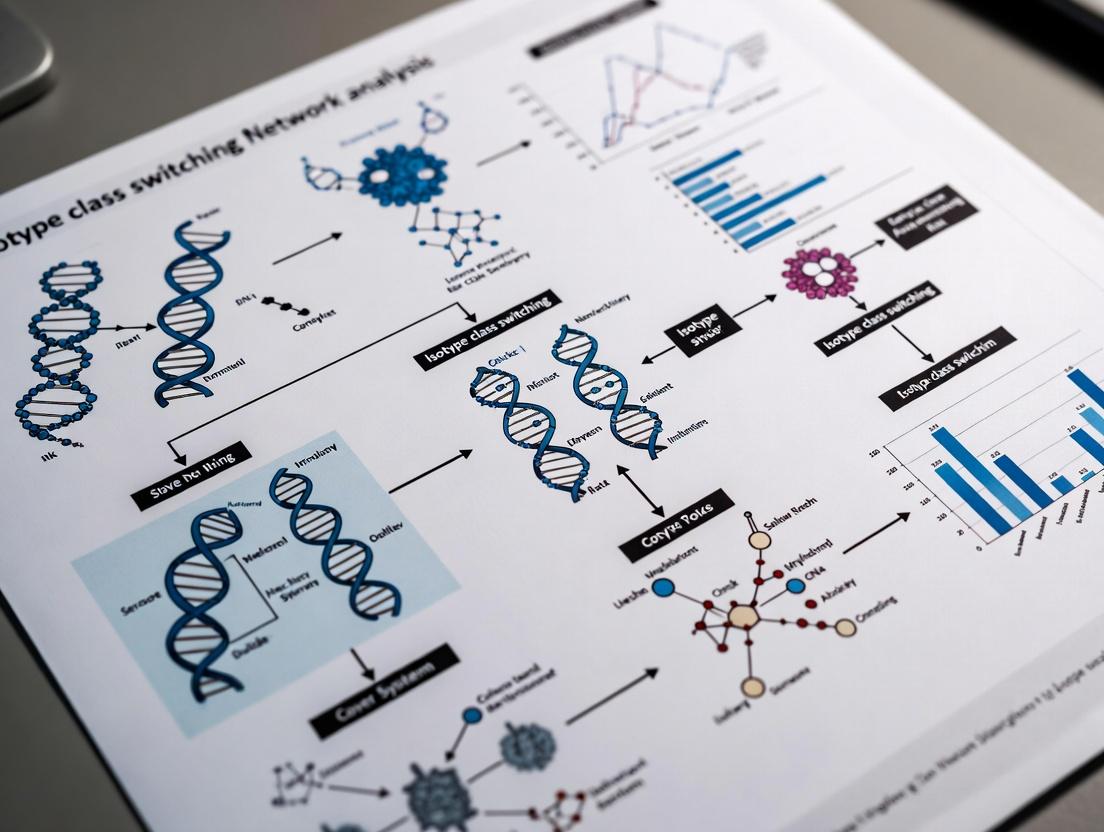
This article provides a detailed exploration of Immunoglobulin (Ig) class switching network analysis, a critical methodology for understanding B-cell biology and humoral immunity.
Decoding Immunity: A Comprehensive Guide to Immunoglobulin Class Switching Network Analysis in Research and Therapeutics
Abstract
This article provides a detailed exploration of Immunoglobulin (Ig) class switching network analysis, a critical methodology for understanding B-cell biology and humoral immunity. Tailored for researchers, scientists, and drug development professionals, it covers the foundational biology of antibody isotype switching, modern computational and experimental methodologies for network construction and analysis, common troubleshooting strategies for data integration and interpretation, and approaches for validating and benchmarking network models. The content synthesizes current best practices and emerging trends, offering a practical framework for applying network science to unravel the complexities of antibody-mediated immune responses in health, disease, and therapeutic intervention.
Understanding the Blueprint: Core Concepts in Antibody Isotype Switching and Network Theory
Antibody class switch recombination (CSR) is a genetic process that allows a B cell to change the constant region of its antibody heavy chain, thereby switching the immunoglobulin (Ig) isotype (e.g., from IgM to IgG, IgA, or IgE) while retaining the antigen-specific variable region. This biological imperative is fundamental to adaptive immunity, enabling humoral responses to adopt specialized effector functions tailored to the pathogen and site of infection. Within the context of Ig isotype class switching network analysis research, understanding the regulatory circuits, cytokine milieus, and signaling crosstalk that govern CSR is crucial for deciphering immune response patterns, identifying dysregulation in immunopathologies, and developing targeted immunotherapies and vaccines.
CSR is induced by signals from the microenvironment, primarily through CD40 ligand (CD40L) engagement and cytokine signaling. These stimuli trigger activation-induced cytidine deaminase (AID) expression, which initiates DNA double-strand breaks in switch (S) regions preceding constant gene segments.
Table 1: Primary Cytokine Signals Directing Antibody Class Switching
| Cytokine | Primary Source | Induced Isotype(s) | Key Transcription Factor | Representative Pathogen Context |
|---|---|---|---|---|
| IFN-γ | Th1 cells, NK cells | IgG2a (mouse), IgG1 (human) | T-bet | Intracellular viruses, bacteria |
| IL-4 | Th2 cells, ILC2s | IgG1 (mouse), IgG4 (human); IgE | STAT6, GATA3 | Helminths, allergens |
| TGF-β | Tregs, Stromal cells | IgG2b (mouse), IgA | RUNX3, SMADs | Mucosal pathogens |
| IL-5, IL-6, RA | Stromal cells, DCs | IgA (in mucosal sites) | RORα, AhR | Commensals & gut pathogens |
| IL-21 | Tfh cells | IgG1, IgG3 (human); IgE (with IL-4) | STAT3 | Germinal center responses |
Table 2: Quantitative Metrics of Antibody Isotypes in Human Serum (Average Concentrations)
| Immunoglobulin Isotype | Serum Concentration (mg/mL) | Half-Life (Days) | Placental Transfer | Key Effector Function |
|---|---|---|---|---|
| IgM | 0.5 - 2.0 | 5 - 7 | No | Primary response, complement activation |
| IgG1 | 5.0 - 11.0 | 21 - 28 | Yes (High) | Opsonization, ADCC, neutralization |
| IgG2 | 1.5 - 6.5 | 21 - 28 | Yes (Moderate) | Anti-polysaccharide responses |
| IgG3 | 0.2 - 1.1 | 7 - 9 | Yes (High) | Potent complement activation |
| IgG4 | 0.08 - 1.4 | 21 - 28 | Yes (Moderate) | Anti-inflammatory, bispecificity |
| IgA | 1.0 - 4.0 (serum) | 5 - 7 | No | Mucosal immunity, neutralization |
| IgE | 0.00005 - 0.0002 | 1 - 2 | No | Anti-parasitic, allergic response |
Detailed Experimental Protocols
Protocol 1: In Vitro B Cell Class Switching Assay (Mouse Splenic B Cells)
Objective: To induce and quantify specific Ig isotype class switching in response to defined stimuli.
Materials:
- Mouse spleen.
- B cell isolation kit (e.g., CD43-negative selection beads).
- RPMI-1640 complete medium (10% FBS, 55 μM 2-ME, Pen/Strep).
- Stimuli: LPS (10-50 μg/mL), anti-CD40 antibody (1-5 μg/mL), cytokines (see Table 1).
- FACS buffer (PBS, 2% FBS, 0.05% NaN3).
- Antibodies for flow cytometry: Anti-B220, Anti-IgM, Anti-IgG1, Anti-IgG2a/c, Anti-IgG3, Anti-IgA.
- Cell culture plates (96-well U-bottom).
Methodology:
- B Cell Purification: Isolate naïve B cells from mouse spleen using a negative selection magnetic bead kit according to manufacturer's instructions. Achieve purity (>95% B220+ IgM+ IgD+) confirmed by flow cytometry.
- Stimulation Culture: Plate cells at 0.5-1 x 10⁶ cells/mL in complete medium. Apply switching stimuli:
- For IgG3: LPS alone.
- For IgG1: LPS + IL-4 (20 ng/mL).
- For IgG2a/c: LPS + IFN-γ (50 ng/mL).
- For IgA: LPS + TGF-β (5 ng/mL) + IL-5 (10 ng/mL).
- Include unstimulated control.
- Incubation: Culture for 4-5 days at 37°C, 5% CO₂.
- Analysis by Flow Cytometry: Harvest cells, wash with FACS buffer.
- Stain surface markers: B220-APC, IgM-FITC, and the relevant switched isotype (e.g., IgG1-PE) for 30 min on ice, protected from light.
- Wash, resuspend, and analyze on a flow cytometer.
- Gate on live, B220+ cells. The percentage of B220+ IgM- IgG1+ (or other isotype) cells indicates switched B cells.
- Data Interpretation: Calculate switching efficiency: (% Isotype+ cells in stimulated) - (% in unstimulated control).
Protocol 2: Enzyme-Linked Immunospot (ELISpot) for Class-Switched Antibody-Secreting Cells
Objective: To detect and enumerate B cells that have undergone CSR and are actively secreting specific antibody isotypes.
Materials:
- Multi-screen PVDF 96-well ELISpot plates.
- Coating antibodies: anti-IgG, anti-IgA, or anti-IgE isotype-specific capture antibodies.
- Blocking solution: PBS with 5% BSA or 10% FBS.
- Cell culture medium (as in Protocol 1).
- Detection antibodies: Biotinylated anti-Ig isotype antibodies.
- Streptavidin-ALP or Streptavidin-HRP.
- BCIP/NBT (for ALP) or AEC (for HRP) substrate.
- Plate reader or microscope for spot analysis.
Methodology:
- Plate Preparation: Coat ELISpot plates with 100 μL/well of isotype-specific capture antibody (5-10 μg/mL in PBS). Incubate overnight at 4°C.
- Blocking: Aspirate coating Ab, wash 3x with PBS. Add 200 μL/well blocking solution. Incubate for 2h at 37°C.
- Cell Plating: Wash plate 3x with PBS. Add B cells from in vitro switching cultures or ex vivo isolated cells (e.g., from spleen/lymph nodes). Serially dilute cells (e.g., from 10⁵ to 10³ cells/well) in culture medium. Run in triplicate.
- Incubation: Culture cells on plate for 18-24h at 37°C, 5% CO₂.
- Detection: Discard cells, wash plate vigorously with PBS-Tween. Add biotinylated detection antibody (1-2 μg/mL in blocking solution) for 2h at RT.
- Wash, then add Streptavidin-enzyme conjugate for 1h at RT.
- Wash, add precipitating substrate. Develop until distinct spots appear.
- Analysis: Stop reaction by rinsing with water. Air-dry plate. Count spots using an automated ELISpot reader. Report as spot-forming cells (SFC) per million input cells.
Visualizations of Signaling Pathways & Workflows
Diagram 1 Title: CSR Induction via CD40 & Cytokine Receptors
Diagram 2 Title: In Vitro Class Switching Assay Workflow
The Scientist's Toolkit: Essential Research Reagents
Table 3: Key Reagent Solutions for CSR Research
| Reagent Category | Specific Example(s) | Function in CSR Research | Key Supplier(s) |
|---|---|---|---|
| B Cell Isolation Kits | Mouse CD43 (Ly-48) MicroBeads; Human Pan B Cell Kit (CD19). | Negative selection for high-purity naïve B cell isolation. | Miltenyi Biotec, STEMCELL Tech. |
| CSR Induction Cocktails | Ultra-LEAF anti-mouse CD40; Recombinant IL-4, IFN-γ, TGF-β, IL-5. | Deliver defined, low-endotoxin signals to trigger specific switching pathways. | BioLegend, PeproTech, R&D Systems. |
| Flow Cytometry Antibodies | Anti-mouse IgG1-PE, IgG2a/c-APC, IgA-FITC; Anti-human IgG/A/E. | Surface/intracellular staining to detect switched B cells and plasmablasts. | BD Biosciences, BioLegend, Thermo Fisher. |
| AID Detection Tools | Anti-AID antibodies (Cytoplasmic staining); AID-GFP reporter mice. | Quantify the master regulator of CSR at protein or transcriptional level. | Cell Signaling Tech., Jackson Lab. |
| ELISpot Kits | Mouse IgG/IgA/IgE ELISpotBASIC; Human Isotype Panels. | High-sensitivity detection of antibody-secreting cells by isotype. | Mabtech, BD Biosciences. |
| Germinal Center Markers | Anti-GL7, Fas (CD95), PNA; CXCR4, CD83 antibodies. | Identify GC B cells where most CSR occurs in vivo. | BioLegend, Thermo Fisher. |
| PCR for Switch Circles | Primers for Iμ-Cμ, Iμ-Cγ1, Iμ-Cε circle transcripts. | Molecular detection of excised switch circles as a direct CSR readout. | N/A (Custom designed). |
Application Notes
Within the broader research thesis on Ig isotype class switching network analysis, understanding the precise molecular mechanisms is foundational. Activation-Induced Cytidine Deaminase (AID) is the master regulator of class switch recombination (CSR), introducing DNA double-strand breaks in switch (S) regions upstream of constant heavy chain (CH) genes. However, AID expression and targeting are tightly controlled by specific cytokines, T cell help (e.g., CD40L), and signaling cascades that define which isotype (e.g., IgG, IgA, IgE) is ultimately expressed. This network dictates humoral immune responses and is a critical area for therapeutic intervention in allergies, autoimmune diseases, and immunodeficiencies.
Quantitative Data on Cytokine-Induced Isotype Switching
Table 1: Primary Cytokine Signals and Their Isotype Outcomes in Mouse B Cells
| Cytokine | Primary Signal Transducer | Dominant Induced Isotype(s) | Key Transcription Factor | Typical CSR Frequency* (%) |
|---|---|---|---|---|
| IFN-γ | STAT1 | IgG2a/c (IgG3 in humans) | T-bet | 15-30 |
| IL-4 | STAT6 | IgG1, IgE | GATA3 | 20-40 (IgG1), 1-5 (IgE) |
| TGF-β | SMAD2/3 | IgA, IgG2b | N/A | 10-25 |
| IL-4 + TGF-β | STAT6 & SMAD2/3 | IgA | N/A | 20-40 |
| IL-5 (with IL-4) | STAT5 | IgE (enhancement) | N/A | Enhances IL-4 effect |
*CSR frequency is highly dependent on experimental system (e.g., mouse splenic B cells activated with anti-CD40 and cytokines for 4 days). Values are approximate ranges from representative literature.
Table 2: Key Molecular Players and Their Functions
| Molecule/Pathway | Category | Primary Function in CSR | Potential as Drug Target |
|---|---|---|---|
| AID (AICDA) | Enzyme | Deaminates cytidine to uracil in S-region DNA, initiating CSR. | Inhibition for autoimmune disease. |
| 14-3-3 adaptors | Scaffold Protein | Binds phosphorylated AID, regulates its retention at S-regions. | Modulation to fine-tune CSR. |
| PTEN | Phosphatase | Regulates Akt pathway; loss increases CSR to IgE. | Target for allergic disease. |
| NF-κB (p50/p65) | Transcription Factor | Activated by CD40, TLRs; induces Aicda and cytokine receptors. | Broad anti-inflammatory target. |
Experimental Protocols
Protocol 1:In VitroCSR Assay Using Mouse Splenic B Cells
Purpose: To quantify cytokine-specific class switching in primary B cells.
Materials: See "The Scientist's Toolkit" below.
Method:
- B Cell Isolation: Euthanize mouse and aseptically remove spleen. Prepare single-cell suspension. Deplete T cells using anti-Thy1.2 or CD90.2 magnetic beads. Purify naïve B cells via negative selection using a commercial B cell isolation kit.
- B Cell Activation: Resuspend purified B cells at 1x10⁶ cells/mL in complete RPMI-1640. Seed cells in 24-well plate. Add the following stimuli:
- Base Activation: Anti-CD40 antibody (1 µg/mL) OR LPS (20 µg/mL for mouse B cells).
- Cytokine Cocktails:
- For IgG1 & IgE: Add IL-4 (20 ng/mL).
- For IgA: Add TGF-β (2 ng/mL) + IL-4 (10 ng/mL).
- For IgG2a/c: Add IFN-γ (20 ng/mL).
- Culture: Incubate cells at 37°C, 5% CO2 for 4 days.
- Analysis (Day 4):
- Flow Cytometry for Surface Ig: Harvest cells, stain with anti-B220 (B cell marker) and fluorescently-labeled anti-IgM, IgG1, IgG2a/c, IgA, or IgE. Analyze by flow cytometry. Calculate % of B220+ cells expressing a switched isotype.
- ELISA for Secreted Ig: Collect culture supernatant. Perform sandwich ELISA for specific isotypes using paired capture/detection antibodies.
Protocol 2: AID Recruitment Analysis by Chromatin Immunoprecipitation (ChIP)
Purpose: To map the recruitment of AID to specific S-regions upon cytokine stimulation.
Method:
- Cell Culture & Crosslinking: Perform CSR induction as in Protocol 1 with 5x10⁷ cells per condition. On day 3, add 1% formaldehyde directly to culture medium for 10 min at room temperature to crosslink proteins to DNA. Quench with 125mM glycine.
- Cell Lysis & Sonication: Wash cells, lyse, and isolate nuclei. Sonicate chromatin to shear DNA to fragments of 200-500 bp. Verify fragment size by agarose gel electrophoresis.
- Immunoprecipitation: Clarify lysate. Incubate an aliquot (input control) overnight at 4°C with magnetic beads conjugated to anti-AID antibody or isotype control IgG.
- Washes & Elution: Wash beads stringently. Elute protein-DNA complexes. Reverse crosslinks by incubating at 65°C overnight.
- DNA Purification & Analysis: Purify DNA using a PCR purification kit. Analyze by quantitative PCR (qPCR) using primer sets specific for Sμ, Sγ1, Sα, and a control non-target genomic region (e.g., Gapdh). Enrichment is calculated as % of input.
Visualizations
Cytokine Signaling to AID Activation Pathway
In Vitro CSR Assay Workflow
The Scientist's Toolkit: Key Research Reagent Solutions
Table 3: Essential Reagents for CSR Research
| Reagent | Category/Supplier Example | Primary Function in CSR Experiments |
|---|---|---|
| Recombinant Cytokines (mouse) | e.g., PeproTech, R&D Systems | Induce specific signaling pathways for directed isotype switching (IL-4, IFN-γ, TGF-β, IL-5). |
| Anti-CD40 Agonist Antibody | e.g., Bio X Cell (HM40-3) | Provides critical T-cell helper signal, activating B cells for CSR in vitro in place of CD40L. |
| LPS (Lipopolysaccharide) | e.g., Sigma-Aldrich | TLR4 agonist; acts as a strong B cell mitogen and CSR inducer, particularly for IgG3 and IgG2b in mice. |
| Magnetic B Cell Isolation Kits | e.g., Miltenyi Biotec, STEMCELL Tech. | For negative selection of untouched, high-purity naïve B cells from spleen or blood. |
| Fluorochrome-conjugated Anti-Ig Antibodies | e.g., BioLegend, BD Biosciences | Critical for flow cytometric analysis of surface Ig isotypes to quantify CSR efficiency. |
| ELISA Kits for Mouse Ig Isotypes | e.g., SouthernBiotech, Thermo Fisher | Quantify secreted antibodies in culture supernatants post-CSR. |
| Anti-AID Antibody (for ChIP/WB) | e.g., Cell Signaling Tech., EMD Millipore | Detect AID expression (western blot) or recruitement to DNA (ChIP). |
| Phospho-STAT6 (Tyr641) Antibody | e.g., Cell Signaling Tech. | Readout for IL-4 receptor signaling activity via western blot or flow cytometry. |
| CRISPR/Cas9 Gene Editing Systems | e.g., Synthego, IDT | For knocking out or modifying genes (AID, PTEN, cytokine receptors) in B cell lines to study function. |
| B Cell Media Supplements | e.g., β-Mercaptoethanol, FBS | Essential components of complete media for primary B cell culture viability and growth. |
This Application Note details protocols for translating the molecular biology of immunoglobulin (Ig) class switch recombination (CSR) into formal network models. This work is situated within a broader thesis on Ig isotype class switching network analysis, which posits that CSR is not merely a linear, cytokine-directed process but a dynamic, interconnected network. Representing molecular components and their interactions as computational objects enables the application of graph theory to predict switching outcomes, identify critical regulatory nodes, and uncover novel therapeutic targets for modulating humoral immunity in autoimmunity, allergy, and B-cell malignancies.
Key Network Elements: Mapping Biology to Graph Theory
The table below defines the core mapping of CSR biology to network components.
Table 1: Mapping CSR Biology to Network Graph Elements
| Network Element | Biological Correlate | Example Instances |
|---|---|---|
| Node | A distinct molecular entity or cellular state. | Transcription factors (NF-κB, STAT6), Cytokines (IL-4, TGF-β), Enzymes (AID), Isotypes (IgE, IgG1), Germline Transcripts (Iε-GL, Iγ1-GL). |
| Edge | A functional interaction or relationship between nodes. | Activation (STAT6 → Iε-GL), Inhibition (Bcl-6 → AID), Physical Interaction (NF-κB p50-p65 complex), Cellular Production (Tfh cell → IL-4). |
| Edge Weight | Strength or probability of interaction. | Cytokine concentration, Binding affinity (Kd), Transcription rate constant. |
| Node Attribute | Quantifiable property of a node. | Expression level, Somatic hypermutation frequency, Epigenetic accessibility (ATAC-seq signal). |
Experimental Protocols for Network Data Generation
Network construction requires quantitative, multi-parameter data. Below are key protocols for generating essential datasets.
Protocol 3.1: High-Throughput CSR Profiling via Isotype-Specific Flow Cytometry
Objective: Quantify the frequency of CSR to multiple isotypes simultaneously in a single B-cell culture.
- Stimulate murine or human primary naïve B cells with 1 µg/mL LPS (for IgG3/IgG2b) +/- 20 ng/mL recombinant murine IL-4 (for IgG1/IgE) in RPMI-1640 + 10% FBS for 72-96 hours.
- Harvest cells, wash with FACS buffer (PBS + 2% FBS), and stain with Live/Dead viability dye (e.g., Zombie Aqua, 1:1000) for 15 min.
- Block Fc receptors with anti-CD16/32 antibody (1:100) for 10 min on ice.
- Surface stain with antibody cocktail (all titrated):
- Anti-B220-APC/Cy7 (clone RA3-6B2)
- Anti-IgG1-FITC (clone RMG1-1)
- Anti-IgG3-PE (clone R2-38)
- Anti-IgE-PE/Cy7 (clone RME-1)
- Anti-CD138-BV421 (for plasmablast identification)
- Incubate 30 min on ice, protected from light. Wash twice.
- Acquire data on a flow cytometer capable of 5+ colors (e.g., BD FACS Celesta). Analyze using FlowJo software. Gate on Live, single B220+CD138+ plasmablasts. CSR frequencies are calculated as (Isotype+ cells / total plasmablasts) * 100%.
Table 2: Example CSR Frequency Data (Murine B cells, 96h stimulation)
| Stimulus | IgG1+ (%) | IgG3+ (%) | IgE+ (%) | Dual IgG1+/IgG3+ (%) |
|---|---|---|---|---|
| LPS | 2.1 ± 0.5 | 18.7 ± 2.3 | 0.1 ± 0.05 | 0.05 ± 0.02 |
| LPS + IL-4 | 41.5 ± 3.8 | 5.2 ± 1.1 | 8.7 ± 1.2 | 1.3 ± 0.3 |
Protocol 3.2: Quantitative Germline Transcript (GLT) Analysis by RT-qPCR
Objective: Measure GLT expression as a proxy for chromatin accessibility at specific switch (S) regions.
- Extract total RNA from 1x10^6 stimulated B cells using TRIzol reagent, following manufacturer's protocol. Include DNase I treatment.
- Synthesize cDNA using 500 ng RNA, oligo(dT) primers, and a reverse transcriptase (e.g., SuperScript IV).
- Perform qPCR using SYBR Green master mix on a QuantStudio system. Use the following primer pairs (murine):
- Iγ1-GLT F: 5'-CTGGAGCTGCTGGTTACT-3', R: 5'-GTCCAGTGGATAGACAGATGG-3'
- Iε-GLT F: 5'-CCAGAGCCAAGAACAGCAT-3', R: 5'-TGATGGTTCCTGCATAGCTGT-3'
- GAPDH (Housekeeping) F: 5'-AGGTCGGTGTGAACGGATTTG-3', R: 5'-TGTAGACCATGTAGTTGAGGTCA-3'
- Analyze data using the ΔΔCt method. Report fold-change relative to unstimulated B cells (calibrator).
Protocol 3.3: Chromatin Interaction Capture (ChIC-seq) for AID Recruitment Mapping
Objective: Identify genomic loci co-occupied by AID and key transcription factors to infer functional edges.
- Crosslink 10x10^6 CH12F3-2 cells (mouse B cell line) stimulated with 1 µg/mL LPS + 5 ng/mL TGF-β + 10 ng/mL IL-4 for 48h with 1% formaldehyde for 10 min at room temperature. Quench with 125 mM glycine.
- Sonicate chromatin to an average fragment size of 200-500 bp.
- Immunoprecipitate protein-DNA complexes using 5 µg of anti-AID antibody (clone EK2 5G9) or IgG control, coupled to magnetic Protein G beads.
- Reverse crosslinks, purify DNA, and prepare sequencing libraries using a kit (e.g., NEBNext Ultra II).
- Sequence on an Illumina platform (≥ 5 million reads/sample). Align reads to the reference genome (mm10) using Bowtie2. Call peaks with MACS2. Co-localization with published STAT6 or NF-κB ChIP-seq peaks defines potential regulatory edges.
Network Construction & Analysis Workflow
The following diagram outlines the logical workflow from wet-lab experiments to network inference and validation.
Diagram 1: CSR Network Analysis Workflow (98 chars)
Visualizing a Core CSR Signaling Pathway as a Network
The diagram below represents a simplified, cytokine-driven CSR pathway to IgE as a network graph, highlighting key nodes and interactions.
Diagram 2: Core IgE Class Switch Network (92 chars)
The Scientist's Toolkit: Essential Research Reagents & Materials
Table 3: Key Research Reagent Solutions for CSR Network Studies
| Reagent/Material | Function & Application in CSR Network Research | Example Product/Catalog # |
|---|---|---|
| Recombinant Cytokines | Define experimental edges by activating specific signaling nodes (e.g., IL-4 → STAT6). Crucial for in vitro CSR induction. | Recombinant Mouse IL-4 (BioLegend, 574304); Human TGF-β1 (PeproTech, 100-21). |
| Phospho-Specific Antibodies | Detect activated (phosphorylated) signaling nodes (e.g., p-STAT6) via flow cytometry or WB, quantifying edge strength. | Alexa Fluor 647 anti-pSTAT6 (TY641) (BD Biosciences, 562076). |
| AID Inhibitors | Pharmacologically perturb a central node (AID) to validate its network centrality and test therapeutic hypotheses. | AID Inhibitor III (CAS 885499-61-6, MilliporeSigma). |
| CH12F3-2 Cell Line | A mouse B lymphoma line that robustly undergoes CSR to IgA in vitro. A standard model for mechanistic studies. | ATCC (CRL-12401). |
| Cytoscape Software | Open-source platform for assembling, visualizing, and analyzing molecular interaction networks. Essential for graph construction. | https://cytoscape.org/ (v3.10+). |
| Switch Assay Primers | Specific primer sets for circle transcript or post-recombination analysis to quantify CSR event outcomes. | See Yu et al., Immunity (2019) for designs. |
| CRISPR/dCas9-KRAB System | Enables targeted epigenetic repression (CRISPRi) of specific nodes (e.g., GLT promoters) to test edge necessity. | dCas9-KRAB Plasmid (Addgene, #89567). |
Application Notes
This section provides applied insights derived from recent research, framed within the context of a thesis focused on Ig isotype class switching network analysis. Understanding B-cell fate decisions—whether a B cell undergoes apoptosis, enters the germinal center (GC), differentiates into a plasma cell (PC) or memory B cell (Bmem), and selects an antibody isotype—is fundamental for manipulating immune responses in vaccines and autoimmunity. Concurrently, deciphering the dynamics of the antibody repertoire is critical for identifying protective or pathogenic clonal lineages.
Note 1: Interrogating Fate Decision Triggers. Single-cell RNA sequencing (scRNA-seq) and CITE-seq (Cellular Indexing of Transcriptomes and Epitopes by Sequencing) have revealed that early transcriptional and protein-level signatures, detectable within 24-48 hours post-activation, can predict downstream fate bias. Key markers include sustained high IRF4 for PC fate versus oscillatory expression for GC seeding, and surface expression of CD69 and CD86. Integrating these datasets into network models allows for the prediction of how perturbation of specific nodes (e.g., cytokines, inhibitory receptors) skews the class-switching repertoire.
Note 2: Repertoire Dynamics in Chronic Stimulation. In the context of chronic infection or autoimmunity, prolonged antigen exposure drives continual somatic hypermutation (SHM) and clonal selection, often leading to repertoire narrowing (oligoclonality) and the accumulation of aberrant isotypes (e.g., dual IgG/IgA switch variants). Longitudinal tracking of B-cell receptor (BCR) clonotypes via high-throughput sequencing (Ig-seq) is essential to map these trajectories and identify "founder" clones that give rise to pathogenic or protective antibody lineages.
Note 3: Spatial Regulation of Class Switching. The thesis context necessitates emphasis on the microenvironmental control of class switch recombination (CSR). CSR is not random but directed by cytokines (e.g., IL-4, TGF-β, IFN-γ) present in specific lymphoid organ niches. Multiplexed imaging (CODEX, Imaging Mass Cytometry) protocols are now enabling the spatial mapping of cytokine gradients, AID expression, and switched isotypes within tissue sections, linking geography to isotype network output.
Protocols
Protocol 1: Single-Cell Multimodal Analysis of Early B-Cell Fate Bias
Objective: To capture transcriptomic, surface protein, and BCR data from in vitro activated human naïve B cells to model early fate decisions.
Key Research Reagent Solutions:
| Reagent/Material | Function |
|---|---|
| Human Naïve B Cell Isolation Kit (e.g., negative selection) | Purity CD20+ CD27- IgD+ IgM+ naïve B cells from PBMCs. |
| CD40L/IL-21/IL-4 cytokine mix | Provides key signals for B cell activation, survival, and CSR to IgG1/IgE. |
| Anti-human IgG/A/E PE-Cy7 antibodies | Surface stain for switched isotypes post-activation. |
| 10x Genomics Chromium Next GEM Single Cell 5' Kit | Enables coupled gene expression and V(D)J sequencing. |
| Cell-Phaser Antibody-Oligo Conjugation Kit | To create custom antibody-derived tags (ADTs) for CITE-seq. |
| Feature Barcoding technology (10x Genomics) | Integrates ADT data with transcriptome data. |
Methodology:
- Isolate naïve B cells from donor PBMCs using a negative selection magnetic bead kit.
- Activate cells at 50,000 cells/well in a 96-well plate with recombinant soluble CD40L (1 µg/mL), IL-21 (50 ng/mL), and IL-4 (20 ng/mL) in complete RPMI.
- At 0, 24, 48, and 72 hours, harvest cells.
- Surface Stain for CITE-seq: Wash cells and stain with a panel of ~20 conjugated antibodies (e.g., CD19, CD20, CD27, CD38, CD138, IgG, IgA, IgE) for 30 mins on ice. Include a live/dead stain.
- Library Preparation: Process cells according to the 10x Genomics Single Cell 5' protocol. Generate separate libraries for Gene Expression, Feature Barcoding (ADTs), and BCR V(D)J.
- Sequencing & Analysis: Sequence on an Illumina platform. Process data using Cell Ranger. Downstream analysis in R (Seurat, scRepertoire): Normalize ADT data (CLR), integrate with transcriptomic clusters, and extract clonotype information. Use graph-based clustering and trajectory inference (e.g., Monocle3, Slingshot) to identify branching points and associated gene/ protein markers.
Protocol 2: Longitudinal Antibody Repertoire Sequencing from Limited Clinical Samples
Objective: To track BCR clonal dynamics and isotype usage over time in serial fine-needle aspirates from a reactive lymph node or small blood volumes.
Key Research Reagent Solutions:
| Reagent/Material | Function |
|---|---|
| SMARTer Human BCR IgG/IgA/IgM H/K/L Profiling Kit (Takara Bio) | Allows amplification of full-length variable regions from limited RNA input with unique molecular identifiers (UMIs). |
| RNase Inhibitor | Protects sample RNA during extraction and reverse transcription. |
| MiSeq or iSeq 100 System (Illumina) | Provides sufficient read depth for repertoire sequencing. |
| IMGT/HighV-QUEST | Reference database and tool for annotating V, D, J genes and mutations. |
| Change-O & Alakazam R packages | For comprehensive repertoire analysis, diversity calculation, and lineage tree construction. |
Methodology:
- Sample Collection & Storage: Lysate cells from FNA or PBMCs in RLT Plus buffer (Qiagen) with β-mercaptoethanol. Store at -80°C.
- RNA Extraction: Use a micro-column-based kit (e.g., RNeasy Micro Kit) with DNase I treatment.
- BCR Library Construction: Follow the SMARTer kit protocol. Briefly, perform first-strand cDNA synthesis with template-switching and UMI incorporation. Perform two PCR rounds: 1st to amplify Ig isotypes of interest, 2nd to add Illumina adapters and sample indices.
- Sequencing: Pool libraries and sequence on a 300-cycle MiSeq run (2x150 bp).
- Bioinformatic Processing: Use the
pRESTOtoolkit to: (a) demultiplex, (b) filter by quality, (c) correct errors using UMIs, (d) annotate sequences with IMGT. Calculate clonal abundance, SHM load, and isotype distribution per time point. Construct lineage trees for expanded clones usingDplyrandigraphin R, coloring branches by isotype.
Data Presentation
Table 1: Key Transcriptional Regulators in B-Cell Fate Decisions
| Fate Outcome | Key Drivers | Inhibitors/Signals to Avoid | Associated Isotype Bias (Human) |
|---|---|---|---|
| Plasmablast/Early PC | High, sustained IRF4, Blimp-1 (PRDM1), XBP-1 | BCL6, PAX5 | IgG1, IgG3, IgA1 |
| Germinal Center B Cell | BCL6, EZH2, MYC (cyclic) | High IRF4, Blimp-1 | Initially IgM/IgD, then diversified |
| Memory B Cell | BACH2, STAT3, Recall: BCL6 low | Blimp-1 | All, but often IgG/IgA |
| Anergic/Exhausted | KLF2, TOX, PD-1 high | SYK, NF-κB signaling | Often low/no CSR |
Table 2: Quantitative Metrics for Antibody Repertoire Analysis
| Metric | Formula/Tool | Interpretation |
|---|---|---|
| Clonal Diversity | Shannon's Entropy Index (H) | High H = diverse, polyclonal repertoire. Low H = oligoclonal expansion. |
| Clonal Expansion | Top 10 Clone Frequency (%) | Percentage of total repertoire occupied by the 10 most abundant clones. |
| SHM Burden | Mean mutations per V region (± SEM) | Measure of antigen-driven affinity maturation. |
| Isotype Distribution | % of productive sequences per isotype | Reveals class-switching efficiency and cytokine influences. |
| Linearity (Clonal Turnover) | Morisita-Horn Index between time points | 0=complete turnover, 1=identical repertoire; measures stability/evolution. |
Visualizations
Diagram 1: Key Signaling Pathways in B-Cell Fate
Diagram 2: Experimental Workflow for Multimodal Analysis
Building the Map: Step-by-Step Methodologies for Ig Switching Network Construction and Analysis
Application Notes
The integration of single-cell RNA sequencing (scRNA-seq), single-cell B cell receptor sequencing (scBCR-seq), and Cellular Indexing of Transcriptomes and Epitopes by Sequencing (CITE-seq) provides a multidimensional view of B cell biology, which is foundational for constructing networks that model Ig isotype class switching. This multi-modal approach enables the concurrent capture of transcriptomic states, clonal lineage (via BCR sequences), and surface protein expression from the same single cells. Within a thesis focused on deconstructing the regulatory network of class-switch recombination (CSR), these integrated data inputs become the nodes and defining features of the network. Each cell is a potential node, characterized by its transcriptome (gene expression patterns for AID, XBP1, cytokines), its BCR isotype (IgM, IgG, IgA, IgE), and key surface proteins (CD19, CD27, CD38, CD138). Correlating these layers reveals the molecular drivers, cellular phenotypes, and clonal relationships underlying CSR decisions, offering unprecedented resolution for identifying therapeutic targets in dysregulated humoral immunity.
Experimental Protocols
Protocol 1: Concurrent scRNA-seq/scBCR-seq/CITE-seq Library Preparation from Human B Cells
Objective: To generate multi-modal libraries from single human B cells for integrated analysis.
Materials: Fresh or cryopreserved PBMCs or B cell isolates, Feature Barcoding technology (e.g., 10x Genomics Feature Barcoding for CITE-seq), TotalSeq antibody-oligo conjugates, Chromium Next GEM Chip, appropriate buffers and reagents.
Method:
- Cell Preparation & Antibody Staining: Prepare a single-cell suspension with >90% viability. Stain 0.5-1 million cells with a pre-titrated panel of TotalSeq antibodies targeting key B cell surface proteins (e.g., CD19, CD20, CD27, CD38, IgD, IgM). Incubate for 30 min on ice, wash twice to remove unbound antibodies.
- Cell Partitioning & Barcoding: Using the 10x Chromium controller, co-partition the stained cells, Gel Beads (containing oligo-dT primers with cell barcodes and UMIs), and Master Mix into nanoliter-scale droplets. Within each droplet, lysis occurs, and poly-adenylated mRNA and antibody-derived tags (ADTs) are reverse-transcribed, incorporating the shared cell barcode.
- cDNA Amplification & Library Construction: Post-emulsion breaking, cDNA is amplified via PCR.
- The Gene Expression library is constructed from a fraction of the cDNA using primers targeting the poly-A region.
- The VDJ (BCR) library is constructed via targeted amplification of the Ig heavy and light chain V(D)J regions from the remaining cDNA.
- The Feature Barcode (CITE-seq) library is constructed via targeted amplification of the antibody-derived tags (ADTs).
- Sequencing: Libraries are quantified, pooled at an optimal ratio (e.g., 60% Gene Expression, 20% VDJ, 20% Feature Barcode), and sequenced on an Illumina platform. Recommended sequencing depth: ~20,000 reads/cell for gene expression, ~5,000 reads/cell for VDJ, ~5,000 reads/cell for feature barcodes.
Protocol 2:In VitroCSR Induction for Multi-modal Profiling
Objective: To generate cells undergoing active class switching for network analysis.
Method:
- B Cell Isolation: Isulate naïve B cells from human tonsil or peripheral blood using a negative selection kit (e.g., EasySep Human Naïve B Cell Isolation Kit).
- CSR Induction Culture: Seed cells at 0.5-1 x 10^6 cells/mL in complete RPMI medium. Stimulate CSR:
- For IgG/IgA: Stimulate with 1 µg/mL CD40L + 50 ng/mL IL-4 + 10 ng/mL IL-10 (for IgG) or 5 ng/mL TGF-β + 50 ng/mL IL-4 (for IgA).
- For IgE: Stimulate with 1 µg/mL CD40L + 50 ng/mL IL-4 + 10 ng/mL IL-13.
- Include a control with anti-IgM/CD40L only (promotes proliferation with minimal switching).
- Harvest for Multi-modal Analysis: Culture for 4-6 days. Harvest cells daily or at the endpoint for analysis via the concurrent scRNA-seq/scBCR-seq/CITE-seq protocol (Protocol 1). This time-series captures dynamic network states.
Data Presentation
Table 1: Key Metrics from a Representative Integrated scRNA-seq/scBCR-seq/CITE-seq Experiment of In Vitro Stimulated B Cells
| Metric | Gene Expression (scRNA-seq) | BCR Information (scBCR-seq) | Surface Protein (CITE-seq) |
|---|---|---|---|
| Cells Detected | 8,452 | 3,187 (37.7% of cells) | 8,230 (97.4% of cells) |
| Median Genes/Cell | 2,450 | N/A | N/A |
| Median UMI Count/Cell | 8,500 | N/A | 1,250 (for ADTs) |
| Key Measured Features | AICDA, MKI67, XBP1, PRDM1, cytokine receptors | Isotype (IgM, G, A, E), V/D/J genes, clonotype ID | CD19, CD27, CD38, CD138, IgD, IgM |
| Primary Analytical Output | Transcriptional clusters, differential gene expression, pathway activity | Clonal lineage tracing, isotype distribution per clone, somatic hypermutation | Protein-level phenotyping (e.g., plasmablast: CD19lo CD27hi CD38hi) |
Table 2: Research Reagent Solutions for Integrated Class-Switch Network Analysis
| Reagent / Solution | Function in the Protocol |
|---|---|
| Chromium Next GEM Chip K (10x Genomics) | Microfluidic device for partitioning single cells with barcoded gel beads. |
| TotalSeq-C Antibody-Oligo Conjugates (BioLegend) | Antibodies conjugated to oligonucleotide tags for simultaneous detection of surface proteins (CITE-seq). |
| Cell Ranger Multi (10x Genomics) | Primary software pipeline for demultiplexing, aligning, and generating feature-barcode matrices from multi-modal data. |
| Seurat R Toolkit | Comprehensive R package for the integrated analysis, normalization, and joint clustering of scRNA-seq, ADT, and BCR data. |
| scRepertoire R Package | Specialized tool for analyzing and visualizing single-cell immune receptor (BCR/TCR) data, including clonal tracking. |
| EasySep Human Naïve B Cell Isolation Kit (StemCell) | Rapid, column-free magnetic negative selection for obtaining high-purity naïve B cells for CSR induction experiments. |
| Recombinant Human CD40L (with enhancer) | Critical stimulus for B cell activation and survival in vitro, mimicking T cell help. |
Mandatory Visualization
Workflow for Multi-modal Single-Cell Library Generation
Multi-modal Data Defines Nodes in a CSR Network
This document serves as an Application Note for a thesis on Ig isotype class switching network analysis. Immunoglobulin (Ig) class switch recombination (CSR) is a critical process in adaptive immunity, allowing B cells to change the constant region of their antibody heavy chain, thereby altering effector function without changing antigen specificity. The central thesis posits that CSR is not a stochastic series of independent events but follows a structured, directed network with preferred trajectories (e.g., IgM→IgG→IgA). Inferring these directed edges computationally from single-cell RNA-seq (scRNA-seq), B cell receptor (BCR) repertoire, and chromatin accessibility data is essential for modeling immune maturation, identifying dysregulation in immunopathologies, and developing targeted immunotherapies.
Core Computational Methods & Data Presentation
Key Algorithms for Directed Edge Inference
The following table summarizes primary computational approaches for inferring CSR trajectories.
Table 1: Computational Methods for Inferring CSR Directed Edges
| Method Category | Specific Algorithm/Tool | Input Data | Inference Principle | Key Output for CSR |
|---|---|---|---|---|
| Pseudotime Analysis | Monocle3, Slingshot, PAGA | scRNA-seq (e.g., AICDA, Igh constant region transcripts) | Orders cells along a trajectory based on transcriptional similarity. | Pseudotemporal ordering of isotype states (e.g., IgM-high -> IgG1-high). |
| RNA Velocity | scVelo, Velocyto | scRNA-seq (spliced/unspliced counts) | Models transcriptional dynamics from splicing kinetics to predict future cell states. | Directed flow vectors between isotype-expressing clusters. |
| Lineage Tracing | Cassiopeia, LINNAEUS | CRISPR-based barcodes or endogenous mutations (VDJ rearrangements) | Uses somatic mutations as heritable marks to construct lineage trees. | Clonal phylogenies showing direct ancestry between isotypes. |
| Causal Network Inference | Scribe, CausalImpact | scRNA-seq time-series or perturbation data | Employs Granger causality or information theory to infer regulatory causality. | Predicted causal links (e.g., TGFB1 -> Igha expression). |
| Multi-omic Integration | Seurat WNN, MOFA+ | scRNA-seq + scATAC-seq (e.g., Igh locus accessibility) | Links chromatin state at switch regions to transcriptional output. | Confirmed switch region accessibility prior to/isotype expression. |
Table 2: Exemplar Quantitative Findings in CSR Trajectory Analysis
| Study (Example) | System | Key Metric | Value/Result | Implication for Network |
|---|---|---|---|---|
| King et al., 2021 (Nat Immunol) | Human tonsil B cells (scRNA-seq) | Percentage of clones with sequential switching (IgM→IgG→IgA) | ~42% of multi-isotype clones | Supports a predominant directed path over independent switches. |
| Roco et al., 2019 (Cell) | Mouse MLN after immunization (scRNA-seq+BCR) | Odds ratio for IgG3->IgG1 switch vs. IgM->IgG1 | 8.5 (p<0.001) | Indicates a preferred "shortcut" edge within the IgG subspace. |
| Ranzoni et al., 2021 (Science) | Human B cell development | Correlation between Igh locus 3D contact frequency and observed switch frequency | r = 0.87 | Physical proximity predicts directed edge strength. |
Experimental Protocols
Protocol: Integrated scRNA-seq and BCR Sequencing for CSR Inference
Objective: Generate paired gene expression and BCR isotype data from single B cells to computationally infer clonal switching trajectories.
Materials:
- Fresh or cryopreserved B cells.
- 10x Genomics Chromium Next GEM Single Cell 5' Kit v2 with Feature Barcode technology for Cell Surface Protein (includes assays for BCR).
- Chromium Controller.
- Validated antibodies for surface Ig isotypes (e.g., anti-human IgG-Biotin) conjugated to TotalSeq-B hashtags.
- High-throughput sequencer (Illumina NovaSeq).
Procedure:
- Cell Preparation: Isolate viable B cells (≥90% viability). Count and resuspend at 1000 cells/µL in PBS + 0.04% BSA.
- Antibody Staining: Incubate cell suspension with TotalSeq-B conjugated anti-isotype antibodies (1:100 dilution) for 30 min on ice. Wash twice with cell staining buffer.
- Gel Bead-in-emulsion (GEM) Generation: Combine stained cells, Master Mix, and Gel Beads per 10x Genomics protocol. Run on Chromium Controller to generate single-cell GEMs.
- Post GEM-RT Cleanup & Library Construction: Perform GEM-RT, cDNA amplification, and library construction as per the kit protocol. Generate separate libraries for gene expression, BCR (V(D)J enriched), and antibody-derived tags (ADT).
- Sequencing: Pool libraries and sequence on Illumina platform. Recommended depth: 20,000 reads/cell for gene expression, 5,000 reads/cell for V(D)J.
- Computational Analysis (Key Steps):
a. Preprocessing: Use Cell Ranger (
cellranger multi) to align reads, quantify gene expression, and assemble BCR contigs. b. Clonal Grouping: Group cells into clones based on shared heavy chain V gene, J gene, and CDR3 nucleotide sequence (allowance for hypermutation). c. Isotype Calling: For each cell, call dominant isotype from BCR contig and confirm via ADT signal (surface protein). d. Trajectory Inference: Subset to clones with ≥2 isotypes. Use Monocle3 or PAGA on the gene expression matrix of these clones, setting the root state to IgM-dominant cells. The algorithm will infer a pseudotime trajectory graph. e. Edge Assignment: Directed edges between isotype states are assigned based on the pseudotime graph and the sequence of isotypes observed within individual clonal lineages.
Protocol: Validating Predicted Edges withIn VitroCSR Assay
Objective: Functionally test a computationally predicted directed edge (e.g., IgG→IgA) using sorted B cell populations.
Materials:
- EL-4 B cell line or primary mouse naïve B cells.
- CSR-inducing cytokines: IL-4 (for IgG1/IgE), TGF-β + IL-5 (for IgA), LPS.
- Flow cytometer with cell sorter.
- Antibodies: Anti-B220, anti-IgM, anti-IgG1, anti-IgA.
Procedure:
- Initial Polarization: Stimulate bulk B cells with LPS + IL-4 for 72 hours to induce IgG1 switching.
- Cell Sorting: Sort a pure population of surface IgG1+, IgM- B cells using FACS.
- Secondary Switching Culture: Plate sorted IgG1+ B cells. Split into two conditions:
- Test: Culture with LPS + TGF-β + IL-5 (IgA-inducing cocktail).
- Control: Culture with LPS + IL-4 (original, non-IgA inducing cocktail).
- Time-Course Analysis: Harvest cells at 24, 48, 72, and 96 hours.
- Flow Cytometry Analysis: Stain for B220, IgG1, and IgA. Analyze by flow cytometry.
- Validation Metric: The emergence of a double-positive IgG1+IgA+ population only in the Test condition, followed by IgA+IgG1- cells, provides functional validation of the computationally predicted IgG1→IgA directed edge. Quantify switch efficiency as (% IgA+ cells at 96h)/(% input IgG1+ cells at 0h).
Mandatory Visualizations
Title: Cytokine Signaling to CSR Execution Pathway
Title: Integrated Multi-omic CSR Analysis Workflow
Title: Hypothetical Human CSR Network with Directed Edges
The Scientist's Toolkit
Table 3: Key Research Reagent Solutions for CSR Network Analysis
| Item | Function & Relevance to CSR Analysis |
|---|---|
| 10x Genomics Chromium Single Cell Immune Profiling | Provides integrated solution for simultaneous scRNA-seq and V(D)J sequencing from single cells, essential for linking isotype to clonotype and cell state. |
| TotalSeq-B Antibodies (Anti-human Ig Isotypes) | Oligo-tagged antibodies allow precise surface isotype detection alongside transcriptome in single-cell assays, adding a protein-level validation layer. |
| Recombinant Cytokines (IL-4, TGF-β, BAFF, etc.) | Used in in vitro B cell culture to direct CSR along specific pathways, enabling functional validation of predicted network edges. |
| AID (AICDA) Inhibitors (e.g., HMK Inhibitors) | Pharmacological tools to block CSR machinery. Serves as negative control in functional assays and to model CSR deficiency. |
| SMARTer Switching Mechanism at 5' RACE Kit (Takara) | Molecular biology tool to amplify and sequence expressed antibody heavy chains from bulk or single cells, confirming switch junctions. |
| Cell Hashing Oligos (Hashtag Antibodies) | Enables sample multiplexing in single-cell experiments, allowing parallel processing of multiple conditions (e.g., different time points, stimulations) for robust trajectory analysis. |
Application Notes: Network Analysis in Ig Isotype Class Switching Research
Immunoglobulin (Ig) class switching is a complex, regulated genetic recombination process enabling B cells to produce antibody isotypes (IgG, IgA, IgE) with distinct effector functions. Conceptualizing this as a network—where nodes represent molecular species (cytokines, transcription factors, enzymes like AID) and edges represent interactions (activation, inhibition, catalysis)—reveals system-level properties governing switch decisions. The analysis of centrality, connectivity, and modularity within these switching graphs is critical for identifying master regulatory hubs, points of fragility, and functional modules that can be targeted for therapeutic intervention in allergies, autoimmune diseases, and immunodeficiencies.
Table 1: Key Network Metrics and Their Biological Interpretations in Class Switching
| Metric | Definition | What it Reveals in Switching Networks | Example High-Scoring Node |
|---|---|---|---|
| Degree Centrality | Number of connections a node has. | Identifies highly interactive molecules; suggests multifunctional regulators. | NF-κB (connects multiple cytokine signals to target genes). |
| Betweenness Centrality | Frequency a node lies on the shortest path between others. | Highlights critical "gatekeepers" or integrators of signaling pathways. | STAT6 (integrates IL-4 signaling to direct IgG1/IgE switching). |
| Closeness Centrality | Average shortest path distance to all other nodes. | Points to molecules capable of rapid, broad influence across the network. | AID (essential final effector for all CSR). |
| Network Density | Ratio of existing edges to possible edges. | Measures overall network connectivity; dense graphs suggest robustness/plasticity. | The core AID- and cytokine-dependent subgraph. |
| Modularity (Q) | Strength of network division into modules (groups with dense intra- but sparse inter-connections). | Identifies functionally separable programs (e.g., IL-4-driven vs. TGF-β-driven switching). | The "Th2-module" (IL-4, STAT6, germline Iε-Cε transcription). |
Experimental Protocol 1: Constructing a Cytokine-Driven Class Switching Network from RNA-seq & ChIP-seq Data
Objective: To build a directed graph representing molecular interactions leading to IgA class switching.
Materials & Reagents:
- Naive B cells isolated from human PBMCs or mouse spleen.
- Recombinant cytokines: TGF-β, IL-4, IL-21, BAFF.
- CSR-inducing stimuli: CD40L, LPS.
- RNA extraction kit and RNA-seq library prep kit.
- ChIP-seq validated antibodies: anti-STAT3, anti-SMAD3, anti-p65 NF-κB, anti-RNA Pol II.
- Network analysis software (Cytoscape) & bioinformatics pipelines (R/Bioconductor).
Procedure:
- B Cell Culture & Induction: Isolate naive (IgM+IgD+) B cells. Culture in triplicate under:
- Condition A: Control (anti-IgM only).
- Condition B: TGF-β + IL-4 + CD40L (for IgA induction).
- Harvest cells at 0h, 24h, 72h, and 96h.
- RNA-seq Analysis: Extract total RNA, prepare libraries, and sequence. Perform differential expression analysis (Condition B vs. A). Identify significantly upregulated transcription factors, cytokines, receptors, and enzymes (e.g., Aicda).
- ChIP-seq Analysis: At 48h, perform ChIP-seq for transcription factors (e.g., SMAD3 for TGF-β signaling) on induced cells. Identify promoter/enhancer binding events at switch regions (Sα) and constant region genes (Cα).
- Network Inference:
- Nodes: Include differentially expressed genes and known CSR proteins (AID).
- Edges: Construct directed edges (Source → Target) based on: a) ChIP-seq evidence (TF → Target Gene). b) Literature-curated pathways (Cytokine → Receptor → TF). c) Protein-protein interactions (from databases like STRING) for complexes.
- Graph Assembly & Metric Calculation: Import edge list into Cytoscape. Use built-in plugins (e.g., NetworkAnalyzer, CytoHubba) to calculate degree, betweenness, and closeness centrality. Identify the top 10 hub nodes.
Visualization: Experimental Workflow for CSR Network Construction
Experimental Protocol 2: Validating a High-Betweenness Node (STAT3) Using siRNA Knockdown
Objective: To functionally validate the predicted role of a high-betweenness centrality node (STAT3) in modulating switching efficiency.
Materials & Reagents:
- STAT3-specific siRNA and non-targeting control siRNA.
- Electroporation or nucleofection system for B cells.
- Flow cytometry antibodies: anti-IgM, anti-IgG1, anti-IgA.
- ELISA kits for measuring IgG1 and IgA secretion.
- Western blot reagents for STAT3 and p-STAT3.
Procedure:
- Network Prediction: From Protocol 1, identify STAT3 as a high-betweenness node linking IL-21 and IL-6 signaling to AID expression.
- Knockdown: Isolate naive B cells. Electroporate with STAT3-specific or control siRNA. Immediately stimulate with IL-21 + CD40L (for IgG1) or TGF-β + IL-4 + CD40L (for IgA).
- Validation of Knockdown: At 48h post-stimulation, harvest a subset of cells. Perform western blot to confirm STAT3 protein reduction.
- Phenotypic Assessment:
- Surface Isotyping: At day 4-5, stain cells for surface IgM, IgG1, or IgA. Analyze by flow cytometry. Calculate % of switched (IgM- IgX+) cells.
- Secreted Antibody: Collect culture supernatant at day 5. Quantify IgG1 and IgA concentrations by ELISA.
- Network Perturbation Analysis: Compare switching efficiency (%) between STAT3-kd and control. A significant reduction confirms STAT3's critical bridging role as predicted by high betweenness centrality.
Visualization: STAT3's Central Role in a Class Switching Network
The Scientist's Toolkit: Research Reagent Solutions for CSR Network Analysis
| Reagent / Material | Function in CSR Network Research |
|---|---|
| Recombinant Cytokines (e.g., IL-4, TGF-β, IL-21) | Define experimental edges in the network by activating specific signaling pathways leading to distinct isotype outcomes. |
| AID (AICDA) Antibodies | Detect the master catalyst of CSR; a high-degree node essential for all switching pathways. |
| Phospho-Specific Antibodies (p-STAT3, p-STAT6) | Mark activated state of key transcription factor nodes, allowing measurement of pathway flux. |
| CD40L (or anti-CD40 agonist) | Provides essential co-stimulatory signal mimicking T-cell help, a critical upstream input node in vivo. |
| Flow Cytometry Antibody Panels (IgM, IgD, IgG, IgA, IgE) | Quantify the phenotypic output (node state change) of the network at the single-cell level. |
| ChIP-Grade Transcription Factor Antibodies | Map direct regulatory edges (TF → gene) for network construction via ChIP-seq. |
| siRNA/shRNA Libraries | Systematically perturb node function (knockdown) to validate network predictions and identify essential hubs. |
| Cytoscape Software | Primary platform for network visualization, integration of omics data, and calculation of centrality/modularity metrics. |
This document provides detailed application notes and protocols, framed within the broader thesis that high-resolution analysis of the immunoglobulin (Ig) isotype class switching network is critical for understanding B-cell biology in health and disease. The ability to map and quantify class switch recombination (CSR) events to specific B-cell clones provides unprecedented insights into immune dysregulation, protective immunity, and oncogenic transformation.
Case Study 1: Systemic Lupus Erythematosus (SLE) Network Dysregulation
Application Notes
In SLE, autoreactive B cells undergo aberrant CSR, leading to pathogenic autoantibodies, particularly of the IgG1 and IgG3 subclasses, which drive tissue inflammation and damage. Analysis of the CSR network from patient samples reveals a hyperactive and dysregulated pattern, characterized by an over-representation of certain switch (S) region junctions and skewed cytokine signaling. This CSR "fingerprint" correlates with disease activity and specific clinical manifestations (e.g., nephritis).
Table 1: Serum Ig Isotype Levels and CSR-Related Gene Expression in SLE
| Parameter | Healthy Control (Mean ± SD) | SLE Patient (Mean ± SD) | p-value | Assay |
|---|---|---|---|---|
| Serum IgG1 (mg/mL) | 6.5 ± 2.1 | 12.8 ± 4.3 | <0.001 | Nephelometry |
| Serum IgG3 (mg/mL) | 0.7 ± 0.3 | 2.1 ± 1.2 | <0.001 | Nephelometry |
| AICDA Expression (RPKM) | 1.2 ± 0.8 | 8.7 ± 3.5 | <0.001 | RNA-Seq (B cells) |
| Sμ-Sα1 Junctions (% of total) | 15% ± 5% | 42% ± 11% | <0.001 | Switch-seq |
| IL-21 Serum (pg/mL) | 18 ± 7 | 65 ± 22 | <0.001 | ELISA |
Detailed Protocol: High-Throughput "Switch-seq" for CSR Junction Analysis
Objective: To amplify and sequence S-S junctions from genomic DNA of sorted B cells to map CSR events. Materials: See "Scientist's Toolkit" (Section 5). Workflow:
- Cell Sorting: Isolate CD19+ B cells from PBMCs using magnetic-activated or FACS sorting.
- Genomic DNA Extraction: Use a column-based kit (e.g., QIAamp DNA Micro Kit). Elute in 30 µL nuclease-free water. Quantify via fluorometry.
- Nested PCR for S-S Junctions:
- Primary PCR (25 µL): 50 ng gDNA, 0.4 µM each Sμ forward primer (5'-GCTGGACAGGGATCCCTCTGT-3'), 0.4 µM mixed Sγ/Sα reverse primers, 1X High-Fidelity PCR Master Mix. Cycle: 98°C 30s; 30x (98°C 10s, 65°C 30s, 72°C 2 min); 72°C 5 min.
- Secondary PCR (50 µL): Dilute primary product 1:50. Use 5 µL as template with nested primers containing Illumina adapter overhangs.
- Library Preparation & Sequencing: Clean amplicons with SPRI beads. Index with dual indexing primers. Pool and sequence on Illumina MiSeq (2x300 bp).
- Bioinformatic Analysis: Process with
cutadaptto trim primers. Align junctions to human S regions usingbowtie2. Quantify junction types with custom Python scripts.
Diagram 1: Switch-seq Experimental Workflow
Case Study 2: SARS-CoV-2 mRNA Vaccine Response Tracking
Application Notes
Tracking the CSR network following vaccination reveals the maturation of a protective humoral response. After prime/boost vaccination, antigen-specific B cells rapidly proliferate and undergo CSR, primarily to IgG1, but also to IgA. Longitudinal single-cell analysis shows clonal expansion and iterative CSR within lineages, leading to affinity maturation and isotype diversification. The breadth and persistence of the CSR network correlate with neutralizing antibody titers and memory B-cell formation.
Table 2: Antigen-Specific B-Cell Isotype Distribution Post 3rd Boost
| Time Point | IgM+ (%) | IgG1+ (%) | IgA1+ (%) | IgG3+ (%) | Clonal Expansion Index* |
|---|---|---|---|---|---|
| Day 0 (Pre) | 85% | 5% | 2% | 1% | 1.0 |
| Day 7 | 40% | 45% | 10% | 5% | 12.5 |
| Day 28 | 20% | 65% | 12% | 3% | 8.7 |
| Month 6 | 25% | 60% | 10% | 5% | 3.2 |
*Median number of cells per clone by single-cell V(D)J sequencing of Spike-protein-binding B cells.
Detailed Protocol: Antigen-Specific B-Cell Sorting & Single-Cell CSR Profiling
Objective: To isolate Spike-protein-specific B cells for single-cell RNA/DNA sequencing to link CSR events to clonotype. Materials: See "Scientist's Toolkit" (Section 5). Workflow:
- Antigen Probe Generation: Biotinylate recombinant SARS-CoV-2 Spike RBD using EZ-Link Sulfo-NHS-LC-Biotin. Remove excess biotin with Zeba spin columns.
- Staining & Sorting:
- Stain PBMCs with Zombie NIR viability dye.
- Stain with fluorescently labeled anti-CD19, anti-CD3, anti-CD14, anti-CD16.
- Stain with PE-conjugated Streptavidin and a cocktail of biotinylated RBD and anti-IgG/A/M.
- Use FACS to single-cell sort live, CD19+, CD3-/CD14-/CD16-, RBD+ B cells into 384-well plates containing lysis buffer.
- Single-Cell Library Preparation: Use a commercial platform (e.g., 10x Genomics 5' Immune Profiling) to generate gene expression (GEX), V(D)J, and feature barcode (surface isotype) libraries per manufacturer's instructions.
- CSR Network Construction: Process data with
Cell Ranger. UseSeuratandscRepertoirefor analysis. Reconstruct clonal lineages and superimpose isotype data from feature barcoding to visualize CSR pathways within clones.
Diagram 2: CSR in Vaccine-Induced Clonal Lineages
Case Study 3: Chronic Lymphocytic Leukemia (CLL) Clonal Evolution
Application Notes
In CLL, the malignant B-cell clone often originates from a post-germinal center B cell that has undergone CSR. Analysis of the clonal CSR network reveals intraclonal diversity, where subclones exhibit distinct isotypes (e.g., IgG-switched vs. IgM+), driven by ongoing somatic hypermutation and aberrant AID activity. The dominance of a specific switched isotype subclone can be associated with more aggressive disease, resistance to therapy, and Richter's transformation.
Table 3: Isotype Distribution Within a Single CLL Clone (By Single-Cell Analysis)
| Subclone ID | Isotype | % of Total Clone | Somatic Hypermutation (SHM) Rate (%) | Notable Genetic Lesion |
|---|---|---|---|---|
| SC1 | IgM | 45% | 5.2 | Del(13q) |
| SC2 | IgG1 | 35% | 8.7 | Del(13q), NOTCH1 mut |
| SC3 | IgA1 | 15% | 10.1 | Del(13q), TP53 mut |
| SC4 | IgG3 | 5% | 12.3 | Del(13q), NOTCH1 mut |
Detailed Protocol: CLL Clone-Specific CSR Network Analysis
Objective: To dissect the isotype architecture and clonal phylogeny of a CLL clone from patient bone marrow. Materials: See "Scientist's Toolkit" (Section 5). Workflow:
- Sample Processing & Enrichment: Obtain bone marrow aspirate. Isolate mononuclear cells (Ficoll). Enrich CD19+ cells using positive selection.
- Single-Cell Multi-omics Library Prep: Use a platform capable of simultaneous genotyping and immunoprofiling (e.g., TARGET-seq). Perform in a 384-well format with pre-loaded SNP panels for common CLL driver lesions (NOTCH1, TP53, SF3B1, etc.).
- Sequencing & Primary Analysis: Sequence libraries (Illumina NovaSeq). Demultiplex reads. Align V(D)J sequences (IgBLAST). Call SNPs from the panel.
- Phylogenetic & Network Construction:
- Build a maximum likelihood phylogenetic tree using the SHM profile of the shared heavy-chain VDJ rearrangement.
- Annotate tree nodes with isotype (from constant region sequence), detected driver mutations, and cell surface marker expression.
- Model the CSR network as a directed graph from inferred ancestral states.
Diagram 3: CLL Intraclonal CSR Network & Evolution
The Scientist's Toolkit
Table 4: Key Research Reagent Solutions for Ig Isotype Network Analysis
| Item | Function & Application | Example Product/Catalog |
|---|---|---|
| Recombinant Human Cytokines | In vitro CSR induction; IL-4 (IgG4/IgE), IL-10 (IgA), BAFF (survival). | PeproTech IL-4 (200-04), IL-10 (200-10). |
| Biotinylated Antigens/BAFF-R | For specific isolation of antigen-reactive or receptor-specific B cells. | ACRO Biosystems SARS2-Spike RBD (SPD-C82E9). |
| Anti-Human Ig Isotype Antibodies | Flow cytometry, ELISA, and intracellular staining for isotype identification. | BioLegend Brilliant Violet anti-human IgG1 (A85-1). |
| AID (AICDA) Inhibitors | To probe the mechanistic role of AID in CSR in vitro. | Hypothermycin (inhibits AID transcription). |
| Single-Cell BCR Amplification Kits | To recover paired heavy/light chains from single B cells. | Takara SMARTer Human BCR IgG H/L. |
| High-Fidelity PCR Master Mix | Accurate amplification of long S-S junction fragments. | NEB Q5 Hot Start (M0493S). |
| Fluorophore-Conjugated Streptavidin | Detection of biotinylated probes in flow/imaging. | Invitrogen Streptavidin PE (S866). |
| Cell Viability Dyes | Exclusion of dead cells in sorting and flow assays. | BioLegend Zombie NIR (423106). |
| Magnetic Cell Separation Kits | Rapid isolation of B-cell populations from complex samples. | Miltenyi Biotec Human CD19 MicroBeads (130-050-301). |
| Next-Gen Sequencing Library Kits | For immune profiling and CSR junction sequencing. | 10x Genomics 5' Immune Profiling (1000253). |
Navigating Challenges: Solutions for Common Pitfalls in Switching Network Analysis
Application Notes & Protocols (Framed within Ig Isotype Network Analysis Thesis Research)
The precise delineation of bona fide B cell class-switch recombination (CSR) events from cells co-expressing isotypes due to asynchronous switching, "lineage tracing" artifacts, or technical noise from ambient RNA in single-cell RNA sequencing (scRNA-seq) is a critical, unresolved challenge in Ig network analysis. This document outlines integrated experimental and computational protocols to resolve this ambiguity.
Table 1: Quantitative Signatures of True CSR vs. Artifacts
| Feature | True Class-Switched Cell | Co-expression / Asynchronous Switch | Technical Noise (Ambent RNA) |
|---|---|---|---|
| Expression Level (UMI counts) | High for new isotype; low/zero for progenitor isotype (e.g., IgM). | Moderate to high for both isotypes. | Very low UMI counts (often 1-2); sporadic detection. |
| Cγ, Cα, Cε Germline Transcript (GLT) | Present for the target isotype prior to switch. | May be present for multiple isotypes. | Absent. |
| B Cell Maturity Markers | Aligns with post-GC or memory phenotype (e.g., CD38+/CD27+ in human). | May show transitional phenotype. | Uncorrelated with cell phenotype. |
| Clonal Relationship (BCR-seq) | Shares identical VDJ with progenitor clone, distinct C region. | Shares identical VDJ, may show dual-C region reads in genomic assay. | No consistent clonal linkage. |
| Circleseq for Iμ-Cγ, Iμ-Cα etc. | Switch circle junction DNA detectable. | May yield multiple circle products. | Not applicable. |
Protocol 1: Integrated scRNA-seq + Surface Isotype Protein Detection Objective: Correlate transcriptomic data with definitive protein expression to exclude ambient RNA artifacts. Workflow:
- Cell Preparation: Isolate human PBMCs or murine splenocytes. Use viable cell enrichment.
- Antibody Staining for Surface Ig (sIg): Stain cells with fluorescently conjugated antibodies against sIgM, sIgG, sIgA, sIgE. Critical: Use clones specific for the constant region and validated for minimal cross-reactivity.
- scRNA-seq Library Prep: Use a platform that captures surface protein data alongside cDNA (e.g., CITE-seq). Generate cDNA and Antibody-Derived Tag (ADT) libraries separately.
- Bioinformatic Analysis:
- Process ADT counts with dsb normalization to denoise.
- Correlate IGHG1 (transcript) with anti-IgG1 (protein) signals.
- Define true switchers: Cells with high concordance (both transcript and protein > 95th percentile of negative distribution). Exclude cells with transcript but no protein signal.
Protocol 2: Intracellular Cytokine & Transcription Factor Staining for CSR Drivers Objective: Identify cells actively undergoing CSR by detecting key molecular mediators. Workflow:
- Cell Stimulation & Fixation: Stimulate B cells with CD40L + IL-4 (for IgG1/IgE) or TGF-β + RA (for IgA) for 72h. Use protein transport inhibitors if staining for cytokines (e.g., AID-GFP reporters are ideal).
- Permeabilization: Use a Foxp3/Transcription Factor staining buffer set.
- Intracellular Staining: Stain with antibodies against:
- AID (AICDA): The essential CSR enzyme.
- GLT-proteins (rare): Or use RNAscope to detect GLT RNAs.
- Phospho-STAT6: Downstream of IL-4R signaling.
- Analysis by Flow Cytometry: Gate on AID+ pSTAT6+ cells. Co-staining for surface isotypes identifies progeny of active switching events.
Protocol 3: ddPCR / Long-read Sequencing for Switch Circle DNA Objective: Provide molecular genetic confirmation of a completed CSR event. Workflow:
- Genomic DNA Extraction: From sorted B cell populations (e.g., IgD- IgM- IgG+).
- Switch Circle Enrichment (Optional): Using plasmid-safe ATP-dependent DNase to digest linear DNA.
- ddPCR Assay: Design primers/probes spanning the Iμ-Cγ or Iμ-Cα excised circle junction. Example: Forward primer in Iμ switch region, reverse primer in Sy1 switch region.
- Quantification: Express circle copies per genome equivalent (using a reference gene assay). A positive signal is definitive proof of a past CSR event in that cell lineage.
The Scientist's Toolkit: Research Reagent Solutions
| Item | Function & Application |
|---|---|
| Clone: JDC-12 (anti-human AID) | Gold-standard monoclonal for intracellular AID detection by flow cytometry; marks cells actively undergoing CSR. |
| LIVE/DEAD Fixable Viability Dyes | Critical for excluding dead cells, a major source of ambient RNA in scRNA-seq. |
| Cell-Hashing Antibodies (TotalSeq) | Enables sample multiplexing in scRNA-seq, reducing batch effects and cost. |
| dsb R Package | Algorithm for normalizing ADT data in CITE-seq, effectively removing technical noise. |
| SMARTer BCR Profiling Kit | For paired V(D)J and isotype transcript amplification in single cells. |
| RNAscope Probe: IGHG1 GLT | Visually confirms germline transcription at the single-cell level in situ. |
| Recombinant Murine CD40L + Enhancer | Provides potent, reproducible tonic CD40 signaling for in vitro CSR cultures. |
Visualizations
Title: Multiomic Strategy to Resolve CSR Ambiguity
Title: Key Signaling Pathways Driving Specific Ig Isotype Switching
Handling Sparse and High-Dimensional Single-Cell Data for Robust Network Inference
Application Notes
This research is framed within a thesis investigating the complex regulatory network governing Immunoglobulin (Ig) isotype class switching recombination (CSR). CSR is a critical process in adaptive immunity where B cells change the constant region of the antibody heavy chain, altering effector functions. Understanding this network is pivotal for developing therapies for immunodeficiencies, allergies, and B-cell malignancies. The challenge lies in inferring accurate, causal gene regulatory networks (GRNs) from single-cell RNA sequencing (scRNA-seq) data, which is inherently sparse (dropout events) and high-dimensional (thousands of genes across thousands of cells). Robust network inference from such data is essential to identify key transcription factors (e.g., AID, NF-κB, STAT6), cytokines (e.g., IL-4, IFN-γ), and signaling pathways that dictate isotype outcomes (IgG, IgE, IgA).
Current methodologies often fail to distinguish true biological zeros from technical dropouts, and struggle with the "curse of dimensionality" when inferring interactions. This application note details protocols and analytical frameworks designed to overcome these obstacles, specifically tailored for elucidating the CSR network.
Key Experimental Protocols
Protocol 1: Preprocessing & Imputation for Sparse scRNA-seq Data
Aim: To mitigate the impact of technical zeros (dropouts) while preserving biological heterogeneity.
- Quality Control & Filtering: Using
ScanpyorSeurat, filter cells with < 500 detected genes and genes expressed in < 10 cells. Remove cells with high mitochondrial read percentage (>20%). - Normalization: Perform total-count normalization to 10,000 reads per cell, followed by log1p transformation.
- Imputation: Apply a deep learning-based imputation method (e.g.,
scVIorDCA). Do not use methods that over-smooth and erase rare cell populations crucial for CSR studies (e.g., early IgE-committed B cells).- scVI Workflow: Integrate the normalized count matrix with batch information. Train the variational autoencoder model for 400 epochs. Use the model to generate the imputed denoised expression matrix.
- Feature Selection: Identify highly variable genes (HVGs) post-imputation. Retain the top 2000-3000 HVGs for downstream network analysis to reduce dimensionality.
Protocol 2: High-Dimensional Causal Network Inference using PIDC and GENIE3
Aim: To infer a directed, weighted gene regulatory network from imputed single-cell data.
- Data Preparation: Extract the imputed expression matrix (Cells x HVGs). Ensure cell populations are annotated (e.g., Naïve B cell, Activated B cell, IgG+ B cell).
- Parallel Network Inference:
- Method A (PIDC): Use the PIDC Python implementation. Calculate pairwise Partial Information Decomposition and Contextual values for all gene pairs. This method is efficient for capturing multivariate information flow.
- Method B (GENIE3): Use the GENIE3 R package with Random Forest regression. Run with default parameters (ntrees=1000). This tree-based method ranks regulatory links.
- Ensemble & Thresholding: Create an ensemble adjacency matrix by taking the arithmetic mean of the z-score transformed edge weights from both methods. Apply a stringent percentile-based threshold (top 0.1% of edges) to obtain a preliminary, high-confidence network.
Protocol 3: Context-Specific Refinement using SCENIC for CSR Modules
Aim: To refine the global network to identify regulons (TF → target gene modules) active in specific CSR trajectories.
- Run SCENIC: Process the imputed expression matrix with the
pySCENICpipeline (GRNBoost2, cisTarget, AUCell). - Regulon Activity per State: Calculate regulon activity (AUC scores) for each cell binned by pseudotime or clustered by isotype potential.
- Sub-Network Extraction: Isolate the sub-network comprising TFs identified as differentially active (e.g., Bcl6 for GC phenotype, Prdm1 for plasma cell differentiation) and their predicted targets from the ensemble network (Protocol 2). This creates context-aware networks for, e.g., "IL-4-driven IgE switching."
Protocol 4:In VitroValidation of Inferred Edges via B Cell Culture and qPCR
Aim: To experimentally validate a key predicted regulatory interaction (e.g., Stat6 → Aicda).
- B Cell Isolation & Culture: Isolate naïve murine B cells from spleen using CD43- magnetic beads. Culture cells in RPMI + 10% FBS with:
- Condition A: Anti-CD40 (1μg/mL) + IL-4 (20ng/mL) to induce CSR.
- Condition B: Anti-CD40 only (control).
- Perturbation: Transfert cells with Stat6-specific siRNA or non-targeting siRNA using nucleofection.
- Measurement: Harvest cells at 48h. Extract RNA, synthesize cDNA, and perform quantitative RT-PCR for Aicda (AID) and Gapdh (control). Calculate fold-change in Aicda expression in Stat6-knockdown vs. control under Condition A.
Table 1: Comparison of Imputation Methods on Synthetic CSR scRNA-seq Data
| Method | Imputation Error (RMSE) | Preservation of Rare Population Correlation (Spearman r) | Runtime (min, 10k cells) | Suitability for CSR Network Inference |
|---|---|---|---|---|
| scVI | 0.15 | 0.92 | 45 | High (models batch & biological variance) |
| DCA | 0.18 | 0.88 | 25 | Medium |
| MAGIC | 0.29 | 0.45 | 15 | Low (over-smooths) |
| No Imputation | 0.41 (Dropout) | 0.95 | 0 | Very Low (excessive false negatives) |
Table 2: Performance of Network Inference Algorithms on Gold-Standard CRISPRi-FlowFISH Ground Truth
| Algorithm | Precision (Top 100k edges) | Recall (Top 100k edges) | AUPRC | Key Strength for CSR Analysis |
|---|---|---|---|---|
| Ensemble (PIDC+GENIE3) | 0.38 | 0.31 | 0.42 | Balances direct & complex interactions |
| GENIE3 | 0.32 | 0.35 | 0.39 | Robust to noise, good recall |
| PIDC | 0.30 | 0.28 | 0.35 | Captures multivariate causality |
| PCNet | 0.25 | 0.22 | 0.28 | Fast, but lower accuracy on sparse data |
Visualizations
Title: Workflow for Robust CSR Network Inference
Title: Key Signaling in IL-4 Driven IgE Class Switching
The Scientist's Toolkit: Research Reagent Solutions
| Item | Function in CSR Network Research | Example Product/Catalog |
|---|---|---|
| Single-Cell 5' Immune Profiling Kit | Captures V(D)J repertoire, surface protein (CD19, CD27), and transcriptome from single B cells, linking isotype to state. | 10x Genomics, Chromium Next GEM Single Cell 5' v3 |
| Anti-mouse CD43 (Ly-48) MicroBeads | Negative selection for high-purity naïve B cell isolation from murine splenocytes. | Miltenyi Biotec, 130-049-801 |
| Recombinant Mouse IL-4 Protein | Key cytokine to polarize B cells towards IgE/IgG1 switching in in vitro cultures. | PeproTech, 214-14 |
| Anti-CD40 Agonistic Antibody | Mimics T-cell help, provides essential co-stimulatory signal for B cell activation and CSR. | Bio X Cell, clone HM40-3 |
| scVI Software Package | Probabilistic deep learning tool for denoising and imputing sparse scRNA-seq data. | scvi-tools (Python) |
| GENIE3 R Package | Random forest-based algorithm for inferring gene regulatory networks from expression data. | GENIE3 on Bioconductor |
| SMARTer siRNA Knockdown Kit | Enables efficient gene knockdown (e.g., Stat6) in primary murine B cells for validation. | Takara Bio, 634846 |
Within the broader research on Ig isotype class switching network analysis, accurately predicting regulatory interactions (edges) between transcription factors, cytokines, and target genes (e.g., AID, germline transcripts) is paramount. Computational edge prediction algorithms are critical for constructing these networks, but their utility depends on the careful optimization of their parameters to balance sensitivity (true positive rate) and specificity (true negative rate). This protocol details the methodology for this optimization, tailored for biological networks relevant to B-cell immunology and drug target discovery.
Core Computational Parameters for Optimization
The following parameters are common to many network inference algorithms (e.g., GENIE3, ARACNe, context-specific Bayesian networks). Their adjustment directly impacts the sensitivity-specificity trade-off.
Table 1: Key Computational Parameters for Edge Prediction Optimization
| Parameter | Typical Range | Effect on Sensitivity | Effect on Specificity | Primary Algorithm Examples |
|---|---|---|---|---|
| Permutation/Threshold p-value | 1e-2 to 1e-6 | Decreases as threshold becomes stricter | Increases as threshold becomes stricter | ARACNe, CLR |
| Tree Depth / Model Complexity | 3 to Unlimited | Increases with complexity | Decreases with overfitting | GENIE3, Random Forests |
| Bootstrap / Stability Selection Cutoff | 0.5 to 0.9 | Decreases with higher cutoff | Increases with higher cutoff | All ensemble methods |
| Mutual Information Threshold (ε) | 0.0 to 0.5 | Decreases with higher ε | Increases with higher ε | ARACNe |
| Prior Knowledge Integration Weight | 0.0 to 1.0 | Can increase for known edges | Can increase for novel, non-prior edges | Bayesian Networks |
| Minimum Sample Size per Condition | 5 to 20+ | Decreases with smaller N | Decreases with smaller N | All methods |
Experimental Protocol: Gold-Standard Network Generation for Validation
A biologically validated network is required to score computational predictions.
Protocol 3.1: Generating a Gold-StandardIn VitroClass Switching Network
Objective: To establish a benchmark set of true positive and true negative edges for key regulators (e.g., NF-κB, STAT6) and target genes (e.g., Iγ1, Iε GLTs) during class switching to IgG1 and IgE. Materials:
- Primary human or mouse naïve B-cells.
- Activation stimuli: Anti-CD40 antibody, IL-4, TGF-β, etc.
- CRISPR/Cas9 or siRNA for knockout/knockdown of putative regulators.
- qPCR reagents for germline transcript (GLT) and AID expression.
- Chromatin Immunoprecipitation (ChIP) grade antibodies for transcription factors (e.g., p50, RelA, STAT6).
- Next-generation sequencing capability.
Procedure:
- B-cell Culture & Stimulation: Isolate naïve B-cells. Culture in triplicate under specific conditions: (a) Baseline, (b) Anti-CD40 + IL-4 (for IgG1/Iε), (c) Anti-CD40 + TGF-β (for IgG2b/Iγ2b).
- Perturbation: For each condition, transduce cells with lentiviral CRISPR/siRNA targeting a candidate regulator (e.g., NFKB1, STAT6) and a non-targeting control.
- Phenotypic Validation: 72-96 hours post-stimulation, measure class switch recombination (CSR) to relevant isotypes by flow cytometry (surface Ig staining) and GLT expression by qPCR.
- Direct Interaction Mapping (ChIP-seq): At 24h post-stimulation, perform ChIP-seq for histone marks (H3K27ac, H3K4me3) and key transcription factors on control cells. This maps direct physical binding to promoter/enhancer regions of GLTs and switch regions.
- Gold-Standard Edge Definition:
- True Positive Edge: A regulatory connection where (i) ChIP-seq shows TF binding near target gene, AND (ii) perturbation of the TF causes a significant (p<0.01) change in the target GLT or CSR.
- True Negative Edge: A connection where (i) ChIP-seq shows no binding, AND (ii) perturbation shows no significant effect on the target.
- Ambiguous/Excluded: All other cases.
Protocol for Parameter Optimization and Benchmarking
Protocol 4.1: Systematic Sensitivity-Specificity Balancing
Objective: To identify the optimal set of parameters for a chosen inference algorithm that maximizes the Area Under the Precision-Recall Curve (AUPRC) for the gold-standard network. Input Data: Normalized RNA-seq transcriptomics data from the same conditions as Protocol 3.1 (Baseline, IL-4, TGF-β, etc.), in biological triplicate.
Procedure:
- Algorithm Execution: Run the chosen network inference algorithm (e.g., GENIE3) on the expression matrix, systematically varying parameters from Table 1 (e.g., tree depth, bootstrap cutoff).
- Predicted Network Generation: For each parameter set, output a ranked list of predicted regulatory edges.
- Benchmarking Against Gold Standard: Compare each predicted edge list to the gold-standard network from Protocol 3.1.
- Performance Calculation: For multiple prediction thresholds (top 100 to top 5000 edges), calculate:
- Recall/Sensitivity = True Positives / (True Positives + False Negatives)
- Precision = True Positives / (True Positives + False Positives)
- Specificity = True Negatives / (True Negatives + False Positives)
- Optimal Parameter Identification: Plot Precision-Recall curves and calculate AUPRC for each parameter set. The parameter set yielding the highest AUPRC is considered optimal for balancing sensitivity and specificity for this biological context.
Table 2: Example Benchmark Results for GENIE3 on IL-4 Stimulation Data
| Tree Depth | Bootstrap Cutoff | AUPRC | Optimal Edge Count* | Sensitivity at Optimum | Specificity at Optimum |
|---|---|---|---|---|---|
| 3 | 0.6 | 0.72 | 1200 | 0.81 | 0.94 |
| 5 | 0.6 | 0.78 | 1500 | 0.85 | 0.92 |
| 7 | 0.6 | 0.75 | 1800 | 0.88 | 0.89 |
| 5 | 0.8 | 0.82 | 900 | 0.78 | 0.97 |
*Edge count where F1-score (harmonic mean of precision & recall) is maximized.
The Scientist's Toolkit: Research Reagent Solutions
Table 3: Essential Reagents for Ig Class Switching Network Analysis
| Reagent / Material | Function / Application in Protocol |
|---|---|
| Anti-CD40 Agonist Antibody | Mimics T-cell help, provides essential B-cell activation signal for CSR. |
| Recombinant Cytokines (IL-4, TGF-β) | Directs specific isotype switching pathways (e.g., IL-4 for IgG1/Iε). |
| Lentiviral CRISPR/dCas9-KRAB System | Enables stable, specific transcriptional knockout or repression of putative network nodes (TFs). |
| ChIP-Validated Transcription Factor Antibodies | Essential for mapping physical binding events in gold-standard network generation (ChIP-seq). |
| Germline Transcript-Specific qPCR Primers | Quantifies the initial, transcriptionally regulated step of CSR for validation. |
| Isoform-Specific B-cell Sorting Antibodies | Enables purification of naïve vs. switched B-cell populations for clean input data. |
| Dual-Luciferase Reporter Vectors | Functional validation of predicted enhancer-promoter interactions for key network edges. |
| High-Fidelity RNA-seq Library Prep Kit | Generates the high-quality transcriptomic input data for computational inference. |
Visualization Diagrams
Fig 1. Parameter Optimization Workflow (84 chars)
Fig 2. Key CSR Regulatory Network Edges (82 chars)
Application Notes
Integrating multi-omic data is essential for understanding the complex regulatory network governing B cell activation and Immunoglobulin (Ig) class switch recombination (CSR). In the context of a thesis on Ig isotype switching network analysis, this integration allows researchers to move from descriptive correlations to mechanistic models. By layering chromatin accessibility (ATAC-seq), histone modifications (ChIP-seq), transcriptomics (RNA-seq), and proteomics (mass spectrometry) data onto biological networks, one can identify master regulators, predict novel signaling intermediates, and pinpoint potential therapeutic targets for modulating humoral immunity in autoimmune diseases, allergies, or immunodeficiencies.
Key Applications in CSR Research:
- Identifying Epigenetic Drivers of Switching: Correlating H3K27ac marks at specific Igh super-enhancer regions (e.g., the 3' Regulatory Region) with transcript levels of AID (AICDA) and germline transcripts of target isotypes (Iγ, Iα, Iε).
- Predicting Post-Transcriptional Regulation: Discrepancies between mRNA levels of key cytokines (e.g., IL-4, TGF-β) or signaling molecules (CD40L) and their corresponding protein abundance can reveal regulatory checkpoints.
- Topological Analysis of CSR Networks: Mapping multi-omic data onto protein-protein interaction (PPI) or gene regulatory networks to identify highly connected "hub" nodes (e.g., NF-κB, STAT6) that are centrally positioned and differentially modulated across omic layers during switching.
Protocols
Protocol: Integrated Multi-omic Profiling of In Vitro-Activated B Cells
Objective: To generate matched epigenetic, transcriptomic, and proteomic datasets from naive and CSR-induced murine B cells for network correlation.
Materials:
- Primary naive B cells isolated from mouse spleen (e.g., CD43- magnetic bead separation).
- CSR induction media:
- For IgG1: LPS (10 μg/mL) + IL-4 (20 ng/mL).
- For IgA: LPS (10 μg/mL) + TGF-β (5 ng/mL) + IL-5 (5 ng/mL).
- Control: LPS only.
- Cell culture reagents, fixation buffers, lysis buffers.
- Kits for ATAC-seq (Tn5 transposase), RNA-seq (poly-A selection), and phospho/proteomics (TMTpro 16plex).
Procedure: Day 1-3: B Cell Culture & Induction
- Isolate naive B cells from C57BL/6 mouse spleen to >95% purity.
- Seed cells at 1x10^6 cells/mL in complete RPMI.
- Treat cells with appropriate CSR induction or control media for 72 hours.
- Harvest cells at 72h (peak germline transcription). Split into three aliquots for omic assays.
Day 4: Parallel Sample Processing
- ATAC-seq: For 50,000 cells per condition, perform tagmentation with Nextera Tn5 transposase. Purify DNA, amplify with indexed primers (5 cycles), and clean up for sequencing.
- RNA-seq: For 1x10^6 cells per condition, extract total RNA. Prepare libraries using a poly-A selection protocol (e.g., NEBNext Ultra II).
- Proteomics: For 5x10^6 cells per condition, lyse cells in RIPA buffer with protease/phosphatase inhibitors. Digest proteins with trypsin, label peptides with TMTpro isobaric tags, and fractionate by high-pH reverse-phase HPLC.
Sequencing/Analysis: Sequence ATAC-seq (paired-end 50bp) and RNA-seq (paired-end 150bp) on an Illumina platform. Analyze mass spectrometry data on an Orbitrap Eclipse.
Protocol: Computational Pipeline for Multi-omic Network Correlation
Objective: To integrate processed omic datasets, construct a consensus network, and perform topological analysis.
Software: R/Bioconductor (Limma, DESeq2, rGREAT, igraph, Cytoscape), Python (Scanpy, Pandas).
Procedure:
- Data Pre-processing:
- ATAC-seq: Align to mm10 genome, call peaks (MACS2), generate count matrix for consensus peaks.
- RNA-seq: Align, quantify gene counts (STAR/Salmon), normalize (DESeq2).
- Proteomics: Normalize TMT reporter ion intensities, perform protein/phosphosite quantification (MaxQuant).
- Differential Analysis: Identify significant (FDR < 0.05) features for each layer:
- Open chromatin regions (ATAC-seq log2FC > 0.5).
- Differentially expressed genes (RNA-seq |log2FC| > 1, padj < 0.01).
- Differentially abundant proteins/phosphosites (|log2FC| > 0.25, p < 0.01).
- Network Construction & Integration:
- Download a B cell-specific PPI network from STRINGdb (confidence > 700).
- Map differential omic features onto this network as node attributes.
- Augment network with regulatory edges from transcription factor (TF) ChIP-seq data (e.g., PU.1, Pax5) for key CSR TFs.
- Topological & Correlation Analysis:
- Calculate network metrics (degree, betweenness centrality) for all nodes.
- Identify hubs that are differentially regulated across multiple omic layers.
- Perform pairwise correlation (e.g., Spearman) between chromatin accessibility at TF promoters, TF mRNA, TF protein, and target gene mRNA.
Data Tables
Table 1: Summary of Differential Features in LPS+IL-4 vs. LPS Control B Cells (72h)
| Omic Layer | Total Features Measured | Significant Features (Up) | Significant Features (Down) | Key CSR-Related Hits (Up-regulated) |
|---|---|---|---|---|
| ATAC-seq | ~85,000 peaks | 1,250 | 980 | Igh 3'RR HS1.2, Aicda enhancer, Il4ra promoter |
| RNA-seq | ~22,000 genes | 1,850 | 1,420 | Aicda, Cγ1 GLT, Il4ra, Stat6, Cd86 |
| Proteomics | ~8,000 proteins | 310 | 195 | AID, STAT6, CD86, BCL6 |
Table 2: Topological Metrics for Key CSR Network Hubs
| Gene Node | Degree (Connections) | Betweenness Centrality | Omic Regulation (A/T/P)* | Role in CSR |
|---|---|---|---|---|
| NF-κB1 | 142 | 0.125 | A↑, T, P↑ | Pro-survival, AID induction |
| STAT6 | 98 | 0.081 | A↑, T↑, P↑ | Master regulator of IgG1/IgE switching |
| PAX5 | 165 | 0.142 | A, T↓, P↓ | B cell identity, represses non-B cell genes |
| BCL6 | 76 | 0.043 | A, T↑, P↑ | Transcriptional repressor, fine-tunes response |
*A: Chromatin Accessibility, T: Transcript, P: Protein. Arrows indicate change in LPS+IL-4 vs. control.
Diagrams
Multi-omic CSR Analysis Workflow
Key Signaling Pathways in IgG1 Class Switching
Research Reagent Solutions
Table 3: Essential Reagents for Multi-omic CSR Studies
| Reagent | Supplier (Example) | Function in Protocol |
|---|---|---|
| Anti-mouse CD43 Microbeads | Miltenyi Biotec | Negative selection for high-purity naive B cell isolation. |
| Recombinant Murine IL-4 | PeproTech | Key cytokine to induce IgG1/IgE switching; used in CSR induction media. |
| Nextera DNA Library Prep Kit | Illumina | Contains engineered Tn5 transposase for simultaneous fragmentation and tagging in ATAC-seq. |
| TMTpro 16plex Label Reagent Set | Thermo Fisher | Isobaric mass tags for multiplexed quantitative proteomics of up to 16 samples. |
| NEBNext Ultra II Directional RNA Kit | New England Biolabs | Library preparation for strand-specific RNA sequencing from poly-A selected RNA. |
| Anti-AID Antibody (Clone ZA001) | Invitrogen | Validation of AID protein upregulation by western blot or flow cytometry. |
| Cell Lysis Buffer (RIPA) | Cell Signaling Technology | For efficient protein extraction prior to proteomic analysis. |
| TruSeq Indexed Adapters | Illumina | For dual-indexing of ATAC-seq and RNA-seq libraries to enable sample pooling. |
Benchmarking and Confirmation: Validating Predictive Networks with Experimental and Clinical Data
Within the broader thesis on Ig isotype class switching network analysis, validating mechanistic insights and therapeutic candidates demands robust and complementary model systems. In vitro B-cell cultures offer precise, reductionist control over variables, while in vivo models provide essential physiological context. This application note details gold standard protocols and comparative analyses for validating findings related to class switch recombination (CSR), with a focus on quantitative outcomes.
The following tables summarize key performance metrics for common validation models used in CSR research.
Table 1: In Vitro B-Cell Culture Systems for CSR Analysis
| System | Typical CSR Efficiency (to IgG1) | Key Stimuli | Primary Readout | Throughput | Physiological Relevance |
|---|---|---|---|---|---|
| Naïve B-Cell (Mouse splenic) | 20-40% | LPS + IL-4 | Flow cytometry (surface Ig) | Medium | Moderate (isolated B-cell focus) |
| Naïve B-Cell (Human PBMC) | 15-35% | CD40L + IL-4/IL-21 | ELISA (secreted Ig) | Medium | High (human system) |
| B-Cell Line (CH12F3-2) | 60-80% | LPS + TGF-β + IL-4 (to IgA) | Flow cytometry, PCR | High | Low (transformed line) |
| Memory B-Cell Culture | 5-20% (re-stimulation) | PWM + SAC + Cytokines | ELISPOT | Low | High (recall response) |
Table 2: In Vivo Model Comparisons for CSR Validation
| Model | Immunization/Target | Time to Peak CSR (days) | Key Measurable Outputs | Strengths | Limitations |
|---|---|---|---|---|---|
| Wild-type C57BL/6 Mouse | T-dependent (NP-KLH) | 7-10 | Antigen-specific serum Ig titers, GC B-cell analysis | Intact immune system, Gold standard | Murine biology |
| Humanized Mouse (NSG with huPBMC) | T-dependent | 14-21 | Human Ig isotypes in serum | Human B-cell function in vivo | Graft-vs-host disease, transient |
| Transgenic "Switch" Mouse | Constitutive or induced | Varies | Reporter expression (e.g., GFP under Iγ1 promoter) | Direct CSR visualization | Non-physiological regulation |
| Non-Human Primate | Vaccine candidate | 28-42 | Full Ig repertoire, kinetics | Closest to human physiology | Cost, ethical constraints, low throughput |
Detailed Protocols
Protocol 1: In Vitro Class Switch Recombination to IgG1 in Mouse Naïve B-Cells
Application: Mechanistic dissection of CSR pathways, screening of cytokine/drug effects.
- Key Reagent Solutions:
- Anti-mouse CD43 (Ly-48) MicroBeads: For negative selection of naïve B-cells.
- LPS (from E. coli 055:B5): TLR4 agonist, provides Activation-induced cytidine deaminase (AID)-inducing signal.
- Recombinant murine IL-4: Primary cytokine driver for switching to IgG1 and IgE.
- FACS Buffer (PBS + 2% FBS + 0.1% NaN3): For antibody staining.
- Antibodies for Flow: anti-B220 (clone RA3-6B2), anti-IgG1 (clone RMG1-1), anti-IgM (clone RMM-1).
Methodology:
- Isolate splenocytes from C57BL/6 mouse (6-12 weeks old).
- Purify naïve B-cells via magnetic-activated cell sorting (MACS) using anti-CD43 MicroBeads (negative selection). Aim for >95% B220⁺ purity.
- Culture cells at 1x10⁶ cells/mL in complete RPMI (10% FBS, 50 µM β-mercaptoethanol, penicillin/streptomycin).
- Stimulation: Add LPS at 25 µg/mL and recombinant murine IL-4 at 20 ng/mL.
- Incubate for 4 days at 37°C, 5% CO₂.
- Analysis: Harvest cells, wash, and stain with fluorescently conjugated anti-B220, anti-IgM, and anti-IgG1 antibodies in FACS Buffer for 30 min on ice. Analyze by flow cytometry. CSR efficiency = (IgG1⁺ B220⁺ cells / total B220⁺ cells) x 100%.
Protocol 2: Validation in a T-Dependent In Vivo Model (NP-KLH Immunization)
Application: Validation of in vitro findings, assessment of germinal center (GC) dynamics, and T:B collaboration.
- Key Reagent Solutions:
- NP-KLH (4-Hydroxy-3-nitrophenylacetyl-Keyhole Limpet Hemocyanin): Model T-dependent antigen.
- Imject Alum Adjuvant: For antigen precipitation and Th2-biased immune enhancement.
- PE-conjugated NP (20): High-valency NP for GC B-cell staining.
- Antibodies for GC Analysis: anti-B220, anti-GL7, anti-FAS (CD95), anti-IgG1.
Methodology:
- Prepare immunogen by mixing NP-KLH (50 µg per mouse) with Imject Alum at a 1:1 volume ratio. Incubate for 30 min at RT with rotation.
- Immunize 8-12 week-old C57BL/6 mice intraperitoneally with 200 µL of the alum-adsorbed NP-KLH.
- At day 7-10 post-immunization, euthanize mice and harvest spleens.
- Prepare single-cell suspensions and lyse red blood cells.
- Germinal Center Analysis: Stain cells with anti-B220, anti-GL7, anti-FAS, and NP-PE to identify NP-specific GC B-cells (B220⁺ GL7⁺ FAS⁺ NP⁺).
- Serum Antibody Titer: Collect serum at multiple time points. Determine NP-specific IgG1 titers by ELISA using NP-BSA-coated plates.
The Scientist's Toolkit: Essential Research Reagents
| Reagent / Material | Primary Function in CSR Research |
|---|---|
| Recombinant Cytokines (IL-4, IL-21, TGF-β, BAFF) | Direct lineage-specific differentiation and CSR induction in cultured B-cells. |
| CD40 Ligand (soluble or expressing cell lines) | Critical in vitro surrogate for T-cell help, activating NF-κB and other CSR pathways. |
| AID (Activation-Induced Deaminase) Inhibitors (e.g., HMSC01) | Chemical probes to confirm AID-dependent CSR mechanisms. |
| Magnetic Cell Separation Kits (Naïve/Memory B-cell) | Isolation of pure B-cell subsets for clean in vitro assays. |
| ELISA/ELISPOT Kits (Isotype-specific) | Quantification of secreted immunoglobulins from culture supernatants or serum. |
| CyTOF Antibody Panels (Metal-conjugated) | High-dimensional analysis of signaling and phenotypic changes during CSR. |
| Switch Region-Specific PCR Primers | Molecular quantification of germline transcripts and post-switch circles (e.g., Iμ-Cγ1 circles). |
Signaling and Workflow Visualizations
Diagram 1: Core Signaling for T-Dependent CSR to IgG1
Diagram 2: Integrated Validation Workflow for CSR Research
1. Introduction
Within the context of a broader thesis on Ig isotype class switching network analysis, understanding the regulatory circuitry controlling B cell fate decisions is paramount. Computational network inference tools are critical for predicting transcription factor (TF) activities and cell-state dynamics from single-cell RNA sequencing (scRNA-seq) data. This application note provides a comparative analysis of two prominent algorithms, SCENIC and Waddington-OT, detailing their methodologies, applications, and experimental validation protocols relevant to immunology research.
2. Algorithm Overview and Comparative Table
SCENIC (Single-Cell Regulatory Network Inference and Clustering) infers gene regulatory networks (GRNs) and cellular states by identifying regions of co-expression and enrichment for TF binding motifs. Waddington-OT (Optimal Transport) models temporal dynamics and probabilistic trajectories of cellular state transitions, mapping the "forces" that drive differentiation, such as during class-switching recombination (CSR).
Table 1: Comparative Analysis of SCENIC and Waddington-OT
| Feature | SCENIC | Waddington-OT |
|---|---|---|
| Primary Objective | Infer static GRNs & TF activity. | Model dynamic trajectories & probabilistic flows. |
| Core Method | Co-expression + cis-regulatory motif analysis (RcisTarget). | Entropy-regularized optimal transport between time-points. |
| Input Data | scRNA-seq gene expression matrix (single time point/snapshot). | scRNA-seq matrices from two or more sequential time points. |
| Key Output | Binary GRNs, TF regulons, AUCell activity scores per cell. | Probabilistic coupling matrices, temporal trajectories, vector fields. |
| Pros for CSR Research | Identifies key TFs (e.g., AID, XBP1, IRF4) regulating isotype-specific modules. | Models the continuous process of B cell maturation and switching commitment. |
| Cons for CSR Research | Misses transient, dynamic interactions; snapshot view. | Requires well-defined temporal samples; computationally intensive. |
| Typical Run Time (10k cells) | ~1-2 hours (CPU-intensive motif step). | ~30 mins - 2 hours (depends on implementation). |
| Primary Language | R (pySCENIC in Python). | Python. |
3. Detailed Application Notes and Protocols
3.1. Protocol: SCENIC Analysis for TF Regulon Identification in Activated B Cells
Objective: To identify active TF regulons in B cells stimulated in vitro with CD40L and IL-4 to induce CSR.
Materials & Reagents: See The Scientist's Toolkit below.
Procedure:
- Data Preprocessing: Generate a single-cell gene expression matrix (cells x genes) from 48-hour stimulated B cells using a 10X Genomics platform and Cell Ranger. Filter low-quality cells (mitochondrial counts >20%, gene counts <500).
- GRN Inference (GRNBoost2/ARACNe): Using the
grnboost2function inpySCENIC, identify potential TF-to-target gene associations based on co-expression. - Regulon Refinement (RcisTarget): Prune each co-expression module by retaining only targets with significant enrichment (cis-regulatory motif analysis) for the binding motif of the corresponding TF. This yields "regulons."
- AUCell Scoring: Calculate the Activity Score for each regulon in each individual cell using the
AUCellalgorithm, which assesses if the regulon's gene set is enriched in the cell's expressed genes. - Visualization & Analysis: Project AUCell scores onto UMAP embeddings. Identify regulons specific to cell clusters expressing high levels of AICDA (AID) or post-switch isotypes (e.g., IgG1, IgE).
3.2. Protocol: Waddington-OT Analysis of B Cell Differentiation Trajectory
Objective: To model the probabilistic trajectory and developmental forces driving naive B cells toward an IgG1-positive state.
Procedure:
- Temporal Data Collection: Perform scRNA-seq on B cells at key time points: T0 (naive), T24h (early activation, CD40L/IL-4), T72h (peak AID expression, ongoing CSR), T120h (mature, isotype-expressing).
- Data Alignment & Preprocessing: Normalize (CPM, log-transform) and batch-correct data from all time points using Harmony or BBKNN. Perform PCA on the shared gene space.
- Optimal Transport Computation: Using the
wotPython package, compute transport maps between consecutive time points. This solves the optimization problem to find the most probable probabilistic coupling of cells from time t to t+1, using cell growth/division rates (if available) and regularized by entropy. - Trajectory & Fate Mapping: Compute "ancestor" distributions: Starting from a terminal population (e.g., IgG1+ cells at T120h), trace back through the transport maps to identify their most likely progenitors at earlier time points.
- Vector Field Inference: Estimate the continuous vector field (developmental "forces") from the discrete transport maps, which can predict the fate of any cell state.
4. Visualizations
Diagram 1: Comparative Workflows of SCENIC and Waddington-OT (91 chars)
Diagram 2: Network Inference in B Cell Class Switching (96 chars)
5. The Scientist's Toolkit: Research Reagent Solutions
Table 2: Essential Reagents for Experimental Validation of Inferred Networks
| Reagent / Material | Function in CSR Network Research |
|---|---|
| Recombinant CD40L & IL-4 | Key stimuli to activate the CSR pathway in vitro in mouse/human B cells. |
| Anti-CD40 Agonist Antibody | Alternative to CD40L for B cell receptor-independent activation. |
| LPS + IL-4 (Mouse) | Common mouse B cell stimulation cocktail to induce IgG1 and IgE switching. |
| AID (AICDA) Reporter Cell Line | Fluorescent reporter to isolate and study AID-expressing, switching-competent cells. |
| SMART-seq v4 / 10X 5' Immune Profiling | scRNA-seq kits optimized for full-length or V(D)J/Isotype profiling. |
| CITE-seq Antibody Panel (CD19, CD138, IgG, IgE, etc.) | Simultaneous surface protein measurement to confirm isotype expression and cell state. |
| CRISPRa/i or siRNA Pools | For functional perturbation of TFs (e.g., IRF4, PAX5) predicted by network tools. |
| Chromatin Immunoprecipitation (ChIP) Grade Antibodies | Validate direct TF binding to target gene promoters/enhancers predicted by SCENIC. |
| CellTrace Violet / CFSE | To track cell divisions, a crucial input for Waddington-OT's growth rate estimates. |
Application Notes & Protocols
Title: Correlating Network Perturbations with Clinical Phenotypes in Allergy, Infection, and Immunodeficiency.
Context: This document provides application notes and experimental protocols developed within a broader thesis research program focused on Ig isotype class switching network analysis. The aim is to establish standardized methodologies for perturbing and measuring key nodes in B cell differentiation networks and linking these in vitro findings to clinically observed immune phenotypes.
1. Introduction & Quantitative Overview Dysregulation of the Immunoglobulin (Ig) class switch recombination (CSR) network is a cornerstone of aberrant immune responses. The table below summarizes core network components, their perturbations, and associated clinical phenotypes, highlighting measurable quantitative shifts.
Table 1: Network Components, Perturbations, and Clinical Correlates
| Network Component | Type of Perturbation | Key Measurable Output | Associated Clinical Phenotype(s) |
|---|---|---|---|
| IL-4/STAT6 Pathway | Over-activation (e.g., high IL-4, gain-of-function STAT6) | ↑ IgE (ng/mL), ↑ IgG4 (μg/mL) in culture supernatant | Allergic asthma, Atopic dermatitis, Helminth infection |
| IFN-γ/STAT1 Pathway | Suppression (e.g., inhibitory cytokines, STAT1 deficiency) | ↓ IgG2 (μg/mL), ↑ IgE:IgG2 ratio | Chronic mucocutaneous candidiasis, Severe viral infections |
| BAFF/APRIL System | Over-expression (e.g., autoimmunity, BAFF-R gain) | ↑ Total B cells (count/μL), ↑ IgG/IgA (mg/dL) | Systemic Lupus Erythematosus, Rheumatoid Arthritis |
| AID (AICDA) Enzyme | Loss-of-function (e.g., mutation) | ↓ CSR efficiency (%), Accumulation of IgM (mg/dL) | Hyper-IgM Syndromes (Type 2), Immunodeficiency |
| TGF-β/STAT5 Pathway | Dysregulation (e.g., low TGF-β, receptor defect) | ↓ IgA (μg/mL in culture; mg/dL in serum) | Selective IgA Deficiency, Recurrent mucosal infections |
2. Detailed Experimental Protocols
Protocol 2.1: In Vitro CSR Assay with Cytokine Perturbation Objective: To quantify Ig isotype switching in human naive B cells in response to defined cytokine milieus mimicking specific immune conditions. Materials: See "Research Reagent Solutions" (Section 4). Procedure:
- Isolate CD19+ CD27- naive B cells from human PBMCs using magnetic-activated cell sorting (MACS).
- Plate cells at 1e5 cells/well in a 96-well U-bottom plate in B cell culture medium.
- Establish perturbation conditions:
- Group A (Th2/Allergy): Stimulate with anti-CD40 (1 μg/mL) + IL-4 (50 ng/mL).
- Group B (Th1/Infection Defense): Stimulate with anti-CD40 (1 μg/mL) + IFN-γ (20 ng/mL).
- Group C (Control): Stimulate with anti-CD40 (1 μg/mL) only.
- Group D (Immunodeficiency Model): Stimulate with anti-CD40 + IL-4 + add AID inhibitor (e.g., HM-13, 10μM).
- Culture for 6 days at 37°C, 5% CO2.
- Harvest supernatant for Ig isotype-specific ELISA (Protocol 2.2).
- Harvest cells for flow cytometric analysis of surface IgG, IgA, IgE (Protocol 2.3) and RNA extraction for AID (AICDA) expression analysis via qRT-PCR.
Protocol 2.2: Ig Isotype-Specific ELISA for Culture Supernatants Objective: To quantitatively measure concentrations of secreted Ig isotypes. Procedure:
- Coat high-binding 96-well ELISA plates with capture antibodies specific for human IgG, IgA, IgE, or IgG subclasses in carbonate coating buffer overnight at 4°C.
- Block plates with 1% BSA in PBS for 2 hours at room temperature (RT).
- Add culture supernatants and serial dilutions of a reference standard (e.g., human serum Ig calibrator) in duplicate. Incubate 2 hours at RT.
- Wash and add detection antibody (biotin-conjugated anti-human Ig isotype antibody) for 1 hour at RT.
- Wash and add streptavidin-HRP conjugate for 30 minutes at RT.
- Develop with TMB substrate. Stop reaction with 1M H2SO4.
- Read absorbance at 450nm. Generate standard curve and calculate concentrations (ng/mL or μg/mL).
Protocol 2.3: Flow Cytometric Analysis of Surface Ig Isotypes Objective: To detect and quantify B cells that have undergone CSR to specific isotypes. Procedure:
- Harvest cultured B cells, wash with PBS + 2% FBS.
- Stain with viability dye (e.g., Zombie Aqua) for 15 min at RT in the dark.
- Wash and incubate with Fc block for 10 min.
- Surface stain with antibody cocktail: anti-CD19-APC, anti-CD27-BV711, anti-IgG-PE, anti-IgA-FITC, anti-IgE-PerCP-Cy5.5. Include matched isotype controls.
- Incubate 30 min at 4°C in the dark. Wash and resuspend in staining buffer.
- Acquire on a flow cytometer. Analyze data: gate on live, CD19+ cells, and report the percentage of CD27- (naive-derived) cells positive for each surface Ig isotype.
3. Signaling Pathway & Workflow Visualizations
Diagram 1: CSR network perturbation pathway.
Diagram 2: Experimental workflow for CSR analysis.
4. The Scientist's Toolkit: Research Reagent Solutions
| Reagent/Material | Function & Application | Example (Research Grade) |
|---|---|---|
| MACS Naive B Cell Isolation Kit | Negative selection to purify untouched, human CD19+ CD27- naive B cells from PBMCs for baseline CSR studies. | Miltenyi Biotec Human Naive B Cell Kit |
| Recombinant Human Cytokines | To create defined perturbation milieus (e.g., Th2: IL-4; Th1: IFN-γ; Mucosal: TGF-β + IL-5). | PeproTech or R&D Systems cytokines |
| Anti-human CD40 Agonist Antibody | Essential in vitro surrogate for T cell help, activating B cells and enabling CSR in combination with cytokines. | Clone 626.1 (BioLegend) |
| AID (AICDA) Inhibitor | Pharmacologically perturb the CSR network by inhibiting the essential enzyme Activation-Induced Cytidine Deaminase. | HM-13 (Tocris) |
| Ig Isotype-Specific ELISA Kits | Quantify secreted Ig isotypes (IgG subclasses, IgA, IgE) with high sensitivity in culture supernatants or patient serum. | Mabtech or Thermo Fisher Scientific kits |
| Flow Cytometry Antibodies (anti-IgG/A/E) | Detect and quantify B cells that have successfully switched to specific isotypes at the single-cell level. | Clone-specific, cross-adsorbed antibodies from BD, BioLegend |
| AID / Germline Transcript qPCR Assays | Measure molecular initiation of CSR via expression of AICDA and germline transcripts (Iγ-Cγ, Iε-Cε, etc.). | TaqMan Gene Expression Assays (Thermo Fisher) |
Application Notes
This protocol details an integrated workflow for validating therapeutic targets and biomarkers involved in the Ig isotype class switching network. Dysregulation of this network, governed by AID (Activation-Induced Cytidine Deaminase), cytokines, and specific signaling pathways, is implicated in B-cell malignancies and autoimmune disorders. Our approach leverages computational network analysis to prioritize candidates, followed by in vitro and in vivo experimental validation, creating a closed-loop system for refining predictive models.
1. Rationale: Network-based analyses move beyond single-gene approaches by modeling the complex interactions between cytokines (e.g., IL-4, TGF-β, IFN-γ), transcription factors (e.g., STAT6, Smad, NF-κB), and enzymes (e.g., AID) that coordinately control class switch recombination (CSR). This systems-level view identifies robust, context-dependent hubs as high-value targets.
2. Key Hypotheses: (i) Network centrality metrics (degree, betweenness) can identify genes whose perturbation maximally disrupts pathological CSR. (ii) In silico drug repurposing screens against these network hubs will reveal compounds with efficacy in modulating CSR outcomes. (iii) Multi-omics integration will yield biomarker signatures predictive of therapeutic response in B-cell disorders.
3. Integrated Validation Pipeline: The process begins with the construction and analysis of a CSR interaction network. Topological and functional enrichment analyses yield a shortlist of candidate targets. These are validated first in silico via molecular docking and network perturbation simulations, then in vivo using murine models of B-cell activation and human B-cell cultures.
Table 1: Top Candidate Targets from CSR Network Analysis
| Gene Symbol | Network Degree | Betweenness Centrality | Biological Role in CSR | Associated Diseases |
|---|---|---|---|---|
| AICDA (AID) | 58 | 0.124 | Essential cytidine deaminase for CSR/SHM | Lymphomas, Immunodeficiencies |
| IL4R | 42 | 0.098 | Receptor for IL-4; activates STAT6 for IgE/G1 switching | Asthma, Allergies |
| TGFBR2 | 37 | 0.085 | Receptor for TGF-β; promotes IgA switching via Smad | IgA Nephropathy, Cancers |
| NFKB1 | 65 | 0.156 | Master regulator of B-cell survival & proliferation | Autoimmunity, Lymphomas |
| MSH2 | 28 | 0.067 | DNA mismatch repair protein; AID cofactor | Lynch Syndrome, Lymphomas |
Table 2: In Silico Docking Scores for Repurposed Compounds against AID
| Compound (Drug) | Target | Predicted ΔG (kcal/mol) | MM/GBSA Score | Known Indication |
|---|---|---|---|---|
| Raltitrexed | AID Active Site | -9.8 | -45.2 | Anticancer (Antifolate) |
| Dihydroergotamine | AID Active Site | -8.5 | -38.7 | Migraine |
| Fludarabine | AID (DNA-binding region) | -7.9 | -35.1 | CLL, Lymphomas |
Experimental Protocols
Protocol 1: Construction and Analysis of the Ig Class Switching Network
Objective: To build a comprehensive protein-protein and gene regulatory interaction network for CSR.
Materials:
- Software: Cytoscape (v3.10+), STRING database plugin, network analyzer tools.
- Seed Genes: Core CSR genes (AICDA, IL4, IL4R, TGFB1, TGFBR2, CD40LG, CD40, STAT6, NFKB1).
- Data Sources: STRING DB (combined score > 0.7), KEGG B-cell receptor pathway, Reactome CSR module.
Procedure:
- Network Assembly: Input seed genes into the STRING app in Cytoscape. Retrieve the interactome with a high-confidence cutoff (combined score > 0.7). Merge with interactions from KEGG and Reactome.
- Topological Analysis: Use Cytoscape's Network Analyzer to calculate centrality metrics: Degree, Betweenness, and Closeness.
- Functional Enrichment: Perform GO (Gene Ontology) and KEGG pathway enrichment on clusters identified via MCODE clustering.
- Candidate Prioritization: Rank nodes by high betweenness centrality and direct linkage to CSR functional terms. Export top 10 candidates for validation.
Protocol 2: In Vitro Validation Using Human B-Cell Cultures
Objective: To experimentally test the perturbation of a prioritized target (e.g., MSH2) on CSR outcomes.
Materials: (See The Scientist's Toolkit below).
Procedure:
- B-Cell Isolation: Isolate naïve human B cells from PBMCs of healthy donors using a naïve B-cell isolation kit (negative selection).
- Culture & Stimulation: Culture cells in RPMI-1640 + 10% FBS. Stimulate CSR with:
- For IgG1/IgE: 100 ng/mL CD40L + 50 ng/mL IL-4.
- For IgA: 100 ng/mL CD40L + 5 ng/mL TGF-β + 10 ng/mL IL-10.
- Target Perturbation: Transfert cells with 50nM MSH2-specific siRNA or a non-targeting control using a nucleofection system. Include a pharmacological inhibitor group if available.
- Assessment:
- Day 4: Harvest cells. Extract RNA for qPCR analysis of AICDA, post-switch transcripts (Iγ1-Cμ, Iα-Cμ), and MSH2 knockdown efficiency.
- Day 5: Analyze surface Ig expression by flow cytometry (FITC-anti-IgG1, PE-anti-IgA, APC-anti-IgE).
- Data Analysis: Normalize CSR% (flow) in test groups to stimulated control. Perform statistical analysis (Student's t-test, ANOVA).
Protocol 3: In Vivo Validation in a Murine Model of Allergic Asthma
Objective: To validate the efficacy of an IL4R-targeting drug (e.g., Dupilumab) in modulating IgE CSR in vivo.
Model: C57BL/6 mouse model of ovalbumin (OVA)-induced allergic asthma.
Procedure:
- Sensitization & Treatment: Sensitize mice with intraperitoneal OVA/alum on days 0 and 7. From day 14, intranasally challenge with OVA three times weekly for 3 weeks. Administer anti-IL4Rα antibody (or isotype control) intraperitoneally 24h before each intranasal challenge.
- Sample Collection: Harvest serum, bronchoalveolar lavage fluid (BALF), and splenocytes at endpoint.
- Key Endpoints:
- ELISA: Quantify total IgE and OVA-specific IgE in serum and BALF.
- Flow Cytometry: Analyze germinal center B cells (B220+GL7+Fas+) and plasma cells (B220loCD138+) in spleen/mediastinal lymph nodes for IgG1 and IgE expression.
- qPCR: On sorted germinal center B cells, analyze Aicda and Iε-Cμ transcript expression.
Visualizations
Diagram 1: CSR Network Analysis & Validation Workflow
Diagram 2: Core Ig Class Switching Signaling Network
The Scientist's Toolkit: Research Reagent Solutions
Table 3: Essential Materials for In Vitro CSR Assay
| Reagent/Material | Supplier Example | Catalog Number (Example) | Function in Protocol |
|---|---|---|---|
| Naïve Human B Cell Isolation Kit II | Miltenyi Biotec | 130-094-543 | Negative selection for high-purity untouched naïve B cells. |
| Recombinant Human CD40L | PeproTech | 310-02 | Mimics T-cell help, primary signal for B-cell activation and CSR induction. |
| Recombinant Human IL-4 | PeproTech | 200-04 | Key cytokine for directing CSR to IgG1 and IgE isotypes. |
| Recombinant Human TGF-β1 | PeproTech | 100-21 | Key cytokine for directing CSR to IgA isotype. |
| MSH2 siRNA SMARTpool | Horizon Discovery | M-009552-01 | For targeted knockdown of the DNA repair gene MSH2 to test its role in CSR efficiency. |
| Human B Cell Nucleofector Kit | Lonza | VPA-1001 | Enables high-efficiency transfection of primary human B cells with siRNA. |
| FITC anti-human IgG1 | BioLegend | 905208 | Flow cytometry antibody for detecting IgG1 class-switched B cells. |
| PE anti-human IgA | BioLegend | 205008 | Flow cytometry antibody for detecting IgA class-switched B cells. |
| APC anti-human IgE | BioLegend | 325112 | Flow cytometry antibody for detecting IgE class-switched B cells. |
| RNeasy Micro Kit | QIAGEN | 74004 | For high-quality total RNA extraction from low cell numbers (e.g., post-sort). |
| iTaq Universal SYBR Green One-Step Kit | Bio-Rad | 1725151 | For qRT-PCR analysis of AICDA and post-switch transcripts directly from RNA. |
Conclusion
Immunoglobulin class switching network analysis represents a powerful paradigm shift, transforming discrete molecular events into dynamic, systems-level maps of B-cell fate. By integrating foundational biology (Intent 1) with rigorous computational methodologies (Intent 2), researchers can construct predictive models of humoral immunity. Overcoming technical and interpretative challenges (Intent 3) and rigorously validating these networks (Intent 4) are essential for translating computational insights into biological understanding. The future of this field lies in the development of more sophisticated, multi-omic integration frameworks and real-time, patient-specific network models. These advances promise to revolutionize our approach to diagnosing immune disorders, predicting vaccine efficacy, and designing next-generation biologics and immunotherapies that precisely modulate antibody effector functions.