Decoding TCR Complexities: The Critical Challenge of CDR3 Loop Modeling in Structural Immunology
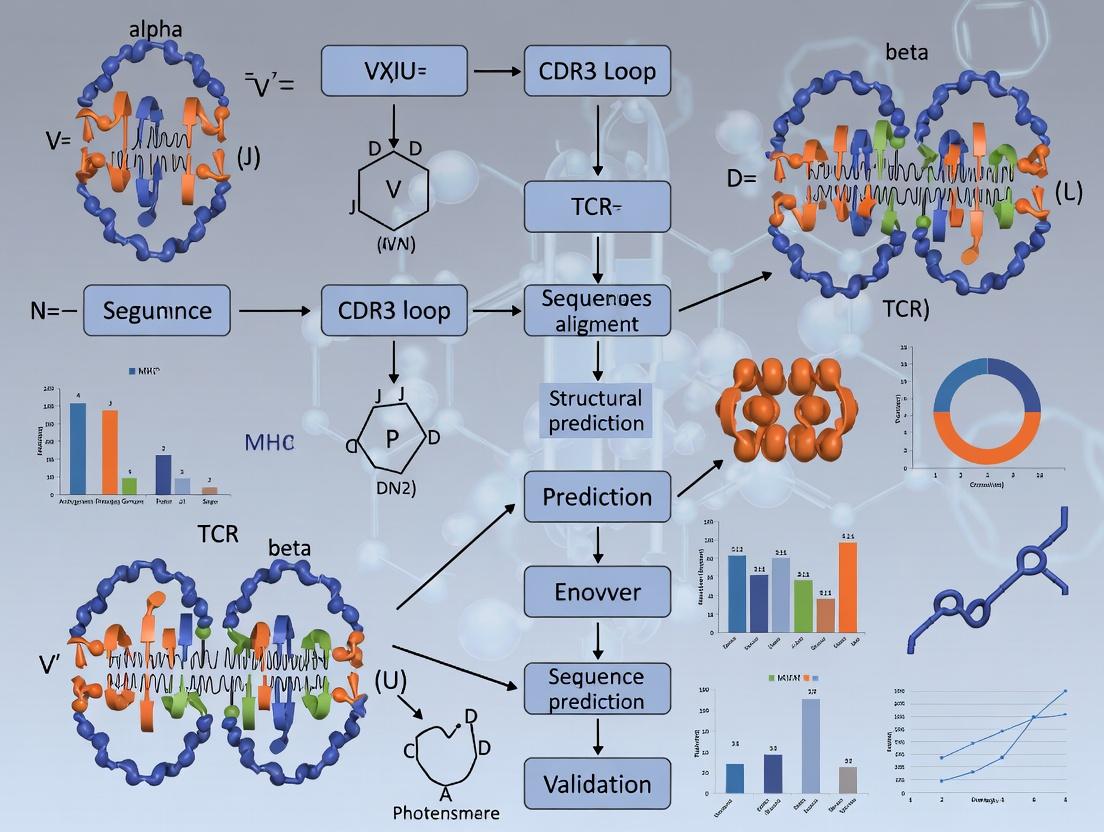
This article provides a comprehensive analysis of the central challenge in T-cell receptor (TCR) structural biology: accurately modeling the hypervariable CDR3 loops.
Decoding TCR Complexities: The Critical Challenge of CDR3 Loop Modeling in Structural Immunology
Abstract
This article provides a comprehensive analysis of the central challenge in T-cell receptor (TCR) structural biology: accurately modeling the hypervariable CDR3 loops. We first explore the foundational biological and structural principles that make CDR3 uniquely difficult to predict. We then review current computational and experimental methodologies for loop modeling, including machine learning approaches and hybrid techniques. The article details common pitfalls in structural prediction and optimization strategies to enhance model accuracy. Finally, we compare and validate different modeling approaches against experimental structures and discuss the implications for immunology research and therapeutic development, including TCR-based therapeutics and vaccine design.
The CDR3 Conundrum: Why This Hypervariable Loop Defies Simple Structural Prediction
Troubleshooting Guides & FAQs
FAQ 1: My computational model of the TCR-pMHC interaction shows poor binding affinity, inconsistent with experimental SPR data. What could be the source of error?
- Answer: This is a common challenge in CDR3 loop modeling. The discrepancy often stems from inaccurate conformational sampling of the hypervariable CDR3 loops, especially the TCRβ CDR3. Ensure your modeling protocol includes:
- Advanced Loop Sampling: Use methods like Rosetta's
KIC(Kinematic Closure) orCDR H3 loop modeling protocolrather than standard homology modeling for the CDR3 regions. - Membrane Proximal Considerations: Remember that the membrane-proximal constant domains (Cα and Cβ) can influence orientation. If modeling a full TCR, include these domains with appropriate restraints.
- Solvent & Electrostatics: Use explicit solvent molecular dynamics (MD) simulations for refinement, as implicit models often fail to capture key water-mediated hydrogen bonds crucial for specificity.
- Advanced Loop Sampling: Use methods like Rosetta's
FAQ 2: During phage display library screening for TCR mimic antibodies, I get high background binding. How can I improve specificity for the TCR-pMHC complex?
- Answer: High background usually indicates selection for epitopes on the individual TCR or pMHC components rather than the complex-specific neo-epitope.
- Solution: Implement a "Deselection" or "Subtractive Panning" step. Prior to positive selection against the target TCR-pMHC complex, pre-incubate your phage library on plates coated with:
- The same MHC loaded with an irrelevant peptide.
- The target TCR alone (if soluble).
- Protocol Enhancement: Use "Solution Panning" where the biotinylated target complex is in solution, then captured on streptavidin beads. This better preserves the native conformation and reduces selection for denatured protein epitopes common on passively adsorbed plates.
- Solution: Implement a "Deselection" or "Subtractive Panning" step. Prior to positive selection against the target TCR-pMHC complex, pre-incubate your phage library on plates coated with:
FAQ 3: My SPR sensogram for TCR-pMHC binding shows a fast off-rate (kd), making steady-state affinity analysis difficult. What experimental adjustments can I make?
- Answer: This is typical for low-affinity TCR interactions (Kd in µM range). To improve data quality:
- Increase Ligand Density: Immobilize a higher density of pMHC on the chip surface (if using capture coupling) to enhance the signal. However, avoid mass transport limitations.
- Optimize Flow Rate: Use a higher flow rate (e.g., 50-70 µL/min) to minimize rebinding effects that can distort kinetic analysis for fast-dissociating interactions.
- Data Collection Parameters: Use a longer dissociation phase (at least 600 seconds) to reliably fit the off-rate. Consider single-cycle kinetics if you have limited sample.
- Negative Control: Always subtract the response from a reference flow cell with irrelevant pMHC or empty MHC.
FAQ 4: When attempting to express soluble, stable TCRs in mammalian cells for structural studies, I encounter issues with low yield or protein aggregation. How can I troubleshoot this?
- Answer: TCR stability is a major hurdle. Follow this systematic approach:
- Interchain Disulfide Bond: Ensure you are using the
TRAV-TRBVconstant region construct with the native, stabilizing interchain disulfide bond (e.g., TCR Cα:Cβ modifications likeT48Cor using mouse constant domains). - Promoter & System: Use a strong promoter (CMV) in a system like HEK293F or Expi293F for transient expression. Co-transfect with a
pAdvantageplasmid (which provides adenovirus genes) to boost protein yields in HEK293 cells. - Purification Tags: Use a dual-tag system (e.g., His-tag for initial IMAC purification and Strep-tag II for a gentle, high-specificity second step) to obtain pure, monodisperse protein.
- Add Chaperones: Include plasmid vectors expressing chaperone proteins (like E. coli
GroEL-GroESor humanBiP) during co-transfection to improve folding.
- Interchain Disulfide Bond: Ensure you are using the
Key Experimental Protocols
Protocol 1: Molecular Dynamics Simulation for CDR3 Loop Conformational Sampling
Objective: To refine a homology model of a TCR-pMHC complex and assess CDR3 loop dynamics.
Methodology:
- System Preparation: Take your initial TCR-pMHC model. Use a tool like
CHARMM-GUIto solvate the complex in a TIP3P water box (10 Å padding). Add 150mM NaCl to neutralize and mimic physiological conditions. - Energy Minimization: Perform 5,000 steps of steepest descent minimization to remove bad contacts.
- Equilibration: Conduct a two-stage equilibration under NVT (constant Number, Volume, Temperature) and NPT (constant Number, Pressure, Temperature) ensembles for 250ps each, gradually releasing restraints on the protein backbone.
- Production Run: Run an unrestrained MD simulation for 100-500 ns using a GPU-accelerated engine like
AMBER,GROMACS, orNAMD. Use a 2-fs time step. Save coordinates every 10-100 ps. - Analysis: Cluster the trajectories (e.g., using
GROMACSgmx cluster) to identify dominant conformations of the CDR3 loops. Calculate root-mean-square fluctuation (RMSF) to determine loop flexibility.
Protocol 2: Surface Plasmon Resonance (SPR) Analysis of TCR-pMHC Binding Kinetics
Objective: To determine the kinetic rate constants (ka, kd) and equilibrium affinity (KD) of a soluble TCR for its cognate pMHC.
Methodology:
- Ligand Immobilization: Dilute biotinylated pMHC to 0.5-5 µg/mL in HBS-EP+ buffer (10mM HEPES, 150mM NaCl, 3mM EDTA, 0.05% v/v Surfactant P20, pH 7.4). Inject over a Series S Sensor Chip SA (streptavidin) at 5 µL/min for 60-600 seconds to achieve a capture level of 50-150 Response Units (RU).
- Analyte Series: Prepare 2-fold serial dilutions of the soluble TCR in HBS-EP+ buffer (e.g., from 0.5 µM to 3.9 nM). Include a zero-concentration (buffer) sample for double-referencing.
- Binding Cycle: Run samples at a flow rate of 30 µL/min. Use a 60-120 second association phase, followed by a 300-900 second dissociation phase. Regenerate the surface with two 30-second pulses of 10mM Glycine-HCl, pH 1.5.
- Data Fitting: Subtract the reference flow cell and buffer injection responses. Fit the resulting sensograms globally to a 1:1 Langmuir binding model using the Biacore Evaluation Software or similar.
Data Presentation
Table 1: Comparison of Computational Methods for TCR CDR3 Loop Modeling
| Method | Principle | Typical Use Case | Accuracy (RMSD) | Computational Cost |
|---|---|---|---|---|
| Homology Modeling | Aligns target sequence to a known template structure. | Initial model building for framework and some CDRs. | >2.5 Å for CDR3 | Low |
| Ab Initio Loop Modeling | Samples conformational space without a template. | Modeling highly divergent CDR3 loops. | 1.5 - 3.0 Å | Very High |
| Kinematic Closure (KIC) | Analytically closes the protein backbone loop. | De novo prediction of CDR H3/L3 lengths. | 1.0 - 2.5 Å | Medium-High |
| Molecular Dynamics (MD) | Simulates physical movements of atoms over time. | Refining models, assessing dynamics & stability. | Can improve initial model by 0.5-1.5 Å | Extremely High |
Visualizations
Title: Workflow for Computational Modeling of TCR CDR3-pMHC Interaction
Title: Core TCR Signaling Pathway Upon Antigen Recognition
The Scientist's Toolkit: Research Reagent Solutions
Table 2: Essential Reagents for TCR-pMHC Interaction Studies
| Item | Function & Application | Example/Notes |
|---|---|---|
| Soluble TCR (Mouse Constant Domains) | Provides stability for expression. Used in SPR, crystallography, and functional assays. | Construct with murine Cα/Cβ and stabilizing disulfide bond (T48C). |
| Biotinylated pMHC Monomers | For SPR ligand capture or tetramer staining. Ensures correct orientation. | UV-exchangeable peptide MHCs allow for rapid epitope screening. |
| Anti-Cβ Antibody (Jovi.1) | Used for immunoprecipitation or Western blotting of human TCRβ chain. | Conformation-dependent, detects properly folded TCR. |
| TCR Mimic (TCRm) Antibodies | Binds specific pMHC complexes. Used as staining reagents, for imaging, or as therapeutic scaffolds. | Discovered via phage display against specific TCR-pMHC. |
| MHC Tetramers (pMHC Multimers) | Stains antigen-specific T cells for flow cytometry. Critical for validating TCR specificity. | Can be PE, APC, or BV421 conjugated. Include dextramer variants for low-affinity TCRs. |
| HEK293F/Expi293F Cells | Mammalian expression system for high-yield production of soluble, glycosylated TCR and pMHC proteins. | Transient transfection, serum-free suspension culture. |
| Streptavidin Sensor Chip (SA) | SPR chip for capturing biotinylated pMHC ligand. Gold standard for kinetic studies. | Series S Sensor Chip SA (Cytiva). |
Troubleshooting Guide & FAQs
Q1: My homology model of a TCR-pMHC complex shows unrealistic steric clashes in the CDR3β loop. What are the primary causes and how can I address this?
A: This is a common issue due to CDR3's hypervariability and conformational plasticity. Causes include:
- Template Selection Error: Using a template with a CDR3 length or sequence dissimilarity >40% can introduce major structural errors.
- Incorrect Loop Modeling: Standard homology modeling servers often fail to accurately predict CDR3 conformations.
- Lack of Explicit Solvent in Docking: The CDR3 loop, especially in
β, is highly solvated and flexible.
Protocol for Refinement:
- Re-model the CDR3 region using a specialized tool like
RosettaAntibodyorFREADfor loop conformation prediction, using only templates with identical CDR3 length. - Perform constrained molecular dynamics (MD) simulation.
- System Setup: Solvate the model in a TIP3P water box with 150 mM NaCl.
- Restraints: Apply positional restraints (force constant 10 kcal/mol/Ų) to all atoms except the CDR3 loops.
- Production Run: Run a 100 ns simulation using AMBER or CHARMM. Analyze the last 50 ns for stable cluster centroids.
- Use the most populated cluster centroid from MD as your refined model.
Q2: During analysis of TCR repertoire sequencing data, how do I accurately classify a CDR3 sequence as "highly divergent" when length varies dramatically?
A: Length diversity complicates sequence alignment. Relying solely on edit distance (e.g., Levenshtein) is insufficient.
Protocol for CDR3 Length-Normalized Divergence Scoring:
- Define the CDR3 Region: Extract sequences using the IMGT-defined anchors (104-118 for α, 105-117 for β).
- Calculate Normalized Distance:
- Use the Alakazam R package. Calculate the
aaDistancematrix using the BLOSUM62 substitution matrix. - Normalize the raw divergence score by the length of the longer sequence to obtain a score between 0 (identical) and 1 (maximally different).
- A sequence with a normalized divergence >0.65 from the germline can typically be classified as highly divergent.
- Use the Alakazam R package. Calculate the
- Visualize: Use length-vs-divergence scatter plots to identify outliers.
Q3: When attempting to crystallize a TCR, the CDR3 loops appear disordered in electron density maps. What experimental strategies can improve stability and ordering?
A: Conformational plasticity leads to inherent flexibility, causing disorder.
Protocol for Stabilization for Crystallography:
- Generate a pMHC-Stabilized Complex: Co-express and purify your TCR with its cognate pMHC. The binding interface often rigidifies the CDR3 loops.
- Consider Construct Engineering:
- Loop Truncation: If a loop is exceptionally long (>15 aa), consider screening variants with 1-2 residue truncations.
- Introduction of a Disulfide Bond (Stapling): Use computational design (e.g., Disulfide by Design 2.0) to identify residue pairs in the CDR3 loop framework suitable for introducing a stabilizing disulfide bond without affecting antigen binding.
- Crystallization Screen: Use high concentration (e.g., 25% PEG 3350) and cryo-conditions (e.g., 20% glycerol) in the mother liquor to reduce loop mobility.
Q4: In functional assays, how can I directly test the contribution of CDR3 conformational plasticity to TCR signaling potency?
A: Compare rigid vs. wild-type flexible CDR3.
Protocol for Conformational Contribution Assay:
- Design Mutants: Create TCR mutants with CDR3 loop conformational flexibility reduced via "rigidifying" point mutations (e.g., introduce prolines or alanines to reduce backbone dihedral angles) or the disulfide staple from Q3.
- Express TCRs: Use a lentiviral system to express wild-type and rigidified TCRs in a TCR-deficient Jurkat cell line (e.g., JRT3-T3.5).
- Functional Readout: Stimulate cells with titrated doses of antigen-presenting cells.
- Assay 1: Measure early signaling (phosphorylation of CD3ζ, ZAP70, or ERK) via phospho-flow cytometry at 5, 15, and 30 minutes.
- Assay 2: Measure late signaling (NFAT/IL-2 reporter activation or CD69 upregulation) at 18-24 hours.
- Analyze: Compare EC₅₀ and maximum signal amplitude (efficacy) between wild-type and rigidified TCRs. A significant reduction in efficacy for the rigidified mutant indicates a functional role for plasticity.
Table 1: CDR3 Length Distribution in Human TCR Repertoires (Adaptive Immune Receptor Repertoire (AIRR) Data)
| TCR Chain | Mean Length (aa) | Standard Deviation | Observed Range (aa) | Most Common Length (aa) |
|---|---|---|---|---|
| TCR α | 13.2 | ± 2.1 | 5 - 22 | 12 |
| TCR β | 13.8 | ± 1.9 | 6 - 20 | 14 |
Table 2: Impact of CDR3β Loop Length on TCR-pMHC Binding Affinity (Surface Plasmon Resonance)
| CDR3β Length (aa) | Mean KD (μM) | ΔG (kcal/mol) | On-rate, ka (1/Ms) | Off-rate, kd (1/s) | Notes |
|---|---|---|---|---|---|
| Short (8-10) | 15.2 ± 3.1 | -6.9 ± 0.2 | 1.2e4 ± 0.3e4 | 0.18 ± 0.04 | Often weaker, rigid binding. |
| Average (12-14) | 8.7 ± 2.5 | -7.5 ± 0.3 | 2.8e4 ± 0.8e4 | 0.24 ± 0.07 | Optimal for docking. |
| Long (16-18) | 25.1 ± 8.4 | -6.4 ± 0.5 | 0.9e4 ± 0.4e4 | 0.22 ± 0.09 | High entropic cost, often flexible. |
Experimental Protocol: Assessing CDR3 Conformational Plasticity via Hydrogen-Deuterium Exchange Mass Spectrometry (HDX-MS)
Objective: To map the conformational dynamics and solvent accessibility of CDR3 loops in the apo-TCR state versus the pMHC-bound state.
Materials:
- Purified TCR protein (>95% purity, 50 µM in PBS pH 7.4).
- Purified cognate pMHC complex.
- Deuterated buffer (PBS in D₂O, pD 7.0).
- Quench buffer (4 M Urea, 0.1% TFA, 0°C).
- Immobilized pepsin/aspergillopepsin column.
- UPLC system coupled to high-resolution mass spectrometer.
Method:
- Labeling Reaction: Mix 5 µL of TCR (alone or pre-incubated with 1.2x molar excess of pMHC for 1 hr) with 55 µL of deuterated buffer. Incubate at 25°C for 10s, 30s, 1min, 5min, and 20min.
- Quenching: At each time point, transfer 50 µL of reaction to 50 µL of pre-chilled quench buffer (0°C) to reduce pH to 2.5.
- Digestion & Analysis: Inject quenched sample onto immobilized protease column at 0°C. Digest peptides are trapped and desalted, then separated by UPLC (8 min gradient) and analyzed by MS.
- Data Processing: Use software (e.g., HDExaminer) to identify peptides and calculate deuterium uptake for each time point. Peptides covering the CDR3 loops will show decreased deuterium uptake upon pMHC binding, indicating stabilization and reduced solvent accessibility.
Visualization
Diagram 1: Workflow for Computational Modeling of a TCR CDR3 Loop
Diagram 2: HDX-MS Protocol for CDR3 Plasticity Measurement
The Scientist's Toolkit: Key Research Reagent Solutions
| Item | Function in CDR3 Research | Example / Notes |
|---|---|---|
| TCR-Expressing Jurkat Cell Line | A consistent cellular background for functional assays of CDR3 mutant signaling. | J.RT3-T3.5 (TCR α/β deficient). Lentiviral transduction ensures stable, uniform expression. |
| BLOSUM62 Substitution Matrix | The standard matrix for scoring amino acid substitutions in CDR3 sequence alignment and divergence calculations. | Used in tools like Alakazam and IgBLAST. Critical for normalized distance metrics. |
| PEG 3350 (High Conc.) | A common precipitant in crystallization screens that can dampen CDR3 loop flexibility via molecular crowding. | Used at 20-30% concentration to promote crystal lattice formation of flexible proteins. |
| Immobilized Pepsin Column | Enables rapid, reproducible digestion for HDX-MS under quenched (low pH, low temp) conditions to measure backbone solvent accessibility. | Poroszyme immobilized pepsin cartridge. Allows automation and minimizes back-exchange. |
| RosettaAntibody Software Suite | Specialized computational suite for antibody and TCR modeling, with protocols specifically for hypervariable loop remodeling. | The loop_model protocol is preferred over standard homology modeling for CDR3. |
| NFAT Reporter Plasmid | A sensitive, transcriptional readout for integrated TCR signaling strength following CDR3 engagement. | Co-transfected with TCR. Luciferase signal correlates with activation driven by CDR3-pMHC interaction. |
Technical Support Center
Troubleshooting Guide: Common CDR3 Loop Modeling Issues
Issue 1: Poor Model Quality Despite Template Use
- Symptoms: High RMSD after refinement, poor Ramachandran plot statistics, clashes in the binding interface.
- Likely Cause: Inappropriate template selection due to high CDR3 sequence variability and conformational flexibility.
- Solution: Prioritize ab initio or loop modeling protocols over template-based methods for the CDR3 region. Use multiple algorithms (e.g., Rosetta, MODELLER loop refinement) and select the final model via consensus and energy scoring.
Issue 2: Failure in Docking TCR-pMHC Complexes
- Symptoms: Unrealistic binding orientation, failure to recognize known key residues, low Z-scores in docking predictions.
- Likely Cause: Inaccurate CDR3 loop conformation leading to incorrect paratope surface geometry.
- Solution: Incorporate experimental constraints (e.g., mutagenesis data, cross-linking MS distances) into the modeling and docking process. Perform flexible docking or use multi-conformational ensembles.
Issue 3: High B-Factors in Refined Models
- Symptoms: High temperature factors localized to the CDR3 loop in crystallographic or cryo-EM refinement.
- Likely Cause: The model is reflecting true biological flexibility; forcing it into a single, rigid conformation is incorrect.
- Solution: Model and refine an ensemble of CDR3 conformations. Use multi-conformer deposition in the PDB if supported by density.
Frequently Asked Questions (FAQs)
Q1: Why is the CDR3 region of TCRs particularly challenging to model compared to antibody CDRs? A: TCR CDR3 loops, especially CDR3β, exhibit extraordinary length diversity and conformational plasticity. Unlike antibodies, they lack a conserved "canonical" structural template library due to the unique genetics of V(D)J recombination in TCRs and the need to recognize a vast array of peptide-MHC complexes.
Q2: What is the current best computational strategy for modeling a TCR CDR3 loop de novo? A: A hybrid multi-algorithm approach is recommended. Current benchmarks suggest using:
- AlphaFold2 or RoseTTAFold for an initial full-chain prediction (providing a strong framework).
- Specialized loop modeling (e.g., with Rosetta's
nextgen_KIC) on the CDR3 region, seeded from the AF2 model. - Molecular Dynamics (MD) simulation to relax and sample conformational space.
- Selection based on a combination of energy scores, clash scores, and agreement with any sparse experimental data.
Q3: Are there any successful examples of drug discovery targeting the TCR CDR3 loop? A: Yes, this is an emerging area. Bispecific T-cell engagers (TCEs) and TCR-mimic antibodies sometimes target the peptide-MHC complex. Accurate CDR3 modeling is critical for understanding off-target cross-reactivity. For instance, modeling was crucial in analyzing the affinity and specificity of engineered TCRs used in cellular therapies.
Q4: What experimental data can I incorporate to constrain my CDR3 model? A: Even low-resolution or sparse data is invaluable:
- Hydrogen-Deuterium Exchange Mass Spectrometry (HDX-MS): Identifies flexible vs. protected regions.
- Cross-linking Mass Spectrometry (XL-MS): Provides distance restraints.
- Site-directed mutagenesis: Loss-of-function data identifies critical residues for binding.
- Low-resolution Cryo-EM maps: Can guide the overall docking orientation.
Table 1: Performance of Modeling Methods on TCR CDR3 Loops (RMSD in Å)
| Method Type | Average CDR3 Loop RMSD (Å) | Key Limitation | Best Use Case |
|---|---|---|---|
| Standard Homology | 4.5 - 8.2 | Requires high-sequence identity template | Conserved regions (β-sheet framework) |
| Ab Initio (Rosetta) | 2.1 - 3.8 | Computationally expensive, variable success | De novo loop prediction |
| Deep Learning (AF2) | 1.5 - 2.5 | Can over-stabilize, under-sample flexibility | Initial full-structure prediction |
| Hybrid (AF2+MD) | 1.8 - 2.8 + Ensemble | Requires significant compute for MD | Producing conformational ensembles |
Table 2: Impact of CDR3 Length on Modeling Difficulty
| CDR3β Loop Length (residues) | Prevalence in Human TCRs | Median Model RMSD (Å) | Modeling Success Rate (<3.0 Å) |
|---|---|---|---|
| 5 - 8 | ~15% | 1.9 | 92% |
| 9 - 12 | ~55% | 2.4 | 78% |
| 13 - 16 | ~25% | 3.2 | 51% |
| 17+ | ~5% | 4.8 | <22% |
Experimental Protocols
Protocol 1: Integrative Modeling of a TCR-pMHC Complex Using Sparse Data
- Data Collection: Gather available data (sequence, homologs >30% identity, HDX-MS protection regions, 1-3 key distance restraints from mutagenesis/XL-MS).
- Initial Structure Generation:
- Run AlphaFold2 in multimer mode for the TCRαβ and pMHC components separately.
- Extract the top-ranked model.
- CDR3 Refinement:
- Isolate the CDR3 loops. Use the
loopmodelapplication in Rosetta or MODELLER with the experimental distance restraints applied as harmonic constraints. - Generate 1,000+ decoy models.
- Isolate the CDR3 loops. Use the
- Docking:
- Perform rigid-body docking of the refined TCR model to pMHC using ZDOCK or HADDOCK, guided by known binding geometry (TCR Vα/Vβ over MHC α1/α2 helices).
- Use the provided restraints to filter docking poses.
- Ensemble Selection & Validation:
- Cluster the top 100 models by interface RMSD.
- Select the centroid of the largest cluster as the representative model.
- Validate using MolProbity and calculate agreement with input restraints.
Protocol 2: Characterizing CDR3 Flexibility via Molecular Dynamics
- System Preparation:
- Place your TCR-pMHC model in a solvated lipid bilayer or water box using CHARMM-GUI or LEaP.
- Add ions to neutralize charge.
- Simulation Setup:
- Use AMBER, CHARMM, or GROMACS. Employ the appropriate force field (e.g., CHARMM36m).
- Minimize energy, then heat the system to 310 K over 100 ps with backbone restraints.
- Equilibrate with gradually reduced restraints (1 ns).
- Production Run & Analysis:
- Run an unrestrained production simulation for 500 ns - 1 µs (replicate runs are ideal).
- Analyze:
- Root Mean Square Fluctuation (RMSF) per residue to map flexibility.
- Cluster CDR3 loop conformations.
- Calculate distances between key residues to identify stable vs. dynamic interactions.
Visualizations
Title: Integrative TCR Modeling Workflow
Title: Ab Initio CDR3 Loop Refinement Cycle
The Scientist's Toolkit: Research Reagent Solutions
Table 3: Essential Reagents & Materials for TCR Structural Biology
| Item | Function & Application |
|---|---|
| HEK 293F Cells | Mammalian expression system for producing properly folded, glycosylated TCR and MHC proteins for structural studies. |
| Biotinylated Peptide | For loading onto MHC and subsequent immobilization on streptavidin-coated surfaces (e.g., SPR chips, cryo-EM grids). |
| Streptavidin Coated Chip | Surface Plasmon Resonance (SPR) sensor chip for measuring TCR-pMHC binding kinetics and affinity. |
| Size Exclusion Columns | FPLC purification of monodisperse, stable TCR-pMHC complexes for crystallization or cryo-EM. |
| Lipid Cubic Phase Kit | For crystallizing membrane-proximal TCR constructs or TCR in complex with lipid antigens (e.g., CD1d). |
| GraFix Sucrose Gradient Kit | Gradient fixation for stabilizing weak complexes and improving particle homogeneity for single-particle cryo-EM. |
| Deuterium Oxide (D₂O) | Essential for Hydrogen-Deuterium Exchange Mass Spectrometry (HDX-MS) to probe solvent accessibility and flexibility. |
| Cross-linkers (BS3, DSS) | For covalent cross-linking of interacting proteins, followed by MS to obtain distance restraints for modeling. |
Impact of CDR3 Modeling Inaccuracies on Understanding TCR-pMHC Interactions
Technical Support Center
Frequently Asked Questions (FAQs)
Q1: My TCR-pMHC docking simulations consistently yield poor binding energy scores, even with structurally validated pMHC. Could this be due to CDR3 loop modeling? A1: Yes, this is a common issue. Inaccuracies in the CDR3β loop, particularly the "arch" or "crown" conformation, can cause severe steric clashes or prevent key residue contacts with the MHC peptide. We recommend:
- First, validate your CDR3 loop generation protocol using a known crystal structure as a benchmark.
- Use multiple template-based and ab initio modeling tools (e.g., MODELLER, Rosetta, AlphaFold2) and compare the ensemble.
- Pay special attention to the orientation of aromatic residues (e.g., Trp, Phe) in the CDR3 apex. A deviation of >2 Å in their side chain centroid can negate a critical interaction.
Q2: How do I know if my predicted CDR3 loop conformation is "incorrect" versus a legitimate but rare structural motif? A2: This requires a multi-faceted validation approach.
- Energy-based: Check the Ramachandran plot and clash score of the model. An overall MolProbity score >2.0 warrants suspicion.
- Evolutionary: Perform a BLAST search of the CDR3 sequence against the PDB. While exact matches are rare, known structural motifs for similar sequences provide support.
- Experimental cross-reference: If available, compare with mutagenesis data. Does your model correctly predict which alanine mutations abolish binding? If not, the loop geometry is likely wrong.
Q3: After generating a TCR model, which specific steps should I take to minimize CDR3-driven errors before proceeding to molecular dynamics (MD) simulations? A3: Implement this pre-MD checklist:
- Refine the CDR3 region with focused loop remodeling (e.g., using Rosetta loopmodel).
- Perform a short, restrained minimization (500-1000 steps) with strong harmonic constraints on the TCR framework and pMHC, allowing only the CDR loops to relax. This removes initial clashes.
- Manually inspect the hydrogen-bonding network between the CDR3 and the peptide's central residues. Use a distance cutoff of 3.5 Å for donor-acceptor pairs.
Q4: Why does a small RMSD in the CDR3 backbone still lead to a significant difference in binding affinity prediction? A4: TCR recognition is exquisitely sensitive to side chain chemistry and orientation. A low backbone RMSD (<1.0 Å) can mask critical side chain rotamer errors. The table below summarizes how specific inaccuracies affect predictions.
Table 1: Quantitative Impact of CDR3 Modeling Errors on Binding Predictions
| Type of CDR3 Error | Typical RMSD Range | Impact on Predicted ∆G (kcal/mol) | Primary Consequence |
|---|---|---|---|
| Side Chain Rotamer Mispacking | Backbone: 0.5-1.0 Å, Side Chain: >120° rotation | +2.5 to +5.0 (False negative) | Loss of key van der Waals contacts or H-bonds. |
| Loop Apex Translation | Backbone: 2.0-4.0 Å | +3.0 to >+6.0 (False negative) | Complete failure to engage peptide central residues. |
| Erroneous Bulge or Kink | Backbone: 3.0-6.0 Å | Variable, can artificially improve score (False positive) | Non-biological contacts create "phantom" affinity. |
| Framework-CDR3 Junction Misfolding | Backbone: >4.0 Å | Simulation often fails | Alters the entire docking angle (Vernier zone effect). |
Troubleshooting Guides
Issue: Failure to Reproduce Experimental Binding Affinity via In Silico Alanine Scanning Symptoms: Computational alanine scanning on your model does not identify the same critical residues as wet-lab mutagenesis experiments. Diagnosis: The CDR3 loop conformation is likely incorrect, placing side chains in the wrong chemical context. Resolution Protocol:
- Extract the peptide epitope and the problematic CDR3 loop from your model.
- Using HADDOCK or ClusPro, perform a local re-docking of just this CDR3 loop onto the peptide, allowing full flexibility.
- Cluster the results and select the top cluster centroid. Manually graft this refined loop conformation back into the full TCR-pMHC complex.
- Re-run the alanine scan. If the results now align with experiment, the original CDR3 geometry was the source of error.
Issue: Unstable TCR-pMHC Complex During Molecular Dynamics (MD) Simulation Symptoms: Rapid (>20 ns) increase in backbone RMSD, separation of the TCR from the pMHC, or unfolding of the CDR3 loop. Diagnosis: The initial model has structural instabilities, often from strained CDR3 loop conformations or unresolved clashes. Resolution Protocol:
- Run a short (5 ns) MD simulation in implicit solvent (GBSA) with heavy positional restraints (force constant 1000 kJ/mol/nm²) on all atoms except the CDR loops.
- Analyze the root-mean-square fluctuation (RMSF) of the unrestrained CDR loops. Peaks >3.0 Å indicate highly unstable regions.
- Take the most stable snapshot (lowest overall energy) from this short run and use it as the new starting structure for your production MD.
- Consider applying gentle backbone restraints (10-50 kJ/mol/nm²) to the CDR3 loop during the first 50 ns of production MD to allow gradual equilibration.
Experimental Protocols Cited
Protocol 1: Benchmarking CDR3 Modeling Tools Using Known Crystal Structures Objective: To evaluate the accuracy of different modeling approaches for predicting CDR3 loop conformation. Methodology:
- Dataset Curation: Select 10 high-resolution (<2.2 Å) TCR-pMHC crystal structures from the PDB. Ensure diversity in CDR3 length (8-15 residues) and sequence.
- Target Omission: For each structure, delete the CDR3α and CDR3β loops from the TCR, creating an "incomplete" receptor.
- Loop Modeling: Use the incomplete receptor and the full pMHC as input to generate CDR3 loops using:
- Template-based: MODELLER using the DOPE-HR score.
- Ab initio: Rosetta Antibody module with loopmodel protocol (1000 decoys).
- Deep Learning: AlphaFold2-Multimer (localcolabfold) with 5 model recycles.
- Analysis: Superimpose the framework regions and calculate the backbone RMSD of the predicted vs. crystal CDR3 loops. Record success rate (RMSD < 2.0 Å).
Protocol 2: Validating Models with Functional Mutagenesis Data Objective: To assess whether a computational model can predict the functional impact of known alanine mutations. Methodology:
- Data Integration: Compile a list of single-point alanine mutations in the CDR3 loops that are known to reduce (∆∆G > 1.0 kcal/mol) or abolish TCR binding.
- In Silico Mutagenesis: For each mutation, generate the mutant structure using SCWRL4 or Rosetta ddg_monomer to optimize side chain packing.
- Binding Affinity Calculation: Perform MM-GBSA calculations on both the wild-type and mutant model using AMBER or NAMD. Run triplicate simulations of 20 ns each, extracting the last 15 ns for analysis.
- Validation: Calculate the computational ∆∆G. A successful model will show a strong rank correlation (Spearman rho > 0.7) between the computational and experimental ∆∆G values for the mutations.
Visualizations
Diagram 1: Workflow for Troubleshooting CDR3 Modeling Errors
Diagram 2: CDR3 Error Consequences on TCR-pMHC Interface
The Scientist's Toolkit: Research Reagent Solutions
Table 2: Essential Materials for CDR3 & TCR-pMHC Interaction Studies
| Item / Reagent | Function & Application |
|---|---|
| Rosetta Software Suite | For ab initio CDR loop modeling (loopmodel), protein-protein docking, and computational alanine scanning (∆∆G calculations). |
| AlphaFold2-Multimer (ColabFold) | Provides a state-of-the-art deep learning baseline model for the full TCR-pMHC complex, useful as a starting point for refinement. |
| HADDOCK 2.4 | Flexible docking platform ideal for locally re-docking a flexible CDR3 loop onto a fixed pMHC target during troubleshooting. |
| AMBER or CHARMM Force Fields | Standard, well-validated molecular mechanics force fields for running MD simulations and MM-GBSA/PBSA binding free energy calculations. |
| PyMOL or ChimeraX | For visual inspection, model manipulation, RMSD calculation, and figure generation. Critical for manual validation of loop geometry. |
| MODBASE Database | Repository for comparative protein structure models, useful for finding homologous templates for TCR framework regions. |
| Immune Epitope Database (IEDB) | Source of curated experimental data on TCR epitopes and MHC binding, essential for validating model predictions against real-world data. |
State-of-the-Art Techniques: Computational and Experimental Strategies for CDR3 Modeling
Troubleshooting Guides & FAQs for CDR3 Loop Modeling in TCR Research
This technical support center addresses common challenges encountered when using comparative (template-based) modeling for T-cell receptor (TCR) structures, with a focus on the highly variable CDR3 loops critical for antigen recognition.
FAQ 1: Why does my comparative model show poor structural alignment in the CDR3 loop region despite high overall template sequence identity?
Answer: The CDR3 loops, particularly the CDR3β loop, are the most hypervariable regions in TCRs, both in sequence and length. High overall sequence identity with a template does not guarantee CDR3 structural conservation. This region often adopts unique conformations not present in existing structural databases.
- Troubleshooting Steps:
- Verify Template Suitability: Use the CDR3 loop length (number of residues) as a primary filter when selecting templates. A loop length mismatch >2 residues often renders a template unsuitable for CDR3 modeling via standard comparative methods.
- Segmented Modeling Approach: Model the TCR framework (all regions except CDR3) using your high-identity template. Then, model the CDR3 loop separately using a specialized protocol (see Protocol 1 below).
- Check for Canonical Structures: CDR1 and CDR2 loops often belong to canonical structural classes. CDR3 loops do not, making them the primary source of modeling error.
FAQ 2: How do I handle CDR3 loop modeling when no suitable template with a similar loop length is available in the PDB?
Answer: This is a core limitation of strict template-based approaches. When no template with a similar CDR3 loop exists, you must employ de novo or hybrid ab initio/loop modeling methods for that specific region.
- Troubleshooting Steps:
- Utilize Hybrid Modeling: Use a comparative modeler (e.g., MODELLER, Swiss-Model) for the framework, and a dedicated loop prediction server (e.g., RosettaAntibody, FREAD, or AlphaFold2’s local installation for a specific region) for the CDR3.
- Generate Multiple Decoys: Always generate an ensemble of 100-1000 CDR3 loop conformations. Clustering is essential to identify the most stable, low-energy conformations.
- Apply Biophysical Filters: Filter generated loop models using steric clash checks, favorable rotamer distributions, and knowledge-based potential scores. Docking with a known pMHC (if available) can provide a critical functional filter.
FAQ 3: After generating a model, what are the key validation metrics I should check before proceeding to experimental validation or docking studies?
Answer: Relying solely on global model scores can be misleading for TCRs. You must perform region-specific validation.
- Troubleshooting Steps: Use the following table to assess your model.
Table 1: Essential Validation Metrics for TCR Comparative Models
| Metric | Tool/Software | Acceptable Range for TCRs | Focus Area | Reason |
|---|---|---|---|---|
| MolProbity Score | MolProbity Server | < 2.0 (Better: < 1.5) | Overall Model | Evaluates steric clashes, rotamer outliers, and Ramachandran favorability. |
| Ramachandran Favored (%) | MolProbity, PROCHECK | > 95% (CDR3 > 85%) | Overall, esp. CDR3 | Lower % in CDR3 may be acceptable due to its irregularity. |
| Rotamer Outliers (%) | MolProbity | < 1.0% | Framework | Framework should have very few outliers. CDR3 is less constrained. |
| Clashscore | MolProbity | < 10 | Interface, CDR3 | Ensures no severe atomic overlaps, especially at the CDR3-pMHC interface. |
| DOPE Score (Z-score) | MODELLER | Negative, lower is better | Overall Model | Statistical potential for model assessment. Compare multiple models. |
| CDR Loop RMSD | PyMOL/Chimera | Framework: <1.0Å; CDR3: Variable | CDR3 vs. Template | High CDR3 RMSD expected. Assess if the germline-encoded CDR1/2 loops are well-modeled. |
Experimental Protocols for Key Validation Steps
Protocol 1: Hybrid CDR3 Loop Modeling Using MODELLER and Ab Initio Sampling
Objective: To model a TCR structure using a framework template and generate plausible CDR3 loop conformations.
Materials: See "Research Reagent Solutions" table below.
Method:
- Sequence Alignment & Template Selection: Align your TCR α and β chain sequences against the PDB using BLAST. Select a template based on framework identity and V/J gene family match, not overall identity. Note the CDR3 loop boundaries (Chothia definition).
- Framework Modeling: Generate an initial model of the entire TCR using MODELLER's
automodelclass, with the template. This model will have an incorrect CDR3 loop. - CDR3 Excission: Edit the generated model file (PDB) to remove all atoms for the CDR3 loop residues (keep the flanking stem residues).
- Loop Modeling Script: Write a MODELLER script using the
loopmodelclass. Set theloop.starting_modelandloop.ending_modelto define the CDR3 boundaries. Useloop.md_level = refine.slowfor exhaustive sampling. - Decoy Generation: Set
loop.assess_methodsto DOPE and generate a large ensemble (e.g., 500 models). - Cluster Analysis: Use the
clustercommand in GROMACS or SCWRL to cluster the generated CDR3 loops by backbone RMSD. Select the centroid of the largest cluster for further refinement. - Energy Minimization: Perform a short, constrained energy minimization (e.g., using AMBER or Rosetta relax) on the final hybrid model to relieve minor steric strains.
Protocol 2: Model Validation Using MolProbity and PPI Interface Analysis
Objective: To rigorously validate the stereochemical quality and functional plausibility of a TCR-pMHC model.
Method:
- Upload & Analysis: Submit your final model (PDB format) to the MolProbity web server (http://molprobity.biochem.duke.edu/). Run all checks.
- Interpret Results: Address any critical issues (clashscore >10, Ramachandran outliers in the framework). Tolerate higher variability in CDR3 regions as per Table 1.
- Interface Analysis: If you have a docked TCR-pMHC model, use PDBePISA (https://www.ebi.ac.uk/pdbe/pisa/) to analyze the binding interface. Check for:
- Buried Surface Area (BSA): Typical TCR-pMHC BSA is 1200-2000 Ų.
- Hydrogen Bonds/Salt Bridges: Use UCSF Chimera's "Find HBonds" tool. Interactions should involve CDR3 residues predominantly.
- Visual Inspection: Manually inspect the CDR3 loop conformation in PyMOL. Ensure sidechains of conserved residues (e.g., an anchor Arg in CDR3β) are positioned to interact with the pMHC.
Visualizations
TCR Comparative Modeling Decision Workflow
Root Causes of CDR3 Modeling Uncertainty
The Scientist's Toolkit: Research Reagent Solutions
| Item | Function & Relevance | Example / Source |
|---|---|---|
| TCR Sequence Database | Provides natural sequence distributions for CDR3 loops, aiding in statistical force fields and design. | IMGT/GENE-DB, VDJdb |
| Structural Database | Source of template structures for framework modeling and loop fragments. | RCSB Protein Data Bank (PDB) |
| Comparative Modeling Software | Builds 3D models based on evolutionary related template structures. | MODELLER, Swiss-Model, I-TASSER |
| Specialized Loop/Ab Initio Modeling Tool | Predicts conformation of regions with no clear template (e.g., CDR3). | Rosetta (Antibody & TCR protocols), AlphaFold2 (local), FREAD |
| Molecular Visualization Software | Critical for manual inspection, analysis, and figure generation. | UCSF ChimeraX, PyMOL |
| Geometry Validation Server | Evaluates stereochemical quality of models to catch errors. | MolProbity, SAVES v6.0 |
| Force Field for Refinement | Provides energy parameters for molecular dynamics and minimization. | CHARMM36, AMBER ff19SB, RosettaRef2015 |
| Clustering & Analysis Tool | Analyzes ensembles of loop decoys to identify representative conformations. | GROMACS cluster, SCWRL4 |
| Binding Interface Analyzer | Computes biophysical properties of modeled TCR-pMHC interactions. | PDBePISA, PRODIGY |
Technical Support Center: Troubleshooting CDR3 Loop Modeling for TCR Research
FAQs & Troubleshooting Guides
Q1: My predicted CDR3 loop conformation has an unusually high clash score in the TCR-pMHC binding interface. What are the primary causes? A: This is frequently caused by:
- Inaccurate Anchor Positioning: The fixed stem regions (framework) of the loop may be misaligned. Verify the quality of your input TCR framework structure.
- Insufficient Sampling: The algorithm did not generate enough decoys to sample the correct low-energy conformation. Increase the sampling iteration parameter (e.g., from 10,000 to 50,000).
- Incorrect Force Field Parameters: The energy function may not properly handle glycine flexibility or specific side-chain interactions common in CDR3 loops. Switch from a generic force field to one optimized for proteins or antibodies.
Q2: When comparing ab initio vs. de novo predictions, my RMSD values for CDR3H are consistently above 5Å. Does this indicate a failed run? A: Not necessarily. CDR3 loops, especially long ones (>12 residues), are inherently flexible. An RMSD > 5Å may indicate:
- Sampling Success but Scoring Failure: The correct conformation was sampled but ranked poorly. Examine lower-ranked models.
- Native State Not at Global Energy Minimum: The true loop may be stabilized by binding partners (pMHC) not present in your simulation.
- Action: Analyze the ensemble of top 10 models instead of just the top-ranked one. Calculate RMSD for the loop backbone and side-chain centroids separately.
Q3: How do I handle a long CDR3 loop (over 15 amino acids) that contains multiple proline and glycine residues? A: This is a high-difficulty case.
- Segmented Modeling: Break the loop into two overlapping segments (e.g., residues 1-9 and 7-15), model separately, and then reconnect.
- Conformational Restraints: Apply weak dihedral angle restraints based on PDB statistics for Pro/Gly to guide the sampling.
- Protocol Adjustment: Use a hybrid protocol: perform ab initio fragment assembly first, then refine with a de novo molecular dynamics (MD) simulation in explicit solvent.
Q4: My de novo algorithm fails to converge during the energy minimization stage for a specific loop sequence. What should I check? A: Follow this diagnostic checklist:
- Step 1: Check Sequence Input. Ensure there are no non-standard amino acids or missing atoms in your residue library file.
- Step 2: Reduce Initial Strain. Increase the magnitude of the initial random perturbation to escape a high-energy starting point.
- Step 3: Adjust Minimizer Parameters. Gradually increase the maximum number of minimization steps and switch from conjugate gradient to a more robust algorithm like L-BFGS.
- Step 4: Simplify the System. Temporarily remove side-chains beyond Cβ (use a "poly-alanine" or "united atom" model) for the initial fold, then rebuild and refine.
Table 1: Performance Comparison of Common Loop Prediction Algorithms on TCR CDR3 Loops
| Algorithm Name (Type) | Avg. Backbone RMSD for Loops < 10 res (Å) | Avg. Backbone RMSD for Loops ≥ 10 res (Å) | Successful Prediction Rate* (< 2.0 Å) | Typical Runtime per Loop (CPU hrs) |
|---|---|---|---|---|
| Rosetta Loophash (De Novo) | 1.2 | 3.8 | 78% | 0.1 |
| MODELLER (DOPE) (Ab Initio) | 1.5 | 4.5 | 65% | 0.3 |
| FREAD (Knowledge-Based) | 0.9 | 2.9 | 85% | <0.01 |
| PLOP/Prime (Ab Initio MD) | 1.1 | 3.2 | 80% | 2.5 |
| AlphaFold2 (Deep Learning) | 0.7 | 1.8 | 92% | 5.0* |
*Success rate defined for loops with high-confidence templates in the database. FREAD performance drops sharply for novel loops not in its database. *Runtime includes full-chain modeling; not optimized for loop-only.
Table 2: Impact of Loop Length and Anchor Distance on Prediction Accuracy
| CDR3 Loop Length (residues) | Median Cα–Cα Anchor Distance (Å) | Average Sampling Required (No. of Decoys) | Probability of RMSD < 2.5 Å |
|---|---|---|---|
| 4 - 6 | 6.5 - 9.0 | 1,000 | 0.85 |
| 7 - 9 | 9.0 - 12.5 | 5,000 | 0.70 |
| 10 - 12 | 12.5 - 16.0 | 20,000 | 0.45 |
| 13+ | > 16.0 | 100,000+ | < 0.20 |
Detailed Experimental Protocols
Protocol 1: Standard Ab Initio Loop Prediction using Fragment Assembly (e.g., Rosetta) Objective: Predict the structure of a CDR3 loop with no homologous template.
- Input Preparation:
- Extract the target TCR structure, removing the CDR3 loop residues (keep Cα atoms of flanking anchors).
- Prepare a loop sequence file (FASTA format).
- Generate a fragment library using the Robetta server or
nnmake, providing the loop sequence and predicted secondary structure.
- Loop Modeling Execution:
- Run the
loopmodelapplication in Rosetta with theremodelprotocol. - Key Parameters: Set
-loops:remodel quick_ccdand-loops:refine refine_ccd. - Set
-nstruct 10000to generate 10,000 decoy models. - Use
-kic_use_linear_closure falsefor better handling of long loops.
- Run the
- Clustering & Selection:
- Cluster all decoys by backbone RMSD using
cluster.linuxgccrelease. - Select the centroid of the largest cluster as the final prediction, or the lowest-energy model if the energy landscape is funnel-shaped.
- Cluster all decoys by backbone RMSD using
Protocol 2: De Novo Loop Refinement using Explicit Solvent MD Objective: Refine a preliminary loop model to achieve physical accuracy.
- System Setup:
- Place the initial loop model in a cubic water box (e.g., TIP3P) with at least 10 Å padding.
- Add ions (Na⁺/Cl⁻) to neutralize the system and achieve 150 mM physiological concentration.
- Energy Minimization & Equilibration:
- Minimization: Perform 5,000 steps of steepest descent, restraining protein heavy atoms.
- NVT Equilibration: Heat system to 300 K over 100 ps, using a Langevin thermostat.
- NPT Equilibration: Achieve 1 atm pressure over 100 ps using a Berendsen barostat.
- Production MD & Analysis:
- Run unrestrained production MD for 50-100 ns.
- Extract frames at 100 ps intervals. Cluster the loop conformations from the last 20 ns.
- Calculate the average structure of the dominant cluster as the refined model.
Visualizations
Diagram 1: CDR3 Loop Modeling Decision Workflow
Diagram 2: Ab Initio Fragment Assembly Algorithm Logic
The Scientist's Toolkit: Research Reagent Solutions
Table 3: Essential Materials for CDR3 Loop Modeling Experiments
| Item | Function in Loop Modeling | Example/Supplier |
|---|---|---|
| High-Resolution TCR Framework Structure | Provides the fixed anchor coordinates for loop rebuilding. Critical input. | RCSB PDB Entry (e.g., 7SJX) |
| Fragment Library File | Contains backbone torsion candidates for unknown sequences; drives ab initio sampling. | Generated by Robetta Server or NNMake |
| Force Field Parameter Set | Defines energy terms (bond, angle, dihedral, vdW, electrostatics) for scoring and MD. | CHARMM36, AMBER ff19SB, Rosetta REF2015 |
| Explicit Solvent Box | Provides physiologically accurate environment for de novo refinement via MD. | TIP3P, TIP4P water models |
| Molecular Dynamics Engine | Software to perform energy minimization, equilibration, and production MD simulation. | GROMACS, NAMD, OpenMM |
| Clustering & Analysis Scripts | Tools to process thousands of decoys, identify consensus conformations, and calculate metrics. | MDTraj, PyMOL scripts, Rosetta's cluster application |
| Validation Server | Independent web service to check model stereochemistry and packing quality. | MolProbity, SAVES v6.0 |
The Rise of Machine Learning and Deep Learning in TCR Structure Prediction (e.g., AlphaFold2 for TCRs, TCRmodel2)
Technical Support Center: Troubleshooting & FAQs
Thesis Context: This support center is designed to assist researchers working within the framework of a thesis focused on overcoming CDR3 loop modeling challenges in TCR structural research. The inherent flexibility and diversity of the CDR3 loops are primary sources of prediction inaccuracy.
Frequently Asked Questions (FAQs)
Q1: When using AlphaFold2 or its derivatives (like AlphaFold-Multimer) for TCR-pMHC modeling, my predictions show high confidence (high pLDDT) in the TCR constant domains and the MHC, but very low confidence in the CDR3 loops, especially the CDR3β. Why does this happen, and how can I improve it? A: This is a core challenge. AlphaFold2 was trained on globular proteins and struggles with the hyper-variable, flexible CDR3 loops. The low pLDDT scores directly reflect this uncertainty.
- Troubleshooting Steps:
- Use Template Information: If you have a known structure of your TCR (even without the correct pMHC), provide it as a template via the
--template_dateand--template_custom_idflags in AlphaFold2. This can anchor the framework. - Employ ProteinMPNN or RFdiffusion: Use these deep learning tools to design a more stable or likely CDR3 loop sequence in silico, then fold the designed variant. This can sometimes yield a more plausible conformation.
- Switch to TCR-Specific Tools: Use tools like TCRmodel2 or DeepTCR that incorporate explicit training on TCR structural data and often outperform general tools on CDR3 regions.
- Consider Ensemble Modeling: Run multiple predictions with different random seeds and cluster the resulting CDR3 conformations. Analyze the most populated cluster.
- Use Template Information: If you have a known structure of your TCR (even without the correct pMHC), provide it as a template via the
Q2: TCRmodel2 provides multiple candidate models. How do I determine which is the most biologically relevant for my specific TCR-pMHC interaction? A: TCRmodel2 generates an ensemble. Selection requires additional validation.
- Troubleshooting Protocol:
- Calculate Interface Metrics: Use PDBePISA or PRODIGY to calculate the buried surface area and predicted binding affinity (ΔG) for each model. Larger, more favorable interfaces are better candidates.
- Check Known Germline Interactions: Visually inspect (in PyMOL/ChimeraX) if the model preserves canonical Vα/Vβ framework interactions with the MHC (e.g., conserved salt bridges).
- Validate with Mutagenesis Data: If you have experimental alanine scanning data, compute the correlation between predicted ΔΔG (using FoldX or Rosetta) and experimental data for each model.
- Use a Consensus Score: Create a ranked list based on the average percentile across the above metrics.
Q3: I am using neural networks to predict TCR-pMHC binding (e.g., NetTCR, pMTnet). How can I interpret the model's decision-making to understand which CDR3 residues are important for binding? A: Employ explainable AI (XAI) techniques.
- Experimental Methodology:
- Saliency Maps: Compute gradients of the prediction output with respect to the input sequence (one-hot encoding). This highlights input positions that most influence the score.
- In Silico Saturation Mutagenesis: For every position in the CDR3, mutate it to all 20 amino acids via the model and plot the change in predicted binding score. This generates a positional importance profile.
- SHAP (SHapley Additive exPlanations) Values: Use SHAP to quantify the contribution of each amino acid feature to the final prediction, providing a more robust importance estimate.
Q4: When running molecular dynamics (MD) simulations on a predicted TCR-pMHC structure to refine the CDR3 loops, the loops quickly become unstable or deviate from the starting pose. What are optimal simulation parameters? A: This indicates insufficient stabilization or need for enhanced sampling.
- Detailed Protocol:
- System Preparation: Use CHARMM-GUI with the CHARMM36m force field. Solvate in a TIP3P water box with 150mM NaCl.
- Restrained Equilibration: Perform a multi-stage equilibration (NVT, NPT) with heavy positional restraints (1000 kJ/mol·nm²) on the protein backbone, gradually reducing to 0 over 1ns. Keep restraints on the MHC α-helices throughout to prevent domain unfolding.
- Enhanced Sampling: For production runs, use GaMD (Gaussian accelerated Molecular Dynamics) or Metadynamics with a collective variable defined as the RMSD of the CDR3 loops. This forces sampling of different loop conformations.
- Analysis: Cluster the simulated trajectories and calculate the per-residue RMSF to identify stable vs. flexible regions.
Table 1: Performance Comparison of TCR Structure Prediction Tools on Benchmark Sets (Modeling CDR3 Loops)
| Tool Name | Core Methodology | Average CDR3 Loop RMSD (Å) (vs. X-ray) | Prediction Speed (per model) | Key Strength | Key Limitation |
|---|---|---|---|---|---|
| AlphaFold2-Multimer | Evoformer & Structure Module | 4.5 - 8.5 Å | ~1-2 hrs (GPU) | Excellent framework, global complex | High CDR3 variability |
| TCRmodel2 | Comparative modeling + Ab-initio CDR3 | 3.0 - 5.5 Å | ~5 mins | TCR-specific, fast ensemble | Dependent on template availability |
| DeepTCR | 3D CNN on voxelized grids | 3.5 - 6.0 Å | ~30 mins (GPU) | Learns structural features directly | Requires significant training data |
| IGFold | Language model (ESMFold) + docking | 4.0 - 7.0 Å | <5 mins | Excellent for single-chain Fv | TCR-pMHC less optimized |
Table 2: Impact of Experimental Constraints on Model Accuracy
| Constraint Type | Integration Method | Typical Reduction in CDR3 RMSD | Suitable Experimental Technique |
|---|---|---|---|
| FRET Distance | Harmonic distance restraint in MD/MC | 15-30% | Single-molecule FRET |
| EPR DEER | Multi-Gaussian distance distribution restraint | 20-40% | Pulsed EPR/DEER spectroscopy |
| H/D Exchange | Residue-specific flexibility restraint | 10-20% | Mass spectrometry (HDX-MS) |
| Cross-linking MS | Ambiguous distance restraint (e.g., 0-30Å) | 10-25% | XL-MS with BS³/DSSO |
Visualizations
TCR Modeling Workflow & CDR3 Refinement Decision Tree
Integrating Experimental Data into MD for CDR3 Refinement
The Scientist's Toolkit: Research Reagent Solutions
Table 3: Essential Computational Tools & Resources for TCR Structure Research
| Item Name | Category | Function/Benefit | Key Consideration |
|---|---|---|---|
| AlphaFold2 (ColabFold) | Prediction Server | State-of-the-art protein folding; accessible via Google Colab. | Limited customization; queue times. |
| TCRmodel2 Web Server | TCR-Specific Modeling | Fast, user-friendly generation of TCR-only models. | Does not model full TCR-pMHC complex. |
| Rosetta (Antibody/TCR Suite) | Modeling Suite | High-end refinement and docking (FlexDock). | Steep learning curve; requires HPC. |
| PyMOL/ChimeraX | Visualization | Critical for model inspection, measurement, and figure generation. | ChimeraX has superior model-building tools. |
| CHARMM-GUI | Simulation Setup | Automates building of complex, solvated MD systems. | Essential for ensuring correct simulation parameters. |
| FoldX Suite | Energy Calculation | Rapid calculation of protein stability & binding energy (ΔG). | Useful for high-throughput mutagenesis scans. |
| IMGT/GENE-DB | Database | Authoritative source for TCR germline gene sequences. | Critical for correct sequence numbering and alignment. |
| VDJdb & McPAS-TCR | Database | Curated repositories of TCR sequences with known antigen specificity. | Used for training and validating predictive models. |
Troubleshooting Guide & FAQs for CDR3 Loop Modeling in TCR Structures Research
Q1: Our Molecular Dynamics (MD) simulations of the TCR CDR3 loop show excessive structural drift away from the starting homology model. What are the primary stability checks and corrective steps? A: Excessive drift often indicates insufficient equilibration or inadequate force field parameters for hypervariable loops.
- Stability Checks:
- Monitor backbone Root Mean Square Deviation (RMSD) of the framework region (excluding CDR3). It should plateau.
- Calculate Root Mean Square Fluctuation (RMSF) per residue; CDR3 will be higher but should not be unbounded.
- Check for stable secondary structure in β-strands flanking the CDR3.
- Corrective Steps:
- Increase Equilibration Time: Extend the NPT equilibration phase in explicit solvent until framework RMSD is stable.
- Apply Backbone Positional Restraints: Apply harmonic restraints (force constant: 1-10 kcal/mol/Ų) on the framework region Cα atoms during the initial production run, gradually releasing them.
- Incorporate Experimental Constraints: Use NMR-derived distance constraints (NOEs) or Cryo-EM density map restraints as a biasing potential in the MD simulation.
Q2: When docking a pMHC ligand to a TCR model with a flexible CDR3 loop, the results show non-physiological poses or poor clustering. How can we improve pose ranking and biological relevance? A: This is common when treating the CDR3 loop as fully flexible without experimental guidance.
- Solution Protocol:
- Generate an Ensemble: Use snapshots from the final, stable phase of your MD simulation (see Q1) as an input ensemble of receptor structures for ensemble docking.
- Define Flexible Regions Programmatically: In your docking software, define all CDR loop residues (especially CDR3) as flexible during the search, not just the side chains.
- Apply Filtering Constraints: Post-docking, filter all poses using known experimental constraints (e.g., "Residue TCR-α95 must be within 4Å of Peptide residue P5"). Discard poses that violate constraints.
- Re-score with MM/GBSA: Take the top-ranked poses from docking and perform a more rigorous Molecular Mechanics/Generalized Born Surface Area (MM/GBSA) calculation on the complex to re-score binding affinities.
Q3: How do we quantitatively integrate sparse experimental data (like a single mutagenesis scan or hydrogen-deuterium exchange data) into the hybrid modeling workflow? A: Sparse data can be integrated as Bayesian priors or as scoring filters.
- Methodology for Mutagenesis Data Integration:
- For each alanine-scanning mutant that shows a significant effect (>2-fold change in binding), define a spatial constraint region around the wild-type side chain.
- During MD, apply a weak, attractive flat-bottomed potential between the centroid of this region and the pMHC to maintain the interaction proximity.
- Use the experimental ΔΔG values to weight the contributions of different interface residues in the final MM/GBSA scoring stage.
- Table: Example Integration of Mutagenesis Data into Docking Pose Filtering
| TCR Residue | Experimental ΔΔG (kcal/mol) | Inferred Constraint Type | Applied Filter in Workflow |
|---|---|---|---|
| αY98 | +3.2 | Critical Interaction | Pose must have H-bond <3.2Å to pMHC-E76 |
| βD29 | +0.8 | Minor Contributor | Used as a low-weight term in final scoring function |
| βR109 | No effect | No Constraint | Used as negative control to validate specificity |
Q4: Our final hybrid model has steric clashes or poor rotameric states in the CDR3 despite satisfying distance constraints. What is the recommended refinement protocol? A: A short, constrained MD refinement in explicit solvent is essential.
- Detailed Refinement Protocol:
- System Setup: Place the docked and filtered TCR-pMHC complex in a TIP3P water box with 10Å padding. Add ions to neutralize.
- Define Restraints: Convert all integrated experimental distance constraints (e.g., from mutagenesis, cross-linking) into harmonic distance restraints (force constant: 5-20 kcal/mol/Ų).
- Simulation Parameters: Run a 20-50 ns production MD simulation (NPT, 300K, 1 bar) using AMBER or CHARMM force fields with the specified distance restraints active.
- Analysis: Cluster the final 10 ns of trajectory and select the centroid of the largest cluster as your refined, experimentally consistent model.
Research Reagent Solutions Toolkit
Table: Essential Reagents & Tools for Hybrid CDR3 Loop Modeling
| Item Name | Category | Function in Workflow |
|---|---|---|
| AMBER ff19SB/CHARMM36m | Force Field | Provides parameters for accurate MD simulation of protein backbone and side chain dynamics, critical for flexible loops. |
| HADDOCK / RosettaFlexPepDock | Docking Software | Enables flexible protein-peptide docking, allowing specification of ambiguous interaction restraints derived from experiments. |
| PLIP / PDBsum | Analysis Tool | Automatically analyzes protein-ligand interfaces in generated models to check for key interactions (H-bonds, salt bridges). |
| PyMOL/ChimeraX | Visualization | Essential for visual inspection of docking poses, MD trajectories, and validating models against experimental density maps. |
| BioLiP/ATLAS | Database | Source of known TCR-pMHC and protein-peptide complex structures for template selection and binding site comparison. |
| GPCRrestraints (Adapted) | Script | Example script (conceptually adapted) for applying distance and dihedral restraints in MD simulations (e.g., for NOE data). |
Experimental Workflow & Pathway Diagrams
Diagram Title: Hybrid CDR3 Modeling Workflow with Constraint Integration
Diagram Title: Data Integration Pathway for CDR3 Modeling
Overcoming Modeling Obstacles: Best Practices for Improving CDR3 Loop Accuracy
Technical Support Center: CDR3 Loop Modeling for TCR Structures
Troubleshooting Guides & FAQs
Q1: My modeled CDR3 loop consistently adopts an incorrect conformation that does not match limited experimental density. What are the primary causes? A: This is typically a dual problem of insufficient conformational sampling and force field inaccuracies. The CDR3 loop, especially in TCRs, is highly flexible. Standard molecular dynamics (MD) or Monte Carlo sampling may get trapped in local energy minima. Furthermore, standard protein force fields (e.g., AMBER ff99SB, CHARMM36) often have inaccuracies in backbone dihedral potentials and side-chain rotamer preferences for these hypervariable regions.
Q2: How can I quantify the convergence of my loop sampling to ensure reliability? A: You must run multiple, independent sampling trajectories. Convergence can be assessed by calculating the Root Mean Square Deviation (RMSD) of the loop backbone over time and across replicates. Use cluster analysis to see if new conformational clusters cease to appear. Key quantitative thresholds are summarized in Table 1.
Table 1: Quantitative Metrics for Assessing Loop Sampling Convergence
| Metric | Recommended Threshold | Measurement Method |
|---|---|---|
| Backbone RMSD Plateau | < 1.0 Å fluctuation over final 50% of simulation | Time-series analysis from MD |
| Number of Conformational Clusters | Increase < 5% with doubled sampling | Clustering (e.g., using DBI) |
| Inter-Trajectory Variance | RMSD between trajectory averages < 2.0 Å | Compare ensemble averages from 5+ independent runs |
| Radius of Gyration (Rg) | Stable fluctuation < 0.5 Å | Calculated for loop Cα atoms |
Q3: What specific force field parameters are problematic for CDR3 loops, and how can I address them? A: The main issues are with φ/ψ dihedral potentials and side-chain χ angles for aromatic residues (Tyr, Phe, Trp) and glycine, which is abundant in CDR3. Corrective strategies include:
- Using refined dihedral parameters (e.g., ff99SB-ILDN or CHARMM36m).
- Applying backbone dihedral corrections derived from quantum mechanics/molecular mechanics (QM/MM) scans for specific loop sequences.
- Utilizing a dual-force-field approach, where results from different force fields (AMBER vs. CHARMM) are compared to identify consensus conformations.
Q4: My loop refinement clashes with the MHC or peptide. Should I constrain it? A: Avoid over-constraining. Instead, use a phased approach. First, sample the loop in isolation with distance restraints derived from sparse experimental data (e.g., NOEs, hydrogen-deuterium exchange). Then, perform a second sampling stage in the context of the full TCR-pMHC complex using soft repulsive restraints that allow but penalize clashes.
Experimental Protocols for Key Methodologies
Protocol 1: Enhanced Sampling for CDR3 Conformational Exploration
- Objective: Overcome energy barriers to sample the full conformational landscape of a TCR CDR3 loop.
- Method: Replica Exchange Molecular Dynamics (REMD).
- System Setup: Solvate the TCR-pMHC complex in a TIP3P water box with 150 mM NaCl. Neutralize the system.
- Replica Parameters: Generate 32 replicas spanning a temperature range of 300 K to 500 K. Use an exchange attempt frequency of 2 ps.
- Simulation: Use the AMBER ff19SB or CHARMM36m force field. Run each replica for 100 ns using a 2-fs timestep. Employ a Langevin thermostat and Monte Carlo barostat.
- Analysis: Re-weight populations to 300 K using the MBAR method. Cluster structures from the 300 K ensemble and all successful exchanges to generate a conformational ensemble.
Protocol 2: Integrating Sparse Experimental Data for Loop Modeling
- Objective: Generate a CDR3 ensemble consistent with mutagenesis and hydrogen-deuterium exchange mass spectrometry (HDX-MS) data.
- Method: Ensemble-Restrained MD Simulation.
- Data Mapping: Convert alanine scanning mutagenesis data to soft distance restraints (10-15 kcal/mol/Ų) between the Cβ atom of the mutated residue and interacting partner atoms.
- HDX-MS Restraints: Convert peptides with decreased deuterium uptake upon binding into ambiguous distance restraints (3-5 Å) between backbone amides of that peptide segment and atoms of the CDR3 loop.
- Simulation: Run ten parallel 500 ns MD simulations at 300 K with the above restraints applied, using the PLUMED plugin.
- Validation: Compute theoretical HDX rates from the simulation ensemble using the BXMS method and compare back to experimental data.
Visualizations
Diagram 1: Enhanced Sampling Workflow for CDR3 Loops
Diagram 2: Force Field & Data Integration Strategy
The Scientist's Toolkit: Research Reagent Solutions
Table 2: Essential Materials for CDR3 Loop Modeling Experiments
| Item | Function | Example/Product Code |
|---|---|---|
| Refined Force Field | Provides more accurate potentials for backbone and side-chain dihedrals. | AMBER ff19SB, CHARMM36m |
| Enhanced Sampling Software | Enables conformational sampling beyond local minima. | OpenMM, GROMACS/PLUMED, AMBER pmemd |
| Clustering & Analysis Suite | Identifies representative conformations from ensembles. | MDTraj, cpptraj, SCWRL4 |
| Quantum Mechanics Software | Generates target data for force field torsion corrections. | Gaussian, ORCA, Q-Chem |
| HDX-MS Analysis Platform | Provides experimental solvent accessibility data for validation. | Waters SYNAPT, Thermo Fisher Q Exactive |
| Bioinformatics Database | Source of homologous loop sequences and structures for prior knowledge. | IMGT, PDB, Loop Database |
Strategies for Incorporating Experimental Data (SAXS, NMR, Mutagenesis) to Guide Modeling
Troubleshooting Guides & FAQs
Q1: During integrative modeling with SAXS data, my calculated scattering profile consistently deviates from the experimental curve at low angles (q < 0.1 Å⁻¹). What does this indicate and how can I resolve it? A: A significant low-q discrepancy suggests a mismatch in the overall shape or oligomeric state of your TCR model versus the solution structure. First, verify your sample monodispersity via SEC-MALS. In modeling, check if you are enforcing incorrect symmetry or if the CDR3 loops are sampling conformations that are too extended or compact compared to reality. Use the SAXS data to guide rigid-body docking of the Vα/Vβ domains, allowing the CDR3 loops to be flexible.
Q2: When using NMR chemical shift perturbations to guide CDR3 loop modeling, how do I distinguish between direct binding effects and allosteric conformational changes? A: This is critical for accurate epitope mapping. Combine mutagenesis with NMR. If a mutation in a distal framework residue abolishes CSPs in the CDR3 loop, it suggests an allosteric effect. Conversely, if only mutations in the predicted binding interface remove CSPs, it supports direct contact. Always perform titrations and track shift trajectories; direct binding typically shows fast exchange on the NMR timescale.
Q3: My alanine-scanning mutagenesis data shows a loss of binding for a CDR3 residue, but my homology model places it facing away from the predicted pMHC interface. What should I do next? A: This is a common challenge highlighting CDR3 flexibility. Your model's starting conformation is likely incorrect. Use the mutagenesis data as a distance restraint. In your modeling software (e.g., Rosetta, HADDOCK), apply a favorable energy term or restraint for models where that residue is solvent-exposed and capable of interaction, and a penalty for models where it is buried. Iteratively refine with additional experimental data.
Q4: How can I integrate sparse NMR NOE restraints from isotope-filtered experiments with other data types for a TCR-pMHC complex? A: Sparse NOEs are gold-standard for defining interfaces. Use them as unambiguous distance restraints (e.g., 1.8–6.0 Å) in molecular dynamics or simulated annealing protocols. Weigh them heavily (e.g., 50 kcal mol⁻¹ Å⁻²) compared to softer restraints like SAXS. Combine them with SAXS-derived shape restraints and mutagenesis-derived contact probabilities in a hybrid energy function to calculate an ensemble of structures.
Experimental Protocol: Integrative Modeling of a TCR CDR3 Loop Using SAXS, NMR, and Mutagenesis
- Sample Preparation: Express and purify the TCR and pMHC separately. Form the complex and purify via size exclusion chromatography (SEC) in a low-salt, PBS-like buffer compatible with all techniques.
- SAXS Data Collection: Collect data at a synchrotron beamline. Measure at three concentrations (e.g., 1, 2, 4 mg/mL) to assess for interparticle effects. Perform buffer subtraction and initial analysis (Guinier, P(r)) using BioXTAS RAW or ATSAS.
- NMR Data Collection: Prepare ¹⁵N-labeled TCR and unlabeled pMHC (or vice versa). Acquire 2D ¹⁵N-HSQC spectra of the free and bound states. For NOEs, conduct ¹³C-edited, ¹²C-filtered NOESY experiments on a mixed-labeled sample.
- Mutagenesis & Binding Assay: Design single-point alanine mutations for CDR3 residues. Express mutant TCRs via transient transfection. Measure binding affinity (KD) for pMHC using surface plasmon resonance (SPR) or bio-layer interferometry (BLI).
- Integrative Computational Modeling: a. Generate an initial model using a standard homology modeling server for the TCR framework. b. Use the MODELLER or Rosetta to generate a diverse pool of CDR3 loop conformations. c. Calculate theoretical SAXS profiles for each model using CRYSOL or FoXS. d. Score models against experimental data using a hybrid scoring function: Score = χ²(SAXS) + wNMR * E(NMR restraints) + wmut * E(mutagenesis data). e. Select the top-scoring ensemble for analysis.
Quantitative Data Summary: Typical Restraint Weights and Data Metrics in Integrative Modeling
| Data Type | Typical Restraint/Parameter | Weight in Force Field | Target Value / Goal | Software for Calculation |
|---|---|---|---|---|
| SAXS | χ² fit (χ²) | Used in scoring, not direct restraint | χ² ≤ 1.5 | FoXS, CRYSOL |
| NMR | NOE distance (Å) | 50 kcal mol⁻¹ Å⁻² | 1.8 - 6.0 Å | XPLOR-NIH, CNS, HADDOCK |
| NMR | Chemical Shift Perturbation (ppm) | Used for ambiguous contact predictions | N/A | SHIFTX2, HADDOCK |
| Mutagenesis | Binding energy change (ΔΔG) | 5-20 kcal mol⁻¹ (as probabilistic restraint) | ΔΔG > 1 kcal/mol = disruptive | Rosetta ΔΔG protocol |
| General | Clash score, Ramachandran outliers | High weight (default) | Clash score < 10, Outliers < 0.5% | MolProbity, PHENIX |
The Scientist's Toolkit: Key Research Reagent Solutions
| Item | Function | Example/Supplier |
|---|---|---|
| HEK 293F Cells | Mammalian expression system for producing properly folded, glycosylated TCR and pMHC proteins. | Thermo Fisher Gibco |
| Anti-His Tag Biosensor | For BLI assays to measure binding kinetics of His-tagged TCR to biotinylated pMHC. | Sartorius Octet Streptavidin (SA) biosensors |
| ²H, ¹³C, ¹⁵N Labeled Media | For producing isotopically labeled proteins required for multidimensional NMR spectroscopy. | Cambridge Isotope Laboratories SILabel media |
| Size Exclusion Column | Critical final purification step to ensure monodisperse, aggregate-free samples for SAXS and NMR. | Cytiva Superdex 200 Increase |
| Crystallization Screen Kits | For obtaining high-resolution crystal structures of TCR-pMHC complexes to validate models. | Molecular Dimensions Morpheus HT-96 |
| Rosetta Software Suite | Premier software for comparative modeling, de novo loop modeling, and integrative structure determination. | Rosetta Commons (https://www.rosettacommons.org) |
Visualization Diagrams
Title: Integrative Modeling Workflow for TCR CDR3
Title: Data Types Converted to Modeling Restraints
Title: Experimental Data Integration Troubleshooting Logic
Q1: My homology model shows unrealistic steric clashes or poor Ramachandran statistics in the CDR3 loops after loop grafting and closure. What are the primary algorithmic parameters to adjust?
A1: This typically indicates a failure in the loop closure algorithm's conformational sampling or energy minimization steps. Focus on these parameters:
- Anchor Region Flexibility: Overly rigid anchors restrict viable solutions. Allow limited backbone flexibility (e.g., ±1 residue) in the framework regions flanking the CDR3.
- Sampling Density (for fragment-based methods): Increase the number of candidate fragments or decoys generated from the structural database.
- Energy Function Weights: Adjust the weights of the steric clash term, hydrogen bonding potential, and torsion angle potentials during refinement.
Table 1: Key Algorithmic Parameters for Loop Closure Optimization
| Parameter | Typical Default Value | Recommended Adjustment for Difficult CDR3s | Function |
|---|---|---|---|
| Anchor Region RMSD Constraint | 0.5 Å | Increase to 0.8-1.2 Å | Allows anchor Cα atoms to move, expanding conformational search space. |
| Number of Closure Attempts | 1,000 | Increase to 10,000+ | Enhances sampling probability for long or atypical loops. |
| Clash Overlap Tolerance | 0.4 Å | Reduce to 0.2 Å | Enforces stricter steric exclusion during initial build. |
| Refinement Cycles (MD/Minimization) | 50 | Increase to 200-500 | Allows better relaxation of strained bonds and angles. |
Protocol: Optimized Loop Modeling with Rosetta or MODELLER
- Pre-process Anchors: Extract the target sequence and structure. Define anchor regions as 2-3 residues N- and C-terminal to the CDR3 insertion points.
- Generate Decoys: Use
rosetta_scripts(for kinematic closure) ormodeler.loopwith increased sampling (max_attempts = 10000,md_level = refine.slow). - Apply Soft Constraints: Apply harmonic constraints on anchor Cα atoms with a larger standard deviation (e.g., 1.0 Å) instead of rigid constraints.
- Cluster and Filter: Cluster generated decoys by CDR3 loop RMSD. Select the top 10 centroids.
- Explicit Solvent Refinement: Subject selected decoys to short molecular dynamics (MD) simulation in explicit water (see Toolkit) to relax physics-based interactions.
Q2: How do I quantitatively validate the accuracy of my optimized CDR3 models in the absence of a known crystal structure?
A2: Implement a multi-metric validation pipeline comparing your model to known high-fidelity structures.
Table 2: Quantitative Validation Metrics for CDR3 Models
| Metric | Calculation Tool/Source | Optimal Range | Indicates |
|---|---|---|---|
| MolProbity Clashscore | phenix.molprobity or MolProbity server |
< 10 | Steric packing quality. |
| Ramachandran Outliers | PROCHECK or MolProbity |
< 0.5% | Backbone torsion angle plausibility. |
| Rotamer Outliers | MolProbity |
< 1.0% | Side-chain packing quality. |
| CDR3 Loop RWplus | PDBsum or Ancora |
> 0.7 | Loop structural similarity to known "good" loops. |
| AG-FRMSD (Anchor-to-Global) | Custom script (calculate RMSD of anchors after global alignment) | < 1.0 Å | Preservation of critical framework geometry. |
Protocol: Consensus Validation Workflow
- Generate 50-100 final model variants using your optimized protocol.
- For each model, run all validators listed in Table 2 using a scripted pipeline (e.g.,
BioPython+PHENIXscripts). - Plot the distributions for each metric. Reject any model that is an outlier (>2 std. dev.) in more than two metrics.
- Select the model with the best aggregate score (lowest clashscore, lowest outliers, highest RWplus).
Q3: During MD refinement, my CDR3 loop collapses onto the framework or diverges significantly from the predicted conformation. How can I stabilize it?
A3: This is often due to insufficient positional restraints or lack of conformational guidance. Apply a staged restraint protocol during MD.
Diagram 1: Staged Restraint Protocol for MD Refinement
Protocol: Implementing Staged Restraints in GROMACS/NAMD
- Prepare Restraint Files: Generate position restraint files (
posre.itpfor GROMACS) for three stages:- Stage 1: Force constant of 1000 kJ/mol/nm² on all CDR3 backbone atoms, 500 on anchors.
- Stage 2: Force constant of 500 on CDR3 backbone, 250 on anchors.
- Stage 3: Force constant of 100 only on anchor Cα atoms.
- Run Serial Simulations: Execute three consecutive MD runs, using the final coordinates and velocities of the previous stage as the input for the next.
- Cluster Analysis: Use
gmx clusteron the Stage 3 trajectory. The central structure of the largest cluster is your refined model.
Q4: What are common pitfalls in defining the anchor regions for CDR3, and how do they impact loop modeling accuracy?
A4: Incorrect anchor definition is a primary source of error, leading to global distortion.
Common Pitfalls:
- Too Short (<2 residues): Does not provide enough structural context, leading to unstable loop closure.
- Including Hypervariable Residues: Anchors must be from the conserved β-sheet framework. Including variable residues introduces bias.
- Mismatched Lengths: The N- and C-terminal anchor regions should be symmetric in length (e.g., 3+3 residues).
- Ignoring Structural Alignment Quality: Using anchor regions from a template with poor local superposition (high local RMSD).
Protocol: Robust Anchor Region Selection
- Perform a structural alignment of your target TCR framework to 5-10 high-resolution (≤2.0 Å) TCR templates.
- Visually identify the conserved β-strands immediately preceding (V gene) and following (J gene) the CDR3.
- Select the last 3 fully conserved residues of the V-strand and the first 3 of the J-strand as anchors.
- Verify the chosen anchor residues have a low average Cα RMSD (<0.8 Å) across all aligned templates.
The Scientist's Toolkit: Key Research Reagent Solutions
| Item/Category | Vendor Examples | Function in CDR3 Loop Modeling |
|---|---|---|
| High-Resolution TCR-pMHC Crystal Structures | RCSB PDB, Immune Epitope Database (IEDB) | Essential source of templates for framework and anchor regions, and for decoy generation in fragment-based loop modeling. |
| Molecular Modeling Suites | Rosetta, MODELLER, Schrodinger Maestro, MOE | Core platforms for homology modeling, loop remodeling, and kinematic closure algorithms. |
| Molecular Dynamics Engines | GROMACS, AMBER, NAMD, Desmond | For explicit solvent refinement and assessing the dynamic stability of modeled CDR3 loops. |
| Validation & Analysis Suites | MolProbity, PHENIX, PDBsum, VMD, PyMOL | For quantitative assessment of model quality (clashscore, rotamers, etc.) and visualization. |
| Curated Loop Databases | SAbDab, LPiX, ArchDB | Provide libraries of known loop conformations for knowledge-based modeling approaches. |
| Stable Cell Lines for Mutagenesis | HEK293F, Expi293F | Used for experimental validation via expression of designed TCR mutants to test model predictions (e.g., binding affinity). |
Benchmarking and Refinement Protocols for Final Model Selection
Troubleshooting Guides & FAQs
Q1: During the RosettaAntibody Relax protocol, my TCR-pMHC model exhibits a sharp increase in energy score (Rosetta Energy Units, REU) followed by a crash. What is the likely cause and how can I resolve it? A: This is often caused by severe steric clashes in the initial CDR3 loop placement, especially in the CDR3β loop which is highly variable. The protocol fails when the minimizer cannot resolve the clashes.
- Solution: Pre-process the model with a short, restrained molecular dynamics (MD) simulation in explicit solvent to gently relax the clash. Use GROMACS or NAMD with positional restraints (force constant of 1000 kJ/mol/nm²) on all backbone atoms except the CDR3 loops for 1-2 ns. This allows the loops to sample alternative rotamers and relieve clashes before Rosetta refinement.
Q2: When using AlphaFold2-Multimer for TCR-pMHC modeling, the predicted CDR3 loops have high pLDDT scores (>90) but are clearly mis-oriented relative to the antigen, according to known binding data. How should I proceed? A: High pLDDT indicates confidence in the local structure, not necessarily the interface geometry. This is a known limitation when templates are scarce.
- Solution: Employ a multi-template hybrid approach. Use the AlphaFold2 model as a scaffold but graft the CDR3 loops from alternative homology models generated by tools like MODELLER (using a different template set) or from ab initio loop predictions (using RosettaNGK or DAbuilder). Subsequently, refine only the grafted loops using the protocol in Table 2.
Q3: My refined TCR model shows excellent MolProbity scores, but fails to produce any binding signal in subsequent SPR (Surface Plasmon Resonance) experiments. What structural aspects should I re-inspect? A: The issue likely lies in fine-grained electrostatic or dynamic properties not captured by static structural validation.
- Solution:
- Perform a computational alanine scan using the
Rosetta ddg_monomerprotocol on the final model to identify "hotspot" residues contributing disproportionately to binding energy. Compare this to known functional data. - Analyze the electrostatic potential surface (EPS) of the CDR loops using APBS-PDB2PQR. A mis-oriented EPS, even with correct atom placement, can preclude binding.
- Check for trapped water molecules in the interface from your refinement protocol; these can be manually removed in PyMOL before exporting the final structure for experimental testing.
- Perform a computational alanine scan using the
Q4: When benchmarking my models against the PDB, the CDR3 loop RMSD is acceptable (<2.0Å), but the overall TCR orientation (measured by Vα-Vβ dihedral angle) deviates significantly from the reference. Which metric should I prioritize for selection? A: For studies focused on antigen engagement, the CDR3 loop accuracy is more critical. However, a deviant overall orientation can still indicate a flawed model.
- Solution: Prioritize models that satisfy a composite metric. Use a weighted score: Selection Score = (0.7 * Normalized CDR3RMSD) + (0.3 * Normalized V-angleDeviation). Select the model with the lowest composite score from your ensemble. See Table 1 for benchmark metrics.
Experimental Protocols & Data
Protocol 1: Iterative Refinement for High-Clash CDR3 Loops
Objective: Resolve severe atomic clashes in initial homology models prior to global refinement.
- Input: A TCR model with flagged steric clashes (VDW overlap >0.4Å).
- Software: GROMACS 2023+.
- Parameters:
- Force Field: charmm36m.
- Solvent: TIP3P water in a dodecahedral box, 1.2 nm padding.
- Ions: 0.15 M NaCl.
- Steps: a. Energy minimization (Steepest descent, 5000 steps). b. NVT equilibration (300K, V-rescale thermostat, 100 ps). c. NPT equilibration (1 bar, Parrinello-Rahman barostat, 100 ps). d. Production MD: Run a 2 ns simulation with positional restraints on all Cα atoms except those in the CDR3 and HV4 loops. (Restraint force constant: 1000 kJ/mol/nm²). e. Extract the lowest-energy frame (by potential energy) from the trajectory for subsequent Rosetta refinement.
Protocol 2: Ensemble Docking and Consensus Selection for TCR-pMHC
Objective: Generate a robust model of the ternary complex when the exact binding pose is uncertain.
- Generate Ensemble: Take your refined TCR model from Protocol 1 and create 5 conformational variants by running
Rosetta relaxwith varying backbone restraint weights (0.5, 1.0, 2.0, 5.0, 10.0). - Rigid-Body Docking: Dock each TCR variant to the fixed pMHC using HADDOCK 2.4, defining active residues based on known mutagenesis data or predicted paratope.
- Cluster & Score: Cluster the top 100 HADDOCK models by interface RMSD (iRMSD < 1.5Å). For each cluster, calculate the average HADDOCK score and the average buried surface area (BSA).
- Consensus Selection: The final model is the centroid of the cluster that ranks in the top 3 by both HADDOCK score and BSA. Validate this model using the metrics in Table 1.
Data Presentation
Table 1: Benchmarking Metrics for Final TCR Model Selection
| Metric | Calculation Tool | Optimal Range | Weight in Final Decision |
|---|---|---|---|
| Global Geometry | MolProbity | Clashscore < 10, Rama Favored > 98% | 20% |
| CDR3 Local Accuracy | RMSD vs. Experimental (if available) | < 2.0 Å | 35% |
| Interface Quality | Rosetta Interface Energy (dG_separated) | < -15 REU | 25% |
| Electrostatic Complementarity | SCREAM (Surface Complementarity & Electrostatics) | Score > 0.70 | 15% |
| Dynamic Stability | Cα-RMSF from 50ns MD (last 10ns) | < 1.5 Å for CDR loops | 5% |
Table 2: Comparison of Refinement Suites for CDR3 Loops
| Software Suite | Protocol | Avg. CDR3β RMSD Improvement* | Avg. Time/Model | Best For |
|---|---|---|---|---|
| RosettaAntibody | Relax with CDR cluster constraints |
0.8 - 1.2 Å | 4-6 CPU-hr | General use, homology-based |
| MODELER 10.4 | Loop modeling with DOPE assessment |
0.5 - 1.5 Å | 0.5 CPU-hr | Quick sampling, non-Canonical loops |
| ChimeraX | LoopID with MD refinement |
1.0 - 2.0 Å | 2-3 CPU-hr (GPU aided) | Visual, interactive refinement |
| OpenMM 8.1 | AMBER ff14SB with PLUMED meta-dynamics |
1.5 - 2.5 Å | 48-72 GPU-hr | Difficult, knotted CDR3 conformations |
*Improvement from initial homology model to refined model against a held-out test set of 15 TCR structures.
Mandatory Visualizations
Diagram 1: Final Model Selection & Validation Workflow
Diagram 2: TCR-pMHC Interface Analysis Pathway
The Scientist's Toolkit: Research Reagent Solutions
Table 3: Essential Reagents & Tools for TCR Modeling Protocols
| Item | Function/Description | Example Vendor/Software |
|---|---|---|
| CHARMM36m Force Field | Most accurate all-atom force field for protein MD simulations, essential for CDR loop refinement. | https://www.charmm.org/ |
| RosettaAntibody Suite | Specialized Rosetta applications for antibody/TCR modeling, docking, and design. | Rosetta Commons (https://www.rosettacommons.org/) |
| PyMOL w/ APBS Tools | Visualization and analysis; integrated electrostatic potential surface calculation. | Schrödinger / PDB2PQR Server |
| HADDOCK 2.4 | Information-driven flexible docking software for modeling TCR-pMHC complexes. | Bonvin Lab (https://wennmr.science.uu.nl/haddock2.4/) |
| MolProbity Server | Provides all-atom contact analysis and geometry validation for final model selection. | Richardson Lab (http://molprobity.biochem.duke.edu/) |
| GROMACS/NAMD | High-performance MD simulation packages for pre-relaxation and stability analysis. | http://www.gromacs.org / https://www.ks.uiuc.edu/Research/namd/ |
| AlphaFold2-Multimer | State-of-the-art deep learning for initial complex structure prediction. | LocalColabFold or Google Colab implementation |
| PDB Reference Set | Curated non-redundant set of experimental TCR/pMHC structures for benchmarking. | IMGT/3Dstructure-DB (https://www.imgt.org/3Dstructure-DB/) |
Benchmarking Reality: Validating and Comparing CDR3 Models Against Experimental Structures
Troubleshooting Guides & FAQs
Q1: My CDR3 loop model has a high backbone RMSD (>2.0 Å) against the reference. What does this indicate and how can I improve it?
A: A high backbone Root-Mean-Square Deviation (RMSD) specifically for the CDR3 loop in TCR modeling indicates significant structural divergence from the expected or target conformation. This is common due to the hypervariability of CDR3. Focus on:
- Refinement Protocol: Use loop refinement algorithms in software like Rosetta, MODELLER, or Schrödinger's Prime. Perform multiple iterations.
- Template Selection: Re-evaluate your template structure. Ensure the template's CDR3 length and sequence similarity are maximized, even if overall TCR sequence identity is low.
- Restraint Application: Apply distance restraints based on homologous structures or predicted contacts (e.g., from AlphaFold2 or RoseTTAFold) during modeling.
Q2: A high percentage of my TCR model's residues are in the "disallowed" regions of the Ramachandran plot. What steps should I take?
A: This signifies poor backbone dihedral angles, often from incorrect loop or framework modeling.
- Local Realignment: Isolate the outlier residues (commonly in loop termini or strained β-bends).
- Dihedral Angle Refinement: Use tools like
MOLPROBITY'sReduceandFlipkinto correct sidechain amides (Asn/Gln/His) and peptide flips before adjusting the backbone. - Targeted Rebuilding: Rebuild the problematic segments (e.g., using Coot's "Real Space Refine Zone") with strict Ramachandran constraints enabled.
Q3: My model has an unacceptable clash score (>10) according to MolProbity. How do I systematically resolve steric clashes?
A: A high clashscore indicates non-physical atomic overlaps.
- Prioritize Severe Clashes: Address clashes with the highest severity (negative overlap in ų) first.
- Sidechain Repacking: Use a rotamer library within refinement suites (e.g., PHENIX, PyMOL's
scwrl) to repack sidechains around clash sites. - Backbone Adjustment: If clashes persist after sidechain repacking, minimal backbone movement may be required. Use a combined energy minimization protocol that includes a van der Waals repulsion term.
Q4: During molecular dynamics (MD) simulation of a TCR-pMHC complex, my modeled CDR3 loop rapidly unfolds. How can I stabilize it?
A: This suggests the initial model is in a high-energy state.
- Restrained Equilibration: Perform a multi-stage equilibration with strong positional restraints on the CDR3 backbone heavy atoms, gradually releasing them.
- Enhanced Sampling: Employ metadynamics or replica-exchange MD to better sample the loop's conformational landscape and identify stable low-energy states.
- Experimental Constraints: Incorporate any available experimental data (e.g., NMR-derived distance restraints, hydrogen-deuterium exchange) as biases during simulation.
Experimental Protocols for Validation
Protocol 1: Comprehensive Structural Validation for a Modeled TCR CDR3 Loop
- Initial Model Generation: Generate 100+ models using a comparative modeling tool (e.g., MODELLER) or a deep learning platform (AlphaFold2, RoseTTAFold).
- RMSD Calculation:
- Superimpose the framework regions (all atoms except CDR loops) of your model to the reference/template structure.
- Calculate the RMSD for the CDR3 loop backbone atoms (N, Cα, C, O) only. Use
cpptraj(AMBER) orrmsdfunction in PyMOL/bio3d in R. - Retain models with CDR3 backbone RMSD < 2.5 Å for further analysis.
- Ramachandran Plot Analysis:
- Submit the final model to the
MolProbityserver or usePROCHECK. - Record the percentage of residues in favored, allowed, and disallowed regions.
- A quality model for publication should have >95% in favored regions for the TCR domain.
- Submit the final model to the
- Clashscore Calculation:
- The clashscore is computed automatically by
MolProbityas the number of serious steric overlaps (>0.4 Å) per 1000 atoms. - Manually inspect severe clashes flagged by MolProbity in molecular graphics software (Coot, PyMOL) for directed repair.
- The clashscore is computed automatically by
Protocol 2: Refinement Protocol for a High-Clashscore TCR Model
- Input: A TCR homology model with clashscore >15.
- Run
Reduce: Clean the PDB file to add hydrogens and correct sidechain flips:reduce -BUILD model.pdb > model_H.pdb - Run
RotamerAnalysis: In MolProbity, identify outlier rotamers and manually fix in Coot or use automated correction. - Energy Minimization: Perform restrained minimization in AMBER or GROMACS:
- Restrain heavy atoms of the β-sheet framework.
- Apply a strong force constant (1000 kJ/mol/nm²) to framework restraints, allowing the loops and sidechains to relax.
- Use an implicit solvent model for efficiency.
- Re-validate: Re-submit the minimized model to MolProbity and recalculate RMSD to ensure refinement did not distort the overall fold.
Table 1: Validation Metric Benchmarks for TCR Structural Models
| Metric | Calculation Tool | Target (Good) | Target (Excellent) | Common Issue in CDR3 Loops |
|---|---|---|---|---|
| Backbone RMSD (CDR3 only) | PyMOL, Bio3D, ChimeraX | < 2.5 Å | < 1.5 Å | High variability leads to larger deviations. |
| Ramachandran Favored (%) | MolProbity, PROCHECK | > 90% | > 98% | Glycine and proline in loops can be outliers. |
| Ramachandran Outliers (%) | MolProbity, PROCHECK | < 1.0% | < 0.1% | Incorrect φ/ψ angles at loop anchor points. |
| Clashscore | MolProbity | < 10 | < 5 | Dense packing of hydrophobic CDR3 sidechains. |
| Rotamer Outliers (%) | MolProbity | < 2.0% | < 0.5% | Buried sidechains in the core are critical. |
| Cβ Deviations | MolProbity | < 0.25 | < 0.05 | Indicates mainchain packing errors. |
Table 2: Recommended Software for TCR Modeling Validation
| Software | Primary Use | Key Output for TCRs | Access |
|---|---|---|---|
| MolProbity | Comprehensive validation | Clashscore, Ramachandran, Rotamer | Web Server |
| PDB Validation Server | Overall structure quality | Geometry reports, vs. experimental data | Web Server |
| PHENIX | Refinement & Validation | All-atom contact analysis | Download |
| Coot | Model Building & Fitting | Real-time Ramachandran plots | Download |
| PYMOL/ChimeraX | Visualization & Analysis | RMSD calculation, visualization | Download |
Visualizations
TCR Model Validation Workflow
Key Metrics Impact on TCR Research
The Scientist's Toolkit: Research Reagent Solutions
| Item / Resource | Function in TCR CDR3 Modeling & Validation |
|---|---|
| Reference TCR-pMHC Structures (PDB) | Essential templates for comparative modeling. High-resolution (≤2.0 Å) structures with bound antigen are ideal. |
| MolProbity Web Server | Critical for all-atom contact analysis, clashscore, and comprehensive validation reports. |
| RosettaAntibody / RosettaTCR | Software suite for specialized antibody/TCR homology modeling and loop remodeling. |
| AlphaFold2 or RoseTTAFold | Deep learning tools for ab initio CDR3 loop prediction when templates are lacking. |
| Coot | Interactive molecular graphics for real-time model building, fitting, and Ramachandran inspection. |
| AMBER / GROMACS | Molecular dynamics packages for energy minimization and simulated annealing refinement of loops. |
| PyMOL / UCSF ChimeraX | Visualization and analysis for calculating RMSD and inspecting steric clashes. |
| High-Performance Computing (HPC) Cluster | Necessary for running intensive MD simulations or large-scale Rosetta modeling protocols. |
Comparative Analysis of Major Software and Servers (Rosetta, MODELLER, I-TASSER, DeepTCR)
Technical Support Center
Troubleshooting Guides & FAQs for CDR3 Loop Modeling in TCR Research
Q1: When using MODELLER for TCR CDR3 loop homology modeling, the generated loops are consistently too short and clash with the MHC. What are the primary causes and solutions?
A: This is often due to template selection and alignment issues. The hypervariable CDR3 loop has limited homologous templates.
- Cause 1: Poor alignment of the CDR3 region in the input sequence-to-structure alignment.
- Solution: Manually refine the alignment in the
.alifile, ensuring the CDR3 region is not forced into an unsuitable template framework. Consider using multiple templates if possible. - Cause 2: Inadequate sampling of loop conformations.
- Solution: Increase the
loop.md_levelparameter fromrefine.fasttorefine.sloworrefine.very_slowin the MODELLER script. Explicitly define longer loop regions for modeling.
Q2: I-TASSER simulations for a TCR-pMHC complex fail, returning low C-scores and high TM-scores to unrelated folds. What steps should I take?
A: This indicates failure in the fragment assembly step, often due to the complexity of the multi-chain complex.
- Cause: The query sequence may not find sufficient template fragments for proper assembly in the PDB library.
- Solution:
- Pre-define chain interactions: If the approximate docking orientation is known, consider submitting the TCR and pMHC chains as separate but spatially constrained sequences using the "Advanced Option" for specifying contact pairs.
- Use as a complementary tool: Do not rely on I-TASSER ab initio for the entire complex. Use its high-confidence domain predictions (if any) as input for template-based docking in Rosetta or HADDOCK.
- Verify input sequence format: Ensure the sequence is in FASTA format without non-standard characters.
Q3: Rosetta Flex ddG or relax protocols for affinity prediction cause structural distortion in the TCR beta-sheet framework. How can this be prevented?
A: Overly aggressive backbone minimization is the likely culprit.
- Cause: The
fast_relaxprotocol applying movers to all residues without constraint. - Solution:
- Use constraint files: Generate coordinate constraints (
-constraints:cst_fa_file) for the conserved framework residues to tether them to the starting structure. - Limit movement: Use the
-loop_fileoption to define only the CDR loops and specific interface residues as flexible regions, keeping the framework rigid. - Adjust parameters: Reduce the
-dualspacetemperature or cycle count for the relax protocol.
- Use constraint files: Generate coordinate constraints (
Q4: DeepTCR identifies antigen-specific TCR clusters from my sequencing data, but how do I transition from these clusters to a 3D structural model for a specific clone?
A: DeepTCR provides sequence-based inference, not structural models. The workflow requires integration.
- Solution Protocol:
- Clone Selection: From the DeepTCR cluster output, select the representative (consensus) sequence for a high-frequency, antigen-enriched clone.
- Template Identification: Use the selected CDR3α and CDR3β sequences in a BLAST search against the PDB to find structural templates, prioritizing TCRs with bound ligands.
- Hybrid Modeling:
- Use MODELLER to graft the target CDR3 sequences onto the framework of the best V-region template.
- Use Rosetta for high-resolution refinement (
relax) and loop remodeling (Kinematic Closure) of the grafted regions. - Perform molecular dynamics simulation to assess stability.
Quantitative Software Comparison Table
| Feature / Server | Rosetta | MODELLER | I-TASSER | DeepTCR |
|---|---|---|---|---|
| Primary Approach | Physics-based & knowledge-based energy minimization | Comparative (homology) modeling | Template-based fragment assembly & ab inito | Deep Learning (Supervised & Unsupervised) |
| Best Application in TCR | High-resolution refinement, loop docking, affinity prediction (ddG) | Grafting CDR3 onto known framework, loop modeling | V-domain structure prediction if no homolog | TCR repertoire analysis, clustering, specificity prediction |
| Key Output | Low-energy 3D structures (PDB) | 3D models (PDB), model quality estimates | 3D models (PDB), C-score (-5 to 2), EC, GO terms | Sequence embeddings, cluster labels, specificity scores |
| Typical Runtime | Hours to Days (local cluster) | Minutes to Hours (local) | 1-3 Days (server queue) | Minutes (GPU) to Hours (CPU) |
| Critical Parameter | -ex1, -ex2, -loops:remodel, -packing:repack_only |
ALIGN_CODES, MODELLER_LIMIT, loop.md_level |
(Server-controlled) | -batch, -motif, -supercluster |
| CDR3 Modeling Limitation | Requires reasonable starting guess; sampling complexity | Highly template-dependent; poor for novel folds | Unreliable for long, atypical CDR3 loops | No 3D model output; purely sequence-based |
Experimental Protocol: Integrated CDR3 Loop Modeling & Validation
Title: Hybrid Protocol for Modeling a Novel TCR-pMHC Complex from Repertoire Data.
1. Input Generation:
- Source: Single-cell TCR-seq data from antigen-stimulated T-cells.
- Clustering: Use DeepTCR (
deeptcr ag) to cluster sequences and identify antigen-enriched clones. Export consensus α/β chain FASTA for the top clone. - Template Search: Perform HHPred or BLAST-PDB search with consensus sequences. Identify: 1) Best V-region framework template (e.g., 5TEZ), 2) Best bound MHC template (e.g., 1AO7).
2. Homology Modeling (MODELLER):
- Loop Refinement: Apply the
loopmodelclass targeting residues 92-102 (CDR3β).
3. Docking & Refinement (Rosetta):
- Prepack: Relax TCR and pMHC separately with sidechain repacking.
- Docking: Perform local perturbation docking (
RosettaDock) around the approximate CDR3-MHC interface. - High-Resolution Refinement: Run
Flex ddGorfast_relaxwith constraints on framework Cα atoms and focused flexibility on CDR loops.
4. Validation:
- Geometry: MolProbity (clashscore, Ramachandran outliers).
- Energy: Rosetta total score and per-residue energy terms.
- Dynamics: Short MD simulation (100 ns) to check stability of CDR3 conformation.
Visualization Diagrams
Title: CDR3 Modeling Workflow from Sequence to Structure
Title: Troubleshooting CDR3 Loop Modeling Failures
The Scientist's Toolkit: Key Research Reagent Solutions
| Item | Function in TCR CDR3 Modeling Context |
|---|---|
| PDB Template (e.g., 5TEZ) | Provides the conserved β-sheet framework coordinates for homology modeling. Essential for MODELLER/Rosetta comparative modeling. |
| Reference MHC Structure (e.g., 1AO7) | Provides the correct peptide-MHC conformation for rigid-body docking, constraining the CDR3 binding site geometry. |
Rosetta constraint_file |
Prevents distortion of the TCR framework during aggressive loop refinement by applying harmonic restraints to backbone atoms. |
| MolProbity Server | Validates the stereochemical quality of the final model, highlighting Ramachandran outliers and atomic clashes in the CDR3 region. |
| GROMACS/AMBER Suite | Performs molecular dynamics simulations to assess the stability and conformational dynamics of the modeled CDR3 loop over time. |
| DeepTCR Model Weights | Pre-trained deep learning models allow for transfer learning on new antigen-specific TCR repertoire data to inform clone selection. |
This technical support center addresses common computational and experimental challenges in T-cell receptor (TCR) complementarity-determining region 3 (CDR3) loop modeling. The content is framed within the thesis that the structural prediction of public (shared across individuals) versus private (unique) TCR CDR3 loops presents distinct hurdles due to differences in sequence conservation, structural rigidity, and available template structures.
Frequently Asked Questions (FAQs) & Troubleshooting
Q1: My homology model of a public TCR CDR3 loop has poor stereochemical quality despite using a high-sequence-identity template. What went wrong? A: This is a common failure mode. Public CDR3s often have conserved sequences but can adopt different conformations depending on the bound MHC-peptide complex. The template may have been bound to a different pMHC, inducing a different loop structure.
- Troubleshooting Steps:
- Verify the template's bound state. Use only templates with bound pMHCs structurally similar to your target.
- Check for backbone dihedral angle outliers in your model using MolProbity or PROCHECK. Manually refine Ramachandran outliers.
- Employ loop modeling protocols (e.g., Rosetta loop_model, MODELLER's loop refinement) specifically on the CDR3 region, even in a high-identity template scenario.
Q2: During molecular dynamics (MD) simulation, my private TCR CDR3 model rapidly unravels or adopts non-native conformations. How can I stabilize it? A: Private CDR3 loops, due to their unique sequences, often lack stabilizing intramolecular contacts and are more flexible, leading to simulation instability.
- Troubleshooting Steps:
- Implicit vs. Explicit Solvent: Ensure you are using explicit solvent (TIP3P, TIP4P) models for better electrostatic treatment. Implicit solvent may not sufficiently stabilize charged loops.
- Restraints: Apply mild positional restraints on the framework region and the peptide backbone of the CDR3 loop for the initial 50-100 ps of equilibration before a full production run.
- Force Field: Consider using a dedicated protein force field like CHARMM36 or AMBER ff19SB, which may handle loop dynamics better than older generations.
Q3: My docking of a modeled TCR to pMHC results in severe steric clashes specifically with the CDR3 loop. Is the model or the docking protocol at fault? A: Both are possible. The CDR3 model, especially for long loops, may be incorrect, or the docking algorithm may not adequately sample loop flexibility.
- Troubleshooting Steps:
- Validate the Model First: Perform independent validation using predictors like TCRmodel or I-TASSER and compare the CDR3 conformations.
- Use Flexible Docking: Switch from rigid-body to flexible docking (e.g., using HADDOCK, RosettaDock with CDR3 loop flexibility enabled). Define the CDR3 loop as a "flexible segment."
- Constraint-Driven Docking: If you have experimental data (e.g., a key residue known to contact the peptide), use it as a distance restraint during docking to guide the CDR3 orientation.
Q4: What are the key metrics to distinguish a successful vs. failed CDR3 prediction, particularly for private sequences? A: Rely on a combination of quantitative and qualitative metrics, as no single metric is definitive.
Table: Key Metrics for CDR3 Model Validation
| Metric | Tool/Method | Success Threshold | Interpretation for Public vs. Private CDR3 |
|---|---|---|---|
| RMSD (Backbone) | PyMOL, VMD | < 2.0 Å (vs. known structure) | Public: Often achievable. Private: >2.5 Å is common; focus on local geometry. |
| MolProbity Score | MolProbity | < 2.0 (better < 1.5) | Critical for both. High scores indicate steric clashes or bad angles needing repair. |
| Discrete Optimized Protein Energy (DOPE) | MODELLER | Lower score = better model | Useful for ranking models of the same private TCR from different methods. |
| CaBLAM Score | MolProbity/PHENIX | > 95% in allowed region | Checks backbone conformation reliability. Failures indicate major loop modeling errors. |
| Pandora.α Agreement | AlphaFold2 Prediction | High agreement | High agreement suggests a more confident, potentially "public-like" fold for the private CDR3. |
Experimental Protocols for Validation
Protocol 1: In-silico Saturation Mutagenesis of CDR3 for Stability Assessment Purpose: To identify residues in a predicted private CDR3 structure critical for stability and infer potential failure points. Methodology:
- Input: Your final homology or ab initio TCR model (PDB format).
- Software: Use Rosetta ddg_monomer application or FoldX.
- Procedure:
- Isolate the TCR variable domain.
- Run a saturation mutagenesis scan on each residue in the CDR3 loop.
- Calculate the change in free energy (ΔΔG) for each mutation. A large positive ΔΔG indicates the wild-type residue is critical for stability.
- Map high ΔΔG residues onto your 3D model. If they cluster in a region with poor stereochemistry, that region is a likely source of model error.
- Output: A heatmap of ΔΔG values per CDR3 position to guide model refinement.
Protocol 2: Cross-Validation Using Ensemble Docking Purpose: To assess the robustness of a private TCR CDR3 model by docking an ensemble of its conformations. Methodology:
- Generate Ensemble: From your final MD simulation trajectory, extract 20-50 snapshots of the TCR, focusing on CDR3 conformational diversity.
- Prepare pMHC: Model or obtain a structure of your target pMHC.
- Docking: Perform semi-flexible docking (using HADDOCK or ClusPro) for each TCR snapshot against the rigid pMHC.
- Analysis:
- Cluster the resulting docking poses.
- A successful prediction will show one major binding pose cluster despite the CDR3 ensemble. Multiple, disparate clusters indicate the CDR3 model is too unstable/unreliable for docking.
Visualization of Workflows & Concepts
Diagram 1: Public vs Private TCR CDR3 Modeling Workflow
Diagram 2: Key Challenges in CDR3 Loop Prediction
The Scientist's Toolkit: Research Reagent Solutions
Table: Essential Materials for TCR CDR3 Structure-Function Experiments
| Item | Function/Application | Example/Supplier Note |
|---|---|---|
| pMHC Tetramers | Validate TCR binding specificity for modeled interactions. Critical for testing docking predictions. | Immudex, MBL International. Ensure correct peptide loading. |
| TCR-Expressing Cell Line | Provide a native context for functional validation of structure-based mutants (e.g., Jurkat 76, HEK293T). | Non-signaling versions available for pure binding studies. |
| Anti-CD3ϵ Stimulation Antibody | Positive control for TCR signaling in functional assays after mutagenesis. | Clone OKT3 (anti-human), 145-2C11 (anti-mouse). |
| Site-Directed Mutagenesis Kit | Introduce point mutations in CDR3 residues predicted to be critical for structure or binding. | Q5 Site-Directed Mutagenesis Kit (NEB), QuickChange. |
| Surface Plasmon Resonance (SPR) Chip | Obtain quantitative binding kinetics (KD) for wild-type vs. mutant TCRs, validating structural models. | Series S Sensor Chip SA (streptavidin for biotinylated pMHC). |
| Crystallography Screen Kits | For ultimate validation, attempt crystallization of the modeled TCR-pMHC complex. | JCSG Core Suite, MemGold2 (for membrane-proximal constructs). |
| Molecular Biology Grade DMSO | For solubilizing compounds in virtual screening follow-ups based on the TCR model. | Sterile, low endotoxin. |
Technical Support Center
Troubleshooting Guides & FAQs
Q1: During virtual screening of small molecules against a modeled TCR-pMHC target, my hit compounds show poor binding affinity in subsequent SPR validation. What could be wrong? A1: This often stems from inaccuracies in the modeled CDR3 loop conformation or the pMHC interface. Key troubleshooting steps:
- Verify Model Quality: Check the predicted local distance difference test (pLDDT) scores from your AlphaFold2 or RoseTTAFold output, specifically for the CDR3 loops and interface residues. Scores below 70 indicate low confidence.
- Assess Sampling: Ensure your docking protocol performed sufficient conformational sampling of the CDR3 loops and ligand flexibility. Consider using an induced-fit docking protocol.
- Cross-Validate with a Different Model: Generate an alternative model using a different template or method (e.g., comparative modeling vs. ab initio). Screen against both and only pursue consensus hits.
Q2: My in silico designed therapeutic TCR shows high predicted pMHC affinity, but it fails to trigger T-cell activation in a reporter assay. Where should I investigate? A2: This discrepancy highlights the challenge of modeling functional signaling, not just static affinity. Focus on:
- Kinetic Parameters: The model may have optimized for slow off-rates (Koff), but activation requires specific on/off kinetics. If available, inspect the predicted binding kinetics from molecular dynamics (MD) simulations.
- TCR-pMHC Orientation: The designed binding geometry may not permit proper engagement with the CD3 complex. Validate the model's docking angle relative to the membrane using a full TCR-pMHC-CD3 model.
- Checkpoint Interactions: The assay system may include inhibitory checkpoints (e.g., PD-1). Ensure your model accounts for known regulatory interactions by reviewing the literature on the target epitope.
Q3: Molecular dynamics simulations of my TCR-pMHC model show the CDR3 loop drifting away from the peptide, leading to unrealistic RMSD values. How can I stabilize the simulation? A3: This is a common issue with flexible loops. Implement the following protocol:
- Apply Restraints: Use harmonic positional restraints on the backbone atoms of the peptide and the MHC α-helices during the initial equilibration phase (typically 1-5 ns). This allows the CDR3 loop to relax into a bound conformation without the entire complex unraveling.
- Increase Sampling: Run multiple independent simulations (replicas) from the same starting structure. Use a clustering analysis on the combined trajectories to identify the most stable conformational family.
- Validate with Experimental Data: If mutagenesis data is available, apply distance restraints between key residue pairs known to be important for binding.
Q4: How reliable are current AI-predicted TCR-pMHC structures for identifying cross-reactive peptides (off-targets) in safety assessment? A4: Caution is advised. While AI models provide valuable structural hypotheses, their accuracy for predicting cross-reactivity is limited.
- Use as a Filter, Not a Final Arbiter: Use high-confidence models to generate a shortlist of potential off-target pMHCs based on structural similarity of the peptide-MHC surface. This list must be validated experimentally.
- Focus on the Peptide Cavity: The model is most reliable for assessing the geometry and chemical compatibility of the MHC peptide-binding groove. Cross-reactivity often arises from peptide mimicry, which can be assessed here.
- Combine with Sequence-Based Tools: Always integrate structural predictions with robust sequence-based algorithms for peptide-MHC binding prediction.
Experimental Protocols
Protocol 1: Validating a Virtual Screening Hit with Surface Plasmon Resonance (SPR) Objective: To experimentally determine the binding kinetics (KD, kon, koff) of a small-molecule hit predicted to bind a modeled TCR. Materials: Biacore or equivalent SPR system, Series S Sensor Chip SA, biotinylated recombinant TCR protein, hit compounds, DMSO, running buffer (e.g., HBS-EP+). Method:
- Immobilization: Dilute biotinylated TCR to 5 µg/mL in running buffer. Inject over a streptavidin (SA) chip at 10 µL/min for 60-120 seconds to achieve ~1000-1500 RU capture level.
- Compound Preparation: Prepare a 3-fold dilution series of the hit compound (e.g., 0.1, 0.3, 1, 3, 10 µM) in running buffer with ≤1% DMSO. Include a DMSO-only sample as a blank.
- Binding Assay: Use a single-cycle kinetics method. Inject increasing concentrations of compound over the TCR surface and a reference flow cell at 30 µL/min with a 60-120 second association phase and a 180-300 second dissociation phase.
- Regeneration: Regenerate the surface with two 30-second pulses of 10 mM Glycine-HCl, pH 2.0.
- Analysis: Double-reference the sensorgrams (reference cell & blank injection). Fit the data to a 1:1 binding model using the instrument's software to extract kinetic parameters.
Protocol 2: Assessing T-cell Activation by a Designed TCR Using a NFAT Reporter Assay Objective: To functionally test whether a computationally designed TCR triggers signaling upon pMHC engagement. Materials: Jurkat T-cell line stably expressing an NFAT-response element driving luciferase (e.g., Jurkat NFAT-Luc), retrovirus encoding the designed TCR, target antigen-presenting cells (APCs), peptide antigen, luciferase assay kit. Method:
- TCR Expression: Transduce Jurkat NFAT-Luc cells with retrovirus encoding the designed TCR. Sort or select for TCR-positive cells using an antibody against the constant region or a co-expressed marker.
- APC Preparation: Load APCs (e.g., T2 cells) with a titration of the target peptide (e.g., 0.01, 0.1, 1, 10 µM) for 2-4 hours at 37°C.
- Co-culture: Seed peptide-loaded APCs and TCR-expressing Jurkat cells in a 96-well plate at a 1:1 ratio (e.g., 50,000 cells each). Incubate for 6-8 hours at 37°C.
- Luciferase Measurement: Lyse cells and add luciferase substrate according to the kit instructions. Measure luminescence on a plate reader.
- Analysis: Plot luminescence (RLU) against peptide concentration. Compare the dose-response curve to that of a wild-type positive control TCR.
Data Presentation
Table 1: Comparison of TCR-pMHC Modeling Method Performance (Benchmark Data)
| Modeling Method | Avg. CDR3 Loop RMSD (Å)* | Avg. Global Interface RMSD (Å)* | Typical Compute Time | Best Use Case |
|---|---|---|---|---|
| AlphaFold-Multimer | 1.5 - 3.5 | 2.0 - 4.0 | ~1-2 hrs (GPU) | Novel complexes, no template needed. |
| RoseTTAFold | 1.8 - 4.0 | 2.2 - 4.5 | ~1-3 hrs (GPU) | Alternative to AF2, good for symmetric complexes. |
| Comparative Modeling | 1.0 - 2.5 | 1.5 - 3.0 | ~10-30 mins | High-identity template (>50%) available. |
| Ab Initio CDR3 Docking | 3.0 - 6.0 | 3.5 - 7.0 | Hours-Days | Modeling highly unusual CDR3 loops. |
RMSD values relative to crystal structure. Lower is better. *Highly dependent on template quality.
Table 2: Key Metrics for Virtual Screening Model Validation
| Validation Step | Acceptable Threshold | Tool/Method | Implication of Failure |
|---|---|---|---|
| Model Quality (pLDDT) | >70 for interface residues | AlphaFold2, ColabFold | High uncertainty in binding site geometry. |
| Steric Clashes | <10 severe clashes | MolProbity, Phenix | Unphysical model requiring refinement. |
| Docking Enrichment (EF1%) | >10 (for known actives/decoys) | DOCK, AutoDock Vina | Docking protocol cannot distinguish binders. |
| MD Stability (Backbone RMSD) | <3.0 Å over 100ns | GROMACS, AMBER | Model is conformationally unstable. |
Visualizations
Title: Virtual Screening Workflow for TCR-Targeted Compounds
Title: Core TCR Signaling Pathway Post pMHC Engagement
The Scientist's Toolkit: Research Reagent Solutions
| Item | Function in TCR Modeling/Validation | Example/Supplier Note |
|---|---|---|
| Biotinylated Soluble TCR | For SPR binding assays. Allows for oriented, stable immobilization on a streptavidin chip. | Produced via in vitro refolding or mammalian expression with a C-terminal AviTag for site-specific biotinylation. |
| MHC Monomers (PE-labeled) | For flow cytometry-based validation of TCR expression and pMHC binding on engineered T-cells. | Available from immune monitoring consortia (e.g., Tetramer Shop) or produced in-house using baculovirus systems. |
| NFAT-Luciferase Reporter Cell Line | Provides a quantitative, medium-throughput functional readout of TCR signaling strength. | Jurkat-based lines are common (e.g., Promega, GeneCopoeia). |
| Stable APC Line (e.g., T2, K562) | Presents peptide antigen for functional assays. T2 cells have deficient peptide loading, ideal for exogenous peptide loading. | Available from ATCC. Often engineered to express co-stimulatory molecules (e.g., CD80). |
| Molecular Dynamics Software | For simulating the dynamics and stability of modeled TCR-pMHC complexes. | GROMACS (open-source), AMBER, CHARMM. GPU acceleration is essential. |
| Docking Suite with Flexibility | To screen small molecules against flexible binding sites (CDR3 loops). | AutoDock Vina (with side-chain flexibility), Schrödinger's Induced Fit Docking, GLIDE. |
| pLDDT Confidence Metric | Critical for assessing the local reliability of AI-predicted models, especially in the CDR3 loops. | Integrated into AlphaFold2 and RoseTTAFold outputs. Values range 0-100. |
Conclusion
Accurate CDR3 loop modeling remains a pivotal yet formidable challenge in TCR structural biology, directly impacting our mechanistic understanding of adaptive immunity and the development of immunotherapies. This review synthesizes that progress hinges on moving beyond static templates to embrace methods that capture conformational dynamics, such as integrative modeling and next-generation AI trained on expanding structural databases. The convergence of higher-resolution experimental data with rapidly evolving machine learning architectures promises a new era of predictive accuracy. Future directions must focus on generating bespoke models for therapeutic TCR engineering and personalized immunology, ultimately enabling the rational design of more effective vaccines, cancer immunotherapies, and treatments for autoimmune diseases. Bridging this structural gap is essential for translating TCR biology into clinical applications.