Deep Learning in Immunotherapy: Predicting Antibody Affinity and TCR Binding for Accelerated Drug Discovery
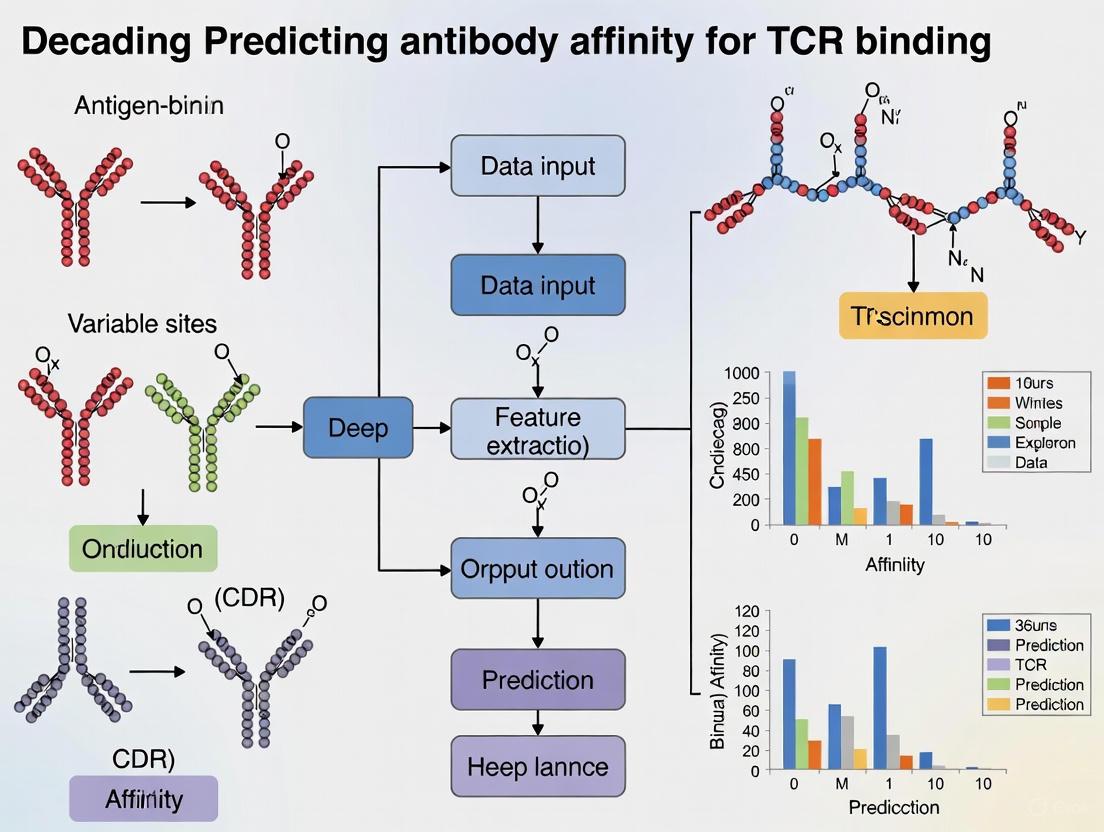
This article explores the transformative role of deep learning (DL) in predicting antibody-antigen affinity and T-cell receptor (TCR)-peptide-MHC binding, two critical interactions in immunotherapy development.
Deep Learning in Immunotherapy: Predicting Antibody Affinity and TCR Binding for Accelerated Drug Discovery
Abstract
This article explores the transformative role of deep learning (DL) in predicting antibody-antigen affinity and T-cell receptor (TCR)-peptide-MHC binding, two critical interactions in immunotherapy development. We first establish the biological and therapeutic significance of these interactions, then delve into the core DL methodologies, from sequence-based models to 3D structure prediction tools like AlphaFold. The content addresses key computational challenges, including data scarcity and modeling conformational flexibility, and provides a comparative analysis of current tools and their validation through experimental studies. Aimed at researchers and drug development professionals, this review synthesizes how DL is streamlining the preclinical pipeline for biologic therapeutics, from lead candidate identification to affinity optimization.
The Biological Imperative: Why Predicting Antibody and TCR Interactions is Crucial for Modern Therapeutics
The adaptive immune system relies on specialized protein complexes—antibodies and T-cell receptors (TCRs)—to recognize and respond to a vast array of foreign antigens with high specificity. Antibodies, also known as immunoglobulins (Igs), are large Y-shaped proteins produced by B cells that circulate in bodily fluids and recognize intact antigens. In contrast, TCRs are membrane-bound complexes found on the surface of T cells that recognize peptide fragments presented by major histocompatibility complex (MHC) molecules on other cells [1] [2]. Despite their different recognition patterns, both molecules share fundamental structural principles for antigen recognition, primarily through Complementarity Determining Regions (CDRs) that form the antigen-binding site [1] [3]. Understanding the precise structure and function of these regions is critical for advancing immunology research and developing novel immunotherapies. The emergence of deep learning approaches has revolutionized our ability to predict the binding affinity and specificity of these molecular interactions, opening new avenues for rational drug design [4] [5].
Table: Core Components of Antibody and TCR Structures
| Component | Antibody (B Cell Receptor) | T Cell Receptor (TCR) |
|---|---|---|
| Structural Form | Y-shaped soluble protein | Membrane-bound complex |
| Chains | Two heavy (H) and two light (L) chains | α and β chains (or γ and δ) |
| Variable Regions | VH and VL | Vα and Vβ |
| Constant Regions | CH and CL | Cα and Cβ |
| Antigen Recognition | Binds directly to conformational epitopes | Binds peptides presented by MHC (pMHC) |
| CDR Loops | 3 in VH (H1, H2, H3) and 3 in VL (L1, L2, L3) | 3 in Vα and 3 in Vβ |
| Associated Signaling Molecules | Igα/Igβ | CD3 complexes (CD3εγ, CD3εδ, CD3ζζ) |
Complementarity Determining Regions (CDRs): The Structural Basis of Specificity
Definition and Location of CDRs
Complementarity Determining Regions (CDRs) are short, non-contiguous amino acid sequences within the variable domains of immunoglobulins and T-cell receptors that collectively form the antigen-binding site, known as the paratope [1] [3]. These regions exhibit exceptionally high sequence variability, which enables the immune system to generate an immense diversity of antigen specificities. In both antibodies and TCRs, each variable domain contains three CDRs—CDR1, CDR2, and CDR3—arranged in non-consecutive positions along the polypeptide sequence [1]. For antibodies, this results in three CDRs on the light chain (L1, L2, L3) and three on the heavy chain (H1, H2, H3), creating a total of six CDRs that contribute to the antigen-binding site [1] [3]. Similarly, TCRs possess three CDRs on both α and β chains. CDR3, particularly in heavy chains and TCR β chains, demonstrates the greatest variability and often serves as the primary determinant of antigen specificity [1].
The CDR loops are flanked by relatively conserved framework regions (FRs) that provide a structural scaffold, supporting the proper conformation and orientation of the CDRs for optimal antigen binding [3]. This architectural arrangement allows for tremendous diversity in the antigen-binding site while maintaining the overall structural integrity of the immunoglobulin fold.
CDR Numbering Schemes and Definitions
Standardized numbering schemes are essential for consistent identification of CDR residues, enabling accurate comparison across different studies and reliable annotation in databases [3] [6]. Several numbering schemes have been developed, each with distinct advantages and applications in research and therapeutic development.
Table: Comparison of Major CDR Numbering Schemes
| Scheme | Basis | Key Features | CDR Definitions | Best Use Cases |
|---|---|---|---|---|
| Kabat [6] | Sequence alignment | First systematic scheme; defines CDRs by variability; limited for unconventional lengths | Based on sequence variability | Historical reference; sequence analysis |
| Chothia [6] | 3D structure | Identifies structurally important residues; better correlates loop conformations | Based on structural loop regions | Structural biology; antibody engineering |
| IMGT [3] [6] | Sequence and structure | Harmonized approach; clear FR/CDR boundaries; universal applicability | Based on sequence and structural features | Database annotation; TCR and antibody studies |
| Martin (Enhanced Chothia) [6] | Structure and sequence | Updated Chothia; accounts for unconventional lengths and deletions | Refined structural definitions | Engineering antibodies with non-standard features |
The choice of numbering scheme depends on the research objective. Sequence alignment-based schemes (Kabat, IMGT) benefit from large reference databases and are suitable for standard annotation, while structure-based schemes (Chothia, Martin) are preferable for antibody engineering efforts where the three-dimensional arrangement of interacting residues is paramount [6].
Peptide-MHC Complexes (pMHC): The TCR Ligand
Structure and Function of pMHC
The peptide-MHC (pMHC) complex represents the fundamental ligand recognized by T-cell receptors. MHC class I molecules are heterodimeric glycoproteins consisting of an α chain with three domains (α1, α2, α3) non-covalently associated with β2-microglobulin [7] [2]. The α1 and α2 domains form a groove that binds peptides typically 8-10 amino acids long, derived from intracellular proteins [2]. This pMHC complex is expressed on the surface of nearly all nucleated cells, allowing CD8+ T cells to scan for intracellular pathogens or cellular abnormalities.
The recognition event between TCR and pMHC is a critical determinant of T-cell activation and the ensuing immune response. TCRs engage pMHC complexes in a characteristic diagonal docking mode, where the Vα domain primarily contacts the α2 helix of the MHC molecule, while the Vβ domain overlays the α1 helix [2]. This conserved binding geometry optimizes the interaction between the highly variable CDR3 loops and the central residues of the bound peptide, enabling discrimination between self and non-self peptides [2].
Experimental Protocol: Structural Modeling of TCR-pMHC Complexes
Purpose: To generate accurate 3D structural models of TCR-pMHC class I complexes using sequence information alone, enabling analysis of interaction specifics and binding affinity predictions.
Principle: Template-based comparative modeling enhanced with deep learning approaches to predict the structure of ternary complexes from amino acid sequences [7] [4].
Workflow Overview:
Materials and Reagents:
- Input Sequences: Amino acid sequences for MHC α chain, β2-microglobulin, antigenic peptide, TCR α chain, and TCR β chain
- Template Databases: Curated structural databases of known TCR, MHC, and TCR-pMHC complexes
- Software Tools: Specialized AlphaFold implementation for TCR-pMHC modeling (AF_TCR) [4] or TCRpMHCmodels pipeline [7]
- Computational Resources: High-performance computing cluster with GPU acceleration
Procedure:
- Input Preparation: Gather complete amino acid sequences for all five components (MHC α chain, β2-microglobulin, peptide, TCR α, TCR β). Verify sequence integrity and formatting.
Template Selection:
- Identify optimal structural templates for individual chains based on sequence similarity [7].
- For TCR chains, select templates considering both framework regions and CDR loops.
- For MHC, prioritize templates with similar peptide-binding groove characteristics.
Hybrid Template Construction:
- Create hybrid template complexes by combining individual chain templates using diverse, representative TCR-pMHC docking geometries [4].
- Generate multiple hybrid complexes (typically 12) to sample different possible binding modes.
AlphaFold Simulation:
- Provide hybrid templates to AlphaFold without additional multiple sequence alignment (MSA) information to accelerate computation [4].
- Execute multiple independent AlphaFold simulations (typically 5) with different template combinations.
- Select the highest confidence model based on predicted confidence metrics.
Model Validation:
- Assess model quality using predicted confidence scores (pLDDT, PAE).
- Evaluate CDR loop conformations for structural plausibility.
- Verify peptide positioning within the MHC binding groove.
- Check TCR-pMHC docking geometry against known structural constraints.
Expected Outcomes: The protocol generates 3D structural models of TCR-pMHC complexes with median Cα RMSD values of approximately 2.31 Å compared to experimental structures [7]. The specialized AF_TCR pipeline demonstrates improved accuracy over general protein docking methods, particularly in modeling the critical CDR3 loops and peptide orientation [4].
Deep Learning Approaches for Predicting Binding Affinity
Computational Framework for Binding Affinity Prediction
Deep learning has emerged as a powerful approach for predicting antibody-antigen and TCR-pMHC binding affinity, overcoming limitations of traditional molecular dynamics simulations that are computationally prohibitive for large molecular complexes [5]. Recent frameworks integrate both structural and sequence information to achieve more accurate affinity predictions.
Workflow for Deep Geometric Binding Affinity Prediction:
This integrated framework processes both evolutionary information from amino acid sequences and atomistic details from 3D structures, with cross-attention mechanisms allowing information sharing between the two modalities [5] [8]. The model generates embeddings that capture both intrinsic protein features and interaction patterns, ultimately predicting binding affinity values (typically reported as IC50).
Experimental Protocol: Deep Learning-Based Affinity Prediction
Purpose: To accurately predict antibody-antigen or TCR-pMHC binding affinity using integrated sequence and structural data through deep geometric neural networks.
Principle: Combined geometric and sequence modeling that processes 3D structures as graphs and amino acid sequences through attention mechanisms to capture both atomistic and evolutionary determinants of binding [5] [8].
Materials and Reagents:
- Dataset: Curated antibody-antigen or TCR-pMHC pairs with known binding affinity values
- Structural Data: 3D structures in PDB format or high-quality models
- Sequence Data: Amino acid sequences in FASTA format
- Software: Deep geometric framework implementation (Python, PyTorch/TensorFlow)
- Computational Resources: GPU-enabled workstation or cluster
Procedure:
- Data Curation and Preprocessing:
- Collect antibody-antigen or TCR-pMHC pairs with experimentally determined binding affinity values (e.g., IC50, KD).
- For structural data, obtain 3D coordinates from PDB or generate models using structure prediction tools.
- For sequence data, gather corresponding amino acid sequences and multiple sequence alignments if available.
Structure Representation:
- Represent 3D structures as graphs where nodes correspond to atoms or residues and edges represent spatial relationships.
- Extract structural features including distances, angles, and solvent accessibility.
- Process structural graphs through graph convolutional networks with attention mechanisms.
Sequence Representation:
- Encode amino acid sequences using embeddings from protein language models (e.g., ProtTrans).
- Process sequence embeddings through self-attention blocks to capture evolutionary and contextual information.
Multimodal Integration:
- Combine structural and sequence representations through cross-attention blocks.
- Allow information sharing between modalities to capture complementary aspects of binding.
- Generate interaction-aware representations of the antibody/antigen or TCR/pMHC pair.
Affinity Prediction and Validation:
- Feed the final integrated representation to regression layers for affinity prediction.
- Train models using curated datasets with appropriate validation splits.
- Evaluate performance using metrics such as mean absolute error (MAE) and Pearson correlation coefficient.
Expected Outcomes: State-of-the-art deep geometric frameworks demonstrate approximately 10% improvement in mean absolute error compared to previous methods and show strong correlation (>0.87) between predicted and experimental binding affinity values [5] [8]. These models can successfully generalize across diverse antigen variants when trained on comprehensive datasets.
Table: Key Research Reagents and Computational Tools
| Resource | Type | Function | Example Applications |
|---|---|---|---|
| ANARCI [6] | Software | Antigen receptor numbering and classification | Assigning standardized numbering to antibody/TCR sequences |
| IMGT/HighV-QUEST [3] | Database Tool | Comprehensive analysis of immunoglobulin and TCR sequences | V(D)J assignment, CDR identification, mutation analysis |
| TCRpMHCmodels [7] | Modeling Pipeline | Comparative modeling of TCR-pMHC complexes | Generating structural models from sequence data |
| AlphaFold TCR [4] | Deep Learning Tool | Specialized TCR-pMHC structure prediction | High-accuracy modeling of ternary complexes |
| ABlooper [6] | Deep Learning Tool | Antibody CDR loop structure prediction | Fast accurate CDR loop modeling with confidence estimation |
| Deep Geometric Framework [5] [8] | Affinity Prediction | Antibody-antigen binding affinity prediction | IC50 prediction from sequence and structure |
| PyMOL/ChimeraX | Visualization | Molecular visualization and analysis | Structure analysis, figure generation |
| MODELER [7] | Modeling Software | Comparative protein structure modeling | Homology modeling of antibodies and TCRs |
The structural characterization of antibodies and TCRs, with particular emphasis on their CDR regions and interaction with antigens/pMHC complexes, provides the foundation for understanding adaptive immune recognition. Standardized numbering schemes and CDR definitions enable consistent annotation and comparison across studies, while advanced computational methods, particularly deep learning-based structure prediction and affinity estimation, are transforming our ability to analyze and engineer these molecules for therapeutic applications. The integration of structural biology with artificial intelligence approaches promises to accelerate the development of novel immunotherapies, vaccines, and diagnostic tools by enabling more accurate prediction and optimization of immune receptor function. As these computational methods continue to evolve and improve, they will increasingly become indispensable tools in the immunologist's toolkit, bridging the gap between sequence information and functional outcomes in immune recognition.
In molecular immunology, the precise evaluation of binding interactions is fundamental for advancing research and therapeutic development. Two parameters stand as critical, yet distinct, measures of this binding strength: affinity and avidity [9]. Affinity refers to the strength of a single binding interaction between two molecules, such as a single T-cell receptor (TCR) and its peptide-Major Histocompatibility Complex (pMHC) ligand, or a single antibody paratope and its antigen epitope [10] [11] [9]. It is quantitatively represented by the equilibrium dissociation constant (KD), where a lower KD value indicates a tighter, higher-affinity interaction [10] [12].
Avidity, in contrast, describes the overall strength of multiple simultaneous interactions between multivalent molecules, such as the combined binding of both antigen-binding sites of an antibody to multiple epitopes on an antigen, or the integrated engagement of multiple TCRs with several pMHC complexes on a cell surface [10] [11] [9]. While affinity is an intrinsic property of a single bond, avidity is a functional, multiplicative property that results in a binding strength that is greater than the sum of its individual affinities [9]. Understanding this distinction is paramount for researchers and drug development professionals designing and evaluating immunotherapies, diagnostic tools, and vaccines.
Quantitative Distinctions and Biological Significance
The following table summarizes the core definitions, quantitative measures, and biological contexts for affinity and avidity.
Table 1: Key Characteristics of Affinity and Avidity
| Feature | Affinity | Avidity |
|---|---|---|
| Definition | Strength of a single, monovalent interaction [9] | Cumulative strength of multiple, simultaneous interactions [9] |
| Quantitative Measure | Equilibrium Dissociation Constant (K_D) [10] [12] | Half-maximal effective concentration (EC₅₀) of peptide for T-cell activation [10] [13] |
| Governed By | Association (kon) and dissociation (koff) rates; KD = koff / k_on [10] [12] | TCR/pMHC affinity, TCR and pMHC density, co-receptors, adhesion molecules [10] [11] |
| Typical Measurement | Surface Plasmon Resonance (SPR) [14] [12] | Functional assays (e.g., IFN-γ ELISpot, cytotoxicity) with titrated peptide [10] [13] |
| Biological Context | Antibody-epitope binding; TCR-pMHC binding [9] | Antibody-antigen binding (multivalent); T cell-antigen presenting cell interaction [10] [9] |
The relationship between these concepts can be visualized as a hierarchy of interactions, progressing from the single bond to the integrated cellular response.
In T cell biology, functional avidity (or antigen sensitivity) is a crucial parameter that describes the responsiveness of a T cell to different concentrations of antigen [10] [11] [15]. It is typically measured as the peptide concentration (EC₅₀) required to elicit half of a T cell's maximal functional response (e.g., cytokine production or cytotoxicity) [10] [13]. This metric integrates all the factors depicted in the diagram above. For tumor immunity, T cells with high functional avidity are generally more protective because they can recognize the low densities of tumor-associated antigens (TAAs) naturally presented on cancer cells [10] [15]. However, there is an optimal upper threshold; very high avidity can lead to T cell deletion, activation-induced cell death, or autoimmunity, as these T cells may be eliminated by central and peripheral tolerance mechanisms [10] [11].
Experimental Protocols for Measurement
Accurately determining affinity and avidity requires distinct experimental approaches, each with its own workflow and data output.
Protocol for Determining Antibody Affinity via Microfluidic Diffusional Sizing
This protocol details a modern, solution-based method for determining antibody affinity and active concentration directly from complex samples like plasma, overcoming limitations of traditional immobilization-based techniques like SPR [14].
Key Resources:
- Fluidity One-M Instrument: An automated system utilizing Microfluidic Diffusional Sizing (MDS) to measure the hydrodynamic radius (R_h) of particles [14].
- Labeled Antigen: The target antigen (e.g., SARS-CoV-2 RBD) conjugated with a fluorophore (e.g., Alexa Fluor 647 NHS ester) [14].
- Test Sample: Plasma, serum, or a purified monoclonal antibody solution [14].
- Assay Buffer: PBS, pH 7.4, often supplemented with carrier proteins like HSA to prevent non-specific binding [14].
Step-by-Step Method Details:
- Conjugate and Purify Antigen: The antigen of interest is labeled with a fluorescent dye using standard NHS-ester chemistry. The labeled antigen is then purified from free dye using size-exclusion chromatography (e.g., a Zeba desalting cartridge) and its concentration and labeling efficiency are quantified [14].
- Prepare Sample Mixtures: The labeled antigen is mixed with a series of dilutions of the test sample (e.g., plasma). A negative control with no antibody is essential. The mixtures are incubated to reach binding equilibrium [14].
- Load and Run on Fluidity One-M: The prepared mixtures are loaded into a microfluidic chip plate. The instrument runs two fluid streams side-by-side without convective mixing: one containing the sample mixture and one without. The diffusion of particles across the interface is measured [14].
- Measure Hydrodynamic Radius (Rh): The MDS technology measures the Rh of the fluorescently labeled antigen. When the antigen is bound by an antibody, forming a larger complex, its Rh increases. A larger shift in Rh indicates stronger binding [14].
- Data Analysis: The instrument's software (e.g., Fluidity Cloud) analyzes the Rh data across the different sample concentrations. By fitting the binding isotherm, it calculates both the active concentration of the binding antibody and its affinity (KD) [14].
Protocol for Assessing Functional T Cell Avidity via IFN-γ ELISpot
This protocol describes a standard cellular assay to determine the mean functional avidity of a polyclonal T cell population or a T cell clone by measuring antigen-induced IFN-γ secretion [13].
Key Resources:
- T Cell Population: Patient-derived PBMCs or T cell clones specific for the antigen of interest [13].
- Antigen-Presenting Cells (APCs): Autologous PBMCs or HLA-matched cell lines.
- Peptide Antigens: Titrated amounts of the specific peptide epitope, typically in a logarithmic dilution series (e.g., from 10⁻⁶ M to 10⁻¹² M) [13].
- IFN-γ ELISpot Kit: Includes plates coated with capture antibody, detection antibody, and streptavidin-enzyme conjugate.
- ELISpot Plate Reader: An automated system to count the resulting spots.
Step-by-Step Method Details:
- Plate Preparation: Coat an ELISpot plate with an anti-IFN-γ capture antibody and block according to the manufacturer's protocol [13].
- Stimulate T Cells: Seed a constant number of T cells (or PBMCs) into the wells. Add titrated amounts of the peptide antigen to the wells in triplicate. Include positive (e.g., mitogen) and negative (no peptide) control wells. Co-culture the T cells with APCs if they are not already present in the PBMC population [13].
- Incubate and Develop: Incubate the plate for 24-48 hours to allow cytokine secretion and capture. Remove the cells and add a biotinylated detection antibody followed by a streptavidin-enzyme conjugate. Add a precipitating substrate to produce colored spots at the sites of cytokine secretion [13].
- Count Spots and Analyze Data: Enumerate the spots in each well using an automated ELISpot reader. The number of spots corresponds to the frequency of IFN-γ-secreting cells [13].
- Calculate EC₅₀: Plot the spot counts (or percentage of maximal response) against the log₁₀ peptide concentration. Fit a sigmoidal dose-response curve (e.g., a 4-parameter Hill function) to the data. The peptide concentration that yields half of the maximal response is the EC₅₀, representing the mean functional avidity of the T cell population [13].
The Deep Learning Framework for Binding Prediction
The integration of deep learning is revolutionizing the prediction of binding interactions, leveraging large-scale datasets to achieve unprecedented accuracy. These computational methods are particularly powerful because they can learn complex patterns from sequence and structural data that are difficult to capture with traditional experimental methods alone.
Table 2: Deep Learning Models for Predicting Binding Interactions
| Model Name | Prediction Target | Input Data | Key Innovation | Reported Performance |
|---|---|---|---|---|
| UniPMT [16] | Peptide-MHC-TCR (P-M-T) binding | Sequences of peptide, MHC, and TCR CDR3 | A unified deep framework using a heterogeneous Graph Neural Network (GNN) and multi-task learning. | Up to 15% improvement in area under the precision-recall curve (PR-AUC) over previous methods [16]. |
| DG-Affinity [17] | Antibody-Antigen affinity | Sequences of antibody and antigen | Uses pre-trained language models (Ablang for antibodies, TAPE for antigens) and a ConvNeXt backbone. | Pearson’s correlation >0.65 on an independent test set [17]. |
| ANTIPASTI [18] | Antibody-Antigen affinity | 3D structures of antibody-antigen complexes | Uses normal mode correlation maps from elastic network models to capture energetic fluctuations, fed into a convolutional neural network (CNN). | State-of-the-art accuracy and generalization power; model is interpretable [18]. |
The UniPMT framework exemplifies the power of a holistic computational approach, integrating multiple related prediction tasks to boost overall performance.
These models show immense potential for accelerating immunotherapy development. For instance, UniPMT can predict neoantigen-specific TCR binding, which is critical for personalized cancer vaccine design and TCR-engineered T-cell therapy [16]. Similarly, DG-Affinity and ANTIPASTI can rapidly screen thousands of candidate antibodies in silico, prioritizing the most promising leads for experimental testing and thus streamlining the antibody drug discovery pipeline [17] [18]. The ability of these models to provide interpretable insights into key binding residues further enhances their utility for rational protein engineering [18].
The Scientist's Toolkit: Essential Research Reagents and Materials
The following table catalogues key reagents and technologies essential for conducting research in antibody and T cell binding characterization.
Table 3: Key Research Reagents and Solutions for Binding Strength Analysis
| Reagent / Technology | Function / Application | Specific Example |
|---|---|---|
| Surface Plasmon Resonance (SPR) [12] | Gold-standard for measuring kinetic parameters (kon, koff) and affinity (K_D) of biomolecular interactions in real-time without labels. | Biacore systems [12]. |
| Microfluidic Diffusional Sizing [14] | Measures binding affinity and active concentration directly in solution from complex samples (e.g., plasma), avoiding surface immobilization artifacts. | Fluidity One-M system [14]. |
| MHC Multimers (Tetramers) [13] | Fluorescently labeled reagents for identifying and isolating antigen-specific T cells from heterogeneous populations via flow cytometry. | PE- or APC-conjugated pMHC tetramers. |
| ELISpot Kits [13] | Functional assay for quantifying antigen-specific T cell responses (e.g., via IFN-γ production) at the single-cell level; used for determining functional avidity. | Human IFN-γ ELISpot kit [13]. |
| Fluorescent Cell Barcodes | Allows for multiplexed analysis of T cell responses to multiple antigen conditions simultaneously, improving throughput and reducing sample requirement. | Commercial cell barcoding kits. |
| Recombinant Antigen & pMHC | Essential soluble reagents for binding assays, T cell stimulation, and as standards for calibration. | Recombinant SARS-CoV-2 RBD proteins [14]. |
The field of biologic therapeutics is undergoing a transformative shift with the integration of artificial intelligence (AI) and machine learning (ML). Predictive computational models are now accelerating the development of antibody and T-cell receptor (TCR)-based therapies by streamlining the traditionally laborious and time-consuming discovery and optimization processes [19]. These AI-driven approaches are proving particularly valuable for addressing key challenges in the pipeline, from predicting protein structures and binding interactions to optimizing therapeutic function and de-risking development.
The global market for antibody discovery alone is projected to grow at a compound annual growth rate (CAGR) of 10.5%, reflecting the intensified pace of innovation and development in this sector [20]. This growth is fueled by technological advancements that enhance the specificity, potency, and safety of therapeutic candidates. This Application Note provides a detailed overview of current predictive modeling approaches, complete with experimental protocols and key reagent solutions, to support researchers in leveraging these tools for accelerated therapeutic development.
Predictive Modeling for Antibody Therapeutics
AI-Driven Antibody Structure and Affinity Prediction
The hypervariability of antibody complementarity-determining regions (CDRs) presents a unique challenge for structure prediction. Traditional protein language models often struggle with these regions due to a lack of evolutionary constraints. The AbMap computational framework addresses this by combining a structure prediction module trained on thousands of antibody structures from the Protein Data Bank with an affinity prediction module trained on sequence-activity relationships [21]. This allows for the accurate prediction of both antibody structure and binding strength from amino acid sequences.
Researchers can use AbMap to generate millions of antibody variants and efficiently identify high-affinity candidates. In a demonstration targeting the SARS-CoV-2 spike protein, this approach identified antibody structures with superior binding affinity, and experimental validation confirmed that 82% of the selected candidates performed better than the original antibodies used as inputs to the model [21].
Table 1: Performance Metrics of AI Tools in Antibody Discovery
| AI Tool / Method | Primary Function | Key Performance Metric | Reference / Model |
|---|---|---|---|
| AbMap | Antibody structure & affinity prediction | 82% of selected candidates showed improved binding vs. original | [21] |
| ITsFlexible | Classifies CDR loop flexibility | State-of-the-art accuracy on crystal structure datasets; generalizes to MD simulations | [22] |
| Data-Driven Formulation | Predicts bsAb stability & optimizes formulation | Reduces material needs for screening to ~100s of milligrams | [23] |
| Computational Tandem CAR Design | Optimizes bi-specific CAR surface expression & function | Cleared tumors in 4 out of 5 mice in heterogeneous tumor model | [24] |
Figure 1: The AbMap computational workflow for predicting antibody structure and binding affinity. The framework integrates two specialized modules that leverage distinct training datasets to screen and rank antibody variants in silico.
Protocol: In-Silico Affinity Maturation Using AbMap
Purpose: To rapidly generate and identify high-affinity antibody variants from a parent sequence using the AbMap computational framework.
Procedure:
- Input Sequence Preparation: Provide the amino acid sequence of the parent antibody's variable region in FASTA format.
- Variant Generation: Use the model's built-in function to generate a library of millions of antibody variants through in-silico mutagenesis, focusing on the CDR regions.
- Structure and Affinity Prediction: Run the AbMap pipeline to predict the 3D structure and binding affinity score for each variant against the target antigen.
- Clustering and Selection: Cluster the top-ranking variants based on structural similarity to ensure diversity. Select a final, manageable set of candidates (e.g., 20-50) from different clusters for experimental validation.
Notes: This protocol drastically reduces the experimental burden by prioritizing the most promising candidates for synthesis and testing.
Managing Bispecific Antibody Complexity
Bispecific antibodies (bsAbs) represent a rapidly growing class of therapeutics, with the global market projected to exceed $220 billion by 2032 [23]. Their complex, engineered structures are prone to instability, aggregation, and manufacturing challenges. A data-driven formulation approach that employs computational modeling and ML can predict stability hotspots and optimize buffer conditions, reducing the need for extensive material screening. This platform can identify robust formulations using only a few hundred milligrams of protein, de-risking development and building a stronger chemistry, manufacturing, and controls (CMC) package for regulatory submissions [23].
Predictive Modeling for T-Cell Receptor Therapeutics
Predicting TCR-pMHC Interactions
The core of T-cell-mediated immunity lies in the specific interaction between the TCR and its peptide-MHC (pMHC) complex. Accurately predicting this interaction is critical for developing TCR-based therapies, personalized T-cell therapies, and vaccines. The UniPMT framework is a unified deep learning model that uses a heterogeneous graph neural network (GNN) to simultaneously learn from peptide-MHC-TCR (P-M-T), peptide-MHC (P-M), and peptide-TCR (P-T) binding data [16]. This multi-task approach allows it to achieve state-of-the-art performance, with improvements of up to 15% in area under the precision-recall curve (PR-AUC) on P-M-T binding prediction tasks compared to previous methods [16].
AlphaFold 3 (AF3) has also shown significant promise in modeling TCR-pMHC interactions. Studies demonstrate that AF3 predictions closely mirror experimental crystal structures, with high interface template modeling (ipTM) scores indicating accurate binding conformations [25]. The presence of the specific peptide in the MHC groove is essential for prediction accuracy, as models without the correct peptide show significantly lower ipTM scores (e.g., 0.92 vs. 0.54) and poor alignment with actual structures [25].
Table 2: Performance Metrics of AI Tools in T-Cell Therapy Discovery
| AI Tool / Method | Primary Function | Key Performance Metric | Reference / Model |
|---|---|---|---|
| UniPMT | Unified P-M-T, P-M, and P-T binding prediction | 15% improvement in PR-AUC on P-M-T task | [16] |
| AlphaFold 3 (AF3) | TCR-pMHC complex structure prediction | ipTM score = 0.92 (with peptide) vs. 0.54 (without) | [25] |
| MixTRTpred | Ranks TCRs for tumor reactivity & antigen binding | Tool enables selection of TCRs that eliminate tumors in mouse models | [26] |
| ITsFlexible | Predicts conformational flexibility of CDR3 loops | Accurately classifies loops as rigid/flexible; validated with Cryo-EM | [22] |
Protocol: Predicting Neoantigen-Specific TCR Binding with UniPMT
Purpose: To identify TCRs that specifically bind to neoantigen peptides presented by a specific class I MHC molecule using the UniPMT model.
Procedure:
- Data Input Preparation:
- Peptide (P): Provide the amino acid sequence of the candidate neoantigen (typically 8-11mers for class I MHC).
- MHC (M): Input the pseudo-sequence of the class I MHC allele (e.g., HLA-A*02:01), which can be obtained using a tool like TEIM.
- TCR (T): Provide the amino acid sequence of the TCR beta chain CDR3 region.
- Embedding Generation: UniPMT uses evolutionary scale modeling (ESM) to generate initial embeddings for the peptide and TCR sequences.
- Graph Learning: The model processes the P, M, and T nodes and their interactions as a heterogeneous graph using a GraphSAGE network to learn robust node embeddings.
- Binding Prediction: The framework outputs a scalar binding probability between 0 and 1, where higher scores indicate a higher likelihood of specific binding.
Notes: UniPMT has been specifically validated on neoantigen testing sets, where it outperformed baseline methods by at least 8.86% in ROC-AUC, making it particularly suited for cancer immunotherapy applications [16].
Figure 2: The UniPMT unified deep learning framework for predicting peptide-MHC-TCR interactions. The model integrates three biological entities and their relationships within a graph neural network to boost prediction accuracy.
Optimizing T-Cell Therapies with AI
For personalized T-cell therapy, selecting the most effective TCRs is paramount. The MixTRTpred tool combines an AI model (TRTpred) that ranks TCRs based on tumor reactivity with algorithms that predict TCR-antigen binding affinity and maximize the diversity of targeted antigens [26]. In validation studies, T-cells engineered with TCRs selected by this tool successfully eliminated tumors in mouse models [26].
In CAR-T therapy, a major challenge for solid tumors is antigen heterogeneity. Bi-specific tandem CARs that target two tumor-associated antigens can prevent escape, but their design is often laborious. Researchers at St. Jude Children's Research Hospital developed a computational pipeline that screens thousands of theoretical tandem CAR designs, ranking them based on protein stability, tendency to aggregate, and other biophysical features [24]. The optimized designs showed improved surface expression and completely cleared heterogeneous tumors in 4 out of 5 mice, outperforming single-targeted CARs [24].
The Scientist's Toolkit: Essential Research Reagents and Materials
Table 3: Key Research Reagent Solutions for Predictive Modeling and Validation
| Reagent / Material | Function in R&D | Application Context |
|---|---|---|
| Phage Display Libraries | Generation of diverse antibody fragments for hit identification. | Library-based antibody discovery [19] [20]. |
| Transgenic Mouse Models (e.g., HuMab Mouse) | In-vivo generation of fully human antibodies following immunization. | Antibody discovery platform; 30 fully human antibodies and three bsAbs have been FDA-approved from this platform [19]. |
| Single-Cell RNA Sequencing Kits | Profiling of immune cell repertoires and isolation of paired VH:VL sequences. | Antibody and TCR discovery from B or T cells of convalescent or immunized individuals [19]. |
| MHC Multimers (Tetramers/Pentamers) | Staining, isolation, and characterization of antigen-specific T cells. | Experimental validation of predicted TCR-pMHC interactions [25]. |
| Cryo-EM Reagents | High-resolution structure determination of antibody-antigen or TCR-pMHC complexes. | Experimental validation of predicted structures and conformational flexibility [22]. |
| Cytotoxicity Assay Kits | In-vitro measurement of T-cell-mediated killing of target cells. | Functional validation of engineered CAR-T or TCR-T cell potency [24] [26]. |
The application of deep learning to predict antibody-antigen and T-cell receptor (TCR)-epitope binding affinity represents a transformative approach in immunology and therapeutic design. However, the development of robust, generalizable models faces three interconnected core challenges: data scarcity of experimentally validated binding affinities, the structural flexibility of binding interfaces, and the difficulty in generalizing to unseen epitopes [27] [28] [29]. Data scarcity arises because high-throughput experimental measurements of binding affinity, such as those for dissociation constants (Kd), are costly and low-throughput, creating a paucity of high-quality data for training deep learning models [30] [28]. Structural flexibility, particularly in antibody complementarity-determining regions (CDRs) and epitope paratopes, complicates prediction because binding affinity is determined by the quality of the entire antibody-antigen (Ab-Ag) or TCR-epitope complex interface, not just the individual sequences [30] [31]. Finally, generalization to unseen epitopes remains a significant hurdle, especially for TCR-epitope predictors, which often fail to maintain performance for epitopes not present in their training data, limiting their application to novel pathogens [27] [29]. This application note details these challenges, provides benchmark data and protocols for model evaluation, and outlines computational strategies to advance the field.
Quantitative Landscape of Available Data and Model Performance
Available Datasets for Binding Affinity Prediction
Table 1: Publicly Available Datasets for Protein-Proptide Binding Affinity Measurement
| Dataset Name | Sample Size | Complex Types | Key Affinity Metrics | Primary Use Case |
|---|---|---|---|---|
| PPB-Affinity [28] | ~4,000 samples (Largest available) | Protein-protein, Antibody-Antigen | Kd (Molar, standardized) | Large-molecule drug discovery, general PPB affinity prediction |
| AbBiBench [30] | 155,853 mutated heavy chain antibodies | Antibody-Antigen (9 antigens) | Kd, Enrichment Ratio (standardized to log values) | Antibody binding affinity maturation and design |
| SKEMPI v2.0 [28] | 7,085 mutations | Protein-protein complexes | ΔΔG (change in binding affinity upon mutation) | Predicting the effect of mutations on binding affinity |
| SAbDab [30] [28] | >7,000 structures | Antibody-Antigen | Kd, ΔG (available for a subset) | Structure-based antibody design and analysis |
| Affinity Benchmark v5.5 [28] | 207 complexes | Protein-protein | Kd | General protein-protein binding affinity prediction |
| ATLAS [28] | 694 samples | TCR - pMHC | Kd, ΔΔG upon mutation | TCR-pMHC binding affinity and specificity |
Benchmarking Performance of AI Models
Table 2: Performance Comparison of Selected AI Models in Immunology
| Model / Tool | Target Interaction | Reported Performance | Experimentally Validated |
|---|---|---|---|
| MUNIS [27] | T-cell Epitope Prediction | 26% higher performance than prior best algorithm | Yes, via HLA binding and T-cell assays |
| GraphBepi [27] | B-cell Epitope Prediction | 87.8% Accuracy (AUC = 0.945) | Implied by context |
| GearBind GNN [27] | Antigen Optimization | Up to 17-fold higher binding affinity for SARS-CoV-2 | Yes, confirmed by ELISA assays |
| Structure-conditioned Inverse Folding Models [30] | Antibody-Antigen Complex Design | Top-performing in affinity correlation and generation tasks | Case study on influenza H1N1 |
| NetTCR-2.2 [29] | TCR-Epitope Binding | Fails on less frequent/unseen epitopes | Benchmarking on standardized datasets |
The Scientist's Toolkit: Key Research Reagent Solutions
Table 3: Essential Computational Tools and Resources for Binding Affinity Research
| Reagent / Resource | Type | Function in Research | Example Tools / Databases |
|---|---|---|---|
| Benchmark Datasets | Data | Provide standardized data for training and fair model comparison. | PPB-Affinity [28], AbBiBench [30] |
| Unified Prediction Frameworks | Software | Integrate multiple pre-trained models for interoperable prediction and benchmarking. | ePytope-TCR (for TCR-epitope) [29] |
| Structure Prediction Models | Algorithm | Generate 3D protein structures from sequence, crucial for structure-based methods. | AlphaFold [27] [31] |
| Geometric Graph Neural Networks | Algorithm | Encode 3D structural information for predicting global (affinity) and local (flexibility) properties. | ANTIPASTI, INFUSSE [31] |
| Public Binding Databases | Data | Source of known binding pairs for model training and validation. | IEDB, VDJdb, McPAS-TCR [29] |
Experimental Protocols for Model Benchmarking and Validation
Protocol 1: Benchmarking Protein Models for Antibody Affinity Prediction
Objective: To evaluate the performance of various protein models in predicting or designing antibodies with high binding affinity for a specific antigen, using the AbBiBench framework [30].
Materials:
- Dataset: A curated dataset from AbBiBench containing antibody heavy chain sequences and corresponding experimental affinity measurements (e.g., Kd, enrichment ratio) for your target antigen [30].
- Models: A selection of pre-trained models to evaluate (e.g., ESM-2, AntiBERTy, ProteinMPNN, structure-conditioned inverse folding models) [30].
- Computational Resources: High-performance computing cluster with GPUs.
Procedure:
- Data Preparation: Download and standardize your chosen benchmark dataset. Ensure the mutant antibody-antigen complexes are not part of the training corpus of the evaluated models to prevent data leakage [30].
- Model Inference:
- For each antibody variant in the dataset, compute the model's likelihood (or perplexity) using the zero-shot inference capability of the selected models [30].
- For generative tasks, use the top-performing models to sample new antibody sequences (e.g., CDR-H3 variants) designed to bind the target antigen.
- Affinity Correlation Analysis:
- Calculate the correlation (e.g., Pearson, Spearman) between the model likelihoods and the experimental affinity values (converted to a unified scale where higher values indicate stronger binding) [30].
- Models with higher correlation coefficients are deemed better at identifying high-affinity binders.
- Generative Design Validation (Optional):
Protocol 2: Validating TCR-Epitope Predictors on Unseen Epitopes
Objective: To assess the generalization capability of TCR-epitope binding predictors using the ePytope-TCR framework on a dataset containing epitopes not seen during the model's training [29].
Materials:
- Software: The ePytope-TCR framework [29].
- Dataset: A challenging benchmark dataset containing TCRs and epitopes, split such that a subset of epitopes is withheld from the training set to form the test set [29].
- Models: Integrated pre-trained models within ePytope-TCR (e.g., ERGO-II, NetTCR-2.2, BERTrand) [29].
Procedure:
- Data Loading and Splitting:
- Load your TCR repertoire data (in AIRR standard, cellranger-vdj, or other supported formats) and epitope data into ePytope-TCR.
- Split the data into training and test sets, ensuring that the epitopes in the test set are not present in the training set (leave-epitope-out split) [29].
- Model Prediction:
- Use the unified interface of ePytope-TCR to run predictions with the selected pre-trained models on the test set.
- The framework will generate binding scores for all TCR-epitope combinations in the test set.
- Performance Evaluation:
- Use the benchmarking suite in ePytope-TCR to calculate standard performance metrics (e.g., AUC-ROC, Precision, Recall) for each model on the test set.
- Analyze the results for a strong bias in prediction scores between different epitope classes and a drop in performance for less frequently observed or unseen epitopes, which is a common failure mode [29].
Protocol 3: Integrating Structural Flexibility into Affinity Prediction
Objective: To predict antibody-antigen binding affinity or residue flexibility using structural models that incorporate dynamic information [31].
Materials:
- Structures: 3D structures of antibody-antigen complexes (from PDB or predicted by AlphaFold).
- Models: Structure-based prediction tools like ANTIPASTI (for global binding affinity) and INFUSSE (for local residue flexibility/B-factors) [31].
Procedure:
- Structure Pre-processing:
- Obtain the atomic coordinates of the antibody-antigen complex. A coarse-grained representation using Cα atoms is often sufficient [31].
- Elastic Network Model (ENM) Construction:
- Model the protein complex as an elastic network where each Cα atom is a node connected by springs within a cutoff distance. The Hessian matrix of this network is computed [31].
- Normal Mode Analysis (NMA):
- Perform NMA by diagonalizing the Hessian matrix to obtain its eigenvectors (normal modes) and eigenvalues, which describe the collective motions of the complex [31].
- Feature Extraction for ML:
- For ANTIPASTI, the normal modes are processed through a Convolutional Neural Network (CNN) to predict a global affinity score [31].
- For INFUSSE, sequence embeddings from a protein language model are integrated with the structural information from the normal modes using a Graph Convolutional Network (GCN) to predict local B-factors, which quantify residue flexibility [31].
Workflow Visualization of Computational Strategies
Workflow for Antibody Affinity Maturation
Strategy to Overcome Key Challenges
From Sequences to 3D Structures: A Deep Dive into AI Methodologies and Their Applications
The prediction of T-cell receptor (TCR) and antibody binding affinity is a cornerstone in the development of novel immunotherapies and biologics. The exceptional diversity of these immune receptors—with the TCR repertoire estimated to encompass up to 10^15 unique sequences—presents a profound challenge for traditional structural and experimental approaches [32]. Within this context, deep learning models that operate directly on protein sequences have emerged as powerful tools capable of capturing the complex patterns governing immune recognition. This Application Note details the methodologies and protocols for employing two pivotal classes of sequence-based models—Transformer architectures like BERT and recurrent networks such as LSTMs—for predicting TCR-antigen and antibody-antigen binding. By leveraging large-scale language models, these approaches achieve high generalization performance even with limited labeled data through transfer learning, offering significant advantages over conventional sequence representation methods [32].
Key Concepts and Biological Background
Immune Receptor Architecture
- T-Cell Receptors (TCRs): TCRs are transmembrane heterodimers, typically composed of α and β chains, that recognize peptide fragments presented by Major Histocompatibility Complex (pMHC) molecules. Each chain contains three complementarity-determining regions (CDRs), with the CDR3 loops exhibiting the greatest diversity due to V(D)J recombination [33] [34].
- Antibodies (B Cell Receptors, BCRs): Antibodies are immunoglobulin proteins produced by B cells, consisting of heavy and light chains. Similar to TCRs, they possess hypervariable CDR loops that determine antigen specificity through binding to diverse epitopes [35] [5].
The Sequence-Based Prediction Paradigm
Traditional structure-based prediction methods face bottlenecks due to the scarcity of solved immune receptor complex structures. Sequence-based models bypass this limitation by learning directly from amino acid sequences, treating them as texts in a biological "language" where grammatical rules correspond to physicochemical and structural constraints governing binding [32]. Protein Language Models (PLMs), initially pre-trained on vast corpora of unlabeled protein sequences, capture evolutionary patterns and context-dependent features. These representations can then be fine-tuned for specific binding prediction tasks with relatively small labeled datasets [32] [36].
Model Architectures and Implementation Protocols
Transformer-Based Models (BERT Framework)
Transformer architectures, particularly the Bidirectional Encoder Representations from Transformers (BERT) framework, have revolutionized protein sequence representation learning.
Protocol: Implementing TCR-BERT for Binding Prediction
Pre-training Objective:
- Utilize masked language modeling (MLM) on large unlabeled TCR or antibody sequence datasets (e.g., from Observed T-cell Receptor Space or SAbDab).
- During MLM, randomly mask 15% of amino acid tokens in input sequences and train the model to predict the masked residues based on bidirectional context [36].
Sequence Representation:
- Input Format: Represent CDR3 sequences as strings of one-letter amino acid codes.
- Tokenization: Split sequences into individual amino acid tokens or common k-mer groupings.
- Embedding: Convert tokens to dense vector representations using learned embedding matrices [37].
Transfer Learning for Binding Affinity:
- Architecture: Replace the final classification layer of the pre-trained BERT model with task-specific layers for regression (affinity prediction) or classification (binding/non-binding).
- Input Processing: Process paired receptor-ligand sequences (e.g., TCR β-chain and peptide) using separate encoders, then combine representations for final prediction [36].
- Fine-tuning: Train with reduced learning rate (e.g., 2e-5 to 5e-5) on labeled binding affinity datasets to avoid catastrophic forgetting.
LSTM-Based Models
Long Short-Term Memory (LSTM) networks effectively capture sequential dependencies in protein sequences and remain valuable for binding prediction tasks.
Protocol: ERGO-style LSTM Implementation
Sequence Encoding:
- Input Representation: One-hot encode amino acid sequences or use physicochemical property embeddings.
- Sequence Padding: Standardize input lengths through padding or truncation to handle variable-length CDR3 regions [33].
Model Architecture:
- Implement a bidirectional LSTM layer to process sequences in both forward and reverse directions.
- Use hidden state sizes of 64-128 units per direction, depending on dataset size and complexity.
- Add dropout layers (rate: 0.2-0.5) following LSTM layers to prevent overfitting [33].
Binding Prediction Head:
- Concatenate the final hidden states from both directions of the BiLSTM.
- Add fully connected layers with decreasing dimensions (e.g., 64 → 32 → 16 units) with ReLU activation.
- Include a final output layer with sigmoid activation for binary classification or linear activation for affinity regression [33].
Advanced Multi-Modal Frameworks
Protocol: Implementing LANTERN-style Architecture
Multi-Modal Input Processing:
- TCR Encoding: Use protein language model embeddings (e.g., from ESM) for TCR CDR3β sequences.
- Peptide Encoding: Convert peptide sequences to SMILES representations to capture structural and chemical attributes [36].
- Alignment: Process each modality through separate encoders before fusion.
Cross-Attention Integration:
- Implement cross-attention mechanisms between TCR and peptide representations.
- Use multi-head attention (4-8 heads) to capture different aspects of the binding relationship.
Prediction Network:
- Concatenate attended representations from both modalities.
- Process through a multilayer perceptron with gradually decreasing dimensionality.
- Apply appropriate activation functions based on prediction task (sigmoid for binding classification) [36].
Table 1: Performance Comparison of Sequence-Based Models on TCR-Peptide Binding Prediction
| Model | Architecture | Input Features | AUC | Key Strengths |
|---|---|---|---|---|
| TCR-BERT | Transformer | TCR sequence only | 0.71 | Captures contextual sequence patterns; strong transfer learning capabilities |
| ERGO (LSTM) | LSTM + MLP | One-hot encoded CDR3β & peptide | 0.66-0.70 | Effective for sequential data; lower computational requirements |
| LANTERN | Transformer + SMILES | ESM embeddings + SMILES | 0.74 | Multi-modal; captures structural peptide attributes |
| NetTCR-2.0 | CNN | BLOSUM-encoded sequences | 0.68 | Position-invariant feature detection |
| TEINet | Pre-trained encoders | Transfer learning features | 0.72 | Leverages pre-trained protein encoders |
Experimental Workflows and Data Processing
Data Acquisition and Curation Protocols
Protocol: Curating Training Data for TCR Binding Prediction
Source Databases:
- Primary Sources: Access TCR-pMHC binding data from public repositories including VDJdb, IEDB, McPAS-TCR, and ImmuneCODE [33].
- Data Selection Criteria: Filter for pairs with confirmed binding affinity measurements or binary binding labels.
Sequence Preprocessing:
- Chain Selection: Extract CDR3β sequences for single-chain models; both α and β CDR3 sequences for paired-chain models.
- Length Filtering: Include CDR3 sequences with lengths between 10-20 amino acids for optimal model performance [33].
- Peptide Constraints: For initial benchmarking, focus on 9-mer peptides presented by HLA-A*02:01 to reduce confounding variables.
Negative Example Generation:
- Reference Control: Use experimentally validated non-binding pairs from specialized databases when available.
- Random Control: Generate negative pairs by randomly combining TCRs and peptides from different binding pairs, ensuring no overlap with positive examples [36].
- Balance Maintenance: Maintain approximately 1:1 positive-to-negative ratio during training to prevent class imbalance issues [33].
Model Training and Optimization Protocol
Protocol: Systematic Model Training and Evaluation
Data Splitting Strategy:
- Uniform Splitting: Random split maintaining similar peptide distribution across training, validation, and test sets.
- Strict Splitting: Ensure no peptide in test set appears in training data to evaluate generalization to novel epitopes [33].
Hyperparameter Optimization:
- Learning Rate: Conduct grid search over range 1e-5 to 1e-3, using cosine annealing or reduce-on-plateau scheduling.
- Regularization: Optimize dropout rates (0.1-0.5) and L2 regularization (1e-5 to 1e-3) based on validation performance.
- Early Stopping: Monitor validation loss with patience of 10-20 epochs to prevent overfitting.
Evaluation Metrics:
- Primary: Area Under Receiver Operating Characteristic Curve (ROC-AUC).
- Secondary: Accuracy, Precision, Recall, F1-Score, and Precision-Recall AUC for imbalanced datasets.
Visualization of Model Architectures and Workflows
Diagram 1: TCR-BERT architecture for binding prediction integrates sequence tokenization, BERT encoding, and multi-layer perceptron classification.
Diagram 2: LSTM-based binding affinity prediction model workflow featuring bidirectional processing and regularization components.
Table 2: Key Research Reagent Solutions for Sequence-Based Binding Prediction
| Resource | Type | Function | Example Sources |
|---|---|---|---|
| Immune Receptor Databases | Data repository | Provides curated sequences and binding annotations | VDJdb, IEDB, McPAS-TCR, SAbDab [33] [35] |
| Pre-trained Protein Language Models | Software model | Offers transfer learning capabilities for sequence representation | ESM, ProtBERT, TCR-BERT [32] [36] |
| Sequence Processing Tools | Bioinformatics software | Handles sequence alignment, filtering, and feature extraction | BioPython, Immcantation, Tcrdist3 [37] |
| Deep Learning Frameworks | Programming library | Implements and trains neural network architectures | PyTorch, TensorFlow, Keras [33] [36] |
| Benchmark Datasets | Curated data | Enables standardized model evaluation and comparison | dbase (filtered TCR-pMHC pairs), TPP dataset [33] |
Performance Benchmarks and Validation
Table 3: Comparative Model Performance on Standardized Benchmark Tasks
| Model Type | Generalization to Unseen Peptides (AUC) | Training Data Requirements | Inference Speed (sequences/sec) | Interpretability |
|---|---|---|---|---|
| BERT-based | 0.70-0.74 | Moderate (benefits from pre-training) | 100-500 | Medium (attention weights) |
| LSTM-based | 0.66-0.70 | Moderate | 500-1000 | Low-Medium |
| CNN-based | 0.65-0.68 | Low-Moderate | 1000-2000 | Low |
| Language Model Fine-tuning | 0.72-0.75 | Low (with good pre-training) | 50-200 | Medium-High |
Current benchmarking reveals significant challenges in model generalization. When evaluated using strict splitting strategies where test peptides are unseen during training, contemporary models show markedly reduced performance, with AUC scores dropping by 0.15-0.20 points compared to random splits [33]. This underscores the critical need for rigorous evaluation protocols and more sophisticated approaches to achieve true generalization in immune receptor binding prediction.
Troubleshooting and Technical Considerations
Common Implementation Challenges
Data Imbalance: Many TCR and antibody binding datasets exhibit extreme peptide imbalance, where a small number of epitopes account for the majority of examples [33]. Mitigation strategies include:
- Oversampling of rare peptide categories
- Cost-sensitive learning with higher weights for minority classes
- Synthetic data generation using generative models [37]
Sequence Length Variability:
- Implement dynamic padding and masking for variable-length CDR3 sequences
- Use transformer models with relative position encoding or LSTMs with attention to handle length variability
Computational Constraints:
- For large-scale screening, consider more efficient architectures like CNNs or distilled transformer models
- Utilize gradient checkpointing and mixed-precision training for memory-intensive models
Validation and Interpretation Guidelines
- Model Calibration: Regularly assess calibration curves to ensure predicted probabilities reflect true likelihood of binding
- Attention Analysis: For transformer models, visualize attention patterns to identify residues critical for binding predictions
- Ablation Studies: Systematically remove input features (e.g., CDR3α in paired models) to quantify contribution of different sequence components [34]
Future Directions and Concluding Remarks
Sequence-based deep learning models represent a paradigm shift in immune receptor binding prediction, moving beyond structural constraints to leverage the information-rich space of protein sequences. The integration of large language models like BERT with specialized architectures for protein data has demonstrated remarkable potential, particularly in low-data regimes through transfer learning [32]. However, critical challenges remain, including the need for higher-quality paired-chain data, better generalization to novel epitopes, and improved model interpretability [33] [34].
Emerging approaches point toward multi-modal frameworks that combine sequence information with structural features and physicochemical constraints [34] [5]. The development of truly generalizable binding prediction models will require continued advances in dataset curation, model architecture design, and evaluation methodologies. As these technologies mature, they hold immense promise for accelerating therapeutic antibody development, personalized cancer immunotherapy, and vaccine design, ultimately bridging the gap between sequence information and immune function prediction.
The emergence of artificial intelligence (AI) has dramatically transformed the approach by which researchers forecast and comprehend the structure of proteins and their interaction with other molecules [38]. For researchers focused on deep learning prediction of antibody affinity and T-cell receptor (TCR) binding, tools like AlphaFold2, AlphaFold3, and OmegaFold represent a revolutionary toolkit. These models have moved from theoretical concepts to essential instruments that are accelerating the discovery and optimization of therapeutic biologics. This document provides detailed application notes and protocols for leveraging these tools in the specific context of antibody-antigen and TCR-epitope binding research.
Comparative Analysis of AI-Based Structure Prediction Tools
Understanding the distinct capabilities, strengths, and limitations of each structural prediction tool is the first critical step in designing an effective research pipeline. The following table provides a structured comparison of AlphaFold2, AlphaFold3, and OmegaFold to guide tool selection.
Table 1: Comparative analysis of deep learning-based protein structure prediction tools.
| Feature | AlphaFold2 [38] [39] | AlphaFold3 [38] [39] | OmegaFold |
|---|---|---|---|
| Core Architecture | Evoformer & Structure module | Diffusion-based model | Single-sequence, PLM-based |
| Key Prediction Capability | Single-protein structures, high accuracy | Protein complexes, ligands, nucleic acids, post-translational modifications | Single-protein structures without MSA |
| Advantages for Antibody/TCR Research | High accuracy (GDT~87) for monomeric proteins; established, widely used. | Predicts Ab-Ag/TCR-epitope complexes directly; 50% more precise than traditional docking. | Fast; useful for orphan/rapidly evolving antibodies/TCRs with few homologs. |
| Limitations & Challenges | Cannot model complexes or interactions. | Struggles with dynamic/flexible regions and disordered regions; single conformation output. | Less accurate than AF2 for proteins with rich evolutionary information. |
| Typical Workflow Integration | Generate individual antibody, antigen, TCR, and epitope structures for docking. | End-to-end complex prediction; binding site analysis. | Rapid generation of initial structural hypotheses for novel sequences. |
Application Notes and Experimental Protocols
Protocol 1: Predicting TCR-Epitope Binding Specificity
Background: Understanding the recognition of disease-derived epitopes through TCRs has the potential to serve as a stepping stone for developing efficient immunotherapies and vaccines [29]. While categorical ML models can predict binding for specific, known epitopes, general predictors that take both TCR and epitope sequences as input are needed for novel epitopes, albeit with a potential forfeit in performance [29].
Objective: To predict and analyze the potential binding between a given TCR CDR3β sequence and a target epitope peptide.
Materials:
- Input Data: Amino acid sequences of the TCR CDR3β loop and the epitope peptide. Optional: V- and J-gene information.
- Software Tools: AlphaFold3 (for complex structure prediction); ePytope-TCR framework (for integrating multiple sequence-based predictors) [29].
- Computational Resources: GPU-accelerated computing environment.
Methodology:
- Structure Prediction with AlphaFold3:
- Input the full amino acid sequences of the TCR β-chain and the epitope peptide into AlphaFold3.
- Run the prediction to generate a 3D structural model of the TCR-epitope complex.
- Analyze the predicted complex, focusing on the intermolecular contacts at the CDR3β-epitope interface. The model provides a per-residue confidence score (pLDDT); interpret regions with low confidence (pLDDT < 70) with caution [38] [39].
Binding Affinity Estimation with Benchmarking:
- Utilize the ePytope-TCR framework to access a unified interface to 21 different TCR-epitope binding predictors [29].
- Input your TCR and epitope sequences into multiple pre-trained models available within the framework (e.g., NetTCR-2.2, ERGO-II).
- Critical Note: Be aware that benchmark studies have revealed a strong bias in prediction scores between different epitope classes, and most methods fail to generalize well for less frequently observed epitopes [29] [40]. Always interpret scores as probabilistic guides rather than absolute determinations.
Data Augmentation for Imbalanced Data:
- If training a custom model, address the severe class imbalance (few binding pairs, many non-binding pairs) using generative unsupervised models to create synthetic specific TCR sequences and restore data balance, which has been shown to improve downstream prediction performance [41].
Protocol 2: Ranking Antibody-Antigen Binding Affinity (ΔΔG)
Background: Controlling affinity is the driving consideration in therapeutic antibody development [42]. Accurate prediction of the change in binding affinity (ΔΔG) upon mutation is essential for antibody maturation and optimization.
Objective: To rank the relative binding affinities of a series of antibody variants against a specific antigen.
Materials:
- Input Data: Paired sequences (or structures) of antibody and antigen.
- Software Tools: AlphaFold3 or Boltz 2 (for complex structure prediction); AbRank benchmark framework and ranking-based models [43]; Graphinity EGNN architecture [42].
- Computational Resources: High-performance computing cluster for large-scale predictions.
Methodology:
- Generate Complex Structures:
- For each antibody variant, use AlphaFold3 or Boltz 2 to predict the 3D structure of the antibody-antigen complex. Boltz 2 is particularly noted for its strong performance in binding affinity prediction and offers improved user controllability [39].
Apply Ranking-Based Affinity Prediction:
- Reframe affinity prediction as a pairwise ranking task instead of regression to improve robustness against experimental noise and enhance generalization [43].
- Use the AbRank framework, which employs an m-confident ranking strategy that filters out comparisons with marginal affinity differences, focusing training on pairs with a clear difference in binding strength [43].
- Employ a baseline model like WALLE-Affinity, a graph-based approach that integrates protein language model (PLM) embeddings with structural information to predict pairwise binding preferences [43].
Validate with Synthetic Data:
- Note that current experimental ΔΔG datasets are limited and can lead to model overtraining [42].
- For robust training, supplement experimental data with large-scale synthetic datasets (e.g., nearly 1 million ΔΔG values generated with FoldX or Rosetta Flex ddG) to improve model generalizability, as demonstrated with the Graphinity model [42].
Protocol 3: De Novo Design of Antibody and TCR Binding Proteins
Background: AI-driven de novo protein design aims to transcend the limits of natural evolution by computationally creating proteins with customized folds and functions, offering a systematic route to functions that natural evolution has not explored [44].
Objective: To design a novel miniprotein or binder with high affinity and specificity for a target antigen or epitope.
Materials:
- Software Tools: AlphaFold3 combined with Generative Adversarial Networks (GANs) for de novo design [39]; Protein Language Models (PLMs) like ESM.
- Computational Resources: Extensive GPU resources for iterative generation and validation.
Methodology:
- Generative Design:
- Use generative models to propose vast libraries of novel protein sequences that are predicted to fold into stable structures with a desired binding site geometry.
- Integrate AlphaFold3's predictive power with GANs to generate a series of artificial binders with specific functional properties, a method that has successfully generated artificial enzymes with desired catalytic activity [39].
In-silico Folding and Validation:
- Pass the generated sequences through a predictive funnel, using AlphaFold3 or OmegaFold to rapidly evaluate the foldability of the proposed sequences and predict their 3D structures.
- Use the predicted structures to perform in-silico binding assays, predicting the structure of the designed protein in complex with the target antigen using AlphaFold3.
Functional Scoring:
- Score the designed candidates based on predicted biophysical properties, including stability, solubility, and binding affinity. AI-powered pipelines can score catalytic efficiency, binding affinity, stability, and immune response properties, prioritizing candidates with a higher chance of success for experimental testing [39].
Workflow Visualization
AI-Driven Binding Prediction Workflow
The Scientist's Toolkit: Essential Research Reagents and Solutions
Table 2: Key computational tools and resources for AI-driven antibody and TCR binding research.
| Tool/Resource Name | Type | Primary Function in Research |
|---|---|---|
| AlphaFold3 Server [38] [39] | Biomolecular Structure Predictor | Predicts 3D structures of proteins, complexes, and interactions with ligands/nucleic acids. |
| ePytope-TCR [29] | Benchmarking & Prediction Framework | Provides a unified interface to 21 TCR-epitope predictors for standardized evaluation and prediction. |
| AbRank Benchmark [43] | Dataset & Evaluation Framework | Provides a large-scale benchmark for reformulating antibody-antigen affinity prediction as a robust ranking problem. |
| Graphinity [42] | Equivariant Graph Neural Network | An EGNN architecture for predicting antibody-antigen ΔΔG from complex structures. |
| Boltz 2 [39] | Structure & Affinity Predictor | An AI model that predicts biomolecular structures and approximates binding affinities with high efficiency. |
| Generative Models (GANs) [39] | De Novo Design Tool | Generates novel protein sequences with desired functional properties for AI-driven protein design. |
| Synthetic ΔΔG Datasets [42] | Computational Data | Large-scale datasets (e.g., ~1 million mutations from FoldX) for training robust affinity prediction models. |
The accurate prediction of antibody affinity and T-cell receptor (TCR) binding is a cornerstone of modern immunology and therapeutic development. Deep learning has emerged as a transformative force in this domain, enabling researchers to move beyond traditional sequence-based analysis to more sophisticated structure-aware and multi-task learning frameworks. This application note details the practical implementation and experimental protocols for three advanced deep learning tools—TABR-BERT, TCRcost, and H3-OPT—that represent the cutting edge in this field. Designed for researchers, scientists, and drug development professionals, this document provides a comprehensive guide to deploying these tools within a broader research thesis on deep learning-based binding affinity prediction, complete with quantitative performance data, step-by-step methodologies, and essential resource requirements.
The field has evolved from sequence-based clustering to models that incorporate three-dimensional structural information and multi-task learning. The tools highlighted here represent specialized approaches to overcoming persistent challenges in affinity prediction.
Table 1: Key Deep Learning Tools for Antibody and TCR Binding Prediction
| Tool Name | Primary Application | Core Methodology | Key Innovation | Reported Performance |
|---|---|---|---|---|
| TCRcost | TCR-peptide binding prediction | 3D CNN & LSTM on structural data | Corrects predicted TCR 3D structures before binding assessment | 97.4% accuracy on precise structures; 76.2% on corrected structures [45] [46] |
| H3-OPT | Antibody CDR-H3 structure prediction | AlphaFold2 & Protein Language Model fusion | Template grafting and confidence-based optimization | 2.24 Å average RMSD for CDR-H3 loops, outperforming AF2 (2.85 Å) and IgFold (2.87 Å) [47] [48] [49] |
| UniPMT (Noted as conceptually related to TABR-BERT's approach) | Peptide-MHC-TCR binding prediction | Heterogeneous Graph Neural Network | Unified multi-task learning framework | 96% ROC-AUC and 72% PR-AUC on P-M-T binding prediction [16] |
Table 2: Quantitative Structural Improvement Metrics
| Metric | TCRcost (Before Correction) | TCRcost (After Correction) | Improvement |
|---|---|---|---|
| Average RMSD to Precise Structures | 12.753 Å | 8.785 Å | 31.1% reduction [45] |
| Binding Prediction Accuracy | 0.375 | 0.762 | 103.2% improvement [45] |
| H3-OPT CDR-H3 Prediction RMSD | AlphaFold2: 2.85 Å | H3-OPT: 2.24 Å | 21.4% improvement [47] |
Detailed Application Notes & Experimental Protocols
Case Study 1: TCRcost for TCR-Peptide Binding Prediction
Background and Rationale: TCRcost addresses a critical bottleneck in structural immunology: the scarcity of high-quality TCR-peptide 3D structures for binding prediction. While sequence-based methods have hit performance plateaus, structural information provides invaluable spatial insights into binding mechanisms. TCRcost overcomes the limitations of computationally-predicted structures (which often exhibit inaccuracies, particularly in side-chain conformations) through a dedicated correction module prior to binding assessment [45].
Experimental Protocol:
Input Data Preparation:
- Obtain amino acid sequences for TCR CDR3α, CDR3β, and the target peptide.
- Generate an initial 3D structural model using AlphaFold Multimer, specifying the complex configuration [45].
- Extract atomic coordinates and represent them as 3D grids, incorporating eight fundamental atomic features (e.g., atom type, charge, hydrophobicity) [45].
Structure Correction Module Execution:
- Step 1: Separate the atomic coordinates of the main chains and side chains to prevent interference during processing [45].
- Step 2: For each chain, employ a 1D Convolutional Neural Network (1DCNN) to capture local relationships between adjacent atoms [45].
- Step 3: Process the output through a two-layer Long Short-Term Memory (LSTM) network (
main_LSTMfor main chains,side_LSTMfor side chains) to model global atomic interactions and generate corrected coordinates [45]. - Step 4: Recombine the corrected main and side chains into a complete structure and apply a final LSTM model (
all_LSTM) for holistic refinement [45].
Binding Prediction Module Execution:
- Feed the corrected 3D structure and atomic features into a 3D Convolutional Neural Network (3DCNN) to extract spatial binding features from the atomic environment [45].
- Pass the flattened feature maps to a fully connected Multi-Layer Perceptron (MLP) to compute the final TCR-peptide binding probability [45].
Validation and Analysis:
- Validate model performance using metrics such as RMSD between corrected and experimental structures.
- Assess binding prediction accuracy on hold-out test sets with known binding affinities [45].
Case Study 2: H3-OPT for Antibody CDR-H3 Loop Prediction
Background and Rationale: The CDR-H3 loop is the most variable region of antibodies and nanobodies, playing a central role in antigen binding. Accurate prediction of its structure remains a primary challenge for computational antibody design. H3-OPT was developed to address the specific limitations of general protein prediction tools like AlphaFold2 when applied to the highly diverse CDR-H3 loops, particularly for sequences with few homologs or long loop lengths [47] [48].
Experimental Protocol:
Input and Initial Structure Generation:
- Provide the amino acid sequence of the monoclonal antibody or nanobody.
- Generate an initial Fv region model using AlphaFold2 (AF2). This model serves as the input framework [47].
Template Module Execution:
- Confidence-Based Module (CBM): Calculate the AF2 confidence score (pLDDT) for the CDR-H3 loop. If the score is high (indicating a reliable prediction), the AF2 structure is retained without further modification [47] [48].
- Template-Grafting Module (TGM): If the confidence score is low, query a specialized H3 template database to find a structural template with an identical or highly similar CDR-H3 loop sequence. If a match is found, graft this template loop onto the AF2-predicted framework [47] [48].
PLM-based Structure Prediction Module (PSPM) Execution:
- For targets that do not pass the CBM threshold and lack a template in the TGM, the sequence is routed to the PSPM.
- The PSPM utilizes a pre-trained Protein Language Model (e.g., from ESM or similar) to generate deep sequence embeddings that capture evolutionary and structural constraints [47] [48].
- These embeddings are processed through attention-based layers (row-wise gated attention) that update residue-level information and infer spatial relationships to predict the final 3D coordinates of the CDR-H3 loop [47] [48].
Validation and Application:
Case Study 3: Unified Frameworks and the TABR-BERT Concept
Background and Rationale: Predicting the binding within the complete peptide-MHC-TCR (P-M-T) triplet is more complex than predicting pairwise interactions, as it requires an integrated understanding of mutual dependencies. While a tool explicitly named "TABR-BERT" was not identified in the search results, the UniPMT framework embodies the same conceptual advance: a unified, multi-task deep learning approach that leverages protein language models, a methodology often associated with BERT-like architectures [16] [50].
Experimental Protocol (UniPMT as a Representative Framework):
Graph Construction and Input Representation:
- Nodes: Represent peptides (P), MHC pseudo-sequences (M), and TCR CDR3 sequences (T) as nodes in a heterogeneous graph.
- Initial Embeddings: Generate initial feature embeddings for peptides and TCRs using a Protein Language Model (e.g., ESM). Encode MHC molecules using their pseudo-sequences [16].
- Edges: Define edges between the nodes to represent known interactions (P-M, P-T, and P-M-T triplets) from training data [16].
Graph Learning and Multi-Task Training:
- Process the constructed graph through a GraphSAGE model, a type of Graph Neural Network (GNN), to learn robust, context-aware node embeddings by aggregating information from neighboring nodes [16].
- Employ a multi-task training strategy combining Deep Matrix Factorization (DMF) and contrastive learning. This allows the model to jointly learn from all three interaction types (P-M-T, P-M, P-T), improving its generalizability and mitigating data scarcity for any single task [16].
Binding Prediction:
- For a query triplet (P, M, T), extract the learned embeddings from the GNN.
- Use a DMF-based scoring function to compute a binding probability score between 0 and 1, where higher scores indicate a higher likelihood of binding [16].
Validation and Interpretation:
- Evaluate performance on hold-out test sets and independent neoantigen validation datasets using ROC-AUC and PR-AUC metrics.
- The model provides interpretable insights by identifying key binding residues and quantifying the contribution of each component to the overall binding prediction [16].
The Scientist's Toolkit: Essential Research Reagent Solutions
Table 3: Key Research Reagents and Computational Resources
| Category | Item / Resource | Specification / Function | Example Use Case |
|---|---|---|---|
| Structure Prediction Engines | AlphaFold2 / AlphaFold Multimer | Generates initial 3D protein complex models from sequence. | Used by both TCRcost and H3-OPT to generate starting structural models [45] [47]. |
| Protein Language Models (PLMs) | ESM, OmegaFold | Pre-trained deep learning models that generate informative sequence embeddings. | Provides evolutionary and structural features for sequence inputs in unified frameworks and H3-OPT [47] [16]. |
| Specialized Structural Databases | H3 Template Database (for H3-OPT) | Curated database of CDR-H3 loop structures for template grafting. | Provides high-quality structural templates for refining low-confidence AF2 predictions [47] [48]. |
| Experimental Validation Systems | Surface Plasmon Resonance (SPR) | Measures real-time binding kinetics (KD) between molecules. | Validates the binding affinity of designed TCR mimics or antibodies [51]. |
| Experimental Validation Systems | Yeast Surface Display | Screens and selects designed binders from large libraries. | Identifies functional binders from computationally designed libraries [51]. |
| Data Resources | VDJdb, IEDB, SAbDab | Public repositories of TCR sequences, epitopes, and antibody structures. | Source of training and testing data for model development and benchmarking [45] [47] [50]. |
The development of therapeutic antibodies and T-cell receptors (TCRs) has traditionally relied on iterative laboratory techniques that are often time-consuming, costly, and limited in their ability to explore vast sequence spaces. Deep learning (DL) has emerged as a transformative force in this domain, enabling researchers to move beyond simple binding predictions to comprehensively optimize critical therapeutic properties. This paradigm shift allows for the simultaneous enhancement of affinity, specificity, stability, and manufacturability—key attributes collectively known as developability profiles. By leveraging large-scale datasets and sophisticated neural network architectures, DL approaches can predict complex sequence-structure-function relationships that were previously inaccessible through conventional methods [52]. These data-driven strategies are revolutionizing biologics design, offering a more systematic and efficient framework for accelerating therapeutic development from initial discovery to clinical candidates.
The integration of high-throughput experimentation with machine learning creates a powerful synergy that fuels these advances. Next-generation sequencing (NGS) technologies provide unprecedented views of diverse antibody repertoires, while display technologies enable screening of libraries exceeding 10¹⁰ variants [52]. These experimental methods generate the extensive datasets required to train robust DL models, which in turn can predict the functional outcomes of sequence variations without exhaustive empirical testing. This review details specific protocols and applications where DL methodologies are successfully being deployed to advance the field of affinity maturation and developability optimization, providing researchers with practical frameworks for implementation.
Deep Learning for Affinity Maturation
Protocol: CDR-Framework Shuffling with Natural Diversity
Principle: This approach leverages naturally occurring complementarity-determining region (CDR) and framework (FWR) sequences from human antibody repertoires to create functional antibodies with optimized affinity and developability. By sampling natural human diversity, the method maintains favorable "humanness" while exploring sequence spaces that confer improved binding characteristics [53].
Materials:
- Next-generation sequencing database of human antibody sequences (minimum 4 million VH and VL sequences recommended)
- Paratope prediction software (e.g., Parapred) to identify residues involved in antigen recognition
- Template antibody with known specificity but suboptimal affinity
- Computational pipeline for CDR and FWR homology searching and ranking
Procedure:
- Paratope Identification: Input the template antibody sequence into paratope prediction software to identify CDR residues likely involved in antigen binding.
- Database Mining: Search antibody sequence databases to identify CDR homologs containing mutations at one or more paratope sites.
- CDR Filtering: Apply sequential filters to maintain manageable library size:
- Restrict to CDRs with matching canonical class and length constraints
- Limit to a maximum of two mutations per CDR loop
- Retain only CDRs with mutations at predicted paratope positions
- Remove redundant sequences
- Framework Selection: Identify frameworks that satisfy germline usage prevalence, minimal CD4+ T-cell epitopes, and acceptable somatic hypermutation levels.
- Scoring and Ranking: Score remaining CDR loops based on physicochemical properties differences from the template, prioritizing substitutions with distinct properties.
- Library Assembly: Combine selected CDRs and frameworks using an interatomic interactions network to form a focused library of antibody designs (typically <100 variants) [53].
Typical Results: This approach has demonstrated 7-fold affinity improvements against target antigens while maintaining specificity. The method efficiently enriches for functional binders, with one reported instance achieving 75-fold improved viral neutralization after screening fewer than 100 variants [53].
Protocol: Graph Neural Network for Affinity Prediction
Principle: This framework utilizes geometric deep learning to predict antibody-antigen binding affinity by integrating both structural and sequential information. The model captures evolutionary details and atomistic-scale structural features through a multi-scale hierarchical attention mechanism [8].
Materials:
- Curated dataset of antibody-antigen pairs (>8,000 structure pairs with binding affinity values)
- Structural data for antibody-antigen complexes (experimental or predicted)
- Sequence databases for evolutionary information extraction
- Computational resources with GPU acceleration for model training
Procedure:
- Data Curation: Assemble a generalized dataset including antibody-antigen pairs across multiple antigen variants with corresponding binding affinity values.
- Feature Extraction:
- Structural features: Extract atomistic-level structural information from antibody-antigen complexes
- Sequence features: Process sequential and evolutionary information using protein language models
- Model Architecture:
- Implement parallel structure-based and sequence-based models
- Incorporate cross-attention blocks to share learned information between models
- Apply multi-scale hierarchical attention blocks to mimic antibody-antigen interaction space
- Training: Train the network to predict continuous binding affinity values using mean absolute error as a primary loss function.
- Interpretation: Perform post-hoc analysis to identify key structural and sequence determinants contributing to binding affinity predictions.
Typical Results: This approach has demonstrated a 10% improvement in mean absolute error compared to previous state-of-the-art models, with correlation between predictions and experimental values exceeding 0.87 [8].
Performance Comparison of Affinity Maturation Methods
Table 1: Comparative Performance of Affinity Maturation Approaches
| Method | Key Features | Library Size | Affinity Improvement | Timeframe |
|---|---|---|---|---|
| CDR-Framework Shuffling [53] | Uses natural human CDRs; maintains humanness | <100 variants | 7-fold average; up to 75-fold neutralization | Weeks |
| Gen 3 Platform [54] | Phase libraries with CDR replacement; combinatorial | ≤10¹⁸ diversity | 10-200 fold guaranteed; up to 27,000-fold reported | 2-3 months |
| Graph Neural Network [8] | Structure- and sequence-based prediction | N/A (computational) | 10% improvement in MAE | Days (post-training) |
| In Vivo Random Mutagenesis [55] | E. coli JS200 mutator strain; no structural data needed | 2.19×10⁸ transformants | Enrichment with 50% diversity reduction | 4 mutagenesis rounds |
Deep Learning for Developability Optimization
Protocol: Predicting Conformational Flexibility with ITsFlexible
Principle: Antibody and TCR complementarity-determining region (CDR) loops often exhibit structural flexibility that directly impacts binding affinity, specificity, and polyspecificity. The ITsFlexible tool uses deep learning to classify CDR loops as 'rigid' or 'flexible' based on their sequence and structural context, providing insights for optimizing entropic costs of binding [22].
Materials:
- ALL-conformations dataset containing 1.2 million loop structures from the Protein Data Bank
- Antibody or TCR structure (experimental or predicted)
- ITsFlexible software (available on GitHub)
- Molecular dynamics simulation capability (for validation)
Procedure:
- Data Preparation: Extract CDR3 loops from antibody or TCR structures of interest. Include both the loop sequence and its structural context.
- Model Input: Encode the sequence and structural information into a graph representation compatible with the ITsFlexible graph neural network architecture.
- Prediction: Run the classifier to obtain binary classification (rigid/flexible) for each CDR loop.
- Validation: For critical candidates, validate predictions using molecular dynamics simulations or experimental methods such as cryo-EM.
- Engineering: Prioritize rigid CDR3 loops for therapeutic candidates where high affinity is critical, as rigidification reduces entropic costs upon binding [22].
Typical Results: ITsFlexible outperforms alternative approaches on crystal structure datasets and successfully generalizes to molecular dynamics simulations. Experimental validation using cryo-EM confirmed predictions for two out of three CDRH3 loops with no previously solved structures [22].
Protocol: High-Throughput Developability Screening
Principle: This integrated approach combines high-throughput experimentation with machine learning to simultaneously optimize multiple developability properties, including stability, specificity, viscosity, and manufacturability [52].
Materials:
- High-throughput surface plasmon resonance (SPR) or bio-layer interferometry (BLI)
- Differential scanning fluorimetry (DSF) for thermal stability assessment
- Liquid handling robotics for automated sample preparation
- Next-generation sequencing capability
- Machine learning pipeline for multi-parameter optimization
Procedure:
- Library Construction: Generate antibody variant libraries using CDR shuffling, targeted mutagenesis, or other diversity generation methods.
- Parallel Characterization: For each variant, simultaneously measure:
- Binding affinity and kinetics using high-throughput SPR or BLI
- Thermal stability using DSF in plate-based format
- Specificity through cross-reactivity screening
- Expression levels via quantification of yields
- Data Integration: Compile results into a unified dataset linking sequence features to functional properties.
- Model Training: Train machine learning models (including protein language models) to predict developability properties from sequence alone.
- In Silico Optimization: Use trained models to virtually screen large sequence spaces and prioritize candidates with optimal multi-property profiles [52].
Typical Results: Integrated systems can simultaneously produce, sequence, and acquire thermal stability data for hundreds of antibodies. Machine learning models trained on these datasets can accurately predict stability and viscosity properties, reducing experimental burden by prioritizing promising candidates [52].
Research Reagent Solutions
Table 2: Essential Research Reagents and Platforms
| Reagent/Platform | Function | Application in DL-Driven Optimization |
|---|---|---|
| NGS Platforms (Illumina, PacBio, Oxford Nanopore) [52] | High-throughput antibody repertoire sequencing | Generates extensive sequence datasets for model training |
| Display Technologies (yeast, phage, mammalian) [52] | Library screening and binder identification | Provides functional data for sequence-function relationship learning |
| High-Throughput SPR/BLI (BreviA, FASTIA) [52] | Quantitative binding kinetics measurement | Produces large-scale binding affinity and kinetics datasets |
| Differential Scanning Fluorimetry [52] | Thermal stability assessment | Enables high-throughput stability profiling for developability |
| AlphaFold 3 [25] | Protein structure prediction | Models antibody-antigen and TCR-pMHC complexes without experimental structures |
| E. coli JS200 Mutator Strain [55] | In vivo random mutagenesis | Generates diverse antibody libraries without need for structural information |
| pComb3X Vector [55] | Phage display library construction | Enables efficient antibody library packaging and screening |
Experimental Validation and Case Studies
Protocol: Validating DL-Optimized Antibodies
Principle: Comprehensive validation of deep learning-optimized antibodies requires orthogonal methods to confirm improved affinity, specificity, and developability properties before advancing candidates to development.
Materials:
- Biolayer interferometry (BLI) or surface plasmon resonance (SPR) systems
- Differential scanning calorimetry (DSC)
- Cell-based assays for functional activity assessment
- Stability-indicating methods (SEC-HPLC, CE-SDS)
Procedure:
- Binding Affinity Validation:
- Determine kinetic parameters (KD, kon, koff) using BLI or SPR
- Compare optimized variants to parental antibodies
- Include relevant antigen variants to confirm specificity
- Biophysical Characterization:
- Assess thermal stability using DSC for detailed thermodynamic profiling
- Perform accelerated stability studies at 4°C, 25°C, and 40°C
- Analyze aggregation propensity via size-exclusion chromatography
- Functional Activity Testing:
- Conduct cell-based neutralization assays for antiviral antibodies
- Perform ADCC/CDC assays for Fc-containing variants
- Evaluate receptor activation or inhibition for receptor-targeting antibodies
- Developability Assessment:
- Measure viscosity at high concentrations
- Evaluate solubility under various formulation conditions
- Assess chemical stability under stress conditions
Case Study Application: In one successful application of this protocol, researchers optimized a SARS-CoV-2 neutralizing antibody (H4) using computational CDR-FWR shuffling. The lead candidate (CB79) showed 7-fold improved affinity against the SARS-CoV-2 spike protein and >75-fold improvement in viral neutralization while maintaining favorable developability properties [53].
Workflow: Integrated AI-Driven Antibody Optimization
The following diagram illustrates the comprehensive workflow for integrating deep learning approaches into antibody discovery and optimization pipelines:
Integrated AI-Driven Antibody Optimization Workflow
Computational Requirements and Implementation
Hardware and Software Specifications
Successful implementation of deep learning approaches for affinity maturation and developability optimization requires appropriate computational infrastructure. Below are the typical system requirements:
Hardware Recommendations:
- GPU Acceleration: NVIDIA A100 or H100 GPUs with substantial VRAM (≥40GB) for training large geometric neural networks
- CPU: Multi-core processors (≥16 cores) for data preprocessing and model serving
- RAM: Minimum 128GB system memory for handling large protein structure datasets
- Storage: High-speed NVMe storage for efficient data loading during training
Software Stack:
- Deep Learning Frameworks: PyTorch or TensorFlow with GPU support
- Structural Biology Tools: PyMOL, Biopython, OpenMM for structure manipulation
- Specialized Libraries: AlphaFold 3 for structure prediction, ITsFlexible for flexibility prediction
- Data Processing: Pandas, NumPy, Scikit-learn for dataset preparation and analysis
Protocol: Implementing AlphaFold 3 for TCR-pMHC Prediction
Principle: AlphaFold 3 (AF3) enables accurate prediction of TCR-pMHC interactions, which is crucial for designing T-cell therapies and vaccines. The presence of specific peptides in the MHC groove significantly enhances prediction accuracy [25].
Materials:
- AlphaFold 3 installation with required dependencies
- TCR and pMHC sequence data
- Structural templates (optional) from Protein Data Bank
- Computational resources with sufficient GPU memory
Procedure:
- Input Preparation: Prepare FASTA files containing sequences for:
- TCR α and β chains
- MHC heavy and light chains
- Antigenic peptide of interest
- Model Configuration:
- Set MSA depth to 256 for comprehensive evolutionary coverage
- Enable three cycles of recycling for iterative refinement
- Apply template dropout rate of 15% to prevent overfitting
- Prediction Execution: Run AF3 with and without the antigenic peptide to assess its importance for binding conformation.
- Result Analysis:
- Evaluate predicted interface template modeling (ipTM) score (≥0.8 indicates high confidence)
- Examine predicted aligned error plots for local accuracy assessment
- Compare with experimental structures when available for validation
Typical Results: AF3 predictions of TCR-pMHC complexes with peptides show significantly higher ipTM scores (ipTM = 0.92) compared to predictions without peptides (ipTM = 0.54), demonstrating the essential role of peptide presence for accurate binding conformation prediction [25].
The integration of deep learning methodologies into affinity maturation and developability optimization represents a fundamental shift in how therapeutic antibodies and TCRs are engineered. The protocols outlined in this document provide researchers with practical frameworks for implementing these advanced computational approaches alongside traditional experimental methods. By leveraging large-scale datasets, sophisticated neural network architectures, and high-throughput experimental validation, these integrated strategies enable simultaneous optimization of multiple therapeutic properties that were previously addressed through sequential, often conflicting, optimization campaigns.
As the field continues to evolve, we anticipate further refinement of these protocols through incorporation of emerging techniques such as generative AI for de novo antibody design, foundation models pre-trained on vast protein sequence databases, and multi-modal approaches that integrate structural, sequential, and functional data. The continued synergy between deep learning and high-throughput experimentation will undoubtedly accelerate the development of next-generation biologics with optimized therapeutic profiles, ultimately bringing better treatments to patients faster and more efficiently.
Navigating Computational Hurdles: Data, Flexibility, and Model Performance
The development of deep learning models for predicting antibody affinity and T-cell receptor (TCR) binding holds tremendous promise for accelerating therapeutic discovery. However, the scarcity of high-quality, labeled binding affinity data remains a significant bottleneck [56] [57]. This application note addresses this challenge by providing detailed protocols for leveraging large-scale public datasets and implementing transfer learning strategies. Within the context of a broader thesis on deep learning for immune receptor binding prediction, we detail methodologies to efficiently utilize structural and sequence databases, thereby enabling robust model training even when primary experimental data is limited.
The Scientist's Toolkit: Key Research Reagent Solutions
The following table details essential data resources and computational tools critical for research in this field.
Table 1: Key Research Reagents and Computational Resources for AI-Driven Immune Receptor Research
| Resource Name | Type | Primary Function | Key Features |
|---|---|---|---|
| PPB-Affinity [56] [58] | Dataset | Protein-protein binding affinity prediction | Largest public PPB affinity dataset; includes complex structures, affinity values (K_D), and chain annotations. |
| SAbDab [59] [60] | Database | Antibody structure repository | Curated collection of all public antibody structures with annotated antigens, affinity data, and CDR loops. |
| ALL-conformations [22] | Dataset | Conformational flexibility analysis | Contains 1.2 million loop structures to train models like ITsFlexible for predicting CDR loop flexibility. |
| MixTCRpred [61] | Software Tool | TCR-epitope interaction prediction | Predicts TCR binding to specific epitopes from paired αβTCR sequences. |
| DiffRBM [62] | Algorithm | Transfer learning for immunogenicity | Uses Restricted Boltzmann Machines to learn distinctive sequence patterns for antigen immunogenicity and TCR specificity. |
| IgFold [57] | Software Tool | Antibody structure prediction | Rapidly predicts antibody 3D structures using pre-trained language models and graph neural networks. |
Structured datasets are the foundation for training accurate deep learning models. The table below summarizes the quantitative details of major public datasets relevant to antibody and TCR research.
Table 2: Quantitative Summary of Key Public Datasets for Affinity and Binding Prediction
| Dataset | Sample Size | Data Types | Key Affinity/Binding Metrics | Notable Features |
|---|---|---|---|---|
| PPB-Affinity [56] | Largest available (4,897 samples after processing) | Crystal structures, mutation patterns, protein chains | Standardized K_D values (Molar), ΔG | Explicit annotation of receptor/ligand chains; integrated from multiple sources. |
| SAbDab [59] [60] | >7,000 antibody structures [59] | Antibody structures, antigen details, sequence annotations | Curated affinity data for a subset [60] | Includes antibody-antigen complex structures and complementary determining regions (CDRs). |
| ALL-conformations [22] | 1.2 million loops (100,000+ unique sequences) | CDR3 and CDR-like loop structures | Flexibility labels (Rigid/Flexible) | Captures all experimentally observed conformational states for loop motifs. |
| MixTCRpred Training Data [61] | 17,715 αβTCRs | Paired TCR α/β chain sequences | Specific interactions with 146 pMHCs | Curated dataset of TCR-epitope pairs; focused on epitopes with ≥10 known binders. |
Experimental Protocols
Protocol 1: Building a Predictive Model for Protein-Protein Binding Affinity Using the PPB-Affinity Dataset
Application Note: This protocol describes the foundational steps for employing the PPB-Affinity dataset to train a deep learning model for predicting binding affinity, a critical step in screening potential large-molecule drugs [56] [58].
Materials and Reagents:
- PPB-Affinity Dataset: Download the complete dataset from the associated repository [58].
- Computing Environment: Python environment (v3.8+) with deep learning frameworks (e.g., PyTorch or TensorFlow).
- Structural Biology Tools: Software for handling PDB files (e.g., Biopython, PyMOL).
Procedure:
- Data Acquisition and Preprocessing:
- Download the dataset, which typically includes a master file (e.g.,
benchmark.csv) and corresponding PDB files for protein complexes [58]. - Load the data and perform initial cleaning. Exclude samples with more than 10 protein chains to reduce complexity [58].
- The key fields to extract are: PDB ID, receptor chain IDs, ligand chain IDs, affinity value (dG), mutation string (
mutstr), and the path to the structure file [58].
- Download the dataset, which typically includes a master file (e.g.,
Data Standardization and Label Preparation:
- Standardize affinity values. The PPB-Affinity dataset provides dissociation constants (KD) uniformly in molar units (M), which can be converted into the change in Gibbs free energy (ΔG) for training using the formula ΔG = RT ln(KD), where R is the gas constant and T is the temperature [56].
- Handle missing or non-standard data. Note that the dataset excludes samples where affinity is reported as IC₅₀, as it cannot be directly converted to K_D [56].
Feature Engineering:
- Structure-Based Features: From the PDB files, extract atomistic and residue-level features for the annotated receptor and ligand chains. This can include inter-atomic distances, dihedral angles, and surface accessibility.
- Sequence-Based Features: Use the protein sequences of the chains to generate features, such as amino acid physicochemical properties or embeddings from a pre-trained protein language model.
Model Training and Validation:
- Implement a baseline deep learning model, such as a graph neural network that operates on the protein structure graph.
- Perform five-fold cross-validation, splitting the data based on PDB codes to ensure structures of the same complex do not appear in both training and validation sets, preventing data leakage [58].
- Train the model to regress the target affinity value (ΔG or K_D).
Model Evaluation:
- Evaluate model performance on the held-out test sets using standard regression metrics: Mean Absolute Error (MAE), Root Mean Squared Error (RMSE), and Pearson correlation coefficient (R) between predicted and experimental affinity values.
Protocol 2: Implementing Transfer Learning for TCR Specificity Prediction with DiffRBM
Application Note: This protocol utilizes the DiffRBM (differential Restricted Boltzmann Machine) framework, a transfer-learning approach, to predict TCR specificity and antigen immunogenicity from sequence data, even with limited epitope-specific examples [62].
Materials and Reagents:
- Background Dataset: A large, general set of TCR sequences (e.g., from VDJdb, IEDB) or antigen sequences.
- Selected Dataset: A smaller, targeted set of sequences with the property of interest (e.g., immunogenic antigens, epitope-specific TCRs).
- Computing Environment: Python with numerical libraries (NumPy, SciPy) and a machine learning framework capable of implementing RBMs.
Procedure:
- Data Curation and Partitioning:
- For Antigen Immunogenicity Prediction:
- Background Set: Collect a large dataset of peptides presented by MHC (non-immunogenic).
- Selected Set: Curate a smaller set of known immunogenic peptides.
- For TCR Epitope Specificity Prediction:
- For Antigen Immunogenicity Prediction:
Pre-training the Background RBM:
- Train an initial RBM on the large background dataset. The model learns the general statistical patterns and baseline constraints common to all antigens or TCRs, such as those ensuring structural stability or MHC binding [62].
Transfer Learning and Fine-tuning with DiffRBM:
- Take the pre-trained background RBM and add new, "differential" hidden units to its architecture.
- Continue training the entire model (keeping the background weights fixed or allowing mild fine-tuning) on the smaller selected dataset. The new differential units are specialized to learn the distinctive sequence patterns that confer the property of interest (e.g., immunogenicity, specific binding) [62].
Prediction and Interpretation:
- Use the activation of the differential hidden units to compute a "differential score" for a new, unseen sequence. A high score indicates the sequence is likely to belong to the selected class (e.g., be immunogenic) [62].
- Analyze the weights connecting the differential units to the input sequence to identify salient amino acid patterns and positions, which may correspond to putative contact sites in the antigen-receptor complex [62].
Advanced Applications and Integrated Workflows
Integrating Flexibility Predictions into Affinity Models
Application Note: The conformational flexibility of antibody CDR loops is a key factor influencing binding affinity and specificity [22]. Integrating flexibility predictions can enhance the performance and interpretability of affinity prediction models.
Procedure:
- Flexibility Labeling: Use the ALL-conformations dataset to train a classifier like ITsFlexible, which labels CDR loops as 'rigid' or 'flexible' based on their presence in multiple conformational clusters in crystal structures [22].
- Feature Integration: Incorporate the flexibility classification or a continuous flexibility score as an additional input feature into your PPB affinity prediction model (Protocol 1).
- Model Refinement: Retrain the affinity model with the integrated flexibility features. This allows the model to account for the entropic costs of binding associated with loop rigidification, potentially leading to more accurate affinity predictions [22].
Leveraging AlphaFold and Specialist Models for Structural Inputs
Application Note: When experimental structures are unavailable for a complex, high-accuracy computational models can fill the gap. Specialist models like IgFold offer rapid, antibody-specific structure prediction, which can be fed directly into the workflow described in Protocol 1 [57].
Procedure:
- Sequence Input: Start with the amino acid sequences of the antibody variable heavy (VH) and light (VL) chains, and the antigen.
- Structure Prediction: Use IgFold or ABodyBuilder2 from the ImmuneBuilder suite to predict the 3D structure of the antibody-antigen complex [57].
- Structure Utilization: Use the predicted structure in place of an experimental PDB file in Protocol 1. The subsequent steps for feature extraction, model training, and affinity prediction remain the same.
The conformational flexibility of Complementarity-Determining Regions (CDRs) is a fundamental property that directly influences the binding affinity and specificity of antibodies and T-cell receptors (TCRs). These loop structures, particularly the CDR3 loop, exhibit dynamic motion that enables adaptive recognition of diverse antigens [22] [63]. While methods like AlphaFold have revolutionized the prediction of static protein structures, accurately capturing the ensemble of conformational states accessible to flexible regions remains a substantial challenge in computational structural biology [22] [64]. This dynamic behavior is not merely structural noise but has significant functional implications: conformational flexibility can enable polyspecificity (recognition of multiple distinct antigens), influence entropic costs during binding, and facilitate adaptation to mutated antigen variants [22].
The ability to predict and characterize this flexibility is particularly crucial in therapeutic development. For antibody-based therapeutics, rigidification of CDR loops can enhance binding affinity, while maintaining certain flexibility may be desirable for broadly neutralizing antibodies that target highly variable pathogens such as HIV and SARS-CoV-2 [22] [63]. Despite its importance, progress in flexibility prediction has been hampered by the scarcity of suitable training data that comprehensively captures the conformational landscape of protein loops [22]. This application note details the ITsFlexible framework, a deep learning solution specifically designed to address this critical gap by classifying CDR loops as rigid or flexible, thereby providing researchers with a powerful tool for interrogating and engineering antibody and TCR function.
ITsFlexible represents a significant advancement in computational methods for predicting protein dynamics. It is a graph neural network (GNN)-based deep learning tool that performs binary classification of CDR loops, categorizing them as either 'rigid' (adopting a single stable conformation) or 'flexible' (capable of transitioning between multiple structural states) [22] [65]. The model takes as input the sequence and structural information of a loop and its structural context, processing these features through its network architecture to output a classification score [22] [65]. A key innovation underpinning ITsFlexible is the ALL-conformations dataset, a comprehensive resource constructed to overcome the data scarcity that has limited previous approaches [22].
The ALL-conformations dataset was systematically mined from the Protein Data Bank (PDB) and specialized structural antibody and TCR databases [22]. It encompasses five distinct subsets: antibody CDRH3s and CDRL3s, TCR CDRB3s and CDRA3s, and general CDR3-like loop motifs found across all proteins in the PDB [22]. This dataset is substantial, containing 1.2 million loop structures representing over 100,000 unique sequences, thereby capturing the vast majority of experimentally observed conformations for these structurally important motifs [22] [65]. Within this dataset, loops are rigorously labeled based on experimental evidence: those observed in multiple conformations (with a pairwise root mean square deviation, RMSD, threshold of 1.25 Å defining distinct clusters) are labeled as flexible, while those adopting the same conformation across more than five structures are classified as rigid to ensure high confidence in the labels [22]. This carefully curated dataset provides the foundational training data that enables ITsFlexible to achieve state-of-the-art performance.
Quantitative Performance and Validation
ITsFlexible has been extensively validated against multiple experimental and computational benchmarks, demonstrating superior performance compared to alternative approaches. The model was trained and evaluated on the PDB set of ALL-conformations, with data splits carefully designed to ensure generalization by limiting sequence identity between training and test sets [22]. When benchmarked against random classification, baseline models, and zero-shot predictions based on AlphaFold's pLDDT scores, ITsFlexible consistently outperformed all alternatives on crystal structure datasets [22].
Table 1: Performance Comparison of ITsFlexible Against Alternative Methods
| Method | Validation Metric | Performance | Generalization to MD Simulations |
|---|---|---|---|
| ITsFlexible | Outperforms all alternatives on crystal structure datasets [22] | State-of-the-art [22] | Successful [22] |
| Random Classification | Baseline metrics [22] | Lower than ITsFlexible [22] | Not specified |
| pLDDT-based workflow | Lower accuracy [22] | Inferior to ITsFlexible [22] | Not specified |
| Other Baseline Models | Lower accuracy [22] | Inferior to ITsFlexible [22] | Not specified |
Perhaps the most compelling validation comes from experimental confirmation using cryogenic electron microscopy (cryo-EM). Researchers used ITsFlexible to predict the flexibility of three CDRH3 loops with no previously solved structures and subsequently determined their conformations experimentally [22] [65]. The results confirmed two of the three model predictions, providing direct experimental evidence for ITsFlexible's predictive capability on novel sequences and highlighting its potential for guiding experimental work [22]. Furthermore, the model successfully generalizes to molecular dynamics (MD) simulations, accurately predicting flexibility in dynamically generated conformational ensembles [22]. This multi-faceted validation strategy establishes ITsFlexible as a robust and reliable tool for flexibility prediction.
Experimental Protocol for Flexibility Prediction
This section provides a detailed, step-by-step protocol for using the ITsFlexible framework to predict the conformational flexibility of antibody CDR3 loops. The procedure can be completed in approximately 30 minutes of hands-on time, plus computation time which varies based on hardware and dataset size.
Software Installation and Setup
Begin by establishing the appropriate computational environment. The installation process requires less than one minute on a system with Conda package manager available.
- Create and activate a new Conda environment (recommended to manage dependencies):
- Install the ITsFlexible package from the GitHub repository:
- Compatibility Note: The package is compatible with Linux and macOS. GPU acceleration (CUDA) is supported on Linux systems. For macOS, the package runs in CPU-only mode, which is sufficient for inference tasks [65].
Input Data Preparation
Prepare your input data in the required format. ITsFlexible requires a comma-separated values (CSV) file and corresponding protein structure files in PDB format.
- Structure File Preparation: Ensure you have the antibody or TCR structure of interest in PDB format. This can be an experimentally determined crystal structure or a computationally predicted model (e.g., from AlphaFold or ESMFold).
- Create the Input CSV File: Generate a CSV file with the following columns and specifications:
Table 2: Required Columns for Input CSV File
| Column Name | Data Type | Description and Requirements |
|---|---|---|
index |
Integer | A unique identifier for each row/loop. |
pdb |
String | The full file path to the PDB structure file. |
ab_chains |
String | Labels of all chains to include as structural context (e.g., for an antibody Fv, list both heavy and light chain IDs like "H L"). |
chain |
String | The specific chain identifier that contains the loop to be analyzed. |
resi_start |
Integer | The first residue number included in the loop. |
resi_end |
Integer | The last residue number included in the loop. |
Residue Numbering Guidance: ITsFlexible provides two predictors ('loop' and 'anchors') that differ in how structural similarity is calculated. The recommended residue numbering depends on the chosen predictor [65]:
- For the 'loop' predictor, which aligns based on the loop residues themselves, set
resi_startto IMGT residue 107 andresi_endto 116. - For the 'anchors' predictor, which aligns based on Fv residues flanking the loop, set
resi_startto 105 andresi_endto 118.
If your input structures are not in IMGT numbering, adjust these residue numbers to point to the equivalent structural positions.
Running the Prediction
Execute the model to obtain flexibility predictions for the loops defined in your input CSV file.
- Navigate to the scripts directory within the package structure.
- Run the prediction script using the following command, replacing
path/to/your_dataset.csvwith the actual path to your input file:- Parameter Explanation:
--dataset: Path to your prepared input CSV file.--predictor: Choose betweenlooporanchorsbased on your input numbering and desired alignment method.--accelerator: Useautofor GPU acceleration on Linux (if available) orcputo force CPU execution (required on macOS).
- Parameter Explanation:
Interpretation of Results
After execution, ITsFlexible outputs a new CSV file with an additional column, preds, containing the predicted classification score. This score is a continuous value between 0 and 1. The following interpretation is recommended for the 'loop' predictor, based on observed false positive (FPR) and false negative rates (FNR) [65]:
Table 3: Interpretation of Classification Scores for the 'loop' Predictor
| Score Range | Interpretation | Confidence Level |
|---|---|---|
| 0 - 0.02 | Rigid | High Confidence (FNR ≤ 0.1) |
| 0.02 - 0.03 | Rigid | Low Confidence (FNR 0.1 - 0.2) |
| 0.03 - 0.06 | Ambiguous | N/A |
| 0.06 - 0.12 | Flexible | Low Confidence (FPR 0.1 - 0.2) |
| 0.12 - 1.0 | Flexible | High Confidence (FPR ≤ 0.1) |
Workflow Visualization
The following diagram illustrates the logical workflow and key components of the ITsFlexible framework for predicting CDR loop flexibility.
Diagram 1: ITsFlexible prediction workflow. The model uses structural and sequence inputs, processed by a GNN trained on the ALL-conformations dataset, to predict loop flexibility.
Research Reagent Solutions
The following table catalogues the essential computational tools and data resources that form the core of the ITsFlexible ecosystem for flexibility prediction.
Table 4: Key Research Reagents and Computational Resources
| Resource Name | Type | Primary Function in Workflow |
|---|---|---|
| ITsFlexible [65] | Software Package | Core deep learning model for classifying CDR loops as rigid or flexible. |
| ALL-conformations Dataset [22] | Training Data | Comprehensive dataset of 1.2 million loop structures used to train the model and provide conformational context. |
| Protein Data Bank (PDB) [22] | Data Source | Primary repository of experimental protein structures from which the ALL-conformations dataset is derived. |
| Graph Neural Network (GNN) [22] | Algorithm | The underlying deep learning architecture that processes structural and sequence data for classification. |
| SAbDab / Structural TCR Database [22] | Data Source | Specialized databases for antibody and TCR structures, used as sources for CDR loop extraction. |
Comparative Analysis with Alternative Flexibility Metrics
In the broader context of deep learning for antibody and TCR binding research, ITsFlexible offers a specialized, supervised approach to flexibility prediction, distinguishing it from other commonly used metrics. AlphaFold's pLDDT (predicted Local Distance Difference Test) score is often interpreted as a coarse proxy for flexibility, with lower scores generally indicating higher conformational dynamics [63] [64]. While pLDDT is a useful and readily available metric derived from structure prediction models, it is fundamentally a measure of model confidence rather than a direct, biophysically-grounded assessment of flexibility [63] [64]. In contrast, ITsFlexible is specifically trained on experimental conformational ensembles from the ALL-conformations dataset to directly address the biological question of whether a loop adopts single or multiple states [22] [63]. This task-specific training makes ITsFlexible a more dedicated and biologically interpretable tool for characterizing CDR loop dynamics compared to the general-purpose pLDDT score. The integration of such flexibility predictions, whether from ITsFlexible or via pLDDT, has been shown to improve the accuracy of antibody-antigen interaction models, underscoring the critical importance of incorporating dynamics into the computational analysis and design of biologics [63] [64].
Accurate prediction of protein-protein interactions, particularly between T-cell receptors (TCRs) and peptide-MHC complexes, remains a formidable challenge in structural immunology. While deep learning has revolutionized protein structure prediction, generated models frequently exhibit inaccuracies in side chain conformations and binding interfaces that limit their therapeutic utility. This Application Note presents integrated computational protocols for refining predicted structures, with emphasis on correction methodologies that significantly enhance binding interface accuracy. We detail specific frameworks for structural correction and binding prediction, provide quantitative performance benchmarks, and outline standardized experimental validation workflows. These protocols enable researchers to overcome critical bottlenecks in structure-based immunotherapy development, particularly for TCR-based therapeutic design and neoantigen discovery.
The accurate structural prediction of TCR-peptide-MHC (pMHC) interactions is foundational for advancing cancer immunotherapies, vaccine development, and autoimmune disease treatment. Deep learning systems like AlphaFold 2/3 and OmegaFold have demonstrated remarkable capabilities in protein structure prediction [25] [45]. However, these methods often prioritize main chain accuracy over side chain positioning, despite side chains being critical for determining binding specificity and affinity [45]. Furthermore, predicted binding interfaces frequently require refinement to achieve biological relevance. The TCRcost framework addresses these limitations through a dedicated correction module that significantly improves structural quality and binding prediction accuracy [45]. Similarly, integrated approaches like UniPMT demonstrate how unifying multiple binding relationships (P-M-T, P-M, P-T) within a single model enhances predictive performance [16]. This protocol details standardized methodologies for implementing these correction strategies, with particular emphasis on practical implementation for research and therapeutic development.
Quantitative Performance Benchmarks
Structure Correction Efficacy
Table 1: Performance Metrics of TCRcost Structural Correction Module
| Metric | Uncorrected Structures | Corrected Structures | Improvement |
|---|---|---|---|
| Binding Prediction Accuracy | 0.375 | 0.762 | +103.2% |
| Average RMSD to Precise Structures (Å) | 12.753 | 8.785 | -31.1% |
| Accuracy on Precise Structures | - | 0.974 | - |
Data derived from TCRcost validation studies demonstrates that structural correction dramatically enhances both binding prediction accuracy and structural fidelity. The root mean square distance (RMSD) to experimentally determined structures decreased significantly from 12.753Å to 8.785Å after correction [45].
Binding Prediction Performance Across Methods
Table 2: Comparative Performance of TCR-pMHC Binding Prediction Methods
| Method | ROC-AUC | PR-AUC | Key Features | Reference |
|---|---|---|---|---|
| UniPMT | 0.96 | 0.72 | Unified P-M-T framework, graph neural networks | [16] |
| pMTnet | 0.92 | 0.57 | Transfer learning for class I MHC | [16] |
| MixTCRpred | - | - | Attention mechanisms, dual α chain identification | [61] |
| TCRcost | - | 0.974* | 3D structural correction, 3DCNN | [45] |
| AF3 (+Peptide) | ipTM=0.92 | - | Structural modeling with peptides | [25] |
| AF3 (-Peptide) | ipTM=0.54 | - | Structural modeling without peptides | [25] |
*Accuracy metric rather than PR-AUC. Performance metrics highlight the advantage of integrated structural approaches and unified frameworks. UniPMT demonstrates a 15% improvement in PR-AUC over existing methods [16], while TCRcost achieves exceptional accuracy through structural correction [45]. AlphaFold 3 shows significantly better interface prediction accuracy (ipTM) when peptides are included during TCR-pMHC modeling [25].
Experimental Protocols
TCRcost Structural Correction Workflow
Objective: Refine predicted TCR structures to improve side chain positioning and binding interface accuracy.
Materials and Input Requirements:
- TCR amino acid sequences (CDR3α, CDR3β, and peptide regions)
- Initial structure predictions from AlphaFold 2/3 or OmegaFold
- Computational resources: GPU acceleration recommended
Methodology:
Step 1: Initial Structure Generation
- Generate initial TCR-peptide complex structures using AlphaFold Multimer or OmegaFold
- Focus on CDR3 loops and peptide regions as primary interaction interfaces
- Extract atomic coordinates for main chains and side chains separately
Step 2: Main Chain Correction
- Process main chain atoms through 1DCNN to capture local atomic relationships
- Apply LSTM network to model global main chain interactions
- Output refined main chain coordinates
Step 3: Side Chain Correction
- Process side chain atoms through separate 1DCNN pathway
- Apply dedicated LSTM network for side chain conformation optimization
- Preserve rotamer preferences while optimizing for spatial constraints
Step 4: Integrated Structure Refinement
- Combine corrected main and side chains into complete structures
- Apply final LSTM correction to optimize overall structural geometry
- Validate steric constraints and bond lengths
Step 5: Quality Assessment
- Calculate RMSD between corrected and reference structures (target: <9Å)
- Verify improvement in binding prediction accuracy using separate validation module [45]
Unified Binding Prediction Protocol (UniPMT Framework)
Objective: Predict TCR binding specificity for peptides presented by class I MHC molecules.
Methodology:
Step 1: Data Integration and Graph Construction
- Collect peptide, MHC, and TCR sequence data from curated databases (VDJdb, IEDB, McPAS-TCR)
- Generate initial embeddings using Evolutionary Scale Modeling (ESM) for peptides and TCRs
- Extract MHC pseudo-sequences using TEIM method
- Construct heterogeneous graph with peptides, MHCs, and TCRs as nodes
Step 2: Graph Neural Network Processing
- Apply GraphSAGE algorithm to learn robust node embeddings
- Capture complex relationships between different biological entities
- Implement multi-head attention to weight important interactions
Step 3: Multi-Task Learning Optimization
- Simultaneously train on three related tasks: P-M-T, P-M, and P-T binding
- Utilize deep matrix factorization (DMF) framework for binding probability estimation
- Implement contrastive learning to enhance feature discrimination
- Regularize shared parameters to prevent task interference
Step 4: Binding Probability Estimation
- Generate scalar binding probabilities between 0-1 for query TCR-pMHC pairs
- Apply thresholding for binary binding classification
- Calculate confidence metrics for predictions [16]
Experimental Validation Workflow
Objective: Validate corrected structures and binding predictions using experimental methods.
Methodology:
Step 1: In Vitro Binding Assays
- Express recombinant TCRs and pMHC complexes
- Perform surface plasmon resonance (SPR) to measure binding kinetics (KD)
- Validate functional avidity through T-cell activation assays (EC50)
Step 2: Structural Validation
- Compare corrected structures with crystallographic data when available
- Calculate interface TM-scores (ipTM) for quality assessment
- Verify biological relevance through mutational studies
Step 3: Functional Correlation
- Assess correlation between predicted binding scores and experimental T-cell activation
- Validate neoantigen-specific TCR predictions using clonal expansion assays
- Confirm epitope-specific chain identification in dual α T cells [61]
The Scientist's Toolkit: Research Reagent Solutions
Table 3: Essential Research Reagents and Computational Tools
| Category | Specific Tool/Resource | Function/Application | Key Features |
|---|---|---|---|
| Structure Prediction | AlphaFold 2/3 | Protein complex structure prediction | Atomic-level accuracy, multimer support |
| OmegaFold | Protein structure prediction without MSA | Leverages language models | |
| IgFold | Antibody-specific structure prediction | AntiBERTy embeddings, 25s prediction time | |
| Structure Correction | TCRcost | TCR-peptide structure correction | LSTM-based main/side chain refinement |
| Binding Prediction | UniPMT | Unified P-M-T binding prediction | Graph neural networks, multi-task learning |
| MixTCRpred | Epitope-specific TCR prediction | Attention mechanisms, contamination detection | |
| ePytope-TCR | Standardized benchmark framework | 21 integrated predictors, interoperability | |
| Data Resources | VDJdb | TCR specificity database | Curated TCR-epitope interactions |
| IEDB | Immune epitope database | Comprehensive epitope data | |
| McPAS-TCR | Pathology-associated TCR database | Disease-specific TCR sequences | |
| Experimental Validation | SPR (Biacore) | Binding affinity measurement | Kinetic parameters (KD, kon, koff) |
| pMHC Multimers | Epitope-specific T cell isolation | DNA-barcoded for high-throughput |
Integrated Structural Correction and Binding Prediction Pipeline
Discussion and Future Perspectives
The integration of structural correction methodologies with binding prediction frameworks represents a significant advancement in computational immunology. The quantitative improvements demonstrated by TCRcost (103.2% increase in binding prediction accuracy) and UniPMT (15% PR-AUC improvement) highlight the critical importance of accurate structural modeling, particularly for side chains and binding interfaces [16] [45]. These protocols enable researchers to overcome fundamental limitations in current structure prediction systems.
Future developments will likely focus on several key areas: (1) improved incorporation of structural templates through advanced attention mechanisms, (2) development of multi-specific binding predictors for complex immunotherapies, (3) integration of temporal dynamics to model binding kinetics, and (4) enhanced generalization to rare epitopes and emerging pathogens. The rapid evolution of protein language models and geometric deep learning promises further enhancements in prediction accuracy and computational efficiency [66] [25].
As these computational methods mature, their integration with high-throughput experimental validation will accelerate therapeutic discovery, particularly for personalized cancer immunotherapies and vaccine development. Standardized benchmarking frameworks like ePytope-TCR will be essential for comparative evaluation and methodological advancement [29].
The application of deep learning to predict antibody affinity and T cell receptor (TCR) binding holds immense promise for accelerating therapeutic discovery. A central challenge in this field is overfitting, where a model learns patterns specific to its limited training data—including noise and experimental artifacts—but fails to generalize its predictions to novel targets or unseen data [67] [68]. In therapeutic development, a model that has overfit may appear highly accurate during testing but will perform poorly in real-world applications, such as identifying a new antibody for a novel virus or a TCR for a cancer neoantigen. This can lead to costly late-stage failures in the drug development pipeline. Therefore, developing robust, generalizable models is not merely a technical exercise but a critical requirement for delivering reliable biologics. This document outlines key strategies, protocols, and resources to avoid overfitting, specifically framed within the context of deep learning for antibody and TCR research.
Core Strategies to Mitigate Overfitting
Multiple strategies can be employed to constrain model complexity and enhance generalization. The following table summarizes the primary approaches.
Table 1: Core Strategies for Avoiding Overfitting
| Strategy | Core Principle | Key Advantage for Antibody/TCR Research |
|---|---|---|
| Regularization [67] [68] | Adds a penalty to the loss function to discourage complex weight configurations. | Prevents models from over-relying on spurious, non-generalizable amino acid correlations in small datasets. |
| Dropout [68] | Randomly "drops" a fraction of neurons during each training iteration. | Forces the network to develop redundant, robust feature detectors for antigen-binding interfaces. |
| Data Augmentation [68] | Artificially expands the training set with label-preserving transformations. | Mitigates data scarcity by creating virtual variants of antibody sequences or structural poses. |
| Early Stopping [67] [68] | Halts training when performance on a validation set stops improving. | Prevents the model from memorizing the training data and ensures the best checkpoint is saved. |
| Ensemble Learning [67] | Combines predictions from multiple independent models. | Averages out the specific biases of individual models, leading to more stable and accurate affinity predictions. |
A sophisticated example of a strategy that combats overfitting is the use of multi-state training, as exemplified by the Ibex model for immune protein structure prediction. Ibex was explicitly trained on paired apo (unbound) and holo (bound) structural data, using a "conformation token" to allow the model to learn the distinct features of each state. This curriculum forces the model to learn the underlying principles of conformational change rather than memorizing a single state, significantly improving its generalization to novel antibodies and TCRs [69]. Furthermore, incorporating evolutionary restraints is a powerful method to limit the hypothesis space. By restricting mutations in antibody complementarity-determining regions (CDRs) to those observed in natural evolutionary history, researchers can avoid non-physical, overfit designs that might exhibit poor expression or immunogenicity [70].
Quantitative Performance and Model Benchmarking
Evaluating strategies requires robust benchmarking. The table below summarizes the performance of several advanced models on key tasks, highlighting their ability to generalize.
Table 2: Benchmarking Performance of Advanced AI Models in Immunology
| Model Name | Application Area | Reported Performance | Key Finding / Generalization Insight |
|---|---|---|---|
| Ibex [69] | Antibody/Nanobody/TCR Structure Prediction | CDR H3 RMSD: 2.72 Å (Antibodies), 3.12 Å (Nanobodies) | Outperformed specialized & general models (e.g., ESMFold, ABodyBuilder3) on a challenging internal set of high-resolution antibodies with novel CDR H3 loops, demonstrating superior out-of-distribution performance. |
| UniPMT [16] | Peptide-MHC-TCR Binding Prediction | P-M-T PR-AUC: 72% (15% improvement over baselines) | A unified, multi-task learning framework that leverages relationships between peptide-MHC, peptide-TCR, and peptide-MHC-TCR to boost performance and generalization on all tasks. |
| AI Epitope Predictor [27] | B-cell Epitope Prediction | Accuracy: 87.8% (AUC = 0.945) | Outperformed previous state-of-the-art methods by ~59% in Matthews correlation coefficient, successfully identifying previously overlooked epitopes. |
| MUNIS [27] | T-cell Epitope Prediction | 26% higher performance than best prior algorithm | Identified and experimentally validated known and novel CD8+ T-cell epitopes, demonstrating predictive power on real viral proteomes. |
The quantitative data underscores that models which incorporate broader biological context—such as multi-state conformations or multi-task relationships—achieve significantly better generalization. For instance, the Ibex model's explicit handling of bound and unbound states allows it to more accurately predict the structurally diverse CDR H3 loop, a critical factor in antigen recognition [69]. Similarly, UniPMT's performance gain highlights the benefit of sharing representational knowledge across related tasks, which acts as a natural regularizer and reduces the risk of overfitting to any single, limited dataset [16].
Experimental Protocol for Model Training and Validation
This protocol provides a detailed workflow for training and validating a deep learning model for antibody affinity or TCR binding prediction, with integrated steps to prevent overfitting.
The following diagram illustrates the core experimental workflow and the specific points at which anti-overfitting strategies are applied.
Protocol Steps
Step 1: Data Curation and Preprocessing
- Objective: Assemble a high-quality, non-redundant dataset.
- Procedure:
- Collect data from public repositories such as SAbDab for antibodies [70] and STCRDab for TCRs [69]. For TCR specificity, the Immune Epitope Database (IEDB) is also a key resource [16].
- Perform sequence and structural redundancy reduction (e.g., using a 90% sequence identity cutoff) to prevent bias.
- Annotate data with critical metadata. For structural data, explicitly label structures as "apo" (unbound) or "holo" (bound) if this information is available, as done for the Ibex model [69].
- Engineer features from raw sequences and structures. This can include evolutionary information from multiple sequence alignments, physiochemical properties, and structural descriptors (e.g., dihedral angles, solvent accessibility).
Step 2: Data Splitting and Augmentation
- Objective: Create a robust train/validation/test split and artificially expand the training data.
- Procedure:
- Split the curated dataset into three parts: Training (~70%), Validation (~15%), and Test (~15%). The split should be stratified to ensure each set has a similar distribution of target values (e.g., affinity ranges). For antibody/TCR data, a split by cluster (to separate by structural or sequence similarity) is superior to a random split to better simulate generalization to novel targets.
- (If applicable) Apply Data Augmentation: For sequence data, this can include generating synthetic but plausible variants by mutating residues to biophysically similar amino acids. For structural data, minor rotational or translational perturbations can be applied. The key is that the augmentation preserves the biological label (e.g., affinity, binding state).
Step 3: Model Configuration and Training with Anti-Overfitting Techniques
- Objective: Train a model while actively monitoring for and preventing overfitting.
- Procedure:
- Configure Regularization: Choose an L1 or L2 regularization penalty and add it to the loss function. A common starting point is an L2 penalty with a weight decay value of 1e-5 [68].
- Implement Dropout: Incorporate dropout layers within the neural network architecture. A dropout rate of 0.2 to 0.5 is typical. During training, neurons are randomly dropped, but during inference, the entire network is used [68].
- Begin Training: Iteratively update model weights using the training set.
- Monitor Validation Loss: After each epoch (a full pass through the training data), calculate the loss on the untouched validation set.
- Apply Early Stopping: Plot the training and validation loss over epochs. Stop the training process when the validation loss has failed to improve for a pre-defined number of "patience" epochs (e.g., 10-20 epochs). Restore the model weights from the epoch with the best validation loss [67] [68].
Step 4: Final Model Evaluation
- Objective: Obtain an unbiased estimate of the model's performance on novel data.
- Procedure:
- After training is complete and the final model is selected (via early stopping), perform a single evaluation on the held-out test set.
- Report standard performance metrics such as Root-Mean-Square Error (RMSE) for affinity prediction, Area Under the Receiver Operating Characteristic Curve (ROC-AUC) for classification tasks, and Root-Mean-Square Deviation (RMSD) for structure prediction [69] [16].
This table details key computational tools and resources that are essential for implementing the strategies described in this document.
Table 3: Key Research Reagents and Computational Tools
| Item Name | Function / Application | Relevance to Avoiding Overfitting |
|---|---|---|
| SAbDab / STCRDab [69] [70] | Database for antibody and TCR structures and sequences. | Provides the essential, high-quality data required for training and, crucially, for creating meaningful train/validation/test splits to assess generalization. |
| Ibex Model [69] | A pan-immunoglobulin structure prediction model. | Demonstrates the effectiveness of multi-state training (apo/holo) for building generalizable models that can predict distinct conformational states. |
| UniPMT Framework [16] | A unified deep learning model for peptide-MHC-TCR binding prediction. | Exemplifies multi-task learning, which uses shared representations across related tasks to improve data efficiency and model robustness. |
| Statistical Potential for AA Pairs [70] | A knowledge-based scoring function for antibody-antigen interactions. | Provides a biophysical constraint that can be used to filter out unrealistic, overfit predictions from a model, prioritizing designs that are evolutionarily plausible. |
| AntiBERTy [70] | A transformer model trained on millions of antibody sequences. | Can be used to identify "hotspot" residues in CDRs that are critical for function. Preserving these during design restricts the mutation space, reducing the risk of overfitting to non-functional patterns. |
| ColorBrewer / Color Oracle [71] [72] | Tools for selecting accessible color palettes for data visualization. | Ensures model performance metrics and diagnostics are communicated effectively to all team members, including those with color vision deficiencies, preventing misinterpretation of validation results. |
Overfitting is a fundamental obstacle in the application of deep learning to the complex domains of antibody and TCR research. Success hinges on a disciplined approach that integrates multiple strategies: leveraging high-quality, multi-state data; applying technical constraints like regularization and dropout; employing robust validation protocols like early stopping; and utilizing multi-task learning frameworks. By systematically implementing the protocols and leveraging the tools outlined in this document, researchers can build models that not only perform well on paper but, more importantly, generalize reliably to novel targets, thereby accelerating the development of next-generation immunotherapeutics.
Benchmarks and Real-World Impact: Validating AI Predictions in the Lab and Clinic
Within the burgeoning field of computational immunology, deep learning models are revolutionizing the prediction of antibody and T-cell receptor (TCR) interactions. Accurately forecasting antibody-antigen binding affinity and TCR specificity is paramount for accelerating the development of novel biologics and immunotherapies [73] [74] [61]. However, the true measure of these computational tools lies in rigorous, standardized benchmarking. Metrics such as accuracy, Root Mean Square Deviation (RMSD), and Template Modeling score (TM-score) provide the critical quantitative framework needed to assess and compare the predictive performance of different algorithms [73] [75]. This Application Note synthesizes current benchmarking data and provides detailed protocols to guide researchers in the robust evaluation of tools for predicting antibody and TCR structures and their specific interactions.
Quantitative Performance Benchmarks
Antibody Structure Prediction Tools
The accuracy of antibody structure prediction, particularly for the highly variable Complementarity Determining Region (CDR-H3) loop, is a foundational challenge. Benchmarking studies typically evaluate the global structure accuracy using TM-score and local CDR-H3 loop accuracy using RMSD (in Ångströms). The following table summarizes the performance of leading tools on high-quality, non-redundant antibody datasets.
Table 1: Benchmarking of Antibody Structure Prediction Tools (Fv Region)
| Tool | Backbone/Global RMSD (Å) | CDR-H3 RMSD (Å) | TM-score | Primary Application |
|---|---|---|---|---|
| AlphaFold2 (AF2) | - | 3.79 (DB2) | 0.94 ± 0.03 (DB2) | General protein & antibody structure |
| DeepAb | - | 3.64 (DB1) | 0.91 (DB1 GDT-TS) | Antibody-specific structure |
| IgFold | - | Comparable to AF2 | Comparable to AF2 | High-throughput antibody structure |
| H3-OPT | - | 2.24 (Average RMSD(_{C\alpha})) | - | Specialized in CDR-H3 prediction |
| ABodyBuilder | - | 4.37 (DB2) | 0.88 (DB1 GDT-TS) | Homology-based antibody modeling |
| NanoNet | - | 3.44 (DB2) | >0.90 (DB2 GDT-TS) | Nanobody (VHH) structure |
Note: DB1 and DB2 refer to different high-resolution crystal structure datasets used in the benchmark. A lower RMSD and a higher TM-score (closer to 1) indicate better performance. GDT-TS is a global distance test score, another measure of global structure similarity [75].
Key Insights: Specialized tools like H3-OPT, which combines AF2 with a pre-trained protein language model, can achieve superior accuracy for the critical CDR-H3 loop, with an average Cα RMSD of 2.24 Å, outperforming other methods [75]. For general antibody structure prediction, AF2 and DeepAb show strong overall performance.
TCR-Peptide Interaction Predictors
Predicting TCR binding to peptide-MHC complexes is a distinct challenge. Performance is most often reported as the Area Under the Curve (AUC) or accuracy in classifying binding vs. non-binding pairs. The availability of paired alpha and beta chain sequences is a critical factor for model performance.
Table 2: Benchmarking of TCR-Peptide Interaction Predictors
| Tool | Reported Performance | Key Features & Inputs | Application Context |
|---|---|---|---|
| MixTCRpred | High accuracy for viral/cancer epitopes [61] | Uses paired αβTCR sequences from curated datasets (VDJdb, IEDB) | Epitope-specific TCR prediction |
| ERGO2 | Benchmarked performance [61] | Paired αβTCR sequences | Pan-specific and epitope-specific prediction |
| NetTCR-2.0 | Benchmarked performance [61] | Often uses β-chain only or paired chains | TCR-peptide binding classification |
| TCRcost | 0.974 Accuracy (on precise structures) [45] | Incorporates 3D structural information of TCR-peptide complexes | Structure-enhanced binding prediction |
Key Insights: Predictors that utilize paired αβTCR sequences (e.g., MixTCRpred, ERGO2) consistently outperform those relying on a single chain [61]. Furthermore, models beginning to incorporate 3D structural information, like TCRcost, show promise for significantly enhanced accuracy, achieving up to 97.4% accuracy when high-quality structures are available [45].
Inverse Folding for Antibody Design
For designing antibody sequences, the standard benchmark metric is Amino Acid Recovery Rate, which measures the model's ability to reproduce the native sequence of a CDR given its structure.
Table 3: Benchmarking of Inverse Folding Models for CDR Sequence Design
| Model | Key Training Data | Primary Benchmark Metric | Reported Performance |
|---|---|---|---|
| AntiFold | Fine-tuned on experimental & predicted Fabs | Amino Acid Recovery | Superior performance for Fab design |
| LM-Design | ProteinMPNN + ESM-1b language model | Amino Acid Recovery | Adaptable across antibody types (mAb, VHH) |
| ProteinMPNN | General high-resolution protein structures | Amino Acid Recovery | Struggles with antibody-specific nuances |
| ESM-IF | General protein structures (experimental & AF2) | Amino Acid Recovery | Lower recovery vs. antibody-specialized models |
Key Insights: Models specifically trained on antibody data, such as AntiFold and LM-Design, demonstrate a significant advantage over general-purpose protein inverse folding tools like ProteinMPNN and ESM-IF [76]. This underscores the importance of domain-specific training for therapeutic antibody engineering.
Experimental Protocols for Benchmarking
Protocol 1: Benchmarking Antibody Structure Prediction
Objective: To evaluate the accuracy of a tool in predicting the 3D structure of an antibody Fv region, with a focus on the CDR-H3 loop.
Materials:
- Software: Tool(s) to be benchmarked (e.g., AlphaFold2, IgFold, H3-OPT).
- Hardware: Computer with sufficient CPU/GPU and RAM for structural predictions.
- Dataset: A curated set of high-resolution (< 2.5 Å) crystal structures of antibody Fv regions from the Structural Antibody Database (SAbDab). The set should be non-redundant (e.g., <95% sequence identity) [75] [76].
Procedure:
- Dataset Curation: Download a set of antibody structures from SAbDab. Pre-process to ensure only the Fv region (VH and VL chains) is retained.
- Structure Prediction: For each antibody in the benchmark set, input only the heavy and light chain amino acid sequences into the tool. Do not provide the native structure.
- Structural Alignment: For each predicted structure, superimpose it onto the corresponding experimental reference structure. This is typically done by aligning the backbone atoms of the entire Fv region.
- Metric Calculation:
- Global RMSD: Calculate the RMSD of the backbone atoms (N, Cα, C) after superposition.
- CDR-H3 RMSD: Isolate the CDR-H3 loop (e.g., as defined by the IMGT numbering scheme). Calculate the RMSD of the heavy atoms for this loop only, after superposition of the entire Fv region or the VH domain alone.
- TM-score: Calculate the TM-score between the predicted and experimental structures to assess global fold similarity.
- Analysis: Aggregate the RMSD and TM-score values across the entire dataset to compute average performance and standard deviation.
Figure 1: Workflow for benchmarking antibody structure prediction tools.
Protocol 2: Benchmarking TCR-Peptide Interaction Predictors
Objective: To assess the accuracy of a tool in classifying whether a given TCR binds to a specific peptide-MHC (pMHC) complex.
Materials:
- Software: TCR prediction tool (e.g., MixTCRpred, ERGO2, NetTCR-2.0).
- Dataset: A curated dataset of known TCR-pMHC interactions and non-binders from databases like VDJdb, IEDB, and McPAS-TCR [61] [45]. It is critical that the dataset includes paired α and β chain sequences.
Procedure:
- Data Preparation: Split the curated TCR-pMHC dataset into training and test sets. For a rigorous benchmark, ensure that TCRs in the test set are not highly similar (e.g., based on CDR3 sequence identity) to those in the training set to test generalizability [77] [61].
- Model Setup: If the tool requires training, train it on the designated training set. For pre-trained models, ensure they have not been trained on the specific test samples.
- Prediction: For each TCR-pMHC pair in the test set, use the tool to generate a prediction score (e.g., a probability of binding).
- Performance Evaluation:
- Accuracy: Calculate the proportion of correct predictions (binders and non-binders) at a defined score threshold.
- AUC-ROC: Plot the Receiver Operating Characteristic (ROC) curve and calculate the Area Under the Curve (AUC). This evaluates the model's ability to rank binders above non-binders across all thresholds.
- AUC-PR: For imbalanced datasets, the Area Under the Precision-Recall curve is a more informative metric.
- Analysis: Compare the calculated metrics against those of other tools or baseline models.
The Scientist's Toolkit: Research Reagent Solutions
Table 4: Essential Databases and Tools for Antibody and TCR Research
| Resource Name | Type | Primary Function | Relevance to Benchmarking |
|---|---|---|---|
| SAbDab | Database | Repository of antibody structures [75] [76] | Source of ground truth structures for antibody prediction benchmarks. |
| VDJdb | Database | Curated database of TCR sequences with known antigen specificity [61] | Provides positive binding pairs for training and testing TCR prediction models. |
| IEDB | Database | Immune Epitope Database, catalogs antibody and T-cell epitopes [61] | Source of binding data for both B-cell and T-cell immunology. |
| AlphaFold2/3 | Software Tool | Highly accurate protein structure prediction [75] [25] | Serves as a state-of-the-art benchmark for structure prediction; also used for generating structural features. |
| ProteinMPNN | Software Tool | Inverse folding for protein sequence design [76] | A baseline model for benchmarking antibody sequence design algorithms. |
| H3-OPT | Software Tool | Specialized deep learning model for CDR-H3 prediction [75] | Represents a specialized, high-performance tool for the most challenging part of antibody structure prediction. |
In the field of immunology and therapeutic development, deep learning models are revolutionizing the prediction of antibody affinity and T-cell receptor (TCR) binding specificity. However, the ultimate validation of these computational predictions relies on high-resolution experimental structural biology techniques. Cryo-electron microscopy (cryo-EM) and X-ray crystallography provide the critical experimental evidence needed to confirm the accuracy of AI-generated models, creating a powerful feedback loop that enhances both computational and experimental approaches. This synergy is particularly valuable for studying the flexibility of complementarity-determining regions (CDRs) and verifying TCR-epitope interactions, which are fundamental to advancing targeted immunotherapies and understanding immune function.
AI Predictions in Antibody and TCR Research
Predicting Conformational Flexibility
The conformational flexibility of antibody and TCR complementarity-determining regions (CDRs) significantly influences binding affinity and specificity, making it a crucial factor in therapeutic design [22]. While tools like AlphaFold can predict static protein structures with high accuracy, reliably forecasting structural flexibility has remained challenging due to limited training data [22].
To address this, researchers developed ITsFlexible, a deep learning tool with a graph neural network architecture that classifies CDR loops as 'rigid' or 'flexible' [22]. This model was trained on the ALL-conformations dataset, which contains 1.2 million loop structures representing over 100,000 unique sequences extracted from the Protein Data Bank [22]. The model demonstrated state-of-the-art performance on crystal structure datasets and successfully generalized to molecular dynamics simulations [22].
Forecasting TCR-Epitope Binding
Accurately predicting TCR binding to peptide-human leukocyte antigen (pHLA) complexes is essential for understanding immune responses and developing immunotherapies. THLANet represents a recent advancement in this area, employing evolutionary scale modeling-2 (ESM-2) to enhance sequence feature representation for predicting TCR specificity to neoantigens presented by class I HLAs [78].
Another innovative approach, HERMES, leverages structure-based, physics-guided machine learning to predict TCR-pMHC binding affinities and T-cell activities across diverse viral epitopes and cancer neoantigens, achieving up to 72% correlation with experimental data [79]. This model can also design novel immunogenic peptides, with experimental validation showing T-cell activation success rates of up to 50% for designed peptides with up to five substitutions from the native sequence [79].
Experimental Validation Techniques
Cryo-Electron Microscopy (Cryo-EM)
Cryo-EM has revolutionized structural biology by enabling near-atomic resolution visualization of biological macromolecules without requiring crystallization [80]. This technique is particularly valuable for studying large macromolecular complexes, membrane proteins, and flexible assemblies that are difficult to crystallize [80].
Key advancements in cryo-EM technology include:
- Direct electron detectors providing improved signal-to-noise ratios and accurate electron event counting [80]
- Advanced image processing algorithms enabling correction of beam-induced motion [80]
- Heterogeneity analysis allowing visualization of multiple conformational states [80]
The landmark structure of the TRPV1 ion channel, which revealed how this protein detects heat and pain, exemplifies the power of cryo-EM for targets previously considered intractable [80].
X-ray Crystallography
As a cornerstone of structural biology, X-ray crystallography continues to provide high-resolution structures of proteins, nucleic acids, and their complexes [80]. Recent innovations such as microfocus X-ray beams and serial crystallography have expanded its applicability, facilitating the study of smaller crystals and transient molecular states [80].
X-ray crystallography played a crucial role in antiviral therapy development by revealing the structure of the SARS-CoV-2 main protease (Mpro), enabling the design of effective inhibitors like nirmatrelvir [80]. The technique has also been instrumental in understanding enzyme mechanisms, such as the DNA-cleaving activity of CRISPR-Cas9 [80].
Table 1: Comparison of Key Structural Biology Techniques
| Technique | Best Application | Resolution Range | Sample Requirements | Key Strengths |
|---|---|---|---|---|
| X-ray Crystallography | Well-diffracting crystals | ~1.0-3.0 Å | High-quality crystals | High resolution; Time-resolved studies possible |
| Cryo-EM | Large complexes, membrane proteins | ~2.0-4.0 Å (single particle) | Vitreous ice embedding | No crystallization needed; Captures multiple states |
| NMR Spectroscopy | Small proteins, dynamics in solution | Atomic-level (local) | Soluble, isotopically labeled | Studies dynamics in solution |
Case Study: Validating CDR Flexibility Predictions
A comprehensive study demonstrated the experimental validation workflow for AI-predicted CDR loop flexibility [22]. Researchers used ITsFlexible to predict the flexibility of three CDRH3 loops with no previously solved structures, then experimentally determined their conformations using cryo-EM [22]. These experiments confirmed that two of the three model predictions were correct, providing crucial validation of the computational approach [22].
Experimental Protocol: Cryo-EM Structure Determination
Sample Preparation:
- Express and purify antibody fragments containing the CDRH3 loops of interest
- Apply 3-4 μL of sample to freshly glow-discharged cryo-EM grids
- Blot and plunge-freeze grids in liquid ethane using a vitrification device
- Assess grid quality using preliminary electron microscopy
Data Collection:
- Acquire micrographs using a cryo-electron microscope equipped with a direct electron detector
- Collect datasets at multiple defocus values to facilitate contrast transfer function correction
- Implement dose-fractionation with a total electron dose of 40-60 e⁻/Ų to balance signal-to-noise ratio with radiation damage
Image Processing:
- Perform motion correction and dose-weighting of movie frames
- Estimate and correct for the contrast transfer function
- Execute automated particle picking, followed by reference-free 2D classification to remove false positives and damaged particles
- Generate an initial model using stochastic gradient descent or similar ab initio reconstruction method
- Conduct multiple rounds of 3D classification to isolate structurally homogeneous subsets
- Refine the final 3D reconstruction using Bayesian polishing and post-processing procedures
Model Building and Validation:
- Build an atomic model into the density map using sequence information and homologous structures as guides
- Iteratively refine the model against the map using real-space refinement protocols in programs like Coot and Phenix
- Validate the final model using MolProbity or similar validation software to ensure stereochemical quality
Table 2: Key Reagents and Resources for Cryo-EM Validation
| Reagent/Resource | Specification | Function in Experiment |
|---|---|---|
| Antibody Fragment | Purified, >95% purity | Target structure for determination |
| Cryo-EM Grids | Quantifoil or C-flat, 300 mesh | Sample support film |
| Vitrification Device | FEI Vitrobot or Leica GP2 | Rapid freezing for sample preservation |
| Electron Microscope | Titan Krios or similar, with direct electron detector | High-resolution data collection |
| Image Processing Software | RELION, cryoSPARC, or EMAN2 | Data processing and 3D reconstruction |
| Model Building Software | Coot, Phenix | Atomic model construction and refinement |
Integrated Workflow for AI Validation
The most effective approach for validating AI predictions combines computational and experimental methods in an iterative feedback loop. The following diagram illustrates this integrated workflow:
Application Notes for Researchers
Choosing the Right Validation Technique
When to prioritize cryo-EM:
- Studying large, flexible complexes that are difficult to crystallize
- Capturing multiple conformational states of CDR loops
- Investigating membrane-associated immune receptors
- When sample quantity is limited but high purity is achievable
When X-ray crystallography is preferable:
- For atomic-resolution structure determination (better than 1.5 Å)
- When studying small, stable antibody fragments
- For time-resolved studies of binding events
- When high-throughput structure determination is needed
Practical Considerations for Experimental Design
Sample preparation is critical: For both cryo-EM and crystallography, sample homogeneity and proper biophysical characterization (using SEC-MALS, DSF, etc.) significantly impact success rates. Include purification tags that can be removed prior to structural studies.
Leverage AlphaFold predictions: Use computational models to guide construct design, identifying structured domains and potentially flexible linkers that may require engineering for crystallization or improved cryo-EM particle alignment.
Plan for validation: Allocate resources for functional assays (e.g., SPR, BLI) to confirm that the validated structures maintain biological activity, creating a comprehensive correlation between structure, dynamics, and function.
The integration of AI prediction with experimental validation through cryo-EM and crystallography represents a powerful paradigm shift in structural immunology. As deep learning models continue to advance in predicting antibody affinity and TCR binding specificity, high-resolution structural techniques provide the essential ground truth required to verify and refine these computational approaches. This synergistic relationship accelerates therapeutic antibody development, enhances our understanding of immune recognition, and paves the way for more precise and effective immunotherapies. By following the protocols and application notes outlined in this document, researchers can effectively bridge the gap between computational prediction and experimental validation in their own work.
The prediction of T-cell receptor (TCR) binding specificity is a fundamental challenge in immunology and immunotherapy development. Two distinct computational paradigms have emerged: sequence-based methods that leverage amino acid sequences of TCRs and their target epitopes, and structure-based approaches that utilize three-dimensional structural information to model molecular interactions. Understanding the comparative strengths and limitations of these approaches is critical for researchers and drug development professionals seeking to select appropriate methodologies for specific applications, from neoantigen discovery to TCR-engineered T cell therapy.
This analysis systematically evaluates both approaches within the context of TCR binding prediction, providing a structured framework for methodological selection based on research objectives, data availability, and performance requirements. We present quantitative comparisons, detailed experimental protocols, and practical toolkits to facilitate implementation in research settings.
Sequence-Based Approaches
Core Principles and Methodologies
Sequence-based approaches predict TCR binding specificity using primarily the amino acid sequences of TCR complementarity-determining regions (CDRs) and antigenic peptides. These methods operate under the fundamental assumption that TCRs with similar sequence patterns recognize the same peptide-MHC (pMHC) complexes [61]. Most modern implementations employ deep learning architectures that learn characteristic sequence features from curated datasets of known TCR-epitope pairs.
These methods can be broadly categorized into epitope-specific predictors and general interaction predictors. Epitope-specific models, such as MixTCRpred, are trained to predict TCRs binding to a predefined set of epitopes, treating epitope recognition as a classification task [61]. In contrast, general interaction predictors like UniPMT take both TCR and epitope sequences as input to predict binding probability for novel epitope-TCR combinations [16].
Key Methodologies and Workflows
Data Curation and Preprocessing: The initial step involves compiling high-quality TCR-epitope interaction data from public databases including VDJdb, IEDB, and McPAS-TCR [61] [29]. The dataset construction process requires careful quality control to remove putative contaminants and ensure reliable interactions. For MixTCRpred, this resulted in a curated dataset of 17,715 αβTCRs interacting with 146 pMHCs [61].
Feature Representation: TCR sequences are typically represented using embeddings that capture structural and physicochemical properties. Common approaches include:
- CDR3 sequence embeddings (α and/or β chains)
- V and J gene usage information
- Physicochemical property (PCP) encodings
- Learned representations from protein language models (e.g., ESM) [16]
Model Architectures: Contemporary sequence-based predictors employ diverse neural network architectures:
- Attention-based networks (e.g., MixTCRpred) that identify key residues contributing to binding [61]
- Convolutional Neural Networks (CNNs) (e.g., NetTCR-2.0) that detect local sequence motifs [29]
- Graph Neural Networks (GNNs) (e.g., UniPMT) that model interactions within heterogeneous graphs of peptides, MHCs, and TCRs [16]
- Multitask learning frameworks that jointly learn peptide-MHC, peptide-TCR, and peptide-MHC-TCR interactions [16]
Below is a generalized workflow for sequence-based TCR binding prediction:
Performance Characteristics
Sequence-based methods demonstrate strong performance when sufficient training data is available for target epitopes. The unified framework UniPMT achieved up to 96% ROC-AUC and 72% PR-AUC in peptide-MHC-TCR binding prediction, outperforming previous methods by up to 15% in PR-AUC [16]. However, performance varies significantly based on epitope frequency in training data, with substantially better prediction for well-characterized epitopes compared to rare or novel targets [29].
Table 1: Performance Metrics of Representative Sequence-Based Predictors
| Method | Architecture | Input Features | Reported Performance | Best Use Cases |
|---|---|---|---|---|
| MixTCRpred [61] | Attention Network | αβTCR CDR3 sequences | Accurate prediction for viral/cancer epitopes with sufficient training data | Epitope-specific prediction; quality control for TCR-seq data |
| UniPMT [16] | Heterogeneous GNN | Peptide, MHC pseudo-sequence, TCR CDR3β | 96% ROC-AUC, 72% PR-AUC (P-M-T binding) | Unified prediction of P-M, P-T, and P-M-T interactions |
| NetTCR-2.0 [29] | CNN | αβTCR sequences, PCP features | Competitive performance on benchmarks | Pan-epitope prediction when both αβ chains available |
| ERGO-II [29] | MLP | TCR β chain, peptide sequence | Improved generalization over earlier versions | Prediction focusing on TCR β chain contributions |
Structure-Based Approaches
Core Principles and Methodologies
Structure-based approaches predict TCR binding specificity through computational modeling of three-dimensional TCR-pMHC complexes. These methods leverage biophysical principles of molecular recognition, assuming that binding specificity is determined by structural complementarity and interfacial atomic interactions [4]. Recent advances in deep learning-based protein structure prediction have significantly enhanced the feasibility of structure-based TCR binding prediction.
These approaches can be categorized into direct structural modeling and structure-based design. Direct structural modeling methods, such as specialized AlphaFold pipelines, predict the three-dimensional structure of TCR-pMHC complexes [4]. Structure-based design methods, including ProteinMPNN and ESM-IF, generate or optimize TCR sequences for specific pMHC targets based on structural scaffolds [81] [82].
Key Methodologies and Workflows
Structural Modeling Pipelines: Specialized versions of AlphaFold (e.g., AF_TCR) have been developed to address the unique challenges of TCR-pMHC modeling [4]. These pipelines incorporate hybrid structural templates that combine individual chain templates from different PDB structures with diverse docking geometries, enabling native-like sampling of potential binding modes.
Fixed-Backbone Design: For TCR engineering, structure-based design methods operate on fixed backbone structures while optimizing amino acid sequences at interface positions. ProteinMPNN and ESM-IF demonstrate remarkable capabilities in recovering native TCR interface sequences, with ESM-IF achieving 50.1% sequence recovery for MHC-I complexes [81].
Docking Geometry Assessment: Structure-based approaches employ specialized metrics like "docking RMSD" to evaluate predicted binding modes independent of CDR loop conformations, focusing specifically on the geometric placement of generic CDR loops relative to the pMHC [4].
The following diagram illustrates a specialized AlphaFold pipeline for TCR-pMHC modeling:
Performance Characteristics
Structure-based approaches show particular promise for generalizable prediction to novel epitopes not seen during training. The specialized AF_TCR pipeline demonstrated significantly improved modeling accuracy compared to standard AlphaFold-Multimer, with a strong correlation between predicted and observed model accuracy [4]. These methods can discriminate correct from incorrect peptide epitopes with substantial accuracy, even for TCR-pMHC combinations without close structural homologs in databases.
Table 2: Performance Metrics of Representative Structure-Based Approaches
| Method | Approach Type | Key Inputs | Reported Performance | Best Use Cases |
|---|---|---|---|---|
| AF_TCR Pipeline [4] | Structural Modeling | TCR α/β sequences, peptide, MHC | Improved accuracy over AF-Multimer; discriminates binding peptides | Generalizable prediction to novel epitopes; docking geometry assessment |
| ProteinMPNN [81] [82] | Fixed-Backbone Design | TCR-pMHC structure, interface positions | 43.9% sequence recovery (MHC-I) | TCR engineering and optimization; generating diverse TCR sequences |
| ESM-IF [81] [82] | Fixed-Backbone Design | TCR-pMHC structure, interface positions | 50.1% sequence recovery (MHC-I) | TCR design with high native sequence recovery |
| Physics-Based Methods [82] | Energetic Optimization | TCR-pMHC structure, force fields | Successful affinity enhancement (e.g., 400-fold for DMF5 TCR) | TCR affinity maturation; optimizing binding interfaces |
Comparative Analysis: Strengths and Limitations
Performance and Generalizability
The comparative analysis reveals complementary strengths and limitations between sequence-based and structure-based approaches. Sequence-based methods generally excel in prediction accuracy for epitopes with sufficient training data, while structure-based approaches offer better generalizability to novel epitopes.
Data Requirements: Sequence-based methods require large datasets of known TCR-epitope interactions for training, with performance strongly correlated with epitope frequency in training data [29]. This limitation is particularly pronounced for rare or novel epitopes. Structure-based methods have less dependency on known TCR-epitope pairs but require accurate structural templates or sufficient confidence in predicted structures.
Generalization Capability: A significant limitation of sequence-based methods is their constrained ability to predict binding for truly novel epitopes not represented in training data [29]. Structure-based approaches inherently model the physical basis of molecular recognition, potentially offering better generalization to novel targets, though practical utility for widespread prediction remains limited [4].
Accuracy and Reliability: For epitopes with adequate training data, sequence-based methods currently achieve higher accuracy metrics (e.g., ROC-AUC >0.95 for UniPMT) [16]. Structure-based approaches show promising but variable accuracy, with success correlated to structural modeling quality [4].
Practical Implementation Considerations
Computational Requirements: Sequence-based prediction is computationally efficient, enabling high-throughput screening of large TCR repertoire datasets [61]. Structure-based approaches require substantial computational resources, with AlphaFold-based TCR modeling taking significant processing time per target, though specialized pipelines improve efficiency [4].
Interpretability: Structure-based methods provide intuitive visual representations of binding interfaces and molecular interactions, offering direct biophysical insights [4]. Sequence-based methods increasingly incorporate attention mechanisms to highlight important residues but provide less direct structural insight [61].
Therapeutic Applications: For TCR engineering, structure-based design enables rational optimization of binding interfaces and affinity maturation [81] [82]. Sequence-based methods facilitate high-throughput screening of natural TCR repertoires for antigen-specific clones [61].
Table 3: Comprehensive Comparison of Sequence-Based vs. Structure-Based Approaches
| Characteristic | Sequence-Based Approaches | Structure-Based Approaches |
|---|---|---|
| Data Requirements | Large datasets of known TCR-epitope pairs; performance dependent on epitope frequency | Structural templates; less dependent on known TCR-epitope pairs |
| Generalization to Novel Epitopes | Limited; primarily predicts for epitopes in training set | Promising for generalizable prediction; physically based |
| Computational Efficiency | High; suitable for high-throughput screening | Resource-intensive; specialized pipelines improve efficiency |
| Interpretability | Moderate (attention mechanisms); limited structural insight | High; direct visualization of binding interfaces |
| Therapeutic Applications | TCR specificity screening; neoantigen discovery | TCR engineering; affinity optimization; rational design |
| Current Limitations | Limited generalization; dataset biases | Variable accuracy; computational cost; template dependency |
Integrated Experimental Protocols
Protocol for Sequence-Based TCR Binding Prediction
This protocol outlines the standard methodology for implementing sequence-based TCR binding prediction using tools like MixTCRpred or UniPMT:
Step 1: Data Collection and Curation
- Collect TCR-epitope interaction data from public databases (VDJdb, IEDB, McPAS-TCR)
- Apply quality control filters to remove contaminants and low-confidence interactions
- For epitope-specific prediction, select epitopes with ≥10 known binding TCRs
- Split data into training/validation/test sets (typical ratio: 70/15/15)
Step 2: Feature Engineering
- Extract CDR3 sequences from TCR α and β chains
- Encode V and J gene usage as categorical features
- Generate sequence representations using embeddings or physicochemical properties
- For pan-specific prediction, encode peptide sequences using BLOSUM or one-hot encoding
Step 3: Model Training
- Select appropriate architecture based on data characteristics:
- Attention networks for interpretable residue importance
- CNNs for local motif detection
- GNNs for heterogeneous relationship modeling
- Implement cross-validation to assess model stability
- Apply regularization techniques to prevent overfitting
Step 4: Validation and Interpretation
- Evaluate performance using ROC-AUC, PR-AUC, and precision metrics
- Perform ablation studies to assess contribution of different features
- Use attention weights to identify important binding residues
- Validate predictions with experimental data when available
Protocol for Structure-Based TCR-pMHC Modeling
This protocol describes the specialized AlphaFold pipeline for TCR-pMHC complex prediction:
Step 1: Template Selection and Preparation
- Identify individual chain templates based on sequence similarity:
- TCR α chain template from PDB structure with highest Vα sequence identity
- TCR β chain template from PDB structure with highest Vβ sequence identity
- MHC template based on allele matching and peptide similarity
- Select 12 diverse TCR-pMHC docking geometries from unrelated structures
Step 2: Hybrid Template Construction
- Create hybrid template complexes by combining individual chain templates
- Apply diverse docking geometries to orient TCR chains relative to pMHC
- Generate 12 template complexes for comprehensive sampling
Step 3: AlphaFold Simulation
- Run AlphaFold without multiple sequence alignments (MSAs) to reduce computation time
- Provide 4 hybrid templates per simulation (3 independent simulations)
- Use template information to constrain inter-chain docking
- Generate 5 models per simulation (15 total models)
Step 4: Model Selection and Validation
- Select highest confidence model based on pLDDT and ipTM scores
- Assess model quality using docking RMSD metric
- Validate peptide positioning accuracy against known structures when available
- Perform binding affinity predictions using MM/PBSA or other scoring functions
Table 4: Key Research Reagents and Computational Tools for TCR Binding Prediction
| Resource Category | Specific Tools/Databases | Primary Function | Application Context |
|---|---|---|---|
| TCR-Epitope Databases | VDJdb [61] [29], IEDB [61] [29], McPAS-TCR [61] [29] | Repository of experimentally validated TCR-epitope interactions | Training data for sequence-based methods; benchmark validation |
| Sequence-Based Predictors | MixTCRpred [61], UniPMT [16], NetTCR-2.0 [29] | Predict TCR binding specificity from sequence data | Epitope-specific TCR identification; repertoire analysis |
| Structure Prediction Tools | AlphaFold (AF_TCR) [4], TCRpMHCmodels [4] | Model 3D structures of TCR-pMHC complexes | Structure-based binding prediction; docking analysis |
| Protein Design Tools | ProteinMPNN [81] [82], ESM-IF [81] [82] | Design protein sequences for fixed backbones | TCR engineering and optimization |
| Benchmarking Frameworks | ePytope-TCR [29] | Standardized evaluation of TCR-epitope predictors | Method comparison; performance assessment |
| Molecular Simulation | Rosetta [82], MM/PBSA [81] | Physics-based binding affinity prediction | Structure-based affinity estimation; complex stability |
The comparative analysis of sequence-based and structure-based approaches for TCR binding prediction reveals a complementary relationship rather than a competitive one. Sequence-based methods currently offer superior throughput and accuracy for epitopes with sufficient training data, making them ideal for screening applications and biomarker discovery. Structure-based approaches provide unique advantages for generalizable prediction to novel epitopes and rational TCR design, despite higher computational costs and variable accuracy.
The emerging trend toward hybrid approaches that integrate both sequence and structural information represents the most promising direction for future methodological development. As both paradigms continue to evolve, driven by advances in deep learning architectures and structural modeling capabilities, researchers and drug development professionals should consider their specific application requirements, data availability, and accuracy needs when selecting appropriate methodologies. The experimental protocols and toolkit provided herein offer practical guidance for implementation across diverse research scenarios in immunology and immunotherapy development.
The convergence of deep learning with immunology has catalyzed a paradigm shift in the development of therapeutic antibodies and T-cell receptors (TCRs). Traditional methods, reliant on high-throughput experimental screening, are often resource-intensive and time-consuming. The integration of in-silico predictions with in-vitro validation now creates a powerful, iterative pipeline for accelerating the discovery and optimization of biologics. This Application Note details successful methodologies and protocols at this intersection, providing a framework for researchers to implement these approaches in antibody and TCR-based drug development.
Success Stories in AI-Driven Therapeutic Antibody Optimization
AttABseq: An Attention-Based Deep Learning Model for Antibody Affinity Prediction
Background: Optimizing therapeutic antibodies through traditional techniques like hybridoma or phage display screening is resource-intensive and time-consuming. The AttABseq model was developed to provide an end-to-end, sequence-based deep learning solution for predicting antigen-antibody binding affinity changes (ΔΔG) resulting from antibody mutations [83].
Experimental Protocol: In-Silico Prediction with AttABseq
Input Representation:
- Obtain the amino acid sequences for the wild-type antigen and antibody.
- For a given mutant, specify the mutation details (e.g., residue position and amino acid change).
- Calculate the one-hot encoding matrix and the Position-Specific Scoring Matrix (PSSM) for each protein sequence.
- Concatenate these features to form the comprehensive input feature set [83].
Model Architecture and Training:
- Embedding Block: Process the input features using three parallel Convolutional Neural Networks (CNNs) with different kernel sizes to extract multi-scale sequence-based features.
- Attention Block: Apply an attention mechanism to model the interplay between antigen and antibody sequences. This block identifies and assigns weights to critical residue-residue interactions within the protein complex.
- Predicting Block: Integrate the refined features from the attention block to estimate the final
ΔΔGvalue [83].
Validation and Performance:
- Perform K-fold cross-validation on benchmark datasets (e.g., containing single and multiple point mutants).
- Evaluate model performance using the Pearson Correlation Coefficient (PCC) and R-squared (R²) between predicted and experimental binding affinity changes.
- AttABseq demonstrated a 120% increase in accuracy compared to other sequence-based models and performed competitively with structure-based approaches [83].
Table 1: Performance Summary of AttABseq on Benchmark Datasets
| Dataset Type | Evaluation Metric | AttABseq Performance | Comparison to Other Sequence-Based Models |
|---|---|---|---|
| Single Point Mutants | Pearson Correlation Coefficient (PCC) | ~120% improvement | Significantly outperforms [83] |
| Multiple Point Mutants | Pearson Correlation Coefficient (PCC) | ~120% improvement | Significantly outperforms [83] |
| Various Complexes | R-squared (R²) | Competes favorably | Competes with structure-based methods [83] |
Diagram 1: AttABseq prediction workflow.
A Novel In-Vitro Serum Stability Assay for Antibody Validation
Background: The predictive power of in-silico models requires robust in-vitro validation. A key property for therapeutic antibodies is serum stability, as degradation can impact safety, efficacy, and pharmacokinetics [84]. The following protocol details a method incorporating internal standards for accurate stability assessment.
Experimental Protocol: In-Vitro Serum Stability Assay
Sample Preparation:
- Incubate the test antibody therapeutic alongside an internal standard (e.g., NISTmAb or its Fc fragment) in relevant biological matrices (e.g., mouse, rat, monkey serum) and a control buffer (e.g., PBS) for a set period (e.g., up to 7 days) [84].
- Use the internal standard to correct for operational errors and random variations during sample preparation and analysis.
Affinity Purification:
- Post-incubation, recover the antibodies from the serum matrix using affinity purification (e.g., with goat anti-human IgG) [84].
LC-MS Analysis:
- Analyze the purified samples using Liquid Chromatography-Mass Spectrometry (LC-MS).
- Quantify the recovery of the test antibody and the internal standard based on mass peak areas [84].
Data Analysis:
- Calculate the recovery percentage of the test antibody, normalized by the internal standard.
- Assess stability by comparing recovery over time. Acceptance criteria for stable molecules typically include precision (Coefficient of Variation, CV, within 20.0%) and accuracy (recovery between 80.0% and 120.0%) [84].
- Correlate in-vitro stability with in-vivo exposure data to validate the assay's predictive power [84].
Diagram 2: Serum stability assay workflow.
Success Stories in AI-Driven TCR Design
pMTnet: Predicting TCR-pMHC Binding Specificity
Background: A major challenge in immuno-oncology is identifying which neoantigens (peptide-MHC complexes, pMHC) are recognized by which T-cell receptors (TCRs). pMTnet is a transfer learning-based model designed to predict the binding specificity between TCRs and class I pMHCs using only sequence information [85].
Experimental Protocol: TCR-pMHC Binding Prediction with pMTnet
Input Data Preparation:
- TCR Representation: Use the CDR3β amino acid sequence. Encode each amino acid using Atchley factors, which represent their physicochemical properties. A stacked auto-encoder is then used to generate a compact numeric embedding of the TCR [85].
- pMHC Representation: Input the amino acid sequence of the antigenic peptide and the MHC class I allele. A deep Long Short-Term Memory (LSTM) network (trained on data from netMHCpan) is used to generate a numeric embedding of the pMHC complex [85].
Model Architecture and Training:
- Construct a fully connected deep neural network that integrates the TCR and pMHC embeddings.
- Train the model using a differential learning schema. In each cycle, the model is fed one true binding TCR-pMHC pair and one negative (non-binding) pair with the same pMHC.
- The model outputs a percentile rank (0-1) reflecting the predicted binding strength of the TCR for the pMHC relative to a background distribution of 10,000 random TCRs [85].
Validation and Application:
- Validate pMTnet on independent datasets of experimentally confirmed TCR-pMHC pairs.
- The model has been applied to human tumor genomics data to discover that neoantigens are generally more immunogenic than self-antigens and to reveal that patients with T cells targeting truncal neoantigens (present in all tumor cells) often have more favorable responses to immunotherapy [85].
Table 2: Key Features and Applications of pMTnet
| Aspect | Description | Utility |
|---|---|---|
| Input | TCR CDR3β sequence, Antigen sequence, MHC allele | Requires only sequence information, no structural data needed [85]. |
| Methodology | Transfer Learning, LSTM, Stacked Auto-encoders | Effectively combines knowledge from TCRs, peptides, and MHCs [85]. |
| Output | Percentile rank of binding strength | Allows for comparative assessment of TCR-pMHC interactions [85]. |
| Discovery | Identified HERV-E self-antigen as highly immunogenic in kidney cancer | Reveals novel insights into tumor immunology [85]. |
| Biomarker | Links response to immunotherapy with T cell affinity for truncal neoantigens | Potential for predicting patient response to treatment [85]. |
The Scientist's Toolkit: Essential Research Reagents and Solutions
Table 3: Key Reagents and Resources for In-Silico and In-Vitro Biologics Development
| Reagent / Solution | Function / Application | Example / Source |
|---|---|---|
| NISTmAb | Internal Standard for in-vitro assays | Provides a reference for normalization in LC-MS-based stability assays, improving accuracy and precision [84]. |
| Fc Fragment (e.g., from NISTmAb) | Internal Standard for in-vitro assays | Serves as a stable internal control in serum stability assessments [84]. |
| Recombinant Fcγ Receptors (CD16a, CD32a, CD64) | In-vitro functional testing | Used in SPR or flow cytometry assays to evaluate antibody effector function (e.g., ADCC potential) [86]. |
| Recombinant Neonatal Fc Receptor (FcRn) | In-vitro functional testing | Assesses antibody pH-dependent binding, which predicts serum half-life [86]. |
| C1q Assay Kits | In-vitro functional testing | Evaluates antibody ability to activate the complement system (CDC) [86]. |
| Public Datasets (e.g., AB-Bind, VDJdb) | Training and validation of AI models | Provides curated data on antibody mutations/binding affinity or TCR-pMHC pairs for model development [83] [87] [85]. |
Integrated Workflow: From Deep Learning Prediction to Experimental Validation
The following diagram and protocol outline a generalized, iterative pipeline for therapeutic antibody and TCR design, synthesizing the in-silico and in-vitro approaches detailed in this note.
Diagram 3: Integrated in-silico to in-vitro workflow.
Integrated Experimental Protocol
In-Silico Candidate Generation:
- Antibodies: Input wild-type sequences and proposed mutations into a model like AttABseq to predict
ΔΔGand prioritize variants with predicted higher affinity [83]. - TCRs: Input candidate neoantigen sequences and TCR CDR3β sequences into a model like pMTnet to rank and identify high-affinity, specific pairs for further investigation [85].
- Antibodies: Input wild-type sequences and proposed mutations into a model like AttABseq to predict
In-Vitro Production: Express and purify the top-ranked candidates (antibodies or soluble TCRs) using mammalian cell expression systems.
In-Vitro Binding and Functional Validation:
- Binding Affinity: Validate the predicted binding affinity using techniques such as Surface Plasmon Resonance (SPR) or Bio-Layer Interferometry (BLI) to obtain kinetic parameters (KD, Kon, Koff) [86].
- Antibody Effector Function: For antibodies, perform FcγR and C1q binding assays (via SPR or flow cytometry) to confirm predicted effector functions like ADCC and CDC [86].
- Serum Stability: Subject lead antibody candidates to the serum stability assay protocol (Section 2.2) to assess their stability and degradation profiles in biologically relevant matrices [84].
Iterative Optimization: Feed the experimental results back into the deep learning models. This data can be used to fine-tune the models, improving the accuracy of subsequent design cycles and closing the loop between computation and experiment.
The synergy between deep learning predictions and rigorous in-vitro experimentation is forging a new path in biologics discovery. Success stories like AttABseq for antibody affinity maturation and pMTnet for TCR specificity prediction demonstrate the profound impact of in-silico methods in generating high-quality leads. When these computational designs are coupled with robust experimental protocols for validating binding, function, and stability, the result is a highly efficient and effective pipeline. This integrated approach significantly de-risks the development process and accelerates the journey of novel therapeutic antibodies and TCRs from concept to clinic.
Conclusion
Deep learning has fundamentally reshaped the landscape of antibody and TCR interaction prediction, moving the field from reliance on slow experimental methods to rapid, high-throughput in-silico analysis. The integration of sequence-based models with powerful 3D structure predictors like AlphaFold provides a multi-faceted toolkit for researchers. Key takeaways include the critical importance of high-quality, expansive datasets, the need to account for conformational flexibility for accurate binding predictions, and the proven success of these tools in designing and validating therapeutic candidates. Future directions will focus on developing more generalizable models that can accurately predict interactions for novel targets, fully integrating dynamic flexibility into predictions, and streamlining these computational advances into end-to-end platforms for accelerated biologic drug discovery and personalized cancer immunotherapy.
References
- 1. Complementarity-determining region [https://en.wikipedia.org/wiki/Complementarity-determining_region]
- 2. The structural basis of αβ T-lineage immune recognition: TCR ... [https://pmc.ncbi.nlm.nih.gov/articles/PMC3694212/]
- 3. Antibody CDR Identification: A Comprehensive Guide [https://www.creative-biolabs.com/cdr-identification-antibody-sequencing.html]
- 4. Structure-based prediction of T cell receptor:peptide-MHC ... [https://elifesciences.org/articles/82813]
- 5. Deep geometric framework to predict antibody-antigen ... [https://www.sciencedirect.com/science/article/abs/pii/S1047847725000929]
- 6. Antibody numbering schemes and CDR definitions [https://pipebio.com/blog/antibody-numbering]
- 7. TCRpMHCmodels: Structural modelling of TCR-pMHC ... [https://www.nature.com/articles/s41598-019-50932-4]
- 8. Deep geometric framework to predict antibody-antigen ... [https://pubmed.ncbi.nlm.nih.gov/41138893/]
- 9. Avidity vs. Affinity: Understanding the Crucial Differences in ... [https://www.creative-biolabs.com/avidity-vs-affinity-understanding-the-crucial-differences-in-molecular-interactions.html]
- 10. The Quest for the Best: How TCR Affinity, Avidity, and ... [https://pmc.ncbi.nlm.nih.gov/articles/PMC7408146/]
- 11. The Role of Affinity and Avidity in the 'Quality' of T Cell Tolerance [https://pmc.ncbi.nlm.nih.gov/articles/PMC8234061/]
- 12. Quantitative Antibody Affinity Measurement [https://www.creative-diagnostics.com/quantitative-antibody-affinity-measurement.htm]
- 13. Heterogeneity assessment of functional T cell avidity [https://www.nature.com/articles/srep44320]
- 14. Protocol to determine antibody affinity and concentration in ... [https://pmc.ncbi.nlm.nih.gov/articles/PMC9925161/]
- 15. Identifying Individual T Cell Receptors of Optimal Avidity for ... [https://www.frontiersin.org/journals/immunology/articles/10.3389/fimmu.2015.00582/full]
- 16. A unified deep framework for peptide–major ... [https://www.nature.com/articles/s42256-025-01002-0]
- 17. predicting antigen–antibody affinity with language models ... [https://bmcbioinformatics.biomedcentral.com/articles/10.1186/s12859-023-05562-z]
- 18. ANTIPASTI: Interpretable prediction of antibody binding ... [https://www.sciencedirect.com/science/article/pii/S0969212624004362]
- 19. Technological advancements in antibody-based therapeutics ... [https://jbiomedsci.biomedcentral.com/articles/10.1186/s12929-025-01190-2]
- 20. Antibody Discovery Market Trends and Forecasts 2025-2035 [https://finance.yahoo.com/news/antibody-discovery-market-trends-forecasts-111700602.html]
- 21. A new computational model can predict antibody structures ... [https://news.mit.edu/2025/new-computational-model-can-predict-antibody-structures-more-accurately-0102]
- 22. Predicting the conformational flexibility of antibody and T ... [https://www.nature.com/articles/s42256-025-01131-6]
- 23. Data-Driven Formulation for Bispecific Antibody Drugs [https://www.leukocare.com/blog/data-driven-formulation-for-bispecific-antibody-drugs]
- 24. AI-informed approach to CAR design enhances bi-specific ... [https://www.stjude.org/media-resources/news-releases/2025-medicine-science-news/ai-informed-approach-to-car-design-enhances-bi-specific-car-t-cells.html]
- 25. AI/ML-empowered approaches for predicting T Cell ... [https://www.frontiersin.org/journals/immunology/articles/10.3389/fimmu.2025.1651533/full]
- 26. AI model predicts the best T cell receptors for personalized ... [https://www.ludwigcancerresearch.org/ludwig-link/september-2024/ai-model-predicts-the-best-t-cell-receptors-for-personalized-immunotherapy/]
- 27. AI-driven epitope prediction: a systematic review ... [https://pmc.ncbi.nlm.nih.gov/articles/PMC12398602/]
- 28. PPB-Affinity: Protein-Protein Binding Affinity dataset for AI- ... [https://www.nature.com/articles/s41597-024-03997-4]
- 29. Benchmarking of T cell receptor-epitope predictors with ... [https://pmc.ncbi.nlm.nih.gov/articles/PMC12366652/]
- 30. Benchmark for Antibody Binding Affinity Maturation and ... [https://arxiv.org/html/2506.04235v1]
- 31. Machine learning approaches for interpretable antibody ... [https://arxiv.org/html/2510.23975v1]
- 32. TCR representation learning with protein language models [https://pubmed.ncbi.nlm.nih.gov/40855636/]
- 33. Performance comparison of TCR-pMHC prediction tools ... [https://pmc.ncbi.nlm.nih.gov/articles/PMC10152969/]
- 34. T-cell receptor structures and predictive models reveal ... [https://www.nature.com/articles/s42003-025-07708-6]
- 35. DeepSurf2.0: A Deep Learning Approach for Predicting ... [https://www.sciencedirect.com/science/article/abs/pii/S0006497123105325]
- 36. LANTERN: TCR-Peptide Binding Prediction via Large ... [https://arxiv.org/html/2505.01433v1]
- 37. Designing meaningful continuous representations of T cell ... [https://www.nature.com/articles/s41467-024-48198-0]
- 38. AlphaFold3: An Overview of Applications and Performance ... [https://pmc.ncbi.nlm.nih.gov/articles/PMC12027460/]
- 39. Protein Engineering with AI: OpenFold3 vs Boltz 2 vs ... [https://blackthorn.ai/blog/protein-engineering-with-ai/]
- 40. Predicting TCR-epitope recognition: How good are we? [https://www.sciencedirect.com/science/article/pii/S2666979X25002319]
- 41. Restoring data balance via generative models of T cell ... [https://elifesciences.org/reviewed-preprints/107803]
- 42. Investigating the volume and diversity of data needed for ... [https://www.nature.com/articles/s43588-025-00823-8]
- 43. AbRank: A Benchmark Dataset and Metric-Learning ... [https://arxiv.org/html/2506.17857v1]
- 44. The Role of AI-Driven De Novo Protein Design in the ... [https://pmc.ncbi.nlm.nih.gov/articles/PMC12467925/]
- 45. TCRcost: a deep learning model utilizing TCR 3D structure ... [https://www.frontiersin.org/journals/genetics/articles/10.3389/fgene.2024.1346784/full]
- 46. TCRcost: a deep learning model utilizing TCR 3D structure ... [https://pubmed.ncbi.nlm.nih.gov/39415981/]
- 47. H3-OPT: Accurate prediction of CDR-H3 loop structures of ... [https://elifesciences.org/reviewed-preprints/91512]
- 48. Accurate prediction of CDR-H3 loop structures of antibodies ... [https://pmc.ncbi.nlm.nih.gov/articles/PMC11208048/]
- 49. Overcoming Antibody CDR-H3 Structure Prediction ... [https://info.genophore.com/posts/h3-opt-overcoming-antibody-cdr-h3-structure-prediction-challenges-with-deep-learning]
- 50. T cell receptor binding prediction: A machine learning ... [https://arxiv.org/html/2312.16594v1]
- 51. De novo design and structure of a peptide-centric TCR ... [https://pmc.ncbi.nlm.nih.gov/articles/PMC12313176/]
- 52. Accelerating antibody discovery and optimization with high ... [https://jbiomedsci.biomedcentral.com/articles/10.1186/s12929-025-01141-x]
- 53. Optimizing Antibody Affinity and Developability Using a ... [https://pmc.ncbi.nlm.nih.gov/articles/PMC9784564/]
- 54. Affinity maturation and antibody lead optimization [https://www.specifica.bio/affinity-maturation-antibody-lead-optimization]
- 55. Development of a new affinity maturation protocol for the ... [https://www.nature.com/articles/s41598-024-61230-z]
- 56. PPB-Affinity: Protein-Protein Binding Affinity dataset for AI- ... [https://pmc.ncbi.nlm.nih.gov/articles/PMC11615212/]
- 57. The Application of Machine Learning on Antibody ... [https://pmc.ncbi.nlm.nih.gov/articles/PMC11679646/]
- 58. Baseline model for PPB-Affinity benchmark data [https://github.com/ChenPy00/PPB-Affinity]
- 59. SAbDab: The Structural Antibody Database [https://opig.stats.ox.ac.uk/webapps/sabdab-sabpred/sabdab]
- 60. SAbDab: the structural antibody database [https://pubmed.ncbi.nlm.nih.gov/24214988/]
- 61. Deep learning predictions of TCR-epitope interactions ... [https://www.nature.com/articles/s41467-024-47461-8]
- 62. A transfer-learning approach to predict antigen ... [https://elifesciences.org/articles/85126]
- 63. Enhancing antibody-antigen interaction prediction with atomic ... [https://pmc.ncbi.nlm.nih.gov/articles/PMC12530544/]
- 64. Enhancing antibody-antigen interaction prediction with atomic ... [https://journals.plos.org/ploscompbiol/article?id=10.1371/journal.pcbi.1013576]
- 65. fspoendlin/ITsFlexible: Prediction of Antibody CDR and ... [https://github.com/fspoendlin/ITsFlexible]
- 66. Fast, accurate antibody structure prediction from deep ... [https://pmc.ncbi.nlm.nih.gov/articles/PMC10129313/]
- 67. Mastering Model Complexity: Avoiding Underfitting and ... [https://www.pecan.ai/blog/machine-learning-model-underfitting-and-overfitting/]
- 68. Avoiding Overfitting in Neural Networks [https://codefinity.com/blog/Avoiding-Overfitting-in-Neural-Networks]
- 69. Conformation-Aware Structure Prediction of Antigen ... [https://arxiv.org/html/2507.09054v1]
- 70. Development and experimental validation of computational ... [https://pmc.ncbi.nlm.nih.gov/articles/PMC11446602/]
- 71. Data Visualization for Color Blind Users in ML Models [https://www.linkedin.com/advice/0/how-can-you-design-data-visualizations-users-color-i2f1c]
- 72. Accessible Color Sequences for Data Visualization [https://arxiv.org/html/2107.02270v3]
- 73. An Expanded Benchmark for Antibody -Antigen Docking and Affinity ... [https://pmc.ncbi.nlm.nih.gov/articles/PMC8178184/]
- 74. Can we predict T cell specificity with digital biology and ... [https://pmc.ncbi.nlm.nih.gov/articles/PMC9908307/]
- 75. of CDR-H3 loop structures of Accurate with... prediction antibodies [https://elifesciences.org/articles/91512]
- 76. Benchmarking inverse folding models for antibody CDR ... [https://journals.plos.org/plosone/article?id=10.1371/journal.pone.0324566]
- 77. Study sets new data benchmark for trustworthy antibody AI [https://www.stats.ox.ac.uk/news/study-sets-new-data-benchmark-trustworthy-antibody-ai]
- 78. A deep learning framework for predicting TCR-pHLA binding ... [https://pmc.ncbi.nlm.nih.gov/articles/PMC12449017/]
- 79. T-cell receptor specificity landscape revealed through de ... [https://arxiv.org/html/2503.00648v1]
- 80. High-resolution protein modeling through Cryo-EM and AI [https://pmc.ncbi.nlm.nih.gov/articles/PMC12590954/]
- 81. Exploring the Potential of Structure-Based Deep Learning ... [https://pmc.ncbi.nlm.nih.gov/articles/PMC11071404/]
- 82. Exploring the potential of structure-based deep learning ... [https://journals.plos.org/ploscompbiol/article?id=10.1371/journal.pcbi.1012489]
- 83. AttABseq: an attention-based deep method for... learning prediction [https://pmc.ncbi.nlm.nih.gov/articles/PMC11221889/]
- 84. A novel in vitro serum stability assay for antibody ... [https://pmc.ncbi.nlm.nih.gov/articles/PMC11917174/]
- 85. Deep learning-based prediction of the T cell receptor-antigen ... [https://pmc.ncbi.nlm.nih.gov/articles/PMC9396750/]
- 86. In Vitro Functional Testing Methods for Monoclonal ... [https://www.bioprocessintl.com/monoclonal-antibodies/in-vitro-functional-testing-methods-for-monoclonal-antibody-biosimilars]
- 87. [2103.03724] Sequence-based deep design for in... learning antibody [https://ar5iv.labs.arxiv.org/html/2103.03724]