Delta vs Omicron: Comparative Analysis of SARS-CoV-2 Entry Pathways in Human Respiratory Epithelium
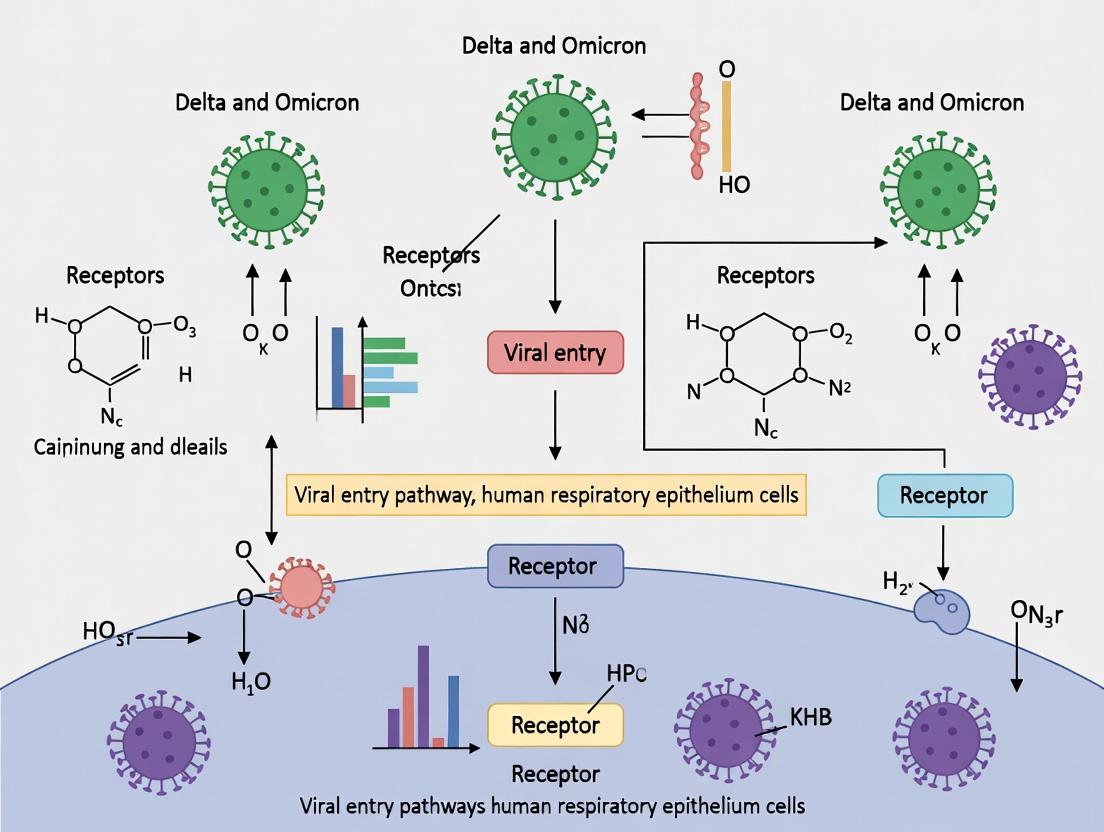
This article provides a comprehensive review of the distinct viral entry mechanisms employed by the SARS-CoV-2 Delta and Omicron variants in human respiratory epithelium.
Delta vs Omicron: Comparative Analysis of SARS-CoV-2 Entry Pathways in Human Respiratory Epithelium
Abstract
This article provides a comprehensive review of the distinct viral entry mechanisms employed by the SARS-CoV-2 Delta and Omicron variants in human respiratory epithelium. We explore foundational differences in spike protein structure and receptor affinity, detail the methodologies used to study these pathways in primary cell models and organoids, address common experimental challenges, and present a comparative validation of findings. This analysis aims to inform researchers and drug developers about the implications for transmission, pathogenesis, and the design of next-generation therapeutics and vaccines targeting specific entry routes.
From Spike to Cell: Exploring the Foundational Entry Mechanisms of Delta and Omicron
Within the broader thesis investigating the divergent viral entry pathways of the SARS-CoV-2 Delta (B.1.617.2) and Omicron (B.1.1.529) variants in human respiratory epithelium, understanding the structural basis of these differences is paramount. The Spike (S) glycoprotein's receptor-binding domain (RBD) is the primary locus for adaptive evolution, with key mutation clusters defining variant phenotypes. This analysis provides a comparative architectural assessment of the Delta-defining L452R/T478K mutations versus the Omicron-defining S371L/S373P/S375F triplex, focusing on their biophysical and functional impacts.
Table 1: Key Mutational Clusters and Properties
| Property | Delta Cluster (L452R/T478K) | Omicron Cluster (S371L/S373P/S375F) |
|---|---|---|
| Location on RBD | Receptor-Binding Motif (RBM), near ACE2 interface | Base of RBD, near the hinge region for "up/down" conformational change |
| Primary Structural Impact | Enhanced electropositive surface charge, altered surface topology | Stabilization of RBD in "up" conformation, local hydrophobic packing |
| ACE2 Binding Affinity (vs. WT) | ~2-4 fold increase (K~D~ ~10-20 nM) | ~2-7 fold increase (K~D~ ~1-15 nM), highly dependent on sub-lineage |
| Protein Stability (ΔΔG) | L452R: Moderate stabilization (~ -0.8 kcal/mol) | S373P: Significant stabilization (~ -1.5 kcal/mol) via backbone constraint |
| Immune Evasion Context | Strong reduction in neutralization by certain mAb classes (e.g., LY-CoV555) | Extreme reduction across most mAb classes, especially Class 1 & 2 |
| Protease Cleavage (S1/S2) | Modestly enhanced (~1.5x) for TMPRSS2 usage | Reduced reliance on TMPRSS2; enhanced Cathepsin/Furin usage |
Table 2: Experimental Data from Key Cited Studies
| Measurement | Technique | Delta (L452R/T478K) Result | Omicron (S371L/S373P/S375F) Result |
|---|---|---|---|
| ACE2 K~D~ | Surface Plasmon Resonance (SPR) | 15.2 ± 2.1 nM | 3.8 ± 0.9 nM (BA.1) |
| RBD "Up" State Population | Cryo-EM & 3D Classification | ~55% | >90% |
| Furin Cleavage Efficiency In vitro Fluorescent Peptide Assay | 120% of WT | 85% of WT | |
| Cell-Cell Fusion Capacity | Luminescence Reporter Assay (TMPRSS2+ cells) | 180% of WT | 110% of WT |
| Neutralization Fold Drop (Convalescent) | Live Virus PRNT~50~ | 4-6 fold | 20-40 fold |
Experimental Protocols
Protocol 1: Surface Plasmon Resonance (SPR) for Binding Affinity Kinetics
Objective: Quantify the binding kinetics (K~a~, K~d~) and affinity (K~D~) of variant RBDs to hACE2.
- Immobilization: Dilute biotinylated hACE2 extracellular domain to 1 µg/mL in HBS-EP+ buffer. Inject over a streptavidin-coated Series S sensor chip (Cytiva) to achieve a capture level of 100-150 Response Units (RU).
- Ligand Preparation: Purified RBD proteins (WT, Delta, Omicron) are dialyzed into HBS-EP+ buffer and serially diluted (typically 0.5-100 nM).
- Binding Cycle: At 25°C with a flow rate of 30 µL/min, inject analyte RBD for 120s (association), followed by buffer for 300s (dissociation). Regenerate the surface with two 30s pulses of 10 mM Glycine-HCl, pH 2.0.
- Analysis: Double-reference sensorgrams and fit to a 1:1 Langmuir binding model using Biacore Evaluation Software.
Protocol 2: Cryo-EM Sample Preparation and 3D Classification for Conformational State Analysis
Objective: Determine the population of Spike trimers in the "1-RBD-up", "2-RBD-up", and "3-RBD-up" conformations.
- Vitrification: Apply 3 µL of purified, full-length Spike trimer (0.5 mg/mL) to a glow-discharged Quantifoil R1.2/1.3 300-mesh Au grid. Blot for 3.5s at 100% humidity, 4°C, and plunge-freeze in liquid ethane using a Vitrobot Mark IV.
- Data Collection: Acquire ~5,000 movies on a 300 keV Titan Krios with a K3 detector in counting mode, at a pixel size of 0.83 Šand a total dose of 50 e-/Ų.
- Image Processing: Motion correct and dose-weight movies (MotionCor2). Extract particle images (cryoSPARC) and perform iterative 2D classification. Generate an ab initio model and heterogeneous refinement into 3 classes. Subsequent 3D classifications without alignment are used to separate particles based on RBD conformation states.
- Quantification: The percentage of particles in each class represents the conformational state population.
Visualization
(Diagram 1: Variant Spike Mutations Drive Divergent Entry Pathways)
(Diagram 2: Integrated Workflow for Spike Analysis)
The Scientist's Toolkit: Research Reagent Solutions
Table 3: Essential Reagents and Materials
| Item | Function / Application | Example Vendor/Product |
|---|---|---|
| HEK293F Cells | Mammalian expression system for producing properly glycosylated, full-length Spike trimers or RBDs. | Thermo Fisher (FreeStyle 293-F) |
| Biotinylated hACE2 | Captured ligand for SPR assays to measure RBD binding kinetics. | Acro Biosystems (AC2-H82E6) |
| Streptavidin SPR Chip | Sensor surface for immobilizing biotinylated proteins in label-free binding assays. | Cytiva (Series S Sensor Chip SA) |
| TMPRSS2-Expressing Cell Line | Functional model for studying plasma membrane fusion pathway efficiency (e.g., Calu-3, Vero-TMPRSS2). | ATCC (Calu-3) |
| Anti-Spike Neutralizing mAbs (Panels) | Reference reagents for quantifying immune escape by variant RBDs (Class 1-4). | BEI Resources, Sino Biological |
| HRP-Conjugated Anti-HA Tag | Detection antibody for ELISA-based RBD-ACE2 binding inhibition assays. | Rockland (600-103-384) |
| Furin Cleavage Substrate | Fluorogenic peptide (e.g., Boc-RVRR-AMC) for in vitro cleavage efficiency assays. | MilliporeSigma |
| Cryo-EM Grids | Specimen support for high-resolution single-particle analysis. | Quantifoil (R1.2/1.3 Au 300 mesh) |
| Pseudovirus System (VSV-ΔG) | Safe, BSL-2 compatible system for measuring viral entry efficiency of Spike variants. | Kerafast (VSV-ΔG-luciferase) |
This whitepaper details the quantitative biophysical and structural differences in ACE2 receptor binding between the SARS-CoV-2 Delta (B.1.617.2) and Omicron (B.1.1.529 and sublineages) variants. It is framed within a broader research thesis investigating the divergent viral entry pathways utilized by these variants in human respiratory epithelium. While Delta exhibits a replication and entry program favoring cell-cell fusion and syncytia formation, Omicron has shifted towards an endocytic, TMPRSS2-independent entry route. The binding affinity and kinetics to the human ACE2 receptor represent the foundational biophysical event that shapes these subsequent, divergent entry pathways and overall viral tropism.
Quantitative Binding Data: Delta vs. Omicron
The following tables consolidate key biophysical and structural data from surface plasmon resonance (SPR), biolayer interferometry (BLI), and structural studies.
Table 1: Binding Affinity (KD) and Kinetic Rate Constants
| Variant / RBD | KD (nM) | ka (1/Ms) | kd (1/s) | Assay Type | Reference (Key Study) |
|---|---|---|---|---|---|
| Wuhan-Hu-1 (WT) | 15-30 | ~1.5e5 | ~4.0e-3 | SPR | Starr et al., Cell, 2020 |
| Delta (B.1.617.2) | 5-15 | ~2.0e5 | ~2.5e-3 | SPR/BLI | Liu et al., Science, 2022 |
| Omicron BA.1 | 0.5-2 | ~4.0e5 | ~1.0e-3 | SPR | Mannar et al., Science, 2022 |
| Omicron BA.2 | 0.8-3 | ~3.8e5 | ~1.2e-3 | BLI | Yue et al., Cell, 2022 |
| Omicron BA.4/5 | 1-3 | ~3.5e5 | ~1.5e-3 | SPR | Wang et al., Nature, 2022 |
Table 2: Key RBD Mutations Impacting ACE2 Binding
| Variant | Signature Binding-Enhancing Mutations (in RBD) | Structural Consequence |
|---|---|---|
| Delta | L452R, T478K | Enhanced electrostatic complementarity; modest affinity increase. |
| Omicron | S477N, Q498R, N501Y, Q493R (BA.1) | Extensive new salt bridges & H-bond networks; dramatic affinity increase. |
Table 3: Correlates with Entry Pathway Efficiency in Respiratory Cells
| Variant | ACE2 KD (nM) | TMPRSS2-Dependent Entry (Fusion at Plasma Membrane) | Cathepsin-Dependent Entry (Endosomal Fusion) | Primary Entry Route in Bronchial Epithelium |
|---|---|---|---|---|
| Delta | ~10 | High | Low | Plasma Membrane (TMPRSS2-driven) |
| Omicron | ~1 | Low | High | Endosomal |
Experimental Protocols for Key Binding Assays
Surface Plasmon Resonance (SPY) for Kinetic Analysis
Objective: Determine the association rate (ka), dissociation rate (kd), and equilibrium dissociation constant (KD) of variant RBD binding to immobilized human ACE2.
Protocol Summary:
- Immobilization: Recombinant human ACE2 ectodomain is covalently immobilized on a CMS sensor chip via amine coupling to achieve ~1000 Response Units (RU).
- Running Conditions: HBS-EP+ buffer (10 mM HEPES, 150 mM NaCl, 3 mM EDTA, 0.05% v/v Surfactant P20, pH 7.4) at 25°C. Flow rate: 30 µL/min.
- Kinetic Injection Series: Purified RBD proteins (0.5 nM to 100 nM, 2-fold serial dilution in running buffer) are injected over the ACE2 surface for 120s (association phase), followed by a 600s dissociation phase in running buffer.
- Data Processing: Reference flow cell signal is subtracted. Double referencing is applied. Data are fitted to a 1:1 Langmuir binding model using the Biacore Evaluation Software.
Biolayer Interferometry (BLI) for Rapid Affinity Screening
Objective: Rapidly compare apparent binding affinities of multiple RBD variants.
Protocol Summary:
- Loading: Anti-His capture biosensors are hydrated, then loaded with His-tagged ACE2 ectodomain (10 µg/mL) for 300s to a target load of 1-2 nm.
- Baseline: 60s baseline in kinetics buffer (PBS, 0.01% BSA, 0.002% Tween-20).
- Association: Association of RBD analyte (serial dilutions from 200 nM) for 180s.
- Dissociation: Dissociation in kinetics buffer for 300s.
- Analysis: Data aligned, reference-subtracted, and fitted using a 1:1 binding model in the BLI system software.
Flow Cytometry-Based Binding to Cell-Surface ACE2
Objective: Measure variant RBD binding to native, full-length ACE2 expressed on live cell membranes.
Protocol Summary:
- Cells: HEK293T cells transiently transfected with human ACE2 expression plasmid.
- Staining: 48h post-transfection, cells are detached, washed, and incubated with a titration of Fc-tagged RBD proteins (0-100 µg/mL) in FACS buffer (PBS + 2% FBS) for 60 min on ice.
- Detection: Cells are washed and stained with an AF488-conjugated anti-human Fc secondary antibody for 30 min on ice.
- Analysis: Mean Fluorescence Intensity (MFI) is measured via flow cytometry. Data are fitted using a non-linear regression (one-site specific binding) to calculate apparent KD.
Visualization of Pathways and Workflows
Diagram Title: ACE2 Binding Affinity Drives Divergent Viral Entry Pathways
Diagram Title: SPR Protocol for Binding Kinetic Measurement
The Scientist's Toolkit: Research Reagent Solutions
| Reagent / Material | Function & Rationale |
|---|---|
| Recombinant Human ACE2 Ectodomain (His- or Fc-tagged) | The purified soluble target for biophysical assays (SPR, BLI). Fc-tagged versions are useful for cell-binding assays. |
| SARS-CoV-2 Variant RBD Proteins (His-/Fc-tagged) | The key analyte. Must be high-purity, monodisperse, and properly folded for reliable kinetic data. |
| CM5 or CMS SPR Sensor Chip | Gold-standard sensor chip for amine coupling of ACE2, providing a dextran matrix for minimal steric hindrance. |
| Anti-His Capture (BLI) Biosensors | For BLI assays, these sensors enable uniform, oriented capture of His-tagged ACE2 or RBD. |
| HEK293T/ACE2 Stable Cell Line | A consistent cellular source of full-length, membrane-anchored ACE2 for flow cytometry binding assays. |
| HBS-EP+ Buffer (10x) | Standard running buffer for SPR to minimize non-specific interactions and maintain protein stability. |
| Glycine-HCl, pH 2.0-2.5 | Standard regeneration solution for SPR to dissociate bound RBD and regenerate the ACE2 surface without damaging it. |
| AF488-conjugated anti-human Fc Antibody | Critical secondary detection reagent for flow cytometry-based binding assays using Fc-tagged RBDs. |
The emergence of SARS-CoV-2 variants of concern (VOCs) has highlighted significant evolution in viral entry mechanisms, a cornerstone of pathogenesis and tissue tropism. This whitepaper delineates the fundamental shift in cellular entry pathways between the Delta (B.1.617.2) and Omicron (B.1.1.529 and sub-lineages) variants within human respiratory epithelium. The core thesis posits that Delta variant entry is characterized by a predominant, efficient plasma membrane fusion pathway dependent on the host serine protease TMPRSS2. In stark contrast, Omicron has evolved to circumvent TMPRSS2 dependence, favoring a endosomal entry pathway mediated by the cysteine protease cathepsin L (CTSL), with implications for cellular tropism, pathogenesis, and therapeutic targeting.
Core Mechanisms of Viral Entry
Delta Variant: TMPRSS2-Dependent Plasma Membrane Fusion
The Delta variant spike protein exhibits a preference for cleavage at the S1/S2 site by furin and at the S2' site by TMPRSS2. TMPRSS2, abundantly expressed on the surface of respiratory epithelial cells (particularly type II pneumocytes and ciliated cells), enables rapid, direct fusion of the viral envelope with the host plasma membrane. This pathway bypasses endosomal trafficking, allowing for efficient entry and replication.
Omicron Variant: Cathepsin-L Mediated Endosomal Entry
Omicron spike protein contains numerous mutations that reduce its efficiency for TMPRSS2-mediated cleavage and plasma membrane fusion. Consequently, Omicron predominantly enters cells via endocytosis. The virus is trafficked to endosomes, where the acidic environment activates cathepsin L, which then cleaves the spike protein to facilitate endosomal membrane fusion and viral genome release.
Table 1: Comparative Entry Characteristics of Delta vs. Omicron Variants
| Parameter | Delta Variant | Omicron Variant | Measurement Method | Key Reference |
|---|---|---|---|---|
| Primary Entry Route | Plasma membrane fusion | Endosomal entry | Immunofluorescence, entry inhibitors | Willett et al., 2022 |
| Key Host Protease | TMPRSS2 | Cathepsin L | CRISPR knockout, pharmacological inhibition | Meng et al., 2022 |
| ACE2 Binding Affinity | ~2-3 fold increase vs. WT | Comparable to WT, but enhanced evasion | Surface Plasmon Resonance (SPR) | McCallum et al., 2022 |
| Furin Cleavage Efficiency | High | Very High | Cell-based cleavage assay | Peacock et al., 2022 |
| pH Threshold for Fusion | ~7.4 (neutral) | ~5.5-6.0 (acidic) | Cell-cell fusion assay at varied pH | Jackson et al., 2022 |
| Replication in TMPRSS2+ Calu-3 cells | High (Fast kinetics) | Reduced (Slower kinetics) | TCID50 or plaque assay over time | Hui et al., 2022 |
| Replication in Vero E6 (TMPRSS2-) | Moderate | High | TCID50 assay | Zhao et al., 2022 |
| Sensitivity to Camostat (TMPRSS2i) | High (IC50 ~1-10 µM) | Low (IC50 >50 µM) in vitro | Viral entry inhibition assay | Willett et al., 2022 |
| Sensitivity to E64d (Cathepsin L/i) | Low | High (IC50 ~0.1-1 µM) | Viral entry inhibition assay | Zhao et al., 2022 |
Table 2: Key Mutations in Spike Protein Influencing Protease Usage
| Variant | Key Spike Mutations Linked to Entry | Proposed Impact on Protease Preference |
|---|---|---|
| Delta | P681R, D950N | Enhances furin cleavage, stabilizes spike for TMPRSS2 interaction. |
| Omicron BA.1 | H655Y, N679K, P681H (multibasic site), D796Y | Alters cleavage efficiency; mutations in S2 (D796Y) may destabilize TMPRSS2-accessible conformation, favoring endosomal route. |
| Omicron BA.2/5 | Similar multibasic site mutations, additional S2 changes (L452R, F486V) | Maintains reduced TMPRSS2 usage; L452R may modulate ACE2 affinity and protease accessibility. |
Experimental Protocols for Key Findings
Protocol: Determining Primary Entry Pathway using Pharmacological Inhibitors
Objective: To distinguish between TMPRSS2-mediated and endosomal/cathepsin-mediated entry. Cell Line: Human lung adenocarcinoma Calu-3 cells (high TMPRSS2 expression). Reagents:
- Camostat mesylate (TMPRSS2 inhibitor)
- E64d (cell-permeable cathepsin B/L inhibitor)
- NH4Cl (lysosomotropic agent, raises endosomal pH)
- SARS-CoV-2 Delta and Omicron stock (equal genome copies). Procedure:
- Seed Calu-3 cells in 96-well plates 24h prior.
- Pre-treat cells with serial dilutions of Camostat (e.g., 0.1-100 µM), E64d (0.01-10 µM), or NH4Cl (1-50 mM) for 1h.
- Infect cells with virus at a low MOI (0.1) in the presence of inhibitors for 1h.
- Remove inoculum, wash, and add fresh medium with inhibitors.
- At 24h post-infection, quantify infection by:
- qRT-PCR for viral RNA in supernatant.
- Immunofluorescence assay (IFA) for nucleocapsid protein (% infected cells).
- Calculate % inhibition relative to DMSO-treated infected controls. A high sensitivity to Camostat indicates TMPRSS2 dependence. High sensitivity to E64d/NH4Cl indicates endosomal/cathepsin dependence.
Protocol: CRISPR-Cas9 Knockout for Protease Dependency Validation
Objective: Genetically validate the role of specific host proteases. Cell Line: HEK-293T-ACE2 or Caco-2 cells. Procedure:
- Generate knockout cell lines using lentiviral delivery of sgRNAs targeting TMPRSS2, CTSL, or non-targeting control.
- Validate knockout by western blot and functional assays (e.g., fluorogenic protease activity assay).
- Infect isogenic knockout lines with Delta and Omicron variants.
- Measure viral entry at 4-6h post-infection using a luciferase reporter virus or by quantifying cell-associated viral RNA.
- Measure progeny virus production at 24-48h via TCID50 assay. Expected Result: Delta titer will be drastically reduced in TMPRSS2-/- but not CTSL-/- cells. Omicron titer will be reduced in CTSL-/- cells and show less dependence on TMPRSS2.
Visualizations
Diagram 1: Delta vs. Omicron Viral Entry Pathways
Diagram 2: Experimental Workflow for Entry Mechanism Determination
The Scientist's Toolkit: Key Research Reagent Solutions
Table 3: Essential Reagents for Studying SARS-CoV-2 Entry Pathways
| Reagent / Material | Function / Application | Example Vendor/Cat # (Illustrative) |
|---|---|---|
| Recombinant SARS-CoV-2 S proteins (Delta, Omicron) | Surface Plasmon Resonance (SPR) to measure ACE2 binding kinetics. | Acro Biosystems, Sino Biological |
| Camostat mesylate | Selective TMPRSS2 inhibitor to block plasma membrane fusion pathway. | Tocris (cat. # 5942), MedChemExpress |
| E64d (Aloxistatin) | Cell-permeable, irreversible cysteine protease inhibitor (Cathepsin B/L). | Sigma-Aldrich (cat. # E8640), Cayman Chemical |
| NH4Cl | Lysosomotropic agent that neutralizes endosomal pH, blocking endosomal fusion. | Generic laboratory suppliers |
| Bafilomycin A1 | V-ATPase inhibitor that blocks endosomal acidification. | Tocris (cat. # 1334) |
| TMPRSS2 Fluorogenic Substrate | To measure TMPRSS2 enzymatic activity in cell lysates or supernatants. | R&D Systems (cat. # ES010) |
| Cathepsin L Fluorogenic Substrate | To measure Cathepsin L enzymatic activity. | Cayman Chemical (cat. # 700230) |
| Anti-Spike Neutralizing Antibodies | To assess differential neutralization sensitivity linked to entry route. | Numerous (e.g., S309, REGN10987) |
| CRISPR sgRNA kits for TMPRSS2/CTSL | For genetic knockout validation of protease function. | Synthego, Sigma-Aldrich (MISSION) |
| Pseudotyped VSV particles (Delta/Omicron S) | Safe, BSL-2 alternative for high-throughput entry assays. | Integral Molecular, BPS Bioscience |
| Human Primary Nasal or Bronchial Epithelial Cells | For studying entry in physiologically relevant, differentiated air-liquid interface (ALI) cultures. | Epithelix, MatTek, ATCC |
This whitepaper details the molecular mechanisms by which host proteases—principally furin, TMPRSS2, and cathepsins—determine the entry pathway of SARS-CoV-2 variants into human respiratory epithelial cells. The divergent entry pathways of Delta (B.1.617.2) and Omicron (B.1.1.529) variants serve as the central paradigm, highlighting how evolutionary changes in the viral spike (S) protein alter protease dependence and entry route selection, with significant implications for tropism, pathogenesis, and therapeutic targeting.
Key Proteases: Functions and Localization
Furin
A ubiquitously expressed proprotein convertase primarily localized in the trans-Golgi network (TGN). It cleaves the S protein at the multibasic S1/S2 site (RRAR) during viral egress, a process known as "priming." This cleavage is essential for preconditioning the S protein for subsequent activation by cell-surface proteases during entry.
TMPRSS2 (Transmembrane Serine Protease 2)
A type II transmembrane serine protease anchored to the plasma membrane of respiratory epithelial cells, particularly in the upper and conducting airways. It cleaves the S protein at the S2' site, enabling direct, cathepsin-independent fusion of the viral membrane with the host plasma membrane.
Cathepsin B/L
Lysosomal cysteine proteases. In cells lacking surface TMPRSS2, virions are internalized via endocytosis. The acidic endosomal environment activates cathepsins, which then cleave the S protein at the S2' site, triggering fusion with the endosomal membrane.
Variant-Specific Priming and Entry Dynamics
Recent studies delineate a fundamental shift in entry mechanism between Delta and Omicron variants, driven by mutations that alter furin cleavage efficiency and S protein conformation.
Delta Variant (B.1.617.2): Exhibits superior furin cleavage at the S1/S2 site compared to ancestral strains. This efficient priming makes Delta highly dependent on TMPRSS2 for entry, favoring the direct plasma membrane fusion pathway in TMPRSS2-expressing cells like bronchial epithelia. This pathway is rapid and avoids antiviral sensing in endosomes.
Omicron Variant (B.1.1.529): Possesses mutations (e.g., H655Y, N679K, P681H) that paradoxically alter the S protein structure, reducing its dependence on TMPRSS2. Omicron shows a marked preference for the endosomal, cathepsin-dependent entry pathway, even in cells expressing TMPRSS2. This shift contributes to its altered cellular tropism, favoring upper airway over lower airway epithelial.
Table 1: Comparative Protease Dependency and Entry Kinetics of SARS-CoV-2 Variants
| Parameter | Ancestral (D614G) | Delta (B.1.617.2) | Omicron (BA.1) | Assay Type |
|---|---|---|---|---|
| Furin Cleavage Efficiency | 1.0 (Reference) | ~1.5-2.0x increase | ~0.8-1.2x (similar or slightly reduced) | In vitro fluorogenic peptide assay |
| TMPRSS2 Dependency (Entry) | High | Very High | Low | Infection +/- Camostat (TMPRSS2 inhibitor) |
| Cathepsin Dependency (Entry) | Low (in TMPRSS2+ cells) | Very Low | Very High | Infection +/- E64d (Cathepsin inhibitor) |
| Primary Entry Route in Calu-3 cells | Plasma Membrane (~70%) | Plasma Membrane (>90%) | Endosomal (>80%) | Confocal microscopy, entry inhibitor panels |
| Ratio of Cell-Surface vs. Endosomal Fusion | ~3:1 | ~9:1 | ~1:4 | Split GFP/content mixing assays |
Table 2: Impact of Protease Inhibitors on Viral Titer (Log10 Reduction) in Human Airway Epithelia
| Inhibitor/Target | Ancestral | Delta | Omicron | Cell Model |
|---|---|---|---|---|
| Camostat (TMPRSS2) | 2.5 log10 | 3.0 log10 | 0.5 log10 | Primary bronchial epithelial cells (ALI) |
| E64d (Cathepsins) | 1.0 log10 | 0.5 log10 | 2.8 log10 | Primary bronchial epithelial cells (ALI) |
| Combination (Camostat + E64d) | >4.0 log10 | >4.0 log10 | >3.5 log10 | Primary bronchial epithelial cells (ALI) |
Detailed Experimental Protocols
Protocol: Measuring Furin Cleavage EfficiencyIn Vitro
Objective: Quantify the cleavage rate of synthetic spike protein-derived peptides by recombinant furin.
- Reagents: Fluorogenic peptide substrate (e.g., Boc-RVRR-AMC), recombinant human furin, cleavage assay buffer (100 mM HEPES, 1 mM CaCl2, 0.5% Triton X-100, pH 7.5).
- Procedure: a. Dilute peptide substrate to 20 µM in assay buffer in a black 96-well plate. b. Initiate reaction by adding recombinant furin (final 10 nM). c. Immediately monitor fluorescence (excitation 380 nm, emission 460 nm) every 30 seconds for 60 minutes using a plate reader at 37°C. d. Calculate cleavage velocity (RFU/min) from the linear phase. Normalize to ancestral peptide control.
Protocol: Determining Entry Pathway Dependence
Objective: Distinguish between TMPRSS2-mediated and cathepsin-mediated entry using specific inhibitors.
- Cell Preparation: Seed target cells (e.g., Calu-3, VeroE6/TMPRSS2, Caco-2) in 96-well plates 24h prior.
- Inhibitor Pre-treatment: 1h before infection, treat cells with: a) DMSO (vehicle), b) Camostat mesylate (10-50 µM), c) E64d (10-25 µM), d) Camostat + E64d.
- Infection: Infect cells with SARS-CoV-2 variants (MOI=0.1-0.5) for 1h in the presence of inhibitors. Replace inoculum with fresh medium containing inhibitors.
- Quantification: At 16-24h post-infection, quantify viral RNA via RT-qPCR (for entry studies) or measure plaque-forming units (for replication studies). Calculate % inhibition relative to vehicle control.
Protocol: Visualizing Entry Route by Confocal Microscopy
Objective: Visually confirm subcellular site of fusion (plasma membrane vs. endosome).
- Virus Labeling: Label purified virions with lipophilic dye (e.g., DiD or R18) according to manufacturer's protocol.
- Cell Staining: Seed cells on glass-bottom dishes. Pre-stain endosomes/lysosomes with Lysotracker Green.
- Synchronized Infection: Bind labeled virus to cells at 4°C for 1h. Wash, then shift to 37°C to initiate entry.
- Live-Cell Imaging: At defined time points (e.g., 0, 15, 30, 60 min), acquire z-stacks using a confocal microscope. Use a 37°C environmental chamber.
- Analysis: Colocalization of viral dye (red) with Lysotracker (green) indicates endosomal entry. Viral signal at the cell periphery without colocalization indicates plasma membrane fusion.
Visualizations
Title: Host Protease-Mediated Entry Pathways for SARS-CoV-2
The Scientist's Toolkit: Key Research Reagents
Table 3: Essential Reagents for Studying Protease-Driven Viral Entry
| Reagent | Category/Name | Primary Function in Research | Application Example |
|---|---|---|---|
| Camostat Mesylate | TMPRSS2 Inhibitor | Selective, cell-permeable inhibitor of TMPRSS2 and related serine proteases. | Determining TMPRSS2-dependence of viral entry in infection assays. |
| E64d | Cathepsin Inhibitor | Broad-spectrum, membrane-permeable cysteine protease inhibitor; blocks cathepsin B/L activity. | Determining cathepsin-dependence of viral entry; confirms endosomal pathway usage. |
| Recombinant Human Furin | Enzyme | Catalytically active furin for in vitro cleavage assays. | Quantifying cleavage kinetics of viral S protein or peptide substrates. |
| Fluorogenic Peptide Substrates | Assay Probe | Peptides (e.g., Boc-RVRR-AMC) that release a fluorescent group upon cleavage. | Measuring furin or TMPRSS2 enzymatic activity in kinetic assays. |
| TMPRSS2-Overexpressing Cell Lines | Cell Model | Engineered cells (e.g., VeroE6/TMPRSS2) providing a uniform, high level of protease expression. | Standardized assays for TMPRSS2-dependent entry and fusion. |
| Primary Human Airway Epithelial Cells (ALI Culture) | Physiological Model | Differentiated, polarized epithelia mimicking the human respiratory tract. | Studying tissue-specific entry, tropism, and infection in a near-native context. |
| Neutralizing Endosomal pH (e.g., Bafilomycin A1) | Pharmacological Tool | V-ATPase inhibitor that blocks endosomal acidification, preventing cathepsin activation. | Confirming the role of pH-dependent endosomal entry as a control experiment. |
| Lipophilic Dyes (DiD, DiI, R18) | Virus Labeling | Incorporate into viral membranes for live-cell imaging of virus trafficking and fusion. | Visualizing virus entry route via confocal microscopy (colocalization studies). |
| Split GFP/Protein Complementation Assays | Fusion Reporter | Systems where viral and cellular components reconstitute a fluorescent protein upon fusion. | Quantifying fusion efficiency at plasma vs. endosomal membranes in real-time. |
Within the broader investigation of SARS-CoV-2 variant pathogenesis, particularly the contrasting entry pathways of Delta and Omicron lineages, understanding initial cellular tropism is paramount. This whitepaper delineates the critical differences in how SARS-CoV-2 variants initially infect nasal (upper airway) versus bronchial (lower airway) epithelial cells. These differences in tropism underpin observed variations in transmissibility, disease severity, and tissue-specific pathology between variants, guiding therapeutic and prophylactic intervention strategies.
Core Biological Mechanisms: Receptors, Proteases, and Entry Pathways
SARS-CoV-2 cellular entry is mediated by the viral spike (S) protein binding to the host receptor angiotensin-converting enzyme 2 (ACE2). Subsequent priming by host proteases, principally transmembrane protease serine 2 (TMPRSS2) and endosomal cathepsins (e.g., Cathepsin L), defines two major entry pathways. The preference for these pathways varies by respiratory epithelial cell type and viral variant.
- Nasal Epithelial Cells: Predominantly express ACE2 and TMPRSS2, favoring a TMPRSS2-dependent, plasma membrane fusion pathway. This pathway is rapid and facilitates high viral replication in the upper airway.
- Bronchial Epithelial Cells: Exhibit more heterogeneous expression of entry factors. While subsets express the TMPRSS2 pathway, there is a greater reliance on the endosomal, cathepsin-dependent entry pathway, particularly in ciliated cells.
The Omicron variant (BA.1 and sublineages) exhibits a shifted entry mechanism compared to Delta, with a marked reduction in TMPRSS2 usage and increased dependence on the endosomal route. This shift has profound implications for cellular tropism across the respiratory tract.
Quantitative Data: Variant-Specific Infection Efficiency
Recent studies using primary human epithelial cell cultures and air-liquid interface (ALI) models quantify infection differentials.
Table 1: Infection Efficiency of SARS-CoV-2 Variants in Respiratory Epithelial Cells
| Cell Type / Model | Delta Variant (Infection Ratio) | Omicron Variant (Infection Ratio) | Key Finding | Reference (Example) |
|---|---|---|---|---|
| Primary Nasal Epithelial Cells (ALI) | 1.0 (Reference) | ~2.5 - 4.0 | Omicron replicates significantly faster and to higher titers in nasal epithelium. | Hui et al., 2022 |
| Primary Bronchial Epithelial Cells (ALI) | 1.0 (Reference) | ~0.3 - 0.6 | Omicron replication is attenuated in bronchial cells compared to Delta. | Peacock et al., 2022 |
| ACE2 Expression (RNA-seq) | Higher in nasal vs. bronchial | Higher in nasal vs. bronchial | Nasal epithelium consistently shows higher baseline ACE2. | |
| TMPRSS2 Dependence | High (>70% inhibited by Camostat) | Low (<30% inhibited by Camostat) | Omicron entry is less sensitive to TMPRSS2 inhibition. | Willett et al., 2022 |
| Endosomal Dependence | Moderate (>60% inhibited by E64d) | Very High (>90% inhibited by E64d) | Omicron entry is highly sensitive to cathepsin inhibition. |
Table 2: Key Host Factor Expression Profiles
| Host Factor | Nasal Epithelial Cells (Relative Level) | Bronchial Epithelial Cells (Relative Level) | Implication for Tropism |
|---|---|---|---|
| ACE2 | High | Moderate | Favors nasal infection for all variants. |
| TMPRSS2 | Very High | Moderate/Low | Favors Delta nasal tropism; limits Omicron bronchial entry. |
| Cathepsin L | Moderate | High | Supports alternative Omicron entry, especially in bronchial. |
| Furin | High | Moderate | Omicron's altered S1/S2 furin cleavage site impacts cell-cell fusion. |
Detailed Experimental Protocols
Protocol 1: Quantifying Viral Entry Pathways in Primary ALI Cultures
- Objective: Determine the contribution of TMPRSS2 vs. cathepsin-mediated entry for a variant in a specific epithelial cell type.
- Materials: Differentiated primary human nasal or bronchial ALI cultures, SARS-CoV-2 variant stocks (Delta, Omicron), TMPRSS2 inhibitor (e.g., Camostat mesylate, 10-50 µM), cathepsin inhibitor (e.g., E64d, 10-50 µM), virus dilution medium, cell culture incubator.
- Procedure:
- Pre-treatment: At 1 hour pre-infection, add inhibitors or vehicle control to the apical surface of ALI cultures.
- Infection: Inoculate apically with a defined multiplicity of infection (MOI) of the target variant. Incubate for 1-2 hours.
- Post-treatment: Remove inoculum, wash apical surface, and replenish inhibitors in the basolateral medium.
- Harvest: Collect apical washes or cell lysates at 24-48 hours post-infection.
- Quantification: Measure viral RNA (qRT-PCR) or infectious virus (plaque assay) titers. Normalize to vehicle control. A >70% reduction with Camostat indicates TMPRSS2 dependence. A >70% reduction with E64d indicates endosomal dependence.
Protocol 2: Immunofluorescence Staining for Co-localization Analysis
- Objective: Visualize viral antigen (e.g., nucleocapsid protein) in specific cell types (ciliated, goblet, basal).
- Materials: Infected ALI cultures (fixed), primary antibodies (anti-SARS-CoV-2 N, anti-acetylated α-Tubulin for cilia, anti-MUC5AC for goblet cells), species-specific fluorescent secondary antibodies, DAPI, confocal microscope.
- Procedure:
- Fix membranes in 4% PFA, permeabilize with 0.1% Triton X-100.
- Block with serum, then incubate with primary antibody cocktail overnight at 4°C.
- Wash and incubate with secondary antibodies.
- Image using a confocal microscope. Quantify the percentage of infected cells of each identified cell type.
Signaling and Entry Pathway Diagrams
Title: SARS-CoV-2 Entry Pathways in Respiratory Epithelium
Title: Workflow for ALI Culture Infection Model
The Scientist's Toolkit: Key Research Reagent Solutions
Table 3: Essential Reagents for Tropism and Entry Pathway Studies
| Reagent / Material | Function / Application | Example Vendor / Cat. No. (Illustrative) |
|---|---|---|
| Primary Human Nasal/Bronchial Epithelial Cells | Gold-standard ex vivo model for tropism studies. | MatTek (EpiAirway, EpiNasal), Epithelix (MucilAir), or direct tissue procurement. |
| PneumaCult ALI Medium | Specialized medium for differentiation and maintenance of airway epithelial ALI cultures. | STEMCELL Technologies (Cat. #05008). |
| SARS-CoV-2 Variant Isolates | Source of authentic virus for infection experiments. | BEI Resources, NIAID. |
| Recombinant VSV-ΔG-Spike Pseudovirus | Safe, BSL-2 alternative for specific entry studies using different variant spikes. | Produced in-house using plasmids (e.g., Addgene #158891). |
| Anti-ACE2 Antibody (Clone EPR4435) | Flow cytometry or IF staining to quantify receptor expression. | Abcam (ab108252). |
| Camostat Mesylate | TMPRSS2 inhibitor to probe for plasma membrane pathway dependence. | Sigma-Aldrich (SML0057). |
| E64d (Aloxistatin) | Cathepsin inhibitor to probe for endosomal pathway dependence. | Sigma-Aldrich (E8640). |
| CellRabbit Anti-SARS-CoV-2 Nucleocapsid mAb | High-sensitivity detection of infected cells by immunofluorescence. | Cell Signaling Technology (CST #83665). |
| Luna Universal Probe One-Step RT-qPCR Kit | Quantitative measurement of viral RNA from apical washes or cell lysates. | New England Biolabs (E3007). |
| Vero E6-TMPRSS2 Cells | Permissive cell line for plaque assays, especially for TMPRSS2-using variants. | JCRB Cell Bank (JCRB1819). |
The initial cellular tropism of SARS-CoV-2 variants is a deterministic factor for disease presentation. The Delta variant efficiently utilizes the TMPRSS2-rich nasal epithelium for robust replication, facilitating high viral shedding, while also maintaining proficiency in bronchial cell infection via both pathways, correlating with severe lower respiratory disease. In contrast, the Omicron variant's shifted entry preference towards the endosomal pathway enhances its fitness in the nasal cavity (explaining its high transmissibility) but attenuates its replication in TMPRSS2-low bronchial cells (contributing to lower severity). This mechanistic understanding, rooted in comparative infection assays of primary epithelial models, provides a critical framework for predicting the behavior of future variants and developing broadly effective antivirals and mucosal vaccines.
Tools of the Trade: Methodologies for Modeling and Inhibiting Variant-Specific Entry
Within respiratory virus research, particularly for delineating the divergent entry pathways of SARS-CoV-2 variants (e.g., Delta vs. Omicron), Primary Human Airway Epithelial (HAE) cultures at the Air-Liquid Interface (ALI) represent the physiological gold standard. This model recapitulates the pseudostratified mucociliary epithelium, including ciliated cells, goblet cells, and basal cells, providing an unparalleled system for studying viral tropism, entry mechanisms, innate immune responses, and therapeutic efficacy.
The emergence of SARS-CoV-2 variants of concern (VOCs) with altered pathogenicity underscores the need for physiologically relevant models. The Delta variant exhibited a pronounced preference for TMPRSS2-mediated cell surface fusion, leading to syncytia formation and severe lower airway disease. In contrast, the Omicron variant shifted towards endosomal entry via cathepsin-mediated spike protein cleavage, favoring replication in the upper airway. HAE-ALI cultures are indispensable for quantifying these entry route efficiencies, spike protein activation dynamics, and resultant viral fitness and pathogenesis in the authentic human tissue context.
Establishing and Validating HAE-ALI Cultures
Core Protocol: Differentiation at ALI
Source: Primary human bronchial epithelial cells (HBECs) are obtained from lung transplant donors or surgical resections via brushings or tissue dissection.
Detailed Methodology:
- Isolation & Expansion: HBECs are isolated via protease digestion (e.g., Pronase). Basal cells are purified (e.g., using magnetic bead selection for CD326-/CD271+ cells) and expanded in PneumaCult-Ex Plus or similar medium on collagen-coated flasks.
- ALI Setup: At ~80% confluence, cells are trypsinized and seeded onto porous membrane transwell inserts (0.4-3.0 µm pore size, polyester or collagen-coated) at high density (~2.5-5.0 x 10^5 cells/cm²).
- Differentiation: Upon confluence (2-3 days post-seeding), the apical medium is removed to establish the ALI. Basolateral medium is replaced with a differentiation medium (e.g., PneumaCult-ALI, Ultroser G, or custom formulations). The apical surface is exposed to air.
- Maturation: Cultures are maintained for 4-6 weeks, with basolateral medium changed 2-3 times per week. Mucociliary differentiation is monitored by the development of beating cilia (visible via microscopy) and mucus production.
- Validation:
- Transepithelial Electrical Resistance (TEER): Measured weekly using a volt-ohmmeter. Mature cultures typically reach 500-1000 Ω·cm².
- Histology: Formalin-fixed, paraffin-embedded cross-sections are stained with Hematoxylin & Eosin (H&E) and Alcian Blue/PAS to confirm pseudostratification and goblet cell presence.
- Immunofluorescence: Staining for β-tubulin (ciliated cells), MUC5AC (goblet cells), and CC10 (club cells) confirms cellular composition.
Key Applications in Delta vs. Omicron Research
Quantitative Viral Entry and Replication Kinetics
Infections are performed by inoculating the apical surface with a precise viral titer (MOI based on target cell count). Apical washes are collected at serial time points (e.g., 1, 24, 48, 72, 96 hpi) to quantify released virus via plaque assay or TCID₅₀.
Table 1: Exemplary Replication Kinetics of SARS-CoV-2 VOCs in HAE-ALI
| Variant | Peak Titer (Log₁₀ PFU/mL) | Time to Peak (hpi) | Primary Entry Pathway Inferred |
|---|---|---|---|
| Delta (B.1.617.2) | 6.5 - 7.2 | 48 - 72 | TMPRSS2-dependent, fusion |
| Omicron (BA.1) | 5.8 - 6.5 | 72 - 96 | Cathepsin-dependent, endocytosis |
| Ancestral (WA1) | 6.0 - 6.8 | 72 | Mixed |
Pathway-Specific Entry Inhibition Assays
Detailed Methodology:
- Pre-treatment: Cultures are treated with inhibitors via the basolateral medium (for host-targeting) or apical inoculum (for virus-targeting) 1-2 hours pre-infection.
- TMPRSS2 Inhibitor: Camostat mesylate (10-50 µM).
- Cathepsin Inhibitor: E64d (10-50 µM).
- Endosomal Acidification Inhibitor: Bafilomycin A1 (10-100 nM).
- Infection & Analysis: Virus is inoculated apically. After 1-2 hours, the inoculum is removed, the apical surface is washed, and fresh medium with inhibitor is replaced. Viral titers in apical washes at 24-48 hpi are compared to untreated controls.
- Data Interpretation: A significant titer reduction with Camostat implicates TMPRSS2 use. Reduction with E64d or Bafilomycin A1 implicates endosomal/cathepsin pathways.
Table 2: Effect of Entry Inhibitors on VOC Replication in HAE-ALI
| Inhibitor (Target) | Delta Titer Reduction | Omicron Titer Reduction | Interpretation |
|---|---|---|---|
| Camostat (TMPRSS2) | 90-99% | 30-60% | Delta is highly TMPRSS2-dependent. |
| E64d (Cathepsins) | 20-40% | 80-95% | Omicron is highly cathepsin-dependent. |
| Bafilomycin A1 (Endosomal pH) | 40-60% | 90-99% | Confirms Omicron's endosomal reliance. |
Immunofluorescence Analysis of Viral Tropism and Entry Proteins
Detailed Methodology:
- Fixation & Staining: At defined hpi, cultures are fixed with 4% PFA, permeabilized, and blocked.
- Antibody Incubation: Primary antibodies against SARS-CoV-2 nucleocapsid (viral antigen), β-tubulin (ciliated cells), and TMPRSS2 or Cathepsin L are applied.
- Imaging & Quantification: Confocal microscopy is used. Co-localization analysis (Pearson's coefficient) quantifies virus association with specific cell types or entry factors.
Signaling Pathways in Viral Entry and Host Response
Diagram Title: Comparative Viral Entry Pathways of Delta and Omicron Variants
The Scientist's Toolkit: Essential Research Reagents
Table 3: Key Reagent Solutions for HAE-ALI Viral Entry Studies
| Reagent / Material | Function & Rationale | Example Product/Brand |
|---|---|---|
| PneumaCult-ALI Medium | Defined, serum-free medium optimized for robust mucociliary differentiation and long-term culture maintenance. | STEMCELL Technologies |
| Transwell Inserts | Permeable supports (polyester, collagen-coated) allowing independent access to apical and basolateral compartments; essential for ALI. | Corning |
| TMPRSS2 Inhibitor (Camostat) | Serine protease inhibitor used to functionally probe the role of surface TMPRSS2 in viral entry. | Sigma-Aldrich, Tocris |
| Cathepsin Inhibitor (E64d) | Cell-permeable cysteine protease inhibitor used to probe the role of endosomal cathepsins in spike protein cleavage. | Sigma-Aldrich, Cayman Chemical |
| Anti-β-tubulin IV Antibody | Immunofluorescence marker for ciliated cells, the primary target for SARS-CoV-2 in HAE. | Bio-Techne, Abcam |
| ACE2 Neutralizing Antibody | Blocks the primary viral receptor; critical control for entry specificity. | R&D Systems, Sino Biological |
| EVOM3 Voltohmmeter | For accurate, non-destructive TEER measurements to monitor epithelial integrity pre- and post-infection. | World Precision Instruments |
| Human Recombinant IFN-λ (IL-29) | To study the role of airway-specific interferon responses in limiting variant replication. | PeproTech, BioLegend |
Experimental Workflow for VOC Comparison
Diagram Title: HAE-ALI Experimental Workflow for VOC Comparison
Primary HAE-ALI cultures provide the most clinically predictive in vitro model for resolving the complex interplay between evolving viral entry mechanisms (Delta vs. Omicron) and the human airway epithelium. The model's fidelity enables robust quantification of replication, precise dissection of entry pathways using pharmacological probes, and evaluation of next-generation antivirals and mucosal vaccines aimed at blocking initial infection.
Utilizing Human Nasal, Bronchial, and Lung Organoids for Pathophysiological Studies
This technical guide details the application of human respiratory organoid models to delineate the differential pathophysiological mechanisms of SARS-CoV-2 variants, with a focused thesis on contrasting Delta (B.1.617.2) and Omicron (B.1.1.529) viral entry pathways. These advanced in vitro systems recapitulate the cellular complexity and physiology of the human respiratory epithelium, providing an indispensable platform for mechanistic studies and therapeutic screening.
A central question in SARS-CoV-2 research is how viral evolution alters tropism and disease severity. The Delta variant, associated with severe lower respiratory disease, primarily utilizes transmembrane serine protease 2 (TMPRSS2)-mediated cell surface entry. In contrast, the Omicron variant, exhibiting increased upper airway tropism and reduced severity, shifted towards cathepsin-dependent endosomal entry, with reduced reliance on TMPRSS2. This thesis necessitates physiologically relevant models of the entire respiratory tract—nasal (upper), bronchial (conducting), and distal lung (alveolar)—to map these divergent entry pathways spatially and mechanistically.
Organoid Model Establishment and Characterization
Protocol: Derivation of Human Respiratory Organoids
- Source Material: Primary human bronchial epithelial cells (HBECs) or human pluripotent stem cells (hPSCs).
- Culture Medium: Air-Liquid Interface (ALI) medium: DMEM/F12 supplemented with growth factors (BPE, EGF, Insulin, Triiodothyronine, Hydrocortisone), retinoic acid, and a Rho-associated kinase inhibitor (Y-27632) for initial plating.
- Methodology:
- Embed cells in reduced-growth factor Matrigel domes.
- Submerge in proliferation medium for 7-10 days to form closed organoids/spheroids.
- For ALI differentiation, dissociate and plate spheroids on porous Transwell inserts.
- Upon confluence, remove apical medium to establish ALI (Day 0).
- Maintain for 21-28 days, feeding basally only. Multiciliated, secretory, and basal cells differentiate.
- For distal lung organoids from hPSCs, differentiate through definitive endoderm, anterior foregut, and NKX2-1+ lung progenitor stages before 3D maturation.
Characterization Data (Quantitative Benchmark)
Table 1: Standard Characterization Metrics for Mature Respiratory Organoids (ALI Day 28)
| Parameter | Nasal Organoids | Bronchial Organoids | Distal Lung Organoids | Measurement Method |
|---|---|---|---|---|
| Transepithelial Electrical Resistance (Ω·cm²) | 300 - 600 | 500 - 1000 | 200 - 500 | Voltmeter (EVOM2) |
| Ciliary Beat Frequency (Hz) | 10 - 15 | 10 - 15 | N/A | High-speed video microscopy |
| Mucin (MUC5AC) Production | High | High | Low | ELISA / Immunostaining |
| Surfactant Protein C (SFTPC) Expression | Negative | Low/Focal | High | qRT-PCR / Immunostaining |
| Key Marker Expression | FOXJ1 (Cilia), MUC5B | FOXJ1, SCGB1A1 (Club), KRT5 (Basal) | SFTPC, AQP5 (AT1), HT2-280 (AT2) | Immunofluorescence |
Application to Delta vs. Omicron Entry Pathway Analysis
Experimental Protocol: Viral Entry Pathway Dissection
- Virus Preparation: Use clinical isolates or engineered VSV pseudoviruses expressing SARS-CoV-2 Spike variants (Delta, Omicron BA.1, BA.5) and a reporter (e.g., GFP, luciferase).
- Organoid Infection: Apply virus inoculum to the apical surface of ALI cultures. For endosomal entry inhibition, pre-treat basolateral medium with Camostat mesylate (TMPRSS2 inhibitor) or E64d (Cathepsin B/L inhibitor).
- Quantification: At 48-72 hours post-infection, measure:
- Reporter gene activity (luminescence).
- Viral RNA copy number by qRT-PCR.
- Infectious titer by plaque assay (on Vero-E6/TMPRSS2 cells).
- Immunostaining: Fix and stain for Spike protein, cleaved caspase-3 (apoptosis), and cell-type-specific markers.
Table 2: Comparative Viral Entry Efficiency and Pathway Dependence in Respiratory Organoids
| Variant | Relative Infectivity (vs. D614G) | Primary Entry Pathway | Inhibition by Camostat (TMPRSS2i) | Inhibition by E64d (Cathepsini) | Tropism in Organoid Models |
|---|---|---|---|---|---|
| Delta | ~200% | TMPRSS2-mediated surface | Strong (>80%) | Weak (<20%) | High in bronchial & lung |
| Omicron BA.1 | ~50% | Cathepsin-mediated endosomal | Weak (<30%) | Strong (>70%) | Higher in nasal & bronchial |
| Omicron BA.5 | ~120% | Dual (Enhanced TMPRSS2 usage) | Moderate (~50%) | Moderate (~50%) | High across all regions |
The Scientist's Toolkit: Essential Research Reagents
Table 3: Key Reagent Solutions for Respiratory Organoid-based Pathogenesis Studies
| Reagent/Category | Example Product | Function in Experiment |
|---|---|---|
| Basement Membrane Matrix | Corning Matrigel, GFR | Provides 3D scaffold for organoid growth and polarization. |
| ALI Culture Medium | PneumaCult-ALI Medium | Specialized formulation for differentiation and maintenance of airway epithelium at ALI. |
| Protease Inhibitors | Camostat mesylate, E64d | Pharmacologically dissect entry pathways (TMPRSS2 vs. cathepsin-dependent). |
| Cell Line for Titration | Vero-E6/TMPRSS2 | Amplifies and titrates infectious virus from organoid apical washes. |
| qRT-PCR Assay Kits | TaqMan SARS-CoV-2 Assay | Quantifies viral RNA copies from organoid lysates or supernatant. |
| Immunostaining Antibodies | Anti-FOXJ1, Anti-SFTPC, Anti-Spike (RBD) | Characterizes organoid cell types and visualizes viral infection. |
| Live-Cell Reporter Virus | SARS-CoV-2 Spike Pseudovirus (Luciferase) | Enables safe, quantitative measurement of entry efficiency in BSL-2 settings. |
Visualization of Experimental Workflow and Signaling Pathways
Diagram 1: Organoid-based viral entry study workflow.
Diagram 2: Key entry pathway divergence between Delta and Omicron.
Live-Cell Imaging and Single-Virus Tracking to Visualize Entry Routes in Real-Time
This technical guide details the application of live-cell imaging and single-virus tracking (SVT) to delineate the distinct viral entry pathways of SARS-CoV-2 variants, with a specific focus on Delta (B.1.617.2) and Omicron (B.1.1.529) in human respiratory epithelium. The broader thesis posits that variant-specific mutations in the spike protein alter the dominant entry route (e.g., plasma membrane fusion vs. endocytic pathways), receptor/co-receptor tropism, and kinetics, which in turn influence infectivity, cellular tropism, and pathogenesis. Real-time visualization is critical for testing this hypothesis and for the rational design of entry-inhibiting therapeutics.
Core Methodologies & Experimental Protocols
Key Experimental Protocol: Single-Virus Tracking with HaloTag-Labeled Virions
Objective: To label and track individual SARS-CoV-2 virions in real time to quantify entry kinetics and pathway choice.
Detailed Protocol:
Virus Production & Labeling:
- Generate replication-competent SARS-CoV-2 (Delta or Omicron) incorporating a HaloTag enzyme fused to the spike protein or a structural protein (e.g., M).
- Propagate virus in permissive cells (e.g., Vero E6-TMPRSS2).
- Purify virions via ultracentrifugation through a sucrose cushion.
- Label virions by incubating with cell-permeable, fluorescent HaloTag ligands (e.g., Janelia Fluor 646, ~10 nM) for 30-60 min at room temperature. Remove excess dye via size-exclusion chromatography.
Cell Preparation:
- Culture human respiratory epithelial cells (e.g., Calu-3, primary nasal epithelial cells grown at Air-Liquid Interface (ALI)) on high-performance #1.5 glass-bottom imaging dishes.
- For ALI cultures, adapt mounting chambers for upright microscopes.
Image Acquisition (TIRF/Spinning Disk Confocal):
- Maintain cells at 37°C and 5% CO2 during imaging.
- Pre-incubate cells with membrane dye (e.g., CellMask Deep Red) and/or endocytic compartment markers (e.g., Lysotracker Green).
- Add labeled virions at low MOI (~0.1-1) directly to the imaging medium.
- Acquire images using a high-speed EM-CCD or sCMOS camera at 50-500 ms frame intervals for 10-30 minutes.
- Use TIRF microscopy to visualize binding and initial entry events at the basal membrane. Use spinning disk confocal for 3D tracking throughout the cell volume.
Image & Data Analysis:
- Identify single-virus particles using spot-detection algorithms (e.g., TrackMate in Fiji).
- Reconstruct trajectories and calculate parameters: Mean Squared Displacement (MSD), diffusion coefficient, confinement radius.
- Classify motion types: free diffusion, confined diffusion, directed transport.
- Co-localize virus trajectories with fluorescent organelle markers to assign entry routes.
Key Experimental Protocol: Pharmacological & Genetic Perturbation of Entry Pathways
Objective: To functionally validate the entry route used by each variant.
Detailed Protocol:
Treatments (Perform 1 hr prior to infection/imaging):
- TMPRSS2 Inhibition: Camostat mesylate (10-50 µM) or Nafamostat (1-10 µM).
- Cathepsin Inhibition: E64d (10 µM) or CA-074 Me (10 µM).
- Endocytosis Inhibition:
- Clathrin: Pitstop 2 (30 µM) or siRNA against clathrin heavy chain.
- Dynamin: Dyngo-4a (30 µM) or Dynasore (80 µM).
- Macropinocytosis: EIPA (50 µM, inhibitor of Na+/H+ exchange).
Quantitative Readout:
- Perform SVT as above and quantify the percentage of virions that successfully fuse/enter (marked by sudden loss of fluorescence or penetration into the cytosol) under each condition.
- Alternatively, use a complementary endpoint assay (e.g., fluorescent reporter assay for fusion) 4-6 hours post-infection.
Table 1: Comparative Entry Kinetics of Delta vs. Omicron Variants in Calu-3 Cells (Representative SVT Data)
| Parameter | Delta Variant | Omicron Variant | Measurement Notes |
|---|---|---|---|
| Binding Rate Constant (k_on) | 2.4 x 10^8 M^-1s^-1 | 1.7 x 10^8 M^-1s^-1 | Measured from initial attachment events in TIRF. |
| Time to Endocytosis (post-binding) | 4.2 ± 1.8 min | 1.5 ± 0.7 min | Time from stable binding to internalization (loss of TIRF signal). |
| % Fusion at Plasma Membrane | ~65% | ~15% | Percentage of fusion events occurring prior to endocytosis. |
| % Fusion from Early Endosomes | ~25% | ~75% | Percentage of fusion events co-localized with EEA1/Rab5. |
| % Fusion from Late Endosomes/Lysosomes | ~10% | ~10% | Co-localization with LAMP1/Rab7. |
| Mean Diffusion Coefficient (D) at Membrane | 0.12 µm²/s | 0.08 µm²/s | Reflects mobility while bound at surface. |
Table 2: Effect of Entry Inhibitors on Viral Entry Efficiency (% Inhibition)
| Inhibitor (Target) | Delta Variant Entry Inhibition | Omicron Variant Entry Inhibition | Implication for Pathway |
|---|---|---|---|
| Camostat (TMPRSS2) | 85-95% | 10-30% | Delta is highly TMPRSS2-dependent. |
| E64d (Cathepsin B/L) | 10-20% | 70-85% | Omicron is highly cathepsin-dependent. |
| Chloroquine (Endosomal pH) | 15-25% | 80-90% | Omicron requires endosomal acidification. |
| Dyngo-4a (Dynamin) | 30-40% | 80-90% | Omicron entry is largely dynamin-dependent. |
Visualizing Signaling and Entry Pathways
Title: Delta vs Omicron Entry Pathways
Title: Single-Virus Tracking Experimental Workflow
The Scientist's Toolkit: Research Reagent Solutions
| Reagent / Material | Function in Experiment | Key Considerations |
|---|---|---|
| HaloTag SARS-CoV-2 | Genetically encodes a labeling tag for specific, bright, and covalent fluorescent labeling of virions. | Allows tracking of individual virions without inhibiting infectivity. Choose tag location (Spike vs. M) carefully. |
| Janelia Fluor (JF) Dyes | Cell-permeable, bright, and photostable fluorescent ligands for HaloTag. | JF646 is ideal for far-red imaging, minimizing cellular autofluorescence. |
| Calu-3 Cells | Human lung adenocarcinoma cell line with high expression of ACE2 and TMPRSS2. | Represents lower respiratory epithelium. Maintains polarization and junction integrity. |
| Air-Liquid Interface (ALI) Cultures | Primary human nasal/bronchial epithelial cells differentiated at ALI. | Gold standard for modeling human respiratory epithelium with mucus and cilia. |
| TIRF Microscope | Enables visualization of events within ~100 nm of the coverslip (cell membrane). | Critical for observing initial virus binding and plasma membrane fusion events. |
| Spinning Disk Confocal | Provides fast, high-resolution 3D imaging with low phototoxicity. | Essential for tracking virus internalization and transport through the cell volume. |
| Camostat Mesylate | Serine protease inhibitor targeting TMPRSS2. | Pharmacological tool to block the plasma membrane fusion pathway. Validate activity in your cell type. |
| E64d | Membrane-permeable inhibitor of cysteine proteases Cathepsin B and L. | Pharmacological tool to block the endosomal fusion pathway. Use alongside CA-074 Me for specificity. |
| CellMask Deep Red | Lipophilic dye for labeling the plasma membrane. | Visualizes the cell boundary for defining entry events. |
| Lysotracker Green DND-26 | Fluorescent dye that accumulates in acidic organelles (late endosomes/lysosomes). | Marker for identifying the late endocytic route of entry. |
Within the context of research into SARS-CoV-2 variants of concern, particularly Delta and Omicron, a critical line of investigation focuses on their distinct cellular entry pathways in human respiratory epithelium. The Delta variant primarily utilizes TMPRSS2-mediated plasma membrane fusion, while Omicron shows a pronounced shift toward cathepsin-L-dependent endosomal entry. This divergence has direct implications for therapeutic intervention. This whitepaper provides an in-depth technical guide on the application of two key entry pathway-specific inhibitors—Camostat (a TMPRSS2 inhibitor) and E64d (a cathepsin-L inhibitor)—as essential tools for delineating these mechanisms and evaluating antiviral strategies.
Table 1: Inhibitor Profiles and Key Experimental Findings
| Parameter | Camostat Mesylate (FOY-305) | E64d (Aloxistatin) |
|---|---|---|
| Primary Target | TMPRSS2 (Serine protease) | Cathepsin L (Cysteine protease) |
| Mechanism | Competitive inhibitor; inhibits protease cleavage of viral S protein. | Irreversible, cell-permeable epoxide inhibitor of cysteine proteases. |
| Typical Working Concentration (in vitro) | 10 – 100 µM | 10 – 50 µM |
| Key Variant Sensitivity (IC50 approx.) | Delta: ~5-20 µM; Omicron BA.1: >100 µM | Delta: ~10-30 µM; Omicron BA.1: ~1-10 µM |
| Cellular Toxicity (CC50 approx.) | >200 µM (Calu-3, Vero E6) | >100 µM (most cell lines) |
| Optimal Pre-treatment Time | 30-60 min prior to infection | 60-120 min prior to infection |
| Solvent | DMSO or water | DMSO |
Table 2: Representative Experimental Outcomes for Delta vs. Omicron BA.1 Entry
| Experimental Condition | Delta Variant Infectivity (% of Control) | Omicron BA.1 Infectivity (% of Control) | Key Interpretation |
|---|---|---|---|
| No Inhibitor (Control) | 100% | 100% | Baseline entry. |
| Camostat (50 µM) | 10-30% | 80-100% | Delta entry is TMPRSS2-dependent; Omicron entry is TMPRSS2-independent. |
| E64d (20 µM) | 60-80% | 5-20% | Omicron entry is highly cathepsin-L-dependent; Delta uses alternative pathway. |
| Camostat + E64d | <5% | <5% | Combined inhibition blocks all entry routes. |
| Ammonium Chloride (pH perturbant) | Partial reduction | >95% reduction | Confirms Omicron's strong reliance on endosomal acidification. |
Detailed Experimental Protocols
Protocol 1: Inhibitor-Based Entry Pathway Profiling in Calu-3 Cells
Objective: To determine the relative reliance of SARS-CoV-2 variants on TMPRSS2 vs. cathepsin-L mediated entry. Materials: Calu-3 cells (human respiratory epithelium), virus stocks (Delta, Omicron BA.5), Camostat mesylate, E64d, DMSO, infection medium, plaque assay or qPCR reagents. Procedure:
- Seed Calu-3 cells in 96-well plates 48h prior to assay to reach 90% confluence.
- Inhibitor Pre-treatment: 1h before infection, replace medium with fresh medium containing:
- Vehicle control (0.1% DMSO).
- Camostat at 50 µM final concentration.
- E64d at 20 µM final concentration.
- Both inhibitors combined.
- Virus Infection: Incubate cells with SARS-CoV-2 variants at an MOI of 0.1 for 1h in the continued presence of inhibitors.
- Post-Infection: Remove virus inoculum, wash cells twice with PBS, and add fresh medium (without inhibitors).
- Harvest: At 16-24h post-infection, harvest supernatant for plaque assay or cell lysate for viral RNA extraction and qPCR (e.g., targeting N gene).
- Analysis: Normalize infectivity/RNA levels to the vehicle control for each variant. Calculate percentage inhibition.
Protocol 2: pH-Dependence Validation Using Bafilomycin A1
Objective: To confirm endosomal acidification dependency as a correlate of cathepsin-L activity. Materials: Bafilomycin A1 (V-ATPase inhibitor), Vero E6 cells (TMPRSS2-low). Procedure:
- Pre-treat Vero E6 cells with Bafilomycin A1 (50 nM) or vehicle control for 1h.
- Infect with Delta or Omicron variants (MOI=0.1) in the continued presence of the inhibitor for 1h.
- Proceed with wash and harvest as in Protocol 1.
- Expected Result: Omicron infectivity will be drastically reduced by Bafilomycin A1, while Delta will show less sensitivity, consistent with its dual-pathway capability in some cell types.
Visualization of Entry Pathways and Experimental Logic
Diagram Title: SARS-CoV-2 Entry Pathways and Inhibitor Action.
Diagram Title: Inhibitor Profiling Experimental Workflow.
The Scientist's Toolkit: Key Research Reagent Solutions
| Item / Reagent | Function in Research | Example Vendor / Cat. No. (Representative) |
|---|---|---|
| Camostat Mesylate | Selective serine protease inhibitor targeting TMPRSS2; used to block plasma membrane fusion entry. | Sigma-Aldrich (SML0057), MedChemExpress (HY-13536) |
| E64d (Aloxistatin) | Cell-permeable, irreversible cysteine protease inhibitor targeting cathepsin L; blocks endosomal entry. | Cayman Chemical (14726), Sigma-Aldrich (E8640) |
| Bafilomycin A1 | V-ATPase inhibitor that blocks endosomal acidification; used to confirm endosomal entry pathway. | Sigma-Aldrich (B1793), Tocris (1334) |
| Human Airway Epithelial Cells (Calu-3) | Model cell line expressing TMPRSS2, relevant for studying respiratory entry. | ATCC (HTB-55) |
| Vero E6 / TMPRSS2-Vero E6 | Standard (TMPRSS2-low) and engineered (TMPRSS2+) cell lines for comparative entry studies. | ATCC (CRL-1586), JCRB Cell Bank (JCRB1819) |
| Recombinant SARS-CoV-2 Variants | Isogenic virus stocks for controlled entry pathway comparison. | BEI Resources, commercial virology suppliers |
| Anti-Spike Antibody (for neutralization) | To control for non-specific inhibitor effects by blocking receptor binding independently. | Multiple vendors (e.g., Sino Biological) |
| qPCR Assay for SARS-CoV-2 RNA | Quantify viral entry and replication via viral RNA load (e.g., N gene). | CDC N1/N2 assay, commercial kits (Qiagen, Thermo) |
| Plaque Assay Reagents | (Avicel/Methylcellulose overlay, crystal violet) to quantify infectious virus progeny. | Sigma-Aldrich, standard lab suppliers |
In the investigation of SARS-CoV-2 variant-specific entry pathways, particularly comparing the Delta and Omicron lineages, the choice of experimental system is paramount. Research on human respiratory epithelium relies heavily on two core methodologies: pseudovirus (PV) assays and live virus (LV) assays. This guide delineates their technical strengths, limitations, and optimal applications within this specific research context, providing a framework for elucidating divergent viral entry mechanisms.
Core Principles & Comparative Analysis
Pseudoviruses are replication-incompetent, chimeric particles. They typically package a reporter genome (e.g., luciferase, GFP) into a viral core (often VSV-G, MLV, or HIV-1) that is coated with the SARS-CoV-2 spike (S) protein. Entry is a single-cycle event measured by reporter gene expression.
Live Viruses are replication-competent, authentic SARS-CoV-2 isolates. Entry is part of a multi-cycle infection process, culminating in the production of new infectious virions.
Table 1: Quantitative Comparison of Pseudovirus vs. Live Virus Assays
| Parameter | Pseudovirus (PV) Assay | Live Virus (LV) Assay |
|---|---|---|
| Biosafety Requirement | BSL-2 (for SARS-CoV-2 S protein) | BSL-3 (for replication-competent SARS-CoV-2) |
| Throughput | High (easily automated, 96/384-well) | Low to Moderate (manual handling constraints) |
| Temporal Resolution | Endpoint readout (24-72h post-infection) | Kinetic readouts (plaque assay, TCID50, RT-qPCR) |
| Entry Specificity | Isolates spike-mediated entry alone | Reflects entire entry-fusion process in native context |
| Cellular Tropism | Defined solely by spike-receptor interaction | Influenced by spike + all other viral proteins |
| Quantitative Readout | Reporter units (e.g., RLU, fluorescence) | Plaque-forming units (PFU), TCID50, viral RNA copies |
| Key Limitation | Lacks full viral context; no post-entry effects | High containment limits access and scalability |
Application to Delta vs. Omicron Entry Pathway Research
The Delta variant is associated with efficient TMPRSS2-mediated, cell surface fusion pathway. In contrast, Omicron BA.1 and subsequent subvariants exhibit a shifted preference towards cathepsin-mediated, endosomal entry pathway, particularly in human respiratory epithelial cells. This divergence has profound implications for tropism, pathogenesis, and therapeutic interventions.
Table 2: Illustrative Data from Recent Studies (2023-2024)
| Variant | Assay Type | Key Finding in Respiratory Cells | Quantitative Measure |
|---|---|---|---|
| Delta | PV (VSVΔG) | Camostat (TMPRSS2i) inhibits entry by >90% | ~10% residual entry vs. control |
| Delta | LV | Camostat reduces infectious titer by ~2 log10 | Plaque assay in Calu-3 cells |
| Omicron BA.5 | PV (Lentiviral) | E64d (Cathepsin L inhibitor) inhibits entry by ~70% | ~30% residual entry vs. control |
| Omicron BA.5 | LV | Nafamostat (dual inhibitor) more potent than Camostat | IC50: 0.03 µM vs. >10 µM for Camostat |
| Omicron JN.1 | PV & LV | Enhanced ACE2 affinity & immune evasion vs. BA.2 | PV: 2.1x higher RLU; LV: 1.8x higher titer in 24h |
Detailed Experimental Protocols
Protocol 4.1: Generation of SARS-CoV-2 S Pseudotyped Lentivirus
- Day 1: Seed HEK293T cells in a 10cm dish.
- Day 2: Co-transfect using PEI Pro:
- Packaging plasmid (psPAX2): 10 µg
- Reporter plasmid (pLASw.FLuc.Ppuro): 15 µg
- SARS-CoV-2 S protein expression plasmid (e.g., pCAGGS): 5 µg
- Critical: For Omicron spike, include furin cleavage site stabilizing mutations (e.g., H655Y, N679K, P681H).
- Day 3: Replace medium with fresh DMEM + 10% FBS.
- Day 4 & 5: Harvest supernatant, filter (0.45µm), and concentrate via PEG-it Virus Precipitation Solution. Aliquot and store at -80°C. Titrate on HEK293T-ACE2-TMPRSS2 cells.
Protocol 4.2: Live Virus Entry Assay in Differentiated Primary Human Airway Epithelial (HAE) Cultures
- Culture: Maintain HAE cultures at air-liquid interface (ALI) for >4 weeks until fully differentiated.
- Pre-treatment (Optional): Apically apply inhibitors (e.g., Camostat, E64d) in 50µL PBS for 1h at 37°C.
- Infection: Inoculate apical surface with SARS-CoV-2 Delta or Omicron (MOI=0.1) in 50µL for 2h.
- Wash: Remove inoculum and wash apical surface 3x with PBS.
- Harvest:
- For Viral Yield: Return cultures to ALI. Harvest apical washes (200µL PBS) at 24, 48, 72h. Titrate by plaque assay on Vero E6-TMPRSS2 cells.
- For Entry Kinetics: At 4h post-infection, lyse cells for RNA extraction and perform RT-qPCR for viral subgenomic RNA (sgRNA) as an early entry/replication marker.
Visualizing Key Concepts & Workflows
Title: Decision Flow for Entry Assay Selection
Title: Divergent Entry Pathways of Delta vs Omicron Variants
The Scientist's Toolkit: Essential Research Reagents
Table 3: Key Reagent Solutions for Viral Entry Studies
| Reagent / Material | Function in Entry Studies | Example & Notes |
|---|---|---|
| SARS-CoV-2 S Expression Plasmids | Source of variant spike for pseudotyping. | pCAGGS-SΔ19 (truncated cytoplasmic tail for higher titer). Must include variant-defining mutations. |
| Packaging Cell Line | Produces pseudovirus or propagates live virus. | HEK293T/17 (high transfectability), Vero E6-TMPRSS2 (live virus titration, enhances Delta entry). |
| Primary Human Airway Epithelial (HAE) | Gold-standard model for respiratory entry. | Commercially available ALI cultures. Essential for physiologically relevant tropism data. |
| Entry Inhibitors | Pharmacological dissection of entry pathways. | Camostat mesylate: TMPRSS2 inhibitor. E64d: Cathepsin L inhibitor. Chloroquine: Endosomal acidification inhibitor. |
| Neutralizing Antibodies | Measure antibody evasion by variants. | WHO International Standards (e.g., NIBSC 20/136). Convalescent or vaccinee sera. |
| Reporter Cell Line | Quantifies pseudovirus entry. | HEK293T-ACE2 (stable overexpression). Advanced: HEK293T-ACE2-TMPRSS2 for dual pathway assessment. |
| Quantitative Readout Kits | Measures infection magnitude. | PV: Bright-Glo Luciferase Assay. LV: Plaque assay kits (crystal violet/immunostaining) or RT-qPCR kits for sgRNA. |
Overcoming Experimental Hurdles in Respiratory Epithelium Entry Research
Optimizing Culture Conditions for Primary HAE Cells to Maintain Physiological Relevance
Thesis Context: Delta vs. Omicron Viral Entry Pathways
Research into the differential entry mechanisms of SARS-CoV-2 variants, particularly the TMPRSS2-dependent, endosomal-bypass route favored by Delta versus the more cathepsin-dependent, endosomal entry pathway utilized by Omicron, fundamentally relies on ex vivo models that faithfully replicate the in vivo human airway epithelium (HAE). The physiological relevance of findings is directly contingent upon the optimization of primary HAE cell culture conditions. This guide details the protocols and parameters essential for maintaining a differentiated, pseudostratified epithelium that accurately models viral-host interactions.
Optimal culture conditions for primary HAE cells at the air-liquid interface (ALI) are summarized below.
Table 1: Critical Media Components and Their Functions
| Component | Typical Concentration/Range | Primary Function in HAE Culture |
|---|---|---|
| DMEM/F-12 Base | 1:1 mixture | Provides essential nutrients, vitamins, and inorganic salts. |
| N-Acetylcysteine | 0.5 - 1.0 mM | Antioxidant; reduces mucus viscosity, critical for maintaining ciliary function. |
| Retinoic Acid (RA) | 5 - 50 nM | Induces and maintains mucociliary differentiation; suppresses squamous phenotype. |
| EGF (Epidermal Growth Factor) | 5 - 25 ng/mL | Promotes basal cell proliferation during expansion phase. |
| Noggin / BMP Inhibitor | 50 - 100 ng/mL | Promotes a conductive airway-like epithelial fate over alveolar. |
| ROCK Inhibitor (Y-27632) | 10 µM | Enhances survival of primary basal cells during initial seeding (expansion only). |
| Bovine Pituitary Extract (BPE) | 0.5 - 2% v/v | Source of growth factors for proliferation. |
| Penicillin/Streptomycin | 50-100 U/mL, 50-100 µg/mL | Prevents bacterial contamination. |
Table 2: Quantitative Milestones for a Physiologically Relevant HAE Model
| Parameter | Target Measurement (Day 21+ at ALI) | Method of Assessment |
|---|---|---|
| Transepithelial Electrical Resistance (TEER) | > 500 Ω·cm² | Voltohmmeter / EVOM2 |
| Cilia Beat Frequency | 8 - 15 Hz | High-speed video microscopy |
| Mucin Production (MUC5AC) | Detectable in apical wash | ELISA / Western Blot |
| Cell Layer Thickness | 40 - 60 µm | Histology (H&E staining) |
| Presence of Key Cell Types | Basal, Ciliated, Secretory (Goblet), Club | Immunofluorescence (p63, β-IV-tubulin, MUC5B, CC10) |
| TMPRSS2 Surface Activity | High (Delta-relevant) | Fluorogenic activity assay |
Detailed Experimental Protocols
Protocol 1: Establishment of Differentiated HAE-ALI Cultures
This protocol is foundational for creating the model used to compare variant entry.
- Cell Seeding: Thaw primary human bronchial epithelial basal cells (e.g., from Lonza or ATCC) in PneumaCult-Ex Plus or similar expansion medium containing 10 µM ROCK inhibitor. Seed at high density (3.0-3.5 x 10⁵ cells/cm²) onto collagen-coated, semi-permeable transwell inserts (0.4 µm pore, 12-mm or 24-mm diameter).
- Submerged Expansion: Culture submerged with medium on both apical and basolateral sides for 5-7 days, changing medium every 48 hours, until 100% confluent.
- Air-Liquid Interface (ALI) Induction: Remove apical medium completely to expose cells to air. Provide differentiation medium (e.g., PneumaCult-ALI, STEMCELL Technologies, or custom media per Table 1) only from the basolateral side.
- Differentiation & Maturation: Maintain at ALI for a minimum of 21-28 days, with basolateral medium changes every 48 hours. Gently wash the apical surface with warm PBS every 7-10 days to remove accumulated mucus.
- Quality Control: Assess TEER weekly. Confirm full differentiation at day 28 via immunofluorescence for cilia (β-IV-tubulin) and mucus (MUC5AC).
Protocol 2: Assessing Viral Entry Pathway Dependence (e.g., Delta vs. Omicron)
This functional assay validates the physiological relevance of the cultured HAE.
- Pre-treatment: Prior to infection, pre-treat HAE cultures (Day 28+) basolaterally for 2 hours with pathway-specific inhibitors:
- TMPRSS2 Inhibition: Camostat mesylate (10-50 µM).
- Cathepsin Inhibition: E64d (10-50 µM).
- Control: DMSO vehicle only.
- Viral Infection: Apply SARS-CoV-2 variant (Delta or Omicron) to the apical surface at a low MOI (e.g., 0.1-0.5) in inoculation medium. Incubate for 1-2 hours at 37°C.
- Post-infection: Remove inoculum, wash apical surface gently with PBS, and return cultures to ALI conditions.
- Sample Collection: At 24-48 hours post-infection, collect apical washes (for released virus) and cell lysates (for cell-associated virus and host gene expression).
- Quantification: Titer viral RNA via RT-qPCR (TCID50 or plaque assay for infectious virus). Analyze expression of host genes (e.g., TMPRSS2, CTSL) by RT-qPCR and protein localization by immunofluorescence.
The Scientist's Toolkit: Research Reagent Solutions
Table 3: Essential Materials for HAE Culture and Viral Entry Studies
| Item / Reagent | Supplier Examples | Function / Application |
|---|---|---|
| Primary HBE Basal Cells | Lonza, ATCC, Epithelix | Source cells for generating differentiated HAE cultures. |
| PneumaCult-ALI Medium | STEMCELL Technologies | Complete, defined medium for differentiation and maintenance. |
| Collagen IV, Rat Tail | Corning, MilliporeSigma | Coating transwell inserts to enhance cell attachment. |
| Transwell Permeable Supports | Corning | Porous polyester membrane inserts for ALI culture. |
| EVOM2 Voltohmmeter | World Precision Instruments | Measuring TEER as an indicator of epithelial integrity. |
| Anti-β-Tubulin IV Antibody | Santa Cruz Biotechnology, Abcam | Immunostaining marker for ciliated cells. |
| Anti-MUC5AC Antibody | Abcam, Thermo Fisher | Immunostaining marker for goblet cells. |
| Camostat Mesylate | Tocris, MedChemExpress | TMPRSS2 protease inhibitor to block plasma membrane entry pathway. |
| E64d (Cathepsin Inhibitor) | MilliporeSigma, Cayman Chemical | Cathepsin inhibitor to block endosomal entry pathway. |
Visualization: Pathway and Workflow Diagrams
Diagram 1: Primary HAE-ALI Culture Establishment Workflow (82 chars)
Diagram 2: Delta vs Omicron Viral Entry Pathways in HAE (73 chars)
Standardizing Viral Inoculum and Multiplicity of Infection (MOI) Across Variants
1. Introduction
The comparative study of SARS-CoV-2 variant pathogenesis, particularly the divergent entry pathways of Delta (B.1.617.2) and Omicron (B.1.1.529) lineages in human respiratory epithelium, demands rigorous experimental standardization. A core, often underappreciated, variable is the preparation and quantification of viral inoculum and the subsequent calculation of Multiplicity of Infection (MOI). Inconsistent practices here introduce significant noise, confounding the interpretation of variant-specific differences in viral entry, fusion efficiency, and cell tropism. This technical guide provides a standardized framework for producing, quantifying, and applying viral stocks to ensure direct comparability in studies of viral entry pathways.
2. Core Concepts: Viral Titer and MOI
- Plaque Forming Unit (PFU): A measure of infectious titer, defined as the number of virions capable of forming a plaque (area of lysed cells) in a monolayer under a semi-solid overlay. It is the gold standard for quantifying infectious units.
- Genome Equivalent (GE): Quantified via qRT-PCR (e.g., against the N gene), it measures the total number of viral RNA copies, including both infectious and non-infectious particles. The PFU:GE ratio indicates particle infectivity.
- Multiplicity of Infection (MOI): The ratio of infectious virions (PFU) to the number of target cells at the time of infection (MOI = PFU added / number of cells). An MOI of 1 implies, on average, one infectious virus particle per cell.
3. Standardized Protocol for Viral Stock Preparation & Titration
- 3.1. Cell Line & Culture: Propagate variants in a consistent, permissive cell line (e.g., Vero E6 or Vero E6-TMPRSS2). Use identical passage numbers, seeding density, and media formulations across variant productions.
- 3.2. Infection for Stock Generation: Infect cells at a low MOI (e.g., 0.01) to minimize the generation of defective interfering particles. Use the same infection volume-to-surface-area ratio.
- 3.3. Harvest & Clarification: Collect supernatant at a standardized peak of cytopathic effect (e.g., ~72 hours post-infection). Clarify by centrifugation (e.g., 2000 x g, 10 min, 4°C) to remove cellular debris.
3.4. Concentration & Storage: Concentrate virus using polyethylene glycol precipitation or ultrafiltration. Aliquot and store at -80°C in a single-use format to avoid freeze-thaw cycles.
3.5. Dual-Method Titration Protocol:
- Plaque Assay (for PFU/ml):
- Seed Vero E6 cells in 12-well plates to form a confluent monolayer.
- Serially dilute viral stock (10-fold steps) in infection medium.
- Infect wells in duplicate with 200 µl of dilution. Adsorb for 1 hour at 37°C with gentle rocking.
- Overlay with 1 ml of 1.2% Avicel/1X MEM medium to restrict secondary plaque formation.
- Incubate for 48-72 hours.
- Fix with 4% formaldehyde, stain with 0.1% crystal violet.
- Count plaques and calculate PFU/ml:
(Number of plaques) / (Dilution factor x Volume of inoculum in ml).
- qRT-PCR (for GE/ml):
- Extract RNA from 140 µl of viral stock using a commercial kit.
- Perform qRT-PCR using primers/probes against a conserved region (e.g., SARS-CoV-2 N gene).
- Quantify against a standard curve of known copy number (linearized plasmid with target gene).
- Plaque Assay (for PFU/ml):
4. Quantitative Data Summary: Delta vs. Omicron Stock Characteristics
Table 1: Representative Titration Data for Delta and Omicron BA.1 Stocks
| Variant | Infectious Titer (PFU/ml) | Genomic Titer (GE/ml) | PFU:GE Ratio | Key Interpretation |
|---|---|---|---|---|
| Delta (B.1.617.2) | 2.5 x 10^7 | 1.0 x 10^11 | 2.5 x 10^-4 | Higher particle infectivity in vitro, consistent with efficient cell-surface TMPRSS2 use. |
| Omicron (BA.1) | 1.0 x 10^7 | 2.0 x 10^11 | 5.0 x 10^-5 | Lower particle infectivity; reflects entry pathway shift towards endosomal route. |
Table 2: Standardized MOI Calculation for Respiratory Epithelial Cells
| Target Cell Type | Seeding Density | Cell Number at Infection | Desired MOI | Volume of Delta Stock (from Table 1) | Volume of Omicron Stock (from Table 1) |
|---|---|---|---|---|---|
| Calu-3 (Airway) | 2.5 x 10^5 / well (24-well) | 5.0 x 10^5 | 0.5 | (0.5 * 5e5 cells) / 2.5e7 PFU/ml = 10 µl |
(0.5 * 5e5 cells) / 1.0e7 PFU/ml = 25 µl |
| Primary Nasal | 1.0 x 10^5 / well (96-well) | 1.5 x 10^5 | 1.0 | (1.0 * 1.5e5 cells) / 2.5e7 PFU/ml = 6 µl |
(1.0 * 1.5e5 cells) / 1.0e7 PFU/ml = 15 µl |
5. Application in Entry Pathway Studies: Standardized Infection Protocol
To compare Delta vs. Omicron entry in respiratory epithelium:
- Cell Preparation: Differentiate relevant models (e.g., air-liquid interface cultures of primary bronchial cells) to maturity.
- Pre-treatment (Optional): Apply pathway-specific inhibitors (e.g., Camostat for TMPRSS2, E64d for cathepsins) 1 hour prior.
- Virus Inoculation: Thaw aliquots on ice. Dilute stocks in pre-warmed, serum-free medium to the calculated volume (Table 2) for the target MOI. Apply inoculum consistently.
- Adsorption: Incubate at 37°C for a standardized time (e.g., 1-2 hours).
- Removal & Maintenance: Aspirate inoculum, wash, and add fresh medium +/- inhibitors.
- Downstream Analysis: Harvest samples at standardized times for plaque assay (progeny virus), qPCR (viral RNA), or immunofluorescence (viral protein).
6. The Scientist's Toolkit: Research Reagent Solutions
Table 3: Essential Reagents for Standardized Viral Inoculum Studies
| Reagent/Material | Function & Rationale |
|---|---|
| Vero E6-TMPRSS2 Cells | Propagation cell line ensuring consistent, high-titer stock generation for all variants, especially TMPRSS2-dependent ones like Delta. |
| Avicel (RC-581) | Semi-solid overlay for plaque assays. Produces clearer, more discrete plaques than agarose, enabling accurate PFU counting. |
| Linearized Plasmid (SARS-CoV-2 N gene) | Absolute quantitative standard for qRT-PCR to determine GE/ml, enabling cross-variant particle infectivity comparison. |
| Camostat Mesylate | TMPRSS2 serine protease inhibitor. Critical tool to chemically dissect plasma membrane vs. endosomal entry pathways. |
| Human Air-Liquid Interface (ALI) Cultures | Physiologically relevant model of human respiratory epithelium. Essential for translating findings from cell lines to human tissue. |
| High-Speed Centrifuge & Ultrafiltration Units | For gentle concentration of viral stocks without significant loss of infectivity, standardizing initial inoculum potency. |
7. Visualizing Experimental Workflow and Entry Pathways
Title: Workflow for Standardizing Inoculum & MOI in Entry Studies
Title: Delta vs. Omicron Viral Entry Pathways in Respiratory Cells
Addressing Challenges in Differentiating Co-existing Entry Pathways in a Single Cell Population
Within the study of SARS-CoV-2 variants, a key thesis revolves around the distinct and potentially co-existing viral entry pathways utilized by the Delta and Omicron variants in human respiratory epithelium. While Delta predominantly employs cell surface-mediated, TMPRSS2-dependent fusion, Omicron has shifted towards a TMPRSS2-independent, cathepsin-dependent endocytic route. The central experimental challenge is to accurately differentiate and quantify these pathways within a single, heterogeneous cell population—such as primary human nasal or bronchial epithelial cultures—where both pathways may operate simultaneously in different cells or even within the same cell. This guide details the methodologies and analytical frameworks required to resolve this complexity.
Core Quantitative Data on Delta vs. Omicron Entry
Table 1: Comparative Entry Characteristics of Delta and Omicron Variants in Respiratory Epithelium
| Parameter | Delta Variant (B.1.617.2) | Omicron Variant (BA.1/BA.2/BA.5) | Measurement Method |
|---|---|---|---|
| Primary Entry Route | Plasma membrane fusion | Endocytosis & endosomal fusion | Inhibitor assay (Camostat vs. E64d) |
| Key Protease | TMPRSS2 (High dependence) | Cathepsin B/L (High dependence) | siRNA knockdown, qPCR, western blot |
| ACE2 Binding Affinity | ~2x higher than WT | Comparable or slightly higher than WT | Surface Plasmon Resonance (KD nM) |
| Syncytia Formation | High (in vitro) | Low/absent (in vitro) | Microscopy & fluorescence staining |
| Optimal pH for Fusion | Neutral (~7.0) | Acidic (~5.5-6.0) | pH-switch assay with reporter virions |
| Entry Kinetics (t1/2) | Faster (~20-30 min post-attachment) | Slower (~60-90 min post-attachment) | Time-course entry assay with阻滞剂 |
Experimental Protocols for Pathway Differentiation
Dual-Blocker Inhibitor Assay with Quantitative PCR (qPCR)
This protocol discriminates pathway usage by sequentially applying specific entry inhibitors.
- Cell Preparation: Seed human primary nasal epithelial cells (HNECs) or Calu-3 cells in 96-well plates. Differentiate at air-liquid interface (ALI) for HNECs for >21 days.
- Pre-treatment: Divide wells into four conditions:
- Condition A: Vehicle control (DMSO).
- Condition B: TMPRSS2 inhibitor (Camostat mesylate, 50 µM).
- Condition C: Endosomal cathepsin inhibitor (E64d, 50 µM).
- Condition D: Combined Camostat (50 µM) + E64d (50 µM). Incubate for 1 hour at 37°C.
- Infection: Inoculate with equal genomic copies (MOI=0.5) of Delta (B.1.617.2) or Omicron (BA.5) virus (live virus handling requires BSL-3). Incubate for 1 hour at 37°C.
- Wash & Harvest: Remove inoculum, wash 3x with PBS, and add fresh medium (with maintained inhibitors). Harvest cells at 6 hours post-infection (hpi) for early viral RNA measurement.
- RNA Extraction & qPCR: Extract total RNA. Perform one-step qRT-PCR targeting the viral E gene and normalize to human GAPDH. Calculate % inhibition relative to vehicle control for each pathway.
Single-Cell Imaging Flow Cytometry (IFC) for Co-existing Pathway Detection
This protocol assesses pathway co-existence at the single-cell level.
- Fluorescent Reporter Virion Preparation: Generate Delta and Omicron SARS-CoV-2 virions incorporating a fluorescent core (e.g., HIV-1 Gag-iGFP system pseudotyped with SARS-CoV-2 Spike).
- Cell Staining & Infection: Pre-stain ALI-differentiated primary bronchial cells with cell surface markers (e.g., anti-ACE2-Alexa Fluor 647). Pre-treat with Camostat or E64d as in 3.1.
- Infection & Fixation: Infect with fluorescent reporter virions for 90 min. Wash, then incubate for 4 hours to allow entry and GFP signal release. Fix with 4% PFA.
- Staining for Intracellular Markers: Permeabilize with 0.1% saponin and stain for:
- Early endosomes: Anti-EEA1-Alexa Fluor 555.
- Active Cathepsin L: Fluorogenic substrate (Magic Red Cathepsin L).
- Nuclei: DAPI.
- Image Acquisition & Analysis: Acquire images on an Imaging Flow Cytometer (e.g., Annis). Use IDEAS software to create masks quantifying:
- Co-localization of GFP with EEA1 (endosomal entry).
- Co-localization of GFP with Magic Red signal (cathepsin activity).
- Intensity of cell surface ACE2.
- Pathway assignment per cell is based on inhibitor sensitivity and co-localization patterns.
Proximity Ligation Assay (PLA) for Entry Complex Proximity
This protocol visualizes and quantifies spatial proximity of entry complex components, indicative of active pathway use.
- Infection & Fixation: Infect cells as in 3.1, but at 30 min post-wash, fix immediately with 4% PFA.
- PLA Procedure: Use Duolink PLA kit. Incubate fixed cells with primary antibodies from two different hosts (e.g., mouse anti-Spike RBD, rabbit anti-TMPRSS2; or rabbit anti-Spike RBD, mouse anti-Cathepsin B).
- Ligation & Amplification: Add species-specific PLA probes (MINUS and PLUS), ligate, and perform rolling circle amplification with fluorescently labeled oligonucleotides.
- Microscopy & Quantification: Image with a confocal microscope. Each fluorescent spot (PLA signal) indicates a close interaction (<40 nm) between the two target proteins. Quantify spots per cell for Spike/TMPRSS2 vs. Spike/Cathepsin B interactions across cell populations.
The Scientist's Toolkit: Key Research Reagent Solutions
Table 2: Essential Reagents for Differentiating Co-existing Viral Entry Pathways
| Reagent/Category | Example Product(s) | Function in Experimental Design |
|---|---|---|
| Protease Inhibitors (Small Molecule) | Camostat mesylate (Tocris), E64d (Cayman Chemical), Nafamostat mesylate | Selective pharmacological blockade of TMPRSS2 (Camostat/Nafamostat) or endosomal cathepsins (E64d) to define pathway dependence. |
| siRNA/shRNA Libraries | SMARTpool siRNAs targeting TMPRSS2, CTSB, CTSL (Dharmacon) | Genetic knockdown of specific host factors to confirm inhibitor findings and assess pathway necessity. |
| Fluorescent Reporter Systems | HIV-1 Gag-iGFP + SARS-CoV-2 Spike pseudotype system; diS-Sulfo-NS2 probe (R-bit) | Enable real-time visualization of viral entry and fusion events within single living cells. |
| Antibodies for Detection | Anti-ACE2 (Abcam, clone EPR4435), Anti-TMPRSS2 (Sigma, HPA035787), Anti-Cathepsin B/L (CST), Anti-EEA1 (CST, C45B10) | Detection and localization of key entry receptors, proteases, and cellular compartments via IF, IFC, or PLA. |
| Live-Cell Imaging Dyes | LysoTracker Deep Red, Magic Red Cathepsin L substrate (Bio-Rad), pHrodo-labeled dextran | Label and track endo-lysosomal compartments, protease activity, and pH changes during viral trafficking. |
| qPCR/RT-qPCR Kits | TaqMan Fast Virus 1-Step Master Mix (Thermo), primers/probes for SARS-CoV-2 E, N, subgenomic RNA | Quantify viral entry and replication at the RNA level with high sensitivity and specificity. |
| Air-Liquid Interface (ALI) Culture Media | PneumaCult-ALI Medium (Stemcell Technologies), Ultroser G supplement | Promote and maintain the differentiation of primary human respiratory epithelial cells into physiologically relevant, mucociliary cultures. |
Visualization of Pathways and Workflows
Diagram 1: Delta vs Omicron Entry Pathways
Diagram 2: Experimental Workflow for Pathway Differentiation
Troubleshooting Low Infection Efficiency in Complex 3D Organoid Models
This technical guide addresses a critical bottleneck in virology research: achieving robust and consistent viral infection in complex 3D human airway organoids. These models are essential for elucidating the distinct viral entry and pathogenicity pathways of SARS-CoV-2 variants, particularly Delta and Omicron. The broader thesis centers on how Delta’s preferential use of TMPRSS2-mediated cell surface fusion vs. Omicron’s shift towards endosomal, cathepsin-dependent entry (via the ACE2 receptor) manifests in the physiologically relevant, multicellular architecture of respiratory epithelium. Low infection efficiency obscures these mechanistic studies and hampers antiviral screening.
Key Challenges and Root Causes
Low infection efficiency in 3D organoids typically stems from the compounded barriers of the model’s physiological complexity and viral entry biology.
Table 1: Primary Causes of Low Infection Efficiency in Airway Organoids
| Challenge Category | Specific Issue | Impact on Delta vs. Omicron Studies |
|---|---|---|
| Physical Barrier | Apical surface inaccessible (organoids are inverted). | Impairs Delta’s TMPRSS2-dependent entry on apical membrane. |
| Viral Access | Thick mucus layer not adequately removed. | Blocks virion contact with epithelium; effect may vary by variant. |
| Cellular Heterogeneity | Variable ACE2/TMPRSS2 expression across cell types. | Skews tropism data; Omicron may infect broader, lower-ACE2 cells. |
| Protocol Variability | Inconsistent organoid dissociation/apical-out generation. | Leads to irreproducible infection kinetics between experiments. |
| Viral Preparation | Low-titer, impure, or degraded viral stocks. | Causes generalized low signal, misinterpretation of entry efficiency. |
Detailed Experimental Protocols for Optimization
Protocol 3.1: Apical-Surface Exposure for Infection
Objective: To facilitate direct access of virus to the apical membrane of epithelial cells, critical for studying TMPRSS2-mediated (Delta) entry.
- Matrigel Removal: Gently dissolve Matrigel dome using cold Cell Recovery Solution or PBS. Centrifuge at 300 x g for 5 min at 4°C.
- Mechanical Disruption: Aspirate supernatant. Gently resuspend organoid pellets in 0.5-1 mL of pre-warmed TrypLE Express using a wide-bore P1000 tip. Incubate at 37°C for 2-4 min with gentle agitation.
- Quenching & Washing: Add 5 volumes of cold, complete organoid culture medium. Gently triturate 5-10 times to generate smaller fragments/clusters. Centrifuge at 200 x g for 5 min.
- Apical-Out Generation (Optional): For dedicated apical-out studies, resuspend clusters in PBS with 10 µM Y-27632 (ROCKi). Seed onto pre-chilled, poly-D-lysine-coated plates. Incubate at 37°C for 4-6 hours to allow polarity reversal before infection.
Protocol 3.2: Mucosolysis Pre-Treatment
Objective: To transiently reduce the mucus barrier without damaging epithelium.
- Prepare a working solution of 1-5 mM N-acetylcysteine (NAC) or 0.5-2 U/mL recombinant human Dornase alfa (DNase I) in organoid infection medium (basal medium without growth factors).
- After apical exposure (Protocol 3.1), incubate organoids in mucolytic solution for 20-30 minutes at 37°C.
- Wash twice gently with infection medium before adding viral inoculum.
Protocol 3.3: Virus Inoculation and Spinoculation
Objective: To enhance virion-epithelium contact.
- Inoculum Preparation: Thaw viral aliquots (Delta: B.1.617.2; Omicron: BA.5 or XBB.1.5) on ice. Dilute in cold infection medium to desired MOI (typically 0.1-5 for organoids).
- Application: Apply inoculum to prepared organoid clusters/fragments.
- Spinoculation: Plate organoid-virus mixture in a low-adsorption plate. Centrifuge at 800 x g for 60 minutes at 4°C. This step dramatically increases particle contact.
- Incubation: Post-centrifugation, transfer plate to 37°C incubator for the duration of the adsorption period (1-2 hours).
- Removal & Culture: Gently remove inoculum, wash twice with infection medium, and return organoids to standard 3D Matrigel culture or maintain as apical-out cultures for the duration of the experiment.
The Scientist's Toolkit: Essential Reagents and Materials
Table 2: Research Reagent Solutions for Infection Optimization
| Item | Function/Application | Example Product/Catalog |
|---|---|---|
| TrypLE Express Enzyme | Gentle dissociation of organoids into fragments for apical exposure. | Thermo Fisher, 12605010 |
| Y-27632 Dihydrochloride (ROCKi) | Inhibits apoptosis in single cells; critical for stabilizing apical-out organoids. | Tocris, 1254 |
| Recombinant Human DNase I | Degrades neutrophil extracellular traps (NETs) and DNA-rich mucus. | Pulmozyme (Roche) or STEMCELL Tech, 07900 |
| N-Acetylcysteine (NAC) | Mucolytic agent that breaks disulfide bonds in mucin glycoproteins. | Sigma-Aldrich, A9165 |
| Cell Recovery Solution | Dissolves Matrigel at 4°C while preserving cell surface receptors. | Corning, 354253 |
| Ultra-Low Attachment Plates | Prevents re-attachment during spinoculation and apical-out culture. | Corning, 3473 |
| Recombinant TMPRSS2 Protein | Add-back control to rescue Delta entry in TMPRSS2-low models. | R&D Systems, 3946-SE-010 |
| Camostat Mesylate | TMPRSS2 inhibitor; used to confirm Delta’s dependence on this protease. | Tocris, 5976 |
| E64d | Cathepsin inhibitor; used to confirm Omicron’s endosomal entry pathway. | Sigma-Aldrich, SML0057 |
| High-Titer SARS-CoV-2 Pseudovirus | Safe, BSL-2 alternative for entry studies with Delta/Omicron Spike variants. | Generated via lentiviral/VSV systems. |
Quantitative Data and Validation
Table 3: Expected Outcomes from Optimized Protocols (Representative Data)
| Parameter | Unoptimized Protocol | Optimized Protocol (Apical Exp. + Spinoc.) | Measurement Method |
|---|---|---|---|
| Delta (B.1.617.2) Infection (%) | 5-15% (Nucleocapsid+ cells) | 45-70% (Nucleocapsid+ cells) | Immunofluorescence (IF), Flow Cytometry |
| Omicron (BA.5) Infection (%) | 10-20% (Nucleocapsid+ cells) | 50-75% (Nucleocapsid+ cells) | Immunofluorescence (IF), Flow Cytometry |
| Time to Peak Viral Titer | 72-96 hours post-infection (hpi) | 48-60 hpi | TCID50 or Plaque Assay on supernatant |
| Infectious Virion Yield (PFU/mL) | 10^3 - 10^4 PFU/mL | 10^5 - 10^6 PFU/mL | Plaque Assay on Vero E6/TMPRSS2 cells |
| Inhibition by Camostat | < 30% reduction (Delta) | > 80% reduction (Delta) | qPCR for viral RNA, IF |
| Inhibition by E64d | ~50% reduction (Omicron) | > 90% reduction (Omicron) | qPCR for viral RNA, IF |
Visualization of Pathways and Workflows
Diagram 1: Delta vs Omicron Entry & Experimental Barrier
Diagram 2: Optimized Organoid Infection Workflow
Best Practices for Data Normalization and Validation in Comparative Entry Studies
In the study of viral entry pathways, such as the comparative analysis of Delta (B.1.617.2) and Omicron (B.1.1.529) SARS-CoV-2 variants in human respiratory epithelium, robust data normalization and validation are paramount. These practices ensure that observed differences in entry efficiency, cellular tropism, and receptor usage (e.g., ACE2, TMPRSS2 dependence) are biologically meaningful and not artifacts of experimental variability. This guide outlines a technical framework for generating reliable, comparable data in entry studies.
Data Normalization: Core Principles & Methodologies
Normalization corrects for systematic technical variation (e.g., cell seeding density, transfection efficiency, viral inoculum titer) to enable accurate biological comparison.
Key Normalization Strategies
A. For Viral Entry/Infection Assays:
- Multiplicity of Infection (MOI)-Based Normalization: Input virus should be quantified by genomic copies (qRT-PCR) or plaque-forming units (PFU). Entry efficiency is expressed as a percentage of cells infected per standardized MOI.
- Internal Control Normalization: Co-transfect or co-infect with a constitutively expressing reporter (e.g., Renilla luciferase, GFP) to control for well-to-well variability in cell health and transfection/transduction efficiency.
- Cell Number Normalization: Use assays like total DNA content (Hoechst stain) or housekeeping protein (e.g., total β-Actin) to normalize infection readouts to the final cell count per well.
B. For Gene/Protein Expression (e.g., Receptor Levels):
- Housekeeping Gene/Protein Normalization: Expression of ACE2, TMPRSS2, or other entry factors should be normalized to stable endogenous controls (e.g., GAPDH, β-Actin). Validate that control expression is unchanged between experimental conditions (e.g., different epithelial cell types).
Table 1: Common Normalization Controls in Viral Entry Studies
| Control Type | Specific Example | Assay Application | Purpose |
|---|---|---|---|
| Genomic | GAPDH, HPRT1 | qPCR for receptor mRNA | Normalizes for RNA input & extraction efficiency. |
| Protein | β-Actin, Tubulin | Western Blot for receptor protein | Normalizes for total protein load. |
| Cellular | Hoechst 33342, Total ATP | High-content imaging, Luminescence | Normalizes infection readout to cell count. |
| Viral Input | Viral RNA copies (qRT-PCR) | Any infection assay | Precisely standardizes inoculum dose. |
| Transfection | Renilla Luciferase | Pseudovirus entry assay | Controls for transfection efficiency variability. |
Data Validation: Ensuring Biological Fidelity
Validation confirms that the measured signal truly represents the specific biological process of interest (viral entry).
Critical Validation Experiments
A. Specificity Controls:
- Neutralization with Soluble Receptors: Pre-incubation of virus with soluble ACE2 should block entry for both Delta and Omicron, confirming ACE2-dependent pathway.
- Inhibitor Studies: Use of specific protease inhibitors (e.g., Camostat [TMPRSS2 inhibitor], E64d [cathepsin inhibitor]) delineates entry routes. Delta is typically more sensitive to TMPRSS2 inhibition than Omicron.
- Antibody Blockade: Monoclonal antibodies targeting the receptor-binding domain (RBD) can validate entry mechanism and compare variant neutralization.
B. Orthogonal Assay Validation: A conclusion about enhanced entry efficiency must be supported by at least two independent assays.
- Example Protocol 1: Pseudovirus Entry Assay.
- Method: Generate VSV- or Lentivirus-based pseudoviruses bearing Spike proteins of Delta and Omicron. Transduce cells expressing ACE2/TMPRSS2.
- Readout: Luciferase or GFP activity measured 48-72h post-transduction.
- Normalization: Luciferase is normalized to Renilla control or total protein.
- Example Protocol 2: Live Virus Replication Kinetics.
- Method: Infect calibrated primary human airway epithelial (HAE) cultures or cell lines (Calu-3, Vero E6) with authentic Delta/Omicron at equal MOI.
- Readout: Collect apical washes/basal media at serial time points (e.g., 0, 24, 48, 72h).
- Quantification: Titrate infectious virus by TCID50 or PFU assay; quantify viral RNA by qRT-PCR.
- Normalization: Viral titer is normalized to input MOI and can be expressed per µg of total cellular RNA.
Table 2: Expected Validation Results for Delta vs. Omicron Entry
| Validation Method | Delta Variant Expected Result | Omicron Variant Expected Result | Interpretation |
|---|---|---|---|
| Camostat (TMPRSS2i) Treatment | Strong reduction in entry in TMPRSS2+ cells. | Moderate reduction; more residual entry. | Delta is highly TMPRSS2-dependent; Omicron uses alternate pathways (e.g., endosomal). |
| E64d (Cathepsin Inhibitor) Treatment | Minimal effect in TMPRSS2+ cells. | Significant reduction in entry in TMPRSS2-low cells. | Omicron entry is more cathepsin-dependent. |
| Soluble ACE2 Blockade | >90% inhibition of entry. | >90% inhibition of entry. | Both variants primarily use ACE2 for entry. |
| pH Dependence (Bafilomycin A1) | Partial inhibition. | Strong inhibition. | Omicron entry is more pH-dependent (consistent with endocytosis). |
Visualizing Entry Pathways & Workflows
Title: Delta vs. Omicron Viral Entry Pathways
Title: Viral Entry Study Experimental Workflow
The Scientist's Toolkit: Research Reagent Solutions
Table 3: Essential Reagents for Comparative Viral Entry Studies
| Reagent / Material | Supplier Examples | Function in Study |
|---|---|---|
| Primary Human Airway Epithelial (HAE) Cultures | MatTek, Epithelix, STEMCELL Tech | Physiologically relevant model for respiratory entry; can be cultured at air-liquid interface (ALI). |
| Authentic SARS-CoV-2 Variants (Delta, Omicron) | BEI Resources, NIAID | Source of live virus for replication kinetics and entry studies under BSL-3. |
| VSV-ΔG Pseudotyping System | Kerafast, integralDNA | Safe (BSL-2) system to produce pseudoviruses bearing variant Spike proteins for entry assays. |
| Recombinant Human ACE2 Protein | AcroBiosystems, R&D Systems | For neutralization/blocking experiments and validation of receptor binding. |
| TMPRSS2 Inhibitor (Camostat Mesylate) | Sigma-Aldrich, Tocris | Pharmacological tool to probe TMPRSS2-dependent entry pathway. |
| Cathepsin/Lysosome Inhibitor (E64d) | Sigma-Aldrich, Cayman Chem | Pharmacological tool to probe endosomal/ cathepsin-dependent entry pathway. |
| Vero E6 / Calu-3 Cell Lines | ATCC | Standard cell lines for virus propagation (Vero E6) or TMPRSS2-expressing lung epithelium model (Calu-3). |
| SARS-CoV-2 Nucleocapsid Antibody | Sino Biological, GeneTex | Immunostaining or Western Blot to detect viral infection and replication. |
| qPCR Assay for SARS-CoV-2 (E, RdRp genes) | CDC, commercial kits | Quantification of viral genomic RNA in supernatants and cell lysates. |
Head-to-Head: Validating and Comparing Delta and Omicron Entry Efficiency and Consequences
Thesis Context: This technical guide is framed within a broader investigation comparing the entry pathways and infectivity profiles of the SARS-CoV-2 Delta (B.1.617.2) and Omicron (B.1.1.529 and sub-lineages) variants in human respiratory epithelium, which underlies their distinct transmissibility and pathogenesis.
The primary portal of entry for SARS-CoV-2 is the respiratory epithelium. Variant-specific mutations in the viral spike (S) protein, particularly within the receptor-binding domain (RBD) and furin cleavage site, have profound implications for entry kinetics, cellular tropism, and overall infectivity. The Delta variant is characterized by enhanced fusogenicity and a preference for transmembrane protease serine 2 (TMPRSS2)-mediated plasma membrane entry. In contrast, the Omicron variant exhibits a shifted entry pathway towards cysteine cathepsin-dependent endosomal entry, with reduced cell-cell fusion. This guide details the quantitative methodologies to dissect these mechanisms.
Table 1: Comparative Entry Kinetics of Delta vs. Omicron in Respiratory Epithelial Cells
| Parameter | Delta Variant (B.1.617.2) | Omicron Variant (B.1.1.529) | Experimental System | Reference |
|---|---|---|---|---|
| Primary Entry Route | TMPRSS2-dependent, plasma membrane fusion | Cathepsin-dependent, endosomal fusion | Calu-3 cells, primary bronchial epithelium | [1, 2] |
| Rate of Entry (t½) | ~1-2 hours post-infection | ~4-6 hours post-infection | Immunofluorescence for viral NP | [3] |
| Dependency on TMPRSS2 | High (≥80% inhibition by Camostat) | Low (~20% inhibition by Camostat) | Inhibitor assay in TMPRSS2+ cells | [1, 4] |
| Dependency on Cathepsins | Low (~30% inhibition by E64d) | High (≥70% inhibition by E64d) | Inhibitor assay in primary nasal cells | [2, 5] |
| Spike Cleavage Efficiency | High (enhanced furin cleavage) | Reduced (altered furin cleavage site) | WB analysis of S1/S2 cleavage | [6] |
| Infectivity (TCID50/mL) | ~10^5 - 10^6 (in TMPRSS2+ cells) | ~10^3 - 10^4 (in TMPRSS2+ cells) | Titration on Calu-3/VeroE6-TMPRSS2 | [1, 7] |
| Overall Replication in Bronchial Epithelium | High (peak titer ~48 hpi) | ~3-fold lower than Delta (peak titer ~72 hpi) | Ex vivo bronchial culture | [8] |
| Syncytia Formation | Extensive | Minimal | Cell-cell fusion assay | [9] |
Table 2: Key Research Reagent Solutions Toolkit
| Reagent / Material | Function / Purpose in Entry Studies |
|---|---|
| Calu-3 (ATCC HTB-55) | Human lung adenocarcinoma cell line expressing high TMPRSS2; model for proximal airway. |
| Primary Human Bronchial/Tracheal Epithelial Cells (HBECs/HTECs) | Gold standard for differentiated, pseudostratified mucociliary epithelium (air-liquid interface cultures). |
| VeroE6-TMPRSS2 Cells | Engineered cell line for quantifying TMPRSS2-dependent entry and viral titration. |
| Camostat Mesylate | Serine protease inhibitor targeting TMPRSS2; used to block plasma membrane fusion pathway. |
| E64d (Aloxistatin) | Cell-permeable cysteine cathepsin inhibitor; used to block endosomal fusion pathway. |
| NH4Cl / Bafilomycin A1 | Lysosomotropic agents that raise endosomal pH, inhibiting cathepsin activity and endosomal fusion. |
| Anti-Spike RBD Neutralizing Antibodies | To measure antibody evasion and define entry requirements (e.g., ACE2 blocking). |
| Fluorescent Conjugated Lectins (e.g., WGA) | To stain plasma membrane for co-localization studies with viral antigens. |
| pH-sensitive Fluorescent Dyes (e.g., pHrodo) | To track viral entry via acidified endosomes. |
| Recombinant VSV-ΔG SARS-CoV-2 S Pseudoviruses | Safe, BSL-2 system for quantitative entry assays with luciferase/GFP reporters. |
Detailed Experimental Protocols
Protocol: Quantitative Viral Entry Kinetics Assay using Pseudoviruses
Objective: To measure the time-course of viral entry for Delta vs. Omicron S-pseudotyped particles.
- Cell Preparation: Seed HEK293T-ACE2/TMPRSS2 cells or Calu-3 cells in 96-well plates 24h prior.
- Pseudovirus Production: Generate VSV-ΔG pseudoviruses bearing full-length S protein of Delta or Omicron per standard protocols.
- Infection & Synchronization: Thaw pseudoviruses on ice. Pre-chill cells to 4°C. Add virus inoculum and incubate at 4°C for 1h to allow binding but not entry.
- Internalization Trigger: Remove inoculum, add pre-warmed medium (37°C) to initiate synchronized entry. Set timer to t=0.
- Time-Point Sampling: At intervals (e.g., 0, 0.5, 1, 2, 4, 6, 8h), treat duplicate wells with a potent entry-stopping agent: either trypsin-EDTA (to remove surface-bound but uninternalized virus) or a cocktail of Camostat (20µM) and E64d (10µM).
- Quantification: 24h post-trigger, lyse cells and measure luciferase activity (RLU) as a proxy for successful entry and gene expression.
- Data Analysis: Normalize RLU at each time point to the maximum signal (usually 8h). Plot normalized RLU vs. time. Fit a sigmoidal curve to determine t50 (time to 50% maximal entry).
Protocol: Pathway-Specific Entry Inhibition Assay in Differentiated HBECs
Objective: To quantify the relative reliance of variants on TMPRSS2 vs. cathepsin pathways.
- Culture Maintenance: Maintain primary HBECs at air-liquid interface (ALI) for ≥4 weeks to achieve full differentiation.
- Inhibitor Pretreatment: 1h prior to infection, apply medium containing specific inhibitors to the basal chamber:
- Condition A: DMSO vehicle control.
- Condition B: Camostat Mesylate (100 µM).
- Condition C: E64d (10 µM).
- Condition D: Camostat (100 µM) + E64d (10 µM).
- Viral Inoculation: Apply a defined MOI (e.g., 0.1) of authentic Delta or Omicron virus in a small volume to the apical surface for 1h.
- Post-Inoculation: Remove inoculum, wash apical surface gently, and replenish inhibitors in the basal medium.
- Harvest & Titration: At 24h post-infection, harvest apical washes and cell lysates. Quantify viral RNA via RT-qPCR and/or infectious virus via TCID50 assay on permissive cells.
- Quantification: Calculate % inhibition relative to the DMSO control for each inhibitor condition. High Camostat sensitivity indicates TMPRSS2-dependence; high E64d sensitivity indicates cathepsin-dependence.
Visualization of Pathways and Workflows
Diagram Title: Delta vs Omicron Viral Entry Pathways
Diagram Title: Pseudovirus Entry Kinetics Assay Workflow
Validation of Pathway Dependence via Genetic Knockdown (ACE2, TMPRSS2, CTSL) and Pharmacological Blockade
Understanding the differential utilization of host cell entry factors by SARS-CoV-2 variants is critical for anticipating variant trajectory and developing broad-spectrum therapeutics. A central thesis in contemporary virology posits that the Omicron (BA.1) lineage underwent a significant shift in entry mechanism compared to the Delta variant, moving from TMPRSS2-dependent, plasma membrane fusion to an endosomal, cathepsin-dependent pathway. This whitepaper provides a technical guide for the experimental validation of this pathway dependence in physiologically relevant human respiratory epithelial models, employing orthogonal genetic and pharmacological interventions.
Core Experimental Protocols
Genetic Knockdown via Lentiviral shRNA or CRISPRi
Objective: To stably reduce expression of target genes (ACE2, TMPRSS2, CTSL) in immortalized or primary human respiratory epithelial cells.
- Cell Model: Differentiated human primary nasal or bronchial epithelial cells cultured at air-liquid interface (ALI) are the gold standard. Immortalized lines (e.g., Calu-3, Vero E6) serve as supplements.
- Knockdown Constructs: Use lentiviral vectors encoding shRNAs or a CRISPR interference (CRISPRi) system (dCas9-KRAB) with guide RNAs targeting each gene. A non-targeting scramble sequence is essential.
- Protocol:
- Generate lentiviral particles for each shRNA/dCas9-gRNA construct.
- Transduce target cells at low MOI (<5) during the proliferative phase (pre-ALI differentiation).
- Apply selection pressure (e.g., puromycin 2 µg/mL) for 5-7 days to establish a stable pool.
- Differentiate transduced cells at ALI for 4-6 weeks to form mature, polarized epithelium.
- Validate knockdown efficiency via qRT-PCR (mRNA) and western blot (protein) on ALI cultures.
Pharmacological Blockade
Objective: To acutely inhibit specific entry pathways prior to and during infection.
- Inhibitors:
- TMPRSS2 Inhibitor: Camostat mesylate (100 µM) or Nafamostat mesylate (10 µM).
- Cathepsin Inhibitor: E-64d (50 µM) or MDL-28170 (50 µM).
- Endosomal Acidification Inhibitor: Bafilomycin A1 (10 nM) or Chloroquine (100 µM).
- Protocol:
- Pre-treat differentiated ALI cultures apically and basolaterally with inhibitor or vehicle (DMSO) in dilution medium for 1 hour at 37°C.
- Inoculate virus (Delta or Omicron, MOI=0.1-0.5) apically in the continued presence of the inhibitor for 1-2 hours.
- Remove viral inoculum and wash apical surface thoroughly.
- Maintain cultures with fresh inhibitor-containing medium basolaterally for the duration of the experiment (e.g., 24-48h post-infection).
Infection and Quantification
- Virus: Use clinical isolates or recombinant viruses of Delta (B.1.617.2) and Omicron (BA.1) variants, titered by plaque assay.
- Infection: Follow protocols in 2.2.
- Quantitative Readouts:
- Viral RNA: Extract total RNA from cells/apical washes at defined time points. Quantify viral genomic RNA (gRNA) via variant-specific qRT-PCR targeting the N gene.
- Infectious Titer: Harvest apical washes or cell lysates at defined time points. Titrate via plaque assay on Vero E6-TMPRSS2 cells.
- Immunofluorescence: Fix cells at 24hpi, stain for viral nucleocapsid protein and host markers (e.g., ZO-1 for tight junctions). Quantify infection foci.
Data Presentation
Table 1: Representative Quantitative Data from Genetic Knockdown Experiments (Data are hypothetical, reflecting typical trends in published literature. Values are relative to Scramble shRNA control, set at 100%.)
| Variant | Target Gene | Viral gRNA (24hpi) | Infectious Titer (48hpi) | Key Interpretation |
|---|---|---|---|---|
| Delta | ACE2 (KD) | 15% ± 3% | 5% ± 2% | ACE2 is essential for both variants. |
| TMPRSS2 (KD) | 25% ± 5% | 10% ± 3% | Delta entry is strongly TMPRSS2-dependent. | |
| CTSL (KD) | 90% ± 10% | 85% ± 8% | CTSL is largely dispensable for Delta. | |
| Omicron | ACE2 (KD) | 18% ± 4% | 7% ± 2% | ACE2 is essential for both variants. |
| TMPRSS2 (KD) | 85% ± 12% | 70% ± 15% | Omicron entry is largely TMPRSS2-independent. | |
| CTSL (KD) | 35% ± 7% | 20% ± 6% | Omicron shows significant CTSL-dependence. |
Table 2: Representative Data from Pharmacological Blockade Experiments
| Variant | Pharmacological Agent | Viral gRNA (24hpi) | Infectious Titer (48hpi) | Key Interpretation |
|---|---|---|---|---|
| Delta | Camostat (TMPRSS2i) | 30% ± 6% | 20% ± 5% | Confirms TMPRSS2-dependence. |
| E-64d (Cathepsini) | 95% ± 10% | 110% ± 12% | No inhibition; cathepsins not required. | |
| Bafilomycin A1 (Endo.i) | 40% ± 8% | 25% ± 7% | Some endosomal contribution possible. | |
| Omicron | Camostat (TMPRSS2i) | 105% ± 15% | 95% ± 10% | Confirms TMPRSS2-independence. |
| E-64d (Cathepsini) | 40% ± 9% | 30% ± 8% | Confirms cathepsin-dependence. | |
| Bafilomycin A1 (Endo.i) | 20% ± 5% | 15% ± 4% | Strong inhibition confirms critical endosomal entry. |
Pathway & Workflow Visualizations
The Scientist's Toolkit: Research Reagent Solutions
| Reagent/Category | Example Product(s) | Function in Experiment |
|---|---|---|
| Primary Cell Models | Human Bronchial/Tracheal Epithelial Cells (HBECs/HTECs) | Provide physiologically relevant, differentiated pseudostratified epithelium with native expression of entry factors. |
| Air-Liquid Interface (ALI) Culture Media | PneumaCult-ALI, STEMCELL Tech; B-ALI, Lonza | Specialized media for differentiation and maintenance of functional respiratory epithelium. |
| Lentiviral Knockdown System | Mission shRNA, Sigma; LentiCRISPRv2, Addgene | For stable, long-term reduction of target gene (ACE2, TMPRSS2, CTSL) expression. |
| CRISPRi System | dCas9-KRAB & gRNA plasmids | For targeted transcriptional repression without genetic knockout, allowing partial knockdown. |
| TMPRSS2 Inhibitor | Camostat Mesylate (Selleckchem); Nafamostat Mesylate | Selective serine protease inhibitor to block plasma membrane fusion pathway. |
| Cathepsin Inhibitor | E-64d (MedChemExpress); MDL-28170 | Broad-spectrum cysteine protease inhibitor to block endosomal processing of spike protein. |
| Endosomal Acidification Inhibitor | Bafilomycin A1 (InvivoGen); Chloroquine | V-ATPase inhibitor that raises endosomal pH, blocking cathepsin activity and membrane fusion. |
| Variant-Specific qPCR Assays | CDC 2019-nCoV RUO Kit with variant-discriminatory probes; Custom TaqMan Assays | For precise quantification of Delta vs. Omicron viral RNA load in samples. |
| Plaque Assay Cell Line | Vero E6-TMPRSS2 (BEI Resources) | Overexpresses human TMPRSS2, enhancing plaque formation efficiency for both variants. |
| Key Antibodies | Anti-SARS-CoV-2 Nucleocapsid (Sino Biological); Anti-ZO-1 (Invitrogen) | For immunofluorescence detection of infected cells and epithelial integrity. |
This whitepaper provides a technical analysis of the divergent syncytia-forming capabilities of the SARS-CoV-2 Delta (B.1.617.2) and Omicron (B.1.1.529) variants, framed within a broader thesis on their distinct viral entry pathways in human respiratory epithelium. The Delta variant's enhanced cell-cell fusion, driven by its spike protein's proteolytic processing and membrane fusion efficiency, contrasts sharply with Omicron's attenuated syncytia formation, which correlates with a shift towards endosomal entry. This mechanistic divergence has profound implications for viral pathogenesis, tissue tropism, and therapeutic targeting.
Syncytia, or multinucleated cells formed via viral glycoprotein-mediated membrane fusion, are a histopathological hallmark of severe SARS-CoV-2 infection. They contribute to tissue damage, viral spread, and immune evasion. The efficiency of syncytia formation is directly linked to the biophysical properties of the viral spike (S) protein and its interaction with host proteases and receptors.
Core Mechanistic Divergence: Delta vs. Omicron S-Protein Dynamics
Quantitative Comparison of S-Protein Properties
Table 1: Biophysical and Functional Properties of Delta vs. Omicron S-Proteins
| Property | Delta (B.1.617.2) S-Protein | Omicron (BA.1/BA.2) S-Protein | Experimental Assay |
|---|---|---|---|
| Cleavage Efficiency (S1/S2) | ~80-90% (High) | ~50-60% (Reduced) | WB with anti-S1/S2 antibodies |
| TMPRSS2 Utilization | Highly efficient | Markedly reduced | TMPRSS2 inhibitor assay (Camostat) |
| Cell Surface Fusion | Rapid, extensive | Slow, limited | Live-cell imaging, content mixing |
| Endosomal Entry Dependency | Low (~20% inhibition by E64d) | High (~70% inhibition by E64d) | Cathepsin inhibitor (E64d) assay |
| ACE2 Binding Affinity (KD) | ~15 nM | ~0.5 nM (Higher) | Surface Plasmon Resonance |
| Syncytia Size (avg. nuclei) | 15-25 | 5-10 | Immunofluorescence (DAPI/anti-S) |
Key Signaling and Entry Pathways
The pathway to syncytia formation involves critical proteolytic cleavage events.
Diagram Title: Proteolytic Priming Pathways for SARS-CoV-2 S-Protein and Syncytia Formation
Experimental Protocols for Assessing Syncytia Formation
Quantitative Cell-Cell Fusion Assay
Objective: To quantitatively compare the syncytia-forming potential of Delta vs. Omicron S-proteins. Protocol:
- Cell Preparation: Seed effector cells (e.g., HEK-293T) in a 12-well plate. Co-transfect with plasmids expressing either Delta or Omicron S-protein and a cytoplasmic GFP reporter.
- Target Cell Preparation: Seed target cells (e.g., Calu-3 or ACE2-overexpressing 293T) in a separate dish. Transfect with a plasmid expressing a cytoplasmic RFP reporter.
- Co-culture: At 24h post-transfection, detach effector and target cells with gentle trypsinization. Mix at a 1:1 ratio (e.g., 1x10^5 cells each) and plate onto glass coverslips in a 24-well plate.
- Fusion Initiation: Incubate for 4-6 hours at 37°C, 5% CO2 to allow cell attachment and fusion.
- Inhibition Studies (Optional): Include control wells with 10µM Camostat mesylate (TMPRSS2 inhibitor) or 10µM E64d (cathepsin inhibitor) added at the start of co-culture.
- Fixation and Imaging: Fix cells with 4% PFA for 15 min, permeabilize with 0.1% Triton X-100, and stain nuclei with DAPI (1 µg/mL) for 10 min. Mount on slides.
- Quantification: Image using a high-content confocal microscope. A syncytium is defined as a GFP+/RFP+ cell containing three or more DAPI+ nuclei. Quantify: a) percentage of nuclei within syncytia, b) average syncytium size (nuclei per syncytium), c) fusion index: (Ns - S) / Nt, where Ns = total nuclei in syncytia, S = number of syncytia, Nt = total nuclei counted.
S-Protein Cleavage Efficiency by Western Blot
Objective: To assess the differential cleavage of Delta vs. Omicron S-proteins. Protocol:
- Cell Lysis: Lysate S-protein expressing cells (from 3.1, step 1) in RIPA buffer with protease inhibitors.
- Electrophoresis: Load 20 µg of total protein per lane on a 4-12% Bis-Tris polyacrylamide gel under reducing conditions.
- Transfer: Transfer to PVDF membrane using standard wet transfer.
- Blocking and Probing: Block with 5% non-fat milk. Probe with primary antibodies: anti-S1/S2 (to detect cleaved S2), anti-S2 (total S2), and anti-β-actin (loading control). Use appropriate HRP-conjugated secondary antibodies.
- Detection: Develop using enhanced chemiluminescence (ECL) substrate. Quantify band intensities using ImageJ software. Calculate cleavage efficiency as: (Intensity of Cleaved S2 Band) / (Intensity of Total S2 Band) * 100%.
The Scientist's Toolkit: Research Reagent Solutions
Table 2: Essential Reagents for Syncytia and Entry Pathway Research
| Reagent/Category | Specific Example(s) | Function in Research |
|---|---|---|
| Protease Inhibitors | Camostat mesylate, Nafamostat | Inhibits TMPRSS2; defines TMPRSS2-dependent vs. -independent entry. |
| Cathepsin Inhibitors | E64d, CA-074 Me | Inhibits endosomal cathepsins; defines endosomal entry pathway dependency. |
| ACE2 Expression Systems | Recombinant hACE2 protein, hACE2-stable cell lines (Calu-3, HEK-293T-hACE2) | Provides consistent, high-level receptor expression for fusion and infection assays. |
| S-Protein Expression | Lentiviral pseudotypes, S-protein expression plasmids (Delta, Omicron variants) | Safe, BSL-2 compatible tools to study specific variant entry and fusion. |
| Cell Lineage Markers | Cytoplasmic GFP/RFP/mCherry plasmids, CellTracker dyes | Enables visual discrimination of effector and target cells for quantitative fusion scoring. |
| Key Antibodies | Anti-S1/S2 (cleavage specific), Anti-S2, Anti-Spike RBD, Anti-ACE2 | Detects S-protein expression, cleavage status, and receptor binding by WB, IF, or flow. |
| Live-Cell Imaging Systems | Incucyte with fluorescence module, Confocal microscopes with environmental control | Enables kinetic tracking of syncytia formation in real-time. |
Diagram Title: Integrated Experimental Workflow for Syncytia Mechanism Analysis
Discussion and Therapeutic Implications
The attenuated syncytia formation by Omicron, despite its higher ACE2 affinity, underscores a fundamental shift in viral life strategy—prioritizing immune evasion and upper respiratory replication over deep lung cytopathicity. This has direct implications:
- Pathogenesis: Delta's proficient TMPRSS2-driven syncytia in TMPRSS2-high cells (e.g., lung pneumocytes) correlates with severe lower respiratory disease. Omicron's TMPRSS2-avoidance limits syncytia, favoring upper airway replication and reduced severity.
- Drug Development: Therapeutics targeting TMPRSS2 (e.g., Camostat) may be less effective against Omicron. Fusion inhibitors and cathepsin inhibitors may require variant-specific optimization. Monitoring the evolution of S-protein cleavability and protease usage is crucial for next-generation antiviral design.
Within the thesis of divergent viral entry pathways, Delta's membrane fusion proficiency and Omicron's attenuation are directly explainable by their S-protein biochemistry. Delta is optimized for efficient, syncytia-promoting, cell surface entry, while Omicron is constrained to a less fusogenic, endosomal pathway. This paradigm highlights the critical need for variant-aware research and therapeutic strategies targeting viral-host membrane fusion.
1. Introduction This whitepaper delineates the divergent innate immune outcomes resulting from the distinct viral entry pathways of SARS-CoV-2 Delta (B.1.617.2) and Omicron (B.1.1.529) variants in human respiratory epithelium. The core thesis posits that Omicron's preferential use of endosomal entry, versus Delta's reliance on plasma membrane fusion via TMPRSS2, fundamentally alters the initial host-pathogen interface, leading to quantitatively and qualitatively different interferon-stimulated gene (ISG) signatures and inflammatory trajectories. Understanding these downstream consequences is critical for prognostic modeling and therapeutic intervention.
2. Core Mechanisms: Sensing and Signaling Divergence The primary sensors involved are endosomal Toll-like receptors (TLRs, e.g., TLR3, TLR7/8) and cytosolic RNA sensors (RIG-I/MDA-5). Their engagement is dictated by the subcellular site of viral uncoating and genomic RNA release.
- Delta Variant Pathway: Fusion at the plasma membrane releases viral RNA directly into the cytosol, favoring rapid detection by RIG-I/MDA-5. This triggers a robust, early Type I/III IFN response through the MAVS/IPS-1 adapter signaling cascade.
- Omicron Variant Pathway: Endocytic entry delays cytosolic exposure. Viral RNA is initially exposed within endosomes, activating TLR3/TLR7/8. This pathway converges on the TRIF/MyD88 adapters, ultimately activating IRF3/IRF7 and NF-κB. While also inducing IFN, the kinetics and magnitude differ.
3. Quantitative Data Synthesis
Table 1: Comparative Innate Immune Parameters in Primary Human Bronchial Epithelial (HBE) Cultures
| Parameter | Delta Variant | Omicron (BA.1/BA.2) | Measurement Method | Reference (Example) |
|---|---|---|---|---|
| Peak IFN-β mRNA (Fold Change) | 450-600 | 50-150 | qRT-PCR (vs. mock) | Peacock et al., 2022 |
| Time to Peak IFN-β (hpi) | 12-18 | 24-36 | qRT-PCR time course | Hui et al., 2022 |
| ISG Score (e.g., MX1, IFIT2) | High (+++) | Moderate (++) | RNA-Seq / Nanostring | Willett et al., 2022 |
| Phospho-IRF3 Activation | Strong, Early (6-12 hpi) | Weak, Delayed (>24 hpi) | Western Blot / ICC | Suzuki et al., 2023 |
| Pro-inflammatory Cytokines (IL-6, TNF-α) | High | Low-Moderate | Multiplex Luminex | Suntronwong et al., 2022 |
Table 2: Key Research Reagent Solutions
| Reagent/Category | Example Product/Assay | Primary Function in this Context |
|---|---|---|
| Differentiated Air-Liquid Interface (ALI) Cultures | MatTek EpiAirway, Primary HBE cells | Physiologically relevant model of human respiratory epithelium. |
| Variant-Specific Virus Stocks | Isolated clinical strains, reverse genetics systems | Ensure authentic entry and sensing phenotypes. |
| Pathway-Specific Inhibitors | Camostat (TMPRSS2), E64d (Cathepsin L), Bafilomycin A1 (endosomal acidification), Ruxolitinib (JAK/STAT) | Mechanistically dissect entry and signaling pathways. |
| IFN/ISG Detection | VeriKine-Human IFN Beta ELISA, NanoString nCounter PanCancer Immune Panel, qPCR primers for IFNB1, ISG15, MX1 | Quantify interferon production and downstream gene expression. |
| Immune Sensor Knockdown | siRNAs targeting RIG-I (DDX58), MDA5 (IFIH1), TLR3, TLR7, MAVS | Establish genetic requirement for specific sensing pathways. |
| Phospho-Specific Antibodies | Anti-phospho-IRF3 (Ser386), anti-phospho-STAT1 (Tyr701) | Assess activation status of key signaling nodes. |
4. Detailed Experimental Protocols
Protocol 1: Time-Course Analysis of Innate Immune Signaling in HBE-ALI Cultures Objective: To profile the kinetic differences in IRF3 activation and ISG expression post-infection with Delta vs. Omicron.
- Culture & Infection: Maintain differentiated HBE-ALI cultures. Apically inoculate with equal genomic copy numbers (e.g., 1x10^5 copies) of Delta and Omicron variants in minimal volume. Include mock infection control.
- Sample Harvest (Triplicate time points): Harvest cells at 6, 12, 24, 48 hours post-infection (hpi) using appropriate lysis buffers for RNA (TRIzol), protein (RIPA + phosphatase inhibitors), and supernatant for secreted cytokines.
- Downstream Analysis:
- qRT-PCR: Extract RNA, reverse transcribe, and run TaqMan assays for IFNB1, CXCL10, MX1, and a housekeeping gene (e.g., GAPDH).
- Western Blot: Resolve proteins, transfer to membrane, and probe sequentially for p-IRF3, total IRF3, and β-actin.
- Cytokine ELISA: Analyze basolateral media for IFN-β and IL-6.
Protocol 2: Genetic Dissection of Sensing Pathways Using siRNA Objective: To determine the relative contribution of RIG-I vs. TLR sensing to the IFN response for each variant.
- Reverse Transfection: Prior to ALI differentiation, transect progenitor basal cells with siRNAs targeting DDX58 (RIG-I), TLR3, MYD88, or non-targeting control using a lipid-based transfection reagent.
- Differentiation: Allow cells to fully differentiate at ALI for 4-5 weeks.
- Infection & Assessment: Infect siRNA-treated ALI cultures with each variant. At 24 hpi, harvest for qRT-PCR analysis of IFNB1. Confirm knockdown efficiency via qPCR for target genes.
5. Visualized Pathways and Workflows
Diagram 1 (96 chars): Delta vs Omicron Early Sensing Pathways
Diagram 2 (95 chars): Experimental Workflow for Kinetic ISG Profiling
Correlation of In Vitro Entry Pathways with Clinical and Epidemiological Data on Transmissibility and Tissue Tropism
1. Introduction This whitepaper situates itself within a thesis investigating the distinct viral entry mechanisms of SARS-CoV-2 Variants of Concern (VOCs), specifically Delta (B.1.617.2) and Omicron (B.1.1.529), in human respiratory epithelium. The central hypothesis is that quantitative differences in in vitro entry pathway efficiency (e.g., TMPRSS2-dependent vs. endosomal) directly correlate with and can explain key clinical and epidemiological observations, including differential transmissibility and tissue tropism. Establishing this mechanistic link is critical for predicting the behavior of future variants and informing therapeutic and vaccine strategies.
2. Core In Vitro Entry Pathways: Delta vs. Omicron
2.1 Pathway Biochemistry SARS-CoV-2 entry is initiated by Spike (S) protein binding to the host receptor ACE2. Subsequent S protein priming, determining the entry route, involves host proteases:
- TMPRSS2-Dependent (Plasma Membrane) Pathway: Cell-surface TMPRSS2 mediates S cleavage at the S2' site, enabling direct fusion of the viral envelope with the plasma membrane. This pathway is efficient and rapid.
- Cathepsin-Dependent (Endosomal) Pathway: Upon ACE2 binding, the virus is internalized via endocytosis. Endo-lysosomal proteases (e.g., Cathepsin L) cleave and activate the S protein in the acidic endosomal environment, triggering fusion with the endosomal membrane.
2.2 Quantitative Variant Differences Live search data (2023-2024) from peer-reviewed studies using engineered Vero, Calu-3, and primary human airway epithelial cell cultures reveal consistent differential preferences.
Table 1: In Vitro Entry Pathway Efficiency of SARS-CoV-2 VOCs
| Variant | Primary Entry Pathway | TMPRSS2 Dependency (Relative to WT) | Endosomal Entry (Relative to WT) | Model System | Key Reference |
|---|---|---|---|---|---|
| Delta (B.1.617.2) | TMPRSS2-Dominant | High (~2-3x increase) | Low | Calu-3, Primary Nasal Epithelium | Peacock et al., Nature, 2021 |
| Omicron (BA.1/BA.2) | Endosomal-Dominant | Low (~10x reduction) | High (~5x increase) | Vero-TMPRSS2-, Primary Bronchial | Willett et al., Lancet, 2022 |
| Omicron (BA.5/XBB) | Endosomal-Dominant | Very Low | Very High | Human Airway Organoids | Uraki et al., Nature, 2023 |
3. Correlation with Clinical & Epidemiological Data
3.1 Transmissibility (R0, Growth Rate) The enhanced TMPRSS2 usage of Delta correlates with its rapid replication in the upper respiratory tract (URT)—specifically the ciliated cells of the nasal and bronchial epithelium—where TMPRSS2 is highly expressed. This leads to higher peak viral loads in patients, facilitating efficient transmission via respiratory droplets and aerosols. In contrast, Omicron’s shift to endosomal entry reduces its replication fitness in TMPRSS2-high lung cells but optimizes it for the URT, potentially through infection of alternative cell types. This URT tropism, combined with immune evasion, underpins its extreme transmissibility despite altered entry.
3.2 Tissue Tropism & Disease Severity Delta’s efficient dual receptor (ACE2)/protease (TMPRSS2) usage in type II pneumocytes of the lower respiratory tract (LRT) supports robust syncytia formation and diffuse alveolar damage, correlating with increased clinical severity and pneumonia. Omicron’s entry pathway restricts its replication in the LRT, as evidenced by lower viral titers in lung explants and animal models. This attenuated lung tropism directly correlates with reduced incidence of severe pneumonia, even in susceptible populations, aligning with epidemiological reports of lower hospitalization and mortality rates despite high case numbers.
Table 2: Correlation of Entry Pathway with Population-Level Data
| Epidemiological/Clinical Metric | Delta Correlation | Omicron Correlation | Proposed Mechanistic Link |
|---|---|---|---|
| Effective Reproduction Number (Rt) | Very High | Extremely High | URT optimization + immune escape. |
| Peak Viral Load in Nasal Swabs | Very High | High | Efficient URT infection via both pathways (Delta) or adapted pathway (Omicron). |
| Lower Respiratory Tract Involvement | High | Low | TMPRSS2-dependent fusion critical for deep lung infection. |
| Clinical Severity (Hospitalization) | High | Significantly Lower | Attenuated LRT tropism due to poor TMPRSS2 usage. |
4. Key Experimental Protocols
4.1 Pseudovirus Entry Assay
- Objective: Quantify entry efficiency via specific pathways.
- Protocol:
- Generate HIV-1 or VSV-G pseudotyped lentiviruses bearing variant S proteins.
- Seed target cells (e.g., HEK293T-ACE2, Calu-3) in 96-well plates.
- Pre-treat cells for 1h with pathway-specific inhibitors: Camostat mesylate (TMPRSS2 inhibitor, 10-50 µM) or E64d (Cathepsin inhibitor, 10 µM). Include DMSO control.
- Infect cells with pseudovirus (normalized by p24 antigen or genome copies) in the presence of inhibitors.
- After 48-72h, lyse cells and quantify entry by measuring luciferase activity (RLU).
- Calculate % inhibition for each condition relative to the DMSO control.
4.2 Infection of Differentiated Primary Human Airway Epithelial (HAE) Cultures
- Objective: Model authentic viral entry in the physiologically relevant URT/LRT environment.
- Protocol:
- Culture primary HAE cells at air-liquid interface (ALI) for ≥4 weeks to achieve mucociliary differentiation.
- Apically inoculate with authentic Delta or Omicron virus (MOI=0.1-0.5) in a minimal volume.
- Incubate for 1-2h, then wash apical surface to remove unbound virus.
- Collect apical washes (released virus) and basolateral media at 24h intervals for 3-5 days.
- Quantify viral replication by plaque assay or RT-qPCR.
- Parallel cultures can be fixed for immunofluorescence (IF) to visualize infection location (ciliated vs. secretory cells).
5. Visualizing Entry Pathways & Research Logic
Diagram 1: SARS-CoV-2 Viral Entry Pathway Decision Tree
Diagram 2: Logic Flow Linking In Vitro and Population Data
6. The Scientist's Toolkit: Key Research Reagents
Table 3: Essential Reagents for Viral Entry Pathway Research
| Reagent / Material | Function / Application | Key Example(s) |
|---|---|---|
| Pathway-Specific Inhibitors | Chemically define entry route contribution. | Camostat mesylate (TMPRSS2i), E64d (Cathepsin Li), NH4Cl (Endosomal acidification inhibitor). |
| ACE2-Expressing Cell Lines | Standardized models for entry efficiency. | HEK293T-ACE2, Vero E6-TMPRSS2 (TMPRSS2+/–). |
| Differentiated Primary HAE Cultures | Physiologically relevant model of human respiratory tract. | Commercially available ALI cultures from human donors (e.g., Epithelix, MatTek). |
| Variant S Protein Plasmids | Generate pseudoviruses for safe study of entry. | Plasmids for Delta (P681R), Omicron (H655Y, N679K, P681H mutations) S proteins. |
| Authentic SARS-CoV-2 VOC Stocks | Study full viral replication cycle in BSL-3. | Delta (B.1.617.2), Omicron (BA.1, BA.2, BA.5, XBB subvariants). |
| Neutralizing Antibodies (nAbs) | Correlate entry mechanism with immune evasion. | Sera from vaccinated/convalescent individuals, monoclonal antibodies (Sotrovimab, Bebtelovimab). |
Conclusion
The Delta and Omicron variants of SARS-CoV-2 have evolved divergent strategies for entering human respiratory epithelium, fundamentally altering viral pathogenesis and transmission. Delta relies heavily on TMPRSS2-mediated plasma membrane fusion, leading to efficient syncytia formation and potentially more severe lower respiratory disease. In contrast, Omicron has shifted towards an endosomal, cathepsin-dependent entry pathway, enhancing its upper airway tropism and transmissibility while potentially reducing cell-cell fusion. These distinct entry routes have direct implications for therapeutic development; for instance, TMPRSS2 inhibitors may be more effective against Delta-like variants, while broad-spectrum antivirals targeting endosomal pathways could be crucial against Omicron and future lineages. Future research must focus on monitoring the evolution of entry phenotypes in real-time, developing models that capture the full complexity of the respiratory tract, and designing intervention strategies, such as nasal vaccines or inhaled antivirals, that specifically block initial infection at the portal of entry. Understanding these mechanistic differences is paramount for pandemic preparedness and the development of variant-resilient countermeasures.