From Putti's Principles to Modern Miracles: The Evolution of Bone Grafting
A journey through the history, science, and future of one of medicine's most remarkable regenerative techniques
Article Navigation
Imagine a world where a devastating bone defect from trauma or disease could be permanently repaired, not with artificial metal, but with living, functioning bone tissue. This is the promise of modern bone grafting—a medical science that has evolved from rudimentary experiments to sophisticated regenerative medicine. The journey of bone grafting represents one of medicine's most remarkable convergences of historical wisdom and cutting-edge innovation.
Annual grafting procedures worldwide
Projected market value by 2026 2
Most transplanted tissue after blood
The Founding Principles: Vittorio Putti's Legacy

Vittorio Putti (1880-1940), Italian orthopedic surgeon
In 1912, an Italian orthopedic surgeon named Vittorio Putti penned a manuscript that would become foundational to modern bone grafting. Despite working without knowledge of modern immunology, vascular surgery, or advanced histology, Putti established principles that remain remarkably relevant today. 1
Putti's work demonstrated extraordinary insight into the biological processes of bone integration. He recognized that the body's ability to incorporate grafted bone significantly decreased when using heteroplastic grafts (tissue from different species). He also understood the critical role of the periosteum (the membrane covering bones) in bone formation, noting the "osteogenetic incapability of the graft as opposed to the osteogenetic capability of the periosteum." 1
"Osteogenetic incapability of the graft as opposed to the osteogenetic capability of the periosteum."
Putti's Cornerstone Principles
Biological Capacity
He observed marked reduction in viability of bone treated with preservatives, boiling, or maceration.
Mechanical Factors
He emphasized the importance of tissue quality at the graft site, mechanical characteristics of the graft, and proper fixation.
Surgical Fundamentals
He stressed the critical importance of asepsis (sterile technique) and functional exercise during recovery. 1
The Evolution of Bone Graft Materials
As bone grafting evolved, so did the understanding and development of various graft materials, each with distinct advantages and limitations. The biological properties that define successful grafts include osteoconduction (providing a scaffold for bone growth), osteoinduction (recruiting stem cells to form new bone), and osteogenesis (containing living cells that can form bone).
Autograft
Source: Patient's own body
Advantages: Gold standard; contains all three key biological properties; no rejection risk
Limitations: Limited availability; donor site morbidity
Common Applications: Critical-sized defects 2
Allograft
Source: Human donors
Advantages: No donor site morbidity; readily available
Limitations: Risk of disease transmission; immunogenicity
Common Applications: Dental implants; spinal fusions 2
Synthetic Grafts
Source: Laboratory-made
Advantages: No disease transmission risk; consistent quality
Limitations: Typically only osteoconductive; variable resorption
Common Applications: Alveolar ridge augmentation 2
Current Bone Graft Market Distribution in North America
Source: Bone graft market analysis 2
A Modern Breakthrough: Teeth as Natural Bone Grafts
One of the most innovative approaches in modern bone grafting leverages an unexpected source: human teeth. Recent research has revealed that dentin—the primary material making up teeth—shares remarkable biochemical similarities with bone tissue, containing identical proportions of inorganic hydroxyapatite crystals (61%) and organic biological material (39%). 4
The organic component of both bone and dentin is primarily type I collagen, which provides strength and flexibility, along with shared proteins including osteopontin, bone sialoprotein, and osteocalcin. Most significantly, dentin contains bone morphogenetic proteins (BMPs), particularly BMP-2, which plays a pivotal role in transforming undifferentiated mesenchymal cells into bone-forming osteoblasts. 4
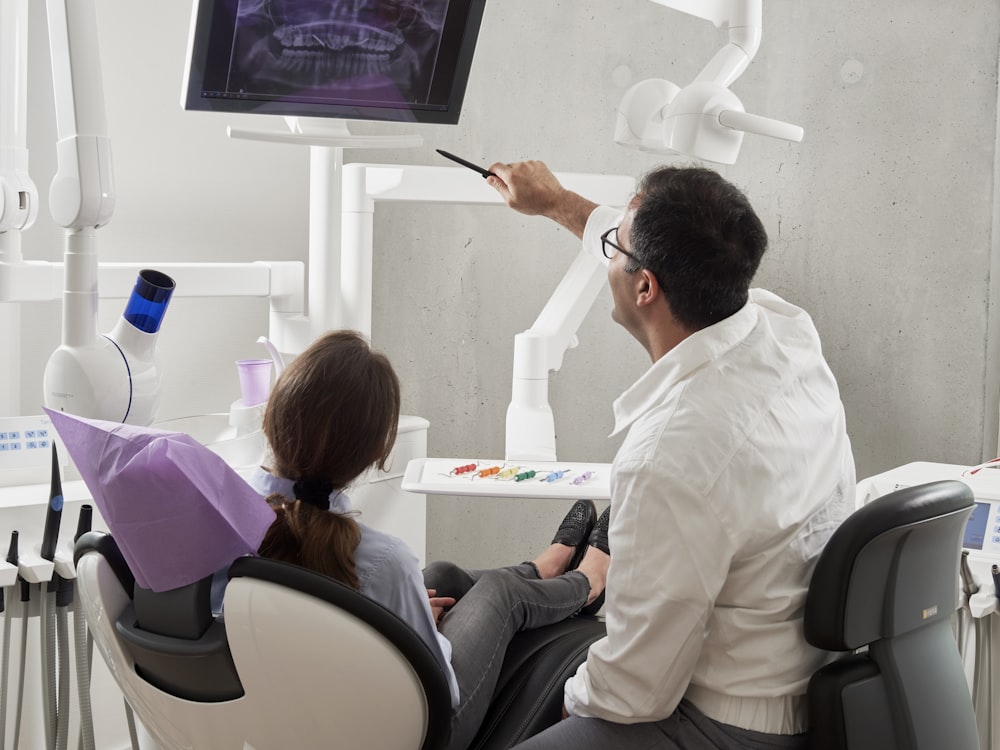
Human teeth contain materials ideal for bone regeneration
The Tooth Grinding Experiment: Methodology and Results
A 2024 study published in Exploration of Medicine directly addressed a crucial practical question: what is the optimal method for grinding teeth to create effective dentin graft material? 4
High-Speed Grinding
Similar to a coffee grinder, using a rotating hammer moving at high speed along its axis within a metal cylinder.
- Tooth Loss: 53.5% ± 9.89% (significant pulverization)
- Particle Quality: Highly thin granules
- Processing Time: Faster
- Efficiency: Less efficient for graft production
Low-Speed Grinding
Using concentric conical blades that drag material downward gently.
- Tooth Loss: 9.16% ± 2.34% (minimal loss)
- Particle Quality: Preservation of dentin structure; uniform particles
- Processing Time: Requires more time
- Efficiency: Superior for producing quality graft material
Research Conclusion
The study concluded that while high-speed grinding was faster, it resulted in substantial material loss through pulverization. The low-speed grinder preserved most of the tooth structure, maximizing the quantity of usable graft material—a crucial consideration when working with limited natural resources. 4
The Scientist's Toolkit: Essential Materials in Modern Bone Grafting
Modern bone grafting relies on a sophisticated array of materials and technologies that would have been unimaginable in Putti's era. These tools enable researchers and surgeons to create increasingly effective bone regeneration solutions.
Demineralized Dentin Matrix (DDM)
Function: Provides osteoinductive stimulus through exposed BMPs and growth factors
Applications: Socket preservation; alveolar ridge augmentation; maxillary sinus floor augmentation 4
Bioadhesive Hydrogels
Function: Provide hemostasis, prevent graft displacement, and allow controlled drug release
Applications: Injectable graft delivery systems; irregular bone defects; bleeding control 5
3D-Printed Scaffolds
Function: Create customized, porous structures that mimic natural bone architecture
Applications: Large-segment bone defects; patient-specific reconstructions 7
The Future of Bone Grafting: 3D Printing and Vascularization
Revolutionizing Bone Regeneration
The horizon of bone grafting is expanding with technologies that would seem like science fiction to early pioneers like Putti. 3D-printed artificial bone scaffolds represent one of the most promising frontiers, offering the ability to precisely reconstruct anatomical geometry while promoting cell migration through carefully designed porous structures. 7
The latest innovations focus on overcoming one of the most significant challenges in large bone defect repair: vascularization. Without adequate blood supply, scaffold-resident cells can experience apoptosis rates exceeding 60%, creating a critical barrier to successful healing. 7
3D-Printed Bone Scaffolds
Advanced Approaches in Modern Bone Grafting
Vascularization-Osteogenesis Integration
Scaffold designs that combine 3D printing with vascularized bone substitutes to ensure adequate blood supply to regenerating tissue.
Self-Healing Bone/Bioadhesive Systems
Delivery systems that allow even distribution of bone particles while providing hemostatic capabilities for complex defect sites. 5
Paradigm Shift
These advanced systems represent a paradigm shift from mere "structural replacement" to true "biological function reconstruction," addressing not just mechanical support but the underlying biological processes of regeneration.
Conclusion: From Ancient Practice to Modern Marvel
The journey of bone grafting—from Putti's foundational observations to today's 3D-printed, biointegrated scaffolds—exemplifies medicine's continuous evolution. What began as simple transplantation of bone fragments has transformed into a sophisticated discipline harnessing the body's innate regenerative capabilities.
The principles Putti identified over a century ago—the importance of the biological environment, mechanical stability, and aseptic technique—continue to inform modern practice, even as our tools have grown increasingly advanced. As research continues to push boundaries with innovations in tissue engineering, biomaterials, and regenerative techniques, the future of bone grafting promises even more remarkable abilities to reconstruct, repair, and regenerate the living framework that supports us all.
The next time you hear about a patient receiving a bone graft, remember that you're witnessing not just a medical procedure, but the culmination of centuries of observation, innovation, and scientific discovery—with the potential for even greater advancements on the horizon.