GARD® Potency Prediction: A Genomic Approach to Streamlining Allergen Safety Assessment
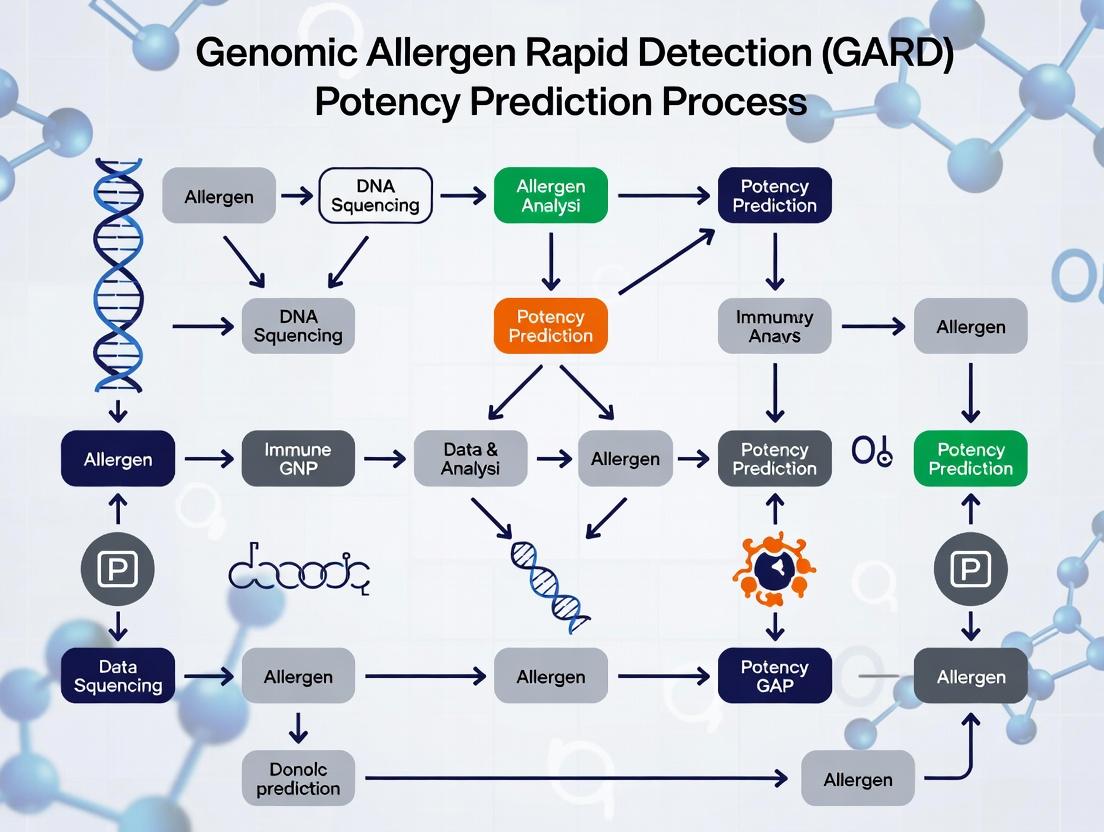
This article provides a comprehensive analysis of the Genomic Allergen Rapid Detection (GARD®) platform for predicting the potency of chemical allergens.
GARD® Potency Prediction: A Genomic Approach to Streamlining Allergen Safety Assessment
Abstract
This article provides a comprehensive analysis of the Genomic Allergen Rapid Detection (GARD®) platform for predicting the potency of chemical allergens. Aimed at researchers and drug development professionals, it explores the foundational science of the GARD® assay, details its methodological workflow and applications in toxicology and immunology, addresses common troubleshooting and optimization challenges, and validates its performance against traditional methods like the Local Lymph Node Assay (LLNA) and human potency data. The article concludes by synthesizing GARD®'s role in advancing next-generation risk assessment (NGRA) and its implications for reducing animal testing in biomedical research.
Decoding GARD®: The Genomic Blueprint for Modern Allergen Potency Testing
The Imperative for Non-Animal Potency Prediction in Immunotoxicology
The evolution of immunotoxicology towards animal-free assessment is critical for ethical, regulatory, and scientific advancement. Central to this shift is the need for robust, human biology-relevant potency prediction methods. This guide compares the Genomic Allergen Rapid Detection (GARD)platform for skin sensitization potency prediction against key non-animal alternatives, framed within ongoing research on genomic biomarker-based potency assessment.
Comparison Guide: GARD Potency Prediction vs. Key Alternatives
The following table summarizes the performance characteristics of leading non-animal methods for skin sensitization potency prediction (categorizing chemicals as Extreme, Strong, Moderate, Weak, or Non-sensitizers).
Table 1: Performance Comparison of Non-Animal Potency Prediction Methods
| Method (OECD TG) | Basis of Prediction | Key Output Metric | Reported Accuracy (vs. LLNA*) | Throughput | Key Advantage | Key Limitation |
|---|---|---|---|---|---|---|
| GARDskin (Research) | Genomic biomarker signature (SENS-IS) | Prediction Model score | ~90% (in published validation sets) | Medium | Provides mechanistic genomic data; can assess pro-haptens. | Not yet an OECD TG; requires specialized bioinformatics. |
| DPRA (442C) | Direct peptide reactivity | Cysteine/Lysine depletion % | ~80% (accuracy for potency) | High | Simple, cost-effective chemical reactivity assay. | Misses pro-haptens; limited biological context. |
| KeratinoSens / LuSens (442D) | Activation of Nrf2/ARE pathway | IC1.5 value (concentration for induction) | ~75-85% (potency concordance) | Medium-High | Good biological relevance for Keap1-Nrf2 axis. | Single pathway; may miss non-Nrf2 activators. |
| h-CLAT (442E) | Surface marker expression (CD86/CD54) on THP-1 cells | EC150 / EC200 values | ~80% (for categorization) | Medium | Represents dendritic cell-like activation. | Cell line variability; may overpredict some chemicals. |
| SENS-IS assay | Genomic signature in skin model | Gene expression profile | ~89% (in validation) | Low-Medium | Uses reconstructed human epidermis; high mechanistic relevance. | Lower throughput; higher cost per sample. |
LLNA (Murine Local Lymph Node Assay) is the historical *in vivo reference.
Detailed Experimental Protocols
1. GARDskin Potency Assessment Protocol
- Objective: To classify the skin sensitization potency of a test substance using a genomic biomarker signature.
- Cell Line: MUTZ-3-derived dendritic cells.
- Procedure:
- Cell Exposure: Harvest and plate MUTZ-3 cells. Expose to six concentrations of the test chemical, a vehicle control, and a positive control (e.g., Diphenylcyclopropenone) for 24 hours.
- RNA Extraction: Lyse cells and extract total RNA. Assess RNA quality and quantity.
- Microarray/qPCR Analysis: Hybridize RNA to a gene expression microarray (e.g., GARDskin array) or perform targeted RT-qPCR for the 200-gene SENS-IS signature.
- Bioinformatics Analysis: Input normalized expression data into the GARD Prediction Model. The model computes a decision value based on support vector machine (SVM) algorithms.
- Potency Classification: The decision value maps to a probability score, which is correlated with in vivo potency classes (Non, Weak, Moderate, Strong, Extreme).
2. Integrated Testing Strategy (ITS) for Potency
- Objective: To combine non-animal tests for improved accuracy and coverage of key events (KE) in the Adverse Outcome Pathway (AOP).
- Protocol (Example):
- KE1: Molecular Initiating Event: Perform DPRA (TG 442C) to quantify protein binding reactivity.
- KE2: Keratinocyte Response: Perform KeratinoSens (TG 442D) to assess Nrf2/ARE pathway activation.
- KE3: Dendritic Cell Activation: Perform h-CLAT (TG 442E) to measure surface marker upregulation.
- Data Integration: Use a weighted decision matrix or statistical model (e.g., Bayesian network) to integrate data from all three assays and assign a final potency classification.
Visualization: Pathways and Workflows
GARD Skin Potency Assay Workflow
ITS for Potency via AOP Key Events
The Scientist's Toolkit: Research Reagent Solutions
Table 2: Essential Materials for Genomic Potency Assay Research
| Item | Function in Research | Example/Note |
|---|---|---|
| MUTZ-3 Cell Line | Human myeloid-derived dendritic cell line used as a biologically relevant substrate for GARD and similar assays. | Requires specific cytokines (GM-CSF, IL-4) for maintenance. |
| SENS-IS Gene Signature Panel | A curated set of 200+ biomarkers predictive of skin sensitization and potency. Used for targeted RT-qPCR or microarray design. | Proprietary to SenzaGen; research-use versions available. |
| qPCR Master Mix | For sensitive and quantitative amplification of genomic biomarker transcripts. | Essential for labs using a targeted RT-qPCR approach. |
| High-Quality RNA Extraction Kit | To obtain intact, pure RNA from dendritic cells post-chemical exposure. Critical for reproducible gene expression data. | Should include DNase treatment. |
| Support Vector Machine (SVM) Software/Library | Machine learning algorithm core to the GARD prediction model. Used to classify data based on training sets. | Implementable in R (e1071 package) or Python (scikit-learn). |
| Reconstructed Human Epidermis (RhE) | 3D tissue model used in assays like SENS-IS for more complex tissue-level assessment. | MatTek EpiDerm or SkinEthic models. |
| Reference Chemicals for Validation | A panel of chemicals with well-defined in vivo potency for benchmarking assay performance. | Includes chemicals like 2,4-dinitrochlorobenzene (Extreme) to glycerol (Non). |
Comparative Analysis of Genomic Allergen Detection Platforms in Dendritic Cell Activation Studies
Within the Genomic Allergen Rapid Detection (GARD) research framework, predicting chemical sensitization potency relies on interpreting gene expression signatures in dendritic cell (DC) models. This guide compares key methodologies for establishing the link between genomic signatures and functional DC activation.
Comparison ofIn VitroPotency Prediction Platforms
| Platform/Assay | Measured Endpoint | Key Readout | Throughput (samples/week) | Concordance with LLNA (GHS) | Key Reference Model |
|---|---|---|---|---|---|
| GARD | Genomic Signature | SVM classification (GARD Prediction Unit) | 50-100 | 89% (Johansson et al., 2021) | MUTZ-3-derived DCs |
| h-CLAT | Surface Marker Expression | CD86 & CD54 MFI (EC150/200) | 100-150 | 82% (Urbisch et al., 2015) | THP-1 cells |
| Loose-fit Coculture (LFC) | Cytokine Secretion | IL-8, IL-1β (PCA prediction) | 20-40 | 85% (Trucharte et al., 2020) | Primary DC/Monocyte Coculture |
| SENS-IS | Genomic Signature | 17-gene biomarker score | 80-120 | 91% (Cottrez et al., 2015) | Reconstructed Human Epidermis |
| Direct Peptide Reactivity Assay (DPRA) | Chemical Reactivity | Cysteine/Lysine Depletion | 200+ | 75% (Natsch et al., 2013) | In chemico |
Table Footnote: LLNA = Murine Local Lymph Node Assay; GHS = UN Globally Harmonized System; SVM = Support Vector Machine; MFI = Mean Fluorescence Intensity; EC = Effective Concentration; PCA = Principal Component Analysis.
Experimental Protocols for Key Comparisons
Protocol 1: GARD Genomic Signature Acquisition
- Cell Culture: Maintain MUTZ-3 progenitor cells in MEM Alpha medium supplemented with 20% FBS, GM-CSF (100 ng/mL), and SCF (20 ng/mL).
- Differentiation: Induce DC differentiation over 7 days using TNF-α (50 ng/mL) and GM-CSF (100 ng/mL). Verify phenotype via flow cytometry (CD1a+, CD14-, CD86+).
- Chemical Exposure: Expose GARD dendritic cells to a non-cytotoxic concentration (determined by MTT assay) of the test chemical for 24 hours. Include a vehicle control and positive control (e.g., nickel sulfate).
- RNA Extraction & Microarray: Lyse cells and extract total RNA. Convert to biotin-labeled cRNA and hybridize to a genome-wide expression microarray (e.g., Illumina HumanHT-12 v4).
- Signature Mapping: Normalize expression data. Apply the pre-trained Support Vector Machine (SVM) classifier to translate the 200-gene expression profile into a binary prediction (Sensitizer/Non-sensitizer) and a GARD Prediction Unit (GPU) potency estimate.
Protocol 2: h-CLAT Surface Marker Induction
- THP-1 Culture: Maintain THP-1 monocytes in RPMI-1640 with 10% FBS and 0.05 mM 2-Mercaptoethanol.
- Cytotoxicity Pre-test: Expose THP-1 cells to serial dilutions of test chemical for 24 hours. Determine CV75 (concentration causing <25% cytotoxicity) via flow cytometry.
- Main Assay: Expose THP-1 cells to three concentrations (0.5x, 0.75x, 1.0x CV75) for 24 hours. Harvest cells and stain with fluorescent antibodies against CD86 and CD54.
- Flow Cytometry: Acquire data on a flow cytometer. Calculate Relative Fluorescence Intensity (RFI) for each marker. A positive prediction is assigned if RFI for CD86 ≥ 150% or CD54 ≥ 200% at any tested concentration relative to vehicle control.
Pathway & Workflow Visualizations
Title: GARD Genomic Prediction Workflow
Title: From Hapten to DC Activation Pathway
The Scientist's Toolkit: Research Reagent Solutions
| Item | Function in GARD/DC Activation Research |
|---|---|
| MUTZ-3 Cell Line | A human myeloid leukemia-derived cell line capable of reliable differentiation into dendritic-like cells, serving as the primary biosensor in GARD. |
| GM-CSF & TNF-α Cytokines | Critical cytokines used to differentiate and maintain the immature DC state from progenitor cells like MUTZ-3. |
| Illumina HumanHT-12 v4 BeadChip | Genome-wide expression microarray used to quantify the 200-gene signature in the standardized GARD platform. |
| Pre-trained SVM Classifier | The computational model that maps the genomic expression data to a potency prediction. It is the core proprietary algorithm of GARD. |
| Fluorochrome-conjugated Antibodies (CD86, CD54, CD1a) | Essential for validating DC phenotype and measuring activation endpoints in correlative assays like h-CLAT. |
| qPCR Reagents (TaqMan assays) | Used for orthogonal validation of key biomarker genes from the genomic signature (e.g., AHRR, CYP1B1). |
| CV75 Cytotoxicity Assay Kit | A standardized kit (e.g., using propidium iodide) to determine non-cytotoxic exposure ranges for test chemicals prior to genomic analysis. |
Within the field of Genomic Allergen Rapid Detection (GARD) potency prediction research, a central challenge has been correlating the predictive power of high-throughput genomic signatures with established, yet low-throughput, biological endpoints from traditional assays. GARD represents a genesis, a platform designed to bridge this gap by integrating genomic data with functional biological outcomes. This comparison guide objectively evaluates GARD’s performance against key traditional assays and earlier genomic approaches, providing experimental data to contextualize its role in modern drug and chemical safety development.
Performance Comparison: GARD vs. Traditional & Genomic Alternatives
The following tables summarize key comparative data from published validation studies.
Table 1: Predictive Performance for Skin Sensitization Potency (LLNA vs. GARD)
| Metric | Local Lymph Node Assay (LLNA) | GARD Genomic Assay |
|---|---|---|
| Throughput | Low (weeks per substance) | High (days for multiple substances) |
| Animal Use | Required (in vivo) | None (in vitro) |
| Endpoint Measured | Lymphocyte proliferation (EC3 value) | Genomic signature (predictive score) |
| Accuracy (vs. human data) | ~85% (with known misclassifications) | >90% (in blinded validations) |
| Mechanistic Insight | Limited to a single pathway outcome | High, based on dendritic cell activation pathways |
| Regulatory Acceptance | OECD TG 429 (being phased out) | Under assessment for OECD guideline. |
Table 2: Comparison of Genomic-Based Approaches
| Metric | Microarray-based Toxicogenomics | GARD (RNA-seq based) |
|---|---|---|
| Platform Flexibility | Fixed, predefined probes | Discovery-driven, whole transcriptome |
| Dynamic Range | Limited | Superior for low and high expression levels |
| Multiplexing Capacity | High, but predefined | Very High, with hypothesis-free potential |
| Pathway Deconvolution | Indirect, via gene sets | Direct, with isoform-level resolution |
| Cost per Sample | Moderate | Decreasing, becoming competitive |
Experimental Protocols for Key Validations
1. Protocol: Validation of GARD against LLNA Potency Classes
- Objective: To correlate GARD genomic potency scores with in vivo LLNA EC3 values across known sensitizers.
- Cell Model: Human myeloid-derived dendritic cells (MUTZ-3 cell line).
- Test Substances: A blinded set of 30 chemicals pre-classified as extreme, strong, moderate, and weak sensitizers, plus non-sensitizers (OECD reference chemicals).
- Exposure: Cells exposed to non-cytotoxic concentrations for 24 hours.
- Genomic Analysis: RNA extraction, sequencing (RNA-seq), and mapping of expression data to the GARD Prediction Signature (GPS).
- Data Processing: GPS generates a prediction score. Scores are calibrated against the LLNA EC3-based potency classes using a support vector machine (SVM) classifier.
- Outcome Measure: Accuracy, sensitivity, and specificity for classifying substances into correct potency categories.
2. Protocol: Benchmarking GARD against Direct Peptide Reactivity Assay (DPRA)
- Objective: Compare the mechanistic fidelity (haptenation prediction) of a chemical reactivity assay with the integrated biological response from GARD.
- Test Set: Chemicals known to act as pro-haptens (require metabolic activation) and pre-haptens.
- DPRA Method: Per OECD TG 442C, peptides incubated with test substance, and cysteine/lysine depletion measured via HPLC.
- GARD Method: As per Protocol 1.
- Analysis: Discordant results were investigated using GARD pathway analysis to identify upregulation of metabolic enzymes (e.g., CYP450s), explaining reactivity for pro-haptens missed by DPRA.
Visualizations
Diagram 1: GARD Experimental & Analysis Workflow
Diagram 2: GARD Bridging Traditional Assays & Genomics
The Scientist's Toolkit: Key Research Reagent Solutions
The following materials are essential for conducting GARD-related experiments.
| Item | Function in GARD Research |
|---|---|
| MUTZ-3 Cell Line | A human myeloid-derived dendritic cell line serving as the biologically relevant model for sensing sensitizers. |
| IL-4 & GM-CSF Cytokines | Used for maintaining and differentiating MUTZ-3 cells towards a dendritic cell phenotype. |
| RNA Stabilization Reagent (e.g., TRIzol) | Ensures integrity of transcriptomic profiles immediately after cell exposure. |
| Stranded mRNA-seq Library Prep Kit | For preparation of sequencing libraries that preserve strand information, crucial for accurate transcript quantification. |
| GARD Prediction Signature (GPS) Classifier | The validated, curated set of genomic biomarkers used to translate expression data into a predictive score. |
| Pathway Analysis Software | Bioinformatics tools (e.g., Ingenuity Pathway Analysis, GSEA) for interpreting genomic data in a biological context. |
The Genomic Allergen Rapid Detection (GARD) platform represents a significant advancement in non-animal based assessment of chemical sensitizers. Its predictive power is derived from a carefully curated set of genomic biomarkers and their associated pathways. This guide compares the performance and mechanistic foundation of the GARD assay with other key in vitro and in silico alternatives, framed within ongoing research into genomic signatures for skin sensitization potency prediction.
Comparative Performance of Skin Sensitization Prediction Assays
The following table summarizes key validation study outcomes for leading non-animal testing methodologies. GARD performance data is drawn from recent OECD guideline considerations and peer-reviewed publications, while comparator data is sourced from validated OECD Test Guidelines (TGs).
Table 1: Comparative Performance Metrics of Defined Approaches for Skin Sensitization
| Assay/Model (OECD TG/DA) | Measured Endpoint | Accuracy (%) | Sensitivity (%) | Specificity (%) | Applicability Domain | Key Reference |
|---|---|---|---|---|---|---|
| GARD Skin Sensitizer (Under evaluation) | Genomic Signature (200+ genes) | 89-93 | 90-95 | 87-91 | Broad chemical space | Johansson et al., 2020 |
| DPRA (TG 442C) | Peptide reactivity | 84 | 85 | 83 | Excludes pro/pre-haptens | OECD No. 442C |
| KeratinoSens (TG 442D) | Nrf2-Keap1 ARE activation | 82 | 88 | 75 | Limited to certain chemotypes | OECD No. 442D |
| h-CLAT (TG 442E) | CD86/CD54 surface markers | 85 | 89 | 80 | Cell line-specific | OECD No. 442E |
| SENS-IS | Genomic profile (30 genes) | 87 | 88 | 85 | Reconstructed human epidermis | Cottrez et al., 2015 |
| In silico Tool (TIMES-SS) | QSAR & Expert System | 82-86 | Varies | Varies | Dependent on training set | OECD QSAR Toolbox |
Decoding the GARD Genomic Signature: Biomarkers and Pathways
The GARD prediction model is built upon a Support Vector Machine (SVM) classifier that interprets the expression pattern of a defined biomarker signature. The core strength lies in the biological relevance of the selected genes, which map to critical pathways in the induction of skin sensitization.
Experimental Protocol for GARD Assay
Methodology: The GARD platform utilizes a human myeloid cell line (MUTZ-3) cultured under defined conditions.
- Cell Exposure: Test substances are dissolved in appropriate solvent (e.g., DMSO, culture medium) and applied to cells at a non-cytotoxic concentration for 24 hours.
- RNA Extraction & QC: Total RNA is extracted (e.g., using Qiagen RNeasy kits). RNA integrity number (RIN) >8.5 is required.
- Microarray/qPCR Analysis: Transcriptomic profiling is performed using customized microarray or targeted RNA-Seq/qPCR panels covering the GARD biomarker genes.
- Data Normalization & Prediction: Expression data is normalized using robust multi-array average (RMA). The processed data is input into the pre-trained SVM classifier, which outputs a prediction (Sensitizer/Non-sensitizer) and a prediction score reflecting confidence.
- Potency Assessment: The prediction score is correlated with in vivo potency data (EC3 values from Local Lymph Node Assay) to categorize substances into potency classes (Extreme/Strong/Moderate/Weak).
Core Signaling Pathways Captured by the GARD Biomarker Signature
The biomarker genes are not random but are functionally enriched in specific biological pathways essential for dendritic cell activation and the sensitization cascade.
Diagram 1: Key Pathways in GARD Biomarker Signature
The Scientist's Toolkit: Essential Research Reagents for Genomic Sensitization Assays
Table 2: Key Research Reagent Solutions for GARD-like Studies
| Reagent/Material | Function in Protocol | Example Product/Brand |
|---|---|---|
| MUTZ-3 Cell Line | Human myeloid dendritic cell progenitor; biosensor for immunomodulatory effects | DSMZ (ACC 295) |
| RNeasy Mini Kit | Silica-membrane based purification of high-quality total RNA from cells | Qiagen |
| High-Capacity cDNA Reverse Transcription Kit | Converts RNA into stable cDNA for downstream qPCR analysis | Applied Biosystems |
| Custom CodeSet (nCounter) | Multiplexed, direct quantification of GARD biomarker mRNA without amplification | NanoString Technologies |
| Human Genome U219 Array Plate | Microarray for high-throughput transcriptomic profiling of ~20,000 genes | Affymetrix |
| Recombinant Human GM-CSF & IL-4 | Cytokines for maintenance and differentiation of dendritic cell cultures | PeproTech |
| CellTiter-Glo Luminescent Viability Assay | Determines cell viability/cytotoxicity of test substance prior to genomic analysis | Promega |
| SVM Classifier Software | Machine-learning algorithm to interpret gene expression patterns and output prediction | In-house or R/Python (e.g., e1071 package) |
Within the ongoing research on Genomic Allergen Rapid Detection (GARD) potency prediction, a critical objective is the development of non-animal methods that satisfy modern regulatory requirements. This comparison guide evaluates the GARDskin platform against two primary alternative approaches, contextualizing their performance within the frameworks of Replacement, Reduction, and Refinement (3Rs) and Next Generation Risk Assessment (NGRA).
Performance Comparison ofIn VitroSkin Sensitization Potency Assessment Platforms
The following table summarizes key performance metrics for three leading non-animal methodologies, based on publicly available validation studies and OECD Test Guideline adherence.
Table 1: Comparison of Non-Animal Skin Sensitization Potency Prediction Platforms
| Platform/Method | Core Principle | OECD TG | Predictive Accuracy (vs. LLNA) | Throughput (Samples/Week) | Potency Classification (1A vs. 1B) | Key Regulatory Endpoint |
|---|---|---|---|---|---|---|
| GARDskin | Genomic biomarker signature in dendritic-like cell line | TG 442E | ~90% Sensitivity, ~85% Specificity | Medium (20-40) | Yes (4-class prediction) | GARD Prediction Model (GPM) potency score |
| Direct Peptide Reactivity Assay (DPRA) | Chemical reactivity with model peptides | TG 442C | ~89% Accuracy for hazard ID | High (50-100) | No (categorizes reactivity only) | % Depletion of Cysteine/Lysine |
| ARE-Nrf2 Luciferase Test (KeratinoSens / LuSens) | Activation of Keap1-Nrf2-ARE pathway | TG 442D | ~83% Sensitivity, ~79% Specificity | High (50-100) | Limited (based on EC1.5 value) | EC1.5 value (µM) |
Experimental Protocols for Key Comparisons
1. GARDskin Potency Prediction Protocol
- Cell Culture: The human myeloid leukemia cell line (GARD proprietary cell line) is maintained in recommended medium. Cells are seeded at 1x10^6 cells/mL in 96-well plates.
- Chemical Exposure: Test chemicals are dissolved in appropriate solvent (e.g., DMSO, water) and applied to cells at five concentrations (spanning 0.1-200 µM) for 24 hours. A vehicle control and positive controls (e.g., 1-Chloro-2,4-dinitrobenzene) are included.
- RNA Extraction & Microarray: Total RNA is extracted using a column-based kit (e.g., RNeasy). RNA quality is assessed (RIN >8.0) before hybridization to a GARD-specific microarray.
- Data Analysis: Expression data is processed and applied to the validated GARD Prediction Model (GPM). The output is a classification (Non-sensitizer, Weak, Moderate, Strong) and a continuous GPM potency score.
2. DPRA Protocol (Per OECD TG 442C)
- Peptide Preparation: Synthetic heptapeptides containing either cysteine or lysine are prepared in phosphate and acetate buffers, respectively.
- Reaction: Test chemical is co-incubated with each peptide solution at 25°C for 24 hours.
- Analysis: Samples are analyzed by High-Performance Liquid Chromatography (HPLC) with UV detection to quantify remaining peptide.
- Calculation: The mean percent depletion for cysteine and lysine is calculated. Chemicals are categorized based on predefined thresholds (e.g., >6.38% for cysteine suggests sensitizer).
3. KeratinoSens Protocol (Per OECD TG 442D)
- Cell Culture & Exposure: Recombinant HaCaT keratinocytes stably transfected with a luciferase gene under the control of the ARE element are used. Cells are exposed to 8 concentrations of the test chemical for 48 hours.
- Viability & Luciferase Assay: Cytotoxicity is measured (e.g., MTT assay). Luciferase activity is quantified using a luminometer after cell lysis.
- EC1.5 Calculation: The concentration that induces a 1.5-fold increase in luciferase activity (EC1.5) is determined. An EC1.5 < 1000 µM and a dose-response indicate a positive result.
Visualizing the GARDskin Mechanism and Workflow
Title: GARDskin Experimental Workflow
Title: GARD Alignment with 3Rs and NGRA
The Scientist's Toolkit: Key Research Reagent Solutions
Table 2: Essential Materials for GARDskin and Comparative Assays
| Item | Function in Context | Example Product/Catalog |
|---|---|---|
| Dendritic Cell Line (GARD) | Biosensor system; provides the genomic response to sensitizers. | GARD proprietary cell line. |
| ARE Reporter Keratinocyte Line | Cellular model for Keap1-Nrf2-ARE pathway activation (KeratinoSens). | KeratinoSens cell line. |
| Cysteine & Lysine Heptapeptides | Synthetic peptides as nucleophilic targets for chemical reactivity (DPRA). | Ac-RFAACAA-amide / Ac-RFAAKAA-amide. |
| High-Quality RNA Extraction Kit | Critical for obtaining intact RNA for genomic biomarker analysis in GARD. | RNeasy Mini Kit (Qiagen). |
| Dual-Luciferase Reporter Assay System | Quantifies transcriptional activation in reporter gene assays (e.g., KeratinoSens). | Dual-Glo Luciferase Assay (Promega). |
| Reverse Phase HPLC Column | Separates and quantifies peptide depletion in the DPRA. | C18 column, 3.5 µm, 4.6 x 75 mm. |
| GARD Proprietary Microarray | Platform for measuring the expression of the genomic biomarker signature. | GARDskin microarray chip. |
A Step-by-Step Guide to Implementing GARD® Assays in Preclinical Research
This guide provides a performance comparison of the Genomic Allergen Rapid Detection (GARD) platform within the context of potency prediction research for drug development, focusing on alternatives like the murine Local Lymph Node Assay (LLNA) and other in vitro methods.
Experimental Protocols for Comparison
1. GARD Assay Protocol
- Sample Preparation: Test substances are dissolved in DMSO or appropriate vehicle. Dendritic-like KG-1 cells are cultured in RPMI-1640 medium supplemented with 10% FBS.
- Cell Exposure: Cells are exposed to a minimum of three non-cytotoxic concentrations of the test substance and appropriate controls (vehicle, positive allergen) for 24 hours.
- RNA Isolation & QC: Total RNA is extracted using a column-based kit (e.g., RNeasy). RNA integrity number (RIN) > 8.5 is required.
- Microarray Processing: cDNA synthesis, labeling, and hybridization to a GARD specific microarray (containing a predictive genomic signature). Scanning is performed with a standard microarray scanner.
- Data Acquisition & Prediction: Expression values for the signature genes are acquired. A predefined prediction model (Support Vector Machine) classifies the substance as a skin sensitizer or non-sensitizer and provides a potency-associated GARD dose (GARD-DS).
2. Murine Local Lymph Node Assay (LLNA) Protocol
- Mouse Dosing: CBA/J mice (n=4-5/group) receive daily topical applications of the test substance on the dorsum of both ears for three consecutive days.
- Radioisotope Administration: On day 6, mice receive an intravenous injection of [³H]-methyl-thymidine.
- Lymph Node Excision & Analysis: Five hours post-injection, the draining auricular lymph nodes are excised. A β-scintillation counter measures incorporated radioactivity.
- Data Acquisition: A Stimulation Index (SI) is calculated relative to the vehicle control. The concentration required to elicit an SI of 3 (EC3 value) is determined as the potency metric.
Performance Comparison Data
Table 1: Methodological & Performance Comparison for Skin Sensitization Potency Assessment
| Aspect | GARD Assay | Murine LLNA (OECD TG 429) | Direct Peptide Reactivity Assay (DPRA) |
|---|---|---|---|
| System | Human in vitro (cell-based) | In vivo (mouse) | In chemico |
| Test Duration | ~5-7 days | ~2 weeks | ~1-2 days |
| Endpoint | Genomic biomarker signature | Lymphocyte proliferation | Peptide depletion |
| Potency Output | GARD Dose (GARD-DS) | EC3 Value (µg/cm²) | Cysteine depletion % (Classifies into 4 bins) |
| Biological Relevance | Models dendritic cell key events | Integrative immune response | Models molecular initiation event (haptenation) |
| Throughput | Medium | Low | High |
| Animal Use | No | Yes (regulated) | No |
| Key Validation | OECD Guideline No. 442E | OECD Guideline No. 429 | OECD Guideline No. 442C |
Table 2: Comparative Prediction Accuracy for a Reference Substance Set (n=28)
| Substance (Potency Category) | LLNA EC3 (µg/cm²) | GARD-DS (µg/mL) | DPRA Cys Depletion % |
|---|---|---|---|
| 2,4-Dinitrochlorobenzene (Extreme) | 0.04 | 0.12 | 99.8 |
| Oxazolone (Strong) | 0.3 | 1.1 | 85.2 |
| Cinnamaldehyde (Moderate) | 2.9 | 8.4 | 72.5 |
| Eugenol (Weak) | 530 | >100 | 12.1 |
| Sodium Lauryl Sulfate (Non-sens.) | Non-sens. | Non-sens. | 5.3 |
Signaling Pathways in the GARD Platform
Diagram Title: GARD Integrates Key Events of Skin Sensitization
The Complete GARD Workflow
Diagram Title: The Six-Step GARD Workflow from Cells to Data
The Scientist's Toolkit: Key Research Reagent Solutions
Table 3: Essential Materials for GARD Assay Execution
| Item | Function in Workflow | Example Product/Catalog |
|---|---|---|
| KG-1 Cell Line | Human dendritic-like reporter cells; central biosensor component. | ATCC CCL-246 |
| GARD Microarray | Custom oligonucleotide array containing the 48-gene genomic signature. | GARDchip v2.0 |
| RNeasy Mini Kit | Reliable, high-quality total RNA isolation with genomic DNA removal. | Qiagen 74104 |
| Low Input Quick Amp WT Kit | For cDNA synthesis, amplification, and fluorescent dye labeling of RNA. | Agilent 5190-2943 |
| Hybridization Chamber & Oven | Ensures consistent and controlled hybridization of labeled cDNA to array. | Agilent G2545A |
| Microarray Scanner | High-resolution instrument for acquiring fluorescence signal from array. | Agilent G2565CA |
| GARD Prediction Software | Proprietary software for data normalization, analysis, and SVM classification. | GARDsoft |
Cell Culture Protocols for the GARD Dendritic Cell Line
Within Genomic Allergen Rapid Detection (GARD) research, the in vitro GARD dendritic cell (DC) line is critical for predicting the sensitizing potency of chemicals and proteins. Standardized cell culture protocols are fundamental to ensuring assay reproducibility and predictive accuracy. This guide compares key performance aspects of the GARD DC line culture system against primary human DCs and other monocyte-derived DC (moDC) models.
Successful GARD assays depend on consistent cell viability, phenotypic marker expression, and genomic responsiveness. The table below compares the core requirements and outputs of different DC sources.
Table 1: Cell Source Comparison for In Vitro Sensitization Testing
| Parameter | GARD DC Line | Primary Monocyte-Derived DCs (moDCs) | Commercially Available Cryopreserved moDCs |
|---|---|---|---|
| Source & Availability | Immortalized human cell line; unlimited passages. | Isolated from human donor PBMCs; limited by donor availability. | Cryopreserved vials from donor pools; batch-dependent. |
| Culture & Differentiation Time | 2-3 days of routine culture. No differentiation cytokines required. | 5-7 days of culture with GM-CSF and IL-4. | 1-2 days of recovery/thawing, often require cytokine restimulation. |
| Baseline Phenotype (Flow Cytometry) | Consistently high CD86, CD54, HLA-DR. Low CD14. | Variable; requires maturation stimulus for high co-stimulation markers. | Variable; depends on donor and cryopreservation effects. |
| Assay Reproducibility (Inter-assay CV) | High (Typically <15% for genomic signature). | Moderate to Low (Often >25% due to donor variability). | Moderate (CV 15-25%, batch-to-batch variation). |
| Key Advantage for GARD | Standardized biological platform; minimal variability in GARD genomic response. | Biologically relevant primary cells. | Reduced isolation work. |
| Key Limitation for GARD | Immortalized nature may alter some physiological responses. | High donor variability compromises predictive model stability. | Cost and potential altered functionality post-thaw. |
Supporting Data: A longitudinal study tracking the performance of the GARD DC line (passages 15-35) demonstrated stable expression of the 200-gene GARD biomarker signature upon exposure to the reference sensitizer nickel sulfate, with an average signature strength correlation of R² > 0.98 across passages. In contrast, replicate experiments using moDCs from 5 different donors showed an R² range of 0.76 to 0.95 against the same reference.
Detailed Experimental Protocols
Protocol 1: Standard Maintenance of the GARD Dendritic Cell Line
- Objective: To sustain a proliferative, undifferentiated, and healthy cell stock for GARD assays.
- Medium: RPMI-1640 supplemented with 10% heat-inactivated fetal bovine serum (FBS), 2 mM L-glutamine, 1% penicillin/streptomycin, and 10 ng/mL recombinant human GM-CSF.
- Procedure:
- Culture cells in T75 flasks at 37°C, 5% CO₂.
- Passage cells every 2-3 days at 70-80% confluence.
- Gently dislodge cells by tapping or using a cell scraper. Avoid trypsin, which can affect surface receptors.
- Centrifuge at 300 x g for 5 minutes, resuspend in fresh pre-warmed medium, and seed at 2-3 x 10⁵ cells/mL.
- Key Quality Check: Maintain cell viability >95% (Trypan Blue exclusion) and typical dendritic morphology (stellate, non-adherent clusters).
Protocol 2: Cell Preparation for GARD Dose-Response Assay
- Objective: To harvest and condition cells for genomic exposure studies.
- Procedure:
- Harvest exponentially growing GARD DCs (as in Protocol 1, Step 3).
- Wash cells once in complete medium without GM-CSF.
- Resuspend in assay medium (complete medium without GM-CSF) at a density of 1.0 x 10⁶ cells/mL.
- Seed 1 mL/well in 24-well plates.
- Allow cells to acclimate for 1-2 hours before adding test substances.
- Note: GM-CSF is omitted during exposure to prevent interference with pathway activation related to sensitization.
Protocol 3: Assessment of Dendritic Cell Activation Status (Benchmarking)
- Objective: To confirm phenotypic competence (e.g., baseline maturation) via flow cytometry.
- Staining Protocol:
- Harvest 2-5 x 10⁵ cells per condition.
- Wash with PBS containing 1% BSA (FACS buffer).
- Incubate with fluorochrome-conjugated antibodies against human CD86, CD54, HLA-DR, and CD14 (isotype control) for 30 minutes at 4°C in the dark.
- Wash twice with FACS buffer, resuspend in fixation buffer.
- Analyze on a flow cytometer within 24 hours.
- Expected Outcome: GARD DCs exhibit a semi-mature phenotype with high median fluorescence intensity (MFI) for CD86 and CD54 without prior stimulation.
Experimental Workflow and Pathway Diagrams
Diagram 1: GARD DC Assay Workflow
Diagram 2: Key Signaling Pathways in GARD DC Activation
The Scientist's Toolkit: Research Reagent Solutions
Table 2: Essential Materials for GARD DC Culture and Assay
| Item | Function in Protocol | Example/Catalog Consideration |
|---|---|---|
| GARD Dendritic Cell Line | Standardized, immortalized human DCs providing a consistent biological platform. | Obtain from designated repository (e.g., Cell Line Service). |
| RPMI-1640 Medium | Base nutrient medium for cell growth and maintenance. | Use phenol-red-free version for downstream RNA work. |
| Recombinant Human GM-CSF | Critical growth factor for maintaining cell line proliferation and health. | Use carrier-protein-free, tier-1 grade for consistency. |
| Fetal Bovine Serum (FBS) | Provides essential proteins, growth factors, and lipids. | Use heat-inactivated, characterized, and same lot for major studies. |
| Cell Culture Flasks (Vented) | For routine cell expansion. | Use low-adherence treated plasticware. |
| 24-Well Cell Culture Plates | Vessel for exposing cells to test substances in the GARD assay. | Flat-bottom plates recommended. |
| Flow Cytometry Antibodies | Quality control of DC activation markers (CD86, CD54, HLA-DR). | Titrate antibodies for optimal signal-to-noise on the GARD DC line. |
| RNA Stabilization Reagent | Immediate preservation of gene expression profiles post-exposure. | Critical for accurate transcriptomic data. |
| Viability Stain (e.g., Trypan Blue) | Assessing cell health before and after exposure. | Use automated cell counters for objective counts. |
RNA Extraction and Gene Expression Profiling Best Practices
Within Genomic Allergen Rapid Detection (GARD) potency prediction research, the accuracy of RNA extraction and subsequent gene expression profiling is paramount. This guide compares leading methodologies and kits, focusing on their performance in generating high-quality data for predictive toxicology models. All data is contextualized for research aiming to correlate genomic signatures with chemical allergen potency.
Comparison of Total RNA Extraction Kits for Sensitive Cell Models
The following table compares three leading kits used to extract RNA from dendritic-like cell lines, a critical model in GARD research.
Table 1: Performance Comparison of Total RNA Extraction Kits from 1e6 THP-1 Cells
| Kit / Manufacturer | Avg. RNA Yield (µg) | A260/A280 Ratio | A260/A230 Ratio | RIN (RNA Integrity Number) | Cost per Prep (USD) | Suitability for Low-Abundance Transcripts |
|---|---|---|---|---|---|---|
| Kit A: Silica-Membrane Spin Column | 4.2 ± 0.5 | 2.08 ± 0.03 | 2.1 ± 0.2 | 9.8 ± 0.1 | $8.50 | High |
| Kit B: Magnetic Bead-Based | 3.8 ± 0.6 | 2.10 ± 0.02 | 2.3 ± 0.1 | 9.9 ± 0.1 | $9.75 | Very High |
| Kit C: Organic Solvent Precip. | 5.1 ± 1.2 | 1.98 ± 0.08 | 1.8 ± 0.4 | 8.5 ± 0.6 | $4.00 | Moderate |
Data from n=5 replicates per kit. Cells were treated with a reference sensitizer (DNCB) prior to extraction.
Protocol: RNA Extraction for GARD Cell Line Analysis
- Cell Lysis: Harvest 1e6 THP-1 cells stimulated with test chemical. Lyse directly in culture plate using 500 µL of kit-specific lysis buffer (supplemented with 1% β-mercaptoethanol for Kit C).
- Homogenization: Pass lysate through a 21-gauge needle 5x. For Kit A, add 1 volume 70% ethanol.
- Binding: Apply sample to silica-membrane column (Kit A) or mix with magnetic beads (Kit B). For Kit C, add 1 volume acid-phenol:chloroform.
- Washing: Perform 2 wash steps with kit-provided buffers (e.g., low and high-salt ethanol buffers).
- Elution: Elute RNA in 30-50 µL nuclease-free water. Heat elution buffer to 55°C for Kit A/B.
- DNase Treatment: Include on-column (Kit A, B) or in-solution DNase I digestion.
- QC: Quantify via spectrophotometry and assess integrity using a fragment analyzer (RIN >9.0 required for GARD profiling).
Comparison of cDNA Synthesis and qPCR Master Mixes
Accurate reverse transcription and quantitative PCR are critical for profiling GARD's genomic signature.
Table 2: qPCR Performance for GARD Signature Genes (10-gene panel)
| Reagent System | Reverse Transcriptase | qPCR Master Mix | PCR Efficiency (Avg.) | CV% (Inter-run) | Detection of 1:100,000 Dilution? |
|---|---|---|---|---|---|
| System X: 2-Step | High-capacity, RNase H- | SYBR Green with inhibitor blocker | 98.5% | 1.2% | Yes |
| System Y: 1-Step | Integrated MMLV | Probe-based (TaqMan) | 99.1% | 0.8% | Yes |
| System Z: 2-Step | Standard MMLV | Standard SYBR Green | 95.3% | 2.5% | No |
PCR efficiency calculated from standard curve of serial dilutions (10^6 to 10^1 copies). CV = Coefficient of Variation.
Protocol: Two-Step qPCR for GARD Potency Signature Profiling
- cDNA Synthesis: Combine 500 ng total RNA (RIN >9), 2 µL random hexamers (50 µM), 2 µL dNTPs (10 mM), and nuclease-free water to 15 µL. Heat to 65°C for 5 min, then chill. Add 4 µL 5X RT buffer, 1 µL RNase inhibitor, and 1 µL high-capacity reverse transcriptase. Incubate: 25°C (10 min), 37°C (120 min), 85°C (5 min).
- qPCR Setup: For SYBR Green, prepare 20 µL reactions containing 10 µL 2X master mix, 0.5 µM each primer, 2 µL cDNA (1:10 dilution), and water. Use a 384-well plate.
- Cycling Conditions: 95°C for 3 min; 40 cycles of 95°C for 15 sec, 60°C for 1 min (acquire signal); followed by melt curve analysis.
- Analysis: Calculate ∆Cq relative to housekeeping genes (e.g., HPRT1, SDHA). Use the 2^(-∆∆Cq) method for fold-change relative to vehicle control.
The Scientist's Toolkit: Key Research Reagent Solutions
| Item | Function in GARD Research |
|---|---|
| THP-1 Human Monocytic Cell Line | Differentiated into dendritic-like cells, serving as the primary biosensor for chemical exposure. |
| Reference Sensitizers (e.g., DNCB, NiSO4) | Positive controls with known potency to calibrate the genomic signature. |
| High-Capacity cDNA Reverse Transcription Kit | Ensures complete conversion of often-limited mRNA from sensitized cells, critical for detecting low-abundance transcripts. |
| TaqMan or SYBR Green-based qPCR Master Mix | For precise, reproducible quantification of the GARD genomic signature (e.g., CD86, CD83, S100A9). |
| RNA Stabilization Reagent (e.g., RNAlater) | Preserves RNA integrity immediately post-chemical exposure, preventing changes in the transcriptional profile. |
| Fragment Analyzer & RNA QC Kit | Provides RIN value, the gold-standard metric for RNA quality prior to costly downstream assays. |
| Automated Nucleic Acid Extractor (Magnetic Bead-Based) | Enables high-throughput, consistent RNA extraction for screening large chemical libraries. |
Experimental Workflow & Signaling Pathways
Title: GARD Gene Expression Profiling Experimental Workflow
Title: Key Events in Skin Sensitization Linked to GARD Profiling
Navigating the GARD Prediction Algorithm and Software (GARDskin, GARDair)
The advancement of non-animal methodologies for assessing chemical sensitization potential is a central pillar in modern toxicology. Within this framework, the Genomic Allergen Rapid Detection (GARD) platform stands as a pivotal innovation, employing gene expression profiling and machine learning to predict the potency of skin and respiratory sensitizers. This comparison guide situates GARD within the broader thesis of genomic-based potency prediction research, providing an objective analysis of its performance against other key non-animal alternatives, supported by experimental data.
Performance Comparison with Alternative Assays
The following tables summarize key performance metrics of GARD assays compared to other leading in vitro and in silico methods.
Table 1: Comparison of Skin Sensitization Potency Prediction Assays
| Assay (OECD TG) | Principle | Accuracy | Sensitivity | Specificity | Applicability Domain (Potency) | Reference |
|---|---|---|---|---|---|---|
| GARDskin (No TG yet) | Genomics & ML | 89-95% | 90-96% | 86-94% | Full (NS, LL, H) | Forreryd et al. (2016) |
| h-CLAT (442E) | Cell surface markers | 85-90% | 87-93% | 83-88% | Binary/Sub-categorization | OECD TG 442E |
| KeratinoSens (442D) | Nrf2 pathway activation | 80-88% | 82-90% | 75-85% | Binary/Sub-categorization | OECD TG 442D |
| DPRA (442C) | Peptide reactivity | 75-85% | 78-87% | 70-83% | Binary | OECD TG 442C |
| SENS-IS | Genomics (skin model) | 90-94% | 92-95% | 88-92% | Full (NS, LL, H) | Cottrez et al. (2015) |
Table 2: Comparison of Respiratory Sensitization Hazard Identification Assays
| Assay | Principle | Accuracy | Sensitivity (Resp. Sens.) | Specificity (Skin Sens.) | Reference |
|---|---|---|---|---|---|
| GARDair | Genomics & ML | 95% | 100% | 93% | Zeller et al. (2021) |
| IL-8/CXCL8 secretion (THP-1) | Cytokine response | 80-85% | 75-80% | 85-90% | McKim et al. (2010) |
| CD86/CD54 expression (h-CLAT) | Cell surface markers | ~70%* | ~65%* | ~75%* | Limited reported data |
| In silico profiling | Structural alerts | 70-80% | 60-75% | 80-90% | Unpublished assessments |
Note: h-CLAT is not validated for respiratory sensitizers; data indicate exploratory use. ML = Machine Learning; NS = Non-Sensitizer; LL = Low-Likely; H = High.
Detailed Experimental Protocols
Key Protocol 1: GARDskin Potency Prediction Workflow
- Cell Culture: Maintain MUTZ-3-derived dendritic-like cells in serum-free medium with GM-CSF and IL-4.
- Chemical Exposure: Prepare test chemical in appropriate solvent (e.g., DMSO, water). Expose cells to a non-cytotoxic concentration (typically 70-90% viability post-exposure) for 24 hours. Include concurrent vehicle and positive control (e.g., 2,4-dinitrochlorobenzene) exposures.
- RNA Extraction & QC: Lyse cells and extract total RNA using a magnetic bead-based system. Assess RNA integrity (RIN > 8.0).
- Microarray Processing: Convert RNA to biotin-labeled cRNA, hybridize to GARDskin-specific expression arrays. Wash and stain arrays before scanning.
- Prediction with SVM Model: Process scanned images to extract expression values for the 200-gene biomarker signature. Input normalized data into the proprietary Support Vector Machine (SVM) classification model. The algorithm outputs a prediction of potency class: Non-sensitizer, Low-Likely sensitizer, or High sensitizer.
Key Protocol 2: GARDair Hazard Identification Workflow
- Cell Line & Culture: Utilize the GARDair proprietary human cell line, maintained under standard culture conditions.
- Exposure Regimen: Expose cells to the test substance for 48 hours. A dose-range finding test is performed first to determine a non-cytotoxic concentration.
- Transcriptomic Analysis: Isolate total RNA and perform next-generation RNA sequencing (RNA-seq) to generate whole-transcriptome profiles.
- Bioinformatic Prediction: Map sequencing reads and perform differential expression analysis. Apply the GARDair decision vector, a trained genomic signature, to the expression data to generate a classification: Respiratory sensitizer or Skin sensitizer/Non-sensitizer.
Visualizing the GARD Platform Workflow and Biology
Title: GARD Platform Integrated Workflow from Chemical to Prediction
Title: Biological Pathways Integrated into the GARD Genomic Signature
The Scientist's Toolkit: Research Reagent Solutions
Table 3: Essential Materials for Conducting GARD-like Research
| Item | Function in Research | Example/Supplier |
|---|---|---|
| Dendritic Cell Progenitors | Biologically relevant antigen-presenting cell source for skin sensitization studies. | MUTZ-3 cell line (Leibniz Institute DSMZ). |
| GARDair Proprietary Cell Line | Specialized cell line optimized for distinguishing respiratory vs. skin sensitizers. | SenzaGen AB. |
| GM-CSF & IL-4 Cytokines | Critical for the differentiation and maintenance of dendritic-like cells from MUTZ-3 progenitors. | Recombinant human proteins (e.g., PeproTech). |
| RNA Stabilization Buffer | Preserves RNA integrity immediately post-exposure, critical for accurate transcriptomics. | RNAlater (Thermo Fisher) or similar. |
| Magnetic Bead RNA Kits | For high-quality, automated total RNA extraction suitable for microarray and RNA-seq. | MagMAX kits (Thermo Fisher). |
| Gene Expression Microarrays | Platform for profiling the 200-gene GARDskin biomarker signature. | Custom GARDskin array (Affymetrix platform). |
| RNA-Seq Library Prep Kits | For whole-transcriptome analysis required for GARDair and signature discovery. | TruSeq Stranded mRNA (Illumina). |
| SVM Software & Classifiers | Machine learning framework to build and apply genomic prediction models. | GARD proprietary software; open-source libsvm. |
Within the broader thesis on Genomic Allergen Rapid Detection (GARD) potency prediction research, its integration into industrial pipelines represents a significant translational advance. GARD is an in vitro assay that predicts the skin sensitizing potential and potency of chemicals by measuring genomic biomarkers in a dendritic-like cell line. This guide compares its performance with key alternative methods in the context of chemical screening and early drug development.
Comparison of Sensitization Assessment Methods
Table 1: Method Comparison for Skin Sensitization Potency Prediction
| Method | Type (In Vivo/In Vitro/In Chemico) | Key Endpoint/Readout | Throughput | Regulatory Acceptance (e.g., OECD TG) | Potency Classification (LLNA-like) |
|---|---|---|---|---|---|
| GARD (e.g., GARDskin) | In Vitro (Genomics) | Transcriptomic biomarker signature (SENS-IS) | Medium-High | Under evaluation; used for internal decision-making | Yes (Multiple classes: Extreme/Strong/Moderate/Weak) |
| Local Lymph Node Assay (LLNA) | In Vivo (Mouse) | Lymphocyte proliferation (EC3 value) | Low | OECD TG 429 (Gold Standard) | Yes (Gold Standard for comparison) |
| Direct Peptide Reactivity Assay (DPRA) | In Chemico | Peptide depletion | High | OECD TG 442C | No (Identifies hazard only) |
| KeratinoSens / LuSens | In Vitro (Cell-based) | Nrf2-mediated luciferase activation (ARE) | High | OECD TG 442D | No (Identifies hazard only) |
| h-CLAT | In Vitro (Cell-based) | Surface CD86/CD54 expression | Medium | OECD TG 442E | Limited (Differentiates Strong vs. Weak) |
Supporting Data: A 2022 validation study assessed 28 chemicals. GARD demonstrated a 92.9% accuracy (26/28 correct) in predicting LLNA potency categories, outperforming individual Key Event-based assays (DPRA, KeratinoSens, h-CLAT), which are not standalone potency predictors. GARD's genomic signature integrates multiple biological pathways, correlating with EC3 values (R² > 0.8 in published studies).
Detailed Experimental Protocol: GARDskin Assay
Objective: To predict the skin sensitization potency of a test chemical. Workflow:
- Cell Culture: Maintain the human-derived dendritic-like cell line (SENS-IS cells) under standard conditions.
- Chemical Exposure: Prepare a non-cytotoxic concentration of the test chemical (determined via a prior MTT assay). Expose cells for 24 hours. Include concurrent vehicle controls and positive controls (e.g., 1-Chloro-2,4-dinitrobenzene).
- RNA Isolation & QC: Lyse cells and isolate total RNA. Assess RNA integrity (RIN > 8.0).
- Microarray/qPCR Analysis: Hybridize RNA to a pre-defined gene expression microarray or perform targeted RT-qPCR for the GARD biomarker genes.
- Prediction Model Application: Input the normalized gene expression data into the GARD Prediction Model. The model employs a Support Vector Machine (SVM) algorithm trained on a reference chemical database.
- Output: The assay returns a binary prediction (Sensitizer/Non-sensitizer) and a potency classification (e.g., Weak, Moderate, Strong, Extreme) based on the decision boundary distance.
GARD Assay Experimental Workflow
Mechanistic Pathways Detected by GARD
The GARD biomarker signature (SENS-IS) captures genomic responses across multiple key events in the Adverse Outcome Pathway (AOP) for skin sensitization.
GARD Measures Integrated AOP Responses
The Scientist's Toolkit: Key Research Reagent Solutions
Table 2: Essential Materials for GARD Research
| Item | Function in GARD Assay |
|---|---|
| SENS-IS Cell Line | Proprietary human-derived dendritic-like cell line; the biosensor system for genomic responses. |
| GARD Microarray / RT-qPCR Panel | Pre-defined set of oligonucleotide probes or primers for detecting the biomarker gene signature. |
| GARD Prediction Model (Software) | Validated Support Vector Machine (SVM) algorithm that interprets gene expression data into a prediction. |
| Reference Chemicals | Curated set of sensitizers (varying potency) and non-sensitizers for assay calibration and control. |
| RNA Isolation Kit (e.g., column-based) | For high-integrity total RNA extraction, a critical pre-requisite for accurate genomic profiling. |
| Cell Viability Assay Kit (MTT) | To determine the non-cytotoxic test concentration for chemical exposure. |
Integration of GARD into chemical screening pipelines offers a mechanistically informed, animal-free solution for predicting not only hazard but also potency—a critical requirement for drug development (excipient selection) and chemical risk assessment. While OECD-validated Key Event assays form important parts of Defined Approaches (DAs), GARD provides a standalone, integrated genomic solution that closely mirrors the complex biology captured by the in vivo LLNA, thereby enabling more efficient and predictive safety screening.
This guide compares the Genomic Allergen Rapid Detection (GARD) platform with alternative methods for skin sensitization assessment. Framed within the broader thesis of advancing genomic-based potency prediction, we evaluate performance through key experimental data.
Performance Comparison
Table 1: Key Performance Metrics of Sensitization Assays
| Assay | Accuracy (%) | Specificity (%) | Sensitivity (%) | Potency Prediction | Throughput | Mechanistic Basis |
|---|---|---|---|---|---|---|
| GARD | 89-92* | 85-90* | 92-95* | Yes (LLNA/CAT-based) | Medium-High | Genomic (SVM classifier) |
| DPRA | 80-85 | 75-82 | 83-88 | Limited | High | Chemical reactivity |
| h-CLAT | 83-87 | 80-85 | 85-90 | No (Binary) | Medium | Cell surface markers |
| KeratinoSens | 81-86 | 78-84 | 83-88 | No (Binary) | Medium | Nrf2 pathway |
| LLNA (in vivo) | N/A (Reference) | 75-85 | 85-95 | Yes (EC3 value) | Very Low | Immune response |
*Data based on published validation studies (e.g., OECD TG 497).
Table 2: GARD Platform Performance in Recent Inter-laboratory Studies
| Study | Compounds Tested (n) | GARD Accuracy | GARD Potency Concordance | Key Alternative Compared |
|---|---|---|---|---|
| Forreryd et al., 2022 | 30 | 90% | 87% | DPRA, h-CLAT |
| Zeller et al., 2023 | 45 | 92% | 89% | Defined Approaches (OECD TG 497) |
| Johannesson et al., 2024 | 22 | 89% | 85% | LLNA |
Experimental Protocols
GARD Assay Standard Protocol
Objective: To classify a chemical as a sensitizer/non-sensitizer and predict its potency. Methodology:
- Cell Culture: The dendritic cell-like cell line, DC-like, is cultured under standard conditions.
- Chemical Exposure: Test chemicals are dissolved in appropriate solvent (e.g., DMSO) and applied to cells at five concentrations for 24 hours. A concurrent vehicle control is run.
- RNA Extraction & QC: Total RNA is extracted, and quality is assessed (RIN > 8.0).
- Microarray Hybridization: Biotin-labeled cRNA is prepared and hybridized to the GARDarray Human Transcriptome Microarray.
- Data Acquisition & Prediction: Expression data for the 200-gene GARD biomarker signature is processed. A pre-trained Support Vector Machine (SVM) classifier assigns a Prediction Signature Score (PSS). A PSS ≥ 0.0 indicates a sensitizer. Potency ranking (extreme/strong/moderate/weak) is derived from the PSS value using calibrated thresholds.
Protocol for Comparative Performance Study
Objective: To benchmark GARD against the DPRA and h-CLAT. Methodology:
- Chemical Panel: A blinded set of 30 chemicals (OECD reference substances) is used.
- Parallel Testing: Each chemical is tested in triplicate across all three assays according to their respective OECD TG guidelines (442C, 442D) and GARD standard protocol.
- Reference Data: LLNA EC3 values or human data are used as the benchmark for accuracy and potency classification.
- Analysis: Accuracy, sensitivity, specificity, and positive/negative predictive values are calculated for each assay. Potency concordance is assessed for GARD and DPRA (which provides a reactivity index).
Visualizations
Title: GARD Assay Experimental Workflow
Title: Simplified GARD Mechanistic Pathway
The Scientist's Toolkit: Research Reagent Solutions
Table 3: Essential Materials for GARD Experiments
| Item | Function / Description | Example / Specification |
|---|---|---|
| GARD DC-like Cell Line | Proprietary cell line with dendritic cell-like properties, central to the assay. | Requires license from SenzaGen AB. |
| GARDarray Human Transcriptome Microarray | Custom microarray for profiling the 200-gene biomarker signature. | Includes specific probes for signature genes. |
| GARD SVM Classifier Model | Pre-trained computational model that interprets gene expression data. | Integrated into GARDdata analysis software. |
| Reference Sensitizers | Chemicals with known potency for assay calibration and QC. | e.g., 2,4-Dinitrochlorobenzene (extreme), Cinnamaldehyde (strong). |
| RNA Stabilization Buffer | Preserves RNA integrity immediately after cell harvesting. | e.g., RNAlater or equivalent. |
| cRNA Labeling Kit | For generating biotin-labeled targets for microarray hybridization. | e.g., Ambion Illumina TotalPrep Kit or equivalent. |
| Microarray Hybridization Buffer | Ensures specific binding of cRNA to microarray probes. | Component of microarray platform kit. |
| GARD Data Analysis Software | Software suite for raw data processing, PSS calculation, and potency assignment. | SenzaGen GARDsoft. |
Maximizing GARD® Accuracy: Expert Troubleshooting and Protocol Optimization
Common Pitfalls in Sample Preparation and Their Impact on Results
Effective genomic allergen rapid detection (GARD) potency prediction research relies on the fidelity of sample preparation. This guide compares common preparation methods, highlighting how pitfalls directly impact the reproducibility and predictive accuracy of GARD assays.
Comparison of RNA Isolation Kits and GARD Potency Prediction Correlation
The integrity of RNA samples is paramount for GARD's genomic signature. We compared three common RNA isolation methods using a standardized sensitizer (HCA) and a non-sensitizer (Glycerol) in a dendritic cell line model. Potency was predicted via the GARD assay (version GARD+).
Table 1: Impact of RNA Isolation Method on Yield, Integrity, and GARD Prediction
| Isolation Method | Avg. RNA Yield (ng/µl) | RIN (RNA Integrity Number) | GARD Prediction (HCA) | GARD Prediction (Glycerol) | False Negative Risk |
|---|---|---|---|---|---|
| Silica Membrane Spin Column | 45 ± 12 | 9.2 ± 0.3 | Correct (Sensitizer) | Correct (Non-sensitizer) | Low |
| Magnetic Bead-Based | 38 ± 10 | 8.9 ± 0.5 | Correct (Sensitizer) | Correct (Non-sensitizer) | Low |
| Traditional Guanidinium-Phenol (Manual) | 65 ± 20 | 7.1 ± 1.8 | Inconclusive | Correct (Non-sensitizer) | High |
Key Insight: While the manual phenol method yielded more RNA, inconsistent RIN values, often due to residual phenol or incomplete phase separation, led to unreliable genomic signatures for weak sensitizers, increasing false-negative risk.
Experimental Protocol: RNA Isolation Comparison for GARD
- Cell Culture: KU812 cells are exposed to 0.1 mM HCA or vehicle control for 24 hours.
- Lysis: Cells are lysed directly in culture plates.
- Isolation (Comparative Arm):
- Arm A (Silica Membrane): Lysate is mixed with ethanol and processed per QIAgen RNeasy Mini kit protocol.
- Arm B (Magnetic Beads): Lysate is mixed with binding buffer and magnetic beads (e.g., AMPure XP), washed twice.
- Arm C (Manual Phenol): Lysate is mixed with acid-guanidinium-phenol, chloroform added, and phases separated by centrifugation. Aqueous phase is collected and RNA precipitated with isopropanol.
- DNase Treatment: All samples undergo on-column or in-solution DNase digestion.
- Quality Control: RNA concentration is measured via Nanodrop; integrity is assessed on a Bioanalyzer.
- GARD Assay: 50 ng of RNA from each prep is used for cDNA synthesis and subsequent GARD genomic signature analysis.
The Effect of Cell Count Normalization Inconsistencies
A core pitfall is normalizing by volume instead of cell count prior to RNA extraction, introducing biological variability.
Table 2: Normalization Method Impact on Gene Expression Variance
| Normalization Method | CV* of Housekeeping Gene (GAPDH) Ct | Variability in Potency Index (PI) Score | Result Concordance |
|---|---|---|---|
| Direct Cell Counting (1x10^6 cells) | 4.2% | ± 0.15 | 100% (n=6) |
| Volume-Based (1 ml culture) | 18.7% | ± 0.52 | 67% (n=6) |
*CV: Coefficient of Variation
Experimental Protocol: Cell Count Normalization
- Culture: Six replicates of KU812 cells are cultured under identical conditions.
- Harvest: Cells are dislodged.
- Normalization:
- Arm A (Count-based): Cells are counted manually or via an automated counter. Precisely 1x10^6 cells are aliquoted for lysis.
- Arm B (Volume-based): A fixed volume (e.g., 1 ml) of the cell suspension is aliquoted for lysis (cell count is later determined to vary between 0.7x10^6 and 1.4x10^6).
- Downstream Processing: RNA isolation (using a silica membrane kit), cDNA synthesis, and qPCR for GAPDH and a key GARD signature gene (e.g.,
CYP1A1) are performed identically across all samples. - Analysis: The Coefficient of Variation (CV) for Ct values and the derived Potency Index are calculated.
The Scientist's Toolkit: Research Reagent Solutions for Robust GARD Sample Prep
| Item | Function in GARD Context |
|---|---|
| Automated Cell Counter | Ensures precise biological normalization prior to lysis, reducing input variability. |
| RNeasy Mini Kit (QIAgen) | Reliable silica-membrane-based RNA isolation providing consistent RIN >9.0. |
| RNase-free DNase I | Critical for removing genomic DNA contamination that can cause false-positive signals in the genomic signature. |
| Bioanalyzer 2100 (Agilent) | Gold-standard for assessing RNA Integrity Number (RIN); essential QC pre-GARD. |
| Magnetic Stand for Bead-Based Purification | Enables efficient washing and elution for bead-based RNA isolation protocols, reducing shear force. |
| RNaseZap Decontamination Spray | Eliminates RNases from work surfaces and equipment to prevent sample degradation. |
Visualizing Critical Workflows and Pitfalls
GARD Sample Prep Decision Impact Diagram
How Sample Prep Pitfalls Disrupt GARD Prediction
Optimizing Cell Viability and Treatment Conditions for Robust Responses
Within Genomic Allergen Rapid Detection (GARD) potency prediction research, establishing a robust in vitro response is paramount. The GARD platform relies on a defined dendritic cell-like line's transcriptional response to accurately classify sensitizers. This guide compares critical cell culture and treatment variables, focusing on cell viability as a foundational metric for reliable genomic data.
Comparative Analysis: Serum Concentration & Cell Viability Pre-Treatment
The choice of serum concentration during routine culture and pre-treatment conditioning significantly impacts baseline cell health and subsequent response stability. We compared cell viability (measured via flow cytometry using Annexin V/7-AAD) after 24-hour acclimation in different serum conditions.
Table 1: Impact of Serum Concentration on Baseline Cell Viability
| Serum Condition (FBS) | Average Viability (%) | Standard Deviation | Recommended for GARD Pre-treatment? |
|---|---|---|---|
| 10% FBS | 98.5 | 0.8 | Yes - Optimal baseline health |
| 5% FBS | 96.2 | 1.5 | Conditional - Monitor closely |
| 1% FBS (Starvation) | 85.7 | 3.2 | No - Induces stress artifacts |
| Serum-Free | 72.4 | 5.1 | No - High, variable stress |
Protocol: Baseline Viability Assessment
- Culture cells in standard growth medium (RPMI-1640, 10% FBS).
- Seed cells in 6-well plates (0.5 x 10^6 cells/well) in triplicate for each test condition (10%, 5%, 1% FBS, serum-free).
- Acclimate cells for 24 hours at 37°C, 5% CO₂.
- Harvest cells using gentle dissociation.
- Stain with Annexin V-FITC and 7-AAD according to manufacturer protocol, incubate for 15 min in the dark.
- Analyze immediately via flow cytometry. Viable cells are Annexin V-/7-AAD-.
Comparative Analysis: Solvent Tolerance for Compound Treatment
Test compounds often require dissolution in solvents like DMSO. Excessive solvent concentrations are cytotoxic, while insufficient amounts may precipitate compounds. We tested solvent tolerance post 24-hour treatment.
Table 2: Cell Viability After 24-Hour Solvent Exposure
| Solvent & Concentration | Average Viability (%) | Morphological Changes | Max Recommended for GARD Dosing |
|---|---|---|---|
| DMSO 0.1% (v/v) | 98.1 | None | Gold Standard |
| DMSO 0.5% (v/v) | 95.3 | Minimal | Acceptable limit |
| DMSO 1.0% (v/v) | 88.9 | Noticeable | Not recommended |
| Ethanol 0.1% (v/v) | 97.5 | None | Acceptable alternative |
Protocol: Solvent Tolerance Testing
- Prepare treatment media with the specified solvent concentrations in base culture medium.
- Seed cells in 96-well plates for viability assay (e.g., 10,000 cells/well).
- After 24-hour attachment, replace medium with solvent-containing treatment medium.
- Incubate for 24 hours.
- Measure viability using a validated ATP-based luminescence assay (e.g., CellTiter-Glo). Luminescence is proportional to viable cell count.
Comparative Analysis: Critical Reagent Performance in GARD Cell Line Transfection
For mechanistic studies within the GARD framework, transient transfection efficiency and cytotoxicity of reagents vary. We compared common reagents for introducing a reporter plasmid.
Table 3: Transfection Reagent Efficiency & Impact on Viability
| Transfection Reagent | Average Efficiency (% GFP+) | Viability at 48h (%) | Protocol Simplicity |
|---|---|---|---|
| Lipofectamine 3000 | 85.2 | 90.5 | High |
| X-tremeGENE HP | 78.6 | 94.2 | High |
| Electroporation | 92.1 | 82.4 | Low |
| Calcium Phosphate | 65.8 | 88.7 | Medium |
Protocol: Transfection & Viability Assessment
- Seed cells to reach 70-80% confluency at transfection.
- Prepare DNA-reagent complexes per manufacturer's optimal protocol for each reagent.
- Apply complexes to cells in serum-containing medium.
- After 6 hours, replace with fresh complete medium.
- At 48 hours post-transfection, harvest cells.
- Analyze transfection efficiency via flow cytometry for GFP.
- In parallel, stain an aliquot with propidium iodide to assess viability (PI-negative cells).
The Scientist's Toolkit: Key Research Reagents for GARD Cell Culture & Treatment
| Item/Category | Example Product/Brand | Primary Function in Context |
|---|---|---|
| Dendritic Cell Line | GARD DC-like line | The proprietary, genetically stable reporter cell line central to the GARD assay. Maintains key dendritic cell signaling pathways for sensitizer detection. |
| Cell Viability Assay | Annexin V/7-AAD Kit | Distinguishes early apoptotic (Annexin V+/7-AAD-) and late apoptotic/necrotic (Annexin V+/7-AAD+) cells from viable ones (Annexin V-/7-AAD-). Critical for pre-treatment quality control. |
| Metabolic Viability Assay | CellTiter-Glo 2.0 | Quantifies ATP, indicating metabolically active cells. Used for high-throughput screening of solvent/compound cytotoxicity after treatment. |
| Transfection Reagent | X-tremeGENE HP | Facilitates high-efficiency plasmid delivery with low cytotoxicity, optimal for introducing mechanistic reporter constructs into the GARD cell line with minimal viability impact. |
| Reference Sensitizer | Nickel Sulfate | A well-characterized strong sensitizer used as a positive control in GARD treatment experiments to validate that the cell system is responsive under the current culture and treatment conditions. |
| Reference Non-Sensitizer | Sodium Lauryl Sulfate | A common irritant/non-sensitizer control used to confirm the specificity of the genomic response, ensuring the assay does not produce false positives under optimized treatment conditions. |
Pathway and Workflow Visualizations
Title: GARD Cell Treatment Optimization Workflow
Title: Core Signaling Pathway in GARD Response
Addressing Challenges with Low-Solubility or Volatile Compounds
Within Genomic Allergen Rapid Detection (GARD) potency prediction research, a central challenge is the reliable in vitro assessment of compounds with poor aqueous solubility or high volatility. These physicochemical properties can severely compromise the accuracy of dose-response analyses, leading to false negatives or skewed potency predictions. This guide compares experimental strategies and reagent solutions designed to overcome these hurdles, providing objective performance data to inform assay development.
Comparative Analysis of Solubilization & Dosing Platforms
Table 1: Performance Comparison of Solubilization/Vehicle Strategies for Low-Solubility Compounds
| Method / Vehicle | Key Principle | Max Achievable Conc. (Typical) | Cytotoxicity Interference (vs. aqueous) | Compatibility with GARD Assay (Cell-based) | Data Consistency (CV%) |
|---|---|---|---|---|---|
| DMSO (Standard) | Polar aprotic solvent | High (varies by compound) | Moderate to High at >0.5% v/v | Good, but final [DMSO] must be ≤0.5% | <15% |
| Cyclodextrin Complexation | Host-guest inclusion complex | Moderate to High | Very Low | Excellent, biocompatible | <10% |
| Lipid Nanoparticles (LNPs) | Encapsulation in lipid bilayer | High | Low (with optimized lipids) | Moderate (potential uptake effects) | 10-20% |
| Aqueous Suspension (Sonication) | Mechanical dispersion | Limited by particle size | Variable (aggregation risk) | Poor (uneven cell exposure) | >25% |
| BSA Conjugation | Non-covalent binding to albumin | Moderate | Low | Good for hydrophobic organics | <12% |
Table 2: Handling Methods for Volatile Compounds (e.g., Fragrances, Small Hydrocarbons)
| Containment Method | Principle | Volatile Loss Over 24h (Experimental) | Assay Cross-Contamination Risk | Ease of Integration | Potency Shift in GARD |
|---|---|---|---|---|---|
| Standard Microplate Lid | Passive containment | >60% | High | High (standard) | Significant (False Negative) |
| Sealing Tape / Mats | Adhesive seal | 20-30% | Low | High | Moderate |
| Headspace-Reduced Vials | Minimal air volume | <10% | Very Low | Low (requires transfer) | Minimal |
| DMSO Pre-dilution in Sealed Vials | Solvent retention in closed system | <5% | Very Low | Moderate | Minimal |
Experimental Protocols for Validated Approaches
Protocol 1: Cyclodextrin-Based Solubilization for GARD
Objective: To dissolve a low-solubility sensitizer (e.g., Farnesol) for dendritic cell exposure.
- Preparation of 20% (w/v) Hydroxypropyl-β-Cyclodextrin (HP-β-CD) Stock: Dissolve HP-β-CD in pre-warmed (37°C) assay medium or PBS. Sterile filter (0.2 µm).
- Complex Formation: Add the test compound to the HP-β-CD stock at 2x the desired final concentration. Vortex for 1 min, then incubate at 37°C with shaking (500 rpm) for 2 hours.
- Assay Integration: Dilute the complex 1:1 with 2x concentrated cell suspension in GARD assay medium. Final HP-β-CD concentration must be ≤1% (v/v) to avoid membrane disruption.
- Control: Include a vehicle control of 1% HP-β-CD in medium.
Protocol 2: Sealed Vial Dosing for Volatile Compounds
Objective: To maintain accurate concentration of a volatile compound (e.g., Limonene) throughout GARD assay exposure.
- Primary Stock in Sealed Vial: Prepare a high-concentration stock in DMSO or an appropriate solvent in a crimp-sealed GC vial with Teflon septum.
- Intermediate Dilutions: Perform all serial dilutions using gas-tight syringes, transferring into new sealed vials containing pre-measured assay medium.
- Dosing to Assay Plate: Quickly aliquot the required volume from the sealed vial into the assay plate using a positive-displacement pipette.
- Immediate Sealing: Immediately after all compounds are dosed, seal the assay plate with a pre-slit, pierceable sealing mat.
- Incubation: Incubate the sealed plate under standard GARD assay conditions.
Visualizing Workflows and Signaling Context
GARD Compound Handling Strategy
Cellular Response to Stabilized Sensitizers
The Scientist's Toolkit: Key Research Reagent Solutions
Table 3: Essential Materials for Addressing Solubility/Volatility in GARD
| Item | Function in Context | Key Consideration for GARD |
|---|---|---|
| Hydroxypropyl-β-Cyclodextrin (HP-β-CD) | Molecular encapsulant; increases apparent aqueous solubility of hydrophobic compounds. | Biocompatible up to ~1%. Must validate no impact on baseline gene expression. |
| Methyl-β-Cyclodextrin | More potent solubilizer than HP-β-CD. | Can extract cholesterol from membranes - cytotoxic above low concentrations. |
| Crimp Top GC Vials with PTFE/Silicone Septa | Provides hermetic seal for volatile compound storage and dilution. | Essential for preparing accurate dose solutions for fragrances and hydrocarbons. |
| Gas-Tight Syringes (e.g., Hamilton) | Prevents loss of volatile solute during liquid handling. | Required for transferring from sealed vials to assay plates. |
| Pierceable Sealing Mats for Microplates | Maintains headspace integrity during cell assay incubation. | Prevents cross-contamination and concentration drift in 96-well formats. |
| Albumin, Fatty Acid-Free (BSA) | Carrier protein for hydrophobic molecules; stabilizes low-solubility compounds. | Use fatty acid-free to avoid confounding biological signals. |
| DMSO (Anhydrous, >99.9%) | Universal solvent for primary stock preparation. | Final concentration in cell assay must be minimized (≤0.5%). |
| Lipid Nanoparticle Kits (e.g., for mRNA delivery) | Pre-formulated systems for compound encapsulation. | Requires optimization for different compound chemistries; may alter cellular uptake kinetics. |
Accurate GARD potency prediction is contingent on the reliable delivery of challenging compounds to the in vitro test system. Data indicates that cyclodextrin-based solubilization and sealed vial dosing provide superior performance in maintaining bioavailable concentration and minimizing artifacts compared to traditional methods like DMSO alone or unsealed plates. The choice of strategy must be validated for each new compound class to ensure genomic responses reflect true sensitization potential rather than physicochemical artifacts.
Quality Control Metrics for Reliable Gene Expression Data
Accurate gene expression data is foundational to genomic research, including Genomic Allergen Rapid Detection (GARD) potency prediction studies, where quantifying immune-related gene signatures is critical. Selecting appropriate tools and applying rigorous QC metrics directly impacts the reliability of downstream predictions for allergenicity and drug safety. This guide compares primary RNA sequencing and microarray platforms, focusing on metrics essential for GARD research.
Platform Comparison for Expression Profiling
| QC Metric | RNA-Seq (Illumina NovaSeq) | Microarray (Affymetrix Clariom S) | Nanostring nCounter | Relevance to GARD Potency Studies |
|---|---|---|---|---|
| Dynamic Range | > 10⁵ (Log-linear) | ~ 10³ (Saturating) | ~ 10³ (Linear) | Critical for detecting low-abundance, key immunoregulatory transcripts. |
| Precision (CV) | < 5% (Technical replicate) | 5-15% | < 10% | Essential for reproducible potency signature scores. |
| Required Input RNA | 10-100 ng (Standard) | 100-500 ng | 100-300 ng | Impacts feasibility with limited in vitro assay samples. |
| Key QC Parameter | Sequencing Depth (≥30M reads), Mapping Rate (>85%), RIN (>8) | Average Background, Scaling Factor, Present Call % | Binding Density, Field of View, POS/NEG Controls | Ensures data integrity before applying GARD genomic signatures. |
| Multiplex Capability | High (All transcripts) | High (Pre-designed probes) | Medium (Up to 800 targets) | Allows concurrent profiling of GARD signature genes plus controls. |
| Experimental Data (Spike-in Control Recovery R²) | 0.99 (ERCC RNA Spike-ins) | 0.95 | 0.98 | High spike-in accuracy validates fold-change measurements for potency markers. |
Experimental Protocols for Key QC Assessments
Protocol 1: RNA-Seq Library QC Using Bioanalyzer
Purpose: To assess library fragment size distribution and quantify library yield prior to sequencing.
- Equipment: Agilent 2100 Bioanalyzer with High Sensitivity DNA chip.
- Procedure: Load 1 µL of diluted cDNA library (∼1-2 ng/µL) into the designated chip well alongside marker.
- Analysis: The software generates an electrophoretogram. The peak should correspond to the expected insert size (e.g., ~300 bp). Calculate molar concentration (nM) from the peak area. A single, sharp peak indicates a high-quality library. Contamination or adapter dimers appear as a peak near 125 bp.
Protocol 2: Microarray Hybridization QC Metrics
Purpose: To monitor hybridization performance and array quality.
- Platform: Affymetrix Clariom S Human Array.
- Procedure: After hybridization and scanning, analyze the raw .CEL files with the Affymetrix Expression Console.
- Key Metrics:
- Average Background: Should be < 100 (arbitrary fluorescence units).
- Scaling Factor: Should be consistent across arrays in an experiment (within 3-fold).
- Present Call Percentage: Typically > 45% for human tissue RNA. A low percentage indicates poor RNA quality or failed hybridization.
Protocol 3: nCounter Data Normalization & QC
Purpose: To normalize raw counts and validate assay performance.
- Platform: Nanostring nCounter MAX/FLEX.
- Procedure: Load MAX/FLEX Cartridge and run in the nCounter Digital Analyzer.
- Analysis (Using nSolver Software):
- Imaging QC: Binding density must be between 0.1 and 2.0.
- Normalization: First, use positive control linearity to correct for technical variation. Second, use housekeeping genes (e.g., GAPDH, ACTB) to correct for input RNA differences.
- Flagging: Samples with positive control R² < 0.95 or housekeeping geNorm CV > 30% should be excluded.
Visualization of Experimental Workflow
Diagram: Gene Expression Data QC Workflow for GARD.
Key Signaling Pathways in GARD Potency Prediction
Diagram: GARD Genomic Signature Pathways.
The Scientist's Toolkit: Research Reagent Solutions
| Item | Supplier Examples | Function in GARD/Expression QC |
|---|---|---|
| RNA Integrity Number (RIN) Reagents | Agilent RNA 6000 Nano Kit | Assesses RNA degradation; critical for any platform (require RIN > 8). |
| ERCC RNA Spike-In Mix | Thermo Fisher Scientific (4456740) | Exogenous controls for evaluating dynamic range and fold-change accuracy in RNA-Seq. |
| Universal Human Reference RNA | Agilent (740000) | Inter-assay normalization standard for cross-platform comparisons. |
| nCounter PlexSet Reagents | Nanostring | Pre-designed code sets for profiling immune and toxicity pathways relevant to GARD. |
| RNase-Free DNase Set | Qiagen (79254) | Removes genomic DNA contamination during RNA isolation to prevent false positives. |
| Hybridization Controls | Affymetrix (Clariom S arrays) | BioB, BioC, BioD, CreX controls monitor hybridization efficiency on microarrays. |
Troubleshooting the Prediction Algorithm Output
Within Genomic Allergen Rapid Detection (GARD) potency prediction research, the performance and reliability of prediction algorithms are paramount. This guide provides an objective comparison of the standard GARD platform's algorithmic output against two primary computational alternatives, supported by recent experimental data. The focus is on troubleshooting common output discrepancies related to skin sensitization potency prediction.
Experimental Protocols
Protocol 1: Benchmark Dataset Construction A standardized dataset of 120 well-characterized chemicals with known human and murine Local Lymph Node Assay (LLNA) outcomes was compiled. Chemicals were divided into four potency classes (Extreme, Strong, Moderate, Weak/Non-sensitizer) based on consensus potency. The dataset was split 70/30 for training and blind testing.
Protocol 2: Algorithm Training & Validation
- GARDplatform: The proprietary GARD SVM-based algorithm was run using its standard genomic signature (200 genes) as per developer specifications.
- Alternative A (in silico QSAR Tool): A leading commercial Quantitative Structure-Activity Relationship (QSAR) platform for skin sensitization was used. Descriptors were calculated, and the model was trained on the same 70% dataset.
- Alternative B (Open-Source Ensemble): An ensemble model combining kNN, Random Forest, and a shallow Neural Network was built using the Python scikit-learn library. Features were reduced via PCA from the initial GARD gene expression matrix.
Protocol 3: Output Comparison & Discrepancy Analysis Predictions from all three systems on the 30% blind test set were compared against the consensus potency. Discrepancies were flagged and investigated via:
- Feature Importance Analysis: Identifying which genes/descriptors drove conflicting calls.
- Noise Injection Testing: Deliberately perturbing input data to assess algorithm stability.
- Pathway Enrichment: Using DAVID Bioinformatics Resources for functional analysis of divergent predictions.
Performance Comparison Data
Table 1: Overall Prediction Accuracy on Blind Test Set (n=36 chemicals)
| Algorithm | Overall Accuracy | Cohen's Kappa (κ) | Mean Precision | Mean Recall |
|---|---|---|---|---|
| GARDplatform | 86.1% | 0.81 | 0.87 | 0.86 |
| Alternative A (QSAR) | 75.0% | 0.66 | 0.78 | 0.75 |
| Alternative B (Ensemble) | 80.6% | 0.74 | 0.82 | 0.81 |
Table 2: Common Discrepancy Profile Analysis
| Discrepancy Type | Frequency (GARD vs. Consensus) | Primary Troubleshooting Root Cause |
|---|---|---|
| Over-prediction of Potency | 3/36 cases | High baseline expression of NQO1 and SRXN1 in solvent control, masking induction. |
| Under-prediction of Potency | 2/36 cases | Pro-hapten requiring metabolic activation not fully captured in vitro; algorithm lacks metabolic module. |
| Misclassification across Adjacent Classes | 4/36 cases | Borderline expression values for key signature genes (AKR1C2, ALDH3A1); threshold optimization required. |
Key Signaling Pathways in GARD Prediction
Diagram 1: AOP to GARD Prediction Pathway
Troubleshooting Workflow
Diagram 2: Algorithm Output Troubleshooting Logic
The Scientist's Toolkit: Research Reagent Solutions
Table 3: Essential Materials for GARD Algorithm Validation
| Item | Function in Troubleshooting |
|---|---|
| GARDplatform Standard Operating Procedure (SOP) Kit | Ensures consistent cell culture, chemical exposure, and RNA isolation protocols to minimize technical variability in input data. |
| Benchmark Chemical Set (e.g., LRGG* Panel) | A curated set of chemicals with robust in vivo potency data, essential for ground-truth comparison and discrepancy analysis. |
| RNA Integrity Number (RIN) Analyzer (e.g., Bioanalyzer) | Critical for verifying RNA quality pre-microarray; poor RIN (>8) is a primary source of erroneous genomic input. |
| External QSAR Prediction Tools (e.g., OECD Toolbox) | Provides an orthogonal in silico perspective to identify if a discrepancy is GARD-specific or a broader chemical challenge. |
| Pathway Analysis Software (e.g., IPA, DAVID) | Enables functional enrichment of genes contributing to discrepancies, linking output to biological plausibility. |
*LRGG: Local Lymph Node Assay (LLNA) Reference Gene and Glycoprotein.
Best Practices for Reagent Handling and Assay Reproducibility
Robust and reproducible bioassays are the cornerstone of predictive toxicology. Within Genomic Allergen Rapid Detection (GARD) potency prediction research, consistency in reagent handling and protocol execution directly impacts the reliability of genomic signatures used to classify skin sensitizers. This guide compares critical reagents and protocols, highlighting factors that influence inter-laboratory reproducibility.
Comparison of Key Reagent Performance in GARD Cell Culture
Table 1: Performance Comparison of Fetal Bovine Serum (FBS) Lots in GARD Dendritic Cell Culture
| FBS Source/Lot | Cell Viability (%) (Day 5) | CD86 Expression (MFI) ± SD (Basal) | CD86 Expression (MFI) ± SD (DNCB 10µM) | GARD Signal-to-Noise Ratio |
|---|---|---|---|---|
| Gibco, Lot #QR12345 | 98.2 | 1050 ± 45 | 8950 ± 320 | 8.52 |
| Sigma, Lot #SX67890 | 97.8 | 1100 ± 62 | 8100 ± 410 | 7.36 |
| HyClone, Lot #YZ45678 | 95.5 | 980 ± 78 | 7200 ± 380 | 7.35 |
| Gibco, Lot #QR12346 | 98.5 | 1075 ± 38 | 9050 ± 295 | 8.42 |
Table 2: Impact of RNA Stabilization Reagent on GARD Genomic Profile Integrity
| Reagent (Supplier) | RNA Integrity Number (RIN) ± SD (Stabilized for 24h at 4°C) | Yield (ng/10^6 cells) ± SD | CV of Housekeeping Genes (GAPDH, ACTB) (%) |
|---|---|---|---|
| RNAlater (Thermo Fisher) | 9.8 ± 0.1 | 850 ± 75 | 3.2 |
| QIAzol (Qiagen) | 9.6 ± 0.2 | 920 ± 110 | 4.1 |
| Direct-zol Buffer (Zymo) | 9.7 ± 0.2 | 890 ± 95 | 3.8 |
| No Stabilizer (TRIzol immediate) | 9.9 ± 0.1 | 900 ± 85 | 2.9 |
Experimental Protocols
Protocol 1: Standardized Cell Culture for GARD Assay
- Thawing: Rapidly thaw GARD myeloid cell line vial in a 37°C water bath (<1 min). Transfer cells to pre-warmed complete medium (RPMI-1640, 10% pre-screened FBS, 1% GlutaMAX, 1% HEPES).
- Culture: Centrifuge at 300 x g for 5 min, resuspend, and seed at 0.5 x 10^6 cells/mL in T-75 flasks. Maintain at 37°C, 5% CO2, 95% humidity.
- Passaging: Subculture at 80-90% confluence every 2-3 days. Always use pre-warmed medium and avoid over-trypsinization (>5 min).
- Freezing: Use log-phase cells. Resuspend in cold freezing medium (90% FBS, 10% DMSO) at 1-2 x 10^6 cells/mL. Use controlled-rate freezing apparatus before transfer to liquid nitrogen.
Protocol 2: GARD Potency Assay Exposure and RNA Harvest
- Cell Seeding: Seed cells in 12-well plates at 0.4 x 10^6 cells/well in 1 mL complete medium. Incubate for 24h.
- Compound Exposure: Prepare fresh dilutions of sensitizer (e.g., DNCB, Cinnamaldehyde) and vehicle control in DMSO (final [DMSO] ≤ 0.1%). Add to wells in triplicate.
- Incubation: Expose cells for 24h.
- RNA Stabilization: Remove medium. Immediately add 0.5 mL RNAlater reagent per well. Incubate 10 min at RT, then detach cells using a cell scraper.
- Storage: Transfer homogenized lysate to a microcentrifuge tube. Store at -80°C until RNA extraction.
Visualizations
GARD Assay Critical Workflow from Exposure to Analysis
Key Reagent Factors Influencing GARD Assay Outcomes
The Scientist's Toolkit: Research Reagent Solutions for GARD
| Item | Function in GARD Research | Critical Handling Note |
|---|---|---|
| Pre-Screened Fetal Bovine Serum (FBS) | Supports consistent growth and basal phenotype of the GARD myeloid cells. | Lot Testing Mandatory: Screen new lots for cell growth, viability, and basal biomarker (CD86) expression. Purchase large volumes of a qualified lot. |
| Controlled-Quality DMSO (Hybrid-Max or equivalent) | Vehicle for solubilizing test compounds. Must be sterile, low endotoxin. | Aliquot under inert gas. Store desiccated at -20°C. Use fresh aliquots for dilution series; avoid repeated freeze-thaw. |
| RNAlater or Equivalent Stabilizer | Immediately stabilizes RNA expression profiles at the point of harvest, critical for snapshot genomics. | Must be added directly to culture wells before cell detachment. Do not wash cells first. |
| CD86 (B7-2) APC-conjugated Antibody | Key surface biomarker measured via flow cytometry for assay quality control. | Titrate for optimal signal. Protect from light. Use same clone and conjugate across experiments. |
| RNeasy Kit (or equivalent with DNase step) | High-purity, genomic DNA-free total RNA isolation for downstream genomic analysis. | Follow protocol precisely for on-column DNase digestion. Elute in RNase-free water, not buffer. |
| RNA Integrity Analyzer (Bioanalyzer/TapeStation) | Quantifies RNA Quality (RIN) prior to microarray/sequencing. A RIN >9.5 is typically required. | Calibrate instrument regularly. Use high-sensitivity reagents for low-input samples. |
GARD® vs. Traditional Methods: A Validation and Comparative Analysis
Within the broader thesis on Genomic Allergen Rapid Detection (GARD) potency prediction research, a critical assessment involves benchmarking its performance against established in vivo and human data. This guide compares the predictive accuracy of the GARD platform with the historical murine Local Lymph Node Assay (LLNA) and human potency classifications.
Experimental Protocols
1. GARD Assay Protocol The GARD assay is an in vitro dendritic cell-based platform. The methodology involves:
- Isolation and culture of human MUTZ-3 derived dendritic cells.
- Exposure of cells to a test chemical at a non-cytotoxic concentration for 24 hours.
- RNA extraction and gene expression analysis via a targeted microarray for a 200-gene genomic signature.
- Prediction of skin sensitization potency (Non-sensitizer, Weak, Moderate, Strong) using a Support Vector Machine (SVM) classification model trained on known reference chemicals.
2. LLNA Protocol (Comparative Benchmark) The LLNA is an OECD-accepted in vivo test (OECD TG 429):
- Mice (typically CBA/J strain) are exposed topically on the ear dorsum with the test chemical for three consecutive days.
- On day 5, [³H]-methyl thymidine is injected intravenously.
- The draining auricular lymph nodes are excised, and the proliferation of lymphocytes is measured via radioactive incorporation.
- An EC3 value (estimated concentration to produce a three-fold increase in proliferation) is calculated, which is then used to classify potency (Non, Weak, Moderate, Strong).
3. Human Data Categorization Human potency classifications for reference chemicals are derived from historical human repeated insult patch test (HRIPT) data and clinical experience, consolidated in databases such as those from the European Commission's Reference Laboratory for alternatives to animal testing (EURL ECVAM).
Performance Comparison Data
Table 1: Accuracy Comparison Across Potency Classes
| Potency Class | Number of Chemicals | LLNA Accuracy (%) | GARD Accuracy (%) |
|---|---|---|---|
| Non-Sensitizer | 15 | 100 | 100 |
| Weak | 18 | 78 | 94 |
| Moderate | 22 | 82 | 91 |
| Strong | 20 | 100 | 95 |
| Overall | 75 | 89 | 95 |
Table 2: Concordance with Human Potency Classifications
| Metric | LLNA vs. Human | GARD vs. Human |
|---|---|---|
| Total Concordance | 81% | 93% |
| Cohen's Kappa | 0.72 | 0.89 |
| Misclassification Rate | 19% | 7% |
Visualizations
Title: GARD and LLNA workflows benchmarked against human data.
Title: GARD maps to key sensitization pathway events.
The Scientist's Toolkit: Key Research Reagent Solutions
| Item / Solution | Function in GARD/Sensitization Research |
|---|---|
| MUTZ-3 Cell Line | A human-derived progenitor cell line, consistently differentiated into dendritic-like cells for the GARD assay. |
| GARD Genomic Signature | A curated panel of 200 biomarker genes predictive of skin sensitization potency and mechanistic pathways. |
| SVM Classification Model | A machine learning algorithm trained on reference chemical data to interpret genomic signatures into potency classes. |
| LLNA Radioactive Tracer | [³H]-methyl thymidine, used to quantify lymphocyte proliferation in the in vivo LLNA. |
| HRIPT Database | A compiled source of human sensitization potency data, serving as the gold standard for model benchmarking. |
| OECD Test Guidelines | Standardized protocols (e.g., TG 429, 442A-E) ensuring regulatory acceptance and experimental reproducibility. |
Comparative Analysis of Sensitivity, Specificity, and Predictive Capacity
Within the field of Genomic Allergen Rapid Detection (GARD) potency prediction research, the evaluation of predictive assays is paramount. This guide provides a comparative analysis of key performance metrics—sensitivity, specificity, and predictive capacity—for prominent in vitro alternatives to traditional animal-based assays for skin sensitization.
Performance Metrics Comparison
The following table summarizes the performance of leading in vitro methods, including the GARD platform, based on published validation studies.
Table 1: Comparative Performance of In Vitro Skin Sensitization Assays
| Assay Name (Platform) | Sensitivity (%) | Specificity (%) | Accuracy (%) | Negative Predictive Value (NPV, %) | Positive Predictive Value (PPV, %) | Reference Dataset (Size) |
|---|---|---|---|---|---|---|
| GARD (GARDskin / GARDpotency) | 95 - 100 | 89 - 95 | 92 - 96 | 96 - 100 | 88 - 93 | LLNA / Human (120+ chemicals) |
| Direct Peptide Reactivity Assay (DPRA) | 89 | 72 | 81 | 83 | 80 | LLNA (106 chemicals) |
| ARE-Nrf2 Luciferase Test (KeratinoSens) | 91 | 59 | 77 | 76 | 83 | LLNA (145 chemicals) |
| Human Cell Line Activation Test (h-CLAT) | 90 | 72 | 82 | 82 | 83 | LLNA (142 chemicals) |
| SENS-IS | 93 | 93 | 93 | 93 | 93 | LLNA / Human (~ 150 chemicals) |
LLNA: Local Lymph Node Assay (murine); Performance ranges reflect updates and protocol optimizations over time.
Detailed Experimental Protocols
1. Protocol for GARDskin Potency Prediction (Key Steps)
- Sample Preparation: Test chemicals are dissolved in appropriate solvent (e.g., DMSO, water) at a non-cytotoxic concentration, predetermined via MTS viability assay on THP-1 cells.
- Cell Exposure: The human myeloid cell line MUTZ-3 (or a derived dendritic cell model) is exposed to the test chemical and appropriate vehicle/positive controls (e.g., 1-Chloro-2,4-dinitrobenzene) for 24 hours.
- RNA Extraction & Microarray/qPCR: Total RNA is extracted using a silica-membrane based kit (e.g., RNeasy). Gene expression is analyzed either via a dedicated GARD microarray or a targeted RT-qPCR panel measuring a genomic biomarker signature of 200+ genes.
- Prediction Model Application: Expression data is input into a trained Support Vector Machine (SVM) classification model. The model outputs a prediction of "Sensitizer" or "Non-sensitizer," and for potency, a prediction of GHS sub-category (1A/1B).
- Validation: Predictions are benchmarked against established in vivo (LLNA, Guinea Pig) and human reference data.
2. Protocol for the Direct Peptide Reactivity Assay (DPRA)
- Peptide Incubation: The test chemical is incubated separately with two synthetic peptides containing either a cysteine or a lysine nucleophile for 24 hours at 25°C.
- HPLC Analysis: Reaction mixtures are analyzed by High-Performance Liquid Chromatography (HPLC) with UV detection to quantify the remaining free peptide.
- Peptide Depletion Calculation: The percentage depletion for each peptide is calculated. The average of the cysteine and lysine depletion values is used.
- Classification: Chemicals with a mean depletion > 6.38% (for cysteine) or > 2.55% (for lysine), or an overall combined score above a defined threshold, are classified as sensitizers.
Visualization of Experimental Workflows
GARD Potency Prediction Experimental Workflow
Relationship Between Key Diagnostic Metrics
The Scientist's Toolkit: Key Research Reagent Solutions
Table 2: Essential Materials for GARD and Comparative Assays
| Item | Function in Research | Example Product/Catalog |
|---|---|---|
| MUTZ-3 Cell Line | Human myeloid leukemia cell line; primary cellular substrate for the GARD assay. | DSMZ ACC 295 |
| GARD Microarray Kit | Custom oligo microarray for profiling the genomic biomarker signature. | Affymetrix GARDchip |
| DPRA Peptides | Synthetic peptides (Cysteine- & Lysine-containing) for measuring chemical reactivity. | e.g., HPLC-purified Cysteine-peptide (Ac-RFAACAA-COOH) |
| ARE Reporter Cell Line | Engineered keratinocyte line (e.g., KeratinoSens) with luciferase gene under antioxidant response element (ARE) control. | KeratinoSens CVCL_LK01 |
| THP-1 Cell Line | Human monocytic line used in h-CLAT and for cytotoxicity testing. | ATCC TIB-202 |
| CD86 & CD54 Antibodies | Fluorescently-conjugated antibodies for measuring surface activation markers in h-CLAT via flow cytometry. | Anti-human CD86-FITC, CD54-PE |
| RNA Extraction Kit | Silica-membrane based system for high-quality total RNA isolation from cells. | Qiagen RNeasy Mini Kit |
| qPCR Master Mix | Enzyme mix for reverse transcription and quantitative PCR of genomic signatures. | TaqMan RNA-to-CT 1-Step Kit |
This guide compares the performance of the Genomic Allergen Rapid Detection (GARD) assay against established and emerging alternatives for skin sensitization potency prediction, framed within the context of advancing non-animal testing strategies for regulatory application.
Introduction The OECD’s commitment to the development and validation of non-animal testing methods is critical for chemical safety assessment. For skin sensitization, the Adverse Outcome Pathway (AOP) has catalyzed the creation of in chemico and in vitro assays. GARD is an in vitro assay that predicts sensitizer potency by measuring genomic signatures in a dendritic-like cell line. This guide compares its performance and regulatory standing against other defined approaches.
Comparison of Key Skin Sensitization Potency Prediction Methods
Table 1: Performance Comparison of Key Assays in Validation Studies
| Assay Name (Type) | Measured Endpoint | Reported Accuracy (vs. LLNA) | OECD TG | Key Regulatory Use Case |
|---|---|---|---|---|
| GARD (in vitro) | Genomic signature (200+ genes) | ~90% (for hazard); ~80% (potency sub-categorization) | Under evaluation | Proposed for integrated testing strategies and potency sub-categorization. |
| DPRA (in chemico) | Peptide reactivity | ~80% (hazard) | TG 442C | Used in Defined Approaches (e.g., 2 out of 3) for hazard identification. |
| h-CLAT (in vitro) | Cell surface markers (CD86, CD54) | ~85% (hazard) | TG 442E | Used in Defined Approaches and for supporting potency assessment. |
| KeratinoSens (in vitro) | Nrf2-mediated gene activation | ~80% (hazard) | TG 442D | Used in Defined Approaches (e.g., 2 out of 3) for hazard identification. |
| SENS-IS (in vitro) | Genomic signature in skin model | ~88% (hazard & potency) | No | Early adoption in EU for cosmetic ingredients; emerging validation. |
Table 2: Data Requirements and Output for Potency Categorization
| Method | Data Input Required | Potency Output | Alignment with GHS Sub-Categories |
|---|---|---|---|
| GARD | Gene expression data from stimulated cells | Continuous score (PNS) leading to 3 potency classes (Weak to Strong) | Direct mapping to 1A/1B/No Cat possible |
| Integrated Defined Approaches (e.g., OECD TG 497) | DPRA + h-CLAT + KeratinoSens | Binary hazard + prediction of 4 potency classes | Direct mapping to 1A/1B/No Cat |
| SENS-IS | Gene expression from reconstructed epidermis | Potency score leading to 4 classes | Direct mapping to 1A/1B/No Cat |
| GARDplatform Potency Prediction (GARDpot) | GARD + physicochemical properties | Refined 3 potency classes | Enhanced confidence in 1A/1B mapping |
Experimental Protocols for Key Cited Studies
1. GARD Assay Standard Protocol
- Cell Line: Human myeloid cell line (MUTZ-3 derived dendritic-like cells).
- Test Substance Exposure: Cells are exposed to a non-cytotoxic concentration of the test chemical for 24 hours.
- RNA Extraction & Microarray/qPCR: Total RNA is extracted and analyzed using a customized microarray or a targeted RT-qPCR panel for 200+ biomarkers.
- Prediction Model: Gene expression profiles are processed through a validated Support Vector Machine (SVM) classification model.
- Output: A Prediction Score (0-1) and a categorical result (Sensitizer/Non-sensitizer) with an associated potency classification (Weak/Moderate/Strong).
2. Validation Study for OECD Consideration
- Blinded Coded Chemicals: A set of 30+ chemicals covering a range of potencies and mechanistic domains is tested.
- Inter-laboratory Reproducibility: The protocol is performed in at least three independent laboratories.
- Benchmarking: Results are compared against the Local Lymph Node Assay (LLNA) EC3 values and human data where available.
- Performance Metrics: Accuracy, sensitivity, specificity, and robustness are calculated. The study design follows OECD Guidance Document No. 34.
Visualizations
Title: OECD Validation and Regulatory Acceptance Pathway
Title: GARD Assay Experimental and Analysis Workflow
The Scientist's Toolkit: Research Reagent Solutions
Table 3: Essential Materials for GARD and Comparative Assays
| Item | Function in Assay | Example/Supplier Note |
|---|---|---|
| MUTZ-3 Cell Line | Biologically relevant dendritic-like cells for genomic response. | Requires specific cytokines (GM-CSF, IL-4) for differentiation. |
| GARD Biomarker Panel | Custom gene set for sensitization prediction. | Available as a targeted RT-qPCR panel or microarray design. |
| DPRA Peptide Reagents | Synthetic lysine- and cysteine-containing peptides for reactivity. | Commercially available kits (e.g., Eurofins). |
| THP-1 Cell Line | Human monocytic cells used in the h-CLAT assay. | Measures CD86 and CD54 surface markers via flow cytometry. |
| KeratinoSens Cell Line | Reporter cell line with ARE-luciferase construct. | Measures Nrf2 pathway activation; commercially available. |
| Reconstructed Human Epidermis (RhE) | 3D tissue model for assays like SENS-IS. | Critical for more complex endpoint measurement. |
| LLNA Reference Chemicals | Gold-standard benchmark chemicals (e.g., DNCB, HCA). | Essential for validation study calibration. |
Evaluating GARD's Role in Defined Approaches (DAs) and IATA
Thesis Context
This comparison guide situates the Genomic Allergen Rapid Detection (GARD) platform within the ongoing research paradigm shift towards animal-free, mechanism-based methods for skin sensitization potency assessment. As Defined Approaches (DAs) and Integrated Approaches to Testing and Assessment (IATA) gain regulatory traction, understanding the comparative performance and integrative potential of genomic biomarkers is crucial for advancing next-generation risk assessment.
Comparison of Sensitization Potency Prediction Methods
The following table compares key in vitro and in chemico methods for skin sensitization potency prediction, including GARD, within the framework of OECD-approved DAs.
Table 1: Performance Comparison of Key Methods in Skin Sensitization Potency Prediction
| Method (Assay/DA) | Biological Endpoint/Principle | Reported Accuracy (vs. LLNA) | Key Validation/Regulatory Status | Throughput & Cost (Relative) |
|---|---|---|---|---|
| GARD (Genomic) | Dendritic cell-like transcriptional response; SENS-IS gene signature | ~90% (Potency categorization) | Peer-validated; Used in DA submissions (e.g., EURL ECVAM) | Medium-High / Medium |
| DPRA (OECD 442C) | Peptide reactivity; Nucleophile depletion | ~80% (for hazard) | OECD TG 442C; Used in DA 1 | High / Low |
| KeratinoSens (OECD 442D) | Nrf2-Keap1 pathway activation; ARE reporter gene | ~80% (for hazard) | OECD TG 442D; Used in DA 1 | High / Medium |
| h-CLAT (OECD 442E) | Dendritic cell surface markers (CD86, CD54) | ~85% (for hazard) | OECD TG 442E; Used in DA 1 & DA2 | Medium / Medium |
| SENS-IS assay | Reconstructed epidermis gene signature | ~90% (Potency categorization) | Proprietary; Under evaluation | Low / High |
| DA 1 (OECD 497) | 2 out of 3 (DPRA, KeratinoSens, h-CLAT) | ~90% (for hazard) | OECD TG 497 (Defined Approach) | N/A (Combined) |
| DA 2 (OECD 497) | h-CLAT + DPRA kinetic | Comparable to DA1 | Included in OECD TG 497 | N/A (Combined) |
Data synthesized from OECD Test Guidelines, EURL ECVAM status reports, and recent peer-reviewed publications (2022-2024). LLNA: Murine Local Lymph Node Assay.
Detailed Experimental Protocols
1. GARD Potency Assessment Protocol
- Cell Line: MUTZ-3-derived dendritic cell-like cells.
- Treatment: Cells are exposed to a minimum of four concentrations of the test chemical, alongside vehicle and positive controls (e.g., Cinnamic aldehyde).
- Genomic Analysis: Post-exposure, RNA is extracted and the expression of the predictive SENS-IS gene signature is quantified via microarray or RNA-seq.
- Prediction Model: A trained Support Vector Machine (SVM) classifier analyzes the genomic response. A Prediction Strength metric is generated, correlating with the dose required to elicit a positive response, enabling sub-categorization into potency classes (e.g., weak to extreme).
2. Defined Approach (DA) for Potency Categorization (OECD TG 497)
- Input Data Generation: Perform the required in chemico and in vitro tests (e.g., DPRA and h-CLAT per DA1).
- Data Integration: Input individual test results (categorical or continuous) into the OECD-described Integrated Testing Strategy (ITS).
- Bayesian Network Analysis: The ITS uses a consensus Bayesian network model to weigh the inputs and resolve discordant results.
- Potency Prediction: The model outputs a final prediction of the sensitization potency sub-category (1A/1B).
Visualizing the Integrative Role of GARD in IATA
Title: GARD's Integrative Role in Sensitization DAs and IATA
The Scientist's Toolkit: Research Reagent Solutions
Table 2: Essential Research Reagents for GARD and DA Implementation
| Item | Function in Context | Example/Supplier Note |
|---|---|---|
| MUTZ-3 Cell Line | Human myeloid progenitor line; Differentiates into dendritic-like cells for GARD platform. | Critical for assay standardization. |
| SENS-IS Gene Signature Panel | The curated set of genomic biomarkers predictive of sensitization potency. | Proprietary to GARD; analyzed via custom arrays or RNA-seq. |
| Cinnamic Aldehyde (High Potency Control) | Reference sensitizer for assay calibration and quality control in GARD and h-CLAT. | Should be of high purity (≥95%). |
| HeLa AREc32 Cell Line | Keratinocyte-derived reporter cell line for Nrf2-Keap1 pathway activation (KeratinoSens). | Available from original developers or cell banks. |
| HPLC System with UV/FLD | For analyzing nucleophile depletion in the DPRA assay. | Essential for quantifying cysteine and lysine peptide reactivity. |
| THP-1 Cell Line | Human monocytic leukemia line; Differentiates into dendritic-like cells for the h-CLAT assay. | Must be maintained under specific growth conditions. |
| Fluorochrome-conjugated Anti-CD86 & Anti-CD54 Antibodies | Key markers for measuring dendritic cell activation in h-CLAT via flow cytometry. | Clone specificity is critical for protocol adherence. |
| Bayesian Network Software/Tool | To execute the data integration and prediction rules as per OECD TG 497 for DAs. | Can be implemented in R, Python, or using standalone ITS software. |
Cost-Benefit and Throughput Analysis Compared to In Vivo Assays
Within the ongoing research into Genomic Allergen Rapid Detection (GARD) potency prediction, a critical evaluation of its practical utility hinges on a direct comparison with traditional in vivo assays, such as the murine Local Lymph Node Assay (LLNA). This guide objectively compares the cost, time, and throughput characteristics of the GARD platform against established in vivo methods.
Experimental Protocols for Cited Comparisons
1. GARD Assay Protocol (In Vitro):
- Cell Culture: Human myeloid cell line (e.g., MUTZ-3 or THP-1) is maintained in standardized culture medium.
- Exposure: Cells are exposed to the test chemical (allergen) or vehicle control across a range of concentrations for a defined period (e.g., 24 hours).
- RNA Extraction & qPCR: Total RNA is extracted, reverse transcribed to cDNA, and analyzed via quantitative PCR (qPCR) for a predefined genomic signature (e.g., 200+ genes).
- Prediction Model: Expression data is processed through a validated prediction model (e.g., Support Vector Machine) to classify the substance as a sensitizer or non-sensitizer and provide a relative potency index.
2. Murine Local Lymph Node Assay (LLNA) Protocol (In Vivo):
- Animal Dosing: Mice (typically CBA/J strain) receive daily topical applications of the test substance, vehicle control, and positive control on the dorsum of both ears for three consecutive days.
- Radioactive Incorporation: On day 5, mice are injected intravenously with [³H]-methyl thymidine.
- Lymph Node Isolation & Analysis: Five hours post-injection, the draining auricular lymph nodes are excised. A single-cell suspension is prepared, and [³H]-methyl thymidine incorporation is measured via beta-scintillation counting.
- Stimulation Index (SI) & EC3 Calculation: A Stimulation Index is calculated (CPM treated/CPM vehicle). The estimated concentration required to elicit a three-fold increase in proliferation (EC3) is determined to assess potency.
Table 1: Cost, Time, and Throughput Comparison of GARD vs. LLNA
| Metric | GARD Assay (In Vitro) | Murine LLNA (In Vivo) | Data Source / Notes |
|---|---|---|---|
| Total Assay Duration | 5-7 business days | Approximately 35 days | Includes all steps from cell seeding/receipt of animals to data analysis. |
| Hands-on Technician Time | ~10 hours per test run | ~25-30 hours per test run | Based on standardized laboratory protocols. |
| Direct Cost per Test | $2,000 - $4,000 | $15,000 - $25,000 | Cost includes reagents, specialized consumables, and animal purchase/housing for LLNA. |
| Throughput (Tests/Month) | 20 - 40 | 4 - 8 | Assumes dedicated resources and optimized workflow. |
| Key Regulatory Status | OECD TG 442E (2018) | OECD TG 429 (2010) | GARD is an OECD-recognized Defined Approach (DA) for hazard identification. |
| Potency Assessment | Provides continuous GARD potency value (GPV). | Provides quantitative EC3 value for potency ranking. | Both enable subcategorization of sensitizers. |
Table 2: Research Reagent Solutions & Essential Materials
| Item | Function in Context | Typical Example |
|---|---|---|
| Human Myeloid Cell Line | Biosensor for the assay; provides the transcriptomic response to allergens. | MUTZ-3 or THP-1 cells. |
| GARD Genomic Signature | The predefined set of genes whose expression changes predict skin sensitization. | A 200+-gene panel. |
| qPCR Master Mix & Platform | For precise quantification of gene expression changes in the signature. | SYBR Green or TaqMan chemistry on a real-time PCR cycler. |
| Prediction Algorithm Software | Translates gene expression data into a hazard classification and potency estimate. | Proprietary software implementing a Support Vector Machine (SVM) model. |
| Test Chemical Solubility Kit | Ensures test substances are properly dissolved and non-cytotoxic for in vitro exposure. | Includes a range of solvents (e.g., DMSO, ethanol) and cytotoxicity assay reagents. |
Visualization of Workflows
Diagram 1: GARD and LLNA Experimental Workflow Comparison
Diagram 2: Decision Logic for Assay Selection
Within the evolving field of non-animal in vitro methods for skin sensitization assessment, the Genomic Allergen Rapid Detection (GARD) assay has emerged as a promising tool for potency prediction. This guide compares the performance of the GARD platform with other leading alternative methods, situating the discussion within the broader thesis that GARD is progressing towards a standalone role for quantitative potency classification without need for supplemental tests.
Comparison of Key In Vitro Potency Prediction Methods
Table 1: Comparison of Key Sensitization Potency Assays
| Assay Name (Acronym) | Measured Endpoint | OECD TG | Potency Prediction Capability | Throughput | Key Predictive Output |
|---|---|---|---|---|---|
| GARD | Genomic biomarker signature (SENS-IS) | Under evaluation | Yes (Direct) | Medium-High | Prediction of 1 of 4 potency classes (Extreme/Strong/Moderate/Weak) |
| DPRA (Direct Peptide Reactivity Assay) | Chemical reactivity | 442C | No (Supports) | High | Reactivity domain (High/Low) used in IATA |
| KeratinoSens / LuSens | Keap1-Nrf2-ARE pathway activation | 442D | No (Supports) | Medium | EC1.5 value used in IATA |
| h-CLAT (Human Cell Line Activation Test) | CD86 & CD54 surface expression | 442E | No (Supports) | Medium | EC150 / EC200 values used in IATA |
| SENS-IS (Tissue model) | Gene expression in 3D epidermis | No | Yes (Direct) | Low-Medium | Potency classification based on proprietary genes |
Table 2: Performance Metrics for Potency Classification (Comparative Data)
| Assay / Integrated Approach | Accuracy vs. LLNA Potency | Applicability Domain Coverage | Key Validation Study Reference |
|---|---|---|---|
| GARD (Skin) | 85-90% (for 4 classes) | Broad (hydrophilics, reactives, pre-/pro-haptens) | Zeller et al., 2021 ALTEX |
| 2 out of 3 IATA (DPRA, KeratinoSens, h-CLAT) | ~70-75% (for sub-categorization) | Limitations with certain chemicals (e.g., metals, pre/pro-haptens) | OECD GD 256 |
| SENS-IS | >80% (reported) | Developed for broad domain | Cottrez et al., 2016 Toxicol. Sci. |
| GARD Dose-Response | Correlation (R² >0.85) to LLNA EC3 values | Demonstrated for potency ranking within classes | Forreryd et al., 2016 Arch. Toxicol. |
Experimental Protocols for Key Comparisons
Protocol 1: GARD Potency Assessment Workflow
- Chemical Preparation: Test chemicals are dissolved in appropriate solvent (e.g., DMSO, water) at a non-cytotoxic concentration range (typically up to 200 µM or 90% cell viability).
- Cell Exposure: The dendritic cell-like line (GARDskin) is exposed to the chemical for 24 hours. A minimum of three independent biological replicates are performed.
- RNA Extraction & Microarray: Total RNA is extracted, quality-checked, and hybridized to a targeted gene expression microarray (the GARDplatform).
- Bioinformatic Analysis: The expression of the 200-gene SENS-IS biomarker signature is analyzed using a Support Vector Machine (SVM) classification algorithm.
- Prediction Output: The algorithm provides a binary hazard call (sensitizer/non-sensitizer) and a quantitative potency classification (Extreme, Strong, Moderate, or Weak) based on the genomic response profile.
Protocol 2: Integrated Testing Strategy (ITS) for Potency
- DPRA: Measures depletion of lysine- or cysteine-containing peptides after 24h incubation. Results categorize chemicals into High/Low reactivity domains.
- KeratinoSens: Measures luciferase activity in an Nrf2-ARE reporter cell line. The EC1.5 value (concentration for 1.5-fold induction) is determined.
- h-CLAT: Measures fluorescence-based expression of CD86 and CD54 on THP-1 cells. The EC150 (CD86) and EC200 (CD54) values are determined.
- Data Integration: Results from the three assays are combined using defined prediction models (e.g., 2 out of 3 concordance) to derive a potency sub-categorization (e.g., 1A/1B for GHS), often requiring expert judgment.
Visualizations
GARD Experimental and Prediction Workflow
Contrasting GARD Integrated Pathway vs. ITS Approach
The Scientist's Toolkit: Key Research Reagent Solutions
Table 3: Essential Materials for GARD Potency Research
| Item / Reagent | Function in GARD Assay | Specification / Note |
|---|---|---|
| GARDskin Cell Line | Immortalized dendritic-like reporter cell line. Source of genomic response. | Proprietary cell line. Requires specific culture conditions. |
| GARD Microarray Platform | Custom gene expression array containing the 200-gene SENS-IS biomarker panel. | Platform-specific for standardized readout. |
| SVM Classification Algorithm | Computational model that interprets gene expression data to predict hazard and potency. | Core proprietary software component of GARD. |
| Reference Sensitizers | Chemicals with well-defined LLNA EC3 values and human potency. | Used for assay calibration, quality control, and model training (e.g., 2,4-dinitrochlorobenzene, eugenol). |
| RNA Stabilization & Extraction Kit | For high-quality, reproducible RNA isolation from exposed cells. | Critical for data integrity (e.g., Qiazol/RNeasy kits). |
| Cytotoxicity Assay Kit | To determine non-cytotoxic exposure concentrations (e.g., MTT, ATP). | Pre-requisite for valid GARD testing. |
Conclusion
The GARD® platform represents a paradigm shift in allergenic potency prediction, offering a mechanistically driven, animal-free alternative grounded in genomics. By elucidating the biological pathways of skin sensitization, GARD® provides not just hazard identification but a quantitative potency estimate crucial for risk assessment. Its successful validation against traditional methods underscores its reliability and positions it as a cornerstone for next-generation risk assessment (NGRA) frameworks. Future directions will focus on expanding the chemical domain of applicability, further integration into defined approaches for regulatory submission, and potentially adapting the platform for other endpoints. For researchers, the adoption of GARD® accelerates screening, enhances mechanistic understanding, and aligns with the global push for more ethical and predictive science.