HUVEC Tubulogenesis Assay: A Comprehensive Guide for Inflammation & Vascular Research Models
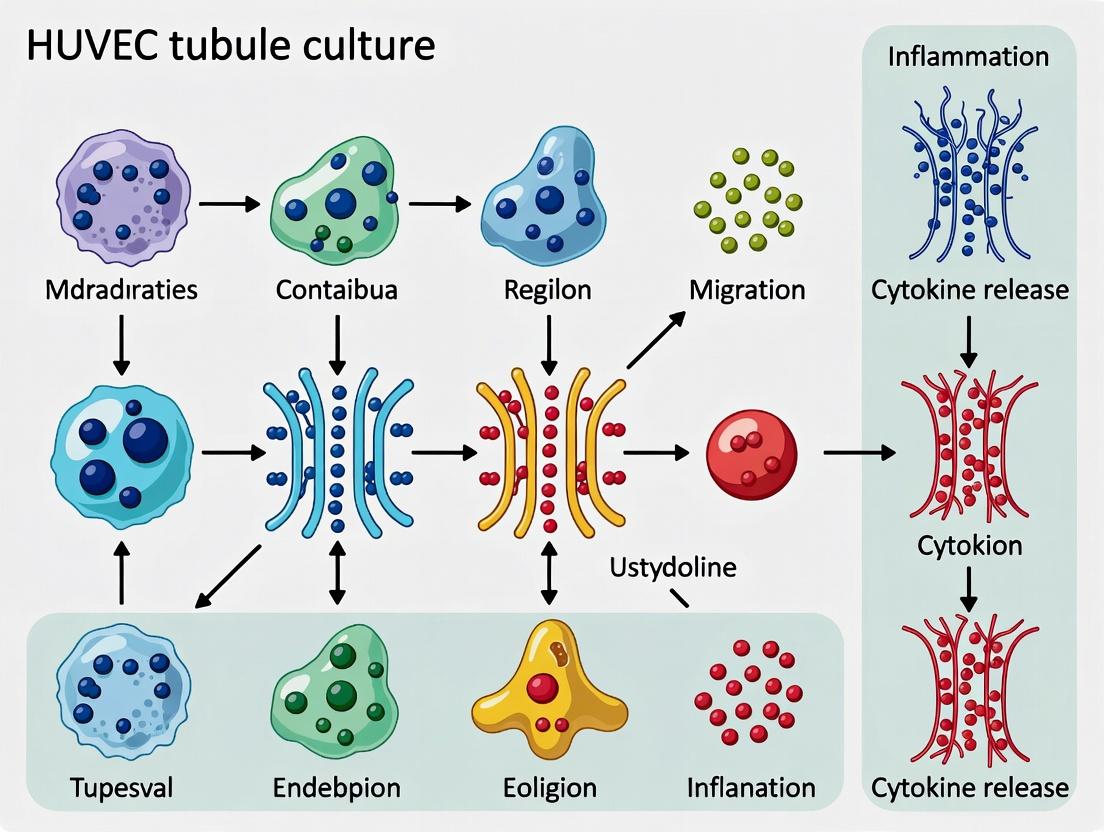
This guide provides researchers and drug development professionals with a detailed, contemporary framework for utilizing Human Umbilical Vein Endothelial Cell (HUVEC) tubule formation assays in inflammation studies.
HUVEC Tubulogenesis Assay: A Comprehensive Guide for Inflammation & Vascular Research Models
Abstract
This guide provides researchers and drug development professionals with a detailed, contemporary framework for utilizing Human Umbilical Vein Endothelial Cell (HUVEC) tubule formation assays in inflammation studies. We explore the foundational biology of angiogenesis in inflammatory contexts, detail step-by-step optimized protocols for 2D and 3D culture systems, and address common troubleshooting challenges. The article further covers advanced validation techniques, including quantitative image analysis and cytokine profiling, and compares the HUVEC model with alternative primary cells and co-culture systems. This resource aims to empower scientists to generate robust, reproducible data for investigating endothelial dysfunction, screening anti-inflammatory therapeutics, and modeling vascular-related inflammatory diseases.
Understanding Angiogenesis in Inflammation: Why HUVECs Are a Key Model System
Within the context of research utilizing Human Umbilical Vein Endothelial Cell (HUVEC) tubule culture for inflammation studies, understanding the link between inflammation and pathological angiogenesis is paramount. This pathological neovascularization, a hallmark of diseases like cancer, diabetic retinopathy, and rheumatoid arthritis, is critically fueled by a chronic inflammatory microenvironment. Inflammatory cells (e.g., macrophages, neutrophils) and mediators (e.g., TNF-α, IL-1β, IL-6, prostaglandins) directly activate endothelial cells, promoting proliferation, migration, and tube formation. Key signaling pathways, including VEGF/VEGFR2, NF-κB, and STAT3, serve as central hubs integrating inflammatory stimuli with pro-angiogenic responses. This application note details protocols and concepts for modeling this link in vitro using HUVEC cultures, providing a controlled system to dissect mechanisms and screen therapeutic agents.
Table 1: Major Inflammatory Mediators and Their Pro-Angiogenic Effects on HUVECs
| Inflammatory Mediator | Primary Source | Key Receptor on HUVECs | Major Pro-Angiogenic Effect (Measured Outcome) | Typical Experimental Concentration Range |
|---|---|---|---|---|
| TNF-α | Macrophages, T cells | TNFR1 | Increases permeability, upregulates adhesion molecules (ICAM-1), potentiates VEGF response. Enhances tube formation in Matrigel. | 1-20 ng/mL |
| IL-1β | Macrophages, monocytes | IL-1R1 | Induces VEGF, IL-6, and IL-8 expression. Promotes HUVEC proliferation and migration. | 0.1-10 ng/mL |
| IL-6 | Macrophages, T cells, endothelial cells | IL-6R/gp130 | Activates STAT3, promotes survival and proliferation. Synergizes with VEGF. | 5-50 ng/mL |
| LPS (Endotoxin) | Bacterial wall | TLR4 | Potent inducer of cytokine/chemokine secretion (e.g., IL-8), upregulates adhesion molecules, promotes pro-angiogenic activation. | 10-1000 ng/mL |
| Prostaglandin E2 (PGE2) | Cyclooxygenase-2 (COX-2) pathway | EP1-EP4 receptors | Stimulates VEGF production and directly promotes HUVEC migration and tube formation. | 1-10 µM |
Table 2: Common Readouts for Assessing Inflammation-Induced Angiogenesis in HUVEC Cultures
| Assay Type | Specific Readout | Measurement Technique | Correlation to Angiogenic Phenotype |
|---|---|---|---|
| Viability/Proliferation | Cell count, Metabolic activity (e.g., ATP levels) | Trypan blue, MTT, CellTiter-Glo | Increased proliferation supports vessel growth. |
| Migration | Wound closure, Distance traveled | Scratch/wound healing assay, Boyden chamber/Transwell | Essential for endothelial sprouting. |
| Tube Formation | Tube length, Number of nodes/junctions, Mesh area | Matrigel or other ECM matrix assay, image analysis (e.g., ImageJ Angiogenesis Analyzer) | Direct in vitro correlate of capillary network formation. |
| Signaling Activation | Phosphoprotein levels (e.g., p-VEGFR2, p-STAT3, p-NF-κB p65) | Western blot, ELISA, multiplex immunoassay | Confirms pathway activation by inflammatory stimulus. |
| Gene/Protein Expression | VEGF, ICAM-1, IL-8 mRNA/protein | qRT-PCR, ELISA | Upregulation indicates pro-angiogenic and inflammatory activation. |
Detailed Experimental Protocols
Protocol 1: HUVEC Tubulogenesis Assay on Matrigel with Inflammatory Priming
Objective: To assess the direct impact of inflammatory cytokines on the formation of capillary-like tube structures by HUVECs.
Materials:
- HUVECs (Passage 2-5)
- Endothelial Cell Growth Medium (EGM-2)
- Reduced Growth Factor (RGF) Matrigel
- Pre-chilled 96-well plates and pipette tips
- Recombinant human TNF-α and IL-1β
- PBS, 4% Paraformaldehyde (PFA)
- Calcein AM or Dil-Ac-LDL (for live staining) or anti-CD31 antibody (for fixation)
- Fluorescence or phase-contrast microscope with camera
Method:
- Matrigel Coating: Thaw Matrigel on ice overnight at 4°C. Using pre-chilled tips, dispense 50 µL per well into a pre-chilled 96-well plate. Tilt to coat evenly. Incubate plate at 37°C for 30-60 min to allow polymerization.
- HUVEC Preparation and Inflammatory Priming: Trypsinize and count HUVECs. Resuspend in EGM-2 at 1.0-1.5 x 10^5 cells/mL. For priming: Add desired concentration of TNF-α (e.g., 10 ng/mL) or IL-1β (e.g., 2 ng/mL) to the cell suspension. Incubate for 30 minutes at 37°C.
- Seeding: Gently seed 100 µL of the primed cell suspension (~10,000-15,000 cells) onto the polymerized Matrigel in each well.
- Incubation: Incubate at 37°C, 5% CO2 for 4-18 hours. Tube formation typically begins within 2-4 hours.
- Staining and Fixation:
- Live Imaging: Add Calcein AM (2 µM final) to medium and incubate 30 min. Image directly.
- Fixed Endpoint: Aspirate medium, wash gently with PBS, and fix with 4% PFA for 15 min. Permeabilize (0.1% Triton X-100, 5 min), block, and stain with anti-CD31 antibody.
- Image Acquisition and Analysis: Acquire 3-5 random images per well using a 4x or 10x objective. Use image analysis software (e.g., ImageJ Angiogenesis Analyzer) to quantify: Total Tube Length, Number of Junctions, Number of Meshes.
Protocol 2: Inflammatory Cytokine-Induced HUVEC Migration (Scratch/Wound Healing Assay)
Objective: To measure the effect of inflammatory mediators on the migratory capacity of HUVECs, a key step in angiogenesis.
Materials:
- HUVECs (Passage 2-5)
- EGM-2 medium
- 12-well or 24-well cell culture plate
- Recombinant human IL-6, PGE2
- Sterile 200 µL pipette tip or wound maker tool
- PBS
- Phase-contrast microscope with time-lapse capability or fixed timepoint imaging.
- Optional: Mitomycin C (5 µg/mL) to inhibit proliferation if assessing pure migration.
Method:
- Cell Seeding: Seed HUVECs in complete EGM-2 into a 12-well plate at a high density (e.g., 2.5 x 10^5 cells/well) to achieve 100% confluence within 24 hours.
- Wound Creation: Once confluent, gently scratch a straight line through the cell monolayer using a sterile pipette tip. Wash wells 2-3 times with PBS to remove detached cells.
- Inflammatory Stimulation: Add fresh EGM-2 containing the test inflammatory mediator (e.g., IL-6 at 20 ng/mL, PGE2 at 5 µM). Include a vehicle control well.
- Image Acquisition: Immediately take an image of the "wound" at time zero (t=0). Mark positions for consistent imaging. Return plate to incubator.
- Time-lapse or Endpoint Imaging:
- For kinetic data: Use a live-cell imaging system to capture images every 2 hours for 12-24 hours.
- For endpoint: Incubate for 6-12 hours, then fix cells with 4% PFA and stain (e.g., crystal violet) for clearer imaging.
- Analysis: Measure the gap width at multiple points in each image using image analysis software. Calculate the percentage of wound closure:
% Closure = [(Gap width t=0) - (Gap width t=x)] / (Gap width t=0) * 100.
Signaling Pathways and Experimental Workflows
Title: Core Inflammatory Signaling to Angiogenic Response
Title: HUVEC Inflammation-Angiogenesis Study Workflow
The Scientist's Toolkit: Research Reagent Solutions
Table 3: Essential Materials for HUVEC-based Inflammation-Angiogenesis Studies
| Reagent/Material | Primary Function & Rationale | Example Product/Catalog |
|---|---|---|
| HUVECs, Primary | Gold-standard primary endothelial cell model for in vitro angiogenesis. Maintain low passage (P2-P6) for optimal function. | Lonza C2519A; PromoCell C-12203 |
| Endothelial Cell Growth Medium-2 (EGM-2) | Serum-containing medium with VEGF, FGF, IGF, ascorbic acid, and other supplements essential for HUVEC growth and maintenance. | Lonza CC-3162 |
| Reduced Growth Factor (RGF) Matrigel | Basement membrane matrix for tube formation assays. RGF version minimizes confounding by endogenous growth factors, isolating effects of added inflammatory stimuli. | Corning 356231 |
| Recombinant Human Inflammatory Cytokines (TNF-α, IL-1β, IL-6) | Precisely defined stimulants to create a controlled inflammatory microenvironment. Essential for dose-response studies. | PeproTech, R&D Systems |
| Lipopolysaccharide (LPS) | Toll-like receptor 4 agonist; a potent, physiologically relevant inflammatory stimulus mimicking bacterial infection-driven angiogenesis. | Sigma-Aldrich L4516 (E. coli O111:B4) |
| VEGF-A165, Recombinant Human | Positive control for pro-angiogenic assays and a key endpoint molecule induced by inflammation. | PeproTech 100-20 |
| Selective Pathway Inhibitors (e.g., BAY 11-7082 (NF-κB), Stattic (STAT3)) | Pharmacological tools to dissect the contribution of specific signaling pathways linking inflammation to angiogenesis. | Cayman Chemical, Tocris |
| Anti-human CD31/PECAM-1 Antibody | Endothelial cell marker for immunostaining to confirm endothelial identity and visualize networks. | Abcam ab9498; R&D Systems BBA7 |
| Cell Migration/Wound Healing Assay Plates | Plates with pre-inserts (e.g., Culture-Insert 2 Well) for creating standardized, reproducible wounds. | ibidi 80209 |
| Image Analysis Software (Angiogenesis Module) | Automated, unbiased quantification of tube formation parameters (length, junctions, meshes). | ImageJ with Angiogenesis Analyzer; MetaMorph; IN Carta |
Within the scope of a thesis investigating HUVEC tubule culture for inflammation studies, understanding the biological profile of Human Umbilical Vein Endothelial Cells (HUVECs) is paramount. HUVECs are a primary workhorse for modeling vascular endothelial function, angiogenesis, and inflammatory responses in vitro. This document details their application-specific advantages, inherent limitations, and provides standardized protocols for their use in vascular inflammation modeling.
Comparative Analysis: Advantages vs. Limitations
Table 1: Advantages and Limitations of HUVECs for In Vitro Vascular Modeling
| Aspect | Advantages | Limitations |
|---|---|---|
| Biological Relevance | Primary human cell type; retain key endothelial markers (vWF, CD31, VEGFR2) and functions (NO production, adhesion molecule expression). | Derived from fetal/umbilical source; may not fully recapitulate the phenotype of adult or diseased vascular beds (e.g., coronary, cerebral). |
| Experimental Utility | High proliferative capacity; robust and reproducible in 2D and 3D (tubulogenesis) assays; respond predictably to pro-angiogenic (VEGF, bFGF) and pro-inflammatory (TNF-α, IL-1β) stimuli. | Finite lifespan (approx. 5-7 passages before senescence); donor-to-donor variability can affect experimental consistency. |
| Modeling Inflammation | Express inducible adhesion molecules (ICAM-1, VCAM-1, E-selectin); suitable for leukocyte adhesion/transmigration studies; responsive to cytokine signaling. | Lack perfusable lumens in standard tubule models; limited shear stress modeling in static culture; absence of supporting cell types (pericytes, smooth muscle) unless in co-culture. |
| Accessibility & Cost | Relatively easy to isolate and culture; commercially available from multiple vendors; lower cost than many specialized endothelial cell types. | Ethical considerations regarding tissue source (discarded umbilical cords); commercial costs can accumulate for large-scale studies. |
Application Notes for Inflammation Research
- Key Readouts: For inflammation studies using tubule cultures, primary readouts include: Tubule Network Stability (under cytokine challenge), Expression of Inflammatory Adhesins (via qPCR/IF), and Secretory Profile (cytokine array/ELISA).
- Critical Timing: Inflammatory perturbations are most effective when applied to newly stabilized networks (typically 12-24 hours post-matrigel seeding), prior to the onset of regression.
- Co-culture Enhancement: Incorporating primary human pericytes or THP-1 monocytes significantly enhances the physiological relevance for modeling vascular inflammation and leukocyte interactions.
Detailed Protocols
Protocol 4.1: HUVEC 2D Monolayer Culture for Inflammatory Activation
- Purpose: To generate a confluent endothelial monolayer for studying adhesion molecule expression and leukocyte adhesion.
- Materials: HUVECs (P2-P4), Endothelial Cell Growth Medium (EGM-2), Tissue culture flasks/plates, 0.05% Trypsin-EDTA, PBS.
- Procedure:
- Thaw and culture HUVECs in EGM-2 at 37°C, 5% CO₂.
- At 80-90% confluence, wash with PBS, detach with Trypsin-EDTA (3-5 min).
- Neutralize with serum-containing medium, centrifuge (200 x g, 5 min).
- Reseed at 1-2 x 10⁴ cells/cm². For experiments, seed in multi-well plates.
- At confluence, replace medium with EGM-2 containing a pro-inflammatory stimulus (e.g., 10 ng/mL TNF-α).
- Incubate for 4-24 hours (time-course dependent) before assaying.
Protocol 4.2: 3D Tubulogenesis Assay on Matrigel with Inflammatory Challenge
- Purpose: To form capillary-like tubule networks and assess the impact of inflammatory cytokines on network integrity and function.
- Materials: Growth Factor Reduced (GFR) Matrigel, 24-well plate, EGM-2 medium, TNF-α (or other cytokines), Calcein-AM (live stain) or fixation/permeabilization reagents.
- Procedure:
- Matrigel Coating: Thaw Matrigel on ice. Pipette 200 µL per well of a 24-well plate and spread evenly. Incubate plate at 37°C for 30 min to polymerize.
- Cell Seeding: Trypsinize and resuspend HUVECs in EGM-2. Seed 2.0 x 10⁴ cells per well onto the polymerized Matrigel.
- Network Formation: Incubate at 37°C for 4-6 hours. Tubule networks will begin to form.
- Inflammatory Challenge: At 6 hours post-seeding, carefully add fresh EGM-2 containing the desired concentration of inflammatory cytokine (e.g., 1-20 ng/mL TNF-α). Include vehicle control wells.
- Incubation & Analysis: Incubate for an additional 12-18 hours. Image networks using an inverted microscope. Quantify parameters (total tubule length, number of junctions, mesh area) using image analysis software (e.g., Angiogenesis Analyzer for ImageJ).
The Scientist's Toolkit: Research Reagent Solutions
Table 2: Essential Reagents for HUVEC Tubule-Based Inflammation Studies
| Reagent/Material | Function & Rationale |
|---|---|
| EGM-2 BulletKit | Standardized, serum-supplemented medium containing VEGF, bFGF, IGF, and EGF. Essential for maintaining HUVEC proliferation and viability. |
| Growth Factor Reduced (GFR) Matrigel | Basement membrane matrix depleted of specific growth factors to minimize background signaling. The gold standard for 3D tubulogenesis assays. |
| Recombinant Human TNF-α | Potent pro-inflammatory cytokine. Induces NF-κB signaling in HUVECs, leading to adhesion molecule upregulation and network destabilization. |
| Anti-human ICAM-1/CD54 Antibody | Key validation tool for immunofluorescence or flow cytometry to confirm inflammatory activation of HUVECs. |
| Calcein-AM | Cell-permeant fluorescent live-cell dye. Used for visualizing and quantifying viable tubule networks without fixation. |
| THP-1 Monocyte Cell Line | Used in co-culture adhesion/transmigration assays to model leukocyte-endothelial interactions under inflammatory conditions. |
Visualizations
Diagram 1: TNF-α Induced NF-κB Signaling in HUVECs
Diagram 2: Workflow for HUVEC Tubulogenesis Inflammation Assay
This application note, framed within a broader thesis on HUVEC tubule culture for inflammation studies, details the critical role of inflammatory mediators in regulating endothelial tubulogenesis. The balance between pro-angiogenic factors like VEGF and pro-inflammatory cytokines such as TNF-α and various interleukins (ILs) dictates the success of in vitro tube formation, a key model for studying vascular inflammation, wound healing, and related pathologies. This document provides current protocols and data analysis for researchers and drug development professionals.
The table below summarizes the primary effects and typical experimental concentration ranges for key mediators in HUVEC tubulogenesis assays.
Table 1: Key Inflammatory Mediators in HUVEC Tubulogenesis
| Mediator | Primary Receptor | Net Effect on Tubulogenesis | Common In Vitro Concentration Range | Key Downstream Signaling Pathways |
|---|---|---|---|---|
| VEGF-A | VEGFR2 (KDR/Flk-1) | Potent Induction | 10-50 ng/mL | PI3K/Akt, MAPK/ERK, eNOS |
| TNF-α | TNFR1 | Biphasic (Low: Promotes; High: Inhibits) | 1-20 ng/mL | NF-κB, Caspase, JNK |
| IL-1β | IL-1R1 | Inhibition / Disruption | 0.1-10 ng/mL | NF-κB, p38 MAPK |
| IL-6 | IL-6R/gp130 | Context-Dependent (Often Pro-Angiogenic) | 5-50 ng/mL | JAK/STAT3, MAPK |
| IL-8 (CXCL8) | CXCR1/CXCR2 | Promotion | 5-25 ng/mL | MAPK, PI3K |
| IFN-γ | IFNGR1/2 | Potent Inhibition | 10-100 ng/mL | JAK/STAT1 |
| TGF-β1 | TGFβRII/ALK5 | Biphasic & Context-Dependent | 1-10 ng/mL | Smad2/3, MAPK |
Experimental Protocols
Protocol 1: Standard HUVEC Tubulogenesis Assay on Geltrex
Purpose: To establish a baseline tube formation assay for assessing the impact of inflammatory mediators.
Materials:
- HUVECs (Passage 3-5)
- Endothelial Cell Growth Medium (EGM-2)
- Geltrex Reduced Growth Factor Basement Membrane Matrix
- 96-well tissue culture plate
- Pre-chilled pipette tips and tubes
Procedure:
- Matrix Coating: Thaw Geltrex on ice overnight at 4°C. Using pre-chilled tips, dilute to 8-10 mg/mL in cold serum-free medium. Pipette 50 µL per well of a 96-well plate. Incubate plate at 37°C for 30-60 min to polymerize.
- Cell Preparation: Harvest HUVECs at 80-90% confluence. Resuspend in EGM-2 at 1.0 x 10^5 cells/mL.
- Seeding: Plate 100 µL of cell suspension (10,000 cells) directly onto the polymerized Geltrex surface.
- Treatment: After 1 hour, add experimental treatments (cytokines, inhibitors) in fresh medium. Include VEGF (20 ng/mL) as a positive control and serum-free medium as a negative control.
- Incubation & Imaging: Incubate at 37°C, 5% CO2 for 4-18 hours. Image using a 4x or 10x objective on an inverted microscope at 4, 8, and 18-hour time points (3-5 fields/well).
- Analysis: Quantify using parameters: Total Tube Length, Number of Junctions, Number of Meshes. Use software (e.g., ImageJ with Angiogenesis Analyzer plugin).
Protocol 2: Assessing Combinatorial Effects of TNF-α and VEGF
Purpose: To investigate the complex crosstalk between a pro-inflammatory and a pro-angiogenic signal.
Procedure:
- Perform Protocol 1 steps 1-3.
- Prepare treatment groups in EGM-2:
- Group 1: Vehicle control
- Group 2: VEGF (20 ng/mL)
- Group 3: Low-dose TNF-α (2 ng/mL)
- Group 4: High-dose TNF-α (20 ng/mL)
- Group 5: VEGF (20 ng/mL) + Low-dose TNF-α (2 ng/mL)
- Group 6: VEGF (20 ng/mL) + High-dose TNF-α (20 ng/mL)
- Apply treatments in quadruplicate. Incubate for 6-8 hours.
- Image and quantify as in Protocol 1. Perform statistical analysis (e.g., one-way ANOVA) comparing all groups to VEGF control.
Protocol 3: Signaling Pathway Inhibition Study
Purpose: To delineate specific pathways involved in mediator action using pharmacological inhibitors.
Procedure:
- Perform Protocol 1 steps 1-3.
- Pre-treat HUVECs for 1 hour with pathway-specific inhibitors or DMSO vehicle control in serum-free medium:
- PI3K Inhibition: LY294002 (10 µM)
- NF-κB Inhibition: BAY 11-7082 (5 µM)
- JAK/STAT Inhibition: Ruxolitinib (1 µM)
- After pre-treatment, replace medium with treatment medium containing the inhibitor + the cytokine of interest (e.g., TNF-α at 10 ng/mL). Incubate for 6 hours.
- Image, quantify, and compare to treatments without inhibitors.
Signaling Pathway Visualizations
Title: Inflammatory & VEGF Signaling Crosstalk in Tubulogenesis
Title: HUVEC Tubulogenesis Assay Workflow
The Scientist's Toolkit: Research Reagent Solutions
Table 2: Essential Reagents for HUVEC Tubulogenesis & Inflammation Studies
| Reagent / Material | Supplier Examples | Function in Assay |
|---|---|---|
| HUVECs, Primary | Lonza, PromoCell | Primary endothelial cells used to form capillary-like tubes. |
| EGM-2 BulletKit Medium | Lonza | Optimized serum-containing medium for HUVEC growth and maintenance. |
| Geltrex / Cultrex BME | Thermo Fisher, R&D Systems | Basement membrane extract providing a 3D matrix for tube formation. |
| Recombinant Human VEGF 165 | PeproTech, R&D Systems | Positive control cytokine that potently induces tubulogenesis. |
| Recombinant Human TNF-α | PeproTech, BioLegend | Pro-inflammatory cytokine used to model inflammatory disruption. |
| Recombinant Human IL-1β, IL-6, IL-8 | PeproTech, BioLegend | Key interleukins to test specific inflammatory pathways. |
| LY294002 (PI3K Inhibitor) | Cayman Chemical, Selleckchem | Tool to block the pro-survival PI3K/Akt pathway. |
| BAY 11-7082 (NF-κB Inhibitor) | Cayman Chemical, Sigma-Aldrich | Inhibits NF-κB signaling, central to inflammation. |
| 96-well Cell Culture Plate | Corning, Falcon | Platform for the tubulogenesis assay. |
| Calcein AM Viability Dye | Thermo Fisher | Optional dye to stain live cells and tubes for imaging. |
| ImageJ with Angiogenesis Analyzer | Open Source | Critical, free software for quantifying tube parameters. |
Selecting an appropriate 3D extracellular matrix (ECM) is critical for modeling vascular inflammation using HUVEC tubule cultures. The scaffold influences tubule morphology, stability, cytokine secretion, and leukocyte-endothelial interactions. This application note compares three principal hydrogel types within the context of a thesis focused on HUVEC-driven in vitro models of inflammatory angiogenesis.
Quantitative Scaffold Property Comparison
Table 1: Core Properties of Matrigel, Fibrin, and Synthetic PEG Hydrogels for HUVEC Culture
| Property | Matrigel (Corning Growth Factor Reduced) | Fibrin (From Thrombin/Fibrinogen) | Synthetic PEG-Based Hydrogel (e.g., PEG-MAL, PEG-VS) |
|---|---|---|---|
| Composition | Heterogeneous, murine sarcoma-derived (laminin, collagen IV, entactin, proteoglycans, growth factors) | Defined, human plasma-derived (fibrinogen polymerized by thrombin) | Fully defined, polyethylene glycol backbone with customizable adhesive/MMP-sensitive peptides |
| Mechanical Stiffness (Typical Range for Tubulogenesis) | ~0.5 - 5 kPa (concentration-dependent) | ~1 - 20 kPa (fibrinogen/thrombin conc. dependent) | Tunable: 0.2 - 50 kPa (crosslink density dependent) |
| Degradation Mode | Enzymatic (MMP-2/9 mediated) and remodeling | Plasmin-mediated proteolysis | Designed: Proteolytic (if MMP-sensitive crosslinks) or stable |
| Key Advantages | Superior tubulogenesis speed & complexity; biologically active | Tunable stiffness; supports long-term tubule stability; supports perfusion | Defined chemistry; tunable mechanics & adhesion; minimal batch variation; enables incorporation of inflammatory cues |
| Key Limitations for Inflammation Studies | High batch variability; undefined GF content confounds cytokine studies; animal origin | Endogenous plasminogen can affect inflammation; may require anti-fibrinolytic agents | Requires functionalization (RGD, MMP peptides); often less rapid tubulogenesis than Matrigel |
| Compatibility with Inflammatory Stimulation | High baseline biological activity can mask subtle inflammatory effects. | Excellent for cytokine/chemokine add-back studies due to defined base. | Ideal for reductionist studies of specific inflammatory signals (e.g., tethering TNF-α). |
| Typical HUVEC Tubule Formation Time | 4-6 hours | 12-24 hours | 24-48 hours |
| Typical Experiment Duration | Up to 3-5 days (degrades) | Up to 7-14 days (stable) | Up to 14+ days (highly stable) |
| Approx. Cost per 24-well | ~$30-50 | ~$10-20 | ~$20-40 (depending on functionalization) |
Contextual Selection Guide for Inflammation Studies
Table 2: Scaffold Selection Based on Specific Inflammation Research Question
| Research Focus | Recommended Scaffold | Rationale |
|---|---|---|
| High-throughput screening of pro-/anti-angiogenic inflammatory drugs | Matrigel | Rapid, robust tubule formation allows quick readouts (e.g., tube length). Batch consistency is less critical for internal screen comparisons. |
| Mechanistic study of matrix stiffness on endothelial inflammatory activation | Fibrin or Synthetic PEG | Precise, independent control over substrate stiffness. Fibrin offers biological remodeling; PEG offers full control. |
| Leukocyte (e.g., monocytes) adhesion and transmigration under flow | Fibrin | Forms stable, perfusable tubes that can be integrated into microfluidic devices. Fibrin's natural ligands support integrin-mediated adhesion. |
| Reductionist study of a single inflammatory cytokine or immobilized chemokine | Synthetic PEG | Enables precise tethering of specific proteins (e.g., VCAM-1 mimetic peptides, TNF-α) against an inert background. |
| Long-term modeling of chronic vascular inflammation | Fibrin or Synthetic PEG | Superior long-term stability supports co-culture with immune cells over weeks. |
Detailed Protocols
Protocol A: HUVEC Tubulogenesis in Growth Factor-Reduced Matrigel for Acute Inflammation Assay
Objective: To form capillary-like networks and assess the acute impact of a soluble inflammatory stimulus (e.g., TNF-α) on tubule morphology and integrity.
Materials (The Scientist's Toolkit):
- Corning GFR Matrigel, Phenol Red-Free: Cold-stored (-20°C). Provides a basement membrane-mimetic environment for rapid tubulogenesis.
- Pre-chilled (4°C) pipette tips and 24-well plate: Prevents premature gelation of Matrigel.
- HUVECs (P2-P5), EGM-2 medium: Standard endothelial cells and growth medium.
- Starve Medium: EBM-2 basal medium + 0.5% FBS. Used to synchronize cells before assay.
- Recombinant Human TNF-α (e.g., PeproTech): Pro-inflammatory cytokine stimulus.
- Calcein-AM or FITC-labeled Ulex europaeus Agglutinin I (UEA-I): For live or fixed staining of endothelial cells, respectively.
- 4% Paraformaldehyde (PFA): Fixative.
- Imaging System: Fluorescent microscope with automated stage and analysis software (e.g., ImageJ with Angiogenesis Analyzer).
Procedure:
- Matrigel Preparation: Thaw Matrigel overnight at 4°C on ice. Keep all reagents and equipment on ice.
- Coating: Pipette 150 µL of cold Matrigel per well of a 24-well plate. Tilt to coat evenly. Incubate plate at 37°C for 30 min to polymerize.
- Cell Seeding: Trypsinize, count, and resuspend HUVECs in Starve Medium at 1.5 x 10^5 cells/mL. Seed 15,000-20,000 cells (100 µL suspension) per well on top of the polymerized gel. Add 1 mL of Starve Medium per well.
- Tubule Formation: Incubate at 37°C, 5% CO2 for 4-6 hours. Monitor under microscope until a mature network forms.
- Inflammatory Stimulation: Prepare TNF-α solutions in Starve Medium (typical range: 1-20 ng/mL). Aspirate medium from wells and add 1 mL of TNF-α-containing or control medium. Incubate for a further 6-24 hours.
- Analysis: Fix with 4% PFA for 15 min. Stain with FITC-UEA-I (1:100) for 1 hour. Image multiple fields per well.
- Quantification: Analyze using ImageJ: threshold images, skeletonize network, and quantify Total Tube Length, Number of Junctions, and Number of Meshes.
Protocol B: Forming Stable, Perfusable HUVEC Tubes in Fibrin Gels for Leukocyte Interaction Studies
Objective: To generate long-lasting endothelial tubes within a fibrin matrix suitable for studying leukocyte adhesion and extravasation.
Materials (The Scientist's Toolkit):
- Human Fibrinogen (e.g., MilliporeSigma): Lyophilized powder. Reconstitute to 10-20 mg/mL in pre-warmed (37°C) PBS. Filter sterilize (0.45 µm). Aliquot and store at -20°C.
- Human Thrombin (e.g., MilliporeSigma): Lyophilized powder. Reconstitute to 50 U/mL in 0.1% BSA in PBS. Aliquot and store at -80°C.
- Aprotinin (or ε-aminocaproic acid): Anti-fibrinolytic agent to prevent gel degradation.
- HUVECs in EGM-2.
- Normal Human Lung Fibroblasts (NHLFs, optional): For supportive co-culture to enhance tube stability.
- Leukocytes (e.g., THP-1 monocytes or isolated PBMCs): For adhesion/transmigration assays.
- CellTracker Dyes (e.g., CMFDA for HUVECs, CMTMR for leukocytes): For differential fluorescent labeling.
Procedure:
- Fibrin Gel Preparation: Prepare working solutions on ice: Fibrinogen (2.5 mg/mL final) in EGM-2. Thrombin (1 U/mL final) in PBS. In a well of a 24-well plate, mix 500 µL fibrinogen solution with 5 µL thrombin solution. Swirl gently. Polymerization occurs within 5-10 min at room temperature.
- Cell Embedding (Option 1): Resuspend HUVECs (± NHLFs at 2:1 HUVEC:fibroblast ratio) in the fibrinogen solution before adding thrombin. Seed entire mixture into well.
- Cell Seeding on Top (Option 2): After gel polymerization, seed HUVECs on top of the gel in EGM-2 medium supplemented with 50 µg/mL aprotinin.
- Tube Maturation: Culture for 3-7 days, changing medium (+ aprotinin) every 2 days. Tubes will form and canalize.
- Leukocyte Adhesion Assay: Label leukocytes with CellTracker CMTMR. Resuspend in adhesion medium (EBM-2 + 0.5% BSA). Add 100,000-200,000 labeled leukocytes per well onto the mature HUVEC tubes.
- Incubation & Analysis: Incubate for 30-60 min at 37°C. Gently wash 3x with PBS to remove non-adherent cells. Fix and image. Quantify adherent leukocytes per field or per unit length of tubule.
Protocol C: Tethering an Inflammatory Cue in a Synthetic PEG Hydrogel
Objective: To create a bio-inert PEG hydrogel with precisely immobilized recombinant VCAM-1 to study specific integrin-mediated HUVEC activation.
Materials (The Scientist's Toolkit):
- 8-arm PEG-Maleimide (PEG-8-MAL, 20 kDa, e.g., JenKem Technology): Multi-functional crosslinker molecule.
- GCGYGRGDSPG Peptide (RGD): Adhesive peptide containing cysteine for maleimide conjugation.
- KCGGPQG↓IWGQK Peptide (MMP-sensitive): Crosslinker peptide cleavable by endothelial MMPs.
- Recombinant Human VCAM-1/Fc Chimera (e.g., R&D Systems): Contains free thiols for maleimide coupling.
- HUVECs in EGM-2.
- Triethanolamine (TEA) Buffer, pH 8.0: For conjugation reactions.
Procedure:
- Pre-functionalization of VCAM-1: Reduce VCAM-1/Fc with 1 mM TCEP in TEA buffer for 30 min at room temperature. Desalt into TEA buffer using a Zeba spin column to remove TCEP.
- PEG Hydrogel Precursor Solutions:
- Solution A (Polymer): 5% (w/v) PEG-8-MAL + 1.5 mM RGD peptide in PBS.
- Solution B (XL + Cue): 2.5 mM MMP-sensitive crosslinker peptide + 50 µg/mL reduced VCAM-1 in PBS.
- Gel Formation: Mix Solutions A and B in a 1:1 ratio (e.g., 50 µL each) directly in a well of a 24-well plate. Incubate at 37°C for 15-20 min to form gel.
- Cell Seeding: Seed HUVECs (25,000 cells/well) on top of the gel in EGM-2 medium.
- Analysis: Assess HUVEC spreading (area, aspect ratio) at 6-12h via phalloidin staining, and tubulogenesis over 24-72h, compared to control gels with no VCAM-1 or soluble VCAM-1.
Signaling Pathways & Workflows
Diagram: Key Inflammatory Pathways in HUVECs Across Scaffolds
Diagram: Experimental Workflow for Scaffold Comparison
Diagram: Decision Logic for Scaffold Selection
Step-by-Step Protocol: Establishing Robust HUVEC Tubule Cultures for Inflammation Assays
Within the context of a thesis investigating HUVEC tubulogenesis for inflammation studies, robust pre-assay preparation is paramount. The validity of downstream assays—such as cytokine-induced pro-inflammatory signaling or leukocyte adhesion—hinges on the quality and physiological relevance of the primary cell culture. This document details standardized protocols for thawing, culturing, and quality-controlling Human Umbilical Vein Endothelial Cells (HUVECs) to establish a reproducible foundation for angiogenesis and inflammation research.
Thawing and Initial Plating Protocol
Materials: Cryopreserved HUVECs (P2-P4, pooled donors recommended), 37°C water bath, complete endothelial cell growth medium (EGM-2 or equivalent), T-75 culture flask pre-coated with 0.1% gelatin, centrifuge. Procedure:
- Rapid Thaw: Remove vial from liquid nitrogen. Immediately thaw in a 37°C water bath with gentle agitation until only a small ice crystal remains (≈1-2 minutes).
- Decontaminate: Wipe vial exterior with 70% ethanol and transfer to biosafety cabinet.
- Dilution & Centrifugation: Gently transfer cell suspension into a 15mL conical tube containing 9mL of pre-warmed complete medium. This dilutes the cryoprotectant (DMSO). Centrifuge at 200 x g for 5 minutes at room temperature.
- Resuspend & Plate: Aspirate supernatant. Gently resuspend pellet in 2mL of complete medium. Transfer cells to a pre-coated T-75 flask containing 10mL of pre-warmed medium. Final medium volume: 12mL.
- Incubate: Gently rock flask to distribute cells evenly. Place in a 37°C, 5% CO₂ humidified incubator.
- First Media Change: Replace medium with 12mL of fresh, pre-warmed complete medium 24 hours post-thaw to remove non-adherent debris.
Culture Maintenance and Passaging
Subculture Protocol:
- Monitor Confluency: Culture cells until they reach 70-80% confluency (typically 2-3 days post-thaw). Do not allow to reach 100% confluency, as this promotes senescence and loss of endothelial markers.
- Wash: Aspirate medium and rinse with 5mL of Dulbecco's Phosphate-Buffered Saline (DPBS) without Ca²⁺/Mg²⁺.
- Detach: Add 3mL of 0.05% Trypsin-EDTA solution. Incubate at 37°C for 2-3 minutes. Monitor under microscope until cells round up and detach.
- Neutralize: Add 6mL of complete medium (containing serum) to neutralize trypsin. Gently pipette to create a single-cell suspension.
- Count & Centrifuge: Count cells using a hemocytometer or automated counter. Centrifuge at 200 x g for 5 minutes.
- Reseed: Aspirate supernatant, resuspend in fresh medium, and seed new gelatin-coated flasks/plates at a density of 5,000 - 10,000 cells/cm².
Essential Quality Control Assays
Consistent QC is critical for reliable tubule formation and inflammation response assays.
Viability and Population Doubling Time (PDT)
Protocol: Perform cell count and viability assessment (via Trypan Blue exclusion) at each passage. Calculate PDT using the formula: PDT = (T * ln2) / ln(Xe/Xb), where T is time in culture, Xb is cell number at seeding, and Xe is cell number at harvest. Acceptance Criteria: Post-thaw viability ≥90%. PDT should be consistent (typically 18-24 hours) across early passages (P2-P6).
Morphology and Confluence Assessment
Protocol: Daily visual inspection under a phase-contrast microscope (100-200X magnification). Document morphology. Acceptance Criteria: Cells exhibit classic cobblestone morphology when confluent. Excessive spindle-shaping, vacuolization, or granularity indicates stress or senescence.
Endothelial Marker Validation via Immunofluorescence (IF)
Protocol:
- Seed HUVECs on gelatin-coated chamber slides at 10,000 cells/cm². Culture until sub-confluent.
- Fix with 4% paraformaldehyde (PFA) for 15 minutes at room temperature.
- Permeabilize and block with 5% normal serum/0.3% Triton X-100 for 1 hour.
- Incubate with primary antibodies overnight at 4°C: Mouse anti-human CD31 (PECAM-1) and Rabbit anti-human VE-Cadherin.
- Wash and incubate with appropriate fluorescent secondary antibodies (e.g., Alexa Fluor 488, 594) for 1 hour at room temperature in the dark.
- Mount with DAPI-containing medium and image using a fluorescence microscope. Acceptance Criteria: ≥95% of cells must show strong, membranous staining for CD31 and VE-Cadherin.
Functional Tubule Formation Assay (Matrigel)
Protocol:
- Thaw Growth Factor Reduced (GFR) Matrigel on ice overnight at 4°C. Coat a 96-well plate (50µL/well) and polymerize at 37°C for 30 minutes.
- Harvest HUVECs at P3-P5. Seed 10,000 cells/well in 100µL of complete EGM-2 medium.
- Incubate at 37°C, 5% CO₂ for 6-18 hours.
- Image networks using a phase-contrast microscope (40-100X). Quantify total tubule length, number of master junctions, and number of meshes using image analysis software (e.g., Angiogenesis Analyzer for ImageJ). Acceptance Criteria: Cells must form an interconnected capillary-like network within 18 hours. Batch-to-batch control cells should yield consistent quantitative parameters.
| QC Parameter | Assay Method | Target Acceptance Range | Typical Result (P3-P5) | Frequency |
|---|---|---|---|---|
| Viability | Trypan Blue Exclusion | ≥ 90% | 92-98% | Every passage |
| Population Doubling Time | Cell Counting | 18 - 24 hours | 20 ± 2 hours | Every passage |
| CD31 Positive Cells | Immunofluorescence | ≥ 95% | 97-99% | Every new cell lot |
| VE-Cadherin Positive Cells | Immunofluorescence | ≥ 95% | 96-99% | Every new cell lot |
| Tubule Formation Capacity | Matrigel Assay | Network formation in <18h | Robust network by 6-8h | Every new cell lot & key passages |
Key Research Reagent Solutions
| Item | Function & Importance |
|---|---|
| Complete Endothelial Cell Medium (EGM-2) | Provides essential growth factors (VEGF, FGF, EGF), hormones, and serum for proliferation and maintenance of endothelial phenotype. |
| Gelatin (0.1% solution) | Extracellular matrix coating that promotes HUVEC attachment and spreading by providing integrin-binding sites. |
| Growth Factor Reduced (GFR) Matrigel | Basement membrane extract critical for tubulogenesis assays; provides the 3D matrix environment needed for capillary network formation. |
| CD31/PECAM-1 Antibody | Key marker for confirming endothelial cell identity; involved in leukocyte transmigration and angiogenesis. |
| VE-Cadherin Antibody | Critical junctional protein confirming endothelial barrier function; essential for proper tubule formation and stability. |
| Trypsin-EDTA (0.05%) | Proteolytic enzyme mixture for gentle and consistent cell detachment during passaging. |
| DMSO (Cryopreservation Grade) | Cryoprotectant used for freezing cells; must be of high quality and removed promptly post-thaw to avoid toxicity. |
Diagrams
HUVEC Thawing Workflow
HUVEC Passage Strategy & QC Points
Inflammation Signaling Impacts HUVEC Function
Application Notes & Protocols
Optimized Matrigel-Based Tubulogenesis Protocol for Inflammatory Stimulation
Context: This protocol is a core methodology for a thesis investigating endothelial dysfunction in inflammation, utilizing HUVEC tubulogenesis as a primary model to screen pro- and anti-inflammatory compounds and dissect underlying signaling pathways.
1. Research Reagent Solutions Toolkit
| Item | Function in Protocol |
|---|---|
| Growth Factor-Reduced (GFR) Matrigel | Provides a simplified, standardized basement membrane matrix for consistent tube formation, minimizing confounding signaling from native growth factors. |
| Human Umbilical Vein Endothelial Cells (HUVECs) | Primary cells representing macrovascular endothelial biology; early passage (P2-P6) is critical for optimal tubulogenic potential. |
| Endothelial Cell Growth Medium-2 (EGM-2) | Serum-supplemented medium containing VEGF, bFGF, IGF-1, and ascorbic acid for routine HUVEC culture and expansion. |
| Tubulogenesis Assay Medium | EGM-2 base, but with a defined, lower concentration of VEGF (e.g., 5-10 ng/mL) to establish a baseline without excessive stimulation. |
| Recombinant Human TNF-α | Gold-standard pro-inflammatory cytokine used to disrupt tubulogenesis and model an inflammatory microenvironment. |
| Calcein-AM Viability Stain | Live-cell, fluorescent dye (ex/em ~495/515 nm) used to visualize the tubular network architecture. |
| Angiogenesis Analyzer for ImageJ | Open-source tool for the quantitative morphological analysis of tube networks from captured images. |
2. Optimized Protocol for Inflammatory Stimulation
2.1. HUVEC Preparation & Matrigel Plating
- Cell Preparation: Culture HUVECs in EGM-2. Harvest at 80-90% confluence using a mild dissociation reagent. Count and resuspend in Tubulogenesis Assay Medium at 1.2 x 10^5 cells/mL.
- Matrigel Coating: Thaw GFR Matrigel overnight at 4°C. Using pre-chilled tips and plates, coat each well of a 96-well plate with 50 µL of Matrigel. Distribute evenly and polymerize for 45 min at 37°C.
- Cell Seeding: Plate 100 µL of cell suspension (12,000 cells/well) onto the polymerized Matrigel. Incubate for 6 hours to allow initial tube formation.
2.2. Inflammatory Stimulation Phase
- After the 6-hour tubulogenesis period, prepare fresh assay medium containing the inflammatory stimulus.
- Positive Control (Inhibition): 10 ng/mL recombinant human TNF-α.
- Negative Control: Tubulogenesis Assay Medium only.
- Treatment Condition: Medium containing the test anti-inflammatory compound, with or without co-stimulation with TNF-α.
- Gently aspirate 100 µL of spent medium from each well and replace with 100 µL of the corresponding treatment medium. Incubate for an additional 18 hours.
2.3. Staining, Imaging, and Quantification
- Staining: Prepare a 2 µM Calcein-AM solution in pre-warmed PBS. Aspirate treatment medium, add 100 µL of Calcein-AM solution per well, and incubate for 45 min at 37°C.
- Imaging: Image using a fluorescence microscope (e.g., 4x objective) with a FITC filter set. Capture 4 non-overlapping fields per well.
- Quantification: Analyze images using the "Angiogenesis Analyzer" tool in ImageJ/FIJI. Key parameters are summarized in Table 1.
3. Data Presentation: Quantitative Tubulogenesis Metrics
Table 1: Key Quantitative Outputs for Tubulogenesis Analysis
| Parameter | Definition | Typical Baseline (No TNF-α) | Typical Response (10 ng/mL TNF-α) |
|---|---|---|---|
| Total Tube Length (px/mm) | Sum length of all tubular segments in the image. | 12,000 ± 1500 px | 4,500 ± 800 px (↓ ~63%) |
| Number of Junctions | Branch points connecting three or more tubes. | 180 ± 25 | 60 ± 15 (↓ ~67%) |
| Number of Meshes | Closed polygons formed by the tubular network. | 90 ± 15 | 20 ± 8 (↓ ~78%) |
| Mesh Size (avg. px²) | Mean area of the closed meshes. | 2,500 ± 500 px² | 8,000 ± 1500 px² (↑) |
Note: Data are illustrative means ± SD from typical experiments. Actual values are microscope- and segmentation-dependent.
4. Detailed Experimental Protocols from Cited Core Techniques
Protocol 4.1: HUVEC Tube Formation Assay (Detailed)
- Day -1: Coat a pre-chilled 96-well plate with 50 µL/well of GFR Matrigel. Tap plate gently to ensure even coating. Incubate for 45 min at 37°C.
- Day 0: Trypsinize and count HUVECs (P3-P5). Centrifuge at 300 x g for 5 min. Resuspend pellet in Tubulogenesis Assay Medium to 1.2e5 cells/mL.
- Plate 100 µL cell suspension onto the polymerized Matrigel. Avoid creating bubbles.
- Incubate plate for 6 hours at 37°C, 5% CO₂ to allow initial network formation.
- At 6h, prepare treatment media. Aspirate 100 µL from each well and gently add 100 µL of fresh treatment medium.
- Incubate for an additional 18 hours.
- Staining: Add 100 µL of 2 µM Calcein-AM in PBS to each well. Incubate 45 min at 37°C.
- Imaging: Image on an inverted fluorescence microscope at 4x magnification.
Protocol 4.2: Network Quantification using ImageJ Angiogenesis Analyzer
- Open fluorescence image in ImageJ/FIJI.
- Process image:
Image > Adjust > Threshold. Adjust to highlight the tube network, then apply. - Binarize:
Process > Binary > Make Binary. - Skeletonize:
Process > Binary > Skeletonize. - Analyze:
Plugins > Angiogenesis Analyzer > Analyze Skeleton. Select appropriate options. - Record outputs: Total Tube Length, Number of Junctions, Number of Meshes, and Average Mesh Size.
5. Signaling Pathways & Experimental Workflow
TNF-α Disrupts Endothelial Tube Formation Workflow
Image Analysis Pipeline for Tube Quantification
This application note details protocols for incorporating inflammatory stimuli into Human Umbilical Vein Endothelial Cell (HUVEC) tubule culture models, a central methodology for a thesis investigating endothelial dysfunction in inflammation. Proper timing, concentration, and combination of stimuli are critical for generating physiologically relevant in vitro models of conditions like atherosclerosis, sepsis, or diabetic vasculopathy.
Table 1: Common Inflammatory Stimuli for HUVEC Tubule Culture
| Stimulus | Typical Working Concentration Range | Primary Receptor/Target | Key Induced Pathways | Primary Readout in Tubulogenesis |
|---|---|---|---|---|
| Tumor Necrosis Factor-alpha (TNF-α) | 1-20 ng/mL | TNFR1 | NF-κB, MAPK (p38, JNK) | Tubule disruption; Increased permeability; Adhesion molecule (ICAM-1, VCAM-1) expression. |
| Interleukin-1 beta (IL-1β) | 0.1-10 ng/mL | IL-1R1 | NF-κB, MAPK | Similar to TNF-α; potent inducer of pro-inflammatory cytokines. |
| Lipopolysaccharide (LPS) | 10-1000 ng/mL (E. coli O111:B4) | TLR4/CD14/MD2 | NF-κB, MAPK, IRF3 | Dose-dependent inhibition of tubule formation; Activation of coagulant factors. |
| High Glucose (Hyperglycemic Mimic) | 25-33 mM (vs. 5.5 mM normal) | Multiple (ROS generation) | PKC, AGE/RAGE, NF-κB | Delayed tubule formation; Increased oxidative stress. |
| Reactive Oxygen Species (H₂O₂) | 50-500 µM | Oxidative stress | Nrf2, NF-κB | Acute tubule collapse; Senescence induction. |
| Vascular Endothelial Growth Factor (VEGF)* | 10-50 ng/mL | VEGFR2 | PI3K/Akt, ERK | Pro-angiogenic; Can have context-dependent pro-inflammatory effects. |
*VEGF is included as a co-treatment variable in inflammatory paradigms.
Detailed Experimental Protocols
Protocol 3.1: Pre-Treatment of HUVECs Prior to Tubule Assay
Aim: To model chronic endothelial activation prior to angiogenic sprouting.
- Culture HUVECs to 80% confluence in EGM-2 medium.
- Stimulate with chosen inflammatory agent (e.g., TNF-α at 10 ng/mL) in complete medium for 6-24 hours.
- Harvest Cells: Wash with PBS, trypsinize, and centrifuge (300 x g, 5 min).
- Reseed for Tubule Assay: Resuspend pre-treated HUVECs in appropriate tubule assay matrix (see Protocol 3.3). Include the same inflammatory stimulus in the assay medium to maintain activation.
Protocol 3.2: Co-Treatment During Tubule Formation Assay
Aim: To assess the direct impact of inflammation on the tubulogenic process.
- Prepare Tubule Assay as per standard protocol (e.g., Matrigel-based assay).
- Prepare Treatment Medium: EGM-2 medium supplemented with the inflammatory stimulus at the desired concentration.
- Apply Cells & Stimulus: Seed HUVECs (passage 3-5) onto the matrix and immediately add the treatment medium.
- Incubate & Image: Culture for 4-18 hours. Capture images at regular intervals (e.g., 4h, 8h, 18h) using phase-contrast microscopy.
Protocol 3.3: 3D Fibrin Gel Tubulogenesis Assay with Co-Stimulation
Aim: A robust protocol for studying tubule formation in a more physiological 3D matrix with combinatorial inputs. Materials:
- HUVECs, EGM-2 medium, Fibrinogen (from bovine plasma), Thrombin (from bovine plasma), Aprotinin (to inhibit gel degradation), 24-well plate.
- Inflammatory stimuli (e.g., TNF-α, IL-1β).
- Putative therapeutic agent for co-treatment studies.
Procedure:
- Prepare Fibrinogen Solution: Dilute fibrinogen to 2 mg/mL in EGM-2 medium. Add Aprotinin to 500 KIU/mL.
- Prepare HUVEC Suspension: Trypsinize, count, and resuspend HUVECs at 1 x 10^6 cells/mL in EGM-2.
- Mix and Plate: Combine 250 µL fibrinogen solution with 250 µL HUVEC suspension in a sterile tube. Add 5 µL of thrombin (50 U/mL stock), mix gently, and quickly pipette 0.5 mL into a well of a 24-well plate. Allow to polymerize for 30 min at 37°C.
- Add Overlay and Stimuli: Gently add 1 mL of EGM-2 containing the inflammatory stimulus (e.g., 10 ng/mL TNF-α) and/or the test compound (e.g., 10 µM specific inhibitor) on top of the polymerized gel.
- Culture and Analyze: Incubate for up to 7 days, refreshing medium/treatments every 2 days. Image tubule networks using an inverted microscope. Quantify parameters (total tubule length, branch points, mesh area) using software (e.g., Angiogenesis Analyzer for ImageJ).
Signaling Pathways and Experimental Workflows
Title: Key Inflammatory Signaling Pathways in HUVECs
Title: Workflow for Incorporating Stimuli in Tubule Assays
The Scientist's Toolkit: Research Reagent Solutions
Table 2: Essential Materials for HUVEC Inflammation-Tubulogenesis Studies
| Item | Example Product/Catalog # | Function in Protocol |
|---|---|---|
| HUVECs, Primary | Lonza C2519A; Prometheus C0045C | Source of endothelial cells for tubule formation assays. Low passage (P3-P5) is critical. |
| Endothelial Cell Growth Medium-2 (EGM-2) | Lonza CC-3162 | Serum-containing, growth factor-supplemented medium for optimal HUVEC maintenance and growth. |
| Recombinant Human TNF-α | PeproTech 300-01A | Gold-standard pro-inflammatory cytokine for activating NF-κB pathway in HUVECs. |
| Lipopolysaccharide (LPS), E. coli O111:B4 | Sigma-Aldrich L2630 | TLR4 agonist used to model bacterial infection-induced endothelial inflammation. |
| Growth Factor Reduced Matrigel | Corning 356231 | Basement membrane extract for 2D/3D tubule formation assays. "Growth factor reduced" minimizes confounding variables. |
| Fibrinogen from Bovine Plasma | Sigma-Aldrich F8630 | Component for preparing physiological 3D fibrin gel matrices for tubulogenesis assays. |
| Aprotinin from Bovine Lung | Sigma-Alderich A1153 | Serine protease inhibitor used in fibrin gels to prevent HUVEC-mediated gel degradation. |
| Cell Recovery Solution | Corning 354253 | For harvesting cells intact from 3D Matrigel cultures for downstream analysis (e.g., RNA/protein). |
| ImageJ with Angiogenesis Analyzer | Open Source / NIH | Critical, no-cost software tool for quantifying tubule network parameters from microscopy images. |
| ICAM-1/CD54 Antibody | eBioscience 14-0549-82 | Common flow cytometry or immunofluorescence antibody to validate inflammatory activation of HUVECs. |
Application Notes
Within the broader thesis on HUVEC tubule culture for inflammation studies, advanced co-culture models incorporating macrophages and pericytes represent a critical evolution. These tri-culture systems aim to recapitulate the dynamic and complex cellular crosstalk occurring in the vascular niche during inflammatory processes, such as in atherosclerosis, diabetic retinopathy, and tumor angiogenesis. Pericytes provide vessel stabilization and modulate endothelial permeability, while macrophages (particularly M1 pro-inflammatory or M2 anti-inflammatory phenotypes) drive immune responses. Their interplay dictates the transition from acute resolution to chronic inflammation and vascular dysfunction.
Key Quantitative Findings from Recent Studies:
Table 1: Impact of Co-culture Components on HUVEC Tubule Parameters
| Co-culture Condition | Tubule Length (% Change vs. HUVEC Mono) | Branch Points (% Change vs. HUVEC Mono) | Key Measured Soluble Factor | Reported Effect |
|---|---|---|---|---|
| HUVEC + Pericyte | +15% to +40% Stabilization | +20% to +35% Stabilization | Angiopoietin-1, TGF-β | Enhanced maturation & stability |
| HUVEC + M1 Macrophage | -30% to -60% Regression | -40% to -70% Regression | TNF-α, IL-1β, MMP-9 | Tubule disruption & regression |
| HUVEC + M2 Macrophage | -10% to +20% Variable | -5% to +15% Variable | VEGF, EGF | Context-dependent modulation |
| HUVEC + Pericyte + M1 | -15% to -40% (Attenuated) | -20% to -50% (Attenuated) | PDGF-BB, HGF | Pericyte partial protection of tubules |
Table 2: Common Readouts for Inflammation in Tri-Culture Models
| Readout Category | Specific Assay/Marker | Technical Platform | Typical Timepoint |
|---|---|---|---|
| Tubule Morphology | Total Network Length, Branch Points, Mesh Size | Phase-contrast/fluorescent microscopy, Angiogenesis Analyzers (ImageJ) | Days 3-7 |
| Endothelial Barrier Function | Dextran-FITC Flux, TEER (if on inserts) | Fluorescence spectrometry, Voltohmmeter | Days 2-5 |
| Inflammatory Secretome | TNF-α, IL-6, IL-10, MCP-1 Quantification | ELISA or Multiplex Luminex Assay | Days 1-5 |
| Cell Phenotype Tracking | CD206 (M2), iNOS (M1), αSMA (Pericyte), CD31 (HUVEC) | Immunofluorescence, Flow Cytometry | End of experiment |
| Adhesion/Migration | Leukocyte (e.g., THP-1) Adhesion to Tubules | Calcein-AM labeled cells, Fluorescence quantitation | After inflammatory trigger |
Experimental Protocols
Protocol 1: Establishment of a 2D Tri-Culture Model for Real-Time Imaging
Objective: To study the direct cellular interactions between HUVEC tubules, pericytes, and macrophages under inflammatory stimuli.
Materials: Ibidi µ-Slide Angiogenesis plates, HUVECs (P3-P5), Primary Human Brain Vascular Pericytes (HBVP), THP-1 monocyte cell line, PMA, LPS, IFN-γ, IL-4, IL-13, Endothelial Growth Medium-2 (EGM-2), Pericyte Medium, RPMI-1640.
Method:
- Pericyte Seeding: Plate HBVP cells at 5,000 cells/cm² in Pericyte Medium in the angiogenesis plate. Culture until 80% confluent (Day -2).
- HUVEC Tubule Formation: On Day 0, coat the pericyte monolayer with reduced-growth-factor Matrigel (3 mg/mL). Seed HUVECs (10,000 cells/cm²) in EGM-2 on top.
- Macrophage Differentiation & Polarization: Differentiate THP-1 monocytes with 100 nM PMA for 48 hours in RPMI+10% FBS. On Day 2 of HUVEC culture, polarize to M1 (20 ng/mL IFN-γ + 100 ng/mL LPS for 24h) or M2 (20 ng/mL IL-4 + 20 ng/mL IL-13 for 24h) in serum-free conditions.
- Tri-Culture Initiation: On Day 3, gently add polarized macrophages (1:2 ratio to HUVECs) suspended in a low-serum mix (1:1 EGM-2:RPMI) directly onto the established HUVEC-pericyte tubules.
- Stimulation & Imaging: Apply relevant inflammatory stimuli (e.g., TNF-α). Acquire time-lapse images every 30 minutes for 24-48 hours using a live-cell imaging system. Fix for endpoint immunofluorescence.
Protocol 2: Fibrin Bead Sprouting Assay with Macrophage Conditioned Media (CM)
Objective: To assess the paracrine effects of macrophage subtypes on HUVEC-pericyte sprouting in a 3D matrix.
Materials: Cytodex 3 microcarrier beads, Fibrinogen, Thrombin, Aprotinin, M1 and M2 macrophage CM.
Method:
- Bead Preparation: Coat ~400 Cytodex 3 beads with HUVECs (500 cells/bead) and incubate overnight on a rotator.
- 3D Gel Embedding: Prepare a fibrin gel (2.5 mg/mL fibrinogen, 0.15 U/mL thrombin) in a 24-well plate. Mix the HUVEC-coated beads with pericytes (2 cells/bead HUVEC) and suspend in the fibrinogen solution before thrombin addition.
- Polymerization & Overlay: Allow gel to clot for 30 min at 37°C. Overlay with 500 µL of EGM-2 containing 50 µg/mL aprotinin (to inhibit gel degradation) and 25% (v/v) of either M1-CM, M2-CM, or control media.
- Sprouting Quantification: Refresh media+CM every other day. On day 5, fix with 4% PFA, stain for CD31 (HUVECs) and NG2 (pericytes). Image using confocal microscopy. Quantify total sprout length per bead and pericyte coverage using 3D reconstruction software.
Signaling Pathways in Vascular Inflammation Tri-Culture
Title: Crosstalk in HUVEC-Macrophage-Pericyte Tri-Culture
Experimental Workflow for Tri-Culture Analysis
Title: Workflow for Advanced Tri-Culture Model
The Scientist's Toolkit: Essential Research Reagent Solutions
Table 3: Key Materials for Co-culture Models of Vascular Inflammation
| Reagent/Material | Supplier Examples | Function in Experiment |
|---|---|---|
| Primary HUVECs | Lonza, PromoCell | Primary endothelial cells for forming capillary-like tubules. |
| Primary Human Pericytes | ScienCell, PromoCell | Provides vascular stability and secretes key modulating factors. |
| THP-1 Monocyte Cell Line | ATCC | Consistent source for generating M1/M2 polarized macrophages. |
| µ-Slide Angiogenesis | Ibidi | Provides optimal geometry for tubule formation and imaging. |
| Growth Factor-Reduced Matrigel | Corning | Basement membrane matrix for 2D/3D tubule formation assays. |
| Fibrinogen from Human Plasma | Sigma-Aldrich | For 3D fibrin gel bead sprouting assays. |
| Cytodex 3 Microcarriers | Cytiva | Beads for 3D HUVEC spheroid/sprouting assays. |
| Recombinant Human Cytokines (TNF-α, IL-4, IL-13, IFN-γ) | PeproTech | For macrophage polarization and inflammatory challenge. |
| Fluorescent-Conjugated Antibodies (CD31, αSMA, CD206, CD86) | BioLegend, R&D Systems | For cell phenotype identification via IF/flow cytometry. |
| Angiogenesis Analyzer for ImageJ | Open-source tool | Critical for quantitative network morphology analysis. |
Solving Common HUVEC Tubule Assay Problems: From Poor Network Formation to Inconsistent Data
Application Notes: The Impact of Passage and Media on HUVEC Tubulogenesis
Within the context of a broader thesis on HUVEC tubule culture for modeling vascular inflammation, reproducible and robust network formation is critical. Poor, fragmented, or delayed tubulogenesis is a frequent challenge, primarily attributed to two interrelated factors: cellular senescence due to high passage number and suboptimal or inconsistent media composition. These factors directly impact endothelial cell proliferation, migration, and differentiation—key processes in angiogenesis and inflammatory responses.
Key Quantitative Findings on Passage Number
| Passage Range | Average Tubule Length (px/mm) | Network Branch Points | Observed Phenotype | Recommended for Assays? |
|---|---|---|---|---|
| P3 - P5 | 1250 ± 150 | 45 ± 8 | Robust, interconnected networks with clear lumens. | Yes, optimal. |
| P6 - P8 | 850 ± 200 | 28 ± 10 | Networks are sparser; tubules may be shorter and thinner. | Conditional (monitor closely). |
| P9+ | 400 ± 180 | 12 ± 7 | Severe fragmentation, cell clustering, poor attachment, delayed formation. | No, not reliable. |
Key Media Components and Their Impact
| Media Component / Factor | Optimal Concentration / Type | Effect of Deficiency or Inconsistency |
|---|---|---|
| Serum (FBS) | 2-5% (Lot-tested, low-endothelial-growth-factor) | High variability in growth factors leads to inconsistent tubule formation and stability. |
| Basic Fibroblast Growth Factor (bFGF/VEGF) | 5-10 ng/mL each | Reduced EC proliferation and migration, resulting in sparse networks. |
| Ascorbic Acid | 50 µg/mL | Poor collagen matrix remodeling and unstable tubules due to impaired collagen synthesis. |
| Matrix Gel Thickness / Polymerization | 50-100 µL/well, polymerized at 37°C for 30 min. | Thin gels cause fragmentation; incomplete polymerization leads to uneven cell settling and poor tubulogenesis. |
Detailed Experimental Protocols
Protocol 1: Standardized HUVEC Tubule Formation Assay for Inflammation Studies
This protocol is optimized for low-passage HUVECs to ensure baseline reproducibility before introducing inflammatory stimuli.
Materials:
- HUVECs, passage 3-5 (see Toolkit for sourcing)
- Endothelial Cell Growth Medium (EGM-2 or equivalent)
- Reduced Growth Factor (RGF) Phenol Red-free Geltrex or Matrigel
- 96-well tissue culture plate, sterile
- Phosphate Buffered Saline (PBS)
- Calcein-AM live stain (optional)
Procedure:
- Matrix Coating: Thaw matrix gel on ice overnight at 4°C. Keep all reagents and tips on ice. Pipette 50 µL of gel into each well of a pre-chilled 96-well plate. Tilt to coat evenly.
- Polymerization: Incubate the plate at 37°C for 30 minutes to allow complete gel solidification.
- Cell Preparation: Trypsinize and count HUVECs. Centrifuge and resuspend cells in fresh, pre-warmed complete EGM-2 medium at a density of 1.0 x 10^4 cells/well.
- Seeding: Carefully add 100 µL of cell suspension (containing ~10,000 cells) on top of the polymerized gel in each well. Avoid disrupting the gel surface.
- Incubation & Imaging: Incubate the plate at 37°C, 5% CO₂. Critical: Image tubule formation at 4-6 hours post-seeding for initial network assembly. For stable networks and lumen formation, image again at 16-18 hours.
- Quantification: Use image analysis software (e.g., ImageJ Angiogenesis Analyzer) to quantify total tubule length, number of branch points, and number of meshes per field of view.
Protocol 2: Diagnostic Protocol for Troubleshooting Fragmented Networks
Use this sequential diagnostic approach when poor tubule formation is observed.
Procedure:
- Verify Passage Number: Confirm HUVECs are below passage 8. If >P8, thaw a new, low-passage vial.
- Check Media Freshness: Prepare a fresh batch of complete medium using new aliquots of all growth factor supplements (bFGF, VEGF, ascorbic acid). Repeat Protocol 1 with fresh vs. old media.
- Serum Lot Testing: If fragmentation persists, test a new, lot-tested FBS batch (low in endotoxin and VEGF). Run a parallel tubule assay comparing the current and new serum lots.
- Matrix Quality Control: Test a new aliquot of matrix gel, ensuring it has been stored at -20°C without freeze-thaw cycles. Verify polymerization is complete before seeding.
- Cell Health Assay: Perform a viability stain (e.g., Calcein-AM/Propidium Iodide) on the problematic HUVEC culture prior to the tubule assay. Viability should be >95%.
Visualization: Signaling and Workflow Diagrams
Troubleshooting Workflow for Tubule Assays
Key Pathways in HUVEC Tubulogenesis
The Scientist's Toolkit: Essential Research Reagents
| Item | Function & Rationale | Example/Note |
|---|---|---|
| Low-Passage HUVECs (P3-P5) | Primary cells with high proliferative and angiogenic potential, essential for robust tubule formation. | Source from reputable vendors; record population doublings. Avoid cells >P8. |
| Endothelial Cell Growth Medium-2 (EGM-2) | A complete, optimized medium containing VEGF, bFGF, IGF-1, ascorbic acid, and hydrocortisone. | Use within 2 weeks of adding growth factor aliquots. Phenol-red free versions aid imaging. |
| Lot-Tested, Low-VEGF Fetal Bovine Serum (FBS) | Provides consistent basal nutrients and hormones without excessive VEGF that can alter baseline angiogenesis. | Critical for assay reproducibility. Screen lots for optimal tubule support. |
| Reduced Growth Factor (RGF) Basement Membrane Matrix | A defined, consistent matrix that supports tubulogenesis without confounding high levels of endogenous growth factors. | Geltrex RGF, Cultrex RGF BME. Store aliquots at -20°C; avoid freeze-thaw cycles. |
| Recombinant Human bFGF & VEGF | Key mitogens and chemotactic factors for endothelial cells, driving proliferation and tube formation. | Aliquot at high concentration to avoid degradation from repeated freeze-thawing. |
| Ascorbic Acid (Vitamin C) | A cofactor for prolyl hydroxylase, essential for the synthesis and stabilization of collagen, critical for matrix remodeling. | Add fresh to medium; it degrades rapidly in aqueous solution. |
| Calcein-AM Viability Stain | A fluorescent live-cell stain to assess pre-assay cell health and visualize formed tubule networks. | Non-fluorescent Calcein-AM is converted to green-fluorescent calcein by esterases in live cells. |
Application Notes
In the context of HUVEC tubule culture for inflammation studies, the primary challenge is to apply a potent inflammatory stimulus that reliably upregulates adhesion molecules (e.g., VCAM-1, ICAM-1) and chemokines (e.g., IL-8) without compromising tubule integrity, cell viability, or inducing morphological regression. Cytotoxicity invalidates assays measuring leukocyte adhesion, permeability, and signaling pathway activation. Optimal conditions are a balance between stimulus potency, exposure time, and cell confluency/differentiation status.
Key principles include:
- Stimulus Titration: TNF-α and IL-1β are gold-standard stimuli but have narrow effective windows. LPS, while potent, requires consideration of serum concentration and the presence of soluble CD14 for optimal Toll-like receptor 4 (TLR4) signaling in HUVECs.
- Temporal Dynamics: Peak inflammatory gene expression often occurs between 4-6 hours post-stimulation, while cytotoxic effects typically manifest with longer exposures (>24 hours). Pulsatile stimulation can be explored.
- Validation Metrics: Response must be gauged by both efficacy (e.g., >5-fold increase in VCAM-1 mRNA) and safety (e.g., >90% viability, intact tubule networks). The use of cytotoxicity assays (LDH, ATP, live/dead staining) run in parallel with qPCR or ELISA is non-negotiable.
- Baseline State: Serum-starvation (0.5-2% FBS) for 4-6 hours prior to stimulation can reduce background activation and enhance signal-to-noise ratios.
Quantitative Data Summary: Inflammatory Stimuli in HUVEC Monolayers & Tubules
Table 1: Titration of Common Inflammatory Agonists in HUVEC Cultures
| Stimulus | Typical Effective Concentration Range | Common Cytotoxic Threshold | Recommended Exposure Time for Gene Expression | Key Readout (Example Fold-Change) |
|---|---|---|---|---|
| Human TNF-α | 1 - 10 ng/mL | > 50 ng/mL (prolonged) | 4 - 6 hours | VCAM-1: 5-20x ↑ |
| Human IL-1β | 0.5 - 5 ng/mL | > 10 ng/mL (prolonged) | 4 - 6 hours | IL-8: 10-50x ↑ |
| LPS (E. coli O111:B4) | 10 - 100 ng/mL* | > 1 µg/mL | 6 - 8 hours | ICAM-1: 3-10x ↑ |
| Poly(I:C) (TLR3 agonist) | 1 - 10 µg/mL | > 25 µg/mL | 6 - 12 hours | IFN-β: 10-100x ↑ |
Note: LPS efficacy is highly dependent on serum content (≥1% recommended).
Table 2: Cytotoxicity Assessment of Stimuli (24h Exposure)
| Stimulus & Concentration | Cell Viability (ATP assay) | Membrane Integrity (LDH release) | Tubule Integrity (Visual Scoring) |
|---|---|---|---|
| TNF-α @ 10 ng/mL | 95% ± 3% | 105% ± 5%* | Intact |
| TNF-α @ 50 ng/mL | 78% ± 8% | 135% ± 10%* | Fragmented |
| IL-1β @ 5 ng/mL | 97% ± 2% | 102% ± 4%* | Intact |
| LPS @ 100 ng/mL | 92% ± 5% | 110% ± 7%* | Mostly Intact |
| Vehicle Control | 100% ± 2% | 100% ± 3% | Intact |
LDH release relative to vehicle control set at 100%.
Experimental Protocols
Protocol 1: Optimized Inflammatory Challenge of HUVEC Tubules Objective: To induce a robust inflammatory response in 3D HUVEC tubule networks without causing cytotoxicity or network regression. Materials: HUVECs, Tubulogenesis Matrix (e.g., Geltrex, Matrigel), EGM-2 medium, Low-serum medium (0.5-1% FBS), Recombinant Human TNF-α, CellTiter-Glo 3D, LDH-Glo, RNA isolation kit, qPCR reagents. Procedure:
- Tubule Formation: Seed HUVECs on polymerized matrix in EGM-2. Allow tubules to form over 6-18 hours.
- Pre-Stimulation Quiescence: Gently replace medium with low-serum medium. Incubate for 4 hours.
- Stimulation: Prepare TNF-α dilutions in low-serum medium (e.g., 0.5, 2, 10 ng/mL). Aspirate quiescence medium and add stimulus medium. Incubate for 6 hours.
- Parallelized Assessment:
- Viability: Transfer an aliquot of conditioned medium to a white plate for LDH-Glo assay. Lyse remaining tubules in situ with CellTiter-Glo 3D reagent per manufacturer's instructions. Measure luminescence.
- Response: Directly lyse tubules in matrix for RNA isolation and subsequent qPCR for VCAM-1, ICAM-1, IL-8, and GAPDH.
- Analysis: Normalize LDH and ATP data to vehicle control (0 ng/mL TNF-α). Calculate gene expression fold-change via ΔΔCt method.
Protocol 2: Dose-Response and Time-Course Validation Objective: To define the precise non-cytotoxic window for a novel or standard inflammatory agent. Materials: HUVEC monolayers in 96-well plates, test stimulus, CellTiter-Glo 2.0, LDH cytotoxicity assay kit, ELISA for VCAM-1 or IL-8. Procedure:
- Seed HUVECs to reach 90% confluency at time of assay.
- Serially dilute the test stimulus in low-serum medium across a broad range (e.g., 4-log concentration).
- Treat cells in triplicate for two time points: 6 hours (early response) and 24 hours (cytotoxicity).
- At each time point: a. Transfer conditioned medium to a separate plate for LDH and soluble protein (VCAM-1/IL-8 ELISA) analysis. b. Lyse cells in the original plate with CellTiter-Glo 2.0 to determine ATP content.
- Data Interpretation: Plot dose-response curves for viability (ATP, LDH) and efficacy (ELISA). The optimal concentration is the highest dose that does not statistically reduce ATP or increase LDH at 24h, while eliciting a significant ELISA signal at 6h.
Mandatory Visualization
Diagram 1: Inflammatory Signaling and Cytotoxicity Threshold
Diagram 2: Experimental Workflow for Optimization
The Scientist's Toolkit: Research Reagent Solutions
Table 3: Essential Materials for HUVEC Inflammation Studies
| Item | Function & Rationale |
|---|---|
| Recombinant Human TNF-α (Carrier-free) | Gold-standard inflammatory agonist; precise, reproducible dosing without serum protein interference. |
| Geltrex/Growth Factor Reduced Matrigel | Basement membrane matrix for consistent 3D tubule formation and physiologically relevant signaling. |
| EGM-2 BulletKit Medium | Maintains HUVEC health and phenotype during expansion and pre-stimulation culture. |
| CellTiter-Glo 2.0/3D Assay | Luminescent ATP quantitation; superior for viability in both 2D and 3D cultures over metabolic dyes. |
| LDH-Glo Cytotoxicity Assay | Ultra-sensitive, bioluminescent measure of membrane integrity via released LDH. |
| DuoSet ELISA Development Systems (VCAM-1, IL-8) | Highly specific, validated immunoassays for quantifying soluble inflammatory biomarkers. |
| RNeasy Micro/Mini Kit | Reliable RNA isolation from small samples of monolayer or tubule cultures, critical for qPCR. |
| TaqMan Gene Expression Assays | Fluorogenic probes for specific, quantitative real-time PCR of inflammatory markers (e.g., VCAM-1, SELE). |
Within the broader thesis on HUVEC tubule culture for inflammation studies, the reproducibility of in vitro angiogenesis assays is paramount. A critical, yet often underappreciated, source of experimental variance is the batch-to-batch variability of commercial basement membrane extracts (BMEs). These complex, Engelbreth-Holm-Swarm (EHS) tumor-derived matrices are essential for supporting endothelial cell adhesion, migration, and tubulogenesis. Variability in protein composition, growth factor content, polymerization kinetics, and physical properties can lead to inconsistent tubule morphology, density, and stability, thereby confounding the assessment of pro- or anti-inflammatory compounds. These Application Notes detail protocols for characterizing BME variability and implementing Quality Control (QC) strategies to ensure robust and reproducible HUVEC tubule formation assays.
Characterization of Key Variability Parameters
The following parameters are primary contributors to BME functional variability and must be assessed.
Table 1: Key Parameters of BME Variability and Impact on HUVEC Tubulogenesis
| Parameter | Typical Measurement Method | Impact on HUVEC Tubule Assay |
|---|---|---|
| Total Protein Concentration | Bicinchoninic Acid (BCA) Assay | Affects matrix density and stiffness; influences sprouting behavior. |
| Major Component Ratios | SDS-PAGE with Densitometry | Altered laminin, collagen IV, entactin ratios change integrin signaling and network stability. |
| Growth Factor Contamination | ELISA (e.g., for bFGF, VEGF, TGF-β) | Can promote baseline tubulogenesis, masking drug effects. |
| Gelation Kinetics & Final Stiffness | Rheometry (time to gelation, storage modulus G') | Alters endothelial cell traction forces and morphogenesis. |
| Lot-Specific Morphology | Phase-contrast microscopy of control tubules | Direct, functional readout of network phenotype (mesh size, cord length). |
Quality Control (QC) and Mitigation Protocols
Protocol 3.1: Routine QC of New BME Lots Using a Standardized HUVEC Tubule Assay
Objective: To functionally compare a new BME lot against a validated "gold-standard" lot. Materials:
- HUVECs (passage 3-5)
- Reference BME Lot (e.g., Lot #A)
- New Test BME Lot (e.g., Lot #B)
- Endothelial Cell Growth Medium (EGM-2)
- Research Reagent Solutions: See Table 3. Procedure:
- Matrix Coating: Thaw BME aliquots on ice. Pre-chill pipette tips and µ-plates. Coat each well of a 96-well plate with 50 µL of BME (Lot A or B) at 10 mg/mL. Triplicate each condition. Incubate at 37°C for 1 hour to polymerize.
- Cell Seeding: Detach HUVECs, count, and resuspend in EGM-2 at 2.0 x 10⁴ cells/mL. Seed 100 µL/well (2,000 cells/well) onto the polymerized BME.
- Culture & Imaging: Incubate at 37°C, 5% CO₂. At 6-8 hours post-seeding, capture 4x phase-contrast images from 5 random fields per well.
- Quantitative Analysis: Analyze images using Angiogenesis Analyzer (ImageJ) or similar. Key metrics: Total Tubule Length (mm/mm²), Number of Junctions, and Mean Mesh Size (µm²).
- Acceptance Criteria: New lot (B) mean values for Total Tubule Length and Junctions must be within ±15% of the reference lot (A). Morphology must be qualitatively similar.
Protocol 3.2: Pre-Experimental BME Normalization by Protein Concentration
Objective: To mitigate variability by adjusting working stock concentration based on total protein. Materials:
- BME lots
- BCA Protein Assay Kit
- Sterile, ice-cold PBS or diluent recommended by manufacturer Procedure:
- Prepare serial dilutions of a BSA standard and each BME lot (diluted 1:10 in PBS) as per BCA kit instructions.
- Measure absorbance at 562 nm. Calculate the total protein concentration (mg/mL) for each BME lot from the standard curve.
- Adjust the stock concentration of the new BME lot using the provided diluent to match the protein concentration of the validated reference lot. Note: This normalizes for protein mass but not compositional differences.
Data Presentation & Analysis
Table 2: Example QC Data for Three Consecutive BME Lots in HUVEC Tubule Assay
| BME Lot Identifier | Total Protein (mg/mL) | Total Tubule Length (mm/mm²) ± SD | Number of Junctions ± SD | Pass/Fail vs. Reference |
|---|---|---|---|---|
| Reference Lot #A123 | 9.8 | 18.5 ± 1.2 | 245 ± 18 | (Reference) |
| New Lot #B456 | 11.5 | 22.1 ± 1.8* | 310 ± 22* | FAIL (Excessive growth) |
| New Lot #C789 (Normalized) | 9.8 (adjusted) | 19.1 ± 1.4 | 260 ± 20 | PASS |
*Data indicates potential higher growth factor contamination in Lot #B456.
The Scientist's Toolkit
Table 3: Essential Research Reagent Solutions for BME QC in Angiogenesis
| Item | Function & Relevance |
|---|---|
| Geltrex / Matrigel (Phenol Red-free) | Standardized, growth factor-reduced BMEs are preferred to minimize confounding mitogenic signals in inflammation studies. |
| Cultrex Basement Membrane Extract | An alternative EHS-derived BME, often with different lot-to-lot variance profiles; useful for comparative testing. |
| PureCol (Type I Collagen) | Defined, non-EHS matrix control. Helps distinguish BME-specific effects from generic 3D collagen matrix effects. |
| Angiogenesis Analyzer for ImageJ | Critical open-source tool for quantifying tubule networks from phase-contrast images. |
| Calcein AM Viability Stain | Allows simultaneous visualization of live tubule networks and quantification of cell viability under inflammatory stimuli. |
Signaling Pathway & Workflow Visualizations
BME Variability Impacts HUVEC Signaling
BME Lot QC and Mitigation Workflow
Introduction Within the broader thesis on HUVEC tubule formation for inflammation studies, this Application Note details the critical role of precise microenvironmental control. Inflammatory angiogenesis assays, particularly those using HUVECs, are highly sensitive to fluctuations in pH, temperature, and oxygen tension. Failure to standardize these parameters introduces significant variability, compromising data reproducibility and the accurate modeling of the inflamed, often hypoxic, tissue niche.
1. The Impact of Core Environmental Parameters
Table 1: Quantitative Effects of Environmental Parameters on HUVEC Tubulogenesis
| Parameter | Standard Condition | Stress Condition | Key Impact on HUVECs | Measured Outcome (vs. Standard) |
|---|---|---|---|---|
| pH | 7.4 | 7.0 (Acidic) | Disrupts integrin signaling, increases ROS. | ↓ Tubule Length (35-50%), ↓ Branch Points (40-60%) |
| 7.8 (Alkaline) | Alters MMP activity, weak cell-matrix adhesion. | ↓ Network Stability, ↑ Fragmented Tubes | ||
| Temperature | 37°C | 34°C | Slows metabolism, reduces HIF-1α stabilization. | ↓ Tubule Formation Rate (60-70%), Delayed Kinetics |
| 39°C | Induces heat shock response, can trigger apoptosis. | ↑ Cell Detachment, ↓ Total Mesh Area (50%) | ||
| Oxygen (O₂) | Normoxia (21%) | Physioxia (5%) | Promotes baseline tubulogenesis via mild HIF signaling. | ↑ Tubule Length (15-25%) vs. Normoxia |
| Hypoxia (1%) | Strongly activates HIF-1α, upregulates VEGF/VEGFR2. | ↑ Tubule Length & Branching (30-40%) vs. Normoxia | ||
| Severe Hypoxia (<0.5%) | Leads to metabolic crisis and cell cycle arrest. | ↓ Viability, Aberrant, Incomplete Networks |
2. Protocols for Controlled Inflammatory Angiogenesis Assays
Protocol 2.1: Standardized HUVEC Tubulogenesis under Physiologic Normoxia (5% O₂) Objective: Establish a baseline angiogenic network under oxygen levels resembling venous blood.
- Matrix Preparation: Thaw Growth Factor Reduced Matrigel on ice overnight at 4°C. Pipette 50 µL per well of a pre-chilled 96-well plate. Polymerize for 30 min at 37°C in a standard incubator.
- HUVEC Seeding: Harvest HUVECs (passage 3-5), count, and resuspend in complete EGM-2 medium at 2.0 x 10⁵ cells/mL. Seed 100 µL (20,000 cells) per Matrigel-coated well.
- Environmental Control: Immediately place plate in a tri-gas incubator pre-equilibrated to 5% O₂, 5% CO₂ (for pH 7.4), 90% N₂, 37°C. Do not disturb for 4-6 hours.
- Imaging & Analysis: After 6-8 hours, capture 3-5 images per well using a phase-contrast microscope (4x objective). Quantify using Angiogenesis Analyzer for ImageJ (total tube length, mesh count, branches).
Protocol 2.2: Hypoxia-Primed Inflammatory Angiogenesis Assay Objective: Model angiogenesis in an inflamed, hypoxic microenvironment with cytokine challenge.
- Hypoxic Priming: Seed HUVECs on Matrigel as in Protocol 2.1. Place in a hypoxia chamber or incubator set to 1% O₂, 5% CO₂, 94% N₂, 37°C for 1 hour prior to stimulation.
- Inflammatory Stimulation: Prepare a working solution of TNF-α (10 ng/mL) in EGM-2. After the priming hour, carefully add 10 µL of this solution to relevant wells (final [TNF-α] = 1 ng/mL). For controls, add 10 µL of plain medium.
- Assay Execution: Return the plate to the 1% O₂ environment. Incubate for 12-18 hours.
- Data Collection: Image networks. For signaling analysis, lyse cells directly on the plate for Western blotting of HIF-1α, NF-κB p65, and phospho-VEGFR2.
3. Signaling Pathway Diagrams
Title: Hypoxia & Inflammation Crosstalk in Angiogenesis
Title: Workflow for Controlled Angiogenesis Assays
4. The Scientist's Toolkit: Research Reagent Solutions
Table 2: Essential Materials for Environmentally Controlled Angiogenesis Assays
| Item | Function & Importance |
|---|---|
| Tri-Gas Incubator | Precisely controls O₂ (1-21%), CO₂ (for pH), and temperature. Essential for hypoxia/physioxia studies. |
| Hypoxia Chamber (Portable) | Allows for rapid manipulation and fixation of cells in a maintained low-O₂ environment. |
| Growth Factor Reduced Matrigel | Gold-standard basement membrane matrix for tubulogenesis. Reduced GF minimizes confounding variables. |
| Complete Endothelial Cell Media (e.g., EGM-2) | Contains essential growth factors (VEGF, FGF) for HUVEC health and baseline function. |
| Recombinant Human TNF-α | Key pro-inflammatory cytokine to simulate inflammatory conditions and induce NF-κB signaling. |
| pH Indicator (e.g., Phenol Red) | Visual pH indicator in media; confirms incubator CO₂ regulation is functioning. |
| HIF-1α Stabilizers (e.g., DMOG) | Pharmacological inhibitor of PHDs used as a positive control for hypoxia-mimetic signaling. |
| Live-Cell Imaging Dyes (e.g., Calcein AM) | For visualizing viable tube networks over time without fixation, especially under environmental control. |
| Anaerobic Indicator Strips | Verifies the achievement of target low-oxygen levels within chambers. |
| Precision pH Meter | To calibrate and verify the pH of media after equilibration in the incubator. |
Quantifying and Validating Results: How HUVEC Data Compares to Other Models
In the context of a thesis on HUVEC tubulogenesis for inflammation studies, robust image analysis is critical for quantifying in vitro angiogenesis. This application note details parameters, software tools, and protocols for extracting quantitative data from capillary-like structure (CLS) assays, enabling the assessment of pro- or anti-inflammatory drug effects.
Key Quantification Parameters
Quantitative descriptors for HUVEC networks are categorized as follows:
Table 1: Core Tubulogenesis Parameters for Quantification
| Parameter Category | Specific Metrics | Biological Relevance in Inflammation Studies |
|---|---|---|
| Network Structure | Total Master Segments Length, Total Branches Length | Indicates overall angiogenic response magnitude. |
| Network Complexity | Number of Junctions, Number of Branches, Number of Meshes | Reflects network interconnection and maturity; often modulated by inflammatory cytokines. |
| Mesh Characteristics | Mesh Area, Mesh Perimeter, Number of Meshes | Represents capillary loop formation; altered by endothelial barrier dysfunction during inflammation. |
| Branching | Number of Branches, Branch Length (Mean, Max) | Shows sprouting activity; a key target of VEGF and TNF-α signaling. |
Table 2: Comparison of Image Analysis Tools for HUVEC Tubulogenesis
| Tool Name | Type | Primary Method | Key Strengths | Best For |
|---|---|---|---|---|
| Angiogenesis Analyzer (ImageJ Macro) | Traditional Algorithm | Skeletonization & Particle Analysis | Specialized for tube networks; excellent mesh counting. | Rapid, reproducible analysis of standard CLS images. |
| ImageJ / FIJI (with plugins) | Open-Source Platform | Manual thresholding + plugins | Highly flexible, vast plugin ecosystem (e.g., AnalyzeSkeleton). | Researchers needing custom workflow integration. |
| AI-Powered Tools (e.g., CellProfiler 4.0, DeepLearning plugins) | Machine Learning | U-Net, StarDist models | Superior in noisy images, distinguishes overlapping cells/structures. | High-throughput screens or complex co-culture models with inflammation. |
| Commercial Packages (e.g., Image-Pro Premier, HCA-Vision) | Integrated Software | Proprietary algorithms | Turnkey solution with support, advanced 3D analysis. | Drug development labs requiring validated, GLP-compliant pipelines. |
Detailed Experimental Protocols
Protocol 4.1: HUVEC Tubulogenesis Assay on Matrigel for Inflammation Studies
- Objective: To generate capillary-like networks from HUVECs for subsequent treatment with inflammatory stimuli (e.g., TNF-α) or therapeutic compounds.
- Materials: See "The Scientist's Toolkit" below.
- Procedure:
- Matrigel Coating: Thaw Matrigel on ice overnight at 4°C. Pipette 50 µL per well of a pre-chilled 96-well plate and spread evenly. Polymerize for 30-60 min at 37°C.
- Cell Seeding: Harvest HUVECs (passage 3-6) and resuspend in complete EGM-2 medium at 1.5 x 10⁴ cells/100 µL. Seed cells onto the polymerized Matrigel surface.
- Treatment: After 1-2 hours of initial attachment, add inflammatory stimuli (e.g., 10 ng/mL TNF-α) or drug candidates dissolved in fresh medium. Include vehicle controls.
- Incubation: Incubate at 37°C, 5% CO₂ for 4-18 hours. Optimal network formation typically occurs at 6-8 hours.
- Imaging: Acquire 3-5 non-overlapping phase-contrast images per well using a 4x or 10x objective. Maintain consistent lighting and focus.
Protocol 4.2: Image Analysis Using Angiogenesis Analyzer for ImageJ
- Objective: To quantify network parameters from phase-contrast images.
- Procedure:
- Preprocessing: Open image in ImageJ/FIJI. Convert to 8-bit (
Image > Type > 8-bit). Apply background subtraction (Process > Subtract Background, rolling ball radius 50 pixels). - Binarization: Adjust threshold (
Image > Adjust > Threshold). Use "Default" or "Huang" method to select network structures. Click "Apply" to create a binary mask. - Run Angiogenesis Analyzer: Navigate to
Plugins > Angiogenesis Analyzer > Analyze. Set parameters: Check "Capillary-like Structure" analysis. Define scale (pixels/µm). Run. - Data Output: The macro outputs a results table with parameters from Table 1 and a labeled overlay image. Export data for statistical analysis.
- Preprocessing: Open image in ImageJ/FIJI. Convert to 8-bit (
Protocol 4.3: AI-Based Segmentation Using CellProfiler 4.0
- Objective: To segment HUVEC networks using a pre-trained deep learning model for improved accuracy.
- Procedure:
- Pipeline Setup: Launch CellProfiler. Create a new project and import images.
- Image Preprocessing: Add
CorrectIlluminationCalculateandCorrectIlluminationApplymodules to normalize intensity. - AI Segmentation: Add the
PixelClassificationmodule. Load a pre-trained U-Net model (e.g., one trained on HUVEC network images). Classify pixels as "Network" or "Background." - Object Identification & Measurement: Use
IdentifyPrimaryObjectson the classified image to identify network skeletons. AddMeasureObjectSizeShapeandMeasureObjectSkeletonmodules. - Export Data: Run the pipeline and export measurements to a .csv file.
Visualization Diagrams
Diagram Title: Workflow for HUVEC Network Image Analysis
Diagram Title: Signaling in Inflammation-Modulated Angiogenesis
The Scientist's Toolkit
Table 3: Essential Research Reagents & Materials for HUVEC Tubulogenesis Assays
| Item | Function in Protocol | Example Product/Catalog Number (if common) |
|---|---|---|
| HUVECs | Primary endothelial cell model for angiogenesis. | Lonza C2519A, PromoCell C-12203 |
| Matrigel Basement Membrane Matrix | Provides a physiologically relevant 3D substrate for tube formation. | Corning 356230 |
| Endothelial Cell Growth Medium (EGM-2) | Optimized medium for HUVEC growth and maintenance. | Lonza CC-3162 |
| Recombinant Human TNF-α | Key pro-inflammatory cytokine to modulate angiogenic response. | PeproTech 300-01A |
| Calcein AM Viability Dye | Optional: Live-cell staining of networks for fluorescence imaging. | Thermo Fisher C3099 |
| 96-well Clear Flat-bottom Plate | Vessel for assay, optimal for high-throughput and imaging. | Corning 3596 |
| 4% Paraformaldehyde (PFA) | For fixing networks at specific timepoints for later analysis. | Thermo Fisher J19943.K2 |
| ImageJ/FIJI Software | Open-source platform for all primary image analysis steps. | https://imagej.net/ |
| Angiogenesis Analyzer Macro | Specialized ImageJ tool for automated network quantification. | https://imagej.nih.gov/ij/macros/toolsets/Angiogenesis%20Analyzer.txt |
Within the context of a thesis on HUVEC tubule culture for inflammation studies, molecular validation of key endothelial markers is a critical step. This document provides detailed application notes and protocols for quantifying mRNA expression (via qPCR) and protein secretion (via ELISA) of Intercellular Adhesion Molecule-1 (ICAM-1), Vascular Cell Adhesion Molecule-1 (VCAM-1), and endothelial Nitric Oxide Synthase (eNOS). These markers are pivotal in assessing inflammatory activation and endothelial dysfunction in in vitro models of angiogenesis and inflammation.
The Scientist's Toolkit: Research Reagent Solutions
| Reagent / Material | Function & Rationale |
|---|---|
| Primary HUVECs | Gold-standard primary cell model for studying human endothelial cell biology, tubulogenesis, and inflammatory responses. |
| TNF-α (10-20 ng/mL) | Pro-inflammatory cytokine used to reliably induce expression of ICAM-1 and VCAM-1 while downregulating eNOS in HUVECs. |
| TRIzol Reagent | For simultaneous lysis of HUVECs and stabilization/inactivation of RNases during RNA isolation for qPCR. |
| High-Capacity cDNA Reverse Transcription Kit | Contains all components (including random hexamers and MultiScribe RT) for efficient, consistent cDNA synthesis from variable RNA inputs. |
| TaqMan Gene Expression Assays | Predesigned, optimized primer/probe sets for ICAM1, VCAM1, NOS3 (eNOS), and reference genes (GAPDH, 18S rRNA). Ensure specific, reproducible qPCR. |
| Human ICAM-1, VCAM-1, eNOS DuoSet ELISA | Matched antibody pairs and standards for specific, sensitive quantification of soluble protein levels in HUVEC culture supernatants. |
| Cell-Based ELISA Lysis Buffer | For in-cell ELISA or protein extraction to measure total cellular protein levels of targets, complementing secreted protein data. |
| ECM Gel (e.g., Matrigel) | Basement membrane extract for establishing 3D HUVEC tubule cultures to study markers in a more physiologically relevant context. |
Table 1: Expected Fold-Change in Marker Expression in TNF-α-Stimulated HUVECs vs. Unstimulated Control (24h).
| Marker | Assay | Expected Fold-Change (TNF-α vs. Control) | Notes |
|---|---|---|---|
| ICAM-1 | qPCR (mRNA) | 10 - 50 fold increase | Highly inducible. Variability depends on HUVEC donor and TNF-α concentration. |
| ELISA (Protein) | 8 - 40 fold increase | Soluble form in supernatant; also measure surface expression via cell-based ELISA. | |
| VCAM-1 | qPCR (mRNA) | 50 - 200 fold increase | Extremely low basal expression; highly responsive to TNF-α. |
| ELISA (Protein) | 40 - 150 fold increase | Strong, specific signal post-stimulation. | |
| eNOS | qPCR (mRNA) | 0.2 - 0.6 fold decrease (40-80% decrease) | Expression is typically downregulated by inflammatory stimuli. |
| ELISA (Protein) | 0.3 - 0.7 fold decrease (30-70% decrease) | Changes in protein may lag behind mRNA changes. |
Table 2: Typical qPCR and ELISA Performance Metrics.
| Parameter | qPCR (TaqMan Assay) | Sandwich ELISA |
|---|---|---|
| Dynamic Range | 7-8 log decades | 1.5-2 log decades (standard curve) |
| Sensitivity | < 10 copies of target | ~1-10 pg/mL (depending on analyte) |
| Precision (CV) | Intra-assay: <1% Inter-assay: <2.5% | Intra-assay: <8% Inter-assay: <12% |
| Sample Throughput | High (96- or 384-well) | Medium (96-well) |
| Key Advantage | Absolute quantification possible; high specificity. | Measures native protein; can be adapted for different sample types (supernatant, lysate). |
Detailed Experimental Protocols
Protocol 4.1: HUVEC Culture and Inflammatory Stimulation for Tubule Studies
- Culture primary HUVECs in Endothelial Cell Growth Medium (EGM-2) at 37°C, 5% CO₂.
- For 2D validation experiments: Seed HUVECs in 6-well plates (for qPCR) or 24-well plates (for ELISA) at ~80% confluence.
- For 3D tubule experiments: Seed HUVECs on a polymerized layer of ECM Gel (e.g., Matrigel) in appropriate plates to allow network formation (typically 6-18 hours).
- Stimulation: Replace medium with fresh EGM-2 containing 10-20 ng/mL recombinant human TNF-α. Include control wells with EBM-2 + 0.1% BSA (vehicle). Incubate for 4-24 hours (optimal mRNA yield at 4-6h; protein at 18-24h).
- Sample Collection:
- For qPCR: Aspirate medium, lyse cells directly in the well with TRIzol. Store at -80°C.
- For ELISA: Collect conditioned supernatant, centrifuge (500 x g, 5 min) to remove cells/debris. Aliquot and store at -80°C. For cell-associated protein, lyse cells in RIPA or Cell ELISA Lysis Buffer.
Protocol 4.2: RNA Isolation & qPCR for ICAM-1, VCAM-1, and eNOS
- RNA Isolation: Perform chloroform phase separation on TRIzol lysates. Precipitate RNA with isopropanol, wash with 75% ethanol, and resuspend in nuclease-free water. Quantify using a spectrophotometer (A260/A280 ~2.0).
- DNase Treatment & cDNA Synthesis: Treat 1 µg total RNA with DNase I. Use a High-Capacity cDNA Reverse Transcription Kit per manufacturer's instructions (incubate at 25°C for 10 min, 37°C for 120 min, 85°C for 5 min).
- qPCR Setup: Dilute cDNA 1:10. Prepare reactions in triplicate using TaqMan Universal PCR Master Mix and the following TaqMan Assays:
- ICAM1 (Hs00164932m1)
- VCAM1 (Hs00365486m1)
- NOS3 (Hs01574665_m1)
- Reference: GAPDH (Hs02786624g1) or 18S rRNA (Hs99999901s1).
- Run & Analyze: Perform qPCR on a calibrated real-time cycler (standard conditions: 50°C for 2 min, 95°C for 10 min, followed by 40 cycles of 95°C for 15 sec and 60°C for 1 min). Use the comparative ΔΔCt method to calculate fold-change relative to control samples after normalization to the reference gene.
Protocol 4.3: Protein Quantification by ELISA
- Coating: Dilute capture antibody in PBS to recommended concentration (typically 2-4 µg/mL). Add 100 µL/well to a 96-well plate. Seal and incubate overnight at room temperature.
- Blocking: Aspirate coating solution. Wash plate 3x with Wash Buffer (PBS + 0.05% Tween-20). Block with 300 µL/well of reagent diluent (PBS + 1% BSA) for 1 hour at room temperature.
- Sample & Standard Incubation: Prepare a 2-fold or 4-fold serial dilution of the recombinant protein standard in reagent diluent. Dilute HUVEC supernatant samples as needed (e.g., 1:2 to 1:10). Add 100 µL of standard or sample to washed wells. Incubate for 2 hours at room temperature.
- Detection Antibody Incubation: Wash 3x. Add 100 µL/well of biotinylated detection antibody (diluted in reagent diluent). Incubate for 2 hours at room temperature.
- Streptavidin-HRP & Development: Wash 3x. Add 100 µL/well of Streptavidin-HRP (diluted per kit instructions). Incubate for 20 minutes in the dark. Wash 3x. Add 100 µL/well of TMB Substrate Solution. Incubate for 5-20 minutes until color develops.
- Stop & Read: Add 50 µL/well of Stop Solution (2N H₂SO₄). Read absorbance immediately at 450 nm (with 540 nm or 570 nm wavelength correction). Plot standard curve (4-parameter logistic fit) and interpolate sample concentrations.
Pathway and Workflow Visualizations
Title: HUVEC Molecular Validation Workflow
Title: TNF-α Signaling to Endothelial Markers
Application Notes
Endothelial cells (ECs) are central players in inflammatory responses, regulating leukocyte adhesion, vascular permeability, and cytokine signaling. While Human Umbilical Vein Endothelial Cells (HUVECs) are a widely used model due to their availability and robust growth, Human Microvascular Endothelial Cells (HMVECs) from tissues like dermis or lung offer greater physiological relevance for studying inflammation in specific vascular beds. This analysis compares their utility within a thesis focusing on HUVEC tubulogenesis in inflammation, highlighting key differences researchers must consider.
Key Comparative Data
Table 1: Fundamental Characteristics of HUVECs vs. HMVECs
| Characteristic | HUVECs | HMVECs (Dermal/Lung) | Relevance to Inflammation Studies |
|---|---|---|---|
| Vessel Origin | Large vein (umbilical cord) | Post-capillary venules, capillaries | HMVECs originate from the primary site of inflammatory leukocyte extravasation. |
| Proliferative Capacity | High (~50-60 population doublings) | Moderate/Lower (~30-40 population doublings) | Impacts long-term study design and scalability. |
| Basal Expression of Adhesion Molecules (e.g., ICAM-1, VCAM-1) | Relatively low | Higher, more heterogeneous | HMVECs may exhibit a more activated baseline state, mimicking aspects of chronic inflammation. |
| Response to Pro-inflammatory Cytokines (TNF-α, IL-1β) | Robust upregulation of adhesion molecules and cytokines. | Often more pronounced and faster kinetics. | Magnitude of response can differ, affecting assay sensitivity and dose-response curves. |
| Tubulogenesis in Matrigel | Forms robust, extensive cord-like structures. | Forms finer, more complex networks. | HUVEC tubulogenesis is a standard assay; HMVEC networks may better mimic microvascular remodeling. |
| Barrier Function (TEER) | Forms competent monolayers. | Typically forms tighter, more restrictive barriers. | Critical for transmigration and permeability assays; HMVECs may provide a more stringent model. |
| Key Signaling Pathways | Canonical NF-κB, MAPK. | Canonical plus tissue-specific nuances (e.g., heightened sensitivity to VEGF/VEGFR2 signaling). | Pathway inhibition efficacy may vary between cell types. |
Table 2: Example Quantitative Responses to TNF-α (24h Stimulation)
| Parameter | HUVECs (Mean ± SD) | HMVECs (Dermal) (Mean ± SD) | Assay Method |
|---|---|---|---|
| Surface ICAM-1 Expression (MFI) | 15,250 ± 2,100 | 28,750 ± 3,400 | Flow Cytometry |
| Secreted IL-8 (pg/mL) | 2,500 ± 450 | 4,800 ± 620 | ELISA |
| Monocyte Adhesion (cells/field) | 85 ± 12 | 156 ± 22 | Static Adhesion Assay |
| Transendothelial Electrical Resistance (TEER) (% decrease) | 40% ± 5% | 60% ± 8% | EVOM Voltmeter |
Experimental Protocols
Protocol 1: Inflammatory Activation and Leukocyte Adhesion Assay Objective: To compare the inflammatory activation potential of HUVECs vs. HMVECs via TNF-α stimulation and subsequent monocyte adhesion. Materials: HUVECs, HMVECs-dermal, EGM-2MV medium, recombinant human TNF-α, U937 or THP-1 monocytic cells, Calcein-AM, flow buffer (PBS + 2% FBS), 24-well plates. Procedure:
- Cell Seeding: Seed HUVECs and HMVECs at 1.5 x 10^5 cells/well in 24-well plates. Culture to 100% confluence.
- Inflammatory Stimulation: Replace medium with fresh EGM-2MV containing 10 ng/mL TNF-α. Include unstimulated controls. Incubate for 24h at 37°C, 5% CO2.
- Monocyte Labeling: Harvest U937 cells, wash, and resuspend at 2 x 10^6 cells/mL in serum-free medium. Add Calcein-AM to 1 µM final concentration. Incubate 30 min at 37°C. Wash twice and resuspend in assay medium (EGM-2MV + 2% FBS) at 1 x 10^6 cells/mL.
- Adhesion Assay: Wash EC monolayers gently with warm medium. Add 0.5 mL of labeled monocyte suspension per well. Co-culture for 1h at 37°C.
- Wash and Quantification: Gently wash wells 3x with warm PBS to remove non-adherent cells. Lyse adhered monocytes with 0.5 mL 1% Triton X-100 in PBS. Transfer lysate to a microtube.
- Analysis: Measure fluorescence (Ex/Em ~494/517 nm) using a plate reader. Calculate adhered monocytes from a standard curve of labeled cells.
Protocol 2: Tubulogenesis in Matrigel under Inflammatory Conditions Objective: To assess the differential impact of TNF-α on the tube-forming capacity of HUVECs vs. HMVECs. Materials: Growth factor-reduced Matrigel, 96-well plates, cold pipettes and tips, EGM-2MV medium, recombinant human TNF-α, calcein-AM or live-cell imaging dye. Procedure:
- Matrigel Coating: Thaw Matrigel on ice overnight. Using pre-chilled tips, add 50 µL/well to a 96-well plate. Incubate plate at 37°C for 30-45 min to polymerize.
- Cell Preparation: Trypsinize and resuspend HUVECs and HMVECs in complete EGM-2MV. For inflammatory condition, add 10 ng/mL TNF-α to the cell suspension. Prepare control suspensions without TNF-α.
- Seeding: Seed 1.0 x 10^4 cells (in 100 µL medium) per well onto the polymerized Matrigel. Use triplicates per condition.
- Incubation and Imaging: Incubate at 37°C, 5% CO2. After 4-8 hours, significant tube formation is typically observed.
- Staining (Optional): Add Calcein-AM (1 µM final) directly to the medium. Incubate 30 min at 37°C.
- Image Acquisition and Analysis: Acquire 4-5 images per well using a 4x or 10x objective. Analyze using ImageJ with the Angiogenesis Analyzer plugin or similar. Key parameters: Total tube length, number of master segments, number of nodes.
Visualizations
Title: Canonical NF-κB Pathway in Endothelial Inflammation
Title: Comparative Assay Workflow for HUVECs and HMVECs
The Scientist's Toolkit: Research Reagent Solutions
Table 3: Essential Materials for Comparative Inflammation Studies
| Item | Function/Application | Example |
|---|---|---|
| Defined EC Media | Supports clonal growth & maintenance of both HUVECs & HMVECs. Essential for consistent results. | EGM-2 (for HUVECs), EGM-2MV (for HMVECs) |
| Recombinant Human Cytokines | Standardized, reproducible inflammatory stimulation. | TNF-α, IL-1β, IFN-γ |
| Growth Factor-Reduced (GFR) Matrigel | Basement membrane matrix for tubulogenesis assays. GFR is critical to isolate cytokine effects. | Corning Matrigel GFR |
| Fluorescent Cell Linker Kits | For stable, non-transferable labeling of leukocytes for adhesion/transmigration assays. | PKH26/PKH67, CellTracker dyes |
| ELISA Kits | Quantify secretion of inflammatory mediators (IL-8, IL-6, MCP-1) from ECs. | DuoSet ELISA (R&D Systems) |
| Flow Cytometry Antibodies | Quantify surface adhesion molecule expression (ICAM-1, VCAM-1, E-selectin). | Anti-human CD54 (ICAM-1), CD106 (VCAM-1) |
| TEER Measurement System | Quantitative, non-invasive assessment of endothelial barrier integrity. | EVOM3 with STX2 electrodes |
| Live-Cell Imaging Dyes | Visualize cellular structures or viability during dynamic assays like tubulogenesis. | Calcein-AM (viability), H33342 (nuclei) |
This application note is framed within a broader thesis investigating Human Umbilical Vein Endothelial Cell (HUVEC) tubulogenesis as a model for studying inflammatory pathways and therapeutic interventions. The core challenge is bridging the gap between controlled in vitro capillary network formation and the complex physiology of in vivo angiogenesis, particularly under inflammatory stimuli. Accurate correlation is essential for validating drug targets and mechanisms before proceeding to costly animal studies.
Strengths and Caveats: A Comparative Analysis
Table 1: Key Strengths of In Vitro and In Vivo Tubulogenesis Models
| Aspect | In Vitro Tubulogenesis (e.g., HUVEC) | In Vivo Models (e.g., Matrigel Plug, Zebrafish) |
|---|---|---|
| Experimental Control | High control over microenvironment (GFs, matrix, O2). Enables reductionist study of specific pathways. | Low; complex systemic influences (hormones, neural input, immune cells). |
| Throughput & Cost | High-throughput, suitable for drug screening. Lower cost per experiment. | Low-throughput, high cost, lengthy procedures. |
| Mechanistic Insight | Excellent for dissecting molecular and cellular mechanisms via direct manipulation. | Limited for isolating specific mechanisms without complex genetic models. |
| Temporal Resolution | Real-time, high-resolution imaging of tubule dynamics from single cells. | Challenging; often relies on endpoint histology or advanced imaging. |
| Complexity | Lacks perfusable lumens, physiological flow, and interacting cell types (e.g., pericytes, immune cells). | Captures true multicellular, perfused vasculature in a living organism. |
| Physiological Relevance | Low; may produce aberrant structures not seen in vivo. | High; represents true functional angiogenesis within tissue context. |
| Inflammatory Context | Can add inflammatory cytokines or co-culture with immune cells. | Intact, native immune response and inflammatory cascade. |
| Data Quantification | Easily automated (mesh area, branch points, tube length). | Often semi-quantitative, requiring expert pathological scoring. |
Table 2: Major Caveats and Considerations for Correlation
| Caveat Category | Description | Impact on Correlation |
|---|---|---|
| Matrix Disparity | In vitro assays use Matrigel or collagen I, lacking the complexity and stiffness of native ECM. | Tubule morphology, stability, and signaling (integrin-mediated) differ significantly. |
| Hemodynamic Forces | Complete absence of shear stress and circumferential strain in vitro. | Misses critical flow-mediated signaling (e.g., Notch, VEGFR2) essential for maturation. |
| Metabolic Environment | Standard cell culture media (high glucose, normoxia) vs. tissue-specific, often hypoxic, in vivo niches. | Alters HIF-1α signaling and metabolic pathways guiding angiogenesis. |
| Immune System Interaction | Simplified or absent immune component in basic HUVEC cultures. | Fails to model key inflammatory drivers (e.g., TNF-α from macrophages) and resolution phases. |
| Cellular Heterogeneity | HUVECs are a homogeneous, macrovascular-derived population. | In vivo angiogenesis involves microvascular ECs, stem/progenitor cells, and pericytes. |
Detailed Protocols
Protocol 1: Standard HUVEC Tubulogenesis Assay on Matrigel for Inflammatory Stimulation
Objective: To form capillary-like networks from HUVECs and assess the impact of pro-inflammatory cytokines.
Key Research Reagent Solutions:
- Growth Factor-Reduced (GFR) Matrigel Matrix: Provides a basement membrane-rich environment to induce tubulogenesis.
- Endothelial Cell Growth Medium-2 (EGM-2): Serum-containing medium with essential growth factors (VEGF, FGF, EGF) for HUVEC maintenance.
- Recombinant Human TNF-α and IL-1β: Key pro-inflammatory cytokines to mimic an inflammatory microenvironment.
- Calcein-AM Viability Stain: Live-cell fluorescent dye to visualize and quantify tubule networks.
- Angiogenesis Analyzer for ImageJ: Open-source tool for automated quantification of mesh area, nodes, and total tubule length.
Procedure:
- Matrigel Coating: Thaw GFR Matrigel at 4°C overnight. Pre-chill pipette tips and a 96-well plate. Coat each well with 50 µL of Matrigel (~10 mg/mL). Incubate plate at 37°C for 30-60 min to allow polymerization.
- HUVEC Preparation: Culture HUVECs (passage 3-6) in EGM-2. At ~80% confluence, harvest cells using trypsin/EDTA. Count and resuspend in EGM-2 to 1.5 x 10^5 cells/mL.
- Inflammatory Stimulation: Prepare experimental medium: EGM-2 supplemented with TNF-α (10 ng/mL) and/or IL-1β (5 ng/mL). Include a control with no cytokines.
- Seeding: Seed 100 µL of cell suspension (15,000 cells) onto the polymerized Matrigel in each well. Gently swirl to distribute evenly.
- Incubation and Imaging: Incubate at 37°C, 5% CO2 for 4-18 hours. At endpoint, add Calcein-AM (2 µM final concentration) and incubate for 30 min. Image using a fluorescence microscope (e.g., 4x objective) with FITC filter set. Capture multiple fields per well.
- Quantification: Export images as TIFF files. Use the "Angiogenesis Analyzer" plugin in ImageJ/Fiji. Set appropriate threshold to create a skeletonized image. Key outputs: Total Tube Length (px/field), Number of Branch Points, and Total Mesh Area (px²/field).
Protocol 2:In VivoMatrigel Plug Assay for Correlative Validation
Objective: To validate pro-angiogenic or anti-angiogenic findings from in vitro HUVEC assays in a murine model, incorporating an inflammatory component.
Procedure:
- Plug Preparation: On ice, mix 500 µL of GFR Matrigel with test agents (e.g., 100 ng/mL VEGF, 100 ng/mL bFGF, 10 ng/mL TNF-α) and 20 U/mL heparin. Include a control plug with only Matrigel and heparin. Keep syringe on ice.
- Implantation: Anesthetize a C57BL/6 mouse (8-12 weeks old). Using a cold 1 mL syringe with a 25G needle, inject 500 µL of the Matrigel mixture subcutaneously into the ventral mid-abdominal region. The plug will polymerize at body temperature.
- Harvesting: After 7-14 days, euthanize the mouse. Excise the intact Matrigel plug, removing any attached fascia.
- Processing for Analysis:
- Hemoglobin Quantification: For vascularization, homogenize the plug in 1 mL of PBS. Centrifuge. Use Drabkin's reagent kit to measure hemoglobin content in the supernatant (absorbance at 540 nm) as a proxy for blood vessel infiltration.
- Histology: Fix plugs in 4% PFA, paraffin-embed, and section (5 µm). Perform H&E staining for general morphology and CD31 immunohistochemistry to specifically label endothelial cells. Use light microscopy for H&E and fluorescence/light microscopy for IHC.
- Quantification: Analyze histology slides. For CD31+ structures: Count the number of vessels per high-power field (HPF, 20x) or measure the total CD31+ area percentage using image analysis software (e.g., QuPath).
Pathway and Workflow Visualizations
Title: Inflammation-Mediated Tubulogenesis Signaling Pathway
Title: In Vitro to In Vivo Correlation Workflow for Drug Discovery
The Scientist's Toolkit: Essential Research Reagents
Table 3: Key Reagents for Tubulogenesis and Inflammation Studies
| Item | Function in Research | Example/Catalog Consideration |
|---|---|---|
| HUVECs, Primary | Gold-standard primary endothelial cells for in vitro angiogenesis assays. | Isolate fresh or purchase from certified vendors (e.g., Lonza, PromoCell). Low passage (P3-P6) is critical. |
| Growth Factor-Reduced (GFR) Matrigel | Basement membrane extract providing a pro-angiogenic 3D matrix for tube formation. | Corning Matrigel GFR, phenol red-free. Lot-to-lot variability requires batch testing. |
| Endothelial Cell Media (EGM-2) | Optimized serum-supplemented medium containing VEGF, FGF, IGF-1, EGF, and ascorbic acid. | Lonza EGM-2 BulletKit. For inflammatory studies, may use basal EBM-2 + specific cytokine supplements. |
| Pro-inflammatory Cytokines | To mimic inflammatory angiogenesis (as in rheumatoid arthritis, cancer). | Recombinant Human TNF-α, IL-1β, IL-6, LPS. High-purity, carrier-free formulations preferred. |
| Anti-angiogenic/Proliferation Agents | Positive/negative controls for assay validation (e.g., Suramin, Sunitinib). | Well-characterized kinase inhibitors or neutralizing antibodies (anti-VEGF). |
| Live-Cell Imaging Dyes (Calcein-AM) | To fluorescently label live cells for high-content imaging and automated quantification. | Thermo Fisher Scientific, 2-4 µM working concentration. |
| CD31 (PECAM-1) Antibody | Gold-standard immunohistochemistry marker for identifying vascular endothelial cells in vivo. | Monoclonal anti-mouse CD31 (e.g., Dianova, BioLegend) for rodent tissue sections. |
| Drabkin's Reagent Kit | To quantify hemoglobin content in in vivo Matrigel plugs as a measure of functional blood vessel ingrowth. | Sigma-Aldrich D5941. Measures total hemoglobin content via cyanmethemoglobin method. |
| Image Analysis Software | For consistent, unbiased quantification of in vitro networks and in vivo vessel density. | Open Source: ImageJ/Fiji with Angiogenesis Analyzer, QuPath. Commercial: MetaMorph, IN Carta. |
Conclusion
The HUVEC tubulogenesis assay remains an indispensable, versatile, and physiologically relevant *in vitro* model for dissecting the complex interplay between inflammation and angiogenesis. By understanding its foundational biology, implementing optimized and robust protocols, proactively troubleshooting technical challenges, and employing rigorous quantitative validation, researchers can extract highly meaningful data. This model is crucial for screening novel anti-inflammatory and anti-angiogenic drug candidates, studying diseases like rheumatoid arthritis, atherosclerosis, and cancer, and exploring fundamental endothelial cell biology. Future directions will likely involve increased complexity through advanced 3D bioprinted and organ-on-a-chip co-culture systems that more accurately replicate the inflammatory niche, further bridging the gap between traditional *in vitro* assays and clinical outcomes.