Immune System Heterogeneity in Autoimmune Disease: From Molecular Mechanisms to Precision Therapies
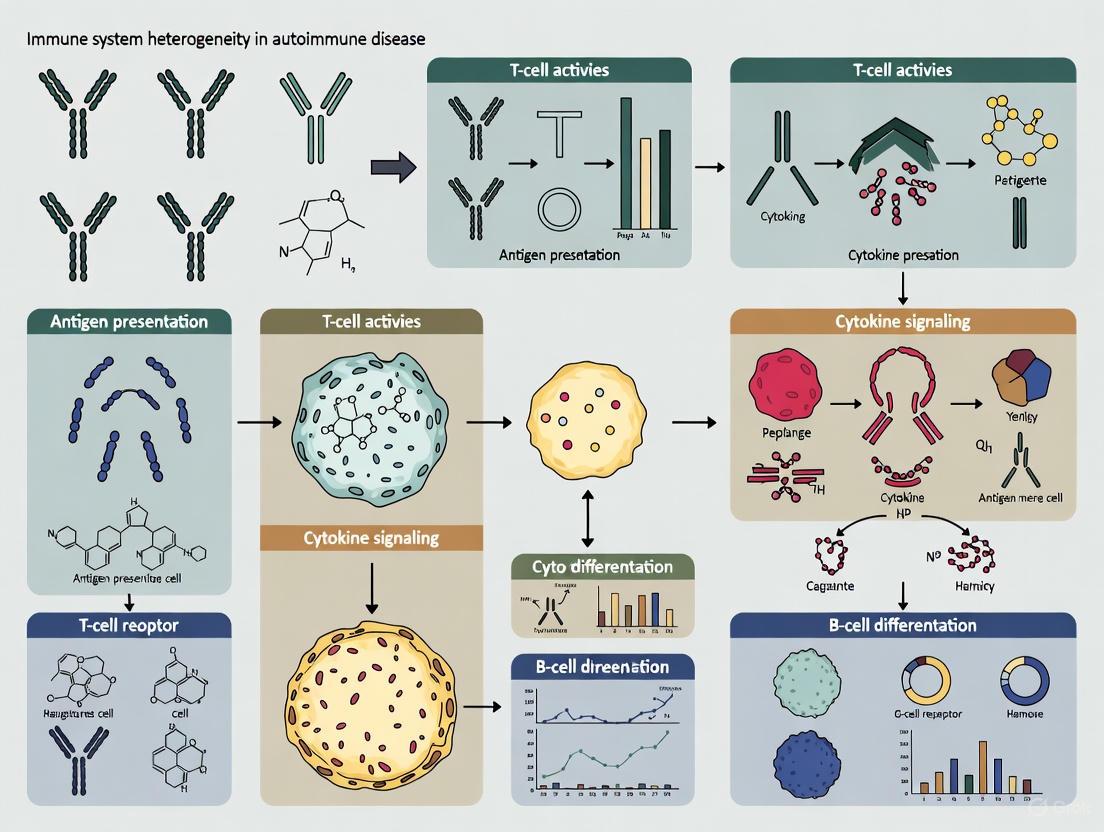
Autoimmune diseases, affecting 7-10% of the global population, are characterized by profound immune system heterogeneity that dictates disease susceptibility, clinical presentation, and treatment response.
Immune System Heterogeneity in Autoimmune Disease: From Molecular Mechanisms to Precision Therapies
Abstract
Autoimmune diseases, affecting 7-10% of the global population, are characterized by profound immune system heterogeneity that dictates disease susceptibility, clinical presentation, and treatment response. This review synthesizes current understanding of the genetic, epigenetic, cellular, and environmental sources of this heterogeneity, exploring how advances in single-cell technologies, GWAS, and synthetic immunology are revealing novel pathogenic mechanisms. We examine how this knowledge informs the development of targeted therapeutic strategies, including engineered immune cells, epigenetic modulators, and biomarker-driven approaches, while addressing challenges in translating heterogeneity insights into clinical practice. The article provides a comprehensive framework for researchers and drug development professionals to navigate the complexity of autoimmune diseases and develop next-generation, personalized treatments.
The Multifaceted Origins of Immune Heterogeneity in Autoimmunity
Autoimmune diseases (ADs) represent a diverse group of chronic disorders characterized by a breakdown in immune tolerance, leading to inappropriate immune responses against self-antigens and subsequent tissue damage [1]. Affecting an estimated 7-10% of the global population, these conditions impose a substantial burden of chronic morbidity worldwide [1]. Despite remarkable clinical heterogeneity, autoimmune diseases share a common etiologic framework involving the complex interplay of genetic predisposition, environmental exposures, and immune dysregulation [1]. The genetic architecture of these conditions is predominantly polygenic, meaning that risk is influenced by hundreds of genetic variants individually possessing small to moderate effects [2] [3].
Over the past two decades, genome-wide association studies (GWAS) have revolutionized our understanding of autoimmune disease genetics, identifying thousands of susceptibility loci across numerous conditions [3]. These studies have confirmed extensive familial clustering and comorbidity patterns among autoimmune diseases, suggesting shared heritable risk factors [4]. For instance, monozygotic twins show significantly higher concordance rates for conditions like Primary Biliary Cholangitis (63%) compared to dizygotic twins (0%), highlighting the substantial genetic component [3]. The sibling recurrence risk (λs) for various ADs is markedly increased, with PBC showing a λs of 10.5 [3].
This whitepaper synthesizes current insights from GWAS research on the shared and unique genetic architecture of autoimmune diseases, with particular emphasis on methodological approaches, biological pathways, and implications for therapeutic development. By examining the genetic continuum spanning autoimmune and autoinflammatory conditions, we aim to provide researchers and drug development professionals with a comprehensive framework for understanding immune system heterogeneity in autoimmune pathology.
Methodological Framework for Cross-Disease Genetic Analysis
Core Statistical Genetic Approaches
Advanced statistical methods applied to GWAS summary statistics have enabled the systematic dissection of shared genetic architecture across autoimmune diseases. Key methodologies include:
Linkage Disequilibrium Score Regression (LDSC) estimates SNP heritability and genetic correlations between traits using GWAS summary data while minimizing confounding from population stratification [4] [5]. This approach calculates the relationship between SNP association statistics and linkage disequilibrium (LD) scores, providing insights into the polygenic nature of traits. The method uses pre-calculated LD scores from reference panels (e.g., 1000 Genomes Project's European population) and employs the following core formula: rg = (Cov(β1j, β2j) / (N1N2)1/2), where rg represents the genetic correlation, β1j and β2j are effect sizes for SNP j on traits 1 and 2, and N1 and N2 are sample sizes [5].
Genomic Structural Equation Modeling (Genomic SEM) models the multivariate genetic architecture across traits to reveal latent factors underlying genetic correlations [5] [6] [7]. This method takes as input the genetic covariance matrix and sampling covariance matrix generated by multivariable LDSC. The model fit is evaluated using indices such as the comparative fit index (CFI ≥ 0.9) and standardized root mean square residual (SRMR ≤ 0.1) [5]. Genomic SEM has been instrumental in identifying factor structures across immune-mediated diseases, revealing a continuum from purely autoimmune to autoinflammatory conditions [7].
Bivariate Causal Mixture Model (MiXeR) quantifies both unique and common polygenic components across complex phenotypes [4] [7]. This tool estimates the total number of causal variants influencing a trait and the extent of overlap between traits. The model employs a likelihood function that incorporates four Gaussian components: π0 (null SNPs for both traits), π1 and π2 (SNPs unique to each trait), and π12 (shared SNPs) [4].
Pleiotropy Analysis under Composite Null Hypothesis (PLACO) identifies pleiotropic SNPs across multiple traits using an intersection-union test framework [8] [9]. This method effectively detects variants influencing multiple conditions while controlling for type I error rates, with significance typically set at P < 5 × 10⁻⁸ [8].
Analytical Workflows for Genetic Architecture Mapping
The following diagram illustrates a comprehensive analytical workflow for mapping shared genetic architecture across autoimmune diseases:
Figure 1: Analytical workflow for mapping shared genetic architecture
Table 1: Key Research Reagent Solutions for Genetic Architecture Studies
| Resource Category | Specific Tools/Platforms | Primary Function | Application in Autoimmune Genetics |
|---|---|---|---|
| GWAS Databases | Open Targets Genetics, Dryad, GWAS Catalog | Repository of summary statistics | Source of curated genetic association data for cross-trait analysis [4] |
| LD Reference Panels | 1000 Genomes Project, UK Biobank | Provide population-specific linkage disequilibrium estimates | Essential for LDSC, colocalization, and fine-mapping analyses [4] [5] |
| Functional Annotation Tools | FUMA, ANNOVAR, Ensembl VEP | Functional mapping of non-coding variants | Annotate regulatory elements, chromatin states, and predict functional consequences [10] [8] |
| Gene Set Analysis Platforms | MAGMA, gProfiler2, MSigDB | Pathway and gene set enrichment analysis | Identify biological pathways enriched for genetic associations [6] [7] |
| eQTL Resources | GTEx, DICE, ImmGen | Link genetic variants to gene expression | Colocalize disease associations with expression quantitative trait loci [6] [3] |
| Cell-Type-Specific Epigenomics | Roadmap Epigenomics, BLUEPRINT | Epigenomic profiling across cell types | Identify disease-relevant cell types through enrichment analysis [3] |
The Genetic Architecture Spectrum of Autoimmune Diseases
The Continuum Model: From Autoimmunity to Autoinflammation
Recent genomic studies have substantially advanced the conceptualization of immune-mediated diseases as existing along a continuum from purely autoimmune to purely autoinflammatory conditions [7]. This model accounts for the observation that many disorders exhibit overlapping features of both adaptive immune dysregulation (autoimmunity) and innate immune system activation (autoinflammation) [5] [7].
Genomic SEM analyses of 15 immune-mediated diseases support a four-factor model representing this continuum [7]. The identified factors include:
Polygenic Autoimmune Cluster: Characterized by conditions like systemic lupus erythematosus (SLE), autoimmune thyroiditis (AITD), and multiple sclerosis (MS) that primarily involve dysregulation of adaptive immunity, particularly T and B cell responses [7].
Mixed Pattern Cluster 1: Includes conditions such as Crohn's disease (CD) and ulcerative colitis (UC) that demonstrate features of both autoimmune and autoinflammatory pathology [7].
Mixed Pattern Cluster 2: Encompasses rheumatoid arthritis (RA) and juvenile idiopathic arthritis (JIA), representing another dimension of mixed pathophysiology [7].
Polygenic Autoinflammatory Cluster: Characterized by conditions with predominant innate immune system involvement, though specific conditions in this cluster vary across studies [7].
This continuum model is further supported by MiXeR analyses showing extensive genetic overlap across immune-mediated disorders, with the number of shared SNPs ranging from approximately 0.03K to 0.21K across different disease pairs [4] [7].
Genetic Correlation Patterns Across Autoimmune Diseases
Table 2: Genetic Correlations Between Selected Autoimmune Diseases
| Disease Pair | Genetic Correlation (rg) | Significance | Study |
|---|---|---|---|
| RA & SLE | 0.39 | P < 0.001 | [6] |
| T1D & SLE | 0.28 | P < 0.001 | [6] |
| CD & UC | 0.56 | P < 0.001 | [6] |
| MS & SLE | 0.18 | P < 0.05 | [4] |
| CEL & RA | 0.32 | P < 0.01 | [4] |
| PBC & SS | 0.41 | P < 0.001 | [7] |
These genetic correlations demonstrate substantial sharing of genetic risk factors across clinically distinct autoimmune conditions. The strongest correlations are observed between diseases affecting the same organ systems (e.g., CD and UC in the gastrointestinal tract), while more moderate correlations exist across different disease domains [6].
Shared Risk Loci and Biological Pathways
Established Pleiotropic Loci and Genes
GWAS have identified numerous pleiotropic loci influencing multiple autoimmune diseases. The following diagram illustrates key shared pathways and their constituent genes:
Figure 2: Key shared biological pathways in autoimmunity
Major Histocompatibility Complex (MHC) Region: The MHC region, particularly HLA class II alleles, demonstrates the strongest and most consistent associations across autoimmune diseases [1] [10]. Specific examples include:
- HLA-DRB1 variants associated with rheumatoid arthritis (RA) and type 1 diabetes (T1D) [1] [10]
- HLA-DR3 and HLA-DR4 significantly increasing risk for T1D [1]
- Sequence analyses indicate that disease susceptibility stems from subtle variations in peptide-binding grooves that affect self-antigen presentation [1]
Non-MHC Shared Loci: Beyond the MHC region, numerous genes contribute to autoimmune risk across multiple conditions:
- PTPN22: Encodes a tyrosine phosphatase that negatively regulates T-cell receptor (TCR) signaling, associated with SLE, RA, and T1D [1] [4] [10]
- IL2RA: Encodes the alpha chain of the IL-2 receptor, critical for regulatory T cell function, associated with RA, T1D, and MS [4] [10]
- CTLA4: An immune checkpoint molecule that regulates T cell activation, associated with RA, celiac disease (CeD), T1D, and Hashimoto thyroiditis [4] [6]
- STAT4: A transcription factor involved in IL-12-mediated Th1 differentiation, associated with multiple autoimmune conditions [1]
- TYK2: Involved in cytokine signaling, with specific protein-coding variants protecting against RA and SLE [3]
Pathway Convergence Across Disease Groups
Despite distinct genetic associations across autoimmune disease groups, pathway analyses reveal remarkable convergence on common biological processes. Genomic studies consistently identify enrichment in:
T Cell Activation and Signaling: This pathway emerges as a central node in autoimmune pathogenesis, with different diseases affecting distinct components of the signaling cascade [6]. For example, the JAK-STAT signaling pathway is enriched across multiple autoimmune disease groups, though different STAT family members are implicated: STAT3 with gastrointestinal diseases (Fgut), STAT4 with rheumatic/systemic diseases (Faid), and STAT5A/STAT6 with allergic diseases (Falrg) [6].
Cytokine Signaling: Genes involved in cytokine production and response are frequently shared across autoimmune diseases, particularly those regulating interferon, IL-23, and IL-17 signaling [1] [6].
Immune Checkpoint Regulation: Pathways controlling immune activation thresholds, particularly through molecules like CTLA-4 and TIM-3, demonstrate significant cross-disease importance [10] [3].
Disease-Specific Risk Variants and Heterogeneity
While extensive genetic sharing exists across autoimmune diseases, significant heterogeneity contributes to disease-specific manifestations. Several factors underlie this heterogeneity:
HLA Associations: While the MHC region is shared across many autoimmune diseases, specific HLA alleles confer risk for particular conditions. For example, HLA-DRB1 variants are most strongly associated with RA, while HLA-DQ variants show the strongest associations with T1D [1] [10].
Tissue-Specific Enrichment: Stratified LDSC analyses reveal that SNP heritability is enriched in immune/hematopoietic-related tissues and cells, but specific cell types vary across diseases [4]. For instance, RA-associated variants show strongest enrichment in CD4+ effector memory T cells, while SLE variants are most enriched in B cell populations [3].
Private Risk Loci: In addition to shared loci, each autoimmune disease possesses unique risk variants that contribute to its specific pathological features. For example, NOD2 variants are specifically associated with Crohn's disease, though they reside in pathways relevant to other autoimmune conditions [3].
Implications for Therapeutic Development
Drug Target Prioritization
The identification of shared genetic architecture across autoimmune diseases provides powerful opportunities for therapeutic development:
Pleiotropic Targets: Genes influencing multiple autoimmune conditions represent high-value therapeutic targets with potential broad applicability. For example, CTLA-4 pathway modulation is already exploited for both oncology (CTLA-4 blockade) and rheumatology (CTLA-4 fusion protein for RA) [6].
Pathway-Based Therapeutics: The convergence of different autoimmune diseases on common biological pathways suggests that targeting these pathways could benefit multiple conditions. JAK-STAT pathway inhibitors represent a prime example, with applications across RA, psoriasis, and other immune-mediated diseases [6].
Drug Repurposing Opportunities: Cross-disease genetic analyses have identified eight genes as candidates for drug repurposing, potentially accelerating therapeutic development [6].
Precision Medicine Approaches
Genetic discoveries are enabling more precise approaches to autoimmune disease treatment:
Cell-Type-Specific Targeting: Enrichment of autoimmune risk variants in specific immune cell populations guides the development of cell-type-specific therapies. For example, the enrichment of SLE risk in B cells supports the development of B-cell-targeted therapies [3].
Biological Pathway Stratification: Genetic data may help identify patients most likely to respond to specific pathway-targeted therapies based on their genetic profile [10].
Disease Subtyping: Genetic factors contribute to heterogeneity within autoimmune diseases, potentially enabling molecular subtyping for treatment selection. For example, different genetic profiles may predict progression to extra-articular manifestations in RA or renal involvement in SLE [10].
The genetic architecture of autoimmune diseases reflects a complex interplay of shared and unique risk factors operating across a continuum from adaptive to innate immune dysregulation. GWAS have been instrumental in mapping this architecture, identifying hundreds of risk loci that converge on key immunological pathways. Methodological advances in analyzing GWAS summary statistics have been particularly valuable for elucidating the genetic relationships among autoimmune diseases.
Future research directions should include:
Increased Ancestral Diversity: Most current findings are based on European ancestry populations; expanding studies to diverse populations is crucial for equitable translation of genetic discoveries [2].
Integration of Rare Variants: While GWAS focus on common variants, incorporating rare variants through whole-genome sequencing may explain additional heritability and reveal novel biological mechanisms [3].
Temporal Dynamics: Understanding how genetic risk factors influence disease initiation versus progression requires longitudinal data integration [10].
Gene-Environment Interactions: Elucidating how environmental factors modify genetic risk is essential for comprehensive disease models [1] [10].
In conclusion, the genetic architecture of autoimmune diseases reveals both remarkable sharing across conditions and important disease-specific elements. This knowledge provides a roadmap for developing more effective, targeted therapies that address the underlying immunological dysfunction in these debilitating conditions. As genetic datasets continue to expand and analytical methods refine, we anticipate accelerated translation of these findings into improved patient care.
Epigenetics constitutes the study of molecular modifications that alter genomic function without changing the DNA sequence itself [11]. These mechanisms—primarily DNA methylation, histone modifications, and non-coding RNAs—serve as crucial regulators of gene expression and genomic stability in cell growth, development, and differentiation [12]. In the context of the immune system, epigenetic processes precisely control the development, activation, and differentiation of immune cells, thereby maintaining the delicate balance between effective host defense and self-tolerance [13]. The breakdown of this tolerance, characterized by the emergence of self-reactive immune cells, defines the onset of autoimmune diseases [11]. Growing evidence indicates that environmental factors can induce heritable epigenetic changes that contribute significantly to the development of autoimmune disorders in genetically susceptible individuals, providing a mechanistic link between environmental exposures and autoimmune pathogenesis [14] [15].
The purpose of this technical guide is to provide an in-depth analysis of how dysregulated epigenetic landscapes contribute to immune system heterogeneity and the pathogenesis of autoimmune diseases. We focus on the most technically relevant aspects of epigenetic research, including experimental methodologies, disease-specific epigenetic profiles, and emerging therapeutic strategies that target the epigenome. This resource is designed to equip researchers and drug development professionals with the foundational knowledge and technical references necessary to advance this rapidly evolving field.
Fundamental Epigenetic Mechanisms
DNA Methylation and Demethylation Pathways
DNA methylation, one of the most extensively studied epigenetic marks, typically involves the attachment of a methyl group to the fifth carbon of cytosine residues within CpG dinucleotides, creating 5-methylcytosine (5mC) [15]. This process is catalyzed by DNA methyltransferases (DNMTs), with DNMT1 primarily responsible for maintaining methylation patterns during cell division, and DNMT3A and DNMT3B responsible for de novo methylation [11]. The functional consequences of DNA methylation depend heavily on genomic context: methylation of CpG islands in promoter regions is typically associated with transcriptional repression, whereas gene body methylation may stimulate transcription elongation [15].
The DNA demethylation process is complex and primarily mediated by the ten-eleven translocation (TET) family of enzymes [11]. TET enzymes catalyze the stepwise oxidation of 5mC to 5-hydroxymethylcytosine (5hmC), then to 5-formylcytosine (5fC), and finally to 5-carboxylcytosine (5caC) [11]. The resulting modified cytosines are ultimately replaced with unmodified cytosine via base excision repair mechanisms involving thymine-DNA glycosylase (TDG) [11]. This active demethylation pathway is particularly relevant in immune cells, where rapid changes in gene expression are required for proper differentiation and function.
Table 1: Key Enzymes Regulating DNA Methylation and Demethylation
| Enzyme | Type | Primary Function | Role in Immune Cells |
|---|---|---|---|
| DNMT1 | DNA Methyltransferase | Maintenance methylation during cell division | Preserves methylation patterns in proliferating immune cells |
| DNMT3A/B | DNA Methyltransferase | De novo methylation | Establishes new methylation patterns during immune cell development |
| TET1/2/3 | Demethylase | Oxidation of 5mC to 5hmC, 5fC, 5caC | Facilitates active demethylation in cytokine genes and enhancers |
| TDG | Glycosylase | Base excision repair of oxidized methylcytosines | Completes demethylation cycle |
Histone Modifications and Chromatin Remodeling
Histone modifications represent another fundamental layer of epigenetic regulation that controls chromatin architecture and DNA accessibility. The nucleosome, consisting of ~147 base pairs of DNA wrapped around a histone protein octamer (H2A, H2B, H3, and H4), forms the basic repeating unit of chromatin [15]. Post-translational modifications to the N-terminal tails of histone proteins—including acetylation, methylation, phosphorylation, and ubiquitylation—significantly influence gene expression by altering chromatin structure [12].
Histone acetylation, catalyzed by histone acetyltransferases (HATs), generally promotes an open chromatin state (euchromatin) that facilitates transcription by neutralizing positive charges on lysine residues, thereby reducing histone-DNA affinity [16]. Conversely, histone deacetylases (HDACs) remove acetyl groups, promoting chromatin compaction and transcriptional repression [12]. Histone methylation can either activate or repress transcription depending on the specific residue modified and the degree of methylation (mono-, di-, or tri-methylation) [15]. These modifications create a "histone code" that is read by specialized proteins to recruit additional regulatory complexes, further influencing chromatin state and gene expression [12].
Histone Modification Pathways: This diagram illustrates how different histone modifications influence chromatin states and transcriptional activity through opposing enzymatic activities.
Non-Coding RNAs in Epigenetic Regulation
Non-coding RNAs represent a diverse class of RNA molecules that regulate gene expression without being translated into proteins. Two primary categories—microRNAs (miRNAs) and long non-coding RNAs (lncRNAs)—play significant roles in epigenetic regulation within the immune system [12].
MiRNAs are small RNA fragments, approximately 18-23 nucleotides in length, that regulate gene expression post-transcriptionally [16]. They typically function by binding to complementary sequences in the 3' untranslated regions (UTRs) of target mRNAs, leading to mRNA degradation or translational repression [12]. The biogenesis of miRNA begins with RNA polymerase II transcription to produce primary miRNAs (pri-miRNAs), which are processed in the nucleus to precursor miRNAs (pre-miRNAs) and then exported to the cytoplasm where Dicer cleaves them into mature miRNA duplexes [16]. One strand of this duplex is loaded into the RNA-induced silencing complex (RISC), which guides it to target mRNAs [12].
LncRNAs, defined as transcripts longer than 200 nucleotides that lack protein-coding potential, represent a more heterogeneous class of regulatory RNAs [12]. They employ diverse mechanisms including chromatin modification, transcriptional interference, and regulation of transcription factor activity [16]. A well-characterized example is Xist, which plays a crucial role in X-chromosome inactivation by coating the future inactive X chromosome and recruiting repressive chromatin modifiers [16]. In immune cells, specific lncRNAs help coordinate differentiation and activation states, though their mechanisms are less fully characterized than those of miRNAs.
Experimental Approaches for Epigenetic Analysis
Methodologies for DNA Methylation Profiling
Comprehensive DNA methylation analysis employs various techniques that differ in resolution, throughput, and required input material. The selection of an appropriate method depends on the specific research question, with considerations including the need for genome-wide coverage versus targeted analysis and the required resolution at individual CpG sites.
Bisulfite sequencing represents the gold standard for DNA methylation analysis, providing single-base resolution quantitative data [17]. This method treats DNA with sodium bisulfite, which converts unmethylated cytosines to uracils (read as thymines in sequencing), while methylated cytosines remain unchanged [17]. Whole-genome bisulfite sequencing (WGBS) provides comprehensive coverage of methylated cytosines across the entire genome but requires significant sequencing depth and computational resources [17]. Reduced-representation bisulfite sequencing (RRBS) offers a more cost-effective alternative by enriching for CpG-dense regions through restriction enzyme digestion [17]. For array-based approaches, the Infinium MethylationEPIC BeadChip provides coverage of over 850,000 CpG sites, including those in enhancer regions, with a good balance between coverage and cost for human studies [17].
Table 2: DNA Methylation Analysis Techniques
| Method | Resolution | Coverage | Advantages | Limitations |
|---|---|---|---|---|
| Whole-Genome Bisulfite Sequencing (WGBS) | Single-base | Genome-wide | Comprehensive methylation landscape | High cost; computational intensive |
| Reduced-Representation Bisulfite Sequencing (RRBS) | Single-base | CpG-rich regions | Cost-effective; focused on functional regions | Misses intergenic and regulatory regions |
| MethylationEPIC BeadChip | Single CpG site | 850,000+ CpG sites | Cost-effective for large cohorts; standardized | Limited to predefined sites; no novel discovery |
| Bisulfite Pyrosequencing | Single-base | Targeted regions | Highly quantitative; validation of discoveries | Limited to specific genomic regions |
Multi-Omic Integration and Machine Learning Approaches
Advanced epigenetic research increasingly employs multi-omic integration to correlate methylation patterns with transcriptional outputs and clinical phenotypes. A representative workflow from a recent juvenile idiopathic arthritis (JIA) study demonstrates this approach [17]. Researchers analyzed whole-genome DNA methylation and gene expression data from CD4+ T cells collected at multiple time points, then applied machine learning algorithms to identify epigenetic biomarkers associated with clinical disease activity [17].
The experimental protocol involved:
- Sample Collection: CD4+ T cell isolation from peripheral blood of JIA patients at therapy initiation and follow-up time points [17].
- DNA/RNA Extraction: Simultaneous extraction of high-quality DNA and RNA from the same cell populations [17].
- Multi-omic Profiling: Parallel whole-genome bisulfite sequencing and RNA sequencing [17].
- Data Integration: Identification of epigenetically driven differentially expressed genes through correlation analysis of methylation and expression data [17].
- Machine Learning Application: Use of XGBoost and other algorithms to prioritize genomic regions with significant epimutation burden associated with clinical outcomes [17].
This integrated approach identified 157 candidate epigenetically driven differentially expressed genes (80 up-regulated and 77 down-regulated) in patients with active JIA, providing insights into disease mechanisms and potential therapeutic targets [17].
Multi-Omic Epigenetic Workflow: This diagram outlines an integrated experimental approach for identifying epigenetic biomarkers by correlating DNA methylation data with gene expression profiles and clinical outcomes.
The Scientist's Toolkit: Essential Research Reagents
Table 3: Key Research Reagents for Epigenetic Autoimmunity Studies
| Reagent/Category | Specific Examples | Research Application | Technical Notes |
|---|---|---|---|
| DNMT Inhibitors | 5-azacytidine, 5-aza-2'-deoxycytidine | Experimental demethylation; induce autoimmune phenotypes in model systems [12] | Positive control for hypomethylation studies; toxic at high doses |
| HDAC Inhibitors | Vorinostat (SAHA), Trichostatin A | Investigate role of histone acetylation in immune gene regulation [16] | Different classes target specific HDAC families; concentration-dependent effects |
| TET Enzyme Modulators | Vitamin C (TET activator), TET inhibitors | Study active DNA demethylation pathways in T cell differentiation [11] | Context-specific effects on Th1/Th17 versus Th2 differentiation |
| Methylation-Sensitive Restriction Enzymes | HpaII, MspI (control) | Targeted methylation analysis; RRBS library preparation [17] | HpaII cuts unmethylated CCGG sites only; MspI cuts regardless of methylation |
| Bisulfite Conversion Kits | EZ DNA Methylation kits | Pretreatment for bisulfite sequencing; gold standard for methylation detection [17] | Optimized conversion conditions critical for accurate quantification |
| Methylated DNA Immunoprecipitation Reagents | Anti-5-methylcytosine antibodies | Enrichment of methylated DNA regions for sequencing (MeDIP-seq) [15] | Antibody specificity crucial; works best for highly methylated regions |
| ChIP-Grade Antibodies | Anti-H3K27ac, Anti-H3K4me3, Anti-H3K27me3 | Mapping active promoters, enhancers, and repressed regions [15] | Validation using known positive/negative control genomic regions essential |
Disease-Specific Epigenetic Profiles in Autoimmunity
Systemic Lupus Erythematosus (SLE)
SLE represents one of the most extensively studied autoimmune diseases from an epigenetic perspective. Global DNA hypomethylation, particularly in T lymphocytes, is a hallmark of SLE pathogenesis [12]. Specific hypomethylated genes in SLE CD4+ T cells include ITGAL (CD11a), TNFSF7 (CD70), PRF1 (perforin), and CD40LG (CD40 ligand) [12]. The hypomethylation of these genes leads to their overexpression, contributing to T cell autoreactivity, enhanced costimulation, and B cell hyperactivity [12].
Mechanistic studies demonstrate that treatment with DNMT inhibitors such as 5-azacytidine can induce lupus-like autoimmunity in animal models and promote T cell autoreactivity in vitro [12] [15]. The methylation status of the CD40LG gene, located on the X chromosome, has been specifically linked to female susceptibility to SLE, potentially explaining the strong female bias in this disease [12]. Additionally, neutrophils from SLE patients show pronounced hypomethylation at interferon-responsive genes including MX1 and IFI44L, contributing to the characteristic type I interferon signature observed in this disease [12].
Rheumatoid Arthritis (RA)
Rheumatoid arthritis displays a distinct epigenetic signature characterized by global DNA hypomethylation in synovial fibroblasts and immune cells [11] [16]. This hypomethylated state contributes to the pathogenic phenotype of RA synovial fibroblasts, which exhibit increased expression of matrix-degrading enzymes and adhesion molecules that promote joint destruction [11]. Specifically, hypomethylation of the IL6 promoter leads to elevated IL-6 production, driving local inflammation and joint damage [16].
In RA T cells, hypomethylation of the CD40LG and L1 retrotransposon genes has been observed, along with differential methylation at the ERa promoter [16]. The TET family of demethylases, particularly TET2 in T cells, appears to play a significant role in establishing these hypomethylation patterns during early RA development [16]. Beyond DNA methylation, RA is associated with specific miRNA signatures, including upregulation of miRNA-146a and miRNA-150, which may contribute to inflammatory responses [16]. Recent evidence also implicates lncRNAs in RA pathogenesis, with treatments like tocilizumab and adalimumab altering the expression of numerous lncRNAs [16].
Other Autoimmune Diseases
Multiple sclerosis (MS) exhibits distinct DNA methylation patterns in CD4+ T cells and CD19+ B cells, with hypermethylation of genes involved in energy metabolism and T cell signaling [14]. The methylation status of the HLA-DRB1 gene, a key genetic risk factor for MS, is influenced by both genetic and environmental factors, providing a potential mechanism for gene-environment interactions in disease susceptibility [14].
In type 1 diabetes (T1D), epigenetic studies have revealed altered methylation patterns in pancreatic islets and immune cells. Key findings include elevated histone methylation at specific gene loci in T1D and changes in miRNA expression profiles that affect both immune regulation and beta cell survival [16]. Similarly, systemic sclerosis (SSc) is characterized by hypermethylation of specific gene promoters including FLI1, a transcription factor that suppresses collagen production, potentially explaining the fibrotic phenotype of this disease [12].
Table 4: Comparative Epigenetic Alterations in Autoimmune Diseases
| Disease | DNA Methylation Changes | Histone Modifications | Non-coding RNA Alterations |
|---|---|---|---|
| Systemic Lupus Erythematosus (SLE) | Global T cell hypomethylation; ITGAL, CD40LG, TNFSF7 hypomethylation | H3/H4 hypoacetylation; altered H3K27me3 patterns | miR-146a downregulation; miR-21 upregulation |
| Rheumatoid Arthritis (RA) | Global hypomethylation in synovial fibroblasts; IL6 promoter hypomethylation | Decreased HDAC activity in synovial tissue | miR-146a, miR-150, miR-155 upregulation |
| Multiple Sclerosis (MS) | HLA-DRB1 methylation changes; energy metabolism gene hypermethylation | H3K9 hypomethylation; H3K27me3 changes at key loci | miR-326, miR-155 upregulation; specific lncRNA profiles |
| Type 1 Diabetes (T1D) | Altered methylation in islets and immune cells; INS promoter methylation | Elevated H3K9 methylation at specific loci | miR-21, miR-34a, miR-146a dysregulation |
| Systemic Sclerosis (SSc) | FLI1 promoter hypermethylation; CD40L hypomethylation | H3K27me3 changes at fibroblast genes | miR-29 downregulation; miR-21 upregulation |
Diagnostic and Therapeutic Applications
Epigenetic Biomarkers for Diagnosis and Monitoring
The dynamic nature of epigenetic marks makes them promising candidates as biomarkers for autoimmune disease diagnosis, classification, and activity monitoring. In juvenile idiopathic arthritis (JIA), researchers have demonstrated that epigenetic mutation load is significantly higher in patients with active disease compared to those with inactive disease, suggesting that epigenetic changes might precede clinical symptoms and serve as early biomarkers for disease monitoring [17]. The identification of a 24-gene epigenetic signature that can discriminate between systemic autoimmunity and infection has significant clinical utility, particularly for distinguishing disease flares from infections in immunosuppressed patients [18].
Machine learning approaches applied to epigenetic data are enhancing biomarker discovery. One recent study utilized a multi-omic machine learning framework to analyze DNA methylation patterns in JIA, identifying a set of epigenetically driven genes that accurately classified disease activity states [17]. Similarly, another research team developed a machine learning model that used transcriptomic data from whole blood to distinguish autoimmune diseases from infectious diseases with 98% accuracy, highlighting the potential for molecular profiling to resolve challenging clinical dilemmas [18].
Emerging Epigenetic Therapies
The reversible nature of epigenetic modifications makes them attractive therapeutic targets. Current approaches include small molecule inhibitors targeting epigenetic enzymes and novel strategies aimed at inducing antigen-specific immune tolerance [13].
DNMT inhibitors, such as 5-azacytidine and decitabine, have been primarily developed for cancer therapy but provide proof-of-concept for epigenetic modulation therapeutics [12]. Their application in autoimmune diseases requires careful dose consideration, as low doses might reverse pathological hypomethylation patterns while higher doses could potentially exacerbate autoimmunity [12]. HDAC inhibitors represent another class of epigenetic drugs with potential autoimmune applications. Vorinostat (SAHA), for example, has shown efficacy in cutaneous T-cell lymphoma and is being investigated for autoimmune conditions [16]. In rheumatoid arthritis, decreased HDAC activity in synovial tissue suggests that HDAC activator compounds might have therapeutic potential, contrasting with the inhibitor approaches used in oncology [16].
Novel therapeutic strategies include nanoparticle-based delivery of autoimmune antigens to induce specific immune tolerance and mRNA vaccine techniques engineered to promote regulatory T cell responses rather than immune activation [13]. These approaches aim to restore immune tolerance without causing generalized immunosuppression, addressing a significant unmet need in autoimmune disease management [13].
The study of epigenetic landscapes in autoimmune diseases has revealed complex, dynamic regulatory networks that integrate genetic susceptibility, environmental exposures, and immune cell heterogeneity. The continuing evolution of epigenetic technologies—particularly single-cell multi-omic approaches and spatial epigenomics—promises to further unravel the complexity of autoimmune pathogenesis at unprecedented resolution. These advances will likely identify novel biomarker panels for precise disease classification and activity monitoring, while simultaneously revealing new therapeutic targets for epigenetic-based interventions.
The future of epigenetic research in autoimmunity will increasingly focus on understanding cell-type-specific epigenetic dynamics during disease initiation and progression, developing more sophisticated delivery systems for epigenetic therapies, and integrating multi-omic data to build predictive models of disease course and treatment response. As these efforts mature, epigenetic profiling may become a standard component of autoimmune disease management, enabling truly personalized therapeutic approaches based on an individual's unique epigenetic landscape.
The immune system's efficacy and regulation hinge on the remarkable diversity of its cellular components. The heterogeneity within T cell, B cell, and regulatory T cell (Treg) compartments is not merely a biological curiosity but a fundamental property that enables tailored immune responses and the maintenance of self-tolerance. In autoimmune diseases, dysregulation of this finely balanced heterogeneity leads to the breakdown of immune tolerance, characterized by aberrant activation of autoreactive T and B cells and impaired function of regulatory subsets [13]. Understanding the complexity and functional specialization of these immune cell populations provides critical insights into disease pathogenesis and unveils new therapeutic opportunities for precision medicine. This review synthesizes current knowledge on the heterogeneity of key immune lymphocytes, its functional consequences in autoimmunity, and the experimental tools driving these discoveries.
T Cell Heterogeneity: Beyond CD4/CD8 Dichotomy
CD8+ T Cell Subsets and Functional Specialization
CD8+ T cells demonstrate significant functional plasticity, differentiating into distinct effector subsets beyond the traditional cytotoxic T cell (Tc1) paradigm. These subsets, characterized by unique cytokine profiles and transcription factors, play diverse roles in immune regulation and pathology.
Table 1: Heterogeneity of CD8+ T Cell Subsets
| Subset | Polarizing Signal | Key Transcription Factors | Effector Cytokines | Primary Functions | Role in Autoimmunity |
|---|---|---|---|---|---|
| Tc1 | IL-12 | T-bet, EOMES, STAT4 | IFN-γ, TNF-α, Granzyme B | Classical cytotoxicity, viral and tumor clearance | Tissue damage in target organs |
| Tc2 | IL-4 | STAT6, GATA3 | IL-4, IL-5, IL-13 | Promotion of allergic inflammation, eosinophil recruitment | Elevated in severe eosinophilic asthma and allergic dermatitis |
| Tc17 | TGF-β, IL-6, IL-21 | RORγt, STAT3 | IL-17, IL-21 | Recruitment of neutrophils, inflammatory responses | Contribution to autoimmune tissue inflammation |
| Tcreg | TGF-β | FOXP3, EOMES | IL-10, TGF-β | Immune suppression, inhibition of T cell responses | Potential regulatory defect in autoimmunity |
CD8+ T cell heterogeneity is profoundly influenced by pathogen-specific cues and tissue microenvironments. Single-cell mass cytometry studies reveal that the inflammatory milieu during infection dominantly sculpts memory CD8+ T cell differentiation, generating distinct populations of central-memory (TCM), effector-memory (TEM), and tissue-resident memory (TRM) cells [19]. These populations exhibit unique trafficking capabilities and functional properties: TCM cells (CD62L+CD69-) patrol lymphoid organs, TEM cells (CD62L-CD69-) recirculate through non-lymphoid tissues, and TRM cells (CD62L-CD69+) reside permanently in peripheral tissues [19]. In autoimmune contexts, this differentiation program can be co-opted to generate pathogenic tissue-resident autoreactive CD8+ T cells that contribute to chronic tissue inflammation.
CD4+ T Helper Cell Diversity
CD4+ T cells differentiate into specialized helper subsets (Th1, Th2, Th17, Tfh) that orchestrate distinct immune responses through unique cytokine secretion profiles. This functional diversification enables tailored immunity against different pathogens but also creates multiple pathways for autoimmune pathogenesis when dysregulated. Th1 cells (IFN-γ, TNF-α) drive cell-mediated immunity and are implicated in organ-specific autoimmunity; Th2 cells (IL-4, IL-5, IL-13) promote allergic and humoral responses; Th17 cells (IL-17, IL-22) mediate neutrophil recruitment and are crucial in mucosal immunity and autoimmune inflammation; T follicular helper (Tfh) cells (IL-21) provide essential help for B cell antibody production in germinal centers [13]. The balance between these subsets is critical for immune homeostasis, with skewing toward particular phenotypes contributing to different autoimmune disease manifestations.
B Cell Heterogeneity: From Antibody Production to Immunoregulation
B Cell Subsets in Health and Autoimmunity
B cells demonstrate remarkable heterogeneity that extends beyond their antibody-producing functions to include critical immunoregulatory roles. The table below summarizes major human B cell populations and their alterations in autoimmune contexts.
Table 2: Human B Cell Subsets and Their Characteristics
| Subset | Surface Phenotype | Primary Function | Frequency in Autoimmunity |
|---|---|---|---|
| Transitional | CD38hi, CD24hi, IgD+ | Recent bone marrow emigrants, susceptibility to tolerance induction | Altered negative selection leading to autoreactive B cell escape |
| Naïve Mature | IgD+, CD27-, CD38lo | Antigen-inexperienced, respond to new antigens | Repertoire skewing with increased autoreactivity |
| Marginal Zone-like | CD27+, IgD+, CD1c+ | T-independent responses, natural antibody production | Expansion in certain autoimmune contexts |
| Switched Memory | CD27+, IgD- | Antigen-experienced, provide rapid recall responses | Often expanded and enriched for autoreactive specificities |
| CD27- Memory | CD27-, IgD- | Atypical memory population, tissue-based memory | Expanded in SLE, may contain autoreactive clones |
| Plasmablasts/Plasma Cells | CD38hi, CD27hi, CD20- | Antibody secretion | Increased numbers, producing pathogenic autoantibodies |
| Regulatory B cells (Breg) | IL-10 producing, multiple phenotypes | Suppression of inflammation via IL-10 | Functional impairment and/or reduced frequency |
B cell heterogeneity is particularly evident in tissue compartments during inflammatory diseases. In pulmonary tuberculosis, for example, B cells are enriched in lung tissue and organize into granuloma-associated lymphoid tissue (GrALT) [20]. Single-cell RNA sequencing of lung-derived B cells identifies seven distinct subsets, including populations with memory phenotypes, antibody-secreting cells, and atypical B cells with potentially regulatory functions [20]. These tissue-resident B cells express CD69 and chemokine receptors (CCR7, CXCR4, CXCR5) that guide their positioning within inflammatory lesions [20]. In autoimmune diseases, similar compartmentalization and subset redistribution likely occur, contributing to localized autoantibody production and tissue inflammation.
Regulatory T Cell Heterogeneity: Specialized Guardians of Tolerance
Treg Subsets and Their Functional Attributes
Regulatory T cells (Tregs) represent a heterogeneous compartment of immunosuppressive CD4+ T cells characterized by expression of the transcription factor FOXP3. Their diversity reflects specialized functions in different tissue contexts and disease states.
Table 3: Heterogeneity of Regulatory T Cell Subsets
| Subset | Markers | Differentiation Site | Key Features | Functional Role |
|---|---|---|---|---|
| tTreg | CD25, FOXP3, GPA33, Helios(?) | Thymus | Stable suppressive function, fully demethylated TSDR | Maintenance of self-tolerance, prevention of autoimmunity |
| pTreg | CD25, FOXP3, variable NRP1 | Periphery | Induced from conventional T cells, partial TSDR demethylation | Control of inflammation at environmental interfaces, especially gut |
| iTreg | CD25, FOXP3 | In vitro generation | TGF-β induced, fully methylated TSDR | Experimental/therapeutic applications |
| Tissue-Resident Treg | Tissue-specific markers (PPARγ, ST2, RORγt, CLA) | Peripheral tissues | Adapted to local microenvironment | Tissue homeostasis, repair, and metabolic functions |
Treg heterogeneity extends beyond developmental origin to include activation states and tissue-specific adaptations. Resting Tregs (rTreg: CD45RA+FOXP3lo in humans) circulate through lymphoid organs, while activated Tregs (aTreg: CD45RO+FOXP3hi in humans) upregulate CTLA-4 and ICOS and migrate to inflammatory sites [21]. Tissue-resident Treg populations acquire specialized phenotypes tailored to their anatomical niche: adipose tissue Tregs express PPARγ and ST2 for metabolic homeostasis; intestinal Tregs co-express RORγt for mucosal tolerance; skin Tregs express CLA and CCR4 for cutaneous homing; and tumor-infiltrating Tregs upregulate ICOS, PD-1, and CCR8, contributing to immunosuppression in the tumor microenvironment [21]. In autoimmune diseases, deficiencies in specific Treg subsets or their functional specialization may permit breakdown of tolerance to particular tissue antigens.
Treg-Based Therapies for Autoimmune Diseases
The therapeutic potential of Tregs is being actively explored in autoimmune diseases, with several approaches in clinical development:
- Polyclonal Tregs: Early trials used ex vivo expanded CD4+CD127lowCD25+ Tregs from peripheral blood, achieving approximately 80-90% purity through anti-CD3/CD28 stimulation with IL-2 and rapamycin [22]. These have shown promise in graft-versus-host disease (GvHD) and type 1 diabetes [22].
- Antigen-Specific Tregs: Enriching for Tregs with defined antigen specificity improves their efficacy and safety. Approaches include expansion with donor alloantigens (for transplantation) or disease-specific autoantigens (e.g., amyloid beta for Alzheimer's disease) [22].
- Converted/Treg-like Cells: Reprogramming conventional T cells to acquire regulatory function using rapamycin (Rapa-501 protocol) or forced FOXP3 expression (CD4LVFOXP3) [22].
- Engineered Tregs: Next-generation approaches using TCR-engineered or CAR-Tregs to target specific autoantigens or tissue locations [22] [21].
Advanced immunomonitoring technologies, including single-cell multi-omic profiling, epigenetic analysis, and spatial transcriptomics, enable precise characterization of Treg persistence, function, and lineage stability in clinical trials [22]. These approaches are crucial for optimizing Treg therapies as "living drugs" capable of establishing immune tolerance in diverse autoimmune contexts.
Experimental Approaches for Dissecting Immune Cell Heterogeneity
Key Methodologies and Workflows
Cutting-edge technologies have revolutionized our ability to characterize immune cell heterogeneity at single-cell resolution. The experimental workflow for high-dimensional immune cell analysis typically involves:
Diagram 1: Experimental workflow for immune cell heterogeneity analysis
Mass cytometry (CyTOF) combines flow cytometry with mass spectrometry, enabling simultaneous measurement of over 40 cellular parameters using metal-tagged antibodies [19]. When combined with MHC tetramer technology, this allows deep phenotypic characterization of antigen-specific T cells within the total T cell pool [19]. Single-cell RNA sequencing (scRNA-seq) provides unprecedented resolution of cellular diversity by quantifying the complete transcriptome of individual cells, revealing novel subsets and developmental trajectories [20] [21]. These approaches can be integrated with epigenetic analysis, chromatin accessibility assays, and spatial transcriptomics to build comprehensive maps of immune cell states in tissues.
Essential Research Reagents and Tools
Table 4: Key Research Reagent Solutions for Immune Heterogeneity Studies
| Reagent Category | Specific Examples | Research Application |
|---|---|---|
| Cell Isolation | CliniMACS Plus System (Miltenyi), FACS sorting | Treg purification (CD4+CD127lowCD25+), memory cell isolation |
| Expansion/Culture | Anti-CD3/CD28 beads, IL-2, Rapamycin, TGF-β | Polyclonal Treg expansion, iTreg generation |
| Phenotyping Panels | Metal-tagged antibodies (CD45, CD4, CD8, CD25, CD127, CD45RA, CD45RO, CD69, CD62L, CCR7, CXCR5) | High-dimensional immune profiling by mass cytometry |
| Antigen-Specific Detection | MHC class I/II tetramers (e.g., GP33), antigen arrays | Tracking antigen-specific T and B cell responses |
| Single-Cell Analysis | 10x Genomics, Smart-seq2, CITE-seq, ATAC-seq | Transcriptomic, proteomic, and epigenetic profiling at single-cell resolution |
| Functional Assays CFSE dilution, Cytokine secretion assays, Suppression assays | Proliferation, cytokine production, and regulatory function assessment |
The profound heterogeneity within T cell, B cell, and regulatory cell compartments represents both a challenge and opportunity for autoimmune disease therapy. Understanding the specific subsets driving pathogenesis in different diseases—whether pathogenic Th17 cells in multiple sclerosis, autoreactive B cells in lupus, or dysfunctional Tregs in type 1 diabetes—enables development of targeted interventions that modulate specific immune pathways without causing broad immunosuppression. Current therapeutic approaches include non-specific immunomodulators like glucocorticoids and biologics targeting cytokines or broad lymphocyte depletion (e.g., rituximab for B cells) [13]. However, the future lies in precision approaches that leverage our growing understanding of immune cell heterogeneity: antigen-specific immunotherapies that selectively tolerize pathogenic clones while sparing protective immunity; engineered Treg products tailored to specific tissue environments; and subset-targeted interventions that correct specific functional defects in regulatory populations [22] [21]. As single-cell technologies continue to reveal new dimensions of immune diversity, and as engineered cell therapies become more sophisticated, we move closer to truly personalized immunotherapy for autoimmune diseases that restores immune balance by precisely reshaping the cellular composition of the immune system.
Autoimmune diseases are a diverse group of chronic disorders characterized by inappropriate immune responses against self-antigens, resulting in persistent inflammation and tissue destruction. Collectively affecting approximately 7-10% of the global population, these conditions present a significant burden of chronic morbidity worldwide [1] [23]. The pathogenesis of these diseases arises from a complex interplay of genetic predisposition, environmental exposures, and immune dysregulation [24] [1]. While genetic factors such as HLA variants and polygenic risk loci establish susceptibility, they are insufficient to explain disease onset alone. Environmental triggers act upon this genetic foundation to initiate, modulate, and exacerbate autoimmune responses through multiple mechanistic pathways [25] [23]. This convergence of factors creates substantial heterogeneity in clinical presentation, disease progression, and therapeutic response, posing significant challenges for treatment development.
Understanding how environmental drivers contribute to immune heterogeneity is paramount for advancing precision medicine in autoimmunity. Current therapeutic strategies face limitations including limited efficacy, lack of specificity, broad immunosuppression, and long-term toxicity [1] [23]. This whitepaper synthesizes current evidence on how infections, microbiome alterations, and lifestyle factors drive immune heterogeneity in autoimmune diseases, providing technical guidance and methodological frameworks for researchers and drug development professionals working to overcome these challenges.
Mechanisms of Environment-Driven Immune Heterogeneity
Pathogen Infections and Molecular Mimicry
Infectious agents are well-established contributors to autoimmune disease risk and progression through multiple mechanistic pathways. Viruses such as Epstein-Barr virus (EBV) are implicated in systemic lupus erythematosus (SLE), rheumatoid arthritis (RA), and Sjögren's syndrome [1] [23]. The proposed mechanisms include:
- Molecular Mimicry: Structural similarity between pathogen antigens and self-antigens leads to cross-reactive T cell and B cell responses that mistakenly target host tissues [25].
- Bystander Activation: Infection-induced inflammatory environments activate autoreactive lymphocytes non-specifically [23].
- Epitope Spreading: Initial immune responses against a pathogen diversify to include additional self-epitopes through the release of previously sequestered antigens [23].
Post-infectious autoimmune manifestations have been increasingly reported following SARS-CoV-2 infection, including Guillain-Barré syndrome, antiphospholipid syndrome, and systemic autoimmunity [1]. Similarly, persistent pathogens can establish chronic infections that promote sustained immune activation and progressive tissue damage [25].
Microbiome Dysbiosis and Immune Education
The gut microbiome serves as a crucial educator and regulator of the immune system, with alterations in its composition linked to autoimmune susceptibility [25] [1]. Dysbiosis can disrupt immune homeostasis through several pathways:
- Barrier Integrity Compromise: Disruption of intestinal epithelial tight junctions increases permeability to microbial products and antigens [1].
- Metabolite Alteration: Changes in microbial-derived immune-modulatory metabolites such as short-chain fatty acids (SCFAs), tryptophan metabolites, and bile acid derivatives [25].
- T Cell Polarization: Microbiome composition influences the balance between pro-inflammatory Th17 cells and regulatory T cells (Tregs) [1].
Gut microbiome alterations link diet, obesity, and environmental factors to immune dysregulation and autoimmune susceptibility [25]. Additionally, microbiome-altering drugs (e.g., antibiotics) can disrupt these delicate communities, potentially triggering or exacerbating autoimmunity in genetically susceptible individuals [25].
Lifestyle and Dietary Influences
Modifiable lifestyle factors significantly influence autoimmune disease development and progression, contributing to patient heterogeneity:
- Obesity: Adipose tissue functions as an immunologically active organ, releasing proinflammatory cytokines and adipokines such as IL-6 and leptin. These mediators promote Th17 differentiation, impair Treg function, and contribute to autoantibody production [1].
- Dietary Components: Dietary antigens can trigger mucosal immune dysregulation. For example, gluten has been shown to exacerbate intestinal inflammation in selective individuals with Crohn's disease, with clinical improvement following gluten exclusion [1].
- Smoking and Toxins: Environmental pollutants, toxins, and xenobiotics can modulate immune function through epigenetic reprogramming and direct cellular toxicity [25].
- Stress: Psychological and physical stress mediators can alter neuroendocrine-immune axes, influencing inflammatory pathways and autoimmune activity [25].
Table 1: Environmental Triggers and Their Proposed Mechanisms in Autoimmunity
| Environmental Trigger Category | Specific Examples | Proposed Immunological Mechanisms | Associated Autoimmune Conditions |
|---|---|---|---|
| Infectious Agents | Epstein-Barr virus, SARS-CoV-2 | Molecular mimicry, bystander activation, epitope spreading, persistent inflammation | SLE, RA, Sjögren's syndrome, Guillain-Barré syndrome |
| Microbiome Alterations | Dysbiosis, antibiotic use | Barrier disruption, metabolite changes, altered T cell polarization, loss of tolerance | IBD, RA, T1D, MS |
| Dietary Factors | Gluten, high-fat diet | Mucosal immunity disruption, antigen-specific T cell responses, inflammation | Crohn's disease, celiac disease, RA |
| Lifestyle Factors | Obesity, smoking, stress | Adipokine secretion, epigenetic changes, neuroendocrine-immune axis alteration | Multiple autoimmune conditions |
Quantitative Assessment of Environmental Contributions
Epidemiological studies provide compelling evidence for the role of environmental factors in autoimmune disease heterogeneity. The approximately 80% female predominance in many autoimmune conditions highlights the intersection of environmental exposures with hormonal and genetic factors [1]. Geographical variations in disease prevalence further underscore environmental contributions, with climate, latitude, and regional factors influencing autoimmune risk through mechanisms such as vitamin D synthesis and ultraviolet radiation exposure [25].
Table 2: Quantitative Data on Environmental Triggers in Autoimmune Disease
| Environmental Factor | Measurable Effect | Assessment Method | References |
|---|---|---|---|
| EBV Infection | Strong association with SLE and RA; nearly universal seropositivity in general population | Serological testing, viral load quantification | [1] [23] |
| Gut Microbiome Dysbiosis | Decreased microbial diversity in RA; specific taxa alterations in MS | 16S rRNA sequencing, metagenomic sequencing | [25] [1] |
| Obesity (BMI >30) | 50% increased risk of RA; worse disease prognosis | Body mass index, adipokine levels | [1] |
| Smoking | 2-fold increased RA risk; dose-response relationship | Questionnaire data, serum cotinine levels | [25] |
| Vitamin D Deficiency | Associated with increased MS and SLE risk | Serum 25-hydroxyvitamin D levels | [25] |
The relatively low incidence of post-infectious autoimmunity and incomplete concordance among monozygotic twins (typically 25-40% across autoimmune diseases) underscores the importance of environmental triggering events and immune regulation in disease manifestation [1]. This quantitative evidence supports the multifactorial origin of autoimmune diseases and highlights potential intervention points for prevention and treatment.
Experimental Approaches for Investigating Environment-Immune Interactions
Single-Cell Technologies for Immune Heterogeneity Mapping
Cutting-edge single-cell technologies enable unprecedented resolution in dissecting immune heterogeneity driven by environmental factors. Single-cell transcriptomics reveals individual cell composition, development, and functional roles in health and disease [26]. Key methodologies include:
- Single-Cell RNA Sequencing (scRNA-seq): Profiles gene expression of individual cells from patients, enabling identification of novel cell subsets and states influenced by environmental exposures.
- Spatial Transcriptomics: Maps gene expression within tissue architecture, preserving spatial context critical for understanding localized immune responses.
- Cellular Indexing of Transcriptomes and Epitopes (CITE-seq): Simultaneously measures surface protein expression and transcriptomes in single cells.
In rheumatoid arthritis, single-cell technologies have identified six distinct subgroups based on cellular makeup, enabling stratification of patient heterogeneity according to unique molecular profiles [26]. Similar approaches can be applied to understand how environmental factors shape these distinct immunological endotypes.
Diagram 1: Single-Cell RNA Sequencing Workflow
Computational Methods for Immune Subtyping
Computational approaches enable stratification of patients into immune subtypes based on environmental exposures and corresponding immune signatures. The analytical pipeline typically involves:
- Immune Cell Deconvolution: Tools such as CIBERSORTx calculate immune cell fractions from bulk transcriptomic data using a predefined leukocyte signature matrix (LM22) [27].
- Consensus Clustering: Algorithms like ConsensusClusterPlus identify robust patient clusters based on immune gene expression profiles [28].
- Dimensionality Reduction: Graph learning-based methods project high-dimensional data into lower-dimensional spaces to visualize patient distribution and relationships [28].
These methods have successfully identified distinct immune subtypes with different clinical outcomes, molecular characteristics, and cellular compositions in conditions including osteosarcoma and heart failure [27] [28]. Similar approaches can be applied to autoimmune diseases to elucidate how environmental factors contribute to heterogeneity.
Spatial Analysis of the Tumor Microenvironment
While developed in oncology, spatial analysis techniques provide valuable methodologies for investigating immune heterogeneity in autoimmune contexts. Key approaches include:
- Multiplex Immunofluorescence/IHC: Enables simultaneous detection of multiple markers in tissue sections, preserving spatial relationships.
- Digital Pathology Metrics: Computational metrics adopted from digital pathology quantify spatial heterogeneity, including mixing score, average neighbor frequency, Shannon's entropy, and G-cross function [29].
- Spatial Quantitative Systems Pharmacology (spQSP): Hybrid modeling platform integrating whole-patient compartmental QSP with spatial agent-based models to simulate heterogeneity [29].
These methodologies can classify tissue microenvironments into patterns such as "cold," "mixed," and "compartmentalized," which correlate with immune activity and therapeutic response [29].
Diagram 2: Spatial QSP Platform Architecture
The Scientist's Toolkit: Essential Research Reagents and Platforms
Table 3: Essential Research Tools for Investigating Environment-Immune Interactions
| Tool Category | Specific Examples | Function/Application | Technical Considerations |
|---|---|---|---|
| Single-Cell Platforms | 10X Genomics, Drop-seq | High-throughput single-cell RNA sequencing | Cell viability critical, requires specialized equipment |
| Spatial Biology Tools | GeoMx Digital Spatial Profiler, Visium | Spatial transcriptomics and proteomics | Preserves tissue architecture, lower resolution than pure single-cell |
| Computational Deconvolution | CIBERSORTx, EPIC, quanTIseq | Infer immune cell fractions from bulk data | Reference-based, performance varies by tissue type |
| Cell Culture Models | Organoids, air-liquid interface | Mimic tissue microenvironment in vitro | Limited complexity compared to in vivo systems |
| Animal Models | Germ-free mice, humanized mice | Study microbiome-immune interactions | Species differences may limit translatability |
| Multi-omics Integration | Seurat, Scanpy, CellPhoneDB | Integrate scRNA-seq with other data types | Computational expertise required |
Methodological Protocols
Protocol: Immune Subtyping Using Transcriptomic Data
This protocol outlines the process for identifying immune subtypes based on gene expression data, adaptable for investigating environmental influences on autoimmune heterogeneity.
Input Requirements: RNA-seq or microarray data from patient samples, preferably with clinical metadata including environmental exposure history.
Computational Steps:
- Data Preprocessing: Normalize raw counts (e.g., TPM, FPKM), remove low-expression genes, and perform batch correction if using multiple datasets.
- Immune Gene Selection: Filter for immune-related genes (e.g., from literature mining, immune-specific databases).
- Consensus Clustering: Apply ConsensusClusterPlus with Euclidean distance and partitioning around medoids (PAM) algorithm. Determine optimal cluster number (k) based on cumulative distribution function (CDF) and delta area.
- Subtype Validation: Validate clusters in independent cohort using in-group proportion (IGP) analysis.
- Characterization: Associate subtypes with clinical features, immune cell fractions, and environmental exposures.
Output: Stable immune subtypes with distinct molecular and clinical characteristics, potentially correlated with specific environmental factors.
Protocol: Dynamic Causal Modeling of Immune Responses
Dynamic causal modeling (DCM) uses a mean-field approximation to simulate immune responses, separating the system into five factors: antibodies (IgG and IgM), B-cells, T-cells, and virus [30].
Model Structure:
- State Transitions: Modeled as movement of probability mass between levels (e.g., antibody synthesis moves probability from "absent" to "neutralizing" states).
- Factor Interactions: Formalized as:
( p(\tau + \Delta\tau)^i = T(\theta)^i (p(\tau)^V \otimes p(\tau)^{TC} \otimes p(\tau)^{BC} \otimes p(\tau)^{IgM} \otimes p(\tau)^{IgG}) )
where ( i \in {V, TC, BC, IgM, IgG} ) represents the five factors.
Parameter Estimation: Use variational Bayesian inference to fit model parameters to experimental data (viral load, antibody levels, T-cell responses).
Applications: Test specific hypotheses about immunological resistance mechanisms, including attenuated viral entry, pre-existing cross-reactive immunity, and enhanced T-cell immunity [30].
Environmental triggers including infections, microbiome alterations, and lifestyle factors are fundamental drivers of heterogeneity in autoimmune diseases. These exposures interact with genetic susceptibility through diverse mechanisms including molecular mimicry, bystander activation, epigenetic reprogramming, and metabolic regulation. The resulting immune heterogeneity manifests as variations in clinical presentation, disease progression, and treatment response, presenting both challenges and opportunities for therapeutic development.
Advanced technologies such as single-cell multi-omics, spatial profiling, and computational modeling provide powerful approaches to dissect this complexity. By integrating these methodologies, researchers can stratify patients into mechanistically distinct subgroups, identify novel therapeutic targets, and develop personalized treatment strategies. Future research should focus on longitudinal studies tracking environmental exposures and immune responses, development of more sophisticated computational models, and clinical trials that incorporate environmental and immune profiling to identify predictors of treatment response.
Understanding and addressing environmental drivers of immune heterogeneity will be essential for advancing precision medicine in autoimmune diseases, ultimately enabling more effective, targeted therapies that restore immune tolerance rather than broadly suppressing immunity.
Immune system heterogeneity is a fundamental characteristic influencing disease susceptibility, progression, and therapeutic outcomes. Among the most significant sources of this variation is biological sex, which exerts a profound and controlling influence on immune function [31]. Sex-based immune dimorphism represents a key paradigm for understanding mechanisms of immune variability, with far-reaching implications for autoimmune disease research and therapeutic development [32]. Females generally mount more robust innate and adaptive immune responses, which confers protection against infections and enhances vaccine efficacy but simultaneously predisposes them to approximately 80% of all autoimmune diseases [31] [13]. Conversely, males exhibit generally less vigorous immune responses, resulting in increased susceptibility to the acute effects of viral diseases and certain cancers [33]. This review delineates the mechanistic contributions of X-chromosome-linked genetic factors and sex hormone signaling to these disparities, framing them within the broader context of immune system heterogeneity and personalized medicine approaches.
Quantitative Landscape of Sex-Biased Autoimmune Disease Prevalence
The disproportionate impact of autoimmune diseases on females is well-established in clinical epidemiology. The following table summarizes the sex ratios (female:male) for major autoimmune conditions, illustrating the striking female predisposition for most, but not all, autoimmune disorders.
Table 1: Sex Disparities in Autoimmune Disease Incidence
| Autoimmune Disease | Female-to-Male Ratio | Primary Target Organ |
|---|---|---|
| Systemic Lupus Erythematosus (SLE) | 8.8:1 [34] | Multisystem connective tissue |
| Takayasu's Arteritis | 6.8:1 [34] | Aorta and major arteries |
| Primary Sjögren's Syndrome | 6.1:1 [34] | Exocrine glands (salivary, lacrimal) |
| Autoimmune Thyroiditis | 5.8:1 [34] | Thyroid gland |
| Systemic Sclerosis | 4:1 [34] | Skin, blood vessels, internal organs |
| Graves' Disease | 3.9:1 [34] | Thyroid gland |
| Rheumatoid Arthritis | 2.1:1 [34] | Joints, synovial tissue |
| Multiple Sclerosis | 1.7:1 [34] | Central nervous system |
| Celiac Disease | 1.4:1 [34] | Small intestine |
| Type 1 Diabetes | 1:1.8 [34] | Pancreatic β-cells |
| Crohn's Disease | 1:2 [34] | Gastrointestinal tract |
| Ankylosing Spondylitis | 1:2.6 [34] | Axial skeleton, spine |
| Myocarditis | 1:3.5 [34] | Heart muscle |
| Primary Biliary Cholangitis | 1:3.9 [34] | Intrahepatic bile ducts |
This quantitative landscape underscores that while female bias is characteristic of many autoimmune diseases, notable exceptions exist where male predisposition occurs, indicating complex and disease-specific mechanistic underpinnings.
X-Chromosome Contributions to Immune Dimorphism
Genetic and Epigenetic Mechanisms of X-Linked Regulation
The X chromosome harbors an exceptional density of immune-related genes—estimated to be approximately 10% of the entire genome's immune-related content [35] [36]. In female mammals, dosage compensation of X-linked genes occurs through X-chromosome inactivation (XCI), an epigenetic process where one X chromosome is randomly silenced in early embryonic development, resulting in cellular mosaicism [35]. However, this process is incomplete, with 15-23% of X-chromosome genes escaping inactivation and being expressed from both alleles [35]. These XCI escapees create a fundamental genetic disparity between the sexes, contributing to enhanced immune reactivity in females through several key mechanisms:
- Cellular Mosaicism: The random inactivation pattern in females creates a heterogeneous cell population expressing either the maternal or paternal X chromosome, potentially broadening the immune repertoire and enhancing pathogen recognition capabilities [35].
- Gene Dosage Effects: Biallelic expression of X-linked immune genes in females results in higher basal expression levels of critical immune regulators compared to males [35] [32].
Table 2: Key X-Linked Immune Genes Escaping X-Chromosome Inactivation
| Gene Symbol | Gene Name | Immune Function | Cell Types with Documented Escape |
|---|---|---|---|
| TLR7 | Toll-like Receptor 7 | Endosomal ssRNA sensor, IFN-α induction | pDCs, B cells, monocytes [35] [32] |
| TLR8 | Toll-like Receptor 8 | Endosomal ssRNA sensor, cytokine production | Monocytes, myeloid DCs [35] |
| CD40LG | CD40 Ligand | T cell help for B cell activation | Activated T cells [35] [32] |
| IRAK1 | IL-1 Receptor-Associated Kinase 1 | TLR signaling adaptor molecule | Primary fibroblasts [35] |
| BTK | Bruton's Tyrosine Kinase | B cell receptor signaling | Plasmacytoid DCs [35] |
| CXCR3 | C-X-C Motif Chemokine Receptor 3 | Lymphocyte trafficking to inflammatory sites | Immortalized B-cell lines [35] |
| KDM6A | Lysine Demethylase 6A | Chromatin remodeling, gene regulation | Mouse-human hybrid cells [35] |
Evidence from sex chromosome aneuploidies further supports the role of X-chromosome dosage in autoimmune susceptibility. Males with Klinefelter syndrome (XXY) have an equivalent risk to females (XX) for developing SLE or Sjögren's syndrome, indicating that X-chromosome number—rather than hormonal sex—correlates with disease risk in genetically predisposed individuals [35].
Figure 1: Mechanism of X-Chromosome Inactivation (XCI) Escape Contributing to Female Immune Reactivity. In female cells, while one X chromosome is inactivated (Xi), a significant percentage (15-23%) of genes escape this inactivation, leading to biallelic expression. This creates cellular mosaicism and increased dosage of key immune genes, ultimately enhancing immune reactivity.
Experimental Models for Decoupling Chromosomal and Hormonal Effects
Understanding the relative contributions of sex chromosomes versus gonadal hormones requires sophisticated experimental models that can decouple these variables. The Four Core Genotypes (FCG) mouse model is a premier genetic tool for this purpose.
Table 3: Key Reagents for Investigating Sex-Based Immune Differences
| Research Tool | Application/Function | Key Insights Generated |
|---|---|---|
| Four Core Genotypes (FCG) Mouse Model | Decouples chromosomal and gonadal sex | XX sex chromosome complement increases autoimmune susceptibility regardless of hormonal sex [35] |
| Database of Immune Cell eQTLs (DICE) | Identifies sex-biased gene expression | Reveals cell-type specific expression quantitative trait loci (eQTLs) [31] |
| Human PBMCs from Klinefelter (XXY) Donors | Models effect of X-chromosome dosage | Confirms overexpression of XCI escape genes (TLR7, CD40LG) [32] |
| TLR7 Agonists (e.g., Imiquimod) | Activates TLR7 signaling pathway | Induces stronger IFN-α production in female pDCs [36] |
Protocol: Four Core Genotypes (FCG) Model Application
- Genetic Engineering: Delete the testis-determining gene (Sry) from the Y chromosome in male mice (creating Y-), preventing testis development.
- Transgenic Integration: Insert an Sry transgene onto an autosome, allowing inheritance independent of sex chromosomes.
- Breeding Scheme: Cross Sry-negative females (XX or XY-) with Sry-transgenic males (XX or XY) to generate four genotypes: XX and XY with ovaries (female phenotype), and XX and XY with testes (male phenotype).
- Immunophenotyping: Compare autoimmune susceptibility (e.g., in lupus-prone models) or immune responses to challenge across all four genotypes to isolate chromosomal sex effects.
This model has demonstrated that mice carrying the XX sex chromosome complement develop increased susceptibility to lupus-like syndrome compared to XY mice, regardless of their gonadal sex (ovaries or testes), providing compelling evidence for the direct role of X-linked genes in autoimmune predisposition [35].
Hormonal Regulation of Immune Responses
Molecular Mechanisms of Sex Hormone Signaling
Sex hormones exert complex, context-dependent effects on immune cell development, differentiation, and function through receptor-mediated signaling. The following table summarizes receptor expression and primary immune effects for the major classes of sex hormones.
Table 4: Sex Hormone Receptor Expression and Immune Effects
| Hormone Class | Receptor Expression | Net Immune Effect | Cellular and Molecular Mechanisms |
|---|---|---|---|
| Estrogens (e.g., Estradiol) | ERα, ERβ, GPER on macrophages, DCs, T cells, B cells [37] [34] | Immunoenhancing | Promotes B cell survival, class switch recombination, antibody production [34]; Upregulates pro-inflammatory cytokine production; Modulates T cell differentiation |
| Androgens (e.g., Testosterone) | AR on BM stromal cells, macrophages, myeloid precursors [37] | Immunosuppressive | Stimulates granulopoiesis and monocyte differentiation [37]; Suppresses pro-inflammatory cytokines (TNF-α, IL-6, IL-1β) [37]; Increases anti-inflammatory IL-10 [37] |
| Progestogens (e.g., Progesterone) | PR on various immune cell subsets [37] | Immunomodulatory/Suppressive | Promotes anti-inflammatory microenvironment; Supports Treg function; Critical for maternal-fetal tolerance |
Figure 2: Sex Hormone Signaling Pathways in Immune Cells. Sex hormones (Estrogens, Androgens, Progestogens) bind to their respective intracellular receptors, leading to genomic and non-genomic effects that differentially regulate immune cell functions. Estrogens generally enhance humoral immunity, while androgens and progestogens exert immunosuppressive or immunomodulatory effects.
Experimental Approaches for Hormonal Manipulation
Protocol: Hormone Reconstitution in Gonadectomized Mice
- Gonadectomy: Surgically remove gonads (ovariectomy in females, orchiectomy in males) from adult mice to eliminate endogenous sex hormone production.
- Hormone Pellet Implantation: Subcutaneously implant sustained-release hormone pellets containing:
- Estradiol (for estrogen treatment)
- Dihydrotestosterone (DHT, non-aromatizable androgen)
- Placebo (vehicle control)
- Immune Challenge: After 2-4 weeks of hormone exposure, challenge mice with:
- Autoimmune induction (e.g., EAE, collagen-induced arthritis)
- Pathogen infection (e.g., influenza, SARS-CoV-2)
- Antigen-specific immunization
- Endpoint Analyses: Quantify antigen-specific antibodies (ELISA), T cell responses (flow cytometry, ELISpot), cytokine production (multiplex assays), and disease-specific clinical scoring.
This approach has demonstrated that exogenous estrogen administration increases autoantibody levels in both male and female mice across various autoimmune models, while androgen treatment typically suppresses inflammatory responses [34].
Integrated Mechanisms and Therapeutic Implications
The combined effects of X-linked genetic factors and sex hormone signaling create a complex regulatory network that establishes sex-specific immune set points. Beyond the direct mechanisms already discussed, several integrated pathways contribute to the overall sexual dimorphism in immunity:
- Epigenetic Modulation: Estrogen signaling can directly alter the epigenetic landscape of immune cells, modifying histone marks and DNA methylation patterns at key immune gene loci [34]. Additionally, the X chromosome encodes numerous epigenetic regulators (e.g., KDM6A) that escape XCI, potentially creating sex-specific chromatin states [35].
- Mitochondrial Interactions: Sex hormones regulate mitochondrial function, and damaged mitochondria can release autoantigens that trigger autoimmune responses. Sex differences in mitochondrial stress responses may contribute to differential autoantibody production against nuclear and mitochondrial antigens [34].
- Microbiome Modulation: The gut microbiome composition differs between sexes and interacts with sex hormones to shape immune responses. These microbiome differences can influence the development and progression of autoimmune diseases in a sex-specific manner [13] [36].
The growing understanding of these mechanistic pathways has profound implications for therapeutic development in autoimmune diseases. Systems immunology approaches are now being deployed to decode sex-specific immune pathways holistically, integrating multi-omics data (transcriptomics, epigenomics, proteomics) from both sexes at steady state and upon immune challenge [32]. This knowledge is driving the development of more personalized immunotherapy approaches that account for sex-based differences in treatment response, potentially improving outcomes for patients with autoimmune diseases across the sex spectrum.
The Scientist's Toolkit: Research Reagent Solutions
Table 5: Essential Research Reagents for Investigating Sex-Based Immune Differences
| Reagent/Category | Specific Examples | Research Application |
|---|---|---|
| Genetic Models | Four Core Genotypes (FCG) mice, TLR7 transgenic mice, Sry knockout mice | Decouple chromosomal and hormonal sex effects; Study specific gene dosage effects |
| Hormonal Reagents | 17β-estradiol pellets, Dihydrotestosterone (DHT), Flutamide (androgen receptor blocker) | Manipulate hormonal milieu in vivo and in vitro |
| Cell Isolation Kits | CD4+ T cell isolation kits, B cell negative selection kits, pDC isolation kits | Isolate specific immune cell populations for sex-comparative studies |
| TLR Signaling Reagents | Imiquimod (TLR7 agonist), R848 (TLR7/8 agonist), ODN 2395 (TLR9 agonist) | Activate specific nucleic acid-sensing TLR pathways |
| Cytokine Assays | IFN-α ELISA, LEGENDplex Human Anti-Virus Response Panel, Multiplex cytokine arrays | Quantify sex-dimorphic cytokine production |
| Epigenetic Tools | Chromatin IP kits for H3K27ac, XIST RNA FISH probes, DNA methylation arrays | Profile sex-specific epigenetic landscapes and XCI status |
This toolkit enables researchers to systematically dissect the complex interactions between X-chromosome factors, hormonal influences, and immune cell functions, advancing our understanding of sexual immune dimorphism and its clinical implications.
Advanced Technologies for Decoding and Targeting Immune Heterogeneity
Single-cell multi-omics technologies have revolutionized immunological research by enabling simultaneous measurement of multiple molecular layers within individual cells. This advanced approach provides unprecedented resolution for deconstructing cellular heterogeneity, identifying novel immune cell subsets, and elucidating pathogenic mechanisms in autoimmune diseases. By integrating genomic, transcriptomic, epigenomic, proteomic, and immunophenotypic data from the same single cells, researchers can now reconstruct comprehensive regulatory networks and developmental trajectories underlying immune system dysfunction. This technical guide explores the experimental methodologies, computational integration strategies, and research applications of single-cell multi-omics, with particular emphasis on resolving the complex mechanisms of immune heterogeneity in autoimmune disorders.
The immune system represents one of the most heterogeneous cellular systems in the human body, comprising numerous specialized cell types and states that dynamically respond to environmental challenges and maintain homeostasis. Autoimmune diseases arise from the breakdown of immunological tolerance, leading to aberrant activation of immune cells against self-tissues. Traditional bulk sequencing methods average signals across cell populations, obscuring rare but clinically relevant immune subsets and transitional states that drive disease pathogenesis [38].
Single-cell multi-omics technologies overcome these limitations by simultaneously measuring multiple molecular modalities from the same individual cell, enabling researchers to directly connect genetic variation with epigenetic regulation, gene expression, protein abundance, and immunophenotype. This approach has proven particularly valuable in autoimmune research, where complex interactions between genetic predisposition, environmental triggers, and dysregulated immune responses create substantial heterogeneity both between patients and within individual immune cell populations [14] [13].
The integration of single-cell multi-omics datasets provides a systems-level understanding of immune function by capturing the complex, nonlinear relationships between different regulatory layers. For instance, combining chromatin accessibility with transcriptomic data can reveal how epigenetic landscapes shape gene expression programs in autoimmune-activated T cells, while simultaneous measurement of surface protein expression and transcriptomes enables precise immunophenotyping of rare pathogenic B cell subsets [39] [40].
Core Single-Cell Multi-Omics Technologies and Methodologies
Technology Platforms for Simultaneous Molecular Profiling
Several experimental platforms have been developed to concurrently measure different molecular layers from the same single cell, each with specific strengths and applications in immunological research. These technologies can be broadly categorized based on the combination of omics layers they capture.
Table 1: Single-Cell Multi-Omics Technology Platforms
| Technology | Omics Combinations | Key Methodology | Applications in Immunology |
|---|---|---|---|
| CITE-seq [39] [41] | mRNA + Surface Proteins | Oligonucleotide-tagged antibodies with scRNA-seq | Immunophenotyping, characterization of immune cell subsets |
| REAP-seq [41] | mRNA + Surface Proteins | Similar to CITE-seq with different antibody conjugation | Comprehensive immune profiling |
| SHARE-seq [42] [41] | Chromatin Accessibility + mRNA | Sequential ATAC and RNA sequencing | Gene regulatory network mapping in immune cells |
| SNARE-seq [39] [41] | Chromatin Accessibility + mRNA | Simultaneous nucleus isolation and barcoding | Epigenetic regulation in immune development |
| TARGET-seq [39] | Genome + Transcriptome | Physical separation of gDNA and mRNA | Clonal analysis of immune cells |
| G&T-seq [39] [41] | Genome + Transcriptome | PolydT-based mRNA separation | Linking mutations to transcriptional programs |
| scTrio-seq [39] [41] | Genome + Transcriptome + DNA Methylation | Physical separation of nuclear and cytoplasmic content | Multi-layer profiling of immune heterogeneity |
Experimental Workflows and Protocols
The successful implementation of single-cell multi-omics requires careful optimization of cell isolation, barcoding, and library preparation steps. The general workflow involves:
Cell Isolation and Barcoding: Single cells are isolated using fluorescence-activated cell sorting (FACS), microfluidic platforms, or droplet-based systems. For multi-omics measurements, cells are typically labeled with barcoded oligonucleotides that uniquely identify molecules originating from the same cell. For CITE-seq, cells are first incubated with oligonucleotide-tagged antibodies against surface proteins before encapsulation [39] [41].
Simultaneous Molecular Capture: Different strategies are employed depending on the omics combinations. For transcriptome and epigenome profiling (SHARE-seq, SNARE-seq), cells are lysed and subjected to transposition for ATAC-seq followed by reverse transcription for RNA-seq. For genome and transcriptome analysis (G&T-seq, TARGET-seq), genomic DNA and mRNA are physically separated before amplification and library construction [39].
Library Preparation and Sequencing: Each molecular modality undergoes separate library preparation with preservation of cellular barcodes. Libraries are typically pooled and sequenced on high-throughput platforms such as Illumina NovaSeq. Special consideration must be given to sequencing depth distribution across modalities, with typical recommendations of 20,000-50,000 reads per cell for transcriptomics and higher coverage for epigenomic applications [39] [41].
Critical Considerations: Sample quality is paramount, with viability >90% recommended. For frozen samples, nuclear integrity should be verified for epigenomic applications. Appropriate controls including empty droplets, background antibody staining, and spike-in standards are essential for quality assessment [39].
Diagram 1: Single-Cell Multi-Omics Experimental Workflow. The diagram illustrates the key steps from sample preparation through data integration, highlighting parallel processing of different molecular modalities.
Computational Integration Strategies for Multi-Omics Data
Computational Frameworks and Algorithms
The integration of diverse data types from single-cell multi-omics experiments presents significant computational challenges due to differing dimensionalities, sparsity, and statistical properties across modalities. Multiple computational approaches have been developed to address these challenges:
Matrix Factorization Methods: Techniques such as MOFA+ (Multi-Omics Factor Analysis) use dimensionality reduction to identify latent factors that capture shared variance across modalities. These methods are particularly effective for identifying coordinated biological programs across omics layers and can handle missing data [41] [43].
Neural Network-Based Approaches: Deep learning frameworks including scMVAE (single-cell Multimodal Variational Autoencoder), totalVI (total Variational Inference), and BABEL employ encoder-decoder architectures to learn shared latent representations. These methods can capture nonlinear relationships between modalities and generate cross-modal predictions [41].
Network-Based Methods: Tools like citeFUSE use similarity network fusion to combine modalities through graph-based approaches, while Seurat v4 employs weighted nearest neighbor graphs to integrate transcriptomic, epigenomic, and proteomic data [41] [43].
Contrastive Learning Frameworks: Recently developed methods like sCIN (single-cell Contrastive INtegration framework) use contrastive learning to align different omics modalities into a shared latent space by maximizing agreement between representations of the same cell while distinguishing different cells [42].
Table 2: Computational Tools for Single-Cell Multi-Omics Integration
| Method | Algorithm Type | Supported Modalities | Key Features |
|---|---|---|---|
| MOFA+ [41] [43] | Matrix Factorization | mRNA, DNA methylation, chromatin accessibility | Factor analysis, handles missing data |
| Seurat v4 [41] [43] | Weighted Nearest Neighbor | mRNA, protein, chromatin accessibility | WNN graph integration, transfer learning |
| scMVAE [41] | Variational Autoencoder | mRNA, chromatin accessibility | Flexible joint-learning strategies |
| totalVI [41] | Deep Generative | mRNA, protein | Joint probabilistic modeling |
| BABEL [41] | Autoencoder | mRNA, protein, chromatin accessibility | Cross-modality translation |
| sCIN [42] | Contrastive Learning | mRNA, chromatin accessibility, protein | Paired and unpaired data support |
| Harmony [42] | Integration | Multiple modalities | Batch effect correction |
| scGLUE [42] | Graph Variational Autoencoder | Multiple modalities | Incorporates biological knowledge |
Integration Challenges and Considerations
Successful multi-omics integration requires careful consideration of several technical challenges. Data sparsity varies significantly across modalities, with scATAC-seq data typically sparser than scRNA-seq. Technical artifacts and batch effects can confound integration, particularly when combining datasets from different experiments or platforms. The curse of dimensionality necessitates effective dimension reduction strategies before integration [41] [43].
The choice of integration strategy depends on experimental design. Matched (vertical) integration combines modalities measured from the same cells, while unmatched (diagonal) integration combines data from different cells of the same sample or tissue. Mosaic integration handles experimental designs where different samples have varying combinations of omics measurements [43].
Applications in Autoimmune Disease Research
Deconstructing Cellular Heterogeneity in Autoimmunity
Single-cell multi-omics has revealed unprecedented details about the cellular complexity of autoimmune diseases. In a comprehensive study of Graves' ophthalmopathy (GO), researchers combined scRNA-seq, scATAC-seq, and immune repertoire sequencing (scTCR-seq/scBCR-seq) to profile peripheral blood mononuclear cells from patients and healthy controls. This approach identified CD8 effector T cells (CD8 Te) with enhanced chemotaxis and exhaustion signatures that were clonally expanded in GO patients. Multi-omics integration revealed that changes in SLC35G1 and IDNK expression in these cells correlated with disease phenotypes and were linked to their ability to infiltrate orbital tissues and upregulate fibrosis-related pathways [40].
In rheumatoid arthritis (RA), single-cell multi-omics has helped elucidate the heterogeneity of synovial tissue infiltrates, revealing distinct fibroblast subpopulations with different functional roles in joint destruction. Similarly, studies of systemic lupus erythematosus (SLE) have identified aberrant epigenetic and transcriptional programs in specific T cell and monocyte subsets that drive pathogenic cytokine production and autoantibody formation [14] [13].
Mapping Immune Dysregulation Across the Lifespan
A recent longitudinal multi-omics study profiled peripheral immunity in more than 300 healthy adults (ages 25-90) using scRNA-seq, proteomics, and flow cytometry, following 96 adults longitudinally across two years with seasonal influenza vaccination. The study generated a dataset of more than 16 million peripheral blood mononuclear cells with 71 immune cell subsets and revealed non-linear transcriptional reprogramming in T cell subsets with age that was not driven by systemic inflammation or chronic cytomegalovirus infection. This age-related reprogramming led to a functional T helper 2 (TH2) cell bias in memory T cells linked to dysregulated B cell responses against highly boosted antigens in influenza vaccines [44].
This research demonstrates how multi-omics approaches can capture dynamic immune changes preceding advanced age, providing insights into the immune dysregulation that occurs during healthy aging and its potential contribution to increased autoimmune susceptibility in older adults.
Elucidating Molecular Pathways in Autoimmunity
Single-cell multi-omics has significantly advanced our understanding of the molecular pathways driving autoimmune pathogenesis. Key signaling pathways implicated in autoimmune diseases include:
CD28/CTLA-4 Pathway: This costimulatory pathway is crucial for T cell activation and is targeted by therapeutic agents in autoimmune diseases. CTLA-4 functions as an inhibitory receptor that counterbalances CD28-mediated activation [13].
CD40-CD40L Pathway: Interactions between CD40 on antigen-presenting cells and CD40L on T cells promote B cell activation, antibody production, and germinal center formation. This pathway is dysregulated in several autoimmune conditions including rheumatoid arthritis and Sjögren's syndrome [13].
IL-23R Pathway: Genetic variations in the IL-23 receptor pathway are associated with multiple autoimmune diseases including psoriasis, ankylosing spondylitis, and inflammatory bowel disease. This pathway promotes the differentiation and maintenance of Th17 cells, which play key roles in autoimmune pathogenesis [14].
PTPN22 Pathway: Protein tyrosine phosphatase non-receptor type 22 (PTPN22) regulates T cell and B cell receptor signaling, and polymorphisms in PTPN22 are associated with numerous autoimmune diseases including type 1 diabetes, rheumatoid arthritis, and systemic lupus erythematosus [14].
Diagram 2: Key Signaling Pathways in Autoimmune Diseases. The diagram illustrates major signaling pathways and transcriptional regulators implicated in autoimmune pathogenesis, showing how receptor signaling drives differentiation of helper T cell subsets and autoantibody production.
Successful single-cell multi-omics experiments require carefully selected reagents and resources. The following table outlines essential components for planning and executing single-cell multi-omics studies in immunological research.
Table 3: Essential Research Reagents for Single-Cell Multi-Omics in Immunology
| Reagent Category | Specific Examples | Function and Application |
|---|---|---|
| Cell Isolation Kits | PBMC isolation kits (Ficoll-based), CD4+ T cell isolation kits, B cell enrichment kits | Immune cell subset purification for targeted profiling |
| Viability Stains | Propidium iodide, DAPI, LIVE/DEAD fixable stains | Discrimination of live/dead cells to ensure data quality |
| Surface Antibodies | CD3, CD4, CD8, CD19, CD14, CD16, CD45RA, CD45RO | Immunophenotyping and cell subset identification |
| CITE-seq Antibodies | Oligo-conjugated antibodies against immune markers (CD45, CD3, CD19) | Simultaneous protein and RNA measurement |
| Nucleic Acid Reagents | Transposase (for ATAC-seq), Reverse transcriptase, Template switching oligos | Molecular processing for different omics modalities |
| Barcoding Reagents | Cellular barcodes, UMIs, Sample multiplexing kits (CellPlex, MULTI-seq) | Cell and molecule identification in multiplexed experiments |
| Library Prep Kits | 10x Genomics Chromium Single Cell Multiome ATAC + Gene Expression | Commercial kits for integrated multi-omics profiling |
| QC Reagents | Spike-in RNA standards, Methylation controls, Protein standards | Quality control and technical variation assessment |
Detailed Experimental Protocols
CITE-seq Protocol for Combined Transcriptome and Surface Protein Profiling
Sample Preparation (Day 1):
- Isolate PBMCs using Ficoll density gradient centrifugation with density solution (e.g., Lymphoprep).
- Count cells and assess viability using trypan blue exclusion or automated cell counters. Viability should exceed 90%.
- Resuspend 1-2×10^6 cells in 100µL of cell staining buffer (PBS + 0.04% BSA).
- Add Fc receptor blocking solution (human Fc block) and incubate for 10 minutes at 4°C.
- Add oligonucleotide-conjugated antibodies (Total-Seq antibodies from BioLegend) at predetermined optimal concentrations. Incubate for 30 minutes at 4°C with gentle agitation.
- Wash cells three times with 2mL cell staining buffer, centrifuging at 300×g for 5 minutes between washes.
- Resuspend cells in appropriate concentration for single-cell partitioning.
Single-Cell Partitioning and Library Preparation (Day 1-3):
- Load cells onto appropriate single-cell platform (10x Genomics Chromium Controller) according to manufacturer's instructions.
- Generate single-cell gel beads in emulsion (GEMs) following standard protocols.
- Perform reverse transcription and library preparation according to CITE-seq protocols.
- Separate protein-derived and mRNA-derived libraries during cleanup steps.
- Amplify libraries with appropriate cycle numbers (typically 12-14 cycles for transcriptome, 10-12 cycles for antibody-derived tags).
Sequencing and Data Processing (Day 4-7):
- Pool libraries at appropriate molar ratios (typically 10:1 RNA:ADT).
- Sequence on Illumina platform with recommended read lengths (28bp Read1, 10bp i7 index, 10bp i5 index, 90bp Read2 for gene expression).
- Demultiplex using cellranger multi pipeline or equivalent tools.
- Process ADT data using Seurat or similar frameworks with centered log-ratio normalization.
SHARE-seq Protocol for Chromatin Accessibility and Transcriptome Profiling
Cell Processing and Tagmentation (Day 1):
- Prepare single-cell suspension with viability >90% and nuclei integrity confirmed by microscopy.
- Resuspend 10,000-50,000 cells in tagmentation buffer (10mM Tris pH 7.5, 5mM MgCl2, 10% DMF).
- Add Tn5 transposase and incubate at 37°C for 30 minutes with gentle mixing.
- Quench tagmentation reaction with SDS (0.1% final concentration).
- Wash cells with PBS + 0.04% BSA.
Single-Cell Capture and Library Prep (Day 1-3):
- Load onto single-cell platform (10x Genomics Chromium Single Cell Multiome ATAC + Gene Expression).
- Perform GEM generation and barcoding following manufacturer's protocol.
- Reverse transcribe RNA and amplify tagmented DNA simultaneously.
- Separate ATAC and RNA fractions during clean-up.
- Prepare ATAC library with addition of i5 and i7 adapters.
- Prepare RNA library following standard scRNA-seq protocols.
Sequencing and Analysis (Day 4-7):
- Sequence libraries with recommended configuration (ATAC: 50bp paired-end; RNA: 28bp Read1, 90bp Read2).
- Process data using Cell Ranger ARC or equivalent pipelines.
- Integrate modalities using Seurat v4, Signac, or similar tools.
Single-cell multi-omics technologies represent a transformative approach for deconstructing the complexity of the immune system in health and disease. As these methods continue to evolve, several exciting directions are emerging in autoimmune research.
Spatial Multi-omics is extending single-cell resolution to the tissue context, enabling researchers to map immune cell interactions within target tissues affected by autoimmunity. Techniques like spatial transcriptomics combined with protein imaging are revealing the organizational principles of inflammatory infiltrates in conditions like rheumatoid arthritis synovium and lupus nephritis kidneys [43].
Dynamic Perturbation Modeling approaches are being developed to predict cellular responses to therapeutic interventions. Tools like CellOracle use single-cell multi-omics data to model gene regulatory networks and simulate how immune cell states might respond to targeted perturbations [43].
Clinical Translation of single-cell multi-omics is progressing toward identifying biomarkers for patient stratification and treatment selection. The identification of distinct immune endotypes within traditionally defined autoimmune diseases promises to enable more targeted therapeutic approaches [13].
In conclusion, single-cell multi-omics provides an unprecedentedly comprehensive framework for resolving immune heterogeneity in autoimmune diseases. By simultaneously capturing multiple molecular layers within individual cells, these approaches are revealing novel pathogenic mechanisms, identifying new therapeutic targets, and transforming our understanding of autoimmune pathogenesis. As technologies mature and computational methods advance, single-cell multi-omics is poised to become a central paradigm in immunological research and precision medicine for autoimmune disorders.
Autoimmune diseases present a significant challenge in modern medicine, affecting millions worldwide and occurring when the immune system erroneously targets the body's own tissues, leading to inflammation and tissue damage [45]. The pathogenesis of these conditions is characterized by profound immune system heterogeneity, where diverse autoreactive lymphocyte clones escape central and peripheral tolerance mechanisms, resulting in a complex landscape of dysfunctional immune responses [46]. This heterogeneity manifests both between different autoimmune diseases and among individuals with the same condition, creating substantial obstacles for conventional broad-spectrum immunosuppressive therapies [47].
The limitations of current treatments underscore the urgent need for more precise interventions. Conventional approaches, including corticosteroids, disease-modifying antirheumatic drugs (DMARDs), and biologic agents, primarily focus on symptom management through generalized immunosuppression [48]. While these can provide symptomatic relief, they often fail to address the underlying immunological dysregulation, do not offer curative potential, and are associated with significant side effects from chronic immunosuppression [45] [47]. This therapeutic gap has catalyzed the emergence of synthetic immunology, which applies principles of engineering design to immune cells, creating sophisticated cellular machines capable of recognizing and eliminating disease-causing immune elements with unprecedented precision.
At the forefront of this paradigm shift are engineered chimeric antigen receptor (CAR) T cells, which represent a transformative approach to autoimmune disease treatment [49]. Originally developed for oncology, CAR-T cell therapy is now being repurposed to achieve immune system "resetting" in autoimmune conditions by selectively targeting the autoreactive immune cells that drive pathology [50]. This therapeutic strategy leverages synthetic biology to create living drugs that can interface with the complex heterogeneity of the immune system, offering the potential for durable remission following a single treatment course [51].
CAR-T Cell Engineering Fundamentals
Molecular Architecture and Generational Evolution
The CAR construct serves as the synthetic recognition and activation module that redirects T cell specificity and function. Prototype CARs comprise four fundamental components: an extracellular antigen-binding domain, typically a single-chain variable fragment (scFv) derived from an antibody; an extracellular spacer or hinge region; a transmembrane domain; and an intracellular signaling domain [46] [51]. This modular architecture enables T cells to recognize surface antigens independent of major histocompatibility complex (MHC) restriction, overcoming a key immune evasion mechanism employed by both malignant and dysregulated immune cells [46].
CAR-T cells have evolved through multiple generations, each refining their structure to enhance functionality:
- First-generation CARs featured a single intracellular signaling domain (CD3ζ) but lacked co-stimulatory signals, resulting in limited persistence and efficacy [51].
- Second-generation CARs incorporated one co-stimulatory domain (CD28 or 4-1BB) alongside CD3ζ, significantly enhancing T-cell activation, proliferation, and survival [51]. All currently FDA-approved CAR-T cell therapies utilize this design.
- Third-generation CARs combine two or more co-stimulatory domains (e.g., CD28 and 4-1BB) to further amplify T-cell responses [51].
- Fourth-generation CARs ("armored" CAR T cells or TRUCKs) integrate additional elements like cytokine secretors (e.g., IL-12, IL-18) to counteract immunosuppressive microenvironments [51].
Table 1: Evolution of CAR-T Cell Design Generations
| Generation | Signaling Domains | Key Features | Advantages | Limitations |
|---|---|---|---|---|
| First | CD3ζ only | Basic TCR activation | MHC-independent recognition | Limited persistence and efficacy |
| Second | CD3ζ + one co-stimulatory domain (CD28 or 4-1BB) | Enhanced activation and persistence | Improved expansion and longevity | Single antigen targeting |
| Third | CD3ζ + multiple co-stimulatory domains | Amplified signaling | Potent cytotoxicity | Potential for excessive activation |
| Fourth | Additional cytokine secretion or safety switches | Armored functionality | Counteracts immunosuppressive environments | Increased complexity |
CAR-T Cell Manufacturing Process
The production of CAR-T cells is a multi-step process that typically utilizes autologous T cells to avoid immune rejection [51]. The standard manufacturing workflow encompasses:
- Leukapheresis: T cells are collected from the patient's peripheral blood.
- T cell Activation: Isolated T cells are stimulated using anti-CD3/CD28 antibodies.
- Genetic Modification: Activated T cells are transduced with viral vectors (commonly lentiviral or gamma-retroviral) encoding the CAR construct.
- Ex Vivo Expansion: Engineered CAR-T cells are expanded in culture for approximately 7-14 days.
- Lymphodepleting Chemotherapy: Patients receive conditioning regimens (e.g., cyclophosphamide and fludarabine) before infusion to enhance engraftment.
- CAR-T Cell Infusion: The final product is administered to the patient, followed by close monitoring for efficacy and toxicity [51].
The entire process typically spans 3-5 weeks, though emerging accelerated platforms can reduce this timeline to 1-2 days, improving accessibility for patients with rapidly progressive diseases [51].
Figure 1: CAR-T Cell Manufacturing Workflow. This process transforms patient-derived T cells into engineered therapeutic products capable of precisely targeting pathogenic immune cells.
CAR-T Cell Applications in Autoimmune Diseases
Clinical Evidence and Mechanistic Insights
The translation of CAR-T cell therapy from oncology to autoimmunity has yielded remarkable clinical outcomes across multiple disease contexts. A landmark study by Schett and colleagues demonstrated that CD19-directed CAR T-cell therapy induced durable drug-free remission in patients with refractory systemic lupus erythematosus (SLE) [45]. This intervention resulted in normalized complement levels, decreased anti-dsDNA titers, and no further disease flares during follow-up, highlighting the critical role of B cells in lupus pathogenesis [45]. The therapy efficiently eliminates autoantibody-producing plasmablasts, and intriguingly, even after B-cell reconstitution, patients maintain remission with naïve, non-class-switched B cells emerging over extended follow-up periods [45].
The therapeutic application of CAR-T cells has expanded beyond SLE to include other autoimmune conditions. In idiopathic inflammatory myopathies, CD19 CAR-T cell therapy induced drug-free remission with only mild, short-lived cytokine release syndrome as a well-tolerated side effect [45]. Patients with systemic sclerosis experienced significant improvement in cardiac, joint, and skin manifestations after CAR-T cell intervention, reinforcing the pathogenic role of B-cell-mediated autoimmunity in this disease [45]. Additionally, preclinical studies have demonstrated efficacy in autoimmune neurological diseases. CD19-directed CAR T cells ameliorated clinical disease in mouse models of multiple sclerosis and autoimmune encephalomyelitis, while bispecific CAR T cells targeting CD19 and BCMA reset immune responses in chronic inflammatory demyelinating polyneuropathy (CIDP), resulting in improved muscle function and reduced disability [45] [46].
Quantitative Clinical Outcomes
Table 2: Clinical Outcomes of CAR-T Cell Therapy in Autoimmune Diseases
| Disease | CAR Target | Patient Population | Key Efficacy Outcomes | Safety Profile |
|---|---|---|---|---|
| Systemic Lupus Erythematosus (SLE) | CD19 | Refractory SLE (n=5) [45] | Drug-free remission in all patients; normalized complement levels; decreased anti-dsDNA titers; no disease flares during follow-up | Mild, short-lived cytokine release syndrome (CRS) |
| Idiopathic Inflammatory Myopathies | CD19 | Treatment-resistant patients [45] | Drug-free remission; rapid elimination of autoantibody-producing plasmablasts | Well-tolerated; low-grade CRS |
| Systemic Sclerosis | CD19 | Patients with cardiac, joint, and skin manifestations [45] | Significant improvement in heart, joint, and skin manifestations | Favorable risk-benefit profile |
| Myasthenia Gravis | BCMA (RNA-engineered) | Preclinical models [45] | Clinical improvement; long-term disease stabilization | Reduced infection risk compared to conventional therapy |
| Chronic Inflammatory Demyelinating Polyneuropathy (CIDP) | CD19/BCMA bispecific | Relapsed/refractory patients [45] | Improved muscle function; reduced disability | Manageable safety profile |
The mechanistic basis for CAR-T cell efficacy in autoimmunity involves profound B-cell depletion that appears to reset immunological tolerance. Schett theorizes that deep depletion of B cells reboots the immune system so that when new B cells eventually form, they are functionally "naïve" and non-autoreactive [50]. Unlike conventional B-cell-depleting therapies such as rituximab, CAR-T therapy targets both problem B cells and healthy ones that might eventually run amok, potentially addressing the entire pathogenic B-cell repertoire [50].
Advanced Engineering Strategies and Platform Diversification
Beyond Conventional CAR-T Cells: Novel Cellular Platforms
The CAR engineering landscape has expanded beyond conventional αβ T cells to include diverse immune cell types, each offering unique advantages for autoimmune applications:
CAR-Tregs: Generated from CD4+ regulatory T cells, CAR-Tregs are engineered to re-establish immune tolerance in affected tissues [48]. Unlike conventional CAR-T cells that eliminate target cells, CAR-Tregs mediate immunosuppression by recognizing tissue-specific antigens and secreting regulatory cytokines (IL-10, TGF-β), thereby maintaining immune homeostasis [49].
Chimeric Autoantibody Receptor T (CAAR-T) Cells: This innovative approach involves T cells engineered to express autoantigen epitopes in place of conventional scFvs [48]. CAAR-T cells are designed to selectively eliminate precisely those B-cell clones that recognize specific autoantigens, potentially offering a more targeted therapy that preserves protective immunity.
CAR-NK Cells: Natural killer cells engineered with CAR constructs offer potential for allogeneic "off-the-shelf" application as they are not restricted by major histocompatibility complex (MHC) limitations [48].
CAR-Macrophages: Designed for improved tissue infiltration, CAR-macrophages may better target autoreactive cells within solid tissues and organs [48].
Synthetic Biology-Enabled Control Systems
Advances in synthetic biology have introduced sophisticated control mechanisms that enhance the precision and safety of CAR-based therapies:
"OR-Gate" CARs: CD19/BCMA bispecific CAR-T cells enable targeting of either CD19+ B-cells or BCMA+ plasma cells, thereby enhancing therapeutic breadth and reducing the likelihood of escape variants [48] [52].
"AND-Gate" CARs: These designs require dual-antigen recognition to activate the cell, thereby improving specificity and reducing off-target effects [48].
Synthetic Notch (synNotch) System: This modified version of the Notch signaling pathway enables signal-dependent gene transcription by releasing natural or synthetic transcription factors upon antigen engagement, allowing for more complex logical operations in cellular programming [48].
Safety Switches: Engineered CAR-T cells incorporating inducible suicide genes (e.g., caspase-based systems) or elimination markers (e.g., CD20 co-expression) allow for controlled ablation of administered cells if adverse effects occur [48].
Figure 2: Advanced CAR Engineering Strategies. Synthetic biology approaches enable increasingly sophisticated control over CAR-T cell specificity and function.
Experimental Protocols for CAR-T Cell Evaluation
In Vitro Functional Assays
Rigorous evaluation of CAR-T cell function requires comprehensive in vitro assessment prior to clinical translation:
Protocol 1: Cytotoxicity Assay
- Objective: Quantify CAR-T cell-mediated killing of target cells expressing relevant autoantigens.
- Materials: CAR-T cells, target cells (autoreactive B-cell lines or primary cells), flow cytometry equipment, fluorescent dyes (e.g., CFSE, 7-AAD).
- Methodology:
- Label target cells with CFSE fluorescence dye.
- Co-culture CAR-T cells with target cells at varying effector:target ratios (e.g., 1:1, 5:1, 10:1) for 4-24 hours.
- Assess target cell death via flow cytometry using viability dyes (7-AAD or propidium iodide).
- Calculate specific lysis using the formula: % Specific Lysis = (Experimental % Dead - Spontaneous % Dead) / (100 - Spontaneous % Dead) × 100.
Protocol 2: Cytokine Release Profiling
- Objective: Measure CAR-T cell activation through cytokine secretion upon antigen encounter.
- Materials: CAR-T cells, antigen-positive target cells, multiplex cytokine array (IFN-γ, IL-2, IL-6, TNF-α), ELISA equipment.
- Methodology:
- Co-culture CAR-T cells with target cells for 24 hours.
- Collect supernatant and analyze cytokine concentrations using multiplex bead-based arrays or ELISA.
- Compare cytokine profiles against non-transduced T cells as negative control.
In Vivo Disease Models
Preclinical validation of CAR-T cell efficacy requires appropriate animal models of autoimmune diseases:
Protocol 3: Evaluation in SLE Mouse Models
- Objective: Assess CD19-targeted CAR-T cells in MRL/lpr or NZB/W F1 mouse models of lupus.
- Materials: Disease-prone mice, CD19 CAR-T cells, flow cytometry for immune monitoring, ELISA for autoantibody quantification.
- Methodology:
- Administer CD19 CAR-T cells to mice with established disease.
- Monitor disease parameters weekly: proteinuria, anti-dsDNA antibodies, immune complex deposition.
- Sacrifice cohorts at predetermined endpoints for histological analysis of kidney pathology.
- Assess B-cell depletion and reconstitution dynamics in peripheral blood, spleen, and bone marrow by flow cytometry.
Protocol 4: Assessment in Experimental Autoimmune Encephalomyelitis (EAE)
- Objective: Evaluate CAR-T cell efficacy in a multiple sclerosis model.
- Materials: EAE-induced mice, CAR-T cells targeting B-cell antigens (CD19/20) or myelin-specific antigens, clinical scoring system.
- Methodology:
- Induce EAE using myelin oligodendrocyte glycoprotein (MOG35-55) peptide.
- Administer CAR-T cells at disease onset or peak.
- Perform daily clinical scoring (0-5 scale) for paralysis severity.
- Analyze CNS infiltrates by flow cytometry and histology at experiment termination.
The Scientist's Toolkit: Essential Research Reagents
Table 3: Key Research Reagents for CAR-T Cell Development in Autoimmunity
| Reagent Category | Specific Examples | Research Application | Technical Considerations |
|---|---|---|---|
| CAR Construct Components | scFv derived from anti-CD19, anti-BCMA, anti-CD7 antibodies | Determines target specificity | Affinity optimization critical; moderate affinity may reduce off-target effects |
| Viral Vectors | Lentiviral, gamma-retroviral vectors | CAR gene delivery to T cells | Lentiviral preferred for ability to transduce non-dividing cells; safety-optimized with separate packaging plasmids |
| T Cell Culture Reagents | Anti-CD3/CD28 antibodies, IL-2, IL-7, IL-15 | T cell activation and expansion | Cytokine combination affects final product phenotype and persistence |
| Flow Cytometry Antibodies | Anti-CD3, CD4, CD8, CD45, CAR detection reagents | Immune phenotyping and CAR expression verification | Critical for quantifying transduction efficiency and tracking persistence |
| Animal Models | MRL/lpr mice (SLE), EAE models (MS), humanized mouse models | Preclinical efficacy and safety testing | Model selection should reflect human disease pathophysiology where possible |
| Cytokine Assays | Multiplex bead arrays, ELISA for IFN-γ, IL-2, IL-6 | Functional assessment of CAR-T cell activation | Distinguish effector vs. inflammatory cytokine profiles |
The field of synthetic immunology applied to autoimmune diseases is progressing at an accelerated pace, with CAR-T cell therapy representing a paradigm shift from broad immunosuppression to precision immune reprogramming. The accumulating clinical evidence demonstrates unprecedented efficacy in refractory autoimmune conditions, particularly for B-cell-driven diseases such as SLE, systemic sclerosis, and inflammatory myopathies [45] [52]. These early successes have catalyzed an explosion of clinical trials investigating CAR-T cell therapy across a growing spectrum of autoimmune diseases [50].
Future directions in the field will likely focus on enhancing target specificity through more sophisticated receptor designs, improving safety profiles with optimized control systems, and developing allogeneic "off-the-shelf" products to increase accessibility [48] [51]. Additionally, combination approaches that integrate CAR-T cells with other immunomodulatory agents may further enhance efficacy and durability of responses.
As researchers, scientists, and drug development professionals continue to advance this frontier, the integration of synthetic biology with deep immunology insights promises to yield increasingly precise therapeutic modalities capable of resetting pathological immune responses while preserving protective immunity. The ongoing clinical trials and mechanistic studies will be crucial for establishing the long-term safety, efficacy, and optimal implementation of these transformative therapies in autoimmune diseases.
The field of epigenetic editing represents a paradigm shift in our ability to interrogate and therapeutically manipulate the molecular mechanisms governing gene expression without altering the underlying DNA sequence. CRISPR-based technologies have been instrumental in this revolution, providing researchers with unprecedented precision to rewrite the epigenetic landscape that is frequently disrupted in complex diseases, including autoimmune disorders [53]. These approaches leverage catalytically impaired or "dead" Cas9 (dCas9) proteins fused to various epigenetic effector domains, enabling targeted recruitment of DNA methyltransferases, histone acetyltransferases, histone methyltransferases, and other chromatin-modifying enzymes to specific genomic loci [54]. This precise targeting allows for the direct reversal of disease-associated epigenetic marks, offering a novel therapeutic strategy for conditions driven by immune system heterogeneity and dysregulation.
The significance of these tools is particularly evident in autoimmune disease research, where pathogenic memory in immune cells and tissue-resident cells is often maintained by stable epigenetic programs. For instance, genome-wide DNA hypomethylation in CD4⁺ T cells promotes overexpression of interferon-stimulated genes in systemic lupus erythematosus (SLE), while targeted hypermethylation can suppress critical anti-inflammatory genes in other contexts [53]. CRISPR-based epigenetic editors provide the resolution to address these changes at individual loci within specific cell types, moving beyond the broad, systemic effects of conventional immunosuppressive treatments. This precision is paramount for resetting immune homeostasis without compromising overall immune function, representing a potential path toward long-term remission for patients with autoimmune conditions.
Core Technology: From CRISPR-Cas9 to Epigenetic Editors
Fundamental Components of Epigenetic Editing Systems
The foundation of CRISPR-based epigenetic editing rests on two core components: the guide RNA (gRNA) and the catalytically dead Cas9 (dCas9). The gRNA, typically 20 nucleotides in length, provides the address code through Watson-Crick base pairing, directing the epigenetic machinery to a specific genomic locus adjacent to a protospacer adjacent motif (PAM) [55] [56]. The dCas9 protein, generated through point mutations that inactivate the nuclease activity of wild-type Cas9, serves as a programmable DNA-binding scaffold that can be fused to various epigenetic effector domains [55].
The true functional diversity of these systems arises from the epigenetic effector domains fused to dCas9. These domains determine the nature of the epigenetic modification installed at the target locus. The table below summarizes the primary categories of epigenetic editors and their functional consequences:
Table 1: Major Classes of CRISPR-dCas9 Epigenetic Editors
| Editor Type | Core Effector Domain | Epigenetic Modification Installed | Typical Effect on Transcription |
|---|---|---|---|
| Repressors | Krüppel-associated box (KRAB) | Recruitment of histone methyltransferases (H3K9me3), DNA methyltransferases | Gene silencing [55] [54] |
| MeCP2 | Chromatin compaction, reinforcement of repressive marks | Potent gene silencing [54] | |
| Activators | VP64, p65, Rta (VPR) | Recruitment of histone acetyltransferases (H3K27ac, H3K14ac), transcriptional machinery | Gene activation [54] |
| CREB-binding protein (CBP)/p300 | Histone acetylation (H3K27ac), chromatin loosening | Gene activation [54] | |
| DNA Methylation Editors | DNMT3A (de novo methyltransferase) | Addition of DNA methylation (5mC) at CpG islands | Stable long-term gene silencing [53] |
| TET (Ten-eleven translocation) | Demethylation of 5mC | Reversal of silencing, gene activation [53] |
Mechanism of Action: A Visual Guide
The following diagram illustrates the core mechanism of how dCas9-based epigenetic editors are targeted to specific genomic sequences to alter chromatin state and gene expression.
Figure 1: Core Mechanism of dCas9-Epigenetic Editing. The gRNA directs the dCas9-effector fusion protein to a specific DNA sequence. The recruited epigenetic enzyme (effector domain) then catalyzes a specific chromatin modification (e.g., acetylation, methylation), leading to either activation or repression of the target gene.
Applications in Autoimmune Disease Research
Targeting Key Inflammatory Pathways
CRISPR-based epigenetic editing is being deployed to silence critical genes involved in the dysregulated immune response characteristic of autoimmune diseases. A prominent strategy involves the targeted repression of pro-inflammatory cytokine genes or their receptors. For example, the TNFα pathway is a central driver of inflammation in rheumatoid arthritis (RA) and inflammatory bowel disease (IBD). Research has identified a regulatory element within the TNFRSF1A gene (which encodes the TNFα receptor) that controls inflammatory signaling; this element represents a prime target for epigenetic silencing to dampen the excessive inflammatory response [57]. In preclinical models, a single dose of a TALE-based epigenetic editor (a technology analogous to CRISPR-dCas9) targeting PCSK9 in non-human primates resulted in approximately 90% reduction in serum PCSK9 levels and over 60% reduction in LDL cholesterol that persisted for nearly a year, demonstrating the potential durability of this approach [57].
Another key application is the epigenetic disruption of the IL-23/Th17 axis, which is critically involved in psoriasis and other AISDs [53]. By targeting the promoters of genes like IL23R or RORC (the master transcription factor for Th17 differentiation) with dCas9-KRAB repressors, researchers can potentially induce a stable, epigenetic silencing of this pathogenic pathway. This offers a more targeted alternative to current biologic therapies that systemically neutralize IL-23 or IL-17, potentially reducing off-target immunosuppressive effects.
Resetting Immune Cell Identity and Function
Beyond silencing single genes, epigenetic editors can be used to reprogram the identity and function of immune cells, a process central to addressing immune system heterogeneity. In autoimmune diseases, self-reactive lymphocytes escape tolerance mechanisms. Epigenetic tools can potentially reverse this by promoting a regulatory phenotype.
For instance, directing dCas9 activators to the locus controlling the transcription factor FOXP3 could enhance its expression, driving the differentiation of naive T cells into immunosuppressive regulatory T cells (Tregs) [53]. Conversely, in B cell-mediated autoimmune diseases like SLE, where pathogenic, autoantibody-producing B cells are a primary driver, epigenetic editors could be used to silence genes essential for B cell activation and plasma cell differentiation [58]. The ability to precisely modify the epigenetic state of specific immune cell subsets ex vivo for adoptive cell therapy, or potentially in vivo, represents a powerful strategy for restoring immune tolerance.
Table 2: Selected Loci for Epigenetic Editing in Autoimmune Diseases
| Autoimmune Disease | Target Gene/Locus | Proposed Epigenetic Editing Strategy | Expected Outcome |
|---|---|---|---|
| Systemic Lupus Erythematosus (SLE) | CXorf21 [59] | dCas9-KRAB-mediated silencing | Reduction of interferon-stimulated gene expression |
| A20 (TNFAIP3) [59] | dCas9-VPR-mediated activation | Enhanced suppression of NF-κB signaling | |
| Rheumatoid Arthritis (RA) | miR-155 [59] | dCas9-KRAB-mediated silencing | Reduced production of pro-inflammatory cytokines |
| TNFAIP3 [59] | dCas9-VPR-mediated activation | Anti-inflammatory effect | |
| Inflammatory Bowel Disease (IBD) | JAK2 [59] | dCas9-KRAB-mediated silencing | Disruption of inflammatory JAK-STAT signaling |
| PTPN2 [59] | dCas9-VPR-mediated activation | Enhanced intestinal barrier function | |
| Multiple Sclerosis (MS) | TNFRSF1A [59] | dCas9-KRAB-mediated silencing | Modulation of TNFα receptor signaling |
Detailed Experimental Protocols
Protocol forIn VivoEpigenetic Repression in a Mouse Model
This protocol details the methodology for locus-specific epigenetic repression within defined neuronal ensembles, as exemplified by recent research [54]. It can be adapted for targeting immune cell populations in autoimmune models.
Aim: To silence the Arc promoter in a cell-type- and locus-specific manner in vivo using a doxycycline (DOX)-regulatable dCas9-KRAB-MeCP2 system. Key Reagents:
- Epigenetic Repressor: TRE-dCas9-KRAB-MeCP2 (OFF DOX) lentivirus [54]
- Targeting Construct: U6-driven sgRNA(s) against the Arc promoter (or immune target of interest) lentivirus [54]
- Control: U6-driven non-targeting (NT) sgRNA lentivirus [54]
- Mouse Model: cFos-tTA mice (for learning-activated neurons) or immune cell-specific tTA models [54]
Procedure:
- Stereotaxic Injection: Co-inject the TRE-dCas9-KRAB-MeCP2 lentivirus and the Arc-sgRNA (or NT-sgRNA) lentivirus into the target brain region (e.g., Dentate Gyrus) or lymphoid tissue of cFos-tTA mice.
- Viral Expression and Recovery: Allow 2-3 weeks for viral expression and recovery.
- Engram/Immune Cell Tagging:
- Take mice OFF DOX for 3 days to permit tTA-dependent expression of the epigenetic editor in cells that will be activated by the subsequent stimulus.
- On day 4, subject mice to Contextual Fear Conditioning (CFC) or an immune challenge (e.g., antigen immunization) to activate specific neuronal engrams or immune cell populations.
- Editor Expression Window: Immediately after CFC/immunization, return mice to a DOX diet to halt further expression of the dCas9-repressor, restricting it to the activated cells.
- Memory/Immune Response Testing: Two days post-conditioning, test for memory recall (freezing behavior) or measure the specific immune response (e.g., cytokine production, T cell proliferation).
- Molecular Validation:
- Histology/Flow Cytometry: Assess infection efficiency (percentage of dCas9-positive cells) and quantify target gene expression (e.g., Arc mRNA) via RNAscope or qRT-PCR in sorted cells.
- Epigenetic Analysis: Perform chromatin immunoprecipitation (ChIP) for repressive marks (e.g., H3K9me3) or assay for transposase-accessible chromatin (ATAC-seq) on FANS-sorted nuclei to confirm chromatin closing at the target locus [54].
Workflow for Epigenetic Activation and Reversion
The following diagram outlines a sophisticated experimental workflow for epigenetic activation and its subsequent reversal, demonstrating the plasticity of epigenetic editing.
Figure 2: Workflow for Reversible Epigenetic Activation. The process involves delivering genetic constructs, activating both the editor and a specific cell population, assessing the initial phenotype, inducing an "off-switch" (AcrIIA4), and finally evaluating the reversal of the effect. 4-OHT: 4-hydroxytamoxifen; DOX: Doxycycline [54].
The Scientist's Toolkit: Key Research Reagents
The successful implementation of CRISPR epigenetic editing experiments relies on a suite of specialized reagents and tools. The following table catalogues essential materials for setting up such studies.
Table 3: Essential Research Reagents for CRISPR Epigenetic Editing
| Reagent/Tool Category | Specific Examples | Function and Application |
|---|---|---|
| dCas9 Effector Plasmids | dCas9-KRAB, dCas9-MeCP2, dCas9-VPR, dCas9-DNMT3A, dCas9-TET1 [55] [54] | Core fusion proteins that provide DNA binding and epigenetic modifying activity. Choice depends on desired outcome (repression/activation). |
| Guide RNA (gRNA) Systems | U6-driven sgRNA expression vectors; crRNA toolbox for Cas12a [57] | Provides targeting specificity. Multiple sgRNAs can be used to enhance efficacy. Cas12a systems offer alternative PAM requirements. |
| Delivery Vehicles | Lentivirus, Adeno-Associated Virus (AAV), Lipid Nanoparticles (LNPs), Engineered Virus-Like Particles (eVLPs) [57] [60] | Enables transduction of target cells in vitro and in vivo. Lentiviruses for stable expression; AAV/LNPs for in vivo delivery with lower immunogenicity. |
| Cell-Type Specific Drivers | cFos-tTA mice, CD4-Cre mice, Cell-type specific promoters [54] | Restricts epigenetic editing to specific cell populations (e.g., neurons, T cells) for precise mechanistic study or therapy. |
| Validation Reagents | Antibodies for ChIP (H3K27ac, H3K9me3, etc.), scATAC-seq kits, RNAscope probes [54] | Critical for confirming on-target epigenetic changes, altered gene expression, and assessing off-target effects. |
| Control Reagents | Non-targeting sgRNAs, Catalytically inactive epigenetic effectors [54] | Essential controls to distinguish specific editing effects from non-specific immune responses or viral delivery artifacts. |
Current Challenges and Future Directions
Addressing Technical Hurdles
Despite its transformative potential, the clinical translation of CRISPR-based epigenetic editing faces several significant technical challenges. Off-target effects remain a primary concern, as dCas9-effector fusions can bind to genomic sites with sequence similarity to the intended target, leading to aberrant epigenetic modifications and altered gene expression [55] [61]. While CRISPRi (interference) off-targets are often reversible, they can still have profound functional consequences. To mitigate this, advanced computational models like DNABERT-Epi, which integrates deep learning with epigenetic features (H3K4me3, H3K27ac, ATAC-seq), are being developed to improve the prediction and selection of highly specific sgRNAs [61].
Another major hurdle is efficient and cell-type-specific delivery in vivo. While viral vectors like AAV are common in research, their immunogenicity and limited packaging capacity pose challenges for clinical use [60]. Non-viral delivery systems, particularly lipid nanoparticles (LNPs), have emerged as a promising alternative. LNPs offer advantages including scalable manufacturing, lower immunogenicity, and the potential for repeat dosing, as demonstrated in recent clinical trials [57] [60]. Future efforts are intensely focused on engineering LNPs with tropism for tissues beyond the liver, such as specific immune cell subsets or the central nervous system, to expand the therapeutic reach of epigenetic editors.
Emerging Innovations and Clinical Outlook
The field is advancing rapidly through several innovative avenues. The integration of artificial intelligence (AI) is accelerating the design of novel editors. For example, large language models trained on vast datasets of CRISPR operons have been used to generate entirely new, highly functional gene editors, such as OpenCRISPR-1, which exhibits comparable or improved activity and specificity relative to SpCas9 despite being 400 mutations away in sequence [62]. This AI-driven expansion of the CRISPR toolbox promises editors with enhanced properties for epigenetic manipulation.
There is also a growing emphasis on achieving durable yet reversible epigenetic modifications. The demonstration that an anti-CRISPR protein, AcrIIA4, can be used to reverse dCas9-VPR-mediated epigenetic activation and its associated behavioral effects within a single subject underscores the potential controllability of these therapies [54]. This reversibility is a key safety feature for clinical applications.
In the autoimmune disease landscape, the first clinical applications are already taking shape. Companies are exploring allogeneic CAR-T cell therapies manufactured using CRISPR gene editing from healthy donors for conditions like SLE [58]. The next logical step is to incorporate epigenetic editing into such cell therapies to enhance their persistence, stability, and safety. Furthermore, the success of in vivo LNP-delivered CRISPR therapies for liver and genetic disorders [60] paves the way for directly targeting immune cells or stromal cells within affected tissues in autoimmune patients, moving the field closer to a new class of precise, potentially curative epigenetic medicines.
Immune system heterogeneity, particularly in autoimmune diseases (AIDs), represents one of the most significant challenges in modern immunology. Autoimmune diseases affect approximately 7% of the population and cost healthcare systems an estimated $14 billion annually [63]. The intricate nature of these disorders stems from their complex pathophysiology, where the immune system mistakenly attacks the body's own tissues, creating a diverse landscape of cellular phenotypes and functional states that differ across patients and even within individual patients over time [64]. This heterogeneity has traditionally complicated accurate diagnosis, effective treatment stratification, and comprehensive mechanistic understanding.
Recent technological revolutions in single-cell analytics have revealed unprecedented complexity within traditionally broad immune cell categories. Single-cell RNA sequencing (scRNA-seq) and multimodal omics technologies have exposed extensive variation and sub-phenotypes within immune and stromal cell populations that hold clinical significance for inflammatory diseases [65]. For instance, fibroblasts, once considered relatively homogeneous, are now recognized to display wide variation with distinct subpopulations exhibiting different functional roles in diseases like rheumatoid arthritis (RA), ulcerative colitis (UC), and systemic sclerosis [65]. Similarly, neutrophils demonstrate remarkable phenotypic and functional diversity across different tissue environments and disease states [66].
Computational integration of multimodal data through machine learning (ML) provides a powerful framework to decompose this complexity. By simultaneously analyzing multiple data types—genomic, transcriptomic, proteomic, epigenomic, and spatial information—ML approaches can identify meaningful patterns within heterogeneous biological systems. These integrated analyses move beyond traditional bulk measurements that obscure cellular variations, instead exposing the subtle relationships between cellular subpopulations, their functional states, and their roles in disease pathogenesis [66] [67]. The application of these approaches to autoimmune disease research forms the foundation for new diagnostic modalities, therapeutic strategies, and fundamental immunological insights.
Machine Learning Approaches for Multi-Omics Data Integration
Data Types and Preprocessing Challenges
The integration of multimodal data begins with recognizing the distinct characteristics and challenges associated with each data type. Clinical data from electronic health records (EHRs) often contain inaccuracies, inconsistencies, and missing values, alongside privacy considerations [63]. Laboratory data, including cytokine levels from hematological analysis, provide physiological context but may lack molecular resolution. Omics data spans multiple layers: genomics (Whole Exome Sequencing and Whole Genome Sequencing) reveals genetic variations; immunomics (B-cell receptor sequencing) identifies immune repertoire diversity; and metabolomics (Liquid Chromatography-Mass Spectrometry) captures metabolic activity profiles [63].
A critical preprocessing challenge involves data encoding and dimensionality reduction. Biological sequences, such as genetic variants or antibody sequences, require transformation into numerical representations. One-hot encoding has proven effective for converting these inputs into binary form [63]. For genomic data, innovative encoding strategies that capture the accumulation of genetic variants per chromosome help reduce feature space complexity. Dimensionality reduction techniques like Principal Component Analysis (PCA) enable identification of relevant features within each data type, while addressing class imbalances through methods like synthetic sample generation prevents model overfitting [63].
Table 1: Data Types in Multi-Omics Integration for Immunology Research
| Data Type | Key Technologies | Biological Information | Integration Challenges |
|---|---|---|---|
| Genomics | WES, WGS | Genetic variations, disease-associated loci | High dimensionality, variant annotation |
| Transcriptomics | scRNA-seq | Gene expression profiles, cellular states | Sparse data, technical noise |
| Proteomics | CITE-seq, CyTOF | Protein expression, surface markers | Limited multiplexing, antibody quality |
| Epigenomics | scATAC-seq | Chromatin accessibility, regulation | Data sparsity, integration with transcriptomics |
| Immunomics | BCR/TCR sequencing | Immune repertoire diversity | Sequence encoding, clonal tracking |
| Metabolomics | LC-MS | Metabolic activity, small molecules | Data normalization, dynamic ranges |
| Spatial Data | Spatial transcriptomics | Tissue organization, cellular neighborhoods | Resolution limitations, data complexity |
Machine Learning Integration Methods
Machine learning approaches for multi-omics integration can be broadly categorized into linear models, deep learning techniques, and specialized methods for immune-specific data. Each category offers distinct advantages for handling the complexities of heterogeneous immunological data.
Linear models provide interpretable frameworks for multimodal integration. Methods like Integrative Non-negative Matrix Factorization (iNMF) and Canonical Correlation Analysis (CCA) identify shared sources of variation across different data modalities. For instance, LIGER performs iNMF on shared features to distinguish between omic-specific factors and shared factors, followed by neighborhood graph construction [67]. CCA identifies canonical covariate vectors that capture shared variance between omics that may not necessarily share features. These approaches have proven valuable in immunology, such as identifying rare CD11c-positive B cell subpopulations that increase during COVID-19 infection through integration of CyTOF and scRNA-seq data [67].
Deep learning techniques offer powerful alternatives for handling complex, nonlinear relationships in multimodal data. These methods generate unified representations that integrate information from various modalities, creating embeddings that preserve essential information from each input type [67]. The resulting fused representations support diverse analytical tasks including cell state identification, trajectory inference, and patient classification. As these models continue to evolve, they increasingly facilitate the generation of comprehensive multimodal references onto which new datasets can be mapped, enabling efficient knowledge transfer across studies [67].
Specialized methods have emerged for immunology-specific data types, particularly adaptive immune receptor (AIR) sequencing data. These techniques integrate B-cell receptor (BCR) and T-cell receptor (TCR) sequencing data with gene expression profiles, providing a finer understanding of the adaptive immune system compared to unimodal approaches [67]. The development of these specialized integration methods represents a significant advancement in computational immunology, enabling researchers to connect immune repertoire dynamics with cellular phenotypes and functional states.
Experimental Protocols and Workflows
Multi-Omics Integration Pipeline for Autoimmune Disease Classification
A comprehensive pipeline for integrating multi-omics data to classify autoimmune diseases involves multiple stages of data processing, normalization, and modeling [63]. The protocol begins with raw data preprocessing, where each data type undergoes modality-specific quality control, normalization, and feature selection. For clinical data, this includes handling missing values through imputation methods and transforming categorical variables into numerical representations. Laboratory data requires normalization across batches and experiments. Genomics data involves filtering based on minor allele frequency (MAF ≤ 1%) and predicted functional consequences of variants to reduce dimensionality [63].
The next stage involves feature selection and encoding. For genomic data, this includes counting variants per chromosome and focusing on shorter mutations like insertions and deletions that show differential patterns in autoimmune patients [63]. Immunomics data requires analyzing V gene family usage frequencies, with particular attention to subfamilies like IGHV4-34 and IGHV3-30 that show enrichment in autoimmune conditions. Categorical data must be encoded into numerical representations, with one-hot encoding being particularly effective for biological sequences [63].
The integration and modeling phase combines the selected features from all modalities into organized, coherent data structures. This involves generating synthetic samples to ensure standardized feature inputs across all patients and applying dimensionality reduction techniques to enable machine learning classification [63]. The application of this pipeline to autoimmune disease classification has demonstrated impressive performance, achieving up to 96% prediction accuracy for distinguishing autoimmune conditions from healthy controls [63].
Multi-Omics Integration Workflow
Single-Cell Analysis Protocol for Cellular Heterogeneity
The characterization of cellular heterogeneity in autoimmune diseases requires specialized single-cell analysis protocols. The process begins with tissue processing and single-cell isolation, where tissues are disaggregated into single-cell suspensions while preserving cell viability. Cells are then loaded onto single-cell sequencing platforms such as droplet-based systems (10X Genomics) or plate-based methods (Smart-seq2) [65].
For single-cell RNA sequencing, cells are barcoded, and mRNA is reverse-transcribed into cDNA, which is amplified and prepared for sequencing. In the case of multimodal assays like CITE-seq, surface protein expression is simultaneously measured alongside transcriptomes using antibody-derived tags [65]. The resulting sequencing data undergoes preprocessing and quality control, including read alignment, gene counting, and filtering of low-quality cells based on metrics like mitochondrial read percentage and detected genes per cell.
The computational analysis phase involves multiple steps: dimensionality reduction (PCA, UMAP), clustering (Louvain, Leiden), and cell type annotation using marker genes. For deeper investigation of heterogeneity, subclustering of specific cell populations (e.g., fibroblasts or myeloid cells) is performed [65]. Trajectory inference methods (Monocle, RNA velocity) reconstruct developmental pathways, while cell-cell communication analysis (CellChat, NicheNet) predicts interactomes between different cell types based on ligand-receptor expression patterns [65].
Table 2: Key Computational Methods for Single-Cell Data Analysis
| Analysis Type | Methods | Application | Key Features |
|---|---|---|---|
| Dimensionality Reduction | PCA, t-SNE, UMAP | Visualization of high-dimensional data | Preserves local/global structure, non-linear patterns |
| Clustering | Louvain, Leiden | Cell population identification | Graph-based, resolution tunable |
| Trajectory Inference | Monocle, PAGA, RNA Velocity | Lineage reconstruction, differentiation | Pseudotime ordering, kinetic modeling |
| Cell-Cell Communication | CellPhoneDB, NicheNet, CellChat | Ligand-receptor interactions | Prior knowledge integration, network analysis |
| Multimodal Integration | LIGER, CCA, Bridge Integration | Combining different data modalities | Shared feature learning, batch correction |
Key Findings and Applications in Autoimmune Disease Research
Cellular Heterogeneity in Rheumatoid Arthritis and Inflammatory Diseases
Computational integration approaches have revealed unprecedented resolution of cellular heterogeneity in autoimmune conditions. In rheumatoid arthritis synovial tissue, integrative analysis of scRNA-seq, mass cytometry, and bulk RNA-seq data has identified distinct fibroblast subpopulations with specific phenotypic and functional characteristics [65]. These include CD34+ (SC-F1), HLA-DRhi (SC-F2), and DKK3+ (SC-F3) sublining fibroblasts, alongside CD55+ lining fibroblasts (SC-F4), each exhibiting different functional roles in disease pathogenesis [65].
Parallel studies in mouse models have identified pathologically distinct RA fibroblast subsets, including FAPα+THY1+ and FAPα+THY1- populations, with deletion of FAPα+ fibroblasts shown to suppress both inflammation and bone erosions [65]. Similar approaches have uncovered pathogenic fibroblast populations in other IMIDs, including THY1+ fibroblasts in Crohn's disease ileum and inflammatory fibroblasts expressing IL11 and IL24 in ulcerative colitis at levels 189-fold higher in inflamed versus non-inflamed gut tissue [65].
Myeloid cell heterogeneity has similarly been characterized through these approaches. In pulmonary arterial hypertension, single-cell RNA sequencing of lung tissue has revealed functional characteristics and regulatory interactions of previously undocumented cell subpopulations, including altered intercellular communication and dysregulated signaling pathways such as enhanced MIF and IL-1 signaling that drive inflammatory responses [68].
Tumor Microenvironment Insights with Relevance to Autoimmunity
While focused on cancer, single-cell analyses of tumor microenvironments provide important insights into stromal-immune interactions with relevance to autoimmune pathogenesis. In breast cancer, integrated analysis of scRNA-seq and spatial transcriptomics has identified 15 major cell clusters, including neoplastic epithelial, immune, stromal, and endothelial populations [69]. Low-grade tumors showed enriched subtypes including CXCR4+ fibroblasts, IGKC+ myeloid cells, and CLU+ endothelial cells with distinct spatial localization and immune-modulatory functions [69].
These stromal and immune subtypes demonstrated unexpected relationships with immunotherapy responsiveness, with some low-grade-enriched subtypes paradoxically associated with reduced treatment response despite favorable clinical features [69]. High-grade tumors exhibited reprogrammed intercellular communication, with expanded MDK and Galectin signaling, revealing how cellular ecosystems evolve with disease progression [69]. The identification of these distinct cellular niches and their communication patterns provides a framework for understanding similar ecosystem dynamics in chronic inflammatory autoimmune environments.
Cellular Interactions in Inflammatory Microenvironments
Successful implementation of computational integration approaches for heterogeneity pattern recognition requires both wet-lab reagents and computational resources. This section details essential tools and their functions for researchers embarking on such studies.
Table 3: Essential Research Reagents and Computational Tools
| Category | Specific Tools/Reagents | Function | Application Context |
|---|---|---|---|
| Single-Cell Technologies | 10X Genomics Chromium, CITE-seq antibodies | Single-cell partitioning, multimodal profiling | Cell type identification, surface protein detection |
| Spatial Transcriptomics | 10X Visium, Slide-seq | Spatial mapping of gene expression | Tissue organization, cellular niches |
| Sequencing Platforms | Illumina NovaSeq, PacBio | High-throughput sequencing | Genome, transcriptome sequencing |
| Computational Languages | R, Python | Statistical analysis, machine learning | Data preprocessing, model implementation |
| Single-Cell Analysis Packages | Seurat, Scanpy, Monocle | Single-cell data analysis | Dimensionality reduction, trajectory inference |
| Cell-Cell Communication | CellChat, NicheNet, CellPhoneDB | Ligand-receptor interaction prediction | Intercellular signaling networks |
| Multimodal Integration | LIGER, CCA, Bridge Integration | Combining different data types | Cross-modality pattern recognition |
| Visualization Tools | ggplot2, Plotly, SCope | Data visualization | Exploratory analysis, result presentation |
Computational integration of multimodal data through machine learning represents a paradigm shift in understanding immune system heterogeneity, particularly in autoimmune diseases. By simultaneously analyzing diverse data types—from genomic variations to single-cell transcriptomes and spatial contexts—these approaches reveal patterns and relationships inaccessible through traditional reductionist methods. The identification of novel cellular subpopulations, their developmental trajectories, and their communication networks has profound implications for understanding autoimmune disease pathogenesis, developing targeted therapies, and advancing precision medicine approaches.
As these technologies continue to evolve, several frontiers promise further advancement. Improved spatial transcriptomics approaches nearing single-cell resolution will better capture tissue microenvironmental contexts. Enhanced computational methods for mosaic integration of partially paired datasets will increase flexibility in experimental design. More sophisticated deep learning architectures will uncover increasingly subtle patterns within heterogeneous cellular ecosystems. Together, these advancements will accelerate the development of a comprehensive common coordinate framework for multiscale immunological studies, fundamentally advancing our understanding and treatment of autoimmune diseases.
The rising global incidence of autoimmune diseases, which now affect approximately 7-9% of the population, has intensified the need for advanced diagnostic and therapeutic strategies [70] [13]. Patient stratification—the classification of individuals into distinct subgroups based on their molecular profiles—has emerged as a cornerstone of precision medicine in immunology. This approach enables researchers and clinicians to predict disease susceptibility, prognosis, and treatment response with unprecedented accuracy, moving beyond the traditional "one-size-fits-all" model that has dominated autoimmune disease management [71].
Biomarkers serve as the fundamental tools enabling effective patient stratification. These measurable biological indicators provide a dynamic window into the complex immune dysregulation that characterizes autoimmune disorders [72]. The evolving understanding of autoimmune pathogenesis reveals a multifaceted interplay between genetic susceptibility, environmental triggers, and immune system heterogeneity [13]. Within this complexity, biomarkers offer a means to decode individual disease signatures and identify molecular patterns that would otherwise remain obscured in broader patient populations. The clinical implications are substantial, as stratified approaches can significantly enhance clinical trial success rates, guide targeted therapeutic interventions, and ultimately improve patient outcomes across diverse autoimmune conditions [73] [71].
Classification of Biomarkers in Autoimmune Diseases
Biomarkers in autoimmune research serve distinct clinical purposes and can be categorized based on their functional applications. Understanding these classifications is essential for appropriate biomarker selection and interpretation in both research and clinical settings.
Table 1: Functional Classification of Biomarkers in Autoimmune Diseases
| Biomarker Type | Clinical Purpose | Representative Examples |
|---|---|---|
| Diagnostic | Identify disease presence and classify specific autoimmune disorders | Anti-dsDNA antibodies in SLE; ACPAs in RA [74] [13] |
| Prognostic | Predict disease course and outcome regardless of treatment | Th17/Treg ratio in difficult-to-treat RA [74] |
| Predictive | Forecast response to specific therapies | Cell-bound complement activation products (CB-CAPs) in APS monitoring [74] |
| Monitoring | Track disease activity and treatment response | Systemic Immune-Inflammation Index (SII) in RA, SLE, and spondyloarthritis [70] |
The distinction between predictive and prognostic biomarkers warrants particular emphasis, as this differentiation fundamentally influences clinical decision-making [75]. Prognostic biomarkers provide information about disease aggressiveness and likely outcomes independent of treatment selection. In contrast, predictive biomarkers specifically indicate whether a patient will respond to a particular therapeutic intervention [75]. Some biomarkers, such as estrogen receptor status, can serve both prognostic and predictive functions, highlighting the complexity of their clinical application [75].
Technological Advances in Biomarker Discovery
Multi-Omics Profiling
The integration of multiple omics technologies has revolutionized biomarker discovery by providing comprehensive insights into the molecular architecture of autoimmune diseases. Each omics layer contributes unique information that, when combined, creates a holistic view of disease pathogenesis [76]:
- Genomics examines the full genetic landscape, identifying mutations and structural variations that drive disease susceptibility. Variations in HLA genes and non-MHC genes like PTPN22 represent established genetic risk factors for various autoimmune conditions [13].
- Transcriptomics analyzes gene expression patterns, providing snapshots of pathway activity and regulatory networks. Emerging techniques like single-cell RNA sequencing enable resolution at the individual cell level, revealing heterogeneity within immune cell populations [76].
- Proteomics investigates the functional state of cells through protein profiling, including post-translational modifications that may contribute to autoantigen generation [76].
- Epigenomics studies modifications to DNA and histones that alter gene expression without changing the underlying DNA sequence, potentially explaining how environmental factors influence autoimmune disease development [13].
The power of multi-omics approaches is exemplified by recent research that identified seven plasma proteins associated with psoriatic arthritis risk, including interleukin-10 (IL-10) and apolipoprotein F (APOF), through integrated genetic and proteomic analysis [74]. Similarly, multi-omic profiling played a crucial role in elucidating the functional significance of TRAF7 and KLF4 mutations in meningioma, demonstrating the broader applicability of this approach [77].
Spatial Biology and Tissue Context
Spatial biology techniques represent one of the most significant advances in biomarker discovery, enabling researchers to study biomarker distribution within the architectural context of tissues [77]. Unlike traditional methods that require tissue homogenization, spatial approaches preserve the spatial relationships between cells, providing critical information about cellular organization within the tumor microenvironment or inflamed tissue [77] [76].
Key technologies include:
- Spatial transcriptomics: Maps RNA expression within tissue sections to reveal the functional organization of complex cellular ecosystems [76].
- Multiplex immunohistochemistry/immunofluorescence: Detects multiple protein biomarkers simultaneously in a single tissue section, enabling comprehensive characterization of immune cell infiltrates and their spatial distributions [77] [76].
- Mass spectrometry imaging: Provides high-resolution insights into protein and metabolite distributions within tissue architectures [76].
These approaches are particularly valuable in autoimmune research, where the location and proximity of immune cells often influence disease pathogenesis and treatment response. Studies suggest that the spatial distribution of cellular interactions, rather than simply the presence or absence of specific markers, can significantly impact therapeutic outcomes [77].
Artificial Intelligence and Machine Learning
Artificial intelligence has transformed biomarker analytics by enabling the identification of subtle patterns in high-dimensional datasets that conventional methods might miss [77] [75]. Machine learning algorithms excel at integrating diverse data types—including genomic, proteomic, imaging, and clinical data—to identify composite signatures that capture disease complexity more completely than single biomarkers [75].
Different machine learning approaches offer distinct advantages for biomarker discovery:
- Random forests and support vector machines provide robust performance with interpretable feature importance rankings [75].
- Deep neural networks capture complex non-linear relationships in high-dimensional data, particularly valuable for multi-omics integration [75].
- Convolutional neural networks excel at analyzing medical images and pathology slides, extracting quantitative features that correlate with molecular characteristics [75].
- Graph neural networks model biological pathways and protein interactions, incorporating prior biological knowledge into biomarker discovery [75].
AI-powered biosensors are already being deployed to process fluorescence imaging data for detecting circulating tumor cells, and natural language processing (NLP) techniques are revolutionizing how researchers extract insights from clinical narratives in electronic health records [77].
Table 2: Emerging Technologies in Biomarker Discovery
| Technology | Key Applications | Advantages |
|---|---|---|
| Multi-omics profiling | Comprehensive molecular characterization; identification of novel therapeutic targets [77] | Provides holistic view of disease biology; reveals interactions between molecular layers |
| Spatial biology | Characterization of tumor microenvironment; analysis of cellular interactions [77] [76] | Preserves tissue architecture; reveals spatial relationships between cells |
| AI/ML analytics | Pattern recognition in complex datasets; predictive model building [77] [75] | Identifies subtle patterns in high-dimensional data; enables data integration |
| Advanced models | Functional biomarker screening; exploration of resistance mechanisms [77] | Better mimics human biology; enables personalized treatment testing |
Experimental Workflows in Biomarker Discovery
Multi-Omics Integration Pipeline
The integration of multi-omics data follows a systematic workflow that transforms raw data into biologically meaningful insights for patient stratification. The following diagram illustrates the key stages in this process:
This workflow begins with data collection from diverse molecular platforms, including genomic sequencing, transcriptomic arrays, proteomic mass spectrometry, and epigenetic profiling [75]. Each data type presents unique preprocessing requirements, with quality control measures critical for ensuring data reliability. Data integration then combines these diverse datasets using computational approaches such as graph neural networks or non-negative matrix factorization, which can identify biologically relevant signatures across omics layers [76]. Pattern recognition algorithms identify molecular subgroups and biomarker signatures, followed by rigorous validation in independent patient cohorts and functional studies [75]. Finally, validated biomarkers transition to clinical application through stratified trial designs and precision therapy approaches [73].
AI-Powered Biomarker Discovery Protocol
Artificial intelligence has introduced a paradigm shift in biomarker discovery, moving from hypothesis-driven to data-driven approaches. The following workflow outlines a typical AI-powered biomarker discovery pipeline:
The AI-powered biomarker discovery process involves several critical stages. Data ingestion collects multi-modal datasets from diverse sources, including genomic sequencing data, medical imaging, and electronic health records [75]. The challenge at this stage involves harmonizing data from different institutions and formats, often requiring data lakes and cloud-based platforms for management [75]. Preprocessing involves quality control, normalization, and feature engineering to prepare data for analysis, including batch effect correction and missing data imputation [75]. Model training employs various machine learning approaches depending on the data type and clinical question, with cross-validation and holdout test sets ensuring models generalize beyond training data [75]. Validation requires independent cohorts and biological experiments to establish clinical utility, including analytical validation, clinical validation, and assessment of whether the biomarker improves patient care [75]. Finally, deployment integrates validated biomarkers into clinical workflows through decision support systems and diagnostic platforms [75].
Research Reagent Solutions for Biomarker Discovery
The following table details essential research reagents and platforms used in advanced biomarker discovery workflows:
Table 3: Essential Research Reagents and Platforms for Biomarker Discovery
| Reagent/Platform | Function | Application Examples |
|---|---|---|
| Next-generation sequencing kits | Comprehensive genomic and transcriptomic profiling | Whole genome sequencing; single-cell RNA sequencing [76] |
| Multiplex immunohistochemistry panels | Simultaneous detection of multiple protein biomarkers in tissue sections | Spatial analysis of immune cell populations in the tumor microenvironment [77] [76] |
| Mass spectrometry reagents | Protein identification and quantification; post-translational modification analysis | Proteomic profiling of autoimmune patient sera [76] |
| Patient-derived organoids | 3D culture systems that recapitulate human tissue architecture | Functional biomarker screening; therapy response testing [77] |
| Single-cell RNA sequencing reagents | Transcriptomic profiling at individual cell resolution | Identification of rare immune cell subsets; characterization of cellular heterogeneity [76] |
| Combinatorial analytics platforms | Analysis of complex genotype-phenotype relationships | Identification of patient subgroups in diseases with no known genetic associations [71] |
Immune System Heterogeneity in Autoimmune Diseases
Mechanisms of Immune Dysregulation
Autoimmune diseases are characterized by a breakdown in immune tolerance, resulting in aberrant activation of autoreactive T cells and B cells that target the body's own tissues [13]. The pathogenesis involves complex interactions between genetic susceptibility, environmental triggers, and immune system heterogeneity. Key mechanisms include:
- Central tolerance failure: Defective negative selection of autoreactive T cells in the thymus allows self-reactive lymphocytes to enter the periphery [13].
- Peripheral tolerance dysregulation: Impaired function of regulatory T cells (Tregs), disrupted clonal deletion, and immune anergy mechanisms contribute to autoimmune activation [13].
- Molecular mimicry: Structural similarity between foreign antigens and self-proteins can lead to cross-reactive immune responses against host tissues [13].
- Epigenetic modifications: Environmental factors such as infections, diet, and stress can induce epigenetic changes that alter immune gene expression and contribute to loss of tolerance [13].
Recent research has highlighted the crucial balance between regulatory and effector immune cells in autoimmune pathogenesis. Studies in difficult-to-treat rheumatoid arthritis have revealed a marked reduction in regulatory T cells accompanied by an increased Th17/Treg ratio, reflecting disrupted immune homeostasis that correlates with disease activity [74]. This imbalance between pro-inflammatory and regulatory pathways represents a critical biomarker opportunity for patient stratification and targeted intervention.
Several key molecular signaling pathways involved in immune cell activation have emerged as rich sources for biomarker discovery in autoimmune diseases:
- CD28/CTLA-4 pathway: This costimulatory system regulates T cell activation, with CTLA-4 serving as a critical inhibitory receptor that counterbalances CD28-mediated activation [13]. Genetic variations in these pathways associate with multiple autoimmune conditions.
- CD40-CD40L pathway: The interaction between CD40 on antigen-presenting cells and CD40L on T cells provides essential signals for B cell activation, antibody production, and germinal center formation [13].
- Cytokine signaling pathways: Specific cytokine networks drive different autoimmune phenotypes, with IL-17 and IL-23 prominent in psoriatic disease, type I interferons in lupus, and IL-6 in rheumatoid arthritis [13].
- JAK-STAT pathways: Multiple cytokine receptors signal through JAK-STAT pathways, making these molecules attractive therapeutic targets and potential biomarkers for treatment response [13].
The systemic immune-inflammation index (SII) represents a novel composite biomarker that incorporates neutrophil, platelet, and lymphocyte counts to reflect systemic inflammatory burden and immune dysregulation [70]. In rheumatoid arthritis, SII elevation correlates with disease activity scores and response to TNF-α inhibitors, while in systemic lupus erythematosus, it tracks global disease activity and predicts specific manifestations such as lupus nephritis [70].
Clinical Translation and Applications
Biomarker-Driven Clinical Trial Designs
The translation of biomarker discoveries into clinical applications requires sophisticated trial designs that effectively evaluate stratified approaches. Several well-established biomarker-driven trial designs have emerged:
- Enrichment designs: These trials enroll only biomarker-positive patients, maximizing the chance of detecting treatment effects in biologically defined subgroups. This approach is ideal when strong mechanistic rationale links a biomarker to therapeutic response [73].
- Stratified randomization: All patients are enrolled, but randomization is stratified by biomarker status to ensure balanced distribution across treatment arms. This design is appropriate when both biomarker-positive and negative patients may benefit, but to different degrees [73].
- All-comers designs: These trials enroll patients regardless of biomarker status, with retrospective analysis of biomarker-treatment interactions. This approach is valuable for hypothesis generation in early development phases [73].
- Basket trials: These innovative designs enroll patients with different diseases but shared biomarkers, efficiently evaluating targeted therapies across multiple indications [73].
Regulatory agencies now expect rigorous pre-specification of biomarker strategies, controlled error rates in biomarker analyses, and comprehensive assay validation when biomarkers drive eligibility or endpoints in clinical trials [73]. The transition from clinical trial assays to companion diagnostics requires early engagement with regulatory authorities and careful attention to analytical validation requirements [73].
Case Studies in Autoimmune Disease Stratification
Several recent advances demonstrate the power of biomarker-driven stratification in autoimmune diseases:
In rheumatoid arthritis, the systemic immune-inflammation index (SII) has shown significant utility in assessing disease activity and predicting treatment response. Studies have revealed that SII levels are significantly higher in RA patients compared to healthy controls, with active disease associated with higher SII (702.25 ± 39.56) than remission (574.69 ± 34.72) [70]. Furthermore, pre-treatment SII levels predict response to TNF-α inhibitors, with significantly lower SII in responders compared to non-responders [70].
In psoriatic arthritis, Mendelian randomization studies examining 1,837 plasma proteins identified seven proteins associated with disease susceptibility, notably interleukin-10 (IL-10), which demonstrates an inverse association with disease risk, and apolipoprotein F (APOF), which shows a positive association [74]. These findings provide novel insights into disease etiology and highlight potential targets for therapeutic intervention.
In antiphospholipid syndrome, research on complement activation has revealed that cell-bound complement activation products (CB-CAPs) on B lymphocytes, erythrocytes, and platelets serve as more sensitive indicators of complement activity than traditional C3/C4 measurements [74]. These biomarkers are particularly elevated in patients with microvascular APS, thrombocytopenia, or hemolytic anemia, offering improved monitoring of disease activity and thrombosis risk.
Biomarker discovery for patient stratification represents a paradigm shift in autoimmune disease research and clinical management. The integration of multi-omics technologies, spatial biology, and artificial intelligence has dramatically enhanced our ability to decode the complex heterogeneity of autoimmune diseases at molecular, cellular, and clinical levels. These advances are transforming the classification of autoimmune disorders from purely clinical phenotypes to molecularly defined subgroups with distinct pathogenesis, prognosis, and treatment responses.
The future of biomarker discovery will likely involve even deeper integration of multidimensional data, including genomics, proteomics, spatial context, and real-world evidence from clinical practice. As single-cell technologies continue to evolve and computational methods become more sophisticated, we can anticipate the identification of increasingly refined patient subgroups amenable to targeted therapeutic approaches. This progression toward precision immunology holds the promise of fundamentally improving outcomes for patients with autoimmune diseases through more accurate diagnosis, personalized treatment selection, and innovative trial designs that bring effective therapies to the patients most likely to benefit.
Navigating Therapeutic Challenges in Heterogeneous Autoimmune Diseases
Treatment non-response represents a pivotal challenge in the clinical management of autoimmune diseases, fundamentally rooted in the profound immune system heterogeneity observed between patients and even within individual patients over time. This heterogeneity manifests across genetic, cellular, and environmental dimensions, creating multiple pathways for therapeutic escape and resistance. Despite significant advances in targeted biologics and immunomodulatory therapies, a substantial proportion of patients exhibit primary non-response or develop secondary resistance, leading to disease progression and poor long-term outcomes [14] [23]. The mechanisms driving this non-response are complex and multifactorial, mirroring the diverse pathogenesis of autoimmune conditions themselves.
Understanding treatment failure requires a framework that integrates genetic susceptibility, environmental triggers, and dynamic immune cell adaptations. Emerging evidence suggests that resistance mechanisms often parallel the natural history of autoimmune diseases, where redundant inflammatory pathways and cellular plasticity allow for escape from targeted interventions [13] [24]. This review systematically examines the principal mechanisms of treatment non-response, organized by biological scale—from genetic polymorphisms to cellular adaptations and systemic environmental factors—providing a structured approach to navigating this challenging research and clinical landscape.
Genetic and Molecular Heterogeneity as a Foundation for Non-Response
Genetic Polymorphisms and Differential Treatment Outcomes
The genetic architecture of autoimmune diseases creates a foundational layer for heterogeneous treatment responses. Genome-wide association studies (GWAS) have identified hundreds of risk loci, most notably within the major histocompatibility complex (MHC), which influence antigen presentation and T-cell receptor recognition [14] [23]. These genetic variations not only confer disease susceptibility but also significantly impact drug metabolism, target engagement, and downstream signaling efficacy.
Table 1: Key Genetic Variants Associated with Autoimmune Disease Pathogenesis and Potential Impact on Treatment Response
| Gene/Locus | Primary Function | Associated Diseases | Potential Impact on Therapy |
|---|---|---|---|
| HLA Class II | Antigen presentation | RA, T1D, MS, SLE [14] | Alters antigen presentation, affecting T-cell activation and response to biologics |
| PTPN22 | T-cell receptor signaling | RA, SLE, T1D [14] [13] | Modulates T-cell activation threshold, potentially influencing response to suppression |
| IL23R | Th17 cell differentiation | Psoriasis, Ankylosing Spondylitis [14] | Affects Th17 pathway, critical for anti-IL-17/IL-23 therapy efficacy |
| CTLA4 | T-cell co-inhibition | Multiple AIDs [14] | Alters immune checkpoint function, may impact abatacept response |
A central challenge lies in the fact that most disease-associated variants identified through GWAS are located in non-coding regulatory regions, suggesting they exert pathogenic effects through subtle modulation of gene expression rather than complete protein dysfunction [14]. This transcriptional dysregulation creates patient-specific immune backgrounds that may inherently resist standardized therapeutic approaches. For instance, polymorphisms in the protein tyrosine phosphatase non-receptor type 22 (PTPN22) gene, which regulates T-cell receptor signaling, are associated with multiple autoimmune diseases and may influence the intensity of lymphocyte activation in response to therapy [14] [13].
Epigenetic Reprogramming and Resistance
Beyond static genetic code, dynamic epigenetic modifications contribute significantly to treatment resistance. DNA methylation patterns, histone modifications, and chromatin accessibility states can be altered by chronic inflammation, environmental exposures, and even previous therapies, creating a "memory" of inflammatory states that promotes resistance to subsequent treatments [13]. These epigenetic marks demonstrate considerable heterogeneity between patients and are influenced by factors such as age, disease duration, and medication history, further personalizing the landscape of potential non-response.
Figure 1: Epigenetic Reprogramming in Treatment Resistance. Environmental triggers and chronic inflammation can induce stable epigenetic changes that maintain a pro-inflammatory gene expression profile, leading to the emergence of resistant cell populations and treatment failure.
Cellular Mechanisms of Resistance and Escape
T-cell Plasticity and Checkpoint Adaptation
Dysfunctional regulatory T cells (Tregs) represent a cornerstone of failed immune tolerance in autoimmunity and a key mechanism of treatment non-response. While Treg frequencies may appear normal in patients, emerging data indicate intrinsic signaling defects—particularly impaired IL-2 receptor (IL-2R) signal durability—compromise Treg suppressive function [23]. This dysfunction has been linked to aberrant degradation of key IL-2R second messengers, including phosphorylated JAK1 and DEPTOR, due to diminished expression of GRAIL, an E3 ligase that inhibits cullin RING ligase activation [23]. Consequently, therapies aiming to boost Treg function may fail if this fundamental signaling defect is not corrected.
Simultaneously, effector T cells exhibit remarkable phenotypic plasticity, allowing them to adapt to and escape targeted therapies. The persistence of autoreactive T cells despite treatment often results from alternative co-stimulatory pathway activation or differentiation into resistant memory subsets. For example, in rheumatoid arthritis, even effective B-cell depletion therapy may fail if long-lived autoreactive T-cell clones persist and maintain inflammation through cytokine networks [13] [24].
B-cell Escape and Antibody-Independent Functions
B cells demonstrate multiple resistance mechanisms, including the emergence of long-lived plasma cells that reside in protective niches and continue producing pathogenic autoantibodies despite broad B-cell depletion strategies [45] [24]. The clinical success of CD19-directed CAR T-cell therapy in refractory autoimmune diseases like systemic lupus erythematosus (SLE) highlights the limitations of conventional B-cell targeting, as CAR T-cells achieve deeper depletion of autoreactive B-cell lineages, including plasmablasts [45]. Interestingly, after B-cell recovery following CAR T therapy, patients maintain remission with a reconstituted repertoire of naïve, non-class-switched B cells, suggesting a genuine "immune reset" [45].
Beyond antibody production, B cells contribute to pathogenesis through antigen presentation, T-cell co-stimulation, and cytokine production—functions that may persist despite treatments that primarily target antibody depletion. The survival of autoreactive B-cell clones through alternative survival pathways or sanctuary sites represents a significant escape mechanism from many targeted therapies.
Macrophage Heterogeneity and Polarization States
Macrophages demonstrate extraordinary plasticity and functional diversity in autoimmune diseases, transitioning between pro-inflammatory (M1-like) and anti-inflammatory (M2-like) states in response to local microenvironmental cues [78]. Single-cell RNA sequencing has revealed unprecedented heterogeneity within macrophage populations, breaking through the traditional M1/M2 dichotomy and revealing disease-specific subpopulations that may drive treatment resistance [78].
Table 2: Techniques for Studying Cellular Heterogeneity in Autoimmune Diseases
| Experimental Technique | Key Application in Resistance Research | Critical Reagents |
|---|---|---|
| Single-cell RNA sequencing | Identify novel resistant cell subpopulations; Define transcriptional profiles of persistent cells [78] | Single-cell isolation kits (10x Genomics); Reverse transcriptase enzymes; Unique Molecular Identifiers (UMIs) |
| Mass Cytometry (CyTOF) | High-dimensional immunophenotyping of rare cell populations; Phospho-protein signaling analysis [78] | Metal-conjugated antibodies; Cell barcoding reagents; MaxPar X8 antibody labeling kits |
| Multiplex Immunofluorescence | Spatial analysis of immune cell interactions in tissue contexts [78] | Antibody panels with distinct fluorophores; Tyramide signal amplification reagents; Tissue clearing kits |
| Flow Cytometry | Quantification and sorting of specific immune cell populations based on surface and intracellular markers | Fluorescently-conjugated antibodies; Cell viability dyes; Intracellular staining fixation/permeabilization buffers |
In inflammatory bowel disease (IBD), specific macrophage subsets characterized by pro-fibrotic gene signatures persist despite anti-inflammatory therapy and likely contribute to progressive tissue remodeling and stricture formation [78]. Similarly, in rheumatoid arthritis synovium, distinct macrophage subpopulations exhibit differential sensitivity to JAK-STAT inhibition, with some subsets maintaining inflammatory cytokine production despite therapy [78]. This cellular heterogeneity creates a resilient inflammatory network where resistant subpopulations can maintain disease activity even when companion cells are effectively suppressed.
Dysregulated Signaling Pathways and Cytokine Networks
Alternative Pathway Activation and Signaling Redundancy
A primary mechanism of resistance to targeted therapies is the activation of alternative signaling pathways that bypass the inhibited target. This redundancy is inherent to immune system regulation, which has evolved multiple backup systems to ensure critical functions are maintained. In patients receiving B-cell targeting therapies, for example, persistent inflammation may be driven by T cells through CD28/CD80/86, CD40/CD40L, or IL-6/JAK/STAT pathways that compensate for absent B-cell functions [13] [24].
The JAK-STAT pathway represents a particular challenge and opportunity, as it transduces signals for multiple cytokines implicated in autoimmune pathogenesis. Resistance to JAK inhibitors (JAKi) may develop through upregulation of alternative JAK isoforms or STAT proteins that bypass the inhibited kinase, or through epigenetic rewiring that maintains expression of inflammatory genes independent of JAK-STAT signaling [24]. Understanding these escape pathways is essential for designing rational combination therapies that block multiple parallel activation signals.
Cytokine Amplification Loops
Cytokines operate in complex, interconnected networks characterized by significant redundancy and pleiotropy. Targeting a single cytokine (e.g., TNF-α, IL-6, or IL-17) may initially suppress inflammation, but persistent disease activity often emerges through compensatory upregulation of alternative inflammatory mediators. In spondyloarthritis, for example, some patients exhibit primary non-response to IL-17A inhibition despite the central role of this cytokine in pathogenesis, suggesting the existence of IL-17-independent inflammatory pathways in these individuals [13].
Figure 2: Cytokine Escape Mechanism. Targeted cytokine inhibition may cause feedback upregulation of alternative inflammatory cytokines, maintaining the inflammatory response despite effective target neutralization.
Microenvironmental and Systemic Contributing Factors
Microbiome Influence on Treatment Response
The human microbiome significantly influences treatment responses in autoimmune diseases through multiple mechanisms, including molecular mimicry, immune cell priming, and metabolite production [13] [23]. Gut dysbiosis can promote Th17 cell differentiation and activation, creating a systemic pro-inflammatory state that undermines targeted therapies. Notably, the microbiome can directly metabolize drugs, altering their bioavailability and efficacy—as observed with some disease-modifying antirheumatic drugs (DMARDs) [13].
Evidence suggests that antibiotic exposure, dietary patterns, and intestinal inflammation can induce microbiome shifts that subsequently affect treatment responses. In inflammatory bowel disease, specific microbial signatures have been associated with resistance to anti-TNF therapy, suggesting the microbiome might serve as both a biomarker and a potential therapeutic target to overcome non-response [13] [23].
Tissue Remodeling and Fibrotic Barriers
Chronic inflammation leads to tissue remodeling and fibrosis, creating physical barriers that limit drug penetration to target cells. In systemic sclerosis, for example, extensive fibrosis not only drives organ dysfunction but also creates a physical barrier that may limit access of therapeutic agents to affected tissues [24]. Similarly, in rheumatoid arthritis, synovial hyperplasia and angiogenesis create a hypoxic, acidic microenvironment that can impair the function of some therapeutic agents and infiltrating immune cells.
Fibroblast activation and extracellular matrix deposition are increasingly recognized as active contributors to immune persistence rather than passive consequences of inflammation. Activated fibroblasts can create immunosuppressive niches that protect autoreactive immune cells from elimination, functioning as sanctuaries for resistant cellular populations [78] [24].
Experimental Approaches for Deconstructing Resistance Mechanisms
Single-Cell Technologies for Mapping Resistance Pathways
Advanced single-cell technologies provide powerful tools for dissecting heterogeneity in treatment non-response. Single-cell RNA sequencing (scRNA-seq) enables comprehensive characterization of immune and stromal cell populations in treated versus untreated tissues, identifying resistant subpopulations and their unique transcriptional signatures [78]. When combined with T-cell and B-cell receptor sequencing, this approach can track the clonal dynamics of autoreactive lymphocytes during therapy, revealing how specific clones evade elimination.
Protocol 1: Single-Cell Analysis of Treatment-Resistant Cell Populations
- Tissue Processing: Obtain target tissue (e.g., synovium, skin, intestinal mucosa) via biopsy from responders and non-responders. Process into single-cell suspensions using enzymatic digestion (e.g., collagenase IV/DNase I) and mechanical dissociation [78].
- Cell Viability and Quality Control: Assess viability (>90% required) using trypan blue or automated cell counters. Remove dead cells and debris using density gradient centrifugation or dead cell removal kits.
- Single-Cell Partitioning and Barcoding: Load cells into appropriate single-cell platform (e.g., 10x Genomics Chromium) for partitioning into nanoliter-scale droplets with barcoded beads.
- Library Preparation and Sequencing: Perform reverse transcription, cDNA amplification, and library construction according to platform-specific protocols. Sequence libraries on appropriate Illumina platforms to sufficient depth.
- Bioinformatic Analysis: Process raw data through cellranger or similar pipeline. Perform quality control, normalization, clustering, and differential expression analysis using Seurat or Scanpy. Identify novel cell states enriched in non-responders.
Functional Validation of Resistance Mechanisms
Candidate resistance mechanisms identified through observational studies require rigorous functional validation. In vitro co-culture systems that recapitulate key cellular interactions in the autoimmune microenvironment can test hypotheses about pathway redundancy and cellular cross-talk. For example, co-culturing patient-derived fibroblasts with autologous T cells can reveal how stromal cells contribute to T-cell persistence despite therapeutic exposure [78].
Protocol 2: Functional T-cell Suppression Assay for Treg Validation
- Cell Isolation: Isave CD4+CD25+ Tregs and CD4+CD25- responder T cells (Tresp) from patient PBMCs using magnetic bead separation kits (e.g., Miltenyi Biotec) [23].
- Cell Labeling: Label Tresp cells with cell division tracking dyes (e.g., CFSE or CellTrace Violet) according to manufacturer protocols.
- Co-culture Setup: Co-culture CFSE-labeled Tresp cells with autologous Tregs at varying ratios (e.g., 1:1 to 1:16) in anti-CD3/CD28-coated plates. Include Tresp-only cultures as proliferation controls.
- Stimulation and Culture: Stimulate cells with soluble anti-CD28 (if required) and maintain in culture for 4-5 days in complete RPMI medium with IL-2 (100 U/mL).
- Flow Cytometric Analysis: Harvest cells and analyze CFSE dilution by flow cytometry to assess Tresp proliferation. Calculate percentage suppression relative to Tresp-only controls: % Suppression = (1 - [Tresp proliferation with Tregs / Tresp proliferation alone]) × 100.
- Mechanistic Investigation: For signaling studies, pre-treat Tregs with investigational compounds (e.g., neddylation inhibitors) before co-culture to test functional rescue [23].
The Scientist's Toolkit: Key Research Reagent Solutions
Table 3: Essential Research Reagents for Investigating Treatment Resistance
| Reagent Category | Specific Examples | Research Application |
|---|---|---|
| Immune Cell Isolation Kits | CD4+ T Cell Isolation Kit; CD19+ B Cell Isolation Kit; Regulatory T Cell Isolation Kit | Isolation of specific immune cell populations for functional assays and transcriptomic analysis [78] [23] |
| Cell Culture Supplements | Recombinant human IL-2; IL-6; IL-17; TNF-α; TGF-β | Maintaining cell viability and polarization states in culture; testing cytokine pathway dependencies [13] [78] |
| Phospho-Specific Antibodies | Anti-pSTAT1, 3, 5; Anti-pJAK1, 2; Anti-pAKT; Anti-pERK | Monitoring signaling pathway activation and adaptation in response to therapeutic pressure [23] |
| Small Molecule Inhibitors | JAK inhibitors (tofacitinib); BTK inhibitors (ibrutinib); NAE inhibitor (MLN4924) | Pathway blockade experiments to test redundancy and identify rational combination therapies [23] [24] |
| Multiplex Cytokine Assays | Luminex-based cytokine panels; Proximity Extension Assay (OLINK) | Comprehensive profiling of soluble inflammatory mediators in patient sera and culture supernatants [13] |
| scRNA-seq Reagents | Chromium Single Cell 3' Reagent Kits; Barcode-labeled antibodies (CITE-seq) | High-resolution mapping of cellular heterogeneity and identification of resistant subpopulations [78] |
Overcoming treatment non-response in autoimmune diseases requires a multidimensional approach that acknowledges and addresses the profound heterogeneity of the immune system. The mechanisms of resistance are as complex and varied as the pathogenesis of the diseases themselves, spanning genetic polymorphisms, cellular plasticity, signaling redundancy, and microenvironmental factors. Moving forward, the field must prioritize several key approaches:
First, comprehensive biomarker development integrating genomic, transcriptomic, proteomic, and microbiome data is essential for predicting non-response before treatment initiation. Second, rational combination therapies that simultaneously target multiple resistance pathways offer promise for preventing escape. Third, cellular engineering approaches, exemplified by CAR T-cell therapy, demonstrate the potential for fundamentally "resetting" the immune system rather than merely suppressing its activity [45].
Ultimately, overcoming treatment non-response will require a shift from broadly immunosuppressive strategies toward personalized approaches that target the specific resistance mechanisms operative in individual patients. By embracing the complexity of immune system heterogeneity rather than attempting to override it, researchers and clinicians can develop more durable and effective strategies for restoring immune tolerance in autoimmune diseases.
Addressing Cellular Heterogeneity in MSC and Regulatory Cell Therapies
The therapeutic application of Mesenchymal Stem/Stromal Cells (MSCs) and regulatory T cells (Tregs) represents a promising frontier in treating autoimmune diseases and promoting immune tolerance. However, the inherent cellular heterogeneity within these populations poses a significant challenge for achieving consistent clinical outcomes [79] [80]. For MSCs, this heterogeneity manifests at multiple levels, including molecular profiles (transcriptomics, proteomics, secretomics), functional capacities (immunomodulation, differentiation potential), and source variations (tissue origin, donor factors) [80]. Similarly, Treg therapies face challenges related to stability, specificity, and functional diversity within regulatory cell populations [81] [82]. Understanding and addressing this heterogeneity is crucial for developing reproducible, potent, and safe cellular therapies for autoimmune conditions, where precise immune modulation is required. This technical guide explores the sources of heterogeneity in MSC and Treg therapies and provides detailed methodologies for characterizing and addressing these challenges.
Defining MSC Heterogeneity
MSCs represent a heterogeneous population of cells distributed across various tissues, demonstrating remarkable adaptability to microenvironmental cues but creating challenges for therapeutic standardization [80]. The nomenclature ambiguity surrounding MSCs ("mesenchymal stem cell," "mesenchymal stromal cell," or "multipotent stromal cell") reflects the fundamental challenge in defining this cell population [79]. The International Society for Cell & Gene Therapy (ISCT) established minimal criteria for defining MSCs in 2006, including plastic adherence, specific surface marker expression (CD105+, CD73+, CD90+, with lack of hematopoietic markers), and tri-lineage differentiation potential [79] [83]. However, these criteria encompass considerable underlying heterogeneity.
Key Dimensions of MSC Heterogeneity
MSC heterogeneity arises from multiple sources, each contributing to variable therapeutic outcomes:
Table 1: Sources and Implications of MSC Heterogeneity
| Source of Heterogeneity | Specific Variations | Impact on Therapeutic Potential |
|---|---|---|
| Tissue Origin | Bone marrow, adipose tissue, umbilical cord, dental pulp, synovium [83] | Differential gene expression profiles, varying differentiation capacity, distinct secretory profiles [80] [83] |
| Donor Characteristics | Age, gender, health status, genetic background [79] [80] | MSCs from neonatal vs. adult sources show significant differences in differentiation potential; aging associated with reduced regenerative capacity [79] |
| In Vitro Processing | Digestion enzymes, culture medium composition, matrix proteins, passage number [80] | Prolonged culture leads to senescence with reduced differentiation and proliferation potential [83] |
| Functional Heterogeneity | Variable immunomodulatory capabilities, differential tri-lineage differentiation potential, heterogeneous secretome [80] | Inconsistent therapeutic outcomes in clinical applications |
The biological differences between MSCs from different individuals present a significant challenge. Longitudinal comparisons reveal differences between MSCs of different ages, while horizontal comparisons show variations between individuals of the same age [79]. Aging MSCs exhibit functional decline manifested by cellular enlargement, telomere shortening, DNA damage accumulation, and elevated reactive oxygen species [79].
Technical Approaches to Resolve MSC Heterogeneity
Several advanced technical approaches enable researchers to dissect and understand MSC heterogeneity:
Table 2: Technical Approaches for Analyzing MSC Heterogeneity
| Methodology | Application in Heterogeneity Analysis | Key Insights Generated |
|---|---|---|
| Single-cell RNA sequencing | High-resolution analysis of transcriptional profiles across individual cells [79] [80] | Identification of novel subpopulations; mapping developmental trajectories; understanding molecular signatures of functional subsets |
| Flow Cytometry and FACS | Multiparameter analysis of surface marker expression; isolation of specific subpopulations [80] | Correlation of surface phenotype with functional properties; purification of subsets with enhanced therapeutic potential |
| Functional Assays | Immunomodulatory assays (co-culture with immune cells); differentiation assays (osteogenic, adipogenic, chondrogenic) [80] | Assessment of functional heterogeneity; identification of subsets with specific therapeutic capacities |
| Gene Expression Profiling | Bulk and single-cell transcriptomics; regulatory network analysis [83] | Identification of master regulators (EPAS1, NFE2L1, SNAI2); understanding signaling pathways maintaining stemness |
Diagram 1: MSC heterogeneity framework showing sources and resolution strategies.
Marker-Based Strategies for Defining MSC Subpopulations
Classification of MSC Markers
The identification of specific markers for MSC subpopulations enables purification of more homogeneous populations with consistent therapeutic properties [80]. These markers can be categorized into two generations based on their discovery approaches:
Table 3: Generations of MSC Markers and Their Characteristics
| Marker Generation | Discovery Approach | Key Examples | Functional Associations |
|---|---|---|---|
| 1st Generation Markers | Candidate biomarker strategy based on existing biological knowledge [80] | CD39 (ENTPD1), CD73 (NT5E), TNFAIP6 | CD39/CD73 pathway: extracellular ATP clearance leading to anti-inflammatory adenosine production [80]; TNFAIP6: higher immunomodulatory activity, efficacy predictor in inflammatory conditions [80] |
| 2nd Generation Markers | High-throughput screening (genomics, transcriptomics, proteomics) [80] | CD146, CD271, Leptin Receptor, Nestin | CD146: associated with perivascular localization, multipotency [83]; Nestin: marker for bone marrow MSCs with neural differentiation potential [83] |
| Core Definitive Markers | ISCT minimum criteria [79] | CD105, CD73, CD90 | Plastic adherence, tri-lineage differentiation capacity |
Functional Marker Associations
Specific markers correlate with enhanced functional capacities, allowing for purification of subsets with tailored therapeutic properties:
Immunomodulatory Markers: CD39 and CD73 work in concert to hydrolyze extracellular ATP to ADP, then to AMP, and finally to adenosine, which has potent immunosuppressive activities via P1 receptor binding [80]. MSCs with high CD39/CD73 expression show enhanced immunomodulatory potential through adenosine-mediated suppression of immune responses.
Tissue-Specific Markers: CD146 (MCAM) identifies perivascular cells that can generate MSCs and demonstrates immunomodulatory and trophic functions [79]. In human bone marrow, CD146+ MSCs display enhanced multipotency and niche-forming capacity [83].
Activation-Dependent Markers: TNFAIP6 (TSG-6) expression is induced by inflammatory cues and serves as both a marker and mediator of MSC immunomodulatory function, with higher expression correlating with improved therapeutic outcomes in inflammatory models [80].
Experimental Protocols for MSC Heterogeneity Resolution
Protocol 1: Marker-Based Purification of MSC Subpopulations
Objective: Isolation of homogeneous MSC subpopulations using surface marker expression to reduce heterogeneity and achieve consistent functional properties.
Materials and Reagents:
- Fluorescently labeled antibodies against target markers (CD39, CD73, CD146, CD271, etc.)
- Fluorescence-Activated Cell Sorting (FACS) buffer (PBS with 1-2% FBS)
- Magnetic-activated cell sorting (MACS) reagents if using magnetic separation
- Culture medium for post-sort expansion
- Flow cytometer with cell sorting capability
Procedure:
- Cell Preparation: Harvest MSCs at 70-80% confluence using standard detachment protocols. Use early passage cells (P3-P5) to minimize culture-induced heterogeneity.
- Antibody Staining: Resuspend 1×10⁶ cells in 100μl FACS buffer. Add fluorescently conjugated antibodies at manufacturer-recommended concentrations. Incubate for 30 minutes at 4°C in the dark.
- Washing and Resuspension: Wash cells twice with FACS buffer, centrifuging at 300×g for 5 minutes. Resuspend in FACS buffer at 10-20×10⁶ cells/ml with propidium iodide or DAPI for viability assessment.
- Cell Sorting: Set sorting gates based on fluorescence-minus-one (FMO) controls and isotype controls. Sort target population into collection tubes containing culture medium.
- Post-Sort Analysis: Analyze a sample of sorted cells to confirm purity (>90% recommended).
- Functional Validation: Culture sorted populations and assess functional capacities including immunomodulatory potential (T cell suppression assay) and differentiation capacity.
Technical Notes: For intracellular markers like TNFAIP6, permeabilization is required before staining. Always include appropriate controls for compensation and gating. Consider using multiple markers simultaneously for higher purification specificity.
Protocol 2: Functional Characterization of MSC Subpopulations
Objective: Comprehensive assessment of functional heterogeneity within MSC populations through standardized assays.
Materials and Reagents:
- Tri-lineage differentiation media (osteogenic, adipogenic, chondrogenic)
- Peripheral blood mononuclear cells (PBMCs) for immunomodulatory assays
- Mitogens (PHA, ConA) or CD3/CD28 beads for T cell activation
- Cytokine analysis kits (ELISA or multiplex)
- Differentiation staining reagents (Alizarin Red, Oil Red O, Alcian Blue)
Procedure: Immunomodulatory Assessment:
- Set up co-culture of MSCs with activated PBMCs at varying ratios (1:1 to 1:10 MSC:PBMC).
- Activate PBMCs with CD3/CD28 beads or mitogens.
- After 72-96 hours, measure T cell proliferation via 3H-thymidine incorporation or CFSE dilution.
- Analyze supernatant for cytokine production (IFN-γ, TNF-α, IL-10, TGF-β).
Differentiation Potential Quantification:
- Osteogenic Differentiation: Culture in osteogenic medium for 21 days, fix with formalin, and stain with Alizarin Red. Quantify mineralization by dye extraction and spectrophotometric measurement.
- Adipogenic Differentiation: Culture in adipogenic medium for 14-21 days, fix, and stain with Oil Red O. Quantify lipid accumulation by dye extraction.
- Chondrogenic Differentiation: Pellet culture in chondrogenic medium for 21 days, section, and stain with Alcian Blue. Assess glycosaminoglycan content by DMMB assay.
Data Analysis: Compare functional capacities across different subpopulations or culture conditions. Correlate functional data with marker expression profiles.
Regulatory T Cell Heterogeneity in Autoimmune Therapy
Treg Diversity and Therapeutic Applications
Regulatory T cells (Tregs) represent a heterogeneous population essential for maintaining immune tolerance, with distinct subpopulations exhibiting varying suppressive mechanisms and tissue-specific functions [82]. The therapeutic application of Tregs in autoimmune diseases focuses on restoring immune homeostasis through multiple approaches:
Table 4: Treg Subpopulations and Therapeutic Applications
| Treg Subpopulation | Defining Characteristics | Therapeutic Mechanisms | Current Clinical Applications |
|---|---|---|---|
| Natural Tregs (nTregs) | Thymus-derived, CD4+CD25+FOXP3+ stable expression [82] | Suppression via CTLA-4 engagement, IL-2 consumption, metabolic disruption (CD39/CD73 pathway) [82] | Polyclonal Treg trials in type 1 diabetes, transplantation [82] |
| Induced Tregs (iTregs) | Peripherally induced, multiple subsets including Tr1, Th3, iTr35 [82] | Cytokine-mediated suppression (IL-10, TGF-β, IL-35); context-dependent stability | Antigen-specific approaches for localized suppression |
| CAR-Tregs | Engineered with chimeric antigen receptors for tissue-specific targeting [82] | Targeted suppression to specific tissues/antigens; reduced general immunosuppression | Preclinical development for autoimmune diseases including MS, RA |
| TCR-Tregs | Express T cell receptors for specific autoantigens [82] | Recognition of peptide-MHC complexes; migration to sites containing cognate antigen | Early clinical development for tissue-specific autoimmunity |
Treg Heterogeneity Resolution Strategies
Addressing Treg heterogeneity requires sophisticated engineering and purification approaches:
Polyclonal Treg Expansion:
- Isolate CD4+CD25+CD127lo Tregs from peripheral blood
- Expand using anti-CD3/CD28 beads with high-dose IL-2 and rapamycin to maintain FOXP3 expression and suppressor function
- Rapamycin selectively promotes Treg expansion while inhibiting conventional T cells by blocking mTOR signaling [82]
Antigen-Specific Treg Engineering:
- CAR-Tregs: Engineer with antigen-recognition domains targeting tissue-specific antigens to localize suppression
- TCR-Tregs: Introduce T cell receptors recognizing peptide-MHC complexes relevant to autoimmune pathology
- Both approaches enhance potency and safety by focusing suppression on disease-relevant tissues
Diagram 2: Treg therapy approaches showing isolation and engineering strategies.
Advanced Methodologies for Heterogeneity Analysis
Single-Cell Technologies for Heterogeneity Resolution
Single-cell technologies provide unprecedented resolution for dissecting cellular heterogeneity in both MSC and Treg populations:
Single-Cell RNA Sequencing (scRNA-seq) Workflow:
- Cell Preparation: Create single-cell suspensions with viability >90% using gentle dissociation protocols.
- Library Preparation: Use droplet-based (10X Genomics) or plate-based (Smart-seq2) platforms depending on required sequencing depth and cell numbers.
- Bioinformatic Analysis:
- Quality control (remove low-quality cells, doublets)
- Normalization and scaling
- Dimensionality reduction (PCA, UMAP, t-SNE)
- Cluster identification and marker gene detection
- Trajectory inference for developmental pathways
Application Insights: scRNA-seq of bone marrow MSCs has revealed distinct subpopulations with preferential differentiation capacities and niche functions [83]. Similarly, scRNA-seq of Tregs has uncovered heterogeneity in activation states, tissue tropism, and suppressive mechanisms.
Spatial Analysis of Cellular Heterogeneity
Spatial context is crucial for understanding functional heterogeneity in both MSCs within their native niches and Tregs within target tissues:
Multiplexed Immunofluorescence Imaging:
- Use cyclic immunofluorescence (CyCIF) or CODEX technologies to simultaneously detect 40+ markers
- Map cellular neighborhoods and cell-cell interactions
- Correlate spatial position with functional states
Digital Pathology Metrics for Spatial Heterogeneity:
- Mixing score: Quantifies intermingling of different cell types
- Neighborhood frequency: Measures local cellular composition
- Shannon's entropy: Assesss diversity within defined regions
- G-cross function: Evaluates spatial clustering patterns [29]
These spatial metrics can classify tumor microenvironments as "cold," "mixed," or "compartmentalized" patterns, with direct relevance to understanding MSC and Treg interactions with immune cells in autoimmune contexts [29].
The Scientist's Toolkit: Essential Research Reagents
Table 5: Essential Research Reagents for Heterogeneity Studies
| Reagent Category | Specific Examples | Application in Heterogeneity Research |
|---|---|---|
| Surface Marker Antibodies | Anti-CD39, Anti-CD73, Anti-CD146, Anti-CD271, Anti-CD105, Anti-CD90 [80] [83] | Identification and purification of MSC subpopulations; correlation of phenotype with function |
| Treg Isolation Reagents | Anti-CD4, Anti-CD25, Anti-CD127, FOXP3 staining kits [82] | Isolation of Treg subsets; assessment of purity and identity |
| Cytokines and Growth Factors | IL-2, TGF-β, Rapamycin, High-dose IL-2 for Treg expansion [82] | Maintenance of Treg suppressor function during expansion; directional differentiation of MSCs |
| Single-Cell Analysis Platforms | 10X Genomics Chromium, BD Rhapsody, Seq-Well [80] | High-resolution heterogeneity mapping; identification of novel subpopulations |
| Functional Assay Kits Tri-lineage differentiation kits, T cell suppression assay components, cytokine multiplex panels [80] | Standardized assessment of functional heterogeneity; potency assays | |
| Engineering Tools | Lentiviral vectors for CAR/TCR expression, CRISPR-Cas9 gene editing systems [82] | Creation of antigen-specific Tregs; enhancement of stability and function |
Computational Modeling of Immune Heterogeneity
Dynamic causal modeling (DCM) provides a mathematical framework for understanding immune heterogeneity and its functional consequences [30]. This approach uses mean-field dynamics similar to epidemiological models but applies them to immune cell populations and their interactions.
Key Components of Immune Dynamic Models:
- Compartments: Virus, B-cells, T-cells, antibodies (IgG, IgM)
- Transition Parameters: Rates of cell differentiation, antibody production, viral clearance
- Influence Matrices: Quantifying how each compartment affects the others
Application to Heterogeneity: These models can formalize hypotheses about mechanisms of resistance or variable responses by testing which parameter configurations best explain observed immune response data [30]. For cellular therapies, similar approaches could model the heterogeneous behavior of administered cells in different recipients.
Addressing cellular heterogeneity in MSC and regulatory cell therapies requires a multifaceted approach combining advanced characterization technologies, precise purification strategies, and computational modeling. The integration of single-cell technologies with functional assays enables deep characterization of heterogeneous populations, while marker-based purification and engineering approaches allow for the creation of more defined therapeutic products. As the field advances, the development of standardized potency assays that account for heterogeneity, along with computational tools for predicting in vivo behavior based on cellular composition, will be crucial for translating these advanced therapies into clinical applications for autoimmune diseases. The systematic resolution of cellular heterogeneity represents not merely a technical challenge but a fundamental requirement for delivering on the promise of precise, effective, and reproducible cell therapies.
Optimizing Drug Delivery and Specificity to Minimize Systemic Immunosuppression
Autoimmune diseases, which affect approximately 10% of the global population, are characterized by aberrant immune responses against the body's own tissues, leading to chronic inflammation and organ damage [84] [13]. Current therapeutic interventions predominantly rely on non-specific immunomodulators that broadly suppress immune function, resulting in significant adverse effects including increased susceptibility to infections, malignancy risks, and other immune-related complications [13]. This approach fails to address the fundamental challenge in autoimmune treatment: achieving effective suppression of pathogenic immune responses while preserving protective immunity.
The evolving understanding of autoimmune pathogenesis reveals immense heterogeneity in disease mechanisms, immune cell populations, and inflammatory microenvironments across different conditions and individual patients [84] [74]. This heterogeneity presents both a challenge and an opportunity for developing precisely targeted therapies. Emerging strategies focus on enhancing drug delivery specificity through advanced biomaterials, spatial-temporal control systems, and tissue-specific targeting approaches that align with the dynamic processes of autoimmune pathogenesis [85]. This technical guide examines current methodologies and experimental frameworks for optimizing drug delivery systems to maximize therapeutic specificity while minimizing systemic immunosuppression in autoimmune diseases.
Mechanisms of Autoimmune Diseases and Therapeutic Targets
Common Pathways in Autoimmunity
Autoimmune diseases share several fundamental mechanisms despite their clinical heterogeneity. Research initiatives have identified key common pathways including genetic susceptibility, autoantibody activity, defective negative selection of autoreactive lymphocytes, enhanced effector activity, reduced regulatory capacity, inflammatory signaling dysregulation, and environmental triggers [84]. The significant genetic associations within the human leukocyte antigen (HLA) system across multiple autoimmune conditions highlight the importance of antigen presentation in disease pathogenesis [84]. Certain HLA variants present "self-peptides" in harmful ways, triggering chronic immune attacks on specific tissues [84].
The breakdown of immune tolerance involves failures in both central and peripheral tolerance mechanisms. In the thymus, impaired negative selection allows autoreactive T cells to escape into the periphery [13]. Peripheral tolerance mechanisms including clonal deletion, immune anergy, and regulatory T cell function may also be compromised, enabling expansion and activation of autoreactive lymphocytes [13]. Understanding these shared mechanisms provides a foundation for developing targeted interventions that restore immune balance rather than broadly suppressing immune function.
Key Molecular Signaling Pathways
Critical signaling pathways involved in T cell and B cell activation represent promising targets for specific therapeutic intervention:
CD28/CTLA-4 Pathway: The CD28 system, including CD28, CTLA-4, and their shared ligands (CD80 and CD86), regulates T cell activation, proliferation, and survival through PI3K-dependent signaling [13]. While CD28 provides co-stimulatory signals, CTLA-4 inhibits T cell activation by competing for the same ligands. Targeting CTLA-4 has shown efficacy in clinical trials for psoriasis and juvenile idiopathic arthritis [13].
ICOS Pathway: Inducible T cell costimulator (ICOS) is upregulated after CD4+ T cell activation and mediates PI3K-AKT signaling, particularly important for T follicular helper (Tfh) cells and autoantibody production [13].
PD-1 Pathway: Programmed cell death protein 1 (PD-1) and its ligands function as inhibitory checkpoints that attenuate immune responses. PD-1 agonists have demonstrated efficacy in reducing disease severity in collagen-induced arthritis models [13].
CD40-CD40L Pathway: This universal signal for various immune cells, especially important in humoral immunity, promotes T cell-dependent antibody production, germinal center formation, and memory B cell differentiation [13]. Blocking this pathway can decrease disease activity in autoimmune conditions.
Table 1: Key Signaling Pathways in Autoimmunity and Their Therapeutic Implications
| Pathway | Main Components | Primary Function | Therapeutic Approach |
|---|---|---|---|
| CD28/CTLA-4 | CD28, CTLA-4, CD80/86 | Co-stimulation/inhibition of T cell activation | CTLA-4 agonists/antagonists |
| ICOS | ICOS, ICOS-L | Tfh cell differentiation, humoral immunity | ICOS blockade |
| PD-1 | PD-1, PD-L1/PD-L2 | Inhibitory checkpoint, peripheral tolerance | PD-1 agonists |
| CD40-CD40L | CD40, CD40L | B cell activation, antibody production | CD40L blockade |
Diagram 1: Key Signaling Pathways in Autoimmune Responses
Advanced Drug Delivery Systems for Targeted Immunomodulation
Sequential Drug Delivery Systems (SDDS)
Sequential Drug Delivery Systems represent a sophisticated approach to combination immunotherapy that incorporates spatiotemporal control over drug release. These systems are designed to align with the dynamic processes of disease evolution and the cancer-immunity cycle (relevant to autoimmune applications) by artificially designing precise mechanisms for controlled release of multiple medications [85]. The fundamental goal of SDDS is to interact with the immune cycle in vivo, maximizing therapeutic effects while minimizing off-target toxicities [85].
SDDS engineering strategies can be categorized into two primary approaches:
Local Drug Delivery Systems: These systems deploy biomaterials that provide controlled sequential release at specific tissue sites, potentially including inflamed tissues in autoimmune conditions. They can be designed to respond to internal triggers (enzyme activity, pH changes) or external interventions (light, magnetic fields) [85].
Systemic Drug Delivery Systems: These utilize nanocarriers and targeted delivery mechanisms that circulate throughout the body but release their payloads in sequence based on specific physiological conditions or external triggers [85].
The rational design of SDDS for immunomodulation requires comprehensive understanding of immune network dynamics and disease pathogenesis heterogeneity across multiple autoimmune conditions [85].
Lymphatic-Targeted Delivery Systems
The lymphatic system plays a crucial role in immune surveillance and autoimmune pathogenesis, making it an attractive target for specialized drug delivery. Recent research has optimized lymphatic drug delivery systems (LDDS) by engineering formulations with specific physicochemical properties to enhance retention in lymphoid tissues [86].
Critical parameters for optimizing LDDS include:
- Osmotic Pressure: Optimal range of approximately 1000-3000 kPa enhances drug retention in lymph nodes [86].
- Viscosity: Formulations with viscosity between 1-12 mPa·s improve lymphatic distribution [86].
- Injection Rate: Controlled administration at 10 µL/min superior to bolus injection for achieving uniform distribution and prolonged retention [86].
- Dosing Schedule: Multiple-dose regimens can extend therapeutic effects, with dual-dose administration demonstrating persistent effects for 42 days in metastatic lymph node models [86].
Table 2: Optimization Parameters for Lymphatic Drug Delivery Systems
| Parameter | Optimal Range | Impact on Delivery | Experimental Evidence |
|---|---|---|---|
| Osmotic Pressure | 1000-3000 kPa | Enhanced drug retention in lymph nodes | Carboplatin retention improved with 1897 kPa formulation [86] |
| Viscosity | 1-12 mPa·s | Modulates distribution pattern | High viscosity (12 mPa·s) improved nodal retention [86] |
| Injection Rate | 10 µL/min | Superior to bolus injection for uniform distribution | 10 µL/min rate achieved best delivery to both primary and downstream LNs [86] |
| Dosing Schedule | Dual-dose | Extended therapeutic effect | Dual-dose provided 42-day persistence vs single dose [86] |
Diagram 2: Lymphatic Drug Delivery System Optimization Parameters
Experimental Models and Methodologies for Evaluating Targeted Delivery
Spatial Quantitative Systems Pharmacology (spQSP)
The spQSP platform represents a hybrid modeling approach that integrates whole-patient compartmental quantitative systems pharmacology with spatial agent-based models to simulate intratumoral heterogeneity and treatment responses [29]. This methodology has significant relevance for autoimmune disease research, particularly for understanding heterogeneous immune cell infiltration in affected tissues.
The spQSP architecture comprises two integrated modules:
Whole-Patient Compartmental QSP Module: This module includes four compartments—tumor (or target tissue), peripheral compartments, tumor-draining lymph node, and central (blood) compartment—connected through physiological transport processes [29].
Spatial Agent-Based Model (ABM): This three-dimensional spatial model simulates the dynamics of a portion of the target tissue compartment to capture heterogeneity over time. The ABM includes discrete and continuum layers:
This platform enables quantitative evaluation of spatial heterogeneity using metrics adapted from computational digital pathology, including mixing score, average neighbor frequency, Shannon's entropy, and area under the curve of the G-cross function [29]. These metrics can classify tissue microenvironments as "cold," "mixed," or "compartmentalized" patterns, which correlate with treatment efficacy [29].
In Vivo Models for Lymphatic Delivery Assessment
Robust in vivo models are essential for evaluating targeted delivery systems. Recent studies have employed sophisticated metastatic lymph node models in MXH10/Mo/lpr mice, created by inoculating luciferase-labeled FM3A mouse mammary carcinoma cells into subiliac lymph nodes to induce metastasis to proper axillary lymph nodes [86]. This model enables quantitative assessment of drug delivery and retention through multiple methodologies:
In Vivo ICG Biofluorescent Imaging: Indocyanine green (ICG) solutions administered in tumor-bearing lymph nodes allow real-time tracking of lymphatic distribution patterns and retention duration [86].
Inductively Coupled Plasma Mass Spectrometry (ICP-MS): Quantitative measurement of platinum (Pt) concentrations from carboplatin in various tissues provides precise pharmacokinetic data [86].
In Vivo Bioluminescent Intensity Measurement: Luciferase-labeled tumor cells enable longitudinal monitoring of tumor growth and treatment response in individual animals [86].
Histopathological Analysis: Detailed examination of lymph node architecture, tumor cell infiltration, and immune cell populations provides structural correlation with functional data [86].
Quantitative RT-PCR: Measurement of mRNA expression levels for cell surface antigens (CD4, CD8) and cytokines (IL-6, IL-12, TNF-α, IFN-γ) in spleen tissue assesses systemic immune responses to localized treatment [86].
Research Reagent Solutions for Autoimmunity Studies
Table 3: Essential Research Reagents for Autoimmune Drug Delivery Studies
| Reagent/Category | Specific Examples | Research Application | Technical Considerations |
|---|---|---|---|
| Flow Cytometry Panel | CD4, CD8, Treg markers, B cell markers, activation markers | Immune cell profiling in tissues and blood | Panel design must account for spectral overlap; include viability dye [87] |
| Cytokine/Chemokine Detection | IL-2, IL-6, IL-10, IL-12, IFN-γ, TNF-α multiplex assays | Monitoring immune responses and inflammation | Multiplex platforms enable comprehensive profiling from limited samples [86] |
| Spatial Transcriptomics | 10x Genomics Visium, NanoString GeoMx | Mapping gene expression in tissue context | Preserves spatial information lost in single-cell suspensions [84] |
| Animal Models | MXH10/Mo/lpr mice, collagen-induced arthritis, EAE | Preclinical testing of delivery systems | Choose model based on relevance to human disease mechanisms [86] |
| Imaging Agents | Indocyanine green (ICG), luciferase-labeled cells | Tracking distribution and retention | Real-time monitoring enables longitudinal studies [86] |
| Biomaterial Carriers | PLGA nanoparticles, liposomes, hydrogel systems | Drug encapsulation and controlled release | Biocompatibility and degradation kinetics are critical [85] |
Emerging Technologies and Future Directions
Nanomaterial-Based Strategies for Antigen-Specific Immunotherapy
Recent advances in nanotechnology have enabled the development of sophisticated platforms for antigen-specific immunotherapy in autoimmune diseases. These approaches aim to induce tolerization toward autoantigens without suppressing systemic immunity, addressing the fundamental limitation of current immunosuppressive therapies [13]. Key strategies include:
Tolerogenic Nanoparticles: Synthetic particles conjugated with autoimmune disease-relevant peptides (such as MOG for MS or insulin peptides for T1D) combined with tolerance-inducing molecules can effectively promote antigen-specific tolerance [13].
Biomaterial-Based Delivery Systems: Engineered biomaterials with controlled physical and chemical properties can direct the presentation of autoantigens to the immune system in a tolerogenic context, potentially through subcutaneous, intravenous, or oral administration routes [13].
These nanomaterial approaches have shown promise in various preclinical autoimmune models including multiple sclerosis, type 1 diabetes, and rheumatoid arthritis, with several candidates advancing toward clinical evaluation [13].
mRNA Vaccine Techniques for Immune Tolerance
The successful application of mRNA technology in vaccines has opened new possibilities for treating autoimmune diseases. Unlike conventional mRNA vaccines that stimulate immunity, tolerizing mRNA vaccines aim to induce antigen-specific tolerance by expressing autoantigens in a non-inflammatory context [13]. Two primary engineering strategies have emerged:
Nucleoside-Modified mRNA: Incorporation of modified nucleosides (such as pseudouridine) reduces innate immune activation and enhances protein expression, potentially favoring tolerogenic responses when combined with appropriate autoantigens [13].
Sequence-Optimized mRNA: Optimization of mRNA sequence elements (5' and 3' UTRs, coding sequence) can modulate translation efficiency and immunogenicity to achieve desired tolerogenic outcomes [13].
These mRNA platforms offer advantages including rapid development, flexibility to target different autoantigens, and potential for combination with other tolerogenic strategies. Preclinical studies have demonstrated efficacy in models of multiple sclerosis, with investigations expanding to other autoimmune conditions [13].
The integration of these emerging technologies with advanced delivery systems represents a promising frontier in autoimmune therapy, potentially enabling restoration of immune tolerance with unprecedented specificity while avoiding the detrimental consequences of systemic immunosuppression.
Balancing Efficacy and Safety in Engineered Immune Cell Approaches
Engineered immune cell therapies represent a transformative approach in modern medicine, shifting treatment from broad immunosuppression toward precise immunomodulation. In autoimmune diseases, where dysregulated immune cells attack self-tissues, these therapies aim to selectively eliminate or regulate pathogenic immune components while preserving protective immunity [45] [13]. The fundamental challenge lies in balancing profound therapeutic efficacy—often requiring deep depletion of autoreactive cells—with safety considerations to prevent excessive immunosuppression, off-target toxicity, and treatment-related adverse events [88]. Current innovations span multiple technological fronts, including chimeric antigen receptor (CAR)-T cells targeting B-cell markers, engineered regulatory T cells (Tregs), bispecific antibodies, and sophisticated safety controls incorporated into cell design [45] [89] [90]. This whitepaper examines the core mechanisms, current methodologies, and evolving strategies to optimize this critical efficacy-safety balance within the context of immune system heterogeneity in autoimmune disease research.
Mechanisms of Action and Key Engineering Strategies
CAR-T Cells in Autoimmunity: From Cytotoxicity to Immune Reset
CAR-T cell therapy, pioneered in oncology, involves genetically modifying a patient's T cells to express synthetic receptors that target specific surface antigens. In autoimmune applications, CD19-directed CAR-T cells have demonstrated remarkable efficacy by depleting autoreactive B cells, which are pivotal in autoantibody production and antigen presentation [45] [88]. Early clinical outcomes in refractory systemic lupus erythematosus (SLE) have been groundbreaking, with studies reporting durable, drug-free remission in all patients across small cohorts (n=5-7) following a single infusion [45] [88]. The therapy effectively "resets" immune tolerance by eliminating autoantibody-producing plasmablasts and plasma cells; even after B-cell reconstitution, patients maintain remission with a reconstituted repertoire of naïve, non-class-switched B cells [45]. This approach fundamentally differs from oncology applications—the goal is not eradication of malignant clones but restoration of immune homeostasis, necessitating distinct efficacy and safety considerations [88].
Treg-Based Approaches: Reinforcing Natural Tolerance Mechanisms
Unlike conventional CAR-T cells, CAR-Tregs are engineered to suppress rather than eliminate immune responses. These cells leverage the natural immunoregulatory functions of FOXP3⁺ regulatory T cells, which maintain peripheral tolerance [90]. When engineered with antigen-specific CARs, Tregs can localize to sites of autoimmune inflammation and deliver targeted immunosuppression through cytokines like IL-10 and TGF-β [49] [90]. Early-phase clinical trials are investigating CAR-Tregs for promoting transplant tolerance and autoimmune conditions, with approaches focusing on enhancing stability, specificity, and persistence of these regulatory populations [90]. The primary safety advantage of CAR-Tregs lies in their physiological mechanism of action—they reinforce natural braking mechanisms rather than creating irreversible voids in the immune repertoire.
Bispecific Engagers and Multi-Targeting Strategies
Bispecific antibodies represent an alternative protein-based approach to redirect immune cell activity. These engineered molecules simultaneously engage a tumor-associated antigen (TAA) and an immune effector cell, enhancing specificity and therapeutic efficacy [91]. In autoimmune contexts, bispecific formats could theoretically target pathogenic immune cells while sparing protective immunity. The structural versatility of these constructs enables fine-tuning for safety, mechanism of action, affinity, valency, and half-life [91]. Emerging trispecific antibodies incorporate additional functionalities, such as costimulation or cytokine delivery, creating more sophisticated immune modulation platforms [91]. Beyond bispecifics, dual-targeting CAR-T cells (e.g., targeting both CD19 and BCMA) are being developed to address antigenic heterogeneity and prevent escape variants in conditions like chronic inflammatory demyelinating polyneuropathy (CIDP) [45].
Table 1: Engineered Immune Cell Platforms: Efficacy and Safety Profiles
| Platform | Primary Mechanism | Key Efficacy Evidence | Major Safety Considerations |
|---|---|---|---|
| CD19 CAR-T Cells | Depletes CD19+ B cells and plasmablasts | Drug-free remission in refractory SLE; normalized complement levels; reduced anti-dsDNA titers [45] [88] | Cytokine release syndrome (mild); B-cell aplasia; infection risk; long-term immunosuppression [45] |
| CAR-Tregs | Antigen-specific suppression via regulatory cytokines | Preclinical models show reduced inflammation; enhanced allograft survival [49] [90] | Stability of regulatory phenotype; potential for unintended plasticity; limited trafficking data [90] |
| Dual-Target CARs (e.g., CD19/BCMA) | Simultaneously targets multiple B-cell lineage markers | Improved muscle function in CIDP; reduced disability scores [45] | Broader B-cell depletion; potential for increased infection risk [45] |
| BCMA-Targeted CARs | Targets plasma cells via B-cell maturation antigen | Clinical improvement in myasthenia gravis; safe profile in early studies [45] | Specific plasma cell depletion; impact on humoral immunity [45] |
Experimental Protocols and Methodologies
CAR-T Cell Manufacturing and Validation
The standard production of autologous CAR-T cells follows a defined protocol that requires meticulous quality control at each step to ensure both potency and safety [88]. The process begins with leukapheresis to collect peripheral blood mononuclear cells (PBMCs) from patients. T cells are then isolated and activated using anti-CD3/CD28 magnetic beads or antibody stimulation. Genetic modification is achieved through viral transduction (typically using lentiviral or retroviral vectors) or non-viral methods like transposon systems to deliver the CAR construct [89]. The CAR transgene incorporates an extracellular antigen-recognition domain (often a single-chain variable fragment, scFv), a hinge region, transmembrane domain, and intracellular signaling modules containing CD3ζ and costimulatory domains (e.g., CD28 or 4-1BB) [89].
Following transduction, cells undergo ex vivo expansion in cytokine-supplemented media (commonly IL-2) for 7-10 days to achieve therapeutic doses (typically 1-5×10⁶ CAR-positive T cells/kg). The final product undergoes rigorous quality control testing, including assessments of viability, sterility, potency, CAR expression percentage, and vector copy number to ensure product consistency and safety [88]. For research applications, cryopreservation allows for batch testing and facilitates scheduled patient infusion following lymphodepleting chemotherapy.
Preclinical Efficacy and Safety Assessment
Comprehensive preclinical evaluation utilizes both in vitro and in vivo models to establish proof-of-concept and identify potential risks. In vitro co-culture assays measure CAR-T cell activation, cytokine production, and cytotoxic activity against antigen-positive target cells. For autoimmune applications, target cells often include autoreactive B-cell lines or primary cells expressing the target antigen [45] [88]. Specific readouts include flow cytometry for activation markers (CD69, CD25), multiplex cytokine analysis (IFN-γ, IL-2, IL-6), and real-time cytotoxicity assays (e.g., Incucyte-based killing assays).
In vivo assessment typically employs humanized mouse models that permit the evaluation of CAR-T cell trafficking, persistence, and efficacy. For autoimmune disease modeling, researchers utilize both xenogeneic models (e.g., immunodeficient mice reconstituted with human immune cells) and syngeneic models with naturally occurring or induced autoimmunity [13]. Key efficacy endpoints include disease activity scores, autoantibody titers, histological analysis of target tissues, and survival. Safety pharmacology assessments include monitoring for cytokine release syndrome (CRS) biomarkers (IL-6, IFN-γ), off-target tissue analysis, and comprehensive immune phenotyping to evaluate the impact on protective immunity [88].
Clinical Safety Monitoring and Toxicity Management
Clinical protocols for engineered cell therapies incorporate intensive safety monitoring, particularly during the initial weeks post-infusion when adverse events are most likely. Cytokine release syndrome (CRS) remains the most common toxicity, characterized by fever, hypotension, and potentially end-organ dysfunction. Management follows established grading systems with tiered interventions: mild CRS (Grade 1-2) typically requires supportive care, while severe cases (Grade ≥3) necessitate the IL-6 receptor antagonist tocilizumab with or without corticosteroids [45] [88]. Notably, autoimmune disease cohorts have demonstrated predominantly mild, short-lived CRS compared to oncology patients, suggesting a more favorable safety profile in this context [45].
Neurologic toxicity monitoring includes regular assessments for immune effector cell-associated neurotoxicity syndrome (ICANS), which can manifest as headache, confusion, aphasia, or seizures. Other critical safety evaluations include frequent complete blood counts to monitor for cytopenias, immunoglobulin quantification to assess humoral immunity, and infection surveillance. B-cell aplasia serves as both an efficacy biomarker and a safety concern, requiring immunoglobulin replacement when levels fall below protective thresholds. Long-term follow-up protocols extend for 15 years post-treatment in accordance with regulatory requirements, tracking persistence of modified cells, late-onset effects, and secondary malignancies [88].
Research Reagent Solutions and Essential Tools
Table 2: Key Research Reagents for Engineered Immune Cell Development
| Reagent Category | Specific Examples | Research Application | Functional Role |
|---|---|---|---|
| Cell Isolation Kits | CD3+ T cell isolation beads; CD4+CD25+ Treg kits; PBMC isolation reagents | Cell purification from donor samples | Obtain specific immune cell populations for engineering [90] |
| Gene Delivery Systems | Lentiviral vectors; Retroviral vectors; Transposon systems (Sleeping Beauty) | CAR gene transfer into target cells | Stable integration of synthetic receptors [89] |
| Cell Culture Media | T-cell expansion media; Serum-free formulations; Cytokine supplements (IL-2, IL-7, IL-15) | Ex vivo cell expansion and maintenance | Support viability and proliferation during manufacturing [92] |
| Flow Cytometry Antibodies | Anti-CD3, CD4, CD8, CD19, CD25, CD45RA, CD45RO, FOXP3, CAR detection reagents | Phenotypic characterization; purity assessment; CAR expression validation | Quality control and cell product characterization [90] |
| Cytokine Detection Assays | Multiplex cytokine panels (IFN-γ, IL-2, IL-6, IL-10); ELISA kits; ELISpot kits | Functional potency assessment; cytokine release syndrome modeling | Evaluate immune cell activation and inflammatory potential [90] [88] |
| Antigen-Presenting Systems | Artificial antigen-presenting cells (aAPCs); Target cell lines expressing specific antigens | In vitro functional assays | Test antigen-specific activation and cytotoxicity [88] |
Advanced Engineering Strategies for Enhanced Safety
Safety Switches and Controllable Systems
Incorporating controllable safety mechanisms represents a pivotal strategy for mitigating risks associated with engineered cell therapies. Suicide genes such as inducible caspase 9 (iCasp9) can be co-expressed with the CAR construct, enabling rapid elimination of transferred cells upon administration of a small-molecule activator [89] [88]. This approach provides an emergency "off switch" for severe toxicities. Alternative safety systems include co-expression of surface markers like truncated epidermal growth factor receptor (tEGFR) that enable selective ablation using approved therapeutic antibodies (e.g., cetuximab) without affecting endogenous immune cells [88].
More sophisticated logic-gated systems are emerging to enhance specificity. These include AND-gate CARs that require recognition of two antigens for full T-cell activation, reducing the risk of on-target, off-tumor toxicity against cells expressing only one target antigen [89]. Similarly, NOT-gate circuits can prevent activation when certain markers are present, further refining target discrimination. These advanced engineering approaches are particularly valuable for targets expressed on both pathogenic and healthy immune populations, allowing for more precise immune reconstitution.
Allogeneic "Off-the-Shelf" Platforms
Allogeneic CAR products derived from healthy donors offer several potential safety advantages over autologous approaches. These "off-the-shelf" products can be more rigorously quality-controlled and extensively characterized before use, potentially reducing batch-to-batch variability [89]. To prevent graft-versus-host disease (GvHD), allogeneic CAR-T cells are often genetically edited to eliminate endogenous T-cell receptor (TCR) expression using technologies like CRISPR/Cas9 or TALENs [89]. Additionally, gene editing can be employed to modulate expression of HLA molecules to reduce host immune rejection. While allogeneic approaches present their own challenges, including potential limited persistence, they offer improved accessibility, reduced manufacturing time, and potentially enhanced safety profiles through more standardized products.
The field of engineered immune cell therapies for autoimmune diseases is advancing at an unprecedented pace, offering promising alternatives for patients with treatment-refractory conditions. The ongoing challenge of balancing efficacy and safety is being addressed through increasingly sophisticated engineering strategies that enhance precision and controllability. Future developments will likely focus on improving target antigen selection to better distinguish pathogenic from protective immune cells, optimizing costimulatory domains to enhance persistence while minimizing exhaustion, and developing more responsive safety switches that provide finer temporal control over therapeutic activity [89] [88]. The integration of artificial intelligence and machine learning in protein design and target validation holds particular promise for accelerating the development of next-generation constructs with optimized efficacy-safety profiles [93]. As these technologies mature, the ultimate goal remains the development of accessible, cost-effective engineered cell therapies that provide durable remission while minimizing risks, ultimately transforming the management of autoimmune diseases from chronic suppression to curative immune reprogramming.
Standardization Hurdles in Cell-Based Therapies Across Disease Subsets
Autoimmune diseases, which affect an estimated 5-8% of the global population, arise from a loss of immune tolerance leading to aberrant attacks on the body's own tissues [94]. The pathogenesis of these conditions is remarkably complex, involving intricate interplays among genetic predispositions, environmental determinants, and hormonal fluctuations [94]. While substantial progress has been made in therapeutic interventions over recent years, a definitive cure for autoimmune diseases remains unrealized, with existing modalities largely providing palliative care [94].
Cellular therapy has emerged as a revolutionary treatment approach, transitioning from its origins in oncology to promising applications in autoimmunity. These therapies aim to modulate the immune system more precisely by enhancing regulatory functions or specifically targeting pathogenic immune cells [45]. Unlike conventional broad immunosuppressants, cellular therapies offer the potential for long-term disease remission and possibly even cures by addressing underlying immune dysregulation [45]. The remarkable success of CD19-directed CAR T-cell therapy in patients with refractory systemic lupus erythematosus (SLE), where all treated patients entered durable drug-free remission, demonstrates the transformative potential of this approach [45].
However, the path to standardizing these therapies across diverse autoimmune disease subsets is fraught with challenges stemming from the inherent heterogeneity of autoimmune pathologies and the living nature of cellular products. This technical guide examines the key standardization hurdles in cell-based therapies for autoimmune diseases, framed within the context of immune system heterogeneity, and provides a comprehensive analysis of current challenges and potential solutions for researchers and drug development professionals.
The development of effective cellular therapies for autoimmune diseases must account for multiple layers of heterogeneity that significantly impact treatment outcomes. Understanding these sources of variation is crucial for designing standardized approaches that can be applied across different disease subsets.
Genetic and Molecular Heterogeneity
GWAS analyses have revealed substantial genetic heterogeneity within and across autoimmune diseases. Over 132 lupus susceptibility loci have been identified, yet the functional significance of many variants remains largely unknown [94]. The table below summarizes key shared pathways and genetic factors across major autoimmune diseases:
Table 1: Genetic Heterogeneity Across Autoimmune Diseases
| Autoimmune Disease | Primary MHC Association | Key Non-MHC Genes | IL23R Pathway | PTPN22 Pathway |
|---|---|---|---|---|
| Type 1 Diabetes | Class II | Arg620Trp | ||
| Rheumatoid Arthritis | Class II | Arg620Trp | ||
| Multiple Sclerosis | Class II | |||
| Systemic Lupus Erythematosus | Class II | Arg620Trp | ||
| Psoriasis | Class I | Arg381Gln | ||
| Inflammatory Bowel Disease | Class II | Arg381Gln | Arg620Trp |
Additionally, protein-level heterogeneity presents challenges for biomarker identification and therapeutic targeting. Contemporary proteomic approaches, including mass spectrometry-based proteomics and large-scale affinity-based platforms (Olink, SomaScan), have enabled the detection of thousands of proteins in plasma, revealing complex, patient-specific molecular signatures that influence disease progression and treatment response [95].
Clinical and Immunological Heterogeneity
Autoimmune diseases exhibit remarkable variability in clinical presentation, disease course, and treatment response. For instance, rheumatoid arthritis demonstrates marked heterogeneity in the age of onset, number and distribution of affected joints, speed of progression, and extent of joint damage [14]. This clinical diversity is mirrored at the immunological level by variations in:
- Autoantibody profiles: Presence or absence of specific autoantibodies like rheumatoid factor (RF) and anti-citrullinated protein antibody (ACPA)
- Immune cell populations: Relative proportions and activation states of different immune cell subsets
- Cytokine milieus: Distinct patterns of inflammatory and regulatory cytokines
This heterogeneity is further complicated by the low concordance rates of autoimmune diseases in identical twins, which range from 15% in rheumatoid arthritis to approximately 30% in type 1 diabetes, highlighting the significant role of non-genetic factors [14].
Key Standardization Challenges in Cell-Based Therapy Development
Disease Subset Heterogeneity
The remarkable diversity within and between autoimmune diseases presents fundamental challenges for developing standardized cellular therapies. Several key dimensions of this heterogeneity must be considered:
Table 2: Dimensions of Autoimmune Disease Heterogeneity Impacting Therapy Development
| Dimension of Heterogeneity | Impact on Cell Therapy Development | Representative Examples |
|---|---|---|
| Genetic Background | Differential treatment response | HLA associations, PTPN22 variants [14] |
| Target Antigen Expression | Variable therapy efficacy | CD19, BCMA, CD20 levels on B cells [94] |
| Immune Microenvironment | Altered cell persistence and function | Cytokine profiles, regulatory cell populations [13] |
| Disease Stage and Activity | Timing of intervention effectiveness | Early vs. late RA, relapsing-remitting MS [94] |
| Previous Treatments | Impact on patient immune fitness | Prior immunosuppressant use [96] |
This heterogeneity necessitates sophisticated patient stratification approaches and suggests that "one-size-fits-all" cellular therapies are unlikely to succeed across all autoimmune disease subsets. Rather, development efforts must account for these variations through precise patient selection criteria and potentially customizable therapeutic approaches.
Manufacturing and Product Variability
The "living drug" nature of cellular therapies introduces substantial manufacturing challenges that impact product standardization:
- Starting material heterogeneity: Donor-specific genetic and epigenetic backgrounds, physiological conditions, underlying comorbidities, and treatment history significantly influence the initial cellular material [96]
- Manufacturing process variations: Differences in reagents, protocols, and laboratory conditions (cytokine stimulation, genetic engineering approaches, in vitro amplification) contribute to product variability [96]
- Functional potency attributes: The phenotype and functional competence of cells before engineering, along with their in vitro and in vivo features post-infusion (expansion, persistence, bioactivity) determine therapeutic potential [96]
Critical quality attributes that must be standardized include:
- Cell composition and differentiation state: Proportion of early memory subsets versus differentiated effector cells
- Surface marker expression: Levels of activation markers (CD25, CD137), checkpoint molecules (PD-1, LAG-3, TIM-3), and memory markers (CD45RA/RO, CD62L, CCR7, CD27, CD28) [96]
- Functional capacity: Cytokine secretion profiles, proliferative potential, and cytotoxic activity
- Genetic stability: Verification of proper genetic modifications and absence of unintended alterations
Analytical and Characterization Challenges
Accurately characterizing cellular products and their interactions with patient-specific factors requires sophisticated multi-parameter approaches:
Diagram 1: Multi-parameter characterization framework for cell therapies. This integrated approach is essential for understanding product-patient interactions and developing standardized quality metrics.
Experimental Approaches and Methodologies
Standardized Assays for Product Characterization
Comprehensive characterization of cellular therapy products requires a suite of standardized analytical methods:
Table 3: Essential Analytical Methods for Cell Therapy Characterization
| Method Category | Specific Technologies | Key Parameters Measured | Standardization Challenges |
|---|---|---|---|
| Phenotypic Characterization | Multicolor flow cytometry, Mass cytometry (CyTOF) | Differentiation markers (CD45RA/RO, CD62L, CCR7), Activation markers (CD25, CD137, CD69), Exhaustion markers (PD-1, LAG-3, TIM-3) | Panel design, instrument calibration, data analysis protocols |
| Functional Assessment | Cytokine secretion assays (ELISpot, multiplex bead arrays), Cytotoxicity assays, Metabolic assays | Cytokine production (IFN-γ, IL-2, TNF-α, IL-4, IL-10), Target cell killing, Proliferative capacity, Metabolic profile | Assay sensitivity, donor variability, reference standards |
| Genomic Characterization | qPCR, ddPCR, NGS (TCR sequencing, CAR vector integration site analysis) | CAR copy number, TCR repertoire diversity, Vector integration sites, Genetic stability | Standard reference materials, data normalization |
| Persistence Monitoring | Flow cytometry, qPCR, NGS | Cell kinetics, Phenotypic evolution, Clonal dynamics | Sample timing, input material normalization |
These methods must be implemented under appropriate quality control systems, with attention to assay validation, reproducibility, and inter-laboratory standardization to enable meaningful comparisons across clinical trials and manufacturing sites.
Biomarker Discovery and Monitoring Strategies
Predicting and monitoring patient responses to cellular therapies requires sophisticated biomarker approaches:
Proteomic profiling through mass spectrometry-based methods or affinity-based platforms (Olink, SomaScan) enables comprehensive analysis of protein biomarkers in blood [95]. Recent advances in plasma proteomics, including magnetic bead-based approaches like SP3 and MagNet, have dramatically expanded proteomic coverage, allowing identification of over 2,000 proteins in plasma samples and providing insights into treatment efficacy and toxicity [95].
Multiplexed spatial analysis of the tumor microenvironment using technologies like spatial transcriptomics and computational digital pathology provides critical information about immune cell distribution and function [29] [69]. Metrics such as mixing score, average neighbor frequency, Shannon's entropy, and G-cross function can quantify intratumoral heterogeneity and classify microenvironment patterns as "cold," "mixed," or "compartmentalized" [29].
Monitoring immune-mediated toxicity requires assessment of cytokines associated with cytokine release syndrome (IL-6, IFN-γ, sIL-2Rα, sIL-6R, GM-CSF) and macrophage activation (IL-1Ra, IL-10, IP-10, MCP) using multiplex bead array technology [96]. Additional serum parameters including angiopoietin-2, von Willebrand factor, D-dimers, CRP, ferritin, and LDH provide indicators of severe toxicity manifestations [96].
The Scientist's Toolkit: Essential Research Reagents and Platforms
Table 4: Key Research Reagent Solutions for Cell Therapy Development
| Reagent/Platform Category | Specific Examples | Primary Application | Critical Function |
|---|---|---|---|
| Proteomic Profiling Platforms | Olink, SomaScan, Seer Proteograph | Biomarker discovery | Multiplexed protein quantification from minimal sample volumes |
| Single-Cell Analysis Platforms | 10x Genomics, scRNA-seq workflows | Cellular heterogeneity assessment | High-resolution characterization of cell populations |
| Spatial Biology Tools | Multiplexed IHC/IF, Spatial transcriptomics | Tumor microenvironment analysis | Contextual understanding of cell distribution and interactions |
| Cell Processing Reagents | Magnetic activation/expansion kits, Transfection reagents | Manufacturing process | Consistent cell activation, genetic modification, and expansion |
| Cytokine/Chemokine Assays | Multiplex bead arrays (Luminex), MSD assays | Product potency, safety monitoring | Quantification of inflammatory mediators and functional responses |
| Cell Phenotyping Panels | Multicolor flow cytometry panels, Antibody cocktails | Product characterization | Comprehensive immunophenotyping of cellular products |
Emerging Solutions and Standardization Frameworks
Advanced Analytical and Computational Approaches
Overcoming standardization challenges requires implementation of sophisticated analytical frameworks:
Integrated multi-omics platforms that combine genomic, transcriptomic, proteomic, and cytomic data enable comprehensive characterization of cellular products and their interactions with patient biology [96]. These systems biology approaches facilitate identification of critical quality attributes predictive of product safety and efficacy.
Computational modeling and simulation tools like quantitative systems pharmacology (QSP) and agent-based models (ABM) provide powerful platforms for understanding and predicting therapy behavior [29]. Hybrid approaches such as spatial QSP (spQSP) integrate whole-body dynamics with spatial simulations of the tumor microenvironment, enabling quantitative analysis of intratumoral heterogeneity and its impact on treatment response [29].
Artificial intelligence and machine learning approaches are increasingly valuable for analyzing complex multimodal datasets and identifying patterns predictive of treatment outcomes [96]. These methods can integrate product characterization data, patient-specific factors, and clinical outcomes to generate predictive models and validate biomarkers.
Process Control and Regulatory Considerations
Standardization of manufacturing processes requires careful attention to critical process parameters and their relationship to critical quality attributes:
Diagram 2: Process control framework linking critical process parameters to quality attributes and clinical outcomes. Understanding these relationships is essential for manufacturing standardization.
Standardization efforts must also address regulatory considerations, including:
- Analytical similarity assessments for demonstrating comparability between manufacturing process changes
- Reference standards and controls for ensuring consistency across testing laboratories and timepoints
- Platform approaches for streamlining development of related cellular therapy products
- Harmonized testing requirements across different regulatory jurisdictions
The development of standardized cellular therapies for autoimmune diseases must navigate the complex interplay between product manufacturing consistency and patient-specific heterogeneity. Success in this field requires:
- Comprehensive understanding of autoimmune disease heterogeneity at genetic, molecular, cellular, and clinical levels
- Sophisticated manufacturing control strategies that ensure consistent production of cellular products with defined critical quality attributes
- Advanced analytical approaches capable of characterizing both products and patients with sufficient resolution to inform treatment decisions
- Integrated computational frameworks for predicting product behavior and patient responses across diverse disease subsets
As the field progresses, standardization efforts must balance the need for consistent, well-characterized products with the flexibility to address patient-specific factors. The application of artificial intelligence approaches to analyze complex multimodal datasets holds particular promise for identifying patterns predictive of treatment success and enabling more personalized application of cellular therapies [96].
Furthermore, the development of novel biomarker strategies that incorporate proteomic profiling, spatial analysis of the immune microenvironment, and functional immune assessments will be essential for patient selection, therapy monitoring, and toxicity management [95] [96]. These approaches, combined with continued refinement of manufacturing processes and analytical methods, will help overcome current standardization hurdles and realize the full potential of cell-based therapies across the spectrum of autoimmune diseases.
Evaluating Therapeutic Efficacy Across Disease Spectrums and Models
Comparative Analysis of Targeted Therapies Across Multiple Autoimmune Diseases
The treatment of autoimmune diseases is undergoing a paradigm shift, moving from broad immunosuppression toward precision medicine strategies that account for the profound heterogeneity of the immune system. Autoimmune diseases, which affect approximately one in ten individuals, are characterized by immune dysregulation, chronic inflammation, and multi-organ involvement [97]. The traditional approach to treatment has relied primarily on widespread immunosuppression, which can alleviate symptoms but often carries significant side effects and fails to address the underlying immune dysregulation [45]. Advances in our understanding of immune heterogeneity—from the population level down to single-cell variations—have revealed that autoimmune pathologies are driven by complex, interconnected networks of immune cells, signaling pathways, and molecular mechanisms that differ between individuals and even between cell subsets within the same individual [98].
Targeted immunotherapies represent a revolutionary approach that aims to modulate the immune system with greater precision by specifically targeting pathogenic immune cells, signaling molecules, or regulatory pathways implicated in disease processes [45]. This review provides a comparative analysis of emerging targeted therapies across multiple autoimmune conditions, including systemic lupus erythematosus (SLE), rheumatoid arthritis (RA), systemic sclerosis, and others, with a specific focus on their mechanisms of action within the framework of immune system heterogeneity. By integrating insights from single-cell technologies, proteomics, and genetic epidemiology, we examine how these therapies address specific components of the dysregulated immune network to restore tolerance and achieve durable disease remission.
Immune Heterogeneity in Autoimmunity: From Single Cells to Clinical Phenotypes
The immune system exhibits inherent heterogeneity at multiple biological levels, from genetic variation to functional cellular diversity. This heterogeneity presents both challenges and opportunities for therapeutic intervention. Single-cell RNA sequencing (scRNA-seq) has revolutionized our ability to dissect this complexity, revealing novel immune subsets, transitional cellular states, and dynamic differentiation pathways that were previously obscured in bulk analyses [99]. For instance, in difficult-to-treat rheumatoid arthritis, scRNA-seq has revealed a marked reduction in regulatory T cells (Tregs) accompanied by an increased Th17/Treg ratio, reflecting a disrupted immune balance that correlates with heightened disease activity [97].
The cellular decision-making processes that govern immune responses are influenced by probabilistic events in gene regulation, resulting in phenotypic variability even among genetically identical cells [98]. This heterogeneity enables division of labor within immune populations, where specialized subsets coordinate to mount flexible and robust responses. In autoimmune contexts, however, these same mechanisms can drive pathological processes. Table 1 summarizes key heterogeneous immune elements and their implications for targeted therapy development.
Table 1: Key Dimensions of Immune Heterogeneity in Autoimmune Diseases
| Dimension of Heterogeneity | Technical Approaches for Study | Implications for Targeted Therapy |
|---|---|---|
| Cellular Subsets(e.g., T cell differentiation states) | scRNA-seq, Cytometry by Time of Flight (CyTOF) | Enables identification of pathogenic subsets for precise targeting; reveals compensatory mechanisms |
| Cytokine Expression(Stochastic and polarized patterns) | Single-cell multiplex ELISA, reporter assays | Informs combination therapies targeting multiple cytokine pathways; predicts treatment resistance |
| Signaling Pathway Activation(Cell-to-cell variability) | Phospho-specific flow cytometry, scRNA-seq | Identifies dominant signaling nodes for pharmacological intervention across patient subgroups |
| T Cell Receptor Repertoire(Clonal diversity) | scVDJ-seq, TCR sequencing | Guides development of therapies targeting autoreactive clonotypes; informs biomarker strategies |
| Epigenetic Landscape(Chromatin accessibility) | scATAC-seq, multi-omics integration | Reveals upstream regulators of pathogenic gene programs; identifies novel druggable targets |
Beyond cellular heterogeneity, the interconnectivity of autoimmune disorders themselves highlights the complex nature of immune dysregulation. Mendelian randomization studies have revealed causal relationships between various autoimmune conditions; for example, Crohn's disease and vitiligo increase the risk of developing psoriasis, while multiple autoimmune diseases serve as risk factors for psoriatic arthritis [97]. These findings underscore that autoimmune diseases are not isolated single-organ pathologies but rather represent a networked, systemic phenomenon with shared and distinct mechanistic pathways that can be targeted therapeutically.
Comparative Analysis of Targeted Therapy Modalities
Cellular Therapies: CAR-T Cells and Beyond
Chimeric antigen receptor (CAR) T-cell therapy represents one of the most transformative advances in autoimmune treatment. By genetically engineering a patient's own T cells to express synthetic receptors targeting specific immune antigens, CAR-T therapy enables selective elimination of autoreactive immune cells, effectively "resetting" immune tolerance [45]. CD19-directed CAR T-cells have demonstrated remarkable efficacy in patients with refractory SLE, inducing durable drug-free remission with only mild, short-lived cytokine release syndrome as a side effect [45]. The therapy rapidly eliminates autoantibody-producing plasmablasts, and even after B-cell recovery, patients maintain remission with naïve, non-class-switched B cells [45].
The application of CAR-T therapy has expanded beyond SLE to other autoimmune conditions. B-cell maturation antigen (BCMA)-targeted CAR T-cells have shown clinical improvement in myasthenia gravis, while bispecific CAR T cells targeting both CD19 and BCMA have demonstrated efficacy in resetting immune responses in chronic inflammatory demyelinating polyneuropathy (CIDP) [45]. Preclinical models have also shown promising results for CAR-T therapy in multiple sclerosis and pemphigus vulgaris [49]. Table 2 compares CAR-T targets across different autoimmune diseases.
Table 2: CAR-T Cell Therapy Targets in Autoimmune Diseases
| Autoimmune Disease | CAR-T Target(s) | Mechanistic Rationale | Clinical Trial Phase |
|---|---|---|---|
| Systemic Lupus Erythematosus (SLE) | CD19, BCMA, CD19/BCMA bispecific | Depletes autoreactive B cells and plasma cells; resets B-cell repertoire | Phase 1/2 (Multiple trials recruiting) [45] |
| Multiple Sclerosis (MS) | CD19, CD20 | Targets B-cell populations involved in antigen presentation and autoantibody production | Phase 1 (Recruiting) [45] |
| Myasthenia Gravis (MG) | BCMA, CD19 | Eliminates autoantibody-producing plasma cells and B cells | Early clinical studies [45] |
| Systemic Sclerosis | CD19 | Depletes B cells implicated in fibrosis and autoantibody production | Phase 1/2 (Recruiting) [45] |
| Inflammatory Myopathies | CD19 | Targets B cells involved in muscle inflammation and damage | Phase 1/2 (Recruiting) [45] |
The DOT script below illustrates the mechanistic framework of CAR-T cell therapy in autoimmune diseases, highlighting the bidirectional interplay between autoreactive immune cells and engineered cellular therapies:
Cytokine-Targeted Therapies
Cytokine modulation has been a cornerstone of therapeutic innovation for autoimmune diseases over the past 25 years, exemplified by the success of tumor necrosis factor (TNF) inhibitors such as infliximab and adalimumab [100]. The interest in cytokine modulation has expanded significantly with the success of interleukin (IL) inhibitors and inhibitors of kinases involved in signaling downstream of cytokine receptors, such as the Janus tyrosine kinases (JAKs) [100].
In systemic lupus erythematosus, targeting type I interferons has emerged as a promising strategy. Anifrolumab, a monoclonal antibody against the type I interferon receptor subunit 1 (IFNAR1), has demonstrated efficacy in patients with moderate-to-severe SLE, leading to its approval for non-renal manifestations [101]. Similarly, sifalimumab, which binds to the majority of IFN-α subtypes, has shown promising results in clinical trials with a tolerable safety profile [101]. Low-dose interleukin-2 therapy has also shown potential in difficult-to-treat rheumatoid arthritis by successfully restoring Treg populations and re-establishing immune homeostasis [97].
The DOT script below illustrates key cytokine signaling pathways and their therapeutic modulation in autoimmune diseases:
B-Cell Targeted Therapies
B cells play a central role in the pathogenesis of many autoimmune diseases through autoantibody production, antigen presentation, and cytokine secretion. Targeted therapies against B cells have therefore become a mainstay in the treatment of several autoimmune conditions. Belimumab, an anti-BAFF/BLyS monoclonal antibody, was the first approved biological therapy for autoantibody-positive SLE patients and has demonstrated efficacy in both non-renal and renal manifestations of lupus [101]. The elevated serum levels of BAFF/BLyS in SLE patients promote the survival of self-reactive B cells, making this pathway an attractive therapeutic target.
Beyond cytokine inhibition, direct B-cell depletion via targeting surface antigens has shown significant promise. Rituximab (anti-CD20) has established efficacy in several autoimmune conditions, and newer approaches include bispecific antibodies that can simultaneously engage multiple targets on immune cells [45]. The advent of CAR-T therapies targeting B-cell antigens like CD19 and BCMA represents the most recent evolution in B-cell targeted approaches, with the potential for inducing long-term remission even after B-cell reconstitution [45] [49].
Emerging Therapeutic Frontiers
Several novel therapeutic approaches are emerging that target different aspects of immune dysregulation in autoimmunity. Microbiome-based interventions represent a promising frontier, with research showing that dysbiosis in the gut and oral microbiota can promote autoimmunity through various mechanisms, including the production of anti-citrullinated protein antibodies in rheumatoid arthritis [97]. Experimental models have demonstrated that specific probiotic strains, such as Bifidobacterium animalis BD400, can alleviate disease progression by modulating gut microbiota composition and enhancing intestinal barrier function [97].
Complement inhibition has gained traction, particularly in conditions like antiphospholipid syndrome (APS), where cell-bound complement activation products (CB-CAPs) have been identified as more sensitive indicators of complement activity than traditional C3/C4 measurements [97]. Targeting the ubiquitin-proteasome system (UPS) has also shown promise in APS, with low-dose proteasome inhibitors potentially alleviating clinical manifestations by reducing inflammatory mediators [97].
Experimental Approaches and Research Methodologies
Single-Cell Technologies for Immune Heterogeneity Analysis
Single-cell RNA sequencing (scRNA-seq) has become an indispensable tool for dissecting the complex cellular heterogeneity underlying autoimmune pathogenesis. A complete scRNA-seq workflow typically involves five essential steps: sample preparation, single-cell isolation, library construction, high-throughput sequencing, and data analysis [99]. In autoimmune research, common sample sources include bronchoalveolar lavage fluid (BALF), peripheral blood mononuclear cells (PBMCs), and tissue biopsies from affected organs.
For single-cell isolation, droplet-based microfluidic systems (e.g., 10x Genomics) offer high throughput, lower cost, and operational simplicity compared to fluorescence-activated cell sorting (FACS), making them the mainstream approach for large-scale cellular atlas projects [99]. It is crucial to optimize sample preparation protocols to minimize cell loss and RNA degradation, particularly when working with inflammatory samples that often contain abundant cellular debris. Strategies to improve cell viability include minimizing processing time, using gentle enzymatic digestion combined with mechanical dissociation, maintaining samples at low temperatures, and supplementing buffers with viability-enhancing agents [99].
The DOT script below illustrates the core workflow for single-cell RNA sequencing in autoimmune disease research:
Advanced Analytical Approaches for Single-Cell Data
Beyond the standard scRNA-seq workflow, advanced analytical approaches have proven particularly informative for dissecting immune complexity in autoimmune diseases. Trajectory inference and RNA velocity methods (e.g., Monocle, Slingshot, and scVelo) enable reconstruction of dynamic differentiation pathways, such as the transition from circulating monocytes to proinflammatory or profibrotic macrophages, as well as the temporal evolution of neutrophil states during acute injury and resolution [99]. Ligand-receptor inference tools (CellChat, CellPhoneDB, and NATMI) are widely used to map intercellular communication networks, revealing how chemokine- and cytokine-driven loops between immune cells amplify inflammatory cascades [99].
Integration with spatial transcriptomics (ST) adds critical context by mapping transcriptional states back to tissue architecture, uncovering spatially organized immune-stromal interactions within affected tissues [99]. Multi-omics integration strategies that combine scRNA-seq with ATAC-seq, proteomic, or genome-wide association studies (GWAS) datasets are increasingly applied to link epigenetic regulation and host susceptibility with cellular phenotypes [99].
The Scientist's Toolkit: Essential Research Reagents and Platforms
Table 3: Essential Research Reagents and Platforms for Autoimmunity Research
| Reagent/Platform | Specific Example | Research Application | Key Function |
|---|---|---|---|
| scRNA-seq Platforms | 10x Genomics Chromium | Immune cell atlas generation | High-throughput single-cell transcriptome profiling |
| Cytometry Panels | 30+ marker CyTOF panels | Deep immune phenotyping | Simultaneous measurement of surface/intracellular proteins |
| Spatial Biology Platforms | 10x Visium, NanoString GeoMx | Tissue context analysis | Transcriptomic profiling with spatial resolution |
| CAR-T Engineering Systems | Lentiviral vectors, Transposon systems | Cellular therapy development | Genetic modification of T cells for autologous therapy |
| Organ-on-a-Chip | Synovial joint-on-a-chip [97] | Disease modeling & drug screening | Mimics joint microenvironment with fluid dynamics & mechanical stimulation |
| Cytokine Detection | Multiplex bead arrays (Luminex) | Pathway activity assessment | Simultaneous measurement of multiple inflammatory mediators |
The landscape of targeted therapies for autoimmune diseases is evolving rapidly, driven by increasingly sophisticated understanding of immune heterogeneity and advances in biotechnology. The paradigm is shifting from broad immunosuppression toward precision approaches that target specific immune pathways, cell populations, and molecular mechanisms. CAR-T cell therapy, cytokine-targeted biologics, and B-cell directed therapies represent promising strategies that have demonstrated potential for inducing durable remission in treatment-resistant autoimmune conditions.
Future directions in the field will likely include the development of more sophisticated cellular therapies such as CAR-Tregs that can actively enforce immune tolerance, combination therapies that target multiple pathways simultaneously, and increasingly personalized approaches based on individual immune profiles. The integration of single-cell technologies, spatial transcriptomics, and multi-omics datasets will continue to refine our understanding of autoimmune pathogenesis and identify novel therapeutic targets. Additionally, microbiome-based interventions and tissue-specific targeting strategies represent promising frontiers that may further expand our therapeutic arsenal.
As these targeted therapies progress through clinical development, ongoing challenges include managing potential side effects, ensuring long-term safety, developing predictive biomarkers for treatment response, and making these advanced therapies accessible to diverse patient populations. Nevertheless, the continued convergence of immunology, genomics, and bioengineering holds tremendous promise for transforming the management of autoimmune diseases and improving outcomes for patients worldwide.
The validation of novel therapeutic targets represents a critical bottleneck in the translation of genetic discoveries to clinical applications in autoimmune disease research. Autoimmune diseases, which affect approximately 10% of the population with women being disproportionately impacted (13% versus 7% in men), demonstrate considerable heterogeneity in clinical presentation and treatment response [84]. This heterogeneity stems from complex interactions between genetic susceptibility, environmental triggers, and immune dysregulation mechanisms that vary across individuals and disease states. The emerging understanding that 25% of individuals with one autoimmune condition will develop another underscores the interconnectedness of these disorders and the potential for shared therapeutic targets [84].
Current challenges in autoimmune drug development include high failure rates in clinical trials, often resulting from incomplete understanding of target pathophysiology across diverse patient populations. The integration of multi-omics technologies and advanced computational approaches has begun to illuminate the common mechanisms driving autoimmunity while simultaneously revealing the molecular heterogeneity that complicates therapeutic targeting [74] [84]. This technical guide provides a comprehensive framework for navigating the complex journey from genetic association to clinically validated targets, with particular emphasis on methodologies relevant to autoimmune disease research.
Autoimmune Disease Context and Common Mechanisms
Autoimmune diseases share fundamental pathological mechanisms despite their diverse clinical manifestations. Recent large-scale studies have identified several interconnected pathways that represent promising areas for therapeutic intervention:
Genetic Susceptibility and HLA Associations
Certain HLA class II variants demonstrate strong genetic associations across multiple autoimmune conditions including type 1 diabetes (T1D), systemic lupus erythematosus (SLE), and multiple sclerosis (MS) [84]. These HLA molecules present "self-peptides" in ways that trigger chronic immune attacks on the body's own tissues. Advanced profiling techniques are now enabling researchers to systematically screen millions of human protein fragments to identify which peptides bind to "risk" versus "protective" HLA molecules [84].
Immune Dysregulation Pathways
- Defective Negative Selection: Failure to eliminate self-reactive immune cells during development [84]
- Enhanced Effector Activity: Overactive pro-inflammatory responses including increased Th17/Treg ratios [74]
- Reduced Regulatory Capacity: Impaired function of regulatory T cells and other immunosuppressive mechanisms [74]
- Inflammatory Signaling: Chronic activation of cytokine networks and complement systems [74]
B and T Cell Abnormalities
B cell polyreactivity—the ability of B cells to recognize and bind to multiple different substances—appears to play a significant role in autoimmunity despite normal checkpoint mechanisms designed to prevent attacks on healthy tissues [84]. Similarly, T cell homeostasis is frequently disrupted, with metabolic pathways such as CD71-mediated iron uptake representing potential intervention points [84].
Table 1: Common Mechanisms Across Autoimmune Diseases
| Mechanistic Pathway | Key Components | Therapeutic Implications |
|---|---|---|
| Immune Cell Imbalance | Th17/Treg ratio, B cell polyreactivity, CD71+ T cells | Low-dose IL-2 to expand Tregs, anti-CD71 immunotherapy |
| Complement Activation | C3/C4, cell-bound complement activation products (CB-CAPs) | Complement inhibitors, CB-CAPs as biomarkers |
| Genetic Predisposition | HLA class II variants, self-peptide presentation | Peptide-based therapies, HLA-targeted approaches |
| Microbiome Interactions | Prevotella species, P. gingivalis, bacterial extracellular vesicles | Probiotics (e.g., Bifidobacterium animalis), microbiota-targeted interventions |
Multi-Omics Approaches to Target Identification
Modern target identification has moved beyond single-modality approaches to embrace integrated multi-omics strategies. Effective implementation requires specialized infrastructure and analytical capabilities:
Core Infrastructure Components
A robust multi-omics platform must include several key components [102]:
- Standardized data formats and metadata specifications across assay types
- Automated quality control frameworks for data validation
- Secure protocols for data access and regulatory compliance
- Integrated systems for normalizing and combining multiple data types
Pipeline Architecture
The computational pipeline requires specialized handling at each stage [102]:
- Data Ingestion: Upload, transfer, quality assessment, and format conversion
- Data Processing: Data normalization and batch effect correction
- Analysis Workflows: Statistical analysis pipelines and AI workflows
- Output Management: Comprehensive documentation, analysis reproducibility, and data provenance
Omics Integration Strategies
Different omics layers provide complementary insights for target identification [102]:
- Genomics: Identification of susceptibility loci through genome-wide association studies (GWAS) and Mendelian randomization
- Proteomics: Causal protein identification through plasma protein analysis
- Microbiome: Characterization of dysbiosis patterns and microbial influences on immunity
Genetic and Genomic Validation Methods
Genetic evidence provides the most robust starting point for target validation, with several methods offering complementary approaches:
Mendelian Randomization Studies
Bidirectional Mendelian randomization has elucidated causal relationships between autoimmune diseases, revealing that conditions like Crohn's disease and vitiligo increase the risk of developing psoriasis (PsO), while bullous pemphigoid appears protective [74]. For psoriatic arthritis (PsA), risk factors extend to Crohn's disease, Hashimoto's thyroiditis, RA, AS, SLE, and vitiligo [74]. These analyses exemplify how genetic epidemiology contributes to risk stratification and early intervention strategies.
Proteome-Wide Analyses
Mendelian randomization studies examining plasma proteins have identified specific causal factors in autoimmune pathogenesis. In PsA, seven proteins demonstrate association with disease susceptibility, notably interleukin-10 (IL-10) which is inversely linked with PsA, and apolipoprotein F (APOF) which shows positive association [74]. Similarly, in ankylosing spondylitis (AS), eight plasma proteins including AIF1, TNF, FKBPL, AGER, ALDH5A1, and ACOT13 have been causally associated with disease risk [74]. These proteins represent promising targets for therapeutic intervention with built-in genetic validation.
HLA and Self-Antigen Profiling
High-throughput platforms such as yeast display systems enable systematic screening of millions of human protein fragments to identify which self-peptides bind to "risk" versus "protective" HLA molecules [84]. When combined with protein language models, these approaches can predict which peptides are most likely to incite damaging immune responses or promote tolerance, moving beyond generic immune suppression toward highly targeted therapies.
Table 2: Genetically Validated Targets in Autoimmune Diseases
| Target | Autoimmune Disease | Genetic Evidence | Functional Role |
|---|---|---|---|
| IL-10 | Psoriatic Arthritis | Inverse causal relationship via Mendelian randomization [74] | Anti-inflammatory cytokine |
| APOF | Psoriatic Arthritis | Positive causal association via Mendelian randomization [74] | Lipid metabolism protein |
| AIF1 | Ankylosing Spondylitis | Causal association via proteomic analysis [74] | Allograft inflammatory factor |
| TNF | Ankylosing Spondylitis | Causal association via proteomic analysis [74] | Pro-inflammatory cytokine |
| CD71 | SLE, T1D, MS | Dysregulated in patient T cells [84] | Transferrin receptor for iron uptake |
| HLA class II variants | Multiple autoimmune diseases | Strong genetic associations across diseases [84] | Self-peptide presentation to immune cells |
Functional Validation Experimental Protocols
In Vitro Validation Systems
Advanced modeling platforms have revolutionized early-stage target validation:
Synovial Joint-on-a-Chip Model
This innovative platform accurately mimics the joint microenvironment by integrating fluid dynamics, mechanical stimulation, and intercellular communication [74]. The system facilitates preclinical modeling of rheumatoid arthritis by enabling precise evaluation of inflammation, drug efficacy, and personalized therapeutic strategies. Implementation requires:
- Microfluidic chamber design with appropriate mechanical properties
- Integration of multiple cell types including synovial fibroblasts, endothelial cells, and immune cells
- Application of physiologically relevant fluid shear stress and compression forces
- Real-time monitoring of inflammatory mediators and tissue damage markers
Immune Cell Functional Assays
Comprehensive immune profiling provides critical insights into target biology:
- Regulatory T Cell Expansion: Low-dose interleukin-2 (IL-2) therapy assessment for Treg population restoration [74]
- Complement Activation Assays: Evaluation of cell-bound complement activation products (CB-CAPs) on B lymphocytes, monocytes, and platelets [74]
- Endothelial Cell Activation: Assessment of antiphospholipid antibody (aPL) effects on endothelial receptor signaling and intracellular pathway activation [74]
In Vivo Validation Approaches
Animal models remain essential for establishing target relevance in physiological contexts:
Microbiome Modulation Studies
Oral administration of Bifidobacterium animalis BD400 in collagen-induced arthritis rat models demonstrates disease modulation through multiple mechanisms [74]:
- Gut microbiota composition changes
- Intestinal barrier protein enhancement
- Histidine metabolite downregulation Protocol implementation requires careful monitoring of these parameters alongside classical arthritis assessment methods.
Immunotherapy Validation
Anti-CD71 immunotherapy testing in mouse models of SLE, T1D, and MS provides proof-of-concept for targeting T cell metabolism [84]. Nanobodies derived from alpaca immunization offer advantages including:
- High stability compared to conventional antibodies
- Blood-brain barrier penetration capability
- Human-specific targeting of CD71 receptors
The Scientist's Toolkit: Research Reagent Solutions
Table 3: Essential Research Reagents for Autoimmune Target Validation
| Reagent / Technology | Application | Key Features | Example Use Case |
|---|---|---|---|
| Yeast Display Platform | High-throughput self-antigen profiling [84] | Screening of millions of human protein fragments | Identification of peptides binding to risk vs. protective HLA molecules |
| Single-Cell RNA Sequencing | Immune cell characterization [84] | Analysis of gene expression at single-cell resolution | Identification of tissue-specific peptide expression in autoimmune target tissues |
| Cell-Bound Complement Assays | Complement activation monitoring [74] | More sensitive than traditional C3/C4 measurements | Detection of CB-CAPs on B cells and platelets in APS patients |
| Proteasome Inhibitors | UPS pathway modulation [74] | Low-dose formulations to reduce inflammatory mediators | Alleviation of APS clinical manifestations in model systems |
| Synovial Joint-on-a-Chip | Preclinical RA modeling [74] | Integration of fluid dynamics and mechanical stimulation | Evaluation of drug efficacy in realistic joint microenvironment |
| Mendelian Randomization | Causal inference from genetic data [74] | Use of genetic variants as instrumental variables | Establishing causal relationships between plasma proteins and disease risk |
| Nanobodies | Therapeutic targeting [84] | Small size, high stability, blood-brain barrier penetration | Anti-CD71 immunotherapy in autoimmune models |
Pathway and Workflow Visualization
Biomarker Development and Clinical Translation
The transition from validated targets to clinical applications requires robust biomarker strategies:
Complement Activation Biomarkers
Cell-bound complement activation products (CB-CAPs) on B lymphocytes, monocytes, and platelets have demonstrated superior sensitivity compared to traditional C3/C4 measurements in antiphospholipid antibody-positive (aPL+) patients [74]. These biomarkers show particular utility in patients with microvascular APS, thrombocytopenia, or hemolytic anemia, and remain stable over 6 to 12 months, enabling reliable disease monitoring and thrombosis risk assessment [74].
Proteomic Signature Validation
Proteome-wide analyses yield causal proteins that serve dual purposes as therapeutic targets and biomarkers. The eight plasma proteins causally associated with ankylosing spondylitis risk (AIF1, TNF, FKBPL, AGER, ALDH5A1, and ACOT13) not only illuminate disease pathogenesis but also provide measurable indicators for patient stratification and treatment response monitoring [74].
Clinical Trial Considerations
Retrospective analyses in severe systemic rheumatic diseases indicate that combination therapy with IVIG and methylprednisolone pulse therapy added to plasma exchange does not improve survival or ICU stay compared to plasma exchange alone, but does increase infection rates [74]. This suggests that simplified monotherapy may suffice in critical care contexts, reducing complications while maintaining efficacy—an important consideration when designing clinical trials for novel therapeutics.
Emerging Technologies and Future Perspectives
Several innovative approaches show significant promise for advancing autoimmune target validation:
Microbiome-Based Interventions
The role of the microbiome as a critical modifier of autoimmune pathogenesis is increasingly recognized [74]. Dysbiosis in the gut—including expansion of Prevotella species—and colonization by oral pathogens such as Porphyromonas gingivalis and Aggregatibacter actinomycetemcomitans can promote production of anti-citrullinated protein antibodies (ACPAs), a hallmark of RA [74]. Bacterial extracellular vesicles represent potent mediators of systemic inflammation, suggesting that microbial communities at mucosal sites can modulate systemic autoimmunity and represent novel therapeutic targets.
Ubiquitin-Proteasome System Targeting
UPS imbalance promotes activation of proinflammatory and prothrombotic pathways in APS, contributing to disease progression [74]. Preclinical studies suggest that low-dose proteasome inhibitors may alleviate clinical manifestations by reducing inflammatory mediators, indicating that targeting the UPS could represent a novel therapeutic strategy for controlling inflammatory and thrombotic processes in autoimmune conditions [74].
Tissue Tolerance Mechanisms
Research into why autoimmune inflammation occurs in patches rather than affecting entire organs has revealed protective mechanisms in perilesional tissues that suppress inflammation and protect from further damage [84]. Single-cell RNA sequencing and spatial transcriptomics approaches are identifying universal strategies that tissues use to prevent recurrent and spreading inflammation, potentially leading to innovative treatments that protect tissue from damage or restore immune balance without long-term dependency on medications [84].
The successful development of new therapies for autoimmune diseases hinges on the predictive value of preclinical models. These models, ranging from in vitro systems to animal models, aim to recapitulate the complex immune dysregulation characteristic of human autoimmune conditions [74]. However, the translational gap between promising preclinical results and clinical efficacy remains substantial, driven largely by the profound heterogeneity inherent to autoimmune diseases [14]. This heterogeneity manifests not only between different autoimmune disorders but also within individual diseases, presenting a significant challenge for model systems attempting to predict human therapeutic responses [14].
Understanding the limitations and applications of these models is crucial for researchers and drug development professionals. Current evidence suggests that autoimmune diseases evolve from gene-environment interactions [103], creating a complex pathogenic landscape that is difficult to fully capture in model systems. The low concordance rates in monozygotic twins—approximately 15% in rheumatoid arthritis and 24% in systemic lupus erythematosus—highlight the significant role of environmental factors and the challenges in creating predictive models [14]. This technical guide examines the current landscape of autoimmune disease modeling, assesses the predictive value of various approaches, and provides methodologies to enhance translational success in therapeutic development.
Immune Heterogeneity in Autoimmune Diseases: Implications for Modeling
The heterogeneity of autoimmune diseases occurs at multiple levels, including genetic predisposition, environmental triggers, immune cell involvement, and clinical manifestations. Genetic studies have identified shared pathways across multiple autoimmune diseases, including the MHC complex, IL-23R, and PTPN22 pathways [14]. However, these associations vary significantly between different conditions, with class II MHC associations predominating in diseases like type 1 diabetes and rheumatoid arthritis, while class I associations are more characteristic of ankylosing spondylitis and psoriasis [14].
This heterogeneity extends to cellular and molecular mechanisms. In rheumatoid arthritis, a marked reduction in regulatory T cells (Tregs) accompanied by an increased Th17/Treg ratio reflects disrupted immune balance that correlates with disease activity [74]. Similarly, in systemic lupus erythematosus, alterations in glycosylation patterns of peripheral T-cells, NK-cells, NKT-cells, B-cells, and monocytes correlate with disease severity [74]. The microbiome has also emerged as a critical modifier of autoimmune pathogenesis, with dysbiosis in the gut and colonization by specific oral pathogens promoting the production of autoantibodies in rheumatoid arthritis [74].
Table 1: Key Dimensions of Heterogeneity in Autoimmune Diseases
| Dimension | Manifestations | Impact on Modeling |
|---|---|---|
| Genetic | Variations in HLA genes, PTPN22, IL23R pathways | Different genetic backgrounds needed in animal models |
| Immunological | Diverse autoantibody profiles, T-cell subsets, cytokine patterns | Multiple immune parameters required for comprehensive assessment |
| Clinical | Variable organ involvement, disease progression, treatment response | Need for models capturing systemic manifestations |
| Environmental | Microbial exposures, xenobiotics, lifestyle factors | Difficult to standardize across model systems |
Current Preclinical Models: Applications and Limitations
Animal Models of Autoimmunity
Traditional animal models, particularly murine systems, have provided fundamental insights into autoimmune mechanisms. The collagen-induced arthritis model has been extensively used for rheumatoid arthritis research, though only a minority of animals typically develop disease, mirroring the heterogeneity of human conditions [14]. For systemic lupus erythematosus, the MRL/lpr mouse model has been valuable for studying disease pathogenesis and testing therapeutic interventions [13].
These models have been instrumental in elucidating key signaling pathways, including the CD28/CTLA-4 pathway that regulates T-cell activation and the CD40-CD40L pathway crucial for B-cell function and antibody production [13]. However, the limitations of these models are significant, including their inability to fully capture human disease heterogeneity and the complex gene-environment interactions that drive human autoimmunity [14].
Advanced In Vitro and Ex Vivo Systems
Recent advances have led to more sophisticated modeling approaches that better mimic human physiology. Synovial joint-on-a-chip models accurately mimic the joint microenvironment by integrating fluid dynamics, mechanical stimulation, and intercellular communication, facilitating preclinical modeling of rheumatoid arthritis [74]. These systems enable precise evaluation of inflammation and drug efficacy, potentially bridging the gap between traditional in vitro assays and in vivo models.
Humanized mouse models, incorporating human immune cells or tissue grafts, offer another approach to better model human autoimmune conditions. These systems allow for the study of human-specific immune responses in an in vivo context, though they remain technically challenging and expensive for widespread use.
Table 2: Comparison of Preclinical Model Systems for Autoimmune Diseases
| Model Type | Key Applications | Strengths | Limitations |
|---|---|---|---|
| Murine Models (CIA, EAE, MRL/lpr) | Pathogenesis studies, therapeutic screening | Established protocols, reproducible phenotypes | Limited genetic diversity, incomplete human disease recapitulation |
| Humanized Mouse Models | Human-specific immune responses, personalized medicine approaches | Incorporates human immune elements | Technically challenging, high cost, variable engraftment |
| Organ-on-a-Chip Systems | Mechanistic studies, drug screening, personalized therapeutics | Human-relevant microenvironment, high-throughput potential | Simplified systems, missing systemic immunity components |
| 3D Organoid Cultures | Tissue-specific autoimmunity, stromal-immune interactions | Complex cellular interactions, human-derived cells | Immature phenotypes, limited immune component integration |
Quantitative Assessment of Predictive Value
Evaluating the translational potential of preclinical findings requires systematic assessment of predictive validity across multiple dimensions. Genetic concordance between model systems and human diseases provides one metric for assessment. Large-scale genome-wide association studies have identified numerous genetic risk loci for autoimmune diseases, offering benchmarks for evaluating genetic relevance of models [14].
The therapeutic predictive value of models can be assessed by comparing preclinical and clinical results for established therapeutics. This approach has revealed both successes and limitations of current models. For example, CD28 pathway modulation showed efficacy in animal models of multiple autoimmune conditions [13], translating to clinical benefits in some but not all human applications.
Emerging data from machine learning analyses of electronic health records provide new opportunities to validate preclinical findings against human disease patterns. One study developed a model using longitudinal EHR data from 161,584 individuals that could identify patients needing rheumatological evaluation up to five years before clinical assessment [104]. Such approaches offer unprecedented ability to correlate preclinical observations with human disease trajectories.
Advanced Technologies Enhancing Predictive Capability
Artificial Intelligence and Machine Learning Approaches
AI and ML technologies are revolutionizing the assessment of predictive value in autoimmune disease models. Deep learning models analyzing T-cell receptor sequences have demonstrated remarkable accuracy in predicting autoimmune disease development, with one model achieving AUC values exceeding 0.93 for multiple autoimmune conditions and reaching 0.99 for type 1 diabetes and multiple sclerosis [105]. These approaches leverage the wealth of sequencing data to identify disease-specific TCR signatures that can serve as biomarkers for disease prediction and model validation.
Machine learning applied to electronic health records represents another powerful approach. One model demonstrated high performance in predicting which patients should receive rheumatological evaluation for systemic autoimmune rheumatic diseases, identifying at-risk individuals up to five years before clinical presentation [104]. This capability not only has clinical implications but also provides a valuable tool for validating preclinical models against human disease patterns.
Multi-Omics Integration and Systems Biology
The integration of multi-omics data—genomics, transcriptomics, proteomics, and metabolomics—provides a comprehensive framework for evaluating model systems. Mendelian randomization studies examining plasma proteins have identified causal proteins associated with disease risk, such as interleukin-10 and apolipoprotein F in psoriatic arthritis [74]. These molecular signatures offer precise benchmarks for assessing how well model systems recapitulate human disease mechanisms.
Proteome-wide analyses complement genetic studies by identifying causal proteins that may serve as biomarkers or therapeutic targets [74]. The convergence of genetic epidemiology, proteomics, microbiome research, and advanced modeling technologies emphasizes that autoimmune diseases are not single-organ pathologies but rather a networked, systemic phenomenon [74], necessitating similarly comprehensive approaches to model validation.
Experimental Protocols for Model Validation
Protocol 1: Multi-Parameter Immune Profiling in Preclinical Models
Purpose: To comprehensively characterize immune dysregulation in model systems and compare with human disease signatures.
Methodology:
- Sample Collection: Collect target tissues (joint, skin, CNS, etc.), serum, and lymphoid organs from model systems at multiple disease timepoints.
- Single-Cell RNA Sequencing: Process tissues to single-cell suspensions and perform scRNA-seq using 10X Genomics platform to identify immune cell subsets and their activation states.
- Spatial Transcriptomics: Preserve tissue architecture in OCT-embedded sections and perform spatial transcriptomics to map immune cell localization and interactions.
- Serum Proteomics: Utilize Olink proximity extension assay to quantify 500+ inflammatory proteins in serum samples.
- Data Integration: Apply integrative computational methods (e.g., MOFA+) to combine multi-omic datasets and compare with human disease signatures.
Validation Metrics: Concordance of immune cell frequencies (±15% of human data), similarity of gene expression signatures (Pearson r > 0.7), and reproduction of key pathway activations (≥80% of expected pathways).
Protocol 2: Therapeutic Response Prediction Validation
Purpose: To assess the predictive value of model systems for human therapeutic responses.
Methodology:
- Compound Testing: Administer therapeutics with known clinical efficacy profiles to model systems at human-relevant doses and schedules.
- Multi-System Monitoring: Track disease-relevant endpoints including clinical scoring, biochemical markers, imaging, and immune profiling.
- Response Classification: Apply machine learning algorithms (random forest or neural networks) to identify response signatures in preclinical data.
- Cross-Species Comparison: Compare response signatures with human biomarker data from clinical trials using similarity network fusion approaches.
- Predictive Model Building: Develop models that weight preclinical findings based on demonstrated predictive value for human outcomes.
Validation Metrics: Positive predictive value for clinical efficacy (>0.6), accurate prediction of immune-related adverse events (sensitivity > 0.7), and correlation between preclinical and clinical biomarker changes (r > 0.5).
Visualization of Key Signaling Pathways in Autoimmunity
T Cell Activation and Regulation Pathways
The Scientist's Toolkit: Essential Research Reagents and Platforms
Table 3: Key Research Reagent Solutions for Autoimmune Disease Modeling
| Reagent/Platform | Function | Application Examples |
|---|---|---|
| scRNA-seq Platforms | Single-cell transcriptomic profiling | Immune cell heterogeneity analysis in model systems [64] |
| Olink Proteomics | High-throughput protein quantification | Serum inflammatory biomarker profiling [74] |
| CITE-seq Antibodies | Simultaneous protein and RNA measurement | Surface marker validation with transcriptional profiling |
| MHC Multimers | Antigen-specific T cell detection | Tracking autoreactive T cells in models and patients |
| CRISPR/Cas9 Systems | Genome editing | Creating humanized models or modifying immune pathways |
| Organ-on-Chip Platforms | Microphysiological system modeling | Human-relevant tissue microenvironment studies [74] |
| AI/ML Analysis Tools | Pattern recognition in complex data | Predictive model building from multi-omics data [105] [64] |
The field of autoimmune disease modeling is rapidly evolving toward more human-relevant, personalized approaches. Multi-omics technologies combined with advanced computational methods are enabling more comprehensive validation of model systems against human disease data [64]. The integration of microbiome components into model systems represents another promising direction, given the growing evidence of microbial contributions to autoimmune pathogenesis [74].
The emerging paradigm of digital twins—computational models that simulate an individual's disease trajectory based on their multi-omics profile—may eventually complement or supplement traditional model systems. These approaches could significantly enhance the predictive value of preclinical research by accounting for individual patient heterogeneity.
In conclusion, assessing the predictive value of autoimmune disease models requires multi-dimensional validation against human data. While current models have limitations, the integration of advanced technologies and computational approaches is steadily improving their translational utility. Researchers should employ the protocols and frameworks outlined in this guide to rigorously evaluate their model systems, ultimately accelerating the development of effective therapies for autoimmune diseases.
Biomarker Validation for Treatment Response Prediction and Monitoring
The management of autoimmune diseases is increasingly shifting towards precision medicine, a approach fueled by the discovery and validation of biomarkers. In the context of immune system heterogeneity, biomarkers provide a crucial window into the diverse pathological mechanisms driving diseases like rheumatoid arthritis (RA), psoriatic arthritis (PsA), lupus, and ankylosing spondylitis [74]. This heterogeneity—evident in variations in T-cell subsets, complement activation, and proteomic profiles across individuals—poses a significant challenge for treatment [74]. Validated biomarkers are therefore not merely diagnostic tools; they are essential for predicting which patients will respond to a specific therapy, monitoring the effectiveness of that response, and ultimately guiding personalized treatment strategies to improve patient outcomes [106] [107]. The journey of a biomarker from discovery to clinical application is long and arduous, requiring rigorous statistical validation and a clear understanding of its intended use [106]. This guide provides an in-depth technical framework for the validation of biomarkers specifically for treatment response prediction and monitoring, framed within the complexities of autoimmune disease research.
Biomarker Types and Statistical Metrics
Classifying Biomarkers for Clinical Use
In drug development and clinical practice, biomarkers are categorized by their specific application. This classification is critical for designing appropriate validation studies.
Table 1: Types of Biomarkers in Drug Development
| Biomarker Type | Primary Function | Example in Autoimmunity/Oncology |
|---|---|---|
| Diagnostic | Detects or confirms the presence of a disease [107]. | Prostate-specific antigen (PSA) for prostate cancer [107]. |
| Prognostic | Indicates the likely overall course of a disease, regardless of therapy [106] [107]. | Sarcomatoid mesothelioma has a poor outcome regardless of therapy [106]. |
| Predictive | Identifies the likelihood of response to a specific treatment [106] [107]. | PD-L1 expression for predicting response to immune checkpoint inhibitors [108] [107]; KRAS mutations in colorectal cancer predict lack of response to certain therapies [107]. |
| Pharmacodynamic | Measures a biological response to a therapeutic intervention [107]. | Decrease in viral load in response to HIV treatment [107]. |
A prognostic biomarker is identified through a main effect test of association between the biomarker and the outcome in a statistical model. In contrast, a predictive biomarker must be identified in secondary analyses using data from a randomized clinical trial, through a formal interaction test between the treatment and the biomarker in a statistical model [106]. For instance, the STK11 mutation is a prognostic biomarker associated with poorer outcomes in non-squamous NSCLC [106]. Predictive biomarker identification is exemplified by the IPASS study, where a significant interaction between treatment and EGFR mutation status showed that patients with mutated tumors had longer progression-free survival with gefitinib, while those with wild-type tumors had shorter PFS [106].
Key Validation Metrics and Analytical Methods
The analytical plan for biomarker validation must be pre-specified to avoid bias and ensure reproducibility [106]. A range of statistical metrics is used to evaluate biomarker performance, depending on the study goals.
Table 2: Key Statistical Metrics for Biomarker Validation
| Metric | Description | Interpretation |
|---|---|---|
| Sensitivity | The proportion of true cases (e.g., treatment responders) that test positive [106]. | A high sensitivity means the test effectively identifies most responders. |
| Specificity | The proportion of true controls (e.g., non-responders) that test negative [106]. | A high specificity means the test effectively rules out non-responders. |
| Positive Predictive Value (PPV) | The proportion of test-positive patients who are true responders [106]. | Dependent on disease prevalence and specificity. |
| Negative Predictive Value (NPV) | The proportion of test-negative patients who are true non-responders [106]. | Dependent on disease prevalence and sensitivity. |
| Area Under the Curve (AUC) | A measure of how well the biomarker distinguishes between two groups (e.g., responders vs. non-responders) [106]. | Ranges from 0.5 (no discrimination) to 1.0 (perfect discrimination). |
| Hazard Ratio (HR) | The ratio of the hazard rates between two groups (e.g., biomarker-positive vs. biomarker-negative) in a survival analysis [106]. | An HR < 1.0 indicates a reduced risk of an event in the biomarker-positive group. |
It is often the case that a panel of multiple biomarkers will be required to achieve better performance than a single biomarker. Using each biomarker in its continuous state, rather than a dichotomized version, retains maximal information for model development. Control of multiple comparisons should be implemented when multiple biomarkers are evaluated; a measure of false discovery rate (FDR) is especially useful when using large-scale genomic or other high-dimensional data for biomarker discovery [106].
Experimental Design and Validation Workflow
Defining the Clinical Context and Study Population
The intended use of a biomarker (e.g., prediction, monitoring) and the target population must be defined early in the development process [106]. For immune profiling in chronic diseases, participant selection is paramount. A two-step approach is recommended:
- Core Studies: Conduct initial studies with patients and controls without immune-related comorbidities (e.g., cancer, other inflammatory diseases, active infection) to identify disease-specific immunological signatures free from confounding factors [109].
- Extended Studies: Include subjects with immune-related comorbidities to investigate shared dysregulation pathways or their influence on disease pathogenesis and progression [109].
For Parkinson's disease (PD), a model for complex disorders, expert recommendations for core studies include excluding participants with inflammatory/autoimmune disease, acute/chronic infection, active malignancy, recent major surgery, or use of immunosuppressant or high-dose anti-inflammatory medication [109]. Control participants should be matched for age and sex and should exclude those with neurological disease or a first-degree relative with the disease [109]. Diagnostic confidence is also critical; for PD, the Movement Disorder Society (MDS) Diagnostic Criteria are widely accepted [109].
The Biomarker Validation Pipeline
A rigorous, multi-stage process is required to translate a candidate biomarker into a clinically useful tool. Key stages include discovery, confirmation, and validation, with careful attention to statistical power and bias reduction throughout [106].
Mitigating Bias in Validation Studies
Bias is one of the greatest causes of failure in biomarker validation studies and can enter during patient selection, specimen collection, specimen analysis, and patient evaluation [106]. Two of the most important tools for avoiding bias are:
- Randomization: In biomarker discovery, randomization should be carried out to control for non-biological experimental effects (batch effects) due to changes in reagents, technicians, or machine drift. Specimens from controls and cases should be randomly assigned to testing plates or batches [106].
- Blinding: The individuals who generate the biomarker data should be kept from knowing the clinical outcomes to prevent bias induced by unequal assessment of the biomarker result [106].
Methodologies and Research Toolkit
Key Technologies for Biomarker Analysis
A range of advanced technologies is employed for the discovery and analysis of biomarkers, each with specific applications in profiling immune heterogeneity.
Table 3: Essential Technologies for Biomarker Analysis
| Technology | Function | Application Example |
|---|---|---|
| Next-Generation Sequencing (NGS) | Simultaneously sequences millions of DNA fragments to identify genetic mutations [107]. | Measuring Tumor Mutation Burden (TMB) or Microsatellite Instability (MSI) as predictive biomarkers for immunotherapy [108] [107]. |
| Liquid Biopsy | Enables non-invasive monitoring of disease and treatment response by detecting biomarkers in blood, such as circulating tumor DNA (ctDNA) [106] [107]. | Tracking ctDNA levels to monitor minimal residual disease or early relapse in cancer [108]. |
| Mass Spectrometry | Identifies and quantifies proteins in a proteomic approach to find functional biomarkers [107]. | Discovering novel protein biomarkers in patient serum associated with treatment response. |
| Flow Cytometry | Measures and analyzes physical and chemical characteristics of cells or particles in a fluid stream [108]. | Quantifying levels of TILs (e.g., CD8+ T cells, exhausted T cells) or cell-bound complement activation products (CB-CAPs) [108] [74]. |
| Immunohistochemistry (IHC) | Visualizes the distribution and location of specific proteins (antigens) in tissue sections [108]. | Assessing PD-L1 expression levels on tumor cells and immune cells [108]. |
The Research Reagent and Material Toolkit
The following table details key reagents and materials essential for conducting biomarker validation experiments in the context of immune profiling.
Table 4: Research Reagent Solutions for Biomarker Validation
| Reagent/Material | Function | Specific Application Example |
|---|---|---|
| Anti-coagulated Blood Collection Tubes | Preserves blood components for subsequent immune cell isolation and analysis. | Flow cytometric analysis of peripheral T-cell, B-cell, and monocyte subsets [109]. |
| Antibody Panels for Flow Cytometry | Tag surface and intracellular proteins on immune cells for identification and quantification. | Profiling Treg/Th17 balance or characterizing exhausted T cell populations (e.g., PD-1+, LAG-3+) [74]. |
| ELISA/Kits for Soluble Factors | Quantify specific proteins or cytokines in serum or plasma. | Measuring levels of interleukin-10 (IL-10), complement factors, or other causal proteins identified via proteomics [74]. |
| Nucleic Acid Extraction Kits | Isolate high-quality DNA or RNA from various sample types (blood, tissue, FFPE). | Preparing samples for NGS to assess TMB, MSI, or specific genetic mutations [107]. |
| Cell Culture Media for 3D Models | Support the growth of patient-derived organoids or spheroids that preserve the tumor microenvironment. | In vitro immunotherapy testing and biomarker research using models that include native immune components [108]. |
Emerging Frameworks and Future Directions
Novel Computational Approaches
Emerging computational frameworks are addressing the challenge of limited data in complex diseases. PRoBeNet is a novel framework that hypothesizes a drug's therapeutic effect propagates through a protein-protein interaction network to reverse disease states [110]. It prioritizes predictive response biomarkers by integrating:
- Therapy-targeted proteins
- Disease-specific molecular signatures
- The underlying network of interactions (the human interactome) [110]
This approach has been used to discover biomarkers predicting patient responses to infliximab and has been shown to significantly outperform models using all genes or randomly selected genes, especially when data are limited [110].
Advanced Experimental Models
Faithfully replicating the in vivo environment is crucial for reliable biomarker research.
- 3D In Vitro Models: Spheroids, organoids, and organ-on-a-chip systems can replicate tumor-immune interactions by preserving native immune components or through coculturing with exogenous immune cells, providing a more physiologically relevant platform for biomarker discovery than traditional 2D cultures [108].
- Humanized Animal Models: These immunodeficient mice reconstituted with a human immune system provide a valuable platform for evaluating immunotherapies and investigating the human-specific tumor microenvironment in vivo, enabling more predictive biomarker validation [108].
Future Trends
The future of biomarker validation is being shaped by:
- Artificial Intelligence and Machine Learning: These tools analyze large genomic and proteomic datasets to identify complex biomarker signatures and predict treatment responses [107].
- Expansion into Rare Diseases and Immunotherapies: Biomarker research is expanding to enable targeted therapies for a broader range of conditions, including rare genetic disorders and novel immunotherapies [107].
- Multi-omics Integration: Combining genomics, proteomics, and microbiomics provides a more holistic view of disease mechanisms, as seen in studies linking gut microbiota dysbiosis to the production of autoantibodies in RA [74].
Long-term Outcomes of Precision Medicine Approaches Versus Conventional Therapies
The management of autoimmune diseases is undergoing a paradigm shift from conventional broad-spectrum immunosuppression toward precision medicine approaches that account for individual patient heterogeneity. This whitepaper examines the long-term outcomes of these contrasting strategies within the context of immune system heterogeneity in autoimmune disease research. We synthesize evidence from recent studies comparing durability of treatment response, disease modification potential, safety profiles, and economic impacts. Precision medicine leverages artificial intelligence (AI), multi-omics profiling, and biomarker-driven therapies to achieve targeted intervention, while conventional approaches rely on population-level evidence for disease management. Our analysis reveals that precision strategies demonstrate superior long-term outcomes in specific autoimmune conditions, particularly for patients with refractory disease, though conventional therapies maintain importance as foundational treatments, especially in resource-limited settings. The integration of both approaches within a complementary framework offers the most promising path forward for optimizing lifelong autoimmune disease management.
Autoimmune diseases represent a diverse group of conditions characterized by aberrant immune responses against self-tissues, affecting approximately 3-10% of the global population [13] [111]. The conventional therapeutic paradigm has historically employed broad-spectrum immunomodulators including corticosteroids, disease-modifying antirheumatic drugs (DMARDs), and non-specific biologics. While these approaches have transformed autoimmune disease management, they often yield inconsistent results due to the profound heterogeneity of autoimmune conditions and exhibit significant side effect profiles from generalized immunosuppression [112] [13].
Precision medicine has emerged as a transformative alternative that accounts for individual variability in genetics, environment, and lifestyle. In autoimmune diseases, this approach leverages deep phenotyping through multi-omics technologies, AI-driven analytics, and biomarker stratification to tailor interventions to specific molecular pathways and immune mechanisms [113] [111] [114]. The fundamental premise is that matching therapeutic strategies to individual disease drivers will yield more durable responses with fewer off-target effects.
Understanding the long-term outcomes of these approaches requires framing within the context of immune system heterogeneity. Autoimmune diseases demonstrate remarkable diversity in clinical presentation, trajectory, and treatment response, driven by complex interactions between genetic predisposition, environmental triggers, and stochastic immune repertoire development [13] [64]. This whitepaper provides a comprehensive technical analysis comparing long-term outcomes between precision medicine and conventional therapies, with specific emphasis on methodological frameworks for evaluating these approaches in autoimmune disease research.
Quantitative Comparison of Long-Term Outcomes
Table 1: Long-Term Efficacy Outcomes of Precision Medicine Versus Conventional Therapies
| Outcome Measure | Conventional Therapies | Precision Medicine Approaches | Evidence Source |
|---|---|---|---|
| Durability of Treatment Response | Often requires sequential therapy switching; diminishing returns over time | CAR-T: Drug-free remission up to 4+ years; Biomarker-driven biologics: sustained response in stratified patients | [115] [114] |
| Structural Disease Progression | Slows progression but rarely halts it; cumulative damage common in severe disease | Targeted biologics in RA: significant reduction in radiographic progression in biomarker-positive patients | [116] [114] |
| Treatment-Free Remission Rates | <10% in most autoimmune conditions with standard immunosuppression | CAR-T: ~80% sustained drug-free remission at 2-4 years in severe autoimmune disease | [115] |
| Precision of Immune Targeting | Broad immunosuppression; affects multiple immune pathways | Cell-specific targeting (e.g., B-cell depletion); pathway-specific inhibition (e.g., JAK-STAT, interferon) | [112] [115] |
| Treatment Adjustment Frequency | Frequent dose adjustments and medication changes due to inadequate response or toxicity | Reduced adjustment needs in matched patients; more stable dosing regimens | [115] [114] |
Table 2: Long-Term Safety and Socioeconomic Outcomes
| Outcome Category | Conventional Therapies | Precision Medicine Approaches | Evidence Source |
|---|---|---|---|
| Infection Risk Profile | Significantly elevated (OR: 2.5-4.0) with long-term immunosuppression | Variable: pathway-specific agents may preserve protective immunity better than broad immunosuppressants | [112] [13] |
| Organ Toxicity Accumulation | Cumulative dose-dependent toxicity (renal, hepatic, hematologic) | More favorable long-term safety profiles in targeted therapies; emerging CAR-T safety data promising | [13] [115] |
| Healthcare Utilization | High: frequent monitoring, complication management, hospitalizations | Reduced flare-related hospitalizations in well-controlled patients; higher initial diagnostic costs | [117] [114] |
| Global Accessibility | Widely available; low-cost generics; WHO Essential Medicines List | Limited availability; high costs; requires specialized infrastructure | [117] [116] |
| Medication Burden | Often combination therapy with multiple agents | Potential for monotherapy in optimally matched patients; single-infusion curative approaches | [115] |
Experimental Protocols for Evaluating Long-Term Outcomes
Multi-Omics Patient Stratification Protocol
Objective: To identify molecular endotypes predictive of long-term treatment response using integrated multi-omics profiling.
Methodology:
- Cohort Establishment: Recruit longitudinal cohort of autoimmune patients (minimum n=500 per disease) initiating conventional or targeted therapies with planned 5-year follow-up
- Baseline Multi-Omics Profiling:
- Genomics: Whole-genome sequencing with polygenic risk score calculation
- Transcriptomics: Bulk and single-cell RNA sequencing of peripheral blood mononuclear cells (PBMCs) and target tissue when accessible
- Proteomics: High-parameter serological profiling (Olink, SOMAscan) including cytokine/chemokine arrays
- Immunophenotyping: High-dimensional flow cytometry (30+ parameters) of immune cell populations
- Longitudinal Monitoring: Collect clinical data, patient-reported outcomes, and serial biospecimens at 0, 3, 6, 12 months and annually thereafter
- AI-Driven Integration: Apply machine learning algorithms (unsupervised clustering, random forests, neural networks) to identify biomarker signatures predictive of long-term outcomes
- Validation: Confirm identified signatures in independent validation cohorts using predefined endpoints
Outcome Measures: Treatment persistence, radiographic progression, functional status, quality of life metrics, steroid-free remission [113] [111] [114].
Comparative Effectiveness Trial Design
Objective: To directly compare long-term outcomes of precision-guided therapy versus conventional approach.
Methodology:
- Adaptive Platform Trial Design: Master protocol with multiple biomarker-defined substudies
- Randomization: Biomarker-positive patients randomized to precision therapy vs. conventional care; biomarker-negative patients receive conventional care
- Interventions:
- Precision Arm: Treatment selection based on comprehensive molecular profiling (genomic, transcriptomic, proteomic features)
- Conventional Arm: Treatment per current standard guidelines without biomarker integration
- Endpoint Assessment:
- Primary: Composite endpoint including disease activity, damage accumulation, and patient-reported outcomes at 2 years
- Secondary: Time to treatment failure, cumulative steroid dose, healthcare utilization, cost-effectiveness
- Biomarker Refinement: Continuous collection of biomarker data with prespecified analyses for biomarker refinement and discovery
Statistical Considerations: Power calculation for biomarker-by-treatment interaction effect; group sequential design with preplanned interim analyses [116] [114].
Figure 1: Multi-Omics Patient Stratification Protocol Workflow
Signaling Pathways in Autoimmune Heterogeneity and Targeted Intervention
Key Pathways in Autoimmune Disease Heterogeneity
CD28/CTLA-4 Costimulation Pathway:
- Mechanism: Balance between T-cell activation (CD28) and inhibition (CTLA-4) through shared ligands CD80/CD86
- Heterogeneity Impact: Genetic variations in CTLA-4 associated with multiple autoimmune diseases; determines T-cell activation threshold
- Precision Targeting: CTLA-4-Ig fusion proteins (abatacept) preferentially effective in patients with specific T-cell activation phenotypes [13]
Type I Interferon Pathway:
- Mechanism: JAK-STAT mediated signaling leading to interferon-stimulated gene (ISG) expression
- Heterogeneity Impact: Hyperactivation defines distinct molecular subset in SLE, dermatomyositis, Sjögren's syndrome
- Precision Targeting: Anifrolumab (anti-IFNAR) shows superior efficacy in interferon-high patients identified by ISG expression signature [114]
JAK-STAT Signaling Network:
- Mechanism: Intracellular kinase pathway mediating multiple cytokine signals
- Heterogeneity Impact: Pathway utilization varies by disease subtype and individual; determines response to cytokine blockade
- Precision Targeting: JAK inhibitors show differential effectiveness based on dominant inflammatory cytokines in rheumatoid arthritis [114]
B-Cell Receptor and Survival Signaling:
- Mechanism: BAFF/BLyS and APRIL mediated B-cell maturation and survival
- Heterogeneity Impact: BAFF levels stratify SLE and RA patients; determines B-cell depletion therapy response
- Precision Targeting: Belimumab (anti-BAFF) preferentially effective in BAFF-high patients; guides B-cell targeting sequence [13] [115]
Figure 2: Key Signaling Pathways in Autoimmune Heterogeneity
The Scientist's Toolkit: Research Reagent Solutions
Table 3: Essential Research Reagents for Precision Autoimmunity Studies
| Reagent Category | Specific Examples | Technical Function | Application in Precision Medicine |
|---|---|---|---|
| Single-Cell Multi-Omics Platforms | 10X Genomics Chromium, Parse Biosciences | High-throughput single-cell RNA sequencing with cell surface protein | Immune cell heterogeneity mapping; rare population identification |
| High-Parameter Immunophenotyping | CyTOF (mass cytometry), spectral flow cytometry (30+ parameters) | Deep immunophenotyping with minimal spectral overlap | Longitudinal immune monitoring; treatment response biomarkers |
| Multiplex Proteomic Assays | Olink Explore, SOMAscan, Luminex xMAP | Simultaneous quantification of hundreds of proteins from minimal sample | Serum biomarker discovery; pathway activity monitoring |
| Spatial Biology Platforms | NanoString GeoMx, 10X Visium, Akoya CODEX | Tissue context preservation with protein and RNA quantification | Tissue-specific autoimmune targeting; tertiary lymphoid structure analysis |
| AI-Ready Biobanks | ACR RISE Registry, UK Biobank, All of Us | Integrated clinical and molecular data with sample repository | Training and validation datasets for predictive algorithm development |
| Genomic Editing Tools | CRISPR-Cas9, base editing, prime editing | Precise genome modification for functional validation | Causal variant identification; mechanistic studies of genetic associations |
The long-term outcomes of precision medicine approaches compared to conventional therapies in autoimmune diseases reveal a complex landscape where these strategies are increasingly complementary rather than mutually exclusive. Precision medicine demonstrates superior outcomes in specific contexts: exceptional durability with cellular therapies like CAR-T, sustained treatment response in biomarker-stratified patients, and reduced long-term toxicity through targeted pathway inhibition. Conversely, conventional therapies maintain critical importance as foundational treatments, particularly in resource-limited settings and for diseases where molecular stratification remains immature.
The integration of both approaches within a framework that acknowledges immune system heterogeneity offers the most promising path forward. Future research priorities should include: (1) prospective validation of AI-driven predictive models in diverse populations, (2) development of scalable precision platforms accessible beyond specialized centers, and (3) refinement of biomarker signatures through multi-omics integration. As precision medicine continues to evolve, its measured integration with conventional approaches will ultimately optimize lifelong outcomes for autoimmune disease patients across the heterogeneity spectrum.
Conclusion
The systematic characterization of immune system heterogeneity represents a paradigm shift in understanding and treating autoimmune diseases. The integration of genetic, epigenetic, cellular, and environmental dimensions of heterogeneity provides a roadmap for developing truly personalized therapeutic strategies. Future research must focus on bridging the gap between single-cell resolution and clinical application, validating predictive biomarkers across diverse populations, and advancing engineered cellular therapies that can adapt to individual immune landscapes. The convergence of synthetic immunology, epigenomic editing, and computational biology holds exceptional promise for creating next-generation therapeutics that respect, rather than override, the inherent heterogeneity of autoimmune diseases, ultimately moving toward curative strategies for these complex conditions.
References
- 1. Autoimmune disease: genetic susceptibility, environmental ... [https://pmc.ncbi.nlm.nih.gov/articles/PMC12367657/]
- 2. Genetic susceptibility to autoimmunity—Current status and ... [https://www.sciencedirect.com/science/article/abs/pii/S0065277622000268]
- 3. GWAS and autoimmunity: What have we learned and what ... [https://www.sciencedirect.com/science/article/abs/pii/S0896841122001305]
- 4. Identification of the shared genetic architecture underlying ... [https://www.frontiersin.org/journals/immunology/articles/10.3389/fimmu.2023.1303675/full]
- 5. Examining the genetic links between clusters of immune- ... [https://www.nature.com/articles/s41398-025-03470-9]
- 6. Cross-disorder genetic analysis of immune diseases ... [https://www.nature.com/articles/s41467-023-38389-6]
- 7. Mapping the genetic landscape of immune-mediated disorders [https://pmc.ncbi.nlm.nih.gov/articles/PMC12094916/]
- 8. Shared genetic architecture between autoimmune disorders ... [https://bmcmedicine.biomedcentral.com/articles/10.1186/s12916-024-03385-0]
- 9. The shared genetic etiology of autoimmune disorders and ... [https://link.springer.com/article/10.1007/s10238-025-01836-3]
- 10. Exploring the role of genetic variants in susceptibility to ... [https://www.sciencedirect.com/science/article/abs/pii/S0198885925003854]
- 11. Contribution of Dysregulated DNA to Methylation - PMC Autoimmunity [https://pmc.ncbi.nlm.nih.gov/articles/PMC8584328/]
- 12. The emerging role of epigenetics in human autoimmune disorders [https://clinicalepigeneticsjournal.biomedcentral.com/articles/10.1186/s13148-019-0632-2]
- 13. Evolving understanding of autoimmune mechanisms and ... [https://www.nature.com/articles/s41392-024-01952-8]
- 14. Heterogeneity of autoimmune diseases - PubMed Central - NIH [https://pmc.ncbi.nlm.nih.gov/articles/PMC5716342/]
- 15. The role of epigenetic mechanisms and processes in ... [https://pmc.ncbi.nlm.nih.gov/articles/PMC3459549/]
- 16. Epigenetics of autoimmune - Wikipedia disorders [https://en.wikipedia.org/wiki/Epigenetics_of_autoimmune_disorders]
- 17. Stochastic epigenetic mutation profiles as biomarkers of ... [https://pubmed.ncbi.nlm.nih.gov/40999368/]
- 18. Machine learning-based identification of a transcriptomic ... [https://www.sciencedirect.com/science/article/abs/pii/S2666634025002673]
- 19. Memory CD8+ T cell heterogeneity is primarily driven by ... [https://pmc.ncbi.nlm.nih.gov/articles/PMC7797528/]
- 20. B cell heterogeneity in human tuberculosis highlights ... [https://www.nature.com/articles/s42003-024-06282-7]
- 21. Regulatory T cells in homeostasis and disease [https://www.nature.com/articles/s41392-025-02326-4]
- 22. Regulatory T cell therapies: from patient data to biological ... [https://www.frontiersin.org/journals/immunology/articles/10.3389/fimmu.2025.1675114/full]
- 23. Autoimmune disease: genetic susceptibility, environmental ... [https://www.frontiersin.org/journals/immunology/articles/10.3389/fimmu.2025.1626082/full]
- 24. Autoimmune Diseases: Molecular Pathogenesis and ... [https://pmc.ncbi.nlm.nih.gov/articles/PMC12171081/]
- 25. Environmental Triggers and Autoimmune Diseases [https://www.nature.com/collections/icjbgiabeh]
- 26. Using Novel AI and Single-Cell Techniques to Advance ... [https://news.cuanschutz.edu/medicine/ai-single-cell-autoimmune-research-2025]
- 27. Subtyping based on immune cell fractions reveal ... [https://www.frontiersin.org/journals/immunology/articles/10.3389/fimmu.2023.1053793/full]
- 28. Analysis of Immune Gene Expression Subtypes Reveals ... [https://pmc.ncbi.nlm.nih.gov/articles/PMC7939746/]
- 29. Quantifying Intratumoral Heterogeneity and ... [https://pmc.ncbi.nlm.nih.gov/articles/PMC10216176/]
- 30. Dynamic causal modelling of immune heterogeneity [https://www.nature.com/articles/s41598-021-91011-x]
- 31. Center for Sex-based Differences in the Immune System [https://www.lji.org/research/research-centers/center-for-sex-based-differences-in-the-immune-system/]
- 32. Decoding sex differences in human immunity through systems ... [https://pmc.ncbi.nlm.nih.gov/articles/PMC12279299/]
- 33. Sex differences in tissue-specific immunity and immunology [https://pubmed.ncbi.nlm.nih.gov/40773572/]
- 34. Mechanisms underlying sex differences in autoimmunity [https://www.jci.org/articles/view/180076]
- 35. Escape from X Chromosome Inactivation and the Female ... [https://pmc.ncbi.nlm.nih.gov/articles/PMC7865432/]
- 36. Sex differences in immune responses [https://www.nature.com/articles/nri.2016.90]
- 37. Gender-Specific Impact of Sex Hormones on the Immune ... [https://pmc.ncbi.nlm.nih.gov/articles/PMC10094624/]
- 38. Multi-Omics Approaches in Immunological Research - PMC [https://pmc.ncbi.nlm.nih.gov/articles/PMC8226116/]
- 39. Single-cell multiomics: technologies and data analysis ... [https://www.nature.com/articles/s12276-020-0420-2]
- 40. Single-cell multiomic analysis unveils the immune ... [https://www.nature.com/articles/s42003-025-08115-7]
- 41. Computational Methods for Single-cell Multi-omics ... [https://pmc.ncbi.nlm.nih.gov/articles/PMC10025765/]
- 42. sCIN: a contrastive learning framework for single-cell multi ... [https://pmc.ncbi.nlm.nih.gov/articles/PMC12378934/]
- 43. A Guide to Multi-omics Integration Strategies [https://frontlinegenomics.com/a-guide-to-multi-omics-integration-strategies/]
- 44. Multi-omic profiling reveals age-related immune dynamics ... [https://www.nature.com/articles/s41586-025-09686-5]
- 45. Innovations in immunotherapy for autoimmune diseases [https://pmc.ncbi.nlm.nih.gov/articles/PMC12485509/]
- 46. CAR T-cells meet autoimmune neurological diseases [https://pmc.ncbi.nlm.nih.gov/articles/PMC12313632/]
- 47. CAR T-cell therapy in autoimmune diseases [https://www.frontiersin.org/journals/immunology/articles/10.3389/fimmu.2025.1613878/full]
- 48. CAR-based cell therapy for autoimmune diseases [https://www.frontiersin.org/journals/immunology/articles/10.3389/fimmu.2025.1613622/full]
- 49. Emerging therapeutic frontiers and clinical trial advances of ... [https://www.sciencedirect.com/science/article/pii/S2772613425000150]
- 50. Scientists explore new frontier in autoimmune disease ... [https://www.pbs.org/newshour/health/scientists-explore-new-frontier-in-autoimmune-disease-treatment-by-resetting-rogue-cells]
- 51. CAR T-cell therapy in autoimmune diseases [https://www.sciencedirect.com/science/article/abs/pii/S004081662500446X]
- 52. CAR-T Cell Therapies Show Promise for Autoimmune ... [https://rheumatology.org/press-releases/car-t-cell-therapies-show-promise-for-autoimmune-disease-at-acr-convergence-2025]
- 53. Epigenetic regulatory mechanisms of autoimmune skin diseases [https://pmc.ncbi.nlm.nih.gov/articles/PMC12577000/]
- 54. Cell-type- and locus-specific epigenetic editing of memory ... [https://www.nature.com/articles/s41588-025-02368-y]
- 55. The role of CRISPR-Cas9 and CRISPR interference ... [https://www.sciencedirect.com/science/article/abs/pii/S156899722500076X]
- 56. CRISPR Technology in Disease Management: An Updated ... [https://pmc.ncbi.nlm.nih.gov/articles/PMC12584872/]
- 57. CMN Weekly (10 October 2025) [https://crisprmedicinenews.com/news/cmn-weekly-10-october-2025-your-weekly-crispr-medicine-news/]
- 58. Autoimmune [https://crisprtx.com/focus-areas/autoimmune]
- 59. CRISPR/Cas9 Gene Editing: Revolutionizing Autoimmune ... [https://www.autoimmuneinstitute.org/articles/crispr-cas9-gene-editing-revolutionizing-autoimmune-disease-treatment]
- 60. CRISPR Clinical Trials: A 2025 Update [https://innovativegenomics.org/news/crispr-clinical-trials-2025/]
- 61. Improved CRISPR/Cas9 off-target prediction with DNABERT ... [https://pmc.ncbi.nlm.nih.gov/articles/PMC12611124/]
- 62. Design of highly functional genome editors by modelling ... [https://www.nature.com/articles/s41586-025-09298-z]
- 63. Machine learning for precision diagnostics of autoimmunity [https://www.nature.com/articles/s41598-024-76093-7]
- 64. Leveraging artificial intelligence and machine learning for ... [https://www.the-innovation.org/article/doi/10.59717/j.xinn-med.2025.100154]
- 65. Single-cell computational machine learning approaches to ... [https://www.frontiersin.org/journals/immunology/articles/10.3389/fimmu.2022.1076700/full]
- 66. Integrating Machine Learning and Multi-Omics to Explore ... [https://pmc.ncbi.nlm.nih.gov/articles/PMC12467689/]
- 67. Machine learning integrative approaches to advance ... [https://genomemedicine.biomedcentral.com/articles/10.1186/s13073-024-01350-3]
- 68. Single-cell characterization of the immune heterogeneity ... [https://pubmed.ncbi.nlm.nih.gov/39930365]
- 69. Machine learning analysis reveals tumor heterogeneity ... [https://www.nature.com/articles/s41746-025-01967-7]
- 70. Systemic immune-inflammation index as a versatile ... [https://www.frontiersin.org/journals/immunology/articles/10.3389/fimmu.2025.1621209/full]
- 71. Patient stratification biomarkers [https://precisionlife.com/biomarkers]
- 72. Their impact on immune function and response [https://www.sciencedirect.com/science/article/pii/S2543106425000080]
- 73. Biomarker-Driven Clinical Trials in Oncology [https://www.precisionformedicine.com/blog/biomarker-driven-clinical-trials-in-oncology-enrichment-stratification-all-comers-basket-when-to-use-what-and-why]
- 74. Editorial: Autoimmunity: novel insights and future perspectives [https://pmc.ncbi.nlm.nih.gov/articles/PMC12615490/]
- 75. AI-Powered Biomarker Discovery: 7 ... [https://lifebit.ai/blog/ai-powered-biomarker-discovery/]
- 76. The Future of Clinical Trials: Incorporating 'Omics for ... [https://blog.crownbio.com/the-future-of-clinical-trials-incorporating-omics-for-enhanced-stratification]
- 77. Emerging Technologies in Biomarker Discovery You ... [https://blog.crownbio.com/emerging-technologies-in-biomarker-discovery-you-should-know-about]
- 78. Macrophage heterogeneity in autoimmune diseases [https://www.sciencedirect.com/science/article/abs/pii/S0008874925000796]
- 79. The heterogeneity of mesenchymal stem cells [https://pmc.ncbi.nlm.nih.gov/articles/PMC10734083/]
- 80. Unveiling heterogeneity in MSCs: exploring marker-based ... [https://translational-medicine.biomedcentral.com/articles/10.1186/s12967-024-05294-5]
- 81. Regulatory T cell therapies to treat autoimmune diseases ... [https://www.nature.com/articles/s41590-025-02154-2]
- 82. T-regulatory cells for the treatment of autoimmune diseases [https://www.frontiersin.org/journals/immunology/articles/10.3389/fimmu.2025.1511671/full]
- 83. Cellular Heterogeneity of Mesenchymal Stem/Stromal ... [https://www.frontiersin.org/journals/cell-and-developmental-biology/articles/10.3389/fcell.2021.689366/full]
- 84. Common Mechanisms in Autoimmunity [https://www.decodingautoimmunity.org/]
- 85. Engineering strategies of sequential drug delivery systems for ... [https://pmc.ncbi.nlm.nih.gov/articles/PMC12399215/]
- 86. Optimization of lymphatic drug delivery system with ... [https://www.nature.com/articles/s41598-025-99602-8]
- 87. Flow Cytometry: From Experimental Design to Its Application ... [https://pmc.ncbi.nlm.nih.gov/articles/PMC7700151/]
- 88. CAR-T Cell Therapy in Autoimmune Diseases [https://www.mdpi.com/2674-0621/5/4/15]
- 89. Insights into next-generation immunotherapy designs and tools [https://jhoonline.biomedcentral.com/articles/10.1186/s13045-025-01701-6]
- 90. How a Nobel-Winning Finding is Shaping Clinical Research [https://cellcarta.com/science-hub/tregs-nobel-winning-finding-clinical-research/]
- 91. Constructing the cure: engineering the next wave of antibody ... [https://pmc.ncbi.nlm.nih.gov/articles/PMC12382549/]
- 92. How Cell-Based Immunotherapy Works — In One Simple ... [https://www.linkedin.com/pulse/how-cell-based-immunotherapy-works-one-simple-flow-2025-hjk9f/]
- 93. Integrating artificial intelligence into small molecule ... [https://www.nature.com/articles/s44386-025-00029-y]
- 94. Breaking barriers: advancing cellular therapies in autoimmune ... [https://pmc.ncbi.nlm.nih.gov/articles/PMC11638217/]
- 95. Blood proteomics for quantitative biomarkers of cellular ... [https://biomarkerres.biomedcentral.com/articles/10.1186/s40364-025-00837-4]
- 96. Path to Successful Cell Therapy: Going Beyond a ... [https://www.genedata.com/resources/learn/details/blog/biomarker-driven-strategy]
- 97. Editorial: [Autoimmunity: novel insights and future ... [https://www.frontiersin.org/journals/immunology/articles/10.3389/fimmu.2025.1728233/abstract]
- 98. Heterogeneity in immune responses: from populations to ... [https://www.sciencedirect.com/science/article/abs/pii/S1471490614000520]
- 99. Single‐Cell Sequencing Redefines Immune Heterogeneity ... [https://pmc.ncbi.nlm.nih.gov/articles/PMC12538650/]
- 100. Trends in the drug target landscape for autoimmune diseases [https://www.nature.com/articles/d41573-025-00061-7]
- 101. Novel and potential future therapeutic options in systemic ... [https://www.frontiersin.org/journals/immunology/articles/10.3389/fimmu.2024.1249500/full]
- 102. Multi-Omics Target Validation: Building an Eff... [https://pluto.bio/resources/Learning%20Series/multi-omics-target-validation-building-an-effective-drug-discovery-pipeline]
- 103. The Increasing Prevalence of Autoimmunity ... - PubMed Central [https://pmc.ncbi.nlm.nih.gov/articles/PMC9918670/]
- 104. A machine learning model identifies patients in need of ... [https://pmc.ncbi.nlm.nih.gov/articles/PMC10130143/]
- 105. Deep learning-based prediction of autoimmune diseases [https://www.nature.com/articles/s41598-025-88477-4]
- 106. Biomarker Discovery and Validation: Statistical Considerations [https://pmc.ncbi.nlm.nih.gov/articles/PMC8012218/]
- 107. Biomarker Analysis in Drug Development [https://blog.crownbio.com/biomarker-analysis-drug-development-precision-medicine]
- 108. Biomarkers and experimental models for cancer immunology ... [https://pmc.ncbi.nlm.nih.gov/articles/PMC10693314/]
- 109. “Recommendations for clinical study protocols for immune ... [https://www.nature.com/articles/s41531-025-01146-1]
- 110. A Network-Based Framework to Discover Treatment ... [https://www.sciencedirect.com/science/article/pii/S1525157824001612]
- 111. Editorial: Community series in towards precision medicine ... [https://www.frontiersin.org/journals/immunology/articles/10.3389/fimmu.2025.1553004/full]
- 112. Precision Medicine in Surgery - PubMed Central [https://pmc.ncbi.nlm.nih.gov/articles/PMC12419015/]
- 113. Unlocking precision medicine: clinical applications of ... [https://pmc.ncbi.nlm.nih.gov/articles/PMC11804102/]
- 114. Emerging AI- and Biomarker-Driven Precision Medicine in ... [https://www.mdpi.com/2674-0621/5/4/17]
- 115. Personalized Medicine for Autoimmune Diseases [https://www.autoimmuneinstitute.org/articles/personalized-medicine-for-autoimmune-diseases]
- 116. Precision cancer medicine 2025: some concerns - PMC [https://pmc.ncbi.nlm.nih.gov/articles/PMC12439214/]
- 117. Conventional and precision medicine: opposites or ... [https://www.frontiersin.org/journals/science/articles/10.3389/fsci.2025.1701495/full]