Measuring Viral Pathogenesis: A Guide to LDH Assays for Quantifying SARS-CoV-2 Variant-Induced Cytotoxicity
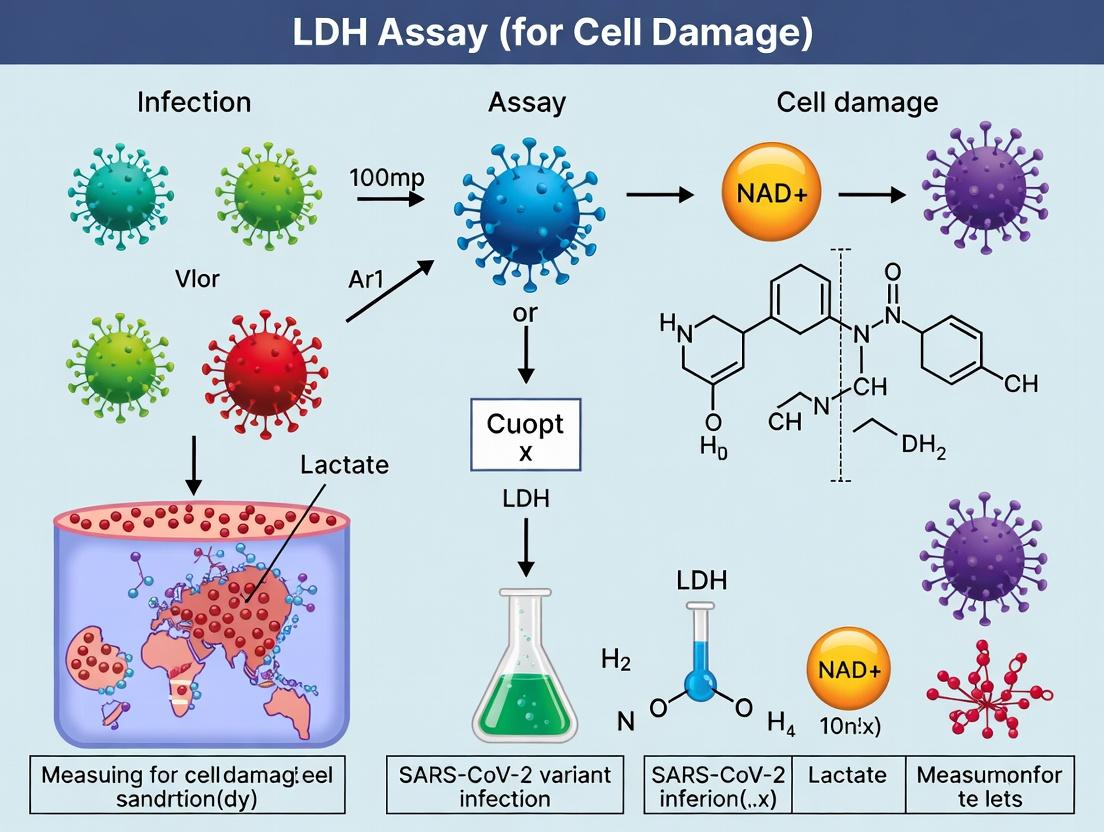
This article provides a comprehensive guide for researchers on employing Lactate Dehydrogenase (LDH) release assays to quantify virus-induced cytotoxicity during SARS-CoV-2 variant infection.
Measuring Viral Pathogenesis: A Guide to LDH Assays for Quantifying SARS-CoV-2 Variant-Induced Cytotoxicity
Abstract
This article provides a comprehensive guide for researchers on employing Lactate Dehydrogenase (LDH) release assays to quantify virus-induced cytotoxicity during SARS-CoV-2 variant infection. We explore the foundational principles linking LDH release to cellular membrane integrity and cytopathic effect. A detailed methodological framework is presented for assay setup, optimization, and execution using relevant cell culture models. We address common troubleshooting scenarios and optimization strategies to enhance assay robustness and reproducibility. Finally, we discuss validation techniques and the application of LDH data for comparative analysis of viral pathogenicity across variants, supporting antiviral drug screening and mechanistic studies. This resource is tailored for scientists and drug development professionals seeking reliable, quantitative metrics of cellular damage in virology research.
Understanding the Link: How LDH Release Quantifies SARS-CoV-2 Cytopathic Effect
Within the broader thesis on LDH assay applications in SARS-CoV-2 variant infection research, the principle of lactate dehydrogenase (LDH) release as an indicator of compromised plasma membrane integrity remains a cornerstone. This universal marker provides a quantifiable measure of cytopathic effect, crucial for comparing the cellular pathogenicity of emerging variants and screening antiviral therapeutics.
Application Notes: LDH Assay in SARS-CoV-2 Research
LDH-based cytotoxicity assays are pivotal for quantifying virus-induced cell death (apoptosis, pyroptosis, necrosis) and evaluating therapeutic efficacy. Recent studies emphasize its utility in comparing variant-specific virulence.
Table 1: LDH Release in SARS-CoV-2 Variant Infections (In Vitro)
| SARS-CoV-2 Variant | Cell Line | Time Post-Infection (h) | % Cytotoxicity (Mean ± SEM) | Key Research Context |
|---|---|---|---|---|
| D614G (Lineage A) | Vero E6 | 48 | 45.2 ± 3.1 | Baseline pathogenicity |
| Alpha (B.1.1.7) | Calu-3 | 72 | 58.7 ± 4.5 | Increased cytopathic effect noted |
| Delta (B.1.617.2) | A549-ACE2 | 48 | 72.3 ± 5.2 | Rapid membrane integrity loss |
| Omicron (BA.1) | Caco-2 | 72 | 34.8 ± 2.9 | Reduced cytotoxicity vs. Delta |
| Omicron (BA.5) | Human Airway Organoids | 96 | 41.5 ± 3.7 | Intermediate phenotype |
Table 2: LDH Assay Validation of Antiviral Compounds
| Compound/Candidate | Target | Variant Tested | IC50 (µM) | Reduction in LDH Release vs. Untreated |
|---|---|---|---|---|
| Remdesivir | RNA polymerase | Delta | 0.77 | 68% |
| Nirmatrelvir | Main Protease (Mpro) | Omicron BA.1 | 0.056 | 85% |
| Camostat Mesylate | TMPRSS2 | Alpha | 12.4 | 52% |
| Control: E64D | Cathepsin L | D614G | >100 | <10% |
Experimental Protocols
Protocol 1: LDH-Cytotoxicity Assay for SARS-CoV-2 Variant Comparison
Aim: To quantify and compare virus-induced loss of membrane integrity across variants. Materials: See "The Scientist's Toolkit" below. Procedure:
- Cell Seeding: Plate permissive cells (e.g., A549-ACE2) in a 96-well plate at 1x10⁴ cells/well in complete medium. Incubate for 24h (37°C, 5% CO₂).
- Infection: Inactivate FBS in medium to 2%. Infect triplicate wells with SARS-CoV-2 variants at a defined MOI (e.g., MOI=0.1). Include mock-infected (medium only) and lysis controls (for max LDH release).
- Incubation: Incubate for desired duration (e.g., 48-72h).
- LDH Measurement: At assay timepoint, carefully centrifuge plate (400xg, 5 min). Transfer 50 µL of supernatant from each well to a new 96-well plate.
- Reaction: Add 50 µL of reconstituted LDH assay reaction mixture to each supernatant sample. Protect from light.
- Incubation & Stop: Incubate at room temperature for 30 minutes. Add 50 µL of stop solution.
- Data Acquisition: Measure absorbance at 490nm and 680nm (reference wavelength) using a microplate reader.
- Calculation:
- Corrected A490 = (A490 sample - A490 reference) - (A490 background from medium-only control).
- % Cytotoxicity = [(Corrected A490 of infected sample - Corrected A490 of mock control) / (Corrected A490 of lysis control - Corrected A490 of mock control)] x 100.
Protocol 2: High-Throughput LDH Screening for Antiviral Drugs
Aim: To screen compound libraries for protective effect against virus-induced cytotoxicity. Procedure:
- Cell & Compound Prep: Seed cells as in Protocol 1. Pre-dispense test compounds into plates using an automated liquid handler.
- Pre-treatment/Co-treatment: Add compounds to cells 1h prior to infection or concurrently with virus, depending on mechanism studied.
- Infection & Incubation: Add standardized virus inoculum (variant of interest). Incubate for 48-72h.
- Automated LDH Detection: Use an integrated plate handler to perform the centrifugation, supernatant transfer, and LDH reagent addition steps.
- Data Analysis: Calculate % cytotoxicity and % inhibition for each compound. Z'-factor should be >0.5 for robust assay quality.
Visualizations
Title: LDH Release Pathway in SARS-CoV-2 Cytotoxicity
Title: LDH Cytotoxicity Assay Workflow
The Scientist's Toolkit: Key Research Reagent Solutions
Table 3: Essential Materials for LDH-based SARS-CoV-2 Research
| Reagent/Material | Supplier Examples | Function & Importance |
|---|---|---|
| LDH Cytotoxicity Assay Kit | Cayman Chemical, Promega, Roche, Thermo Fisher | Provides optimized reagents (lysis solution, enzyme substrate, dye, stop solution) for standardized, sensitive detection. |
| Permissive Cell Lines | ATCC, ECACC | A549-ACE2, Vero E6, Calu-3, Caco-2. Engineered or naturally expressing viral entry receptors (ACE2, TMPRSS2). |
| SARS-CoV-2 Variant Isolates | BEI Resources, CDC | Authentic viruses for biologically relevant infection models. Requires BSL-3 containment. |
| Virus Dilution Medium | Gibco, Sigma | Medium with low FBS (2%) to prevent assay interference during infection phase. |
| 96-well Cell Culture Plates | Corning, Greiner Bio-One | Clear, flat-bottom plates for cell growth and optical density reading. |
| Microplate Reader | BioTek, BMG Labtech, Tecan | For measuring absorbance at 490nm (signal) and 680nm (reference). |
| BSL-3 Compatible Centrifuge | Eppendorf, Thermo Fisher | For safe pelleting of virus particles in supernatant prior to LDH measurement. |
| Positive Control Antivirals | MedChemExpress, Selleckchem | Remdesivir, Nirmatrelvir for assay validation and as benchmark controls. |
SARS-CoV-2 infection initiates when the viral Spike (S) protein binds to the host receptor angiotensin-converting enzyme 2 (ACE2). Priming by cellular proteases (TMPRSS2, furin) facilitates membrane fusion. This direct fusion at the plasma membrane or endosomal entry leads to viral genome release, replication, and the expression of viral proteins, including S. Newly synthesized S protein at the infected cell surface can bind to ACE2 on adjacent cells, forming multinucleated syncytia. This cell-cell fusion is a hallmark of cytopathic effect (CPE) and represents a significant mechanism of cellular damage and lysis, contributing to tissue injury and viral spread. Quantifying this lytic damage is a key objective in viral pathogenesis and antiviral research, for which the Lactate Dehydrogenase (LDH) release assay is a gold standard.
Key Quantitative Data on SARS-CoV-2-Induced Cell Damage
Table 1: LDH Release Profiles Across SARS-CoV-2 Variants in vitro
| Variant (Pango Lineage) | Cell Line | MOI | Time Post-Infection (h) | % LDH Release (Mean ± SD) | Key Reference/Study Context |
|---|---|---|---|---|---|
| Wild-Type (B.1) | Vero E6 | 0.1 | 48 | 65.2 ± 8.1 | Baseline cytopathogenicity (Papa et al., 2021) |
| Alpha (B.1.1.7) | Calu-3 | 0.5 | 72 | 78.5 ± 6.3 | Increased fusogenicity linked to S mutations |
| Delta (B.1.617.2) | A549-ACE2 | 0.01 | 48 | 82.4 ± 7.8 | Enhanced syncytia formation & lysis |
| Omicron BA.1 | Caco-2 | 0.5 | 72 | 45.3 ± 5.2 | Reduced cell-cell fusion & cytotoxicity |
| Omicron BA.5 | Vero E6-TMPRSS2 | 0.1 | 48 | 58.9 ± 6.7 | Partial regain of fusogenic potential |
Table 2: Correlation of Spike Protein Mutations with Syncytia Efficiency
| Mutation(s) in S Protein | Proposed Molecular Effect | Relative Syncytia Size/Area | Impact on LDH Release |
|---|---|---|---|
| D614G (ancestral) | Increased S stability/processing | 1.0 (Reference) | Baseline |
| P681R (Alpha, Delta) | Enhanced furin cleavage | 2.5 – 3.2 | High (≥150% of Ref) |
| D950N (Delta) | Promotes S1/S2 cleavage | 3.5 | Very High |
| S375F, S371L (Omicron BA.1) | Altered ACE2 binding conformation | 0.4 – 0.6 | Low (≤70% of Ref) |
| L452R (Delta, BA.4/5) | Alters ACE2 affinity, immune escape | 1.8 – 2.2 | Moderate-High |
Detailed Experimental Protocols
Protocol 1: LDH Release Assay for Quantifying SARS-CoV-2-Induced Cytotoxicity Objective: To measure membrane integrity damage (lysis) in infected cell cultures. Materials: See Scientist's Toolkit (Table 3). Procedure:
- Seed cells (e.g., Vero E6, Calu-3, A549-ACE2) in a 96-well plate to achieve ~90% confluence at infection.
- Infect cells with SARS-CoV-2 variants at desired MOI (e.g., 0.01-0.5) in a minimal volume of infection medium. Include controls: Spontaneous LDH (uninfected cells + medium), Maximum LDH (uninfected cells + lysis buffer), and Culture Background (medium alone).
- Incubate for desired time course (24-72h) at 37°C, 5% CO₂.
- Collect supernatant: At assay timepoint, gently pipette 50-100 µL of supernatant from each well into a new 96-well plate without disturbing adherent cells.
- Prepare LDH Reaction Mix: According to manufacturer's instructions (e.g., CyQUANT LDH). Typically involves mixing catalyst and dye solutions.
- Add Reaction Mix: Add an equal volume of reaction mix to each supernatant sample. Incubate at room temperature, protected from light, for 30 minutes.
- Stop Reaction & Measure: Add stop solution (if required). Measure absorbance at 490 nm and 680 nm (reference wavelength) using a microplate reader.
- Calculate:
- Corrected Absorbance = A₄₉₀ - A₆₈₀.
- % Cytotoxicity = [(Test Sample – Spontaneous LDH) / (Maximum LDH – Spontaneous LDH)] × 100.
Protocol 2: Quantitative Analysis of Syncytia Formation Objective: To quantify cell-cell fusion events following SARS-CoV-2 infection. Materials: Cell lines permissive for fusion (e.g., A549-ACE2-TMPRSS2), immunofluorescence stains (anti-Spike, DAPI, Phalloidin), imaging system. Procedure:
- Infect cells grown on glass coverslips in 24-well plates with SARS-CoV-2 variant at low MOI (0.01-0.05) to allow syncytia development.
- Fix and Permeabilize: At 24-48 hpi, wash with PBS and fix with 4% PFA for 15 min. Permeabilize with 0.1% Triton X-100 for 10 min.
- Stain: Block with 5% BSA, then incubate with primary antibody (e.g., anti-SARS-CoV-2 Spike) followed by fluorescent secondary antibody. Co-stain nuclei with DAPI and actin with Phalloidin.
- Image: Acquire tile-scan or multiple random field images using a fluorescence or confocal microscope (20x/40x objective).
- Quantify: Use image analysis software (e.g., ImageJ, CellProfiler).
- Syncytia Count: Define a syncytium as a cell mass containing ≥3 nuclei.
- Size Metrics: Measure area, perimeter, or nucleus count per syncytium.
- Fusion Index: Calculate as (Ns - Nc) / Nt, where Ns = nuclei in syncytia, Nc = number of syncytia, and Nt = total nuclei counted.
Visualizing Pathways and Workflows
Pathway: SARS-CoV-2 Entry and Syncytia-Driven Lysis
Workflow: LDH Assay for Viral Cytotoxicity
The Scientist's Toolkit: Research Reagent Solutions
Table 3: Essential Materials for LDH/Syncytia Research
| Item Name | Function/Application | Example Product/Catalog |
|---|---|---|
| LDH Cytotoxicity Assay Kit | Colorimetric quantitation of released LDH. Essential for standardized, high-throughput damage measurement. | CyQUANT LDH (Thermo Fisher, C20300); Pierce LDH (Thermo Fisher, 88953) |
| ACE2-Overexpressing Cell Line | Model system for efficient SARS-CoV-2 entry and syncytia studies, especially in low-ACE2 cells. | A549-ACE2 (BEI Resources, NR-53521); HEK-293T-hACE2 (Addgene, 145825) |
| TMPRSS2-Expressing Cell Line | Enhances plasma membrane fusion pathway, critical for syncytia formation research. | Vero E6-TMPRSS2 (JCRB, JCRB1819) |
| Recombinant SARS-CoV-2 S Proteins (Variants) | For controlled fusion studies, pseudovirus entry assays, and neutralizing antibody assessments. | Spike RBD (Alpha, Delta, Omicron) (ACROBiosystems, SPD-* series) |
| Neutralizing Anti-Spike Antibody (Control) | Negative control to inhibit fusion/entry, confirming S-specific effects in assays. | SARS-CoV-2 Neutralizing mAb (Sino Biological, 40592-MM57) |
| Furin/TMPRSS2 Inhibitor | Pharmacological tool to dissect proteolytic priming pathways and their role in syncytia. | Camostat mesylate (TMPRSS2 inhibitor); MI-1851 (Furin inhibitor) |
| Cell Membrane Stain (e.g., WGA) | Visualizes plasma membrane boundaries for syncytia imaging and size quantification. | Wheat Germ Agglutinin (WGA), Alexa Fluor conjugates (Thermo Fisher) |
| High-Content Imaging System | Automated acquisition and analysis of syncytia (nuclei count, area) in multi-well plates. | Instruments from PerkinElmer, Thermo Fisher, or BioTek. |
Application Notes
Within virology research, particularly in the study of SARS-CoV-2 variant-induced cytopathic effect (CPE), quantifying viral-induced cell damage is fundamental. While classical methods like plaque assay and TCID₅₀ are established, the Lactate Dehydrogenase (LDH) release assay offers distinct advantages in a modern research pipeline.
Throughput: The LDH assay is readily adaptable to 96- or 384-well plate formats, enabling the parallel screening of multiple virus variants, drug candidates, or neutralizing antibody titers against diverse SARS-CoV-2 variants. This high-throughput capacity is critical for rapid assessment during emerging variant outbreaks.
Objectivity: Unlike plaque assays or TCID₅₀, which rely on subjective visual scoring of CPE by trained personnel, the LDH assay provides a colorimetric or fluorometric quantitative readout. This minimizes observer bias and increases reproducibility, especially for variants that induce partial or slow-developing CPE.
Complementarity: The LDH assay does not replace but powerfully complements traditional infectivity assays. It directly measures a consequence of infection—loss of membrane integrity—which can occur independently of full viral replication cycles. This is invaluable for studying viral pathogenesis, early cytotoxic events, or the cytoprotective effects of therapeutics.
Integration in SARS-CoV-2 Research: For a thesis investigating cell damage from SARS-CoV-2 variants, LDH data provides a quantitative correlate of virulence and tissue tropism at the cellular level. It can be paired with qRT-PCR (viral load), plaque assay (infectious titer), and immunofluorescence (viral protein expression) to build a comprehensive model of variant-specific pathogenicity.
Experimental Protocols
Protocol 1: LDH Release Assay for SARS-CoV-2 Variant Cytotoxicity
Objective: To quantify virus-induced cytotoxicity in Vero E6 or Calu-3 cells.
Materials:
- SARS-CoV-2 variant stocks (e.g., Ancestral, Delta, Omicron BA.5)
- Target cells (e.g., Vero E6)
- Complete cell culture medium
- LDH assay kit (Cytotoxicity Detection Kit)
- Flat-bottom 96-well tissue culture plate
- Microplate reader
Procedure:
- Seed target cells at 2x10⁴ cells/well in 100 µL complete medium. Incubate overnight.
- Infect triplicate wells with serial dilutions of each SARS-CoV-2 variant at a target MOI (e.g., 0.1, 1). Include mock-infected control wells (background LDH) and a set of wells for maximum LDH release (treated with lysis buffer from kit).
- Incubate for 24-72 hours, depending on variant kinetics.
- At timepoint, centrifuge plate at 250xg for 5 min.
- Carefully transfer 50 µL of supernatant from each well to a new 96-well plate.
- Add 50 µL of reconstituted LDH assay reagent to each supernatant sample. Protect from light.
- Incubate at room temperature for 30 minutes.
- Measure absorbance at 490 nm with a reference wavelength of 620-650 nm.
Calculation:
% Cytotoxicity = [(Experimental LDH – Background LDH) / (Maximum LDH – Background LDH)] x 100
Protocol 2: Parallel Plaque Assay for Infectious Titer
Objective: To determine the infectious virus titer (PFU/mL) of the same variant stocks used in the LDH assay.
Materials:
- SARS-CoV-2 variant stocks
- Vero E6 cells in 12-well plates
- Overlay medium (1.5% carboxymethylcellulose or agarose in maintenance medium)
- Fixative (10% formaldehyde in PBS)
- Stain (0.1% crystal violet)
Procedure:
- Seed Vero E6 cells to form confluent monolayers in 12-well plates.
- Perform 10-fold serial dilutions of virus stock in serum-free medium.
- Aspirate medium from cells and inoculate with 200 µL of each dilution in duplicate. Rock plate every 15 min for 1 hour at 37°C.
- Overlay with 1.5 mL of overlay medium. Incubate for 48-72 hours.
- Remove overlay, fix cells with 1 mL/well of fixative for 1 hour, then stain with crystal violet.
- Count distinct plaques and calculate PFU/mL:
PFU/mL = (Plaque count / (Dilution factor x Inoculum volume (mL)).
Table 1: Comparison of Virology Assay Characteristics
| Assay | Measured Endpoint | Throughput (Samples/Day) | Objectivity | Time to Result | Key Application |
|---|---|---|---|---|---|
| LDH Release | Cell membrane damage (Cytotoxicity) | High (96-384 wells) | High (Spectrophotometric) | 24-72 hours | Cytopathic effect quantification, drug screening. |
| Plaque Assay | Infectious virus particles (Plaque-forming units) | Low (6-24 wells) | Moderate (Visual plaque count) | 3-7 days | Definitive infectious titer, isolate purification. |
| TCID₅₀ | Infectious virus dilution (Tissue culture infectious dose) | Medium (96-well) | Low (Visual CPE scoring) | 3-7 days | Infectious titer, neutralization assays. |
| qRT-PCR | Viral genome copies | Very High (384-well) | High (Fluorometric) | 4-6 hours | Viral load, does not distinguish infectious virus. |
Table 2: Example Data from SARS-CoV-2 Variant Study Using LDH Assay Data from Vero E6 cells, 48 hours post-infection (MOI=0.5). Values are mean % cytotoxicity ± SD (n=3).
| Virus Variant | % Cytotoxicity (LDH Release) | Infectious Titer (Plaque Assay, PFU/mL) | Viral Load (qRT-PCR, Genomic copies/mL) |
|---|---|---|---|
| Mock Infection | 5.2 ± 1.1 | 0 | 0 |
| D614G (Ancestral) | 78.5 ± 4.3 | 2.5 x 10⁶ | 5.8 x 10⁹ |
| Delta (B.1.617.2) | 85.2 ± 3.7 | 3.1 x 10⁶ | 1.2 x 10¹⁰ |
| Omicron (BA.5) | 45.6 ± 5.2 | 1.8 x 10⁶ | 4.1 x 10⁹ |
Visualizations
LDH Assay Protocol Workflow
Complementary Assays for Viral Infection Analysis
The Scientist's Toolkit
Table 3: Key Research Reagent Solutions for LDH-based Virology Studies
| Item | Function in LDH/Virology Assay | Example/Note |
|---|---|---|
| LDH Cytotoxicity Detection Kit | Provides optimized reagents for the enzymatic detection of LDH released from damaged cells. Essential for standardized, sensitive readout. | Roche CytoTox 96, Dojindo Cytotoxicity LDH Assay Kit. |
| Vero E6 or Calu-3 Cell Line | Permissive host cells for SARS-CoV-2 infection. Vero E6 (ACE2, TMPRSS2+) is standard for plaque assays; Calu-3 reflects human respiratory epithelium. | Key for establishing infection model. |
| Carboxymethylcellulose (CMC) Overlay | Viscous overlay for plaque assays to restrict virus diffusion, enabling formation of discrete plaques for counting. | Alternative: Avicel or agarose. |
| Virus Transport Medium | For storing and diluting clinical isolates or variant stocks without loss of infectivity prior to assay. | Contains protein stabilizers and buffers. |
| Microplate Reader (Absorbance/Fluorescence) | Instrument for reading the LDH assay signal. Absorbance at 490nm is standard; some kits offer more sensitive fluorescent alternatives. | Enables high-throughput, quantitative data collection. |
| SARS-CoV-2 Variant Reference Stocks | Quantified stocks of specific variants (e.g., WA1, Delta, Omicron sublineages) for controlled comparative studies. | Obtain from reputable repositories (BEI Resources, ATCC). |
| Neutralizing Antibody Standard | Positive control reagent (e.g., convalescent plasma, licensed therapeutic mAb) for antiviral or neutralization studies coupling LDH with infectivity. | Critical for assay validation. |
1. Introduction & Thesis Context
Within the broader thesis investigating SARS-CoV-2 variant-specific cellular damage via LDH (Lactate Dehydrogenase) release assays, the foundational step is the selection of a biologically relevant in vitro model. The susceptibility of a cell line to infection directly influences the magnitude of measurable cytopathic effect (CPE) and LDH release. This application note provides a comparative analysis of widely used cell lines—Vero E6 (kidney epithelium), Caco-2 (colorectal adenocarcinoma), and Calu-3 (lung adenocarcinoma)—to different SARS-CoV-2 variants, alongside standardized protocols for LDH-based damage assessment.
2. Comparative Susceptibility Data
Recent studies indicate significant variation in infectivity and replication efficiency of SARS-CoV-2 variants across these cell lines, largely dictated by the expression of entry receptors (ACE2, TMPRSS2) and innate immune competence.
Table 1: Key Characteristics of Candidate Cell Lines
| Cell Line | Tissue Origin | ACE2 Expression | TMPRSS2 Expression | Innate Immune Sensing | Primary Application |
|---|---|---|---|---|---|
| Vero E6 | African Green Monkey Kidney | High | Low (Deficient in IFN response) | Deficient | High-titer virus production, initial infectivity screens |
| Caco-2 | Human Colorectal Adenocarcinoma | High | High | Functional | Modeling intestinal infection, enteric tropism |
| Calu-3 | Human Lung Adenocarcinoma | Moderate | High | Functional | Modeling respiratory infection, antiviral testing |
Table 2: Comparative Susceptibility to SARS-CoV-2 Variants (Representative Data)
| Variant (Lineage) | Vero E6 (TCID₅₀/mL, log₁₀) | Caco-2 (Viral RNA Copy Number, log₁₀) | Calu-3 (Plaque Forming Units/mL, log₁₀) | Notes on Tropism |
|---|---|---|---|---|
| D614G (B.1) | 6.5 | 8.2 | 5.8 | Baseline enhanced infectivity |
| Alpha (B.1.1.7) | 6.7 | 8.5 | 6.1 | Increased replication in respiratory models |
| Delta (B.1.617.2) | 7.2 | 8.8 | 6.9 | Highly fusogenic; high CPE in Calu-3 |
| Omicron BA.1 (B.1.1.529) | 5.9 | 8.0 | 5.0 | Reduced TMPRSS2 usage, lower CPE in Calu-3 |
| Omicron BA.5 (B.1.1.529.5) | 6.2 | 8.3 | 5.5 | Regained some lung cell tropism |
3. Detailed Protocols
Protocol 1: LDH Release Assay for Quantifying SARS-CoV-2-Induced Cytotoxicity
A. Cell Seeding and Infection
- Seed cells in a 96-well tissue culture-treated plate to reach 90-95% confluence at time of infection. For LDH assay, include a background control (cells + medium), low control (uninfected cells), high control (cells + lysis buffer), and variant infection groups.
- Vero E6: 2 x 10⁴ cells/well in DMEM + 10% FBS.
- Caco-2: 3 x 10⁴ cells/well in EMEM + 20% FBS.
- Calu-3: 2.5 x 10⁴ cells/well in DMEM/F12 + 10% FBS.
- Incubate for 24-48 hrs (Caco-2 may require 5-7 days for full differentiation).
- Infect cells with SARS-CoV-2 variants at a target MOI (e.g., 0.1 or 1.0) in serum-free medium or infection medium. Incubate for 1-2 hours at 37°C, 5% CO₂.
- Aspirate inoculum, wash once with PBS, and add fresh complete medium.
- Incubate for desired timepoints (e.g., 24, 48, 72 hours post-infection).
B. LDH Measurement
- At assay timepoint, centrifuge plate at 250 x g for 5 minutes to pellet debris.
- Transfer 50 µL of supernatant from each well to a new clear 96-well plate.
- Add 50 µL of reconstituted LDH assay reagent (per manufacturer's instructions, e.g., Cytotoxicity Detection Kit).
- Incubate for 20-30 minutes at room temperature, protected from light.
- Measure absorbance at 490 nm and 620 nm (reference wavelength) using a microplate reader.
- Calculate Cytotoxicity (%):
Cytotoxicity (%) = [(Exp. Value - Low Control) / (High Control - Low Control)] x 100
Protocol 2: Viral Titration by TCID₅₀ Assay on Vero E6 Cells
- Prepare 96-well plates of Vero E6 cells (2 x 10⁴ cells/well) one day prior.
- Serially dilute viral stock or infection supernatants from other cell lines (e.g., from Calu-3 infection) 10-fold in infection medium (8 dilutions, minimum).
- Aspirate medium from Vero E6 plate and inoculate 100 µL of each dilution across 6-8 wells.
- Incubate for 5-7 days at 37°C, 5% CO₂.
- Score wells for CPE (cytopathic effect) under a microscope.
- Calculate TCID₅₀/mL using the Spearman-Kärber or Reed & Muench method.
4. Visualizations
Infection Pathway Leading to LDH Release
LDH Cytotoxicity Assay Workflow
5. The Scientist's Toolkit: Research Reagent Solutions
Table 3: Essential Materials for LDH-Based Variant Susceptibility Studies
| Reagent/Material | Function & Importance | Example/Catalog Consideration |
|---|---|---|
| Vero E6, Caco-2, Calu-3 Cells | Target models representing kidney, intestinal, and lung epithelia. Critical for comparative tropism. | ATCC CRL-1586, HTB-37, HTB-55 |
| SARS-CoV-2 Variant Isolates | Authentic viral strains for infection. Must be handled in appropriate biocontainment (BSL-3). | BEI Resources, WIV, local repositories |
| LDH Cytotoxicity Assay Kit | Colorimetric kit for accurate, high-throughput quantification of cell damage. | Roche Cytotoxicity Detection Kit, Promega CytoTox 96 |
| Recombinant Human ACE2 Protein | Control for receptor binding studies and potential inhibition assays. | Sino Biological 10108-H08H |
| TMPRSS2 Inhibitor (e.g., Camostat) | Tool compound to probe protease-dependent entry pathways. | Sigma-Aldrich SML0057 |
| Anti-Spike Neutralizing Antibody | Positive control for infection inhibition and LDH reduction. | CR3022 or S309-class antibodies |
| Cell Culture Media & Supplements | Optimized growth media for each cell line to ensure consistent baseline health. | DMEM for Vero, EMEM for Caco-2, DMEM/F12 for Calu-3 |
| 96-Well Tissue Culture Plates | Format compatible with both infection protocols and LDH assay readout. | Clear, flat-bottom plates. |
Within the broader thesis on employing Lactate Dehydrogenase (LDH) release assays to quantify cell damage during SARS-CoV-2 infection, defining a precise research question is paramount. This foundational step directs experimental design, reagent selection, and data interpretation. This Application Note details protocols for three core applications: comparing cellular cytotoxicity across viral variants, evaluating antiviral drug efficacy, and investigating host factors modulating infection outcome. The LDH assay serves as a central, quantitative readout of plasma membrane integrity, a direct indicator of virus-induced cytopathic effect or drug-mediated protection.
Application Note: Comparative Cytotoxicity of SARS-CoV-2 Variants
Defined Research Question: "How does the in vitro cytopathic potential, as measured by LDH release, differ between the ancestral SARS-CoV-2 strain (e.g., WA1/2020) and contemporary Variants of Concern (VoCs) in a human airway epithelial cell line (e.g., Calu-3)?"
Background: Different SARS-CoV-2 variants exhibit altered replication kinetics and pathogenicity. Quantifying their direct capacity to lyse infected cells is crucial for understanding viral evolution.
Protocol: LDH-Based Variant Cytotoxicity Assay
Key Research Reagent Solutions:
| Reagent/Material | Function in Experiment |
|---|---|
| Calu-3 cells | Human lung adenocarcinoma cell line; model for airway epithelium, expresses ACE2/TMPRSS2. |
| SARS-CoV-2 Isolates (Ancestral, Delta, Omicron BA.5, etc.) | Viral entities for infection; must be handled in BSL-3 containment. |
| LDH Cytotoxicity Assay Kit (e.g., CyQUANT, Pierce) | Provides optimized reagents for LDH detection in supernatant. |
| Infection Medium (DMEM, 2% FBS, 1% P/S) | Maintains cells during infection while minimizing background LDH from serum. |
| Lysis Buffer (10% Triton X-100) | Positive control; used to achieve 100% cell lysis and maximum LDH release. |
| 96-Well Tissue Culture Plate | Platform for cell seeding, infection, and assay execution. |
Experimental Workflow:
- Cell Seeding: Seed Calu-3 cells at 2.5 x 10⁴ cells/well in a 96-well plate. Culture for 48h to reach ~90% confluence.
- Virus Infection: Dilute virus stocks to target an MOI of 0.5 (determined by TCID50). Aspirate medium from cells. Infect triplicate wells with 100 µL of each virus dilution (or mock with medium). Incubate at 37°C, 5% CO₂ for 1h.
- Post-Inoculation: Aspirate inoculum, wash wells once with PBS, and add 100 µL of fresh Infection Medium.
- Incubation & Sampling: Incubate plates for 72h. At 24h, 48h, and 72h post-infection, carefully collect 50 µL of supernatant from each well without disturbing the cell monolayer and transfer to a fresh 96-well plate for immediate assay or store at -20°C.
- LDH Assay: Following kit instructions, mix supernatant with reaction mixture. Incubate for 30 min at room temperature protected from light. Measure absorbance at 490 nm and 680 nm (reference) using a microplate reader.
- Controls: Include Spontaneous LDH Control (mock-infected cells, medium only) and Maximum LDH Control (mock-infected cells lysed with lysis buffer at the final timepoint).
- Data Calculation: Calculate % Cytotoxicity:
% Cytotoxicity = [(Experimental LDH – Spontaneous LDH) / (Maximum LDH – Spontaneous LDH)] * 100
Data Presentation: Table 1: Comparative Cytotoxicity of SARS-CoV-2 Variants in Calu-3 Cells at 72h Post-Infection (MOI=0.5)
| Viral Strain | % Cytotoxicity (Mean ± SD, n=3) | Statistical Significance (vs. Ancestral) |
|---|---|---|
| Mock Infection | 5.2 ± 1.1% | N/A |
| Ancestral (WA1/2020) | 68.5 ± 4.3% | (Reference) |
| Delta (B.1.617.2) | 82.1 ± 3.7% | p < 0.01 |
| Omicron (BA.5) | 45.8 ± 5.2% | p < 0.001 |
Diagram: Workflow for Variant Cytotoxicity Comparison
Application Note: Evaluating Antiviral Drug Efficacy
Defined Research Question: "Does the antiviral compound Remdesivir or the novel protease inhibitor Nirmatrelvir reduce SARS-CoV-2-induced LDH release in Vero E6 cells in a dose-dependent manner?"
Background: Antiviral efficacy is measured not only by reduced viral replication but also by the protection of host cells from virus-induced damage. LDH release is a direct functional readout of this protective effect.
Protocol: LDH-Based Antiviral Efficacy Assay
Key Research Reagent Solutions:
| Reagent/Material | Function in Experiment |
|---|---|
| Vero E6 cells | African green monkey kidney cells; highly permissive to SARS-CoV-2 infection. |
| Antiviral Compounds (Remdesivir, Nirmatrelvir) | Test articles for efficacy screening. |
| SARS-CoV-2 Stock (e.g., Ancestral strain) | Challenge virus. |
| CellTox Green Cytotoxicity Assay | Optional orthogonal live-cell dye for real-time cytotoxicity. |
| DMSO (0.1% v/v) | Vehicle control for compound dilution. |
| Compound Dilution Plate | For preparing serial dilutions of antivirals. |
Experimental Workflow:
- Cell Seeding: Seed Vero E6 cells at 2.0 x 10⁴ cells/well in a 96-well plate. Incubate overnight.
- Compound Pre-treatment: Prepare 3X serial dilutions of antivirals in Infection Medium (e.g., 30 µM to 0.012 µM). Aspirate medium from cells and add 50 µL/well of compound dilution or DMSO vehicle control. Incubate for 2h.
- Virus Infection: Add 50 µL/well of SARS-CoV-2 diluted in Infection Medium to achieve a final MOI of 0.1. For cell control (no virus) and virus control (no drug) wells, add 50 µL of medium only or virus, respectively.
- Incubation: Incubate for 48h.
- LDH Measurement: At 48h post-infection, follow steps 5-7 from the previous protocol.
- Data Calculation: Calculate % Protection:
% Protection = [1 - ((Drug+Treated LDH – Spontaneous LDH) / (Virus Control LDH – Spontaneous LDH))] * 100
Data Presentation: Table 2: Dose-Dependent Protection from Cytotoxicity by Antiviral Compounds (48h post-infection)
| Compound | Concentration (µM) | % Cytotoxicity (Mean ± SD) | % Protection | IC₅₀ (Cytoprotection) |
|---|---|---|---|---|
| Virus Control | N/A | 78.3 ± 3.5% | 0% | N/A |
| Remdesivir | 10 | 15.2 ± 2.1% | 80.6% | 0.12 µM |
| 1 | 25.4 ± 3.8% | 67.6% | ||
| 0.1 | 65.8 ± 4.9% | 15.9% | ||
| Nirmatrelvir | 10 | 12.8 ± 1.7% | 83.5% | 0.05 µM |
| 1 | 18.5 ± 2.5% | 76.3% | ||
| 0.1 | 70.1 ± 5.2% | 10.5% |
Diagram: Antiviral Efficacy Screening Logic
Application Note: Investigating Host Response Pathways
Defined Research Question: "Does pharmacological inhibition of the host kinase RIPK1 (using Necrostatin-1) attenuate LDH release induced by SARS-CoV-2 infection in A549-ACE2 cells, implicating programmed necrosis (necroptosis) in viral cytopathology?"
Background: Beyond direct lysis, viruses can trigger regulated cell death pathways. Discerning the contribution of specific host pathways (e.g., apoptosis, pyroptosis, necroptosis) requires combining LDH assays with specific pathway modulators.
Protocol: LDH Assay Coupled with Host Pathway Inhibition
Key Research Reagent Solutions:
| Reagent/Material | Function in Experiment |
|---|---|
| A549-ACE2 cells | Engineered lung epithelial cell line with stable ACE2 expression. |
| RIPK1 Inhibitor (Necrostatin-1s) | Specific inhibitor of necroptosis signaling. |
| Pan-Caspase Inhibitor (Z-VAD-FMK) | Inhibitor of apoptotic cell death. |
| Cell Death Inducer (e.g., STS) | Positive control for apoptosis. |
| SARS-CoV-2 Pseudotyped Particles | BSL-2 safe alternative for entry and single-cycle infection studies. |
Experimental Workflow:
- Cell Seeding: Seed A549-ACE2 cells as described.
- Pathway Inhibition Pre-treatment: Treat cells with Necrostatin-1s (30 µM), Z-VAD-FMK (20 µM), or DMSO vehicle for 2h prior to infection.
- Infection: Infect with SARS-CoV-2 (MOI=0.5) or pseudotyped particles.
- Co-incubation: Maintain inhibitors in the medium throughout the infection period (e.g., 48h).
- LDH Measurement & Analysis: Perform LDH assay. Compare % cytotoxicity across inhibitor treatments to identify which pathway blockade confers protection.
- Orthogonal Validation: Use Western blotting for cleaved caspase-3 (apoptosis) and phospho-MLKL (necroptosis) on parallel samples.
Data Presentation: Table 3: Effect of Cell Death Pathway Inhibition on SARS-CoV-2-Induced Cytotoxicity (48h)
| Treatment Condition | % Cytotoxicity (Mean ± SD) | Interpretation |
|---|---|---|
| Mock (DMSO) | 6.5 ± 0.9% | Baseline |
| Virus + DMSO (Vehicle) | 61.2 ± 5.5% | Full cytopathic effect |
| Virus + Z-VAD-FMK (Apoptosis Inhib.) | 58.8 ± 4.1% | Apoptosis not major contributor |
| Virus + Nec-1s (Necroptosis Inhib.) | 38.4 ± 3.7% | Significant protection |
| STS (Apoptosis Inducer) + Z-VAD-FMK | 15.1 ± 2.8% | Inhibition control works |
Diagram: Host Pathway Investigation via Targeted Inhibition
A Step-by-Step Protocol: Executing LDH Assays for SARS-CoV-2 Variant Research
Application Notes
In SARS-CoV-2 variant infection research, quantifying virus-induced cytopathic effect (CPE) via Lactate Dehydrogenase (LDH) release is a cornerstone assay. A robust experimental design mandates the establishment of four critical control conditions to accurately interpret specific virus-mediated lysis against background noise and non-specific effects. These controls are essential for calculating the specific percentage of infected cell lysis and for validating assay integrity.
Maximum LDH Release Control: This control defines the 100% lysis value, representing the total LDH content within the cell monolayer. It is typically achieved by lysing untreated, healthy cells with a non-ionic detergent (e.g., Triton X-100). All experimental LDH readings are normalized to this value.
Spontaneous Release Control: This consists of uninfected, untreated cells incubated in culture medium alone. It measures the baseline LDH leakage from cells due to natural apoptosis, handling, and growth conditions. This value sets the 0% specific lysis baseline and is subtracted from experimental values.
Virus-Only Control: This well contains virus inoculum in culture medium without cells. It controls for any LDH-like enzymatic activity or interference (e.g., from serum) that may be present in the viral stock itself, ensuring the signal originates solely from lysed cells.
Cell-Only Control: This well contains cells and culture medium without virus or lysis agents. It is the fundamental negative control for cell health and assay background, often used alongside the spontaneous release control to confirm monolayer integrity.
The specific release due to viral infection is calculated as: % Specific LDH Release = [(Experimental – Spontaneous) / (Maximum – Spontaneous)] x 100
Key Quantitative Parameters from Current Literature (2023-2024)
Table 1: Typical LDH Assay Control Values in SARS-CoV-2 Research Using Vero E6 or Calu-3 Cells
| Control Condition | Typical Absorbance (490 nm) Range | Normalized % Lysis | Function in Calculation |
|---|---|---|---|
| Cell-Only / Spontaneous Release | 0.15 - 0.35 | 0% (Baseline) | Subtracted as background |
| Maximum LDH Release (Triton X-100) | 1.2 - 2.5 | 100% (Total Content) | Defines total releasable LDH |
| Virus-Only Control | 0.05 - 0.15 | N/A | Checked for assay interference; value is typically negligible and often subtracted. |
| SARS-CoV-2 (WT) Infection (MOI=0.5, 48h) | 0.7 - 1.5 | 40-70% | Example experimental value |
| Omicron BA.5 Subvariant (MOI=0.5, 48h) | 0.4 - 1.0 | 20-50% | Example for reduced cytopathicity |
Table 2: Impact of Control Establishment on Data Interpretation
| Scenario | Missing Control | Consequence | Risk |
|---|---|---|---|
| 1 | Maximum LDH | Cannot calculate % specific lysis; data is semi-quantitative (fold-change only). | Misjudgment of absolute cytopathic effect magnitude. |
| 2 | Spontaneous Release | Overestimation of virus-specific damage. Background cell death attributed to infection. | False positive in drug efficacy studies. |
| 3 | Virus-Only | Signal may be inflated by enzyme activity in serum-containing viral stock. | Overestimation of low-level lysis, especially at early time points. |
| 4 | Cell-Only | Inability to monitor baseline cell health and potential contamination. | Failure to detect assay-wide toxicity or errors. |
Detailed Protocols
Protocol 1: LDH Release Assay for SARS-CoV-2 Variant Cytopathicity
Objective: To quantify virus-induced cell lysis with proper normalization.
Materials (Research Reagent Solutions):
- Cell Line: Vero E6 or Calu-3 cells.
- Virus: SARS-CoV-2 variants (e.g., XBB.1.5, BA.2.86, JN.1). Work in BSL-3 or approved containment.
- LDH Detection Kit: Cytotoxicity Detection Kit (e.g., Roche, Promega, Thermo Fisher). Contains dye/catalyst mix.
- Lysis Buffer: 2% Triton X-100 in assay medium.
- Assay Medium: Phenol-red free, low-serum (2% FBS) cell culture medium.
- 96-well Microplate: Tissue-culture treated, flat-bottom.
- Microplate Reader: Capable of measuring absorbance at 490 nm with a reference wavelength of 620-650 nm.
Procedure:
- Seed cells in a 96-well plate at ~2x10^4 cells/well in 100 µL complete growth medium. Incubate (37°C, 5% CO2) for 18-24h to form a ~90% confluent monolayer.
- Prepare Virus Dilutions: Serially dilute SARS-CoV-2 variant stocks in infection medium (e.g., DMEM+2%FBS+Pen/Strep).
- Aspirate growth medium from cell plate.
- Infect Cells (Experimental Wells): Add 100 µL of virus dilution per well in triplicate. Include multiple MOIs (e.g., 0.1, 0.5, 1).
- Set Up Control Wells (in triplicate):
- Maximum LDH Release: Add 100 µL of assay medium to cells. At the end of incubation, add 20 µL of 2% Triton X-100 lysis solution 1 hour before supernatant collection.
- Spontaneous Release: Add 100 µL of assay medium to cells (no virus, no lysis).
- Virus-Only Control: Add 100 µL of the highest virus concentration used to a well without cells.
- Cell-Only Control: Add 100 µL of assay medium to cells (identical to spontaneous, used for daily monitoring).
- Incubate plate for desired time (e.g., 24, 48, 72h) at 37°C, 5% CO2.
- Harvest Supernatant: Gently mix plate. Transfer 50 µL of supernatant from each well to a new, clear 96-well assay plate. Do not disturb the cell monolayer.
- LDH Reaction: Add 50 µL of reconstituted LDH detection reagent to each well containing supernatant. Protect from light.
- Incubate: Incubate at room temperature for 15-30 minutes (optimize per kit).
- Terminate Reaction: Add 25 µL of 1N HCl or stop solution (if provided).
- Read Absorbance: Measure absorbance at 490 nm (reference 650 nm) using a plate reader.
- Data Analysis:
- Subtract the Virus-Only control value from all other wells if its signal is significant.
- Calculate % Specific LDH Release = [(Experimental Avg. – Spontaneous Avg.) / (Maximum Avg. – Spontaneous Avg.)] x 100.
Protocol 2: Validation of Controls in Antiviral Drug Screening
Objective: To ensure controls perform within expected ranges when testing antiviral compounds.
Procedure:
- Set up the LDH assay as in Protocol 1, including a test compound (e.g., Remdesivir, Paxlovid components) dilution series in triplicate.
- Include Compound-Only Controls: Wells with cells and the highest compound concentration (no virus) to assess compound cytotoxicity directly.
- Perform the assay. A valid experiment requires:
- Spontaneous Release: <15% of the Maximum LDH signal.
- Virus-Only: <10% of the Spontaneous Release signal.
- Cell-Only/Spontaneous: OD values consistent across replicates (CV < 20%).
- Maximum LDH: Signal should be in the linear range of the plate reader (typically OD 490nm >1.0).
- Calculate % inhibition of virus-induced cytopathy: % Inhibition = [1 – ((Drug-Treated Exp. – Drug Spont.) / (Virus Control – Spont.))] x 100.
Diagrams
Title: LDH Assay Workflow & Essential Controls
Title: LDH Signal Pathway & Control Roles
The Scientist's Toolkit
Table 3: Key Research Reagent Solutions for LDH-based SARS-CoV-2 Research
| Item | Function & Rationale |
|---|---|
| Vero E6 Cells | African green monkey kidney epithelial cells; highly permissive to SARS-CoV-2 infection due to high ACE2 expression. Standard for cytopathicity studies. |
| Calu-3 Cells | Human lung adenocarcinoma epithelial cells. Model for human airway infection, may show different cytopathic profiles compared to Vero E6. |
| Phenol Red-Free Medium | Eliminates background absorbance from phenol red at 490 nm, increasing assay sensitivity and accuracy. |
| Cytotoxicity Detection Kit (LDH) | Standardized, optimized mixture of INT salt, diaphorase, lactate, and NAD+ in stable buffer. Ensures reproducible, linear color development. |
| Triton X-100 (2% Solution) | Non-ionic detergent that completely permeabilizes cell membranes to release 100% of intracellular LDH for the Maximum Release control. |
| Recombinant SARS-CoV-2 Spike Protein | Used in control experiments to study spike-mediated syncytia formation and LDH release independent of full viral replication. |
| Broad-Spectrum Caspase Inhibitor (e.g., Z-VAD-FMK) | Tool to distinguish between apoptosis (caspase-dependent) and necrosis (caspase-independent) as the mode of LDH release. |
| Human ACE2 Ectodomain Protein | Used as a soluble competitive inhibitor to confirm ACE2-dependent entry as the primary cause of subsequent LDH release. |
| Neutral Red or Crystal Violet | Alternative viability dyes used in parallel to LDH to confirm cytopathic effect via different mechanisms (uptake vs. release). |
Application Notes
Within the broader thesis investigating cellular damage via LDH release upon infection by evolving SARS-CoV-2 variants, optimizing infection parameters is foundational. This document details protocols for preparing permissive cell lines (e.g., Vero E6, Calu-3), determining the optimal Multiplicity of Infection (MOI), and establishing a kinetic time-course to compare viral variant kinetics. Accurate MOI determination ensures consistent, comparable infection levels across variants, while time-course analyses reveal differences in replication speed and cytopathic effect (CPE) onset, directly informing the timing for downstream LDH assays.
Key Quantitative Data Summary:
Table 1: Example MOI Titration Data for SARS-CoV-2 Variants on Vero E6 Cells (24 hpi)
| Variant | MOI | % Infection (IFA) | Cell Viability (MTT) % | LDH Release (Fold over Mock) |
|---|---|---|---|---|
| Ancestral | 0.1 | 15% | 95% | 1.2 |
| Ancestral | 0.5 | 45% | 82% | 1.8 |
| Ancestral | 1.0 | 75% | 70% | 2.5 |
| Ancestral | 2.0 | 90% | 50% | 4.1 |
| Omicron BA.5 | 0.1 | 10% | 98% | 1.1 |
| Omicron BA.5 | 0.5 | 40% | 90% | 1.4 |
| Omicron BA.5 | 1.0 | 70% | 85% | 1.9 |
Table 2: Kinetic Time-Course of Infection Parameters (Example at MOI=0.5)
| Time Post-Infection (h) | Variant | Viral Titer (TCID50/mL) | % CPE | LDH Release (%) |
|---|---|---|---|---|
| 12 | Ancestral | 1.0 x 10^3 | <5% | 5% |
| 12 | Omicron BA.5 | 5.0 x 10^2 | <5% | 3% |
| 24 | Ancestral | 1.0 x 10^5 | 30% | 25% |
| 24 | Omicron BA.5 | 2.0 x 10^4 | 15% | 12% |
| 48 | Ancestral | 5.0 x 10^6 | 85% | 65% |
| 48 | Omicron BA.5 | 1.0 x 10^6 | 50% | 35% |
Experimental Protocols
Protocol 1: Cell Culture Preparation for SARS-CoV-2 Infection
- Cell Line Maintenance: Culture permissive cells (e.g., Vero E6) in complete growth medium (DMEM + 10% FBS + 1% Penicillin/Streptomycin) at 37°C, 5% CO2.
- Seeding for Assays: One day prior to infection, detach cells using trypsin-EDTA, count with a hemocytometer or automated counter, and seed at an optimized density (e.g., 2.5 x 10^4 cells/well in 96-well plates for LDH/viability, 2.5 x 10^5 cells/well in 24-well plates for IFA) to reach 80-90% confluency at time of infection.
- Infection Medium: Prepare infection medium (e.g., DMEM + 2% FBS, optionally with TPCK-trypsin for Vero E6 cells to enhance certain variant infection).
Protocol 2: Viral Stock Titration by TCID50 Assay
- Cell Preparation: Seed Vero E6 cells in 96-well plates to reach >90% confluency.
- Serial Dilution: Perform 10-fold serial dilutions of viral stock (from 10^-1 to 10^-8) in infection medium.
- Inoculation: Aspirate medium from cell plate. Add 100 µL of each dilution to 8-10 replicate wells. Include cell-only controls.
- Incubation & Observation: Incubate at 37°C, 5% CO2 for 3-5 days. Monitor daily for CPE.
- Calculation: Use the Reed-Muench or Spearman-Kärber method to calculate the TCID50/mL based on the proportion of CPE-positive wells at each dilution.
Protocol 3: MOI Optimization Infection
- Viral Dilution: Based on the titer, calculate volume of virus needed to achieve target MOIs (e.g., 0.1, 0.5, 1, 2). Dilute virus in pre-warmed infection medium.
- Infection: Aspirate medium from seeded plates. Wash once with PBS. Add calculated virus inocula to respective wells. Include mock-infected controls (infection medium only).
- Adsorption: Incubate at 37°C, 5% CO2 for 1-2 hours with gentle rocking every 15-20 minutes.
- Removal of Inoculum: Aspirate virus inoculum and wash cells once with PBS to remove unbound virus.
- Addition of Maintenance Medium: Add fresh pre-warmed infection/maintenance medium.
- Incubation & Analysis: Return plates to incubator. At desired time-point (e.g., 24 hpi), harvest supernatant for LDH/viral titer and cells for viability/IFA analysis.
Protocol 4: Kinetic Time-Course Infection for Variant Comparison
- Setup: Infect multiple identical plates at the predetermined optimal MOI (e.g., MOI=0.5) using Protocol 3.
- Time-Point Harvesting: Designate plates or wells for each time-point (e.g., 0, 6, 12, 24, 48, 72 hpi). At each time point: a. Collect supernatant: Centrifuge at 300 x g for 5 min, aliquot, and store at -80°C for LDH assay and viral titration. b. Assess cells: Perform live-cell imaging for CPE, or process for cell viability assays (MTT/CTB) or fixation for IFA.
- Parallel Analysis: Run LDH, viability, and viral titer (TCID50) assays on samples from all time-points in parallel to ensure comparability.
Diagrams
Title: Experimental Workflow for MOI & Kinetic Study
Title: Infection Pathway to LDH Release
The Scientist's Toolkit: Research Reagent Solutions
Table 3: Essential Materials for Cell Culture & SARS-CoV-2 Infection Studies
| Item | Function & Application |
|---|---|
| Vero E6 / Calu-3 Cells | Permissive mammalian cell lines expressing ACE2 receptor for SARS-CoV-2 infection. |
| SARS-CoV-2 Variant Isolates | Authentic viral stocks of relevant variants (e.g., Ancestral, Delta, Omicron sub-lineages). |
| DMEM with High Glucose | Standard basal medium for cell culture maintenance and infection. |
| Fetal Bovine Serum (FBS) | Provides essential growth factors and nutrients for cell health pre- and post-infection. |
| Trypsin-EDTA Solution | For detaching and passaging adherent cell cultures. |
| TPCK-Trypsin | Serine protease added to infection medium for Vero E6 cells to cleave viral S protein, enhancing infectivity of some variants. |
| Cytotoxicity LDH Assay Kit | Colorimetric or fluorimetric kit for quantifying lactate dehydrogenase released from damaged cells. |
| MTT or CellTiter-Blue (CTB) Kit | Cell viability assays based on metabolic activity, used in parallel with LDH. |
| Anti-SARS-CoV-2 Nucleoprotein Antibody | Primary antibody for immunofluorescence assay (IFA) to detect infected cells. |
| Fluorescent Secondary Antibody | For visualization of infected cells in IFA to calculate % infection and MOI. |
| Cell Culture Plates (96-/24-well) | For seeding cells in formats compatible with infection, microscopy, and plate-reader assays. |
| Biosafety Level 3 (BSL-3) Facilities & PPE | Mandatory for safe handling of replication-competent SARS-CoV-2. |
Application Notes and Protocols
Introduction Within SARS-CoV-2 variant research, quantifying virus-induced cytotoxicity via Lactate Dehydrogenase (LDH) release is fundamental. A critical, often overlooked variable is the timing of supernatant collection post-infection, as it directly captures the dynamic peak of cellular damage. Variants with differing replication kinetics or cytopathic mechanisms may induce LDH release at varying timepoints. This protocol details the optimized methodology for supernatant collection to ensure accurate, variant-specific cytotoxicity profiling, essential for evaluating antiviral therapeutics and pathogenic mechanisms.
Key Quantitative Data: Cytotoxicity Peaks by Variant
| SARS-CoV-2 Variant | Cell Line (MOI) | Peak LDH Release Post-Infection (hours) | Reference Cytotoxicity Level (%) |
|---|---|---|---|
| Ancestral (WA1) | Vero E6 (0.1) | 72 - 96 | 65-80% |
| Delta (B.1.617.2) | Calu-3 (0.5) | 48 - 72 | 70-85% |
| Omicron (BA.1) | Caco-2 (0.5) | 96 - 120 | 40-60% |
| Omicron (BA.5) | A549-ACE2 (1.0) | 72 - 96 | 55-75% |
Note: MOI=Multiplicity of Infection. Peak timing is cell line and assay condition dependent. Data synthesized from current literature.
Detailed Protocol: Time-Course Supernatant Collection for LDH Assay
A. Pre-Collection Preparations
- Cell Seeding: Seed target cells (e.g., Vero E6, Calu-3) in a 96-well flat-bottom plate at optimal density (e.g., 2x10^4 cells/well) in complete growth medium. Incubate overnight to achieve ~90% confluency.
- Variant Infection: Dilute SARS-CoV-2 variant stocks to desired MOI in infection medium (serum-free). Aspirate growth medium from cells and inoculate wells with 100µL of virus dilution. Include triplicate wells for:
- Infected Controls: Virus + Cells.
- Cell Background Control: Mock infection medium + Cells.
- Culture Medium Background: Medium only.
- Maximum LDH Control: Uninfected cells for later lysis.
- Incubation & Plating: Infect for 1-2 hours at 37°C, 5% CO₂. Gently replenish all wells with fresh complete medium to prevent serum starvation.
B. Critical Timing & Supernatant Collection
- Timepoint Strategy: Based on preliminary data (see table), establish a fine-grained time-course (e.g., 24, 48, 72, 96, 120 hours post-infection).
- Collection Procedure:
- At each predetermined timepoint, gently swirl the plate.
- For each well, carefully pipette 50-100µL of supernatant without disturbing the cell monolayer.
- Transfer the supernatant to a fresh, labeled 96-well plate or microcentrifuge tube.
- Optional but Recommended: Centrifuge the collected supernatant at 250 x g for 5 minutes to pellet any floating cells or debris. Transfer the clarified supernatant to a new well/tube.
- Max LDH Control: At the final collection timepoint, add the recommended volume of lysis solution (e.g., 10µL of 10% Triton X-100) to the designated Maximum LDH Control wells, incubate for 45-60 minutes, then collect supernatant as above.
- Sample Storage: Process samples immediately for LDH assay. If storage is necessary, keep plates/tubes at 4°C for ≤24 hours or at -80°C for longer periods, avoiding repeated freeze-thaw cycles.
C. LDH Measurement & Calculation Follow manufacturer instructions for your chosen LDH assay kit. A typical protocol:
- Mix equal volumes of collected supernatant and LDH reaction mixture.
- Incubate in the dark for 20-30 minutes at room temperature.
- Stop the reaction with 1N HCl or as per kit instructions.
- Measure absorbance at 490nm (reference 680nm).
- Calculate Cytotoxicity (%):
[(Absorbance Infected - Absorbance Cell Background) / (Absorbance Max LDH Control - Absorbance Cell Background)] * 100
Diagram 1: Experimental Workflow for Time-Course LDH Sampling
Diagram 2: Variant-Dependent Cytotoxicity Kinetics Logic
The Scientist's Toolkit: Key Reagent Solutions
| Item | Function & Importance in Protocol |
|---|---|
| LDH Cytotoxicity Assay Kit | Core detection system. Provides optimized reagents for colorimetric/fluorimetric quantification of LDH enzyme activity. |
| SARS-CoV-2 Variant Stocks (e.g., Ancestral, Delta, Omicron) | Essential infectious agents. Titer must be precisely determined for accurate MOI calculation. |
| Cell Culture Medium (Serum-Free) | Used for virus inoculation to prevent serum interference with viral adsorption. |
| Cell Lysis Solution (e.g., 10% Triton X-100) | Generates the Maximum LDH Control by releasing all cellular LDH, defining 100% cytotoxicity. |
| Clarification Centrifuge Tubes/Plates | For post-collection spin to remove cellular debris, preventing false-high LDH readings. |
| 96-Well Microplates (Clear Flat-Bottom) | Compatible with both cell culture and spectrophotometric/fluorimetric plate readers. |
| Multichannel Pipette & Sterile Tips | Enables rapid, uniform supernatant collection across multiple timepoints and replicates. |
1. Introduction: Context within SARS-CoV-2 Variant Research Within a thesis investigating cell damage dynamics induced by SARS-CoV-2 variants (e.g., Omicron BA.5, XBB.1.5), the Lactate Dehydrogenase (LDH) release assay serves as a critical colorimetric method to quantify virus-induced cytopathic effect and plasma membrane integrity loss. This protocol details the application of a standardized LDH assay to compare the lytic potential of viral variants and evaluate therapeutic candidates.
2. Key Research Reagent Solutions Table 1: Essential Materials for LDH-Based Cytotoxicity Assays
| Reagent / Material | Function in Assay |
|---|---|
| LDH Assay Kit (Cytotoxicity Detection) | Provides optimized reagents for the coupled enzymatic reaction, including dye solution (INT/NAD+) and catalyst. |
| Viral Transport Media (VTM) | Serves as a negative control and diluent to account for background from cell culture media components. |
| Lysis Buffer (2% Triton X-100) | Positive control to induce maximum LDH release from 100% lysed cells. |
| SARS-CoV-2 Variant Stocks (P3, Titered) | Infection agents; viral multiplicity of infection (MOI) must be standardized across variants. |
| Target Cells (e.g., Vero E6, Calu-3, Air-Liquid Interface cultures) | Host cells for infection; cell type selection influences LDH release kinetics. |
| 96-Well Cell Culture Plate (Flat-Bottom) | Platform for cell seeding, infection, and supernatant collection. |
| 96-Well Plate (Clear Flat-Bottom) for Assay | Plate for performing the colorimetric reaction. |
| Multi-Channel Pipettes & Microplate Reader | Essential for reproducible reagent handling and absorbance measurement at 490nm (reference 620-680nm). |
3. Experimental Protocol: LDH Assay for SARS-CoV-2 Variant Cytotoxicity
A. Cell Seeding and Infection
- Seed target cells in a 96-well culture plate at a density of 2-4 x 10^4 cells/well in complete medium. Incubate (37°C, 5% CO2) for 12-24 hours to achieve ~90-95% confluence.
- Infect triplicate wells with specific SARS-CoV-2 variants at standardized MOIs (e.g., MOI 0.1, 0.5, 1.0). Include mock-infected control wells (VTM only) and a maximum LDH release control (wells treated with 2% Triton X-100 lysis buffer).
- Incubate for the desired time course (e.g., 24, 48, 72h post-infection).
B. Supernatant Collection and Reaction Workflow
- At the designated time point, gently centrifuge the culture plate (250 x g, 5 min) to pellet detached cells.
- Transfer 100 µL of supernatant from each well to a new clear flat-bottom 96-well assay plate.
- Prepare the reaction mixture per the kit instructions (typically a 1:1 mix of dye solution and catalyst).
- Add 100 µL of the reaction mixture to each well containing supernatant. Protect from light.
- Incubate at room temperature for 30 minutes. The reaction proceeds as: LDH released in supernatant catalyzes the reduction of NAD+ to NADH and H+ via lactate oxidation. NADH then reduces the tetrazolium salt (INT) to a colored formazan product.
C. Plate Reading and Data Acquisition
- Stop the reaction by adding 50 µL of 1N HCl (if recommended by kit protocol).
- Read the absorbance on a microplate reader at a primary wavelength of 490 nm (formazan peak) and a reference wavelength of 620 nm or 680 nm to correct for background optical interference.
- Export the raw absorbance data for analysis.
4. Data Presentation and Calculation Table 2: Sample Raw Absorbance Data (A490 nm, Reference Corrected) – 48h Post-Infection
| Sample Condition (MOI 0.5) | Replicate 1 (A490) | Replicate 2 (A490) | Replicate 3 (A490) | Mean ± SD |
|---|---|---|---|---|
| Mock-Infected (Background) | 0.105 | 0.111 | 0.108 | 0.108 ± 0.003 |
| SARS-CoV-2 Variant A | 0.452 | 0.467 | 0.439 | 0.453 ± 0.014 |
| SARS-CoV-2 Variant B | 0.598 | 0.621 | 0.605 | 0.608 ± 0.012 |
| Triton X-100 Lysis (Max) | 0.985 | 1.002 | 0.974 | 0.987 ± 0.014 |
Calculate % Cytotoxicity:
% Cytotoxicity = [(Sample Abs – Background Abs) / (Max LDH Release Abs – Background Abs)] * 100
Example for Variant B: [(0.608 – 0.108) / (0.987 – 0.108)] * 100 = 56.9% Cytotoxicity
5. Visualizing the Workflow and Biochemistry
LDH Assay Workflow for SARS-CoV-2 Research
LDH Colorimetric Reaction Biochemistry
This application note details the methodology for calculating percentage cytotoxicity, with specific application to the quantification of cell damage in SARS-CoV-2 variant infection research using the Lactate Dehydrogenase (LDH) release assay. Accurate normalization to control samples is critical for distinguishing virus-induced cytopathic effects from background cell death, enabling the comparative analysis of viral pathogenicity and the efficacy of therapeutic agents.
Within the broader thesis investigating the differential cellular pathogenicity of SARS-CoV-2 variants, precise quantification of cytotoxicity is fundamental. The LDH assay provides a robust, colorimetric measure of plasma membrane integrity, where released LDH in culture supernatants correlates with the level of cell damage. This protocol outlines the standardized formulas for calculating percentage cytotoxicity, emphasizing the essential normalization steps to experimental controls required for generating reliable, interpretable data in virology and antiviral drug screening.
Key Formulas for Percentage Cytotoxicity Calculation
The core calculation for percentage cytotoxicity (% Cytotoxicity) in an LDH assay follows a standardized formula that normalizes experimental readings to relevant controls:
Formula 1: Basic Calculation
% Cytotoxicity = [(Experimental Value − Low Control) / (High Control − Low Control)] × 100
Formula 2: Accounting for Spontaneous Release in Treated Groups
% Cytotoxicity (Corrected) = [(Treated Sample LDH − Spontaneous LDH Release) / (Maximum LDH Release − Spontaneous LDH Release)] × 100
Where:
- Experimental Value/Treated Sample LDH: LDH activity from virus-infected or compound-treated cells.
- Low Control/Spontaneous LDH Release: LDH activity from untreated, healthy cells (background release).
- High Control/Maximum LDH Release: LDH activity from lysed, untreated cells (total cellular LDH).
Data Normalization to Controls in SARS-CoV-2 Research
For viral infection studies, additional normalization is often required:
- Normalization to Mock-Infected Control: To account for cytotoxicity from experimental handling or vehicle solutions.
- Normalization to Virus-Induced Maximum: For comparing different variants or multiplicities of infection (MOI), where 100% cytotoxicity is defined by a saturating infection condition.
Table 1: Definitions of Critical Controls for LDH Assay Normalization
| Control Type | Experimental Setup | Purpose in SARS-CoV-2 Research |
|---|---|---|
| Spontaneous Release (Low Control) | Untreated, uninfected cells in culture medium. | Establishes baseline cell death. Used to calculate virus-specific damage. |
| Maximum Release (High Control) | Untreated cells lysed with detergent (e.g., 1-2% Triton X-100). | Represents 100% theoretical cytotoxicity. Essential for scaling experimental results. |
| Mock-Infected Control | Cells subjected to infection protocol without virus (e.g., media or vehicle only). | Controls for cytotoxicity from dilution buffers, freeze-thaw reagents, or inoculation procedures. |
| Compound Control | Cells treated with experimental drug/compound without virus. | Distinguishes antiviral effect from compound-induced direct cytotoxicity. |
| Background Control | Culture medium without cells. | Accounts for any LDH or interfering substances in the medium or serum. |
Detailed Protocol: LDH-Based Cytotoxicity Assay for SARS-CoV-2 Infection
Materials and Reagents
The Scientist's Toolkit: Key Research Reagent Solutions
| Item | Function/Explanation |
|---|---|
| LDH Assay Kit | Commercial kit containing optimized dye solution, catalyst, and lysis buffer for consistent, sensitive detection. |
| Cell Culture Plate (96-well) | Flat-bottom plate for culturing susceptible cells (e.g., Vero E6, Calu-3, ACE2-expressing lines). |
| SARS-CoV-2 Variant Stocks | Titrated viral stocks of relevant variants (e.g., Ancestral, Delta, Omicron BA.5, XBB). Must be handled in BSL-3 containment. |
| Triton X-100 (2% Solution) | Non-ionic detergent used to generate the Maximum LDH Release control by complete cell lysis. |
| Infection Medium | Serum-free or low-serum maintenance medium for viral infection phase. |
| Multimode Plate Reader | Instrument to measure absorbance at 490-500 nm (test) and 680-690 nm (reference for background subtraction). |
Experimental Workflow
Workflow for LDH Cytotoxicity Assay
Step-by-Step Procedure
- Plate Cells: Seed susceptible cells at an appropriate density (e.g., 2x10^4 cells/well in a 96-well plate) in complete growth medium. Incubate until ~90% confluent.
- Infect Cells: Aspirate medium. Infect triplicate wells with serial dilutions of SARS-CoV-2 variants at desired MOI (e.g., MOI 0.1, 0.5, 1). Include mock-infected controls (infection medium only). Incubate for 1-2 hours with periodic rocking.
- Add Maintenance Medium: Remove inoculum, wash once with PBS, and add serum-free maintenance medium.
- Prepare Control Wells:
- Spontaneous Release Control: Add maintenance medium only to untreated cells.
- Maximum Release Control: Add lysis buffer (e.g., from kit or 2% Triton X-100) to untreated cells, mix gently, and incubate for 45-60 minutes before proceeding.
- Background Control: Medium without cells.
- Incubate: Incubate plate for the desired infection period (e.g., 24, 48, 72 hpi).
- Harvest Supernatant: Centrifuge plate at 250-400 x g for 5 minutes to pellet cells and debris.
- Perform LDH Assay: Transfer 50-100 µL of supernatant from each well to a new clear flat-bottom plate. Add an equal volume of freshly prepared LDH reaction mix. Incubate at room temperature, protected from light, for 20-30 minutes.
- Terminate & Read: Add stop solution (if required per kit instructions). Read absorbance at 490 nm (test wavelength) and 680-690 nm (reference wavelength for background subtraction).
Data Analysis & Presentation
- Calculate Corrected Absorbance: For each well:
A490(corrected) = A490 - A680. - Average Replicates: Calculate the mean corrected absorbance for each experimental condition and control.
- Apply Cytotoxicity Formula:
% Cytotoxicity = [(Mean Sample A490 - Mean Spontaneous Release A490) / (Mean Maximum Release A490 - Mean Spontaneous Release A490)] x 100 - Normalize to Mock-Infection (Optional): To express cytotoxicity solely due to viral infection:
% Virus-specific Cytotoxicity = % Cytotoxicity (Infected) - % Cytotoxicity (Mock-Infected).
Table 2: Example Data Set: Cytotoxicity of SARS-CoV-2 Variants at 48 hpi (MOI=0.5)
| Sample Condition | Corrected A490 (Mean ± SD) | % Cytotoxicity (Normalized to Lysis Control) | % Virus-Specific Cytotoxicity (Normalized to Mock) |
|---|---|---|---|
| Background (Medium Only) | 0.05 ± 0.01 | N/A | N/A |
| Spontaneous Release (Healthy Cells) | 0.12 ± 0.02 | 0.0% | 0.0% |
| Maximum Release (Lysed Cells) | 0.85 ± 0.04 | 100.0% | N/A |
| Mock-Infected Control | 0.15 ± 0.02 | 4.1% | 0.0% |
| SARS-CoV-2 (Ancestral) | 0.58 ± 0.05 | 63.0% | 58.9% |
| SARS-CoV-2 (Delta) | 0.72 ± 0.06 | 82.2% | 78.1% |
| SARS-CoV-2 (Omicron BA.5) | 0.41 ± 0.04 | 39.7% | 35.6% |
Critical Considerations for SARS-CoV-2 Research
- Kinetics: Cytotoxicity is time- and MOI-dependent. Perform time-course experiments.
- Cell Type Dependence: Cytopathic effect varies greatly between cell lines (e.g., Vero E6 vs. human airway epithelium).
- Assay Interference: High cell density, phenol red, or turbidity can affect readings. Always use reference wavelength.
- Biosafety: All work with infectious SARS-CoV-2 must be performed in approved BSL-3 facilities following institutional guidelines.
LDH Signal Pathway & Normalization Logic
Application Notes
This document provides application notes and protocols for interpreting lactate dehydrogenase (LDH) release kinetics and maximum cytotoxicity values in the context of SARS-CoV-2 variant infection research. Within the broader thesis on viral pathogenesis, these metrics serve as critical quantitative indicators of virus-induced cytopathic effect (CPE), allowing for comparative assessment of variant-specific cellular damage and the evaluation of therapeutic agents.
Key Insights:
- Kinetic Parameters: The rate of LDH release (slope of the kinetic curve) provides insight into the speed of membrane damage and the virulence of the variant. Steeper slopes indicate more rapid cellular lysis.
- Maximum Cytotoxicity: The plateau of LDH release, expressed as a percentage of total lysis control, reflects the ultimate proportion of cells lysed by the infection, indicating the variant's inherent cytopathicity.
- Variant Comparison: Differences in both kinetics and maximum values between variants (e.g., Ancestral, Delta, Omicron BA.1, BA.5) can inform hypotheses about altered viral entry efficiency, replication kinetics, or host cell response modulation.
Table 1: Hypothetical LDH Release Parameters for SARS-CoV-2 Variants in Calu-3 Cells (MOI=0.1)
| Variant | Time to 50% Max Release (hours) | Maximum Cytotoxicity (% of Total Lysis) | Key Interpretation |
|---|---|---|---|
| Ancestral (D614G) | 36-40 | ~75% | Moderate speed, high ultimate lysis. |
| Delta (B.1.617.2) | 28-32 | ~85% | Fast kinetics, very high lysis. |
| Omicron (BA.1) | 48-60 | ~45% | Slow kinetics, reduced ultimate lysis. |
| Omicron (BA.5) | 40-52 | ~60% | Intermediate kinetics and lysis. |
Table 2: Application of LDH Data in Therapeutic Screening
| Compound/Treatment | Effect on LDH Kinetics (vs. Infected Control) | Effect on Max Cytotoxicity | Implied Mechanism |
|---|---|---|---|
| Broad-Spectrum Protease Inhibitor | Delayed time to 50% release | Reduced by 30% | Inhibits viral polyprotein processing, slowing infection spread. |
| Anti-inflammatory (e.g., JAK inhibitor) | Minor delay | Reduced by 15% | Mitigates immunopathology-driven cell death. |
| Neutralizing mAb (vs. variant) | Significant delay (kinetics flattened) | Reduced by >70% | Blocks viral entry and cell-to-cell spread effectively. |
Experimental Protocols
Protocol 1: Kinetic LDH Release Assay for SARS-CoV-2 Variant Comparison
I. Materials and Cell Preparation
- Cell Line: Calu-3 or Vero E6/TMPRSS2 cells.
- Growth Medium: Appropriate medium (e.g., DMEM + 10% FBS).
- Infection Medium: Serum-free medium or medium with 2% FBS.
- LDH Assay Kit: Colorimetric or fluorometric kit (e.g., CyQUANT LDH).
- Virus Variants: SARS-CoV-2 variants of interest (BSL-3 compliance).
- Controls:
- Spontaneous LDH Control: Uninfected cells + assay lysis buffer at experiment end.
- Maximum LDH Control: Uninfected cells + assay lysis buffer at start.
- Background Control: Infection medium only.
II. Procedure
- Day 1: Seed cells in a 96-well plate at a density ensuring 90-95% confluency at infection.
- Day 2: Infection. a. Aspirate growth medium. b. Inoculate cells with SARS-CoV-2 variants at desired MOI (e.g., 0.1) in infection medium. Include mock-infected controls. c. Incubate for 1 hour at 37°C with gentle rocking every 15 min. d. Aspirate inoculum, wash 1x with PBS, and add fresh infection medium.
- Kinetic Sampling. a. Prepare the LDH reaction mix according to the kit instructions. b. At defined timepoints post-infection (e.g., 12, 24, 36, 48, 60, 72h), transfer a small aliquot (e.g., 50 µL) of supernatant from each well to a new plate. c. Immediately add an equal volume of LDH reaction mix to the supernatant aliquot. d. Incubate for 30 min at RT protected from light. e. Measure absorbance (490 nm) or fluorescence (Ex/Em ~560/590 nm).
- Termination: At the final timepoint, lyse the remaining cells for the Maximum LDH Control.
III. Data Analysis
- Subtract the average Background Control value from all readings.
- Calculate % Cytotoxicity at each timepoint:
(Experimental – Spontaneous LDH) / (Maximum LDH – Spontaneous LDH) * 100. - Plot % Cytotoxicity vs. Time to generate kinetic curves for each variant.
- Determine the slope (kinetics) and plateau value (maximum cytotoxicity) for each variant.
Protocol 2: Endpoint LDH Assay for Drug Efficacy Screening
I. Procedure
- Perform Protocol 1, steps 1-2 to infect cells with a single variant.
- Compound Addition: After the viral inoculum is replaced, add serial dilutions of the test compound/inhibitor to respective wells. Include compound-only toxicity controls.
- Endpoint Measurement: At a single, optimal timepoint post-infection (determined from kinetic data, e.g., peak divergence), perform Protocol 1, step 3b-e to measure LDH release.
- Lyse control wells for Spontaneous and Maximum LDH.
II. Data Analysis
- Calculate % Cytotoxicity for each well as above.
- Calculate % Inhibition of Cytotoxicity for each compound concentration:
100 – [(% Cytotoxicity with compound) / (% Cytotoxicity infected control)] * 100. - Generate dose-response curves to calculate IC₅₀ values.
Visualizations
Title: LDH Release Pathway in SARS-CoV-2 Infection
Title: Kinetic LDH Assay Workflow
The Scientist's Toolkit: Key Research Reagent Solutions
| Item | Function in LDH/Variant Research | Example/Note |
|---|---|---|
| Colorimetric/Fluorometric LDH Assay Kit | Quantifies LDH activity in supernatant via NAD+ reduction. Essential for cytotoxicity measurement. | CyQUANT LDH, Roche Cytotoxicity Detection Kit. Choose based on sensitivity and compatibility with high-throughput. |
| Authentic SARS-CoV-2 Variants | Provide the biological material for comparative infection studies. Must reflect current or relevant lineages. | Ancestral (e.g., WA1), Delta, Omicron subvariants (BA.1, BA.5, XBB.1.5). Require BSL-3 containment. |
| Virus Propagation Cells | Grow and titrate viral stocks. | Vero E6, Vero E6/TMPRSS2, Calu-3. Select based on variant tropism (TMPRSS2 usage). |
| Target Cells for Infection | Model relevant human tissue for infection and LDH release. | Calu-3 (lung adenocarcinoma), Caco-2 (intestinal), primary airway epithelial cells (gold standard). |
| Cell Culture Plates | Platform for cell growth, infection, and assay. | 96-well clear flat-bottom plates. Optically clear for absorbance reads. |
| Multimode Microplate Reader | Measures absorbance or fluorescence signal from the LDH assay. | Equipped with appropriate filters (e.g., ~490 nm for colorimetric, ~560/590 nm for red fluorescent kits). |
| Data Analysis Software | Generates kinetic curves, calculates slopes, plateaus, and statistical significance. | GraphPad Prism, Microsoft Excel with analysis toolpack, custom R/Python scripts. |
Troubleshooting Your LDH Assay: Solving Common Pitfalls and Enhancing Sensitivity
Within the context of LDH (Lactate Dehydrogenase) assay development for quantifying cell damage during SARS-CoV-2 variant infection research, a critical challenge is the optimization of signal-to-noise ratio (SNR). High background interference, often from serum components in cell culture media, can obscure the specific LDH signal released from virus-induced cytolysis. This application note details protocols to identify, characterize, and mitigate serum-derived interference to ensure robust, reproducible assay performance in virology and drug discovery research.
Quantitative Analysis of Serum Interference in LDH Assays
Table 1: Impact of Fetal Bovine Serum (FBS) Concentration on LDH Assay Background
| FBS Concentration (%) | Measured Background (Absorbance 490nm) | Signal from 5% Cytolysis (Absorbance 490nm) | Resultant SNR |
|---|---|---|---|
| 0 | 0.08 ± 0.01 | 0.45 ± 0.03 | 5.63 |
| 2 | 0.21 ± 0.02 | 0.48 ± 0.04 | 2.29 |
| 5 | 0.38 ± 0.03 | 0.51 ± 0.05 | 1.34 |
| 10 | 0.72 ± 0.05 | 0.55 ± 0.06 | 0.76 |
Data generated using a colorimetric LDH cytotoxicity assay kit. Background measured from wells containing media+FBS but no cells. Signal from infected Vero E6 cells.
Table 2: LDH Activity in Different Commercial Serum Batches
| Serum Batch (Supplier) | Endogenous LDH Activity (U/L) | Assay Background (Absorbance 490nm) | Recommended Use for SARS-CoV-2 Infection? |
|---|---|---|---|
| FBS, Batch A | 42 ± 5 | 0.22 ± 0.02 | Yes (Low Interference) |
| FBS, Batch B | 185 ± 12 | 0.65 ± 0.04 | No (High Interference) |
| Charcoal-Stripped FBS | 25 ± 3 | 0.15 ± 0.01 | Yes (Optimal) |
| Dialyzed FBS | 18 ± 2 | 0.12 ± 0.01 | Yes (Optimal) |
Detailed Experimental Protocols
Protocol 1: Characterizing Serum-Specific Background in LDH Assays
Objective: To quantify the contribution of serum to baseline assay absorbance.
Materials: See "Research Reagent Solutions" table. Procedure:
- Prepare a dilution series of the test serum (e.g., 0%, 1%, 2.5%, 5%, 10%) in serum-free base culture media (e.g., DMEM).
- Add 100 µL of each serum-media mixture to triplicate wells of a 96-well plate.
- Prepare the LDH assay reaction mixture according to the manufacturer's instructions. For a typical kit, this combines catalyst and dye solutions.
- Add 100 µL of the reaction mixture to each well containing the serum-media sample. Also prepare a "background control" (media + assay mix) and "serum control" (serum + assay mix).
- Incubate the plate for 30 minutes at room temperature, protected from light.
- Measure absorbance at 490nm (primary) and 680nm (reference for turbidity correction) using a plate reader.
- Calculate: Corrected Absorbance = Abs₄₉₀ - Abs₆₈₀. Plot corrected absorbance versus serum concentration to establish an interference curve.
Protocol 2: Optimized Media Formulation for SARS-CoV-2 Infection Studies
Objective: To establish a low-background infection protocol for LDH-based cytolysis measurement.
Procedure:
- Pre-infection (18-24 hours prior): Seed target cells (e.g., Vero E6, Calu-3) in complete growth media (e.g., DMEM + 10% FBS) in a 96-well plate.
- Serum Deprivation/Wash: Prior to infection, carefully aspirate the complete media. Wash cell monolayers twice with 100 µL of pre-warmed, serum-free infection media (e.g., DMEM + 0.2% Bovine Serum Albumin (BSA) + 1% Penicillin/Streptomycin).
- Virus Inoculation: Infect cells with SARS-CoV-2 variant of interest at the desired MOI, diluted in the low-serum infection media. Include uninfected controls (media only) and maximum LDH release controls (cells with lysis buffer).
- Incubation: Incubate for the desired infection period (e.g., 24-48h) at 37°C, 5% CO₂.
- LDH Harvest & Assay: a. Gently centrifuge the plate at 250 x g for 5 minutes to pellet any detached cells. b. Transfer 50 µL of supernatant from each well to a new flat-bottom 96-well assay plate. c. Add 50 µL of the LDH assay reaction mixture to each well. d. Incubate for 30 min protected from light. e. Measure absorbance at 490nm and 680nm.
- Calculation: Use corrected absorbance. % Cytotoxicity = [(Experimental - Low Control) / (High Control - Low Control)] x 100. "Low Control" is uninfected cells in infection media. "High Control" is cells lysed with detergent.
Protocol 3: Validation of Drug Efficacy Against Variant-Induced Cytopathy
Objective: To test antiviral compounds using the optimized low-background LDH assay.
Procedure:
- Seed cells and wash as in Protocol 2.
- Pre-treat cells with serial dilutions of the antiviral compound, prepared in low-serum infection media, for 1 hour.
- Infect cells with SARS-CoV-2 variant while maintaining the drug concentration.
- Incubate for 24-48 hours.
- Harvest supernatant and perform the LDH assay as in Protocol 2, Step 5.
- Calculate % inhibition of cytopathy relative to infected, untreated controls. Generate dose-response curves to determine IC₅₀ values.
Visualizations
Title: Serum Interference and Optimization Pathway
Title: Optimized LDH Assay Workflow for SARS-CoV-2
The Scientist's Toolkit: Research Reagent Solutions
| Item | Function in Context | Key Consideration |
|---|---|---|
| Dialyzed Fetal Bovine Serum | Provides essential proteins and factors with low molecular weight (<10kDa) interferences (like endogenous LDH) removed. | Critical for reducing baseline LDH activity in media. |
| Colorimetric LDH Cytotoxicity Assay Kit | Provides optimized reagents for the coupled enzymatic reaction (LDH -> NADH -> formazan dye) measured at 490nm. | Choose kits validated for serum-containing samples. |
| Vero E6 or Calu-3 Cells | Standard cell lines permissive to SARS-CoV-2 infection for cytopathic effect (CPE) and LDH release studies. | Passage number and confluence affect infection efficiency. |
| Low-Protein Binding Microplates | For the final LDH assay step; minimizes adhesion of enzyme or dye to well surfaces. | Ensures accurate signal capture. |
| Plate Reader with 490nm & 680nm Filters | Measures primary formazan product (490nm) and corrects for turbidity/well imperfections (680nm). | Dual-wavelength reading is essential for corrected data. |
| SARS-CoV-2 Variant Stocks (e.g., Omicron BA.5, Delta) | Viral inoculum for inducing cell damage. Titer must be precisely determined (e.g., by TCID₅₀). | Must be handled in appropriate biosafety level (BSL-3) containment. |
| Bovine Serum Albumin (BSA), Fatty-Acid Free | Used as a serum substitute in low-background infection media to maintain cell viability without adding LDH. | Prevents excessive stress on cells during serum starvation. |
| Triton X-100 or Lysis Buffer | Used in "High Control" wells to achieve 100% maximum LDH release for cytotoxicity calculation. | Concentration must be optimized for complete lysis without assay interference. |
Thesis Context: This protocol is a core methodology chapter for a thesis investigating differential cellular damage and cytopathogenicity induced by SARS-CoV-2 variants, quantified via Lactate Dehydrogenase (LDH) release assays. Reproducible damage kinetics are fundamental for subsequent evaluation of antiviral compounds and mechanistic studies.
Consistent measurement of virus-induced cytotoxicity is critical for comparing the pathogenic potential of SARS-CoV-2 variants (e.g., Omicron sublineages vs. Delta) and assessing therapeutic efficacy. A primary source of experimental variability stems from inconsistent cell seeding density and suboptimal infection parameters, leading to non-linear damage progression and irreproducible LDH release curves. This document details optimized protocols to establish standardized, high-fidelity damage kinetics.
Key Parameter Optimization Data
The following tables summarize optimized parameters determined for Vero E6 and Calu-3 cell lines, commonly used in SARS-CoV-2 research.
Table 1: Optimized Cell Seeding Densities for 96-Well Format
| Cell Line | Seeding Density (cells/well) | Seeding Volume (µL) | Time to Confluence (hrs) | Recommended Assay Time Post-Infection (hpi) | Purpose in LDH Assay |
|---|---|---|---|---|---|
| Vero E6 | 2.0 x 10⁴ | 100 | 24 | 24 - 72 | High permissiveness; rapid cytopathic effect (CPE). |
| Calu-3 | 5.0 x 10⁴ | 100 | 48 | 48 - 96 | Physiologically relevant (ACE2+, TMPRSS2+); slower CPE. |
| Caco-2 | 3.0 x 10⁴ | 100 | 72 | 48 - 120 | Enterocyte model; differentiated state required. |
Table 2: Optimized SARS-CoV-2 Infection Conditions for Cytotoxicity Readouts
| Parameter | Vero E6 Recommendation | Calu-3 Recommendation | Rationale |
|---|---|---|---|
| MOI Range (LDH) | 0.01 - 0.1 | 0.1 - 0.5 | Achieves 50-80% max LDH release within assay window for reproducible kinetics. |
| Infection Volume | 50 µL (overlay) | 50 µL (overlay) | Ensures even viral distribution without excessive dilution. |
| Adsorption Time | 1 hour (37°C, 5% CO₂) | 1.5 hours (37°C, 5% CO₂) | Balances binding/internalization and cell viability. |
| Inoculum Removal | Recommended | Not Recommended* | *Calu-3 benefit from viral presence in apical compartment. |
| Maintenance Medium | 2% FBS DMEM | 2% FBS DMEM/F-12 | Reduces background LDH from serum while maintaining cell health. |
| Critical Control | UV-inactivated virus matched MOI | Poly(I:C) transfection (5 µg/mL) | Controls for particle-induced & innate immune-driven LDH release. |
Detailed Protocols
Protocol 3.1: Standardized Cell Seeding for LDH Assay Kinetics
Objective: To achieve uniform, sub-confluent monolayers for consistent viral infection and damage progression.
- Cell Preparation: Trypsinize and resuspend cells in complete growth medium. Perform a viable cell count using trypan blue exclusion.
- Dilution: Dilute cell suspension in complete medium to the final densities specified in Table 1.
- Seeding: Aliquot 100 µL/well into a 96-well tissue culture-treated plate. Gently shake plate side-to-side and front-to-back to ensure even distribution.
- Incubation: Incubate at 37°C, 5% CO₂ until cells are fully adherent and reach 90-95% confluence (see Table 1 for timing).
- Pre-infection Check: Visually confirm monolayer uniformity using a phase-contrast microscope.
Protocol 3.2: SARS-CoV-2 Infection for Reproducible Damage Kinetics
Objective: To infect cell monolayers with consistent viral inoculum for linear, quantifiable LDH release. Biosafety Note: Perform all steps in BSL-3 containment for authentic SARS-CoV-2 variants.
- Viral Inoculum Preparation: Thaw virus stock on ice. Dilute in serum-free medium (or low-serum maintenance medium) to desired MOI, calculating based on pre-seeded cell counts.
- Cell Preparation: Aspirate growth medium from seeded plate (Section 3.1).
- Infection: Add 50 µL of diluted virus inoculum per well. For controls, add medium only (background control), lysis buffer (max LDH control), or UV-inactivated virus.
- Adsorption: Incubate plate at 37°C, 5% CO₂ for the specified adsorption time (Table 2). Gently rock plate every 15 minutes.
- Post-adsorption: For Vero E6, carefully aspirate inoculum and replace with 100 µL/well of pre-warmed maintenance medium (Table 2). For Calu-3, simply add 50 µL of 2X maintenance medium to the existing inoculum.
- Kinetic Sampling: Return plate to incubator. At designated timepoints (e.g., 24, 48, 72 hpi), carefully collect 50 µL of supernatant from designated wells without disturbing the monolayer into a separate 96-well plate for LDH measurement. Replace sampled volume with fresh maintenance medium if continuing the kinetics.
Protocol 3.3: LDH Release Measurement (Endpoint/Kinetic)
Objective: Quantify LDH activity in supernatant as a marker of cell damage.
- Assay Setup: Use a commercial colorimetric LDH assay kit. Equilibrate all reagents to room temperature.
- Reaction Mix: Prepare the catalyst/dye mixture per manufacturer's instructions.
- Reaction: Combine 50 µL of collected supernatant with 50 µL of reaction mix in a new flat-bottom 96-well plate. Include background (medium only) and max release (cells lysed with provided lysis buffer) controls.
- Incubation: Protect from light and incubate at RT for 15-30 minutes.
- Termination & Reading: Add 25 µL stop solution (if provided). Measure absorbance at 490 nm and 680 nm (reference) using a plate reader.
- Data Calculation: Subtract 680 nm reference from 490 nm absorbance. Subtract background control absorbance. Calculate % cytotoxicity: (Experimental – Background) / (Max LDH – Background) * 100.
The Scientist's Toolkit: Essential Research Reagents
| Item / Reagent Solution | Function & Rationale |
|---|---|
| Vero E6 / Calu-3 Cell Lines | Standard permissive cell models for SARS-CoV-2; Vero E6 lacks IFN response, Calu-3 represents human airway epithelium. |
| Authentic SARS-CoV-2 Variants | Essential for studying variant-specific cytopathogenicity in a BSL-3 setting. |
| Colorimetric LDH Assay Kit | Validated, standardized system for reliable quantification of released LDH activity. |
| Poly(I:C), HMW | Toll-like receptor 3 agonist; critical control for virus-independent, immunogenic cell damage in relevant cells (e.g., Calu-3). |
| UV Crosslinker | For preparation of UV-inactivated virus controls, abolishing replication while preserving particle integrity. |
| Tissue Culture-Plate Sealers | For secure sealing of infection plates during transport within BSL-3, preventing aerosol escape and cross-contamination. |
| Trypan Blue Stain (0.4%) | For accurate viable cell counting prior to seeding, ensuring precise density. |
| Low-Protein Binding Microcentrifuge Tubes | For diluting viral stocks to minimize loss of titer due to adhesion to tube walls. |
Visualizations
Diagram Title: Experimental Workflow for Damage Kinetics
Diagram Title: Parameters Driving LDH Assay Reproducibility
Within the broader thesis on LDH assay cell damage in SARS-CoV-2 variant infection research, a critical methodological challenge has emerged. Not all viral variants induce the same degree of direct cytopathic effect (CPE), leading to sub-optimal and potentially misleading Lactate Dehydrogenase (LDH) release readings. This application note details strategies to accurately quantify virus-induced cell damage across variants with divergent lytic phenotypes, ensuring robust data for therapeutic and pathogenicity studies.
Table 1: Reported LDH Release Profiles of SARS-CoV-2 Variants in Vero E6/TMPRSS2 Cells (48 hpi)
| Variant Designation | Phenotype Classification | Mean % LDH Release (vs. Mock) | Key Study (Year) | Proposed Primary Death Mechanism |
|---|---|---|---|---|
| Ancestral (Wuhan) | Highly Lytic | 72.5% ± 8.2 | Kumar et al. (2021) | Lytic cell death (pyroptosis/necrosis) |
| Delta (B.1.617.2) | Highly Lytic | 85.1% ± 6.7 | Saito et al. (2022) | Enhanced cell-cell fusion & lysis |
| Omicron BA.1 | Less Cytopathic | 35.4% ± 9.3 | Zhao et al. (2022) | Apoptosis, minimal syncytia |
| Omicron BA.5 | Less Cytopathic | 41.2% ± 7.8 | Arora et al. (2023) | Moderate apoptosis |
| XBB.1.5 | Less Cytopathic | 38.9% ± 10.1 | Recent Preprints (2024) | Immune-mediated bystander effect |
Table 2: Comparison of Assay Sensitivities for Detecting Cell Damage
| Assay Method | Detects Lytic Death | Detects Apoptosis | Time to Signal | Suitability for Low-CPE Variants |
|---|---|---|---|---|
| Standard LDH Release | Excellent | Poor | 24-48 hpi | Low |
| Caspase-3/7 Activity | Poor | Excellent | 12-24 hpi | High |
| ATP Quantification (Viability) | Good | Good | 24 hpi | Moderate |
| High-Content Imaging (Membrane Integrity) | Excellent | Good | 12-48 hpi | High (but costly) |
| LDH Release + Apoptosis Inducer | Excellent | Synergistic | 24 hpi | High (Recommended) |
Detailed Experimental Protocols
Protocol 3.1: Enhanced LDH Release Assay with Apoptosis Priming for Low-CPE Variants
Principle: Pre-sensitizing cells with a low-dose apoptosis inducer (e.g., staurosporine) unmasks variant-specific damage by lowering the threshold for LDH release from apoptotic cells.
Materials: See Scientist's Toolkit (Section 5).
Procedure:
- Cell Seeding: Seed Vero E6/TMPRSS2 cells in a 96-well flat-bottom plate at 20,000 cells/well in complete medium. Incubate for 24 h at 37°C, 5% CO2 to achieve ~95% confluence.
- Apoptosis Priming: Prepare a 100 nM working solution of staurosporine in infection medium (serum-free). Aspirate cell culture medium and add 50 µL/well of the 100 nM staurosporine solution. Incubate for 2 hours.
- Virus Infection: During priming, prepare virus inocula. Use a standardized MOI of 0.5 (pre-titered by plaque assay). Remove staurosporine solution, wash wells once with PBS, and inoculate cells with 100 µL/well of virus dilution or mock control (infection medium). Incubate for 1 h with rocking every 15 min.
- Post-Infection Incubation: Aspirate inoculum, add 150 µL/well of post-infection medium (containing 1% FBS). Incubate for 48 hours.
- LDH Measurement: At 48 hpi, gently mix plate. Transfer 50 µL of supernatant from each well to a new 96-well plate. Add 50 µL of reconstituted Cytotoxicity Detection Kit reagent. Incubate for 30 minutes in the dark at RT.
- Data Acquisition: Measure absorbance at 490 nm and 680 nm (reference) using a plate reader. Calculate % cytotoxicity:
[(Exp – Low Ctrl) / (High Ctrl – Low Ctrl)] * 100. High control = cells treated with lysis buffer (2% Triton X-100). Low control = mock-infected cells.
Protocol 3.2: Integrated Cell Death Profiling (LDH + Caspase-3/7)
Principle: Parallel measurement of LDH release and caspase activation provides a composite index of total cell damage, distinguishing lytic from apoptotic contributions.
Procedure:
- Cell Preparation & Infection: Seed and infect cells as in Protocol 3.1 (without apoptosis priming) in a white-walled, clear-bottom 96-well plate. Set up triplicates for both LDH and caspase assays.
- At 24 hpi:
- Caspase-3/7 Assay: Add 20 µL of a 4X Caspase-Glo 3/7 reagent directly to appropriate wells. Gently mix on an orbital shaker for 30 sec. Incubate at RT for 1 hour. Measure luminescence.
- LDH Assay: From parallel wells, harvest 50 µL supernatant for LDH measurement as in Protocol 3.1.
- Normalization & Indexing: Normalize caspase RLU and LDH Abs to mock controls. Calculate a Composite Cell Damage Index (CCDI):
CCDI = (Normalized Caspase Activity) + (Normalized LDH Release). A high CCDI with proportionally high LDH indicates a lytic variant; a high CCDI with proportionally high caspase indicates apoptotic phenotype.
Visualization Diagrams
Title: Enhanced LDH Assay Workflow for Low-CPE Variants
Title: Cell Death Pathways in SARS-CoV-2 Variant Infection
The Scientist's Toolkit: Key Research Reagent Solutions
Table 3: Essential Materials for Enhanced LDH Assay Protocols
| Item Name | Function & Relevance | Example Product/Catalog # | Critical Application Note |
|---|---|---|---|
| Vero E6/TMPRSS2 Cells | Standard cell line for SARS-CoV-2 research, expressing high ACE2 & TMPRSS2. | ATCC CRL-1586 | Maintain low passage number (<25) for consistent receptor expression. |
| Cytotoxicity Detection Kit (LDH) | Colorimetric quantification of released LDH from damaged cells. | Roche 11644793001 | Reconstitute reagent 30 min before use; avoid freeze-thaw cycles. |
| Caspase-Glo 3/7 Assay | Luminescent measurement of apoptosis-specific caspase activity. | Promega G8091 | Compatible with cell culture media; minimal "add-mix-measure" protocol. |
| Recombinant Staurosporine | Broad-spectrum protein kinase inhibitor used for controlled apoptosis priming. | Sigma-Aldrich S5921 | Prepare fresh 100 µM stock in DMSO; final working conc. 50-100 nM. |
| Triton X-100 (2% Solution) | Positive control for maximum LDH release (cell lysis). | Sigma-Aldrich X100 | Use at final well concentration of 0.5-1% for effective lysis. |
| Poly-D-Lysine Coated Plates | Enhances cell adhesion, minimizing background LDH from detached cells. | Corning BioCoat 356461 | Essential for longer infection times (48-72 hpi) with cytopathic variants. |
| Virus Inactivation Buffer (e.g., TRIzol LS) | For safe supernatant handling post-infection before LDH transfer. | Invitrogen 10296028 | Inactivate virus in BSL-3 samples before reading in a standard plate reader. |
This Application Note details critical protocols for establishing robust linearity and dynamic range in LDH (Lactate Dehydrogenase) release assays, specifically within SARS-CoV-2 variant infection research. Accurate quantitation of LDH, a marker of cellular damage, is essential for evaluating virus-induced cytopathic effect and the efficacy of therapeutic interventions. A properly validated assay with a defined linear range ensures that experimental data reflect true biological differences rather than methodological artifacts.
Core Principles: Linearity, Range, and Dilution
- Assay Linearity: The ability of an assay to yield results directly proportional to the analyte (LDH) concentration within a specified range.
- Dynamic Range: The span from the lower limit of quantitation (LLOQ) to the upper limit of quantitation (ULOQ). Samples with concentrations above the ULOQ must be diluted for accurate measurement.
- Dilutional Linearity: Confirming that a diluted sample yields a result proportionate to its dilution factor, ensuring accuracy upon re-concentration.
Best Practices for the Standard Curve
Preparation of LDH Standard Curve
A precise standard curve is the cornerstone of quantification.
Protocol: LDH Standard Curve Generation
- Reconstitution: Reconstitute a purified LDH standard (e.g., from rabbit muscle) in the assay buffer or cell culture medium to create a high-concentration stock.
- Serial Dilution: Perform a 2-fold or 1.5-fold serial dilution in the sample matrix (e.g., culture medium from uninfected control cells) to create 6-8 non-zero standard points. The matrix must match that of experimental samples.
- Blank: Include a matrix-only point as the zero standard.
- Assay Execution: Pipette standards and samples into a clear-bottom 96-well plate. Follow kit instructions (e.g., CyQUANT LDH Cytotoxicity Assay) for reagent addition.
- Measurement: After incubation, measure absorbance at 490nm and 680nm (reference wavelength). Calculate the corrected signal (A490 - A680).
- Curve Fitting: Plot corrected absorbance (y-axis) vs. LDH concentration (x-axis). Use linear regression (y = mx + b), not polynomial fits, for determining concentration in unknown samples. The correlation coefficient (R²) should be >0.99.
Determining Assay Linear Range
The linear range is empirically determined from the standard curve data.
Protocol: Linear Range Verification
- Analyze the standard curve data.
- Identify the concentration range where the response is linear.
- The Upper Limit of Quantitation (ULOQ) is the highest standard point where the % deviation from the theoretical value (back-calculated from the regression line) and the %CV between replicates are both ≤15%.
- The Lower Limit of Quantitation (LLOQ) is the lowest standard point meeting the same precision and accuracy criteria, with a signal-to-noise ratio typically >10.
- Any sample signal above the ULOQ must be diluted and re-assayed.
Table 1: Example LDH Standard Curve Data for Linear Range Determination
| Standard Point | LDH Activity (U/L) | Mean Abs (A490-A680) | %CV (Replicates) | Back-Calcd Conc. (U/L) | % Accuracy |
|---|---|---|---|---|---|
| Blank | 0 | 0.05 | 5.2 | N/A | N/A |
| 1 | 25 | 0.18 | 4.8 | 24.1 | 96.4 |
| 2 | 50 | 0.39 | 3.1 | 49.5 | 99.0 |
| 3 | 100 | 0.76 | 2.7 | 98.7 | 98.7 |
| 4 | 200 | 1.48 | 3.5 | 192.3 | 96.2 |
| 5 | 400 | 2.95 | 4.2 | 383.0 | 95.8 |
| 6 | 800 | 5.72 | 5.1 | 743.2 | 92.9 |
| 7 | 1200 | 7.85 | 7.9 | 1020.1 | 85.0 |
In this example, Points 1-6 (25-800 U/L) meet acceptance criteria, defining the linear range. Point 7 (1200 U/L) fails accuracy criteria, setting the ULOQ at 800 U/L.
Protocol for Sample Dilution and Verification of Dilutional Linearity
Samples from SARS-CoV-2 variant-infected cultures often exceed the ULOQ due to high cytopathic effect.
Protocol: Sample Dilution and Linearity Assessment
- Initial Assay: Run undiluted samples alongside the standard curve.
- Identify Samples for Dilution: Flag any sample with a signal exceeding the ULOQ point on the standard curve.
- Select Dilution Factor: Choose a factor (e.g., 1:2, 1:5, 1:10) estimated to bring the diluted signal into the middle of the standard curve.
- Diluent: Dilute samples in the same matrix as the standard curve (control cell culture medium).
- Perform Dilution: Prepare the dilution in a separate tube/plate well before adding to the assay plate.
- Re-assay: Run the diluted sample in the subsequent assay.
- Verify Linearity: For critical samples, perform a "Dilutional Linearity" test by creating a series of dilutions (e.g., 1:2, 1:4, 1:8). The calculated LDH activity should be consistent across dilutions.
Table 2: Example Dilutional Linearity Test for a High-Titer Sample
| Sample ID | Dilution Factor | Measured Abs (Corr.) | Calculated LDH (U/L)* | Corrected for Dilution (U/L) | %CV of Corrected Values |
|---|---|---|---|---|---|
| High-CP Sample | 1:2 | 1.55 | 200.5 | 401.0 | 2.8 |
| High-CP Sample | 1:4 | 0.81 | 104.8 | 419.2 | |
| High-CP Sample | 1:8 | 0.42 | 54.3 | 434.4 |
Table 3: Research Reagent Solutions for LDH Assay in Virology
| Reagent / Material | Function / Rationale |
|---|---|
| Purified LDH Enzyme Standard | Provides a known quantity of analyte to construct the calibration curve for absolute quantitation. |
| Cell Culture Medium (Phenol Red-free) | Recommended diluent for standards and samples to exactly match the sample matrix, minimizing interference. |
| LDH Assay Kit (e.g., CyQUANT, Roche) | Provides optimized, standardized reagent mix for the enzymatic reaction (LDH -> NADH -> Tetrazolium reduction). |
| Lysis Buffer (10% Triton X-100) | Positive control; added to control wells to release total cellular LDH for determining maximum release. |
| SARS-CoV-2 Variant Isolates | To induce varying degrees of cell damage in the experimental model (e.g., Vero E6, Calu-3 cells). |
| 96-Well Clear Flat-Bottom Plate | Optically clear plate for consistent absorbance measurements. |
| Microplate Reader with 490nm Filter | Instrument for measuring the formazan product absorbance, with a 680nm reference to subtract background. |
Application in SARS-CoV-2 Variant Research
Within the broader thesis, applying these principles allows for precise comparison of cytopathic potency between variants (e.g., Delta vs. Omicron). A validated linear range ensures that LDH measurements from infections with vastly different replication kinetics are all within the quantifiable range, enabling accurate statistical comparison of virus-induced cell damage.
Within the broader thesis investigating differential cell damage (via LDH release) elicited by SARS-CoV-2 variants, assay robustness is paramount. Reliable quantification of LDH activity is critical for comparing variant-specific cytopathic effects, evaluating antiviral compounds, and understanding pathogenesis. This document outlines Application Notes and Protocols to minimize variability in LDH assays, ensuring data integrity for high-stakes virology and drug development research.
Key factors influencing LDH assay variability are summarized below.
Table 1: Major Sources of Variability and Mitigation Strategies in LDH Assays
| Variability Source | Impact On | Proposed Mitigation Strategy |
|---|---|---|
| Cell Seeding Density | Intra-assay (well-to-well) | Uniform trypsinization, cell counting with dye exclusion, optimized plate layout. |
| Variant Inoculum Consistency | Inter-assay (run-to-run) | Viral titer standardization (TCID50/plaque assay), fixed MOI, consistent infection protocol. |
| Reagent Stability (LDH Substrate Mix) | Inter-assay & Intra-assay | Aliquoting, consistent thawing, protected from light, stability testing. |
| Incubation Time/Temperature | Intra-assay | Pre-warmed reagents, use of heated plate readers, standardized timing. |
| Plate Reader Inconsistency | Inter-assay | Regular calibration, same reader for experiment series, well-defined pathlength correction. |
| Data Normalization Method | Inter-assay | Use of multiple controls (low LDH, high LDH, cell-only, virus-only). |
Key Research Reagent Solutions & Materials
Table 2: Essential Toolkit for Robust LDH Assays in Virology
| Reagent/Material | Function & Importance for Minimizing Variability |
|---|---|
| Quantified SARS-CoV-2 Variant Stocks | Ensures consistent infectious dose (MOI) across experiments. Titer must be re-determined for each new stock aliquot. |
| Validated Cell Line (e.g., Vero E6, Calu-3) | Consistent passage number (e.g., 20-30) and mycoplasma-free status are critical for reproducible host response. |
| Cytotoxicity Detection Kit (LDH) | Use a kit with a stable, lyophilized or frozen substrate mix. Prefer kits with a stop solution for fixed endpoint readings. |
| Cell Culture Grade DMSO | For compound screening. High purity ensures no additional cytotoxicity. Batch testing is recommended. |
| Automated Cell Counter | Reduces human error in seeding density compared to manual hemocytometers. |
| Multi-Channel Pipettes & Calibrated Tips | Ensures rapid, uniform reagent addition across the plate, reducing edge effects. |
| Microplate Reader with Temperature Control | For kinetic or endpoint reads. Temperature control (37°C) is vital for consistent enzyme activity. |
| Plate Sealing Films | Prevents evaporation and aerosol contamination during incubation steps, crucial for inter-assay consistency. |
Detailed Experimental Protocols
Protocol 4.1: Optimized Plate Layout for LDH Assay
Objective: To control for positional effects (edge evaporation, temperature gradients) and include all necessary controls for robust normalization. Procedure:
- Plate Choice: Use clear, flat-bottom 96-well tissue culture plates.
- Layout Schema: Implement a randomized block design. For a 96-well plate testing 4 virus variants at 2 MOIs in triplicate:
- Columns 1 & 12: Fill with PBS only (200 µL) to serve as outer column blanks for evaporation buffer.
- Spatial Control Wells: Distribute replicates of the same control condition (e.g., high control) across the plate (e.g., wells A3, E6, H9).
- Experimental Wells: Assign virus variants and MOIs to inner wells (columns 2-11) using a randomization template.
- Control Wells (Minimum Set):
- Cell Control (CC): Cells + media only. (Defines low LDH).
- Virus-Only Control (VC): Virus in media without cells. (Background subtraction).
- High Control (HC): Cells + Lysis buffer (provided in kit) at experiment start. (Defines max LDH release).
- Treatment Control: Cells + candidate antiviral compound (for drug studies).
- Seeding: Seed target cells (e.g., Vero E6) in a volume of 100 µL at a pre-optimized density (e.g., 2.5 x 10^4 cells/well) using a multi-channel pipette, moving row-by-row. Incubate for 24h.
- Infection: Prepare virus dilutions in infection media to achieve target MOI. Remove cell media and add 100 µL of inoculum per well according to plate map. Use a multi-channel pipette for each variant row.
Protocol 4.2: Standardized LDH Assay Execution with Technical Replicates
Objective: To perform the assay with minimal intra-assay variability. Procedure:
- Infection Period: Incubate infected plate for desired period (e.g., 48h post-infection).
- Reagent Preparation: Thaw LDH assay substrate mix aliquot on ice, protected from light. Prepare fresh according to kit instructions.
- Plate Preparation: At assay time, carefully spin plate at 250 x g for 2 min to pellet debris.
- Supernatant Transfer: Using a multi-channel pipette, transfer 50 µL of supernatant from each well to a corresponding well in a new clear 96-well assay plate. This step separates lysed cells from live cells.
- Substrate Addition: Add 50 µL of the prepared substrate mix to each supernatant sample. Use a fresh pipette tip for every well to avoid carryover.
- Incubation: Incubate plate at room temperature, protected from light, for exactly 30 minutes.
- Signal Measurement: Add stop solution if required. Read absorbance at 490 nm (primary) and 680 nm (reference) in a pre-warmed (37°C) plate reader.
- Technical Replicates: Each experimental condition (e.g., Variant A, MOI 0.1) must be performed in a minimum of 3 technical replicates (wells) within the same plate. The mean of these replicates is the n=1 for that biological experiment.
Protocol 4.3: Reagent Stability Testing Protocol
Objective: To empirically determine the stability of critical reagents (LDH substrate, virus aliquots). Procedure for LDH Substrate:
- Aliquot: Upon receipt, aliquot the reconstituted substrate mix into single-use volumes.
- Storage: Store aliquots at recommended temperature (e.g., -80°C).
- Testing: Over several weeks, use one "test" aliquot and a freshly reconstituted "control" aliquot in parallel on the same LDH assay plate (using the same high and cell control samples).
- Analysis: Compare the signal-to-background ratio (High Control Abs / Cell Control Abs) between the test and control aliquots. A decrease of >15% in the ratio for the test aliquot indicates loss of stability. Establish a validated "use-within" period.
Data Analysis & Normalization
Calculation of % Cytotoxicity/Cell Damage:
- Subtract the average absorbance of the Virus-Only Control (background) from all other well readings.
- Calculate the mean of technical replicates for each condition.
- Apply normalization:
% Cytotoxicity = [(Experimental Value - Cell Control Mean) / (High Control Mean - Cell Control Mean)] * 100
Table 3: Example Data Output for SARS-CoV-2 Variant Comparison
| Condition (MOI=0.5) | Raw A490 (Mean ± SD) | Background Subtracted | % Cell Damage (Normalized) |
|---|---|---|---|
| Cell Control (CC) | 0.205 ± 0.012 | 0.180 | 0.0% |
| High Control (HC) | 1.521 ± 0.045 | 1.496 | 100.0% |
| Virus-Only Control | 0.025 ± 0.005 | 0.000 | -- |
| Variant B.1.617.2 (Delta) | 1.215 ± 0.038 | 1.190 | 76.9% |
| Variant BA.5 (Omicron) | 0.873 ± 0.041 | 0.848 | 50.8% |
| Variant + Antiviral | 0.402 ± 0.021 | 0.377 | 14.9% |
Visualizations
Diagram 1: LDH assay workflow for variant research
Diagram 2: LDH data normalization calculation pathway
Integrating with High-Content Imaging or Other Endpoints for Multimodal Analysis
Application Notes
Within SARS-CoV-2 variant infection research, the Lactate Dehydrogenase (LDH) assay is a cornerstone for quantifying virus-induced cytopathic effect and cell membrane damage. However, LDH release alone is a unidimensional endpoint. Multimodal analysis integrating High-Content Imaging (HCI) or other biochemical endpoints is critical for dissecting complex variant-specific pathogenic mechanisms, distinguishing lytic from apoptotic cell death, and identifying potential antiviral therapeutics. This integrated approach moves beyond the "if" of cell damage to answer "how," "when," and "in what phenotypic context."
Key Integrated Insights:
- Phenotype-Correlation: Linking LDH release magnitudes with HCI-derived metrics (e.g., nuclear condensation, cell count, syncytia formation) allows for the classification of death modalities. For instance, a variant causing high LDH with significant syncytia formation suggests a different mechanism than one causing moderate LDH with individual cell apoptosis.
- Temporal Resolution: HCI time-course experiments can visualize morphological changes prior to significant LDH release, providing earlier detection of infection and cellular stress.
- Mechanistic Deconvolution: Combining LDH with caspase-3/7 activity assays (apoptosis) or ATP quantification (metabolic health) creates a profile of cellular health, separating primary lytic damage from regulated cell death pathways.
Table 1: Multimodal Endpoint Comparison in SARS-CoV-2 Research
| Endpoint | Measurement | Information Gained | Limitations | Complementarity with LDH |
|---|---|---|---|---|
| LDH Release | Colorimetric/Fluorescence (490nm ex/680nm em) | Bulk quantification of membrane integrity loss. | Endpoint only; no mechanistic or spatial data. | Core damage metric; baseline for normalization. |
| High-Content Imaging (HCI) | Automated microscopy & image analysis | Spatial, morphological, and subcellular data (nuclei count, size, texture; cell morphology; syncytia). | Higher cost; complex data analysis. | Correlates damage magnitude with specific phenotypes. |
| Caspase-3/7 Activity | Luminescent/Fluorescent probe cleavage | Quantification of apoptotic pathway activation. | Does not measure late-stage/secondary necrosis. | Distinguishes apoptosis from primary virus-induced lysis. |
| ATP Assay | Luminescence (Luciferase reaction) | Quantification of cellular metabolic activity/viability. | Can be insensitive to early-stage damage. | Confirms metabolic collapse concurrent with LDH release. |
| Cytokine Profiling | Multiplex ELISA/MSD | Secreted immune mediator levels (e.g., IL-6, IFN-γ). | Measures response, not direct cytotoxicity. | Links cell damage to inflammatory sequelae. |
Experimental Protocols
Protocol 1: Multimodal 96-Well Plate Workflow for Variant Comparison Objective: To concurrently assess cytotoxicity (LDH), apoptosis, and morphological phenotypes in human airway epithelial cells (e.g., Calu-3) infected with SARS-CoV-2 variants. Materials: See "The Scientist's Toolkit" below.
- Cell Seeding & Infection: Seed Calu-3 cells (2.5x10^4/well) in a black-walled, clear-bottom 96-well plate. Incubate 24h. Infect cells with SARS-CoV-2 variants (e.g., Ancestral, Delta, Omicron BA.5) at a pre-optimized MOI (e.g., 0.1) in triplicate. Include mock-infected and lysis control (2% Triton X-100) wells.
- Live-Cell Staining for HCI (24hpi): Add Hoechst 33342 (1 µg/mL) and CellMask Deep Red (5 µg/mL) directly to culture medium. Incubate 30 min at 37°C.
- High-Content Imaging: Image plates using an automated microscope (e.g., ImageXpress Micro). Acquire 4 fields/well in DAPI (nuclei) and Cy5 (cytoplasm) channels using a 20x objective.
- Image Analysis: Use onboard software (e.g., MetaXpress) to:
- Count nuclei.
- Measure nuclear intensity and size (apoptosis markers).
- Segment cells using cytoplasmic stain.
- Identify syncytia (>3 nuclei within a single cytoplasmic mask).
- Supernatant Collection & Multimodal Assaying (48hpi):
- Gently transfer 50µL of supernatant from each well to a white 96-well assay plate for LDH/Caspase assay.
- Transfer another 50µL to a separate plate for cytokine analysis.
- LDH & Caspase-3/7 Co-Assay:
- To the 50µL supernatant, add 50µL of a combined reagent mix from the CyQuant LDH and Caspase-Glo 3/7 kits per manufacturer’s instructions.
- Incubate 10-30 min protected from light.
- Read sequentially: Luminescence (Caspase activity), then Fluorescence (LDH: 560nm ex/590nm em).
- Data Integration: Normalize all data to mock (0% damage) and lysis (100% damage) controls. Correlate HCI metrics with LDH and caspase values per variant.
Protocol 2: Sequential LDH & ATP Assay from a Single Well Note: This protocol is suitable for endpoints where supernatant and lysate are both required.
- Set-Up: Follow Protocol 1, step 1 for infection.
- Supernatant Harvest (for LDH): At desired timepoint, carefully transfer 80µL of supernatant to a new plate for standard LDH assay.
- Cell Lysis (for ATP): To the original well with remaining supernatant and cells, add an equal volume (80µL) of CellTiter-Glo 2.0 Reagent. Lyse and mix on an orbital shaker for 2 min.
- Measurement: Incubate for 10 min at RT, then record luminescence (ATP level).
- Analysis: Calculate % cytotoxicity from LDH data and % metabolic activity from ATP data. A variant causing high LDH with low ATP indicates coordinated lytic and metabolic damage.
Visualizations
Title: Multimodal SARS-CoV-2 Cytotoxicity Analysis Workflow
Title: Cell Death Pathways & Assay Endpoints in SARS-CoV-2 Infection
The Scientist's Toolkit: Research Reagent Solutions
| Item | Function in Multimodal Analysis |
|---|---|
| Black-walled, Clear-bottom 96/384-well Plates | Optimal for both fluorescence/luminescence assays and high-resolution microscopy. |
| CyQuant LDH Cytotoxicity Assay (Thermo Fisher) | Highly sensitive, fluorescence-based LDH assay compatible with co-assaying. |
| Caspase-Glo 3/7 Assay (Promega) | Luminescent assay for apoptosis; can be multiplexed with LDH from same sample. |
| CellTiter-Glo 2.0 Assay (Promega) | Luminescent assay for ATP, quantifying metabolically active cells. |
| Hoechst 33342 | Cell-permeable nuclear dye for live-cell HCI, enabling nuclei counting & morphology. |
| CellMask Deep Red Stain (Thermo Fisher) | Cytoplasmic stain for live-cell HCI, enabling cell segmentation & syncytia detection. |
| Multiplex Cytokine Panels (e.g., MSD U-PLEX) | Quantify multiple secreted inflammatory mediators from minimal supernatant volume. |
| Automated Live-Cell Imager (e.g., ImageXpress) | Enables kinetic HCI without disturbing cells, capturing phenotypic changes over time. |
| Image Analysis Software (e.g., CellProfiler) | Open-source software for extracting complex morphological features from HCI data. |
Validating and Contextualizing LDH Data for Robust Variant Comparison
Within the context of SARS-CoV-2 variant infection research, accurately quantifying virus-induced cell damage is paramount. The Lactate Dehydrogenase (LDH) release assay is a widely used, high-throughput method for assessing cytotoxicity. However, validation against established gold standards is essential to confirm its accuracy and reliability. These Application Notes detail the correlation of LDH assay results with three gold-standard techniques—Plaque Assay for viral infectivity, Flow Cytometry for specific cell death pathways, and high-content Imaging for morphological analysis—in the study of cellular damage induced by SARS-CoV-2 variants.
The LDH assay provides a colorimetric measure of cytoplasmic enzyme release upon plasma membrane damage. For virology research, especially with evolving SARS-CoV-2 variants that may alter cytopathic effects, correlating LDH data with direct measures of viral replication and precise cell death modes strengthens experimental conclusions. This protocol outlines an integrated validation workflow.
Table 1: Correlation Coefficients (Pearson's r) Between LDH Release and Gold Standard Assays Across SARS-CoV-2 Variants
| SARS-CoV-2 Variant | vs. Plaque Assay (PFU/mL) | vs. Flow Cytometry (% Apoptosis/Necrosis) | vs. Imaging (% Syncytia Area) |
|---|---|---|---|
| Ancestral (WA1/2020) | 0.92 | 0.88 (Necrosis: 0.94) | 0.85 |
| Delta (B.1.617.2) | 0.95 | 0.91 (Necrosis: 0.96) | 0.89 |
| Omicron (BA.5) | 0.87 | 0.84 (Apoptosis: 0.90) | 0.82 |
| Mock-Infected Control | 0.05 | 0.08 | 0.04 |
Table 2: Assay Performance Characteristics in Vero E6 Cells
| Assay | Primary Readout | Time Post-Infection for Optimal Signal | Throughput | Key Advantage for Validation |
|---|---|---|---|---|
| LDH Release | Absorbance (490nm) | 48-72 hours | High | Kinetics of cumulative damage |
| Plaque Assay | Plaque-Forming Units (PFU) | 72-96 hours | Low | Direct quantitation of infectious virus |
| Flow Cytometry | % Annexin V+/PI+ cells | 24-48 hours | Medium | Distinguishes apoptosis vs. necrosis |
| Live-Cell Imaging | Confluence/% Syncytia | 24-72 hours (live) | Medium-High | Spatial and morphological data |
Detailed Experimental Protocols
Integrated Workflow for Parallel Validation
Objective: To infect cells with SARS-CoV-2 variants and assess cytotoxicity in parallel using LDH, Plaque Assay, Flow Cytometry, and Imaging.
Cell Culture: Seed Vero E6 or Calu-3 cells in appropriate plates 24h prior to infection. Include replicate plates for each assay endpoint.
Virus Infection: Infect cells at a defined MOI (e.g., 0.1, 0.5, 1) with SARS-CoV-2 variants in biosafety level 3 (BSL-3) containment. Include mock-infected and lysis buffer (max LDH release) controls.
Sample Harvest (48hpi):
- For LDH & Plaque Assay: Collect supernatant. Centrifuge (500 x g, 5 min) to remove cell debris.
- Aliquot 50µL for immediate LDH assay.
- Aliquot 500µL, mix with virus transport media, and freeze at -80°C for plaque assay.
- For Flow Cytometry: Gently wash adherent cells with PBS, trypsinize, combine with supernatant-derived cells (to collect detached dead cells), and pellet.
- For Imaging: Move the dedicated live-cell imaging plate to the imaging system.
Protocol A: LDH Release Assay (Cytotoxicity Detection)
- Use a commercial colorimetric LDH assay kit.
- Transfer 50µL of cleared supernatant to a flat-bottom 96-well plate.
- Prepare Reaction Mix per manufacturer’s instructions and add 50µL to each sample well.
- Incubate protected from light for 30 minutes at room temperature.
- Add 50µL of Stop Solution.
- Measure absorbance at 490nm and 680nm (reference) using a plate reader.
- Calculation: % Cytotoxicity = [(Experimental – Spontaneous LDH) / (Maximum LDH – Spontaneous LDH)] x 100.
Protocol B: Plaque Assay for Infectious Virus Titration
- Day 1: Seed Vero E6 cells in 12-well plates to reach 90-95% confluence.
- Day 2: Serially dilute (10-fold) thawed supernatant samples in infection medium. Aspirate media from cells and inoculate with 200µL of each dilution per well, in duplicate. Incubate 1h (37°C, 5% CO2), rocking every 15 min.
- Overlay with 1.5mL of 1.2% Avicel/MEM-2% FBS medium.
- Incubate for 72 hours.
- Fix cells with 10% formalin for 1 hour (in BSL-3), then stain with 0.1% Crystal Violet solution.
- Count plaques and calculate titer as PFU/mL.
Protocol C: Flow Cytometry for Apoptosis/Necrosis
- Wash cell pellet (from 3.1) with cold PBS.
- Resuspend in 100µL of 1X Annexin V Binding Buffer.
- Add 5µL of FITC Annexin V and 10µL of Propidium Iodide (PI) solution.
- Incubate for 15 min at RT in the dark.
- Add 400µL of Binding Buffer and analyze on a flow cytometer within 1 hour.
- Gating: Viable: Annexin V- PI-; Early Apoptotic: Annexin V+ PI-; Late Apoptotic/Necrotic: Annexin V+ PI+.
Protocol D: Live-Cell Imaging for Morphological Analysis
- Use a fluorescent-capable live-cell imager. Pre-load cells with a nuclear stain (e.g., Hoechst 33342) and a viability dye (e.g., Cytoplasmic dye).
- Image every 4-6 hours post-infection from 24h to 72h.
- Use image analysis software to quantify:
- Cell Confluence (%): Loss over time.
- Syncytia Formation: Number and area of multinucleated cells.
- Cell Rounding: Count of rounded, refractile cells.
The Scientist's Toolkit: Research Reagent Solutions
Table 3: Essential Materials for Integrated Cytotoxicity Validation
| Item | Function & Relevance |
|---|---|
| Vero E6 or Calu-3 Cells | Standard permissive cell lines for SARS-CoV-2 infection and cytopathic effect (CPE) studies. |
| SARS-CoV-2 Variant Stocks | Titered virus stocks (e.g., Delta, Omicron lineages) to compare variant-specific damage. |
| Colorimetric LDH Assay Kit | For standardized, sensitive detection of released LDH in supernatant. |
| Annexin V-FITC / PI Apoptosis Kit | To distinguish mechanisms of cell death (apoptosis vs. secondary necrosis). |
| Avicel RC-591 | For semi-solid overlay in plaque assays, enabling clear plaque visualization. |
| Live-Cell Imaging Dyes (e.g., Hoechst 33342) | For nuclear labeling and tracking of morphological changes over time. |
| 96-well & 12-well Cell Culture Plates | Formats compatible with high-throughput (LDH) and low-throughput (Plaque) assays. |
| BSL-3 Laboratory Facility | Mandatory for safe handling and culture of replication-competent SARS-CoV-2. |
Diagrams and Workflows
This integrated validation protocol demonstrates that LDH release strongly correlates with established gold standards for quantifying SARS-CoV-2-induced cytotoxicity. The correlation is variant-dependent, with variants like Delta showing a stronger link to necrotic death, while Omicron may show more apoptotic signatures. Employing this multi-modal approach ensures robust, reliable quantification of viral cytopathic effect, which is critical for evaluating antiviral therapeutics and understanding variant-specific pathogenesis.
Within a broader thesis investigating cellular damage kinetics and therapeutic susceptibility during SARS-CoV-2 variant infection, the analysis of Lactate Dehydrogenase (LDH) release data is critical. This protocol details the appropriate statistical frameworks for comparing time-course and dose-response LDH data generated from in vitro infection models of distinct viral variants (e.g., Ancestral, Delta, Omicron). Accurate analysis is essential for quantifying differential cytopathogenicity and informing variant-specific drug development.
Core Statistical Frameworks & Data Presentation
Table 1: Appropriate Statistical Tests for LDH Experimental Designs
| Experimental Design | Primary Aim | Recommended Statistical Test | Key Assumptions to Check | Post-Hoc Analysis |
|---|---|---|---|---|
| Time-Course (e.g., LDH measured at 0, 24, 48, 72h post-infection for Variants A, B, C). | Compare LDH release profiles over time between variants. | Two-Way Repeated Measures ANOVA. Factors: Variant (between-subjects) & Time (within-subjects). | Sphericity (Mauchly's test), Normality of residuals, Homogeneity of inter-variant variances. | Sidak’s or Tukey’s HSD for pairwise comparisons at specific time points or of variant profiles. |
| Dose-Response (e.g., LDH after treatment with antiviral at serial dilutions for different variants). | Compare dose-response curves (IC50, efficacy) between variants. | Non-linear Regression (Four-parameter logistic/4PL model) followed by Extra sum-of-squares F-test. | Model fit (R²), normality & independence of residuals. | Compare fitted curve parameters (Bottom, Top, Hill Slope, LogIC50) between variants. |
| Single Endpoint (e.g., Final LDH measurement at 48h for multiple variants & conditions). | Compare means across multiple independent groups. | One-Way ANOVA (for one factor) or Two-Way ANOVA (for two factors, e.g., Variant x Drug Treatment). | Normality (Shapiro-Wilk), Homogeneity of variances (Brown-Forsythe or Levene's test). | Tukey’s HSD (for equal N) or Dunnett’s T3 (for unequal variances). |
| Non-Parametric Alternative (when ANOVA assumptions are severely violated). | Compare ranked data across groups or time. | Friedman test (for repeated measures) or Kruskal-Wallis test (for independent groups). | - | Dunn’s multiple comparisons test. |
Table 2: Example Quantitative Summary of Simulated LDH Time-Course Data (Mean % Cytotoxicity ± SEM, n=6)
| SARS-CoV-2 Variant | 0 hpi | 24 hpi | 48 hpi | 72 hpi |
|---|---|---|---|---|
| Mock (Uninfected) | 5.2 ± 0.8 | 6.1 ± 1.0 | 7.5 ± 1.2 | 9.0 ± 1.5 |
| Ancestral (D614G) | 5.5 ± 0.9 | 25.4 ± 2.3 | 65.8 ± 3.7 | 88.4 ± 2.9 |
| Delta (B.1.617.2) | 5.3 ± 0.7 | 40.1 ± 3.1 | 85.2 ± 4.2 | 94.7 ± 1.8 |
| Omicron (BA.5) | 5.8 ± 1.1 | 18.9 ± 2.1 | 45.6 ± 3.8 | 62.3 ± 4.1 |
Two-Way RM ANOVA indicated significant main effects of Variant (p<0.0001), Time (p<0.0001), and a significant interaction (p<0.0001).
Table 3: Example Dose-Response Analysis of Antiviral (Remdesivir) Efficacy Against Variants
| Variant | Fitted Max Cytotoxicity (%) | Fitted Min Cytotoxicity (%) | LogIC50 (nM) | IC50 (nM) [95% CI] | Curve Comparison vs. Ancestral (F-test p-value) |
|---|---|---|---|---|---|
| Ancestral | 85.5 | 10.2 | 1.85 | 70.8 [65.2-76.8] | - |
| Delta | 92.1 | 12.5 | 2.15 | 141.3 [130.5-153.0] | < 0.0001 |
| Omicron | 60.3 | 8.7 | 1.95 | 89.1 [80.5-98.6] | 0.013 |
Data fitted to a 4-parameter logistic model. Extra sum-of-squares F-test indicates each variant's dose-response curve is significantly different from the Ancestral strain.
Detailed Experimental Protocols
Protocol 1: LDH Time-Course Assay for Variant Comparison
A. Cell Culture & Infection
- Seed Vero E6 or a relevant human airway epithelial cell line (e.g., Calu-3) in a 96-well plate at 2x10^4 cells/well. Incubate overnight.
- Infect triplicate/quadruplicate wells with respective SARS-CoV-2 variants at a standardized MOI (e.g., 0.1) in serum-free medium. Include Mock-infected controls (medium only).
- Incubate for 1h at 37°C, then replace inoculum with fresh complete medium.
- Harvest supernatant from designated wells at each time point (e.g., 0, 24, 48, 72 hours post-infection/hpi). Centrifuge at 500xg for 5 min to remove debris. Transfer clarified supernatant to a new plate. Note: For repeated measures, use different wells for each time point.
B. LDH Measurement (Cytotoxicity Detection Assay)
- Prepare LDH assay mixture per manufacturer's instructions (e.g., CytoTox 96 Non-Radiometric).
- Add 50µL of each supernatant to a fresh flat-bottom 96-well assay plate.
- Add 50µL of the reconstituted LDH assay substrate mix to each well. Protect from light.
- Incubate at room temperature for 30 minutes.
- Stop the reaction by adding 50µL of stop solution.
- Measure absorbance at 490nm using a microplate reader. Data is expressed as % Cytotoxicity relative to a lysis control (100% release).
Protocol 2: Dose-Response LDH Assay for Antiviral Efficacy Screening
- Seed cells as in Protocol 1A.
- Pre-treat (optional) or co-treat cells with serial dilutions of the investigational antiviral drug (e.g., 0.1 nM to 100 µM) for 1h prior to and during infection.
- Infect with a standardized titer of each SARS-CoV-2 variant (MOI=0.1).
- Incubate for a predetermined peak damage time point (e.g., 48h) based on time-course data.
- Harvest supernatant and quantify LDH release as in Protocol 1B.
- Analyze data using non-linear regression to generate dose-response curves and calculate IC50 values for each variant.
Mandatory Visualization
Title: Statistical Workflow for LDH Variant Comparison Data
Title: LDH Release as a Measure of SARS-CoV-2 Induced Damage
The Scientist's Toolkit: Research Reagent Solutions
Table 4: Essential Materials for LDH-Based Variant Research
| Item Name / Kit | Supplier Examples | Function in Experiment |
|---|---|---|
| CytoTox 96 Non-Radiometric Cytotoxicity Assay | Promega | Standardized, optimized kit for accurate colorimetric quantification of LDH release. |
| Cell Culture Media & Supplements (e.g., DMEM, FBS) | Gibco, Sigma-Aldrich | Maintain cell viability and support viral replication in in vitro models. |
| SARS-CoV-2 Variant Isolates | BEI Resources, CDC | Source of authentic viral strains for comparative infection studies. |
| Vero E6 / Calu-3 Cell Line | ATCC | Permissive cell lines for SARS-CoV-2 propagation and cytopathicity studies. |
| Reference Antiviral (e.g., Remdesivir) | MedChemExpress, Selleckchem | Positive control for dose-response assays to validate experimental setup. |
| Microplate Reader (Absorbance, 490nm) | BioTek, BMG Labtech | Instrument for high-throughput quantification of LDH assay results. |
| GraphPad Prism / R Statistical Software | GraphPad Software, R Project | Essential for performing complex statistical analyses (ANOVA, non-linear regression). |
| BSL-3 Laboratory Facilities | - | Mandatory for safe handling and propagation of replication-competent SARS-CoV-2 variants. |
Within the broader thesis investigating host cell damage dynamics during SARS-CoV-2 variant infection, quantifying cytopathicity is paramount. The Lactate Dehydrogenase (LDH) release assay provides a robust, colorimetric measure of irreversible cell membrane damage and cytotoxicity, serving as a key functional readout for comparing variant virulence. This case study details the application of the LDH assay to systematically compare the in vitro cytopathic potential of the Omicron BA.5 subvariant against the Delta and ancestral (D614G) strains, correlating viral replication kinetics with direct cellular injury.
Table 1: LDH Release at 48 Hours Post-Infection (MOI=0.1)
| SARS-CoV-2 Variant | Mean % Cytotoxicity (vs. Mock) | Standard Deviation | p-value (vs. Ancestral) |
|---|---|---|---|
| Ancestral (D614G) | 65.2% | ± 5.1 | -- |
| Delta (B.1.617.2) | 78.5% | ± 4.3 | < 0.01 |
| Omicron BA.5 | 42.7% | ± 6.2 | < 0.001 |
Table 2: Correlation of LDH Release with Viral Titer (TCID50/ml) at 48hpi
| Variant | Mean LDH Cytotoxicity | Mean Viral Titer (log10) | Pearson's r |
|---|---|---|---|
| Ancestral | 65.2% | 6.8 | 0.92 |
| Delta | 78.5% | 7.2 | 0.89 |
| Omicron BA.5 | 42.7% | 5.9 | 0.78 |
Detailed Experimental Protocol: LDH Assay for Variant Comparison
A. Cell Culture and Infection
- Cell Line: Seed Vero E6 cells (or Calu-3 for human airway model) in a 96-well tissue culture-treated plate at 2x10^4 cells/well in complete medium. Incubate at 37°C, 5% CO2 for 18-24 hours to achieve ~90% confluency.
- Virus Inoculation: Dilute SARS-CoV-2 variant stocks (ancestral, Delta, Omicron BA.5; titer pre-determined) in infection medium (serum-free). Infect triplicate wells at a Multiplicity of Infection (MOI) of 0.1. Include mock-infected control (medium only) and a maximum LDH release control (lysed with 2% Triton X-100).
- Incubation: Incubate for 48 hours (or desired timecourse points: 24h, 48h, 72h) at 37°C, 5% CO2.
B. LDH Release Measurement (Colorimetric)
- Sample Collection: At the assay timepoint, carefully pipette 50 µL of supernatant from each well (without disturbing the cell monolayer) into a new flat-bottom 96-well plate.
- Reaction Mix: Prepare the LDH assay reaction mixture according to the manufacturer's instructions (e.g., Cytotoxicity Detection Kit). Typically, this involves mixing a catalyst (diaphorase/NAD+) and a dye solution (INT/tetrazolium salt).
- Incubation & Measurement: Add 50 µL of the reaction mixture to each supernatant sample. Incubate for 30 minutes in the dark at room temperature. Stop the reaction with 25 µL of 1N HCl (if required by kit).
- Absorbance Reading: Measure absorbance at 490 nm (primary) and 620 nm or 680 nm (reference wavelength) using a microplate reader.
- Calculation:
- Subtract the 620 nm reference value from the 490 nm value for each well.
- % Cytotoxicity = [(Experimental Value – Mock Control Mean) / (Maximum Release Control Mean – Mock Control Mean)] x 100.
Visualization Diagrams
Title: LDH Assay Workflow for Variant Comparison
Title: Cell Damage Pathways Leading to LDH Release
The Scientist's Toolkit: Key Research Reagent Solutions
Table 3: Essential Materials for LDH-Based Cytopathicity Studies
| Item / Reagent Solution | Function / Application in the Assay |
|---|---|
| Vero E6 or Calu-3 Cells | Standard mammalian cell lines permissive to SARS-CoV-2 infection; provide the host system for cytopathic effect. |
| Validated SARS-CoV-2 Variant Stocks (BA.5, Delta, Ancestral) | Source of infectious virus for comparative infection; must be titered (TCID50/ml) prior to assay for accurate MOI. |
| Commercial LDH Cytotoxicity Detection Kit (e.g., Roche, Promega, Takara) | Provides optimized, ready-to-use enzyme assay reagents for consistent, sensitive colorimetric detection of LDH activity. |
| 96-Well Cell Culture Plate (Tissue-Culture Treated) | Platform for cell growth, infection, and supernatant collection in a format compatible with high-throughput readers. |
| Microplate Spectrophotometer | Instrument to measure the absorbance of the formazan dye product, quantifying LDH release. |
| Triton X-100 (2% Solution) | Used to lyse cells in control wells to determine the maximum LDH release value for normalization. |
| Virus Inactivation Solution (e.g., 10% Bleach) | Critical for safe inactivation of all virus-containing supernatants and wastes before disposal. |
1. Introduction In SARS-CoV-2 variant infection research, quantifying cell death via Lactate Dehydrogenase (LDH) release is a standard practice. However, LDH release alone is a binary indicator of membrane integrity loss and does not delineate the underlying mode of cell death (e.g., pyroptosis, apoptosis, necrosis) or the consequent immune activation. A comprehensive assessment requires correlating LDH data with specific markers of inflammatory cytokine release (e.g., IL-1β, IL-6) and caspase activity (e.g., Caspase-1, -3/7). This multi-parametric approach is critical for understanding variant-specific pathogenesis and evaluating antiviral therapeutics.
2. Key Quantitative Data Summary
Table 1: Representative Multi-Parametric Readouts from SARS-CoV-2 Variant-Infected Cell Models (e.g., Calu-3, Vero E6, Primary Airway Epithelia)
| SARS-CoV-2 Variant | LDH Release (% of Max) at 48hpi | IL-6 Secretion (pg/mL) | IL-1β Secretion (pg/mL) | Caspase-3/7 Activity (Fold Change) | Caspase-1 Activity (Fold Change) | Inferred Primary Death Pathway |
|---|---|---|---|---|---|---|
| Ancestral (Wuhan) | 45.2 ± 5.1 | 1250 ± 210 | 85 ± 15 | 2.1 ± 0.3 | 3.5 ± 0.6 | Pyroptosis/Apoptosis |
| Delta (B.1.617.2) | 68.7 ± 7.3 | 3100 ± 450 | 220 ± 40 | 1.8 ± 0.4 | 6.8 ± 1.2 | Pyroptosis |
| Omicron (BA.1) | 22.4 ± 4.2 | 450 ± 95 | 25 ± 8 | 1.5 ± 0.2 | 1.9 ± 0.3 | Limited Lytic Death |
| Mock Infection | 5.1 ± 1.5 | 50 ± 10 | <5 | 1.0 ± 0.1 | 1.0 ± 0.2 | N/A |
Table 2: Effect of Therapeutic Intervention (e.g., Caspase-1 Inhibitor) on Multi-Parametric Readouts in Delta Variant Infection
| Treatment Condition | LDH Release (% Inhibition) | IL-1β Secretion (% Inhibition) | Caspase-1 Activity (% Inhibition) | Impact on Viral Titer (Log10 Reduction) |
|---|---|---|---|---|
| Z-YVAD-FMK (20 µM) | 65% | 95% | 98% | <0.5 |
| Remdesivir (10 µM) | 40% | 70% | 55% | 2.1 |
| Vehicle Control | 0% | 0% | 0% | 0 |
3. Experimental Protocols
Protocol 3.1: Integrated Workflow for LDH, Cytokine, and Caspase Assessment Objective: To simultaneously quantify lytic cell death, inflammatory response, and caspase activation in a single infection experiment. Materials: Cultured cells, SARS-CoV-2 variant stocks, biosafety level 3 (BSL-3) facility, cell culture plates, CytoTox 96 Non-Radioactive Cytotoxicity Assay (LDH), Caspase-Glo 3/7 and Caspase-Glo 1 Assays, ELISA or Luminex kits for human IL-6/IL-1β, plate reader. Procedure:
- Seed cells in a 96-well plate to achieve 90% confluence at time of infection.
- Infect cells at a defined MOI (e.g., MOI 0.1-1.0) with SARS-CoV-2 variants in triplicate. Include mock-infected controls.
- At desired timepoints (e.g., 24, 48, 72 hpi), process the plate as follows: a. Step A (Caspase Activity): Transfer 100 µL of supernatant to a white-walled plate for later cytokine analysis. To the remaining adherent cells, add an equal volume of Caspase-Glo 3/7 or 1 Reagent directly to each well. Shake, incubate for 30-60 min, and measure luminescence. b. Step B (LDH Release): From the harvested supernatant, transfer a 50 µL aliquot to a fresh clear-bottom plate for the CytoTox 96 Assay per manufacturer's instructions. Measure absorbance at 490nm. c. Step C (Cytokine Analysis): Use the remaining supernatant (Step A) for IL-6 and IL-1β quantification via ELISA, following kit protocols.
- Data Normalization: Normalize LDH to max release (Triton X-100 treated) controls. Express caspase activity as fold-change over mock. Quantify cytokines from standard curves.
Protocol 3.2: Pharmacologic Inhibition to Decouple Pathways Objective: To establish causality between caspase activation, cytokine release, and LDH release. Procedure:
- Pre-treat cells for 1 hour with: a) pan-caspase inhibitor (Z-VAD-FMK, 20 µM), b) caspase-1 specific inhibitor (VX-765, 10 µM or Z-YVAD-FMK, 20 µM), c) NLRP3 inhibitor (MCC950, 1 µM), d) vehicle control.
- Infect with SARS-CoV-2 variant (e.g., Delta) in the continued presence of the inhibitor.
- At 24-48 hpi, collect supernatant and lysates for the triple-parameter assay (Protocol 3.1).
- Correlation Analysis: Plot LDH vs. IL-1β, and LDH vs. Caspase-1 activity. Calculate Pearson correlation coefficients. Effective caspase-1 inhibition should disproportionately reduce IL-1β and LDH relative to caspase-3/7 inhibition.
4. Visualizations
Diagram Title: Cell Death Pathways & Assayable Readouts in SARS-CoV-2 Infection
Diagram Title: Multi-Parametric Assay Workflow from Single Infection Plate
5. The Scientist's Toolkit: Essential Research Reagents & Materials
| Item Name & Supplier Example | Function in Correlative Studies |
|---|---|
| CytoTox 96 Non-Radioactive Cytotoxicity Assay (Promega) | Measures LDH activity in supernatant as a direct quantitative readout of membrane integrity loss and cytolysis. |
| Caspase-Glo 3/7 Assay & Caspase-Glo 1 Inflammasome Assay (Promega) | Homogeneous, luminescent assays for specific caspase activity in intact cell cultures, enabling sequential analysis from the same well. |
| V-PLEX Proinflammatory Panel 1 Human Kit (Meso Scale Discovery) | Multiplex electrochemiluminescence assay for simultaneous quantitation of IL-1β, IL-6, TNF-α, etc., from small sample volumes. |
| VX-765 (Belnacasan) or Z-YVAD-FMK (Cayman Chemical) | Selective, cell-permeable caspase-1 inhibitors used to dissect the role of pyroptosis in LDH release and IL-1β maturation. |
| MCC950 (Sigma-Aldrich) | Potent and specific NLRP3 inflammasome inhibitor; used to confirm upstream inflammasome involvement in the observed cytokine/LDH release. |
| Recombinant SARS-CoV-2 Variant Spike Proteins (e.g., Acro Biosystems) | For controlled studies on Spike-specific priming of inflammatory pathways independent of full viral replication. |
| Human Airway Epithelial Cell Cultures (Primary or Calu-3/HAE) | Physiologically relevant models for studying variant-specific cytopathic effects and host response. |
| Biosafety Level 3 (BSL-3) Laboratory Infrastructure | Mandatory containment for working with live, replication-competent SARS-CoV-2 variants. |
1.0 Introduction & Context Within the broader thesis investigating LDH assay-based quantification of cell damage during SARS-CoV-2 variant infection, this document establishes a standardized protocol for screening and benchmarking antiviral compounds. The release of Lactate Dehydrogenase (LDH), a stable cytosolic enzyme, into cell culture supernatant is a direct and quantitative measure of plasma membrane integrity loss (cytotoxicity) caused by viral infection. The reduction of LDH release, therefore, serves as a critical, functional metric for therapeutic efficacy, indicating a compound’s ability to protect host cells from virus-induced cytopathic effect (CPE), independent of its specific molecular target.
2.0 Core Principle: LDH as a Surrogate for Viral Cytopathicity SARS-CoV-2 infection, particularly by variants of concern (VoCs) with altered pathogenicity, disrupts host cell metabolism and induces cell death pathways (apoptosis, pyroptosis, necrosis), leading to plasma membrane rupture. Released LDH catalyzes the conversion of lactate to pyruvate, reducing NAD+ to NADH. NADH then drives the reduction of a tetrazolium salt to a colored formazan product, measurable at 490-500 nm. The signal is directly proportional to the number of lysed cells. Effective antiviral compounds inhibit viral replication or block viral entry/fusion, thereby preserving membrane integrity and reducing LDH release.
3.0 Experimental Protocol: Antiviral Screening Using LDH Cytotoxicity Assay
3.1 Materials & Equipment (The Scientist's Toolkit)
| Research Reagent / Solution | Function / Explanation |
|---|---|
| Vero E6 or Calu-3 Cells | Permissive cell lines for SARS-CoV-2 infection; Vero E6 (highly susceptible, IFN-deficient), Calu-3 (human airway, expresses TMPRSS2). |
| SARS-CoV-2 Variant Isolates | Live virus of relevant VoCs (e.g., Omicron sub-lineages) must be handled in BSL-3 containment. |
| Test Antiviral Compounds | Small molecules, repurposed drugs, or novel entities (e.g., protease inhibitors, polymerase inhibitors). |
| LDH Cytotoxicity Assay Kit | Commercial kit containing lysis buffer, catalyst, dye solution, and stop solution. |
| Cell Culture Medium (No Phenol Red) | Phenol red can interfere with absorbance readings. |
| 96-Well Cell Culture Plate (Flat-Bottom) | Platform for cell seeding, infection, and compound treatment. |
| Multi-channel Pipette & Reservoirs | For efficient reagent handling across 96-well plates. |
| Plate Reader (Absorbance/Fluorescence) | Capable of measuring absorbance at ~490 nm and reference at ~680 nm. |
3.2 Detailed Workflow Protocol Day 1: Cell Seeding
- Harvest and count Vero E6 cells.
- Seed 10,000-20,000 cells per well in 100 µL of complete growth medium into a 96-well plate. Include a "cell-only" control (no virus, no compound) and a "medium-only" background control.
- Incubate plate at 37°C, 5% CO2 for 18-24 hours to achieve ~80% confluence.
Day 2: Infection & Compound Treatment
- Prepare Compound Dilutions: Serially dilute test compounds in assay medium. Prepare a 2X working solution.
- Prepare Virus Inoculum: Thaw virus stock and dilute in assay medium to the desired MOI (typically 0.1-0.5, pre-titered to cause ~50-70% CPE/LDH release at 48-72hpi). Keep on ice.
- Treat Cells:
- Aspirate medium from seeded cells.
- For Antiviral Treatment: Add 50 µL of 2X compound solution, followed immediately by 50 µL of virus inoculum. (Final volume=100 µL, compound at 1X concentration).
- Controls:
- Maximum LDH Release Control (High Control): Add 50 µL of assay medium + 50 µL of virus inoculum (no compound).
- Spontaneous LDH Release Control (Low Control): Add 100 µL of assay medium (no virus, no compound).
- Compound Background Control: Add 50 µL of 2X compound + 50 µL of assay medium (no virus).
- Virus Background Control: 50 µL assay medium + 50 µL virus inoculum in wells without cells.
- Incubate plate at 37°C, 5% CO2 for the desired infection period (e.g., 48-72 hours).
Day 4/5: LDH Assay Measurement
- At assay endpoint, centrifuge the plate at 250 x g for 5 minutes to pellet cell debris.
- Carefully transfer 50 µL of supernatant from each well to a new flat-bottom 96-well assay plate.
- Add 50 µL of the prepared LDH reaction mixture (per kit instructions) to each supernatant sample.
- Incubate for 20-30 minutes at room temperature, protected from light.
- Add 50 µL of stop solution.
- Measure absorbance at 490 nm (primary) and 680 nm (reference background) using a plate reader.
- Calculation:
- Subtract the 680 nm value from the 490 nm value for each well.
- Subtract the background signal (medium-only & virus-only controls).
- % Cytotoxicity = [(Compound Treated - Low Control) / (High Control - Low Control)] x 100
- % Protection (Efficacy) = 100 - % Cytotoxicity
4.0 Data Presentation & Analysis
Table 1: Benchmarking Antiviral Compounds Against SARS-CoV-2 Delta & Omicron BA.5 Variants (48 hpi, MOI 0.2)
| Compound (Class) | Target | EC₅₀ (µM) vs. Delta | EC₅₀ (µM) vs. Omicron BA.5 | % Max Protection (BA.5) | CC₅₀ (µM) | Selectivity Index (SI=CC₅₀/EC₅₀) BA.5 |
|---|---|---|---|---|---|---|
| Remdesivir (Nucleotide Analog) | RNA-dep. RNA Polymerase | 0.77 ± 0.12 | 1.05 ± 0.21 | 98.2 | >100 | >95 |
| Molnupiravir (Nucleoside Analog) | Viral RNA Mutagenesis | 0.39 ± 0.08 | 0.52 ± 0.11 | 95.5 | >200 | >384 |
| Nirmatrelvir (Protease Inhibitor) | 3CLpro | 0.08 ± 0.02 | 0.12 ± 0.03 | 99.1 | >50 | >416 |
| Control: Camostat (Serine Inhibitor) | TMPRSS2 | 5.21 ± 1.34 | >20 (Ineffective) | <15 | >100 | N/A |
Table 2: LDH Release Correlation with Viral Titer (Plaque Assay) in Omicron BA.5 Infection
| Antiviral Treatment (µM) | LDH Release (% of High Control) | Plaque Forming Units/mL (Log₁₀ Reduction) | Correlation Coefficient (r) |
|---|---|---|---|
| Vehicle (High Control) | 100.0 ± 5.2 | 6.8 x 10⁶ | -0.98 |
| Nirmatrelvir (0.1) | 18.5 ± 3.1 | 2.1 x 10³ | |
| Nirmatrelvir (1.0) | 5.2 ± 1.8 | < 10¹ | |
| Remdesivir (1.0) | 25.7 ± 4.5 | 5.5 x 10³ |
5.0 Visualizing Pathways & Workflow
Standardization Efforts and Reporting Guidelines for Cytotoxicity Data in Virology Publications
Within the broader thesis on LDH assay-based cell damage assessment in SARS-CoV-2 variant infection research, the standardization of cytotoxicity data reporting is critical. Inconsistent methodologies and data presentation hinder the comparative analysis of viral pathogenicity across variants and the evaluation of antiviral therapeutics. This document outlines application notes and protocols to establish uniformity in virology cytotoxicity studies, with a focus on lactate dehydrogenase (LDH) release assays.
Core Reporting Guidelines (MIAME-Vir Checklist)
A Minimum Information About a Microbiological Experiment for Virology (MIAME-Vir) framework should be adopted for cytotoxicity data.
Table 1: Mandatory Data Points for Cytotoxicity Reporting in Virology
| Category | Specific Data Point | Example / Format |
|---|---|---|
| Cell System | Cell line, passage number, culture conditions | Vero E6, p25-30, DMEM+10% FBS |
| Viral Infection | Variant/strain, MOI, inoculum volume, adsorption time | SARS-CoV-2 Omicron BA.5, MOI=0.1, 100µl, 1h |
| Cytotoxicity Assay | Assay type, commercial kit & catalog #, timepoint post-infection | LDH release, CyQuant #C20300, 48hpi |
| Controls | Details of negative (cell) & positive (lysis) controls | Untreated cells, 2% Triton X-100 lysed cells |
| Data Acquisition | Instrument, detection wavelengths, # of replicates | Plate reader, 490nm/680nm, n=6 replicates |
| Data Calculation | Formula used, normalization method | % Cytotoxicity = [(Exp - Low Ctrl)/(High Ctrl - Low Ctrl)]*100 |
| Raw Data Access | Repository link or supplementary file designation | DOI: 10.xxxx/yyyyy |
Detailed Protocol: LDH Assay for SARS-CoV-2 Variant Cytotoxicity
Materials & Reagent Solutions
Table 2: Research Reagent Solutions Toolkit
| Item | Function & Specification |
|---|---|
| Vero E6 Cells | Standardized permissive cell line for SARS-CoV-2 infection. |
| Viral Variants | Quantified (PFU/mL or TCID50/mL) stocks of SARS-CoV-2 variants (e.g., Delta, Omicron lineages). |
| LDH Detection Kit | Colorimetric kit (e.g., Roche, CyQuant, Promega) for consistent enzyme activity measurement. |
| Cell Culture Lysis Buffer | 2% Triton X-100 in assay medium for maximum LDH release (positive control). |
| 96-Well Plate Reader | Filter-based or monochromator-based capable of 490 nm (measurement) and 680 nm (reference). |
| Infection Control Medium | Serum-free maintenance medium for viral adsorption. |
Stepwise Experimental Protocol
- Cell Seeding: Seed Vero E6 cells at 2x10^4 cells/well in a 96-well plate. Incubate for 24h to achieve ~90% confluence.
- Viral Infection:
- Aspirate growth medium.
- Inoculate with SARS-CoV-2 variant suspensions at defined MOIs (e.g., 0.01, 0.1, 1) in serum-free medium. Include virus-only background control wells.
- Adsorb for 1 hour at 37°C, 5% CO2.
- Aspirate inoculum and replace with 100µL fresh complete medium.
- Control Setup:
- Spontaneous LDH Control (Low): Uninfected cells + medium.
- Maximum LDH Control (High): Uninfected cells + lysis buffer (10µL of 10X stock added 45min before assay).
- Background Control: Medium only (no cells).
- Virus Background Control: Virus in medium (no cells).
- Assay Execution (at desired timepoint e.g., 48hpi):
- Centrifuge plate at 250xg for 5min to pellet debris.
- Transfer 50µL of supernatant from each well to a new clear 96-well plate.
- Add 50µL of reconstituted LDH assay reaction mixture to each supernatant sample.
- Incubate protected from light for 30min at RT.
- Add 25µL of stop solution.
- Data Acquisition: Measure absorbance at 490nm and 680nm (reference). Subtract the 680nm value from the 490nm value for each well.
- Data Calculation:
- Subtract the average background (medium-only) signal from all values.
- Calculate % Cytotoxicity:
[(Experimental Value - Low Control Avg) / (High Control Avg - Low Control Avg)] * 100. - For viral background correction: Subtract the average virus-background control value from infected experimental values before calculation.
Data Standardization & Presentation
Table 3: Example Standardized Data Output Table for Variant Comparison
| SARS-CoV-2 Variant | MOI | % Cytotoxicity (Mean ± SD) | n | p-value (vs. D614G) | EC50 of Antiviral (µM) |
|---|---|---|---|---|---|
| D614G (Reference) | 0.1 | 45.2 ± 5.1 | 9 | - | 1.05 |
| Delta (B.1.617.2) | 0.1 | 68.7 ± 6.3 | 9 | <0.001 | 0.98 |
| Omicron BA.1 | 0.1 | 22.4 ± 4.8 | 9 | <0.001 | 1.12 |
| Omicron BA.5 | 0.1 | 29.6 ± 5.5 | 9 | <0.01 | 1.08 |
Note: SD = Standard Deviation; n = number of biological replicates.
Visual Workflow & Pathway Diagrams
Title: LDH Cytotoxicity Assay Experimental Workflow
Title: Viral Cytotoxicity & LDH Release Signaling Pathway
Conclusion
The LDH release assay remains a robust, quantitative, and essential tool for dissecting the cytopathic potential of evolving SARS-CoV-2 variants. By grounding the assay in solid biochemical principles, following optimized and troubleshooting-aware protocols, and rigorously validating results within a comparative framework, researchers can generate highly reliable data on virus-induced cellular damage. This data is critical not only for ranking variant pathogenicity but also for high-throughput screening of antiviral therapeutics and elucidating mechanisms of viral egress and immune-mediated cytotoxicity. Future directions should focus on further standardizing these assays across laboratories, integrating LDH data with omics approaches to define molecular correlates of cell death, and adapting these methodologies for emerging pathogens. Ultimately, a refined application of LDH assays will continue to inform our understanding of viral pathogenesis and accelerate the development of targeted clinical interventions.