Optimizing Postmortem Tissue for Immunological Research: A Guide to Maximizing Cell Viability and Data Integrity
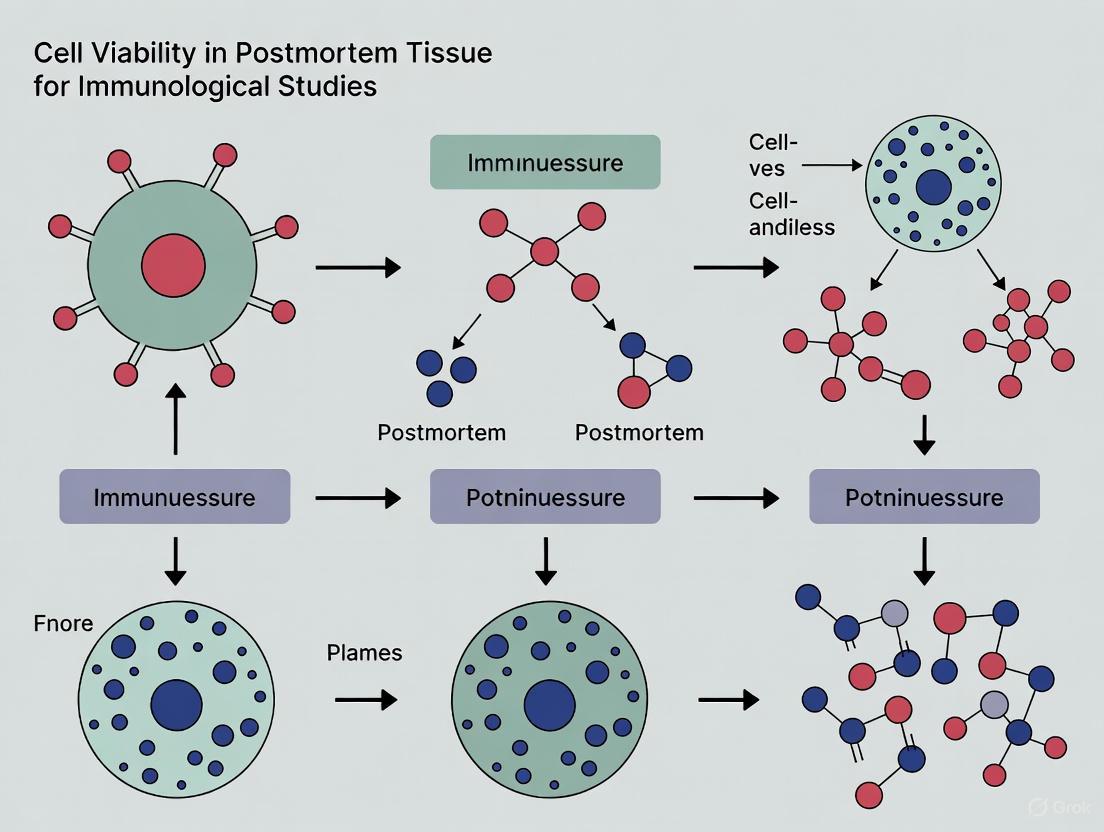
This article provides a comprehensive guide for researchers and drug development professionals on improving cell viability in postmortem tissues for immunological studies.
Optimizing Postmortem Tissue for Immunological Research: A Guide to Maximizing Cell Viability and Data Integrity
Abstract
This article provides a comprehensive guide for researchers and drug development professionals on improving cell viability in postmortem tissues for immunological studies. It covers the foundational science of postmortem cellular changes, established protocols for tissue collection and processing from recent studies, strategies for troubleshooting common pitfalls, and methods for validating the quality of isolated immune cells. By synthesizing current research, this resource aims to empower scientists to reliably utilize postmortem tissue to advance our understanding of human tissue-specific immune responses in infectious diseases, neurodegeneration, and cancer.
The Science of Postmortem Cell Viability: Why It Matters for Immunology
Core Concepts: Why PMI is Critical for Your Research
What is the fundamental relationship between PMI and cellular degradation?
The postmortem interval (PMI) triggers a cascade of biochemical changes that directly impact cellular integrity and molecular signatures. After death, the cessation of oxygen circulation and metabolic processes leads to cellular autolysis, altered enzymatic reactions, and the breakdown of macromolecules. Key degradation processes include:
- Activation of proteolytic systems: The calpain system becomes extensively activated due to a postmortem increase in intracellular calcium, driving widespread proteolysis [1].
- RNA degradation: Messenger RNA undergoes predictable degradation, a process that is tissue-specific, gene-specific, and even genotype-dependent [2].
- Protein degradation: Proteins break down in a regular, predictable fashion, though the rate is influenced by intrinsic and extrinsic factors [3] [1].
How quickly does PMI compromise disease-specific signatures in research?
Experimental evidence demonstrates that even short PMIs can significantly diminish critical disease signatures. A 2025 study on mouse models of tauopathy found that a 3-hour PMI was sufficient to reduce the number of differentially expressed genes between disease model (PS19) and wild-type mice. This indicates that delayed tissue processing can obscure the very molecular changes researchers seek to identify [4].
Table 1: Impact of a 3-Hour PMI on Transcriptomic Analysis in Mouse Brain Tissue
| Research Metric | Effect of 3-Hour PMI | Research Implications |
|---|---|---|
| Basic QC Metrics (genes/cell, reads/cell) | Remained consistent | Standard QC may not detect PMI-induced artifacts |
| Total Nuclei Counts | No significant change | Cell loss may not be the primary concern |
| RNA Integrity Number (RINe) | Remained consistent | RIN alone is insufficient to assess sample quality |
| Disease-Specific Signatures | Diminished | Key pathological differences between groups are lost |
| Pathway Activation | Increased stress, immune response, and DNA repair pathways | Introduction of non-biological, PMI-associated signals |
Practical Workflow: From Tissue Collection to Analysis
What is the critical window for maintaining cell viability and function?
Research on human tissues for tuberculosis studies has demonstrated that immune cells remain viable and functional for up to 14 hours postmortem, with complete postmortem procedures and tissue processing achievable within 8 hours of death. This provides a practical workflow window for researchers [5].
What is the optimal workflow for postmortem tissue processing?
The following diagram illustrates a recommended workflow based on successful implementations in recent research:
Experimental Protocols & Methodologies
Protocol: Single-Nucleus RNA Sequencing from Postmortem Tissue
This protocol is adapted from methodologies used in recent PMI studies [4]:
Reagents Required:
- Qiagen RNeasy Plus Mini Kit (or equivalent)
- Collagenase D (1 mg/mL) and DNase I (1 g/mL) enzyme mixture
- gentleMACS Octo Dissociator with C tubes (Miltenyi Biotech) or similar tissue dissociator
- FicollPaque PLUS media
- ACK lysis buffer
- RPMI media with 20% FBS
- Automated cell counter (e.g., BioRad TC20)
Step-by-Step Procedure:
- Tissue Harvesting and Preservation
- Rapidly extract tissue of interest and bilaterally dissect
- Finely chop entire hemiforebrain (or equivalent tissue mass) into small pieces
- Aliquot into three pre-chilled tubes
- Snap-freeze using dry ice or liquid nitrogen
- Store at -80°C until processing
Nuclei Isolation for snRNA-seq
- Homogenize frozen tissue in lysis buffer
- Filter through a 40μm strainer to remove debris
- Centrifuge at 600 rcf for 5 minutes to obtain a cell pellet
- Resuspend in appropriate buffer for downstream application
RNA Extraction and Quality Control
- Extract total RNA using commercial kit following manufacturer's protocol
- Assess RNA integrity on an Agilent TapeStation using RNA ScreenTape kit to obtain RINe values
- Proceed with library preparation only for samples with RINe >7 (or as required by your specific application)
Protocol: Immune Cell Isolation from Multiple Tissue Types
This protocol is validated for postmortem studies in infectious disease research [5]:
Lung Tissue Processing:
- Cut lung tissue into small pieces using fine scissors and forceps in a sterile petri dish
- Place tissue in gentleMACS C tubes with enzyme mixture (collagenase D + DNase I)
- Load tubes on gentleMACS Octo Dissociator and run using Lung Program 1
- Incubate in a CO2 incubator for 25 minutes at 37°C
- Run using Lung Program 2 on the dissociator
- Filter through 70μm followed by 40μm filters
- Centrifuge at 600 rcf for 5 minutes to obtain cell pellet
- Lyse residual red blood cells using ACK lysis buffer
- Wash cells in RPMI and count using automated cell counter
Lymph Node Processing:
- Clean lymph node tissue by teasing away surrounding fat using forceps and scissors
- Cut into small pieces in a sterile petri dish with RPMI media
- Filter through 70μm followed by 40μm filters
- Centrifuge at 600 rcf for 5 minutes to obtain cell pellet
- Lyse red blood cells using ACK lysis buffer if present
- Wash with RPMI and count using automated cell counter
Spleen Processing:
- Chop spleen sections into small pieces in a sterile petri dish with RPMI media
- Filter through 70μm filter and centrifuge at 600 rcf for 5 minutes
- Reconstitute pellet with RPMI and layer manually onto FicollPaque PLUS media
- Isolate spleen mononuclear cells by density centrifugation
The Scientist's Toolkit: Essential Research Reagents
Table 2: Key Research Reagents for Postmortem Tissue Studies
| Reagent / Material | Primary Function | Application Notes |
|---|---|---|
| RPMI with 20% FBS | Tissue transport and storage medium | Maintains cell viability during transport; prevents drying and degradation [5] |
| Collagenase D + DNase I | Enzymatic tissue dissociation | Breaks down extracellular matrix; DNase prevents cell clumping [5] |
| gentleMACS Octo Dissociator | Automated tissue dissociation | Standardizes dissociation across samples; improves reproducibility [5] |
| FicollPaque PLUS | Density gradient medium | Isolates mononuclear cells from heterogeneous cell mixtures [5] |
| ACK Lysis Buffer | Red blood cell lysis | Removes contaminating RBCs from immune cell preparations [5] |
| Qiagen RNeasy Kits | RNA extraction and purification | Maintains RNA integrity; critical for transcriptomic studies [4] |
| Agilent TapeStation | RNA quality assessment | Provides RINe scores for sample quality control [4] |
Troubleshooting Guide: Addressing Common Experimental Challenges
Problem: High Background Noise in Transcriptomic Data
Potential Cause: PMI-induced stress response pathways activating non-biological signals. Solution:
- Implement rigorous bioinformatic filtering for PMI-associated genes identified in neuronal studies (involved in DNA repair, immune response, and stress pathways) [4].
- Include PMI as a covariate in statistical models to account for variance explained by postmortem interval.
- When possible, stratify analyses by PMI groups (e.g., S-PMI vs L-PMI) [2].
Problem: Poor Cell Viability in Isolated Immune Cells
Potential Cause: Extended PMI or suboptimal tissue processing conditions. Solution:
- Strictly adhere to the <8 hour processing window validated in postmortem studies [5].
- Ensure proper tissue cooling immediately after death - maintain corpses at 4°C when intentional PMI delay is used in experimental models [4].
- Use enzymatic digestion combinations optimized for specific tissue types (e.g., collagenase D for lung tissue).
Problem: Inconsistent Protein Degradation Patterns
Potential Cause: Unaccounted for influencing factors affecting protein stability. Solution:
- Control for temperature variations using accumulated degree days (ADD) in experimental design [3].
- Develop tissue-specific protein degradation timelines, as degradation rates vary by tissue type [1].
- Consider using more stable protein markers for longer PMI estimations, as they are less susceptible to extrinsic factors than nucleic acids [6].
Advanced Applications & Multi-Omics Approaches
How can multi-omics strategies address PMI challenges?
Integrated "forensomics" approaches combining proteomics, metabolomics, and lipidomics allow investigation across a wider range of PMIs [6]. The following diagram illustrates how these approaches complement each other:
Key considerations for multi-omics PMI studies:
- Proteomics: More reliable than DNA/RNA for longer PMIs due to greater resistance to degradation and slower, more reproducible degradation patterns [6].
- Metabolomics/Lipidomics: Ideal for shorter PMIs due to rapid postmortem changes in small molecules [6].
- Transcriptomics: Most susceptible to PMI effects but can provide critical information about cellular states when processed rapidly [4] [2].
Table 3: Analytical Techniques for PMI Studies Across Molecular Domains
| Molecular Domain | Primary Analytical Techniques | Optimal PMI Range | Key Considerations |
|---|---|---|---|
| Transcriptomics | RNA-seq, single-nucleus RNA-seq | Short (0-24 hours) | Rapid processing critical; tissue-specific degradation patterns [2] |
| Proteomics | Mass spectrometry, Western blot, IHC | Short to Long (0-120+ days) | More stable than nucleic acids; useful for extended PMIs [6] [1] |
| Metabolomics | Mass spectrometry, NMR | Short (0-7 days) | Rapid changes after death; sensitive to extraction methods [6] |
| Lipidomics | Mass spectrometry | Short to Medium (0-30 days) | Membrane breakdown provides temporal information [6] |
| Immunophenotyping | Flow cytometry, mIHC, DSP | Short (0-24 hours) | Requires intact cell surfaces/epitopes; viability critical [7] |
Understanding and accurately determining cell viability is a cornerstone of reliable research involving postmortem tissues. In the context of immunological studies, defining viability extends beyond a simple binary classification; it encompasses a spectrum from membrane integrity to metabolic activity. Research has demonstrated that immune cells isolated from postmortem tissues, including the lungs and lymph nodes, can remain viable and functional for up to 14 hours after death [8]. This window of opportunity is critical for advancing our understanding of difficult-to-treat diseases like tuberculosis at the primary site of infection. This technical support center provides targeted troubleshooting guides and FAQs to help researchers navigate the specific challenges of cell viability assessment in postmortem studies, thereby enhancing the quality and reproducibility of their data.
Troubleshooting Common Cell Viability Assays
Users often encounter specific issues when working with common viability assays. The table below outlines frequent problems, their potential causes, and recommended solutions.
Table 1: Troubleshooting Common Cell Viability Assay Problems
| Problem | Possible Cause | Recommended Solution |
|---|---|---|
| Low cell viability in postmortem samples | Extended post-mortem interval (PMI) before processing; improper storage conditions. | Process tissues within 14 hours post-mortem; keep samples at room temperature in appropriate transport media [8]. |
| High background noise in fluorescence microscopy | Autofluorescence from biomaterial particles or cellular debris; photobleaching. | Use flow cytometry for particulate systems; ensure proper storage of reagents in the dark [9] [10]. |
| Precipitate formation in Trypan Blue solution | Exposure to light or temperature fluctuations (refrigeration/freezing). | Protect from light; avoid storing at low temperatures; filter solution if precipitate forms [9]. |
| Low or inconsistent signal in alamarBlue/PrestoBlue assays | Inadequate incubation time; reagent breakdown due to light exposure; pipetting errors. | Increase incubation time with reagent; store reagent in the dark; warm to 37°C and mix thoroughly before use; calibrate pipettes [9]. |
| False positive Annexin V staining | Temporary membrane disruption from cell harvesting (trypsinization/mechanical scraping). | Allow cells to recover for 30 minutes in culture conditions after harvesting before staining [9]. |
| Low signal in Click-iT EdU proliferation assays | Low incorporation of EdU; inadequate cell fixation/permeabilization; presence of metal chelators in buffers. | Optimize EdU incubation time and concentration; ensure cells are adequately fixed and permeabilized; avoid EDTA, EGTA, or citrate in pre-click reaction buffers [9]. |
| Non-specific background in Click-iT assays | Non-covalent dye binding to cellular components. | Increase the number of BSA wash steps; include a no-dye control to verify specificity [9]. |
Frequently Asked Questions (FAQs)
Q1: What is the maximum post-mortem interval (PMI) for obtaining viable immune cells from tissues? A: A study on postmortem tissue for tuberculosis research demonstrated that immune cells can remain viable and functional for up to 14 hours after death. The entire postmortem and tissue processing procedure was feasibly completed within 8 hours [8].
Q2: How does flow cytometry (FCM) compare to fluorescence microscopy (FM) for viability assessment in challenging samples? A: FCM is often superior for particulate systems or when high-throughput, quantitative data is needed. A 2025 study directly comparing the two methods found a strong correlation (r=0.94) but highlighted FCM's superior precision, especially under high cytotoxic stress. FCM can analyze thousands of cells, providing robust statistics and distinguishing between viability states (e.g., early/late apoptosis, necrosis), while FM can be affected by autofluorescence and sampling bias [10].
Q3: What are common sources of error that can affect cell viability assays in general? A: Common errors include inconsistent experimental conditions (temperature, humidity, pH), problems with cell culture handling (overgrowth, undergrowth, contamination), interaction of test compounds with assay reagents, and improper sample handling such as excessive exposure to light or prolonged storage [11].
Q4: My viability results are inconsistent between replicates. What should I check? A: First, ensure consistent cell culture handling to avoid over- or under-growth. Second, verify that your pipettors are properly calibrated and that pipette tips are securely attached. Third, for assays like alamarBlue, make sure the reagent is warmed to 37°C and mixed thoroughly to achieve a homogeneous solution, as precipitation can cause varying concentrations [9] [11].
Q5: Are there specific markers for determining the viability of lesions in decomposed forensic samples? A: In forensic contexts with advanced decomposition, immunohistochemical markers like Glycophorin A (GPA) can be used to assess lesion viability, as it can persist in putrefied tissues. However, its sensitivity decreases beyond 15 days, and other markers like tryptase and CD15 have shown inconclusive results [12].
Key Experimental Protocols & Data
Protocol: Isolation of Viable Immune Cells from Postmortem Lung Tissue
This protocol is adapted from a feasibility study on postmortem tuberculosis research [8].
- Tissue Collection: During the postmortem, collect lung tissue samples and place them in 50ml tubes containing 20% Fetal Bovine Serum (FBS) in RPMI medium.
- Transport: Transport samples to the laboratory at room temperature in a sealed cool box. Processing should ideally be completed within 14 hours of death.
- Tissue Dissociation:
- Cut the lung tissue into small pieces using fine scissors and forceps in a sterile petri dish.
- Place the tissue pieces in a gentleMACS C tube containing an enzyme mixture of Collagenase D (1 mg/ml) and DNase I (1 µg/ml).
- Load the tube onto a gentleMACS Octo Dissociator and run "Lung Program 1."
- Incubate the tube in a CO2 incubator for 25 minutes.
- Run "Lung Program 2" on the dissociator.
- Cell Harvesting:
- Filter the resulting cell suspension through a 70 µm cell strainer, followed by a 40 µm cell strainer.
- Centrifuge the filtered suspension at 600 rcf for 5 minutes to obtain a cell pellet.
- Red Blood Cell Lysis: Lyse the red blood cells in the pellet using ACK lysis buffer. Wash the cells again with RPMI medium.
- Cell Counting: Resuspend the final cell pellet and count using an automated cell counter (e.g., TC20, Bio-Rad).
Quantitative Data Comparison: FM vs. FCM
Table 2: Comparison of Cell Viability Assessment by Fluorescence Microscopy (FM) and Flow Cytometry (FCM) Data adapted from a study on cytotoxicity of Bioglass 45S5 particles on SAOS-2 cells [10].
| Experimental Condition | Viability by FM (%) | Viability by FCM (%) | Key FCM Findings |
|---|---|---|---|
| Control (untreated) | > 97% | > 97% | Predominantly viable cells; low apoptosis/necrosis. |
| < 38 µm BG, 100 mg/mL (3h) | 9% | 0.2% | FCM distinguished early/late apoptosis and necrosis with high precision under high cytotoxic stress. |
| < 38 µm BG, 100 mg/mL (72h) | 10% | 0.7% | FCM provided robust quantification of near-total cell death. |
| Correlation between FM & FCM | r = 0.94, R² = 0.8879, p < 0.0001 | FCM demonstrated superior statistical resolution and ability to identify cell death subpopulations. |
The Scientist's Toolkit: Essential Research Reagents
Table 3: Key Reagent Solutions for Postmortem Cell Viability Research
| Reagent | Function & Application | Key Considerations |
|---|---|---|
| Collagenase D & DNase I | Enzymatic digestion of solid tissues (e.g., lung, spleen) to create single-cell suspensions. | Critical for liberating immune cells from the extracellular matrix for functional assays [8]. |
| Ficoll-Paque PLUS | Density gradient medium for the isolation of Peripheral Blood Mononuclear Cells (PBMCs) from heparinized blood. | Can be used for postmortem blood collected from arteries like the carotid [8]. |
| Trypan Blue | Dye exclusion assay for assessing membrane integrity. Impermeant dye stains non-viable cells blue. | Sensitive to light and temperature; can form precipitates if stored incorrectly [9]. |
| alamarBlue / PrestoBlue | Colorimetric/fluorometric reagents that measure the metabolic activity (reducing capacity) of cells. | Stable for multiple freeze/thaw cycles; must be warmed and mixed before use; store in the dark [9]. |
| Propidium Iodide (PI) | Fluorescent DNA dye that is impermeant to live cells. Used in FM and FCM to identify dead cells. | Often used in combination with other dyes (e.g., Hoechst, Annexin V) for multiparametric analysis [10]. |
| Annexin V-FITC | Binds to phosphatidylserine (PS) exposed on the outer leaflet of the cell membrane during early apoptosis. | Used with a viability dye (e.g., PI) to distinguish apoptotic from necrotic cells. Allow cells to recover after trypsinization to avoid false positives [9]. |
| Click-iT EdU Kits | For detecting cell proliferation by incorporating a nucleoside analog (EdU) into newly synthesized DNA. | Avoid metal chelators in buffers during the click reaction, as they can inhibit the copper catalyst [9]. |
Visualizing Workflows and Signaling Pathways
Postmortem Tissue Processing Workflow
Postmortem Tissue Processing for Viable Cells
Multiparametric Viability Assessment by Flow Cytometry
Cell Population Classification via FCM
The Unique Value of Postmortem Tissue for Studying Tissue-Resident Immune Cells
Frequently Asked Questions (FAQs) and Troubleshooting Guides
FAQ 1: How does the post-mortem interval (PMI) affect immune cell viability and function?
Answer: Evidence from large-scale studies indicates that with rapid processing, post-mortem tissue is a robust source of viable immune cells. Analysis of over 100 brain donors revealed that post-mortem delay (PMD) did not negatively affect viable microglia yield [13]. Furthermore, a key study found that cerebrospinal fluid (CSF) pH, rather than donor age or PMD, was positively correlated with microglial cell yield, suggesting that tissue acidity is a more critical factor to monitor than time alone [13]. This demonstrates that with proper handling, immune cells can remain viable and suitable for analysis even after death.
FAQ 2: Can I use cryopreserved cells from post-mortem tissue for functional immune assays?
Answer: Yes, but the choice of cryopreservation medium is critical. Long-term studies evaluating Peripheral Blood Mononuclear Cells (PBMCs) have identified optimal serum-free, animal-protein-free freezing media that maintain high cell viability and functionality for up to 2 years [14] [15]. Media such as CryoStor CS10 and NutriFreez D10, which contain 10% DMSO, performed comparably to traditional FBS-supplemented media in preserving immune responses, including cytokine secretion and T/B cell function in FluoroSpot assays [14] [15]. Media with DMSO concentrations below 7.5% showed significant viability loss and are not recommended for long-term storage [14].
FAQ 3: How well does the immune cell profile in post-mortem tissue reflect the living state?
Answer: Research shows that while post-mortem tissue is an invaluable resource, there are important molecular differences to consider. A landmark study from the Living Brain Project found significant differences in RNA splicing, intron usage, and protein expression between living and post-mortem brain samples [16]. Specifically, over 61% of proteins were differentially expressed [16]. Therefore, post-mortem tissue excels for studying cell composition and distribution, but data on gene and protein expression should be interpreted with the post-mortem state in mind [16].
Troubleshooting Guide: Common Issues in Post-Mortem Tissue Immune Cell Studies
| Problem | Potential Cause | Recommended Solution |
|---|---|---|
| Low cell yield & viability | Cause: Prolonged tissue acidosis or extended PMI.Evidence: CSF pH is a key indicator; lower pH correlates with lower yield [13]. | • Measure CSF pH when possible; prioritize tissue with pH >6.3 [13].• Minimize the time between death and processing. |
| Poor RNA quality from isolated cells | Cause: Cryopreservation and thawing process.Evidence: Cryogenic storage can negatively impact RNA quality and cell recovery [13]. | • For RNA studies, profile cells immediately after isolation without cryopreservation [13].• If freezing is necessary, use validated media like CryoStor CS10 [14]. |
| Loss of native cell state/function | Cause: In vitro culture of isolated primary cells.Evidence: Microglial gene expression substantially changes due to culture, including loss of key markers [13]. | • Use rapid isolation protocols that minimize culture time [13].• Perform phenotyping and functional assays as soon as possible after isolation. |
| Unreliable gene expression data | Cause: Post-mortem RNA degradation and splicing changes.Evidence: Widespread differences in RNA splicing and transcript abundance exist between living and post-mortem states [16]. | • Use stable housekeeping genes for normalization (e.g., Gapdh, 5S rRNA) [17].• Be cautious when interpreting splicing and expression levels for specific genes. |
Key Experimental Protocols
Protocol 1: Rapid Isolation of Microglia from Human Post-Mortem Brain Tissue
This protocol, adapted from [13], enables the isolation of pure microglia within approximately 4 hours.
- Tissue Collection: At autopsy, dissect white matter (e.g., corpus callosum) and grey matter (e.g., occipital cortex). Place tissue in cold Hibernate A medium and store at 4°C.
- Mechanical Dissociation: Remove meninges. Mechanically dissociate tissue by meshing over a metal sieve or cutting with a scalpel.
- Enzymatic Dissociation: Incubate the tissue suspension with 0.125% trypsin and 33 μg/mL DNase I in Hibernate A medium for 45 minutes at 37°C on a shaking platform. Resuspend the digestion 10 times with a pipette halfway through.
- Density Gradient Centrifugation: Layer the resulting cell suspension onto a density gradient medium (e.g., Lymphoprep) and centrifuge to isolate mononuclear cells.
- CD11b-Positive Selection: Use magnetic beads conjugated with anti-CD11b antibodies to positively select microglia from the mononuclear cell fraction.
- Analysis: The isolated microglia are now ready for immediate phenotyping (e.g., flow cytometry for CD45 and CD11b), RNA extraction, or functional assays [13].
Protocol 2: Cryopreservation of Immune Cells for Long-Term Storage
This protocol is based on the methodology used in [14] and [15] for PBMCs, which is widely applicable.
- Cell Preparation: Isolate immune cells (e.g., PBMCs, microglia) using your standard method. Perform a final wash in a balanced salt solution.
- Resuspension in Freezing Medium: Resuspend the cell pellet in a pre-cooled, serum-free freezing medium such as CryoStor CS10 or NutriFreez D10 at a concentration of 10-12 x 10^6 cells/mL [14] [15].
- Aliquoting: Dispense 1 mL aliquots into pre-cooled cryovials.
- Controlled Freezing: Place cryovials in a CoolCell or similar isopropanol-freezing container and immediately transfer to a -80°C freezer for 1-7 days. This ensures a consistent cooling rate of -1°C/minute.
- Long-Term Storage: After 24 hours, transfer vials to vapor-phase liquid nitrogen for long-term storage (up to 2 years with validated media) [14].
Data Presentation
Table 1: Factors Affecting Microglia Yield from Post-Mortem Human Brain
Table summarizing correlation analysis from over 135 brain donors [13].
| Factor | Correlation with Viable Microglia Yield | Notes |
|---|---|---|
| CSF pH | Positive Correlation | A higher CSF pH at autopsy is associated with a higher cell yield [13]. |
| Post-Mortem Delay (PMD) | No Significant Negative Correlation | Viable cells can be isolated even with an average PMD of ~6-9 hours [13]. |
| Donor Age | No Significant Negative Correlation | Age alone was not a determining factor for cell yield in this dataset [13]. |
| Neurological Diagnosis | Changes attributed to diagnosis | Phenotypic changes (e.g., CD45/CD11b expression) were linked to pathology, not ante-mortem variables [13]. |
Table 2: Performance of Selected Serum-Free Cryopreservation Media Over 2 Years
Data based on a longitudinal study of PBMCs from 11 healthy donors [14] [15].
| Freezing Medium | DMSO Concentration | Viability & Yield | T-cell Functionality | B-cell Functionality | Recommendation |
|---|---|---|---|---|---|
| CryoStor CS10 | 10% | High, comparable to FBS control | Maintained | Maintained | Recommended |
| NutriFreez D10 | 10% | High, comparable to FBS control | Maintained | Maintained | Recommended |
| Bambanker D10 | 10% | High | Diverged from FBS reference | Information not specified | Use with caution for functional T-cell assays |
| CryoStor CS5 | 5% | Significant loss after M0 | Not tested (excluded) | Not tested (excluded) | Not recommended |
The Scientist's Toolkit: Research Reagent Solutions
| Item | Function/Application in Research |
|---|---|
| CryoStor CS10 | A commercially available, serum-free freezing medium containing 10% DMSO. Validated for long-term (2-year) cryopreservation of immune cells while maintaining viability and functionality [14]. |
| Hibernate A Medium | A specialized medium designed to maintain tissue health and viability during transport and dissection of post-mortem brain samples [13]. |
| CD11b Magnetic Beads | Used for the positive selection and isolation of a pure microglia population from a mixed cell suspension of brain mononuclear cells via magnetic-activated cell sorting (MACS) [13]. |
| Lymphoprep | A density gradient medium used for the isolation of mononuclear cells (lymphocytes and monocytes) from whole blood or tissue homogenates [14] [13]. |
| Allprotect Tissue Reagent | A chemical preservative that stabilizes DNA, RNA, and proteins in tissue samples at ambient temperature for up to a week, useful for stabilizing samples before nucleic acid extraction [18]. |
Experimental Workflow and Decision Diagrams
Diagram 1: Post-Mortem Tissue Processing Workflow
Diagram 2: Decision Matrix for Cell Analysis Paths
Troubleshooting Guide: Autolysis and Protein Degradation
Problem: Rapid Postmortem Tissue Degradation
- Potential Cause: High environmental temperature and prolonged postmortem interval accelerate autolysis [19].
- Solution: Minimize postmortem interval (PMI) and store tissues at 4°C immediately after collection. Grey matter (cerebellum, hippocampus) is particularly susceptible and requires priority processing [19].
Problem: Loss of Specific Immunoreactivity
- Potential Cause: Progressive degradation of protein epitopes, such as NeuN and Olig2, during autolysis [19].
- Solution: Optimize fixation delays and employ antigen retrieval methods. For nuclear antigens like NeuN, shorter fixation delays preserve immunoreactivity [19].
Problem: Increased Background Staining in IHC
- Potential Cause: Nonspecific antibody binding due to cellular leakage and membrane disruption, as seen with SMI-32 [19].
- Solution: Use antibodies validated for postmortem tissue and include appropriate controls. Titrate antibodies to optimal concentration [19].
Problem: Impaired Protein Degradation Pathways
- Potential Cause: Dysfunction in autophagic-lysosomal (ALS) or ubiquitin-proteasome (UPS) systems [20].
- Solution: Assess key pathway components; modulate activity with specific inhibitors/activators. For UPS, check ubiquitin conjugation and proteasome function [20].
Problem: Selective Vulnerability of Neural Antigens
- Potential Cause: Different proteins degrade at varying rates; GFAP immunoreactivity may increase initially while others decrease [19].
- Solution: Characterize degradation timeline for target antigens. Use multiple markers for comprehensive assessment [19].
Frequently Asked Questions (FAQs)
What are the first morphological signs of autolysis in neural tissue?
The earliest changes include cytoplasmic hypereosinophilia, nuclear pyknosis, and loss of Nissl substance, particularly in grey matter areas like the cerebellum and hippocampus [19].
How does temperature affect the rate of protein degradation in postmortem tissues?
Higher storage temperatures (22°C and 37°C) significantly accelerate autolytic changes compared to refrigeration at 4°C. For every 5°C increase, the degradation rate approximately doubles [19].
Which protein degradation pathways are most vulnerable in postmortem tissue?
Both major pathways are affected: the ubiquitin-proteasome system (UPS) for short-lived proteins, and the autophagic-lysosomal system (ALS) for larger structures and aggregates [20].
What techniques can help estimate postmortem interval based on tissue degradation?
Semiquantitative scoring of histological features combined with immunohistochemical analysis of marker degradation (e.g., NeuN, GFAP, Olig2) provides reliable PMI estimation [19].
How can I improve extracellular vesicle isolation from degraded postmortem tissue?
Use particle purification chromatography (PPLC) to separate EVs from other extracellular particles. Characterize EVs using nanoparticle tracking analysis for concentration, size distribution, and zeta potential [21].
Quantitative Data on Postmortem Changes
Morphological Scoring of Autolytic Changes in Murine Brain
| Time Postmortem | Storage Temperature | Grey Matter Score | White Matter Score | Key Observations |
|---|---|---|---|---|
| 24 hours | 4°C | 2.5 (Mild) | 2.8 (Minimal) | Early neuronal changes; intact myelin [19] |
| 24 hours | 22°C | 2.0 (Moderate) | 2.5 (Mild) | Cytoplasmic eosinophilia; nuclear pyknosis [19] |
| 120 hours | 4°C | 2.0 (Moderate) | 2.3 (Mild) | Progressive Nissl substance loss [19] |
| 120 hours | 22°C | 1.2 (Severe) | 1.8 (Moderate) | Vacuolization; disrupted architecture [19] |
Immunoreactivity Changes During Postmortem Autolysis
| Cellular Marker | Cell Type | Change Pattern | Degradation Timeline |
|---|---|---|---|
| NeuN | Neurons | Gradual nuclear loss, cytoplasmic diffusion | Significant at 120h, 22°C [19] |
| Olig2 | Oligodendrocytes | Nuclear to cytoplasmic redistribution | Moderate loss by 168h, 22°C [19] |
| GFAP | Astrocytes | Initial increase, then decrease | Peak at 24-120h, 22°C [19] |
| SMI-32 | Neurons | Increased background staining | Progressive over 336h [19] |
| 2F11 | Axons | Gradual decrease | Significant loss by 168h, 22°C [19] |
Detailed Experimental Protocols
Protocol 1: Assessment of Autolytic Changes in Neural Tissue
Purpose: To systematically evaluate temporal and temperature-dependent autolytic changes in brain tissue [19].
Materials:
- Fresh postmortem tissue samples
- Neutral buffered formalin
- Histology supplies: paraffin, microtome, slides
- Staining solutions: H&E, Nissl, Luxol Fast Blue
- Primary antibodies for IHC
Procedure:
- Collect tissue samples immediately after death
- Divide samples into groups for different storage temperatures (4°C, 22°C, 37°C)
- Fix tissues at predetermined time points (24h, 120h, 168h, 336h)
- Process through graded ethanol series and embed in paraffin
- Section at 5μm thickness using microtome
- Perform H&E, Nissl, and LFB staining following standard protocols
- Conduct immunohistochemistry with optimized antigen retrieval
- Evaluate using semiquantitative scoring system (0-3) for autolytic changes
Scoring System:
- Score 3: No changes - normal morphology
- Score 2: Mild - slight cytoplasmic changes
- Score 1: Moderate - nuclear pyknosis, vacuolization
- Score 0: Severe - architectural disruption
Protocol 2: Isolation of Extracellular Vesicles from Postmortem Brain Tissue
Purpose: To isolate and characterize EVs from postmortem brain for omics analysis [21].
Materials:
- Frozen postmortem brain tissue (dlPFC BA9 region)
- Collagenase III solution
- Particle purification chromatography system
- Sephadex G-50 size exclusion columns
- Nanoparticle tracking analyzer
Procedure:
- Finely chop frozen BA9 tissue (119-161mg)
- Digest with collagenase III at 37°C for 2 hours
- Centrifuge sequentially: 500 × g, 2500 × g, 12,000 × g
- Load clarified supernatant on Sephadex G-50 column
- Collect 50 fractions of 200μL each
- Identify EV-containing fractions (fractions 8-21) using UV-Vis profiling
- Pool EV fractions and characterize using NTA for concentration, size, zeta potential
- Validate EV morphology by transmission electron microscopy
Signaling Pathways and Experimental Workflows
Autophagic-Lysosomal Protein Degradation Pathway
Postmortem Tissue Processing Workflow
The Scientist's Toolkit: Research Reagent Solutions
Essential Materials for Postmortem Tissue Studies
| Reagent/Tool | Function | Application Notes |
|---|---|---|
| Neutral Buffered Formalin | Tissue fixation preserves morphology | Optimal for IHC; standard 10% solution [19] |
| Protease Inhibitors | Prevents protein degradation during processing | Essential for preserving labile epitopes [20] |
| Primary Antibodies Panel | Detection of specific cell markers | Validate for postmortem tissue [19] |
| Collagenase III | Tissue digestion for EV isolation | Critical step for brain EV purification [21] |
| Sephadex G-50 | Size exclusion chromatography | Separates EVs from soluble proteins [21] |
| ULK1/AMPK Modulators | Regulates autophagy initiation | Research compounds for pathway analysis [20] |
Proven Protocols: Collection, Processing, and Cultivation of Postmortem Immune Cells
In postmortem tissue immunological studies, the viability and functional integrity of cells are paramount for generating reliable data. Establishing a rapid workflow from tissue collection in the field to processing in the lab is critical to achieving this goal. Research has demonstrated that with a structured protocol, it is entirely feasible to perform a full postmortem and process tissues within an 8-hour window following death, with immune cells remaining viable and functional for up to 14 hours postmortem [8]. This technical support center provides a detailed guide and troubleshooting resources to help researchers implement a robust field-to-lab protocol.
Rapid Tissue Workflow Protocol
The following section outlines the core experimental protocol for collecting and processing tissues within the critical 8-hour window to maximize cell viability for immunological assays.
Detailed Step-by-Step Methodology
The success of postmortem immunological studies hinges on a meticulously timed and executed protocol. The following steps are adapted from a feasibility study conducted in a research setting [8].
Pre-collection Preparation (Before Death/Collection):
- Ethics and Consent: Obtain all necessary ethical approvals from relevant institutional review boards. Employ trained counselors to sensitively secure informed consent from the next-of-kin for tissue donation and access to medical records [8].
- Reagent Preparation: Ensure all transport and processing media are prepared and sterile. The recommended transport medium is 20% Fetal Bovine Serum (FBS) in RPMI medium. Pre-chill sealable cool boxes for room temperature transport [8].
- Equipment Sterilization: Sterilize all dissection tools, containers, and cassettes.
Tissue Collection (Time Goal: 0-2 Hours Postmortem):
- Perform Postmortem: A full postmortem should be conducted by a study pathologist to establish the cause of death and identify tissues of interest.
- Collect Tissues: Excise target tissues (e.g., lung, lymph nodes, spleen). For tuberculosis research, samples should include the infection site (lung), draining lymph nodes (Hilar Lymph Nodes), and systemic sites (spleen, distal lymph nodes, blood) [8].
- Immediate Processing: Place solid tissue samples immediately into 50ml tubes containing the prepared 20% FBS/RPMI transport medium [8].
- Bronchoalveolar Lavage (BAL): If required, perform BAL by washing lungs with phosphate-buffered saline (PBS) and collect the effluent [8].
- Blood Collection: Collect arterial blood (e.g., from the carotid artery) into heparinized tubes to prevent coagulation for peripheral blood mononuclear cell (PBMC) isolation [8].
Secure Transport (Time Goal: 2-3 Hours Postmortem):
- Place all sample tubes securely in a rack inside a sealable cool box.
- Transport the box to the laboratory at room temperature. Do not use ice, as freezing can damage cells [8].
Laboratory Processing (Time Goal: Complete by 8 Hours Postmortem):
- BSL Compliance: All subsequent processing must be performed under appropriate biosafety level (BSL3 for tuberculosis) conditions [8].
- PBMC Isolation:
- Dilute heparinized blood with RPMI media.
- Layer the diluted blood manually onto Ficoll-Paque PLUS.
- Centrifuge to isolate PBMCs via density gradient centrifugation.
- Harvest the buffy coat, lyse red blood cells using ACK lysis buffer, wash the cells, and perform a cell count [8].
- Cell Isolation from Solid Tissues (e.g., Lung):
- Dissection: Cut the tissue into small pieces using fine scissors and forceps in a sterile petri dish.
- Enzymatic Digestion: Place the tissue pieces in gentleMACS C tubes with an enzyme mixture of Collagenase D (1mg/ml) and DNase I (1µg/ml).
- Mechanical Disintegration: Load the tube onto a gentleMACS Octo Dissociator and run the appropriate program (e.g., "Lung Program 1").
- Incubation: Incubate the tubes in a CO2 incubator for 25 minutes.
- Secondary Dissociation: Run the dissociator again (e.g., "Lung Program 2").
- Filtration and Washing: Filter the cell suspension through 70µm and 40µm cell strainers. Centrifuge to obtain a cell pellet.
- Red Blood Cell Lysis: Lyse residual red blood cells using ACK lysis buffer.
- Wash and Count: Wash the cell pellet with RPMI and count using an automated cell counter [8].
Workflow Visualization
The following diagram summarizes the critical path and time-sensitive steps of the rapid collection protocol.
Troubleshooting Guides and FAQs
This section addresses specific, common problems encountered during the implementation of the rapid tissue workflow, with a focus on preserving cell viability and function for immunological studies.
Frequently Asked Questions
Q1: What is the maximum postmortem interval (PMI) for obtaining viable immune cells from tissues?
- A: Studies have shown that immune cells isolated from tissues remain viable and functional for analysis for up to 14 hours after death [8]. However, the 8-hour window outlined in this protocol is recommended to ensure optimal cell health and recovery for sensitive assays like flow cytometry and T-cell functional studies.
Q2: Why is room temperature transport recommended instead of on ice?
- A: Room temperature transport helps to avoid cold-induced shock or damage to cells, which can compromise membrane integrity and reduce viability. The transport medium (20% FBS in RPMI) is designed to nourish and protect cells at ambient temperatures during transit [8].
Q3: My cell viability after tissue dissociation is low. What could be the cause?
- A: Low viability can stem from several factors. First, ensure the postmortem interval has not been excessively exceeded. Second, review the enzymatic digestion step; over-digestion with collagenase/DNase can damage cells. Titrate enzyme concentrations and incubation times. Finally, ensure all mechanical dissociation steps are gentle and use instruments like the gentleMACS Dissociator according to the manufacturer's protocols to minimize physical shear stress [8].
Q4: I am getting high background/noise in my subsequent flow cytometry analysis. How can I reduce this?
- A: High background is often due to dead cells or cellular debris. Always use a viability dye (e.g., Propidium Iodide, 7-AAD, or a fixable viability dye) to gate out dead cells during analysis [22]. For intracellular staining, ensure complete fixation and permeabilization. Additionally, block cells with Bovine Serum Albumin (BSA) or Fc receptor blocking reagent to minimize non-specific antibody binding [22].
Troubleshooting Flowchart
The following decision tree helps diagnose and resolve common issues related to poor cell yield and viability.
Quantitative Feasibility Data
The following table summarizes key quantitative findings from a foundational postmortem tissue study, demonstrating the practicality of the 8-hour window [8].
| Metric | Result | Implication for Workflow |
|---|---|---|
| Feasibility of Postmortem & Processing | Achieved within 8 hours post-death | Validates the core timeline of the field-to-lab protocol. |
| Cell Viability & Function | Maintained up to 14 hours post-death | Provides a buffer for successful analysis even if minor delays occur. |
| Next-of-Kin Consent Rate | Good acceptability reported | Highlights the importance of trained counselors and ethical procedures for study success. |
| Key Tissues Sampled | Lung, Hilar Lymph Nodes, Spleen, Blood | Suggests a model for comprehensive sampling from primary infection sites to systemic immune compartments. |
Comparison of Tissue Processing Techniques
While rapid processing for histology is different from cell isolation, research into alternative methods highlights the trade-offs between speed and quality. The table below compares a routine method with a rapid method using a different clearing agent [23].
| Parameter | Routine Processing (RoPT) | Rapid Processing (RaPT) with Methyl Salicylate |
|---|---|---|
| Total Processing Time | 2-3 days [23] | ~6 hours [23] |
| Clearing Agent | Xylene (toxic) [23] | Methyl Salicylate (less toxic) [23] |
| Quality of Staining | Excellent/Good (Benchmark) | Comparable, statistically not significant difference [23] |
| Gross Tissue Shrinkage | ~23% | ~35% (statistically significant increase) [23] |
| Cellular-Level Shrinkage | Baseline | Not statistically significant difference [23] |
| Cost | Standard | Cost-effective [23] |
The Scientist's Toolkit: Research Reagent Solutions
The following table details key materials and reagents essential for implementing the rapid tissue collection and processing workflow.
| Item | Function / Application |
|---|---|
| RPMI Medium + 20% FBS | Transport and storage medium; provides nutrients and protects cell viability during transit from collection site to lab [8]. |
| Heparin Tubes | Prevents coagulation of blood samples collected for subsequent isolation of Peripheral Blood Mononuclear Cells (PBMCs) [8]. |
| Ficoll-Paque PLUS | Density gradient medium used for the isolation of high-purity PBMCs from whole blood via centrifugation [8]. |
| Collagenase D & DNase I | Enzyme mixture for enzymatic digestion of solid tissues; breaks down collagen and extracellular DNA to release individual cells for analysis [8]. |
| gentleMACS Octo Dissociator | Automated instrument for standardized and gentle mechanical disintegration of tissues, improving cell yield while minimizing damage [8]. |
| ACK Lysis Buffer | Ammonium-Chloride-Potassium lysing buffer; selectively lyses red blood cells in cell suspensions from tissues or blood, leaving white blood cells intact [8]. |
| Fixable Viability Dye | Critical for flow cytometry; allows for the identification and electronic "gating" of dead cells during data analysis, reducing background and false positives [22]. |
| Fc Receptor Blocking Reagent | Reduces non-specific antibody binding in flow cytometry by blocking Fc receptors on immune cells like monocytes, thereby lowering background staining [22]. |
Optimal Preservation Solutions and Transportation Conditions for Maintaining Viability
Frequently Asked Questions (FAQs)
FAQ 1: What are the most effective solutions for preserving tissue at ambient temperature when refrigeration is not available?
Several methods have been validated for ambient temperature preservation, particularly in forensic and mass fatality scenarios. Non-iodized kitchen salt and 40% alcoholic beverages (e.g., vodka) have proven highly effective for preserving DNA integrity for up to 24 months. Salt works by being hygroscopic, which retards bacterial and fungal growth and prevents DNA hydrolysis. Alcohol acts as a germicide. In comparative studies, salt was particularly effective, preserving high-molecular-weight DNA with minimal degradation compared to other methods [18]. For broader tissue preservation maintaining flexibility for dissection, a solution of 60% water, 20% formaldehyde, 10% glycerol, and 10% ethanol has been used successfully, with glycerol counteracting the stiffening effects of formaldehyde [24].
FAQ 2: How does the post-mortem interval (PMI) impact tissue and biomolecule integrity?
The PMI significantly affects tissue morphology and biomolecule stability, but the rate of degradation is highly dependent on temperature and tissue type [17].
- Temperature: Tissues degrade far more rapidly at 26°C than at 4°C. At 4°C, brain tissue morphology can remain largely intact for up to 21 days, while at 26°C, significant cytoplasmic and nuclear destruction can occur within 4 days, leading to complete cell collapse by 21 days [17].
- Tissue Type: Skeletal muscle tissue generally preserves structural and molecular integrity longer than brain tissue under the same conditions. Brain tissue, with its high lipid content and autolytic enzymes, degrades rapidly [17].
- Biomolecules: Research from the UPTIDER program indicates that RNA quality and transcriptional profiles in tumor tissues have a mild impact from increasing PMI, and this impact can be significantly counteracted by rapid cooling of the body or organs [25].
FAQ 3: What are the key steps in a rapid autopsy protocol to maximize sample viability for research?
The UPTIDER breast cancer post-mortem tissue donation program outlines a successful workflow [25]:
- Pre-planning: Create a detailed "tissue donation plan" before the autopsy, listing target metastases and non-malignant tissues based on latest imaging.
- Immediate Transport & Cooling: Upon death, immediately transport the body to the facility and perform whole-body MRI if feasible. Organ cooling is crucial to mitigate PMI effects.
- Ordered Sample Collection:
- Collect all body fluids first (blood, urine, saliva), storing them as supernatant aliquots and cell pellets.
- Examine organs in a patient-specific order, sampling all identified metastases.
- Multiple Storage Conditions: Preserve samples in multiple formats (e.g., frozen, fixed) to enable various downstream analyses (genomics, histology).
FAQ 4: How do I choose the right cell viability assay for my samples?
The choice depends on your specific needs regarding sensitivity, speed, and ease of use. The table below compares common tetrazolium reduction assays [26] [27].
Table 1: Comparison of Common Cell Viability Assays
| Feature | WST-1 Assay | MTT Assay | MTS Assay |
|---|---|---|---|
| Solubilization Step | Not required | Required | Not required |
| Sensitivity | Generally higher | Lower | Intermediate |
| Speed | Rapid | Slower | Rapid |
| Toxicity to Cells | Lower (extracellular reduction) | Higher (intracellular) | Intermediate |
| Key Principle | Reduction by mitochondrial dehydrogenases to water-soluble formazan | Reduction to insoluble formazan crystals, requiring solubilization | Reduction to water-soluble formazan, requires intermediate electron acceptor |
Troubleshooting Guides
Problem: Low DNA/RNA Yield or Quality from Preserved Tissues
- Potential Cause 1: Improper preservation solution for the storage temperature.
- Potential Cause 2: Excessive post-mortem interval before preservation.
- Solution: Minimize the PMI as much as possible. If a delay is inevitable, cool the tissue or body to 4°C immediately. Studies show organ cooling can counteract the negative impact of PMI on RNA quality [25].
- Potential Cause 3: Inadequate tissue processing or dehydration.
- Solution: For tissues preserved in dehydrating agents (e.g., salt, alcohol), adjust your extraction protocol. This may involve increasing the volume of lysis and extraction buffers to ensure the dehydrated tissue is fully treated [18].
Problem: Poor Tissue Morphology for Histological Analysis
- Potential Cause: Rapid autolysis due to high ambient temperature.
- Solution: The most critical factor is temperature control. For time-sensitive morphological studies, store tissues at 4°C and process them as quickly as possible. Research indicates that at 26°C, significant cell destruction in brain tissue is visually confirmed after 14 days, whereas morphology is maintained for 21 days at 4°C [17].
Problem: Low Cell Viability in Single-Cell Suspensions
- Potential Cause 1: Harsh cell dissociation protocols.
- Solution: Optimize enzymatic or mechanical dissociation methods for fragile cell types. Granulocytes, for instance, are particularly sensitive and may require gentler protocols [28].
- Potential Cause 2: Cryopreservation damage.
- Solution: Ensure controlled freezing rates and use appropriate cryoprotectants. Cryopreservation can be harsh, leading to cell death, especially over weeks or months [28].
- Potential Cause 3: Incorrect viability assessment.
- Solution: Use a reliable viability assessment method. While trypan blue staining is common, it can overestimate viability. Consider using automated cell counters for greater accuracy and reproducibility [28].
Experimental Protocols
Protocol 1: Long-Term Ambient Temperature Tissue Preservation for DNA Analysis
This protocol is adapted from a study on preserving bovine muscle tissue for 24 months [18].
- Objective: To preserve tissue samples for DNA-based identification or analysis without refrigeration.
- Materials:
- Non-iodized kitchen salt (e.g., Pagoda brand) OR 40% ethanol by volume (e.g., Absolut vodka)
- Resealable polyethylene bags (for salt) OR 5 mL screw-cap polypropylene tubes (for liquid)
- Tissue sample (~0.3 g)
- Procedure:
- Sample Preparation: Excise ~0.3 g of tissue.
- Salt Preservation: Place the tissue sample in a resealable bag with 15 g of non-iodized salt, ensuring the sample is fully surrounded.
- Alcohol Preservation: Place the tissue sample in a 5 mL tube and submerge it in 5 mL of 40% alcohol.
- Storage: Seal the container and store at ambient temperature (~25°C).
- Recovery: When retrieving the sample for DNA extraction, briefly rinse it with ultrapure water to remove the preservation chemical. Increase the volumes of extraction and lysis buffers during DNA extraction to account for tissue dehydration [18].
Protocol 2: Glycerol-Based Solution for Long-Term Tissue Preservation with Flexibility
This protocol is adapted from a neurosurgical training study that preserved human head and neck specimens for up to 9 years [24].
- Objective: To preserve tissue for long-term anatomical and surgical dissection, maintaining flexibility and natural color.
- Materials:
- Preservation solution: 60% water, 20% formaldehyde, 10% glycerol, 10% ethanol.
- Sealed container large enough to fully submerge the specimen.
- Procedure:
- Initial Fixation (Optional but recommended): Submerge the specimen in a 4% formaldehyde solution for 5-7 days for initial fixation [24].
- Long-Term Preservation: Transfer the specimen to the preservation solution (60% water, 20% formaldehyde, 10% glycerol, 10% ethanol).
- Storage: Store the specimen fully submerged in the solution in a sealed container. Refrigerate at 4°C for very long-term storage to prevent bacterial growth.
- Maintenance: Periodically check the specimen and solution every 5-6 weeks for signs of mold, desiccation, or deterioration.
Data Presentation
Table 2: Quantitative Comparison of Long-Term Ambient Temperature Preservation Methods (24 Months)
| Preservation Method | DNA Yield | DNA Integrity (Gel Electrophoresis) | STR-PCR Amplicon Size (>200 bp) | Key Advantage |
|---|---|---|---|---|
| Non-iodized Kitchen Salt | High | High-molecular-weight DNA clearly visible | Successful at 24 months | Excellent DNA integrity; very low cost and high availability [18] |
| 40% Alcoholic Beverage (Vodka) | Moderate | Low-molecular-weight DNA smears | Successful at 24 months | Readily available in most locations [18] |
| Allprotect Tissue Reagent | Moderate | Low-molecular-weight DNA smears | Successful at 24 months | Commercial, standardized solution [18] |
| Freezing at -20 °C | Moderate | Low-molecular-weight DNA smears | Successful at 24 months | Standard laboratory method (requires continuous power) [18] |
Table 3: Impact of Temperature on Tissue Morphology Over Post-Mortem Interval (PMI)
| Tissue Type | 21 Days at 4°C | 14 Days at 26°C | Key Observation |
|---|---|---|---|
| Brain Cortex | No major cell changes observed [17] | Cytoplasmic and cell destruction visually confirmed [17] | Pyramidal neurons, axons, and oligodendroglia are assessed. |
| Hippocampus | Number of cells decreased, but cell shape remained [17] | Cell nuclei not found; only cell shape observed [17] | CA1, CA2, and CA3 sections show deformation from day 4 at 26°C. |
| Skeletal Muscle | Preserves structural and molecular integrity longer than brain [17] | Slower degradation than brain tissue [17] | More suitable for RNA-based PMI estimation at later time points. |
Visualizations
Diagram 1: Workflow for Post-Mortem Tissue Donation and Preservation
Diagram 2: Decision Workflow for Tissue Preservation Method Selection
The Scientist's Toolkit
Table 4: Essential Reagents and Materials for Tissue Preservation and Viability Analysis
| Item | Function/Application | Key Considerations |
|---|---|---|
| Non-Iodized Salt | Ambient temperature DNA preservation; hygroscopic properties inhibit microbial growth [18]. | Low-cost, highly available. Ideal for forensic and field work. |
| Glycerol | Tissue preservative component; acts as a humectant to maintain tissue pliability and counteract formaldehyde-induced stiffening [24]. | Key for protocols requiring flexible, dissectible tissues. |
| Formaldehyde | Fixative; cross-links proteins to stabilize tissue structure and prevent decay [24]. | Use at lower concentrations (e.g., 4%) to reduce tissue stiffening. |
| Ethanol | Disinfectant and preservative; denatures proteins and dehydrates tissues [24] [18]. | Available as pure reagent or in 40% drinking alcohol for impromptu use. |
| WST-1 Assay Reagent | Cell viability assay; measures metabolic activity via mitochondrial dehydrogenase reduction to water-soluble formazan [27]. | Higher sensitivity than MTT; no solubilization step required. |
| Trypan Blue Solution | Viability staining; differentially stains dead cells with compromised membranes [28]. | Can overestimate viability; light-sensitive. |
| Allprotect Tissue Reagent | Commercial chemical preservative for DNA, RNA, and protein stabilization at ambient temperature [18]. | Follow manufacturer's guidelines for storage duration. |
| Cryopreservation Agents (e.g., DMSO) | Protect cells from ice crystal formation during freezing for long-term storage [28]. | Can be toxic to cells; optimize concentration and freezing rate. |
This guide provides detailed protocols and troubleshooting advice for tissue dissociation, a critical first step in single-cell analysis for immunological studies. Optimizing this process is essential for improving cell viability and data quality, particularly when working with challenging samples like postmortem tissues [29] [30]. The following sections address common challenges and provide standardized methods to ensure high yields of viable, functional cells for downstream applications.
Troubleshooting Guides and FAQs
Frequently Asked Questions
Q1: What is the most critical factor to control for maintaining cell viability in postmortem tissues? The postmortem interval (PMI) is paramount. For optimal results, process tissues within 5 hours postmortem when kept at room temperature. Samples collected within this window show significantly better cell viability, faster culture confluence, and higher mitotic indices compared to those collected later [31].
Q2: My dissociation process is resulting in low cell viability. What should I check? Low viability often stems from over-digestion with enzymes or excessive mechanical force [29] [32]. First, optimize enzyme concentration and incubation time for your specific tissue type. Second, ensure you are using gentle pipetting techniques and include protective agents like Bovine Serum Albumin (BSA) or fetal bovine serum (FBS) in your buffers to minimize shear stress [32].
Q3: How do I choose between mechanical, enzymatic, and chemical dissociation methods?
- Mechanical Dissociation: Best for loosely associated tissues (e.g., spleen, lymph nodes, bone marrow). It is fast but can yield inconsistent results and risk cell damage [33].
- Enzymatic Dissociation: Ideal for compact, fibrous tissues (e.g., liver, solid tumors). It is efficient but requires optimization of enzyme type and concentration to avoid damaging cell surface markers [29] [33].
- Chemical Dissociation: A gentle method suitable for delicate cells (e.g., embryonic cells). It preserves surface proteins but can be a slower process [33]. Most protocols use a combined approach for balance [32] [33].
Q4: I am getting low cell yields from my tissue sample. What can I do? Low yield can result from under-digestion or incomplete tissue disruption [32]. Ensure the tissue is finely minced to 1–2 mm³ pieces to increase surface area for enzyme action. For fibrous tissues, consider using a combination of enzymes (e.g., collagenase for matrix and DNase to reduce viscosity from released DNA) [29] [32].
Q5: My cell suspension has too many clumps. How can I fix this? Filter the digested tissue suspension through a cell strainer (e.g., 70µm or 40µm) to remove undigested clumps and debris [32]. For persistent clumping, briefly increase the mechanical agitation during the process or optimize the enzyme cocktail and incubation time.
Troubleshooting Common Issues
| Problem | Potential Cause | Solution |
|---|---|---|
| Low Cell Viability | Over-digestion with enzymes; excessive mechanical force; prolonged postmortem interval [29] [31] [32]. | Shorten enzyme incubation time; use gentler mechanical techniques; reduce Postmortem Interval (PMI) where possible [31] [32]. |
| Low Cell Yield | Incomplete tissue dissociation; insufficient enzyme activity; under-mincing of tissue [32]. | Optimize enzyme type and concentration; mince tissue finely (1-2 mm³); validate protocol for specific tissue [32] [33]. |
| High Debris Content | Over-digestion causing cell lysis; inadequate filtration; failure to wash cells post-digestion [32] [33]. | Centrifuge and wash cells with buffer post-digestion; use a cell strainer during filtration; avoid over-digestion [32]. |
| Loss of Surface Markers | Harsh enzymes damaging epitopes; prolonged exposure to enzymatic activity [29] [33]. | Use gentler enzymes or chemical dissociation; titrate enzyme concentration and reduce incubation time [33]. |
Standard Operating Procedure
Protocol: Combined Enzymatic and Mechanical Dissociation for Solid Tissues
This protocol is adapted from established methods for processing human solid tumors and tissues, designed to maximize viability and yield for immunological studies [30] [32].
Materials and Reagents
- Transport Medium: Phosphate-buffered saline (PBS) or appropriate experimental medium [30]
- Dissection Tools: Sterile scalpels, forceps, scissors
- Enzyme Solution: Prepare a cocktail relevant to your tissue. Common options include:
- Cell Culture Medium: e.g., DMEM or RPMI, supplemented with antibiotics and possibly FBS/BSA [30] [32]
- Cell Strainer: 70 µm and/or 40 µm nylon mesh
- Centrifuge Tubes
- Trypan Blue solution for viability counting [31] [32]
Step-by-Step Procedure
Sample Collection and Transport:
Tissue Mincing (Mechanical Disruption):
Enzymatic Digestion:
- Transfer the minced tissue into a tube containing a pre-warmed (37°C) enzyme solution. Use enough volume to fully immerse the tissue fragments.
- Incubate at 37°C with gentle agitation (e.g., on a shaker or rotator) for a optimized duration. This can range from 30 minutes to several hours, depending on the tissue type and enzyme strength. Avoid over-digesting [29] [32].
- Monitor the digestion visually. The solution should become cloudy, and tissue fragments should appear to disperse.
Termination of Digestion and Mechanical Disruption:
- Neutralize the enzyme activity by adding a large volume of complete cell culture medium (containing FBS) or a specific enzyme inhibitor.
- For further dissociation, gently pipet the tissue solution up and down several times using a serological pipette. For more robust tissues, passing the suspension through a syringe (without a needle or with a wide-bore needle) can help break up remaining clumps [32] [33].
Filtration and Washing:
- Pass the cell suspension through a 70 µm cell strainer into a new tube to remove undigested fragments and large clumps. For a cleaner suspension, filter again through a 40 µm strainer.
- Centrifuge the filtered suspension at a low speed (e.g., 200–300 x g for 5 minutes) [31].
- Carefully discard the supernatant and resuspend the cell pellet in fresh culture medium or buffer. Repeat the wash step if needed.
Cell Counting and Viability Assessment:
- Mix a small aliquot of the cell suspension with Trypan Blue stain (1:1 dilution) [31].
- Load the mixture into a hemocytometer and count the cells under a microscope.
- Viable cells will exclude the dye and appear clear, while non-viable cells will take up the dye and appear blue. Calculate viability and cell concentration [31] [32].
Experimental Data and Comparison
Table 1. Efficacy of Different Tissue Dissociation Methods
This table summarizes data from recent studies comparing the performance of various dissociation technologies across different tissue types, highlighting key metrics like viability and yield [29].
| Technology / Method | Tissue Type | Dissociation Efficacy / Cell Yield | Cell Viability | Processing Time |
|---|---|---|---|---|
| Combined Chemical-Mechanical | Bovine Liver Tissue | 92% ± 8% (vs. 37%-42% enzymatic only) | >90% | 15 min |
| Optimized Enzymatic/Mechanical | Human Breast Cancer | 2.4 × 10⁶ viable cells (per sample) | 83.5% ± 4.4% | >1 h |
| Mixed Modal Microfluidic | Mouse Kidney | ~20,000 epithelial cells/mg tissue | ~95% (epithelial) | 1-60 min |
| Electric Field Facilitated | Human Glioblastoma | >5x higher than traditional methods | ~80% | 5 min |
| Ultrasound + Enzymatic | Bovine Liver | 72% ± 10% | 91%–98% (cell line) | 30 min |
| Enzyme-Free Acoustic | Mouse Heart | 3.6 × 10⁴ live cells/mg | 36.7% | Not Specified |
Table 2. Impact of Postmortem Interval on Cell Culture Success
Data derived from postmortem skin tissue of neotropical deer demonstrates the critical window for processing samples to achieve viable cell cultures [31].
| Postmortem Interval (Hours) | Cell Viability | Time to Reach Confluence | Mitotic Index (Metaphases/Cell) |
|---|---|---|---|
| 0 h | >60% | Standard (Reference) | Best |
| Up to 5 h | >60% | Approximately Twice as Long as 0h | Good |
| 6 h to 11 h | >60% | More Than Twice as Long as 0h | Reduced |
The Scientist's Toolkit: Research Reagent Solutions
Table 3. Essential Reagents for Tissue Dissociation
| Reagent | Function / Description | Common Examples / Notes |
|---|---|---|
| Collagenase | Digests collagen, a major component of the extracellular matrix, in connective tissues [32] [33]. | Often used for liver, tumor, and other fibrous tissues [32]. |
| Trypsin | A proteolytic enzyme that cleaves peptide bonds, helping to dissociate cell clusters [32] [33]. | Commonly used in combination with other enzymes; time-sensitive as it can damage cells [29]. |
| Dispase | Proteolytic enzyme that cleaves fibronectin and collagen IV, useful for separating cells from the matrix [29] [32]. | Often used in epithelial cell isolation [29]. |
| DNase I | Digests free DNA released from lysed cells, reducing suspension viscosity and preventing re-clumping [32]. | Frequently added to enzyme cocktails to improve yield and filterability [32]. |
| EDTA | A chelating agent that binds calcium, disrupting cell-cell adhesions [29]. | Often used in combination with trypsin to enhance dissociation [29]. |
| Trypan Blue | A vital dye used to distinguish between live and dead cells for viability counting [31] [32]. | Dead cells with compromised membranes take up the blue dye; live cells exclude it [31]. |
Workflow and Process Diagrams
Tissue Dissociation Workflow
Troubleshooting Decision Tree
Successful Cryopreservation Techniques for Postmortem Skin and Organ Fragments
Troubleshooting Guides
Low Post-Thaw Cell Viability
Problem: Cells show poor viability after thawing cryopreserved tissue samples.
| Potential Cause | Diagnostic Signs | Solution |
|---|---|---|
| Poor initial cell health | Low viability measurements even before freezing | Ensure tissue is collected within the optimal postmortem window (≤5 hours at 20-25°C) and processed quickly [31] [34]. |
| Suboptimal freezing rate | Ice crystal formation, membrane damage | Use a controlled-rate freezer or specialized freezing container (e.g., CoolCell) to maintain a cooling rate of -1°C per minute [35] [36]. |
| Improper handling during thaw | Osmotic shock, further membrane damage | Thaw samples rapidly in a 37°C water bath, then immediately dilute out cryoprotectants drop-wise with warm culture medium [35] [36]. |
| Cryoprotectant toxicity | High cell death despite good initial viability | For sensitive cells, consider reducing DMSO concentration (e.g., to 2%) and supplementing with 1% methylcellulose, or explore alternative cryoprotectants like PVP [35]. |
Microbial Contamination in Postmortem Samples
Problem: Cultures from postmortem tissues show bacterial or fungal contamination.
| Potential Cause | Diagnostic Signs | Solution |
|---|---|---|
| Non-sterile collection environment | Cloudy medium, rapid microbial growth | Immerse tissue fragments immediately upon collection in transport medium supplemented with high-dose antibiotics (e.g., 500 mg/L gentamicin) and antifungals (e.g., 20 mg/L amphotericin B) [31] [34]. |
| Prolonged postmortem interval | Increased contamination risk with time | Prioritize tissue collection within the first few hours postmortem. The optimal window for high cell viability and lower contamination risk is up to 5 hours at room temperature [31]. |
| Ineffective sample processing | Contamination introduced during lab work | Perform all post-thaw processing under a laminar flow hood. Include multiple sterility checks and washing cycles with antibiotic solutions during processing [37]. |
Cracking and Structural Damage in Tissues
Problem: Larger tissue samples or organs exhibit cracks or fractures after cryopreservation.
| Potential Cause | Diagnostic Signs | Solution |
|---|---|---|
| Thermal stress during cooling | Visible cracks in the tissue matrix | For vitrification, use solutions with a higher glass transition temperature (Tg), which significantly reduces cracking risk [38]. |
| Rapid temperature change | Fractures, especially in larger samples | Employ computer-controlled rate freezers to ensure a gradual, precise cooling process and minimize thermal shock [39]. |
Frequently Asked Questions (FAQs)
Q1: What is the maximum postmortem interval for collecting viable skin cells for culture?
A: Cell viability decreases over time, but successful fibroblast cultures can be established from skin fragments collected up to 11 hours postmortem when carcasses are kept at room temperature (20-25°C). However, for optimal results—including the best viability, shortest time to culture confluence, and highest mitotic index—samples should be collected within 5 hours of death [31] [34].
Q2: We are cryopreserving iPSCs and they are not forming colonies after thawing. What should we check?
A: Low recovery of iPSCs often relates to pre-freeze cell health and handling. Key points to check [35]:
- Cell Condition: Feed cells daily before cryopreservation and freeze at 70-80% confluence (typically 2-4 days after passage). Avoid overgrown cultures.
- Harvesting: Gently dissociate cells to avoid large clusters that cryoprotectants cannot penetrate. Centrifuge gently at 200-300 x g.
- Freezing Density: Use a density of 1-2 x 10^6 cells/mL.
- Thawing and Plating: Thaw rapidly and plate at a high density (2x10^5 - 1x10^6 viable cells per well of a 6-well plate) on Matrigel-coated plates.
Q3: Can I refreeze cells that were thawed for use?
A: It is strongly discouraged. Cryopreservation is a traumatic process for cells. Refreezing previously thawed lymphocytes resulted in significantly lower viability compared to cells thawed only once. It is best to plan experiments to use all thawed cells or to freeze multiple aliquots at the optimal density to avoid the need for refreezing [35].
Q4: What are the alternatives to DMSO, especially for cell therapy applications?
A: While DMSO is the most common intracellular cryoprotectant, alternatives exist [35]:
- Polyvinylpyrrolidone (PVP): A large molecule that does not penetrate the cell (extracellular cryoprotectant). Recovery of human adipose-derived stem cells cryopreserved in 10% PVP was comparable to those frozen with DMSO.
- Methylcellulose: Can be used alone or combined with significantly reduced concentrations of DMSO (as low as 2%).
- Commercial Serums: "Cell Banker" series solutions are also available as intracellular alternatives.
Q5: How can I improve the viability of my hepatocytes after cryopreservation?
A: For hepatocytes, where 10% DMSO is a common minimum, you can improve viability by [35]:
- Supplementing the standard freezing medium with oligosaccharides.
- Using specialized, commercially available xeno-free cryopreservation solutions like STEM-CELLBANKER, which contains 10% DMSO, glucose, and dextrose, and has shown higher post-thaw viability compared to some standard DMSO-based protocols.
Experimental Protocols & Data
Key Experimental Data on Postmortem Intervals
The following table summarizes quantitative findings on the effect of postmortem interval on the success of skin tissue cryopreservation and culture, based on a study with Neotropical deer [31] [34].
Table: Impact of Postmortem Collection Time on Skin Tissue Cryopreservation
| Postmortem Interval (Hours) | Cell Viability (%) | Time to Culture Confluence (Relative to 0h) | Mitotic Index (Metaphases/Cell) |
|---|---|---|---|
| 0 (Control) | >80% (Baseline) | Baseline (Reference) | Optimal |
| 1 - 4 | >70% | Slight increase | High |
| 5 | ~70% | Moderate increase | Acceptable Threshold |
| 6 - 10 | 60% - 70% | Significant increase | Reduced |
| 11 | >60% (Minimum) | ~2x longer than 0h | Lowest (but cultures still possible) |
Detailed Protocol: Cryopreservation of Postmortem Skin Tissue
This protocol is adapted from methods used to successfully establish fibroblast cultures from Neotropical deer skin, balancing field constraints with laboratory requirements [31] [34].
Workflow: Cryopreservation of Postmortem Skin Tissue
Materials & Reagents:
- Skin Sample: Collected aseptically from inner thigh, ~2 cm².
- Transport Medium: McCoy's medium supplemented with 500 mg/L gentamicin and 20 mg/L amphotericin B.
- Digestion Solution: Collagenase I (1 mg/mL) in high-glucose DMEM.
- Viability Stain: 0.4% Trypan Blue solution.
- Freezing Medium: McCoy's medium supplemented with 20% inactivated equine serum, 6.25% DMSO, 100 mg/mL PVP, and antibiotics.
Step-by-Step Procedure:
Sample Collection & Transport:
- Collect skin fragment within the shortest possible postmortem interval (ideally ≤5 hours).
- Immediately immerse the sample in chilled transport medium with high-dose antibiotics.
- Transfer to the laboratory promptly.
Cell Dissociation & Viability Check:
- In a laminar flow hood, wash the tissue fragment with PBS.
- Mechanically mince the tissue into small pieces (~1 mm³) using sterile scalpels or scissors.
- Digest the minced tissue with 3 mL of collagenase solution in a 5% CO₂ incubator at 37°C for 30 minutes, agitating manually every 5 minutes.
- Centrifuge the digest at 200 × g for 5 minutes. Discard the supernatant.
- Resuspend the cell pellet in 4.5 mL of DMEM.
- Mix 50 µL of cell suspension with 50 µL of 0.4% Trypan Blue. Count viable (unstained) and non-viable (blue) cells using a Neubauer chamber.
- Calculate viability:
(Viable Cells / Total Cells) × 100.
Cryopreservation:
- Prepare the freezing medium fresh on the day of the experiment.
- Resuspend the cell pellet in freezing medium at a recommended density (e.g., 1-2 × 10^6 cells/mL) and aliquot into cryovials.
- For slow freezing: Place cryovials in a controlled-rate freezer or an isopropanol-based freezing container (e.g., CoolCell).
- Freeze at a rate of -1°C per minute by placing the container upright in a -80°C freezer for 24 hours.
- Finally, transfer the vials to long-term storage in liquid nitrogen (preferably in the vapor phase to prevent contamination) [35] [39].
The Scientist's Toolkit
Table: Essential Reagents and Materials for Postmortem Tissue Cryopreservation
| Item | Function / Application | Example / Note |
|---|---|---|
| Cryoprotective Agents (CPAs) | Protect cells from ice crystal formation and osmotic shock during freeze-thaw. | DMSO (Intracellular): Most common, used at ~10% [35] [36]. Glycerol: Used at 10% for tissues like skin [37]. PVP & Sucrose (Extracellular): Stabilize cell membranes and reduce required DMSO concentration [35] [34]. |
| Cryopreservation Media | Provides a supportive environment for cells during freezing. | Commercial Formulations: CryoStor (serum-free, protein-free) [36]. Lab-Prepared: Base medium (e.g., McCoy's) + Serum (e.g., 20% equine) + CPA + Antibiotics [34]. |
| Specialized Equipment | Ensures controlled and reproducible freezing. | Controlled-Rate Freezer: Gold standard for consistent cooling at -1°C/min [36]. Cooling Containers (e.g., CoolCell): Low-cost alternative for approximate rate control in a -80°C freezer [35]. Vapor Phase Liquid Nitrogen Tank: For long-term, contamination-free storage below -140°C [35] [39]. |
| Viability Assessment Tools | Quantifies the health and number of cells before and after cryopreservation. | Trypan Blue Stain: Differentiates live (unstained) from dead (blue) cells [31] [34]. Automated Cell Counter: Provides faster, more consistent viability counts. |
In the context of postmortem tissue immunological studies, accurately determining cell viability is paramount. The viability of cells isolated from such tissues directly impacts the reliability of subsequent immunological assays, including flow cytometry, cytokine profiling, and functional T-cell tests. A non-viable cell can nonspecifically bind antibodies, release inflammatory damage-associated molecular patterns (DAMPs), and skew data interpretation, potentially leading to false conclusions about immune cell populations and their functional states. This technical support document compares three common viability assays—Trypan Blue Exclusion, ATP assays, and Protease Activity assays—providing troubleshooting guidance to help researchers select and optimize the most appropriate method for their specific experimental workflow involving postmortem tissues.
The table below summarizes the core principles, key parameters, and ideal use cases for the three assays to aid in initial method selection.
Table 1: Core Characteristics of Cell Viability Assays
| Feature | Trypan Blue Exclusion Assay | ATP Assay | Protease Activity Assay (e.g., Dead-Cell Protease) |
|---|---|---|---|
| Measured Principle | Cell membrane integrity [40] [41] | Presence of cellular ATP, indicating metabolic activity [41] | Activity of proteases released from dead cells [41] |
| Viability Endpoint | Dye exclusion by intact membrane [42] | Luminescence signal proportional to ATP concentration [41] | Fluorescence signal proportional to dead-cell number [41] |
| Assay Workflow | Endpoint, manual or automated cell counting [40] | Endpoint, add-mix-measure luminescence [41] | Endpoint or real-time, add-mix-measure fluorescence [41] |
| Typical Duration | 5-10 minutes [40] | Minutes to hours (incubation-dependent) | Minutes to hours (incubation-dependent) [41] |
| Information Depth | Binary (Live/Dead based on membrane integrity) | Population-level metabolic health | Population-level dead cell proportion [41] |
| Optimal Use Case | Quick, simple cell count and viability check prior to experiments [40] | High-throughput screening of compound toxicity; metabolic viability assessment [41] | High-throughput cytotoxicity screening in co-cultures or where background signals are an issue [41] |
Detailed Methodologies
Trypan Blue Exclusion Assay
Principle: This method relies on the fact that viable cells possess intact cell membranes that exclude certain dyes, whereas dead cells with compromised membranes take up the dye, staining their cytoplasm blue [40] [42].
- Materials:
- Step-by-Step Protocol:
- Prepare Cell Suspension: Centrifuge an aliquot of your cell suspension (e.g., from dissociated postmortem tissue) at 100 × g for 5 minutes. Discard the supernatant [40].
- Resuspend: Resuspend the cell pellet in 1 mL of PBS or serum-free medium. Using a serum-free solution is critical because serum proteins can stain with trypan blue and produce misleading results [40].
- Stain Cells: Mix 1 part of 0.4% trypan blue with 1 part cell suspension (a 1:1 dilution). Gently pipette to mix. Incubate the mixture for approximately 3 minutes at room temperature [40].
- Critical Note: Cells should be counted within 3 to 5 minutes of mixing. Longer incubation times can lead to cell death and reduced viability counts [40].
- Load Hemacytometer: Apply a drop of the trypan blue/cell mixture to a hemacytometer [40].
- Count Cells: Place the hemacytometer on a microscope stage and focus. Separately count the unstained (viable) and stained (nonviable) cells [40].
- Calculate Viability:
- Total Viable Cells per mL = (Number of viable cells counted) × Dilution Factor (2) × Hemacytometer Conversion Factor (10^4).
- Total Cells per mL = (Total number of viable and nonviable cells counted) × Dilution Factor (2) × Hemacytometer Conversion Factor (10^4).
- Percentage Viability = (Total Viable Cells per mL / Total Cells per mL) × 100 [40].
ATP Assay
Principle: This assay measures the concentration of ATP, the primary energy currency of metabolically active cells. The amount of ATP is directly proportional to the number of viable cells present. In a typical reaction, luciferase enzyme uses ATP to catalyze the oxidation of luciferin, producing light (luminescence) [41] [43].
- Materials:
- Commercially available ATP assay kit (e.g., CellTiter-Glo)
- White-walled, opaque-bottom microplates
- Luminescence plate reader
- Cell culture medium and test compounds
- Step-by-Step Protocol:
- Plate Cells: Seed cells (e.g., immune cells isolated from tissue) into a microplate in a suitable culture medium. Include a negative control (medium only) and a positive control for cytotoxicity.
- Apply Treatment: Apply the experimental treatment or vehicle control for the desired duration.
- Equilibrate: Equilibrate the plate and the ATP assay reagent to room temperature for approximately 30 minutes.
- Add Reagent: Add a volume of ATP assay reagent equal to the volume of cell culture medium present in each well.
- Mix and Incubate: Mix the contents thoroughly on an orbital shaker for 2-5 minutes to induce cell lysis and stabilize the luminescent signal.
- Measure Signal: Record the luminescence using a plate reader. The signal is proportional to the amount of ATP present, which is directly proportional to the number of viable cells.
Protease Activity Assay
Principle: This method measures the activity of dead-cell proteases, which are released into the culture medium upon loss of membrane integrity. These proprietary proteases are stable and distinct from intracellular proteases. A fluorogenic peptide substrate is added to the medium, which is cleaved by the dead-cell proteases, producing a fluorescent signal [41].
- Materials:
- Commercial dead-cell protease assay kit (e.g., CytoTox-Fluor)
- Clear or opaque-bottom microplates
- Fluorescence plate reader
- Step-by-Step Protocol:
- Plate and Treat Cells: Seed and treat cells in a microplate as described for the ATP assay.
- Prepare Assay Buffer: Prepare the fluorogenic substrate according to the manufacturer's instructions.
- Add Reagent: Add a small aliquot of the assay reagent to each well containing the cell culture supernatant. Alternatively, the reagent can be added directly to the wells containing cells in culture medium for a homogeneous "add-mix-measure" format.
- Incubate: Incubate the plate for 30-60 minutes at room temperature, protected from light.
- Measure Signal: Record the fluorescence using a plate reader with the appropriate excitation/emission filters (e.g., ~485 nm/520 nm). The fluorescence intensity is proportional to the number of dead cells in the culture.
Troubleshooting Guides & FAQs
Frequently Encountered Problems and Solutions
Table 2: Troubleshooting Common Assay Issues
| Problem | Potential Cause | Solution |
|---|---|---|
| Low viability across all samples (Trypan Blue) | Mechanical shear during tissue dissociation. | Optimize dissociation protocol (enzymatic concentration, time, mechanical agitation). Filter cells through a mesh to remove clumps instead of vigorous pipetting [40]. |
| High background fluorescence (Protease Assay) | Serum in culture medium contains proteases. | Use serum-free assay buffer for the measurement step or use a kit specifically designed to be compatible with serum [41]. |
| Inconsistent luminescence readings (ATP Assay) | Uneven cell lysis or signal instability. | Ensure thorough mixing after reagent addition. Read the plate promptly after the signal stabilization period defined in the protocol [41]. |
| Viability overestimation (Trypan Blue) | Prolonged dye incubation leading to uptake by viable cells [41]. | Strictly adhere to the 3-5 minute incubation time. Do not leave cells in trypan blue for extended periods [40]. |
| Underestimation of dead cells (Trypan Blue) | Short incubation time; dye aggregates cannot dissociate and penetrate all dead cells [41]. | Ensure consistent incubation time and mixing. For more accuracy, consider a fluorescent DNA-binding dye method (e.g., propidium iodide) with flow cytometry [40] [42]. |
| Discrepancy between viability methods | Different methods measure different physiological states (membrane integrity vs. metabolism) [41]. | This is expected. Choose the method that best aligns with your biological endpoint. Correlate with a functional assay if possible. |
Frequently Asked Questions (FAQs)
Q1: My postmortem tissue yields a low number of cells. Which assay is most suitable for small sample sizes? A1: ATP and protease activity assays are typically more sensitive and require fewer cells than manual Trypan Blue counting. They can be miniaturized for 96-well or even 384-well plate formats, making them ideal for limited cell numbers.
Q2: Why do I get different viability percentages when I use Trypan Blue versus an ATP assay on the same sample? A2: This is a common observation. Trypan Blue assesses only membrane integrity. A cell can have an intact membrane but be metabolically inactive (e.g., early in the death process or stressed), leading to a higher viability readout with Trypan Blue than with the ATP assay. Conversely, the ATP assay measures metabolic activity, a more direct indicator of a functional, viable cell [41].
Q3: I am working with a co-culture system. How can I specifically measure the viability of only one cell type? A3: Standard viability assays like Trypan Blue, ATP, and general protease assays cannot distinguish between different cell types in a co-culture. For target-specific viability, you would need to use a flow cytometry-based approach. Cells can be pre-loaded with a fluorescent marker (e.g., CFSE) or stained with a cell surface antibody after viability staining (e.g., with propidium iodide) to gate on the specific population of interest [42].
Q4: For high-throughput screening of drug compounds on immune cells from postmortem tissue, which assay is recommended? A4: Both ATP and dead-cell protease activity assays are excellent for high-throughput screening (HTS). They are homogeneous (add-mix-measure), automatable, and provide robust, quantitative data in a plate-reader format. The ATP assay is a popular "gold standard" for HTS as it directly measures metabolic health [41].
The Scientist's Toolkit: Essential Research Reagents
Table 3: Key Reagents for Cell Viability Assessment
| Reagent / Kit | Function | Key Considerations |
|---|---|---|
| Trypan Blue (0.4%) | Visual discrimination of dead cells via membrane integrity [40]. | Cost-effective; quick; subjective; low throughput. Use serum-free conditions [40]. |
| CellTiter-Glo Luminescent Kit | Quantifies ATP content as a measure of metabolically active cells [41]. | Highly sensitive; homogeneous protocol; excellent for HTS. Signal reflects metabolic status. |
| CytoTox-Fluor Cytotoxicity Assay | Measures dead-cell protease activity released from compromised cells [41]. | Selective for dead cells; homogeneous; can be multiplexed with other assays. |
| Propidium Iodide (PI) | Fluorescent DNA dye excluded by live cells; used in flow cytometry and microscopy [42]. | More objective than Trypan Blue; requires flow cytometer or fluorescent microscope. |
| Annexin V Binding Kit | Detects phosphatidylserine externalization on the cell surface, a marker for early apoptosis [41]. | Used with a viability dye (like PI) to distinguish early apoptotic (Annexin V+/PI-) from late apoptotic/necrotic (Annexin V+/PI+) cells [44]. |
Method Selection and Workflow Integration
Selecting the right viability assay depends on your experimental goals, sample type, and available resources. The following decision pathway can help guide your choice.
Integrating a robust viability assessment is a critical first step in ensuring the quality of cells derived from postmortem tissues for immunological research. By understanding the strengths and limitations of each method and applying the troubleshooting guidelines provided, researchers can generate more reliable and interpretable data, ultimately strengthening the conclusions of their studies on the immune landscape in human health and disease.
Maximizing Recovery: Troubleshooting Common Pitfalls and Optimizing Yield
FAQs on PMI Fundamentals and Impact on Research
Q1: What is the "5-Hour Benchmark" for PMI, and why is it critical for tissue viability? The "5-Hour Benchmark" is an operational target for the postmortem interval (PMI)—the time between death and sample preservation—to maintain high-quality molecular and cellular data. While not an absolute cutoff, research shows that RNA quality, transcriptional profiles, and immunohistochemical staining begin to degrade with increasing PMI. One study demonstrated that with organ cooling, these metrics could be maintained for up to 14 hours, but the 5-hour mark is often a practical target for initiating stabilization procedures to counteract degradation processes that start immediately after death [45] [2].
Q2: How does PMI specifically affect immunological studies? The immune system is highly dynamic, and PMI-induced changes can alter the very signals researchers seek to measure. Prolonged PMI can lead to:
- Altered Gene Expression: Systematic analyses reveal that mRNA degradation is gene-specific and tissue-specific. For instance, genes like
VEGFAshow increased expression in whole blood with longer PMI, whileSrp72in skeletal muscle decreases [2]. - Reduced Cell Viability: Cell viability for immunological assays, such as those using tissue-resident immune cells, is time-sensitive. One protocol successfully maintained cell viability for up to 14 hours by employing rapid collection and organ cooling [45].
- Compromised Protein Antigens: The sensitivity of immunohistochemical markers (e.g., Glycophorin A) for determining lesion viability decreases significantly beyond 15 days postmortem, highlighting the broader issue of biomolecule stability [12].
Q3: Are some organs more susceptible to PMI-related degradation than others? Yes, susceptibility is highly tissue-specific. Analysis of the Genotype-Tissue Expression (GTEx) data found that central nervous system (CNS) tissues like the cerebellum and cerebral cortex, as well as the lung, show relative resistance to postmortem mRNA degradation. In contrast, tissues from the digestive tract (e.g., esophageal mucosa) are highly sensitive, potentially due to higher tissue turnover rates or the presence of digestive enzymes [2].
Troubleshooting Guides for Common PMI Challenges
Problem: Inconsistent RNA Integrity Between Samples
Potential Cause: Variable and prolonged PMI, combined with a lack of temperature control, accelerates RNA degradation in a tissue-specific manner [2].
Solutions:
- Standardize and Minimize PMI: Implement a rapid autopsy protocol with a target PMI benchmark (e.g., 5-8 hours) [45].
- Implement Organ Cooling: Immediately after extraction, place organs on ice or in a chilled solution. Data shows organ cooling can counteract the negative impact of time on RNA quality [45].
- Prioritize Tissues by Sensitivity: Process the most sensitive tissues (e.g., digestive organs) first during a multi-organ collection.
Problem: Low Cell Viability forEx VivoImmune Cell Cultures
Potential Cause: Immune cells, particularly in metabolically active tissues, undergo rapid apoptosis and functional decline postmortem.
Solutions:
- Pre-Defined Tissue Donation Plan: Create a detailed sampling plan before the autopsy, specifying the location and processing strategy for each sample to minimize decision-making delays [45].
- Use Specialized Digestion Media: Employ a validated workflow involving immediate tissue chopping and digestion with collagenase III to isolate viable cells for culture [21].
- Validate with Functional Assays: Confirm viability and function through assays like microglial migration or T-cell activation, as performed in studies using postmortem-derived cells [21] [46].
Problem: Unreliable Protein/Antigen Detection via Immunohistochemistry
Potential Cause: Protein degradation, epitope masking, or non-specific binding increases with PMI, especially in decomposed tissues [12].
Solutions:
- Select Robust Markers: Choose markers known for their persistence, such as Glycophorin A (GPA), which can be detected in putrefied tissues for up to 6 months, though sensitivity declines after 15 days [12].
- Optimize Antigen Retrieval: For longer PMI samples, more aggressive antigen retrieval techniques may be required to expose epitopes.
- Include Positive Controls: Always use internal positive controls from tissues with known short PMI to validate staining protocols.
Data and Protocols
Organ-Specific PMI Sensitivity and Key Molecular Changes
The table below summarizes quantitative findings on how different organs and molecules are affected by PMI.
| Organ/System | Key Metric/Signal Affected | Impact of Prolonged PMI | Data Source/Reference |
|---|---|---|---|
| Esophageal Mucosa | mRNA Integrity | High sensitivity; 2,763 genes showed significant expression changes [2]. | GTEx Data Analysis [2] |
| Whole Blood | Specific Gene Expression (e.g., VEGFA) | Expression shows a significant upward trend with longer PMI [2]. | GTEx Data Analysis [2] |
| Skeletal Muscle | Specific Gene Expression (e.g., Srp72) | Expression shows a significant downward trend with longer PMI [2]. | GTEx Data Analysis [2] |
| Brain (dlPFC) | Extracellular Vesicle (EV) Cargo | Successful isolation and multiomics (lipidomics/proteomics) of EVs possible even with PMI of 13-39 hours [21]. | Substance Use Disorder Study [21] |
| General Tumor Tissue | RNA Quality & Cell Viability | RNA quality and IHC staining maintained well with organ cooling; cell viability upheld for up to 14 hours postmortem [45]. | UPTIDER Program [45] |
Experimental Protocol: Rapid Autopsy for Immunological Research
This protocol is adapted from the UPTIDER post-mortem tissue donation program [45].
Objective: To collect multiple metastatic and healthy tissue samples with high cell viability and molecular integrity for immunological assays.
Workflow Overview:
Key Steps:
- Pre-Mortem Planning:
- Obtain informed consent from patients with advanced disease.
- Prepare a detailed "tissue donation plan" mapping all samples to be collected, using latest imaging for guidance.
- Secure 24/7 logistics for immediate transport of the body to the processing facility upon death.
Immediate Postmortem Procedures (Initiate within 5-hour benchmark):
- Perform a whole-body MRI if feasible to guide sampling.
- Fluid Collection: Collect body fluids (blood, urine, CSF) first and process into supernatant and cell pellets.
- Organ Sampling: Examine organs in a pre-determined order. For each metastasis and selected healthy tissue:
- Sub-divide: Finely chop tissue samples.
- Cool: Immediately place samples on ice or in chilled preservation media.
- Multiple Preservation: Allocate tissue to different preservation methods (e.g., flash-freezing in liquid nitrogen for RNA/protein, RNAlater for genomics, formalin-fixation for IHC, and culture media for cell isolation).
Storage and Quality Control:
- Store samples at -80°C or in liquid nitrogen vapor.
- Perform RNA integrity number (RIN) analysis and basic IHC on sample aliquots to confirm quality.
The Scientist's Toolkit: Essential Research Reagents
| Reagent/Material | Function in PMI-Sensitive Research | Application Example |
|---|---|---|
| Collagenase III | Digests the extracellular matrix to liberate viable cells from solid tissue. | Used to digest finely chopped brain or adipose tissue to isolate functional macrophages or other immune cells for ex vivo culture [21] [46]. |
| Size Exclusion Chromatography (SEC) Columns | Isolates and purifies extracellular vesicles (EVs) from other bioactive components in tissue homogenates. | Critical for preparing clean EV fractions from postmortem brain tissue for downstream lipidomic and proteomic analysis [21]. |
| RNA Stabilization Reagents (e.g., RNAlater) | Penetrates tissues to stabilize and protect RNA molecules from degradation. | Used to immerse tissue fragments immediately after collection during an autopsy to preserve transcriptomic profiles [45] [2]. |
| Multi-color Flow Cytometry Panels | Enables high-throughput, multiparametric immunophenotyping of single-cell suspensions. | Allows comprehensive analysis of immune cell subsets (T cells, NK cells, B cells) and their activation states from peripheral blood or dissociated tissues, even after PMI [46]. |
| Cryopreservation Media | Protects cells during the freezing and thawing process, maintaining viability for long-term storage. | Essential for banking immune cells or tumor cells isolated from postmortem tissues for future functional assays [45]. |
Frequently Asked Questions (FAQs)
Q1: What is the main trade-off between refrigerated and ambient temperature transport for cell samples?
The core trade-off involves balancing logistics against potential cell type-specific damage. Refrigerated transport (typically 2-8°C) is a widespread standard that slows general metabolic activity and is often used for short-term storage and transport of whole blood and some cell suspensions [47]. However, for certain cell types, particularly those used in advanced therapies, this approach carries risks. Cryopreservation, which requires ultra-low temperatures, is the current gold standard for long-term storage and long-distance shipping but can cause significant logistical challenges, financial strain, cell dysfunction, and reduced viability for many clinically relevant cells [48]. Ambient transport is emerging as a viable alternative to circumvent cryopreservation-induced damage, offering a more cost-effective and accessible option, provided that key elements like nutrient supply, oxygen, and structural support (e.g., via hydrogel encapsulation) are optimized [48].
Q2: How does prolonged refrigerated storage affect PBMC isolation from whole blood?
Storing whole blood at 2-8°C for more than 24 hours prior to PBMC isolation can significantly impact the quality of your sample. The main effect is the intensification of granulocyte contamination in the PBMC fraction [47]. Prolonged cold storage activates granulocytes, altering their buoyancy profile. This leads to inefficient separation during density gradient centrifugation, allowing granulocytes to contaminate the PBMC layer [47]. This contamination is problematic because it can lead to:
- A decline in T-cell proliferation following stimulation [47].
- Loss of cell integrity and number [47].
- Reduced variability in Regulatory T-cell populations [47]. For best results, PBMCs should be isolated from blood drawn less than 24 hours prior [47].
Q3: Can chondrocyte viability from postmortem tissue inform temperature control strategies?
Yes, absolutely. Chondrocytes (cartilage cells) are uniquely resilient in postmortem tissue due to their avascular and hypoxic natural microenvironment [49]. Research shows that a high fraction of viable chondrocytes can be recovered from knee cartilage even after more than two months postmortem when bodies are stored in refrigerated conditions (8 ± 2°C) [49]. This demonstrates that certain cell types can retain remarkable viability under controlled, cool (but not frozen) conditions for extended periods. This insight is valuable for planning experiments involving postmortem tissue where immediate processing is not feasible, highlighting the importance of tight temperature control for specific tissues.
Q4: What common lab reagents can tolerate accidental exposure to ambient temperature?
While storage guidelines should always be followed, some common reagents are more robust than others. If left out briefly, the following reagents often retain functionality, though they should always be validated after such an event [50]:
- Antibodies: Many can remain stable at room temperature for a week or more without a significant decrease in effectiveness [50].
- Restriction Enzymes: A group of 23 unmodified restriction enzymes was shown to remain active at ambient temperatures for one to three weeks [50].
- DNA: When stored in a dry environment with appropriate buffers (e.g., containing EDTA and Tris), DNA is stable for short-term at room temperature [50].
- PCR-amplified samples: These can often sit at ambient temperature for weeks without noticeable degradation [50].
- BSA (Bovine Serum Albumin): Dried BSA powders and stock solutions are generally sturdy for a few days at room temperature [50].
Troubleshooting Guide: Cell Recovery Issues
Problem: Low Cell Viability or Poor Recovery After Shipment
| Symptom | Possible Cause | Recommended Solution |
|---|---|---|
| Low viability in fresh whole blood/PBMC samples | Exposure to extreme temperatures during transit (freezing or excessive heat) [47] | Use a validated temperature-controlled shipper (2-8°C or 15-25°C) to prevent exposure to seasonal extremes [47]. |
| High granulocyte contamination in PBMC fraction | Prolonged refrigerated (>24 hours) storage of whole blood before isolation [47] | Isolate PBMCs from blood drawn <24 hours old. If not possible, deplete granulocytes using CD15/CD16 MicroBeads (note: this reduces recovery) [47]. |
| Poor cell separation during density gradient | Use of cold blood, buffers, or reagents [47] | Allow all materials (blood, buffers, density gradient medium) to equilibrate to room temperature (15-25°C) before starting the procedure [47]. |
| Clumping and low cell recovery in thawed cryopreserved cells | Intracellular ice crystal formation during freezing; cytotoxic effects of DMSO [48] [47] | Use a controlled-rate freezer or isopropanol freezing chamber to achieve a cooling rate of ~ -1°C/min [47]. Work efficiently to minimize DMSO exposure time pre-freeze and post-thaw [48]. |
| Logistical hurdles and cell damage from cryopreservation | Hazards and complexities of cold chain (dry ice/liquid nitrogen) shipping [48] | Investigate ambient transport platforms that use hydrogel encapsulation to provide nutrient, oxygen, and structural support, avoiding cryopreservation entirely [48]. |
Experimental Protocols for Cell Viability Assessment
Protocol 1: Chondrocyte Viability Assay from Postmortem Tissue
This protocol is adapted from a forensic study investigating chondrocyte longevity for postmortem interval (PMI) determination [49].
1. Sample Collection:
- Source: Harvest osteochondral cylinders (e.g., 6 x 20 mm) from the lateral condyle of the femur using a biopsy needle [49].
- Storage: Immediately store samples in DMEM supplemented with antibiotics (e.g., vancomycin, gentamicin) and an antifungal (e.g., amphotericin B) [49].
2. Preparation of Single-Cell Suspension:
- Tissue Dissection: Separate cartilage from the underlying bone on a Petri dish lid and mince into ~1 mm³ pieces with a scalpel [49].
- Enzymatic Digestion: Incubate cartilage pieces in a collagenase solution (e.g., 1 mg/mL collagenase in DMEM) at 37°C for 12-18 hours [49].
- Filtration and Washing: Pass the digested content through a 40 μm cell strainer. Centrifuge the filtrate at 580 x g for 5 minutes, discard the supernatant, and resuspend the cell pellet in an appropriate buffer like DPBS [49].
3. Viability Analysis (Two Methods):
- Flow Cytometry (Recommended): Stain the cell suspension with a nuclear dye (e.g., RedDot1) and a viability dye (e.g., 7-AAD). Analyze using a flow cytometer. Live cells are RedDot1 positive and 7-AAD negative [49].
- Automated Cell Viability Analyzer: Use a system like the Vi-Cell XR, which automatically mixes the cell suspension with Trypan Blue and performs an analysis. Viable cells will exclude the dye [49].
Protocol 2: Isolation and Functional Assessment of Extracellular Vesicles from Postmortem Brain Tissue
This protocol is crucial for immunological studies, as extracellular vesicles (EVs) carry molecular signatures of neuroinflammatory states [51].
1. Tissue Preparation:
- Obtain postmortem brain tissue (e.g., dorsolateral prefrontal cortex, BA9) and finely chop frozen chunks [51].
- Digest the tissue with collagenase III [51].
2. EV Isolation via Particle Purification Chromatography (PPLC):
- Centrifuge the digested sample sequentially (e.g., 500 x g, 2500 x g, 12,000 x g) to remove cells and debris [51].
- Load the clarified supernatant onto a Sephadex G-50 size exclusion column [51].
- Collect fractions and use a 3D UV-Vis profile to identify EV-containing fractions (e.g., fractions 8-21) [51].
- Pool the EV fractions and store at -80°C [51].
3. EV Characterization and Functional Assay:
- Nanoparticle Tracking Analysis (NTA): Determine EV concentration, size distribution, and zeta potential using an instrument like ZetaView [51].
- Western Blot: Confirm the presence of EV markers (e.g., CD9, CD63, CD81) [51].
- Functional Uptake & Glial Activation:
- Isolate primary microglia and astrocytes from rodent brains or use cell lines.
- Treat the glial cells with the isolated brain EVs.
- Assess EV uptake via fluorescent labeling and microscopy.
- Measure the expression of neuroinflammatory markers (e.g., complement factors C3 and C4) in glial cells using qPCR. SUD-derived EVs, for instance, have been shown to upregulate C3 and C4 in astrocytes and enhance microglial migration [51].
Visual Experimental Workflows
Diagram 1: Postmortem Chondrocyte Viability Workflow
Diagram 2: Extracellular Vesicle Isolation & Analysis
The Scientist's Toolkit: Key Research Reagent Solutions
| Item | Function in Context | Key Consideration |
|---|---|---|
| Validated Temperature Shipper | Maintains a consistent temperature (2-8°C or 15-25°C) during sample transport to prevent viability loss from extremes [47]. | Critical for preserving cell integrity during overnight or international shipping. |
| Density Gradient Medium (e.g., Ficoll) | Separates PBMCs from other blood components (RBCs, granulocytes) based on buoyant density [47]. | All components must be at room temperature for effective separation [47]. |
| Cryoprotectant (e.g., DMSO) | Reduces intracellular ice crystal formation and osmotic stress during cryopreservation [48] [47]. | Cytotoxic; minimize exposure time pre-freeze and post-thaw. Use at <10% concentration [48] [47]. |
| Controlled-Rate Freezer / Mr. Frosty | Achieves an optimal cooling rate of ~ -1°C/minute to maximize post-thaw cell viability [47]. | Essential for reproducible cryopreservation outcomes. |
| Collagenase Enzymes | Digests the extracellular matrix of tissues (cartilage, brain) to release single cells for analysis [49] [51]. | Concentration and incubation time must be optimized for each tissue type. |
| Viability Dyes (e.g., 7-AAD, Trypan Blue) | Distinguishes live cells (which exclude the dye) from dead cells (which take it up) [49]. | 7-AAD is used with flow cytometry; Trypan Blue is used with brightfield microscopy or automated counters. |
| Hydrogel Encapsulation Systems | Provides 3D structural support, nutrients, and oxygen for ambient temperature transport of sensitive cells [48]. | Emerging technology to avoid the pitfalls of cryopreservation and cold chain logistics [48]. |
Troubleshooting Guides
Brain Tissue
Problem: High levels of myelin debris and reduced nuclei integrity in postmortem frozen brain tissue.
- Cause & Solution: Postmortem primate brain tissue, with its high proportion of white matter, often presents significant myelin debris that hinders nuclei isolation and flow cytometry. Optimize your nuclei isolation protocol by incorporating enhanced filtration and additional wash steps. Adjust lysis conditions and use a standardized nuclei isolation kit with these modifications to improve yield and integrity from small (~25mg) starting amounts of frozen tissue [52].
- Experimental Protocol (Optimized Nuclei Isolation from Frozen Cerebral Cortex):
- Tissue Dissection: On dry ice, microdissect frozen brain slabs using a 2 mm biopsy punch to obtain 10-25 mg tissue samples [52].
- Nuclei Isolation: Use a commercial nuclei isolation kit as a base. Centrifuge tissue homogenate at 500 rcf for 5 minutes at 4°C to pellet nuclei. Key optimizations include [52]:
- Modified Lysis: Carefully optimize the duration of lysis to prevent under- or over-lysis.
- Enhanced Filtration: Pass the nuclei suspension through a Flowmi cell strainer to remove large debris.
- Additional Washes: Perform extra wash steps with buffer to reduce myelin contamination.
- Quantification & Staining: Quantify nuclei suspension using an automated cell counter with viability stains. For neuronal enrichment, incubate with primary antibody (e.g., anti-NeuN) for 30 minutes on ice, wash, then incubate with a fluorescent-conjugated secondary antibody for 15 minutes in the dark on ice [52].
- Fluorescent-Activated Nuclei Sorting (FANS): Use DAPI to gate intact nuclei. Sort neuronal (NeuN+) and non-neuronal (NeuN-) populations for downstream applications [52].
Problem: Strong autofluorescence in aged postmortem brain tissue, obscuring specific immunofluorescence signal.
- Cause & Solution: Lipofuscin accumulation, common in aged and fixed brain tissue, causes autofluorescence. Quench this autofluorescence by treating tissue sections with TrueBlack Lipofuscin Autofluorescence Quencher ( diluted 1:20 in 70% ethanol) for 30-60 seconds before mounting [53]. Alternatively, choose fluorescent markers emitting in near-infrared wavelengths (e.g., Alexa Fluor 647, 680), which are less affected by most tissue autofluorescence [54].
General IHC/IF Staining Issues
Problem: Little to no specific staining across multiple tissue types.
- Cause & Solution:
- Antigen Masking: For formalin-fixed paraffin-embedded (FFPE) tissue, epitope masking by cross-links is a common cause. Perform heat-induced epitope retrieval (HIER). Using a microwave oven or pressure cooker for retrieval is superior to a water bath. Optimize the buffer (e.g., sodium citrate, pH 6.0) and heating duration [55].
- Antibody Potency: Ensure primary antibody concentration is correct and the antibody has not degraded due to improper storage or freeze-thaw cycles. Always include a known positive control tissue in your experiment [54] [55].
- Detection System Sensitivity: Polymer-based detection systems generally offer higher sensitivity than avidin-biotin-based systems. Switch to a polymer-based system if signal is weak [55].
Problem: High background staining across the tissue section.
- Cause & Solution:
- Endogenous Enzymes: Quench endogenous peroxidase activity by incubating sections in 3% H₂O₂ in methanol or water for 10 minutes before primary antibody incubation [54] [55].
- Nonspecific Antibody Binding: Increase the concentration of normal serum from the secondary antibody host species in your blocking buffer (up to 10%). Titrate down the concentration of the primary and/or secondary antibody [54].
- Inadequate Washing: Ensure thorough washing (e.g., 3 times for 5 minutes with TBST) after primary and secondary antibody incubations [55].
Frequently Asked Questions (FAQs)
Q: What are the critical control samples needed for a tissue-based immunology study? A: Always run these controls with your experimental samples [55]:
- Positive Control: Tissue known to express your target antigen, verifying your antibody and protocol are working.
- Negative Control (No Primary Antibody): Incubate with secondary antibody only, identifying background from non-specific secondary antibody binding.
- Isotype Control: Helps assess non-specific binding of the primary antibody.
- Biological Controls: Tissues from different disease states or knockout models, crucial for interpreting experimental results.
Q: How does tissue origin impact immune cell composition and function? A: Tissue site has a dominant role. For example [56]:
- Lymphoid Organs (Spleen, Lymph Nodes): Enriched for naive T cells, germinal center B cells, and plasmablasts.
- Mucosal Sites (Jejunum, Lung): Dominated by tissue-resident memory T cells (TRM) and macrophages with site-specific functional signatures.
- Bone Marrow and Blood: Enriched for TEMRA cells and mature CD56dimCD16+ NK cells. Protocols for cell isolation and analysis must be adapted to account for these fundamental differences in cellular makeup and state.
Q: My nuclei yield from frozen brain tissue is low. What can I do? A: Focus on tissue dissociation and handling [52]:
- Starting Amount: Ensure you are using an adequate, measured amount of tissue (~25-50 mg).
- Lysis Conditions: Systematically test and optimize lysis time for your specific tissue type and postmortem interval.
- Mechanical Stress: Avoid excessive mechanical force during homogenization, which can rupture nuclei.
- Centrifugation Speed: Re-visit centrifugation steps; excessive speed can pellet and discard nuclei along with debris.
Data Presentation
Table 1: Key Considerations for Tissue-Specific Protocol Optimization
| Tissue | Major Challenge | Recommended Solution | Key Reagents / Equipment |
|---|---|---|---|
| Brain | High myelin debris; Autofluorescence [52] [53] | Enhanced filtration & wash steps; Autofluorescence quencher [52] [53] | Nuclei Isolation Kit; Flowmi strainer; TrueBlack |
| Lung / Mucosal | Complex immune cell populations; Tissue-specific macrophage signatures [56] | Multimodal single-cell profiling (CITE-seq); Comprehensive panel for myeloid/lymphoid subsets [56] | Antibody panels for CITE-seq; MrVI for data integration [56] |
| Lymph Node | Enriched for naive & germinal center B cells; Delicate structure [56] | Gentle mechanical dissociation; Validation of B cell subset markers [56] | Enzymatic digestion cocktail (e.g., collagenase/DNase); Anti-CD27, CD38, SDC1 antibodies [56] |
| Skin | Not fully detailed in results | General recommendation: Firm extracellular matrix; potential for high background | General recommendation: Optimized enzymatic blend (collagenase, dispase); extended blocking |
Table 2: Research Reagent Solutions for Tissue Analysis
| Item | Function / Application | Example |
|---|---|---|
| TrueBlack Lipofuscin Autofluorescence Quencher | Reduces lipofuscin autofluorescence in aged and postmortem tissue sections for clearer immunofluorescence imaging [53]. | Biotium #23007 [53] |
| SignalStain Boost IHC Detection Reagent | A polymer-based detection system that offers enhanced sensitivity and lower background compared to avidin-biotin systems for IHC [55]. | Cell Signaling Technology #8114 / #8125 [55] |
| Chromium Nuclei Isolation Kit | Isolates intact nuclei from frozen tissue for single-cell sequencing or FANS. Requires optimization for challenging brain tissue [52]. | 10X Genomics #1000494 [52] |
| NeuN (Fox-3) Antibody | A classic neuronal nuclear marker used to identify and separate neuronal from non-neuronal nuclei via FANS for cell-type-specific epigenomics [52]. | |
| Sodium Citrate Buffer (pH 6.0) | A common antigen retrieval buffer used to unmask epitopes in FFPE tissue sections by reversing formaldehyde-induced crosslinks [54] [55]. |
Experimental Workflow Visualization
In postmortem tissue immunological studies, the validity of research outcomes critically depends on the quality of the isolated cells and the absence of confounding variables. Contamination and improper antibiotic use represent significant threats to data integrity, potentially altering cell viability, function, and experimental results. This technical support center provides targeted guidance to help researchers maintain sample purity and ensure the reliability of their findings.
Troubleshooting Guides
Common Contamination Issues and Solutions
Problem 1: Unexplained Antimicrobial Activity in Conditioned Media
- Symptoms: Conditioned medium (CM) from cell cultures shows bacteriostatic effects against antibiotic-sensitive bacterial strains but not against resistant strains, misleading researchers into attributing antimicrobial properties to cell-secreted factors or extracellular vesicles (EVs) [57].
- Root Cause: Antibiotic carry-over from tissue culture processes. Residual antibiotics, such as penicillin, can be retained and released from tissue culture plastic surfaces into the CM, even when antibiotics are absent during the final conditioning step [57].
- Solutions:
- Implement Pre-Washing: Before collecting CM for experiments, pre-wash cell monolayers with sterile PBS. Research shows even a single pre-wash can effectively remove the antimicrobial activity caused by residual antibiotics [57].
- Minimize Antibiotic Concentrations: Use the lowest effective concentration of antibiotics in the basal medium during cell maintenance phases to reduce the reservoir available for carry-over [57].
- Optimize Cell Confluency: Collect CM at higher cellular confluency. Studies indicate that as confluency increases (e.g., from 70% to >100%), the antimicrobial activity in collected CM decreases due to less "uncovered" plastic surface area retaining antibiotics [57].
Problem 2: Microbial Contamination of Parenteral Medicines or Reagents
- Symptoms: Microbial growth in prepared solutions, or unexplained experimental results linked to contaminated reagents.
- Root Cause: Incorrect aseptic techniques during preparation and administration, such as multiple use of vials and syringes, or lack of proper disinfection [58].
- Solutions:
- Single-Use Items: Never reuse syringes, needles, or single-dose vials. Use manufactured prefilled syringes when possible [58].
- Enhanced Disinfection: Rigorously clean working surfaces with 70% isopropyl alcohol or ethanol. Consistently disinfect ampoule necks, rubber septa, and intravenous ports with alcohol swabs before opening or accessing [58].
- Hand Hygiene: Perform proper hand washing and disinfection before all procedures [58].
- Environmental Control: Prepare critical solutions in a pharmacy department or certified laminar flow hood instead of open clinical environments, as contamination rates are significantly lower in controlled pharmaceutical environments (0.5% vs. 3.7%) [58].
Problem 3: Compromised Sterile Field
- Symptoms: Breach of sterility during a sensitive procedure, potentially contaminating samples or cell cultures.
- Root Cause: Touching sterile instruments with non-sterile gloves, leaning over a sterile tray, dropping instruments below waist level, or improper removal of personal protective equipment (PPE) [59].
- Solutions:
- Immediate Action: If a sterile field is contaminated, immediately inform all team members. Discard all affected gloves, instruments, and supplies. The entire field is no longer usable [59].
- Create a New Field: Set up a fresh sterile area with new, sterile materials. Do not attempt to salvage contaminated items [59].
- Adhere to Contact Guidelines: Wear sterile gear and ensure contact occurs only between sterile items. Handle instruments by their sterile parts only, using forceps instead of hands when possible [59].
Quantitative Data on Contamination Risks
Table 1: Impact of Preparation Environment on Contamination Rates
| Preparation Environment | Contamination Rate (Individual Doses) | Contamination Rate (Batch Doses) |
|---|---|---|
| Clinical (Ward) Setting | 3.7% | - |
| Pharmaceutical Environment | 0.5% | 0% |
Source: Austin and Elia [58]
Table 2: Efficacy of Aseptic Technique in Reducing Infections
| Infection Type | Reduction Achieved with Aseptic Technique |
|---|---|
| Surgical Site Infections (SSIs) | Reduced from 20% to 6% [59] |
| Healthcare-Associated Infections (HCAIs) in NICU | Reduced by 50% [59] |
Source: Learntastic [59]
Frequently Asked Questions (FAQs)
Q1: What is the core difference between "clean" and "aseptic" technique?
- A: A clean technique focuses on reducing the overall number of germs using procedures that are free from dirt, stains, and debris. An aseptic technique is a stricter standard designed to eliminate pathogens (germs that cause infection) completely through the use of sterile equipment, barriers, and environmental controls [60]. In practice, clean techniques may be sufficient for some procedures, but aseptic techniques are essential for surgeries, inserting central lines, and other situations requiring the highest level of infection prevention [59] [60].
Q2: How can antibiotic use in tissue culture confound my research on extracellular vesicles (EVs)?
- A: Including antibiotics like penicillin-streptomycin in routine cell culture maintenance can lead to residual antibiotics being retained on tissue culture plastic. These can then leach into the conditioned medium used for EV isolation. This residual antibiotic activity can be mistakenly interpreted as an intrinsic antimicrobial property of the EVs or other cell-secreted factors, leading to false conclusions. This effect is particularly pronounced when the conditioned medium is tested against antibiotic-sensitive bacteria [57].
Q3: What are the most critical steps for creating and maintaining a sterile field?
- A: The critical steps are [59]:
- Pre-Procedure Preparation: Perform hand hygiene, gather all sterile instruments, and don appropriate PPE (sterile gloves, gown, mask, cap).
- Sterile Field Creation: Open sterile packages carefully, place tools on a sterile drape or tray, and avoid reaching over or leaning across the field.
- Environmental Control: Limit movement and talking in the room to minimize airborne particles and keep doors closed.
Q4: Why is postmortem interval (PMI) critical for tissue viability in immunological studies?
- A: While not explicitly detailed in the search results, feasibility studies for postmortem immunological research indicate that cell viability can be maintained for up to 14 hours after death, with procedures and tissue processing ideally completed within 8 hours [61]. A shorter PMI is crucial for preserving the integrity of immune cells, their RNA, and surface proteins, which is essential for accurate multimodal profiling (e.g., CITE-seq) and functional assays [56] [61].
Experimental Protocols for Key Scenarios
Protocol 1: Mitigating Antibiotic Carry-Over in Conditioned Medium Collection
This protocol is adapted from research investigating antimicrobial properties of conditioned medium [57].
Objective: To collect cell-conditioned medium for downstream applications (e.g., EV isolation, secretome analysis) without confounding effects from residual antibiotics.
Materials:
- Cell culture with target cells (e.g., dermal fibroblasts, HaCaTs)
- Basal medium (antibiotic-free)
- Antibiotic/Antimycotic supplements (e.g., Penicillin-Streptomycin (PenStrep) or Penicillin-Streptomycin-Amphotericin B (AA))
- Sterile PBS
- Sterile tissue culture flasks/plates
Method:
- Cell Maintenance: Culture cells to 70-80% confluency in basal medium supplemented with 1% v/v AA or PenStrep.
- Pre-Washing:
- Aspirate the antibiotic-containing medium completely.
- Gently wash the cell monolayer with a sufficient volume of sterile PBS.
- Aspirate and repeat the wash step once more. Note: Research shows even one wash can be effective, but two washes provide greater assurance [57].
- Conditioning:
- Add fresh, antibiotic-free basal medium to the washed cells.
- Incubate for the desired conditioning period (e.g., 72 hours).
- Collection:
- Collect the conditioned medium carefully.
- Centrifuge to remove any cells and debris.
- Aliquot and store at -80°C or proceed immediately with downstream applications.
Troubleshooting Note: If antimicrobial activity is still a concern, collect CM at higher cell confluency (>90%), as this reduces the amount of exposed plastic surface that can retain antibiotics [57].
Protocol 2: Comprehensive Aseptic Setup for Non-Sterile Environments
Objective: To establish a controlled aseptic field for handling sensitive samples outside a formal laminar flow hood.
Materials:
- Alcohol-based disinfectant (70% Isopropanol or Ethanol)
- Sterile drapes or towels
- Sterile gloves
- Sterile instruments (forceps, scissors)
- Personal Protective Equipment (PPE) - mask, cap
- Biohazard waste container
Method:
- Environmental Preparation: Disinfect the entire work surface thoroughly and allow it to air dry. Limit room traffic and close doors [59].
- Barrier Creation: Place a sterile drape on the disinfected surface to create your aseptic field [59].
- Equipment Organization: Arrange all sterilized instruments and supplies on the sterile field, ensuring packaging is opened carefully to maintain sterility [59].
- Personal Hygiene and PPE: Perform hand hygiene. Don a mask and cap, followed by sterile gloves [59] [58].
- Procedure Execution: During the procedure, touch only sterile items. Avoid touching non-sterile surfaces (e.g., door handles, charts) with sterile gloves. If contamination is suspected, stop and restart the setup with new sterile materials [59] [58].
Workflow Visualization
Antibiotic Carry-over Mitigation Flow
Research Reagent Solutions
Table 3: Essential Materials for Aseptic Technique and Contamination Control
| Reagent/Material | Function/Application |
|---|---|
| 70% Isopropyl Alcohol | Broad-spectrum disinfectant for surfaces, vial septa, and rubber stoppers [58]. |
| Sterile PBS (Phosphate Buffered Saline) | Used for washing cell monolayers to remove residual antibiotics and trypsin before experiments [57]. |
| Antibiotic/Antimycotic Solutions (e.g., PenStrep) | Supplements for routine cell culture maintenance to prevent microbial contamination. Should be used judiciously and omitted during experimental conditioning steps [57]. |
| Sterile Drapes or Towels | Creates a physical barrier to define and maintain an aseptic field on work surfaces [59]. |
| Sterile Gloves | Critical personal protective equipment (PPE) to prevent contamination from the user's hands. Sterile gloves are required for aseptic procedures, while clean gloves may suffice for clean techniques [59] [60]. |
| Single-Use, Pre-filled Syringes | Reduces contamination risk associated with manual handling and repeated access to multi-dose vials [58]. |
| Size Exclusion Columns (e.g., Sephadex G-50) | Used in Particle Purification Chromatography (PPLC) to isolate preparative amounts of extracellular vesicles (EVs) from complex matrices like tissue digests, separating them from soluble contaminants like residual antibiotics [21]. |
FAQs on Cell Death and Viability in Postmortem Studies
Q1: Why is it critical to distinguish apoptotic from necrotic cells in postmortem tissue research?
Accurately identifying the mechanism of cell death is essential for interpreting immunological data correctly. Apoptosis is a programmed, controlled process that does not typically trigger inflammation, whereas necrosis is an uncontrolled form of cell death resulting from external damage that releases cellular content, causing inflammation and potential damage to surrounding tissues [62]. In postmortem studies, distinguishing between the two helps researchers determine if immune responses are related to the disease under investigation or are an artifact of tissue processing and postmortem changes. Furthermore, necrotic cells can non-specifically bind antibodies and reagents, leading to false-positive results in flow cytometry and other assays [63].
Q2: What is the typical timeframe for maintaining cell viability and function in postmortem tissues?
Research indicates that with proper handling, immune cells from postmortem tissues can remain viable and functional for up to 14 hours after death [8]. One study successfully performed a full postmortem, collected tissues (including lung, lymph nodes, and spleen), and processed them within 8 hours of death, demonstrating that this timeline is feasible for obtaining quality data [8]. The key is to minimize the time between death and tissue processing or preservation.
Q3: What are the fundamental morphological differences between apoptosis and necrosis?
The processes of apoptosis and necrosis are fundamentally different. The table below summarizes the key characteristics [62]:
| Feature | Apoptosis | Necrosis |
|---|---|---|
| Process Type | Programmed, physiological | Accidental, pathological |
| Cellular Process | Cell shrinkage, chromatin condensation, membrane blebbing | Cell and organelle swelling, membrane rupture |
| Membrane Integrity | Maintained until late stages (blebbing occurs) | Lost |
| Inflammation | Does not trigger inflammation | Triggers inflammation |
| Caspase Dependence | Dependent | Independent |
| Scope | Affects individual cells | Affects groups of contiguous cells |
Q4: My flow cytometry data shows high background. Could dead cells be the cause?
Yes, dead cells are a common source of high background fluorescence. When cells lose membrane integrity, they non-specifically bind to antibodies and dyes [64] [63]. To mitigate this:
- Always use a viability dye (e.g., PI, 7-AAD, DAPI, or fixable viability dyes) to identify and gate out dead cells during analysis [64] [63].
- For tissues that undergo dissociation (which can increase cell death), dead cell removal products or protocols can be employed to clean up the sample before analysis [62].
- Ensure you include the proper controls, such as unstained cells and fluorescence-minus-one (FMO) controls, to set appropriate gates and account for autofluorescence [63].
Q5: How can I simultaneously assess for apoptosis and necrosis in a cell population?
A common method is to use Annexin V in conjunction with a viability dye like Propidium Iodide (PI). This assay distinguishes between healthy, early apoptotic, late apoptotic, and necrotic cells based on two markers: phosphatidylserine (PS) exposure on the outer leaflet of the cell membrane and membrane integrity [63]. The interpretation is as follows:
- Annexin V negative, PI negative: Viable cells.
- Annexin V positive, PI negative: Cells in early apoptosis (PS externalized, membrane intact).
- Annexin V positive, PI positive: Cells in late apoptosis or post-apoptotic necrosis (PS externalized, membrane compromised).
- Annexin V negative, PI positive: Primary necrotic cells (membrane compromised, but PS not externalized in a programmed manner) [63].
Troubleshooting Guides
Troubleshooting Flow Cytometry in Viability Assays
| Problem | Possible Cause | Recommended Solution |
|---|---|---|
| High Background Fluorescence | Presence of dead cells. | Use a viability dye to gate out dead cells. For fixed cells, use a fixable viability dye [64]. |
| Incomplete removal of red blood cells or tissue debris. | Perform additional wash steps; ensure complete RBC lysis [64]. | |
| Non-specific Fc receptor binding. | Block Fc receptors prior to antibody staining using an Fc receptor blocking reagent [63]. | |
| Weak or No Signal | Inadequate fixation and/or permeabilization for intracellular targets. | Optimize fixation/permeabilization protocol. Use fresh detergents (e.g., Triton X-100) and follow protocols precisely [64]. |
| The fluorochrome is too dim for a low-abundance target. | Use the brightest fluorochrome (e.g., PE) for the lowest density targets [64]. | |
| The laser and filter settings on the cytometer are incorrect for the fluorochrome. | Verify that the instrument's laser wavelength and filter settings match the excitation/emission spectra of the fluorochrome [63]. | |
| Poor Separation Between Cell Populations | Poor compensation between fluorochromes. | Use single-stained controls (cells or beads) for each fluorochrome to ensure accurate compensation [63]. |
| Spillover spreading due to overlapping emission spectra. | Use a multicolor panel builder tool to select fluorochromes with minimal spectral overlap [63]. |
Troubleshooting Cell Isolation from Postmortem Tissues
| Problem | Possible Cause | Recommended Solution |
|---|---|---|
| Low Cell Viability | Excessive time between death and tissue processing. | Aim to process tissues as quickly as possible, ideally within 8 hours, and within a maximum of 14 hours postmortem [8]. |
| Harsh tissue dissociation methods. | Use gentle dissociation enzymes (e.g., collagenase D) and automated dissociators according to optimized programs [8]. | |
| Use of harsh cell separation techniques (e.g., magnetic sorting). | Consider gentler isolation methods, such as buoyancy-activated cell sorting (BACS) with microbubbles, to preserve cell health [62]. | |
| Low Cell Yield | Incomplete tissue digestion. | Optimize digestion time and enzyme concentration; combine enzymatic digestion with gentle mechanical disintegration [8]. |
| Clumping of dead cells with live cells. | Use a dead cell removal kit to eliminate clumps and improve the purity of the viable cell fraction [62]. |
Key Quantitative Data for Postmortem Research
The following table summarizes critical timeframes and viability data for working with postmortem tissues, as established in a recent feasibility study [8].
| Parameter | Quantitative Measure | Implications for Research |
|---|---|---|
| Tissue Processing Window | Within 8 hours of death | Feasible to perform full postmortem and process tissues for cell isolation. |
| Cell Viability Window | Up to 14 hours after death | Immune cells remain viable and functional within this postmortem interval. |
| Cell Isolation Method | Enzymatic digestion (Collagenase D + DNase I) with mechanical dissociation | Proven protocol for obtaining viable immune cells from solid lung tissue. |
| Cell Culture Contamination | 1 ml of smashed tissue for MGIT culture | Standard method to check for mycobacterial growth in tuberculosis research. |
Experimental Workflow & Signaling Pathways
Cell Death Decision Tree
The diagram below outlines a logical workflow for classifying cell death based on key biochemical and morphological features.
Postmortem Tissue Processing Workflow
This diagram illustrates the key steps for processing postmortem tissues to obtain viable immune cells for immunological studies.
The Scientist's Toolkit: Research Reagent Solutions
The following table details essential reagents and kits used in cell viability and death assays.
| Research Reagent | Function / Application | Key Characteristics |
|---|---|---|
| Annexin V | Binds to phosphatidylserine (PS); marker for early apoptosis. | Used in conjunction with a viability dye (e.g., PI) to distinguish early apoptotic from late apoptotic/necrotic cells [63]. |
| Propidium Iodide (PI) | Impermeant DNA dye; indicates loss of membrane integrity. | Stains dead cells and cells in late-stage apoptosis; common for flow cytometry and cell cycle analysis [64] [65]. |
| Caspase Assays | Detect activation of caspase enzymes; specific biochemical marker for apoptosis. | Apoptosis is caspase-dependent, while necrosis is not [62] [66]. |
| LIVE/DEAD Fixable Stains | Amine-reactive dyes that covalently bind to intracellular proteins in dead cells. | Allow for fixation of cells after staining; ideal for intracellular staining protocols following viability assessment [64]. |
| CellTiter-Glo Assay | Measures ATP content as a marker of metabolically active cells. | Highly sensitive, luminescent readout; excellent for quantifying viable cells in culture [65]. |
| Collagenase D / DNase I | Enzyme mixture for digesting solid tissues (e.g., lung) to isolate single cells. | Critical for extracting viable immune cells from complex postmortem tissues for functional studies [8]. |
| Buoyancy-Activated Cell Sorting (BACS) | Gentle cell separation method using microbubbles. | Reduces stress on delicate cells compared to traditional magnetic sorting, improving viability of postmortem samples [62]. |
Ensuring Reliability: Validating Functional Immune Responses and Comparative Analyses
Troubleshooting Guides
FAQ 1: What are the key quality control metrics for assessing cell preparation viability, and what acceptance criteria should I use?
Answer: Establishing robust acceptance criteria is fundamental for generating reliable data in postmortem tissue immunological studies. The key metrics and their generally accepted thresholds are summarized in the table below.
Table 1: Key Quality Control Metrics and Acceptance Criteria for Cell Preparations
| Quality Control Metric | Description | Recommended Acceptance Criteria | Supporting Experimental Evidence |
|---|---|---|---|
| Cell Viability | Proportion of living cells in a population, often assessed via membrane integrity or metabolic activity. [41] | ≥70-80% for functional assays like ELISPOT. [67] | PBMC samples with <70% viability showed significantly reduced antigen-specific T-cell responses in IFN-γ ELISPOT assays. [67] |
| Apoptosis Level | Percentage of cells undergoing programmed cell death, measured via assays like Guava Nexin. [67] | <20-25% apoptotic cells. [67] | Samples with >20-25% apoptotic cells demonstrated compromised functional capacity, making them unsuitable for reliable immunologic response detection. [67] |
| Functional Response (Mitogen) | Response to a non-specific stimulant like PHA, indicating overall immune cell health. [67] | Sample-specific lower limit (e.g., based on historical control data). [67] | The IFN-γ ELISPOT response to PHA was significantly reduced in PBMC samples that were exposed to suboptimal storage conditions. [67] |
| Cell Yield | Number of cells or nuclei recovered per mass of starting tissue. | Method-dependent; should be consistent. | A sequential digestion method for human skin produced higher cell yields per gram of tissue compared to simultaneous or overnight digestion methods. [68] |
FAQ 2: My cell viability is low after thawing or tissue dissociation. What are the common causes and solutions?
Answer: Low cell viability is a major hurdle in postmortem tissue research. The causes and solutions often relate to pre-assay handling and processing methods.
Table 2: Troubleshooting Low Cell Viability
| Problem | Potential Causes | Solutions & Best Practices |
|---|---|---|
| Suboptimal Storage/Thawing | Exposure to -20°C or repeated temperature cycling between -70°C and liquid nitrogen. [67] | • Store PBMCs consistently in vapor-phase liquid nitrogen (< -130°C). [67] • Avoid temperature fluctuations during shipping or storage. [67] • Use rapid thawing techniques. |
| Over-Digestion of Tissue | Excessive enzymatic digestion time or concentration during tissue dissociation, leading to cell damage. [68] | • For skin tissue, use a sequential digestion method (e.g., dispase II followed by liberase/DNase) instead of a long single digestion. [68] • Optimize digestion time and enzyme concentration for your specific tissue type. |
| Improper Sample Handling | Delayed processing of postmortem tissues, leading to degradation. [69] | • For nuclei isolation, a protocol optimized for clinical biopsies allows processing within 90 minutes, maintaining nuclei integrity. [69] • Establish a strict timeline from tissue collection to preservation or processing. |
| Inaccurate Viability Measurement | Use of a suboptimal assay or improper assay setup, leading to false low readings. [41] [70] | • Validate your viability assay (e.g., resazurin) for your specific cell type by optimizing parameters like incubation time and wavelength. [70] • Use a combination of dyes (e.g., for live and dead cells) for a more accurate count. [41] |
FAQ 3: How does the tissue digestion method impact the immune cell populations I recover for single-cell analysis?
Answer: The choice of tissue digestion protocol can significantly bias the immune cell populations you recover, affecting your data's biological interpretation. Different enzymatic cocktails and digestion strategies selectively impact various cell types.
- Evidence from Skin Tissue Studies: A comparison of three digestion methods for human skin from cancer patients found that a sequential dissociation method (dispase II followed by liberase/DNase) resulted in the highest cell viability and yield. [68]
- Furthermore, scRNA-seq analysis revealed that this sequential method led to a relative increase in non-antigen-presenting mast cells and CD8 T cells, and a relative decrease in antigen-presenting mast cells and KYNU+ CD4 T cells compared to other methods. [68] This demonstrates that the digestion protocol can alter the observed immune cell composition.
Diagram 1: Digestion Method Impact
Experimental Protocols
Detailed Methodology 1: Sequential Digestion of Human Skin Tissue for High Cell Viability
This protocol is optimized for processing freshly collected or viably frozen human skin specimens, such as non-affected skin from skin cancer patients, and is ideal for subsequent single-cell immune analysis. [68]
Workflow:
Diagram 2: Sequential Digestion Workflow
Key Reagents:
- Dispase II (Sigma): Breaks down proteins in the basement membrane to help separate the epidermis from the dermis. [68]
- Liberase TL (Roche): A proprietary blend of collagenase I and II that degrades collagen in the dermal tissue for complete dissociation. [68]
- DNase I (Roche): Degrades free DNA released by damaged cells, reducing clumping and improving cell yield. [68]
- RBC Lysis Buffer (e.g., eBioScience): Removes contaminating red blood cells from the final cell suspension. [68]
Detailed Methodology 2: Single Nuclei Isolation from Frozen Clinical Biopsies
This protocol is designed for small needle biopsies (e.g., kidney, but adaptable) preserved in RNAlater or flash-frozen, providing an alternative when cell viability from intact cells is low. It is fast (≈90 min) and avoids ultra-centrifugation. [69]
Workflow:
Diagram 3: Nuclei Isolation Workflow
Key Reagents:
- Lysis Buffer with Triton X-100: A mild detergent that disrupts cellular membranes while leaving nuclei intact. [69]
- RNase Inhibitor: Critical for preventing RNA degradation during the isolation process, preserving transcriptomic integrity for sequencing. [69]
- DAPI (4′,6-diamidino-2-phenylindole): A fluorescent dye that binds to DNA, used for staining and counting isolated nuclei. [69]
- Bovine Serum Albumin (BSA): Added to the wash buffer to coat surfaces and reduce nuclei loss by preventing adhesion to tubes and tips. [69]
The Scientist's Toolkit: Key Research Reagent Solutions
Table 3: Essential Reagents for Cell Preparation and QC
| Reagent/Assay | Function | Application Context |
|---|---|---|
| Trypan Blue | Membrane integrity dye; excluded by viable cells. [41] [67] | Basic cell viability count via hemocytometer. [67] |
| DRAQ7 / Propidium Iodide (PI) | DNA-binding dyes that penetrate compromised membranes; fluorescent dead-cell indicators. [68] [41] | Fluorescent-based viability counting (e.g., Countess II). More accurate than trypan blue. [41] |
| Resazurin (Alamar Blue) | Metabolic activity assay; reduced by living cells to fluorescent resorufin. [70] | High-throughput viability screening. Requires optimization for each cell type. [70] |
| Lactate Dehydrogenase (LDH) Assay | Measures enzyme released upon cell lysis. [41] | Cytotoxicity testing. Can have high background in some conditions. [41] |
| Annexin V Assays | Binds to phosphatidylserine exposed on the surface of apoptotic cells. [41] | Early apoptosis detection, often used in conjunction with PI. [41] |
| Liberase TL | Proprietary, highly purified enzyme blend for gentle tissue dissociation. [68] | Superior cell yield and viability for tough tissues like skin. [68] |
| Dispase II | Protease effective in dissociating epithelial tissue. [68] | Useful in sequential digestion protocols to separate tissue layers. [68] |
| RNase Inhibitor | Protects RNA from degradation. [69] | Essential for single-nuclei or single-cell RNA-seq workflows. [69] |
For researchers working with immune cells from challenging sources, such as postmortem tissues, establishing cell viability is only the first step. The true measure of experimental success is demonstrating that isolated cells retain their functional capacity to respond to stimuli and execute characteristic immune responses. Cytokine profiling following controlled stimulation provides a powerful window into this functional competence. This guide addresses the key technical challenges in designing and interpreting these crucial functional assays.
Core Concepts: Immune Cell Functionality
Why is measuring cytokine release important for validating immune cell function?
Measuring cytokine release is a direct method to assess the functional integrity of immune cells post-isolation. Unlike viability assays, which only confirm cellular metabolism or membrane integrity, stimulation-induced cytokine production demonstrates that key signaling pathways, gene transcription, and protein secretion mechanisms are intact and operational. This is especially critical when working with cells derived from postmortem tissues, where the isolation process or the ante-mortem environment may have compromised cellular function. The pattern of cytokine release creates an "immune signature" that can reveal the functional status of the immune system [71].
What are the key considerations for designing a stimulation assay?
A robust stimulation assay requires careful selection of stimuli, optimization of timing, and the use of appropriate controls. The goal is to challenge the immune cells in a way that mimics physiological activation, revealing their functional capacity.
Essential Stimuli for Immune Cell Activation: Different stimuli target distinct immune pathways and cell types. The table below summarizes commonly used stimulants and their specific applications.
Table 1: Common Stimulants for Immune Cell Functional Assays
| Stimulant | Mechanism of Action | Target Cell Types | Typical Concentration |
|---|---|---|---|
| αCD3/αCD28 | Engages T-cell receptor (TCR) and co-stimulatory signals | T cells | 0.5 ×10⁶ beads per well (1:1 bead-to-cell ratio) [71] |
| PMA/Ionomycin | Activates protein kinase C (PKC) and calcium flux; strong polyclonal activator | T cells, NK cells | PMA 1 µg/ml; Ionomycin 700 ng/ml [71] |
| LPS (Lipopolysaccharide) | Binds Toll-like Receptor 4 (TLR4) | Monocytes, Macrophages, B cells | Varies by source and preparation |
| PHA (Phytohemagglutinin) | T cell mitogen; cross-links glycoproteins on T cell surface | T cells | 5 µg/ml [71] |
| SEA/SEB (Staphylococcal Enterotoxins) | Acts as superantigen, cross-linking TCR and MHC-II outside the peptide-binding groove | T cells (broad, polyclonal activation) | 10 ng/ml each [71] |
| CpG Oligonucleotides | Activates Toll-like Receptor 9 (TLR9) | B cells, Plasmacytoid Dendritic Cells | 10 µg/ml [71] |
Experimental Workflow: The following diagram outlines the key steps in a standard cytokine release assay.
Troubleshooting Guides
Weak or Absent Cytokine Response
A weak cytokine signal is one of the most common frustrations in functional assays. The issue can stem from problems with the cells, the stimulants, or the detection method.
Table 2: Troubleshooting Weak or Absent Cytokine Response
| Possible Cause | Recommendations | Supporting Evidence |
|---|---|---|
| Suboptimal Cell Viability or Function | Ensure high cell viability post-isolation. For postmortem tissues, process quickly; one study showed maintained immune cell viability and function up to 14 hours post-mortem [5]. | Postmortem study in Uganda [5] |
| Inadequate Stimulation Conditions | Titrate stimulant concentrations and cell densities. Use a positive control cocktail like PMA/Ionomycin to confirm maximal cell reactivity. | Concentrations validated in RA patient study [71] |
| Incorrect Assay Timing | Kinetic studies show cytokine polyfunctionality is dynamic and decreases with prolonged stimulation (e.g., >24 hours) [72]. Test multiple time points (e.g., 6, 24, 48h). | Dynamic secretion study [72] |
| Insufficient Detection Sensitivity | Validate antibody pairs for your detection platform (ELISA, multiplex). Use a high-sensitivity multiplex platform (e.g., Meso Scale Discovery) capable of detecting a broad panel of 17+ cytokines [71]. | RA patient immune profiling [71] |
High Background Cytokine Secretion
Elevated cytokine levels in unstimulated control wells indicate spontaneous activation or contamination.
Table 3: Troubleshooting High Background Secretion
| Possible Cause | Recommendations |
|---|---|
| Endotoxin Contamination | Use endotoxin-free reagents, tubes, and tips. Test media and buffers for endotoxin levels. |
| Over-vigorous Tissue Dissociation | Optimize enzymatic digestion protocols (e.g., use collagenase D and DNase I). Limit mechanical disruption during tissue processing [5]. |
| Stressful Cell Isolation/Handling | Maintain cells in a controlled environment (37°C, 5% CO₂) immediately after isolation. Use gentle centrifugation steps. |
Frequently Asked Questions (FAQs)
Q1: What is a sufficient positive control for a cytokine release assay?
A strong polyclonal stimulant like a combination of PMA and Ionomycin serves as an excellent positive control. It bypasses surface receptors and directly activates intracellular signaling pathways, providing a benchmark for the maximum cytokine secretion capacity of your cell population. The response to T-cell receptor engagement (e.g., αCD3/αCD28) is a more physiologically relevant positive control for T-cell function [71].
Q2: Our cells are viable but not responding to stimulation. What is the first thing we should check?
The first step is to verify the activity and concentration of your stimulants. Use a positive control stimulant like PMA/Ionomycin on cells from a known robust source, such as freshly isolated healthy donor PBMCs, to confirm your reagents are working. If the positive control works, the issue likely lies with your test cells' functional state. If it fails, the problem is with your stimulation or detection protocol.
Q3: Can we truly model complex immune interactions with simple ex vivo stimulation?
While reductionist, ex vivo stimulation is a powerful and validated tool. Studies have shown that cytokine release profiles from stimulated PBMCs can provide clinically relevant information, such as predicting infection risk in patients with rheumatoid arthritis [71]. Furthermore, large-scale "Immune Dictionary" projects are systematically mapping how different immune cell types respond to individual cytokines in vivo, providing a robust framework for interpreting your ex vivo data [73].
Q4: How long after death can tissue be used for functional immune studies?
A study in a low-income country setting demonstrated that with a well-organized protocol, postmortem tissues can be collected and processed within 8 hours of death, with immune cells remaining viable and functional for up to 14 hours post-mortem [5]. This establishes a practical window for conducting functional assays with postmortem-derived cells.
The Scientist's Toolkit: Key Research Reagents
This table lists essential materials and their critical functions in stimulation and cytokine profiling assays.
Table 4: Essential Reagents for Immune Cell Functional Assays
| Reagent / Material | Function / Application |
|---|---|
| Ficoll-Paque PLUS | Density gradient medium for the isolation of peripheral blood mononuclear cells (PBMCs) from whole blood [71] [5]. |
| Collagenase D / DNase I | Enzyme mixture for the enzymatic digestion of solid tissues (e.g., lung, lymph nodes) to create single-cell suspensions suitable for culture [5]. |
| αCD3/αCD28 Dynabeads | Artificial antigen-presenting cell system for specific and potent activation of T lymphocytes [71]. |
| LPS (Lipopolysaccharide) | Canonical pathogen-associated molecular pattern (PAMP) for activating innate immune cells via Toll-like Receptor 4 (TLR4). |
| Multiplex Cytokine Assay Kits | Platforms (e.g., Meso Scale Discovery) that allow simultaneous measurement of multiple cytokines from a single, small volume of culture supernatant [71]. |
| RPMI-1640 Culture Medium | A standard cell culture medium, often supplemented with fetal bovine serum (FBS), L-glutamine, and antibiotics, for maintaining cells during stimulation. |
| Cell Stimulation Cocktail | Ready-to-use mixtures containing PMA and Ionomycin, providing a strong, non-specific activation signal for T cells and NK cells. |
Appendix: Signaling Pathways in Immune Stimulation
The following diagram summarizes the primary signaling pathways triggered by common stimulants used in these functional assays.
Postmortem-derived cells are isolated from donor tissue after death. Their use provides a unique opportunity to study end-stage disease biology and access tissues that are rarely sampled in living patients. Surgical or biopsy specimens, obtained from living patients during procedures, are the current gold standard for most pathological and molecular diagnostics. This technical guide compares these two critical resource types across key experimental parameters to help you select the most appropriate sample for your research on cell viability and immunology.
Understanding their comparative strengths and limitations is essential for designing robust experiments, particularly for research aimed at improving cell viability from postmortem tissue for immunological studies.
Comparative Advantages & Applications
The choice between specimen types is not a matter of which is universally "better," but which is more fit-for-purpose for your specific research question. The table below summarizes their core distinctions.
Table 1: Core Comparison of Postmortem vs. Surgical/Biopsy Specimens
| Parameter | Postmortem-Derived Cells | Surgical/Biopsy Specimens |
|---|---|---|
| Primary Advantage | Access to end-stage, untreated disease; comprehensive spatial mapping of entire organs; study of tissue-specific immunity [74] [8]. | Rapid preservation; minimal autolytic changes; gold standard for clinical diagnostics [75]. |
| Tissue Heterogeneity | Enables sampling of multiple, defined regions from a single organ (e.g., different tumor zones), providing a global picture [74]. | Limited by procedure risk; small biopsies capture only a small fraction of a heterogeneous lesion [74] [76]. |
| Temporal Disease View | Captures the final, treatment-resistant state of a disease, allowing study of evolution towards resistance [74]. | Represents a single time point in the disease course, often pre-treatment or at first recurrence. |
| Viability & Integrity | Viability is time- and temperature-dependent; membrane structure degrades over hours to days [75]. | Generally high viability and structural integrity due to rapid processing after resection. |
| Unique Applications | High-dimensional immune profiling of infection sites (e.g., COVID-19 lungs); isolation of viable stem cells; study of metastatic disease [8] [77] [7]. | Primary diagnosis; guiding real-time clinical decisions (e.g., targeted therapy); real-time functional assays. |
Molecular Concordance with Surgical Specimens
For specific molecular analyses, the concordance between smaller samples (like biopsies) and the definitive surgical specimen is a key validation metric. This is directly relevant to postmortem research, where smaller samples are often used.
Table 2: Concordance of Molecular Markers Between Biopsy and Surgical Specimens
| Marker / Analysis Type | Concordance Rate | Key Context |
|---|---|---|
| EGFR Mutations (Lung Cancer) | ~96-97% [78] | High concordance allows reliable detection from small samples. |
| EML4-ALK Fusion (Lung Cancer) | ~42-44% [78] | Significantly lower concordance than EGFR; surgical specimens show higher positive rates. |
| PD-L1 Expression (NSCLC) | 57.6% (3-category) [76] | Low concordance due to significant intra-tumoral heterogeneity. |
| ER Status (Breast Cancer) | 96.7% [79] | Very good agreement, supporting CNB for diagnosis. |
| PR Status (Breast Cancer) | 94.3% [79] | Very good agreement, supporting CNB for diagnosis. |
| HER2 Status (Breast Cancer) | 84.8% [79] | Good agreement, though slightly lower than hormone receptors. |
Experimental Protocols & Workflows
Protocol 1: Isolation of Viable Immune Cells from Postmortem Lung Tissue
This protocol, adapted from a study on tuberculosis, demonstrates the feasibility of obtaining functional immune cells from postmortem tissue for immunological studies [8].
1. Tissue Collection & Transport
- Perform postmortem procedure within 8 hours of death [8].
- Collect lung tissue samples in 50ml tubes containing 20% FBS in RPMI medium [8].
- For Bronchoalveolar Lavage (BAL), wash left and right lungs with PBS [8].
- Transport samples at room temperature in a sealed cool box to the lab.
2. Tissue Processing & Cell Dissociation
- Process all samples under appropriate biosafety containment (e.g., BSL3 for infectious agents) [8].
- Cut lung tissue into small pieces using fine scissors and forceps.
- Place tissue in gentleMACS C tubes with an enzyme mixture of Collagenase D (1mg/ml) and DNase I (1μg/ml) [8].
- Dissociate using a gentleMACS Octo Dissociator with the predefined "Lung_01" program.
- Incubate the tubes for 25 minutes in a CO2 incubator at 37°C, then run the "Lung_02" program on the dissociator.
3. Cell Isolation & Washing
- Filter the resultant cell suspension sequentially through 70μm and 40μm cell strainers.
- Centrifuge the filtrate at 600 rcf for 5 minutes to obtain a cell pellet.
- Lyse residual red blood cells using ACK lysis buffer.
- Wash cells in RPMI medium and count using an automated cell counter.
Key Validation Point: Cells isolated with this method have been shown to remain viable and functional for up to 14 hours postmortem [8].
Protocol 2: Establishing Cultures from Postmortem Skeletal Muscle Stem Cells
This protocol highlights the remarkable longevity of certain stem cell populations after death and provides a framework for their culture [77] [80].
1. Sample Acquisition & Storage
- Skeletal muscle biopsies can be obtained from human cadavers up to 17 days postmortem, though success rates decrease over time [80].
- Store tissue at 4°C prior to processing.
2. Cell Culture & Differentiation
- Mechanically dissociate and culture dissociated muscle biopsies in standard growth media.
- Adherent, myogenic cells typically emerge in culture within 4 days, even from 17-day postmortem tissue [80].
- Cells spontaneously differentiate and fuse to form myotubes.
3. Characterization
- Immunostaining confirms myogenic lineage: over 90% of cells express Myogenin and Desmin [80].
Critical Factor: Cellular quiescence and exposure to severe hypoxia/anoxia postmortem are critical for maintaining stem cell viability and regenerative capacity [80].
The Scientist's Toolkit: Research Reagent Solutions
Table 3: Essential Reagents for Postmortem Tissue Work
| Reagent / Material | Function | Specific Example / Note |
|---|---|---|
| Collagenase D & DNase I | Enzymatic digestion of tissue matrix to release single cells. | Critical for lung tissue dissociation; prevents cell clumping [8]. |
| gentleMACS Dissociator | Standardized mechanical disintegration of tissue. | Ensures consistent, reproducible cell yields [8]. |
| FBS in RPMI Medium | Transport medium to maintain tissue and cell viability. | 20% FBS provides essential nutrients and proteins during transport [8]. |
| ACK Lysis Buffer | Lyses red blood cells without damaging nucleated cells. | Purifies immune cell populations from whole tissue [8]. |
| Antibody Panels (mIHC) | Multiplexed protein detection in situ. | Used for high-dimensional spatial profiling (e.g., PD-1, TIM-3, CD68) [7]. |
| Pax7-nGFP Mouse Model | Fluorescent tagging and FACS isolation of live muscle stem cells. | Enabled discovery of satellite cell enrichment in postmortem tissue [80]. |
Troubleshooting Guides & FAQs
Common Problems & Solutions
Problem: Low Cell Viability from Postmortem Tissue
- Solution: Strictly control the postmortem interval (PMI). Aim for under 8 hours for immune cells [8] and note that stem cells may tolerate longer intervals [80]. Control storage temperature (4°C). Use protective transport media like 20% FBS/RPMI [8].
Problem: Inconsistent Molecular Results Due to Tissue Heterogeneity
- Solution: For postmortem studies, sample from multiple, anatomically defined regions of the lesion to create a spatial map [74]. When using biopsies, be aware that markers like PD-L1 and EML4-ALK have low concordance with the whole tumor; multiple biopsies can help [78] [76].
Problem: Surgical Artifacts in Biopsy/Specimens
- Solution: Be aware of artifacts like "peripheral compressing artifact" from side-cutting needles, which can mimic high-grade tumor features. Work with an experienced neuropathologist to identify and avoid confounding these changes with true biology [74].
Frequently Asked Questions
Q1: What is the maximum postmortem interval (PMI) for viable immune cells?
- A: Immune cells from lung and other tissues can remain viable and functional for up to 14 hours postmortem when processed correctly [8]. However, shorter PMIs are always associated with better outcomes.
Q2: Can I use postmortem tissue to study the immune microenvironment?
- A: Yes. High-dimensional techniques like multiplex IHC and spatial transcriptomics on postmortem tissue have successfully revealed distinct patterns of immunosuppression (e.g., TIM-3, PD-1) and myeloid activation in diseases like severe COVID-19 [7].
Q3: How do postmortem-derived stem cells compare to those from biopsies?
- A: Postmortem-derived skeletal muscle stem cells can be isolated up to 17 days after death and retain full regenerative capacity upon transplantation [80]. They are often enriched in postmortem tissue due to their quiescent, low-metabolic state, which confers a survival advantage over other cell types [80].
Q4: What are the biggest confounders when analyzing postmortem tissue?
- A: The two major confounders are the Postmortem Interval (PMI) itself, which leads to autolytic changes in cell morphometry [75], and agonal factors (the terminal state before death), which can significantly impact tissue quality. Study designs must account for these through cohort matching or statistical adjustment [75].
FAQs & Troubleshooting Guides for Postmortem Tissue Immunological Studies
This technical support resource addresses common challenges in maintaining cell viability and function in postmortem tissues for immunological research. Based on successful case studies, these guidelines will help you optimize your experimental protocols.
FAQ 1: What is the feasible time window for processing postmortem tissues to maintain immune cell viability and function?
Answer: Based on a successful study in tuberculosis research, postmortem tissues can be processed within a 14-hour window after death while maintaining immune cell viability and function.
- Key Evidence: A study conducted at Mulago National Referral Hospital demonstrated that a full postmortem and tissue processing could be completed within 8 hours of death. Crucially, immune cells isolated from tissues remained viable and functional for up to 14 hours postmortem [8].
- Recommended Workflow: The following diagram outlines the critical steps and timeline for optimal tissue processing.
FAQ 2: How do I choose the right cell viability assay for my postmortem tissue samples?
Answer: The choice of viability assay depends on your experimental endpoint, available resources, and the specific characteristics of your sample (e.g., particulate biomaterials). The table below compares two common techniques.
Comparison of Cell Viability Assessment Techniques [44]:
| Feature | Fluorescence Microscopy (FM) | Flow Cytometry (FCM) |
|---|---|---|
| Principle | Visual imaging of stained cells (e.g., FDA/PI) to distinguish live/dead [44]. | Quantitative analysis of cells in suspension using multiparametric staining (e.g., Hoechst, Annexin V, PI) [44]. |
| Throughput | Low (limited fields of view, manual analysis) [44]. | High (rapid, automated analysis of thousands of cells) [44]. |
| Key Advantage | Direct visualization of cells. | Superior precision, statistical power, and ability to distinguish cell states (viable, early/late apoptotic, necrotic) [44]. |
| Key Limitation | Susceptible to material autofluorescence and sampling bias; difficult to quantify [44]. | Requires cells in suspension; needs specialized instrumentation [44]. |
| Best For | Initial, qualitative assessments. | Robust, quantitative data, especially in complex or particulate samples [44]. |
Troubleshooting Guide: Poor Cell Viability or Function
| Problem | Potential Cause | Solution |
|---|---|---|
| Low cell yield and viability after isolation. | Delayed tissue processing; improper transport conditions. | Adhere to the <14-hour window. Transport tissues in sealed tubes with 20% FBS in RPMI medium at room temperature [8]. |
| Inconsistent viability results. | Wrong viability assay chosen for the sample type. | For particulate samples (e.g., bone grafts), use Flow Cytometry over Fluorescence Microscopy for better accuracy [44]. |
| High background in fluorescence assays. | Autofluorescence from tissue debris or culture materials [44]. | Use FCM with gating strategies to exclude debris. For FM, include appropriate controls and use dyes resistant to this interference. |
| Lack of statistical power in data. | Low cell count in analysis. | Use FCM to analyze a higher number of cells (e.g., 10,000+ events) for robust statistics [44]. |
Experimental Protocols
This protocol has been successfully applied to human tuberculosis research.
1. Tissue Dissociation
- Materials: Fine scissors/forceps, gentleMACS Octo Dissociator with C tubes, collagenase D (1 mg/ml), DNase I (1 µg/ml).
- Steps:
- Cut lung tissue into small pieces in a petri dish.
- Place pieces in a C-tube with the enzyme mixture.
- Run on the gentleMACS dissociator using "Lung Program 1."
- Incubate in a CO2 incubator for 25 minutes.
- Run on the gentleMACS dissociator using "Lung Program 2."
2. Cell Harvesting and Washing
- Materials: 70 µm and 40 µm cell strainers, centrifuge.
- Steps:
- Filter the homogenate sequentially through 70 µm and 40 µm strainers.
- Centrifuge the filtrate at 600 RCF for 5 minutes to pellet cells.
3. Red Blood Cell (RBC) Lysis
- Materials: ACK lysis buffer.
- Steps:
- Resuspend the cell pellet in ACK lysis buffer to lyse residual RBCs.
- Wash cells with RPMI medium to remove lysis buffer.
4. Cell Counting and Analysis
- Materials: Automated cell counter (e.g., BioRad TC20) or flow cytometer.
- Steps:
Research Reagent Solutions
Essential materials and their functions for postmortem tissue immunology studies.
| Reagent/Material | Function | Example Use Case |
|---|---|---|
| Collagenase D & DNase I [8] | Enzymatic digestion of tissue matrix and DNA to release single cells. | Isolation of immune cells from solid lung and lymph node tissues [8]. |
| gentleMACS Octo Dissociator [8] | Standardized mechanical disintegration of tissues. | Provides consistent and efficient cell isolation from tough tissues [8]. |
| Ficoll-Paque PLUS [8] | Density gradient medium for isolating peripheral blood mononuclear cells (PBMCs). | Separation of PBMCs from postmortem arterial blood [8]. |
| Propidium Iodide (PI) [41] [44] | Fluorescent dye that enters dead cells with compromised membranes, indicating non-viability. | Distinguishing dead cells in a population during flow cytometry or microscopy [44]. |
| Annexin V-FITC [41] | Binds to phosphatidylserine exposed on the surface of apoptotic cells. | Detecting early apoptosis in cell populations via flow cytometry [41]. |
| Multiparametric Flow Cytometry Panels [61] | Simultaneous measurement of multiple cell surface and intracellular proteins. | High-throughput, comprehensive immunophenotyping of cell subsets from tissues [61]. |
Signaling Pathway: T-cell Exhaustion in Severe COVID-19
In severe COVID-19, persistent antigen exposure can lead to T-cell exhaustion, a state of dysfunction. The following diagram summarizes key pathways and biomarkers involved in this process, which can be investigated in immune cells from relevant tissues [81] [82].
This technical support center provides targeted troubleshooting and methodological guidance for researchers using Imaging Mass Cytometry (IMC) and single-cell RNA sequencing (scRNA-seq) on postmortem tissue samples. These advanced technologies enable highly multiplexed, single-cell analysis of the immune landscape within preserved tissue architecture (IMC) and comprehensive profiling of transcriptional states (scRNA-seq). However, their application to postmortem specimens presents unique challenges, particularly in maintaining cell viability and data integrity. The following guides and protocols are framed within the broader thesis of improving cell viability and data quality for postmortem tissue immunological studies.
Frequently Asked Questions (FAQs) and Troubleshooting
Table 1: Common Experimental Challenges and Solutions
| Challenge | Potential Cause | Solution |
|---|---|---|
| Poor cell viability for scRNA-seq [83] | Extended postmortem interval (PMI) leading to RNA degradation. | Optimize tissue preservation; use specialized tissue storage media; minimize processing time [83]. |
| Low antibody signal in IMC [84] | Incomplete antigen retrieval or antibody degradation. | Optimize antigen retrieval time/temperature; validate antibody performance on control tissue; check antibody storage conditions [84]. |
| Loss of rare cell populations [83] | Cell loss during tissue dissociation for scRNA-seq. | Use gentle enzymatic digestion combined with mechanical dissociation; consider nuclear sequencing (snRNA-seq) as an alternative [83]. |
| High background noise in IMC [85] | Non-specific antibody binding or inadequate blocking. | Optimize antibody concentrations; include a rigorous blocking step with 3% BSA; ensure thorough washing [84] [85]. |
| Weak DNA intercalator signal [84] | Poor tissue permeability or intercalator dilution error. | Confirm permeability step (e.g., Triton X-100); verify intercalator preparation at 1:1000 dilution [84]. |
Pre-analytical Variable Control
- Postmortem Interval (PMI): shorter PMIs are critical for high-quality scRNA-seq. For IMC, which uses fixed tissue, PMI has less impact, but fixation should occur as soon as possible [86] [83].
- Tissue Fixation: use neutral buffered formalin for consistent results. For scRNA-seq, fresh tissue is ideal, but fixed tissue can be used with specialized protocols [87].
Detailed Experimental Protocols
Protocol 1: IMC Staining for Formalin-Fixed Paraffin-Embedded (FFPE) Postmortem Tissue
This protocol is adapted from a validated IMC staining procedure [84].
Materials
- FFPE Tissue Sections: cut at 4-5 µm thickness [84] [87].
- Xylenes and Ethanol: for deparaffinization and rehydration.
- Antigen Retrieval Buffer: pH 9.0 (e.g., Leica Biosystems, RE7113-CE) [84].
- Blocking Buffer: 3% Bovine Serum Albumin (BSA) in Tris-Buffered Saline (TBS) [84].
- Metal-labeled Antibody Cocktail: pre-conjugated or custom-conjugated [88].
- DNA Intercalator: e.g., Intercalator-Ir (Standard Biotools, 201192A), diluted 1:1000 [84].
- PAP Pen: to create a hydrophobic barrier around the sample.
Methodology
- Bake and Dewax: Bake slides at 60°C, then deparaffinize in xylene (2 x 10 minutes) and hydrate through a graded ethanol series (100%, 95%, 80%, 70%, 5 minutes each) [84].
- Antigen Retrieval: Immerse slides in preheated 1x epitope retrieval buffer (pH 9.0) and incubate in a steamer for 20 minutes. Cool slides for 40 minutes at room temperature [84].
- Washing and Blocking: Wash slides twice in double-distilled water and once in 1x TBS. Circle the tissue with a PAP pen and block with 3% BSA in TBS for 1 hour at room temperature [84].
- Antibody Staining: Remove blocking buffer and incubate tissue with the metal-labeled antibody cocktail overnight in a humidity chamber [87].
- DNA Staining and Washing: The next day, wash slides and incubate with 1:1000 diluted DNA intercalator for 45 minutes. Perform a final wash, stain with 0.0005% RuO4 for 3 seconds, and air-dry [87].
- Data Acquisition: Ablate stained slides using the Hyperion Imaging System according to manufacturer settings [87] [89].
Protocol 2: scRNA-seq on Postmortem Tissue with Emphasis on Cell Viability
This protocol focuses on maximizing viability for single-cell suspensions from postmortem tissues.
Materials
- Tissue Preservation Medium: such as Hibernate or other specialized media.
- Gentle Dissociation Enzymes: e.g., Liberase or Accumax.
- Viability Enhancers: ROCK inhibitors or antioxidants can be added to buffers [83].
- Cell Strainers: 40 µm and 70 µm to obtain a single-cell suspension.
- Fluorescence-Activated Cell Sorter (FACS) or Droplet-Based Microfluidic System (e.g., 10x Genomics) [83].
Methodology
- Tissue Preservation: Immediately upon collection, place tissue in cold, oxygenated preservation medium to minimize ischemic effects [83].
- Single-Cell Isolation:
- Mechanical Dissociation: Mince tissue into small fragments in cold PBS using a scalpel.
- Enzymatic Dissociation: Incubate fragments with gentle dissociation enzymes at a low, optimized concentration (e.g., 0.5-1 mg/mL) for 20-45 minutes at 37°C with gentle agitation. Monitor dissociation closely to avoid over-digestion [83].
- Quenching and Filtration: Quench enzymes with complete culture medium. Filter the suspension through 70 µm and 40 µm cell strainers. Centrifuge at low speed (300-400 x g) to pellet cells.
- Viability Enrichment (Optional): Use a dead cell removal kit or density gradient centrifugation to enrich for live cells.
- Cell Counting and Quality Control: Count cells and assess viability using trypan blue or an automated cell counter. Target a viability of >80% for optimal scRNA-seq library preparation.
- Library Preparation and Sequencing: Proceed with your chosen scRNA-seq platform (e.g., 10x Genomics) according to the manufacturer's instructions.
Research Reagent Solutions
Table 2: Essential Materials for IMC and scRNA-seq on Postmortem Tissue
| Item | Function | Example/Product |
|---|---|---|
| Metal-conjugated Antibodies [84] [88] | Highly multiplexed protein detection in IMC with minimal background. | Standard Biotools (e.g., Beta-catenin-147Sm); custom conjugation kits. |
| DNA Intercalator [84] [87] | Stains nuclear DNA for cell identification and segmentation in IMC. | Standard Biotools Intercalator-Ir (201192A). |
| BSA [84] | Blocks non-specific antibody binding to reduce background in IMC. | American Bio (AB0048). |
| Antigen Retrieval Buffer [84] | Unmasks epitopes cross-linked by formalin fixation in FFPE tissue. | Leica Biosystems RE7113-CE. |
| Gentle Dissociation Enzymes [83] | Liberates individual cells from tissue matrix for scRNA-seq while preserving viability. | Liberase, Accumax. |
| ROCK Inhibitor [83] | Enhances cell viability by inhibiting apoptosis during single-cell isolation. | Y-27632. |
| Cell Viability Dye | Distinguishes live from dead cells during quality control for scRNA-seq. | Trypan Blue, Propidium Iodide. |
Visualized Workflows and Signaling Pathways
Diagram 1: Integrated IMC and scRNA-seq Workflow for Postmortem Tissue
Diagram 2: Postmortem Tissue Processing and Single-Cell Isolation Timeline
Diagram 3: Key Inflammatory Signaling in Postmortem Tissue
Conclusion
The strategic application of optimized protocols for postmortem tissue collection and processing can reliably yield immune cells with high viability and preserved functionality for immunological research. Adherence to a short postmortem interval, coupled with appropriate preservation and validated viability assessments, is paramount for data integrity. The successful use of these tissues in studying diseases like tuberculosis and COVID-19 underscores their immense value. Future directions should focus on standardizing protocols across institutions, further elongating the viable PMI through novel preservation solutions, and integrating postmortem tissue analysis with multi-omics technologies to unlock deeper insights into human immunology in health and disease.
References
- 1. Postmortem Protein Degradation as a Tool to Estimate the PMI: A Systematic Review - PMC [https://pmc.ncbi.nlm.nih.gov/articles/PMC7760775/]
- 2. Systematic analysis of gene expression patterns associated with postmortem interval in human tissues | Scientific Reports [https://www.nature.com/articles/s41598-017-05882-0]
- 3. Influencing Factors on Postmortem Protein Degradation for PMI Estimation: A Systematic Review - PMC [https://pmc.ncbi.nlm.nih.gov/articles/PMC8304065/]
- 4. Postmortem Interval Leads to Loss of Disease-Specific Signatures in Brain Tissue | eNeuro [https://www.eneuro.org/content/12/3/ENEURO.0505-24.2025]
- 5. Feasibility and acceptability of undertaking postmortem ... [https://www.frontiersin.org/journals/immunology/articles/10.3389/fimmu.2023.1264351/full]
- 6. “Omics” and Postmortem Interval Estimation: A Systematic Review [https://www.mdpi.com/1422-0067/26/3/1034]
- 7. Postmortem high-dimensional immune profiling of severe ... [https://www.nature.com/articles/s41467-021-27723-5]
- 8. Feasibility and acceptability of undertaking postmortem ... [https://pmc.ncbi.nlm.nih.gov/articles/PMC10734300/]
- 9. Cell Viability, Proliferation, Cryopreservation, and ... [https://www.thermofisher.com/us/en/home/technical-resources/technical-reference-library/cell-analysis-support-center/cell-viability-proliferation-cryopreservation-apoptosis-support/cell-viability-proliferation-cryopreservation-apoptosis-support-troubleshooting.html]
- 10. Evaluating cell viability assessment techniques [https://pmc.ncbi.nlm.nih.gov/articles/PMC12492793/]
- 11. What are some common sources of error in cell viability ... [https://www.aatbio.com/resources/faq-frequently-asked-questions/what-are-some-common-sources-of-error-in-cell-viability-assays]
- 12. Immunohistochemical markers in the determination of ... [https://www.sciencedirect.com/science/article/pii/S0379073824003712]
- 13. Isolation of primary microglia from the human post-mortem brain [https://pmc.ncbi.nlm.nih.gov/articles/PMC5316206/]
- 14. Evaluation of the viability and functionality of human ... [https://www.frontiersin.org/journals/immunology/articles/10.3389/fimmu.2025.1627973/full]
- 15. Evaluation of the viability and functionality of human ... [https://pmc.ncbi.nlm.nih.gov/articles/PMC12355051/]
- 16. Deceased and Live Brains Modify RNA and Express Protein ... [https://www.the-scientist.com/deceased-and-live-brains-modify-rna-and-express-protein-differently-73750]
- 17. Postmortem Changes in mRNA Expression and Tissue ... [https://www.mdpi.com/1422-0067/26/15/7059]
- 18. Long-Term Tissue Preservation at Ambient Temperature ... [https://www.mdpi.com/2073-4425/15/3/373]
- 19. Morphological and Immunohistochemical Changes in ... [https://www.mdpi.com/2076-2615/14/24/3676]
- 20. Stochastics of Degradation: The Autophagic-Lysosomal ... [https://pmc.ncbi.nlm.nih.gov/articles/PMC7245954/]
- 21. Lipidomic and proteomic insights from extracellular vesicles in ... [https://pmc.ncbi.nlm.nih.gov/articles/PMC12356847/]
- 22. Flow Cytometry Troubleshooting Guide [https://www.cellsignal.com/learn-and-support/troubleshooting/flow-cytometry-troubleshooting-guide?srsltid=AfmBOopsJRdpdJBhkJLyi_syscm4TIPrPgmB0wOwMS0NVlXw4aaZZvyc]
- 23. Rapid tissue processing technique: A novel method using ... [https://pmc.ncbi.nlm.nih.gov/articles/PMC6306597/]
- 24. Long-Term Preservation of Human Head and Neck ... [https://pmc.ncbi.nlm.nih.gov/articles/PMC12469029/]
- 25. the UPTIDER post-mortem tissue donation program - PMC [https://pmc.ncbi.nlm.nih.gov/articles/PMC11043338/]
- 26. Cell Viability Assays - Assay Guidance Manual - NCBI Bookshelf [https://www.ncbi.nlm.nih.gov/books/NBK144065/]
- 27. WST-1 Assay: principles, protocol & best practices for cell ... [https://www.abcam.com/en-us/knowledge-center/cell-biology/wst-1-assay-principles-protocols-and-best-practices-for-cell-viability]
- 28. Overcoming Common Challenges in Sample Viability for ... [https://www.labcompare.com/10-Featured-Articles/602803-Overcoming-Common-Challenges-in-Sample-Viability-for-Single-Cell-Research/]
- 29. Recent advancements in tissue dissociation techniques for ... [https://pmc.ncbi.nlm.nih.gov/articles/PMC12622302/]
- 30. Preparing Viable Single Cells from Human Tissue and ... [https://pmc.ncbi.nlm.nih.gov/articles/PMC5518778/]
- 31. Cell Viability of Skin Tissue Collected from Postmortem ... [https://www.mdpi.com/2673-5636/6/2/31]
- 32. How to Dissociate Tissue [https://singleron.bio/what-is-tissue-dissociation/]
- 33. Cell Dissociation Methods for Disaggregation of Tissue [https://www.akadeum.com/blog/cell-dissociation/?srsltid=AfmBOoouI_w5TFeWz2DySfM0XdFLgt3wJN7KJfwQquNxMT_yzB0T529r]
- 34. Cell Viability of Skin Tissue collected from Postmortem ... [https://www.preprints.org/manuscript/202504.1126]
- 35. Cryopreservation of Cells: Dos and Don'ts [https://www.corning.com/worldwide/en/products/life-sciences/resources/stories/at-the-bench/the-dos-and-donts-of-cryopreservation.html]
- 36. Cryopreservation of Viable Human Tissues: Renewable ... [https://pmc.ncbi.nlm.nih.gov/articles/PMC7310214/]
- 37. Cryopreserved Total Skin Allografts From Living Donors for ... [https://pmc.ncbi.nlm.nih.gov/articles/PMC12401618/]
- 38. Texas A&M researchers pioneer cryopreservation method to ... [https://stories.tamu.edu/news/2025/09/17/texas-am-researchers-pioneer-cryopreservation-method-to-prevent-organ-cracking/]
- 39. Forensic Tissue Cryopreservation [https://www.securigene.com/cryopreservation/forensic-tissue-cryopreservation/?srsltid=AfmBOoqSGiqD2dS1Tf46GnetIoZa6JLfLcYyItv1Bjm4hZVB-CtmUqG_]
- 40. Trypan Blue Exclusion Test of Cell Viability - PMC [https://pmc.ncbi.nlm.nih.gov/articles/PMC6716531/]
- 41. An Overview of the Current State of Cell Viability ... [https://pmc.ncbi.nlm.nih.gov/articles/PMC11719996/]
- 42. Cytotoxicity Assays: In Vitro Methods to Measure Dead Cells [https://www.ncbi.nlm.nih.gov/books/NBK540958/]
- 43. A live-cell assay for the real-time assessment of ... [https://www.sciencedirect.com/science/article/pii/S0003269721001871]
- 44. Evaluating cell viability assessment techniques: a comparative ... [https://biomedical-engineering-online.biomedcentral.com/articles/10.1186/s12938-025-01452-y]
- 45. the UPTIDER post-mortem tissue donation program [https://www.nature.com/articles/s41523-024-00637-3]
- 46. Editorial: New approach methods in immunology - PMC [https://pmc.ncbi.nlm.nih.gov/articles/PMC11445123/]
- 47. Optimizing PBMC Viability and Recovery: Updated Best ... [https://cgt.global/pbmc-viability-and-recovery/]
- 48. From cold chain to ambient: Benefits, risks, and evidence ... [https://pmc.ncbi.nlm.nih.gov/articles/PMC12593556/]
- 49. Significance of chondrocyte viability in postmortem interval ... [https://link.springer.com/article/10.1007/s00414-025-03549-4]
- 50. Left Out in the Lab: What Reagents Survive Ambient ... [https://www.goldbio.com/blogs/articles/left-out-in-the-lab-what-reagents-survive-ambient-temperatures?srsltid=AfmBOopQ6GLQLrYw_fDXCbs__Ne8f2TGkL-_mY4qVkJtEDQwaiMBNUMt]
- 51. Lipidomic and proteomic insights from extracellular ... [https://www.nature.com/articles/s41398-025-03512-2]
- 52. For All the Primate FANS: Optimized Isolation of Nuclei ... [https://pmc.ncbi.nlm.nih.gov/articles/PMC12204041/]
- 53. Advancements in high-resolution 3D microscopy analysis of ... [https://pmc.ncbi.nlm.nih.gov/articles/PMC10824887/]
- 54. IHC Troubleshooting Guide [https://www.thermofisher.com/us/en/home/life-science/protein-biology/protein-biology-learning-center/protein-biology-resource-library/pierce-protein-methods/ihc-troubleshooting-guide.html]
- 55. Immunohistochemistry (IHC) Troubleshooting Guide & the ... [https://www.cellsignal.com/learn-and-support/troubleshooting/ihc-troubleshooting-guide?srsltid=AfmBOorC4QtxcW0tP2FfHUWHFB3q4jzozBMQI5sRsXA5YKxeuyqMwaLG]
- 56. Multimodal profiling reveals tissue-directed signatures of ... [https://www.nature.com/articles/s41590-025-02241-4]
- 57. Antibiotic carry over is a confounding factor for cell-based ... [https://www.nature.com/articles/s41598-025-14186-7]
- 58. Incorrect aseptic techniques in medicine preparation and ... [https://pmc.ncbi.nlm.nih.gov/articles/PMC6451622/]
- 59. What Is Aseptic Technique? 2025 Guide to Infection Control [https://learntastic.com/blog/what-is-aseptic-technique]
- 60. Aseptic Technique: What It Is & What To Know [https://my.clevelandclinic.org/health/treatments/aseptic-technique]
- 61. Editorial: New approach methods in immunology [https://www.frontiersin.org/journals/immunology/articles/10.3389/fimmu.2024.1488534/full]
- 62. Necrosis Vs. Apoptosis: Processes, Necrotic Cell Death ... [https://www.akadeum.com/blog/necrosis-vs-apoptosis-processes-necrotic-cell-death-apoptosis-steps/?srsltid=AfmBOoq3leer3I3zSouhT46jYPEVUcKJIomP8ob5obHCZRgmFaujTiXn]
- 63. Flow Cytometry Troubleshooting Guide [https://www.novusbio.com/support/support-by-application/flow-cytometry/troubleshooting?srsltid=AfmBOoopHSNM1YSO-cHU4vlPuIem99XH2mKqeK5sVI7WAUmdPP_NeqGu]
- 64. Flow Cytometry Troubleshooting Guide [https://www.cellsignal.com/learn-and-support/troubleshooting/flow-cytometry-troubleshooting-guide?srsltid=AfmBOoopuA2YLoyZ7QPNkl7lmFpeSuAqgeBgoQDdJPSG8fo7C8EIcUOc]
- 65. How to Measure Cell Viability [https://www.promega.com/resources/guides/cell-biology/cell-viability/]
- 66. Methods for distinguishing apoptotic from necrotic cells and ... [https://pubmed.ncbi.nlm.nih.gov/18662577/]
- 67. Establishing Acceptance Criteria for Cell-Mediated-Immunity ... [https://pmc.ncbi.nlm.nih.gov/articles/PMC1865640/]
- 68. Optimization of Tissue Digestion Methods for ... [https://pmc.ncbi.nlm.nih.gov/articles/PMC10854603/]
- 69. An optimized protocol for single nuclei isolation from ... [https://www.nature.com/articles/s41598-022-14099-9]
- 70. Optimizing resazurin-based viability assays for P-MSC ... [https://bmcresnotes.biomedcentral.com/articles/10.1186/s13104-025-07298-w]
- 71. Assessing Immune Function by Profiling Cytokine Release ... [https://pmc.ncbi.nlm.nih.gov/articles/PMC3183136/]
- 72. Stimulation-induced cytokine polyfunctionality as a ... [https://elifesciences.org/articles/89781]
- 73. Dictionary of immune responses to cytokines at single-cell ... [https://www.nature.com/articles/s41586-023-06816-9]
- 74. Postmortem brain donations vs premortem surgical resections ... [https://pmc.ncbi.nlm.nih.gov/articles/PMC8760897/]
- 75. Postmortem changes in brain cell structure: a review - PMC [https://pmc.ncbi.nlm.nih.gov/articles/PMC10294569/]
- 76. Comparison of PD-L1 Expression Between Preoperative ... [https://www.mdpi.com/2072-6694/17/3/398]
- 77. The use of stem cells isolated from post mortem tissues for ... [https://www.sciencedirect.com/science/article/abs/pii/S1357272514003100]
- 78. Comparison of small biopsy specimens and surgical ... [https://pmc.ncbi.nlm.nih.gov/articles/PMC5312294/]
- 79. Comparison of Core Needle Biopsy and Surgical ... [https://pmc.ncbi.nlm.nih.gov/articles/PMC5620445/]
- 80. Skeletal muscle stem cells adopt a dormant cell state post ... [https://www.nature.com/articles/ncomms1890]
- 81. T-cell exhaustion in COVID-19: what do we know? [https://www.frontiersin.org/journals/immunology/articles/10.3389/fimmu.2025.1678149/full]
- 82. Severity-specific immune landscape of COVID-19 revealed ... [https://www.nature.com/articles/s41598-025-13888-2]
- 83. Single‐Cell Sequencing Redefines Immune Heterogeneity ... [https://pmc.ncbi.nlm.nih.gov/articles/PMC12538650/]
- 84. Staining protocol for Imaging Mass Cytometry [https://www.protocols.io/view/staining-protocol-for-imaging-mass-cytometry-gyxcbxxix.html]
- 85. Single-cell mass cytometry in immunological skin diseases [https://pmc.ncbi.nlm.nih.gov/articles/PMC11286489/]
- 86. Imaging Mass Cytometric Analysis of Postmortem Tissues ... [https://www.frontiersin.org/journals/microbiology/articles/10.3389/fmicb.2020.600989/full]
- 87. Adaptation of Imaging Mass Cytometry to Explore the ... [https://pmc.ncbi.nlm.nih.gov/articles/PMC9009043/]
- 88. Imaging mass cytometry-derived single cell extraction ... [https://www.sciencedirect.com/science/article/pii/S0091679X25001256]
- 89. Hyperion and Hyperion+ Imaging Systems Support [https://www.standardbio.com/support/instrument-support/hyperion-support]