Overcoming MHC Restriction: The Critical Challenge in Designing Effective Peptide-Based Vaccines
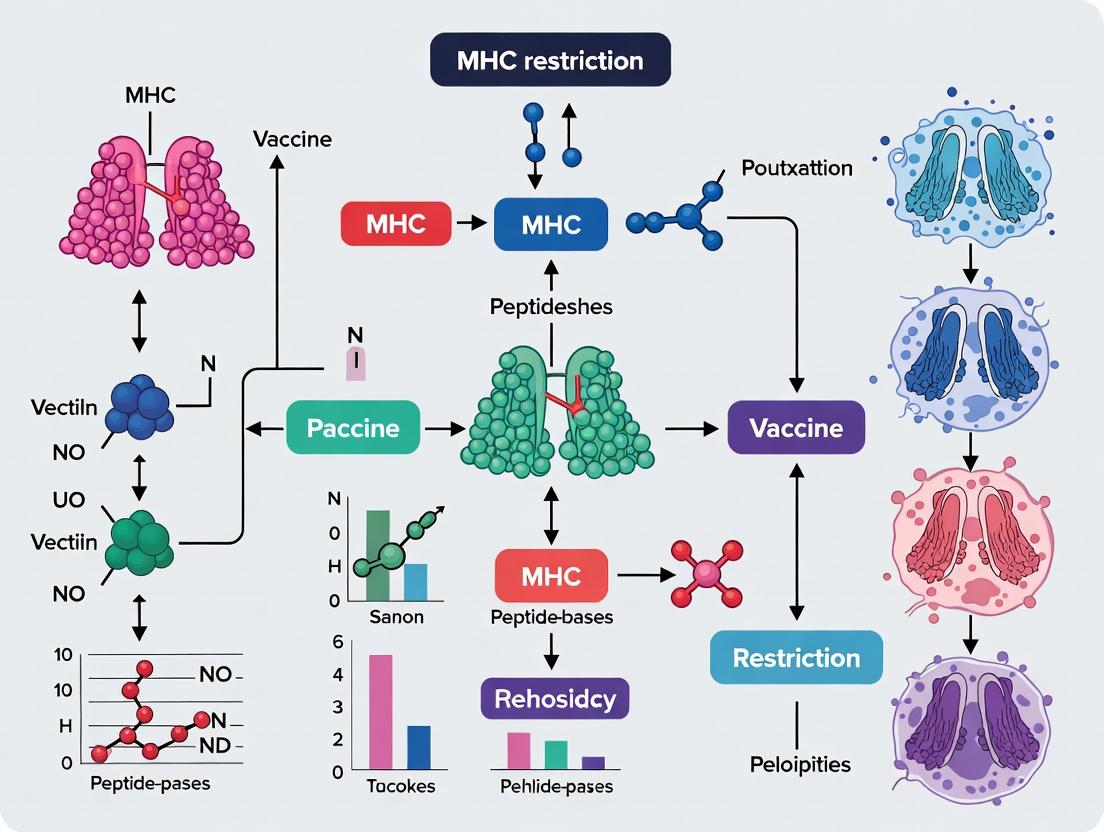
This article provides a comprehensive analysis of Major Histocompatibility Complex (MHC) restriction as a central challenge in peptide-based vaccine development.
Overcoming MHC Restriction: The Critical Challenge in Designing Effective Peptide-Based Vaccines
Abstract
This article provides a comprehensive analysis of Major Histocompatibility Complex (MHC) restriction as a central challenge in peptide-based vaccine development. Targeting researchers, scientists, and drug development professionals, it explores the foundational principles of MHC diversity and peptide presentation. It details cutting-edge methodologies for epitope prediction and vaccine design, addresses common pitfalls and optimization strategies for broadening immunogenicity across diverse populations, and evaluates current validation techniques and comparative approaches. The synthesis offers a roadmap for developing next-generation vaccines with improved population coverage and clinical efficacy.
Understanding MHC Restriction: The Foundational Hurdle in Peptide Vaccine Immunology
Defining MHC Restriction and Its Immunological Basis
Major Histocompatibility Complex (MHC) restriction is the fundamental immunological principle that T lymphocytes recognize antigenic peptides only when they are presented by self-MHC molecules on the surface of antigen-presenting cells (APCs). This dual-specificity ensures immune surveillance is directed against altered self-cells (infected or malignant) while maintaining tolerance to healthy tissues.
In the context of peptide-based vaccine development, MHC restriction presents a central challenge: the exquisite polymorphism of human MHC genes (Human Leukocyte Antigen, HLA) leads to vastly different peptide-binding repertoires across individuals. A vaccine containing T-cell epitopes restricted to a subset of HLA alleles may be ineffective for a significant proportion of the global population, a problem known as "population coverage."
The Immunological Basis of MHC Restriction
2.1 Molecular Mechanism: The Trimolecular Complex T-cell receptor (TCR) recognition occurs via a ternary complex formed by the peptide, the MHC molecule, and the TCR. The MHC molecule possesses a peptide-binding groove. Allelic variation in this groove dictates its physicochemical binding preferences (anchor residues). The TCR interacts with composite surfaces formed by both the peptide and the α-helices of the MHC molecule.
2.2. Thymic Education: The Origin of Restriction MHC restriction is established during T-cell development in the thymus through positive and negative selection.
- Positive Selection: Immature thymocytes that weakly recognize self-peptide:self-MHC complexes on cortical thymic epithelial cells receive survival signals. This selects for a TCR repertoire capable of interacting with self-MHC.
- Negative Selection: Thymocytes that bind too strongly to self-peptide:self-MHC complexes on medullary APCs are eliminated via apoptosis. This purges strongly self-reactive clones, establishing central tolerance.
Diagram: The Process of Thymic Education Establishing MHC Restriction
Key Experimental Protocols for Studying MHC Restriction
3.1. In Vitro T-Cell Activation/Presentation Assays Purpose: To definitively prove MHC restriction for a given T-cell clone/epitope. Detailed Protocol:
- APC Preparation: Isolate peripheral blood mononuclear cells (PBMCs) or use immortalized B-cell lines (e.g., T2 for HLA class I, homozygous EBV-LCLs for specific HLA alleles). Treat APCs with peptides of interest (1-10 µM) for 2-4 hours (class I) or 12-24 hours (class II) at 37°C.
- MHC Blocking: Pre-incubate peptide-pulsed APCs with monoclonal antibodies against specific MHC molecules (e.g., anti-HLA-A,B,C [W6/32] for class I, anti-HLA-DR [L243] for class II) or isotype controls for 30-60 minutes. Use antibody concentrations of 5-20 µg/mL.
- Co-culture: Add the specific T-cell clone or line to the APCs at an effector-to-target ratio (E:T) of 1:1 to 10:1.
- Readout: After 18-24 hours, measure T-cell activation. The gold standard is IFN-γ secretion quantified by ELISA or ELISpot. Proliferation can be measured via [³H]-thymidine incorporation over the final 16-24 hours of a 3-5 day culture.
- Interpretation: Significant reduction (>70%) in T-cell response in wells with anti-MHC antibody compared to isotype control confirms MHC restriction.
3.2. MHC-Peptide Binding Affinity Assays Purpose: To predict and validate which peptides can bind to specific HLA alleles. Detailed Protocol (Competitive ELISA/Fluorescence):
- Biotinylated Reference Peptide: Use a high-affinity, known peptide labeled with biotin for the target HLA allele.
- Purified MHC: Use recombinant, soluble HLA molecules (e.g., produced from insect cell systems).
- Competition: Incubate a fixed concentration of HLA with the biotinylated reference peptide and a titration of the unlabeled test peptide (e.g., 0.001-100 µM) for 24-48 hours at 37°C in a stabilizing buffer (containing protease inhibitors and β2-microglobulin for class I).
- Capture & Detection: Transfer the mixture to a streptavidin-coated plate to capture HLA molecules bound to the biotinylated reference peptide. Detect captured HLA using an allele-specific anti-HLA antibody conjugated to horseradish peroxidase (HRP).
- Data Analysis: Calculate the concentration of test peptide that inhibits 50% of the reference peptide binding (IC₅₀). Peptides with IC₅₀ < 50 nM are considered high-affinity binders, < 500 nM intermediate.
Quantitative Data: MHC Polymorphism and Vaccine Coverage
Table 1: Global Allele Frequency and Estimated Population Coverage for Common HLA Class I Supertypes
| HLA Supertype | Representative Alleles | Key Binding Motif | Estimated Global Frequency* | Cumulative Coverage* |
|---|---|---|---|---|
| A02 | A02:01, A02:06 | Anchor at P2 (L/M), P9 (L/V) | ~25% | 25% |
| A03 | A03:01, A11:01 | Anchor at P2 (L/V), P9 (K/R) | ~20% | 40% |
| A24 | A24:02, A23:01 | Anchor at P2 (Y/F), P9 (F/L) | ~15% | 50% |
| B07 | B07:02, B35:01 | Anchor at P2 (P), P9 (L/F) | ~18% | 60% |
| B44 | B44:02, B44:03 | Anchor at P2 (E), P9 (F/Y) | ~12% | 67% |
| B27 | B27:05, B27:02 | Anchor at P2 (R), P9 (R/K/L) | ~6% | 70% |
*Frequency and coverage estimates are approximate and vary significantly by geographical region. Cumulative coverage assumes overlap (non-additive) due to heterozygosity.
Table 2: Performance Metrics of Peptide-Based Vaccine Design Strategies to Overcome MHC Restriction
| Design Strategy | Core Approach | Key Quantitative Metrics | Major Challenge |
|---|---|---|---|
| Allele-Specific Epitopes | Target single, high-frequency alleles (e.g., A*02:01). | Coverage limited to allele frequency (e.g., ~8% for A*02:01 in Caucasians). | Very low broad-population efficacy. |
| Epitope Strings / Polyepitopes | Link multiple epitopes for different alleles in a single construct. | Coverage can reach >90% with 10-15 well-chosen epitopes. | Risk of immunodominance, junctional neoepitopes. |
| Supertype Targeting | Use promiscuous epitopes that bind multiple alleles within a supertype. | Coverage of ~70-80% for a single supertype (e.g., A02). | Binding affinity to individual alleles may be suboptimal. |
| MHC-II Universal Helper Epitopes | Incorporate pan-DR binding epitopes (e.g., PADRE) to provide CD4+ T cell help. | PADRE binds >15 common DR alleles with high affinity (IC₅₀ < 50 nM). | Does not solve CD8+ epitope restriction. |
The Scientist's Toolkit: Key Research Reagent Solutions
| Reagent / Material | Function in MHC Restriction Research | Example / Specification |
|---|---|---|
| Homozygous EBV-LCLs | Antigen-presenting cells with known, single HLA alleles for definitive restriction mapping. | Available from repositories like IHW (International Histocompatibility Workshop). |
| MHC Tetramers / Dextramers | Fluorescently labeled multimeric peptide-MHC complexes for direct staining and isolation of epitope-specific T cells. | Requires recombinant MHC refolded with peptide of interest. Critical for avidity. |
| T2 Cell Line | HLA-A*02:01 positive, TAP-deficient cell line. Efficiently presents exogenously loaded peptides only on surface HLA class I. | Used for epitope presentation and binding assays specific for HLA-A*02:01. |
| Recombinant Soluble HLA Molecules | Purified MHC for in vitro binding assays (ELISA, fluorescence polarization). | Often produced in Drosophila or HEK293 expression systems with biotinylation tags. |
| MHC-Blocking Monoclonal Antibodies | To inhibit specific MHC class I or class II molecules in functional T-cell assays. | e.g., Clone W6/32 (anti-HLA-A,B,C), Clone L243 (anti-HLA-DR). |
| PepMix Peptide Pools | Overlapping peptide libraries spanning a target antigen (e.g., 15-mers overlapping by 11 aa). | Used for high-throughput screening of CD4+ and CD8+ T-cell responses without prior epitope knowledge. |
Pathway: MHC-I and MHC-II Antigen Presentation and Restriction
Diagram: Comparative Antigen Presentation Pathways for MHC Restriction
The Major Histocompatibility Complex (MHC), known as the Human Leukocyte Antigen (HLA) system in humans, represents one of the most polymorphic gene clusters in the vertebrate genome. This diversity is central to adaptive immunity, enabling populations to present a vast array of pathogen-derived peptides to T-cells. However, within the context of peptide-based vaccine development, this polymorphism poses a significant "MHC restriction" challenge. A vaccine epitope presented by a specific HLA allomorph may be immunogenic in one individual but completely invisible to the immune system of another, depending on their HLA genotype. This technical guide explores the extent of global HLA allelic diversity, its population-specific distribution, and the implications for designing globally effective, population-tailored vaccines.
Global HLA Allelic Diversity: A Quantitative Snapshot
The hyper-polymorphic nature of classical HLA Class I (A, B, C) and Class II (DRB1, DQB1, DPB1) genes is continuously catalogued by the IPD-IMGT/HLA Database. The following tables summarize the current scale of this diversity.
Table 1: Documented HLA Allelic Diversity (IPD-IMGT/HLA Database Release 3.56, March 2024)
| HLA Locus | Number of Named Alleles (Protein Variants) | High-Resolution Alleles (Nucleotide) | Key Functional Polymorphism Region |
|---|---|---|---|
| HLA-A | 4,972 | > 7,800 | Peptide-binding groove (α1/α2 domains) |
| HLA-B | 6,158 | > 9,700 | Peptide-binding groove (α1/α2 domains) |
| HLA-C | 4,730 | > 7,100 | Peptide-binding groove (α1/α2 domains) |
| HLA-DRB1 | 3,285 | > 5,000 | Peptide-binding groove (β1 domain) |
| HLA-DQB1 | 1,849 | > 2,500 | Peptide-binding groove (β1 domain) |
| HLA-DPB1 | 1,983 | > 2,800 | Peptide-binding groove (β1 domain) |
Table 2: Population-Specific Haplotype Frequencies (Illustrative Examples)
| Population Group (From Allele Frequency Net Database) | Common HLA-A~B~DRB1 Haplotype | Estimated Frequency (%) | Implication for Vaccine Coverage |
|---|---|---|---|
| European Caucasoid | A01:01~B08:01~DRB1*03:01 | 5.8 - 8.6 | High priority for inclusion in Euro-centric vaccines. |
| Japanese | A33:03~B44:03~DRB1*13:02 | ~3.5 | Distinct from European haplotypes, requiring separate design. |
| African (Bantu) | A30:01~B42:01~DRB1*03:02 | ~2.8 | Represents immense sub-Saharan diversity; single haplotype coverage is low. |
| Native South American (Ticuna) | A02:11~B35:43~DRB1*04:11 | ~10.0 | Founder effects can create high-frequency, population-private alleles. |
Core Experimental Protocols for HLA Diversity and Epitope Binding Studies
Protocol 1: High-Resolution HLA Genotyping via Next-Generation Sequencing (NGS)
- Objective: To determine an individual's HLA alleles at the 2nd/3rd field (4-digit/8-digit) resolution.
- Methodology:
- DNA Extraction: Isolate genomic DNA from peripheral blood mononuclear cells (PBMCs) or saliva.
- Locus-Specific Amplification: Use long-range PCR with primers in conserved regions flanking exons 2 and 3 (Class I) or exon 2 (Class II DRB1, DQB1, DPB1) to amplify polymorphic regions.
- Library Preparation: Fragment amplicons, ligate with sequencing adapters, and index (barcode) samples for multiplexing.
- Sequencing: Perform sequencing on platforms like Illumina MiSeq, focusing on paired-end, high-depth coverage.
- Bioinformatic Analysis: Align sequences to the IPD-IMGT/HLA reference database using specialized software (e.g., HLA-HD, xHLA, or vendor-specific pipelines) to call alleles based on polymorphic positions.
Protocol 2: In Vitro Peptide-HLA Binding Affinity Assay (Competitive ELISA)
- Objective: To quantitatively measure the binding affinity (IC50) of a candidate vaccine peptide for a specific HLA allomorph.
- Methodology:
- Purification of HLA Molecule: Produce soluble recombinant HLA protein (e.g., from HEK293F cells) or use purified HLA from cell lysates.
- Peptide Labeling: Use a known high-affinity, fluorescence- or biotin-labeled reporter peptide for the HLA allomorph.
- Competition: Co-incubate the purified HLA with a fixed concentration of labeled reporter peptide and a titrated series of concentrations of the unlabeled candidate vaccine peptide.
- Capture and Detection: Capture the HLA-peptide complex on an antibody-coated plate (anti-HLA capture). Detect the bound labeled peptide via streptavidin-HRP (if biotinylated) or direct fluorescence.
- Data Analysis: Plot the inhibition curve of labeled peptide signal vs. candidate peptide concentration. Calculate the IC50 (concentration of candidate peptide that inhibits 50% of reporter peptide binding). Peptides with IC50 < 500 nM are typically considered high-affinity binders.
Visualizing Key Concepts and Workflows
The Scientist's Toolkit: Essential Research Reagents & Solutions
Table 3: Key Research Reagents for HLA and Vaccine Epitope Studies
| Reagent / Material | Function & Application | Key Considerations |
|---|---|---|
| Recombinant HLA Class I/II Tetramers | Fluorescently labeled multimers used to stain and isolate T-cells specific for a given pHLA complex. Critical for validating epitope immunogenicity. | Must be produced for the exact HLA allele-epitope combination. Quality (PE/APC brightness) is paramount for rare cell detection. |
| HLA-Transfected Antigen-Presenting Cells (APCs) | Cell lines (e.g., K562, CHO) stably expressing a single HLA allomorph. Used as targets in T-cell recognition assays (ELISpot, intracellular cytokine staining). | Essential for confirming functional restriction by a single allele. Requires validation of surface HLA expression. |
| Peptide Libraries (Overlapping or Predicted) | Synthetic peptides spanning a target pathogen protein. Used in high-throughput screens (e.g., ELISpot) to empirically map epitopes. | Length (15-mers for CD4+, 8-11mers for CD8+) and purity (>70% typical) are critical parameters. |
| High-Resolution HLA Genotyping Kits | Commercial NGS or SSP-based kits for determining an individual's HLA type. Foundational for cohort stratification and population genetics. | Must cover required loci at appropriate resolution (2nd/3rd field). Throughput and cost per sample vary. |
| Soluble HLA Production System | Mammalian expression vectors (e.g., with BirA biotinylation tag) for producing soluble HLA proteins in HEK293 or insect cells. Used in binding assays and tetramer production. | Yield and proper folding (validated by antibody binding) are common challenges. |
| Epitope Prediction Algorithms (NetMHC, IEDB) | In silico tools predicting peptide binding affinity to hundreds of HLA alleles. Used for rational epitope selection prior to costly experimental validation. | Predictions are probabilistic; experimental validation is mandatory. Pan-allele prediction tools are improving but not perfect. |
Within the context of peptide-based vaccine development, the Major Histocompatibility Complex (MHC) restriction phenomenon presents a formidable challenge. Vaccine efficacy is intrinsically limited by the allelic diversity of human MHC molecules (HLA in humans) and their stringent selectivity for presented peptide antigens. This whitepaper provides an in-depth technical analysis of the structural and biophysical determinants governing the peptide-MHC (pMHC) interaction, a foundational understanding critical for engineering broad-coverage immunotherapies.
Structural Architecture of MHC Molecules
MHC molecules are membrane-bound glycoproteins classified into Class I and Class II, each with distinct structural features dictating peptide-binding characteristics.
Class I MHC (HLA-A, B, C): Composed of a polymorphic α-chain non-covalently associated with β2-microglobulin. The peptide-binding groove is closed at both ends, typically binding peptides 8-10 amino acids in length. Key anchoring pockets (A-F) accommodate specific peptide side chains (anchors).
Class II MHC (HLA-DP, DQ, DR): Consists of α and β chains, both polymorphic. The binding groove is open at both ends, allowing binding of longer peptides (13-25 amino acids). Key anchoring pockets (P1, P4, P6, P9) interact with the peptide backbone.
Quantitative Comparison of Human MHC Classes
| Feature | MHC Class I | MHC Class II |
|---|---|---|
| Polymorphic Chains | α-chain only | α and β chains |
| Typical Peptide Length | 8-10 residues | 13-25 residues |
| Groove Ends | Closed | Open |
| Conserved Binding Motif | Strong anchor at C-terminus | Polyproline II helix backbone |
| Presenting Cell Types | All nucleated cells | Professional APCs (e.g., dendritic cells) |
| Recognizing Cell | CD8+ T cells | CD4+ T cells |
Determinants of Peptide Binding Affinity and Stability
The binding affinity (KD) of a peptide for an MHC allele, typically ranging from nM to µM, is the primary determinant of immunogenicity. Key structural determinants include:
- Anchor Residues: Primary side chains that dock into specific pockets of the MHC groove. Their chemical complementarity is critical.
- Secondary Anchors: Auxiliary residues contributing to overall binding energy.
- Peptide Backbone Conformation: Must adopt the required polyproline type II (MHC II) or extended conformation (MHC I).
- Hydrogen Bond Network: Conserved hydrogen bonds between MHC conserved residues and the peptide backbone termini (MHC I) or backbone throughout (MHC II).
- TCR-facing Residues: While not affecting binding affinity, these residues are crucial for T cell recognition and must remain solvent-exposed.
Experimental Protocol: Measuring pMHC Binding Affinity by Surface Plasmon Resonance (SPR)
- Immobilization: Purified, recombinant MHC monomer (class I or II) is captured on a CMS sensor chip via amine coupling or via a capture antibody.
- Ligand Preparation: Synthetic peptides of interest are serially diluted in running buffer (e.g., HBS-EP, pH 7.4).
- Kinetic Analysis: Peptide solutions are flowed over the chip surface at a constant rate. Binding and dissociation are monitored in real-time (sensograms).
- Data Fitting: The association (kon) and dissociation (koff) rate constants are derived by fitting sensogram data to a 1:1 Langmuir binding model. The equilibrium dissociation constant KD = koff/kon.
- Validation: Include known high-affinity and low-affinity peptide controls for each MHC allele tested.
Diagram: SPR Workflow for pMHC Binding Affinity
Challenges of MHC Restriction in Vaccine Design
The extreme polymorphism of human HLA loci generates thousands of alleles with distinct peptide-binding preferences. A peptide that binds strongly to one allele may not bind to another, leading to uneven population coverage. This is quantified as population coverage – the percentage of individuals in a target population predicted to have at least one HLA allele capable of presenting the vaccine epitope.
Table: Estimated Global Frequency of Common HLA Supertypes
| HLA Supertype | Representative Alleles | Estimated Global Population Coverage* |
|---|---|---|
| A2 | A02:01, A02:06 | ~40-50% |
| A3 | A03:01, A11:01 | ~30-40% |
| B7 | B07:02, B35:01 | ~30-45% |
| B27 | B*27:05 | ~5-10% |
| DR4 | DRB1*04:01 | ~15-25% |
| DR1 | DRB1*01:01 | ~10-20% |
*Coverage is cumulative and non-additive across supertypes.
Strategies to Overcome MHC Restriction
Experimental Protocol: In Silico Prediction and Validation of Promiscuous Epitopes
- Prediction: Use computational suites (NetMHCpan, NetMHCIpan, IEDB tools) to screen pathogen proteomes for peptides predicted to bind multiple HLA alleles within a supertype.
- Selection: Rank candidates by predicted binding affinity (IC50 or %Rank) and promiscuity score (number of alleles bound).
- In Vitro Validation: Perform binding assays (SPR, competitive ELISA) against a panel of purified HLA alleles.
- Immunogenicity Assay: Stimulate PBMCs from multiple donors with predicted peptides and measure T-cell activation (ELISpot, intracellular cytokine staining).
Diagram: Promiscuous Epitope Discovery Workflow
The Scientist's Toolkit: Key Research Reagent Solutions
| Reagent / Material | Function & Application in pMHC Research |
|---|---|
| Recombinant Soluble MHC Monomers (Class I/II) | Purified, biotinylated MHC proteins for structural studies (X-ray, NMR), binding assays (SPR), and tetramer production. |
| MHC Tetramers (PE/APC conjugated) | Fluorescently labeled multimeric pMHC complexes for direct staining, identification, and isolation of antigen-specific T cells by flow cytometry. |
| Competitive ELISA Kits (pMHC Binding) | Quantitative high-throughput screening of peptide binding to specific HLA alleles using labeled probe peptides. |
| HLA-typed PBMCs & Cell Lines | Genotyped human peripheral blood mononuclear cells and homozygous B-lymphoblastoid cell lines (e.g., from IHW) for functional immunogenicity assays. |
| Peptide Synthesis Services | Custom synthesis of high-purity (>95%) peptides, including modified (phosphorylated, lipidated) and MHC-tetramer grade peptides. |
| SPR Instrumentation & Chips | Biacore or equivalent systems with CMS sensor chips for real-time, label-free kinetic analysis of pMHC interactions. |
| Crystallography Reagents | Crystallization screening kits, cryoprotectants, and recombinant proteases for generating pMHC complexes suitable for X-ray diffraction. |
The development of effective peptide-based vaccines is fundamentally constrained by the principle of MHC restriction. T cells recognize antigenic peptides only when presented by self-Major Histocompatibility Complex (MHC) molecules. This necessitates a precise understanding of the distinct antigen processing and presentation pathways for MHC Class I and Class II molecules, which activate CD8+ cytotoxic T lymphocytes (CTLs) and CD4+ helper T cells, respectively. The central challenge in vaccine design lies in engineering epitopes that reliably navigate the correct pathway to elicit a targeted, potent, and durable T-cell response. This guide details the mechanistic biology of these pathways, their implications for T-cell activation, and the experimental approaches critical for overcoming MHC restriction hurdles in immunotherapeutic research.
Core Pathway Mechanisms
MHC Class I Pathway (Endogenous Pathway) Antigens are derived from intracellular proteins (e.g., viral, tumor-associated). Proteins are ubiquitinated and degraded by the proteasome into peptides 8-10 amino acids long. These peptides are transported into the endoplasmic reticulum (ER) via the Transporter Associated with Antigen Processing (TAP). In the ER, peptides are loaded onto nascent MHC Class I (HLA-A, B, C in humans) heterodimers with the aid of the peptide-loading complex (PLC). Stable peptide-MHC I (pMHC I) complexes are then transported through the Golgi to the cell surface for presentation to CD8+ T cells. CD8+ T cells recognize pMHC I via their T-cell receptor (TCR) and co-receptor CD8, which binds to the α3 domain of MHC I, leading to CTL activation for direct killing of infected or malignant cells.
MHC Class II Pathway (Exogenous Pathway) Antigens are derived from extracellular proteins that are endocytosed. Endosomes fuse with lysosomes, where proteins are degraded by acid-dependent proteases (e.g., cathepsins) into peptides 13-25 amino acids long. MHC Class II (HLA-DP, DQ, DR in humans) are synthesized in the ER and associated with the invariant chain (Ii), which blocks the peptide-binding groove and directs trafficking to the endocytic compartment. Here, Ii is degraded, leaving a small fragment called CLIP (Class II-associated invariant chain peptide) in the groove. The chaperone HLA-DM catalyzes the exchange of CLIP for high-affinity antigenic peptides. The stable pMHC II complex is then expressed on the cell surface for presentation to CD4+ T cells. The TCR and co-receptor CD4 (binding to the β2 domain of MHC II) facilitate activation, leading to helper functions that orchestrate broader immune responses.
Cross-Presentation A critical exception, primarily by dendritic cells, where exogenous antigens can be presented on MHC Class I. This is essential for priming CD8+ T cells against pathogens that do not directly infect antigen-presenting cells (APCs).
Quantitative Data Comparison
Table 1: Core Characteristics of MHC Class I and Class II Pathways
| Feature | MHC Class I | MHC Class II |
|---|---|---|
| Antigen Origin | Intracellular (cytosolic/nuclear) | Extracellular (endocytosed) |
| Presenting Cells | All nucleated cells | Professional APCs (DCs, Macrophages, B cells) |
| Peptide Length | 8-10 amino acids (optimal) | 13-25 amino acids (core 9) |
| Loading Compartment | Endoplasmic Reticulum (ER) | Endocytic/MIIC compartment |
| Key Transport Molecule | TAP (Transporter for Antigen Processing) | Invariant Chain (Ii), HLA-DM |
| Restricting Element | HLA-A, B, C (humans); H-2 K, D, L (mice) | HLA-DP, DQ, DR (humans); H-2 I-A, I-E (mice) |
| Responding T Cell | CD8+ Cytotoxic T Lymphocytes (CTLs) | CD4+ Helper T Cells (Th) |
| Coreceptor Binding Site | CD8 binds α3 domain | CD4 binds β2 domain |
| Primary Immune Function | Kill infected/malignant cells (Cellular immunity) | Orchestrate immune response (Help for B cells, CTLs, macrophages) |
Table 2: Key Quantitative Metrics in T-Cell Activation Studies
| Parameter | Typical Range/Value (Experimental Context) | Significance for Vaccine Design |
|---|---|---|
| pMHC-TCR Binding Affinity (Kd) | 1 μM - 10 nM | Affinity correlates with immunogenicity; very high affinity can lead to tolerance. |
| Peptide-MHC Half-life | Hours to >24 hrs (Class I); Can be longer (Class II) | Longer half-life enhances T cell activation and memory. Critical screening parameter. |
| Epitope Density (peptides/cell) | As few as 10-100 pMHC I for CTL killing; ~100-1000 for CD4+ activation | Determines magnitude of T cell response. Vaccine adjuvants aim to increase this. |
| MHC Allelic Coverage (Population) | HLA-A*02:01 ~40% Caucasians; HLA-DR alleles vary widely | Peptide-based vaccines require "promiscuous" epitopes or epitope cocktails to ensure population coverage. |
Detailed Experimental Protocols
Protocol 1: In Vitro MHC Binding Assay (ELISA-based) Objective: Quantify the binding affinity of a candidate peptide to a specific purified MHC molecule. Materials: Recombinant MHC protein (monomeric or dimeric), biotinylated reference peptide, test peptide, detection antibody (streptavidin-HRP), ELISA plate. Procedure:
- Coat ELISA plate with an antibody capturing the MHC molecule.
- Block plate with PBS/BSA.
- Incubate with purified MHC protein to allow capture.
- Add a serial dilution of the test peptide alongside a constant concentration of biotinylated reference peptide. The two peptides compete for binding.
- After incubation, wash and add streptavidin-HRP, which binds only to the biotinylated reference peptide.
- Develop with TMB substrate. Reduced signal indicates strong binding of the test peptide (it outcompetes the reference).
- Calculate IC50 (concentration of test peptide that inhibits 50% of reference peptide binding).
Protocol 2: Intracellular Cytokine Staining (ICS) for Antigen-Specific T Cells Objective: Detect and quantify T cells activated by a specific pMHC stimulus. Materials: PBMCs or isolated T cells, peptide of interest, APC (e.g., autologous PBMCs or HLA-matched cell line), brefeldin A/monensin, fluorescent antibodies against surface markers (CD3, CD4, CD8) and cytokines (IFN-γ, TNF-α, IL-2), flow cytometer. Procedure:
- Stimulate PBMCs or co-culture T cells with peptide-pulsed APCs for 6-18 hours. Include positive (PMA/Ionomycin) and negative (no peptide) controls.
- Add protein transport inhibitors (brefeldin A/monensin) 1-2 hours after stimulation to trap cytokines intracellularly.
- Harvest cells, stain for surface markers (CD3, CD4, CD8), then fix and permeabilize.
- Stain intracellularly for cytokines (e.g., anti-IFN-γ).
- Acquire on a flow cytometer. Gate on live, single CD3+CD4+ or CD3+CD8+ cells and analyze the frequency of cytokine-positive cells.
Protocol 3: Cross-Presentation Assay using Human Monocyte-Derived Dendritic Cells (moDCs) Objective: Evaluate the ability of an exogenous antigen (soluble protein, immune complex, nanoparticle) to be presented on MHC Class I. Materials: Human CD14+ monocytes, cytokines (GM-CSF, IL-4), model antigen (e.g., ovalbumin), antigen delivery vehicle, CD8+ T cell clone or line specific for a known epitope from the model antigen. Procedure:
- Differentiate moDCs from CD14+ monocytes with GM-CSF and IL-4 for 5-7 days.
- Pulse mature moDCs with the exogenous antigen formulation.
- After 4-24 hours, co-culture antigen-pulsed moDCs with the antigen-specific CD8+ T cell line/clone.
- Measure T cell activation by ICS (IFN-γ), ELISpot, or surface CD69/CD137 upregulation.
- Confirm MHC I restriction using blocking antibodies against HLA-A,B,C.
The Scientist's Toolkit: Key Research Reagent Solutions
Table 3: Essential Reagents for MHC Pathway & T-Cell Activation Research
| Reagent Category | Specific Example(s) | Function & Application |
|---|---|---|
| Recombinant MHC Molecules | HLA-A*02:01:Ig dimer, purified HLA-DR proteins | For in vitro binding assays (ELISA, Luminex) to screen peptide libraries. |
| Antigen-Presenting Cell Lines | T2 (TAP-deficient, Class I), C1R (low HLA expression), THP-1 (monocytic), Raji (B cell) | Model systems for studying antigen processing and presentation deficits or specific pathways. |
| T Cell Lines/Clones | Antigen-specific CD8+ CTL clones, CD4+ T cell hybridomas | Biosensors for detecting functional pMHC complexes on APCs. |
| Cytokine Detection Kits | ELISpot kits (IFN-γ, IL-2), LEGENDplex bead-based arrays, ICS antibodies | Quantify polyfunctional T-cell responses at single-cell or population level. |
| MHC Blocking Antibodies | Anti-HLA-A,B,C (W6/32), Anti-HLA-DR/DP/DQ (L243) | Confirm MHC restriction of T cell responses in functional assays. |
| Protein Transport Inhibitors | Brefeldin A, Monensin | Inhibit Golgi transport for intracellular cytokine staining (ICS). |
| Tetramer/Pentamer Reagents | PE-conjugated pMHC I or II tetramers | Direct ex vivo staining and sorting of antigen-specific T cells by flow cytometry. |
| Proteasome/Lysosome Inhibitors | Epoxomicin (proteasome), Leupeptin/E64 (lysosome) | Determine pathway dependence of antigen processing. |
| Adjuvant/Delivery Systems | Poly(lactic-co-glycolic acid) (PLGA) nanoparticles, Liposomes, saponin-based (ISCOMATRIX) | Enhance antigen cross-presentation and CD8+ T cell priming in vaccine formulations. |
The development of peptide-based vaccines is fundamentally constrained by Major Histocompatibility Complex (MHC) restriction. Individual Human Leukocyte Antigen (HLA) alleles present specific peptide motifs, meaning a vaccine designed for one allele may fail in individuals with a different HLA profile. This heterogeneity poses a significant challenge for achieving broad population protection. This whitepaper addresses this challenge by detailing the computational and experimental methodologies for calculating population coverage using the concepts of HLA supertypes and haplotype frequencies. The core thesis is that stratifying HLA alleles into supertypes based on shared peptide-binding repertoires, combined with precise haplotype frequency data across global populations, enables the rational design of peptide vaccine candidates with maximized and predictable population coverage.
The HLA Supertype Concept
HLA supertypes are classifications wherein alleles with similar peptide-binding specificities are grouped together. The primary focus is on Class I molecules (HLA-A, -B, -C), which present peptides to CD8+ T-cells. An allele from a supertype is predicted to bind a core set of similar peptide sequences, allowing a vaccine containing these sequences to cover all individuals carrying any allele within that supertype.
Table 1: Major HLA Class I Supertypes and Representative Alleles
| Supertype | Defining Binding Motif | Key Representative Alleles | Estimated Global Coverage* |
|---|---|---|---|
| A01 | Peptides with small/aromatic residues at P2 and C-terminal | A01:01, A26:01, A*36:01 | ~25% |
| A02 | Peptides with aliphatic/aromatic residues at P2 and C-terminal | A02:01, A02:03, A02:06, A68:02 | ~45% |
| A03 | Peptides with basic residues at P2 and C-terminal | A03:01, A11:01, A31:01, A33:01 | ~40% |
| A24 | Peptides with aromatic/tyrosine at P2 and C-terminal | A23:01, A24:02, A*30:01 | ~25% |
| B07 | Peptides with Proline at P2 and small/basic at C-terminal | B07:02, B35:01, B51:01, B53:01 | ~40% |
| B08 | Peptides with basic residues at P3 and P5 | B08:01, B18:01 | ~15% |
| B27 | Peptides with Arg at P2 and hydrophobic at C-terminal | B14:01, B15:01, B27:05, B39:01 | ~15% |
| B44 | Peptides with Glu at P2 and hydrophobic at C-terminal | B18:01, B37:01, B40:01, B44:02, B*44:03 | ~45% |
| B58 | Peptides with small/aliphatic at P2 and basic at C-terminal | B15:02, B15:11, B57:01, B58:01 | ~15% |
Note: Coverage percentages are cumulative approximations and vary significantly by population. Actual calculation requires haplotype-based methods.
Haplotype Frequencies and Population Genetics
HLA alleles are inherited as haplotypes (sets of alleles across loci on a single chromosome). Their frequencies are not independent, exhibiting strong linkage disequilibrium (LD) that varies by population. Accurate population coverage calculation must account for these haplotype frequencies, not just individual allele frequencies.
Table 2: Example HLA Class I Haplotype Frequencies in Select Populations (Simplified)
| Population (Source) | Haplotype | Approx. Frequency | Cumulative Coverage for A02+B07 |
|---|---|---|---|
| European (Greece) | A02:01 ~ B07:02 ~ C*07:02 | 4.2% | |
| European (Germany) | A02:01 ~ B07:02 ~ C*07:02 | 3.8% | ~12% |
| Asian (Japan) | A24:02 ~ B52:01 ~ C*12:02 | 6.5% | |
| Asian (China South) | A02:07 ~ B46:01 ~ C*01:02 | 5.1% | <2% |
| African (Kenya) | A02:01 ~ B58:01 ~ C*06:02 | 2.1% | |
| African (Nigeria) | A02:01 ~ B07:02 ~ C*07:02 | 0.9% | ~5% |
Population Coverage Calculation Methodology
The final population coverage (PC) is the proportion of individuals in a target population predicted to mount an immune response to at least one epitope in the vaccine construct. The standard formula is:
PC = 1 - ∏ (1 - f_i) for i = 1 to n haplotypes not containing a response allele.
A more practical computational approach uses the inclusion-exclusion principle based on phenotype frequencies.
Experimental/Computational Protocol for Coverage Estimation:
- Epitope Identification & Binding Affinity: Identify candidate epitopes via mass spectrometry or in silico prediction tools (e.g., NetMHCpan). Validate binding affinity (IC50/Kd) to specific HLA alleles using in vitro competitive binding assays (e.g., using T2 or RMA-S cell lines).
- Supertype Assignment: For each epitope, determine its restricting HLA alleles. Group these alleles into their established supertypes (e.g., A02, B44). An epitope confirmed to bind A02:01 and A02:05 is assigned to the A02 supertype.
- Define Target Population(s): Select the geographical or ethnic population(s) for the vaccine (e.g., Global, East Asia, Sub-Saharan Africa).
- Acquire Haplotype Frequency Data: Source high-resolution haplotype frequency data from population genetics databases (e.g., Allele Frequency Net Database (AFND), IPD-IMGT/HLA, or geographically-specific cohort studies).
- Calculate Phenotype Frequency per Epitope/Supertype: For each epitope (or supertype cluster), calculate the cumulative phenotype frequency in the target population. This accounts for Hardy-Weinberg equilibrium and diploidy:
PhenoFreq = 1 - (1 - Σ(Allele/Haplotype Frequency))^2. Sophisticated tools like the Population Coverage Calculator from IEDB perform this step. - Calculate Cumulative Vaccine Coverage: Combine phenotype frequencies of all epitopes in the vaccine, correcting for overlap (epitopes presented by the same supertype/allele in an individual) using the inclusion-exclusion principle or Monte Carlo simulation methods to avoid overestimation.
- Report Stratified Coverage: Report coverage for each target population, often as a table or map.
Title: Population Coverage Calculation Workflow
The Scientist's Toolkit: Research Reagent Solutions
Table 3: Essential Reagents and Resources for HLA-Peptide Research
| Item / Resource | Function / Application | Example / Provider |
|---|---|---|
| HLA Typing Kits (NGS-based) | High-resolution HLA allele identification from donor PBMCs or cell lines. Essential for assay setup and frequency data generation. | Omixon Holotype, SeCore/One Lambda, Illumina TruSight HLA. |
| Recombinant HLA Monomers | Purified, refolded HLA molecules (class I with β2-microglobulin) for direct binding assays (e.g., ELISA, SPR) or tetramer production. | NIH Tetramer Core, Immudex, MBL International. |
| MHC-Peptide Binding Assay Kits | Cell-free competitive fluorescence polarization (FP) or time-resolved fluorescence (TR-FRET) assays to measure peptide binding affinity (IC50). | PerkinElmer LANCE Ultra, JPT PepTivator. |
| Antigen-Presenting Cell (APC) Lines | Engineered cell lines (e.g., T2, RMA-S, C1R, K562) deficient in specific antigen processing pathways, used for stabilization assays. | ATCC, DSMZ. |
| Peptide Libraries | Overlapping peptide scans (15-mers) or predicted epitope pools for screening T-cell responses in ELISpot or intracellular cytokine staining (ICS). | JPT Peptide Technologies, GenScript, Mimotopes. |
| HLA Tetramers/Dextramers | Multimeric peptide-MHC complexes conjugated to fluorophores for direct ex vivo staining and enumeration of antigen-specific T-cells by flow cytometry. | Immudex (Dextramer), NIH Tetramer Core, MBL (Tetramer). |
| Population Genetics Databases | Repositories of HLA allele and haplotype frequency data from global populations. Critical for input into coverage calculations. | Allele Frequency Net Database (AFND), IPD-IMGT/HLA, dbMHC (NCBI). |
| Population Coverage Tools | Web-based or standalone software to compute theoretical population coverage from a list of HLA restrictions. | IEDB Population Coverage Calculation tool, Epitope Coverage Calculator. |
Advanced Considerations and Limitations
- Supertype Promiscuity Validation: Not all alleles within a supertype bind all canonical epitopes. Empirical validation for key alleles is recommended.
- Haplotype vs. Allele Frequency: Using raw allele frequencies and assuming independence (Hardy-Weinberg equilibrium without LD) can lead to significant over- or under-estimation of coverage, especially in admixed populations.
- Epitope-Haplotype Linkage: An individual's haplotype may contain multiple restricting alleles for different epitopes, increasing the chance of response (synergy) but also making some epitopes redundant.
- Functional Avidity: Coverage calculations assume a positive immune response if binding occurs. They do not account for epitope processing efficiency, TCR repertoire, or functional avidity of the response.
Strategies and Tools to Navigate MHC Restriction in Vaccine Design
Peptide-based vaccine development is fundamentally constrained by Major Histocompatibility Complex (MHC) restriction—the phenomenon where peptide epitopes are only immunogenic when bound to specific MHC alleles expressed by an individual. This genetic diversity necessitates the identification of epitopes capable of binding to a wide array of HLA (Human Leukocyte Antigen) alleles to ensure population-wide vaccine coverage. In silico epitope prediction has emerged as a critical tool to overcome this bottleneck, leveraging artificial intelligence (AI) and machine learning (ML) to rapidly screen pathogen proteomes for candidate epitopes, thereby streamlining the initial stages of experimental vaccine design.
Core Algorithmic Frameworks and Tools
Quantitative Comparison of Major Prediction Tools
The following table summarizes the key characteristics, algorithms, and performance metrics of prominent epitope prediction platforms.
Table 1: Comparison of Major In Silico Epitope Prediction Tools
| Tool / Resource | Core Algorithm | Prediction Target | MHC Allele Coverage | Reported Performance (AUC) | Key Strengths |
|---|---|---|---|---|---|
| NetMHCpan-4.1 | Artificial Neural Networks (ANN) | Peptide-MHC-I binding affinity | >20,000 alleles | 0.93 - 0.97 (for common alleles) | Pan-specific; handles novel alleles via sequence homology. |
| NetMHCI-2.4 | ANN | Peptide-MHC-I binding affinity | ~200 human & mouse alleles | 0.87 - 0.95 | High accuracy for well-characterized alleles. |
| IEDB MHC-I Prediction | Multiple (NetMHCpan, SMM, ANN) | Binding affinity, %Rank | Extensive (via pan-specific methods) | Varies by method | Consolidated resource offering multiple prediction methods and analysis tools. |
| NetMHCIIpan-4.0 | ANN | Peptide-MHC-II binding affinity | >5,000 alleles | 0.80 - 0.90 | Leading tool for MHC-II, which is critical for helper T-cell responses. |
| MARIA | Deep Learning (Multiple-instance learning) | MHC-II antigen presentation | 37 alleles | ~0.85 | Integrates contextual proteomic information beyond core peptide. |
AI/ML Model Architectures
Modern tools primarily employ:
- Artificial Neural Networks (ANNs): The standard for tools like NetMHC. They are trained on large datasets of peptide-MHC binding measurements (e.g., ELISA, MS).
- Convolutional Neural Networks (CNNs): Used to capture position-specific patterns in peptide sequences.
- Natural Language Processing (NLP) Models: Frameworks like BERT are being adapted to treat peptide sequences as "text" to learn complex biochemical "grammar."
Detailed Experimental Protocol forIn SilicotoIn VitroValidation
This protocol outlines the standard workflow from computational prediction to experimental validation of CD8+ T-cell epitopes.
Protocol: In Silico Prediction and In Vitro Validation of MHC-I Restricted Epitopes
A. In Silico Prediction Phase
- Input Sequence Acquisition: Obtain the full proteome of the target pathogen from databases like UniProt.
- Peptide Generation: In silico digest the proteome into overlapping peptides of defined length (e.g., 8-11mers for MHC-I).
- Allele Selection: Choose HLA alleles representative of the target population (e.g., HLA-A*02:01, HLA-B*07:02).
- Binding Prediction: Submit the peptide library to a prediction server (e.g., NetMHCpan-4.1 on IEDB).
- Result Filtering: Filter results based on %Rank (preferred) or IC50. Typical cutoffs:
- Strong Binders: %Rank < 0.5
- Weak Binders: %Rank < 2.0
- Immunogenicity Prediction: Feed top binding candidates to an immunogenicity predictor (e.g., NetCTLpan, DeepImmuno) to prioritize epitopes likely to elicit T-cell response.
B. In Vitro Validation Phase
- Peptide Synthesis: Synthesize the top 20-50 predicted epitopes (>90% purity).
- MHC Binding Assay (Direct Validation):
- Use a competitive fluorescence polarization assay. Purified MHC molecules are incubated with a fluorescent reference peptide and increasing concentrations of the predicted peptide.
- Measure polarization; IC50 < 500 nM confirms strong binding.
- T-Cell Activation Assay (Functional Validation):
- Isolate PBMCs from donors with matching HLA alleles.
- Pulse antigen-presenting cells (APCs) within the PBMC pool with predicted peptides.
- After 7-10 days of culture, re-stimulate with peptide and measure T-cell activation via:
- ELISpot: Detection of IFN-γ secreting cells.
- Intracellular Cytokine Staining (ICS): Flow cytometry-based detection of IFN-γ, TNF-α within CD8+ T-cells.
Visualization of Workflows and Pathways
Title: Epitope Prediction & Validation Workflow
Title: MHC-I Restricted T-Cell Activation Pathway
The Scientist's Toolkit: Essential Research Reagents & Solutions
Table 2: Key Reagent Solutions for Epitope Validation Experiments
| Reagent / Material | Supplier Examples | Function in Experiment |
|---|---|---|
| HLA-A*02:01 Monomer (Biotinylated) | NIH Tetramer Core, BioLegend | Purified MHC protein for direct binding assays and tetramer staining. |
| Human IFN-γ ELISpot Kit | Mabtech, BD Biosciences | Quantitative detection of epitope-specific T-cells via cytokine secretion. |
| Peptide Synthesis Service | GenScript, Thermo Fisher | Custom synthesis of predicted peptide sequences for in vitro testing. |
| Anti-Human CD8a (APC), IFN-γ (PE) Antibodies | BioLegend, BD Biosciences | Flow cytometry antibodies for intracellular cytokine staining (ICS). |
| Ficoll-Paque PLUS | Cytiva | Density gradient medium for isolation of PBMCs from donor blood. |
| Recombinant Human IL-2 | PeproTech | T-cell growth factor for expansion of epitope-specific T-cells in culture. |
| ProMix HLA-I Peptide Binding Kit | ProImmune | Fluorescence-based competitive assay kit for measuring peptide-MHC binding affinity. |
| RPMI 1640 Medium + 10% FBS | Thermo Fisher | Standard cell culture medium for maintaining PBMCs and T-cell lines. |
A central obstacle in peptide-based vaccine design is the extensive polymorphism of Major Histocompatibility Complex (MHC) molecules, also known as Human Leukocyte Antigen (HLA) in humans. Individual HLA alleles bind distinct peptide motifs, making an epitope immunogenic in one individual potentially inert in another. This "MHC restriction" severely limits population coverage for conventional single-epitope vaccines. Furthermore, high mutation rates in pathogens, particularly RNA viruses, lead to immune escape through epitope alteration. This whitepaper details a strategic solution: the rational design of multi-epitope vaccines that synergistically combine promiscuous peptides (capable of binding multiple HLA alleles) and conserved peptides (derived from immutable, essential pathogen regions). This approach aims to achieve broad population coverage while mitigating immune escape.
Core Concepts: Promiscuous vs. Conserved Peptides
- Promiscuous Peptides: These are epitopes engineered or selected for their ability to bind to multiple alleles within an HLA supertype (e.g., HLA-A2, HLA-DR). They are identified using in silico prediction tools that scan pathogen proteomes for sequences matching binding motifs of common HLA alleles.
- Conserved Peptides: These epitopes are derived from genomic regions of the pathogen that are under strong functional or structural constraint, making them less prone to mutation. Targeting these regions applies selective pressure against viable escape mutants.
Integrated Design Workflow
The design process is an iterative pipeline combining computational prediction and experimental validation.
Diagram Title: Multi-Epitope Vaccine Design Pipeline
Computational Identification of Candidates
Protocol: In Silico Epitope Prediction & Prioritization
- Input: Obtain complete proteome of target pathogen from databases (NCBI, UniProt).
- T-cell Epitope Prediction:
- CD8+ T-cells (MHC-I): Use netMHCpan (4.1) or IEDB MHC-I prediction tool. Run analysis against predominant HLA-A, -B, -C alleles (e.g., A02:01, A03:01, B07:02, C04:01). Select peptides with percentile rank < 0.5 (strong binders) for multiple alleles.
- CD4+ T-cells (MHC-II): Use netMHCIIpan (4.0) or IEDB MHC-II tool against common HLA-DR, -DQ, -DP alleles. Select peptides with percentile rank < 2.0.
- Conservation Analysis: Align homologous protein sequences from diverse pathogen strains/clades using ClustalOmega or MUSCLE. Calculate conservation scores per residue with ScoreCons or via IEDB's Conservancy Analysis Tool. Epitopes with >80% sequence identity across strains are high-priority conserved candidates.
- Immunogenicity Prediction: Filter predicted binders through tools like CD8episcore or MHCnuggets to rank likelihood of eliciting an actual T-cell response.
- Cross-reactivity Check (Optional): Perform BLASTp against human proteome to exclude epitopes with significant homology, reducing autoimmunity risk.
Quantitative Selection Matrix
Candidate epitopes from the computational pipeline are scored and compared using the following criteria.
Table 1: Epitope Selection Scoring Matrix
| Epitope ID | Source Protein | HLA-I Binding Alleles (Rank) | HLA-II Binding Alleles (Rank) | Conservation (%) | Immunogenicity Score | Final Priority |
|---|---|---|---|---|---|---|
| EPI_001 | Polymerase (PA) | A02:01 (0.15), A68:02 (0.32) | DRB1*04:01 (1.5) | 95 | 0.82 | High |
| EPI_002 | Hemagglutinin (HA) | A*11:01 (0.08) | DRB107:01 (0.9), DQB102:01 (1.8) | 45 | 0.65 | Low |
| EPI_003 | Nucleoprotein (NP) | A03:01 (0.21), A31:01 (0.45), B*35:01 (0.28) | DRB1*01:01 (1.1) | 99 | 0.78 | Very High |
| EPI_004 | Matrix (M1) | B*08:01 (0.12) | DRB1*15:01 (1.7) | 88 | 0.71 | Medium |
EPI_003 exemplifies an ideal combination: promiscuous MHC-I binding (3 alleles), high conservation, and good immunogenicity.
Construct Assembly & Delivery Strategies
Selected epitopes are linked into a single polypeptide chain (polyepitope). Linkers are critical to prevent junctional immunogenicity and ensure proper processing.
- MHC-I Epitope Linkers: Use AAAPVAT or AAY spacers to promote proteasomal cleavage.
- MHC-II Epitope Linkers: Use GPGPG spacers, which help in helper T-cell epitope presentation.
- Between Epitope Clusters: Use flexible linkers like (GGGGS)₂.
- Adjuvants & Delivery: Fuse polyepitope to a TLR agonist (e.g., RS09 peptide) or encapsulate in a nanoparticle platform (e.g., liposome, VLPs) with a molecular adjuvant (e.g., CpG ODN).
Diagram Title: Vaccine Construct Architecture
Key Experimental Validation Protocols
Protocol:In VitroMHC Binding & Stability Assay
Purpose: Confirm promiscuous binding and measure binding affinity/stability. Reagents: Purified recombinant HLA molecules, test peptide, positive control peptide (high-affinity), negative control peptide, fluorescent probe (e.g., β₂m for MHC-I). Procedure:
- Incubate HLA molecule with a fluorescent reporter peptide at room temperature to form a stable complex.
- Add test peptide in excess (100µM). A high-affinity test peptide will displace the reporter, decreasing fluorescence.
- Monitor fluorescence polarization over 24-48 hours to calculate dissociation half-life (measure of stability).
- Repeat for multiple HLA alleles to confirm promiscuity.
Protocol: ELISpot for T-cell Response
Purpose: Quantify epitope-specific IFN-γ secretion from T-cells. Procedure:
- Isolate PBMCs from vaccinated subjects or immunized animals.
- Plate PBMCs on anti-IFN-γ antibody-coated ELISpot plates.
- Stimulate cells with individual epitopes or the full polyepitope construct (10 µg/mL).
- After 24-48h incubation, develop plate with biotinylated detection antibody, streptavidin-ALP, and BCIP/NBT substrate.
- Count spot-forming units (SFU) using an automated reader. Response is positive if SFU in test well > 2x mean of negative control wells and >50 SFU/10⁶ cells.
The Scientist's Toolkit: Research Reagent Solutions
Table 2: Essential Reagents for Multi-Epitope Vaccine Development
| Reagent / Material | Primary Function | Example Product / Supplier |
|---|---|---|
| Recombinant HLA Alleles | In vitro binding assays to validate promiscuity. | ProImmune's HLA Kit; MBL International's tetramers. |
| ELISpot Kits (Human/Mouse IFN-γ) | Ex vivo quantification of epitope-specific T-cell responses. | Mabtech Human IFN-γ ELISpotPRO; BD Biosciences Mouse IFN-γ ELISpot Set. |
| pMHC Tetramers / Dextramers | Flow cytometry-based identification of epitope-specific T-cells. | Immudex dCODE Dextramers; MBL's PE-conjugated Tetramers. |
| Peptide Synthesis Service | High-throughput production of predicted epitopes for screening. | Genscript's Peptide Library Service; Thermo Fisher's Aalto Service. |
| Molecular Cloning Kit | Assembly of polyepitope gene constructs into expression vectors. | NEB HiFi DNA Assembly Master Mix; In-Fusion Snap Assembly. |
| Nanoparticle Formulation Kit | For encapsulating peptide/DNA vaccine constructs. | Precision NanoSystems' NanoAssemblr; Lipoid's ready-to-use lipids. |
| Adjuvants | To enhance immunogenicity of subunit vaccines. | InvivoGen's clinical-grade TLR agonists (CpG ODN, Poly(I:C)). |
The integration of promiscuous and conserved peptides into a single multi-epitope construct presents a powerful strategy to overcome the dual challenges of MHC restriction and pathogen variability. This technical guide outlines a reproducible workflow from computational design through in vitro and immunogenicity validation. As immunoinformatics tools and delivery platforms advance, this rational design approach is poised to generate next-generation vaccines with broad coverage and resilience against escape mutations.
Incorporating HLA-Supertype-Binders to Maximize Population Coverage
The development of peptide-based vaccines is fundamentally constrained by Major Histocompatibility Complex (MHC) restriction. Individual MHC alleles (Human Leukocyte Antigens, HLA, in humans) bind distinct peptide motifs, presenting them to T-cells. This polymorphism, while beneficial for population-level pathogen defense, presents a formidable challenge for vaccine design. A vaccine containing epitopes restricted to a single, low-frequency HLA allele will have limited population coverage. The concept of HLA supertypes—grouping alleles with similar peptide-binding repertoires—provides a strategic framework to overcome this limitation. By incorporating epitopes predicted to bind multiple alleles within a supertype, vaccine designers can achieve broad immunogenicity across diverse genetic backgrounds. This whitepaper provides a technical guide to the methodologies for identifying and validating HLA-supertype-binders to maximize global population coverage.
HLA Supertype Classification and Population Coverage Metrics
Current HLA classification identifies nine major class I supertypes (A1, A2, A3, A24, B7, B8, B27, B44, B58) and several class II supertypes (DR1, DR3, DR4, etc.). The population coverage achieved by targeting a set of supertypes is a quantifiable metric.
Table 1: Representative HLA Class I Supertypes and Associated Allele Frequencies
| Supertype | Example Alleles | Cumulative Global Frequency (%) | Key Binding Motif |
|---|---|---|---|
| A2 | A02:01, A02:05, A*02:06 | ~40-50% | Leu/Met at P2, Val/Leu at C-term |
| A3 | A03:01, A11:01, A31:01, A68:01 | ~30-40% | Basic residue (K/R) at P2 |
| B7 | B07:02, B35:01, B51:01, B53:01 | ~30-40% | Pro at P2, small/ hydrophobic at C-term |
| A1 | A01:01, A26:01, A*36:01 | ~15-25% | Asp/Glu at P3, Tyr at C-term |
| B44 | B44:02, B44:03, B*40:01 | ~20-30% | Glu at P2 |
Table 2: Estimated Population Coverage by Targeting Supertype Combinations
| Targeted Supertypes (Class I) | Theoretical Global Coverage (%) | Key Geographic Considerations |
|---|---|---|
| A2, A3, B7 | >85% | Broad coverage across all continents. |
| A2, A1, B44 | ~80% | High coverage in European and West Asian populations. |
| A24, A3, B58 | ~75% | Critical for East Asian and African population coverage. |
| A2, A3, B7, A24, B44 | >95% | Near-universal coverage, but epitope payload increases. |
Core Experimental Protocol: Identification and Validation of Supertype-Binders
Protocol 3.1: In Silico Prediction and Selection
Objective: To computationally identify candidate peptides with high predicted binding affinity across multiple alleles within a target supertype.
- Input Sequence: Provide the pathogen or tumor-associated antigen protein sequence in FASTA format.
- Supertype Definition: Select the target supertype and its constituent alleles (e.g., for A2 supertype: A02:01, A02:03, A*02:06).
- Prediction Tools: Run parallel predictions using NetMHCpan (latest version, e.g., 4.1) and MHCflurry 2.0 for consensus. Use standard 9-mer and 10-mer lengths for Class I.
- Threshold Setting: Rank peptides by percentile rank. Candidates should have a percentile rank < 2.0 for the primary anchor allele and < 5.0 for at least two other alleles within the supertype.
- Output: Generate a ranked list of candidate peptides with their predicted binding affinities (nM) and ranks for each allele.
Protocol 3.2: In Vitro Binding Affinity Assay (Radioactivity or Fluorescence-Based)
Objective: To experimentally validate peptide-MHC binding.
- MHC Isolation: Use purified recombinant HLA molecules from cell lysates (e.g., EBV-transformed B-cell lines) or commercially available soluble MHC monomers.
- Competitive Binding: Incubate fixed concentration of MHC with a radiolabeled (¹²⁵I) or fluorescently-labeled standard probe peptide and a titrated dose of the unlabeled candidate peptide.
- Separation: Separate MHC-peptide complexes from free peptide using size-exclusion chromatography or a capture antibody assay.
- Analysis: Calculate the concentration of candidate peptide required to displace 50% of the standard probe (IC₅₀). Peptides with IC₅₀ < 500 nM are considered confirmed binders.
Protocol 3.3: T-Cell Activation Assay (ELISpot)
Objective: To confirm immunogenicity and supertype cross-reactivity.
- Donor PBMCs: Isolate Peripheral Blood Mononuclear Cells (PBMCs) from multiple donors expressing different alleles of the target supertype.
- Peptide Pulsing: Pulse autologous antigen-presenting cells (APCs) with the candidate peptide (10 µg/mL).
- Co-culture: Co-culture peptide-pulsed APCs with CD8⁺ T-cells from the same donor (isolated via magnetic separation) for 24-48 hours in an IFN-γ antibody-coated ELISpot plate.
- Development: Develop the plate according to manufacturer's protocol. Spot-forming units (SFUs) represent activated, epitope-specific T-cells.
- Validation: A positive response (SFUs > 2x background) in donors expressing different alleles of the same supertype confirms the peptide as a functional supertype-binder.
Title: Workflow for Supertype-Binder Validation
The Scientist's Toolkit: Research Reagent Solutions
Table 3: Essential Reagents for Supertype-Binder Research
| Reagent / Material | Supplier Examples | Function in Protocol |
|---|---|---|
| Soluble HLA Monomers (e.g., A02:01, B07:02) | ImmunoCore, BioLegend | Core reagent for in vitro binding assays; provides purified MHC. |
| T2 Cell Line (TAP-deficient) | ATCC | Antigen-processing defective cell line for direct binding/ stabilization assays (e.g., for A2 supertype). |
| PBMCs from HLA-typed Donors | Commercial vendors (e.g., STEMCELL, HemaCare) or in-house banks. | Source of autologous APCs and T-cells for functional immunogenicity assays. |
| Human IFN-γ ELISpot Kit | Mabtech, BD Biosciences, R&D Systems | Pre-coated plates and detection antibodies for quantifying antigen-specific T-cell responses. |
| MHC Peptide Prediction Server (NetMHCpan, MHCflurry) | DTU Health Tech, NIH | Critical in silico tools for initial epitope screening and supertype analysis. |
| Magnetic Cell Separation Kits (CD8⁺, CD4⁺) | Miltenyi Biotec, STEMCELL Technologies | Isolation of specific lymphocyte populations for co-culture assays. |
| Radioiodinated Probe Peptide (e.g., ¹²⁵I-YVADPEKFI for A2) | Custom synthesis & labeling services | High-sensitivity tracer for competitive MHC binding assays. |
Title: MHC-I Antigen Presentation Pathway
Strategic Integration into Vaccine Design
The final vaccine construct should integrate multiple validated supertype-binders. Considerations include:
- Epitope Spacing: Use flexible linkers (e.g., GGGGS, AAY) between epitopes in polypeptide vaccines to ensure proper processing.
- Supertype Stacking: Combine epitopes from different supertypes (e.g., one from A2, one from B7, one from A3) to achieve additive population coverage.
- Help: Incorporate CD4⁺ T-helper epitopes, also selected based on class II supertypes (e.g., DR), to enhance CD8⁺ T-cell memory and response quality.
Conclusion: The deliberate incorporation of HLA-supertype-binders is a proven strategy to circumvent MHC restriction, moving peptide-based vaccines from narrow, individual-specific therapies toward broadly applicable prophylactic or therapeutic interventions. The iterative process of in silico prediction, biochemical validation, and immunogenic confirmation outlined herein provides a robust roadmap for researchers aiming to maximize population coverage in their vaccine development programs.
Adjuvant and Delivery System Selection to Enhance Peptide Immunogenicity
Peptide-based vaccines represent a precise approach to inducing antigen-specific immune responses. However, their clinical translation is significantly hampered by the challenge of MHC restriction. The polymorphic nature of Major Histocompatibility Complex (MHC) molecules, particularly Human Leukocyte Antigens (HLAs), leads to variable peptide binding and presentation across diverse human populations. Consequently, a peptide immunogen effective in one individual may be non-immunogenic in another due to HLA mismatch. This variability necessitates strategies that not only select broadly binding peptides but also potently enhance the immunogenicity of the administered peptides to overcome low intrinsic immunogenicity and ensure robust CD4+ and CD8+ T-cell activation across a broad HLA repertoire. This guide focuses on the critical roles of adjuvants and delivery systems in achieving this goal.
Quantitative Comparison of Adjuvant Classes
Adjuvants are immunostimulatory agents co-administered with antigens to amplify and shape the adaptive immune response. Their selection is paramount for peptide vaccines.
Table 1: Comparative Analysis of Major Adjuvant Classes for Peptide Vaccines
| Adjuvant Class | Example(s) | Primary TLR/PRR Target | Key Immune Profile Induced | Typical Peptide Dose Range | Reported IFN-γ CD8+ T-cell Increase (vs. peptide alone) | Key Considerations |
|---|---|---|---|---|---|---|
| TLR Agonists | CpG ODN (TLR9), Poly(I:C) (TLR3), MPLA (TLR4) | Specific TLR(s) | Strong Th1, CTL; High IgG2a/c | 10-100 µg | 10 to 50-fold | Risk of systemic cytokine storm; specificity is advantageous. |
| Mineral Salts | Alum (Aluminum hydroxide/phosphate) | NLRP3 Inflammasome | Th2 bias, Eosinophilia; High IgG1, weak CTL | 50-500 µg | ≤ 2-fold | Poor for CD8+ T-cell induction. Historical safety, low cost. |
| Emulsions | MF59, AS03 | Local tissue damage, unknown PRRs | Broad antibody, Th1/Th2, some CTL | 10-100 µg | 5 to 15-fold | Good antibody enhancement, moderate T-cell enhancement. |
| Saponins | QS-21, ISCOMATRIX | Cholesterol-dependent membrane lysis | Strong Th1/Th2, CTL; High IgG1/IgG2a | 5-50 µg | 20 to 100-fold | Local reactogenicity; potent but requires formulation. |
| Cytokines | IL-2, GM-CSF, Flt3L | Cytokine receptors | Shapes T-cell polarization/expansion | 1-10 µg (protein) | 5 to 30-fold | Short half-life; expensive; dose-dependent toxicity. |
| Nanoparticles | PLGA, Liposomes | Variable (depends on cargo/surface) | Tunable: Can mimic pathogen properties | N/A (delivery vehicle) | 10 to 100-fold | Enables co-delivery, controlled release, lymph node targeting. |
Data synthesized from recent clinical and preclinical studies (2021-2024).
Delivery System Architectures
Delivery systems physically package and present the peptide and adjuvant, controlling pharmacokinetics and biodistribution.
Table 2: Delivery Platforms for Peptide Vaccine Enhancement
| Platform | Typical Size | Key Functionality | Advantages for MHC-I/II Presentation | Example Materials |
|---|---|---|---|---|
| Liposomes | 80-200 nm | Bilayer vesicle, encapsulates hydrophilic/hydrophobic cargo. | Protects peptide, enables fusion with APC membranes, co-delivery. | Phosphatidylcholine, Cholesterol, DSPC, DOPC |
| Polymeric NPs | 50-300 nm | Biodegradable solid matrix, sustained release. | Protects from degradation, promotes dendritic cell uptake, controlled release. | PLGA, PLA, Chitosan, PGA |
| Nanoemulsions | 20-200 nm | Oil-in-water droplets, often with surfactants. | Enhanced drainage to LNs, creates local immunogenic environment. | Squalene, Tween 80, Span 85 |
| Virus-Like Particles (VLPs) | 20-100 nm | Non-replicating viral protein structures. | Repetitive array for B-cell activation; can be engineered for peptide display. | Hepatitis B core antigen, HPV L1 protein |
| Micelles | 10-100 nm | Amphiphilic polymer aggregates. | Solubilizes hydrophobic peptides/adjuvants; rapid release. | PEG-PLGA, PEG-PLA block copolymers |
| Self-Assembling Peptides | 10-50 nm | Peptide sequences forming nanofibers/particles. | High peptide density, inherent immunostimulatory sequences possible. | Q11, RADA, β-sheet forming peptides |
Key Experimental Protocols
Protocol 1: In Vivo Evaluation of Peptide/Adjuvant Formulation Immunogenicity Objective: To assess the magnitude, polarity, and durability of T-cell responses induced by a candidate peptide vaccine formulation. Materials: C57BL/6 or HLA-transgenic mice (6-8 weeks old), peptide antigen (e.g., OVA257-264 for H-2Kb), adjuvant (e.g., CpG ODN 1826), sterile PBS, IFA (optional, for emulsion), syringe/needle (27-30G). Procedure:
- Formulation Preparation: Dissolve peptide in sterile PBS (200 µL final volume per dose). For simple co-administration, mix peptide with adjuvant (e.g., 50 µg peptide + 25 µg CpG) in PBS. For emulsions, mix aqueous phase with an equal volume of IFA and vortex/extrude.
- Immunization: Immunize mice (n=5-10/group) subcutaneously at the tail base or intramuscularly in the hind leg. A typical prime-boost regimen involves vaccination on Day 0 and Day 14.
- Sample Collection: Sacrifice mice 7-10 days post-boost. Harvest spleens and/or draining lymph nodes.
- Immune Analysis:
- ELISpot: Isolate splenocytes, restimulate with peptide in vitro on IFN-γ/IL-4-coated plates for 24-48h. Develop spots; count as spot-forming units (SFU)/10^6 cells.
- Intracellular Cytokine Staining (ICS): Stimulate cells with peptide + brefeldin A for 5-6h. Stain for surface markers (CD3, CD4, CD8) and intracellular cytokines (IFN-γ, TNF-α, IL-2). Analyze by flow cytometry.
- Tetramer Staining: Directly stain lymphocytes with fluorescent MHC-I/II tetramers loaded with the peptide of interest to quantify antigen-specific T cells.
Protocol 2: In Vitro Human Dendritic Cell (DC) Activation Assay Objective: To screen adjuvant/delivery systems for their ability to activate human APCs and promote peptide presentation. Materials: Human monocytes from PBMCs or commercial monocytic cell line (THP-1), GM-CSF & IL-4 (for DC differentiation), RPMI-1640 + 10% FBS, candidate peptide formulation, LPS (positive control), flow cytometry antibodies (anti-CD80, CD86, HLA-DR, CD83). Procedure:
- Generate Monocyte-Derived DCs (moDCs): Isolate CD14+ monocytes from PBMCs using magnetic beads. Culture for 5-7 days with GM-CSF (50 ng/mL) and IL-4 (20 ng/mL) to differentiate into immature DCs.
- Formulation Exposure: Harvest immature DCs and seed in 24-well plates. Treat with the peptide-adjuvant formulation (e.g., peptide-loaded nanoparticles), peptide alone, adjuvant alone, or LPS. Incubate for 18-24h.
- Analysis of DC Maturation: Harvest cells, wash, and stain with fluorescent antibodies against maturation markers (CD80, CD86, HLA-DR, CD83). Analyze by flow cytometry. Upregulation indicates adjuvant activity.
- Antigen Presentation Assay (T-cell activation): Co-culture treated, washed DCs with autologous or matched CD4+/CD8+ T cells from the same donor (or a T-cell hybridoma specific for the peptide-MHC complex). Measure T-cell activation via proliferation (CFSE dilution) or cytokine release (ELISA for IL-2/IFN-γ).
Pathways and Workflows
Diagram 1: Peptide Vaccine Adjuvant/Delivery Screening Workflow
Diagram 2: Adjuvant Mechanisms in APC Activation & Presentation
The Scientist's Toolkit
Table 3: Essential Research Reagents for Peptide Immunogenicity Studies
| Reagent / Material | Supplier Examples | Function in Experimentation |
|---|---|---|
| Synthetic Peptides (>95% purity) | GenScript, Peptide 2.0, ApexBio | The antigen itself. Require high purity to avoid off-target effects. Can be conjugated or modified. |
| TLR Agonists (CpG, Poly(I:C), MPLA) | InvivoGen, Sigma-Aldrich, TOCRIS | Defined molecular adjuvants to stimulate specific innate immune pathways for screening. |
| Alum (Alhydrogel) | InvivoGen, SERVA | Benchmark Th2-biased adjuvant for comparison in humoral and cellular response assays. |
| PLGA (50:50, 75:25) | Lactel (Evonik), Sigma-Aldrich | Biodegradable polymer for nanoparticle fabrication, enabling sustained release studies. |
| Lipid Mixtures (e.g., DOPC, Cholesterol, DOTAP) | Avanti Polar Lipids, Sigma-Aldrich | Building blocks for creating liposomal or lipid nanoparticle delivery vehicles. |
| MHC Tetramers/ Dextramers | MBL International, Immudex | Critical for direct staining and quantification of antigen-specific T cells by flow cytometry. |
| Mouse IFN-γ/IL-4 ELISpot Kits | Mabtech, BD Biosciences, R&D Systems | Standardized kits for quantifying antigen-specific T-cell responses from murine splenocytes. |
| Human DC Differentiation Kits (GM-CSF/IL-4) | Miltenyi Biotec, STEMCELL Tech. | Provides cytokines and sometimes media for reliable generation of monocyte-derived DCs. |
| Fluorochrome-labeled Antibodies (anti-CD3, CD4, CD8, CD80, CD86, IFN-γ) | BioLegend, BD Biosciences, Thermo Fisher | Panels for immunophenotyping and intracellular cytokine staining (ICS) by flow cytometry. |
| HLA-Transgenic Mice (e.g., HLA-A2, DR) | The Jackson Laboratory, Taconic | In vivo model to evaluate peptide immunogenicity and restriction in a human-relevant context. |
Peptide-based vaccine development is intrinsically constrained by Major Histocompatibility Complex (MHC) restriction, wherein T-cell recognition is limited to peptides presented by an individual's specific HLA allotypes. This polymorphism creates a fundamental challenge for creating broadly effective vaccines. This whitepaper examines two case studies—personalized cancer neoantigen vaccines and universal influenza vaccines—that employ distinct MHC-targeted design strategies to overcome this hurdle, providing a roadmap for researchers in immunology and drug development.
Case Study 1: Personalized Cancer Neoantigen Vaccines
This approach leverages tumor-specific mutations to create patient-tailored vaccines. The core strategy involves identifying tumor mutations, predicting which mutant peptides will bind to the patient's own MHC molecules, and selecting those with high immunogenic potential.
Core Experimental Protocol: Neoantigen Identification and Validation
Tumor & Normal Sample Sequencing:
- Method: Whole-exome sequencing (WES) of tumor and matched normal DNA (e.g., from blood). RNA sequencing of the tumor is performed to confirm expression.
- Data Analysis: Somatic variants (SNVs, indels) are called by comparing tumor and normal sequences (tools: MuTect2, VarScan). Expressed variants are filtered.
Neoantigen Prediction & Prioritization:
- In Silico Prediction: Mutant peptide sequences (typically 8-11mers for MHC-I, 13-20mers for MHC-II) are generated in silico.
- MHC Binding Affinity: Peptide binding affinity to the patient's specific HLA allotypes is predicted using neural network-based tools (e.g., NetMHCpan, MHCFlurry). Threshold: IC50 < 500 nM (strong binder) or < 50 nM (high-affinity binder).
- Immunogenicity Prediction: Additional algorithms (e.g., NetCTLpan, DeepImmuno) score peptides for features like TCR recognizability, based on peptide-MHC complex stability and amino acid properties.
In Vitro Validation:
- Peptide Synthesis: Top-predicted peptides are synthesized.
- MHC Binding Assay: Direct measurement using competitive fluorescence polarization or ELISA-based assays.
- T-Cell Activation Assay: Peptides are used to pulse autologous antigen-presenting cells (APCs), co-cultured with patient T-cells (often from tumor-infiltrating lymphocytes or PBMCs). Readouts include ELISpot (IFN-γ), intracellular cytokine staining, or TCR sequencing.
Diagram: Personalized Neoantigen Vaccine Design Pipeline
Key Quantitative Data: Neoantigen Vaccine Trials
Table 1: Representative Clinical Trial Outcomes for Personalized Neoantigen Vaccines
| Trial (Reference) | Cancer Type | Vaccine Platform | Patients (n) | Clinical Response Rate | Immunogenicity Rate |
|---|---|---|---|---|---|
| Ott et al., Nature, 2017 | Melanoma | Long peptide pool + poly-ICLC | 6 | 4/6 had complete or partial response | 6/6 (T-cell responses to ≥1 neoantigen) |
| Sahin et al., Nature, 2017 | Melanoma | IVT mRNA (liposomal) | 13 | 8/13 had objective response | 13/13 (de novo T-cell responses induced) |
| Keskin et al., Nature, 2019 | Glioblastoma | Long peptide pool + poly-ICLC | 10 | Median OS increased vs. controls | 10/10 (CD4+ and CD8+ responses detected) |
Case Study 2: Universal Influenza Vaccine Targeting Conserved Epitopes
The goal is to overcome seasonal strain variation by targeting conserved viral regions (e.g., in hemagglutinin stalk, nucleoprotein, matrix protein). The challenge is that these conserved peptides are often subdominant and may have weak MHC binding.
Core Experimental Protocol: Conserved Epitope Discovery & Enhancement
Epitope Conservation & Population Coverage Analysis:
- Method: Perform multiple sequence alignment of target viral protein across thousands of historical and recent strains.
- MHC-II Focus: Identify highly conserved peptide regions (≥90% sequence identity).
- Coverage Prediction: Use population coverage prediction tools (e.g., IEDB Population Coverage) to calculate the projected fraction of the global population with at least one HLA allotype predicted to bind the conserved peptide.
Structure-Guided Epitope Enhancement:
- Method: Solve or model the 3D structure of the peptide-MHC complex (e.g., using AlphaFold2-Multimer or Rosetta).
- Anchor Optimization: Use computational scanning to identify amino acid substitutions at primary anchor residues that improve binding affinity to a wider range of HLA allotypes without altering TCR-facing residues.
- In Silico Validation: Re-run binding predictions for the optimized epitope across common HLA allotypes to confirm improved population coverage.
In Vivo Immunogenicity Testing:
- Method: HLA-transgenic mouse models immunized with optimized epitope vaccines (formulated with appropriate adjuvants like AS01 or CpG).
- Readouts: Multifunctional T-cell responses (IFN-γ, TNF-α, IL-2) measured by intracellular cytokine staining. Challenge studies with heterosubtypic influenza strains assess protection.
Diagram: Design of a Universal Influenza Vaccine Epitope
Key Quantitative Data: Universal Influenza Vaccine Targets
Table 2: Conserved Influenza Epitopes and Engineered Variants for Broad Coverage
| Target Region | Conserved Epitope Sequence | Original HLA Restriction | Optimized Epitope (Example) | Projected Population Coverage Increase |
|---|---|---|---|---|
| HA Stalk | PKYVKQNTLKLAT | Primarily DRB1*04:01 | PKYVKQNTLKLAT (substitutions bolded) | ~15% to >75% (global) |
| NP | ELRSRYWAIKTR | Multiple DRB1 allotypes | ELRSRYWAIKTR | ~40% to >90% (global) |
| M1 | GILGFVFTL | HLA-A*02:01 (MHC-I) | GILGFVFTL (anchor optimized) | ~8% (A*02:01) to ~40% (across common MHC-I) |
The Scientist's Toolkit: Key Research Reagent Solutions
Table 3: Essential Reagents for MHC-Targeted Vaccine Research
| Reagent / Material | Supplier Examples | Primary Function in Protocol |
|---|---|---|
| Recombinant HLA Allotypes (Class I & II) | BioLegend, Sino Biological | Provide purified MHC molecules for in vitro binding assays (e.g., ELISA, fluorescence polarization). |
| HLA-Typing Kits (NGS-based) | Illumina, Thermo Fisher | Determine patient-specific HLA alleles from DNA/RNA samples with high resolution. |
| Peptide Synthesis Services (GMP) | Genscript, Peptide 2.0 | Synthesis of predicted neoantigen or conserved epitope peptides for in vitro and in vivo testing. |
| Tetramer/Pentamer Reagents (PE/APC-conjugated) | ProImmune, MBL International | Direct staining and isolation of epitope-specific T-cells from patient samples for validation. |
| Human IFN-γ ELISpot Kit | Mabtech, BD Biosciences | Quantify epitope-specific T-cell responses from PBMCs or tissue samples. |
| HLA-Transgenic Mouse Models | Jackson Laboratory, Taconic | In vivo evaluation of immunogenicity and efficacy of epitope vaccines in a humanized MHC context. |
| Adjuvant Systems (e.g., Poly-ICLC, AS01) | Oncovir, GSK | Enhance immunogenicity of peptide vaccines by activating innate immune pathways (TLR3, TLR4). |
Solving MHC Restriction Pitfalls: Optimization for Broader Immunogenicity
Identifying and Overcoming Immunodominance and Epitope Competition
Peptide-based vaccine development is fundamentally constrained by Major Histocompatibility Complex (MHC) restriction, wherein T-cell responses are limited to epitopes presented by an individual's specific MHC alleles. Within this framework, immunodominance—the preferential activation of T-cells against a limited subset of potential epitopes—and epitope competition—the inhibition of responses to subdominant epitopes by dominant ones—present major barriers. These phenomena can severely narrow immune coverage, facilitate viral escape, and undermine vaccine efficacy against complex pathogens and cancers. This whitepaper details the mechanistic underpinnings of these challenges and presents current experimental strategies to overcome them.
Mechanistic Foundations: Antigen Processing and Presentation Hierarchy
Immunodominance hierarchies arise from a multi-step cascade. The diagram below outlines the key determinants shaping epitope selection and T-cell activation.
Title: Determinants of Immunodominance Hierarchy
Quantitative data on epitope competition from recent studies is summarized below.
Table 1: Quantifying Epitope Competition in Co-Immunization Studies
| Dominant Epitope (MHC-I) | Subdominant Epitope (MHC-I) | Model System | Readout (Tetramer+ CD8+ T-cells) | Competition Reduction vs. Solo Immunization | Reference (Year) |
|---|---|---|---|---|---|
| OVA257-264 (SIINFEKL) | LCMV gp33-41 | C57BL/6 mice | IFN-γ ELISpot | 70-80% | Smith et al. (2022) |
| HIV Gag p24 (VL9) | HIV Nef (VY10) | HLA-A*02:01 Tg mice | Intracellular Cytokine Staining | ~65% | Chen & Allen (2023) |
| SARS-CoV-2 ORF1b (YLV) | SARS-CoV-2 Spike (RLQ) | HLA-B*07:02 Tg mice | Proliferation (CFSE) | 50-60% | Patel et al. (2024) |
Core Experimental Protocols for Analysis
Protocol 3.1:In VivoT-Cell Priming and Competition Assay
Objective: To quantify epitope competition and immunodominance following multi-epitope vaccination. Methodology:
- Peptide Cocktail Formulation: Synthesize and purify (>95%) dominant (D) and subdominant (S) epitope peptides. Prepare three groups: a) Peptide D alone, b) Peptide S alone, c) Peptide D + S cocktail.
- Immunization: Immunize MHC-matched or humanized mouse models (n=5-8/group) subcutaneously with 50µg of each peptide in a stable emulsion with CpG ODN 1826 (50µg) as adjuvant. Boost at day 14.
- Sample Harvest: At day 7 post-boost, harvest spleens and draining lymph nodes. Process into single-cell suspensions.
- T-Cell Analysis: Perform ex vivo stimulation with individual peptides (1µg/mL) for 6h in the presence of brefeldin A. Stain for surface markers (CD3, CD4, CD8), intracellular cytokines (IFN-γ, TNF-α), and use MHC tetramers for direct epitope-specific cell enumeration via flow cytometry.
- Data Quantification: Calculate the magnitude of response for epitope S in the cocktail group relative to its solo immunization group. A significant reduction indicates competition.
Protocol 3.2: In Vitro MHC Binding and Peptide Dissociation Assay
Objective: To measure the relative binding affinity and stability of competing epitopes, a primary driver of competition. Methodology:
- MHC Purification: Purify recombinant, soluble MHC class I molecules via affinity chromatography.
- Peptide Labeling: Label candidate peptides with a fluorescent reporter (e.g., 5-Carboxyfluorescein) at the N-terminus.
- Competitive Binding Assay: Incubate a constant concentration of MHC with the fluorescent reference peptide and a titrated dose of unlabeled competitor peptide (D or S) for 24h at 37°C in stabilizing buffer.
- Separation & Measurement: Separate bound from free peptide using size-exclusion chromatography or a filter plate assay. Measure fluorescence.
- Data Analysis: Calculate IC50 values for each competitor. Lower IC50 indicates higher affinity. Concurrently, perform a dissociation assay by loading MHC with fluorescent peptide, adding an excess of unlabeled competitor, and measuring fluorescence decay over 24-48h to determine half-life.
Strategic Approaches to Overcome Dominance and Competition
The following workflow outlines a rational strategy for designing peptide vaccines that mitigate these issues.
Title: Strategy Workflow for Overcoming Epitope Competition
Table 2: Comparison of Strategic Interventions
| Strategy | Specific Approach | Mechanism of Action | Key Quantitative Outcome (Example) |
|---|---|---|---|
| Affinity Modulation | Amino acid substitution at anchor residues | Reduces MHC binding affinity of dominant epitope, leveling the playing field. | 10-fold increase in subdominant response after de-optimizing dominant epitope anchor. |
| Temporal/Sequential Delivery | Prime with subdominant epitopes, boost with full cocktail. | Allows establishment of subdominant T-cell clones prior to competition. | 5-fold expansion of subdominant clone memory pool. |
| Epitope Masking | Use of labile protecting groups or linker-based scaffolds. | Controls spatiotemporal release kinetics of epitopes from a carrier. | Synchronized co-presentation within same APC, reducing competition by >40%. |
| Adjuvant Diversification | Use of Type I IFN inducers (e.g., cGAMP) vs. traditional TLR agonists. | Alters DC activation state and antigen processing dynamics. | Shifts immunodominance hierarchy; promotes CD4+ help for subdominant CD8+ responses. |
The Scientist's Toolkit: Key Research Reagent Solutions
Table 3: Essential Reagents for Immunodominance Research
| Reagent | Function & Application | Key Consideration |
|---|---|---|
| Recombinant Soluble MHC Monomers/Tetramers | Direct staining and quantification of epitope-specific T-cells. Critical for mapping hierarchies. | Requires matching to model system MHC (murine alleles or human transgenic). PE and APC conjugates allow multiplexing. |
| Defined Synthetic Peptide Libraries | For screening epitopes, performing binding assays, and as immunogens. | Purity (>95%) is critical for accurate interpretation. Include stability-modified analogs. |
| MHC-Stabilizing Cocktails | Maintain peptide-MHC complex stability on cell surfaces during ex vivo assays (e.g., containing protease inhibitors). | Reduces epitope loss, improving accuracy of tetramer staining. |
| Humanized MHC Transgenic Mouse Models | In vivo evaluation of HLA-restricted human epitopes in a murine system. | Choose models with appropriate MHC knockout background (e.g., HLA-A2.1/Db-/-). |
| Cytometric Bead Array (CBA) or Multiplex Cytokine Kits | Profile broad cytokine milieu from stimulated cells to assess functional quality of responses. | More efficient than single-analyte ELISAs for limited samples. |
| Next-Generation Adjuvants (e.g., STING, TLR4/7/9 agonists) | Modulate innate immune signaling to direct adaptive responses and influence antigen processing. | Different adjuvants can dramatically alter immunodominance patterns. |
Within peptide-based vaccine development, the challenge of Major Histocompatibility Complex (MHC) restriction is paramount. Vaccine efficacy is intrinsically limited by the population's diversity of Human Leukocyte Antigen (HLA) alleles, which present processed peptides to T-cells. While common alleles provide broad coverage, rare HLA alleles—often population-specific—create significant gaps, leaving subsets of individuals unprotected. This whitepaper details advanced computational and experimental strategies to predict, validate, and incorporate epitopes for rare HLA alleles, thereby enhancing universal vaccine coverage.
Quantifying the Gap: Global HLA Frequency Distribution
A critical first step is understanding the frequency and distribution of rare alleles. Data from the Allele Frequency Net Database and population-specific studies reveal stark disparities.
Table 1: Frequency Spectrum of HLA Class I Alleles in Major Populations
| Population (Sample Size) | Number of Unique HLA-A Alleles Detected | % Population Covered by Top 10 Alleles | Alleles Considered "Rare" (Frequency <0.5%) |
|---|---|---|---|
| European (n=10,000) | 127 | 82% | 89 (70% of unique alleles) |
| East Asian (n=8,500) | 98 | 85% | 65 (66% of unique alleles) |
| African (n=7,200) | 215 | 58% | 178 (83% of unique alleles) |
| Admixed American (n=5,000) | 153 | 71% | 120 (78% of unique alleles) |
Table 2: Coverage Deficits for Common Vaccine Targets
| Pathogen Target | Typical Epitope Set (Number of Epitopes) | Estimated Global Population Coverage (Common Alleles) | Estimated Coverage Gap (Unaddressed Rare Alleles) |
|---|---|---|---|
| Influenza A | 15-20 | ~85% | ~12% |
| HIV-1 | 20-30 | ~80% | ~15-20% |
| SARS-CoV-2 | 10-15 | ~87% | ~10% |
Core Strategy I:In SilicoPrediction & Pan-Allele Methodologies
Advanced Prediction Pipelines for Rare Alleles
Due to the lack of experimental binding data for most rare alleles, computational prediction is indispensable.
Experimental Protocol: NetMHCpan-4.1 EL Algorithm Application
- Objective: Predict peptide binding affinity for an HLA allele with no direct ligand data.
- Input: Protein sequence of vaccine target (FASTA format).
- Method:
- Peptide Digestion: Use in silico protease digestion (e.g., for proteasome/C-terminal cleavage) to generate candidate peptides of desired length (e.g., 8-11mers for Class I).
- Pan-Allele Prediction: Submit peptide list to NetMHCpan-4.1 server. The algorithm uses artificial neural networks trained on sequence alignment of known HLA alleles and mass spectrometry-eluted ligand data.
- Output Interpretation: Rank peptides by predicted % Rank (normalized score relative to random peptides) and binding affinity (nM). A threshold of % Rank <0.5 is typically considered strong binders.
- Validation Cross-Reference: Cross-reference top predictions with entries in the Immune Epitope Database (IEDB) for any related alleles.
Supertype Clustering and Functional Cross-Presentation
Rare alleles can be grouped with common ones into "supertypes" based on shared peptide-binding pocket specificity.
Diagram Title: Supertype-Based Epitope Prediction Workflow
Core Strategy II:In VitroValidation of Predicted Epitopes
High-Throughput Competitive Binding Assay
Protocol: Competitive ELISA-Based MHC Binding Assay
- Principle: Measure the ability of a test peptide to compete with a high-affinity, fluorophore-labeled reporter peptide for binding to recombinant HLA molecules.
- Reagents:
- Recombinant HLA protein (rare allele) purified from insect cell expression (e.g., from the NIH Tetramer Core Facility).
- Biotinylated reporter peptide with known high affinity for a broad range of alleles (e.g., from HIV-1 p17).
- Test peptides (predicted binders), solubilized in DMSO then assay buffer.
- Streptavidin-β-galactosidase conjugate and fluorogenic substrate (e.g., 4-Methylumbelliferyl-β-D-galactopyranoside).
- Method:
- Incubate recombinant HLA (2-10 nM) with a fixed concentration of biotinylated reporter peptide and serial dilutions of test peptide (e.g., 0.001-100 μM) for 24-48h at room temperature in a 96-well plate.
- Capture the complex via anti-HLA antibody coated on the plate.
- Add streptavidin-β-galactosidase, wash, and add substrate.
- Measure fluorescence. Calculate % inhibition and IC₅₀ (concentration of test peptide that inhibits 50% of reporter binding). IC₅₀ < 500 nM indicates strong binding.
T-Cell Activation Assay Using Artificial Antigen-Presenting Cells (aAPCs)
Protocol: Engineering aAPCs for Rare Allele Epitope Validation
- Objective: Test the immunogenicity of predicted epitopes by assessing their ability to activate naïve or memory T-cells.
- Method:
- aAPC Construction: Transduce K562 cells (MHC-null) with genes encoding the rare HLA allele and co-stimulatory molecules (CD80, CD83).
- Peptide Loading: Pulse aAPCs with predicted peptide (10 μg/mL, 2h) or use genetic encoding via lentiviral vectors.
- Co-culture: Co-culture peptide-loaded aAPCs with peripheral blood mononuclear cells (PBMCs) from donors carrying the rare allele (or with transgenic T-cell receptors) for 7-10 days.
- Readout: Measure T-cell activation via IFN-γ ELISpot, intracellular cytokine staining (ICS), or proliferation dyes (CFSE). A positive response confirms the epitope is processed and presented in vivo.
Diagram Title: aAPC T-Cell Activation Assay Workflow
The Scientist's Toolkit: Research Reagent Solutions
Table 3: Essential Reagents for Rare HLA Epitope Research
| Reagent | Function/Specification | Key Supplier Examples |
|---|---|---|
| Recombinant HLA Monomers (Rare Alleles) | Purified, biotinylated protein for binding assays & tetramer production. | NIH Tetramer Core, Immudex, MBL International |
| Peptide Synthesis Services | High-throughput synthesis of predicted epitopes (≥95% purity). | GenScript, Peptide 2.0, ApexBio |
| HLA-Typed PBMCs & Cell Lines | Donor cells with characterized rare alleles for functional assays. | Cellular Technology Ltd., StemCell Technologies, Fred Hutchinson Cancer Center |
| NetMHCpan & IEDB Analysis Resource | Computational prediction suites and epitope database. | DTU Health Tech, NIH IEDB |
| Artificial Antigen Presenting Cell (aAPC) Kits | Engineered cell lines for T-cell activation/culture. | Beckman Coulter, Miltenyi Biotec |
| MHC Multimer (Tetramer/Dextramer) Staining Kits | Fluorochrome-conjugated complexes for detecting epitope-specific T-cells. | Immudex, BioLegend |
Integrated Strategy for Vaccine Design
The final strategy involves integrating these tools into a rational design pipeline.
- Genomic Surveillance: Identify conserved regions of the pathogen proteome across variants.
- Pan-Allele Prediction: Use NetMHCpan and similar tools to predict binders for all HLA alleles, including rare ones, from conserved regions.
- Supertype Filtering: Cluster predictions by supertype to select a minimal set of epitopes with broadest predicted coverage.
- In Vitro Validation: Confirm binding and immunogenicity for the rarest alleles in the target population using protocols above.
- Multi-Epitope Vaccine Construction: Combine validated epitopes using flexible linkers (e.g., GSG, AAY) in a DNA, mRNA, or viral vector construct.
This iterative, data-driven approach systematically closes population coverage gaps, moving closer to the goal of universal peptide-based vaccines that overcome MHC restriction.
Optimizing Peptide Length, Flanking Sequences, and Modifications for Enhanced Processing
Thesis Context: This technical guide is situated within the ongoing research challenge of MHC restriction in peptide-based vaccine development. The highly polymorphic nature of Major Histocompatibility Complex (MHC) molecules creates a significant bottleneck, as a vaccine epitope must be efficiently processed and presented by a specific MHC allele to elicit a T-cell response. This document details strategies to optimize the precursor peptide to overcome these inherent processing and presentation barriers, thereby broadening immune coverage and enhancing vaccine efficacy.
Core Principles of Antigen Processing and Presentation
For a peptide to be recognized by T-cells, it must be generated from a protein source, transported, and loaded onto an MHC molecule. This process is tightly regulated and defines the parameters for optimization.
- Proteasomal Cleavage: Cytosolic proteins are degraded by the proteasome, which has chymotrypsin-like, trypsin-like, and caspase-like activities. Cleavage preferences influence the C-terminus of the generated epitope.
- Transport by TAP: The Transporter Associated with Antigen Processing (TAP) prefers peptides 8-16 amino acids long with hydrophobic or basic C-termini.
- ER Aminopeptidases (ERAP1/2): These enzymes trim N-terminal extensions of peptides in the endoplasmic reticulum to fit the exact length required for MHC-I binding (typically 8-10mers).
- MHC Binding Groove: The final peptide must have anchor residues that fit into specific pockets of the MHC allele and contain the correct TCR-facing residues.
Diagram Title: MHC Class I Antigen Processing Pathway
Optimizing Peptide Length
The optimal length balances efficient generation, transport, and final trimming.
Table 1: Impact of Precursor Peptide Length on Processing Outcomes
| Precursor Length (aa) | Proteasomal Generation | TAP Transport Efficiency | ERAP Trimming Requirement | Final Epitope Yield | Rationale & Application |
|---|---|---|---|---|---|
| 8-10 | Low | Moderate-High | Minimal | Variable | Exact epitope; may be destroyed during proteolysis. Use for in vitro loading. |
| 12-16 | Moderate | Optimal | Required | High | Ideal precursor length. Contains flanking sequences for protection and efficient transport. |
| 17-25 | High | Low-Moderate | Extensive | Moderate-Low | Risk of destructive over-trimming or generation of subdominant epitopes. |
| >25 | Variable | Very Low | Extensive | Low | Requires cytosolic processing; more relevant for cross-presentation pathways. |
Experimental Protocol: Determining Optimal Precursor Length
- Method: In vitro processing assay coupled with mass spectrometry.
- Procedure:
- Synthesize a series of overlapping peptides (8-25 aa) encompassing your target epitope with varying N- and C-terminal flanks.
- Incubate each peptide with purified 20S/immunoproteasome in appropriate buffer (e.g., 20 mM HEPES, 2 mM MgCl2, pH 7.8) at 37°C for 2-4 hours.
- Quench the reaction with low pH or protease inhibitor.
- Analyze the digest products by LC-MS/MS to identify cleavage products and quantify the yield of the exact epitope.
- Validate by incubating peptides with TAP-deficient and ERAP1/2-expressing cell lines, followed by immunoprecipitation of MHC-I and elution/hPLC analysis of bound peptides.
Engineering Flanking Sequences
Flanking sequences protect the epitope core and guide processing enzymes.
Table 2: Flanking Sequence Design Rules
| Flank Position | Optimal Residues | Function | Rationale |
|---|---|---|---|
| N-terminal | Small, hydrophobic (A, V, L, I) or basic (R, K) | Directs proteasomal cleavage and ERAP trimming. | ERAP has a preference for hydrophobic/basic N-terminal. Small residues avoid steric hindrance. |
| C-terminal | Hydrophobic (F, L, I, V, M) or Basic (R, K) | Critical for TAP binding and proteasomal cleavage. | TAP strongly favors hydrophobic/basic C-termini. This is the most important flank for efficient transport. |
| P1' Position (C-term of epitope) | Must match the target epitope's native C-terminal anchor. | Determines final C-terminus after trimming. | ERAP trimming stops at the anchor residue. |
| Avoid at cleavage sites | Proline (P), Aspartic Acid (D), Glutamic Acid (E) | Prevents destructive cleavage within the epitope. | Proteasomal cleavage is inefficient after/before Pro. D/E can disrupt trimming. |
Strategic Peptide Modifications
Chemical modifications can enhance stability, affinity, and immunogenicity.
Table 3: Functional Peptide Modifications for Vaccine Design
| Modification Type | Example | Purpose | Effect on Processing/Presentation |
|---|---|---|---|
| Backbone Stabilization | D-amino acids at termini, N-methylation | Prevent exopeptidase degradation. | Increases peptide half-life in vivo without affecting TAP transport or MHC binding if core is unmodified. |
| MHC Anchor Optimization | Substituting non-anchor residues with optimal anchors (e.g., Y→F). | Increase MHC binding affinity. | Can dramatically enhance immunogenicity but risks altering TCR specificity. |
| Protease-Resistant Linkers | Non-cleavable linkers (e.g., PEG) between epitopes in multi-epitope vaccines. | Prevent generation of neo-epitopes or destructive cleavage. | Ensures epitopes are generated as designed. |
| Lipidation / PEGylation | N-terminal palmitic acid, C-terminal PEG polymer. | Enhance cellular uptake, promote dendritic cell targeting, improve pharmacokinetics. | Can alter processing route (e.g., towards endosomal/Class II pathway). |
Diagram Title: Peptide Optimization Decision Workflow
The Scientist's Toolkit: Research Reagent Solutions
| Item | Function in Optimization Research |
|---|---|
| Immunoproteasome (20S, purified) | In vitro cleavage assays to model cytosolic processing and determine destructive/constructive cleavage patterns. |
| Recombinant ERAP1/ERAP2 | Enzymes for in vitro trimming assays to predict final epitope generation from precursor peptides. |
| TAP-deficient cell lines(e.g., T2, .174-T2) | To assay the direct binding of pre-processed peptides to MHC-I, independent of processing and transport. |
| ERAP1/2 KO cell lines | To evaluate the role of trimming in epitope presentation and validate flanking sequence design. |
| MHC-I Allele-Specific Monoclonal Antibodies | For immunoprecipitation of peptide-MHC complexes from cell lysates to analyze the presented peptidome. |
| Stable Isotope-Labeled Peptides (SIL) | Internal standards for absolute quantification of epitope presentation via mass spectrometry. |
| Human Dendritic Cell (DC) Models(e.g., monocyte-derived DCs) | For final validation of processing and presentation in a physiologically relevant antigen-presenting cell. |
The central promise of peptide-based vaccines—precise, synthetic immunogens targeting pathogen- or tumor-specific epitopes—is constrained by the stringent requirements of Major Histocompatibility Complex (MHC) restriction. Each epitope must bind a specific HLA allele to be presented to T-cell receptors (TCRs). This necessity for high-affinity binding can paradoxically increase the risk of off-target autoimmunity through molecular mimicry, where vaccine peptides share structural or sequential homology with self-peptides. This whitepaper details technical strategies to de-risk peptide vaccine design by optimizing the balance between immunogenic efficacy and autoimmune safety, framed within the core thesis of overcoming MHC restriction without compromising self-tolerance.
Quantitative Landscape of Off-Target Risk: Key Data
Recent studies provide critical metrics for assessing cross-reactivity risks. The following tables summarize pivotal quantitative findings.
Table 1: Incidence of Predicted vs. Validated Off-Target TCR Cross-Reactivity
| Peptide Source / Study | Total Epitopes Screened | Epitopes with Predicted Human Homology | Experimentally Validated Cross-Reactive T-Cell Clones | Validation Rate (%) |
|---|---|---|---|---|
| SARS-CoV-2 Spike Protein (2023) | 1,236 | 147 | 18 | 12.2 |
| Tumor-Associated Antigen NY-ESO-1 (2024) | 89 | 22 | 5 | 22.7 |
| Common Viral Pan-Epitope Library (2023) | 550 | 89 | 7 | 7.9 |
Table 2: Impact of Peptide Engineering on MHC Binding & Safety
| Engineering Strategy | Δ MHC-II Binding Affinity (IC50 nM) | Immunogenicity (IFN-γ+ T-cells per 10^6) | Autoantigen Similarity Score (BLASTp E-value) |
|---|---|---|---|
| Wild-Type Epitope | 45.2 | 1250 | 2e-5 |
| Altered Peptide Ligand (APL) - Substitution at p4 | 38.7 | 1100 | 0.45 |
| Deimmunized Variant (p1, p6, p9 Sub) | 210.5 | 320 | >10 |
| Heteroclitic Analog (pY Anchor) | 12.1 | 2850 | 1e-3 |
Core Experimental Protocols for Risk Assessment
Protocol 1: In Silico Pre-Screening for Human Peptide Homology
- Input: Candidate immunogenic peptide sequence (8-15 aa).
- Tool Suite: Use IEDB Analysis Resource for conserved MHC binding core prediction. Extract the 9-mer core.
- Homology Search: Perform a BLASTp search of the core against the human proteome (UniProtKB/Swiss-Prot). Use an E-value threshold of 1e-4.
- Epitope Alignment: For any hit below threshold, perform a ClustalOmega alignment. Flag sequences with >40% identity over the core or containing known TCR contact residues with identical physicochemical properties.
- Output: A risk-ranked list of candidate peptides with potential human homologs.
Protocol 2: High-Throughput T-Cell Cross-Reactivity Assay
- Peptide Pools: Synthesize candidate vaccine peptides and their flagged human homologs.
- T-Cell Expansion: Isolate CD8+/CD4+ T-cells from human PBMCs (multiple donors) and expand with candidate peptide pulsed autologous APCs (IL-2, days 5-7).
- Cross-Stimulation: Harvest effector T-cells. Use a multiplexed ELISpot/FluoroSpot assay. Coat plates with capture antibodies for IFN-γ, IL-2, and Granzyme B. Split T-cells and re-stimulate separately with:
- Original candidate peptide (positive control).
- Identified human homolog peptide.
- Irrelevant peptide (negative control).
- PMA/Ionomycin (activation control).
- Analysis: Spot-forming units (SFUs) are counted. Cross-reactivity is defined as SFU (homolog) / SFU (candidate) > 0.1. Flow cytometric confirmation of activated (CD137+/CD69+) T-cells is performed in parallel.
Strategic Pathways for Mitigation
Diagram Title: Three-Pronged Strategy for Peptide De-Risking Workflow
Diagram Title: MHC-II Peptide Engineering Logic for Safety
The Scientist's Toolkit: Essential Research Reagents & Solutions
Table 3: Key Reagents for Off-Target Autoimmunity Assessment
| Reagent / Solution | Provider Examples | Primary Function in Protocol |
|---|---|---|
| HLA Typed PBMCs | STEMCELL Technologies, AllCells | Provides diverse, biologically relevant immune cell sources for cross-reactivity screening. |
| MHC Tetramers/Pentamers (loaded with self-peptide) | MBL International, Immudex | Direct ex vivo identification and isolation of T-cells with potential autoreactive specificity. |
| Multiplex Cytokine ELISpot/FluoroSpot Kits (Human IFN-γ/IL-2/Granzyme B) | Mabtech, Cellular Technology Limited (CTL) | High-sensitivity, functional readout of T-cell activation against candidate vs. self-peptides. |
| Peptide Synthesis Service (GMP-like, >95% purity) | GenScript, Peptide 2.0 | Reliable production of candidate vaccine peptides and homologs for screening and validation. |
| In Silico Prediction Platforms (IEDB, NetMHCIIpan, GPPMalign) | Public IEDB, DTU Health Tech | Computational prediction of MHC binding and peptide alignment to flag homology risks early. |
| T-Cell Expansion Kits (CD3/CD28 Dynabeads, IL-2/IL-7/IL-15) | Thermo Fisher, Miltenyi Biotec | Robust, standardized expansion of antigen-specific T-cell clones for downstream assays. |
1. Introduction: Contextualizing the Challenge within Peptide-Based Vaccine Development
The development of effective peptide-based vaccines hinges on the principle of MHC restriction—the presentation of pathogen-derived peptides by host Major Histocompatibility Complex (MHC) molecules to T-cell receptors (TCRs). This framework is systematically undermined by two primary immune evasion strategies: pathogen mutation (altering antigenic sequences to prevent recognition) and MHC downregulation (suppressing the antigen presentation machinery). This whitepaper provides an in-depth technical analysis of these mechanisms and outlines experimental strategies to overcome them, a core challenge in advancing immunotherapies and next-generation vaccines.
2. Pathogen Mutation: Antigenic Drift and Escape
Pathogen mutation, driven by error-prone replication (e.g., RNA viruses) or selective immune pressure, leads to epitope sequence changes that abrogate TCR binding or MHC anchoring.
2.1 Key Mutational Hotspots and Quantitative Impact Live search data (2024-2025) from genomic surveillance of SARS-CoV-2, HIV-1, and Influenza A highlight consistent mutational patterns.
Table 1: Impact of Pathogen Mutations on MHC Binding Affinity (IC50 nM)
| Pathogen | Wild-Type Epitope | MHC Allele | WT IC50 (nM) | Variant Epitope | Variant IC50 (nM) | Fold Change |
|---|---|---|---|---|---|---|
| SARS-CoV-2 | YLQPRTFLL | HLA-A*02:01 | 12.5 | YLQPRTFML | 450.2 | 36.0 |
| HIV-1 (Gag) | SLYNTVATL | HLA-B*27:05 | 8.2 | SLYNTVAAL | >5000 | >600 |
| Influenza A | GILGFVFTL | HLA-A*02:01 | 5.1 | GILGFVFTL | 15.3 | 3.0 |
2.2 Experimental Protocol: In Vitro MHC Binding Affinity Assay Objective: Quantify the impact of a point mutation on peptide-MHC-I binding. Methodology:
- Peptide Synthesis: Synthesize wild-type and mutant peptides (≥95% purity).
- MHC-I Purification: Isolate recombinant MHC-I heavy chain and β2-microglobulin from E. coli inclusion bodies. Refold in vitro in the presence of a UV-sensitive placeholder peptide.
- Competitive Binding Assay: Incubate purified MHC-I with a fixed concentration of a fluorescent reporter peptide (e.g., FITC-labeled) and a titration series of the unlabeled test peptide (wild-type or mutant).
- UV-Mediated Peptide Exchange: Expose the mixture to UV light (365 nm) to cleave the placeholder, allowing the reporter and test peptides to compete for the binding groove.
- Detection: Measure fluorescence polarization (FP). Decreased FP signal indicates displacement of the fluorescent reporter by the test peptide.
- Data Analysis: Calculate the concentration of test peptide that inhibits 50% of reporter binding (IC50) using non-linear regression. A higher IC50 denotes weaker binding.
2.3 Visualization: Pathogen Mutational Escape from T-cell Recognition
3. MHC Downregulation: Sabotaging the Presentation Platform
Many viruses and cancers actively interfere with the MHC-I antigen presentation pathway (APP) to avoid CD8+ T-cell surveillance.
3.1 Mechanisms and Viral/Cellular Factors Table 2: Selected Immune Evasion Proteins Targeting MHC-I Presentation
| Evasion Factor | Pathogen/Cancer | Target in MHC-I Pathway | Molecular Effect |
|---|---|---|---|
| ICP47 | Herpes Simplex Virus | TAP Transporter | Blocks peptide translocation into ER |
| US2/US11 | Human Cytomegalovirus | MHC-I Heavy Chain | Retro-translocates HC for proteasomal degradation |
| E3-19K | Adenovirus | MHC-I in ER | Retains MHC-I complex in ER |
| Nef | HIV-1 | MHC-I at Plasma Membrane | Increases endocytosis and lysosomal degradation |
| PD-L1 (Indirect) | Various Cancers | TCR Signaling | Suppresses T-cell effector function post-recognition |
3.2 Experimental Protocol: Flow Cytometry for Surface MHC-I Quantification Objective: Measure virus- or cytokine-induced downregulation of surface MHC-I. Methodology:
- Cell Culture & Infection/Treatment: Culture target cells (e.g., primary fibroblasts, cell lines). Infect with pathogen of interest (MOI=5) or treat with IFN-γ (positive control for upregulation) for 18-24 hours.
- Harvesting: Detach cells using non-enzymatic dissociation buffer to preserve surface proteins.
- Staining: Aliquot cells. Incubate with fluorochrome-conjugated anti-human HLA-A,B,C antibody (or isotype control) in FACS buffer (PBS + 2% FBS) for 30 min at 4°C in the dark.
- Washing: Pellet cells and wash twice with FACS buffer.
- Fixation: Fix cells in 2% paraformaldehyde (optional, for biosafety).
- Acquisition: Analyze on a flow cytometer. Collect ≥10,000 events per sample.
- Analysis: Gate on live cells (using viability dye). Compare the Median Fluorescence Intensity (MFI) of the stained sample versus isotype and uninfected/untreated controls. Calculate % downregulation = [1 - (MFIsample / MFIcontrol)] * 100.
3.3 Visualization: MHC-I Antigen Presentation Pathway and Viral Interference Points
4. Integrated Strategies for Overcoming Evasion
4.1 For Mutational Escape:
- Conserved Epitope Targeting: Use bioinformatics to identify epitopes in functionally constrained regions (e.g., polymerase proteins).
- Mosaic/Consensus Vaccines: Computationally design immunogens that maximize coverage of potential variant sequences.
- Promiscuous Epitopes: Select peptides with high binding affinity across multiple common MHC alleles (supertypes).
4.2 For MHC Downregulation:
- Epigenetic Modulators: Employ HDAC or DNMT inhibitors to upregulate endogenous MHC-I expression.
- Immune Checkpoint Blockade: Combine vaccines with anti-PD-1/PD-L1 therapy to restore T-cell function against cells with residual MHC expression.
- Alternative Cytotoxicity: Engage NK cells via agents that target stress ligands (e.g., MICA/B) upregulated on MHC-I-low cells.
5. The Scientist's Toolkit: Key Research Reagent Solutions
Table 3: Essential Reagents for Studying Immune Evasion
| Reagent / Material | Supplier Examples | Function in Experiment |
|---|---|---|
| Recombinant Human MHC-I (Monomer/Tetramer) | BioLegend, MBL International | Direct measurement of peptide binding affinity and antigen-specific T-cell staining. |
| TAP Inhibitor (ICP47 peptide) | Tocris, Custom Synthesis | Positive control for inhibiting the MHC-I peptide loading pathway. |
| Fluorochrome-conjugated Anti-HLA-A,B,C mAb | BD Biosciences, BioLegend | Quantification of surface MHC-I expression by flow cytometry. |
| Human IFN-γ (recombinant protein) | PeproTech, R&D Systems | Positive control for upregulation of MHC-I and antigen presentation machinery. |
| Proteasome Inhibitor (e.g., MG-132) | Sigma-Aldrich, Cayman Chemical | Blocks epitope generation, used to study proteasomal processing dependency. |
| HLA-Epitope Binding Prediction Servers (IEDB, NetMHCpan) | Public Web Tools | In silico identification of potential epitopes and prediction of mutant impact. |
| Cell Line Expressing Single MHC Allele (e.g., .221 transfectants) | ATCC, Academic Sources | Clean analysis of allele-specific peptide presentation and T-cell recognition. |
Benchmarking Success: Validating and Comparing MHC-Restricted Vaccine Candidates
Peptide-based vaccines aim to elicit robust, pathogen-specific T-cell responses. Their design is fundamentally constrained by MHC restriction—the phenomenon wherein T-cells recognize antigenic peptides only when presented by specific MHC alleles. This polymorphism, especially in human HLA systems, creates a significant challenge for developing universally effective vaccines. In vitro validation of peptide-MHC binding and subsequent T-cell activation is therefore a critical, non-negotiable step in the preclinical pipeline. This guide details the core assays and measurements required to empirically address MHC restriction challenges.
Measuring the First Signal: Peptide-MHC Binding Affinity
The initial, rate-limiting step in T-cell activation is the stable binding of the candidate peptide to the MHC molecule. Quantitative binding affinity measurements screen out peptides unlikely to be presented in vivo.
Core Experimental Protocol: Competitive MHC Binding Assay
Principle: A fluorescently-labeled probe peptide with known high MHC affinity competes with an unlabeled test peptide for binding to purified MHC molecules. The concentration of test peptide needed to displace 50% of the probe (IC₅₀) is calculated.
Detailed Methodology:
- MHC Source: Utilize purified, recombinant MHC class I or II proteins (commonly from ProImmune, ImmunoPrecise, or MBL).
- Probe Peptide: Use a high-affinity, fluorophore-labeled control peptide (e.g., FITC- or Alexa Fluor-conjugated).
- Incubation: Co-incubate a fixed concentration of MHC and probe with a serial dilution of the unlabeled test peptide (typically ranging from 1 nM to 100 µM) for 24-48 hours at 37°C (Class I) or room temperature (Class II) in a pH-stable buffer (e.g., PBS with protease inhibitors).
- Separation & Detection: Separate peptide-bound MHC from free peptide using size-exclusion chromatography, filtration, or an antibody-capture method. Measure fluorescence of the MHC-bound fraction.
- Data Analysis: Plot fluorescence signal against the log concentration of the test peptide. Fit data with a nonlinear regression curve to calculate the IC₅₀ value. Peptides with IC₅₀ < 50 nM are considered high binders, < 500 nM intermediate binders.
Table 1: Interpretation of MHC-Peptide Binding Affinity (IC₅₀)
| Affinity Classification | IC₅₀ Range (nM) | Interpretation for Vaccine Development |
|---|---|---|
| High Binder | < 50 | Strong candidate for immunodominant epitope. Prioritize for T-cell assay validation. |
| Intermediate Binder | 50 - 500 | Likely presented, especially if binding time is prolonged. Include in validation if covering diverse alleles is critical. |
| Low Binder | 500 - 5000 | Weak presentation risk. May require modification (epitope enhancement). |
| Non-Binder | > 5000 | Very low probability of in vivo immunogenicity. Typically excluded. |
Measuring Functional Outcomes: T-Cell Activation Assays
Confirming that pMHC complexes are recognized by T-cell receptors (TCRs) and trigger a functional response is the definitive validation step.
Core Experimental Protocol: ELISpot (IFN-γ Release)
Principle: Measures the frequency of antigen-specific T-cells from PBMCs or isolated T-cell populations by quantifying cytokine (e.g., IFN-γ) secretion at the single-cell level.
Detailed Methodology:
- Antigen Presenting Cells (APCs): Prepare HLA-matched immortalized B-cells, monocyte-derived dendritic cells, or directly use PBMCs.
- Peptide Loading: Incubate APCs with the test peptide (typical concentration 1-10 µg/mL) for 1-2 hours. Include a positive control (e.g., PMA/Ionomycin or CEF peptide pool) and negative control (DMSO or irrelevant peptide).
- Cohort Setup: Plate peptide-pulsed APCs with responder T-cells (e.g., donor PBMCs) in a pre-coated ELISpot plate (anti-IFN-γ antibody). Use a minimum of 2x10⁵ PBMCs per well.
- Incubation: Culture for 24-48 hours at 37°C, 5% CO₂.
- Detection: Remove cells, add biotinylated detection antibody, followed by streptavidin-enzyme conjugate (e.g., Alkaline Phosphatase). Add precipitating substrate (e.g., BCIP/NBT) to develop spots.
- Analysis: Enumerate spots using an automated ELISpot reader. Results are expressed as Spot Forming Units (SFU) per million input cells. A response is typically considered positive if it exceeds the mean of negative controls by at least 2-fold and is >50 SFU/10⁶ cells.
Core Experimental Protocol: Intracellular Cytokine Staining (ICS) with Flow Cytometry
Principle: Allows multiparametric identification of antigen-responsive T-cell subsets (CD4⁺ vs. CD8⁺) and their cytokine profiles (IFN-γ, TNF-α, IL-2).
Detailed Methodology:
- Stimulation: Incubate PBMCs with test peptide in the presence of co-stimulatory antibodies (anti-CD28/CD49d) and a secretion inhibitor (Brefeldin A or Monensin) for 4-6 hours at 37°C.
- Surface Staining: Stain cells with fluorescent antibodies against surface markers (e.g., CD3, CD4, CD8, CD69).
- Fixation & Permeabilization: Fix cells with paraformaldehyde (e.g., 4%), then permeabilize with a saponin-based buffer.
- Intracellular Staining: Stain with fluorescent antibodies against intracellular cytokines (IFN-γ, TNF-α).
- Acquisition & Analysis: Acquire data on a flow cytometer. Analyze using software (FlowJo, FCS Express). Gate on live, single CD3⁺ cells, then on CD4⁺ or CD8⁺ subsets, and quantify the percentage of cytokine-positive cells within those subsets.
Table 2: Comparative Analysis of Key T-Cell Functional Assays
| Assay | Measured Output | Key Advantages | Typical Readout & Threshold |
|---|---|---|---|
| ELISpot (IFN-γ) | Frequency of cytokine-secreting cells | High sensitivity; semi-quantitative; medium throughput. | SFU/10⁶ cells. Positive: >2x background & >50 SFU. |
| Intracellular Cytokine Staining (ICS) | % of cytokine⁺ T-cells & subset identity | Multiplexed (subset, cytokines); single-cell resolution. | % of CD4⁺ or CD8⁺ cells. Positive: >2x background (often >0.1%). |
| Activation-Induced Marker (AIM) | Surface upregulation of activation markers (OX40, CD137) | No secretion inhibitor needed; viable cells for sorting. | % of CD4⁺OX40⁺CD137⁺ or CD8⁺CD137⁺. |
| pMHC Multimer Staining | Direct TCR binding specificity | Exquisite specificity; identifies rare populations. | % of multimer⁺ cells among CD8⁺ T-cells. |
Visualizing Pathways and Workflows
T-Cell Activation Pathway from pMHC Binding
In Vitro Validation Workflow for Epitope Selection
The Scientist's Toolkit: Research Reagent Solutions
Table 3: Essential Reagents for In Vitro T-Cell Validation
| Reagent / Material | Primary Function | Key Considerations for Selection |
|---|---|---|
| Recombinant MHC Proteins | Provide the allele-specific molecule for binding assays. | Purity, biotinylation tag for capture, stability (refolded vs. soluble). |
| Fluorescent MHC Multimers (Tetramers, Dextramers) | Direct ex vivo staining of antigen-specific T-cells. | Specific fluorophore, valency, backbone (streptavidin vs. dextran). |
| ELISpot Kits (Human/Mouse IFN-γ, etc.) | Pre-coated plates and matched antibody pairs for cytokine detection. | Sensitivity, low background, validation data for specific species. |
| Intracellular Cytokine Staining Antibody Panels | Antibody conjugates for surface markers and intracellular cytokines. | Fluorochrome brightness and compatibility with laser/filter setup. |
| Peptide Pools & Libraries | Overlapping peptides spanning target antigens for epitope mapping. | Length (15-mers for CD4, 8-11mers for CD8), purity (>70%), solubility. |
| Artificial Antigen-Presenting Cells (aAPCs) | Standardized, off-the-shelf cells expressing defined MHC/co-stimulatory molecules. | MHC allele, co-stimulatory molecule expression (CD80, CD83, 4-1BBL). |
| Cell Isolation Kits (CD8⁺, CD4⁺, Naïve T-cells) | Magnetic or negative selection for pure T-cell subsets. | Purity, viability, and activation state of the isolated population. |
| Cellular Assay Media (Serum-free, X-VIVO, etc.) | Optimized culture medium for maintaining primary immune cells. | Low background for assays, absence of cytokines that cause non-specific activation. |
The conclusive in vitro validation of peptide-MHC binding and T-cell immunogenicity provides the essential empirical bridge between in silico prediction and in vivo efficacy testing. By systematically applying the tiered assay strategy outlined—from high-throughput binding screens to definitive, multiparametric T-cell functional assays—researchers can rationally select epitopes that overcome the fundamental hurdle of MHC restriction. This data-driven approach de-risks downstream development and is indispensable for creating peptide-based vaccines with broad population coverage and potent immunogenicity.
The development of efficacious peptide-based vaccines is critically hampered by the challenge of Major Histocompatibility Complex (MHC) restriction. Vaccine peptides must be presented by host MHC molecules to elicit a protective T-cell response, yet human MHC (HLA) polymorphisms are vast and differ significantly from murine MHC. This creates a translational gap where promising in vitro results fail in clinical trials due to incompatible immune recognition. Transgenic and humanized mouse models, engineered to express human MHC or components of the human immune system, are indispensable in vivo tools for bridging this gap. This technical guide details these model systems, their creation, applications, and persisting challenges within the specific context of preclinical peptide vaccine evaluation.
Transgenic Mouse Models for Human MHC
These models are generated by introducing human HLA genes into mice, allowing for the direct study of human MHC-restricted T-cell responses in a living organism.
Core Constructs and Common Strains
Transgenic mice typically carry genomic constructs for specific HLA class I (e.g., HLA-A02:01) or class II (e.g., HLA-DR1) alleles. To ensure proper immune cell development, these mice are often crossed onto murine MHC-deficient backgrounds (e.g., *H2-Kb-/-D b-/- for Class I, H2-Ab1-/- for Class II).
Table 1: Common HLA Transgenic Mouse Models and Applications
| Model Designation | Human HLA Allele | Murine MHC Background | Primary Application in Vaccine Research |
|---|---|---|---|
| HHD II | HLA-A*02:01 (chimeric with H2-Dᵇ) | Class I-deficient | Cytotoxic T lymphocyte (CTL) epitope validation for HLA-A2-restricted peptides. |
| DR1-Tg | HLA-DRA101:01 / DRB101:01 | Class II-deficient (H2-Ab1-/-) | Helper T-cell (Th) epitope screening and immune modulation studies. |
| HLA-A2/DR1 | HLA-A*02:01 & HLA-DR1 | Double-Knockout (B2m-/- & Ab-/-) | Integrated CD8+ and CD4+ T-cell response analysis. |
Key Experimental Protocol: Immunogenicity Testing of HLA-Restricted Peptides
Objective: To evaluate the in vivo immunogenicity of a candidate peptide vaccine restricted to a specific human HLA allele.
Materials:
- HLA-transgenic mice (e.g., HHD II for HLA-A*02:01).
- Candidate peptide antigen.
- Adjuvant (e.g., CpG ODN 1826, Incomplete Freund's Adjuvant).
- Negative control peptide (irrelevant sequence).
- Positive control peptide (known immunogenic epitope).
Methodology:
- Immunization: Mice (n=5-8 per group) are immunized subcutaneously at the tail base with 50-100 µg of peptide emulsified in adjuvant. Boost immunizations are administered at 2-week intervals.
- Immune Cell Harvest: Ten days post-final boost, spleens are harvested and processed into single-cell suspensions.
- Ex Vivo Restimulation: Splenocytes are cultured in vitro with the immunizing peptide (1-10 µg/mL).
- Readout Assays:
- ELISPOT for IFN-γ: To quantify antigen-specific T-cells.
- Intracellular Cytokine Staining (ICS) & Flow Cytometry: To phenotype responding T-cells (CD8+ vs. CD4+).
- In Vivo Cytotoxicity Assay: Target cells (e.g., splenocytes) labeled with CFSE and pulsed with peptide are adoptively transferred into immunized mice; specific lysis is measured by flow cytometry 18-24 hours later.
- Data Analysis: Responses in the candidate peptide group are compared to negative and positive controls. Statistical significance is determined via ANOVA.
HLA Tg Mouse Peptide Immunogenicity Workflow
Humanized Mouse Models: Systems and Challenges
Humanized mice harbor functional components of a human immune system. They are generated by engrafting human hematopoietic stem cells (HSC) and/or tissues (e.g., thymus, liver) into immunodeficient mice.
Model Generation Platforms
The field is dominated by mice with mutations in the IL-2 receptor common gamma chain (Il2rg), combined with severe combined immunodeficiency (Prkdcscid or Rag knockout).
Table 2: Major Humanized Mouse Platforms
| Strain (Acronym) | Key Genetic Modifications | Humanization Method | Key Immune Features |
|---|---|---|---|
| NSG | Prkdcscid Il2rgtm1Wjl | HSC (CD34+) injection | Robust multi-lineage engraftment; lacks HLA expression. |
| NSG-HLA-A2 | NSG + HLA-A*02:01 transgene | HSC (CD34+) injection | Enables HLA-A2-restricted T-cell development. |
| BLT | Prkdcscid or NSG background | Bone marrow, Liver, Thymus implant | Superior T-cell education in human thymic tissue; includes mucosal immunity. |
| MISTRG | Rag2-/- Il2rg-/- with human cytokine knock-ins | HSC (CD34+) injection | Expresses human M-CSF, IL-3, GM-CSF, TPO; enhances myeloid cell development. |
Critical Challenges in Vaccine Research
Despite advances, significant challenges remain for modeling human immune responses to vaccines:
- Incomplete Human Immune Reconstitution: Myeloid compartment (macrophages, dendritic cells) and innate lymphoid cells are often under-represented or functionally impaired.
- Lack of HLA Diversity: Most models are homozygous for a single HLA allele, failing to capture human population-level polymorphism critical for vaccine design.
- Mouse Cytokine Environment: Mismatches between human immune cells and murine stromal cytokines can skew responses.
- Graft-versus-Host Disease (GvHD): Human T-cells may attack mouse tissues over time, limiting experimental windows.
- High Cost and Variability: These models are expensive and engraftment levels can be variable, requiring large cohort sizes.
HLA Diversity Gap in Humanized Mice
The Scientist's Toolkit: Research Reagent Solutions
Table 3: Essential Reagents for Working with Transgenic/Humanized Mice
| Reagent / Material | Supplier Examples | Function in Experimentation |
|---|---|---|
| Immunodeficient Mouse Strains (NSG, NRG) | The Jackson Laboratory, Taconic Biosciences | Foundational hosts for generating humanized mice via CD34+ HSC or BLT engraftment. |
| Human HLA Tetramers/Pentamers | MBL International, ProImmune | Direct ex vivo staining and isolation of antigen-specific T-cells from transgenic or humanized mice. |
| Recombinant Human Cytokines (hIL-2, hGM-CSF, hFlt3-L) | PeproTech, R&D Systems | Support growth and survival of human immune cells in vitro and for in vivo administration in advanced models (e.g., MISTRG). |
| Anti-Human & Anti-Mouse Antibody Panels for Flow Cytometry | BioLegend, BD Biosciences | Multiparameter phenotyping of human immune cell subsets (CD45, CD3, CD4, CD8, CD19) and assessing chimerism. |
| Human Hematopoietic Stem Cells (CD34+) | StemCell Technologies, AllCells | Source for human immune system reconstitution in recipient mice. |
| Adjuvant Systems (e.g., AddaVax, Poly(I:C)) | InvivoGen, Sigma-Aldrich | To enhance immunogenicity of peptide vaccines in mouse immunization protocols. |
| Pathogen-Free Surgical Suite | N/A | Essential for the aseptic surgery required for the BLT model generation (thymus/liver implant). |
Transgenic HLA mouse models provide a streamlined, cost-effective system for the initial in vivo screening of MHC-restricted peptide immunogenicity. However, their simplified, non-human immune context is a major limitation. Humanized mouse models offer a more physiologically relevant platform by incorporating a human immune system, enabling studies of antigen presentation, T-cell priming, and tolerance within a human HLA context. Yet, current models are imperfect surrogates due to incomplete reconstitution, lack of HLA diversity, and host-environment mismatches. For peptide vaccine development, the strategic use of HLA-transgenic models for epitope validation, followed by testing in advanced, multi-HLA expressing humanized models (where possible), represents the most robust preclinical pathway to de-risk MHC restriction challenges prior to clinical trials. Continued development of models with improved human innate immunity and polymorphic HLA expression is critical for the future of immunology and vaccine research.
Comparative Analysis of Peptide vs. mRNA/DNA/Vector-Based Vaccine Platforms
This whitepaper provides a comparative analysis of major vaccine platforms, with a specific focus on the Major Histocompatibility Complex (MHC) restriction challenges inherent to peptide-based vaccine development. For researchers and drug development professionals, we dissect the immunological mechanisms, technical specifications, and practical protocols of peptide, mRNA, DNA, and viral vector platforms, framing the discussion within the context of overcoming HLA restriction to achieve broad population coverage.
The efficacy of peptide-based vaccines is fundamentally constrained by the polymorphism of human MHC molecules (HLA in humans). Epitope peptides are typically short sequences (8-15 amino acids for MHC class I, 13-25 for class II) that bind specifically to the peptide-binding groove of an individual's HLA alleles. Given the extreme diversity of HLA alleles across global populations, a peptide that elicits a robust CD8+ or CD4+ T-cell response in one individual (with a specific HLA haplotype) may be completely immunologically silent in another. This "MHC restriction" necessitates complex strategies for epitope selection and vaccine design, a central thesis challenge not shared to the same degree by gene-based platforms (mRNA, DNA, vectors), which rely on endogenous antigen processing and presentation, thereby leveraging the host's full HLA repertoire.
Platform Mechanism & Immunological Workflow
Diagram 1: Core immunological pathways of peptide vs. genetic vaccine platforms.
Comparative Platform Analysis: Quantitative & Technical Data
Table 1: Core Platform Characteristics & Comparative Metrics
| Parameter | Peptide-Based | mRNA-Based | DNA-Based | Viral Vector (e.g., Adenovirus) |
|---|---|---|---|---|
| Platform Components | Synthetic peptide(s), adjuvant, delivery system. | Nucleoside-modified mRNA, lipid nanoparticles (LNPs). | Plasmid DNA with promoter, antigen gene, delivery system (e.g., electroporation). | Recombinant viral genome, antigen transgene, viral capsid. |
| Antigen Presentation | Direct loading onto surface MHC; bypasses processing for defined epitopes. | Endogenous synthesis, proteasomal processing, presentation on MHC I & II. | Endogenous synthesis, proteasomal processing, presentation on MHC I & II. | Endogenous synthesis, proteasomal processing, presentation on MHC I & II. |
| MHC Restriction Challenge | High. Limited to epitopes matching host HLA alleles. Requires epitope prediction & multiplexing. | Low. Host processes full protein, presenting numerous epitopes across diverse HLAs. | Low. Similar to mRNA. Host presents broad epitope array. | Low. Similar to mRNA/DNA. Broad epitope presentation. |
| Immune Response Bias | Can be precisely tuned (CD4+ vs CD8+) by epitope choice & delivery. Strong CD8+ possible with specific strategies. | Balanced humoral & cellular; strong CD8+ and CD4+ T-cell responses. | Balanced humoral & cellular; strong CD8+ and CD4+ T-cell responses. | Potently biased toward cellular immunity (CD8+), strong humoral possible. |
| Typical Development Timeline | Relatively shorter protein chemistry & formulation phase. | Rapid antigen design & in vitro transcription. Very fast response to variants. | Rapid plasmid construction. Moderate timeline. | Longer due to complex vector engineering, manufacturing, and anti-vector immunity checks. |
| Key Stability Challenge | Physicochemical degradation; cold chain often required. | Instability of naked RNA; requires ultra-cold chain or advanced LNPs. | High stability; often room temperature storage possible. | Stability varies by vector; generally requires cold chain. |
| Manufacturing Scalability | Solid-phase peptide synthesis is established but costly at large scale for GMP. | Highly scalable cell-free process; rapid response to pandemic threats. | Highly scalable bacterial fermentation; well-established. | Complex; requires bioreactors for cell culture; scale-up can be challenging. |
| Clinical Doses (Example) | 50-1000 µg per peptide | 10-100 µg mRNA | 1-4 mg DNA (electroporation) | 10^10 - 10^11 viral particles |
Table 2: Addressing MHC Restriction: Strategic Approaches
| Strategy | Peptide Platform Application | Genetic Platform Application |
|---|---|---|
| Epitope Selection | Critical. Use of prediction algorithms (NetMHC, IEDB) to identify promiscuous epitopes that bind multiple common HLA alleles. | Less Critical. Full-length antigen ensures coverage, but epitope enhancement can be engineered. |
| Epitope Multiplexing | Mandatory. Formulating "peptide cocktails" containing multiple T-cell epitopes to cover >90% of a population. Increases complexity & cost. | Inherent. The full-length protein is a natural multiplex of all possible epitopes. |
| Adjuvant/ Delivery System | Essential. Requires potent CD8+ T-cell inducers (e.g., TLR agonists, saponins) to break tolerance and enhance immunogenicity of short peptides. | Intrinsic. mRNA LNPs are immunostimulatory; viral vectors have inherent adjuvant properties. |
| Prime-Boost Regimens | Can be used heterologously with genetic vaccines to enhance T-cell breadth and overcome pre-existing immunity. | Ideal for heterologous prime-boost (e.g., Adenovirus prime, mRNA boost) to amplify and broaden responses. |
Detailed Experimental Protocols
Protocol:In VitroValidation of Peptide-MHC Binding Affinity (Critical for Peptide Vaccines)
Objective: To quantitatively measure the binding affinity of candidate vaccine peptides to specific purified HLA molecules. Methodology:
- Reagents: Recombinant HLA class I monomer (e.g., HLA-A*02:01), β2-microglobulin, candidate peptide, fluorescently labeled reporter peptide, size-exclusion chromatography buffers.
- Competitive Binding Assay:
- Refold HLA monomers in the presence of a high-affinity, UV-sensitive reporter peptide.
- Incubate the pre-formed HLA-peptide complex with a titration of the unlabeled candidate peptide under UV light to dissociate the reporter.
- Separate bound from free peptide via size-exclusion chromatography or a filtration plate.
- Quantify the displacement of the reporter peptide via its fluorescence signal.
- Data Analysis: Calculate the IC50 (concentration of candidate peptide that inhibits 50% of reporter binding). Peptides with IC50 < 500 nM are typically considered high-affinity binders.
Protocol:Ex VivoT-Cell Stimulation Assay for Vaccine Immunogenicity
Objective: To assess the functionality of antigen-specific T-cells induced by vaccination across different platforms. Methodology:
- Sample Collection: Isolate PBMCs from vaccinated subjects at baseline and post-immunization time points.
- Stimulation:
- For peptide vaccines: Stimulate PBMCs with pools of the vaccine peptide epitopes (1-2 µg/mL per peptide).
- For genetic vaccines: Stimulate PBMCs with overlapping peptide libraries (15-mers overlapping by 11 aa) spanning the full-length antigen.
- Detection:
- Intracellular Cytokine Staining (ICS): Use brefeldin A/monensin to block secretion, then stain for surface CD3/CD4/CD8 and intracellular IFN-γ, TNF-α, IL-2. Analyze by flow cytometry.
- ELISpot: Plate PBMCs with peptides and detect IFN-γ or Granzyme B secretion via enzyme-linked immunosorbent spot assay.
- Analysis: Quantify the frequency of cytokine-positive T-cells. Genetic vaccines typically induce broader, polyfunctional responses detectable with multiple peptide pools.
Diagram 2: Workflow for ex vivo T-cell immunogenicity assays.
The Scientist's Toolkit: Research Reagent Solutions
Table 3: Essential Reagents for Comparative Vaccine Immunology Research
| Reagent / Material | Function & Application | Key Considerations |
|---|---|---|
| Recombinant HLA Monomers & Tetramers | Direct staining and quantification of antigen-specific T-cells. Critical for validating peptide epitope immunogenicity. | Requires prior knowledge of epitope and HLA restriction. Available for common alleles. |
| Overlapping Peptide Libraries | Comprehensive mapping of T-cell responses to full-length antigens from genetic vaccines. | Typically 15-mers overlapping by 11 aa. Can be pooled in a matrix for deconvolution. |
| Adjuvant Systems (e.g., Montanide ISA, Poly(I:C), CpG ODN) | To provide "danger signals" and enhance immunogenicity of peptide vaccines, mimicking innate stimulation of genetic platforms. | Choice dictates Th1/Th2 bias. Critical for breaking tolerance to self-antigens in cancer vaccines. |
| Lipid Nanoparticles (LNPs) | Delivery vehicle for mRNA and siRNA. Essential for in vivo mRNA vaccine research. | Formulation (ionizable lipid, PEG-lipid, cholesterol, phospholipid) greatly impacts potency and reactogenicity. |
| Electroporation Devices (e.g., in vivo electroporators) | Physical delivery method to enhance cellular uptake of DNA vaccines, dramatically improving immunogenicity. | Standardizes delivery, a key variable in DNA vaccine research. |
| Human PBMCs from Vaccinated Donors | Primary cells for ex vivo immunogenicity assays. Gold standard for translational research. | Requires IRB approval. Careful handling to maintain viability and functionality. |
| Cytokine Detection Kits (Multiplex Luminex, ELISA, ELISpot) | Quantification of humoral and cellular immune responses (antibody titers, Th1/Th2 cytokines, Granzyme B). | Multiplex panels allow efficient use of precious samples. |
| Antigen-Specific B-Cell Enrichment Kits | Isolation of rare, antigen-specific memory B-cells for monoclonal antibody discovery from vaccinated subjects. | Applicable to all platforms, critical for analyzing B-cell repertoire. |
Peptide-based vaccines offer precision and safety but are fundamentally limited by MHC polymorphism, requiring sophisticated and often cumbersome strategies for epitope selection and cocktail formulation. In contrast, mRNA, DNA, and viral vector platforms circumvent this restriction by delivering the genetic blueprint for the full antigen, leveraging the host's endogenous antigen processing machinery to present a broad array of epitopes. This results in more universal population coverage and robust, polyclonal T-cell responses. The future of immunotherapies likely lies in strategic combinations: using genetic platforms for broad priming and peptide boosts to direct responses toward specific, conserved epitopes, or employing computational tools to design "mosaic" peptides with super-binder properties across HLA types. The choice of platform must be driven by the target pathogen, desired immune response, population genetics, and the overarching goal of overcoming immunological hurdles such as MHC restriction.
The efficacy of peptide-based vaccines is fundamentally constrained by Major Histocompatibility Complex (MHC) restriction, known in humans as Human Leukocyte Antigen (HLA) restriction. A vaccine-derived peptide must be presented by an individual's HLA molecules to be recognized by T-cells, initiating an adaptive immune response. This biological bottleneck forms the core challenge in vaccine development: a promising epitope for one HLA type may be immunologically silent for another. This whitepaper details the methodologies for correlating HLA genotype with vaccine-induced cellular immunity in clinical trials, providing a technical guide for researchers navigating this critical aspect of immunogen design.
Key Experimental Protocols for HLA-Vaccine Correlation
HLA Typing via Next-Generation Sequencing (NGS)
Objective: Achieve high-resolution (4-digit) identification of HLA Class I (A, B, C) and Class II (DRB1, DQB1, DPB1) alleles from trial participant samples. Protocol:
- Genomic DNA Isolation: Extract high-molecular-weight DNA from whole blood or saliva using a silica-membrane column kit. Quantify via fluorometry.
- Library Preparation: Amplify target HLA loci using long-range PCR with locus-specific primers. Fragment amplicons and ligate with NGS adapter sequences containing sample-specific barcodes for multiplexing.
- Sequencing: Perform sequencing on an Illumina MiSeq or NovaSeq platform using 2x300 bp paired-end reads for full gene coverage.
- Bioinformatic Analysis: Align sequences to the IMGT/HLA database using specialized software (e.g., OptiType, HLA-HD, or ArcasHLA). Report alleles at 4-digit resolution (e.g., A*02:01).
Quantifying Vaccine-Induced T-Cell Responses
Objective: Measure antigen-specific T-cell proliferation, cytokine production, and cytotoxicity post-vaccination. Protocol:
- Peripheral Blood Mononuclear Cell (PBMC) Isolation: Collect heparinized blood pre- and post-vaccination (e.g., Day 0, 28, 90). Isolate PBMCs via density gradient centrifugation (Ficoll-Paque).
- Antigen Re-stimulation: Culture PBMCs with vaccine peptide pools (15-mer peptides overlapping by 11 amino acids) or predicted HLA-restricted epitopes (9-10 mers for Class I, 12-20 mers for Class II). Use irrelevant peptides and Staphylococcal Enterotoxin B (SEB) as negative and positive controls, respectively.
- Interferon-Gamma (IFN-γ) ELISpot Assay:
- Coat 96-well PVDF plates with anti-IFN-γ capture antibody overnight.
- Add 2 x 10^5 PBMCs/well with peptides. Incubate for 40 hours at 37°C, 5% CO2.
- Develop with biotinylated detection antibody, streptavidin-alkaline phosphatase, and BCIP/NBT substrate.
- Count spots using an automated ELISpot reader. Response is positive if spot-forming units (SFU) per 10^6 PBMCs exceed the mean of negative controls + (3 x SD) and are >55 SFU/10^6 PBMCs.
- Intracellular Cytokine Staining (ICS) & Flow Cytometry:
- Re-stimulate PBMCs with peptides in the presence of brefeldin A/GolgiStop for 6 hours.
- Stain surface markers (CD3, CD4, CD8), permeabilize cells, and stain intracellular cytokines (IFN-γ, TNF-α, IL-2).
- Analyze on a flow cytometer. Gate on live, single CD3+CD4+ or CD3+CD8+ cells to determine the percentage cytokine-positive.
In Silico Epitope Prediction and HLA Binding Affinity
Objective: Predict which vaccine-derived peptides will bind to specific HLA alleles of trial participants. Protocol:
- Peptide Sequence Input: Use the amino acid sequence of the vaccine antigen(s).
- Prediction Algorithm: Utilize netMHCpan (version 4.1) for Class I and netMHCIIpan (version 4.0) for Class II predictions.
- Parameters: For each participant's HLA allotype, predict binding affinity for all possible 8-11mer (Class I) or 15mer (Class II) peptides. Thresholds: Strong binders (%Rank < 0.5), weak binders (%Rank < 2.0).
- Correlation Analysis: Statistically compare the magnitude of measured T-cell response (from ELISpot/ICS) with the predicted binding affinity (nM IC50 or %Rank) for each participant's HLA type.
Data Presentation: Correlative Findings
Table 1: Representative Clinical Trial Data - HLA Restriction of Vaccine Response
| HLA Allele | Allele Frequency in Cohort (%) | Median IFN-γ SFU/10^6 PBMCs (Post-Vaccination) | % of Allele Carriers with Positive Response* | Predicted Strong Binding Epitopes in Vaccine |
|---|---|---|---|---|
| A*02:01 | 22.5 | 245 | 85 | 3 |
| B*07:02 | 15.1 | 180 | 78 | 2 |
| DRB1*15:01 | 12.3 | 310 (CD4+) | 92 | 4 |
| A*24:02 | 8.7 | 65 | 30 | 0 |
| DRB1*07:01 | 18.9 | 50 (CD4+) | 25 | 1 |
*Positive response defined per ELISpot criteria in Section 2.2.
Table 2: Key Research Reagent Solutions
| Item | Function in HLA-Vaccine Research |
|---|---|
| IMGT/HLA Database | Gold-standard reference for HLA allele sequences and nomenclature; essential for accurate typing. |
| netMHCpan Suite | Algorithmic tool for predicting peptide-HLA binding affinity; critical for epitope screening and vaccine design. |
| Peptide Pools (Overlapping) | Used to re-stimulate T-cells ex vivo; maps immune responses across the entire vaccine antigen. |
| Anti-Human IFN-γ ELISpot Kit | Standardized assay for quantifying antigen-specific T-cell frequency based on cytokine secretion. |
| Tetramer/Pentamer Reagents | HLA allele-specific fluorescent reagents that directly stain and identify epitope-specific T-cells via flow cytometry. |
| Cryopreservation Media | Allows long-term storage of participant PBMCs for batch analysis and validation studies. |
Visualized Pathways and Workflows
Title: HLA-Vaccine Correlation Clinical Trial Workflow
Title: MHC Restriction in Vaccine-Induced T-Cell Activation
The systematic correlation of HLA type with vaccine responsiveness is non-negotiable for advancing peptide-based vaccines. The data generated not only explains non-responder phenomena in trials but also directly informs the design of next-generation, population-tailored vaccines. Strategies include:
- Epitope Selection: Prioritizing conserved epitopes with broad HLA supertype coverage.
- Polyvalent Formulations: Combining multiple epitopes restricted by common HLA alleles in target populations.
- Personalized Vaccines: Designing vaccines based on an individual's HLA haplotype (e.g., in cancer neoantigen vaccines).
This approach directly addresses the central thesis of MHC restriction, transforming it from a developmental obstacle into a defined parameter for rational vaccine design, ultimately improving clinical efficacy and global health impact.
The fundamental challenge in peptide-based vaccine development is Major Histocompatibility Complex (MHC) restriction. A peptide epitope must be presented by a patient's specific MHC molecules (HLA in humans) to activate T-cells. The extreme polymorphism of HLA genes creates a fragmented immune landscape, where an epitope immunogenic in one individual may be completely invisible to the immune system of another. This inherent biological diversity forces a strategic bifurcation in vaccine design: developing Personalized Neoantigen Vaccines tailored to an individual's unique tumor mutanome and HLA haplotype, versus engineering Universal Peptide Vaccines intended to provide population-wide coverage through conserved epitopes or engineered HLA supertypes.
Comparative Analysis: Strategic Paradigms
The following table summarizes the core quantitative and strategic differences between the two approaches.
Table 1: Core Comparison of Personalized vs. Universal Peptide Vaccine Paradigms
| Aspect | Personalized Neoantigen Vaccine | Universal Peptide Vaccine |
|---|---|---|
| Target | Patient-specific tumor neoantigens | Shared tumor-associated antigens (TAAs) or pathogen-conserved epitopes |
| HLA Restriction | Designed for patient's autologous HLA allotype(s) | Designed for high-frequency HLA supertypes (e.g., A2, A24, DR1) or promiscuous binding |
| Development Timeline | ~3-6 months from biopsy to vaccine (critical bottleneck) | Off-the-shelf, immediate administration |
| Manufacturing | Good Manufacturing Practice (GMP) for single patient batches; cost $100k - $500k per course | Large-scale, multi-dose GMP batches; cost $100 - $1,000 per dose |
| Clinical Target | Predominantly cancer (melanoma, glioblastoma, pancreatic) | Infectious diseases, cancer prevention (e.g., HPV, shared cancer-testis antigens) |
| Key Challenge | Rapid identification, validation, and GMP production; cost and logistics | Overcoming immune tolerance to self-antigens; limited TCR repertoire efficacy |
| Coverage Efficacy | High predicted per-patient efficacy (theoretically ~100% HLA match) | Variable population coverage (e.g., ~40% for A2 supertype in Caucasians) |
| Immune Escape | Low (targets unique, diverse mutations) | High (tumor can downregulate single shared antigen) |
| Current Phase | Multiple Phase II/III trials (e.g., for melanoma, NSCLC) | Several Phase III trials (e.g., cancer prevention), many approved for infectious disease |
Experimental Protocols for Critical Validation Steps
Protocol for Personalized Neoantigen Identification & Validation
Objective: To identify, prioritize, and validate patient-specific neoantigen candidates for vaccine design.
- Tumor & Germline Sequencing: Perform whole-exome or whole-genome sequencing (WES/WGS) of tumor biopsy and matched normal (blood) tissue. RNA-Seq of tumor to confirm expression.
- Bioinformatic Pipeline:
- Variant Calling: Use tools like MuTect2 or VarScan2 to identify somatic mutations (SNVs, indels).
- Epitope Prediction: Input mutated peptide sequences (typically 8-11mers for CD8+, 13-25mers for CD4+) into MHC binding prediction algorithms (e.g., NetMHCpan, MHCflurry). Filter for strong binders (IC50 < 50 nM or %Rank < 0.5).
- Prioritization: Rank candidates by combining metrics: predicted binding affinity, tumor allele expression (RPKM from RNA-Seq), and clonality (variant allele frequency).
- Experimental Validation:
- Peptide Synthesis: Synthesize predicted mutant peptides and corresponding wild-type sequences.
- In Vitro Binding Assay: Use T2 cell (TAP-deficient) stabilization assay for HLA class I. Incubate T2 cells with peptide (10 µg/mL) for 16h, stain for surface HLA, measure by flow cytometry. Positive = Mean Fluorescence Intensity (MFI) increase >2-fold over wild-type.
- Ex Vivo Immunogenicity: Co-culture patient PBMCs with autologous dendritic cells (DCs) pulsed with candidate peptides over 2-3 weeks. Measure T-cell activation via IFN-γ ELISpot (positive spot count >50 per 10⁵ cells over background) or intracellular cytokine staining (ICS).
Protocol for Universal Epitope Immunogenicity Screening
Objective: To test the immunogenicity and HLA promiscuity of conserved, shared epitopes.
- Epitope Selection & Design:
- Select conserved regions from pathogen proteomes (e.g., influenza NP, SARS-CoV-2 spike) or shared TAAs (e.g., MAGE-A3, NY-ESO-1).
- Use in silico pan-HLA prediction tools (e.g., NetMHCIIpan, SYFPEITHI) to identify peptides with binding motifs across multiple HLA alleles within a supertype.
- Cross-Presentation Assay (Key for Universal Vaccines):
- Differentiate monocyte-derived DCs (moDCs) from healthy donor PBMCs using GM-CSF and IL-4.
- Load moDCs with full-length recombinant protein antigen (10 µg/mL) for 24h, allowing natural processing and presentation of contained epitopes.
- Co-culture loaded moDCs with autologous CD8⁺ T-cells.
- T-Cell Repertoire Analysis:
- Post-co-culture, stain T-cells with peptide-MHC (pMHC) multimer reagents for the target epitope.
- Perform single-cell TCR sequencing (scTCR-seq) on multimer-positive cells to assess the diversity and clonality of the responding repertoire across donors with different HLA types.
Visualizing Key Workflows and Pathways
Diagram 1: Comparative vaccine design workflows.
Diagram 2: Three-signal model of T-cell activation.
The Scientist's Toolkit: Essential Research Reagents
Table 2: Key Research Reagent Solutions for Peptide Vaccine Development
| Reagent Category | Specific Example(s) | Function & Rationale |
|---|---|---|
| HLA Typing Kits | Sequence-Specific Oligonucleotide (SSO) PCR Kits, NGS-based Typing (Illumina TruSight) | Determine patient/donor HLA allotype to guide epitope prediction and assess population coverage for universal epitopes. |
| pMHC Multimers | Dextramer (Immudex), Tetramer (MBL Int.) | Direct ex vivo staining and isolation of antigen-specific T-cells for validation of immunogenicity and monitoring. |
| Cytokine Detection | IFN-γ ELISpot kits (Mabtech), Intracellular Cytokine Staining (ICS) antibody panels (BD Biosciences) | Quantify functional T-cell responses post-vaccination or in vitro stimulation. |
| Antigen Presentation Cells | T2 cell line (ATCC CRL-1992), monocyte-derived DC (moDC) differentiation kits (Miltenyi) | In vitro systems for testing MHC binding (T2) and natural antigen processing/presentation (moDCs). |
| Peptide Libraries | Custom peptide arrays (JPT Peptide Technologies) | High-throughput synthesis of neoantigen or overlapping peptide libraries for screening immunogenic regions. |
| Adjuvants (Research Grade) | Poly-ICLC (Hiltonol), CpG ODN, GM-CSF | To provide "danger signals" and enhance immunogenicity of peptide vaccines in preclinical models. |
| scRNA-seq/TCR-seq Kits | 10x Genomics Chromium Single Cell Immune Profiling | To deeply phenotype vaccine-induced immune responses and track clonal T-cell dynamics. |
Conclusion
MHC restriction remains a formidable but surmountable barrier in peptide vaccine development. Success hinges on integrating foundational knowledge of HLA diversity with advanced computational prediction tools to design multi-epitope constructs. Optimization requires careful balancing of population coverage, immunodominance, and safety. While validation in relevant models is crucial, the ultimate test lies in clinical trials that account for patient HLA genetics. The future points towards a hybrid strategy: developing broadly applicable 'universal' vaccines using supertype-binders alongside personalized neoantigen vaccines for oncology, all powered by rapidly evolving bioinformatics and immunomonitoring technologies. Overcoming MHC restriction is not merely a technical challenge but a prerequisite for realizing the full clinical potential of precision immunotherapies.