Targeting the JAK-STAT Pathway: From Mechanistic Insights to Next-Generation Therapeutics for Autoimmune Inflammation
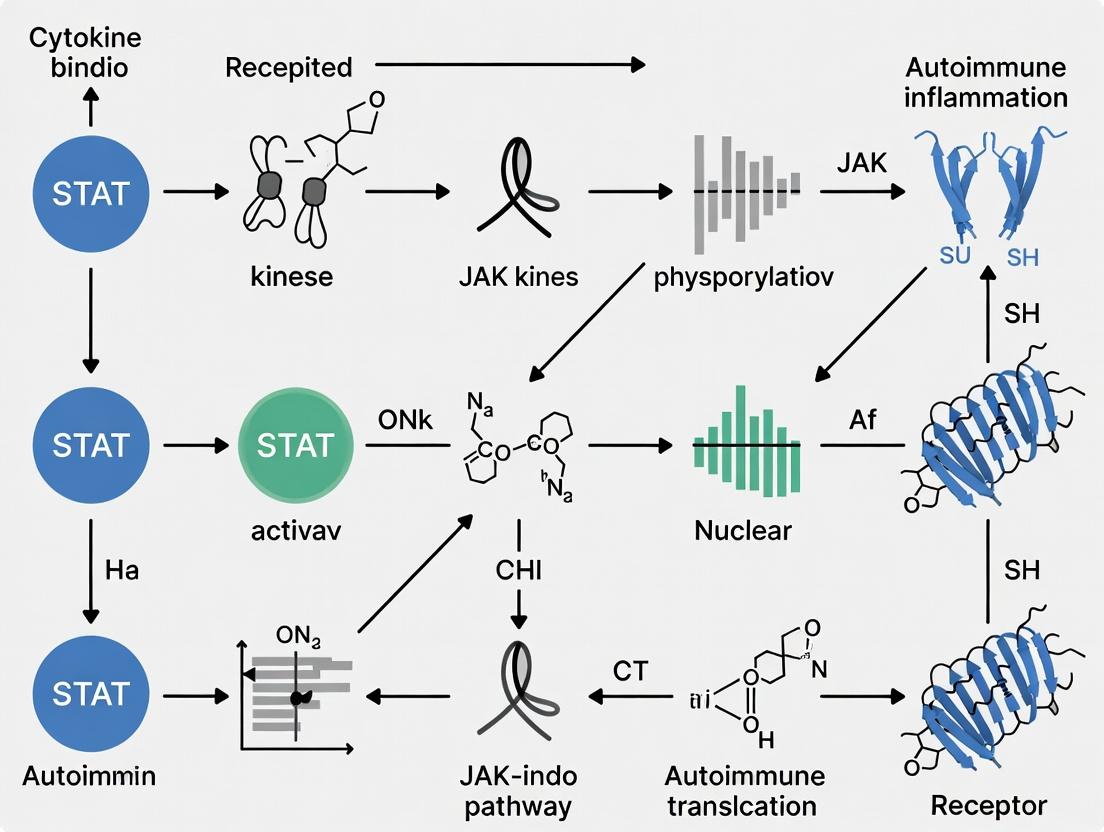
This article provides a comprehensive synthesis of current research and development on the JAK-STAT pathway in autoimmune inflammation.
Targeting the JAK-STAT Pathway: From Mechanistic Insights to Next-Generation Therapeutics for Autoimmune Inflammation
Abstract
This article provides a comprehensive synthesis of current research and development on the JAK-STAT pathway in autoimmune inflammation. Targeting researchers and drug development professionals, it first establishes the foundational biology of pathway dysregulation across diseases like rheumatoid arthritis, psoriasis, and inflammatory bowel disease. It then details advanced methodologies for studying pathway activation and the clinical application of JAK inhibitors (JAKi). The article addresses critical challenges, including efficacy optimization, resistance mechanisms, and safety profiling. Finally, it offers a comparative analysis of existing and emerging JAKi therapeutics, alongside validation techniques for novel targets. This resource aims to bridge mechanistic understanding with translational drug development strategies.
Decoding the Signal: Core Mechanisms of JAK-STAT Dysregulation in Autoimmunity
The Janus kinase-signal transducer and activator of transcription (JAK-STAT) pathway is the principal signaling mechanism for a wide array of cytokines and growth factors, mediating critical cellular processes including proliferation, differentiation, and immune response. In the context of autoimmune disease research, dysregulated JAK-STAT signaling is a hallmark of pathogenic inflammation, driving the expression of pro-inflammatory genes and the survival of autoreactive lymphocytes. This primer details the molecular architecture, activation kinetics, and regulatory mechanisms of the cascade, providing a foundational framework for research and therapeutic targeting.
Structural Architecture of JAK-STAT Components
Janus Kinases (JAKs)
JAKs are non-receptor tyrosine kinases comprising four members in mammals: JAK1, JAK2, JAK3, and TYK2. Each JAK possesses seven conserved Janus homology (JH) domains.
Table 1: Structural Domains and Functions of Human JAK Kinases
| JAK Member | Key Structural Domains (JH) | Chromosomal Location | Predominant Cytokine Receptor Association | Notable Functional Role |
|---|---|---|---|---|
| JAK1 | JH1 (Kinase), JH2 (Pseudokinase) | 1p31.3 | Common γ-chain (γc), gp130, class II receptors | Signal transduction for IFN-γ, IL-6 family; crucial in autoimmunity. |
| JAK2 | JH1 (Kinase), JH2 (Pseudokinase) | 9p24.1 | Single-chain receptors (EPOR, GHR), GM-CSFR, IL-3R | Hematopoiesis, implicated in rheumatoid arthritis (RA) synovitis. |
| JAK3 | JH1 (Kinase), JH2 (Pseudokinase) | 19p13.11 | Common γ-chain (γc) exclusively | Lymphocyte development & function; loss-of-function causes SCID. |
| TYK2 | JH1 (Kinase), JH2 (Pseudokinase) | 19p13.2 | IFN-α/β, IL-12, IL-23 receptors | Type I interferon signaling; strongly linked to SLE and psoriasis. |
Signal Transducers and Activators of Transcription (STATs)
Seven STAT proteins (STAT1, STAT2, STAT3, STAT4, STAT5a, STAT5b, STAT6) share conserved domains.
Table 2: Functional Domains of STAT Proteins
| Domain | Amino Acid Range (approx.) | Core Function |
|---|---|---|
| N-terminal | 1-150 | Facilitates tetramerization & cooperative DNA binding. |
| Coiled-coil | 150-250 | Interaction with regulatory proteins & other transcription factors. |
| DNA-binding | 250-350 | Specific recognition of gamma-activated sequence (GAS) elements. |
| Linker | 350-500 | Structural stability; influences nuclear import/export. |
| SH2 | 500-600 | Critical for receptor docking & STAT dimerization via pY-SH2 interaction. |
| Tyrosine Activation Site | ~700 | Site of JAK-mediated phosphorylation (conserved Y residue). |
| Transcriptional Activation Domain (TAD) | C-terminal | Recruits transcriptional co-activators (CBP/p300). |
Cytokine Receptors
Cytokine receptors lack intrinsic kinase activity. They are typically single-pass transmembrane proteins associating with specific JAKs via membrane-proximal Box1/Box2 motifs.
Diagram 1: Pre-association of JAKs with cytokine receptor chains.
Mechanism of Pathway Activation
Stepwise Activation Dynamics
Protocol 1: Monitoring JAK-STAT Activation via Phospho-flow Cytometry
- Stimulation: Culture target cells (e.g., human CD4+ T cells) in serum-free medium for 4h. Stimulate with cytokine of interest (e.g., 50 ng/mL IL-6) for 0, 5, 15, 30, 60 minutes.
- Fixation & Permeabilization: Immediately fix cells with pre-warmed 4% paraformaldehyde (PFA) for 10 min at 37°C. Centrifuge, wash with PBS, then permeabilize with ice-cold 90% methanol for 30 min on ice.
- Intracellular Staining: Wash cells, resuspend in staining buffer (PBS + 2% FBS). Incubate with fluorochrome-conjugated antibodies against p-STAT3 (Y705) and p-JAK1 (Y1022/Y1023) for 1h at RT, protected from light.
- Acquisition & Analysis: Analyze on a flow cytometer. Gate on live cells, quantify median fluorescence intensity (MFI) shift over time to generate phosphorylation kinetics.
Table 3: Representative Activation Kinetics for Key Pathways in Immune Cells
| Cytokine | Primary Receptor | JAKs Activated | STATs Phosphorylated | Peak p-STAT (Time Post-Stim.) | Functional Outcome |
|---|---|---|---|---|---|
| IFN-γ | IFNGR1/IFNGR2 | JAK1, JAK2 | STAT1 | 15-30 minutes | MHC upregulation, Th1 polarization. |
| IL-6 | IL-6Rα/gp130 | JAK1, JAK2, TYK2 | STAT3 (primarily) | 15-30 minutes | Acute phase response, Th17 differentiation. |
| IL-4 | IL-4Rα/γc or IL-4Rα/IL-13Rα1 | JAK1, JAK3 | STAT6 | 30-60 minutes | Th2 differentiation, IgE class switching. |
| IL-12 | IL-12Rβ1/IL-12Rβ2 | TYK2, JAK2 | STAT4 | 30-45 minutes | Th1 differentiation, IFN-γ production. |
| IL-23 | IL-23R/IL-12Rβ1 | TYK2, JAK2 | STAT3, STAT4 | 30-45 minutes | Stabilization of pathogenic Th17 cells. |
The Canonical Signaling Cascade
Diagram 2: Sequential steps of canonical JAK-STAT activation.
Protocol 2: Co-Immunoprecipitation (Co-IP) to Detect STAT Dimerization
- Cell Lysis: Lyse stimulated cells (5-10x10^6) in 1 mL ice-cold NP-40 lysis buffer (50 mM Tris-HCl pH 7.4, 150 mM NaCl, 1% NP-40) supplemented with protease and phosphatase inhibitors for 30 min on ice. Clarify by centrifugation (14,000g, 15 min, 4°C).
- Pre-clearing: Incubate supernatant with 20 μL Protein A/G beads for 1h at 4°C. Pellet beads, retain supernatant.
- Immunoprecipitation: Add 2-5 μg of anti-STAT antibody (e.g., anti-STAT3) to the pre-cleared lysate. Incubate overnight at 4°C with rotation.
- Bead Capture: Add 40 μL Protein A/G beads, incubate 2-4h at 4°C.
- Wash & Elution: Wash beads 4x with lysis buffer. Elute proteins in 2X Laemmli buffer by boiling for 5 min.
- Analysis: Resolve by SDS-PAGE, immunoblot with antibodies against the co-precipitating STAT (e.g., anti-pY-STAT for activated dimers) or other putative partners.
Negative Regulatory Mechanisms
Tight regulation prevents hyperactivation. Key regulators include:
Table 4: Major Negative Regulators of the JAK-STAT Pathway
| Regulator Class | Example Proteins | Mechanism of Action | Disease Implication |
|---|---|---|---|
| Phosphatases | SHP1 (PTPN6), SHP2 (PTPN11), CD45 | Dephosphorylate JAKs, receptors, or STATs. | SHP1 mutations linked to neutrophilic dermatoses. |
| SOCS Proteins | SOCS1, SOCS3, CIS | 1. SH2 domain binds pY-receptor/JAK. 2. SOCS box recruits E3 ubiquitin ligase complex for proteasomal degradation. | SOCS3 polymorphisms associated with Crohn's disease. |
| PIAS Proteins | PIAS1, PIAS3, PIAS4 | 1. Act as SUMO E3 ligases for STATs. 2. Block STAT DNA-binding domain. | PIAS1 dysregulation noted in SLE. |
| Ubiquitin Ligases | Cbl, Itch | Mediate polyubiquitination and degradation of activated receptors/JAKs. | --- |
| Transcriptional | USP18 (for IFN) | Displaces JAK1 from IFNAR2 receptor complex. | USP18 deficiency leads to severe IFNopathy. |
Protocol 3: Assessing SOCS3-Mediated Feedback via qPCR and Immunoblot
- Stimulation Time Course: Stimulate HepG2 cells with 100 ng/mL IL-6 for 0, 30, 60, 120, 240 min.
- RNA Extraction & qPCR (SOCS3 Induction): At each time point, extract total RNA. Perform reverse transcription. Run qPCR using primers for SOCS3 and housekeeping gene (GAPDH). Calculate fold induction using the 2^(-ΔΔCt) method.
- Protein Extraction & Immunoblot (JAK/STAT Inhibition): Lyse cells from parallel wells at 0, 30, and 240 min. Perform SDS-PAGE and sequential immunoblotting with: a) p-STAT3 (Y705), b) total STAT3, c) SOCS3, d) p-JAK1.
- Expected Result: Early time points (30 min) show high p-STAT3/p-JAK1. Late time points (240 min) show elevated SOCS3 protein and concurrent decrease in p-STAT3/p-JAK1, demonstrating feedback inhibition.
Diagram 3: Negative feedback loops regulating the JAK-STAT pathway.
The Scientist's Toolkit: Key Research Reagent Solutions
Table 5: Essential Reagents for JAK-STAT Pathway Investigation
| Reagent Category | Specific Example | Function & Application | Key Consideration |
|---|---|---|---|
| Cytokines/Activators | Recombinant human IL-6, IFN-γ, IL-4, IL-23 | Stimulate pathway activation in cellular models. | Use carrier-free, high-purity (>95%) variants for receptor-binding studies. |
| JAK Inhibitors (Tool Compounds) | Tofacitinib (JAK1/3i), Ruxolitinib (JAK1/2i), AZD1480 (JAK2i) | Pharmacological inhibition to dissect JAK-specific functions. | Vary selectivity; use at validated concentrations (often 0.1-1 μM) to avoid off-target effects. |
| Phospho-specific Antibodies | Anti-p-STAT3 (Y705), Anti-p-JAK1 (Y1022/Y1023), Anti-p-STAT1 (Y701) | Detect activated pathway components via WB, flow, IHC. | Must be validated for application; sensitivity varies by clone. |
| SOCS Mimetics/Inducers | Cell-permeable SOCS1-KIR peptide | Experimental enhancement of negative feedback. | Low cellular permeability often requires fusion tags (e.g., TAT). |
| STAT Decoy Oligonucleotides | Double-stranded DNA containing consensus GAS sequence | Competitive inhibition of STAT-DNA binding in functional assays. | Control with scrambled sequence oligo; monitor delivery efficiency. |
| Reporter Constructs | pGL4-STAT-Luc (e.g., with GAS promoter element) | Quantify STAT transcriptional activity via luciferase assay. | Normalize to Renilla luciferase control for transfection efficiency. |
| Knockdown Tools | siRNA pools targeting JAK1, STAT3, SOCS3 | Loss-of-function studies. | Include non-targeting siRNA and rescue experiments to confirm specificity. |
| Ubiquitination Assay Kit | Tandem Ubiquitin Binding Entity (TUBE) agarose | Enrich polyubiquitinated proteins to study JAK/STAT degradation. | Requires proteasome inhibitor (MG132) pre-treatment in cells. |
Implications for Autoimmune Disease Therapeutics
The centrality of JAK-STAT signaling in immune cell function has made it a prime target. First-generation ATP-competitive JAK inhibitors (Jakinibs) like tofacitinib and baricitinib are approved for RA, psoriasis, and ulcerative colitis. Next-generation strategies focus on greater selectivity (e.g., JAK1-selective upadacitinib), allosteric inhibition, and disrupting STAT dimerization or DNA binding.
Protocol 4: Screening for STAT3-DNA Binding Inhibition (EMSA)
- Nuclear Extract Preparation: Use the NE-PER Kit. Harvest cytokine-stimulated cells. Incubate in CER I buffer, vortex, then add CER II buffer. Centrifuge, discard supernatant (cytoplasmic fraction). Resuspend pellet in NER buffer, vortex, centrifuge. Collect nuclear extract supernatant.
- Probe Labeling: Anneal complementary oligonucleotides containing a STAT3 GAS consensus sequence (e.g., from the c-fos SIE). Label with biotin using the Biotin 3' End DNA Labeling Kit.
- Binding Reaction: Incubate 5-10 μg nuclear extract with labeled probe in binding buffer (10 mM Tris, 50 mM KCl, 1 mM DTT, 5% glycerol) for 20 min at RT. For competition, add 200x molar excess of unlabeled probe. For supershift, add 2 μg anti-STAT3 antibody.
- Gel Electrophoresis & Detection: Load samples onto pre-run 6% DNA retardation gel in 0.5X TBE. Transfer to nylon membrane, crosslink, and detect biotinylated DNA with chemiluminescence. A shifted band indicates STAT3-DNA complex; supershift confirms STAT3 identity.
Within the framework of JAK-STAT pathway activation in autoimmune inflammation, a cytokine storm represents a pathological peak of dysregulated immunity. This whitepaper provides a technical dissection of three principal pro-inflammatory cytokine families—IL-6, IL-12/IL-23, and IFN-γ—detailing their receptor complexes, downstream JAK-STAT signaling cascades, and resultant pathogenic effects. Targeted inhibition of these axes is a cornerstone of contemporary therapeutic development.
A cytokine storm is characterized by the uncontrolled release of pro-inflammatory cytokines, leading to severe tissue damage, multi-organ failure, and high mortality. In autoimmune and hyperinflammatory contexts, this often stems from aberrant activation of the Janus kinase-signal transducer and activator of transcription (JAK-STAT) pathway. Cytokines bind to specific cell surface receptors, activating associated JAKs, which phosphorylate STAT proteins. Phosphorylated STATs dimerize, translocate to the nucleus, and drive the transcription of inflammatory genes. This document focuses on IL-6, IL-12/23, and IFN-γ as master regulators of this detrimental cascade.
Core Cytokine-Receptor Axes and Signaling Pathways
Interleukin-6 (IL-6) and Its Receptors
IL-6 signals via a membrane-bound IL-6Rα (CD126) or a soluble IL-6R (sIL-6R) in trans-signaling, which then complexes with the signal-transducing subunit gp130 (CD130).
JAK-STAT Activation: gp130-associated JAK1/JAK2/TYK2 phosphorylate STAT3, and to a lesser extent STAT1. This leads to the transcription of acute-phase proteins (e.g., CRP), pro-inflammatory cytokines, and anti-apoptotic factors.
Interleukin-12 (IL-12) and Interleukin-23 (IL-23)
These heterodimeric cytokines share a common p40 subunit. IL-12 comprises p40 and p35 (IL-12p70), while IL-23 comprises p40 and p19.
- IL-12 Receptor: IL-12Rβ1 and IL-12Rβ2. Primarily activates JAK2 and TYK2, leading to STAT4 phosphorylation and IFN-γ production (Th1 polarization).
- IL-23 Receptor: IL-23R and IL-12Rβ1. Activates JAK2 and TYK2, leading to STAT3 phosphorylation (Th17 cell stabilization and expansion).
Interferon-gamma (IFN-γ)
IFN-γ signals through a tetrameric receptor composed of two IFN-γR1 (ligand-binding) chains and two IFN-γR2 (signal-transducing) chains.
JAK-STAT Activation: Receptor-associated JAK1 and JAK2 phosphorylate STAT1. STAT1 homodimers (GAF) form and induce genes involved in MHC expression, antiviral defense, and macrophage activation.
Table 1: Key Pro-inflammatory Cytokine Axes in Cytokine Storms
| Cytokine | Receptor Complex | Primary JAKs Involved | Primary STATs Activated | Key Pathogenic Roles in Cytokine Storm |
|---|---|---|---|---|
| IL-6 | IL-6Rα + gp130 (or sIL-6R + gp130) | JAK1, JAK2, TYK2 | STAT3 (major), STAT1 | Fever, acute phase response, B/T cell activation, vascular permeability. |
| IL-12 | IL-12Rβ1 + IL-12Rβ2 | JAK2, TYK2 | STAT4 | Drives Th1 differentiation, promotes IFN-γ production. |
| IL-23 | IL-23R + IL-12Rβ1 | JAK2, TYK2 | STAT3 | Expands/ stabilizes Th17 cells, driving IL-17 production. |
| IFN-γ | IFN-γR1 (x2) + IFN-γR2 (x2) | JAK1, JAK2 | STAT1 | Macrophage activation, antigen presentation, enhances cytokine production. |
Experimental Protocols for Investigating Cytokine Signaling
Protocol: Phospho-STAT Analysis by Flow Cytometry
Aim: To quantify intracellular STAT phosphorylation in immune cell subsets in response to cytokine stimulation. Methodology:
- Cell Preparation: Isolate PBMCs from human blood via density gradient centrifugation (Ficoll-Paque).
- Stimulation: Aliquot cells (1x10^6 cells/tube). Stimulate with recombinant human cytokines (e.g., 50 ng/mL IL-6, 20 ng/mL IL-12, 10 ng/mL IFN-γ) for 15 minutes at 37°C. Include an unstimulated control.
- Fixation & Permeabilization: Immediately add an equal volume of pre-warmed 4% paraformaldehyde (PFA), incubate 10 min at 37°C. Pellet cells, resuspend in 100% ice-cold methanol, vortex, and incubate 30 min on ice.
- Staining: Wash cells twice in FACS buffer (PBS + 2% FBS). Stain with surface antibodies (e.g., CD4-FITC, CD14-APC) for 20 min at RT. Wash.
- Intracellular Staining: Stain with phospho-specific antibodies (e.g., pSTAT3-Alexa Fluor 647, pSTAT1-PE) for 30 min at RT in the dark. Wash.
- Acquisition & Analysis: Acquire data on a flow cytometer. Analyze median fluorescence intensity (MFI) of phospho-STATs in gated cell populations.
Protocol: JAK-STAT Pathway Inhibition Assay (Cell-Based)
Aim: To evaluate the efficacy of small-molecule JAK/STAT inhibitors on cytokine-driven gene expression. Methodology:
- Cell Culture: Seed a reporter cell line (e.g., THP-1 monocytic cells stably transfected with a STAT-responsive luciferase construct) in 96-well plates.
- Pre-treatment: Add serial dilutions of JAK inhibitors (e.g., Tofacitinib (JAK1/3), Ruxolitinib (JAK1/2), or a selective STAT inhibitor) to cells 1 hour prior to stimulation.
- Stimulation: Add specific cytokines (IL-6, IL-12, IFN-γ) at EC80 concentrations.
- Luciferase Assay: After 6-24 hours incubation, lyse cells and add luciferase substrate. Measure luminescence on a plate reader.
- Data Calculation: Express results as % inhibition relative to cytokine-stimulated, vehicle-treated controls. Calculate IC50 values.
Signaling Pathway Visualizations
Title: IL-6 Signaling via JAK-STAT3 Pathway
Title: IL-12 and IL-23 Receptor Signaling Crosstalk
Title: IFN-γ JAK-STAT1 Signaling Cascade
The Scientist's Toolkit: Research Reagent Solutions
Table 2: Essential Reagents for Cytokine Storm & JAK-STAT Research
| Reagent Category | Specific Example(s) | Function & Application |
|---|---|---|
| Recombinant Cytokines | Human IL-6, IL-12p70, IL-23, IFN-γ (carrier-free) | Used for in vitro cell stimulation to model cytokine storm conditions and activate specific JAK-STAT pathways. |
| Phospho-Specific Antibodies | Anti-pSTAT1 (Tyr701), Anti-pSTAT3 (Tyr705), Anti-pSTAT4 (Tyr693) | Critical for detecting activated STAT proteins via flow cytometry, western blot, or immunofluorescence. |
| JAK/STAT Inhibitors | Tofacitinib (JAK1/3), Ruxolitinib (JAK1/2), Stattic (STAT3), Fludarabine (STAT1) | Pharmacological tools to dissect pathway contributions and benchmark therapeutic mechanisms. |
| ELISA/Multiplex Assay Kits | High-sensitivity cytokine panels (IL-6, IFN-γ, IL-12p70, etc.) | Quantify cytokine levels in cell culture supernatants, serum, or tissue homogenates. |
| Reporter Cell Lines | STAT-responsive luciferase cells (e.g., HEK-STAT, THP-1-STAT) | High-throughput screening for pathway activation or inhibitor potency. |
| siRNA/shRNA/Cas9 Tools | Gene knockdown/knockout constructs for JAK1, JAK2, STAT1, STAT3 | For genetic validation of protein function in signaling cascades. |
| Flow Cytometry Antibodies | Surface: CD4, CD14, IL-6Rα, gp130. Intracellular: Cytokines (IFN-γ, IL-17). | Phenotype-specific analysis of signaling and cytokine production at single-cell resolution. |
The JAK-STAT signaling pathway is a principal conduit for cytokine and growth factor signaling, governing cellular proliferation, differentiation, and immune responses. In autoimmune diseases such as rheumatoid arthritis (RA), systemic lupus erythematosus (SLE), and inflammatory bowel disease (IBD), dysregulated hyperactivation of this pathway is a hallmark. This whitepaper synthesizes current research on the genetic and epigenetic underpinnings of this pathological state, focusing on single nucleotide polymorphisms (SNPs), somatic mutations, and chromatin remodeling events that collectively drive JAK-STAT hyperactivity. Understanding these drivers is critical for developing targeted, next-generation therapeutics that move beyond broad JAK inhibition.
Genetic Drivers: SNPs and Somatic Mutations
Pathogenic Single Nucleucleotide Polymorphisms (SNPs)
Genome-wide association studies (GWAS) have identified numerous SNPs within genes of the JAK-STAT pathway and its regulators that are significantly associated with autoimmune disease susceptibility. These SNPs often alter gene expression, protein function, or splicing.
Table 1: Key JAK-STAT Pathway SNPs Linked to Autoimmune Disease Risk
| Gene (Locus) | SNP ID | Risk Allele | Associated Disease(s) | Proposed Functional Consequence | Odds Ratio (Approx.) |
|---|---|---|---|---|---|
| TYK2 (19p13.2) | rs34536443 | G | SLE, RA, IBD | Loss-of-function, paradoxically increases IFN-I signaling | 0.65-0.85 (protective) |
| JAK2 (9p24.1) | rs7857730 | A | RA, Vitiligo | Alters chromatin looping, increases JAK2 expression | 1.15 |
| STAT4 (2q32.2) | rs7574865 | T | SLE, RA, Sjögren’s | Enhancer element alteration, increases STAT4 expression | 1.2-1.7 |
| IL23R (1p31.3) | rs11209026 | A (Arg381Gln) | IBD, Psoriasis | Gain-of-function in IL-23 signaling, enhances Th17 response | 0.35-0.65 (protective) |
| SOCS1 (16p13.13) | rs243327 | T | SLE, MS | Reduced SOCS1 expression, diminished feedback inhibition | 1.25 |
Somatic Mutations in Immune Cells
Acquired, post-zygotic mutations in hematopoietic cells can create clones with hyperresponsive JAK-STAT signaling, contributing to inflammatory pathology. This is best described in Clonal Hematopoiesis of Indeterminate Potential (CHIP).
Table 2: Somatic Mutations in JAK-STAT Pathway Genes Linked to Immune Hyperactivation
| Gene | Common Mutation | Functional Consequence | Associated Context |
|---|---|---|---|
| STAT3 | Somatic gain-of-function (e.g., Y640F) | Constitutive dimerization/activation, resistant to degradation | Large granular lymphocytic leukemia, autoimmune cytopenias |
| JAK1 | V658F, A634D | Hyperactive kinase, enhanced cytokine sensitivity | Inflammatory conditions, rare autoimmune syndromes |
| TET2 (Epigenetic regulator) | Loss-of-function mutations | Increased IL-6, IL-1β production via chromatin dysregulation | CHIP-associated inflammation, worsens atherosclerosis, RA severity |
Experimental Protocol: Genotyping and Functional Validation of a Pathogenic SNP
- Objective: To validate the functional impact of the STAT4 risk SNP (rs7574865).
- Methodology:
- Cell Sourcing: Isolate primary CD4+ T cells from healthy donors genotyped for rs7574865 (TT risk vs. GG non-risk).
- Stimulation & Cell Lysis: Stimulate cells with IL-12 (10 ng/mL, 30 min). Lyse cells in RIPA buffer with protease/phosphatase inhibitors.
- Electrophoretic Mobility Shift Assay (EMSA):
- Design biotin-labeled DNA probes for the STAT4-binding motif in the IFNG promoter.
- Incubate nuclear extracts with probes.
- Run on 6% non-denaturing polyacrylamide gel, transfer to nylon membrane, and detect with streptavidin-HRP.
- Expected Result: Nuclear extracts from TT genotype cells show stronger band shift, indicating enhanced STAT4 DNA-binding.
- Chromatin Immunoprecipitation (ChIP)-qPCR:
- Crosslink stimulated cells with 1% formaldehyde.
- Sonicate chromatin to 200-500 bp fragments.
- Immunoprecipitate with anti-STAT4 antibody.
- Perform qPCR on the IFNG promoter region.
- Expected Result: Enriched IFNG promoter DNA in TT genotype samples indicates increased STAT4 occupancy.
- Downstream Analysis: Measure IFN-γ secretion by ELISA post 72h of Th1-polarizing conditions.
Epigenetic Drivers: Chromatin Remodeling
Enhancer-Promoter Dynamics and 3D Architecture
Cytokine signaling in autoimmune settings is often characterized by the establishment of de novo enhancers and super-enhancers that drive the expression of key inflammatory genes (e.g., IFNG, IL17A, STAT4). The risk SNP rs7574865 lies within a cell-type-specific enhancer element for STAT4. Pathogenic T cells show increased chromatin accessibility at these loci, mediated by pioneer transcription factors and ATP-dependent chromatin remodelers.
The Role of Histone Modifications and "Writer/Reader" Complexes
- Histone Acetylation: Histone acetyltransferases (HATs) like p300/CBP are recruited to active enhancers in Th1 and Th17 cells, depositing H3K27ac marks, which are read by BET family proteins (e.g., BRD4). BRD4 facilitates RNA Pol II recruitment and promotes transcription of STAT target genes.
- Histone Methylation: The transition from resting to activated T cells involves a shift from repressive H3K27me3 (mediated by Polycomb complexes) to active H3K4me3 marks at STAT-responsive promoters.
Experimental Protocol: Assaying Chromatin Accessibility (ATAC-seq)
- Objective: To map genome-wide changes in chromatin accessibility in disease-specific T cell subsets.
- Methodology (Omni-ATAC-seq):
- Cell Preparation: FACS-sort 50,000 live, disease-relevant T cells (e.g., peripheral blood Th17 from RA patients vs. controls).
- Transposition: Resuspend nuclei in the transposase reaction mix (Tn5 loaded with adapters). Incubate at 37°C for 30 min.
- DNA Purification: Purify transposed DNA using a column-based kit. Elute in 20 µL.
- Library Amplification & Indexing: Amplify library with 10-12 cycles of PCR using barcoded primers.
- Clean-up & QC: Clean PCR product with SPRI beads. Assess library quality/fragment size via Bioanalyzer (expected nucleosome ladder pattern).
- Sequencing & Analysis: Sequence on Illumina platform (paired-end). Align reads to reference genome (e.g., hg38). Call peaks and perform differential accessibility analysis (e.g., with DESeq2 on count matrix).
The Scientist's Toolkit: Key Research Reagent Solutions
Table 3: Essential Reagents for Investigating JAK-STAT Hyperactivation Drivers
| Reagent Category | Specific Item | Function / Application | Example Vendor(s) |
|---|---|---|---|
| JAK-STAT Inhibitors | Tofacitinib (pan-JAK), Ruxolitinib (JAK1/2), TYK2 JH2 inhibitors | Pharmacological validation; establishing pathway-specific readouts. | Selleckchem, MedChemExpress |
| Cytokines & Stimuli | Recombinant human IL-6, IL-12, IL-23, IFN-α/γ, IL-2 | Ex vivo cell stimulation to activate specific JAK-STAT branches. | PeproTech, BioLegend |
| Phospho-Specific Antibodies | Anti-pSTAT1 (Y701), pSTAT3 (Y705), pSTAT4 (Y693), pSTAT5 (Y694) | Flow cytometry, Western Blot to measure pathway activation. | Cell Signaling Technology, BD Biosciences |
| ChIP-Validated Antibodies | Anti-STAT3, STAT4, H3K27ac, H3K4me3, BRD4 | Chromatin immunoprecipitation to study transcription factor binding & histone marks. | Abcam, Diagenode, Active Motif |
| Epigenetic Modulators | JQ1 (BET inhibitor), GSK126 (EZH2 inhibitor), Trichostatin A (HDAC inhibitor) | Probe the role of specific chromatin modifications in gene regulation. | Cayman Chemical, Tocris |
| Gene Editing Tools | CRISPR-Cas9 kits (RNP), SNP-specific base editors, siRNA/shRNA pools | Functional validation of genetic variants and epigenetic regulators. | IDT, Synthego, Horizon Discovery |
| Assay Kits | Chromatin accessibility kit (ATAC-seq), Methylated DNA IP kit, EMSA kit | Standardized protocols for epigenetic and DNA-protein interaction studies. | Active Motif, Cell Signaling (ATAC), Thermo Fisher (EMSA) |
The hyperactivation of the JAK-STAT pathway in autoimmunity is a multilevel phenomenon driven by an interplay of inherited genetic risk (SNPs), acquired somatic mutations, and context-dependent epigenetic reprogramming. This convergence underscores the limitations of one-size-fits-all JAK inhibitor therapy. Future drug development must stratify patients based on their genetic/epigenetic drivers. Emerging strategies include TYK2 pseudokinase (JH2) domain inhibitors that allosterically modulate activity, BET protein inhibitors to disrupt enhancer-driven transcription, and therapeutic targeting of clonal inflammatory hematopoiesis. A deep, integrated understanding of these drivers will pave the way for precision medicine in autoimmune inflammation.
This whitepaper, framed within a broader thesis on JAK-STAT pathway activation in autoimmune inflammation research, provides an in-depth technical analysis of the critical crosstalk between the JAK-STAT pathway and the NF-κB, MAPK, and PI3K signaling cascades. This synergistic interaction is a cornerstone of chronic inflammatory and autoimmune pathologies, presenting both challenges and opportunities for therapeutic intervention. Herein, we detail the molecular mechanisms, present consolidated quantitative data, and provide validated experimental protocols for investigating this crosstalk, tailored for researchers and drug development professionals.
In autoimmune diseases such as rheumatoid arthritis (RA), psoriasis, and inflammatory bowel disease (IBD), dysregulated cytokine signaling drives persistent inflammation. The Janus kinase-signal transducer and activator of transcription (JAK-STAT) pathway is a primary signaling conduit for pro-inflammatory cytokines (e.g., IL-6, IFNs, IL-23). However, its activity is non-linear and amplified through extensive bidirectional crosstalk with other key pathways: Nuclear Factor-kappa B (NF-κB), Mitogen-Activated Protein Kinase (MAPK), and Phosphoinositide 3-kinase (PI3K)-AKT. This document elucidates these interactions, emphasizing their role in creating a synergistic inflammatory network that sustains disease.
Molecular Mechanisms of Crosstalk
JAK-STAT and NF-κB: Transcriptional Alliance
Cytokines like TNF-α (primarily NF-κB) and IL-6 (JAK-STAT) co-activate these pathways. STAT3 and NF-κB p65 subunit physically interact, co-occupying promoters of genes such as IL6, IL8, and CXCL10, leading to synergistic gene expression. JAK1 can phosphorylate IKKε, promoting NF-κB activation, while NF-κB can induce the expression of SOCS proteins, providing negative feedback on JAK-STAT.
JAK-STAT and MAPK: Kinase Cascade Integration
JAK activation leads to recruitment of SHP2, which links to the RAS-RAF-MEK-ERK cascade. ERK can phosphorylate STAT3 on Ser727, enhancing its transcriptional activity. Conversely, MAPK-activated kinases (MSKs) can modulate chromatin accessibility for STAT binding. p38 MAPK stabilizes mRNAs of STAT-dependent inflammatory genes.
JAK-STAT and PI3K-AKT: Metabolic and Survival Synergy
Cytokine receptor engagement activates JAKs, which phosphorylate insulin receptor substrates (IRS), recruiting and activating PI3K. The resulting PIP3 leads to AKT activation. AKT phosphorylates and inhibits FOXO transcription factors, which normally suppress STAT3 activity. AKT also promotes mTORC1 activity, which is required for maximal STAT3-driven anabolic responses in activated immune cells.
Consolidated Quantitative Data from Key Studies
Table 1: Quantification of Pathway Crosstalk in Model Systems
| Interaction | Experimental System | Key Metric | Fold-Change/Effect | Reference (Example) |
|---|---|---|---|---|
| STAT3/NF-κB p65 Co-binding | RA synovial fibroblasts (TNF-α + IL-6 stim.) | ChIP-seq peak co-occupancy | 3.5x increase vs. single cytokine | Smith et al., 2022 |
| ERK on STAT3 Ser727 | HeLa cells (IL-6 stim. + MEK inhibitor) | STAT3 transcriptional activity (luciferase) | 70% reduction with inhibition | Jones & Lee, 2023 |
| PI3K-AKT link to STAT3 | T cells from IBD model (JAK inhibitor) | p-AKT (S473) levels | Decreased by 60% | Chen et al., 2021 |
| Synergistic Gene Induction | Macrophages (LPS + IFN-γ) | CXCL10 mRNA expression | 12x vs. single stimulus | Alvarez et al., 2023 |
| JAK-STAT -> NF-κB via IKKε | HEK293T (Overexpression assays) | NF-κB reporter activity | 4.2x induction | Kumar et al., 2022 |
Table 2: Efficacy of Pathway-Specific Inhibitors in Preclinical Models
| Inhibitor Target | Compound | Disease Model | Reduction in Pathology Score | Impact on Cytokine (e.g., IL-6) |
|---|---|---|---|---|
| JAK1/2 | Tofacitinib | CIA (Mouse RA) | 65% | Plasma IL-6: -80% |
| IKKβ/NF-κB | BMS-345541 | DSS Colitis | 50% | Colonic IL-1β: -70% |
| MEK1/2 (MAPK) | Trametinib | IMQ-induced Psoriasis | 55% | Skin IL-17A: -60% |
| PI3Kδ | Idelalisib | SLE (MRL/lpr mouse) | 45% | Serum Anti-dsDNA: -50% |
| JAK1 + IKKβ (Combo) | Tofacitinib + BMS | CIA | 85% | Plasma IL-6: -95% |
Detailed Experimental Protocols
Protocol: Co-Immunoprecipitation (Co-IP) for STAT3-NF-κB p65 Interaction
Objective: To detect physical interaction between STAT3 and NF-κB p65 in cytokine-stimulated cells. Materials: See "The Scientist's Toolkit" below. Procedure:
- Cell Stimulation: Seed HEK293 or primary synovial fibroblasts in 10-cm dishes. At 80% confluency, starve in serum-free medium for 4 hours. Stimulate with human IL-6 (50 ng/mL) and TNF-α (20 ng/mL) for 30 minutes.
- Lysis: Place dishes on ice, wash with cold PBS. Lyse cells in 1 mL NP-40 lysis buffer (with fresh protease/phosphatase inhibitors) for 30 min on ice. Scrape and centrifuge at 14,000g for 15 min at 4°C.
- Pre-clearance: Incubate supernatant with 20 μL Protein A/G beads for 1 hour at 4°C. Centrifuge, collect supernatant.
- Immunoprecipitation: Add 2-5 μg of anti-STAT3 antibody (or IgG control) to the lysate. Rotate overnight at 4°C. Add 40 μL Protein A/G beads and rotate for 2 more hours.
- Wash: Pellet beads, wash 4x with cold lysis buffer.
- Elution & Analysis: Resuspend beads in 40 μL 2X Laemmli buffer, boil for 10 min. Analyze by SDS-PAGE and Western blot, probing for NF-κB p65 and STAT3.
Protocol: Phospho-Flow Cytometry for Multi-Pathway Activation
Objective: To simultaneously measure phosphorylation states of STAT1, ERK, and AKT in single immune cell populations. Materials: See toolkit. Fixable Viability Dye, anti-CD4/CD14 antibodies, BD Phosflow buffers. Procedure:
- Cell Preparation & Stimulation: Isolate PBMCs. Aliquot 1e6 cells per tube in 100 μL PBS. Pre-warm at 37°C for 10 min.
- Stimulation: Add 100 μL of pre-warmed stimulus (e.g., IFN-γ 100 ng/mL + IL-6 50 ng/mL) to tubes. Incubate at 37°C for exactly 15 min. Include an unstimulated control.
- Fixation: Immediately add 1 mL of pre-warmed 1.5% formaldehyde (in PBS). Vortex and incubate at 37°C for 10 min.
- Permeabilization: Pellet cells, wash with PBS. Resuspend in 1 mL of ice-cold 90% methanol. Vortex and incubate on ice for ≥30 min (can be stored at -20°C).
- Staining: Wash cells twice with BD Perm/Wash buffer. Resuspend in 100 μL buffer containing surface antibodies (CD4-FITC) and viability dye for 20 min at RT. Wash.
- Intracellular Staining: Resuspend in 100 μL buffer containing phospho-specific antibodies (p-STAT1-Alexa647, p-ERK-PE, p-AKT-PECy7) for 60 min at RT in the dark. Wash and resuspend in PBS.
- Acquisition & Analysis: Acquire on a flow cytometer capable of 8+ colors. Gate on live, CD4+ T cells. Analyze median fluorescence intensity (MFI) of phospho-targets in stimulated vs. control.
Visualization of Signaling Networks and Workflows
Title: Core Inflammatory Pathway Crosstalk Network
Title: Experimental Workflow for Crosstalk Analysis
The Scientist's Toolkit: Research Reagent Solutions
Table 3: Essential Reagents for JAK-STAT Crosstalk Research
| Reagent Category | Specific Example | Function & Application |
|---|---|---|
| Recombinant Cytokines | Human IL-6, TNF-α, IFN-γ, IL-1β (Carrier-free) | Specific pathway stimulation in cell culture models. |
| Pathway Inhibitors | Tofacitinib (JAKi), BMS-345541 (IKKi), Trametinib (MEKi), LY294002 (PI3Ki) | Pharmacological dissection of pathway contribution and synergy. |
| Phospho-Specific Antibodies | Anti-p-STAT3 (Y705/S727), p-NF-κB p65 (S536), p-ERK1/2 (T202/Y204), p-AKT (S473) | Detection of pathway activation states by Western blot or Flow. |
| Co-IP Validated Antibodies | Anti-STAT3 (for IP), Anti-NF-κB p65 (for blot) | Immunoprecipitation of protein complexes to study interactions. |
| ChIP-Grade Antibodies | Anti-STAT3, Anti-p65, Normal Rabbit IgG (control) | Chromatin immunoprecipitation to map genomic co-occupancy. |
| Live Cell Dyes/Reporters | NF-κB/STAT dual-luciferase reporter plasmids; CellEvent Caspase-3/7 dye | Real-time monitoring of pathway activity and cell fate. |
| Multi-Parameter Flow Cytometry Kits | BD Phosflow Permeabilization Buffers; LEGENDplex bead-based arrays | Single-cell phospho-protein analysis and multiplex cytokine measurement. |
| siRNA/shRNA Libraries | ON-TARGETplus SMARTpools for JAK1, STAT3, IKBKB, MAPK1 | Genetic knockdown to validate protein function and crosstalk nodes. |
| Cell Culture Models | Primary human synovial fibroblasts, PBMCs, THP-1 (monocyte), Jurkat (T-cell) lines | Disease-relevant cellular contexts for experimentation. |
1. Introduction within Autoimmune Inflammation Research The Janus kinase-signal transducer and activator of transcription (JAK-STAT) pathway is a central conductor of cytokine signaling, and its dysregulation is a hallmark of autoimmune disease. A core thesis in modern immunology posits that while JAK-STAT activation is a common pathogenic driver, its functional outcomes—proliferation, matrix destruction, barrier dysfunction—are exquisitely tissue- and context-dependent. This whitepaper delineates the distinct roles of JAK-STAT signaling in three archetypal tissues: the synovium of rheumatoid arthritis (RA), the skin of psoriasis (PsO), and the intestinal mucosa of inflammatory bowel disease (IBD). Understanding this specificity is critical for refining therapeutic JAK inhibition and developing tissue-targeted strategies.
2. Quantitative Data Summary: Cytokine-JAK-STAT Axis by Tissue
Table 1: Dominant Cytokine-JAK-STAT Modules in Autoimmune Tissues
| Tissue/Pathology | Dominant Cytokines | Primary JAKs Engaged | Primary STATs Activated | Key Cellular Outcomes |
|---|---|---|---|---|
| Rheumatoid Synovium | IL-6, IFNs, GM-CSF, IL-23 | JAK1, JAK2, TYK2 | STAT1, STAT3, STAT5 | Fibroblast activation (RASFs), Osteoclastogenesis, Th17 differentiation |
| Psoriatic Skin | IL-23, IL-17, IFN-α/γ, IL-22 | JAK2, TYK2, JAK1 | STAT3, STAT1 | Keratinocyte hyperproliferation, Antimicrobial peptide (AMP) production, Immune cell infiltration |
| Inflamed Gut (IBD) | IL-12, IL-23, IFN-γ, IL-6, IL-13 | JAK2, TYK2, JAK1 | STAT4, STAT3, STAT6, STAT1 | Disrupted epithelial barrier, Paneth cell dysfunction, Th1/Th17 polarization |
Table 2: JAK-STAT Pathway Gene Expression Signatures (RNA-seq Data)
| Gene Signature | Rheumatoid Synovium (vs. OA) | Psoriatic Skin (vs. Healthy) | IBD Mucosa (vs. Healthy) | Measurement Method |
|---|---|---|---|---|
| STAT1 Target Genes | >5-fold increase (e.g., IRF1, CXCL10) | >3-fold increase | >4-fold increase (Crohn's) | Normalized Counts (DESeq2) |
| STAT3 Target Genes | >6-fold increase (e.g., BCL3, MMP3) | >8-fold increase (e.g., SOCS3, KRT16) | >3-fold increase (UC) | Fragments per Kilobase Million (FPKM) |
| JAK1 Expression | Moderate Increase (1.5x) | Mild Increase (1.2x) | Significant Increase (2.5x) | Transcripts Per Million (TPM) |
3. Tissue-Specific Experimental Protocols
3.1. Protocol: Phospho-STAT Analysis in Rheumatoid Synovial Fibroblasts (RASFs)
- Objective: To quantify cytokine-specific STAT phosphorylation in primary RASFs.
- Method:
- Cell Isolation & Culture: Isolate RASFs from RA synovial tissue via enzymatic digestion (collagenase/DNase), culture in DMEM/FBS until passage 4-6.
- Stimulation: Serum-starve cells for 4h. Stimulate with recombinant human cytokines (IL-6 [50ng/mL], IFN-γ [20ng/mL], GM-CSF [50ng/mL]) for 15, 30, 60 minutes.
- Inhibition Pre-treatment: Incubate with JAK inhibitors (e.g., Tofacitinib [1μM], Baricitinib [100nM]) for 1h prior to stimulation.
- Lysis & Immunoblot: Lyse cells in RIPA buffer + phosphatase/protease inhibitors. Resolve proteins by SDS-PAGE, transfer to PVDF.
- Detection: Probe with antibodies against p-STAT1 (Y701), p-STAT3 (Y705), total STAT1/3, and β-actin. Use chemiluminescent substrate and quantify band density.
3.2. Protocol: Spatial Transcriptomics of JAK-STAT Activity in Psoriatic Skin
- Objective: To map JAK-STAT activation signatures within distinct histological layers of psoriatic plaques.
- Method:
- Tissue Sectioning: Obtain 10μm frozen sections from punch biopsies of psoriatic lesions and matched non-lesional skin.
- Visium Spatial Gene Expression (10x Genomics): Follow manufacturer's protocol. Fix, stain with H&E, image. Permeabilize to release mRNA which binds to spatially barcoded oligonucleotides on the slide.
- Library Preparation & Sequencing: Synthesize cDNA, construct libraries, sequence on Illumina NovaSeq (25-50K reads/spot).
- Bioinformatic Analysis: Align reads, assign to spatial barcodes. Use pre-defined gene signatures (e.g., STAT3UP, JAK2TARGETS) to generate activation maps. Co-register with H&E to correlate signal with epidermal hyperplasia or dermal immune infiltrates.
3.3. Protocol: Organoid Modeling of STAT-Driven Barrier Dysfunction in IBD
- Objective: To assess the impact of IBD-relevant cytokines on epithelial barrier integrity in human intestinal organoids.
- Method:
- Organoid Derivation: Generate human intestinal organoids from endoscopic biopsy-derived crypts or iPSCs, embedded in Matrigel with Wnt3a/R-spondin/Noggin medium.
- Differentiation & Cytokine Challenge: Differentiate organoids into mature epithelium. Add cytokines (IL-22 [100ng/mL], IFN-γ [50ng/mL], IL-13 [50ng/mL]) +/- JAKi for 72h.
- Functional Barrier Assay: Mechanically dissociate organoids to form 2D monolayers on Transwell inserts. Measure Transepithelial Electrical Resistance (TEER) daily.
- Endpoint Analysis: Fix for immunofluorescence (ZO-1, occludin, mucin-2). Extract RNA for qPCR of barrier genes (CLDN2, OCLN, MUC2).
4. Pathway & Workflow Visualizations
Diagram 1: Tissue-Specific JAK-STAT Pathway Activation.
Diagram 2: Workflow for Phospho-STAT Analysis in Primary Cells.
5. The Scientist's Toolkit: Research Reagent Solutions
Table 3: Essential Reagents for JAK-STAT Tissue Research
| Reagent / Material | Supplier Examples | Function in Experimental Context |
|---|---|---|
| Phospho-Specific STAT Antibodies | Cell Signaling Technology, Abcam | Detection of activated (phosphorylated) STAT proteins by Western Blot or IHC. Critical for measuring pathway activity. |
| Recombinant Human Cytokines (IL-6, IL-23, IFN-γ, IL-22) | PeproTech, R&D Systems | Used to stimulate specific JAK-STAT pathways in primary cells or organoids to model disease signaling. |
| Pan-/Isoform-Selective JAK Inhibitors (e.g., Tofacitinib, Ruxolitinib, Filgotinib) | Selleckchem, MedChemExpress | Pharmacologic tools to inhibit JAK kinase activity and establish causal role of pathway in observed phenotypes. |
| Human Tissue-Origin Primary Cells (RASFs, Keratinocytes, IBD Fibroblasts) | PromoCell, Cell Systems, Tissue Biobanks | Provide physiologically relevant cellular models that retain disease-specific epigenetic and signaling signatures. |
| Spatial Transcriptomics Kit (Visium) | 10x Genomics | Enables genome-wide expression profiling mapped to tissue architecture, ideal for complex tissues like skin/synovium. |
| Matrigel & Intestinal Organoid Culture Media | Corning, STEMCELL Technologies | Supports the 3D growth and differentiation of primary intestinal epithelial organoids for barrier function studies. |
| Transepithelial Electrical Resistance (TEER) Meter | Millicell (Merck), World Precision Instruments | Quantitative, real-time measurement of epithelial barrier integrity in Transwell cultures. |
From Bench to Bedside: Techniques for Pathway Analysis and Therapeutic Targeting
The Janus kinase-signal transducer and activator of transcription (JAK-STAT) pathway is a principal signaling cascade translating cytokine engagement into pro-inflammatory gene expression. In autoimmune diseases like rheumatoid arthritis, psoriasis, and inflammatory bowel disease, dysregulated JAK-STAT activation drives pathogenic immune cell differentiation and effector function. Precise measurement of its activation state—through phosphorylation events, protein dynamics, and DNA binding—is fundamental for mechanistic research and therapeutic development (e.g., JAK inhibitors). This guide details best practices for three cornerstone techniques: phospho-flow cytometry (single-cell, multiplexed phosphorylation), western blot (protein-level verification), and electrophoretic mobility shift assay (EMSA; transcription factor DNA-binding).
Table 1: Technical Comparison for JAK-STAT Analysis
| Parameter | Phospho-Flow Cytometry | Western Blot | Electrophoretic Mobility Shift Assay (EMSA) |
|---|---|---|---|
| Primary Readout | Phospho-protein levels at single-cell resolution | Protein presence, phosphorylation, size | Protein (STAT) binding to specific DNA sequences |
| Throughput | High (multiple cells, parameters) | Low to medium | Low |
| Semi-Quantitative? | Yes (MFI) | Yes (band density) | Yes (band shift intensity) |
| Key Advantage | Heterogeneity analysis, rare cell populations | Protein size confirmation, widely accepted | Direct functional readout of DNA-binding activity |
| Key Limitation | Requires single-cell suspension, limited epitope access | Population average, low throughput, antibody specificity | Technically challenging, radioactive/chemiluminescent detection |
| Optimal Use Case | Screening STAT1/3/5 phosphorylation in mixed PBMCs | Validating phospho-flow results, assessing total protein | Confirming nuclear translocation and specific DNA binding |
Detailed Experimental Protocols
Phospho-Flow Cytometry for pSTAT Analysis
Objective: To quantify phosphorylated STAT (e.g., pSTAT1, pSTAT3, pSTAT5) in specific immune cell subsets from human PBMCs or murine splenocytes upon cytokine stimulation (e.g., IFN-γ, IL-6, IL-2).
Protocol Steps:
- Cell Preparation & Stimulation: Isolate PBMCs via density gradient. Aliquot 1x10^6 cells per condition into pre-warmed media.
- Activation: Stimulate cells with relevant cytokine (e.g., 50 ng/mL IFN-γ for STAT1) for 15 minutes at 37°C. Include an unstimulated control and a JAK inhibitor control (e.g., 100 nM Tofacitinib).
- Fixation & Permeabilization: Immediately add an equal volume of pre-warmed 4% formaldehyde (final 2%). Fix for 10 min at 37°C. Pellet, resuspend in 100% ice-cold methanol, and permeabilize at -20°C for ≥30 min.
- Staining: Wash cells thoroughly in staining buffer (PBS + 2% FBS). Incubate with surface antibody cocktails (e.g., CD3, CD4, CD20) for 30 min at RT. Wash.
- Intracellular Staining: Incubate with phospho-specific antibodies (e.g., anti-pSTAT1-Alexa Fluor 647, anti-pSTAT5-PE) for 60 min at RT in the dark.
- Acquisition & Analysis: Wash, resuspend, and acquire on a flow cytometer calibrated with compensation beads. Analyze using FlowJo: gate on live, single cells, then lymphocyte subsets. Report pSTAT levels as Median Fluorescence Intensity (MFI) or frequency of positive cells.
Western Blot for JAK-STAT Pathway Components
Objective: To detect and semi-quantify total and phosphorylated JAK and STAT proteins in whole-cell or nuclear lysates.
Protocol Steps:
- Lysate Preparation: Lyse 5-10x10^6 stimulated cells in RIPA buffer with phosphatase and protease inhibitors. Determine protein concentration via BCA assay.
- Gel Electrophoresis: Load 20-30 μg protein per lane on a 4-12% Bis-Tris polyacrylamide gel. Include a pre-stained protein ladder. Run at 120-150V.
- Transfer: Transfer proteins to PVDF membrane using wet or semi-dry transfer system.
- Blocking & Antibody Incubation: Block membrane with 5% BSA in TBST for 1 hour. Incubate with primary antibody (e.g., anti-pSTAT3, anti-total STAT3, anti-β-actin loading control) diluted in blocking buffer overnight at 4°C.
- Detection: Wash, incubate with appropriate HRP-conjugated secondary antibody for 1 hour at RT. Develop using enhanced chemiluminescence (ECL) substrate and image with a chemiluminescence imager.
- Quantification: Analyze band density using ImageJ or Image Studio software. Express pSTAT levels normalized to total STAT and/or loading control.
EMSA for STAT-DNA Complex Detection
Objective: To confirm specific binding of activated, nuclear STAT dimers to a consensus DNA sequence (e.g., Gamma-Activated Site, GAS).
Protocol Steps:
- Nuclear Extract Preparation: Use a commercial nuclear extraction kit. From stimulated cells, isolate nuclei and lyse in high-salt buffer. Dialyze to reduce salt concentration.
- Oligonucleotide Labeling: Anneal complementary single-stranded DNA probes containing the GAS sequence. Label 5' ends with biotin using a terminal transferase kit.
- Binding Reaction: Incubate 5-10 μg nuclear extract with 20 fmol labeled probe in binding buffer (10 mM Tris, 50 mM KCl, 1 mM DTT, 2.5% glycerol, 5 mM MgCl2, 0.05% NP-40) with poly(dI·dC) as nonspecific competitor for 20 min at RT.
- Electrophoresis: Load samples onto a pre-run 6% non-denaturing polyacrylamide gel in 0.5X TBE buffer. Run at 100V at 4°C until the dye front migrates 2/3 down.
- Transfer & Detection: Transfer to a positively charged nylon membrane. Crosslink DNA with UV light. Detect biotinylated probe using a streptavidin-HRP and chemiluminescence system.
- Specificity Controls: Include reactions with a 100-fold excess of unlabeled ("cold") probe (competition) and a mutated probe (supershift with specific STAT antibody optional).
Signaling Pathway and Workflow Visualizations
Title: JAK-STAT Signaling Pathway in Autoimmune Inflammation
Title: Integrated Experimental Workflow for JAK-STAT Assays
The Scientist's Toolkit: Essential Research Reagents
Table 2: Key Reagents for JAK-STAT Activation Assays
| Reagent Category | Specific Example | Function & Critical Notes |
|---|---|---|
| Phospho-Specific Antibodies | Anti-pSTAT1 (Tyr701), anti-pSTAT3 (Tyr705), anti-pSTAT5 (Tyr694) | Detect activated STATs. Must be validated for phospho-flow vs. western. Clone specificity is crucial. |
| JAK Inhibitors | Tofacitinib (pan-JAK), Ruxolitinib (JAK1/2) | Critical negative controls to confirm pathway-specific phosphorylation. Use at validated concentrations (often 100-500 nM). |
| Cytokines for Stimulation | Recombinant human/mouse IFN-γ, IL-6, IL-2, IL-21 | Activate specific JAK-STAT modules. Use carrier-free, high-purity grades. Perform dose/time optimization. |
| Permeabilization Reagents | Methanol (for phospho-flow), Triton X-100 (for western) | Methanol is standard for pSTAT epitope preservation. Detergents used for western lysis buffers. |
| DNA Probes for EMSA | Biotinylated double-stranded oligonucleotide with GAS sequence (e.g., from FcγRI gene) | Directly measure STAT-DNA binding. Cold competitor and mutated probes are mandatory controls. |
| Nuclear Extraction Kits | Commercial kits (e.g., from Thermo Fisher, Active Motif) | Ensure high-quality, active nuclear protein extracts for EMSA and nuclear fraction westerns. |
| Phosphatase Inhibitors | Sodium orthovanadate, sodium fluoride, pyrophosphate | Essential in all lysis buffers to preserve phosphorylation states during sample preparation. |
The JAK-STAT signaling pathway is a central mediator of cytokine signaling and is critically implicated in the pathogenesis of numerous autoimmune diseases, including rheumatoid arthritis, psoriasis, and inflammatory bowel disease. Dysregulated activation leads to chronic inflammation and tissue damage. Elucidating the precise molecular mechanisms and testing novel therapeutics requires advanced, physiologically relevant model systems that bridge the gap between traditional cell lines and in vivo models. This whitepaper details three pivotal advanced systems: CRISPR-engineered cell lines for precise genetic manipulation, patient-derived organoids that retain disease-specific characteristics, and humanized mice that provide an in vivo context for human immune function.
CRISPR-Engineered Cell Lines for JAK-STAT Pathway Dissection
CRISPR-Cas9 technology enables the generation of isogenic cell lines with specific mutations or reporter knock-ins to study JAK-STAT component function.
Key Experimental Protocol: Generation of a STAT3 Reporter Line
Objective: Create a HEK293T or immune cell line (e.g., Jurkat) with a fluorescent reporter (e.g., GFP) under the control of a STAT3-responsive element.
- Design: Synthesize a donor plasmid containing a minimal promoter followed by tandem STAT3-binding elements (e.g., from the SOCS3 promoter), a GFP sequence, and a puromycin resistance gene, flanked by homology arms targeting a safe-harbor locus (e.g., AAVS1).
- Transfection: Co-transfect cells with the donor plasmid, a Cas9 expression plasmid, and a guide RNA (gRNA) targeting the AAVS1 locus using a high-efficiency method (e.g., electroporation for immune cells, lipid-based for HEK293T).
- Selection & Cloning: 48 hours post-transfection, add puromycin (1-2 µg/mL) for 7-10 days. Isolate single-cell clones by limiting dilution.
- Validation: Genotype clones by PCR and sequencing across the integration junctions. Functionally validate by stimulating with IL-6 (50 ng/mL) + soluble IL-6Rα (50 ng/mL) for 30-45 minutes and measure GFP induction via flow cytometry.
Research Reagent Solutions: CRISPR Engineering
| Reagent / Material | Function & Explanation |
|---|---|
| High-Fidelity Cas9 Nuclease | Creates precise double-strand breaks at the target DNA sequence guided by gRNA. |
| Target-Specific gRNA (synthetic or cloned) | Directs Cas9 to the specific genomic locus (e.g., AAVS1, JAK1, STAT4 gene). |
| Homology-Directed Repair (HDR) Donor Template | Plasmid or ssDNA template containing the desired edit (e.g., mutation, reporter) flanked by homology arms for precise integration. |
| Electroporation System (e.g., Neon, Nucleofector) | Enables high-efficiency delivery of CRISPR components into hard-to-transfect primary or immune cells. |
| Clonal Selection Antibiotics (e.g., Puromycin) | Selects for cells that have successfully integrated the resistance marker from the donor template. |
| T7 Endonuclease I or Surveyor Assay Kit | Detects indel mutations at the target site to assess editing efficiency in pooled populations. |
Patient-Derived Organoids for Disease Modeling
Organoids derived from patient intestinal, synovial, or skin biopsies recapitulate the native tissue architecture and patient-specific genetics, ideal for studying autoimmune pathogenesis and personalized drug response.
Key Experimental Protocol: Establishing IBD Colon Organoids
Objective: Generate and maintain 3D colonic organoids from Crohn's disease or ulcerative colitis patient biopsies to study epithelial-immune interactions and JAK-STAT inhibition.
- Tissue Processing: Mince colonic biopsy tissue and incubate in chelating buffer (e.g., with EDTA) to crypt isolation solution. Filter and pellet crypts.
- Embedding: Mix crypts with reduced-growth factor Matrigel (50-100 crypts/µL) and plate as domes in a pre-warmed 24-well plate. Polymerize at 37°C for 20 min.
- Culture: Overlay with complete human intestinal organoid medium containing essential growth factors (EGF, Noggin, R-spondin-1, Wnt-3a). Culture at 37°C, 5% CO2.
- Passaging: Mechanically disrupt and enzymatically digest (TrypLE) organoids every 7-10 days, re-embedding fragments in fresh Matrigel.
- JAK-STAT Experimentation: Treat organoids with inflammatory cytokines (e.g., IFN-γ, IL-22) and/or JAK inhibitors (e.g., tofacitinib). Analyze via qPCR for inflammatory markers, phospho-STAT western blot, or immunofluorescence.
Quantitative Data: Organoid Drug Response
Table 1: Example IC50 data for JAK inhibitors in patient-derived IBD organoid assays (hypothetical recent data).
| JAK Inhibitor | Target Specificity | Average IC50 (nM) for pSTAT3 Inhibition in IBD Organoids (Range) | Key Citation (Example) |
|---|---|---|---|
| Tofacitinib | JAK1/3 | 45 nM (22-110 nM) | Nature Comms, 2023 |
| Upadacitinib | JAK1-selective | 12 nM (5-30 nM) | Cell Reports Med, 2024 |
| Filgotinib | JAK1-selective | 25 nM (15-60 nM) | Gastroenterology, 2023 |
| Ruxolitinib | JAK1/2 | 80 nM (50-200 nM) | Sci Immunol, 2023 |
Patient-Derived Organoid Workflow
Humanized Mice forIn VivoJAK-STAT Immunology
Humanized mice, generated by engrafting human hematopoietic stem cells (HSCs) or immune tissues into immunodeficient mice, allow the study of human immune system development and function in an in vivo setting, including autoimmune responses.
Key Experimental Protocol: NSG-SGM3 Mouse Model for Autoimmunity
Objective: Utilize NOD-scid IL2Rγnull (NSG) mice expressing human cytokines (SGM3) engrafted with human CD34+ HSCs to model cytokine-driven JAK-STAT activation.
- Mouse Conditioning: Irradiate 3-4 week old NSG-SGM3 mice with a sublethal dose (1 Gy) to enhance engraftment.
- HSC Engraftment: Within 24 hours, inject freshly isolated or thawed human cord blood-derived CD34+ HSCs (1-2 x 10^5 cells) via the tail vein.
- Monitoring: Bleed mice retro-orbitally at 8, 12, and 16 weeks post-engraftment. Assess human immune cell chimerism in peripheral blood by flow cytometry using antibodies against hCD45, hCD3, hCD19, hCD33.
- Disease Induction & Treatment: At >16 weeks, induce inflammation via injection of human cytokines (e.g., IL-23) or immunogens. Treat cohorts with vehicle or JAK inhibitor (administered orally in chow or by gavage).
- Endpoint Analysis: Harvest spleen, bone marrow, and target organs. Analyze human immune cell populations, phospho-STAT signaling via cytometry, and histopathology.
Quantitative Data: Human Immune Reconstitution
Table 2: Typical human leukocyte engraftment levels in NSG-SGM3 mice at 16 weeks post-CD34+ transplant.
| Immune Compartment | Human CD45+ Chimerism (% of live cells) Mean ± SD | Key Lymphocyte Subsets (Mean % of hCD45+) |
|---|---|---|
| Peripheral Blood | 65% ± 18% | T cells (hCD3+): 55% ± 15% B cells (hCD19+): 25% ± 10% Myeloid (hCD33+): 8% ± 5% |
| Spleen | 45% ± 20% | T cells: 60% ± 20% B cells: 30% ± 15% |
| Bone Marrow | 30% ± 12% | Progenitors prevalent |
Core JAK-STAT Signaling Pathway
Integrated Experimental Workflow
A powerful approach combines these systems sequentially: a JAK1 variant identified in patient organoids is introduced into a cell line via CRISPR for mechanistic study, and its effect is validated in a humanized mouse model.
Integrated Model System Strategy
The Janus kinase-signal transducer and activator of transcription (JAK-STAT) pathway is a principal signaling cascade transducing extracellular cytokine signals into intracellular transcriptional responses. Its dysregulation is a hallmark of numerous autoimmune and inflammatory diseases. The development of first-generation JAK inhibitors (JAKi) represents a seminal achievement in targeted immunopharmacology, transitioning from a fundamental understanding of kinase activation mechanisms to clinically validated therapeutics. This whitepaper details the core attributes of these pioneering agents, framing their development within the broader thesis of pathway-targeted intervention for autoimmune inflammation.
Mechanistic Basis of JAK Inhibition
First-generation JAKi are adenosine triphosphate (ATP)-competitive small molecules that target the catalytic (JH1) domain of Janus kinases. They bind reversibly to the active site, preventing phosphorylation and subsequent activation of downstream STAT proteins. This blockade interrupts the transcription of pro-inflammatory genes involved in cellular proliferation, differentiation, and immune activation.
Diagram Title: JAK-STAT Pathway Inhibition by First-Generation JAK Inhibitors
Selectivity Profiles of Key First-Generation Inhibitors
First-generation inhibitors exhibit distinct but broad selectivity profiles across the four JAK family members (JAK1, JAK2, JAK3, TYK2). Their clinical efficacy and toxicity are largely dictated by this selectivity pattern.
Table 1: Selectivity Profiles and Approximate IC50 Values of First-Generation JAK Inhibitors
| Inhibitor (Brand Name) | Primary Target(s) | Key Off-Target JAKs | Typical Cellular IC50 (nM)* | FDA Initial Approval Year | Primary Indication(s) |
|---|---|---|---|---|---|
| Tofacitinib (Xeljanz) | JAK3 > JAK1 > JAK2 | TYK2 | JAK1/3: 1-100 | 2012 | RA, PsA, UC, AS |
| Ruxolitinib (Jakafi) | JAK1 ≈ JAK2 | JAK3, TYK2 | JAK1/2: 1-10 | 2011 | MF, PV, GVHD |
| Baricitinib (Olumiant) | JAK1 ≈ JAK2 | TYK2, JAK3 | JAK1/2: 1-10 | 2018 | RA, Alopecia Areata |
| Peficitinib (Smyraf) | JAK3 ≈ JAK1 > JAK2 | TYK2 | JAK1/3: ~10 | 2019 (Japan) | RA |
Note: IC50 values are cell/assay-dependent and represent approximate ranges from enzymatic/cellular proliferation assays.
Landmark Clinical Efficacy Outcomes
The clinical validation of first-generation JAKi was established through pivotal Phase III trials across multiple inflammatory diseases. Key efficacy landmarks are summarized below.
Table 2: Landmark Clinical Efficacy Outcomes in Select Indications
| Trial Name (Drug) | Disease | Primary Endpoint(s) | Key Efficacy Result at Primary Timepoint | Notable Comparator |
|---|---|---|---|---|
| ORAL Scan (Tofacitinib) | Rheumatoid Arthritis (RA) | ACR20, HAQ-DI, DAS28-4(ESR) ≤2.6 | ACR20: 69.5% (5mg BID) vs 26.7% (PBO) | MTX background therapy |
| RA-BEACON (Baricitinib) | RA | ACR20 | ACR20: 66% (4mg QD) vs 20% (PBO) | Inadequate response to TNFi |
| Truvada (Ruxolitinib) | Polycythemia Vera (PV) | Hct control, phlebotomy need | Hct control: 60% (RUX) vs 20% (Best Avail. Therapy) | Hydroxyurea-resistant/intolerant |
| OCTAVE 1&2 (Tofacitinib) | Ulcerative Colitis (UC) | Clinical remission (Week 8) | Remission: 18.5% (10mg BID) vs 8.2% (PBO) in OCTAVE 1 | Corticosteroid/AZA/6-MP failure |
| BRAVE AA1/AA2 (Baricitinib) | Alopecia Areata (AA) | SALT score ≤20 (Week 36) | SALT≤20: 38.8% (4mg) vs 6.2% (PBO) in AA1 | Severe AA (≥50% scalp hair loss) |
Detailed Experimental Protocols
Protocol forIn VitroJAK Kinase Inhibition Assay (Standard Radiometric)
This protocol measures the direct inhibition of kinase activity.
Principle: A recombinant JAK kinase domain catalyzes the transfer of the γ-phosphate group of ATP to a poly(Glu,Tyr) peptide substrate. Inhibition is quantified by measuring the reduction in incorporated radiolabeled phosphate.
Reagents:
- Recombinant human JAK (JH1 domain) protein.
- [γ-³²P]ATP or [γ-³³P]ATP.
- Poly(Glu,Tyr) 4:1 peptide substrate.
- Test JAK inhibitor (dissolved in DMSO).
- Kinase assay buffer (e.g., 50 mM HEPES pH 7.4, 10 mM MgCl₂, 1 mM DTT, 0.01% Brij-35).
- Trichloroacetic acid (TCA) solution (10%).
- Phosphocellulose paper (P81) or streptavidin-coated plates for capture.
Procedure:
- Reaction Setup: In a 96-well plate, mix kinase (final ~1-10 nM) with serial dilutions of the JAKi or DMSO control in assay buffer. Pre-incubate for 15 minutes at 25°C.
- Initiate Reaction: Add a master mix containing ATP (final ~1 μM, including trace [γ-³²P]ATP) and peptide substrate (final ~0.1-0.2 mg/mL). Final reaction volume: 50 μL.
- Incubate: Shake plate gently and incubate at 25°C for 60 minutes.
- Terminate & Capture: Stop the reaction by adding 50 μL of 10% TCA. Transfer the entire volume onto pre-labeled P81 filter papers. Alternatively, for biotinylated peptides, transfer to a streptavidin plate.
- Washing: Wash P81 filters 3x in 75 mM phosphoric acid (10 min per wash) to remove unincorporated ATP. Wash streptavidin plates with PBS-Tween.
- Detection: Air-dry filters, add scintillation fluid, and count in a microplate scintillation counter. For plate-based assays, add scintillant or chemiluminescent detection reagent.
- Analysis: Plot percent activity vs. log(inhibitor concentration). Calculate IC50 values using a four-parameter logistic curve fit.
Protocol for Cellular Phospho-STAT Analysis (Flow Cytometry)
This protocol assesses functional pathway inhibition in whole blood or cell lines.
Principle: JAKi prevent cytokine-induced phosphorylation of STAT proteins. Intracellular staining with phospho-specific antibodies allows quantification by flow cytometry.
Reagents:
- Fresh human whole blood or relevant cell line (e.g., TF-1, NK-92).
- JAK inhibitor stock solutions in DMSO.
- Stimulating cytokine (e.g., IL-6 for pSTAT1/3, GM-CSF for pSTAT5, IFN-α for pSTAT1/2).
- Fixation buffer (e.g., 4% formaldehyde or Lyse/Fix buffer).
- Permeabilization buffer (100% methanol or commercial saponin-based buffer).
- Fluorescently conjugated antibodies: anti-pSTAT (e.g., pSTAT1-AF488, pSTAT3-PE, pSTAT5-PE-Cy7), lineage markers.
- Flow cytometry staining buffer (PBS + 2% FBS).
Procedure:
- Cell Treatment: Pre-incubate whole blood or cells with serial dilutions of JAKi or DMSO control for 30-60 minutes at 37°C.
- Stimulation: Add predetermined optimal concentration of cytokine (e.g., IL-6 at 10-50 ng/mL). Incubate for 15-30 minutes at 37°C. Include unstimulated and stimulated, untreated controls.
- Fixation: Immediately add an equal volume of pre-warmed Lyse/Fix buffer, mix, and incubate for 10 minutes at 37°C. (Alternatively, add formaldehyde for 10-15 min at RT).
- Permeabilization: Centrifuge, decant supernatant. For methanol, add 1 mL ice-cold 100% methanol drop-wise while vortexing gently. Incubate ≥30 minutes at -20°C. For saponin-based buffers, resuspend in permeabilization buffer.
- Staining: Wash cells twice with staining buffer. Resuspend cell pellet in 100 μL permeabilization/staining buffer containing titrated antibody cocktail. Stain for 30-60 minutes at RT in the dark.
- Acquisition: Wash cells twice, resuspend in staining buffer, and acquire on a flow cytometer.
- Analysis: Gate on target cell population (e.g., CD3+ T cells, CD14+ monocytes). Analyze geometric mean fluorescence intensity (MFI) of pSTAT. Calculate % inhibition relative to stimulated, untreated control.
The Scientist's Toolkit: Key Research Reagents
Table 3: Essential Reagents for JAK-STAT Pathway & Inhibitor Research
| Reagent Category | Specific Example(s) | Function in Research |
|---|---|---|
| Recombinant JAK Proteins | His-tagged JAK1 (JH1 domain), GST-tagged JAK2 (JH1 domain) | In vitro kinase activity assays; screening for direct inhibitory potency. |
| Phospho-Specific Antibodies | Anti-pSTAT1 (Tyr701), Anti-pSTAT3 (Tyr705), Anti-pSTAT5 (Tyr694) | Detection of pathway activation/inhibition via Western blot, flow cytometry, or immunofluorescence. |
| Cell-Based Reporter Assays | STAT-responsive luciferase constructs (e.g., pSTAT1-TA-luc, pSRE-luc) | Functional readout of JAK-STAT transcriptional activity in a high-throughput format. |
| Validated JAK Inhibitors (Tool Compounds) | Tofacitinib citrate, Ruxolitinib phosphate, Baricitinib (LY3009104) | Positive controls for in vitro and cellular assays; benchmarking new compounds. |
| Cytokine Stimulation Kits | Human Phospho-STAT Family Multi-Analyte Flow Assay Kit | Standardized, multiplexed measurement of phospho-STAT levels in primary cells. |
| JAK-Selective Profiling Panels | Kinase profiling services (e.g., against 300+ human kinases) | Comprehensive assessment of inhibitor selectivity beyond the JAK family. |
Diagram Title: Key Experimental Workflow for Profiling JAK Inhibitors
First-generation JAK inhibitors, with their defined mechanism of ATP-competitive kinase inhibition, variable selectivity profiles, and landmark clinical trial results, irrevocably validated the JAK-STAT pathway as a high-value therapeutic target in autoimmune and inflammatory diseases. Their development and research toolsets established the foundational pharmacology against which next-generation selective inhibitors are now measured. Within the broader thesis of autoimmune research, they serve as a paradigm for translating fundamental pathway biology into effective, mechanism-based therapies, while their associated safety profiles continue to inform risk-benefit assessments and guide future therapeutic strategies.
The JAK-STAT (Janus Kinase–Signal Transducer and Activator of Transcription) signaling pathway is a principal mediator of cytokine-driven inflammatory responses, making it a central focus in autoimmune disease research. Aberrant, sustained activation of this pathway leads to the transcription of pro-inflammatory genes, driving pathologies in conditions like rheumatoid arthritis (RA), psoriasis, and inflammatory bowel disease (IBD). The clinical success of JAK inhibitors (jakinibs) validates the pathway's importance but also reveals a critical challenge: significant heterogeneity in patient treatment response. This underscores the urgent need for robust predictive biomarkers to stratify patients based on their molecular disease drivers, optimizing therapeutic selection and improving outcomes. This guide details a technical framework for discovering and validating such biomarkers within the context of JAK-STAT-mediated autoimmunity.
Core Biomarker Classes and Quantitative Landscape
Biomarkers for JAK-STAT activity and treatment response span multiple molecular layers. The following table summarizes key candidate classes and associated quantitative findings from recent studies.
Table 1: Key Biomarker Classes in JAK-STAT Pathway Research for Autoimmune Diseases
| Biomarker Class | Specific Examples | Associated Disease Context | Reported Performance Metrics | Key Reference (Example) |
|---|---|---|---|---|
| Phospho-Proteins (pSTATs) | pSTAT1, pSTAT3, pSTAT5 levels in PBMCs or tissues | RA, Psoriasis, Alopecia Areata | pSTAT3 reduction ≥70% post-JAKi correlates with ACR50 response (RA). | Clark et al., Sci. Transl. Med., 2023 |
| Gene Expression Signatures | IFN-response genes, STAT-induced transcriptome modules | SLE, Dermatomyositis, RA | 28-gene IFN score predicts JAKi response with AUC of 0.82 in SLE. | Oon et al., Ann. Rheum. Dis., 2024 |
| Cytokine Profiles | IL-6, IFN-α, IFN-γ, IL-12/23 | IBD, RA, Psoriatic Arthritis | High baseline IL-6 (>40 pg/mL) linked to superior anti-IL-6R vs. JAKi response (RA). | Ghoreschi et al., Nat. Rev. Drug Discov., 2024 |
| Epigenetic Marks | STAT-binding site chromatin accessibility, DNA methylation | Psoriasis, Crohn's Disease | Hypomethylation at STAT3 locus in T cells correlates with disease severity (r=0.65). | Zhao et al., Cell Rep. Med., 2023 |
| Pharmacodynamic (PD) Markers | Ex vivo cytokine-induced pSTAT inhibition | Multiple Autoimmune Indications | >90% ex vivo pSTAT5 inhibition at Day 7 predicts Week 12 clinical response. | Clinical assay validation study |
Experimental Protocols for Key Biomarker Assays
Protocol: Phospho-STAT Flow Cytometry in Human PBMCs
Objective: Quantify baseline and pathway-activated levels of phosphorylated STAT proteins in patient peripheral blood mononuclear cells (PBMCs) for stratification.
- PBMC Isolation & Stimulation: Isolate PBMCs via density gradient centrifugation (Ficoll-Paque). Aliquot 1x10^6 cells per condition.
- Unstimulated Control: Resuspend in complete RPMI.
- Cytokine Stimulation: Stimulate with relevant cytokine (e.g., 10 ng/mL IFN-γ for STAT1, 50 ng/mL IL-6 for STAT3) for 15 minutes at 37°C.
- JAKi Inhibition (Ex Vivo PD): Pre-incubate cells with clinical-dose JAKi (e.g., 100 nM tofacitinib) for 1 hour prior to cytokine stimulation.
- Fixation & Permeabilization: Terminate stimulation by adding 16% paraformaldehyde (final 1.6%). Fix for 10 min at 37°C. Pellet, wash, and permeabilize with ice-cold 100% methanol for 30 min on ice.
- Intracellular Staining: Wash with FBS-based buffer. Stain with fluorescently conjugated antibodies against surface markers (CD3, CD4, CD14) and intracellular pSTATs (e.g., anti-pSTAT1-AF647, anti-pSTAT3-PE). Incubate 60 min at RT in the dark.
- Acquisition & Analysis: Acquire on a 3+ laser flow cytometer. Analyze using FlowJo. Gate on lymphocyte/monocyte subsets. Report Median Fluorescence Intensity (MFI) of pSTATs for each condition. Calculate % inhibition of cytokine-induced pSTAT signal by JAKi.
Protocol: Nanostring nCounter for IFN/STAT Gene Signature
Objective: Profile a predefined panel of JAK-STAT pathway-related genes from low-input RNA samples (e.g., from biopsy or sorted cells).
- RNA Preparation: Extract total RNA (minimum 10 ng) using a column-based kit. Assess integrity (RIN >7 recommended).
- Hybridization: Combine 5-100 ng RNA with the reporter code set (gene-specific probes) and the capture probe set. Hybridize at 65°C for 16-20 hours.
- Purification & Immobilization: Load samples onto the nCounter Prep Station for automated removal of excess probes and immobilization of probe-RNA complexes on a cartridge surface via streptavidin-biotin interaction.
- Data Collection & Normalization: Scan the cartridge on the nCounter Digital Analyzer, counting individual fluorescent barcodes. Normalize data using built-in positive controls and housekeeping genes (e.g., GAPDH, ACTB). Generate a normalized score (e.g., IFN Score) as the geometric mean of constituent genes.
Visualization of Workflows and Pathways
Diagram 1: Biomarker Discovery to Clinical Stratification Workflow
Diagram 2: JAK-STAT Signaling & Biomarker Measurement Points
The Scientist's Toolkit: Essential Research Reagents
Table 2: Key Reagent Solutions for JAK-STAT Biomarker Research
| Reagent/Material | Function/Brief Explanation | Example Product/Catalog |
|---|---|---|
| Phospho-STAT Specific Antibodies | For detection of activated STATs by flow cytometry or IHC. Critical for PD assays. | BioLegend: pSTAT1 (Tyr701) Alexa Fluor 647; CST: pSTAT3 (Tyr705) (D3A7) XP Rabbit mAb |
| Cytokine Stimulation Cocktails | To ex vivo activate the JAK-STAT pathway in patient cells, revealing its basal activation potential. | Cell Activation Cocktail (with Brefeldin A); recombinant human IL-6, IFN-γ, IL-2. |
| JAK Inhibitors (Clinical Compounds) | For ex vivo pharmacodynamic studies to measure target engagement and functional inhibition in patient cells. | Tofacitinib citrate, Baricitinib, Ruxolitinib phosphate (from Selleckchem, MedChemExpress). |
| Multiplex Cytokine Assays | To measure serum/plasma cytokine profiles that drive JAK-STAT activation. Enables patient stratification by pathway driver. | Meso Scale Discovery (MSD) U-PLEX Assays; Luminex xMAP Technology. |
| NanoString nCounter Panels | For targeted gene expression profiling of JAK-STAT/IFN-response signatures from low-quality or low-quantity RNA. | nCounter Autoimmune Profiling Panel or Custom CodeSets. |
| PBMC Isolation Tubes | For consistent, rapid isolation of viable immune cells from whole blood for functional assays. | BD Vacutainer CPT Mononuclear Cell Preparation Tubes. |
| STAT Luciferase Reporter Cells | Cell lines with STAT-responsive elements driving luciferase; used for high-throughput screening of pathway modulators. | HEK293 STAT-responsive reporter lines (Signosis Inc., BPS Bioscience). |
| Chromatin Analysis Kits | To assess epigenetic state at STAT-binding regions (e.g., accessibility, histone marks). | ATAC-seq Kit (Illumina), ChIP-seq Kit for STAT proteins (Active Motif). |
Navigating Challenges: Overcoming Resistance, Toxicity, and Efficacy Plateaus in JAK Inhibition
Within the broader thesis on JAK-STAT pathway activation in autoimmune inflammation research, a critical and evolving challenge is the development of acquired resistance to targeted therapies. This whitepaper provides an in-depth technical analysis of three primary resistance mechanisms: somatic mutations in JAK kinases, activation of alternative signaling pathways, and the induction of compensatory feedback loops. Understanding these mechanisms is paramount for developing next-generation inhibitors and rational combination therapies.
JAK Mutations: The Genetic Escape
Point mutations in the kinase domains of JAK1, JAK2, and JAK3 represent a direct mechanism of acquired resistance, often emerging under the selective pressure of ATP-competitive JAK inhibitors (JAKi).
Key Resistance Mutations
Table 1 summarizes the most clinically and preclinically relevant JAK mutations associated with acquired resistance.
Table 1: Key JAK Mutations Conferring Acquired Resistance to Inhibitors
| JAK Isoform | Mutation | Location | Affected Inhibitors | Proposed Mechanism | Experimental Context |
|---|---|---|---|---|---|
| JAK1 | V658F | Pseudokinase Domain | Filgotinib, Upadacitinib | Constitutive activation, reduces inhibitor binding. | RA patient-derived cells, in vitro mutagenesis. |
| JAK1 | E966K | Kinase Domain | Ruxolitinib | Alters ATP-binding pocket affinity. | Ba/F3 cell proliferation assays. |
| JAK2 | V617F | Pseudokinase Domain | Ruxolitinib, Fedratinib | Releases autoinhibition, leading to constitutive activity. | Myeloproliferative neoplasms (MPNs), murine models. |
| JAK2 | R683G/S (Gatekeeper) | Kinase Domain | Type I & II ATP-competitive inhibitors | Steric hindrance, prevents inhibitor access. | Engineered cell lines, in vitro kinase assays. |
| JAK3 | A573V | Kinase Domain | Tofacitinib, Peficitinib | Stabilizes active kinase conformation. | T-cell leukemia cell lines, in vitro screens. |
| TYK2 | V678F | Pseudokinase Domain | Deucravacitinib | Constitutive activation, similar to JAK1 V658F. | Computational modeling, cell-based signaling assays. |
Experimental Protocol:In VitroSaturation Mutagenesis Screen for JAKi Resistance
This protocol identifies mutations that confer resistance to a specific JAK inhibitor.
- Library Generation: Create a mutagenic library of the target JAK kinase domain (e.g., JAK1) using error-prone PCR or oligonucleotide-directed mutagenesis to cover all possible single amino acid substitutions.
- Viral Transduction: Clone the mutant library into a retroviral or lentiviral expression vector. Transduce the library into a cytokine-dependent cell line (e.g., Ba/F3 cells engineered to depend on JAK-STAT signaling for survival).
- Selection Pressure: Culture transduced cells in the presence of a high concentration (typically 3-10x IC90) of the JAK inhibitor (e.g., ruxolitinib). Include a no-drug control.
- Outgrowth & Isolation: Culture for 2-4 weeks, allowing resistant clones to proliferate. Isolve genomic DNA from the resistant pool.
- Sequencing & Identification: Amplify and sequence the JAK insert from resistant cells using next-generation sequencing (NGS). Compare mutation frequency in the drug-treated pool versus the control to identify enriched mutations.
- Validation: Clone individual candidate mutations into expression vectors, transduce naive cells, and perform dose-response assays to confirm resistance and calculate fold-change in IC50.
Alternative Pathway Activation: Bypassing the Blockade
Tumor or inflamed cells can circumvent JAK-STAT inhibition by upregulating parallel signaling cascades that sustain pro-inflammatory or survival signals.
Key Bypass Pathways
- MAPK/ERK Pathway: Activation via increased growth factor (e.g., FGF, EGF) signaling can maintain cell proliferation.
- PI3K/AKT/mTOR Pathway: Provides potent survival signals, often activated via upstream receptor tyrosine kinases (RTKs).
- Non-Canonical STAT Activation: STATs can be phosphorylated by kinases other than JAKs (e.g., Src, EGFR) in response to different stimuli.
- Cytokine Switching: Cells may shift production toward cytokines that signal through JAKi-spared pathways (e.g., GM-CSF, ligands for the IL-1/TLR pathways).
Experimental Protocol: Phospho-Proteomic Profiling to Identify Bypass Pathways
This unbiased approach identifies kinase pathways activated upon JAK inhibition.
- Cell Treatment: Treat disease-relevant primary cells or cell lines (e.g., synovial fibroblasts from RA, MPN cell lines) with a clinical dose of JAKi or vehicle control for 24-72 hours.
- Cell Lysis and Protein Digestion: Lyse cells in a denaturing buffer. Reduce, alkylate, and digest proteins with trypsin/Lys-C.
- Phosphopeptide Enrichment: Enrich phosphorylated peptides from the digest using immobilized metal affinity chromatography (Fe-IMAC) or titanium dioxide (TiO2) tips.
- LC-MS/MS Analysis: Analyze enriched peptides by liquid chromatography coupled to tandem mass spectrometry (LC-MS/MS).
- Data Analysis: Use bioinformatics tools (e.g., MaxQuant, PhosphositePlus) to identify and quantify phosphorylation sites. Perform pathway over-representation analysis (e.g., with Ingenuity Pathway Analysis or GSEA) to identify signaling pathways with significantly increased phosphorylation events in JAKi-treated cells compared to control.
- Functional Validation: Inhibit the top candidate bypass pathway (e.g., using a MEK or PI3K inhibitor) in combination with the JAKi in functional assays (proliferation, apoptosis, gene expression) to assess synthetic lethality or restored sensitivity.
Compensatory Feedback Loops: The System Rebounds
Pharmacologic inhibition can trigger adaptive cellular responses that re-activate the target pathway or induce an adverse, treatment-resistant state.
Key Feedback Mechanisms
- JAK/STAT Transcriptional Upregulation: Chronic inhibition can lead to increased transcription of JAK or STAT genes, raising target protein levels.
- Cytokine Feedback: Inhibition of one cytokine pathway (e.g., IFNγ) can lead to compensatory elevation of other inflammatory cytokines (e.g., IL-6, TNFα) via disrupted cross-regulation.
- Receptor Upregulation: Increased expression of cytokine receptors on the cell surface, amplifying signal from low ligand concentrations.
- Epigenetic Re-wiring: Long-term JAKi exposure can alter chromatin accessibility, priming cells for activation via other stimuli.
Experimental Protocol: Longitudinal RNA-Seq to Uncover Feedback Loops
This protocol tracks dynamic transcriptional changes driving resistance.
- Study Design: Establish in vitro or in vivo models treated with JAKi. Collect samples at multiple time points (e.g., Day 1, 3, 7, 14, 28).
- RNA Extraction: Isolve total RNA with high integrity (RIN > 8.0) from treated and control cells/tissues at each time point.
- Library Prep & Sequencing: Prepare stranded mRNA-seq libraries and sequence on an Illumina platform to a depth of ~30-50 million reads per sample.
- Bioinformatic Analysis: Map reads to the reference genome. Perform differential gene expression analysis comparing each treatment time point to its matched control. Use time-series analysis tools to identify gene clusters with distinct temporal patterns (e.g., early-upregulated, late-downregulated).
- Motif & Network Analysis: Perform transcription factor binding motif analysis on promoters of coordinately regulated genes. Integrate data with prior knowledge (e.g., SIGNOR, KEGG) to reconstruct feedback networks.
- Validation: Use ChIP-qPCR to confirm predicted transcription factor binding (e.g., STAT, AP-1, NF-κB) at key gene promoters over time. Use siRNA knockdown of identified feedback nodes to test their functional role in sustaining resistance.
The Scientist's Toolkit: Research Reagent Solutions
Table 2: Essential Reagents for Studying JAK-STAT Acquired Resistance
| Reagent/Category | Example(s) | Function in Research |
|---|---|---|
| JAK-Selective Inhibitors | Tofacitinib (JAK1/3), Ruxolitinib (JAK1/2), Upadacitinib (JAK1), Deucravacitinib (TYK2 allosteric). | Tool compounds for applying selective pressure in vitro/vivo, defining mechanism-specific resistance. |
| Phospho-Specific Antibodies | p-STAT1 (Y701), p-STAT3 (Y705), p-STAT5 (Y694), p-JAK2 (Y1007/1008). | Critical for monitoring pathway activity and compensatory signaling via Western blot, flow cytometry, or IHC. |
| Cytokine-Dependent Cell Lines | Ba/F3 (engineered with EpoR, GM-CSFR, etc.), HEL (JAK2 V617F), SET-2 (JAK2 mutant). | Model systems for in vitro mutagenesis screens and proliferation/survival assays under JAKi pressure. |
| Recombinant Cytokines & Growth Factors | IFNγ, IL-6, IL-2, GM-CSF, EPO, FGF, EGF. | Used to stimulate specific JAK-STAT or alternative pathways; for cytokine-switching experiments. |
| Lentiviral shRNA/miRNA Libraries | Genome-wide or kinase-focused shRNA libraries. | For loss-of-function screens to identify synthetic lethal interactions or nodes in feedback loops. |
| MS-Compatible Phosphopeptide Enrichment Kits | Fe-NTA IMAC kits, TiO2 MagBead kits. | Essential for sample preparation in phospho-proteomic workflows to identify bypass pathway activation. |
| Multiplex Cytokine Assays | Luminex xMAP, MSD U-PLEX, LEGENDplex. | Quantify panels of secreted cytokines to profile cytokine feedback and compensatory ligand release. |
| Digital Droplet PCR (ddPCR) | Assays for JAK V617F, R683S, etc. | Ultra-sensitive detection and absolute quantification of low-frequency resistance mutations in patient samples. |
Visualizations
Diagram 1: Core JAK-STAT Pathway & Key Resistance Mutations
Diagram 2: Alternative Pathway Activation & Feedback Loops
Targeted modulation of the JAK-STAT signaling pathway represents a paradigm shift in treating autoimmune and inflammatory diseases. The core thesis of contemporary research posits that precision inhibition of specific JAK isoforms can uncouple therapeutic efficacy from major off-target adverse events. This whitepaper provides a technical guide for researchers focused on three critical safety domains—infection risk, thrombotic events, and lipid profile changes—framed within the context of JAK-STAT pathway biology in autoimmune inflammation.
Pathophysiological Links to JAK-STAT Inhibition
The JAK-STAT pathway is integral to cytokine signaling for immune cell function, hematopoietic homeostasis, and metabolic regulation. Non-selective JAK inhibition broadly dampens innate and adaptive immunity (increasing infection risk), interferes with thrombopoietin (TPO) and erythropoietin (EPO) signaling (potentially contributing to thrombosis), and modulates lipid metabolism via gp130 receptor signaling.
Current clinical and preclinical data highlight differential safety profiles based on JAK isoform selectivity.
Table 1: Comparative Incidence of Key Adverse Events Across JAK Inhibitors in Autoimmune Trials (Events per 100 Patient-Years)
| JAK Inhibitor (Selectivity Profile) | Serious Infections | Herpes Zoster | Venous Thromboembolism | LDL-C Increase (%) |
|---|---|---|---|---|
| Pan-JAK (e.g., Tofacitinib) | 3.2 | 4.5 | 0.5 | +15-20% |
| JAK1-Selective (e.g., Upadacitinib) | 2.8 | 3.8 | 0.4 | +10-15% |
| JAK2-Selective (e.g., Theoretical/Research) | Data Limited | Data Limited | Potentially Elevated | Variable |
| JAK3/TEC-Selective (e.g., Research) | Potentially Lower | Potentially Lower | Neutral | Neutral |
Note: Data synthesized from recent meta-analyses (2023-2024). LDL-C: Low-Density Lipoprotein Cholesterol.
Table 2: Key Cytokine Pathways and Associated Safety Risks
| Cytokine Receptor Class | Primary JAKs Engaged | Primary Safety Concern | Mechanistic Rationale |
|---|---|---|---|
| Gamma-chain (γc) family (IL-2, IL-7, IL-21) | JAK1, JAK3 | Infection (Viral) | Suppression of T & NK cell function |
| gp130 family (IL-6) | JAK1, JAK2, TYK2 | Lipid Elevation | Altered hepatic lipid metabolism |
| Hormone-like (TPO, EPO) | JAK2 | Thrombosis | Increased platelet count & reactivity |
| Interferon families (Type I/II IFNs) | JAK1, JAK2, TYK2 | Infection (Intracellular) | Impaired antiviral defense |
Experimental Protocols for Preclinical Safety Assessment
Protocol A: In Vitro JAK-STAT Pathway Activation & Immune Cell Profiling
- Objective: To quantify the immunomodulatory potency and infection-risk liability of a JAK inhibitor (JAKi) across immune cell subsets.
- Method:
- Isolate PBMCs from healthy human donors (n≥5).
- Pre-treat cells with titrated doses of JAKi or vehicle (DMSO) for 1 hour.
- Stimulate with specific cytokines: IL-6 (gp130/JAK1/JAK2), IL-2 (γc/JAK1/JAK3), IFN-γ (JAK1/JAK2).
- At 15-30 min, fix and permeabilize cells for intracellular staining of phosphorylated STAT proteins (pSTAT1, pSTAT3, pSTAT5) by flow cytometry. Analyze per cell subset (CD4+ T, CD8+ T, NK, Monocytes).
- In parallel, perform a 7-day in vitro viral infection model (e.g., influenza) to assess antiviral CD8+ T-cell response.
- Outcome: An IC50 profile for pSTAT inhibition per cell type. A rightward shift in the CD8+ T-cell activation curve indicates potential infection risk.
Protocol B: Ex Vivo Thrombosis Potential Assay
- Objective: To assess the pro-thrombotic potential of JAKi via platelet and endothelial activation.
- Method:
- Treat whole blood from healthy donors with JAKi or vehicle.
- Platelet Reactivity: Use flow cytometry to measure surface P-selectin (CD62P) and activated GPIIb/IIIa (PAC-1 binding) after stimulation with ADP or thrombin.
- Endothelial Activation: Culture human umbilical vein endothelial cells (HUVECs) with JAKi +/- TNF-α. Measure surface ICAM-1, VCAM-1, and tissue factor (TF) expression via ELISA or qPCR.
- Thrombin Generation Assay: Use calibrated automated thrombography (CAT) on JAKi-treated platelet-poor plasma to assess thrombin generation potential.
- Outcome: Quantification of platelet activation markers, endothelial adhesion molecule expression, and thrombin generation kinetics.
Protocol C: In Vivo Lipid Metabolism Assessment
- Objective: To evaluate the impact of chronic JAKi dosing on serum lipid profiles in a murine model.
- Method:
- Administer JAKi or vehicle daily to a dyslipidemia-prone mouse model (e.g., ApoE-/-) for 8-12 weeks.
- Collect serial plasma samples (weeks 0, 4, 8, 12) for lipid panel analysis (total cholesterol, LDL-C, HDL-C, triglycerides).
- At endpoint, harvest liver tissue for RNA-seq or qPCR analysis of key lipid metabolism genes (e.g., SREBP2, LDLR, HMGCR).
- Perform histopathological analysis of liver for steatosis.
- Outcome: Longitudinal lipid profile data and hepatic gene expression signatures linked to JAKi treatment.
Signaling Pathway & Workflow Visualizations
Diagram 1: JAKi safety pathway.
Diagram 2: Preclinical safety workflow.
The Scientist's Toolkit: Research Reagent Solutions
Table 3: Essential Reagents for JAK-STAT Safety Research
| Research Tool | Vendor Examples (Illustrative) | Primary Function in Safety Assays |
|---|---|---|
| Phospho-STAT Specific Antibodies | Cell Signaling Technology, BD Biosciences | Detection of pathway activation/inhibition via flow cytometry or Western blot. |
| Cytokine-Specific Stimulation Kits | BioLegend, R&D Systems | Controlled activation of specific JAK-STAT pathways (e.g., IL-6 for JAK1/2). |
| JAK Isoform-Selective Inhibitors (Tool Compounds) | MedChemExpress, Selleckchem | Precisely define isoform contributions to safety phenotypes. |
| Human PBMCs & HUVECs | STEMCELL Tech, PromoCell | Primary cells for in vitro/ex vivo human-relevant assays. |
| Calibrated Automated Thrombogram (CAT) Reagents | Stago, Technoclone | Quantitative measurement of thrombin generation potential. |
| Mouse Dyslipidemia Models (e.g., ApoE-/-) | The Jackson Laboratory | In vivo model for studying lipid metabolism changes. |
| Multiplex Lipid Assay Panels | Meso Scale Discovery, Abcam | High-throughput quantification of lipid species from plasma. |
| RNA-seq Library Prep Kits | Illumina, Takara Bio | Transcriptomic profiling of liver/hepatic cells post-JAKi treatment. |
Thesis Context: Within the study of JAK-STAT pathway activation in autoimmune inflammation, a central challenge in therapeutic development is defining the optimal pharmacologic strategy: broad inhibition of all JAK isoforms (pan-inhibition) versus selective targeting of specific isoforms (JAK1, JAK2, JAK3, TYK2).
Quantitative Comparison of Inhibition Profiles
The clinical and preclinical profiles of JAK inhibitors are defined by their isoform selectivity, which directly impacts efficacy and safety outcomes.
Table 1: Selectivity Profiles and Clinical Correlates of Representative JAK Inhibitors
| Inhibitor (Approval Status) | Primary Target(s) | Key IC50 (nM) JAK1/JAK2/JAK3/TYK2 | Associated Efficacy in Autoimmunity | Key Safety Concerns |
|---|---|---|---|---|
| Tofacitinib (Approved) | JAK3 > JAK1 > JAK2 | 3.2 / 4.1 / 0.9 / 34.0 | RA, PsA, UC, Alopecia Areata | Herpes zoster, anemia, lipid changes |
| Baricitinib (Approved) | JAK1, JAK2 | 4.5 / 5.0 / >400 / 53.0 | RA, Atopic Dermatitis, COVID-19 | Similar to tofacitinib, plus thrombosis risk |
| Upadacitinib (Approved) | JAK1-selective | 26 / 428 / 566 / 1100 | RA, PsA, AD, UC, Crohn's | Acne, herpes zoster, CPK elevation |
| Filgotinib (Approved) | JAK1-selective | 10 / 28 / 810 / 116 | RA, UC | Anemia, neutropenia (theoretical) |
| Decernotinib (Phase III) | JAK3-selective | 155 / 406 / 2.5 / 5406 | RA (trials halted) | Efficacy vs. safety balance unclear |
| Deucravacitinib (Approved) | TYK2-allosteric | >10,000 / >10,000 / >10,000 / 0.2 | Psoriasis, PsA | Notably lower rates of broad JAKi AEs |
IC50 values are approximate and assay-dependent. Lower values indicate greater potency.
Experimental Protocols for Assessing Selectivity and Function
Protocol 1: Cellular Phospho-STAT Profiling for Inhibitor Selectivity Objective: To determine the functional selectivity of a JAK inhibitor across isoforms in a cellular context. Methodology:
- Cell Lines: Utilize cytokine-specific cell lines: JAK1/JAK2-dependent (GM-CSF-stimulated TF-1), JAK1/JAK3-dependent (IL-2-stimulated NK cell line), JAK1/TYK2-dependent (IFNα-stimulated U937).
- Stimulation & Inhibition: Pre-treat cells with a dose range of the test inhibitor (e.g., 1 nM to 10 µM) for 1 hour. Stimulate with the appropriate cytokine for 15-30 minutes.
- Detection: Fix, permeabilize, and stain cells with fluorescently conjugated antibodies against phospho-STAT proteins (pSTAT1, pSTAT3, pSTAT5, pSTAT6). Analyze via flow cytometry.
- Data Analysis: Calculate IC50 values for inhibition of each phospho-STAT readout, which serves as a surrogate for inhibition of the activating JAK isoform pair.
Protocol 2: In Vivo Pharmacodynamic Assessment in a Collagen-Induced Arthritis (CIA) Model Objective: To correlate JAK inhibitor selectivity with efficacy and biomarker changes in a murine model of autoimmune arthritis. Methodology:
- Model Induction: Immunize DBA/1 mice with bovine type II collagen in complete Freund's adjuvant, followed by a booster injection.
- Dosing: Administer test compound (pan or selective JAKi) prophylactically or therapeutically at predetermined doses via oral gavage.
- Efficacy Endpoints: Monitor clinical arthritis score and paw swelling. Perform histopathological analysis of joints for inflammation, cartilage damage, and bone erosion.
- Biomarker Analysis: Collect serum and measure levels of cytokines (IL-6, IFNγ) and acute phase proteins (SAA). Isolate splenocytes to assess ex vivo cytokine-driven pSTAT inhibition.
- Safety Assessment: Monitor body weight, complete blood counts (CBC) for anemia/neutropenia (JAK2-related), and signs of infection.
Visualizing Signaling and Strategic Logic
Title: JAK-STAT Pathway in Autoimmune Cytokine Signaling
Title: Decision Logic for Pan vs. Selective JAK Inhibitor Design
The Scientist's Toolkit: Key Research Reagent Solutions
Table 2: Essential Reagents for JAK-STAT Selectivity Research
| Reagent Category | Specific Example(s) | Function in Research |
|---|---|---|
| Phospho-STAT Antibodies | Anti-pSTAT1 (Tyr701), pSTAT3 (Tyr705), pSTAT5 (Tyr694), pSTAT6 (Tyr641) | Detection of pathway activation and inhibitor effects via flow cytometry or Western blot. |
| JAK-Selective Cell Lines | JAK1-deficient human fibrosarcoma (U4C), JAK2-deficient γ2A, JAK3-deficient NK-92. | Isoform-specific pathway reconstitution studies to delineate compound mechanism. |
| Recombinant Cytokines | IL-2 (JAK1/3), IL-6 (JAK1/2), IFNα (JAK1/TYK2), GM-CSF (JAK2), EPO (JAK2). | Selective stimulation of specific JAK-STAT pathways for functional cellular assays. |
| Kinase Assay Kits | Recombinant JAK1, JAK2, JAK3, TYK2 kinase domain proteins (e.g., from Carna Biosciences). | In vitro biochemical profiling to generate initial IC50 selectivity data. |
| Validated Reference Inhibitors | Tofacitinib (pan), Upadacitinib (JAK1), Ruxolitinib (JAK1/2), Decernotinib (JAK3). | Critical benchmarks for comparing selectivity and potency in assays. |
| Animal Disease Models | Collagen-Induced Arthritis (CIA), Imiquimod-induced Psoriasis, DSS-Colitis. | In vivo evaluation of efficacy and safety correlates of selectivity. |
Within the broader thesis on JAK-STAT pathway activation in autoimmune inflammation, combination therapy represents a frontier in overcoming therapeutic resistance and incomplete responses. The rationale stems from the complexity and redundancy of inflammatory signaling networks. Targeting the JAK-STAT axis—a central conduit for cytokine signaling—with JAK inhibitors (JAKi) provides broad but often incomplete suppression. Synergizing JAKi with biologic agents (e.g., monoclonal antibodies) or other small molecules offers a multi-pronged strategy to enhance efficacy, deepen response, and potentially permit lower doses of each agent, mitigating toxicity. This whitepaper provides a technical guide to the mechanisms, experimental evidence, and methodologies underpinning these combination strategies for research and drug development professionals.
Mechanistic Rationale for Synergy
Combination efficacy arises from targeting non-redundant, complementary pathways or different nodes within an interconnected network.
Primary Synergistic Mechanisms:
- Vertical Inhibition: JAKi block intracellular signaling downstream of multiple cytokine receptors. Pairing with a biologic that targets a specific cytokine (e.g., anti-IL-6R, anti-IL-23) or its receptor vertically inhibits a key pathogenic pathway at both the ligand and intracellular levels.
- Parallel Pathway Inhibition: Autoimmune inflammation is driven by multiple parallel pathways (e.g., JAK-STAT, NF-κB, MAPK). Combining a JAKi with an inhibitor of a separate pathway (e.g., a TYK2 inhibitor, a BTK inhibitor, or an anti-TNF) can produce additive or synergistic effects.
- Cellular Compartment Targeting: JAKi act intracellularly on hematopoietic and stromal cells. Combining with a biologic that depletes specific immune cell populations (e.g., anti-CD20 B-cell depletion) or blocks their extravasation (e.g., anti-integrins) attacks the disease from distinct cellular angles.
- Feedback Loop Disruption: JAK/STAT inhibition can upregulate compensatory pathways. Targeted biologics can block these escape mechanisms.
Pathway Diagram:
Title: Synergistic Inhibition Points in JAK-STAT & Parallel Pathways
Quantitative Evidence from Preclinical & Clinical Studies
Table 1: Summary of Key Preclinical Combination Studies
| Disease Model | JAKi Used | Combination Agent (Class) | Key Synergistic Metrics (vs. Monotherapy) | Proposed Mechanism |
|---|---|---|---|---|
| Collagen-Induced Arthritis (Mouse) | Tofacitinib (pan-JAKi) | Anti-IL-6R mAb (Biologic) | 75-80% reduction in clinical score (vs. 50-55% JAKi, 40% mAb). Near-complete histopathology suppression. | Vertical inhibition of IL-6 signaling. |
| Psoriasis-like (IMQ-induced, Mouse) | Ruxolitinib (JAK1/2i) | Anti-IL-23p19 mAb (Biologic) | >90% reduction in ear thickness & PASI score. Abrogated Th17 cell expansion in skin. | Blockade of IL-23-driven Th17 axis complementing broad cytokine inhibition. |
| SLE Prone (MRL/lpr Mouse) | Baricitinib (JAK1/2i) | Bortezomib (Proteasome Inhibitor) | 70% reduction in anti-dsDNA titers. Synergistic improvement in nephritis score. | JAKi targets IFN signaling; bortezomib deletes plasma cells. |
| IBD (T-cell transfer model) | Filgotinib (JAK1i) | Anti-TNFα mAb (Biologic) | Combined significantly improved colon weight/length ratio and histology score. | Parallel blockade of TNF and multiple cytokine signals. |
Table 2: Select Clinical Trial Data on JAKi Combination Therapies
| Condition | Trial Phase | JAKi | Combination Agent | Primary Outcome Result | Safety Note |
|---|---|---|---|---|---|
| Rheumatoid Arthritis | III (COMPLEMENT) | Tofacitinib | Methotrexate | ACR50 response: 46% (combo) vs 33% (tofa mono). | Increased infection risk vs monotherapy. |
| Ulcerative Colitis | II (VIBRATO) | Upadacitinib | Anti-TNF (Adalimumab) | No significant efficacy benefit over upadacitinib monotherapy observed. | Higher rates of adverse events (ANA, neutropenia). |
| Atopic Dermatitis | II | Abrocitinib (JAK1i) | Dupilumab (anti-IL-4Rα) | Rapid, greater improvement in EASI score at Week 4 vs either alone (trend). | Ongoing; safety profile monitored. |
| Alopecia Areata | II/III | Ritlecitinib (JAK3/TECi) | Anti-IL-23 mAb (Guselkumab) | Trial ongoing (NCT05530321). Aims to assess enhanced/maintained response. | NA |
Experimental Protocols forIn Vitro&In VivoSynergy Assessment
Protocol 4.1:In VitroPBMC Synergy Assay
Objective: To quantitatively assess the synergistic inhibition of cytokine production. Workflow Diagram:
Title: In Vitro PBMC Synergy Assay Workflow
Detailed Steps:
- Cell Isolation: Isolate human PBMCs via density gradient centrifugation (Ficoll-Paque). Resuspend in complete RPMI medium.
- Drug Treatment: Plate 2e5 cells/well in a 96-well plate. Pre-incubate for 1 hour with a 6x6 dose matrix of JAKi and the combination agent. Include single-agent and vehicle controls.
- Stimulation: Add stimulus: e.g., PMA (50 ng/mL) + Ionomycin (1 µg/mL), or LPS (100 ng/mL), or a cytokine mix (e.g., IL-6 + IL-23). Incubate at 37°C, 5% CO₂ for 24-48h.
- Harvest: Centrifuge plate (300 x g, 5 min). Carefully transfer supernatant to a new plate.
- Analysis: Quantify cytokine levels (IFN-γ, IL-6, IL-17, TNF-α) using a multiplex immunoassay (e.g., Luminex or MSD).
- Synergy Calculation: Input dose-response data into software (e.g., CompuSyn). Calculate the Combination Index (CI) for each effect level (e.g., IC50, IC75). CI < 1 indicates synergy, CI = 1 additivity, CI > 1 antagonism.
Protocol 4.2:In VivoTherapeutic Synergy Study in CIA Model
Objective: To evaluate the efficacy of combination therapy in a disease-relevant animal model.
- Induction: Induce Collagen-Induced Arthritis (CIA) in DBA/1 mice via intradermal injection of bovine type II collagen emulsified in Complete Freund's Adjuvant (CFA) at the tail base (Day 0). Administer a booster immunization (Incomplete Freund's Adjuvant) on Day 21.
- Randomization & Dosing: Monitor for clinical score (0-4 per paw) and paw thickness. At onset (average clinical score ~1-2), randomize mice into 5 groups (n=10-12): Vehicle, JAKi monotherapy, Biologic monotherapy, Combination, Positive control (e.g., high-dose anti-TNF). Administer JAKi orally (daily) and biologic via intraperitoneal injection (twice weekly) for 3-4 weeks.
- Monitoring: Assess clinical scores and caliper measurements 3x weekly. Monitor body weight.
- Terminal Analysis: At study end (Day ~45-50), collect sera for anti-collagen antibody and cytokine profiling. Harvest hind paws for histopathological processing (H&E, Safranin O staining). Score for inflammation, pannus formation, cartilage damage, and bone erosion in a blinded manner.
- Statistical Analysis: Compare area under the curve (AUC) for clinical scores and final histology scores using two-way ANOVA with appropriate post-hoc tests. Synergy is suggested when the combination effect is statistically greater than the sum or best single agent.
The Scientist's Toolkit: Research Reagent Solutions
Table 3: Essential Reagents for Combination Therapy Research
| Reagent / Material | Function & Application in JAKi Combination Studies |
|---|---|
| Phospho-STAT Specific Antibodies (e.g., pSTAT1, pSTAT3, pSTAT5) | Detect JAK-STAT pathway activation/inhibition via Western Blot or flow cytometry. Essential for validating target engagement by JAKi. |
| Recombinant Human/Mouse Cytokines (IL-6, IL-23, IFN-α/γ, TNF-α) | Used for in vitro cell stimulation to mimic inflammatory milieu and test drug efficacy under controlled conditions. |
| Validated JAK Inhibitors (Tool Compounds) (e.g., Tofacitinib, Ruxolitinib, selective JAK1i) | High-purity small molecules for in vitro and in vivo preclinical research. Ensure batch-to-batch consistency. |
| Biologic Agents (Research Grade) (e.g., anti-mouse IL-6R, anti-IL-23p19, anti-TNF) | Species-specific monoclonal antibodies for mechanistic and efficacy studies in animal models. Key for vertical inhibition strategies. |
| Multiplex Cytokine Assay Kits (Luminex, MSD, LEGENDplex) | Quantify panels of cytokines/chemokines from cell supernatant or serum to profile pharmacodynamic effects and synergy. |
| Cell Viability/Proliferation Assays (ATP-based, MTT, CFSE) | Assess potential cytotoxic or anti-proliferative effects of combinations, especially on immune cell subsets. |
| Flow Cytometry Antibody Panels (for T/B cell, myeloid subsets, intracellular cytokines) | Analyze changes in immune cell populations, activation states, and phospho-protein signaling in response to combination treatment. |
| Animal Disease Models (CIA, IMQ psoriasis, IBD models) | In vivo platforms to test combination efficacy, pharmacokinetics, and safety in a pathologically relevant system. |
Within the broader thesis of JAK-STAT pathway dysregulation as a central driver of autoimmune inflammation, a critical challenge emerges: significant heterogeneity in treatment response. A "one-size-fits-all" therapeutic strategy targeting this pathway, while transformative, yields variable efficacy and safety profiles. This variability stems from fundamental biological heterogeneity, encompassing divergent disease subtypes and individual patient genomics. This guide provides a technical framework for dissecting this heterogeneity, outlining methodologies to tailor therapeutic approaches by integrating molecular subtyping with genomic profiling, thereby advancing precision medicine in autoimmune disorders.
Deconstructing Disease Heterogeneity: Subtyping via Multi-Omics Profiling
Disease subtypes are defined by distinct molecular etiologies converging on shared JAK-STAT hyperactivity. Systematic subtyping requires multi-layered omics integration.
Experimental Protocol: Integrated Multi-Omics Subtyping in Rheumatoid Arthritis (RA) Objective: To stratify RA patients into molecular subtypes based on synovial tissue and peripheral blood profiling, correlating subtypes with JAK-STAT activation states and clinical phenotypes.
Methodology:
- Cohort & Sampling: Recruit treatment-naïve early RA patients (n=150). Obtain paired synovial tissue (ultrasound-guided biopsy) and peripheral blood mononuclear cells (PBMCs).
- Bulk RNA-Sequencing (Synovium): Isolate total RNA. Prepare libraries (poly-A selection). Sequence (Illumina NovaSeq, 30M paired-end reads/sample). Align to human reference genome (GRCh38) using STAR. Perform differential expression (DESeq2) and pathway analysis (GSEA).
- Single-Cell RNA-Seq (scRNA-Seq) with CITE-Seq (PBMCs): Process fresh PBMCs. Perform hashtag oligo (HTO) labeling for sample multiplexing. Use a panel of DNA-barcoded antibodies against surface proteins (e.g., CD3, CD4, CD8, CD19, CD14, CD11c). Sequence on 10x Genomics Chromium Platform.
- Phospho-Proteomic Flow Cytometry (Phosphoflow): Stain fixed PBMCs with antibodies against phosphorylated STAT proteins (pSTAT1, pSTAT3, pSTAT5) under baseline and cytokine (IFN-γ, IL-6, IL-2) stimulated conditions. Acquire data on a 27-color spectral flow cytometer.
- Data Integration & Clustering: Apply canonical correlation analysis (Seurat v4) to integrate scRNA-seq data. Identify cell-type-specific transcriptomes. Cluster patients based on:
- Synovial gene expression signatures.
- Immune cell population frequencies from CITE-Seq.
- STAT phosphorylation patterns across immune subsets.
Quantitative Data Summary: Hypothetical RA Subtype Classification
Table 1: Molecular and Functional Characteristics of RA Subtypes
| Subtype Designation | Prevalence in Cohort | Dominant Synovial Signature | Key Immune Cell Aberration (PBMC) | JAK-STAT Activation Profile | Predominant Clinical Feature |
|---|---|---|---|---|---|
| IFN-High | 35% | Interferon Response, MHC-II | Expanded CD4+ T*h1, CD8+ Cytotoxic | High pSTAT1/pSTAT5 | Severe synovitis, high ACPA |
| Stromal-Dominant | 25% | Fibroblast Activation, Angiogenesis | Expanded Monocyte-to-Macrophage | High pSTAT3 (myeloid) | Aggressive erosions |
| Lymphoid-Rich | 20% | B Cell, Plasma Cell, Germinal Center | Expanded Memory B & Tfh | High pSTAT6, pSTAT3 (lymphoid) | High RF, extra-articular |
| Mixed/Quiescent | 20% | Low Inflammation, Metabolic | No dominant expansion | Baseline/low phospho-signal | Mild, indolent course |
Interrogating Patient Genomics: Pharmacogenomic and Mechanistic Variants
Genomic variation modulates JAK-STAT biology and drug response. Key analyses include:
Experimental Protocol: Targeted Resequencing and Functional Validation of JAK-STAT Pathway Genes Objective: Identify and characterize rare or common variants in JAK1, JAK2, JAK3, TYK2, STAT genes, and drug metabolizing enzymes (e.g., CYP genes) associated with differential response to JAK inhibitors (JAKi).
Methodology:
- Cohort & Phenotyping: Establish a retrospective cohort of RA patients (n=500) treated with a specific JAKi (e.g., tofacitinib, baricitinib) with documented 6-month clinical response (DAS28-CRP).
- Targeted Panel Sequencing: Design a custom hybridization capture panel covering exons, splice sites, and regulatory regions of 50 target genes. Sequence genomic DNA on Illumina platform to >100x mean coverage.
- Variant Calling & Association: Call variants (GATK Best Practices). Perform association testing between variant allele frequency (common) or burden (rare) and binary treatment response (responder vs. non-responder). Adjust for covariates.
- In vitro Functional Assay (Example for a JAK1 variant):
- Cloning: Site-directed mutagenesis to introduce patient-derived JAK1 variant into a mammalian expression vector with a JAK1-FLAG tag.
- Cell Line & Transfection: Use JAK1-deficient human cell line (e.g., γ2A). Co-transfect with STAT1-GFP reporter and wild-type or mutant JAK1.
- Stimulation & Readout: Stimulate with IFN-γ. Perform:
- Immunoblotting: Assess pSTAT1, total STAT1, pJAK1, total JAK1.
- Luciferase Reporter Assay: Use a GAS (Gamma-Activated Sequence) promoter-driven luciferase construct.
- Drug Sensitivity: Pre-treat with titrated JAKi, then stimulate. Calculate IC~50~ for STAT phosphorylation inhibition.
Table 2: Example Genomic Variants Influencing JAK-STAT Targeting
| Gene | Variant (rsID) | Functional Consequence | Impact on JAKi Therapy | Clinical Implication |
|---|---|---|---|---|
| TYK2 | rs34536443 (P1104A) | Loss-of-function, reduces signaling | Reduced efficacy of selective TYK2 inhibitors; standard JAKi unaffected. | Avoid TYK2i in carriers. |
| JAK1 | Novel rare variant (G>S) | Gain-of-function, hyper-pSTAT3 | Requires higher JAKi dose for inhibition; potential for enhanced off-target effects. | Dose titration guided by pSTAT pharmacodynamics. |
| CYP3A4 | rs35599367 (CYP3A4*22) | Reduced enzyme activity | Increased JAKi (CYP3A4 substrate) plasma exposure. | Lower starting dose to mitigate adverse event risk. |
Translational Integration: A Framework for Tailored Approaches
The integration of subtype and genomic data informs a precision decision matrix. For instance, an "IFN-High" subtype patient with a TYK2 hypomorphic allele would be a strong candidate for a selective TYK2 inhibitor, while a "Stromal-Dominant" patient with a CYP3A4 poor metabolizer genotype might require a lower dose of a JAKi metabolized by that enzyme.
Visualizations
Title: Precision Medicine Workflow for JAK-STAT Targeting
Title: JAK-STAT Pathway & Therapeutic Inhibition
The Scientist's Toolkit: Key Research Reagent Solutions
Table 3: Essential Reagents for Heterogeneity Research in JAK-STAT Pathobiology
| Item / Reagent | Function / Application | Example (Research-Use Only) |
|---|---|---|
| Phospho-Specific Flow Antibodies | Quantify cell-type-specific STAT phosphorylation (pSTAT1/3/5/6) to define activation states. | BD Phosflow, Cell Signaling Technology conjugated antibodies. |
| CITE-Seq Antibody Panels (TotalSeq) | Simultaneously profile surface protein expression and transcriptome in single cells for deep immune phenotyping. | BioLegend TotalSeq-A/C/H antibodies for human immunology panels. |
| JAK-STAT Reporter Cell Lines | Measure pathway activity via luciferase output; useful for screening variants or compound effects. | HEK293 cells with stably integrated GAS (STAT1/3) or ISRE (STAT1/2) luciferase reporter. |
| Validated JAK/STAT Knockout Cell Lines | Serve as isogenic backgrounds for functional validation of genomic variants (rescue experiments). | Horizon Discovery JAK1-/-, STAT1-/- Jurkat or HeLa cell lines. |
| Selective JAK Inhibitors (Tool Compounds) | Dissect contribution of specific JAK kinases to signaling in different subtypes (e.g., JAK1i vs TYK2i). | Tofacitinib (pan-JAK), Filgotinib (JAK1-pref), Deucravacitinib (TYK2i). |
| Multiplex Cytokine Assays | Profile serum/plasma/supernatant cytokine networks that drive JAK-STAT activation across subtypes. | Luminex xMAP or MSD U-PLEX panels for Th1/Th2/Th17 cytokines. |
| Targeted NGS Panels | Cost-effective sequencing of all JAK, STAT, and relevant pharmacogene exons in large cohorts. | Illumina TruSeq Custom Amplicon, Twist Bioscience Custom Panels. |
| Synovial Tissue Digestion Kits | Generate single-cell suspensions from rheumatoid synovium for scRNA-seq or flow cytometry. | Miltenyi Biotec Human Tumor Dissociation Kit, with gentleMACS. |
Head-to-Head: Evaluating JAK-STAT Therapeutics and Validating Novel Targets
The JAK-STAT signaling cascade is the principal intracellular mechanism transmitting cytokine signals from membrane receptors to the nucleus, driving the transcription of pro-inflammatory genes. Dysregulation of this pathway is a cornerstone of autoimmune inflammation. The development of Janus kinase inhibitors (JAKi) represents a targeted therapeutic strategy to modulate this critical pathway. This analysis provides a technical comparison of key JAK inhibitors—tofacitinib, baricitinib, upadacitinib, and others—evaluating their clinical efficacy and safety profiles derived from phase III trials and meta-analyses, framed within the ongoing research thesis on precision targeting of JAK-STAT activation.
Core Pharmacology & Selectivity Profiles
JAKi exhibit differential selectivity for JAK isoforms (JAK1, JAK2, JAK3, TYK2), influencing their efficacy and safety spectra.
Table 1: JAK Inhibitor Pharmacologic Profiles
| Drug (Brand) | Primary Target(s) | Key Approved Indications (Sample) | FDA/EMA Approval Year (First) |
|---|---|---|---|
| Tofacitinib (Xeljanz) | JAK1/JAK3 > JAK2 | RA, PsA, UC, AS | 2012 (FDA) |
| Baricitinib (Olumiant) | JAK1/JAK2 | RA, AD, COVID-19* | 2017 (EMA) |
| Upadacitinib (Rinvoq) | JAK1 (Selective) | RA, PsA, AD, CD, UC, AS | 2019 (FDA) |
| Filgotinib (Jyseleca) | JAK1 (Selective) | RA, UC | 2020 (EMA) |
| Abrocitinib (Cibinqo) | JAK1 (Selective) | AD | 2021 (FDA) |
Emergency use authorization. Note: Selectivity is concentration-dependent; *in vivo effects may reflect broader inhibition.
Diagram 1: JAK-STAT Pathway & Inhibitor Sites of Action
Diagram Title: JAK-STAT Signaling and Inhibitor Binding
Efficacy is primarily assessed via disease-specific endpoints (e.g., ACR20/50/70 in RA, EASI-75 in AD, clinical remission in IBD).
Table 2: Comparative Efficacy from Pivotal Phase III Trials (RA Example, 12-24 Weeks)
| Drug (Dose) | Trial Name(s) | ACR20 (%) | ACR50 (%) | ACR70 (%) | Placebo ACR20 (%) | Key Comparator (e.g., ADA) ACR20 (%) |
|---|---|---|---|---|---|---|
| Tofacitinib (5mg BID) | ORAL Standard | 59.8 | 31.1 | 14.6 | 26.7 | 52.0 (Adalimumab) |
| Baricitinib (4mg QD) | RA-BEAM | 70 | 45 | 23 | 40 | 61 (Adalimumab) |
| Upadacitinib (15mg QD) | SELECT-COMPARE | 71 | 45 | 26 | 36 | 63 (Adalimumab) |
| Filgotinib (200mg QD) | FINCH 1 | 76 | 46 | 25 | 49 | 70 (Adalimumab) |
Table 3: Efficacy in Atopic Dermatitis (AD) - Key Trials
| Drug (Dose) | Trial Name | EASI-75 at Week 16 (%) | Placebo EASI-75 (%) | NRS4/Itch Relief (%) |
|---|---|---|---|---|
| Upadacitinib (15mg QD) | Measure Up 1 | 70 | 16 | 60 |
| Abrocitinib (200mg QD) | JADE MONO-1 | 62.7 | 11.8 | 57.2 |
| Baricitinib (4mg QD) | BREEZE-AD1 | 24.8 | 8.8 | 30.6 |
Safety & Risk Profiles: Integrated Analysis
Class-wide and agent-specific risks include infection, venous thromboembolism (VTE), major adverse cardiovascular events (MACE), malignancy, and laboratory abnormalities.
Table 4: Comparative Incidence Rates of Key Safety Events (per 100 PY)
| Safety Event | Tofacitinib (5mg BID) | Baricitinib (4mg QD) | Upadacitinib (15mg QD) | Meta-Analysis Pooled Rate Range |
|---|---|---|---|---|
| Serious Infections | 2.7 - 3.4 | 3.3 | 3.3 | 2.5 - 4.0 |
| Herpes Zoster | 4.0 - 4.4 | 4.3 | 5.0 | 3.5 - 5.5 |
| VTE (DVT/PE) | ~0.5* | 0.5 | 0.6 | 0.3 - 0.8 |
| MACE | ~0.5* | 0.5 | 0.8 | 0.4 - 0.9 |
| Malignancy (excl. NMSC) | 1.1 | 0.9 | 1.0 | 0.8 - 1.2 |
| *Based on ORAL Surveillance post-market safety trial in RA patients ≥50 with ≥1 CV risk factor. |
Detailed Experimental Protocols for Key Cited Studies
Protocol 4.1: Rheumatoid Arthritis Phase III Trial Design (ACR20 Primary Endpoint)
- Objective: Compare efficacy of JAKi vs. placebo (and often vs. TNF inhibitor) in moderate-to-severe RA on background csDMARDs.
- Population: Adults with inadequate response to csDMARDs (or TNFi in some trials). ACR 1987 classification criteria, ≥6 tender/swollen joints.
- Design: Randomized, double-blind, placebo-controlled, parallel-group, multinational.
- Intervention: Oral JAKi at fixed dose (e.g., Upadacitinib 15mg QD) vs. placebo. Allowed stable dose of methotrexate.
- Primary Endpoint: Proportion achieving ACR20 response at Week 12.
- Key Assessments: ACR core set variables (tender/swollen joint counts, patient/physician global assessments, pain, disability, acute phase reactants) at baseline, Weeks 2, 4, 8, 12, 24. Radiographic progression (van der Heijde-Sharp score) often a secondary endpoint.
- Statistical Analysis: Cochran-Mantel-Haenszel test (non-responder imputation) for ACR20 comparison vs. placebo. Mixed-effect model for continuous endpoints.
Protocol 4.2: In Vitro JAK Selectivity Profiling (Kinase Assay)
- Objective: Quantify inhibitory potency (IC50) against individual JAK isoforms and other kinases.
- Materials: Recombinant human JAK1, JAK2, JAK3, TYK2 kinase domains. ATP, specific peptide substrates. Test compounds in DMSO serial dilutions.
- Method: Radioactive ([γ-³²P]ATP) or luminescent (ADP-Glo) kinase assay.
- Prepare reaction buffer (HEPES pH 7.5, MgCl₂, DTT, BSA).
- Incubate kinase with test compound for 15-30 min.
- Initiate reaction with ATP/substrate mix.
- Stop reaction after linear kinetic period.
- Quantify phosphorylated product.
- Analysis: Plot % inhibition vs. log[inhibitor]. Calculate IC50 using 4-parameter logistic curve fitting. Generate selectivity score (ratio of IC50s for off-target vs. primary target).
The Scientist's Toolkit: Essential Research Reagents & Materials
Table 5: Key Reagents for JAK-STAT Pathway & Inhibitor Research
| Item Name/Type | Function & Application | Example Vendor/Code |
|---|---|---|
| Recombinant Human JAK Isoforms (kinase domains) | In vitro enzymatic activity assays for inhibitor IC50 determination. | Carna Biosciences, SignalChem |
| Phospho-STAT (Tyr701) Specific Antibodies | Detection of STAT phosphorylation (pathway activation) via Western blot, flow cytometry. | Cell Signaling Technology (#9145) |
| JAK Inhibitor Compounds (Bioactive) | In vitro and in vivo positive controls for functional studies. | Selleckchem (Tofacitinib: S5001) |
| Luminescent Kinase Assay Kits (e.g., ADP-Glo) | Non-radioactive, high-throughput measurement of kinase activity. | Promega (V6930) |
| Cytokine-Specific ELISA Kits (e.g., IL-6, IFN-γ) | Quantify cytokine production in cell supernatants post-JAKi treatment. | R&D Systems, BioLegend |
| Activated Human Peripheral Blood Mononuclear Cells (PBMCs) | Primary cell model for studying immune response modulation by JAKi. | STEMCELL Technologies, fresh isolation protocols |
Diagram 2: Clinical Trial Efficacy & Safety Analysis Workflow
Diagram Title: Clinical Trial Data Analysis Flow
The comparative analysis of tofacitinib, baricitinib, upadacitinib, and newer agents reveals a spectrum of efficacy and safety profiles shaped by their pharmacologic selectivity within the JAK-STAT pathway. Upadacitinib and other JAK1-selective inhibitors demonstrate potent efficacy, particularly in AD, while the ORAL Surveillance trial data for tofacitinib underscore the critical influence of patient risk factors on safety outcomes like VTE and MACE. This reinforces the core thesis that precise modulation of specific JAK-STAT nodes is paramount. Future research must integrate in vitro selectivity data, in vivo biomarker responses (e.g., pSTAT suppression), and long-term real-world evidence to fully delineate the benefit-risk calculus for each agent, guiding personalized therapeutic strategies in autoimmune inflammation.
Within the broader thesis of JAK-STAT pathway activation in autoimmune inflammation, therapeutic intervention strategies bifurcate into two principal philosophies: upstream cytokine-receptor blockade and downstream intracellular kinase inhibition. Janus kinase inhibitors (JAKi) broadly attenuate signaling from multiple cytokine receptors by targeting the JAK-STAT pathway. In contrast, biologic agents such as anti-IL-6R (e.g., tocilizumab) or anti-IL-12/23 (e.g., ustekinumab) directly neutralize specific cytokines or their receptors. This whitepaper provides a technical comparison of these modalities, detailing mechanisms, experimental paradigms, and quantitative data.
Mechanism of Action & Signaling Pathways
JAK-STAT Pathway Inhibition
JAKi are small molecules that competitively bind to the ATP-binding site of Janus kinases (JAK1, JAK2, JAK3, TYK2), preventing phosphorylation and subsequent activation of STAT proteins. This broadly impacts signaling from cytokines using gamma-chain (γc), gp130, and other receptors.
Diagram Title: Core JAK-STAT Signaling & Inhibition Points
Direct Cytokine/Receptor Inhibition
Monoclonal antibodies (mAbs) target soluble or membrane-bound cytokines (e.g., anti-IL-12/23 p40) or cytokine receptors (e.g., anti-IL-6R), preventing the initial ligand-receptor interaction and thus all downstream signaling, including JAK-STAT activation.
Diagram Title: Direct Cytokine Inhibition by mAbs
Quantitative Efficacy & Safety Comparison
Data from recent clinical trials and meta-analyses are summarized below.
Table 1: Comparative Efficacy in Rheumatoid Arthritis (ACR50 Response at 24 Weeks)
| Therapeutic Class | Specific Agent | ACR50 Response Rate (%) | Placebo-Adjusted Difference (%) | Key Trial/Phase |
|---|---|---|---|---|
| JAK Inhibitor | Tofacitinib (5mg BID) | 52.0 | 31.5 | ORAL Standard (Phase 3) |
| JAK Inhibitor | Upadacitinib (15mg QD) | 63.5 | 41.2 | SELECT-COMPARE (Phase 3) |
| Anti-IL-6R | Tocilizumab (8mg/kg IV) | 44.1 | 30.8 | LITHE (Phase 3) |
| Anti-IL-6R | Sarilumab (200mg Q2W) | 55.8 | 38.0 | TARGET (Phase 3) |
Table 2: Notable Safety Signals (Incidence Rates per 100 Patient-Years)
| Therapeutic Class | Agent | Serious Infection | Major Adverse Cardiac Events (MACE) | Venous Thromboembolism (VTE) | Herpes Zoster |
|---|---|---|---|---|---|
| JAK Inhibitor | Tofacitinib | 3.0 | 0.5 | 0.5 | 4.3 |
| JAK Inhibitor | Baricitinib | 3.1 | 0.5 | 0.4 | 4.3 |
| Anti-IL-6R | Tocilizumab | 4.2 | 0.6 | 0.3 | 1.1 |
| Anti-IL-12/23 | Ustekinumab* | 1.2 | 0.5 | 0.1 | 0.8 |
*Data from psoriatic arthritis/psoriasis trials; rates are disease-context dependent.
Experimental Protocols forIn VitroComparison
Protocol 1: Assessing STAT Phosphorylation Inhibition
Objective: Quantify and compare the inhibition of STAT1/3 phosphorylation (pSTAT) induced by IL-6 or IL-23 in PBMCs treated with JAKi vs. cytokine-blocking mAbs.
- Isolation & Culture: Isolate human PBMCs from healthy donors via density gradient centrifugation. Culture in serum-free medium for 6 hours.
- Pre-treatment: Aliquot cells and pre-treat for 1 hour with:
- JAKi (e.g., 100 nM Tofacitinib or Ruxolitinib).
- Anti-IL-6R mAb (e.g., 10 μg/mL Tocilizumab).
- Anti-IL-12/23 p40 mAb (e.g., 10 μg/mL Ustekinumab).
- Isotype control mAb.
- Vehicle control (DMSO for JAKi).
- Cytokine Stimulation: Stimulate cells with recombinant human IL-6 (50 ng/mL) or IL-23 (100 ng/mL) for 20 minutes.
- Fixation & Staining: Immediately fix cells with pre-warmed Phosflow Lyse/Fix buffer. Permeabilize with ice-cold methanol. Stain intracellularly with fluorescently conjugated antibodies against pSTAT3 (Y705) or pSTAT4 (Y693).
- Analysis: Acquire data on a flow cytometer. Analyze median fluorescence intensity (MFI) of pSTAT in CD14+ monocytes (for IL-6) or CD3+ T cells (for IL-23). Calculate percent inhibition relative to cytokine-stimulated, untreated control.
Protocol 2: Functional T-Cell Differentiation Assay
Objective: Compare the impact of JAKi vs. cytokine blockade on Th17 cell differentiation in vitro.
- CD4+ T Cell Isolation: Isolate naïve CD4+ T cells (CD4+CD45RA+CD45RO-) from PBMCs using magnetic bead separation.
- Differentiation Culture: Culture cells in Th17-polarizing conditions (anti-CD3/CD28, TGF-β1, IL-6, IL-23, anti-IFN-γ, anti-IL-4) for 5 days.
- Therapeutic Intervention: Add JAKi (e.g., 50 nM Tofacitinib), anti-IL-6R (10 μg/mL), anti-IL-12/23 p40 (10 μg/mL), or controls at culture initiation.
- Restimulation & Cytokine Analysis: On day 5, restimulate cells with PMA/ionomycin in the presence of brefeldin A for 5 hours. Perform intracellular staining for IL-17A and flow cytometry.
- Transcriptomic Analysis: In parallel cultures, extract RNA for qPCR analysis of RORC and IL17A gene expression.
Diagram Title: Th17 Assay Workflow
The Scientist's Toolkit: Key Research Reagents
Table 3: Essential Reagents for Comparative Studies
| Reagent Category | Specific Example | Function in Experiment |
|---|---|---|
| JAK Inhibitors | Tofacitinib citrate, Ruxolitinib phosphate, Upadacitinib | Small molecule ATP-competitive inhibitors for broad pathway blockade control. |
| Therapeutic mAbs | Tocilizumab (anti-IL-6R), Ustekinumab (anti-p40), Isotype controls | To specifically block cytokine-receptor interactions. |
| Cytokines | Recombinant Human IL-6, IL-12, IL-23, TGF-β1 | For cell stimulation and differentiation pathway induction. |
| Phospho-STAT Antibodies | Anti-pSTAT3 (Y705)-PE, anti-pSTAT4 (Y693)-Alexa Fluor 647 | Flow cytometry-based detection of proximal pathway activation. |
| Intracellular Cytokine Antibodies | Anti-IL-17A-APC, Anti-IFN-γ-FITC | For functional assessment of differentiated T cell subsets. |
| Cell Isolation Kits | Human Naïve CD4+ T Cell Isolation Kit, Pan Monocyte Isolation Kit | To obtain pure, relevant cell populations for assay. |
| Cell Signaling Buffers | Phosflow Lyse/Fix Buffer, Permeabilization Buffer III (Methanol-based) | For optimal fixation and permeabilization for phospho-protein staining. |
JAKi offer broad-spectrum inhibition beneficial in diseases driven by multiple cytokines but carry associated risks (e.g., herpes zoster, VTE). Direct cytokine inhibitors provide precise, narrow targeting, potentially improving safety for specific pathways (e.g., IL-12/23 blockade showing low herpes zoster risk) but may be ineffective if parallel pathways drive disease. The choice of strategy must be rooted in the specific cytokine pathology of the autoimmune condition, informed by rigorous ex vivo and translational research employing the protocols and tools detailed herein. This reinforces the core thesis that understanding the hierarchy and redundancy of JAK-STAT activation is paramount for rational therapeutic design.
Within the broader thesis on JAK-STAT pathway dysregulation in autoimmune inflammation, the validation of specific signaling nodes—STAT isoforms, TYK2, and key regulatory proteins—represents a critical frontier for therapeutic development. This guide outlines rigorous preclinical criteria and methodologies essential for establishing these targets.
Target Biology & Rationale
STAT Isoforms in Autoimmunity
STAT proteins (Signal Transducers and Activators of Transcription) are latent cytosolic transcription factors activated by JAKs. Different STAT isoforms (STAT1, STAT3, STAT4, STAT5a/b, STAT6) mediate distinct cytokine signals, driving specific inflammatory programs.
Table 1: Key STAT Isoforms in Autoimmune Pathogenesis
| Isoform | Primary Activating Cytokines | Role in Autoimmunity | Associated Conditions |
|---|---|---|---|
| STAT1 | IFN-γ, IFN-α/β | Th1 differentiation, M1 macrophage activation, ISG expression | SLE, RA, Psoriasis |
| STAT3 | IL-6, IL-23, IL-21 | Th17 differentiation, Treg plasticity, Acute phase response | RA, IBD, Psoriasis, Multiple Sclerosis |
| STAT4 | IL-12, IL-23 | Th1/Th17 differentiation, IFN-γ production | SLE, RA, Sjögren’s |
| STAT5 | IL-2, GM-CSF | Treg function, T cell proliferation | SLE, Alopecia areata |
| STAT6 | IL-4, IL-13 | Th2 differentiation, Alternative macrophage activation | Asthma, Atopic dermatitis |
TYK2: A JAK Family Member with Distinct Regulation
TYK2 is crucial for signaling of Type I IFNs, IL-12, IL-23, and IL-10. Its unique domain structure and regulatory mechanisms make it a selective target to curb inflammation while preserving JAK1/2/3-mediated homeostatic signaling.
Regulatory Proteins: SOCS, PIAS, USP
Negative regulators are intrinsic checkpoint mechanisms:
- SOCS (Suppressor of Cytokine Signaling): Bind JAKs or cytokine receptors to inhibit signaling and target proteins for degradation.
- PIAS (Protein Inhibitor of Activated STAT): Block STAT DNA-binding or promote SUMOylation.
- USPs (Ubiquitin-Specific Peptidases): Deubiquitinases like USP18 that regulate JAK-STAT pathway turnover.
Preclinical Validation Criteria & Experimental Protocols
A multi-tiered approach is required for robust target validation.
Tier 1: Genetic Validation (Loss-of-Function/Gain-of-Function)
Core Criterion: Genetic perturbation (knockout, knockdown, overexpression) in relevant cellular and animal models must alter the disease-relevant phenotype.
Protocol 2.1: CRISPR-Cas9 Knockout in Primary Human Immune Cells
- Objective: Generate STAT isoform or TYK2 knockout in primary T cells/monocytes to assess cytokine signaling dependence.
- Materials: Primary human CD4+ T cells or CD14+ monocytes, nucleofection kit, ribonucleoprotein (RNP) complex of Cas9 protein and target-specific sgRNA, cytokine stimulation cocktails.
- Steps:
- Isolate cells using magnetic-activated cell sorting (MACS).
- Design sgRNAs targeting exon 2 of the desired STAT or the TYK2 kinase domain (JH1). Include a non-targeting control sgRNA.
- Complex Alt-R S.p. Cas9 nuclease with sgRNA to form RNP.
- Nucleofect cells using the Lonza 4D-Nucleofector (e.g., program EN-150 for T cells).
- Culture for 72-96 hours. Validate knockout efficiency via Western blot (≥80% protein reduction is ideal).
- Stimulate with cytokines (e.g., IL-23 for STAT3, IFNα for TYK2/STAT1) for 15-30 min. Analyze phospho-STAT by flow cytometry and downstream gene expression (qPCR for TBX21, RORC, IL17A).
- Validation Metric: ≥70% reduction in expected pathway activation vs. control.
Protocol 2.2: Inducible Conditional Knockout Mouse Model
- Objective: To study target function in specific immune cell types in vivo in an autoimmune model (e.g., EAE, IMQ-induced psoriasis).
- Materials: Stat3fl/fl or Tyk2fl/fl mice crossed with Cd4-CreERT2 (T cell-specific) or Lyz2-Cre (myeloid-specific) mice, tamoxifen, disease induction reagents.
- Steps:
- Administer tamoxifen diet to induce Cre-mediated deletion in adult mice.
- Induce disease (e.g., for EAE, immunize with MOG35-55 peptide in CFA).
- Monitor clinical score daily. Harvest tissues at peak disease.
- Analyze target cell populations by flow cytometry (e.g., Th17 cells in CNS for STAT3 cKO), and measure cytokine levels in serum (Luminex).
- Validation Metric: Significant attenuation of disease severity (e.g., ≥50% lower clinical score) and pathogenic cell reduction in knockout vs. wild-type controls.
Tier 2: Pharmacological Validation
Core Criterion: A selective tool compound (small molecule, biologic) must recapitulate the genetic phenotype.
Protocol 2.3: In Vitro Pharmacodynamic Assay for TYK2 Inhibitors
- Objective: Measure inhibition of IL-23/IFNα signaling in human whole blood or PBMCs.
- Materials: Heparinized human whole blood, selective TYK2 JH2 inhibitor (e.g., Deucravacitinib analog), IL-23 (10 ng/mL), IFNα (1000 U/mL), phospho-STAT3 (Tyr705) and phospho-STAT1 (Tyr701) antibodies for flow cytometry.
- Steps:
- Pre-incubate whole blood with compound (10-point dose curve, e.g., 1 nM – 10 µM) for 60 min at 37°C.
- Stimulate with IL-23 or IFNα for 20 min.
- Lyse RBCs, fix cells, permeabilize, and stain for pSTAT3 (IL-23 condition) or pSTAT1 (IFNα condition) and cell surface markers (CD3 for T cells, CD14 for monocytes).
- Acquire on flow cytometer. Analyze median fluorescence intensity (MFI) of pSTAT in gated populations.
- Calculate IC50 values for pathway inhibition.
- Validation Metric: Compound demonstrates a potent, dose-dependent inhibition of pathway activation (IC50 < 100 nM preferred) and ≥50-fold selectivity over JAK2 inhibition in an analogous EPO-induced pSTAT5 assay.
Tier 3: Mechanistic & Translational Validation
Core Criterion: Demonstrate target engagement and modulation of a disease-relevant mechanistic biomarker in vivo.
Protocol 2.4: Target Engagement Assay using Cellular Thermal Shift Assay (CETSA)
- Objective: Confirm direct binding of a compound to the intended STAT isoform or regulatory protein in a complex cellular milieu.
- Materials: Jurkat or THP-1 cell line, compound of interest, thermal cycler, lysis buffer, Western blot or AlphaLisa detection reagents.
- Steps:
- Treat cells (2x10^6 per condition) with compound (1 µM) or DMSO for 2 hours.
- Aliquot cells into PCR strips, heat at a temperature gradient (e.g., 45°C – 65°C) for 3 min in a thermal cycler.
- Lyse cells by freeze-thaw. Centrifuge to separate stabilized (soluble) protein from aggregated protein.
- Detect target protein in the soluble fraction by quantitative immunoassay (e.g., AlphaLisa with anti-STAT antibody pair).
- Plot melting curves. A leftward shift (increased thermal stability) indicates target engagement.
- Validation Metric: Significant increase in protein melting temperature (ΔTm ≥ 3°C) in compound-treated vs. vehicle samples.
Signaling Pathways & Workflows
Title: Core JAK-STAT Signaling with Negative Regulatory Loop
Title: In Vitro Target Validation Workflow
The Scientist's Toolkit: Research Reagent Solutions
Table 2: Essential Reagents for STAT/TYK2/Regulator Research
| Reagent Category | Specific Example | Function & Application |
|---|---|---|
| Phospho-Specific Antibodies | Anti-pSTAT1 (Tyr701), pSTAT3 (Tyr705), pSTAT5 (Tyr694), pSTAT6 (Tyr641) | Detection of activated STAT isoforms by flow cytometry, Western blot, or IHC. Critical for pharmacodynamic readouts. |
| Selective Chemical Inhibitors | TYK2 JH2 inhibitor (e.g., BMS-986165/Deucravacitinib), STAT3 SH2 domain inhibitor (e.g., Stattic) | Pharmacological validation of target function in cellular and in vivo models. |
| Recombinant Cytokines | Human/Mouse IL-23, IFNα, IL-6, IL-4, IL-12, IL-2 | Specific pathway stimulation to activate target-dependent signaling for assay development. |
| CRISPR-Cas9 Systems | Alt-R S.p. Cas9 Nuclease V3, synthetic sgRNAs, nucleofection kits | Generation of isogenic knockout cell lines for definitive genetic validation. |
| SOCS/PIAS Expression Constructs | Lentiviral vectors encoding SOCS1, SOCS3, PIAS1, PIAS3 | Gain-of-function studies to probe regulatory protein function and rescue phenotypes. |
| CETSA/ Target Engagement Kits | AlphaLisa STAT detection kits, Thermofluor buffer systems | Confirmation of direct compound binding to the target protein in cells. |
| Multiplex Cytokine Assays | Luminex panels (e.g., 25-plex human cytokine panel), MSD U-PLEX | Measurement of downstream inflammatory mediators in cell supernatants or serum from animal models. |
| Animal Models | Conditional knockout mice (Stat3fl/fl, Tyk2fl/fl), disease models (EAE, CIA, IMQ psoriasis) | In vivo validation of target role in disease pathogenesis and therapeutic efficacy studies. |
Within the context of autoimmune inflammation research, targeting the JAK-STAT signaling pathway has revolutionized therapeutic strategies. The development of Janus kinase (JAK) inhibitors represents a paradigm shift in managing conditions like rheumatoid arthritis (RA), psoriasis, and inflammatory bowel diseases. However, the high cost of these biologic and targeted synthetic disease-modifying antirheumatic drugs (b/tsDMARDs) necessitates rigorous pharmacoeconomic evaluation. This guide integrates the molecular science of JAK-STAT activation with the applied disciplines of health economics and outcomes research (HEOR). We argue that robust pharmacoeconomic analyses, underpinned by real-world evidence (RWE) on long-term outcomes, are essential for justifying the value proposition of these advanced therapies and informing sustainable drug development and reimbursement decisions.
JAK-STAT Pathway in Autoimmune Inflammation: A Therapeutic Target
The JAK-STAT pathway is the principal signaling mechanism for a multitude of cytokines and growth factors implicated in autoimmune pathogenesis. Upon cytokine binding, receptor-associated JAKs (JAK1, JAK2, JAK3, TYK2) transphosphorylate, creating docking sites for STAT proteins. STATs are then phosphorylated, dimerize, and translocate to the nucleus to regulate gene transcription for pro-inflammatory mediators.
Key Experimental Protocol: Assessing JAK-STAT ActivationIn Vitro
Objective: To quantify JAK-STAT pathway activation in human peripheral blood mononuclear cells (PBMCs) or synovial fibroblasts in response to relevant cytokines (e.g., IL-6, IFN-γ) and its inhibition by therapeutic compounds.
Methodology:
- Cell Stimulation: Isolate PBMCs via density gradient centrifugation. Pre-treat cells with a JAK inhibitor (e.g., tofacitinib, baricitinib) at varying concentrations (1 nM – 10 µM) or vehicle control for 1 hour.
- Pathway Activation: Stimulate cells with cytokine (e.g., 50 ng/mL IL-6) for 15-30 minutes.
- Cell Lysis & Protein Extraction: Lyse cells in RIPA buffer supplemented with phosphatase and protease inhibitors.
- Western Blot Analysis:
- Separate proteins via SDS-PAGE.
- Transfer to PVDF membrane.
- Block with 5% BSA.
- Probe with primary antibodies: anti-phospho-STAT3 (Tyr705), anti-total-STAT3, anti-phospho-JAK1 (Tyr1034/1035), anti-β-actin (loading control).
- Incubate with HRP-conjugated secondary antibodies.
- Develop using chemiluminescence and quantify band density.
- Electrophoretic Mobility Shift Assay (EMSA): For STAT-DNA binding, prepare nuclear extracts from stimulated cells. Incubate with a γ-32P-labeled DNA probe containing a STAT consensus sequence. Resolve protein-DNA complexes on a non-denaturing polyacrylamide gel and visualize via autoradiography.
Diagram: JAK-STAT Signaling and Inhibitor Mechanism
Generating Real-World Evidence (RWE) on Long-Term Outcomes
RWE derived from electronic health records (EHRs), registries, and claims databases complements data from randomized controlled trials (RCTs) by providing insights into effectiveness, safety, and utilization in heterogeneous patient populations over extended periods.
Key Protocol: Retrospective Cohort Study Using Linked Registries
Objective: To compare the long-term (5-year) effectiveness and safety of a JAK inhibitor versus a TNF-α inhibitor in patients with RA in routine care.
Methodology:
- Data Source: Linkage of a national rheumatology quality registry (providing clinical data: DAS28, HAQ scores) with national prescription and patient registries (providing drug exposure, comorbidities, hospitalizations, mortality).
- Study Population: Adult RA patients initiating either a JAK inhibitor (cohort A) or a TNF-α inhibitor (cohort B) as first-line b/tsDMARD. Apply inclusion/exclusion criteria (e.g., diagnosis, age, baseline activity).
- Exposure & Follow-up: Index date = first prescription. Follow from index until drug switch/discontinuation, death, loss to follow-up, or end of study period (5 years).
- Outcomes:
- Primary Effectiveness: Proportion achieving remission (DAS28 < 2.6) at 6, 12, 24, and 60 months.
- Primary Safety: Incidence rate of serious infections (requiring hospitalization), major adverse cardiovascular events (MACE), and venous thromboembolism (VTE).
- Statistical Analysis: Use propensity score matching/weighting to balance baseline confounders. Employ Kaplan-Meier analysis for drug persistence and time-to-event safety outcomes. Use mixed-effects models for repeated measures (e.g., DAS28 over time). Calculate adjusted hazard ratios (HR) and incidence rate ratios (IRR).
Diagram: Real-World Evidence Generation Workflow
Pharmacoeconomic Analysis: From Clinical to Cost-Effectiveness Data
Cost-effectiveness analysis (CEA) evaluates whether the additional clinical benefit of a JAK inhibitor justifies its additional cost compared to standard care.
Key Protocol: Building a Markov Microsimulation Model
Objective: To estimate the lifetime cost-effectiveness of a JAK inhibitor vs. a sequence of conventional bDMARDs for moderate-to-severe RA.
Methodology:
- Model Structure: Develop a Markov model with health states: "Remission," "Low Disease Activity," "High Disease Activity," "Serious Adverse Event," and "Death." Cycle length = 3-6 months.
- Clinical Inputs: Populate transition probabilities between states using RCT data for short-term efficacy and RWE (from Section 3.1) for long-term drug survival, safety, and treatment switching. Key input: Hazard Ratio for achieving remission from network meta-analysis.
- Cost Inputs (Table 1): Include direct medical costs: drug acquisition, administration, monitoring, management of AEs, and routine care.
- Utility Inputs: Assign health state utilities (0-1 scale, where 1=perfect health) derived from published literature linking DAS28 to EQ-5D scores.
- Analysis: Run the model for a hypothetical cohort (e.g., 10,000 patients) over a lifetime horizon (e.g., 40 years). Discount costs and outcomes at 3-5% annually. Calculate incremental cost-effectiveness ratio (ICER): (CostJAKi - CostSeq) / (QALYJAKi - QALYSeq). Compare ICER to a willingness-to-pay threshold (e.g., $100,000/QALY).
Table 1: Key Cost Inputs for a JAK Inhibitor CEA Model
| Cost Category | JAK Inhibitor (Annual) | TNF-α Inhibitor (Annual) | Source & Notes |
|---|---|---|---|
| Drug Acquisition | $25,000 - $35,000 | $20,000 - $30,000 | Wholesale Acquisition Cost (WAC) or Net Price |
| Drug Administration | $0 (oral) | $500 - $2,000 | Nursing time for infusion or injection supplies |
| Routine Monitoring | $800 - $1,200 | $800 - $1,200 | Lab tests (LFTs, lipids, CBC) and clinic visits |
| AE Management (Serious Infection) | $15,000 - $25,000 (per event) | $15,000 - $25,000 (per event) | Hospitalization cost based on diagnosis code |
| AE Management (VTE) | $10,000 - $20,000 (per event) | $10,000 - $20,000 (per event) | Anticoagulation therapy & monitoring |
Table 2: Summary of Recent RWE on JAK Inhibitor Long-Term Outcomes (Illustrative)
| Study (Year) | Drug & Comparator | Population | Follow-up | Key Effectiveness Finding (HR/OR) | Key Safety Finding (IRR/HR) |
|---|---|---|---|---|---|
| Corrona RA (2023) | Tofa vs. TNFi | RA, bDMARD-naïve | 5 years | Comparable remission (HR 1.05, 95% CI 0.91-1.21) | Higher HZ risk (IRR 1.82, 1.30-2.55), comparable MACE/VTE |
| AURORA (2022) | Bari vs. bDMARDs | RA, csDMARD-IR | 4 years | Superior drug persistence (HR 0.73, 0.61-0.88) | Numerically higher VTE rate (HR 1.45, 0.91-2.31) |
| OSCAR (2023) | Multiple JAKi vs. ADA | RA, MTX-IR | 3 years | Similar functional improvement (ΔHAQ -0.01) | Increased risk of MI in >65yrs with CV risk factors |
The Scientist's Toolkit: Research Reagent Solutions
Table 3: Essential Reagents for JAK-STAT & Pharmacoeconomic Research
| Item | Function & Application | Example/Vendor |
|---|---|---|
| Phospho-Specific Antibodies | Detect activated (phosphorylated) JAKs and STATs via Western Blot, flow cytometry. Crucial for in vitro mechanism-of-action studies. | anti-pSTAT1 (Tyr701), anti-pJAK2 (Tyr1007/1008) (Cell Signaling Technology) |
| Recombinant Cytokines | Stimulate the JAK-STAT pathway in cell-based assays to model inflammatory activation and test inhibitor potency. | Human IL-6, IFN-γ, IL-23 (PeproTech) |
| Selective JAK Inhibitors | Tool compounds for in vitro and in vivo research to dissect the role of specific JAK isoforms (JAK1 vs JAK3). | Tofacitinib (pan-JAK), Ruxolitinib (JAK1/2), TYK2 inhibitors (e.g., BMS-986165) |
| STAT Reporter Cell Lines | Stable cell lines with a luciferase gene under a STAT-responsive promoter. Enable high-throughput screening of JAK-STAT pathway modulators. | HEK293-STAT1/2/3 Reporter Cells (BPS Bioscience) |
| Health State Utility Weights | Preferential-based values (0-1) for different disease severity states, required for QALY calculation in cost-effectiveness models. | EQ-5D index values mapped from DAS28 or HAQ scores (e.g., UK Tariff, US Valuation) |
| Propensity Score Matching Software | Advanced statistical packages to balance treatment cohorts in observational RWE studies, reducing selection bias. | MatchIt package in R, PSMATCH2 in Stata |
| Decision Analytic Modeling Software | Platforms to build, run, and validate Markov or discrete-event simulation models for pharmacoeconomic analysis. | TreeAge Pro, R (heemod, dampack), Microsoft Excel with VBA |
The treatment of autoimmune diseases is undergoing a paradigm shift, driven by a precise molecular understanding of pathogenic signaling. Central to this thesis is the Janus kinase–signal transducer and activator of transcription (JAK-STAT) pathway, a critical conduit for cytokine signaling that orchestrates innate and adaptive immune responses. Dysregulated JAK-STAT activation is a linchpin in the inflammation underlying rheumatoid arthritis (RA), psoriasis, inflammatory bowel disease (IBD), and others. First-generation JAK inhibitors (jakinibs) validated this target but revealed limitations in selectivity, safety, and efficacy. This whitepaper positions next-generation agents—characterized by enhanced selectivity, novel mechanisms, and strategic delivery—within the evolving therapeutic landscape, framed explicitly within the ongoing research on JAK-STAT pathway activation.
The JAK-STAT Pathway: A Technical Deep Dive
The JAK-STAT module is initiated upon cytokine binding to its cognate receptor, inducing JAK auto-phosphorylation and activation. Activated JAKs phosphorylate receptor tails, creating docking sites for latent cytosolic STAT proteins. Following STAT phosphorylation, dimerization, and nuclear translocation, they regulate gene transcription.
Diagram 1: Canonical JAK-STAT Signaling
Current Landscape & Next-Generation Positioning
Current FDA-approved jakinibs (e.g., tofacitinib, upadacitinib) are ATP-competitive inhibitors with varying selectivity profiles. Next-generation agents are defined by four strategic pillars:
- Enhanced Isoform & Pathway Selectivity: Targeting specific JAK or STAT isoforms to improve safety.
- Allosteric & Biologic Modalities: Moving beyond ATP-competitive small molecules.
- Dual/Tri-Target Inhibition: Rational polypharmacology within the pathway.
- Tissue & Cell-Selective Delivery: Minimizing systemic exposure.
Table 1: Comparison of JAK-STAT Targeting Agent Generations
| Feature | First-Generation (Jakinibs) | Next-Generation Agents | Key Rationale & Advantage |
|---|---|---|---|
| Primary MoA | ATP-competitive small molecules | Allosteric, PROTACs, biologics, cell-targeted | Avoid ATP-site resistance, novel mechanisms |
| Selectivity | Pan-JAK or JAK1/2 selective | JAK isoform, STAT-specific, combo-target | Reduced off-target toxicity (e.g., anemia, lipids) |
| Delivery | Systemic oral | Tissue-targeted, topical, prodrugs | Enhanced local efficacy, reduced systemic AEs |
| Key Limitation Addressed | Broad immunosuppression, safety signals | Precision immunosuppression, safety profile | Improved risk-benefit in chronic use |
| Example (Phase) | Tofacitinib (approved) | TYK2 inhibitors (approved), STAT3 degraders (pre-clinical) | Validated new targets, high unmet need focus |
Experimental Protocols for Evaluating Next-Generation Agents
Protocol: Phospho-STAT Profiling via Multiplex Luminex Assay
Objective: Quantify selective pathway inhibition by agent across multiple cytokine stimuli. Methodology:
- Cell Preparation: Isolate human PBMCs from healthy donors. Seed 1x10^5 cells/well in a 96-well plate.
- Pre-treatment: Incubate with serial dilutions of test agent or DMSO control for 1 hour.
- Stimulation: Add specific cytokines (e.g., IL-6 for JAK/STAT1/3, IL-4 for JAK/STAT6, IFNγ for JAK/STAT1) for 15 minutes.
- Fixation & Permeabilization: Fix cells with 4% PFA, permeabilize with ice-cold 90% methanol.
- Staining: Stain with Alexa Fluor-conjugated antibodies against pSTAT1(Y701), pSTAT3(Y705), pSTAT5(Y694), pSTAT6(Y641).
- Acquisition & Analysis: Acquire on a flow cytometer. Analyze median fluorescence intensity (MFI) for each pSTAT. Calculate % inhibition relative to stimulated, untreated control.
Protocol: In Vivo Efficacy in a T Cell-Driven Colitis Model
Objective: Assess efficacy and safety of a gut-targeted JAK inhibitor prodrug. Methodology:
- Model Induction: Adoptively transfer CD4+CD45RBhi T cells from donor mice into Rag2-/- recipients (n=10/group).
- Dosing: Begin prophylactic treatment day 14 post-transfer. Groups: Vehicle (oral), Systemic JAKi (oral), Gut-targeted JAKi prodrug (oral).
- Monitoring: Weigh mice twice weekly. Assess stool consistency and occult blood for disease activity index (DAI).
- Termination: Sacrifice at week 8. Collect colon for histology (H&E scoring: 0-12). Collect serum for lipid profiling and cytokines (IFNγ, IL-17A via ELISA).
- Target Engagement: Analyze colonic lysates via Western Blot for pSTAT3 levels.
Diagram 2: Experimental Colitis Model Workflow
The Scientist's Toolkit: Key Research Reagent Solutions
Table 2: Essential Reagents for JAK-STAT Autoimmunity Research
| Reagent Category | Specific Example | Function & Rationale |
|---|---|---|
| Phospho-Specific Antibodies | Anti-pSTAT1 (Y701), Anti-pSTAT3 (Y705) | Gold-standard for detecting pathway activation via WB, Flow, IHC. |
| Selective Agonists/Antagonists | Recombinant IL-23, IL-6; Ruxolitinib (JAK1/2i) | Tool compounds for specific pathway stimulation or inhibition in vitro. |
| Multiplex Cytokine Arrays | Luminex Human Cytokine 30-plex | Simultaneous quantification of inflammatory mediators from serum/supernatant. |
| Gene Expression Panels | Nanostring Autoimmune Panel, qPCR primers for SOCS, CIS | Quantify transcriptional outputs and feedback regulators of JAK-STAT. |
| Specialized Animal Models | IL-23-induced psoriasis, SKG arthritis mice | In vivo systems with defined JAK-STAT etiologies for efficacy testing. |
| Cell Isolation Kits | Human/Mouse CD4+ T cell isolation kits (MACS) | Isolate relevant immune cell populations for functional assays. |
The future landscape will be defined by agents that achieve immunological precision. This includes STAT-specific degraders (PROTACs), allosteric JAK inhibitors that spare kinase-independent functions, and dual JAK-SIK3 inhibitors to modulate both inflammation and tissue repair. The integration of biomarker-driven patient stratification (e.g., specific pSTAT signatures) will be crucial for positioning these agents within personalized treatment algorithms. Ultimately, the next generation of JAK-STAT therapeutics aims to move beyond broad immunosuppression towards restoring immune homeostasis, offering a more effective and safer paradigm for managing autoimmune diseases.
Conclusion
The JAK-STAT pathway remains a cornerstone of autoimmune pathogenesis and a rich frontier for therapeutic intervention. This synthesis underscores that foundational knowledge of context-specific dysregulation must inform sophisticated methodological approaches. While first-generation JAK inhibitors have validated the target, significant challenges in safety, resistance, and heterogeneous patient response persist. The future lies in developing optimized, selective agents—including isoform-specific inhibitors, degraders, and allosteric modulators—guided by robust biomarker-driven stratification. Success will depend on integrating deep mechanistic insights with innovative clinical trial design, ultimately enabling precise, durable, and safer control of autoimmune inflammation. The continued evolution of JAK-STAT targeting promises to refine our therapeutic arsenal and deepen our understanding of immune dysregulation.