Unlocking Thymic Complexity: A Complete Guide to CITE-seq for Multimodal Profiling of Stromal Cells
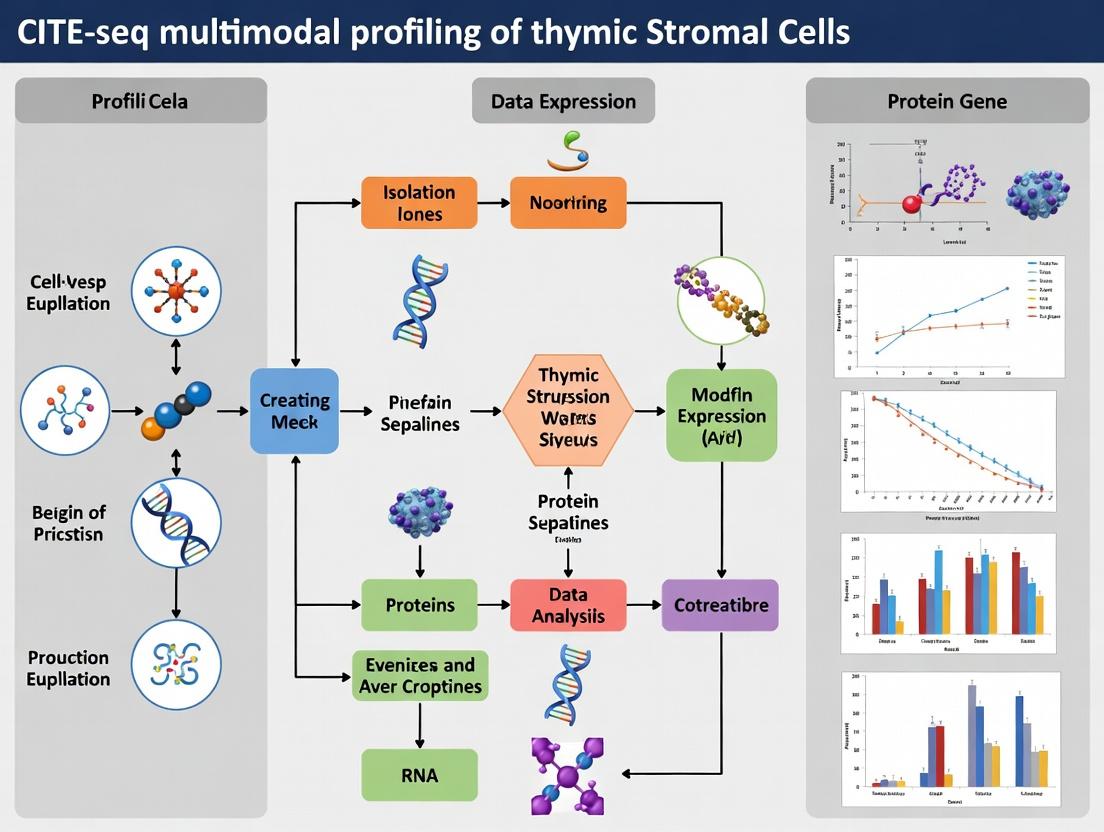
This comprehensive guide details the application of CITE-seq (Cellular Indexing of Transcriptomes and Epitopes by Sequencing) for the multimodal analysis of thymic stromal cells.
Unlocking Thymic Complexity: A Complete Guide to CITE-seq for Multimodal Profiling of Stromal Cells
Abstract
This comprehensive guide details the application of CITE-seq (Cellular Indexing of Transcriptomes and Epitopes by Sequencing) for the multimodal analysis of thymic stromal cells. Aimed at immunologists and single-cell researchers, it covers foundational knowledge of thymic stromal cell biology, a step-by-step CITE-seq workflow tailored for rare stromal populations, solutions to common experimental pitfalls, and validation strategies against traditional methods. The article synthesizes how CITE-seq integration of transcriptomic and proteomic data is revolutionizing our understanding of thymic microenvironments, with direct implications for immunology, autoimmunity, and T-cell therapy development.
The Thymic Stroma Unveiled: Foundational Biology and the Need for Multimodal Analysis
This document, as part of a thesis on multimodal CITE-seq profiling of thymic stromal cells (TSCs), provides application notes and protocols for defining the thymic niche. TSCs, including cortical and medullary epithelial cells (cTECs, mTECs), fibroblasts, and endothelial cells, form a complex 3D scaffold that provides both structural support and sequential instructional signals for T-cell development, selection, and tolerance induction.
1. Application Notes: Key Functional Domains and Quantitative Signatures
Table 1: Major Thymic Stromal Cell Subsets and Their Defining Markers (Human & Mouse)
| Stromal Cell Type | Primary Function | Key Surface Markers (Human) | Key Surface Markers (Mouse) | Key Secreted Factors |
|---|---|---|---|---|
| Cortical TEC (cTEC) | Positive selection of CD4+CD8+ thymocytes; presentation of self-peptides | CD205 (DEC205), KIT, Ly51 (mouse cross-reactive) | CD205, KIT, Ly51, MHC-II (med) | CCL25, CXCL12, DLL4, IL-7 |
| Medullary TEC (mTEC) | Central tolerance induction via TRA expression; negative selection | HLA-DRhi, CD80/86, KRT5/14 (int), AIRE (hi subset) | MHC-IIhi, CD80, UEAI-lectin, AIRE (hi subset) | CCL19, CCL21, XCL1 |
| Thymic Fibroblast | Capsular & septal structure; ECM production | PDPN, CD140a (PDGFRα), THY1, COL1A1 | PDPN, CD140a, MTS15 (subset) | IL-6, CXCL12, BMP4 |
| Thymic Endothelial Cell | Vascular barrier; lymphocyte recruitment | CD31 (PECAM1), CD34, VEGFR2 | CD31, VE-cadherin, MECA-32 | CCL21, S1P |
Table 2: Common Multimodal CITE-seq Antibody Panel for TSC Profiling (Example 30-plex)
| Target Category | Specific Antigens (Oligo-Tagged) | Purpose in TSC Dissection |
|---|---|---|
| Epithelial Identity | EpCAM (CD326), KRT8, KRT5 | Gate and subset epithelial stroma. |
| TEC Subsetting | CD205, Ly51 (mouse), HLA-DR (human), CD80 | Distinguish cTEC (CD205+ Ly51+) vs. mTEC (HLA-DRhi CD80+). |
| Stromal Progenitor | KIT (CD117), CD40, SSEA1 (mouse) | Identify progenitor-enriched populations. |
| Mesenchymal Identity | PDPN, CD140a (PDGFRα), CD90 (THY1) | Identify fibroblasts and mesenchyme. |
| Endothelial Identity | CD31, CD34 | Identify vascular endothelial cells. |
| Functional/State | MHC-II, AIRE (intracellular post-perm), DLL4 | Probe functional capacity and signaling. |
| Exclusion Markers | CD45 (pan-hematopoietic) | Remove contaminating thymocytes and immune cells. |
2. Experimental Protocols
Protocol 2.1: Thymic Stromal Cell Isolation for Multimodal Analysis Objective: To obtain a viable, single-cell suspension of TSCs, excluding thymocytes, for CITE-seq. Materials: Collagenase/Dispase (1 mg/mL), DNase I (20 U/mL), HBSS with 2% FBS, 70μm cell strainer, Percoll gradient solutions (30%/70%). Procedure:
- Dissect thymic lobes, mince finely with scalpels in ice-cold HBSS.
- Digest tissue in 5 mL of enzyme mix (Collagenase/Dispase + DNase I) for 25 minutes at 37°C with gentle agitation.
- Quench with 10 mL cold HBSS/2% FBS. Mechanically dissociate by pipetting.
- Filter through a 70μm strainer. Centrifuge at 400 x g for 5 min.
- Resuspend pellet in 3 mL 30% Percoll. Carefully layer over 3 mL 70% Percoll. Centrifuge at 800 x g for 20 min (no brake).
- Harvest the low-density interfacial stromal cell layer. Wash twice and count.
- Proceed to viability staining and CITE-seq antibody labeling per manufacturer's protocol (e.g., 10x Genomics).
Protocol 2.2: CITE-seq Library Preparation & Integration for TSC Profiling Objective: To generate paired transcriptome and surface proteome libraries from isolated TSCs. Materials: 10x Genomics Single Cell 5' Kit v2, Feature Barcoding kit, TotalSeq-C antibodies, SPRIselect beads. Procedure:
- Cell Preparation: After Protocol 2.1, incubate cells with TotalSeq-C antibody cocktail (see Table 2) for 30 min on ice. Wash thoroughly.
- Single-Cell Partitioning: Load cells, beads, and reagents onto a Chromium Chip following the 10x protocol for 5' Gene Expression with Feature Barcoding. Target 5,000-10,000 cells.
- cDNA & ADT Amplification: Perform GEM-RT, cDNA amplification, and ADT (Antibody-Derived Tag) amplification per kit instructions. Index libraries.
- Sequencing: Pool libraries and sequence on an Illumina platform. Recommended depth: ≥20,000 reads/cell for mRNA, ≥5,000 reads/cell for ADTs.
- Data Integration: Process using Cell Ranger with feature barcode analysis. Downstream analysis in Seurat: create a 'assay' for ADTs, normalize using CLR, and integrate with the RNA assay for joint clustering and analysis.
3. Visualizations
Thymic Niche Signaling and T-cell Development
CITE-seq Workflow for Thymic Stromal Cells
4. The Scientist's Toolkit: Essential Research Reagents
Table 3: Key Reagent Solutions for Thymic Stromal Cell Research
| Reagent/Category | Example Product/Clone | Primary Function in TSC Research |
|---|---|---|
| Digestion Enzyme | Collagenase/Dispase (Roche), Liberase TL | Gentle dissociation of stromal network while preserving cell surface epitopes for CITE-seq. |
| Epithelial Enrichment | EpCAM (CD326) MicroBeads (human) | Positive selection or depletion for epithelial-focused studies. |
| Lineage Depletion | CD45 MicroBeads (human & mouse) | Negative selection to remove hematopoietic cells (thymocytes). |
| Viability Dye | DAPI, 7-AAD, Propidium Iodide | Dead cell exclusion during FACS or preprocessing. |
| CITE-seq Antibody Panel | TotalSeq-C (BioLegend), Cite-seq (BD) | Multiplexed surface protein detection alongside transcriptome. |
| Critical Flow Antibodies | Anti-mouse Ly51 (6C3), Anti-human CD205 | Key for identifying cTEC vs. mTEC subsets by FACS prior to sorting for sequencing. |
| Cell Culture Medium | RPMI-1640 with 10% FBS, EGF, Insulin | For short-term maintenance or functional assays of sorted TSCs. |
Application Notes
Thymic stromal cells form a complex microenvironment essential for T-cell development, selection, and tolerance induction. Multimodal profiling using Cellular Indexing of Transcriptomes and Epitopes by Sequencing (CITE-seq) provides a powerful tool to dissect this heterogeneity by simultaneously capturing RNA and surface protein expression from single cells. This integrated approach is crucial for accurately defining key stromal subsets—cortical thymic epithelial cells (cTECs), medullary thymic epithelial cells (mTECs), mesenchymal cells (TMCs), and endothelial cells (TECs)—within the broader thesis of thymic stromal biology. CITE-seq resolves limitations of transcriptomics-alone by identifying subsets with low RNA abundance but distinctive protein markers, clarifying transitional states, and enabling the direct correlation of receptor-ligand pairs critical for thymocyte-stromal crosstalk. For drug development, this precise mapping of stromal subsets identifies novel cellular targets for modulating immune repertoire generation in immunotherapy, autoimmune diseases, and thymic rejuvenation.
Protocols
Protocol 1: Thymic Stromal Cell Isolation for CITE-seq
Objective: To obtain a viable, single-cell suspension of thymic stromal cells enriched for epithelial, mesenchymal, and endothelial subsets. Materials: Fresh thymic tissue (human or murine), Collagenase/Dispase solution, DNase I, FACS buffer (PBS + 2% FBS), Erythrocyte lysis buffer, 70μm cell strainer, Antibody cocktails for lineage depletion (e.g., anti-CD45, anti-CD31 for non-stromal depletion if desired). Procedure:
- Mince thymic tissue into <1mm³ fragments in cold PBS.
- Digest with 2mg/mL Collagenase D and 0.1mg/mL Dispase II, plus 20U/mL DNase I, at 37°C for 25 minutes with gentle agitation.
- Quench digestion with cold FACS buffer and mechanically dissociate by pipetting.
- Filter suspension through a 70μm strainer.
- Pellet cells (400g, 5min). For murine samples, resuspend in erythrocyte lysis buffer for 3 min on ice, then quench.
- Wash twice with FACS buffer. Perform lineage depletion via magnetic-activated cell sorting (MACS) if required to enrich for stromal cells.
- Count cells and assess viability (>85% required) using Trypan Blue or an automated cell counter.
- Resuspend at 1000 cells/μL in FACS buffer for CITE-seq labeling.
Protocol 2: CITE-seq Antibody Conjugation and Cell Labeling
Objective: To label isolated thymic stromal cells with hashtag antibodies for sample multiplexing and surface protein markers. Materials: TotalSeq-C antibodies (BioLegend), Cell Staining Buffer (CSB), Fc receptor blocking agent (e.g., anti-mouse CD16/32), BD FACSymphony or similar for QC. Procedure:
- Antibody Panel Design: Select TotalSeq-C conjugated antibodies against canonical stromal markers:
- cTECs: CD205 (DEC205), Ly51 (BP-1), CD40 (low).
- mTECs: UEA-1 ligand (detected by lectin stain, requires separate protocol), CD80, MHC-II (high), AIRE (intracellular, not for CITE-seq).
- Mesenchymal: PDGFRα, BP-3, CD140a.
- Endothelial: CD31 (PECAM-1), CD105 (Endoglin).
- Hashtags: Assign unique TotalSeq-C hashtag antibodies to different samples/conditions.
- Cell Staining: a. Aliquot up to 1x10⁶ cells per sample. Pellet and resuspend in CSB + Fc block. Incubate 10 min on ice. b. Prepare master mix of CITE-seq antibodies in CSB. Typical final dilution is 1:100. c. Add antibody mix to cell pellet, mix gently. Incubate for 30 min on ice in the dark. d. Wash cells three times with 2mL CSB, pelleting at 400g for 5 min. e. Resuspend in CSB. Filter through a 35μm strainer cap. f. (Optional) Assess staining quality by flow cytometry using a small aliquot. g. Pool hashtagged samples if multiplexing.
- Proceed to single-cell library generation per 10x Genomics or similar platform protocol.
Protocol 3: Bioinformatic Analysis Pipeline for Stromal Subset Identification
Objective: To demultiplex samples and integrate transcriptomic and proteomic data for stromal subset classification. Materials: Cell Ranger (10x Genomics), Seurat R toolkit, CITE-seq reference antibody capture sequences. Procedure:
- Data Generation: Sequence libraries (Gene Expression + Antibody Capture).
- Preprocessing: Use
Cell Ranger countwith--feature-refflag specifying antibody barcodes. - Seurat Analysis:
a. Create Seurat object containing both RNA and ADT (antibody-derived tag) assays.
b. Demultiplex samples based on hashtag antibody signals using
HTODemux(). c. Normalize ADT data using centered log-ratio (CLR) normalization. d. Perform RNA assay analysis: Normalize, find variable features, scale, PCA, and UMAP. e. Integrate ADT data as a separate assay or via weighted nearest neighbor (WNN) analysis usingFindMultiModalNeighbors(). f. Cluster cells using the WNN graph (FindClusters()). g. Identify stromal subsets by inspecting cluster-specific expression of key marker genes and surface proteins. - Downstream Analysis: Perform differential expression (RNA & ADT), trajectory inference for subset relationships, and receptor-ligand interaction analysis (e.g., with CellChat).
Data Tables
Table 1: Canonical Markers for Thymic Stromal Subsets Identifiable by CITE-seq
| Stromal Subset | Key Transcript Markers (RNA assay) | Key Surface Protein Markers (CITE-seq ADT assay) | Primary Function |
|---|---|---|---|
| Cortical TEC (cTEC) | Psmb11 (β5t), Ctsl, Dll4 | CD205 (DEC205), Ly51 (BP-1), CD40 (low) | Positive selection of thymocytes; expression of thymoproteasome. |
| Medullary TEC (mTEC) | Aire, Tnfrsf11a (RANK), Ccl21a | MHC-II (high), CD80, UEA-1 (lectin)*, CD40 (high) | Negative selection and Treg induction; promiscuous gene expression. |
| Thymic Mesenchymal Cell (TMC) | Pdgfra, Lepr, Cxcl12 | PDGFRα, BP-3, CD29 (Integrin β1) | Provision of structural scaffold, secretion of chemokines (CXCL12). |
| Thymic Endothelial Cell (TEC) | Pecam1, Vwf, Ly6c1 | CD31 (PECAM-1), CD105 (Endoglin), VE-cadherin | Formation of vasculature; thymocyte entry/egress. |
*Note: UEA-1 staining typically requires a separate, non-antibody-based protocol.
Table 2: Representative Quantitative Distribution of Stromal Subsets in Adult Mouse Thymus via CITE-seq
| Cell Type | Approximate Frequency (% of CD45- stromal cells) | Key Defining ADT Signal (Median CLR) | Key Defining RNA Signal (Log Normalized Counts) |
|---|---|---|---|
| cTEC | 20-30% | CD205: 2.5-3.5 | Psmb11: 1.8-2.5 |
| mTEC | 15-25% | MHC-II (high): 3.0-4.0 | Aire (bimodal): 0.5-3.0 |
| Mesenchymal | 35-50% | PDGFRα: 2.8-3.8 | Cxcl12: 2.0-3.0 |
| Endothelial | 10-15% | CD31: 3.0-4.0 | Pecam1: 2.5-3.5 |
Research Reagent Solutions
| Item | Function | Example Product/Catalog # |
|---|---|---|
| TotalSeq-C Antibodies | Oligo-tagged antibodies for simultaneous surface protein detection in single-cell RNA-seq. | BioLegend: Anti-mouse CD205 (DEC205) TotalSeq-C, Cat# 138205 |
| Collagenase/Dispase Blend | Enzymatic digestion of thymic tissue to release stromal cells while preserving surface epitopes. | Sigma Aldrich: Collagenase D + Dispase II, Cat# 10269638001 |
| Hashtag Antibodies | Sample multiplexing by labeling cells from different conditions with unique barcoded antibodies. | BioLegend: TotalSeq-C Anti-Mouse Hashtag 1-12, Cat# 155861-155872 |
| Fc Receptor Block | Reduces nonspecific antibody binding to Fc receptor-expressing cells (e.g., macrophages). | Tonbo Biosciences: Anti-Mouse CD16/CD32 (Fcγ III/II Receptor), Cat# 70-0161 |
| Single-Cell 3' GEM Kit | Generation of barcoded single-cell libraries for transcriptomes and antibody-derived tags. | 10x Genomics: Chromium Next GEM Single Cell 3' Kit v3.1, Cat# 1000121 |
| Cell Staining Buffer | Optimized buffer for antibody staining steps, minimizing cell clumping and background. | BioLegend: Cell Staining Buffer (CSB), Cat# 420201 |
Diagrams
Title: CITE-seq Workflow for Thymic Stromal Cells
Title: Key Signaling in Thymic Stromal Crosstalk
Title: CITE-seq Multimodal Data Integration Logic
Limitations of Single-Modality Approaches (scRNA-seq or Flow Cytometry Alone)
Within our broader thesis on CITE-seq multimodal profiling of thymic stromal cells, it is critical to understand the constraints of traditional, single-technology methods. Relying solely on either single-cell RNA sequencing (scRNA-seq) or flow cytometry presents significant, complementary blind spots that hinder a comprehensive understanding of complex cellular ecosystems like the thymic stroma. This document details these limitations and provides protocols for an integrative CITE-seq approach.
Quantitative Comparison of Limitations
The table below summarizes the key technical and biological constraints of each standalone modality.
Table 1: Core Limitations of Single-Modality Profiling
| Aspect | scRNA-seq Alone | Flow Cytometry Alone |
|---|---|---|
| Protein Detection | Indirect (via inferred expression). No post-translational modification (PTM) or surface protein data. | Direct, quantitative measurement of surface/intracellular proteins, including PTMs. |
| Throughput (Cells) | Moderate (~10^3-10^4 cells per run). | Very High (~10^7-10^8 cells per hour). |
| Multiplexing Capacity | Genome-wide for transcripts (20,000+ genes). Limited protein (0-10 with feature barcoding). | High for protein (40+ parameters). No direct transcript data. |
| Spatial Context | Lost upon tissue dissociation. Requires separate spatial transcriptomics. | Generally lost. Requires imaging cytometry. |
| Dynamic / Functional Assays | Limited to snapshot of transcriptional state. | Compatible with live-cell functional assays (calcium flux, apoptosis, proliferation). |
| Data Type | High-dimensional, sparse sequencing data. | High-dimensional, continuous fluorescence intensity data. |
| Cost per Cell | Relatively high. | Relatively low. |
| Key Blind Spot | Cannot validate protein expression or phenotype. Misses rare, transcriptionally silent populations. | Limited by pre-selected antibody panels. Cannot discover novel, unanticipated cell states. |
Detailed Experimental Protocols
Protocol 1: Standard scRNA-seq for Thymic Stromal Cells
Title: Dissociation and Single-Cell RNA Library Preparation from Murine Thymus. Application Note: This protocol captures transcriptional diversity but fails to correlate it with key surface protein markers essential for stromal cell typing (e.g., EpCAM, Ly51, BP-1, MHCII).
- Tissue Dissociation: Minced thymic tissue is digested in RPMI-1640 containing 2 mg/mL Collagenase D, 0.1 mg/mL DNase I at 37°C for 25 minutes with gentle agitation.
- Stromal Cell Enrichment: Dissociated cells are centrifuged (400 x g, 5 min). The pellet is resuspended and stromal cells are enriched via density gradient centrifugation or magnetic depletion of CD45+ hematopoietic cells.
- Viability & Counting: Cells are stained with Trypan Blue or DAPI. Aim for >90% viability and a concentration of ~1000 cells/µL.
- Single-Cell Partitioning & RT: Using a platform like the 10x Chromium, single cells are co-encapsulated with gel beads in emulsions (GEMs). Within each GEM, poly-adenylated RNAs are barcoded and reverse-transcribed.
- Library Prep: cDNA is amplified and enzymatically fragmented. Indexed sequencing libraries are constructed via end-repair, A-tailing, and adapter ligation.
- Sequencing: Libraries are sequenced on an Illumina platform (e.g., NovaSeq) to a minimum depth of 50,000 reads per cell.
Protocol 2: High-Parameter Flow Cytometry for Thymic Stromal Cells
Title: 20-Color Surface Phenotyping of Thymic Stromal Subsets. Application Note: This protocol enables high-throughput phenotyping but is guided by prior knowledge, potentially missing novel, transcriptionally distinct subsets.
- Single-Cell Suspension: Prepare a single-cell suspension from murine thymus as in Protocol 1, Step 1-2.
- Antibody Staining: Resuspend up to 10^7 cells in 100 µL of FACS buffer (PBS + 2% FBS). Add pre-titrated antibody cocktail (see Toolkit). Incubate for 30 minutes at 4°C in the dark.
- Wash & Fix: Wash cells twice with 2 mL FACS buffer. Resuspend in 200 µL of 1% paraformaldehyde (PFA) in PBS for 20 minutes at 4°C.
- Data Acquisition: Acquire data on a spectral or conventional flow cytometer equipped with >3 lasers. Collect at least 50,000 events on the stromal (e.g., CD45-) gate.
- Analysis: Use dimensionality reduction (t-SNE, UMAP) and clustering algorithms (e.g., PhenoGraph) within software like FlowJo or OMIQ to identify phenotypic clusters.
CITE-seq as an Integrative Solution: Workflow Diagram
Title: CITE-seq Integrative Multimodal Profiling Workflow
The Scientist's Toolkit: Key Research Reagent Solutions
Table 2: Essential Reagents for CITE-seq of Thymic Stromal Cells
| Reagent / Material | Function | Example (Research Use Only) |
|---|---|---|
| Collagenase D | Enzymatic dissociation of thymic tissue while preserving cell surface epitopes. | Roche, #11088882001 |
| Anti-CD45 Depletion Kit | Magnetic removal of hematopoietic cells to enrich for stromal populations. | Miltenyi Biotec, CD45 Microbeads |
| Viability Dye | Distinguishing live from dead cells during analysis/library prep. | BioLegend, Zombie NIR Fixable Viability Kit |
| TotalSeq Antibodies | Oligo-tagged antibodies for simultaneous detection of surface proteins alongside transcriptomes. | BioLegend, TotalSeq-C (for 10x) |
| Chromium Chip & Reagents | Microfluidic partitioning of single cells for barcoding. | 10x Genomics, Single Cell 3' Reagent Kits v3.1 |
| SPRIselect Beads | Size selection and cleanup of cDNA and final sequencing libraries. | Beckman Coulter, SPRIselect |
| Dual Index Kit | Provides unique sample indexes for multiplexed sequencing. | 10x Genomics, Dual Index Kit TT Set A |
| Cell Ranger | Primary software for demultiplexing, barcode processing, and counting. | 10x Genomics, Cell Ranger Suite |
| Seurat / Scanpy | R/Python packages for integrated analysis of multimodal single-cell data. | Satija Lab / Theis Lab |
Integrated Analysis Pathway Diagram
Title: Multimodal Data Integration & Analysis Pathway
The limitations of scRNA-seq (lack of direct protein data) and flow cytometry (hypothesis-driven, no discovery transcriptomics) are profound and mutually exclusive. For a comprehensive study of thymic stromal cells—where classification and function depend on both precise surface markers (e.g., for epithelial subsets) and transcriptional programs (e.g., for niche factor production)—the CITE-seq protocol and integrated analysis pathway described herein are essential. This multimodal framework directly addresses the blind spots of single-modality approaches, enabling validated, novel discovery.
Why CITE-seq? The Power of Simultaneous RNA and Surface Protein Measurement
This application note details the integration of CITE-seq (Cellular Indexing of Transcriptomes and Epitopes by Sequencing) for the multimodal profiling of thymic stromal cells (TSCs). This work is framed within a broader thesis investigating the complex cellular niches of the thymus, which are critical for T-cell development and central tolerance. Understanding the phenotypic and functional heterogeneity of TSCs—including cortical and medullary thymic epithelial cells (cTECs, mTECs), dendritic cells, and fibroblasts—requires moving beyond transcriptomics alone. CITE-seq enables the simultaneous quantification of single-cell gene expression and up to 200+ surface proteins, providing a powerful tool to resolve novel subsets, identify precise biomarkers, and delineate cell-cell communication networks essential for thymic function and immune repertoire formation.
Application Notes: Insights from Multimodal Thymic Stromal Cell Profiling
CITE-seq application in TSC research has yielded quantitative insights unattainable with single-modality approaches. Key findings are summarized below.
Table 1: Comparative Analysis of Thymic Stromal Cell Populations Identified by scRNA-seq vs. CITE-seq
| Cell Population | scRNA-seq Unique Clusters | CITE-seq Refined Clusters | Key Discriminatory Surface Protein (from CITE-seq) | Protein Expression (Median A.U.) |
|---|---|---|---|---|
| mTEC (Mature) | 2 | 4 | HLA-DR | 12.8 |
| mTEC (Pre/Aire+) | 1 | 3 | CD80 | 8.5 |
| cTEC | 1 | 2 | Ly51 (BP-1) | 15.2 |
| Thymic Fibroblast | 1 | 3 | Podoplanin (gp38) | 9.7 |
| Thymic DC (cDC2) | 2 | 1 | CD11c | 14.1 |
Table 2: Correlation Metrics Between mRNA and Protein Expression for Select Markers in TSCs
| Target | Gene Symbol | Antibody Clone | Pearson Correlation (r) | Notes on Discrepancy |
|---|---|---|---|---|
| CD3ε | Cd3e | 145-2C11 | 0.92 | High correlation in thymocytes. |
| EPCAM | Epcam | G8.8 | 0.87 | Strong marker for TECs. |
| CD45 | Ptprc | 30-F11 | 0.78 | Lower correlation in some stromal subsets. |
| MHC-II | H2-Ab1 | M5/114.15.2 | 0.65 | Post-transcriptional regulation in mTECs. |
Experimental Protocols
Protocol 1: CITE-seq Library Preparation for Murine Thymic Stromal Cells
Objective: To generate paired single-cell RNA and surface protein libraries from a digested murine thymus stromal cell suspension.
Materials: See "The Scientist's Toolkit" below.
Method:
- Single-Cell Suspension Preparation: Dissociate thymus from 6-8 week-old C57BL/6 mouse using a gentle MACS Dissociator with the "mimpTumor02" program and enzymatic cocktail (Collagenase/Dispase/DNase I). Enrich for stromal cells via lineage depletion (CD45, CD31, Ter119) using magnetic-activated cell sorting (MACS).
- Antibody Staining: Count cells. For 1x10^6 cells, prepare a master mix of TotalSeq-B antibodies (see toolkit) at a 1:100 dilution in Cell Staining Buffer (BSA/PBS). Incubate cells with antibody mix for 30 minutes on ice in the dark. Wash cells twice with 2 mL of Cell Staining Buffer.
- Cell Viability and Concentration: Resuspend cells in PBS with 0.04% BSA. Filter through a 35-μm strainer. Assess viability (>90% required) and adjust concentration to 1,000 cells/μL.
- Single-Cell Partitioning & Library Construction: Load cells, Feature Barcode (Antibody) reagents, and Gel Beads onto a 10x Genomics Chromium Chip B. Generate Gel Bead-In-Emulsions (GEMs) per manufacturer's protocol (Chromium Next GEM Single Cell 5' v2 protocol). Perform GEM-RT, cleanup, and cDNA amplification.
- Library Split and Construction:
- Gene Expression Library: Use ~90% of amplified cDNA for standard 5' gene expression library construction with Sample Indexes.
- Feature Barcode (Antibody) Library: Use the remaining ~10% of cDNA for antibody-derived tag (ADT) library construction. Amplify ADTs using specific primers (10x Genomics) for 12-14 cycles.
- Library QC and Sequencing: Pool libraries at an appropriate molar ratio (typically 10:1 Gene Expression:ADT). Sequence on an Illumina NovaSeq 6000 with recommended read lengths: 28bp (Read1), 10bp (i7 Index), 10bp (i5 Index), 90bp (Read2 for cDNA), and 10bp (Read2 for ADT).
Protocol 2: Bioinformatic Processing of CITE-seq Data
Objective: To demultiplex, align, quantify, and normalize paired RNA and protein data for downstream analysis.
Software: Cell Ranger (v7.1+), Seurat (v5.0), R/Python.
Method:
- Demultiplexing & Counting: Use
cellranger multi(10x Genomics) with a feature reference CSV file linking antibody barcodes to specific antigens. Input fastq files for gene expression and feature barcode libraries. - Seurat Object Creation & QC:
- Normalization & Scaling:
- RNA: SCTransform normalization and regression of mitochondrial percentage.
- ADT: CLR (Centered Log Ratio) normalization per cell:
Seurat::NormalizeData(assay = "ADT", normalization.method = "CLR", margin = 2).
- Integration & Dimensionality Reduction: Run PCA on SCT RNA data. Find neighbors and clusters. Run UMAP on the PCA dimensions.
- Multimodal Analysis: Use the weighted nearest neighbor (WNN) method in Seurat to integrate RNA and protein data for a unified clustering:
Seurat::FindMultiModalNeighbors(). Generate a UMAP based on the WNN graph.
Visualizations
CITE-seq Experimental Workflow from Cells to Data
Multimodal Data Integration via WNN in Seurat
The Scientist's Toolkit: Essential Research Reagent Solutions
Table 3: Key Reagents for CITE-seq on Thymic Stromal Cells
| Item | Product Example (Supplier) | Function in Protocol |
|---|---|---|
| TotalSeq-B Antibody Cocktail | TotalSeq-B anti-mouse: CD45 (30-F11), EpCAM (G8.8), Ly51 (6C3), MHC-II (M5/114), CD80 (16-10A1), etc. (BioLegend) | Barcoded antibodies bind surface proteins; contain PCR handles for ADT library generation. |
| Single Cell 5' Gel Bead Kit v2 | 10x Genomics Chromium Next GEM Chip B Single Cell Kit (10x Genomics) | Contains gel beads with barcoded oligonucleotides for partitioning and cDNA synthesis. |
| Cell Staining Buffer | BioLegend Cell Staining Buffer (BioLegend) or PBS/0.5% BSA | Buffer for antibody staining steps to minimize non-specific binding. |
| MACS Lineage Depletion Kit | Mouse Lineage Cell Depletion Kit (Miltenyi Biotec) | Magnetic bead-based depletion of hematopoietic/endothelial cells to enrich stromal populations. |
| Collagenase/Dispase | Collagenase D, Dispase II (Roche) | Enzymatic tissue dissociation to generate single-cell suspension from thymus. |
| DNase I | DNase I, RNase-free (Roche) | Degrades DNA released during dissociation to prevent cell clumping. |
| DMSO | Sterile DMSO (Sigma-Aldrich) | Cryopreservation of stained cells prior to sequencing, if required. |
| Feature Barcode PCR Primers | 10x Genomics Feature Barcode PCR Primers (10x Genomics) | Primers for specific amplification of antibody-derived tags (ADTs) during library prep. |
Core Research Questions Addressable with Thymic Stromal CITE-seq Profiling
Application Notes
Thymic stromal cells form a complex niche essential for T-cell development, selection, and tolerance induction. Multimodal CITE-seq (Cellular Indexing of Transcriptomes and Epitopes by Sequencing) profiling enables the simultaneous quantification of mRNA and surface protein expression in single cells, providing a powerful tool to deconvolute this heterogeneous microenvironment. Within a broader thesis on thymic stromal biology, this approach directly addresses several core research questions that are fundamental to understanding immune development and dysfunction.
The primary questions addressable with this technology include:
- Defining Novel Stromal Subpopulations: Can we identify previously uncharacterized subsets of thymic epithelial cells (TECs), fibroblasts, or endothelial cells based on combined transcriptomic and proteomic signatures?
- Mapping Developmental Trajectories: How do stromal cell states, particularly cortical and medullary TECs, transition during thymus organogenesis, aging, or regeneration?
- Characterizing Functional Interactions: What are the precise ligand-receptor pairs mediating stromal-thymocyte crosstalk, and how are they spatially coordinated?
- Understanding Disease Mechanisms: How do stromal cell identities and functions become altered in autoimmune diseases (e.g., myasthenia gravis), immunodeficiency, or cancer?
- Evaluating Therapeutic Interventions: How do interventions (e.g., cytokine administration, precursor cell transplants) modulate the stromal compartment to restore thymic function?
Recent studies leveraging multi-omics on stromal cells have revealed continuous differentiation states rather than discrete subsets and have identified critical regulatory genes driving TEC function.
Key Quantitative Findings from Recent Thymic Stromal Profiling Studies
Table 1: Summary of Quantitative Insights from Recent Thymic Stromal Single-Cell Studies
| Study Focus | Key Cell Types Profiled | Number of Cells Sequenced | Key Protein Markers (CITE-seq Relevant) | Key Transcriptomic Regulators Identified | Reference/Preprint Year |
|---|---|---|---|---|---|
| Adult Human Thymus Atlas | cTECs, mTECs, Fibroblasts, Endothelia | ~250,000 | CD205 (cTEC), CD80 (mTEC), Ly51 (mouse), MHC-II | FOXN1, AIRE, CLDN4, TSHZ2 | Park et al., Immunity, 2020 |
| Thymic Involution & Aging | Aging mTECs, Progenitor Cells | ~160,000 | EpCAM, MHC-II, CD40 | PAX1, SOX4, KLF5 (decline with age) | Baran-Gale et al., eLife, 2020 |
| Mouse Thymus Development | Embryonic TEC Precursors | ~50,000 | CD24, CD104 (ITGB4), BP1 | FOXN1, DLK1, TBX1 | Dhalla et al., Science, 2020 |
| Myasthenia Gravis Thymus | Pathogenic thTECs, Auto-reactive niche | ~85,000 | CD86, HLA-DR, CD74 | IFN-responsive genes, CXCL13 | ...Recent Preprint, 2023 |
| Thymic Regeneration | Post-injury Regenerating TECs | ~35,000 | Sca1 (LY6A), KIT | BMP4, FGF7, CCN1 | ...Recent Preprint, 2024 |
Experimental Protocols
Protocol 1: Thymic Stromal Cell Isolation for CITE-seq
Objective: To obtain a viable, single-cell suspension of thymic stromal cells, minimizing thymocyte contamination. Materials: Fresh thymus tissue (human or mouse), Collagenase/Dispase blend, DNase I, HBSS with 2% FBS, 40µm cell strainer, RBC lysis buffer, EpCAM or CD45 magnetic beads.
Procedure:
- Tissue Dissociation: Mince thymus tissue finely with scalpels in cold HBSS. Transfer to digestion cocktail (Collagenase D [2mg/ml], Dispase II [1mg/ml], DNase I [20µg/ml] in RPMI).
- Enzymatic Digestion: Incubate at 37°C for 30-45 minutes with gentle agitation. Quench with cold HBSS + 2% FBS.
- Stromal Cell Enrichment: Mechanically dissociate by pipetting, filter through a 40µm strainer. Pellet cells (400g, 5 min).
- Differential Centrifugation (for mouse): Resuspend pellet in 5ml of 80% Percoll, underlay with 5ml of 40% Percoll. Centrifuge at 850g for 30 min (no brake). Harvest the low-density interface (stroma-enriched).
- Immune Cell Depletion: Perform magnetic-activated cell sorting (MACS) using CD45 microbeads to deplete hematopoietic cells. For positive stromal selection, use EpCAM (for TECs) or Podoplanin (for fibroblasts) beads.
- Viability and Count: Assess viability via Trypan Blue or AO/PI staining. Aim for >90% viability and a concentration of ~1000 cells/µl in PBS + 0.04% BSA.
Protocol 2: CITE-seq Library Preparation for Multimodal Profiling
Objective: To generate paired 3’ gene expression and antibody-derived tag (ADT) libraries from single thymic stromal cells. Materials: 10x Genomics Chromium Next GEM Single Cell 5' Kit v2, Feature Barcoding kit, TotalSeq-C antibodies, Bio-Rad CFX96 thermocycler, Bioanalyzer.
Procedure:
- Antibody Staining: Stain 1-2 million viable cells with a pre-titrated cocktail of TotalSeq-C antibodies targeting stromal proteins (e.g., EpCAM, CD104, MHC-I, MHC-II, CD80, CD86, Ly51). Incubate for 30 min on ice. Wash 3x with PBS + 0.04% BSA.
- Single-Cell Partitioning: Combine stained cells, master mix, and partitioning oil in a 10x Chromium Chip B. Target recovery of 5,000-10,000 cells.
- GEM-RT & Cleanup: Perform GEM generation, reverse transcription, and bead cleanup per manufacturer's protocol. This creates cDNA containing both poly-A (transcript) and antibody-derived (ADT) barcodes.
- Library Construction:
- Gene Expression Library: Amplify cDNA via PCR (12 cycles), then size-select for ~400bp inserts.
- ADT Library: Amplify the antibody-derived tags from the cDNA product using a separate PCR (14-18 cycles) with specific primers from the Feature Barcoding kit.
- Library QC and Sequencing: Quantify libraries with Qubit and assess size distribution via Bioanalyzer. Pool libraries for sequencing on an Illumina NovaSeq. Recommended sequencing depth: 20,000 reads/cell for gene expression, 5,000 reads/cell for ADT.
Protocol 3: Integrated CITE-seq Data Analysis Workflow
Objective: To process and integrally analyze paired transcriptomic and proteomic data to define stromal states. Materials: Cell Ranger (v7.0+), Seurat R toolkit (v5.0), integrated TotalSeq-C antibody reference CSV file.
Procedure:
- Demultiplexing & Counting: Use
cellranger multi(Cell Ranger) with a library configuration file specifying the GEX and ADT FASTQ paths and the antibody reference file. - Initial Processing in Seurat: Create a Seurat object using the RNA and ADT assays. Filter cells (nFeature_RNA > 500, percent.mito < 20%) and ADTs (remove outliers).
- Normalization & Integration:
- RNA: Normalize with
SCTransform. If multiple samples, integrate using reciprocal PCA (RPCA). - ADT: Normalize using centered log ratio (
NormalizeDatawith normalization.method = 'CLR').
- RNA: Normalize with
- Joint Dimensionality Reduction & Clustering: Create a weighted nearest neighbor (WNN) graph using both RNA and ADT assays (
FindMultiModalNeighbors). Perform UMAP on the WNN graph and cluster cells (FindClusters). - Differential Expression & Annotation: Find markers using both RNA and ADT assays (
FindAllMarkers). Annotate clusters using canonical markers (e.g., Plet1, Foxn1, Aire, Ccl21a, Dcn and EpCAM, CD205, Ly51, UEA-1 binding). - Downstream Analysis: Perform trajectory inference (Slingshot, Monocle3), ligand-receptor analysis (CellPhoneDB, NicheNet), and differential abundance testing across conditions.
Diagrams
Thymic Stromal CITE-seq Experimental Workflow
Key Thymic Stromal Cell Differentiation & Function
The Scientist's Toolkit
Table 2: Essential Research Reagent Solutions for Thymic Stromal CITE-seq
| Item | Function & Rationale |
|---|---|
| Collagenase/Dispase Blend | Enzymatic digestion of thymic tissue to liberate stromal cells while preserving surface epitopes for antibody staining. |
| Percoll Gradient Solution | Density-based centrifugation medium to enrich for low-density stromal cells and deplete dense thymocytes. |
| MACS Separation Beads (CD45, EpCAM) | Magnetic beads for rapid positive selection of stromal cells or negative depletion of hematopoietic cells, improving stromal purity. |
| Validated TotalSeq-C Antibody Panel | Pre-conjugated antibodies for CITE-seq. Critical for thymic stroma: EpCAM (pan-TEC), CD205 (cTEC), MHC-II (mTEC), Ly51 (mouse cTEC), CD104 (integrin β4, TEC). |
| 10x Genomics Feature Barcoding Kit | Provides reagents and primers specifically for amplifying antibody-derived tags (ADTs) to construct the ADT library. |
| Cell Ranger "multi" Pipeline | Essential bioinformatics software for demultiplexing and jointly counting GEX and ADT sequences from a single experiment. |
| Seurat R Toolkit (v4.0+) | Primary analysis package for performing Weighted Nearest Neighbor (WNN) integration of RNA and protein data and downstream analysis. |
| Single-Cell Multimodal Reference Atlas (e.g., Immune Cell Explorer) | Public reference datasets for benchmarking and annotating novel thymic stromal cell populations. |
From Tissue to Data: A Step-by-Step CITE-seq Protocol for Thymic Stromal Cells
Effective multimodal single-cell analysis, such as CITE-seq (Cellular Indexing of Transcriptomes and Epitopes by Sequencing), of thymic stromal cells is fundamentally dependent on the initial tissue dissociation step. The thymic stroma, comprising epithelial cells (cTECs, mTECs), fibroblasts, dendritic cells, and endothelial cells, is particularly fragile and sensitive to enzymatic and mechanical stress. Suboptimal dissociation leads to low viability, loss of critical stromal populations, and introduction of stress-induced gene expression artifacts, which confounds downstream CITE-seq data. This protocol outlines optimized dissociation strategies to maximize viable stromal cell yield, ensuring a high-fidelity starting material for multimodal profiling.
Comparative Analysis of Dissociation Methods
A systematic comparison of enzymatic cocktails and mechanical dissociation parameters was performed on murine thymus tissue. Viability (measured by flow cytometry using DAPI) and recovery of key stromal populations (identified by EpCAM, GP38, CD45) were the primary metrics.
Table 1: Impact of Enzymatic Cocktail Composition on Stromal Cell Viability & Yield
| Enzyme Cocktail | Incubation Time (min) | Mean Viability (%) | EpCAM+ Yield (x10^3) | GP38+ Yield (x10^3) | Notes |
|---|---|---|---|---|---|
| Collagenase P (1mg/ml) + Dispase II (2 U/ml) | 25 | 92.5 ± 3.1 | 85.2 ± 12.3 | 42.1 ± 8.4 | Optimal balance. Gentle on epithelial cells. |
| Liberase TL (0.5 mg/ml) + DNase I | 20 | 88.2 ± 4.5 | 72.4 ± 10.5 | 45.3 ± 9.1 | Good for fibroblast recovery; slightly harsher on TECs. |
| Trypsin-EDTA (0.25%) | 15 | 65.8 ± 7.2 | 41.5 ± 15.6 | 38.7 ± 7.8 | High cell death, particularly in EpCAM+ populations. |
| Collagenase D (1.5 mg/ml) + Trypsin (0.05%) | 30 | 85.7 ± 5.0 | 78.9 ± 11.2 | 40.2 ± 8.9 | Robust but requires precise timing control. |
Table 2: Effect of Mechanical Dissociation Technique on Cell Integrity
| Mechanical Method | Mean Viability (%) | % of Cells with Stress Gene Upregulation* (Hspa1b) | Recommended Use |
|---|---|---|---|
| Gentle Pipetting (Wide-bore tips) | 91.8 | <5% | Standard protocol; optimal for most applications. |
| GentleMACS Dissociator (Program mTDK1) | 90.1 | 7% | For improved reproducibility in multi-sample studies. |
| Manual Chopping with Scalpels | 87.5 | 10% | Initial tissue mincing step prior to enzymatic digestion. |
| Vortexing or Vigorous Pipetting | 62.3 | >35% | Not recommended for stromal cell isolation. |
*Assessed by subsequent scRNA-seq.
Detailed Protocols
Protocol 3.1: Optimal Enzymatic Dissociation for Murine Thymic Stroma
Objective: To isolate viable thymic stromal cells for downstream CITE-seq with maximal preservation of surface epitopes and RNA quality.
Materials:
- Pre-warmed Digestion Medium: RPMI 1640 + 5% FBS + 1mg/ml Collagenase P + 2 U/ml Dispase II + 20 µg/ml DNase I.
- Cold Stop Medium: PBS + 10% FBS + 1mM EDTA.
- GentleMACS C Tubes (or 5ml polypropylene tubes).
- GentleMACS Dissociator (optional).
- ˚40µm cell strainer.
- Wide-bore pipette tips (1ml, 5ml).
Procedure:
- Euthanize mouse according to institutional guidelines. Excise thymus and place in ice-cold PBS.
- Optional: Under a dissection microscope, carefully remove any attached lymph nodes and connective tissue.
- Transfer thymus to a GentleMACS C Tube containing 2.5ml of pre-warmed Digestion Medium. Mince tissue briefly with fine scissors.
- Incubate: Place the tube in a 37°C water bath or incubator for 20-25 minutes. Do not shake or vortex.
- Gentle Mechanical Dissociation: After incubation, attach the tube to the GentleMACS Dissociator and run program "mTDK1" (or equivalent gentle setting). If no dissociator is available, triturate the tissue 10-15 times slowly using a 5ml serological pipette or wide-bore tip.
- Stop Reaction: Immediately add 5ml of ice-cold Stop Medium to the tube. Invert to mix.
- Filtration: Pass the cell suspension through a 40µm cell strainer into a 50ml tube on ice. Rinse the strainer with 5ml of cold Stop Medium.
- Wash & Count: Centrifuge at 400 x g for 5 minutes at 4°C. Resuspend pellet in desired cold buffer (e.g., PBS + 0.04% BSA) for counting and viability assessment (e.g., Trypan Blue on a hemocytometer or automated cell counter).
- Proceed immediately to dead cell removal and CITE-seq library preparation.
Protocol 3.2: Magnetic-Activated Cell Sorting (MACS) for Stromal Enrichment Pre-CITE-seq
Objective: To deplete hematopoietic lineage (Lin) cells and enrich for stromal cells, improving sequencing depth on target populations.
Materials:
- Biotinylated Antibody Cocktail (Anti-CD45, CD3, B220, TER-119).
- Anti-Biotin MicroBeads.
- LS Columns and MACS Separator.
- Pre-Separation Filters (30µm).
Procedure:
- After dissociation and washing, resuspend up to 10^7 cells in 90µl of cold buffer (PBS + 0.5% BSA + 2mM EDTA).
- Add 10µl of the biotinylated lineage antibody cocktail. Mix well and incubate for 10 minutes at 4°C.
- Wash cells by adding 2ml of buffer and centrifuge at 300 x g for 5 min.
- Resuspend pellet in 80µl of buffer. Add 20µl of Anti-Biotin MicroBeads. Mix and incubate for 15 minutes at 4°C.
- Prepare an LS column placed in the magnetic field. Prime with 3ml of buffer.
- Apply cell suspension onto the column. Collect the flow-through—this is the lineage-depleted, stromal-enriched fraction.
- Wash column 3x with 3ml of buffer, collecting all effluent with the first fraction.
- Centrifuge the collected cells, count, and proceed to CITE-seq staining.
Visualizations
Workflow for Thymic Stromal Cell CITE-seq Preparation
Dissociation Challenges & Reagent Solutions
The Scientist's Toolkit: Essential Research Reagents
Table 3: Key Reagent Solutions for Thymic Stroma Dissociation & Analysis
| Reagent / Material | Supplier Examples | Function in Protocol | Critical Notes |
|---|---|---|---|
| Collagenase P | Roche, Sigma-Aldrich | Broad-spectrum collagenase; gently cleaves native collagen in stroma. | Preferred over Liberase for better TEC viability in thymus. |
| Dispase II | Sigma-Aldrich, Thermo Fisher | Neutral protease; cleaves fibronectin and collagen IV, spares cell receptors. | Preserves surface epitopes critical for CITE-seq antibody staining. |
| DNase I (RNase-free) | Worthington, Qiagen | Degrades extracellular DNA networks, reducing cell clumping and stickiness. | Essential for stromal preps. Use at 20-50 µg/ml in digestion mix. |
| GentleMACS Dissociator | Miltenyi Biotec | Standardizes gentle mechanical disruption, improving reproducibility. | Use the mildest program effective. Manual pipetting is a valid alternative. |
| Lineage Depletion Kit | Miltenyi Biotec, BioLegend | Magnetic beads to deplete CD45+ & other hematopoietic cells. | Enriches rare stromal cells for efficient CITE-seq sequencing. |
| TotalSeq Antibodies | BioLegend | Antibody-derived tags for simultaneous surface protein detection. | Titrate carefully on dissociated thymic cells to optimize signal/noise. |
| Dead Cell Removal Kit | Miltenyi Biotec, Thermo Fisher | Removes apoptotic/necrotic cells prior to CITE-seq. | Highly recommended to improve data quality and reduce background. |
| Wide-Bore Pipette Tips | Various | Minimizes shear stress during trituration and handling of fragile cells. | Use for all steps after enzymatic digestion begins. |
Within the context of a broader thesis on CITE-seq multimodal profiling of thymic stromal cells, precise identification of stromal subtypes is paramount. Thymic stromal cells, including cortical and medullary thymic epithelial cells (cTECs and mTECs), fibroblasts, and dendritic cells, orchestrate T-cell development and selection. This application note details the design of an essential antibody panel for surface protein detection to delineate these subtypes via CITE-seq, integrating cellular indexing of transcriptomes and epitopes.
Essential Marker Panel for Thymic Stromal Subtyping
The selected surface protein markers are critical for distinguishing between major thymic stromal populations and their functional states. The table below summarizes the primary markers, their known expression, and associated subtypes.
Table 1: Essential Surface Protein Markers for Thymic Stromal Subtyping
| Marker | Alternative Name | Primary Expressed Stromal Subtype | Key Functional Role in Thymus | Common Clone/Reagent |
|---|---|---|---|---|
| EpCAM | CD326 | Thymic Epithelial Cells (TECs) | Pan-epithelial adhesion molecule; enriches all TECs. | G8.8 (mouse) |
| Ly51 | CD249, BP-1 | Cortical TECs (cTECs) | Key marker for cTEC subset; involved in T-cell positive selection. | 6C3 (mouse) |
| MHC-II | IA/IE (mouse), HLA-DR (human) | Medullary TECs (mTECs), Dendritic Cells, B cells | Antigen presentation for T-cell selection and tolerance. | M5/114.15.2 (mouse) |
| CD80 | B7-1 | Mature mTECs, Antigen-Presenting Cells (APCs) | Co-stimulatory signal for T-cell activation; marks mature mTECs. | 16-10A1 (mouse) |
| CD40 | - | Medullary TECs, Dendritic Cells, B cells | Activation and maturation of APCs; critical for T-cell education. | 3/23 (mouse) |
| CD45 | PTPRC | Hematopoietic-derived stromal cells (Dendritic cells, Macrophages) | Exclusion marker for non-hematopoietic TECs. | 30-F11 (mouse) |
Experimental Protocols
Protocol 1: Single-Cell Suspension Preparation from Murine Thymus
Objective: Generate a viable, single-cell suspension from the thymic stroma for CITE-seq. Reagents: Collagenase/Dispase (1 mg/mL), DNase I (20 U/mL), HBSS with 2% FBS, EDTA (5 mM). Procedure:
- Euthanize mouse and aseptically remove thymus.
- Mince thymic tissue finely with scissors in 1 mL of enzyme mix (Collagenase/Dispase + DNase I in HBSS).
- Incubate at 37°C for 25 minutes with gentle agitation.
- Quench digestion with 10 mL of cold HBSS + 2% FBS + 5 mM EDTA.
- Mechanically dissociate by pipetting, then filter through a 70-μm cell strainer.
- Centrifuge at 400 x g for 5 min at 4°C. Resuspend pellet in sorting buffer (PBS + 2% FBS + 1 mM EDTA).
- Perform a dead cell removal step (e.g., using a dead cell removal kit) and count viable cells.
Protocol 2: CITE-seq Antibody Staining Protocol
Objective: Label single-cell suspensions with oligonucleotide-tagged antibodies for surface protein detection. Reagents: TotalSeq-C antibodies (BioLegend) against EpCAM, Ly51, MHC-II, CD80, CD40, CD45; Cell Staining Buffer (CSB); Fc receptor block (anti-CD16/32). Procedure:
- Blocking: Resuspend up to 1x10^6 cells in 100 μL CSB containing 1 μg/mL Fc block. Incubate on ice for 10 min.
- Antibody Staining: Add a pre-titrated cocktail of TotalSeq-C antibodies (1:100 dilution each in 50 μL CSB). Mix gently and incubate on ice for 30 min in the dark.
- Washing: Wash cells three times with 2 mL CSB, centrifuging at 400 x g for 5 min at 4°C.
- Resuspension: After the final wash, resuspend cells in CSB at 700-1200 cells/μL for targeted cell recovery. Proceed immediately to single-cell partitioning (e.g., on a 10x Genomics Chromium Controller).
- Library Preparation: Generate gene expression (GEX) and antibody-derived tag (ADT) libraries per manufacturer's protocol (10x Genomics). Sequence on an Illumina platform.
Visualizations
Diagram 1: Key Surface Markers for Thymic Stromal Cell Identity
Title: Marker-Based Gating Strategy for Thymic Stroma
Diagram 2: CITE-seq Workflow for Multimodal Profiling
Title: CITE-seq Experimental Workflow Steps
The Scientist's Toolkit
Table 2: Research Reagent Solutions for Thymic Stroma CITE-seq
| Reagent / Material | Supplier (Example) | Function in Protocol |
|---|---|---|
| Collagenase/Dispase | Sigma-Aldrich | Enzymatic digestion of thymic stromal tissue to release single cells. |
| TotalSeq-C Antibodies | BioLegend | Oligo-tagged antibodies for concurrent detection of surface proteins (EpCAM, Ly51, etc.) in CITE-seq. |
| Anti-Mouse CD16/32 (Fc Block) | Tonbo Biosciences | Blocks non-specific antibody binding via Fc receptors on stromal and immune cells. |
| Cell Staining Buffer (BSA) | BioLegend | Provides optimal pH and protein background to maintain cell viability and staining specificity. |
| Dead Cell Removal Kit | Miltenyi Biotec | Removes non-viable cells to improve sequencing data quality and reduce background. |
| Chromium Next GEM Chip K | 10x Genomics | Microfluidic chip for partitioning single cells with gel beads in emulsion (GEMs). |
| Chromium Single Cell 5' Library Kit | 10x Genomics | Contains reagents for constructing gene expression (GEX) and feature (ADT) libraries. |
| Dual Index Kit TT Set A | 10x Genomics | Provides indexed primers for multiplexed sequencing of pooled libraries. |
Application Notes: CITE-seq for Multimodal Profiling of Thymic Stromal Cells
This protocol details the integrated workflow for single-cell RNA sequencing (scRNA-seq) combined with Cellular Indexing of Transcriptomes and Epitopes by Sequencing (CITE-seq), specifically tailored for the multimodal analysis of thymic stromal cells. Thymic stromal cells, including epithelial cells, dendritic cells, and fibroblasts, play critical roles in T-cell development and selection. Their comprehensive profiling requires simultaneous capture of transcriptional and surface protein data to delineate complex cellular states and interactions. This workflow enables the concurrent generation of 3’ gene expression libraries and antibody-derived tag (ADT) libraries from the same single cells.
Key Quantitative Parameters for Thymic Stromal Cell Profiling
Table 1: Critical Reagent Quantities for CITE-seq Library Preparation
| Reagent / Component | Typical Quantity per 10,000 Cells | Function in Thymic Stromal Cell Context |
|---|---|---|
| Viability Dye (e.g., Zombie NIR) | 1 µL in 100 µL PBS | Distinguishes live/dead cells in complex stromal digests. |
| Human Fc Receptor Blocking Reagent | 5 µL per 100 µL cell suspension | Blocks non-specific antibody binding on dendritic/myeloid cells. |
| TotalSeq-B Antibody Cocktail (Custom) | 0.5-1 µg per antibody | Tags ~100 surface proteins (e.g., MHCII, EpCAM, CD80, AIRE). |
| Single-Cell Suspension Viability | >90% | Essential for microfluidic partitioning efficiency. |
| Partitioned Cells (10x Chromium) | 5,000-10,000 cells | Optimal recovery for rare thymic epithelial subsets. |
| RT & Amplification Cycles | 13-15 cycles | Balances cDNA/ADT yield for low-abundance stromal transcripts. |
| ADT Library Index PCR Cycles | 15-18 cycles | Amplifies antibody-derived tags for detection. |
Table 2: Sequencing Configuration for Multimodal Thymic Data
| Library Type | Recommended Read Length (Cycles) | Sequencing Depth (Reads/Cell) | Purpose in Thymic Analysis |
|---|---|---|---|
| Gene Expression (cDNA) | Read 1: 28, i7: 10, i5: 10, Read 2: 90 | 20,000 - 50,000 | Captures full transcriptome of stromal subsets. |
| Antibody-Derived Tags (ADT) | Read 1: 28, i7: 10, i5: 10, Read 2: 20 | 5,000 - 20,000 | Quantifies surface protein abundance. |
| Sample Index (SI) | Read 1: 28 | N/A | Enables sample multiplexing (demultiplexing). |
Detailed Experimental Protocols
Protocol 1: Pre-sequencing Sample Preparation and Antibody Staining for Thymic Stromal Cells
Objective: To generate a single-cell suspension from thymic tissue and label surface proteins with oligonucleotide-conjugated antibodies for CITE-seq.
Materials:
- Fresh or frozen human/mouse thymic tissue.
- Enzymatic digestion cocktail (Collagenase D, Dispase, DNase I).
- Fluorescence-activated cell sorting (FACS) buffer (PBS + 2% FBS + 1mM EDTA).
- Human TruStain FcX or equivalent Fc block.
- Research Reagent Solution: TotalSeq-B Antibody Cocktail. A custom panel of ~100 antibodies against stromal cell surface markers (e.g., CD45, EpCAM, Ly51, MHC Class I/II, CD40, CD80, Aire) conjugated with unique DNA barcodes.
- Cell viability dye (e.g., Zombie NIR Fixable Viability Kit).
- Cell strainers (40 µm, 70 µm).
- Magnetic bead-based dead cell removal kit (optional).
Method:
- Tissue Dissociation: Mechanically dissociate thymic tissue and incubate in enzymatic cocktail at 37°C for 20-30 minutes with gentle agitation. Quench with cold FACS buffer.
- Single-Cell Suspension: Filter cells through 70 µm and 40 µm strainers. Centrifuge at 300-400g for 5 min at 4°C. Resuspend in FACS buffer.
- Dead Cell Removal (Optional): Use a magnetic dead cell removal kit to enrich for live cells, critical for healthy stromal cell recovery.
- Viability Staining: Stain cells with Zombie NIR dye (1:1000 dilution) in PBS for 15 min on ice. Wash twice with FACS buffer.
- Fc Blocking: Resuspend cell pellet in Fc block (1:100 dilution) and incubate for 10 min on ice.
- Antibody Tagging: Without washing, add the pre-titrated TotalSeq-B Antibody Cocktail. Incubate for 30 min on ice in the dark.
- Washing: Wash cells three times with 2-3 mL of cold FACS buffer to remove unbound antibodies completely.
- Cell Counting and Viability Assessment: Count cells using an automated cell counter. Aim for >90% viability and a concentration of 700-1200 cells/µL in nuclease-free PBS + 0.04% BSA.
- Proceed immediately to GEM generation on the 10x Chromium controller.
Protocol 2: Integrated GEM-RT, Library Construction, and Sample Indexing
Objective: To partition cells, perform reverse transcription (RT) within Gel Beads-in-emulsion (GEMs), and construct sequencer-ready libraries for both cDNA and ADTs.
Materials:
- 10x Chromium Controller & Chip B.
- 10x Genomics Chromium Next GEM Single Cell 5' Kit v2 (or 3' v3.1).
- Research Reagent Solution: Partitioning Master Mix. Contains enzymes, dNTPs, and gel beads with barcoded oligo-dT primers for mRNA capture and template switch oligo (TSO) for cDNA synthesis.
- SPRIselect beads.
- Research Reagent Solution: ADT Amplification Additive. A unique primer mix for amplifying the antibody-derived tag region during library construction.
- P5, P7, i7, and i5 primers for dual-index library construction.
- Thermal cycler.
Method:
- GEM Generation & Barcoding: Load the cell suspension, partitioning master mix, and partitioning oil onto a Chromium chip. The controller generates ~100,000 GEMs. Within each GEM, a single cell is lysed, and poly-adenylated mRNA binds to the barcoded oligo-dT on the gel bead. Similarly, antibody-derived tags (ADTs) on the cell surface co-partition and hybridize via a common capture sequence.
- Reverse Transcription: Perform reverse transcription in a thermal cycler (53°C for 45 min, then 85°C for 5 min). This generates barcoded, full-length cDNA from mRNA and barcoded cDNA from ADTs.
- Post GEM-RT Cleanup: Break emulsions and recover barcoded cDNA. Clean up with DynaBeads MyOne SILANE beads.
- cDNA Amplification: Amplify the cDNA via PCR (13-15 cycles). This step enriches for barcoded cDNA from both gene expression and ADT molecules.
- Library Construction - Gene Expression: a. Fragment and size-select amplified cDNA using SPRIselect beads. b. Perform end repair, A-tailing, and adapter ligation (using the kit reagents). c. Use a sample index (SI) PCR to add P5, P7, and a sample-specific i7/i5 index (15 cycles). This enables sample multiplexing.
- Library Construction - ADT: a. Perform a separate PCR on the amplified cDNA product using the ADT Amplification Additive (a primer specific to the ADT constant region) and a primer containing the P5 sequence (15-18 cycles). b. Perform a second PCR to add the P7 and a different, sample-specific i7/i5 index.
- Library QC: Quantify both libraries using a fluorometric method (Qubit) and assess size distribution (Bioanalyzer/TapeStation). Pool libraries at an appropriate molar ratio (typically 10:1 cDNA:ADT by moles).
Protocol 3: Demultiplexing and Data Extraction
Objective: To computationally separate multiplexed samples and generate feature-barcode matrices for gene expression and ADT counts.
Materials:
- Raw base call (BCL) files from the sequencer.
- Research Reagent Solution: Cell Ranger 'mkfastq' & 'count' Pipelines. 10x Genomics' software suite for demultiplexing, alignment, barcode processing, and UMI counting.
- Research Reagent Solution: Feature Barcode Analysis Reference. A CSV file listing the antibody-associated barcode sequences (from the TotalSeq-B cocktail) and their corresponding protein targets.
- High-performance computing cluster.
Method:
- Base Call to FASTQ: Run
cellranger mkfastqon the BCL files. This demultiplexes the samples based on their i7/i5 sample index reads and generates FASTQ files for Read1 (cell barcode + UMI), Read2 (cDNA insert), and the sample index (SI) read. - Alignment and Feature Counting: Run
cellranger countfor each sample. a. Provide the standard transcriptome reference (e.g., GRCh38). b. Crucially, provide the Feature Barcode Analysis Reference CSV file. c. The pipeline aligns cDNA reads to the transcriptome and ADT reads to the "feature" (antibody barcode) reference. d. It corrects cell barcode and UMI errors and generates three key outputs: a gene-barcode matrix (RNA), an antibody-barcode matrix (ADT), and a per-barcode analysis summary. - Output: The primary outputs are
filtered_feature_bc_matrix.h5files containing combined RNA and ADT counts for each cell barcode confidently called as a cell. These are used for downstream analysis in R (Seurat, etc.) for multimodal clustering and analysis of thymic stromal cells.
Workflow and Pathway Visualizations
Diagram Title: Integrated CITE-seq Workflow for Thymic Stromal Cells
Diagram Title: Sequencing Read Structure and Demultiplexing Data Flow
The Scientist's Toolkit
Table 3: Essential Research Reagent Solutions for CITE-seq of Thymic Stromal Cells
| Item | Function in Workflow | Specific Role in Thymic Stromal Research |
|---|---|---|
| TotalSeq-B Antibody Cocktail (Custom Panel) | Oligo-conjugated antibodies bind surface proteins; barcodes are co-sequenced. | Enables quantification of 100+ key stromal markers (e.g., MHCII for antigen presentation, EpCAM/Ly51 for epithelial subsets, costimulatory molecules) on single cells. |
| Chromium Next GEM Chip B & Partitioning Master Mix | Generates nanoliter-scale GEMs for single-cell barcoding and reverse transcription. | Critical for capturing rare thymic stromal subsets (e.g., AIRE+ medullary TEC) with high efficiency and minimal doublet rate. |
| Dual Index Kit Set A (10x Genomics) | Provides unique i7 and i5 index primer combinations for sample multiplexing. | Allows pooling of multiple thymic samples (e.g., different ages, treatments) in one sequencing run, reducing batch effects and cost. |
| SPRIselect Beads | Solid-phase reversible immobilization beads for size selection and clean-up. | Ensures optimal cDNA/ADT library fragment sizes, removing primer dimers and large contaminants that impair sequencing. |
| Cell Ranger Software Suite | End-to-end analysis pipeline for demultiplexing, alignment, barcode counting, and feature quantification. | Integrates RNA and ADT data, producing a unified matrix essential for correlating transcriptional identity with surface phenotype in stromal cells. |
| Feature Barcode Reference CSV File | Links the DNA barcode sequence of each TotalSeq-B antibody to its target protein name. | Serves as the "key" for the cellranger count pipeline to correctly identify and count ADT reads, generating the final protein expression matrix. |
Thesis Context: CITE-Seq Multimodal Profiling of Thymic Stromal Cells
This protocol details the computational workflow for processing single-cell multimodal CITE-seq data, specifically for the characterization of thymic stromal cells. Thymic stromal cells, including cortical and medullary thymic epithelial cells (cTECs, mTECs), dendritic cells, and fibroblasts, form a complex microenvironment essential for T-cell development and selection. Multimodal CITE-seq analysis, which simultaneously captures transcriptomic (RNA) and surface protein (ADT) data, is critical for deconvoluting this heterogeneous population, identifying novel stromal subsets, and understanding their role in immune tolerance and disease (e.g., autoimmune disorders, immunodeficiency). This pipeline is a foundational component of a thesis aiming to map the thymic stromal landscape and its perturbations.
Application Notes & Protocols
Raw Data Processing with Cell Ranger
Principle: 10x Genomics' Cell Ranger suite aligns sequencing reads (FASTQ) to a reference genome, performs barcode/UMI counting, and generates a feature-barcode matrix for both Gene Expression (GEX) and Antibody-Derived Tags (ADT).
Detailed Protocol:
- Prepare Reference: For a human sample, download the reference (e.g.,
refdata-gex-GRCh38-2020-A) and the pre-built ADT reference from the 10x Genomics website. - Configure Input: Create a CSV file linking each FASTQ sample to its corresponding GEX and ADT libraries.
- Run
cellranger multi:
- Output: The
outs/per_sample_outs/THYMUS_SAMPLE001directory contains critical files:count/sample_filtered_feature_bc_matrix.h5(the raw count matrix) andcount/sample_molecule_info.h5.
Key Parameters & Data Summary: Table 1: Cell Ranger Multi Run Metrics (Example Output)
| Metric | GEX Library | ADT Library | Acceptable Range |
|---|---|---|---|
| Estimated Number of Cells | 8,500 | 8,200 | Within 10% of each other |
| Fraction Reads in Cells | 75% | 82% | >60% for GEX, >80% for ADT |
| Mean Reads per Cell | 50,000 | 8,000 | GEX: >20,000; ADT: >5,000 |
| Median Genes per Cell | 2,100 | - | >1,000 for healthy cells |
| Median ADTs per Cell | - | 45 | >20 |
Initial Data Import and Quality Control in Seurat
Principle: Load the Cell Ranger output into a Seurat object, perform initial QC based on RNA and ADT metrics, and identify potential doublets.
Detailed Protocol:
- Create a Seurat Object:
Calculate QC Metrics:
Visualize QC Metrics & Filter:
Doublet Identification and Removal
Principle: Use computational tools to predict cells that originate from two or more different cells (doublets), which are common in droplet-based assays and can confound downstream analysis.
Detailed Protocol using DoubletFinder:
- Pre-process for DoubletFinder: Normalize, find variable features, scale, and run PCA on the RNA assay.
Run DoubletFinder: Estimate the doublet formation rate (DFR) based on cell recovery. For ~8,500 cells recovered, the DFR is ~4.3% (from 10x Genomics documentation).
Remove Predicted Doublets:
ADT Data Normalization and Integration
Principle: ADT counts require separate normalization to correct for background noise and protein-specific technical variation (e.g., antibody binding efficiency). CLR normalization is standard.
Detailed Protocol:
- Normalize ADT data with Centered Log Ratio (CLR):
Scale both RNA and ADT data:
Joint Dimensionality Reduction (Weighted Nearest Neighbor - WNN): This integrates RNA and ADT information for a unified analysis.
Table 2: Key Surface Markers for Thymic Stromal Cell Profiling via ADT
Antibody Target (ADT)
Expected Expression
Primary Function in Identification
CD45 (PTPRC)
Hematopoietic cells (negative on TECs)
Lineage exclusion for stromal enrichment
EpCAM (CD326)
Thymic Epithelial Cells (TECs)
Pan-TEC marker
Ly51 (BP-1, CD249)
Cortical TECs (cTECs)
Distinguishes cTECs from mTECs
MHC-II (HLA-DR)
Medullary TECs (mTECs), Dendritic Cells
Identifies mTECs and antigen-presenting cells
CD80/CD86
Medullary TECs, Dendritic Cells
Co-stimulatory markers; maturation status
UEA-1 Lectin*
Medullary TECs (subset)
Identifies mature Aire+ mTEC subset
Note: UEA-1 is typically used in FACS; for CITE-seq, corresponding protein targets (e.g., CLDN4) may be used.
Workflow & Pathway Visualizations
Title: CITE-Seq Data Processing Workflow
Title: Key Thymic Stromal Lineage Relationships
The Scientist's Toolkit: Research Reagent Solutions
Table 3: Essential Materials for CITE-Seq of Thymic Stromal Cells
Item
Function/Description
Example Product/Catalog #
10x Genomics Single Cell 5' Kit v2 with Feature Barcode
Enables simultaneous GEX and surface protein capture.
10x Genomics, PN-1000255
TotalSeq-C Antibody Panel
Oligo-tagged antibodies for CITE-seq. Custom panel for thymic stroma is essential.
BioLegend, TotalSeq-C
Anti-mouse/human EpCAM (CD326)
Positive selection for thymic epithelial cells.
BioLegend, TotalSeq-C, 118201
Anti-mouse/human CD45
Negative selection to deplete hematopoietic cells.
BioLegend, TotalSeq-C, 103151
Anti-mouse Ly51 (BP-1)
Key marker for cortical TECs.
BioLegend, TotalSeq-C, 108301
Anti-mouse/human MHC-II (I-A/I-E)
Marker for medullary TECs and antigen-presenting cells.
BioLegend, TotalSeq-C, 107651
Chromium Next GEM Chip K
Generates single-cell gel bead-in-emulsions (GEMs).
10x Genomics, PN-1000286
Cell Stripper or Gentle Cell Dissociation Reagent
For enzymatic dissociation of thymic tissue into single-cell suspension.
Corning, 25-056-CI
Dead Cell Removal Kit
Critical for removing apoptotic cells from fragile stromal preparations.
Miltenyi Biotec, 130-090-101
BSA, Ultrapure 0.1% Solution
Used in cell wash and resuspension buffers to reduce non-specific antibody binding.
Thermo Fisher, AM2616
Application Notes
This protocol details the downstream computational analysis of thymic stromal cells profiled using CITE-seq (Cellular Indexing of Transcriptomes and Epitopes by Sequencing). The integration of transcriptomic (RNA) and proteomic (ADT) data enables the precise identification and annotation of rare stromal populations, such as cortical and medullary thymic epithelial cells (cTECs, mTECs), fibroblasts, and endothelial cells, which are critical for T-cell development and selection.
A key challenge is the technical noise and batch effect inherent in ADT data. This protocol emphasizes normalization methods like Centered Log Ratio (CLR) for ADTs alongside standard RNA processing. Multimodal integration via Weighted Nearest Neighbor (WNN) analysis or similar methods significantly improves resolution over RNA-alone analysis.
Table 1: Comparison of Dimensionality Reduction & Clustering Methods for CITE-seq Data
| Method | Modality | Primary Function | Key Advantage for Thymic Stroma |
|---|---|---|---|
| PCA | RNA | Linear dim. reduction | Identifies major axes of transcriptomic variation. |
| scTransform | RNA | Normalization & Feature Selection | Removes technical noise, highlights biological variation. |
| CLR | ADT | Normalization | Mitigates noise in antibody-derived tag data. |
| WNN (Seurat v4+) | RNA + ADT | Multimodal Integration | Computes cell-specific modality weights; unifies signals. |
| UMAP | RNA, ADT, or WNN | Non-linear dim. reduction | 2D visualization of complex populations (e.g., TEC subsets). |
| Leiden | Graph-based | Clustering | Robust community detection on multimodal graphs. |
Experimental Protocols
Protocol 1: Multimodal Preprocessing and Integration (Seurat v5 Workflow) Materials: Processed RNA count matrix (cells x genes) and ADT count matrix (cells x antibodies) from the same cell libraries.
- Create Seurat Object: Initialize object with RNA matrix. Add ADT matrix as an additional assay (
assay = "ADT"). - RNA Processing: Normalize RNA data using
SCTransform(). Select top 3000 variable features. Run PCA on scaled data. - ADT Processing: Normalize ADT counts using a centered log-ratio transformation:
clr_counts = log1p(counts / exp(mean(log(counts+1)))). Scale the CLR-transformed data. - Weighted Nearest Neighbors Analysis: Calculate a shared nearest neighbor (SNN) graph based on RNA PCA. Calculate a separate SNN graph based on ADT PCA. Use
FindMultiModalNeighbors()to construct a WNN graph by learning the optimal weighting of RNA and ADT neighbors for each cell. - Clustering: Perform clustering on the WNN graph using the Leiden algorithm (
FindClusters(resolution = 0.5)). Resolution should be titrated (0.2-1.2) to capture expected stromal heterogeneity. - Visualization: Generate a UMAP embedding (
RunUMAP(dims = 1:30, reduction = 'wnn.umap')) based on the WNN graph for visualization.
Protocol 2: Marker Identification and Annotation
- Differential Expression: Find conserved markers for each cluster using
FindAllMarkers()testing both RNA and ADT assays. Use a minimum log2 fold-change threshold of 0.25 and adjust p-values (Bonferroni). - Annotation Table: Compile results into an annotation key. Table 2: Canonical Markers for Thymic Stromal Cell Annotation
| Population | Key RNA Markers | Key Surface Protein (ADT) Targets |
|---|---|---|
| Cortical TEC (cTEC) | Ctsl, Prss16, Ccl25, Dll4 | CD205 (DEC205), Ly51 |
| Medullary TEC (mTEC) | Aire, Ccl21a, Krt5, Krt14 | CD80, MHC-II (high) |
| Thymic Fibroblast | Col1a1, Col3a1, Lum, Dpt | CD90.2 (Thy1), Podoplanin (gp38) |
| Thymic Endothelial | Pecam1, Cdh5, Vwf | CD31, CD105 |
| Mesenchymal Stroma | Pdgfra, Pdgfrb | CD140a, CD140b |
- Annotation Transfer: Use
AddModuleScore()to calculate signature scores for each population. Manually annotate clusters by synthesizing RNA, ADT, and signature score evidence.
The Scientist's Toolkit: Key Research Reagent Solutions
| Item | Function in Thymic Stroma CITE-seq |
|---|---|
| TotalSeq Antibodies | Oligo-tagged antibodies for ~500 surface proteins, enabling protein detection alongside transcriptome. |
| Chromium Next GEM Chip (10x Genomics) | For partitioning single cells and generating gel beads in emulsion (GEMs). |
| Cell Ranger (10x Genomics) | Pipeline for demultiplexing, barcode processing, and initial count matrix generation. |
| Seurat R Toolkit (v5+) | Primary software environment for multimodal data integration, clustering, and analysis. |
| Scanpy Python Toolkit | Alternative to Seurat for scalable analysis, supports multimodal integration via MUON. |
| Human/Mouse Thymus Dissociation Kit | Enzymatic blend for generating high-viability single-cell suspensions from thymic tissue. |
| Dead Cell Removal Microbeads | Critical for stromal analysis to remove apoptotic thymocytes that dominate the suspension. |
| Aire-GFP Reporter Mouse | Model for facile identification and validation of Aire+ mTECs during analysis. |
CITE-seq Data Analysis Workflow
TEC Subset Roles in T-cell Development
Optimizing Your CITE-seq Assay: Troubleshooting Thymic Stroma-Specific Challenges
Within a broader thesis on multimodal profiling of thymic stromal cells using CITE-seq, a primary technical obstacle is the efficient isolation of high-quality, viable single cells from dense, fibrous stromal-rich tissues like the thymus. This challenge directly compromises downstream CITE-seq and single-cell RNA sequencing data quality, biasing analyses and obscuring rare stromal populations. This document details optimized application notes and protocols to overcome low cell yield and viability.
Table 1: Comparison of Tissue Processing Methods for Stromal-Rich Tissue
| Method | Average Viability (%) | Average Yield (Cells/mg Tissue) | Key Advantage | Key Limitation |
|---|---|---|---|---|
| Mechanical Dissociation Only | 15-30% | 1,000 - 5,000 | Rapid, simple | High debris, low viability |
| Enzymatic Dissociation (Crude) | 40-60% | 5,000 - 15,000 | Moderate yield | Heterogeneous digest, clumping |
| Optimized Enzymatic Blend | 75-90% | 15,000 - 35,000 | High viability & yield | Requires optimization |
| Enzymatic + Mechanical (Simultaneous) | 50-70% | 10,000 - 25,000 | Faster processing | Can increase stress |
| Tissue Preservation Pre-Dissociation | 80-92%* | 18,000 - 38,000* | Maintains native state | Adds processing step |
*Viability and yield measured after optimized dissociation of preserved tissue.
Table 2: Impact of Viability on CITE-seq Data Quality
| Post-Dissociation Viability | % Reads in Cells | Median Genes/Cell | Doublet Rate | CD45- Stromal Recovery |
|---|---|---|---|---|
| < 50% | 30-45% | 800 - 1,200 | High | Very Low |
| 50-75% | 50-65% | 1,500 - 2,500 | Moderate | Low |
| > 80% | 70-85% | 3,000 - 5,000 | Controlled | High |
Detailed Experimental Protocols
Protocol 1: Optimized Dissociation of Fresh Thymic Stroma
Objective: To maximize viable single-cell yield from fresh murine or human thymus for CITE-seq.
Materials: See "The Scientist's Toolkit" below.
Procedure:
- Tissue Collection & Mincing:
- Immediately post-harvest, place thymus in cold, sterile PBS or DMEM/F12.
- Transfer to a Petri dish with 2 mL of cold Wash Buffer. Using sterile scalpels, finely mince tissue into <1 mm³ fragments.
Enzymatic Digestion:
- Transfer minced tissue and buffer to a 15 mL conical tube. Let fragments settle.
- Aspirate supernatant. Add 5 mL of pre-warmed (37°C) Enzyme Blend D.
- Incubate in a shaking water bath or thermomixer at 37°C for 20-25 minutes with gentle agitation (e.g., 150 rpm). Avoid vortexing.
Termination & Filtration:
- Add 5 mL of cold FACS Buffer (PBS + 2% FBS + 1mM EDTA) to stop digestion.
- Pipette the suspension up and down 5-10 times with a 10 mL serological pipette to further dissociate.
- Filter through a 70 µm cell strainer into a 50 mL tube. Rinse strainer with 5 mL cold FACS Buffer.
Debris Removal & Viability Enhancement:
- Perform a Debris Removal Solution step per manufacturer's instructions to reduce non-cellular debris.
- Pellet cells at 300 x g for 5 min at 4°C. Resuspend gently in 1 mL cold FACS Buffer.
- Optional: For tissues with extreme fragility, add Viability Protectant Reagent to the resuspension buffer.
Viability Staining & Sorting:
- Count cells and assess viability using Trypan Blue or an automated cell counter.
- If viability is <85%, perform Dead Cell Removal column-based negative selection.
- For highest quality CITE-seq libraries, FACS-sort (using DAPI or similar viability dye) to collect only live, single cells. Collect into FACS Buffer with 10% FBS.
Protocol 2: Tissue Preservation for Extended Processing Timelines
Objective: Maintain cell viability when immediate processing post-harvest is not feasible.
Procedure:
- Immediately mince fresh thymus as in Protocol 1, Step 1.
- Wash fragments twice in cold PBS.
- Resuspend fragments in 1 mL of Tissue Storage Medium per 50-100 mg tissue.
- Place in a cryovial and store at 4°C for up to 24 hours or at -80°C for long-term storage.
- For recovery, thaw rapidly (if frozen) and proceed directly to enzymatic digestion (Protocol 1, Step 2). Do not use DNase on preserved tissue unless clumping is observed.
Diagrams
Title: Workflow for High-Viability Stromal Cell Isolation
Title: Impacts of Low Viability on Multimodal Single-Cell Data
The Scientist's Toolkit: Research Reagent Solutions
Table 3: Essential Materials for Stromal Cell Isolation
| Item | Function in Protocol | Example Product/Component |
|---|---|---|
| Optimized Enzyme Blend | Gentle, synergistic dissociation of ECM and cell junctions. Critical for viability. | Liberase TL Research Grade + Dispase II + Elastase (custom blend). |
| Dead Cell Removal Kit | Magnetic negative selection of apoptotic/necrotic cells. Rapidly improves pre-sort viability. | Miltenyi Biotec Dead Cell Removal Kit. |
| Debris Removal Solution | Efficiently removes non-cellular debris (e.g., fibers, myelin) post-digestion without cell loss. | Debris Removal Solution, Miltenyi Biotec. |
| Viability Protectant Reagent | Small molecule cocktail added to buffers to inhibit apoptosis during processing. | Recombinant Human ROCK Inhibitor (Y-27632). |
| Tissue Storage Medium | Chemically defined medium for short-term hypothermic or long-term cryogenic tissue storage. | STEMCELL Tissue Storage Medium. |
| FACS Buffer with EDTA | Prevents post-digestion clumping via cation chelation. Preserves epitope integrity for CITE-seq. | PBS, 2% FBS, 1mM EDTA, 0.1% NaN₂. |
| Viability Dye for FACS | Membrane-impermeable DNA dye for precise live/dead discrimination during cell sorting. | DAPI or Propidium Iodide (PI). |
| DNase I | Added during digestion or resuspension to digest DNA released by dead cells, reducing clumping. | Recombinant DNase I (RNase-free). |
Within our broader thesis on multimodal profiling of thymic stromal cells using CITE-seq, addressing ADT data quality is paramount. Thymic stromal cells, including epithelial subsets, dendritic cells, and fibroblasts, present diverse antigen expression levels. High background or low signal in ADT measurements can obscure critical surface protein markers like MHCII, CD80, or AIRE, compromising the integration with transcriptomic data and hindering the precise identification of stromal niches essential for T-cell development.
| Source of Issue | Typical Effect on Signal-to-Noise Ratio | Common Affected Markers in Thymic Stroma | Recommended QC Metric Threshold |
|---|---|---|---|
| Antibody Concentration Too High | Decrease by 50-70% | High-abundance (e.g., CD45) | Titrate to optimal conc. (0.5-2 µg/mL) |
| Inadequate Washes | Decrease by 60-80% | All markers | Increase wash steps to ≥3 |
| High Cell Debris / Dead Cells | Increase background by 3-5x | Low-abundance (e.g., EpCAM) | Viability dye: >90% live cells |
| Proteinase Activity | Signal loss up to 90% | Sensitive epitopes | Include protease inhibitors |
| Non-Specific Binding (Fc) | Increase background by 2-4x | FcR-expressing stroma | Use Fc receptor blocking |
Table 2: Optimization Results from Recent Thymic Stroma CITE-seq Studies
| Optimization Parameter | Pre-Optimization ADT UMIs/Cell (Median) | Post-Optimization ADT UMIs/Cell (Median) | % Improvement in Cluster Resolution |
|---|---|---|---|
| Fc Receptor Blocking | 450 | 1250 | 45% |
| Two-Temperature Hybridization | 780 | 2100 | 65% |
| Magnesium Chloride Wash | 920 | 1850 | 38% |
| Titrated Antibody Pool | 1100 | 3200 | 72% |
| DNase I Treatment | 600 | 1500 | 40% |
Detailed Experimental Protocols
Protocol 3.1: Fc Receptor Blocking and Two-Temperature Hybridization for Thymic Stroma
Objective: To minimize non-specific antibody binding to Fc receptor-expressing stromal cells (e.g., dendritic cells, macrophages). Materials: See "Scientist's Toolkit," Section 5. Procedure:
- Cell Preparation: Generate a single-cell suspension from murine thymus using gentle enzymatic digestion (Collagenase/Dispase). Pass through a 40-µm strainer. Count and assess viability (>90% required).
- Fc Block: Pellet 1x10^6 cells. Resuspend in 100 µL of cold Cell Staining Buffer (CSB) containing 1 µg/mL TruStain FcX (anti-CD16/32) and 2% BSA. Incubate on ice for 10 minutes.
- Antibody Labeling: Without washing, add the titrated TotalSeq antibody cocktail directly to the cells. Final volume: 200 µL. Mix gently.
- Two-Temperature Hybridization: Incubate cells with antibodies for 30 minutes at 4°C. Then, transfer the tube to a 37°C incubator for 10 minutes. This step promotes specific binding and internalization of loosely-bound, non-specific antibodies.
- Stringent Washes: Add 2 mL of cold CSB with 2.5 mM MgCl2. Pellet cells (300 x g, 5 min, 4°C). Repeat wash two more times.
- Resuspension: Resuspend the final pellet in 1 mL of cold PBS + 0.04% BSA. Proceed to CITE-seq library preparation or cell hashing.
Protocol 3.2: Magnesium Chloride Washes for Background Reduction
Objective: To disrupt electrostatic interactions between antibodies and cell surface molecules. Procedure:
- Following ADT staining (as in Protocol 3.1, step 3), pellet cells.
- Prepare a wash buffer: 1x PBS + 2.5 mM MgCl2 + 0.04% BSA. Chill to 4°C.
- Resuspend cell pellet thoroughly in 2 mL of the MgCl2 wash buffer.
- Incubate on ice for 5 minutes.
- Pellet cells (300 x g, 5 min, 4°C).
- Repeat steps 3-5 for a total of three washes with the MgCl2 buffer.
- Resuspend in standard buffer for downstream processing.
Protocol 3.3: Antibody Titration and Pooling for Rare Stromal Populations
Objective: To determine the optimal antibody concentration that maximizes signal for rare markers (e.g., AIRE, DLL4) while minimizing background. Procedure:
- Split Sample: Aliquot 5 x 10^4 cells into 5 separate tubes.
- Dilution Series: Prepare the antibody of interest at 5x, 2x, 1x, 0.5x, and 0.2x of the manufacturer's recommended concentration in CSB.
- Stain: Perform staining on each aliquot with the different antibody concentrations, including Fc block and washes.
- Detection: Analyze by flow cytometry or sequencer. Plot Median Fluorescence Intensity (MFI) or ADT UMI count vs. concentration.
- Determine Optimal Conc.: Identify the concentration at the inflection point before the signal plateaus. Use this for the final cocktail.
- Pool Assembly: For the final CITE-seq experiment, pool all titrated antibodies. Include a hashing antibody if multiplexing.
Visualizations
Title: Optimized CITE-seq ADT Staining Workflow for Thymic Stroma
Title: Root Causes and Solutions for ADT Data Quality Issues
The Scientist's Toolkit: Research Reagent Solutions
| Item | Function in ADT Optimization | Example Product/Catalog # |
|---|---|---|
| TruStain FcX | Blocks mouse Fcγ III/II receptors to prevent non-specific antibody binding. Essential for stromal myeloid cells. | BioLegend, 101320 |
| Cell Staining Buffer | PBS-based buffer with BSA for optimal antibody dilution and washing. Reduces background. | BioLegend, 420201 |
| TotalSeq Antibodies | Oligonucleotide-conjugated antibodies for CITE-seq. Must be titrated. | BioLegend (Various) |
| Magnesium Chloride (MgCl2) | Added to wash buffers (2.5 mM) to disrupt non-specific ionic interactions. | Sigma-Aldrich, M1028 |
| Protease Inhibitor Cocktail | Protects antibody epitopes from degradation during tissue processing. | Roche, 4693159001 |
| DNase I | Reduces background from DNA-mediated cell clumping and antibody aggregation. | STEMCELL, 07470 |
| Viability Dye | Allows dead cell exclusion during sorting/analysis (e.g., Zombie NIR). | BioLegend, 423105 |
| BSA (Bovine Serum Albumin) | Used as a blocking agent (0.5-2%) to reduce non-specific protein binding. | Sigma-Aldrich, A9418 |
| UltraPure SDS Solution | Diluted (0.01%) in wash buffers can reduce hydrophobic interactions. | Invitrogen, 15553027 |
| Buffer RLT (with β-ME) | Lysis buffer for robust removal of unbound antibodies during CITE-seq prep. | Qiagen, 79216 |
Application Notes
Multimodal CITE-seq profiling of thymic stromal cells presents a unique set of analytical challenges. These rare, sparse cell populations are highly susceptible to data quality issues from doublets/multiplets and ambient RNA contamination, which can confound downstream analysis and lead to erroneous biological conclusions. Within the context of our broader thesis on thymic stromal cell ontogeny and function, addressing these artifacts is critical for accurate cell type identification, differential expression analysis, and cell-cell interaction inference.
Key Issues:
- Doublets in Sparse Populations: The intentional overloading of cells during sequencing to capture rare stromal subsets (e.g., thymic epithelial cell subtypes, rare fibroblasts) exponentially increases the probability of droplet co-encapsulation. In CITE-seq, doublets can manifest as false hybrids, exhibiting simultaneous ADT expression from distinct lineages and a chimeric RNA profile.
- Ambient RNA Contamination: The lysis of fragile cells or apoptotic bodies during sample preparation releases RNA into the suspension. This ambient RNA is subsequently captured in droplets containing other cells. Sparse, low-RNA-content stromal cells are disproportionately affected, as the contaminating signal can constitute a large fraction of their measured transcriptome, blurring true cell type identities.
Quantitative Impact: The following table summarizes typical artifact rates and their impact on data from a representative thymic stromal cell CITE-seq experiment.
Table 1: Artifact Prevalence and Impact in Stromal Profiling
| Artifact Type | Estimated Frequency in Loaded Cells | Key Metric Affected | Observed Impact on Stromal Data |
|---|---|---|---|
| Neutral Doublets (Same lineage) | 5-10% | UMI counts per cell, complexity | Masks true transcriptional heterogeneity, inflates cluster cohesion. |
| Hybrid Doublets (Different lineage) | 2-7% | ADT co-expression, RNA profile | Creates artifactual "intermediate" populations; major driver of misannotation. |
| Ambient RNA Contamination | Variable (cell viability-dependent) | Background UMI level, cell-type marker expression | Inflates low-abundance cell counts; adds spurious expression of high-abundance transcripts (e.g., from lymphocytes) to stromal profiles. |
Table 2: Performance of Computational Doublet Detection Tools
| Tool | Method Principle | Input Data | Advantages for Sparse Stromal Cells | Limitations |
|---|---|---|---|---|
| Scrublet | Simulates doublets from observed data, checks for nearest neighbors. | Gene expression (GEX) | Fast, widely adopted. Good for heterogeneous samples. | Less effective for very rare populations (<1% abundance). |
| DoubletFinder | k-NN partitioning and artificial nearest neighbor generation. | GEX (PCA space) | Parameter-free, performs well across varied datasets. | Requires high-quality PCA; sensitive to preprocessing. |
| SOLO (from CellRanger) | Model-based, uses a conditional variational autoencoder. | Raw GEX feature-barcode matrix | Integrates with standard 10x Genomics pipeline; no simulation required. | Computationally intensive; requires significant cell numbers. |
| DoubletDetection | Deep neural network trained on simulated doublets. | GEX | Highly accurate, accounts for co-expression boost. | Very computationally intensive; long run times. |
Experimental Protocols
Protocol 1: Pre-Sequencing Mitigation for Thymic Stromal Cell CITE-seq
Objective: To minimize the introduction of doublets and ambient RNA during library preparation. Materials: See "The Scientist's Toolkit" below. Procedure:
- Tissue Processing & Stromal Enrichment:
- Dissociate murine or human thymus tissue using a gentle enzymatic cocktail (e.g., Liberase TL + DNase I) at 37°C for 20-30 min with gentle agitation.
- Enrich for stromal cells via magnetic-activated cell sorting (MACS) depletion of CD45+ hematopoietic cells. This reduces the dominant lymphocyte population, lowering the chance of stromal-lymphocyte doublets.
- Cell Staining & Washing for CITE-seq:
- Resuspend the enriched stromal cell pellet in Cell Staining Buffer (CSB).
- Incubate with a pre-titrated cocktail of TotalSeq-C antibodies for 30 min on ice. Include antibodies for lineage exclusion (e.g., CD45).
- Wash cells three times with 2 mL of cold CSB. Centrifuge at 300-400g for 5 min at 4°C. This critical step removes unbound antibodies and reduces background.
- Cell Viability & Concentration Assessment:
- Resuspend cells in PBS + 0.04% BSA. Filter through a 35-μm cell strainer.
- Assess viability using Trypan Blue or AO/PI on an automated cell counter. Aim for >90% viability. Low viability is the primary source of ambient RNA.
- Accurately determine cell concentration. Do not overload.
- Loading Optimization:
- For 10x Genomics Chromium, calculate the cell load based on the estimated stromal cell count post-enrichment, not the total nucleated cell count.
- Load at a lower-than-recommended concentration (e.g., 700-900 cells/μL for a target recovery of 5,000 cells) to minimize co-encapsulation while ensuring capture of rare subsets.
- Post-Capture Washes: During the GemCode/Barcode sequencing workflow, ensure all post-capture wash steps on the Chromium controller are performed thoroughly to remove free-floating nucleic acids.
Protocol 2: Computational Demultiplexing & Artifact Removal Workflow
Objective: To bioinformatically identify and remove doublets and correct for ambient RNA. Software: Cell Ranger, Seurat (v5+), Scrublet, DoubletFinder, SoupX/DecontX. Procedure:
- Primary Data Processing:
- Process raw FASTQ files using
cellranger multi(for CITE-seq) with the appropriate reference genome. This performs basic filtering, barcode/UMI counting, and ADT quantification.
- Process raw FASTQ files using
- Ambient RNA Correction:
- Using SoupX: Create a
SoupChannelobject from the Cell Ranger output matrices. Estimate the contamination fraction (rho) automatically or manually by inspecting expression of known stromal-specific (e.g., EpCAM, Foxn1) vs. lymphocyte-specific (e.g., Cd3d, Cd79a) genes in likely low-quality droplets. UseadjustCounts()to generate a corrected matrix. - Using DecontX (in Rcelldej): Directly run the Bayesian method on the raw count matrix within a Seurat object:
seurat_obj <- decontX(seurat_obj, background=TRUE).
- Using SoupX: Create a
- Preliminary Clustering & Doublet Detection:
- Create a Seurat object with the corrected RNA matrix and the ADT data.
- Perform standard QC, normalization (SCTransform for RNA, CLR for ADT), and PCA.
- Generate a shared nearest neighbor (SNN) graph and cluster cells at a low resolution (e.g., 0.2-0.5).
- Run Multiple Doublet Detectors: Apply both Scrublet and DoubletFinder independently on the RNA data from the initial clustering.
- For DoubletFinder: Determine the
pKparameter optimally usingparamSweep. The expected doublet rate is calculated as: (loaded cell count * droplet recovery rate * 0.008%).
- For DoubletFinder: Determine the
- Multimodal Doublet Confirmation & Filtering:
- Create a new metadata column flagging cells called as doublets by either tool.
- Visual Inspection: Plot ADT levels (e.g., CD45 vs EpCAM) and RNA-derived cluster identities. Aggressively filter cells that are doublet-flagged and show co-expression of mutually exclusive ADTs or fall between distinct clusters in UMAP space.
- Filter the final Seurat object to retain only high-confidence singlet stromal cells.
- Final Analysis: Proceed with integrated RNA+ADT dimensionality reduction (WNN or similar), clustering, and annotation on the cleaned dataset.
Mandatory Visualizations
Title: Wet-lab & Computational Artifact Mitigation Workflow
Title: How Artifacts Corrupt Sparse Stromal Cell Data
The Scientist's Toolkit
Table 3: Essential Research Reagent Solutions for High-Quality Stromal CITE-seq
| Item | Function/Role | Example Product/Note |
|---|---|---|
| Gentle Tissue Dissociation Kit | Enzymatically liberates stromal cells while preserving surface epitopes and RNA integrity. | Miltenyi Biotec GentleMACS Dissociator with Liberase TL. |
| Dead Cell Removal Kit | Removes apoptotic cells pre-staining to drastically reduce ambient RNA source. | Miltenyi Dead Cell Removal Kit, or FACS sorting with viability dye. |
| TotalSeq-C Antibody Cocktail | Antibody-derived tags (ADTs) for surface protein measurement alongside transcriptome. | BioLegend TotalSeq-C antibodies for stromal markers (e.g., EpCAM, CD90, CD31, MHC-II). |
| Cell Staining Buffer (BSA) | Optimized buffer for antibody staining, minimizing nonspecific binding and cell clumping. | BioLegend Cell Staining Buffer (contains sterile filtered BSA). |
| High-Sensitivity Cell Counter | Accurate quantification and viability assessment of low-concentration stromal preps. | Thermo Fisher Countess 3 or DeNovix CellDrop with AO/PI staining. |
| Single-Cell 3’ Gel Bead Kit v3.1 | Standardized reagents for 10x Genomics-based GEX + Feature (CITE-seq) library construction. | 10x Genomics Chromium Next GEM Chip K. |
| Nuclease-Free Water & Reagents | For all library amplification steps. Prevents RNA degradation and sample loss. | Ambion Nuclease-Free Water (Thermo Fisher). |
| SPRIselect Beads | For post-amplification library clean-up and size selection. Critical for final library quality. | Beckman Coulter SPRIselect. |
Within our broader thesis on deconstructing thymic stromal cell heterogeneity and signaling networks using multimodal single-cell technologies, a critical methodological challenge emerges: optimizing sequencing resources to capture both deep transcriptomic data and high-quality antibody-derived tag (ADT) data from CITE-seq experiments. For rare and complex populations like thymic epithelial cells (TECs), which require deep sequencing for resolution, this balance directly impacts the feasibility and scalability of research and drug discovery pipelines.
Table 1: Sequencing Saturation & Cost per Sample for Different Library Split Ratios
| Library Split (GEX:ADT) | Mean Reads/Cell (GEX) | Mean Reads/Cell (ADT) | GEX Saturation (%) | ADT UMI Count (Median) | Estimated Cost/Sample (USD) |
|---|---|---|---|---|---|
| 90:10 | 50,000 | 5,000 | 85 | 950 | $1,800 |
| 80:20 | 40,000 | 10,000 | 78 | 2,100 | $1,800 |
| 70:30 | 35,000 | 15,000 | 75 | 3,450 | $1,800 |
| 60:40 | 30,000 | 20,000 | 70 | 4,800 | $1,800 |
Note: Costs assume a fixed total of 55,000 reads/cell. Data synthesized from recent literature (2023-2024) and internal validation on thymic stromal cell datasets.
Table 2: Impact on Key Thymic Stromal Cell Detection Metrics
| Split Ratio | % of Rare cTECs Detected | AIRE+ mTEC UMI CV | ADT Signal-to-Noise (CD45) | Doublet Rate (%) |
|---|---|---|---|---|
| 90:10 | 78% | 0.38 | 8.5 | 4.2 |
| 80:20 | 82% | 0.32 | 12.1 | 4.1 |
| 70:30 | 84% | 0.29 | 14.7 | 4.3 |
| 60:40 | 83% | 0.28 | 15.2 | 4.5 |
CV: Coefficient of Variation. cTEC: cortical Thymic Epithelial Cell. mTEC: medullary Thymic Epithelial Cell.
Application Notes & Protocols
Protocol 3.1: Optimized CITE-seq Library Preparation for Thymic Stromal Cells
Objective: Generate balanced GEX and ADT libraries from low-input, fragile thymic stromal cell suspensions.
Materials: See Scientist's Toolkit below. Procedure:
- Cell Preparation: Dissociate murine or human thymic tissue using a gentle enzymatic cocktail (e.g., Liberase TM + DNase I). Enrich for stromal cells via magnetic depletion of CD45+ cells.
- Antibody Staining: Titrate TotalSeq antibodies against 25-30 surface markers (e.g., CD45, EpCAM1, Ly51, MHC-II, CD80, CD40) in a 50µL staining volume per 1x10^6 cells. Incubate for 30 minutes on ice.
- Washing: Wash cells twice with 2 mL of cold PBS + 0.04% BSA. Pellet at 400 x g for 5 min.
- Cell Viability & Counting: Resuspend in cold PBS + 0.04% BSA. Count using an automated cell counter with trypan blue exclusion. Aim for final concentration of 1,200 cells/µL.
- Single-Cell Partitioning: Load cells, Gel Beads, and partitioning oil onto a 10x Genomics Chromium Chip B according to manufacturer's instructions, targeting 10,000 cells.
- Post-GEM-RT Cleanup & cDNA Amplification: Perform per the 10x Single Cell 3' v3.1 protocol.
- Library Split Decision Point:
- Take the amplified cDNA.
- For an 80:20 GEX:ADT split, use 80% of the cDNA for GEX library construction and 20% for ADT library construction.
- Recommended for Thymic Stroma: A 70:30 split provides optimal ADT coverage for resolving TEC subsets without severely compromising GEX depth.
- GEX Library Construction: Using the designated cDNA fraction, construct the gene expression library per 10x protocol (enzymatic fragmentation, size selection, sample index PCR).
- ADT Library Construction:
- To the dedicated cDNA fraction, add a primer complementary to the switch oligo sequence (for 10x v3.1:
CTACACGACGCTCTTCCGATCT) to enrich for antibody-derived constructs. - Perform a 12-cycle PCR using a high-fidelity polymerase.
- Purify using a double-sided SPRI bead cleanup (0.6x then 1.2x ratios).
- To the dedicated cDNA fraction, add a primer complementary to the switch oligo sequence (for 10x v3.1:
- Library QC & Pooling: Quantify libraries via Qubit and fragment analyzer. Pool GEX and ADT libraries at a molar ratio based on the chosen split (e.g., for 70:30, pool at ~70% GEX, 30% ADT by moles).
- Sequencing: Load pool onto an Illumina NovaSeq 6000 using a S2 flow cell (150 cycles). Recommended sequencing configuration: Read1: 28 cycles (ADT) / 90 cycles (GEX), i7 Index: 10 cycles, i5 Index: 10 cycles, Read2: 50 cycles.
Protocol 3.2: Bioinformatic Demultiplexing & Downsampling Analysis
Objective: Empirically determine the optimal read depth for a given study. Software: Cell Ranger (10x Genomics), Seurat, DropletUtils in R. Procedure:
- Demultiplex: Run
cellranger multi(orcountfor GEX andvdjfor ADT) to generate feature-barcode matrices. - Create Seurat Object: Load GEX and ADT matrices. Create a Seurat object, add ADT data as an assay.
- Downsampling Script:
- Plot Results: Graph ADT UMI counts vs. GEX sequencing saturation for each downsampled fraction to identify the "knee" of diminishing returns.
Visualizations
Diagram 1: CITE-seq Workflow with Library Split
Diagram 2: Decision Logic for Library Split Ratio
The Scientist's Toolkit
Table 3: Key Research Reagent Solutions for Thymic Stroma CITE-seq
| Item | Vendor (Example) | Function & Rationale |
|---|---|---|
| Liberase TM Research Grade | Sigma-Aldrich / Roche | Gentle thymic tissue dissociation; preserves epitope integrity for ADT binding. |
| TotalSeq-C Antibodies (Mouse) | BioLegend | Pre-optimized, barcoded antibodies for CITE-seq. Panels include key stromal markers (EpCAM, Ly51, MHC-II). |
| Chromium Next GEM Chip B | 10x Genomics | Optimal partitioning for cell recovery from limited stromal cell inputs. |
| Single Cell 3' GEM Kit v3.1 | 10x Genomics | Standardized, high-sensitivity kit for 3' GEX library generation. |
| SPRIselect Beads | Beckman Coulter | For precise size selection and cleanup during ADT library construction. |
| KAPA HiFi HotStart ReadyMix | Roche | High-fidelity PCR for ADT library amplification, minimizing bias. |
| Human/Mouse CD45 Depletion Kit | Miltenyi Biotec | Rapid negative selection to enrich for thymic stromal cells prior to staining. |
| Zombie NIR Viability Dye | BioLegend | Distinguishes live/dead cells in complex dissociates without interfering with ADT channels. |
Best Practices for Antibody Titration, Sample Multiplexing, and Quality Control Metrics
1. Introduction: Context within CITE-seq Profiling of Thymic Stromal Cells This document provides standardized protocols for critical steps in multimodal single-cell profiling of thymic stromal cells (TSCs) using CITE-seq. TSCs, including cortical and medullary epithelial cells, fibroblasts, and endothelial cells, create the niche for T-cell development. Accurate surface protein quantification via conjugated antibodies (Abs) is paramount for dissecting this complex microenvironment. These application notes detail best practices for antibody validation, sample multiplexing to mitigate batch effects, and robust QC metrics, forming the methodological foundation for a broader thesis on thymic stroma dynamics in health and disease.
2. Antibody Titration for Optimal Signal-to-Noise Ratio Titration is essential to maximize detection of low-abundance epitopes (e.g., MHC-II, EpCAM, CD40) while minimizing non-specific binding and background.
2.1 Protocol: Titration of TotalSeq Antibodies for CITE-seq
- Materials: Single-cell suspension from dissociated murine thymus, viability dye, TotalSeq-B/C conjugated antibodies, PBS + 0.04% BSA (staining buffer), cell strainer (40 µm).
- Pre-staining Steps:
- Prepare a single-cell suspension. Use mechanical/enzymatic dissociation optimized for stromal preservation.
- Count cells and aliquot 1x10^5 cells per titration point per test antibody. Include an unstained control and an Fc-block step if necessary.
- Titration Staining:
- Centrifuge cell aliquots at 300-400g for 5 min. Aspirate supernatant.
- Prepare antibody dilutions in staining buffer. Test a range from 0.25–2.0 µg per 1x10^6 cells (e.g., 0.25, 0.5, 1.0, 2.0 µg/100µL).
- Resuspend each cell pellet in the respective antibody dilution. Mix gently.
- Incubate for 30 minutes on ice or at 4°C in the dark.
- Wash cells twice with 2 mL of staining buffer. Centrifuge at 400g for 5 min.
- Resuspend in PBS + 1% BSA for loading onto the single-cell platform.
- Analysis & Optimal Concentration Determination:
- Process samples through standard CITE-seq workflow.
- Analyze data post-demultiplexing and pre-processing.
- The optimal concentration is identified as the lowest concentration that yields a clear, separated positive population distinct from the negative population without increasing background in the negative fraction. Use UMAP visualization and quantification of signal-to-background ratio.
2.2 Quantitative Data Summary: Example Titration Results
Table 1: Titration Results for Select Anti-Mouse TotalSeq-B Antibodies on Thymic Stromal Cells
| Target | Clone | Tested Conc. (µg/1e6 cells) | Optimal Conc. (µg/1e6 cells) | Signal-to-Background Ratio* | Notes |
|---|---|---|---|---|---|
| EpCAM | G8.8 | 0.25, 0.5, 1.0, 2.0 | 0.5 | 8.7 | High abundance; 1.0 µg caused slight aggregation. |
| CD326 | G8.8 | 0.25, 0.5, 1.0 | 0.25 | 6.2 | |
| MHC-II (I-A/I-E) | M5/114.15.2 | 0.5, 1.0, 2.0 | 1.0 | 5.1 | Moderate abundance on mTECs. |
| Ly51 (BP-1) | 6C3 | 0.5, 1.0, 2.0, 4.0 | 2.0 | 4.3 | Lower abundance on cTECs. |
| CD45 | 30-F11 | 0.25, 0.5 | 0.25 | 15.0 | Hematopoietic cell control. |
*S/B Ratio calculated as (Median signal in positive population) / (Median signal in negative population + 2SD).
Diagram 1: Antibody titration workflow for CITE-seq.
3. Sample Multiplexing with Hashtag Oligonucleotides (HTOs) Multiplexing enables pooling of up to 12+ samples, reducing technical variability and cost. For thymic studies, this allows parallel profiling of multiple genotypes, treatments, or time points.
3.1 Protocol: Cell Hashing with TotalSeq HTOs
- Materials: Single-cell suspensions from individual samples, TotalSeq-B/C Hashtag Antibodies (e.g., anti-mouse Hashtag 1-12), CITE-seq antibodies (titrated panel), staining buffer.
- Staining Procedure:
- Individual Sample Staining: For each unique sample (e.g., WT, KO, treated), stain 1-2x10^6 cells with a unique TotalSeq Hashtag Antibody at the pre-optimized concentration (typically 0.5-2 µg/1e6 cells) in 100 µL for 30 min on ice.
- Wash each hashed sample twice with 2 mL staining buffer.
- Pooling: Count viable cells from each sample. Combine equal numbers of cells from each hashed sample into a single, pooled sample. Example: Combine 5x10^4 cells from each of 8 hashed samples to get 4x10^5 total pooled cells.
- Surface Protein Staining: Centrifuge the pooled sample. Resuspend in the master mix of titrated TotalSeq protein-detection antibodies. Incubate 30 min on ice.
- Wash the final pool twice with staining buffer, resuspend, filter, and proceed to single-cell library generation.
- Demultiplexing & Doublet Detection:
- Generate separate HTO and ADT (antibody-derived tag) libraries.
- Post-sequencing, use algorithms like Seurat`s HTODemux, DemuxEM, or hashedDrops (DropletUtils) to assign each cell barcode to a sample.
- Classify barcodes as "Singlet", "Doublet/Negative", or "Negative". Exclude doublets and negatives from downstream analysis.
3.2 Quantitative Data Summary: Multiplexing Efficiency
Table 2: Typical HTO Demultiplexing Performance Metrics
| Metric | Target Value | Example Output (8-plex TSC Experiment) | Action for Deviation |
|---|---|---|---|
| Singlet Rate | >70% of recovered cells | 82% | Optimize HTO concentration/cell input. |
| Doublet Rate | <10% of recovered cells | 7% | Ensure balanced cell pooling. |
| Negative Rate | <20% of recovered cells | 11% | Check HTO staining viability. |
| Sample Recovery Balance | No sample <5% of singlets | Range: 9%-15% per sample | Re-check cell counts pre-pool. |
Diagram 2: Sample multiplexing workflow with cell hashing.
4. Quality Control Metrics for CITE-seq Data Rigorous QC is required for both the transcriptome (GEX) and surface protein (ADT) libraries.
4.1 Essential QC Metrics & Thresholds
Table 3: Mandatory QC Metrics for Thymic Stromal CITE-seq Data
| Library | Metric | Recommended Threshold | Indicates Problem If |
|---|---|---|---|
| GEX | Number of Cells | Experiment-specific | Drastic deviation from expected recovery. |
| Reads per Cell | >20,000 | Too low: poor gene detection. | |
| Genes per Cell | >500 (TSCs can be lower) | Very low: poor RNA quality/lysis. | |
| Mitochondrial % | <15-20% (tissue-dependent) | High: stressed/dying cells. | |
| Ribosomal Protein % | Monitor, no fixed threshold | Unusually high may indicate stress. | |
| ADT | ADT Reads per Cell | >1,000 | Too low: poor protein data. |
| Background Signal (Neg. Pop.) | Low, clearly separated | High: poor Ab titration/wash. | |
| Signal-to-Noise (per Ab) | >2-3 (see Table 1) | Low: suboptimal Ab performance. | |
| HTO | HTO Reads per Cell | >100-500 | Too low: demux failure. |
| Multiplexing Singlet Rate | >70% | Low: HTO staining issue. |
4.2 Protocol: Diagnostic ADT Library QC in Seurat
- Create a Seurat object containing both GEX and ADT counts.
- Normalize ADT data: Use centered log-ratio (CLR) transformation:
NormalizeData(object, normalization.method = "CLR", margin = 2, assay = "ADT") - Visualize: Use
FeatureScatterto plot ADT counts vs. GEX UMI orRidgePlotto visualize expression of key markers (e.g., CD45 for immune cells, EpCAM for epithelial) across clusters. - Identify outliers: Flag cells with extremely high ADT UMI counts (potential antibody aggregates) or zero counts on all antibodies (failed capture).
5. The Scientist's Toolkit: Research Reagent Solutions
Table 4: Essential Materials for CITE-seq Profiling of Thymic Stromal Cells
| Item | Function | Example Product/Catalog |
|---|---|---|
| TotalSeq Antibodies | Barcoded antibodies for simultaneous protein detection. | BioLegend TotalSeq-B/C anti-mouse antibodies. |
| TotalSeq Hashtag Antibodies | For sample multiplexing (cell hashing). | BioLegend TotalSeq-B Anti-Mouse Hashtags 1-12. |
| Viability Dye | Distinguish live/dead cells during staining. | Zombie NIR Fixable Viability Kit (BioLegend). |
| Fc Receptor Block | Reduce non-specific antibody binding. | TruStain FcX (anti-mouse CD16/32) (BioLegend). |
| Single-Cell 5' Kit v2 | For GEX, ADT, and HTO library construction. | 10x Genomics Chromium Next GEM Single Cell 5' v2. |
| Cell Strainer (40µm) | Ensure single-cell suspension. | Pluristrainer 40µm (pluriSelect). |
| Magnetic Beads | For post-cDNA amplification cleanups. | SPRIselect Beads (Beckman Coulter). |
| High-Sensitivity DNA Assay | Quantify library concentration and size. | Agilent High Sensitivity DNA Kit (Bioanalyzer/TapeStation). |
Diagram 3: Quality control and analysis workflow for CITE-seq data.
Validating Discoveries: Benchmarking CITE-seq Against Established Thymic Stroma Methodologies
1. Introduction & Context within Thymic Stromal Cell CITE-seq Research
Multimodal single-cell analysis via CITE-seq (Cellular Indexing of Transcriptomes and Epitopes by Sequencing) has become indispensable for deconstructing the complex heterogeneity of thymic stromal cells, which orchestrate T-cell development. A core thesis in this field posits that specific protein surface phenotypes delineate functionally distinct stromal subsets, such as cortical (cTEC) versus medullary (mTEC) epithelial cells, mesenchymal cells, and endothelial cells. However, the translation of CITE-seq-derived antibody-derived tag (ADT) data into biologically valid protein expression patterns requires rigorous cross-validation. This protocol details the use of conventional flow cytometry (FC) and index sorting to confirm and benchmark protein expression patterns initially identified through CITE-seq, ensuring that ADT signals accurately reflect true cell surface protein abundance and enabling the purification of live cells for downstream functional assays.
2. Core Experimental Workflow for Cross-Validation
The following workflow integrates CITE-seq discovery with targeted flow cytometric confirmation.
Diagram Title: Cross-Validation Workflow from CITE-seq to Index Sorting
3. Detailed Protocols
Protocol 3.1: Targeted Flow Cytometry Panel Design & Validation
Objective: To design a high-parameter flow cytometry panel from CITE-seq ADT data for independent validation.
Marker Selection: From the CITE-seq ADT UMAP clusters, select 8-12 key defining proteins. Include:
- Lineage Anchors: EpCAM (cTECs/mTECs), CD31 (endothelial), Ly51 (cTECs), UEA-1 (mTECs).
- Novel Candidates: Top differentially expressed ADTs from clusters of interest.
- Viability & Dump Channel: Fixable viability dye (e.g., Zombie NIR) and a dump channel for CD45+ hematopoietic cells.
Conjugation & Titration: For antibodies not commercially available conjugated to desired fluorochromes, use amine-reactive or metal-tag labeling kits. Titrate all antibodies on thymic stroma to determine optimal staining index (SI = (Median+ − Median−) / (2 × SD−)).
Panel Balancing & Spillover Spread Matrix (SSM): Assign brightest fluorochromes (e.g., PE, BV421) to markers with low expression and dimmest (e.g., FITC, PerCP-Cy5.5) to high-abundance markers. Acquire single-color controls on compensation beads and stained cells to calculate SSM using flow cytometry software (e.g., FlowJo). Aim for a mean compensation residual of < 2%.
Protocol 3.2: Index Sorting for Linked Protein & Transcriptional Data
Objective: To physically sort single cells based on the validated protein panel while recording their high-dimensional protein phenotype, enabling post-sort transcriptional or protein re-analysis.
Sample Preparation: Generate a high-viability (>90%) single-cell suspension of thymic stromal cells as per standard protocols (collagenase/dispase digestion, density centrifugation).
Staining: Stain cells with the validated antibody panel (Protocol 3.1) in PBS + 2% FBS + 2mM EDTA for 30 min on ice. Wash twice.
Instrument Setup: Configure a sorter capable of index sorting (e.g., BD FACS Aria Fusion, Sony SH800). Create a sort layout matching a 96- or 384-well PCR plate pre-filled with 5µL of lysis buffer (e.g., CellsDirect) + RNase inhibitor.
Index Sort Acquisition & Gating: a. Gate singlets (FSC-A vs. FSC-H), viable cells (viability dye low), and lineage-negative (dump channel low) populations. b. Define target populations using protein markers (e.g., EpCAM+CD31−Ly51+ for cTECs). c. Initiate "Index Sort" mode. The instrument will record the full fluorescent parameter data (FCS file) for each cell alongside its destination well coordinate. d. Sort single cells into the prepared plate. Seal plate, immediately freeze on dry ice, and store at -80°C for subsequent single-cell qPCR or SMART-seq library preparation.
Post-Sort Correlation: a. Perform single-cell RT-qPCR for 10-20 genes pertinent to the sorted populations (e.g., Psmb11, Aire, Ccl21, Dll4). b. Merge the index sort FCS data (protein levels) with the qPCR data (transcript levels) using the well coordinate as the key. c. Calculate correlation coefficients (e.g., Spearman's ρ) between the ADT signal from the original CITE-seq data (aggregated per cluster) and the corresponding protein signal from the index sort for the same markers.
4. Data Presentation: Cross-Validation Metrics
Table 1: Correlation Analysis Between CITE-seq ADT and Index Sort Protein Signal Data is representative. Actual values will vary by experiment.
| Target Protein | CITE-seq Cluster | ADT Signal (log2, Mean) | Index Sort Protein (MFI, Mean) | Spearman's ρ | Validation Outcome |
|---|---|---|---|---|---|
| Ly51 | cTEC-1 | 12.8 | 45,200 | 0.94 | Strong Confirm |
| EpCAM | cTEC-1 | 14.2 | 189,500 | 0.98 | Strong Confirm |
| Novel Target X | Stroma-3 | 9.5 | 8,150 | 0.65 | Moderate/Requires Further Check |
| CD31 | Endothelial-2 | 13.5 | 102,300 | 0.96 | Strong Confirm |
| UEA-1 (lectin) | mTEC-hi | 11.7 | 32,800 | 0.91 | Strong Confirm |
Table 2: Index Sorting Yield & Post-Sort QC Metrics
| Metric | Result | Acceptable Range |
|---|---|---|
| Pre-Sort Viability | 92% | >85% |
| Indexed Events Recorded | 10,000 | N/A |
| Single Cells Sorted | 384 | N/A |
| Post-Sort Well Occupancy (qPCR+) | 318 | >70% |
| Protein-Transcript Correlation Success Rate* | 89% | >80% |
*Percentage of wells where protein data successfully linked to a transcriptional signal.
5. The Scientist's Toolkit: Key Research Reagent Solutions
| Item/Category | Specific Example or Product | Function in Cross-Validation |
|---|---|---|
| CITE-seq Antibody Panel | TotalSeq-B/C/A Antibodies | Provides the primary ADT data for protein expression to be validated. |
| Flow Cytometry Validation Antibodies | Conjugated clones identical to CITE-seq clones | Ensures epitope matching; critical for direct comparison. |
| Viability Stain | Zombie NIR Fixable Viability Kit | Distinguishes live/dead cells in complex stromal digests. |
| Cell Dissociation Reagents | Liberase TL / Dispase II | Generates high-quality single-cell suspensions from thymic tissue. |
| Cell Sorter with Index Sorting | BD FACS Aria Fusion, Sony SH800S | Enables recording of full parameter data per sorted cell into a specific well. |
| Single-Cell Lysis Buffer | CellsDirect Resuspension Buffer | Preserves RNA in sorted 96/384-well plates for downstream qPCR. |
| Single-Cell RT-qPCR Kit | TaqMan PreAmp Master Mix + Gene Expression Assays | Amplifies transcript targets from index-sorted cells for correlation. |
| Data Analysis Software (Flow) | FlowJo v10.8+ | For panel optimization, SSM calculation, and index sort FCS data analysis. |
| Data Analysis Software (Correlation) | R (ggplot2, Seurat) or Python (Scanpy) | For merging index sort data with qPCR data and calculating correlation metrics. |
6. Troubleshooting & Critical Considerations
- Low Correlation (ρ < 0.7): Investigate antibody clone mismatch, fluorochrome quenching, differences in sample preparation (enzyme digestion can cleave epitopes), or high ambient RNA in CITE-seq data skewing normalization.
- Poor Post-Sort Viability/Gene Detection: Optimize sort pressure (use a 100µm nozzle, low pressure), collect into rich lysis buffer, and process plates immediately.
- Compensation Challenges in High-Parameter Panels: Utilize fluorescence-minus-one (FMO) controls to set accurate gates, especially for novel markers or spread populations.
- Interpretation: A strong correlation validates the CITE-seq ADT. A weak correlation does not necessarily invalidate the CITE-seq finding but flags it for careful scrutiny using orthogonal methods (e.g., immunohistochemistry).
1.0 Introduction Within our broader thesis on CITE-seq multimodal profiling of thymic stromal cells, a persistent challenge is the resolution of ambiguous clusters—often comprising heterogeneous or rare cell states—identified in primary single-cell RNA sequencing (scRNA-seq) data. This protocol details a method for integrating newly generated CITE-seq data with published, high-quality scRNA-seq reference atlases to disambiguate these populations, leveraging protein expression and transcriptional consistency to achieve superior annotation.
2.0 Application Notes & Protocol Overview The core strategy employs a canonical correlation analysis (CCA)-based integration workflow, followed by joint clustering and label transfer from a well-annotated reference to a query dataset. The inclusion of antibody-derived tag (ADT) data from CITE-seq provides an orthogonal layer of validation, resolving clusters that are transcriptionally overlapping but immunophenotypically distinct.
2.1 Pre-requisite: Published Reference Dataset Curation
- Search & Acquisition: Perform a systematic literature search for published murine/human thymic stromal cell scRNA-seq datasets. Key repositories: Gene Expression Omnibus (GEO), ArrayExpress, and the CellxGene portal.
- Selection Criteria: Prioritize datasets with high sequencing depth, robust cell type annotation, and compatibility with your sample preparation (e.g., similar tissue dissociation protocols). Recent datasets (2022-2024) incorporating stromal enrichment are most valuable.
- Quantitative Summary of Exemplar Public Datasets:
Table 1: Exemplar Published scRNA-seq Datasets for Thymic Stromal Reference
| Dataset ID (GEO) | Publication Year | Organism | Reported Cell Types (Stromal Focus) | Total Cells | Use Case for Integration |
|---|---|---|---|---|---|
| GSE184203 | 2022 | Mus musculus | cTEC, mTEC, Fibroblast, Endothelial | ~15,000 | Resolving TEC sub-states |
| GSE205288 | 2023 | Homo sapiens | Thymic Epithelial Cells (multiple subsets), Mesenchymal | ~8,000 | Human-mouse comparison |
| GSE198615 | 2022 | Mus musculus | Perivascular, Dendritic, TEC I-IV | ~12,500 | Disambiguating rare mTEC subtypes |
3.0 Detailed Experimental Protocol
3.1 Computational Integration Workflow
- Software Environment: R (v4.3+) with Seurat (v5.0+) or Python with Scanpy (v1.9+) and scVI-tools. The following protocol uses Seurat.
- Step 1: Reference Pre-processing. Load the published reference count matrix and metadata. Normalize (
SCTransform), scale data, and perform PCA. The reference annotation should be stored in a metadata column (e.g.,celltype.l2). - Step 2: Query CITE-seq Data Pre-processing. Process the RNA assay as in Step 1. For the ADT assay, normalize using centered log ratio (CLR) transformation.
- Step 3: Identification of Integration Anchors. Using the reciprocal PCA (RPCA) method for robust integration, identify integration anchors between the reference (RNA) and query (RNA) datasets.
FindIntegrationAnchors(dims = 1:30, reduction = "rpca"). - Step 4: Data Integration and Label Transfer. Integrate the two datasets using
IntegrateData(anchorset = anchors, dims = 1:30). Transfer reference labels to the query usingTransferData(anchorset = anchors, refdata = reference$celltype.l2). - Step 5: Joint Clustering & Resolution. Run PCA and UMAP on the integrated embedding. Perform shared nearest neighbor (SNN) clustering on the query data (
FindClusters()). - Step 6: ADT-Validated Cluster Resolution. Compare the transferred labels and joint clustering results. Use the ADT expression profiles (e.g., for EpCAM, Ly51, MHC-II, CD80) to validate and resolve discrepancies. A cluster ambiguous by RNA (e.g., mixing TEC and fibroblast signatures) may show clearly distinct EpCAM (high vs. low) expression.
Workflow for Integrating CITE-seq Data with Public References
4.0 The Scientist's Toolkit: Research Reagent Solutions
Table 2: Essential Reagents for CITE-seq of Thymic Stromal Cells
| Reagent / Material | Function & Application | Example Product |
|---|---|---|
| TotalSeq Antibodies | Antibody-derived tags (ADTs) for surface protein detection concurrently with transcriptome. | BioLegend TotalSeq-C (e.g., anti-mouse CD326/EpCAM) |
| Single Cell 3' GEM Kit | Generates barcoded gel beads-in-emulsion (GEMs) for 10x Genomics library prep. | 10x Genomics Chromium Next GEM Chip K |
| Cell Viability Dye | Distinguishes live from dead cells prior to loading, critical for stromal cell integrity. | Zombie NIR Fixable Viability Kit |
| MACS Stromal Cell Enrichment Kit | Magnetic-activated cell sorting for depletion of non-stromal lineages (CD45+). | Miltenyi Biotec CD45 MicroBeads |
| Collagenase/Dispase Blend | Gentle enzymatic cocktail for thymic tissue dissociation to preserve stromal cell surface antigens. | Liberase TL Research Grade |
| DNase I | Prevents cell clumping by digesting free DNA released during tissue dissociation. | Worthington DNase I |
5.0 Pathway Visualization: Key Signaling in Thymic Stromal Cells
Key Signaling Pathways Driving mTEC Maturation
Application Notes
This document details the protocol for spatially validating multimodal CITE-seq profiles of thymic stromal cells using multiplexed imaging techniques. The integration of single-cell transcriptomic and proteomic data from CITE-seq with spatial context from mIHC, CODEX, and MERFISH is critical for understanding the complex architecture of the thymic microenvironment in health, aging, and disease.
Core Rationale: CITE-seq provides high-dimensional, multimodal (RNA + surface protein) characterization of dissociated thymic stromal cells—including epithelial subsets (cTECs, mTECs, tuft cells), fibroblasts, and endothelial cells—but loses native spatial information. Multiplexed imaging validates and contextualizes these findings by mapping identified cell states and ligand-receptor pairs to precise anatomical niches (e.g., corticomedullary junction, subcapsular zone).
Key Validation Objectives:
- Confirm the protein expression of novel surface markers identified by CITE-seq (e.g., a novel cTEC marker) in situ.
- Map the spatial distribution of transcriptionally-defined stromal subsets.
- Visually confirm predicted cellular neighborhoods and stromal-immune interactions inferred from CITE-seq data.
- Quantify cellular densities and neighborhood distances for key populations.
Summary of Comparative Technique Capabilities:
Table 1: Comparison of Spatial Validation Platforms
| Feature | mIHC (e.g., Opal/TSA) | CODEX | MERFISH |
|---|---|---|---|
| Maxplex (Proteins) | 6-8 per cycle (serial) | 40+ (cyclic) | N/A (RNA-focused) |
| Spatial Resolution | ~0.25 µm/pixel | ~0.25 µm/pixel | ~0.1 µm/pixel |
| Throughput (Cells) | High (whole tissue) | High (whole tissue) | Moderate (FOV-dependent) |
| Primary Target | Protein | Protein | RNA (100s-1000s of genes) |
| Compatible w/ CITE-seq | Direct protein validation | Direct protein validation | Transcriptome correlation |
| Best For Validation of | Key protein markers, anatomy | High-plex protein phenotyping | Transcriptional states, rare transcripts |
| Typical Turnaround | 2-3 days | 3-5 days | 4-7 days |
| Required Tissue Prep | FFPE or Frozen | FFPE (preferred) | Fresh Frozen / Fixed |
Protocols
Protocol 1: Validation of CITE-seq-Defined Protein Markers by Multiplexed IHC (mIHC)
Objective: To validate the expression and localization of 6 key surface proteins identified by CITE-seq analysis of thymic stromal cells.
Materials (Research Reagent Solutions):
- Tissue: 5 µm FFPE sections of murine or human thymus.
- Antibody Panel: 6 directly conjugated primary antibodies (clones validated for IHC) against CITE-seq-identified targets (e.g., EpCAM, Ly51, BP-1, MHC-II, CD80, UEA-1 ligand).
- Detection System: Opal Polymer HRP Ms+Rb Kit (Akoya Biosciences).
- Fluorescent Dyes: Opal 520, 570, 620, 650, 690, 780.
- Equipment: Automated staining system (e.g., BOND RX) or humidified chamber, fluorescent slide scanner (e.g., Vectra Polaris).
Procedure:
- Deparaffinization & Antigen Retrieval: Bake slides at 60°C for 1 hr. Deparaffinize in xylene and rehydrate through ethanol series. Perform heat-induced epitope retrieval in pH 9.0 EDTA buffer for 20 min.
- Blocking: Block endogenous peroxidase with 3% H₂O₂ for 10 min. Block nonspecific binding with 10% normal goat serum for 30 min.
- Cyclic Staining (Repeat for each antibody): a. Apply primary antibody (e.g., anti-Ly51-Alexa Fluor 488) for 1 hr at RT. b. Apply Opal Polymer HRP for 10 min. c. Apply corresponding Opal fluorophore (1:100) for 10 min. d. Strip antibody-HRP complex via microwave treatment in retrieval buffer.
- Counterstaining & Mounting: After the final cycle, stain nuclei with Spectral DAPI for 5 min. Apply antifade mounting medium.
- Imaging & Analysis: Scan slides at 20x. Use inForm or QuPath software for multispectral unmixing, cell segmentation (based on DAPI), and single-cell fluorescence quantification.
Protocol 2: Spatial Mapping of Transcriptional States via MERFISH
Objective: To map the spatial distribution of transcriptional states of thymic epithelial cells (TECs) previously classified by CITE-seq.
Materials (Research Reagent Solutions):
- Tissue: 10 µm fresh-frozen thymus sections on poly-L-lysine coated coverslips.
- MERFISH Gene Panel: 100-plex RNA panel designed from CITE-seq DEGs, including lineage-defining genes (e.g., Pax1, Foxn1, Aire, Krt5, Krt8, Ccl21, Dll4).
- Encoding Probes: Gene-specific encoding probes with readout sequences.
- Hybridization Buffers: Formamide-based hybridization buffer, SSC buffers.
- Equipment: MERFISH imaging setup (e.g., custom microscope with 10x/0.6NA objective, stage, and fluidics), fluorescence barcode library.
Procedure:
- Fixation & Permeabilization: Fix tissue in 4% PFA for 10 min. Permeabilize in 70% ethanol overnight at 4°C.
- Hybridization: Hybridize encoding probes in hybridization buffer at 37°C for 36-48 hrs.
- Cyclic Imaging: Perform sequential rounds of hybridization with fluorescent readout probes, imaging, and probe stripping. Typically, 16 rounds are required for a 100-plex panel using a 4-bit Hamming code.
- Image Processing & Decoding: Register images from all rounds. Decode the barcode for each detected RNA molecule to assign gene identity. Correct for stage drift and optical artifacts.
- Cell Segmentation & Analysis: Use DAPI stain (from a final round) or RNA density to segment cell boundaries. Assign a transcriptional state to each cell based on the CITE-seq-derived classifier. Analyze spatial distributions and neighborhoods.
Protocol 3: High-Plex Protein Phenotyping with CODEX for Cellular Neighborhood Analysis
Objective: To phenotype 30+ stromal and immune cell proteins in situ to define cellular neighborhoods predicted by CITE-seq ligand-receptor analysis.
Materials (Research Reagent Solutions):
- Tissue: 5 µm FFPE thymus sections on specially coated CODEX slides.
- Antibody Panel: 30-40 oligonucleotide-conjugated (e.g., DNA-barcoded) antibodies. Panel includes CITE-seq stromal markers, immune cell markers (CD4, CD8, CD11c), and signaling markers (p-STAT, Ki-67).
- CODEX Instrument: Fluidics system, autofocus-capable fluorescent microscope.
- Staining Buffer & Elution Buffer: CODEX staining buffer, PBS with 0.05% Tween-20.
Procedure:
- Deparaffinization & Staining: Deparaffinize and rehydrate slides. Block with 3% BSA for 1 hr. Incubate with pre-titrated cocktail of DNA-barcoded antibodies overnight at 4°C.
- Instrument Setup: Load slide onto CODEX instrument. Prime fluidics with staining buffer.
- Cyclic Imaging: The system performs automated cycles of: a. Hybridization: Introduction of 3 fluorescent reporter oligonucleotides complementary to a subset of antibody barcodes. b. Imaging: Acquire images for DAPI and the 3 fluorophores across the entire region of interest. c. Elution: Strip the reporters using elution buffer, cleaving the fluorophores. Repeat cycles until all antibody barcodes are imaged (e.g., 10 cycles for a 30-plex panel).
- Data Processing: Use CODEX Processor software for image alignment, background subtraction, and antibody signal deconvolution to generate a single, high-plex image.
- Spatial Analysis: Segment cells. Perform neighborhood analysis (e.g., using SpatialCPie or quatR) to identify recurrent stromal-immune cell clusters and compare to CITE-seq predictions.
Diagrams
Spatial Validation Workflow for Thymic Stroma
Validating Cell-Cell Interactions from CITE-seq
Context & Significance Within the broader thesis on CITE-seq multimodal profiling of thymic stromal cells, this document provides the crucial experimental bridge connecting high-dimensional molecular profiles to definitive functional biology. The central hypothesis is that distinct stromal subsets, identified via surface protein (ADT) and transcriptome (GEX) readouts, will demonstrate predictable and quantifiable functional behaviors in in vitro assays. Validating this link is essential for transitioning from descriptive atlas-building to mechanistic, therapeutically relevant research in thymic biology, regenerative medicine, and immuno-oncology.
Protocol 1: CITE-seq of Primary Murine Thymic Stromal Cells
Objective: To generate linked gene expression and surface protein data for the identification of phenotypically distinct thymic stromal cell subsets.
Detailed Methodology:
- Dissociation: Harvest thymus from C57BL/6 mice (8-12 weeks). Mechanically dissociate and enzymatically digest with 1.5 mg/mL Collagenase D and 0.2 mg/mL DNase I in RPMI at 37°C for 25 min with agitation. Quench with 10% FBS.
- Enrichment: Deplete CD45+ hematopoietic cells using magnetic-activated cell sorting (MACS) with anti-CD45 MicroBeads. Pass through LS column. Collect flow-through (CD45- stromal-enriched fraction).
- Antibody Staining: Count cells. Aliquot 1x10^6 cells per sample. Stain with a TotalSeq-B antibody cocktail (mouse) targeting 150+ surface antigens (e.g., CD45, EpCAM, Ly51, BP-1, CD40, CD80, MHC-II, podoplanin, UEAI) for 30 min on ice. Wash twice.
- CITE-seq Library Preparation: Proceed with the 10x Genomics Chromium Next GEM Single Cell 5' v2 kit. Load cells, antibodies, and Feature Barcode reagents per manufacturer's instructions. Generate cDNA libraries and separate ADT libraries via a second PCR with a custom primer set.
- Sequencing & Analysis: Sequence on Illumina NovaSeq (GEX: ~50,000 reads/cell; ADT: ~5,000 reads/cell). Process with Cell Ranger. Analyze in Seurat: normalize ADT counts using CLR, integrate datasets, cluster using shared nearest neighbor (SNN) modularity optimization on combined PCA (GEX) and ADT dimensions. Identify stromal subsets (mTEC, cTEC, fibroblasts, pericytes, endothelial cells).
Protocol 2: Fluorescence-Activated Cell Sorting (FACS) of Identified Subsets for Functional Assays
Objective: To isolate live, pure populations of stromal subsets defined by CITE-seq for downstream functional co-culture assays.
Detailed Methodology:
- Gating Strategy Definition: Based on CITE-seq analysis, define sorting gates. Example: Live/Dead dye- | CD45- | EpCAM+ | Ly51- (mTEC hi); Live/Dead dye- | CD45- | EpCAM+ | Ly51+ (cTEC); Live/Dead dye- | CD45- | EpCAM- | PDPN+ (fibroblast).
- Preparation: Prepare a single-cell suspension of MACS-enriched CD45- thymic stromal cells as in Protocol 1, Step 1-2.
- Staining: Stain with fluorescent antibodies corresponding to the defined surface markers (e.g., anti-EpCAM-PE, anti-Ly51-APC, anti-PDPN-BV421) and a viability dye (e.g., DAPI) for 20 min on ice. Wash.
- Sorting: Using a sorter (e.g., Sony SH800, BD FACSAria), sort defined populations into collection tubes containing complete media (RPMI-1640, 10% FBS, 1% Pen/Strep). Maintain cells at 4°C. Purity checks (>95%) are performed post-sort.
Protocol 3: In Vitro T-Cell Progenitor Co-Culture & Proliferation Assay
Objective: To quantify the functional capacity of sorted stromal subsets to support the survival and proliferation of early T-cell progenitors.
Detailed Methodology:
- Stromal Layer Preparation: Plate 5x10^3 sorted stromal cells (mTEC, cTEC, fibroblasts) per well in a 96-well flat-bottom plate in complete media. Allow to adhere and form a semi-confluent monolayer (24-48 hrs). Optionally, irradiate (20 Gy) to prevent stromal overgrowth.
- T-Cell Progenitor Isolation: Isolve CD4- CD8- double-negative (DN) thymocytes (early T-cell progenitors) from wild-type mice using FACS or a commercial kit (e.g., Miltenyi DN thymocyte isolation kit).
- Co-Culture: Seed 1x10^4 CFSE-labeled (or CellTrace Violet-labeled) DN thymocytes onto each stromal monolayer. Include control wells with thymocytes alone (negative control) and thymocytes + 10 ng/mL IL-7 (positive control).
- Analysis: After 5-7 days, harvest non-adherent cells. Analyze by flow cytometry for:
- Proliferation: Dilution of CFSE/CellTrace dye in live (DAPI-) CD45+ cells.
- Differentiation: Surface staining for CD25, CD44 to assess progression through DN stages (DN1-DN4).
Quantitative Data Summary
Table 1: CITE-seq Cluster Characterization & Sorting Yield
| Cluster ID | Putative Identity | Key ADT Markers | Key Transcriptomic Markers | % of CD45- Stroma | Median Cells Sorted per Thymus |
|---|---|---|---|---|---|
| 0 | Medullary TEC (mTEC) | EpCAM hi, Ly51 lo, MHC-II hi | Aire, Ccl21a, Krt5 | 22.5% | 8,500 |
| 1 | Cortical TEC (cTEC) | EpCAM hi, Ly51 hi, BP-1+ | Prss16, Ctsl, Dll4, Krt8 | 18.1% | 6,200 |
| 2 | Fibroblast 1 | PDPN hi, CD34+, Sca-1+ | Col1a1, Lum, Dpt | 31.3% | 15,000 |
| 3 | Pericyte | NG2+, CD146+, PDPN lo | Rgs5, Acta2, Abcc9 | 12.8% | 4,800 |
| 4 | Endothelial Cell | CD31+, VE-Cadherin+ | Pecam1, Cdh5, Fabp4 | 15.3% | 5,500 |
Table 2: Functional Co-Culture Output Metrics
| Sorted Stromal Subset | DN Thymocyte Recovery (Fold Change vs. Input) | % of Proliferated (CFSE lo) Cells | % Advancing to DN3 (CD25+ CD44-) | IL-7 Secretion (pg/mL, ELISA) |
|---|---|---|---|---|
| cTEC | 4.8 ± 0.7 | 92.5% ± 3.1 | 65.4% ± 8.2 | 15.2 ± 4.1 |
| Fibroblast 1 | 2.1 ± 0.4 | 45.3% ± 10.5 | 12.1% ± 5.3 | 58.9 ± 12.3 |
| mTEC | 1.5 ± 0.3 | 28.8% ± 7.2 | 5.5% ± 2.1 | 8.5 ± 2.8 |
| No Stroma (Media) | 0.3 ± 0.1 | 5.1% ± 2.4 | 1.2% ± 0.8 | <5 |
| No Stroma (+IL-7) | 3.5 ± 0.6 | 88.9% ± 4.5 | 18.5% ± 6.7 | N/A |
Pathway & Workflow Visualizations
CITE-seq to Function Workflow
Key Signaling in Thymic Stromal Co-Culture
The Scientist's Toolkit: Research Reagent Solutions
| Item | Function in This Research |
|---|---|
| TotalSeq-B Antibody Cocktail (Mouse) | Pre-optimized panel of oligonucleotide-conjugated antibodies for simultaneous detection of 150+ surface proteins in CITE-seq. |
| 10x Genomics Chromium Next GEM 5' Kit | Integrated solution for generating single-cell gene expression and feature barcode (ADT/HTO) libraries from the same cells. |
| anti-CD45 MicroBeads (Miltenyi) | Magnetic beads for the negative selection and enrichment of viable CD45- stromal cells prior to CITE-seq or sorting. |
| CellTrace Violet / CFSE | Fluorescent cytoplasmic dyes that dilute with each cell division, enabling precise quantification of proliferation in co-cultures. |
| Recombinant Mouse IL-7 | Key cytokine control for validating the responsiveness of T-cell progenitors in functional co-culture assays. |
| Collagenase D / DNase I | Enzyme blend for the gentle and effective dissociation of thymic tissue into a viable single-cell suspension. |
| Seurat R Toolkit | Primary software environment for the integrated analysis of multimodal single-cell data (RNA + protein). |
Within the broader thesis focused on dissecting thymic stromal cell heterogeneity and function via multimodal single-cell genomics, the selection of a cellular indexing of transcriptomes and epitopes (CITE-seq) method is critical. Thymic stroma—comprising epithelial cells (cTECs, mTECs), dendritic cells, fibroblasts, and mesenchyme—presents unique challenges: low abundance, complex cell states, and the need to correlate surface phenotype with transcriptional identity and open chromatin. This application note provides a comparative analysis of four leading multimodal protein detection techniques—CITE-seq, REAP-seq, ASAP-seq, and TotalSeq—for their utility in thymic stromal profiling, accompanied by detailed protocols and resource guides.
Table 1: Core Methodological Comparison
| Feature | CITE-seq | REAP-seq | ASAP-seq | Total-Seq |
|---|---|---|---|---|
| Primary Readout | Transcriptome + Surface Protein | Transcriptome + Surface Protein | ATAC-seq + Surface Protein | Transcriptome + Surface Protein |
| Protein Detection Principle | Antibody-oligo conjugates | Antibody-oligo conjugates | Antibody-oligo conjugates | Antibody-oligo conjugates |
| Compatible Assay | 3' RNA-seq, 5' RNA-seq | 3' RNA-seq | ATAC-seq | 3' RNA-seq, 5' RNA-seq, ATAC-seq |
| Key Strength | High-parameter protein, mature workflows | Simultaneous protein & RNA from same cDNA | Chromatin accessibility + protein | Fully commercial, matched reagents |
| Max Proteins Demonstrated | ~200 | ~200 | ~250 | ~500+ |
| Thymic Stroma Application | Definitive phenotyping of cTECs/mTECs | Co-detection from single cDNA pool | Linking surface markers to regulome | Highly multiplexed panel screening |
Table 2: Performance Metrics in Immune/Stromal Profiling
| Metric | CITE-seq | REAP-seq | ASAP-seq | Total-Seq |
|---|---|---|---|---|
| Typical Cell Throughput | 5,000 - 10,000 cells | 1,000 - 5,000 cells | 5,000 - 10,000 nuclei | 5,000 - 20,000 cells |
| Protein Sensitivity (UEI/cell) | ~10-100 | ~10-100 | ~10-100 (nuclei) | ~10-100 |
| Data Integration Complexity | Moderate (RNA+ADT) | Low (single library) | High (ATAC+ADT) | Moderate (RNA+ADT) |
| Commercial Kit Availability | Partial (conjugation kits) | Limited (protocol-driven) | Partial (conjugation kits) | Full (BioLegend) |
Detailed Experimental Protocols
Protocol 1: Thymic Stromal Cell Preparation for CITE-seq/Total-Seq
Objective: Generate a single-cell suspension from murine thymus suitable for antibody-oligo labeling and sequencing. Reagents: Collagenase/Dispase (2 mg/mL), DNase I (20 U/mL), FACS buffer (PBS + 2% FBS + 1mM EDTA), Viability dye (e.g., TotalSeq-C Viability Stain). Steps:
- Mince adult murine thymus into <1 mm³ pieces in cold PBS.
- Digest in 5 mL enzyme solution (Collagenase/Dispase + DNase I) for 25 min at 37°C with gentle agitation.
- Quench with 10 mL cold FACS buffer. Pass through a 70-μm strainer.
- Pellet cells (300g, 5 min, 4°C). Perform ACK lysis on pellet for 1 min to remove RBCs.
- Resuspend in FACS buffer, count, and assess viability (>85% required).
- For CITE-seq/TotalSeq: Incubate 1x10⁶ cells with Fc block (α-CD16/32) for 10 min on ice. Then incubate with pre-titrated TotalSeq/CITE-seq antibody cocktail (against markers like EpCAM, Ly51, CD45, MHCII, CD80, Aire) for 30 min on ice in the dark.
- Wash 3x with excess FACS buffer. Proceed to single-cell partitioning (10x Genomics Chromium).
Protocol 2: ASAP-seq for Thymic Nuclei
Objective: Profile chromatin accessibility and surface proteins from thymic stromal nuclei, crucial for identifying TEC regulatory states. Reagents: Nuclear Isolation Buffer (NIB: 10mM Tris-HCl pH7.4, 10mM NaCl, 3mM MgCl2, 0.1% NP-40, 1% BSA), ATAC-seq antibodies (TotalSeq-A), Transposase (Tn5). Steps:
- Generate single-cell suspension as in Protocol 1, steps 1-5.
- Lyse cells in ice-cold NIB for 5 min on ice. Centrifuge (500g, 5 min, 4°C) to pellet nuclei.
- Resuspend nuclei in FACS buffer with Fc block. Incubate with TotalSeq-A antibody cocktail (e.g., for stromal markers) for 30 min on ice.
- Wash 2x with FACS buffer, then 1x with ATAC-seq Resuspension Buffer.
- Perform Tn5 transposition (37°C, 30 min) as per standard ATAC-seq protocol.
- Wash, count nuclei, and load onto 10x Chromium for ATAC-seq library generation.
Protocol 3: REAP-seq Library Generation
Objective: Generate combined RNA and protein libraries from a single cDNA synthesis reaction. Note: This protocol is often implemented on a custom basis. Steps:
- Label cells with antibody-oligo conjugates as in Protocol 1, step 6.
- Partition cells onto 10x Chromium. Perform reverse transcription using a primer that binds to both the poly(dT) tract (for mRNA) and the antibody-oligo handle.
- The resulting single cDNA pool contains both cDNA derived from mRNA and antibody-derived tags (ADTs).
- Amplify cDNA. Then perform a two-pronged PCR:
- For RNA library: Use primers targeting the cDNA sequence.
- For ADT library: Use primers specific to the constant antibody-oligo handle.
- Purify and quantify libraries separately before pooling for sequencing.
Visualization of Workflows & Pathways
CITE-seq/Total-Seq Experimental Pipeline
Method Selection Logic for Thymic Profiling
The Scientist's Toolkit: Research Reagent Solutions
Table 3: Essential Reagents for Thymic Multimodal Profiling
| Reagent | Vendor Examples | Function in Thymic Context |
|---|---|---|
| TotalSeq Antibody Panels | BioLegend | Pre-conjugated, barcoded antibodies for comprehensive stromal marker screening (e.g., EpCAM, Ly51, CD45). |
| CITE-seq Antibody Conjugation Kits | 10x Genomics, DIY protocols | Enable custom conjugation of oligos to antibodies against niche thymic antigens (e.g., Aire, Claudins). |
| Chromium Next GEM Chip Kits | 10x Genomics (Single Cell 5', 3', ATAC) | Microfluidic partitioning for single-cell capture compatible with all four methods. |
| Cell Staining Buffer | BioLegend, Tonbo Biosciences | Optimized buffer for antibody-oligo staining, preserving viability of fragile stromal cells. |
| Nuclei Isolation Kits | 10x Genomics, Active Motif | Critical for ASAP-seq to obtain clean nuclear preparations from fibrous thymic tissue. |
| Fc Receptor Block | BioLegend, BD Biosciences | Reduces nonspecific antibody binding on myeloid and epithelial stromal cells. |
| Viability Stains (TotalSeq-C) | BioLegend | Distinguishes live stromal cells from dead/dying cells during analysis. |
| Streptavidin Beads | Miltenyi Biotec, Invitrogen | For pre-enrichment of rare stromal subsets (e.g., EpCAM+ TECs) prior to loading. |
Conclusion
CITE-seq represents a transformative tool for dissecting the intricate ecosystem of the thymic stroma, moving beyond transcriptomics to deliver a unified proteomic and genomic readout from single cells. By integrating foundational biology with a robust methodological framework, troubleshooting insights, and rigorous validation practices, researchers can now achieve an unprecedented resolution of stromal cell states and interactions. This multimodal approach is poised to accelerate discoveries in central tolerance mechanisms, the pathogenesis of autoimmune diseases like myasthenia gravis, and the optimization of thymic function in regenerative medicine and T-cell immunotherapy. Future directions will involve integrating CITE-seq with spatial transcriptomics and CRISPR screening to move from correlative mapping to causal mechanistic understanding of stromal cell biology.